

Understanding the Importance of Waste Segregation
Waste segregation might seem straightforward. Separate your rubbish and help the environment, right? Yet proper segregation can boost recycling rates by as much as 60 percent while cutting environmental contamination dramatically. Most people focus only on the sorting part and overlook the ripple effect this simple act has on business costs, compliance, and even corporate reputation.
Table of Contents
- What Is Waste Segregation And Its Basics?
- Why Waste Segregation Matters For Businesses
- How Waste Segregation Works In Different Settings
- Key Concepts And Types Of Waste In Segregation
- Real-World Impacts Of Effective Waste Segregation
Quick Summary
| Takeaway | Explanation |
|---|---|
| Proper waste segregation enhances recycling rates. | Separating waste at disposal boosts recycling efforts and reduces landfill use, helping protect the environment. |
| Segregation can lower disposal costs for businesses. | By identifying recyclable materials, companies can decrease expenses associated with waste disposal. |
| Hazardous waste requires special handling. | Businesses must implement strict protocols for hazardous materials to prevent environmental contamination and comply with regulations. |
| Sustainable practices improve corporate reputation. | Companies engaging in effective waste management can enhance their public image and attract environmentally conscious customers. |
| Education is vital for effective waste sorting. | Providing clear guidelines and educational resources ensures individuals and businesses consistently implement proper waste separation techniques. |
What is Waste Segregation and Its Basics?
Waste segregation represents a critical environmental management strategy that transforms how societies handle rubbish and recyclable materials. At its core, waste segregation is the systematic process of separating different types of waste into distinct categories at the point of disposal, enabling more efficient recycling, treatment, and disposal processes.
Below is a table organising the main categories of waste and their examples, helping clarify distinctions for effective waste segregation.
| Waste Category | Typical Examples | Special Considerations |
|---|---|---|
| Recyclable Materials | Paper, cardboard, plastics, glass, metal items | Must be clean and free from contamination |
| Organic Waste | Food scraps, garden trimmings, biodegradable materials | Suitable for composting or anaerobic digestion |
| Hazardous Waste | Chemicals, batteries, electronic equipment | Requires specialised handling and disposal |
| General Waste | Non-recyclable items | Sent to landfill; minimised where possible |
Understanding Waste Categories
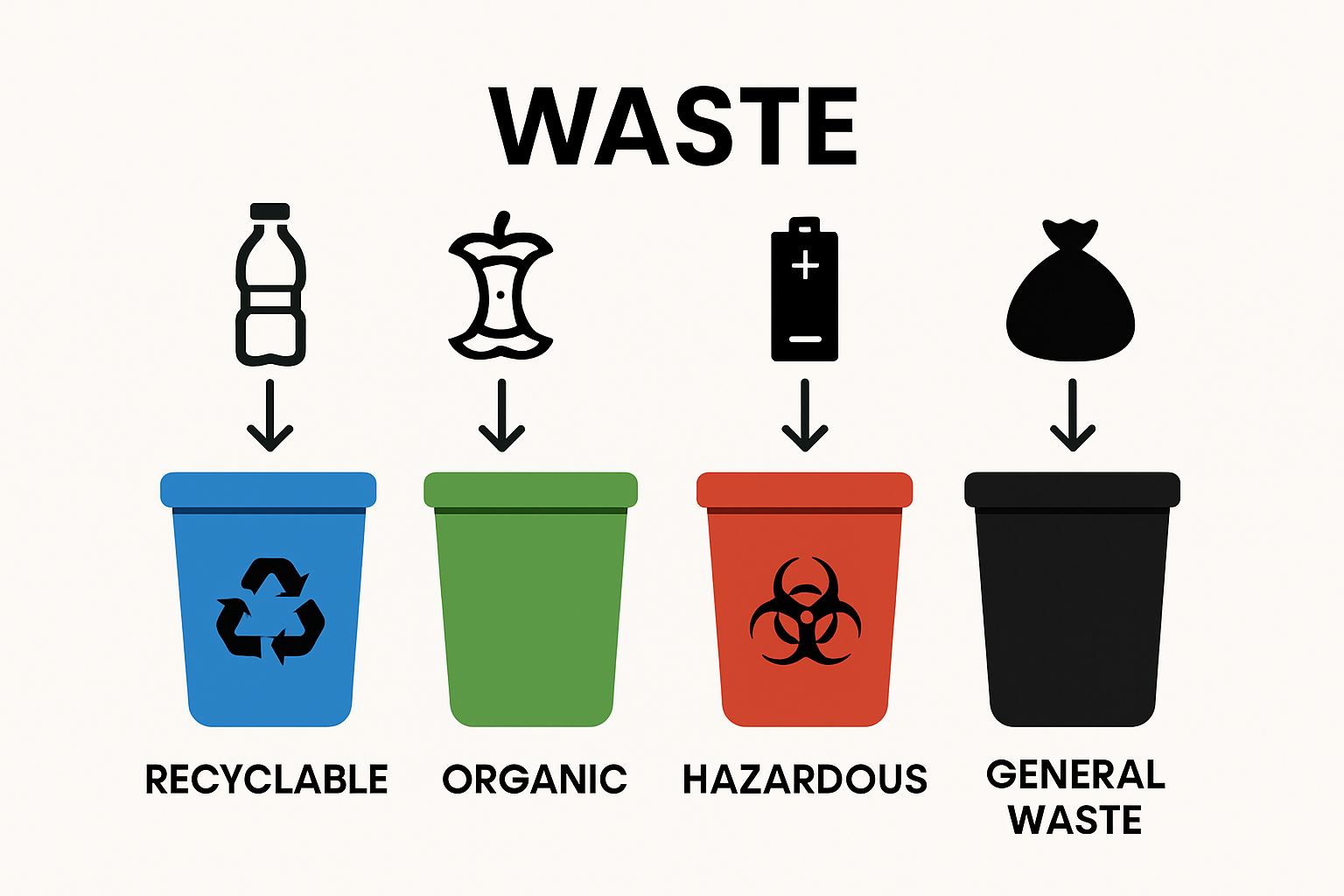
Effective waste segregation involves recognising and separating waste into specific groups. These typically include:
- Recyclable Materials: Paper, cardboard, plastics, glass, and metal items that can be processed and reused
- Organic Waste: Food scraps, garden trimmings, and biodegradable materials suitable for composting
- Hazardous Waste: Chemicals, batteries, electronic equipment, and other potentially harmful substances requiring specialised disposal
- General Waste: Non-recyclable items that must be sent to landfills
According to research from ResearchGate, proper waste segregation can significantly increase recycling rates and dramatically reduce environmental contamination.
The Practical Implementation
Implementing waste segregation requires infrastructure, education, and individual commitment. Businesses and households must have clearly marked bins, understand waste categorisation rules, and consistently apply separation principles. Newcastle and Durham, like many cities across the North East, have been pioneering comprehensive waste management programmes that emphasise segregation at source.
For businesses looking to improve their waste management practices, our comprehensive waste management guide provides detailed insights into effective waste handling strategies. By understanding and implementing proper waste segregation, organisations can reduce their environmental footprint, potentially lower disposal costs, and contribute to a more sustainable future.
Why Waste Segregation Matters for Businesses
For modern businesses, waste segregation is not just an environmental responsibility but a strategic operational approach that offers substantial economic and reputational benefits. In an era of increasing environmental consciousness, companies that demonstrate robust waste management practices position themselves as responsible corporate citizens.
Economic and Compliance Benefits
Businesses implementing effective waste segregation strategies can realise significant financial advantages. By separating waste streams, organisations can:
- Reduce Disposal Costs: Minimise landfill waste and associated disposal fees
- Generate Revenue: Sell recyclable materials to specialised recycling companies
- Avoid Regulatory Penalties: Comply with environmental regulations and prevent potential fines
- Improve Operational Efficiency: Streamline waste management processes
According to The National Archives, organisational practices that maintain clear documentation and systematic approaches demonstrate professional management.
Environmental and Reputation Management
Beyond financial considerations, waste segregation significantly impacts a company’s environmental footprint and public perception. Businesses in Newcastle, Durham, and across the North East are increasingly recognising that sustainable waste management is not optional but essential.
Our comprehensive guide on reducing business waste offers detailed strategies for organisations looking to enhance their environmental credentials. By implementing robust waste segregation practices, businesses can showcase their commitment to sustainability, potentially attracting environmentally conscious customers and investors.
How Waste Segregation Works in Different Settings
Waste segregation is not a uniform process but a nuanced approach that varies significantly across different organisational environments. Each sector requires tailored strategies to effectively manage and separate waste streams, reflecting the unique characteristics of their operational context.
This table compares how waste segregation is implemented across different sectors, providing a clear overview of unique requirements in each setting.
| Sector/Setting | Key Waste Types Managed | Distinctive Practices or Challenges |
|---|---|---|
| Industrial/Manufacturing | Production waste, hazardous materials, recyclables | Strict protocols for hazardous waste |
| Healthcare/Specialist | Infectious, pharmaceutical, sharps, medical waste | Precise categorisation, health risk management |
| General Business/Offices | General waste, recyclables, organic waste | Employee education, clear bin labelling |
| Households | General waste, recyclables, organic waste | Consistency in sorting, local council guidelines |
Industrial and Manufacturing Environments
In industrial settings, waste segregation becomes a complex and critical operational requirement. Manufacturing facilities generate diverse waste types that demand sophisticated separation techniques:
- Production Waste: Metal offcuts, plastic remnants, and manufacturing byproducts
- Hazardous Materials: Chemical residues, contaminated equipment, and potentially dangerous substances
- Recyclable Industrial Materials: Clean metal, plastic, and electronic components
- General Industrial Waste: Non-recyclable materials from production processes
According to UK Environment Agency guidelines, businesses must implement strict protocols to prevent hazardous waste mixing, ensuring safe disposal and environmental protection.
Healthcare and Specialist Facilities
Healthcare environments represent some of the most complex waste segregation scenarios. Medical facilities must categorise waste with exceptional precision to manage potential health risks:
- Infectious Waste: Materials contaminated with biological hazards
- Pharmaceutical Waste: Expired or unused medications
- Sharp Objects: Needles, scalpels, and medical instruments
- General Medical Waste: Non-hazardous materials like packaging
Our comprehensive waste collection guide provides detailed insights into managing complex waste streams across different sectors. By understanding specific segregation requirements, organisations can create safer, more efficient waste management systems that protect both human health and the environment.
Key Concepts and Types of Waste in Segregation
Waste segregation demands a comprehensive understanding of different waste categories, their characteristics, and potential environmental impacts. By recognising the nuanced nature of waste streams, organisations can develop more effective and sustainable waste management strategies.
Waste Classification Framework
The waste classification system provides a structured approach to identifying and managing different waste types. Understanding these classifications is crucial for proper segregation and disposal:
- Hazardous Waste: Materials containing substances that pose significant risks to human health or the environment
- Non-Hazardous Waste: Materials that do not present immediate environmental or health dangers
- Inert Waste: Materials that do not undergo significant physical, chemical, or biological transformations
- Recyclable Waste: Materials that can be processed and reused in manufacturing
According to UK Environment Agency guidelines, businesses must implement strict protocols to prevent mixing different waste types, ensuring safe and responsible disposal.
Practical Waste Segregation Principles
Effective waste segregation goes beyond simple categorisation. It requires a holistic approach that considers the entire waste lifecycle, from generation to final disposal. Organisations in Newcastle, Durham, and across the North East must develop robust systems that:
- Identify waste streams accurately
- Provide appropriate containment and labelling
- Ensure safe transportation and processing
- Minimise environmental contamination
Our comprehensive waste management guide offers in-depth insights into developing effective waste segregation strategies. By understanding the intricate details of waste classification, businesses can transform their approach to waste management, contributing to a more sustainable and environmentally responsible future.
Real-World Impacts of Effective Waste Segregation
Waste segregation transcends theoretical concepts, delivering tangible environmental, economic, and social benefits that reshape how organisations approach resource management. By implementing systematic waste separation, businesses can create meaningful positive change across multiple dimensions.
Environmental Transformation
Effective waste segregation directly contributes to environmental preservation and sustainability. The practical implications include:
- Reduced Landfill Pressure: Minimising non-recyclable waste sent to landfills
- Lower Carbon Emissions: Decreasing energy consumption through efficient recycling processes
- Resource Conservation: Enabling material recovery and reducing raw material extraction
- Ecosystem Protection: Preventing contamination of soil, water, and natural habitats
Businesses across Newcastle, Durham, and the North East are witnessing how strategic waste management can substantially mitigate environmental degradation.
Economic and Social Benefits
Beyond environmental impact, waste segregation generates significant economic advantages. Companies that prioritise comprehensive waste management strategies often experience:
- Cost Savings: Reduced waste disposal expenses
- Revenue Generation: Selling recyclable materials
- Enhanced Corporate Reputation: Demonstrating environmental responsibility
- Compliance with Regulatory Standards: Avoiding potential financial penalties
Our comprehensive guide on reducing waste provides deeper insights into transforming waste management from a compliance requirement to a strategic business opportunity. By understanding and implementing robust waste segregation practices, organisations can simultaneously address environmental challenges and create economic value.
Unlock the Full Potential of Waste Segregation with Venture Waste
Are you striving to master effective waste segregation in your business or home but facing issues like unclear processes, regulatory concerns, or the risk of environmental harm? The article highlighted the importance of separating hazardous, recyclable, and confidential materials, showing how complex waste management can be. Many companies struggle with understanding the right steps and ensuring every type of waste receives the correct treatment. This can lead to higher costs, compliance penalties, and a bigger environmental footprint.
See how our Waste Collection Process in the UK for Businesses 2025 transforms confusion into confidence with clear, simple, and compliant waste handling methods for every category.

Take control of your waste streams today. Join forces with Venture Waste Management and experience a straightforward three-step booking system that ensures legal compliance and environmental care from start to finish. Do not let uncertainty hold your business back. Explore our waste collection network now for a custom solution tailored to your needs.
Frequently Asked Questions
What is waste segregation?
Waste segregation is the process of separating different types of waste into distinct categories at the point of disposal to enable more efficient recycling, treatment, and disposal.
Why is waste segregation important for businesses?
Waste segregation is essential for businesses as it reduces disposal costs, generates revenue from recyclables, ensures compliance with regulations, and improves operational efficiency while also enhancing environmental responsibility and public perception.
What are the main categories of waste in segregation?
The main categories of waste in segregation include recyclable materials (paper, plastics, glass), organic waste (food scraps), hazardous waste (chemicals, batteries), and general waste (non-recyclable items).
How can businesses implement effective waste segregation practices?
Businesses can implement effective waste segregation by providing clearly marked bins, educating staff on waste categorisation rules, and developing systematic approaches to ensure consistent and accurate waste separation.


Leave a Reply
Want to join the discussion?Feel free to contribute!