Impact of Improper Waste Disposal: 50,000 Tonnes Illegal
Every year, over 50,000 tonnes of hazardous waste are illegally dumped in the UK, causing severe environmental damage and creating substantial legal risks for businesses. For facility managers and decision makers, understanding the environmental, legal, and operational impacts of improper waste disposal is essential to protecting your organisation from costly penalties, reputational harm, and compliance failures. This guide explores the types of waste UK businesses produce, the consequences of mishandling them, and how to implement compliant disposal systems that safeguard both your operations and the environment.
Table of Contents
- Environmental Impact Of Improper Waste Disposal
- Legal Consequences For Businesses In The UK
- Operational Risks And Inefficiencies From Poor Waste Disposal
- Common Misconceptions About Waste Disposal Impact
- Comparison Of Waste Disposal Methods And Their Impacts
- Implementing Compliant Waste Disposal Solutions
- Explore Expert Waste Disposal Solutions For UK Businesses
Key Takeaways
| Point | Details |
|---|---|
| Environmental harm | Improper disposal contaminates soil, air, and water, damaging ecosystems and biodiversity. |
| Legal penalties | UK businesses face fines, prosecutions, and potential imprisonment for non-compliance with waste laws. |
| Operational costs | Poor waste handling increases costs by an average of 15% through fines, cleanups, and disruptions. |
| Compliance solutions | Licensed third-party waste carriers ensure legal compliance and reduce environmental risk. |
| Common misconceptions | Not all waste types face equal regulation; hazardous waste requires significantly stricter handling. |
Environmental Impact of Improper Waste Disposal
When waste is handled carelessly, the environmental impact pathways of improper waste disposal create lasting damage that extends far beyond the initial dumping site. Pollution from improperly disposed waste contaminates soil, air, and water, severely affecting local ecosystems and threatening public health across communities. The consequences ripple through entire regions, affecting wildlife, water supplies, and agricultural land.
Hazardous waste presents particularly severe environmental threats. Chemical pollutants leach into groundwater systems, while toxic substances accumulate in soil for decades. Electronic waste releases heavy metals like lead, mercury, and cadmium that poison ecosystems and enter food chains. These contaminants persist in the environment long after the initial disposal event.
Local biodiversity suffers devastating impacts from improper waste management. Native species lose habitats, water sources become uninhabitable, and entire ecosystems collapse under the pressure of persistent pollution. The damage compounds over time, making restoration increasingly difficult and expensive.
“The environmental cost of improper waste disposal extends across generations, affecting not just current ecosystems but the long term health of our natural resources and communities.”
Facility managers must recognise that environmental damage creates legal liability and operational disruption. Contaminated sites require expensive remediation, regulatory investigations disrupt business operations, and negative publicity damages corporate reputation. The environmental dimension of waste disposal directly impacts your bottom line and regulatory standing.
Key environmental consequences include:
- Groundwater contamination affecting local water supplies
- Soil degradation reducing land value and usability
- Air pollution from decomposing waste and toxic emissions
- Habitat destruction threatening protected species
- Long term ecosystem damage requiring costly restoration
Legal Consequences for Businesses in the UK
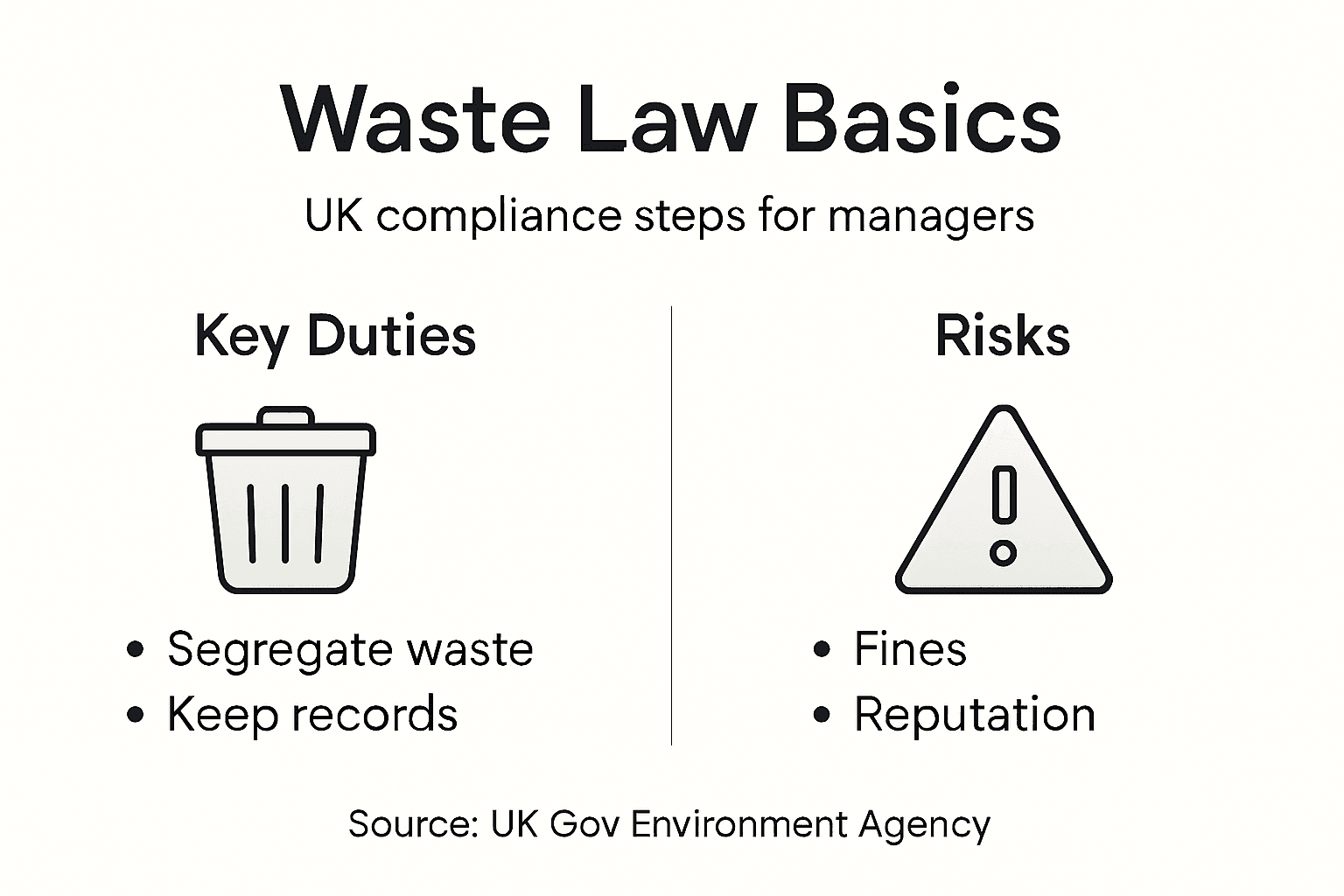
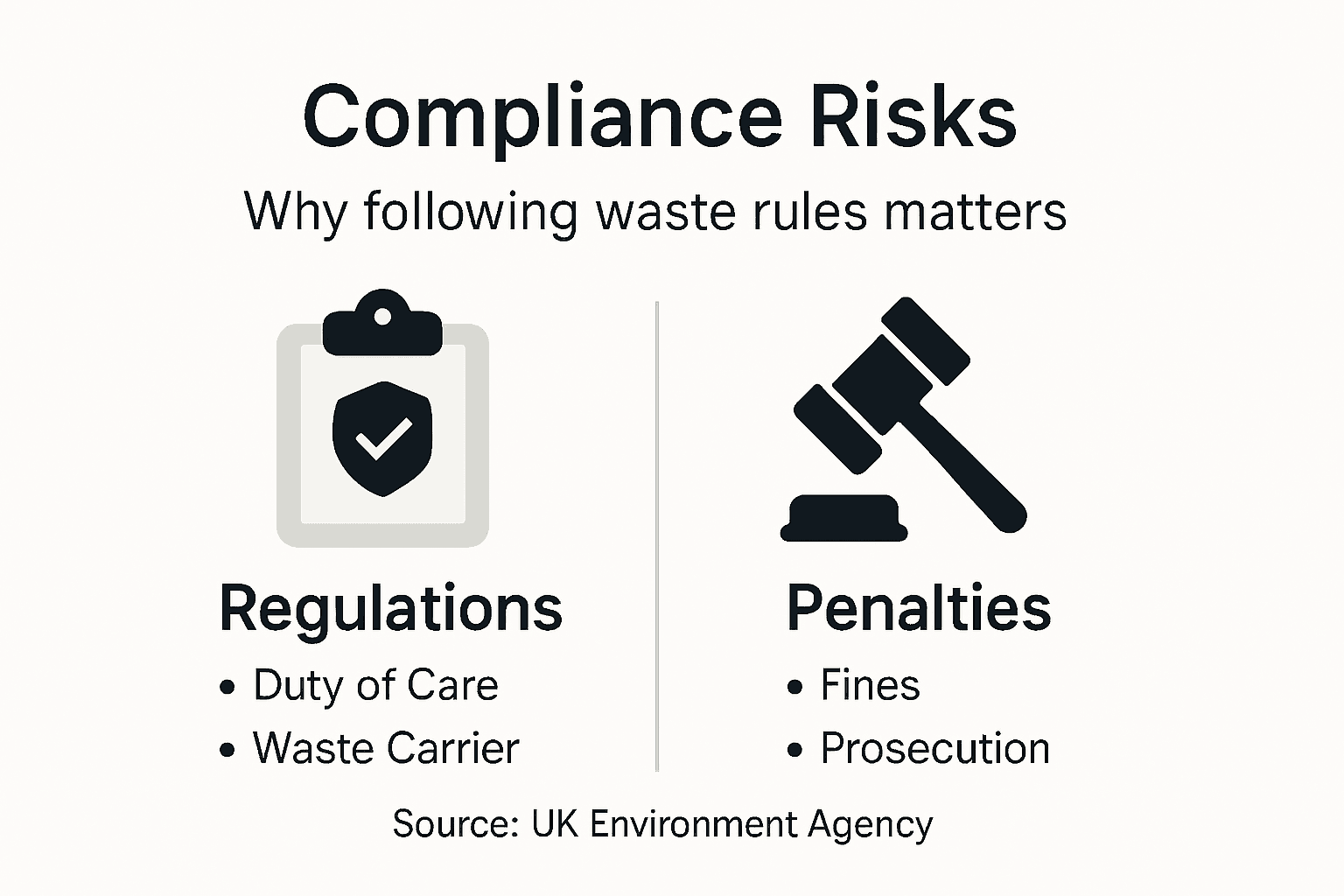
The UK waste disposal legal framework establishes strict controls over how businesses must handle, transport, and dispose of waste materials. Businesses face fines, prosecutions, and potential imprisonment for non-compliance with UK waste disposal laws, making legal compliance a critical operational priority. The Hazardous Waste Regulations 2005 and the Environmental Protection Act 1990 create comprehensive legal obligations that apply to virtually all commercial operations.

Penalties for violations range from substantial financial fines to criminal prosecution of directors and managers. Courts regularly impose six figure penalties on businesses that illegally dispose of waste, with serious cases resulting in prison sentences for responsible individuals. The Environment Agency actively investigates waste crimes and prosecutes offenders, making enforcement a real and present risk.
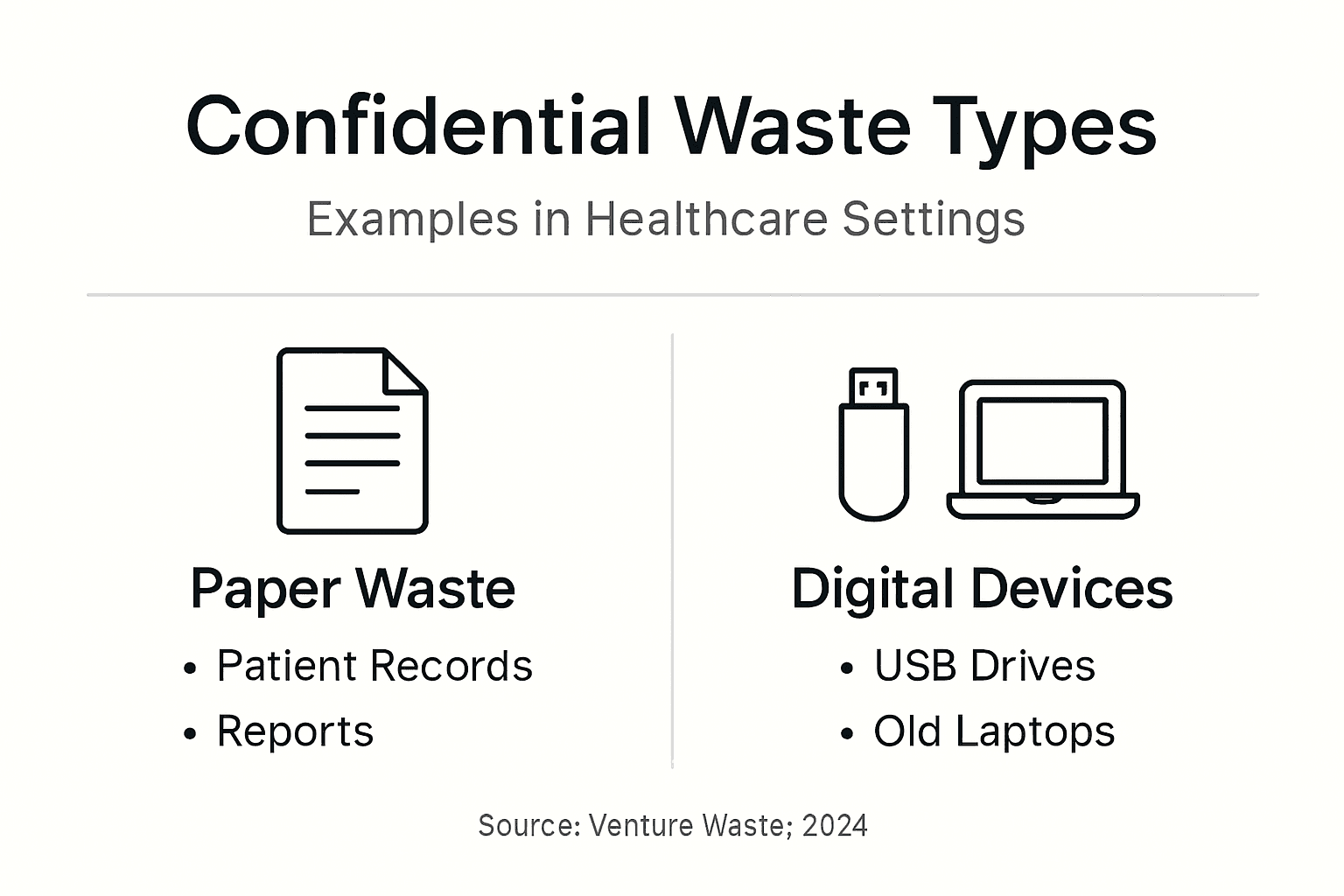
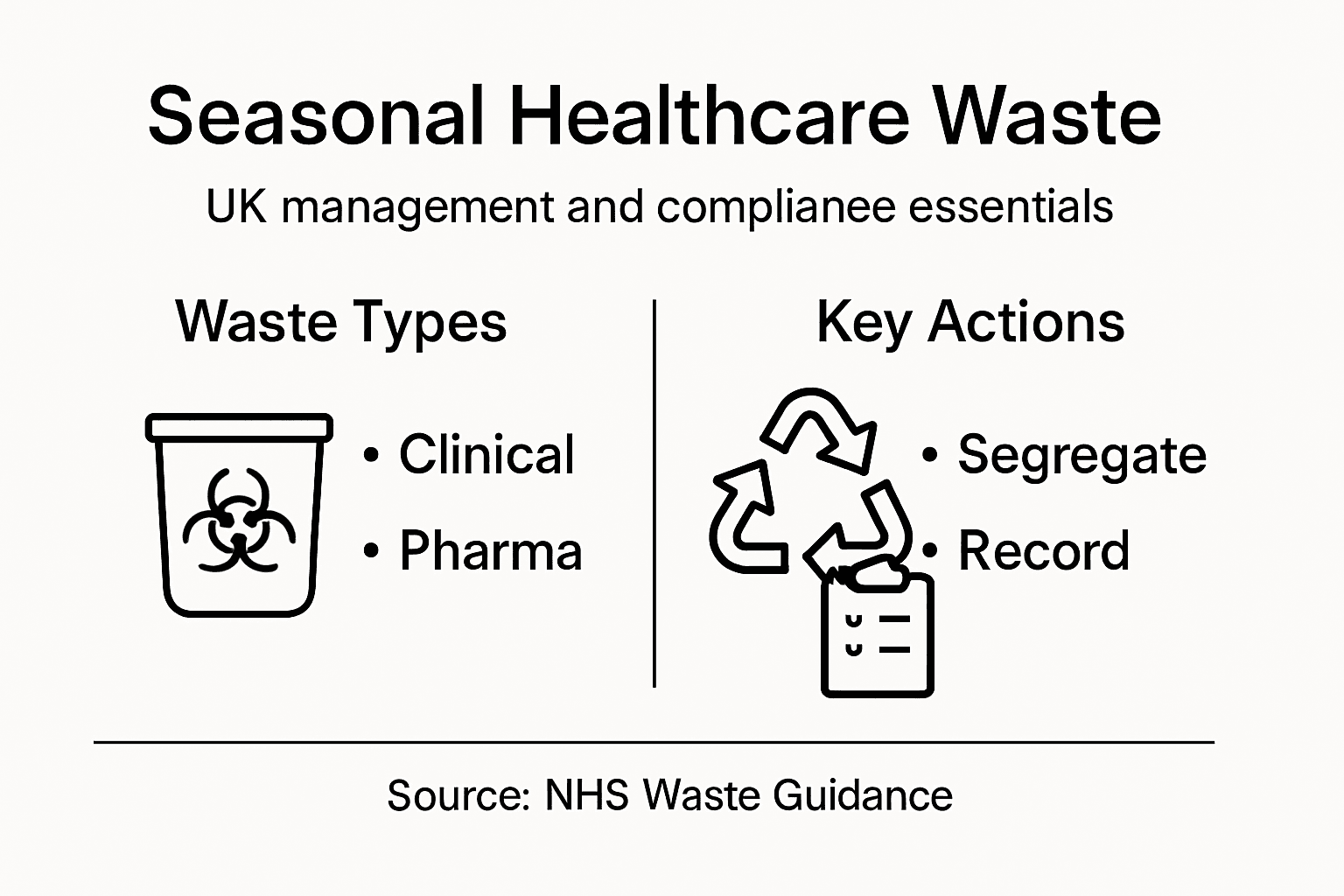
Hazardous waste faces significantly stricter regulation than general commercial waste. Special consignment notes, licensed carriers, and approved disposal facilities are mandatory for hazardous materials. Mixing hazardous and non hazardous waste creates additional violations, compounding legal exposure. Electronic waste, medical waste, and chemical waste each carry specific legal requirements that businesses must understand and implement.
Legal risks include:
- Unlimited fines for serious environmental damage
- Director disqualification and personal liability
- Imprisonment up to five years for waste crimes
- Duty of care violations carrying fixed penalties
- Stop notices halting business operations immediately
The legal landscape continues evolving with stricter enforcement and higher penalties. Recent amendments increase accountability for waste producers, making it essential that facility managers stay current with regulatory changes and maintain robust compliance systems.
Operational Risks and Inefficiencies from Poor Waste Disposal
Beyond environmental and legal concerns, operational risks from poor waste disposal create tangible business impacts that affect profitability, efficiency, and competitive positioning. Improper waste disposal results in increased operational costs averaging 15% due to fines, cleanups, and disruptions, directly impacting your budget and resource allocation. These costs compound over time as problems escalate and regulatory scrutiny intensifies.
Unexpected cleanup expenses drain budgets allocated to core operations. Emergency waste removal, contamination remediation, and legal fees divert resources from productive investments. Regulatory investigations consume management time and create operational disruptions that reduce efficiency across the organisation. Insurance premiums increase as risk profiles deteriorate.
Reputational damage from waste mismanagement affects customer relationships, contract opportunities, and staff morale. Media coverage of environmental violations creates lasting negative perceptions. Supply chain partners and major clients increasingly require demonstrated environmental compliance before awarding contracts. Poor waste practices undermine corporate sustainability commitments and ESG performance.
Steps to mitigate operational risks:
- Audit current waste streams to identify volumes, types, and disposal methods
- Calculate total costs including disposal, storage, transport, and compliance activities
- Identify gaps between current practices and legal requirements
- Implement tracking systems for waste documentation and consignment notes
- Establish regular review cycles to maintain compliance and identify improvements
Pro Tip: Integrate waste management KPIs into operational dashboards to track compliance rates, disposal costs per tonne, and incident frequency. This visibility enables proactive management and demonstrates due diligence to regulators.
Efficient waste management reduces costs, minimises disruption, and creates competitive advantages. Organisations with robust systems avoid penalties, reduce disposal expenses through better segregation, and enhance reputation through demonstrated environmental responsibility.
Common Misconceptions About Waste Disposal Impact
Several persistent misconceptions prevent facility managers from implementing effective compliance strategies. Understanding where common beliefs diverge from regulatory reality helps you make better informed decisions and avoid costly mistakes.
Many decision makers incorrectly assume all business waste receives equal regulatory treatment. Hazardous waste requires more stringent handling than general waste, contrary to common belief. This fundamental misunderstanding leads to compliance failures when hazardous materials are treated like ordinary refuse. Chemical waste, electronic equipment, and contaminated materials each face specific legal requirements that general waste does not trigger.
Another widespread myth suggests on-site recycling alone ensures full compliance. While recycling reduces waste volumes and supports sustainability goals, it does not eliminate legal obligations for proper documentation, licensed carriers, and approved disposal facilities. Recycling forms part of comprehensive waste management but cannot substitute for formal compliance systems.
Some managers believe improper disposal only creates environmental problems without operational consequences. This misconception ignores the direct business impacts of fines, legal costs, operational disruptions, and reputational damage. Environmental violations trigger immediate operational and financial consequences that affect business continuity.
Common misconceptions to avoid:
- All waste types can be disposed of using the same methods and carriers
- In-house waste handling eliminates need for external licensing and documentation
- Small waste volumes do not require formal compliance procedures
- Environmental regulations only apply to manufacturing and industrial operations
- Waste compliance is solely an environmental issue rather than operational imperative
Pro Tip: Challenge assumptions by requesting regulatory guidance directly from the Environment Agency. Free advisory services help clarify obligations specific to your operations and waste types, preventing misconceptions from becoming compliance failures.
Correction of these misconceptions enables more effective waste strategies that truly protect your organisation from legal and operational risks while supporting genuine environmental responsibility.
Comparison of Waste Disposal Methods and Their Impacts
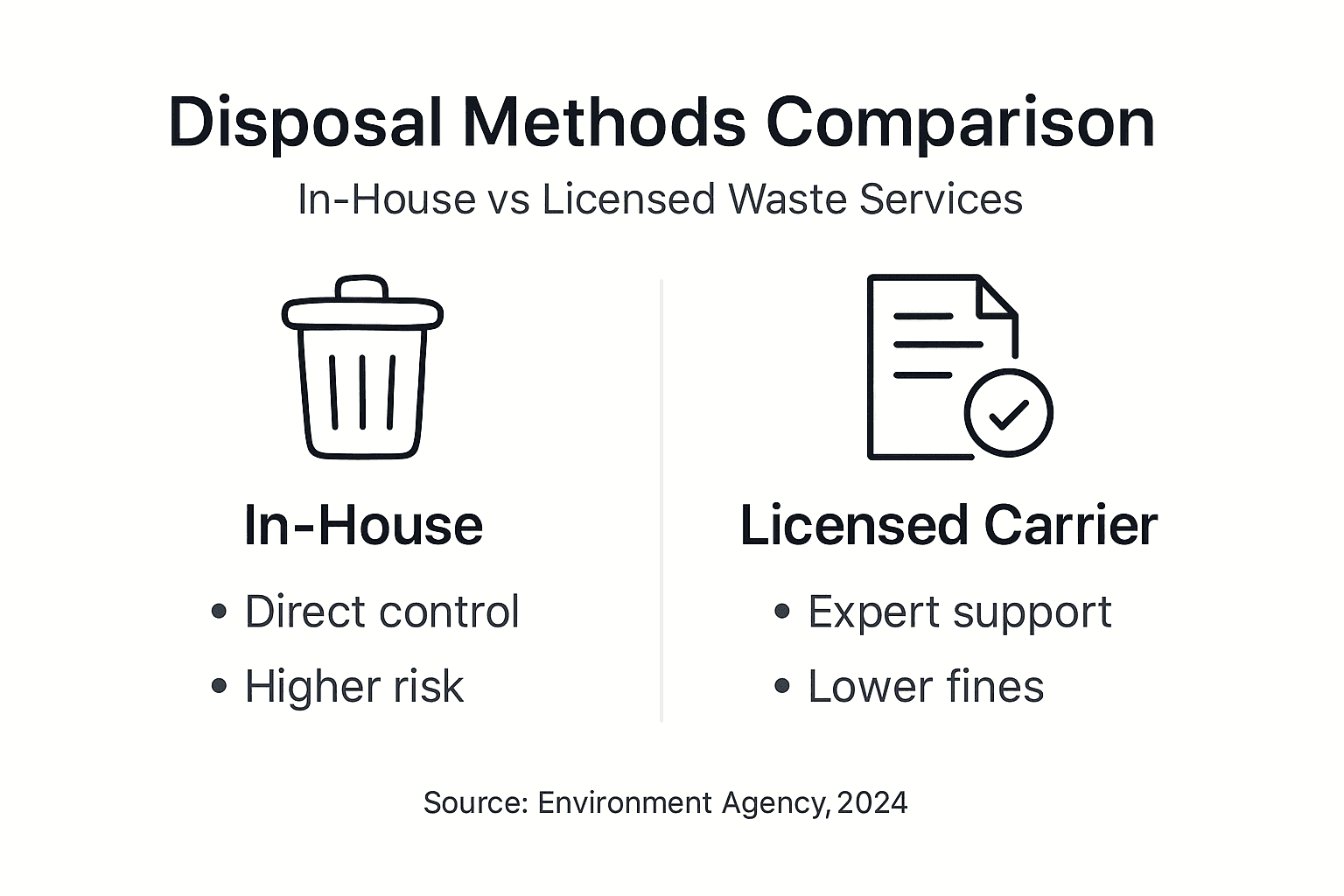
Choosing between in-house waste handling and licensed third-party waste management advantages significantly affects compliance rates, risk profiles, and operational efficiency. Licensed third-party waste management services generally achieve higher compliance and lower risk than in-house handling, making them the preferred option for most businesses.
| Factor | In-House Disposal | Licensed Third-Party Services |
|---|---|---|
| Compliance Rate | 65-75% due to knowledge gaps | 95%+ with professional expertise |
| Legal Risk | High personal liability for managers | Risk transferred to licensed carrier |
| Documentation | Manual tracking prone to errors | Automated systems with audit trails |
| Environmental Impact | Variable depending on internal expertise | Consistently meets regulatory standards |
| Cost Efficiency | Hidden costs from compliance failures | Transparent pricing with included compliance |
| Operational Focus | Diverts management attention | Allows focus on core business |
In-house handling provides direct control but requires significant expertise, training, and infrastructure investment. Compliance demands detailed knowledge of constantly evolving regulations, proper equipment, and dedicated staff time. For most organisations, these requirements divert resources from core competencies while still creating substantial compliance risks.
Licensed services bring specialised knowledge, established infrastructure, and regulatory expertise. Professional waste carriers maintain current licenses, provide required documentation, and assume legal responsibilities for proper handling. This transfer of liability protects your organisation while ensuring consistent compliance.
When to consider each approach:
- Small businesses with simple waste streams benefit most from full third-party services
- Large operations with dedicated environmental staff may handle general waste in-house while outsourcing hazardous materials
- Facilities producing hazardous or electronic waste should always engage licensed specialists
- Organisations lacking environmental expertise should prioritise third-party services for all waste types
The choice affects not just immediate costs but long term risk exposure and operational efficiency. Most facility managers find the combination of reduced liability, guaranteed compliance, and operational simplicity makes professional services the more cost effective solution despite higher upfront fees.
Implementing Compliant Waste Disposal Solutions
Transitioning to how to implement compliant waste disposal requires systematic assessment, careful provider selection, and ongoing management. Engaging licensed waste carriers and integrating documentation ensures compliance and operational efficiency while protecting against legal and environmental risks.
Implementation steps:
- Conduct comprehensive waste stream audit identifying all materials, volumes, and current handling methods
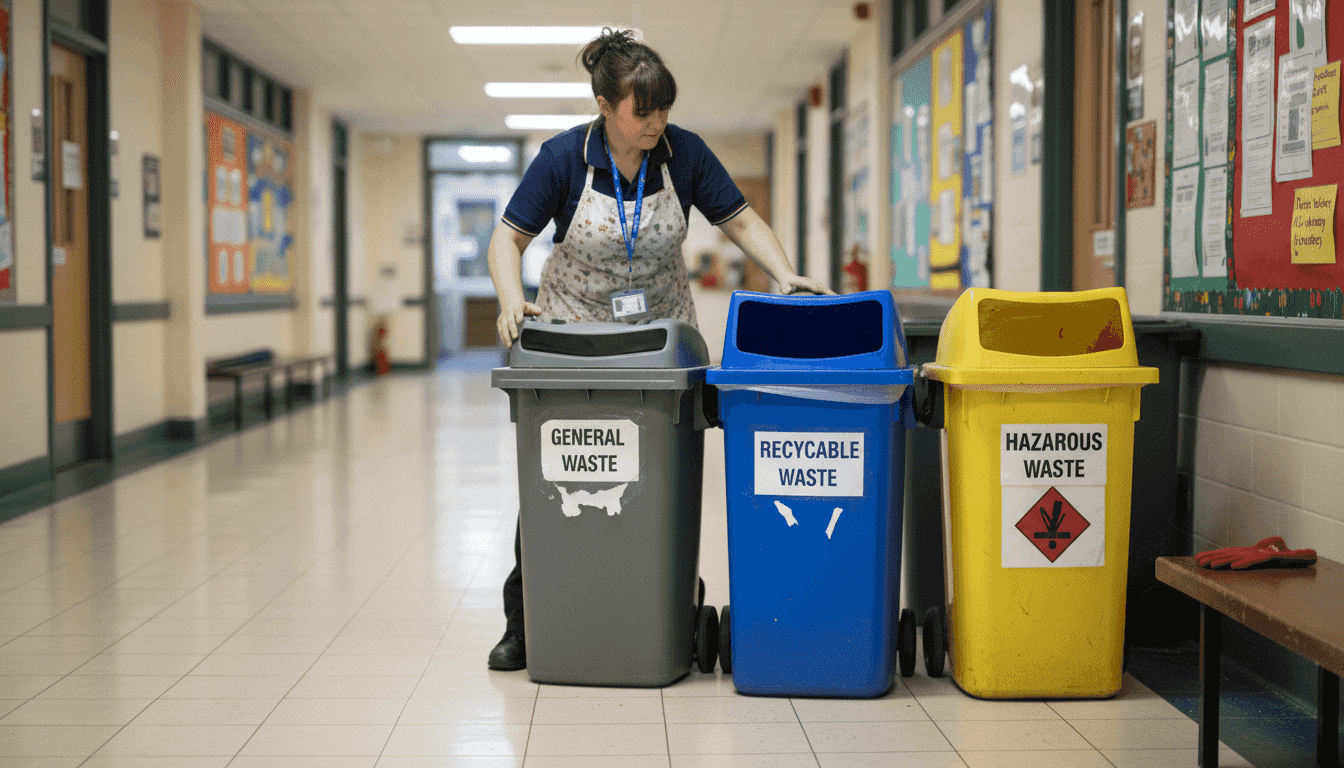
- Classify waste types according to regulatory categories, separating hazardous from general waste
- Research licensed carriers holding appropriate permits for your specific waste types
- Request credentials, insurance certificates, and compliance records from potential providers
- Establish documentation systems tracking consignment notes, transfer records, and disposal certificates
- Train staff on proper segregation, storage, and handover procedures
- Schedule regular compliance audits to verify procedures and identify improvement opportunities
Selecting the right waste carrier requires careful evaluation. Verify carriers hold current Environment Agency licenses for your waste types. Request references from similar organisations and investigate their compliance history. Ensure they provide comprehensive documentation and maintain transparent communication throughout the disposal process.
Documentation forms the foundation of legal compliance. Maintain complete records of waste transfers, consignment notes, and disposal certificates. These documents prove duty of care compliance and protect against liability if downstream problems occur. Digital systems streamline tracking while providing audit trails that satisfy regulatory requirements.
Pro Tip: Establish a waste compliance calendar scheduling quarterly reviews, annual audits, and license renewal checks. This proactive approach prevents lapses and demonstrates systematic management to regulators.
Staff training ensures proper implementation throughout your organisation. Everyone handling waste must understand segregation requirements, storage protocols, and documentation procedures. Regular refresher sessions maintain standards as regulations evolve and staff change.
Ongoing management sustains compliance over time. Regular audits identify drift from procedures, while periodic provider reviews ensure carriers maintain standards. This continuous improvement approach adapts systems to changing business needs and regulatory requirements.
Explore Expert Waste Disposal Solutions for UK Businesses
Protecting your organisation from the environmental, legal, and operational impacts of improper waste disposal requires expert support and proven systems. Professional waste management services deliver the compliance assurance and operational efficiency your facility needs.

Our comprehensive solutions cover everything from routine general waste collection services to specialised hazardous waste collection services, ensuring every waste stream receives appropriate handling. Licensed carriers, complete documentation, and nationwide coverage mean you can focus on core operations while we handle compliance complexities. Our waste collection best practices guide approach integrates seamlessly with your existing operations, providing transparent pricing and reliable service across the UK. Contact our team to discuss tailored solutions that protect your organisation and support your sustainability goals.
FAQ
What are the environmental risks of improper waste disposal?
Improper disposal contaminates soil, air, and water, severely damaging local ecosystems and threatening biodiversity. Hazardous and electronic waste cause particularly serious harm due to toxic substances that persist in the environment for decades.
What legal penalties can UK businesses face for improper waste disposal?
Businesses risk unlimited fines, criminal prosecutions, and imprisonment up to five years for serious violations under UK waste laws. Hazardous waste offences carry particularly severe penalties, with directors facing personal liability and potential disqualification.
How does improper waste disposal increase operational costs?
Poor waste management increases costs by an average of 15% through regulatory fines, emergency cleanup expenses, operational disruptions, and reputational damage. These expenses compound over time as problems escalate and insurance premiums rise.
Why do hazardous and general waste require different handling?
Hazardous waste contains toxic, flammable, or corrosive materials requiring specialist treatment, licensed carriers, and detailed consignment documentation that general waste does not need. Mixing waste types creates additional legal violations and environmental risks.
How can businesses ensure their waste disposal complies with UK regulations?
Use licensed waste carriers certified under UK law and maintain comprehensive documentation for all waste transfers. Regular audits, staff training, and integration of waste handling best practices into operations ensure ongoing compliance.
Recommended
- Waste Disposal Fines UK 2025: What Every Business Must Know – Venture Waste
- Waste Disposal Legal Requirements UK 2025: What Businesses Must Know – Venture Waste
- Waste Management Legal Issues in the UK – Business Impact – Venture Waste
- Waste Crime Prevention: Reducing Legal Risks in the UK – Venture Waste
- Proper Business Junk Disposal: Impact on Safety and Compliance