

Reducing Business Waste in 2025: Practical Strategies for UK Organisations

Business waste in the UK is about to face a massive shift. From March 2025, companies with 10 or more staff must separate their waste into different streams. That is a legal shake-up affecting tens of thousands of organisations. But the real surprise is that the construction sector alone is responsible for an astonishing 62 percent of all waste in the UK. This means even office staff making simple recycling swaps pale in comparison to industry giants. Still, the new rules and tech tools ahead offer a rare chance for every business to slash costs, meet regulations and stand out in a rapidly changing market.
Table of Contents
- Understanding Business Waste Streams In The UK
- Proven Methods To Reduce Office And Industrial Waste
- Safe Disposal Of Hazardous, Confidential, And WEEE Waste
- Partnering With Reliable Waste Management Companies
Quick Summary
| Takeaway | Explanation |
|---|---|
| Segregate Waste Streams | From 31 March 2025, businesses with 10 or more employees must separate waste streams, including food waste, paper/card, and dry recyclables, to comply with new UK regulations. |
| Leverage Technology | Implement advanced waste tracking software to monitor real-time waste generation, enabling better decision-making and waste reduction strategies. |
| Adopt Extended Producer Responsibility | Embrace the Extended Producer Responsibility (EPR) obligations for packaging set to take effect in 2025, compelling businesses to focus on sustainable packaging solutions and recycling initiatives. |
| Prioritise Safe Disposal | Ensure proper disposal of hazardous, confidential, and electronic waste by adhering to regulatory compliance and implementing secure destruction methods to mitigate environmental risks. |
| Choose the Right Waste Management Partner | Evaluate waste management service providers based on their regulatory compliance, technological capabilities, and service specialisation to enhance sustainability and operational efficiency. |
Understanding Business Waste Streams in the UK
Business waste management is a critical component of sustainable operations in the United Kingdom. The complexity of waste generation across different sectors requires a nuanced approach to understanding and reducing environmental impact.
Composition of Business Waste in the UK
The landscape of business waste is remarkably diverse and significant. Recent research from the Environment Agency reveals that commercial and industrial waste represents a substantial portion of the UK’s total waste output. According to data, commercial and industrial sectors produce approximately 23% of the nation’s total waste, making it a crucial area for strategic waste reduction efforts.
Different industries contribute uniquely to this waste profile. The construction sector stands out as the most significant waste generator, responsible for an astounding 62% of total waste generation. This highlights the urgent need for targeted waste management strategies in high-impact sectors.
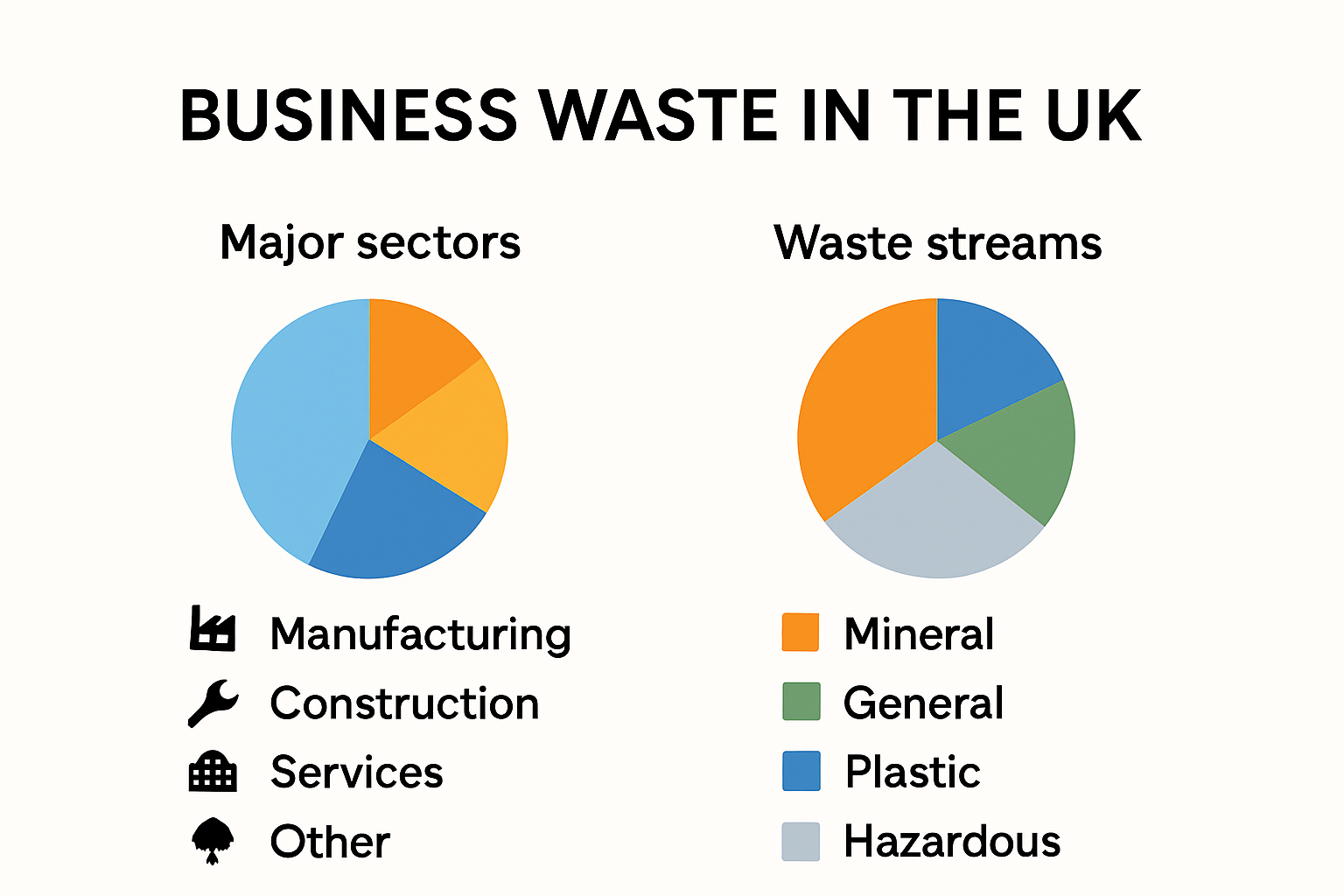
A breakdown of the main contributors to UK waste helps visualise areas for targeted waste reduction:
| Sector | Percentage of UK Total Waste Generated |
|---|---|
| Construction | 62% |
| Commercial & Industrial | 23% |
| Office & Retail | (part of Commercial & Industrial) |
| Other Sectors (Agriculture, etc.) | 15% (approximate remainder) |
Waste Stream Categorisation
Understanding waste streams requires a comprehensive breakdown of materials. Typical business waste categories include:
- Paper and Cardboard: Representing a significant volume of office and retail waste
- Organic Waste: Primarily from food service and agricultural businesses
- Electronic Waste (WEEE): Growing with increasing technological dependence
- Plastic Packaging: A persistent challenge across multiple industries
Research from the Waste and Resources Action Programme (WRAP) indicates that businesses can potentially reduce waste volumes by up to 30% through strategic management and innovative recycling approaches.
Economic and Environmental Implications
Waste management is not just an environmental consideration but a critical economic strategy. Inefficient waste handling results in significant financial losses and environmental damage. Our comprehensive guide on waste management cost reduction provides insights into how organisations can transform waste from a cost centre to a potential resource.
The UK’s commitment to circular economy principles means businesses must adopt more sophisticated waste management approaches. This involves not just disposal, but comprehensive strategies that prioritise reduction, reuse, and recycling. The paper recycling rate, which now exceeds 70%, demonstrates the potential for systemic improvement across waste streams.
By developing a deep understanding of waste streams, UK businesses can create more sustainable, cost-effective operational models that align with national environmental goals and regulatory requirements. The journey towards effective waste management begins with comprehensive knowledge and strategic implementation.
Navigating these complex waste management landscapes requires expertise, commitment, and a forward-thinking approach that balances environmental responsibility with business efficiency.
Proven Methods to Reduce Office and Industrial Waste
Reducing waste in office and industrial environments requires strategic planning and implementation of comprehensive waste management techniques. As businesses increasingly prioritise sustainability, innovative approaches are transforming how organisations handle their waste streams.
Comprehensive Waste Segregation Strategies
Effective waste reduction begins with precise segregation. From 31 March 2025, new UK regulations mandate that businesses with 10 or more employees must separate waste streams including food waste, paper/card, and dry recyclables. This legal requirement compels organisations to develop robust waste sorting systems.

Implementing dedicated bins for different waste categories allows businesses to:
- Track Waste Generation: Understand precise waste volumes per category
- Improve Recycling Rates: Ensure clean, uncontaminated recyclable materials
- Reduce Landfill Contributions: Direct appropriate waste to correct processing streams
To help clarify the main strategies for office and industrial waste reduction, here’s a summary table of the methods, their actions, and primary benefits:
| Strategy | Example Actions | Key Benefits |
|---|---|---|
| Waste Segregation Systems | Use bins for food waste, paper/card, recyclables | Higher recycling rates, regulatory compliance |
| Technology Solutions | Install waste tracking, volume reporting, analytics | Data-driven decisions, cost savings |
| Extended Producer Responsibility (EPR) | Redesign packaging, source recyclable materials | Reduced disposal costs, sustainability focus |
Technology and Digital Solutions
Modern technological interventions are revolutionising waste management. Advanced waste tracking software enables businesses to monitor waste generation in real-time, providing actionable insights for reduction strategies.
Digital solutions offer multiple benefits:
- Automated waste volume reporting
- Predictive analytics for waste generation patterns
- Cost tracking and environmental impact measurement
Extended Producer Responsibility Implementation
The introduction of Extended Producer Responsibility (EPR) for packaging in 2025 shifts full recycling and disposal costs onto manufacturers and retailers. This legislation incentivises businesses to:
- Redesign packaging for improved recyclability
- Reduce overall packaging materials
- Invest in sustainable packaging solutions
Our comprehensive guide on waste management cost reduction provides deeper insights into navigating these emerging regulatory landscapes.
By adopting these proven methods, UK businesses can significantly reduce waste, comply with evolving regulations, and contribute to national sustainability goals. The key lies in embracing technological solutions, understanding regulatory requirements, and implementing systematic waste management approaches.
Safe Disposal of Hazardous, Confidential, and WEEE Waste
Safe waste disposal represents a critical responsibility for UK businesses, particularly when managing hazardous materials, confidential documents, and electronic waste. Proper disposal not only ensures legal compliance but also protects organisational and environmental interests.
Regulatory Compliance for Hazardous and Electronic Waste
The UK’s waste management regulations have become increasingly stringent. According to the Environment Agency, businesses must adhere to strict guidelines when disposing of potentially dangerous waste streams. From 31 March 2025, new regulations mandate that all businesses must separate hazardous waste, confidential materials, and electrical equipment before collection.
Specifically for electrical waste, the WEEE Regulations require businesses to use authorised treatment facilities. Our comprehensive guide to WEEE waste provides detailed insights into managing electronic waste responsibly.
Confidential Waste Management Protocols
Confidential waste disposal demands meticulous attention to data protection. The Information Commissioner’s Office (ICO) emphasises that businesses must implement secure destruction methods to prevent potential data breaches. Key considerations include:
- Secure Shredding: Physical destruction of sensitive documents
- Digital Data Wiping: Complete erasure of electronic storage devices
- Certified Destruction Services: Professional handling of highly sensitive materials
Hazardous Waste Handling and Disposal
Hazardous waste requires specialized handling to mitigate environmental and health risks. Businesses must:
- Identify and categorize hazardous waste streams
- Use licensed waste carriers
- Maintain comprehensive documentation of waste transfer
- Implement strict containment and transportation protocols
Research from the Health and Safety Executive highlights the critical nature of proper hazardous waste management, emphasizing the potential risks of improper disposal.
Businesses must recognize that waste disposal is more than a regulatory requirement it is a fundamental responsibility towards environmental protection and workplace safety. By implementing robust waste management strategies, organisations can simultaneously reduce risk, ensure compliance, and demonstrate environmental stewardship.
Navigating the complex landscape of waste disposal requires expertise, commitment, and a proactive approach to understanding and implementing best practices in waste management.
Partnering With Reliable Waste Management Companies
Selecting the right waste management partner represents a critical strategic decision for UK businesses seeking to optimise their waste reduction and sustainability efforts. The landscape of waste management services continues to evolve, presenting organisations with increasingly sophisticated options for responsible waste handling.
Evaluating Waste Management Service Providers
Market research indicates that the UK currently hosts 1,661 waste management service businesses, offering organisations a diverse range of potential partners. When selecting a waste management company, businesses must conduct comprehensive evaluations focusing on several key criteria:
- Regulatory Compliance: Verify the company’s adherence to current UK waste management regulations
- Certification and Credentials: Check for relevant environmental and waste management certifications
- Service Specialisation: Ensure the provider can handle your specific waste streams
- Technological Capabilities: Assess their digital tracking and reporting systems
The following table summarises the main criteria to consider when selecting a waste management service provider and their importance as discussed in the content:
| Evaluation Criteria | What to Check | Importance/Benefit |
|---|---|---|
| Regulatory Compliance | Adherence to UK waste laws | Ensures legal operation & compliance |
| Certification & Credentials | Industry certifications, licences | Proof of professionalism & standards |
| Service Specialisation | Handling of specific business waste streams | Fit for your sector and waste types |
| Technological Capabilities | Digital tracking, transparent reporting | Enables data-driven waste management |
Strategic Partnership Considerations
The UK waste management market is projected to grow from USD 40.22 billion in 2024 to USD 66.24 billion by 2033, reflecting the increasing importance of professional waste management. Businesses should look beyond simple waste collection and seek partners who offer:
- Comprehensive waste auditing services
- Detailed reporting and analytics
- Sustainability consultation
- Cost reduction strategies
Compliance and Future-Proofing
From March 2025, new regulations require businesses with 10 or more employees to separate waste streams meticulously. Our guide on waste management cost reduction provides insights into selecting partners who can help navigate these complex regulatory landscapes.
A strategic waste management partnership goes beyond mere disposal. The ideal partner acts as a sustainability consultant, helping organisations transform waste from a cost centre into a potential resource. By selecting a provider with robust technological capabilities, comprehensive service offerings, and a commitment to environmental stewardship, businesses can achieve significant operational efficiencies.
The right waste management partnership is not an expense but an investment in organisational sustainability, regulatory compliance, and long-term environmental responsibility. Businesses must approach this selection process with the same rigour they would apply to any critical strategic partnership.
Frequently Asked Questions
What are the new waste separation regulations for UK businesses in 2025?
From 31 March 2025, UK businesses with 10 or more employees must separate their waste into specific streams, including food waste, paper and cardboard, and dry recyclables, to comply with new regulations.
How can technology help my business reduce waste?
Implementing advanced waste tracking software enables businesses to monitor real-time waste generation, providing insights that support data-driven decision-making and adopting strategies for waste reduction.
What is Extended Producer Responsibility (EPR) and how will it affect my business?
Extended Producer Responsibility (EPR) legislation set to take effect in 2025 holds businesses responsible for recycling and disposal costs associated with their packaging, requiring them to focus on sustainable and recyclable packaging solutions.
How do I choose a reliable waste management company?
When selecting a waste management partner, evaluate their regulatory compliance, industry certifications, service specialisation, and technological capabilities to ensure they can meet your business’s specific waste management needs.
Ready to Master Waste Segregation and Compliance in 2025?
Struggling to separate your business waste while keeping up with ever-changing UK regulations is daunting. From complicated waste streams and strict compliance requirements to the urgent need for secure document destruction, the challenges can quickly feel overwhelming. If you are looking for reliable guidance and practical support, our confidential waste services and WEEE Waste solutions provide peace of mind and a clear path to full compliance, as highlighted in this guide.

Act swiftly to stay ahead of the upcoming 2025 regulations. Book an expert service at Venture Waste Management today and simplify your approach to waste handling. Take control of your compliance journey and protect your business reputation—contact us now to get started.
Recommended Articles
- How UK Businesses Can Save Money on Waste Management in 2025 – Venture Waste
- save money on waste management Archives – Venture Waste
- how to reduce waste Archives – Venture Waste
- How to Reduce Waste in UK Businesses: Essential Steps for 2025 – Venture Waste
- Hazardous Waste Handling for UK Businesses: Complete 2025 Guide – Venture Waste
- Blog Archives – Venture Waste


