secure document shredding office

Secure Shredding for Companies: A Step-by-Step Guide

Every business handles sensitive documents, but a single data breach can cost companies an average of £3.4 million in the UK. Secure shredding is much more than just tossing old papers in a bin. Proper destruction protects your reputation and ensures compliance with strict data protection laws. This guide breaks down key steps to help you confidently manage confidential information, from identifying what needs shredding to verifying every stage of the process.

Table of Contents

Quick Summary

Key Point Explanation
1. Assess document shredding needs first Conduct a thorough audit of your documents to identify what needs secure destruction based on sensitivity and data protection regulations.
2. Choose a certified shredding provider Select a shredding service with industry certifications ensuring compliance with data protection standards for secure document destruction.
3. Implement secure collection procedures Use locked, tamper-evident bins for confidential documents and train employees on proper handling procedures to prevent data breaches.
4. Monitor shredding execution diligently Whether onsite or offsite, maintain oversight through contracts, audit checks, and obtain documentation to confirm complete destruction.
5. Verify destruction and keep records After shredding, obtain a destruction certificate and keep it filed for a minimum of two years as proof of compliance and secure disposal.

Step 1: Assess your shredding needs

Understanding exactly what documents your business needs to securely destroy is the first critical step in developing an effective shredding strategy. As recommended by the Information Commissioner’s Office, creating a comprehensive retention schedule helps prevent unnecessary storage of sensitive personal information and determines the precise volume of documents requiring secure destruction.

To effectively assess your shredding needs, start by conducting a thorough audit of your current document management practices. Walk through each department and identify the types of documents generated such as financial records, employee files, client contracts, marketing materials, and internal correspondence. Pay special attention to documents containing personal or confidential information that could pose a data protection risk if not properly disposed of. The National Archives suggests using systematic assessment tools to evaluate your information management practices, which can help pinpoint exactly what needs secure shredding.

Pro tip: Create a document classification matrix that categorizes papers by sensitivity level, retention period, and required destruction method. This will streamline your shredding process and ensure you are meeting legal compliance standards for data protection.
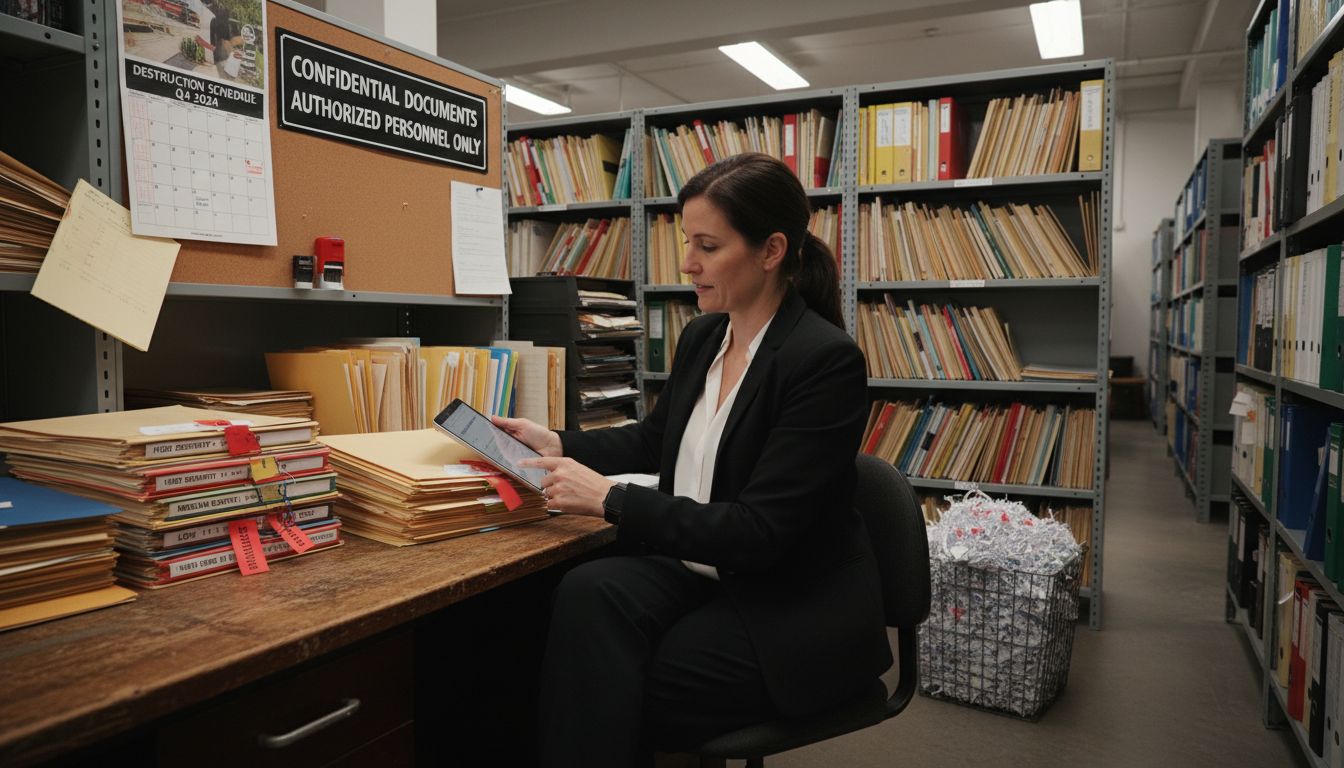
assessing shredding needs documents Once you have a clear understanding of your document landscape, you will be ready to move forward with selecting the most appropriate secure shredding solution for your business.

Step 2: Choose a certified shredding provider

Selecting the right certified shredding provider is crucial for ensuring the secure destruction of your sensitive business documents. When searching for a reliable partner, look for providers with robust industry certifications that demonstrate their commitment to data protection and security standards.

Carefully evaluate potential shredding providers based on key criteria. According to the National Physical Security Association, reputable providers like Shred Station hold multiple industry certifications that validate their secure destruction practices. Key factors to consider include ISO certifications, membership in professional organizations, and a transparent destruction process. You will want to request documentation of their certification levels, ask about their secure chain of custody procedures, and understand exactly how they handle and destroy confidential materials.

Pro tip: When choosing a shredding provider, request a detailed walkthrough of their destruction process and ask for references from businesses similar to yours. Off-site shredding versus secure mobile shredding can offer different advantages, so consider which option best meets your specific security and logistical requirements. Your goal is to find a provider that not only meets legal compliance standards but also gives you complete confidence in the secure handling of your sensitive business documents.

Step 3: Set up secure collection procedures

Establishing robust secure collection procedures is essential for protecting your company’s sensitive documents throughout the disposal process. This critical step ensures that confidential information remains secure from the moment it is identified for destruction until it is completely eliminated.

According to the Information Commissioner’s Office, implementing secure collection protocols begins with using locked waste bins specifically designed for records containing personal information. Each department should have dedicated secure collection containers that are tamper evident and restrict unauthorized access. These containers should be strategically placed in controlled areas, with clear guidelines about what types of documents can be deposited. How to store confidential waste safely requires careful planning to prevent potential data breaches and ensure compliance with data protection regulations.

Pro tip: Train all employees on proper document disposal procedures. Create a comprehensive policy that outlines exactly how sensitive materials should be handled, including guidelines for immediate secure storage of documents marked for destruction. This approach not only protects your business from potential data leaks but also demonstrates your commitment to maintaining the highest standards of information security.

Your next step will involve scheduling regular secure document collection to ensure sensitive materials do not accumulate unnecessarily in your workplace.

Step 4: Monitor shredding execution onsite or offsite

Monitoring the shredding process is a critical step in ensuring the complete and secure destruction of your sensitive business documents. Whether you choose onsite or offsite shredding, maintaining vigilance throughout the destruction process protects your company from potential data breaches and compliance risks.

According to the Information Commissioner’s Office, businesses must have appropriate contracts with third party disposal providers that include rigorous audit checks and destruction certificates. When monitoring shredding execution, request comprehensive documentation that confirms the complete destruction of your materials. On-site versus off-site shredding offers different levels of direct oversight, so choose a method that provides the most transparency and comfort for your organization. For onsite shredding, you can physically witness the destruction process, while offsite shredding requires meticulous documentation and chain of custody tracking.

Pro tip: Always request and retain a certificate of destruction after each shredding session. This document serves as legal proof that your confidential materials were securely and completely destroyed, protecting your business from potential future disputes or compliance challenges. By implementing these monitoring procedures, you create a robust system of accountability that demonstrates your commitment to data protection and regulatory compliance.

Step 5: Verify destruction and obtain certification

The final stage of secure document disposal involves thoroughly verifying the destruction process and obtaining official certification. This critical step provides your business with legal documentation and peace of mind that your sensitive materials have been completely and securely eliminated.

According to the Information Commissioner’s Office, businesses must maintain a comprehensive log of all confidential waste sent for destruction. When verifying the shredding process, request a detailed destruction certificate that includes specific information such as the date of destruction, volume of documents processed, method of destruction, and a unique reference number. Confidential document shredding processes can vary, so ensure your chosen provider offers transparent documentation that meets legal compliance standards.

Pro tip: Create a dedicated file to store all destruction certificates for a minimum of two years. This documentation serves as crucial evidence of your commitment to data protection, potentially protecting your business during audits or legal inquiries. By meticulously tracking and verifying the destruction of confidential materials, you demonstrate a proactive approach to information security and regulatory compliance.

Secure Your Business Data with Expert Shredding Solutions

Protecting your company’s sensitive information is a challenge every business must face. The risks of data breaches or compliance failures can feel overwhelming when it comes to confidential document disposal. This article has laid out the essential steps businesses should take, from assessing shredding needs to verifying destruction with certification. At Venture Waste, we understand these concerns and offer comprehensive services tailored to your exact shredding requirements.

https://venturewaste.co.uk

Take control of your information security today by partnering with a certified provider that ensures secure handling, locked collections, and transparent destruction processes. Discover how our confidential waste solutions can simplify your compliance and protect your data. Visit Venture Waste now to learn more or explore our specialised hard drive destruction services for complete digital security. Don’t wait until risk turns into regret—secure your business with trusted shredding services designed for peace of mind.

Frequently Asked Questions

What steps should I take to assess my shredding needs for my company?

To assess your shredding needs, conduct a thorough audit of your document management practices. Identify types of documents across departments that require secure destruction, focusing on those with personal or confidential information.

How can I choose a certified shredding provider for my business?

Select a certified shredding provider by checking for industry certifications and asking for documentation related to their secure destruction practices. Request a detailed walkthrough of their shredding process to ensure they meet your security standards.

What secure collection procedures should I implement for sensitive documents?

Establish secure collection procedures by using locked bins for documents marked for destruction. Train employees on proper disposal habits to minimize risks associated with data breaches, ensuring these procedures are clearly outlined in a company policy.

How do I monitor the shredding execution to ensure compliance?

Monitor shredding execution by maintaining rigorous documentation and requesting destruction certificates from your provider. This verification ensures that your sensitive documents are securely destroyed and provides legal protection in case of future compliance checks.

What information should be included in the destruction certificate?

A destruction certificate should include the date of destruction, volume of documents processed, method of destruction, and a unique reference number. Retain this certificate as evidence of compliance and commitment to data protection for at least two years.
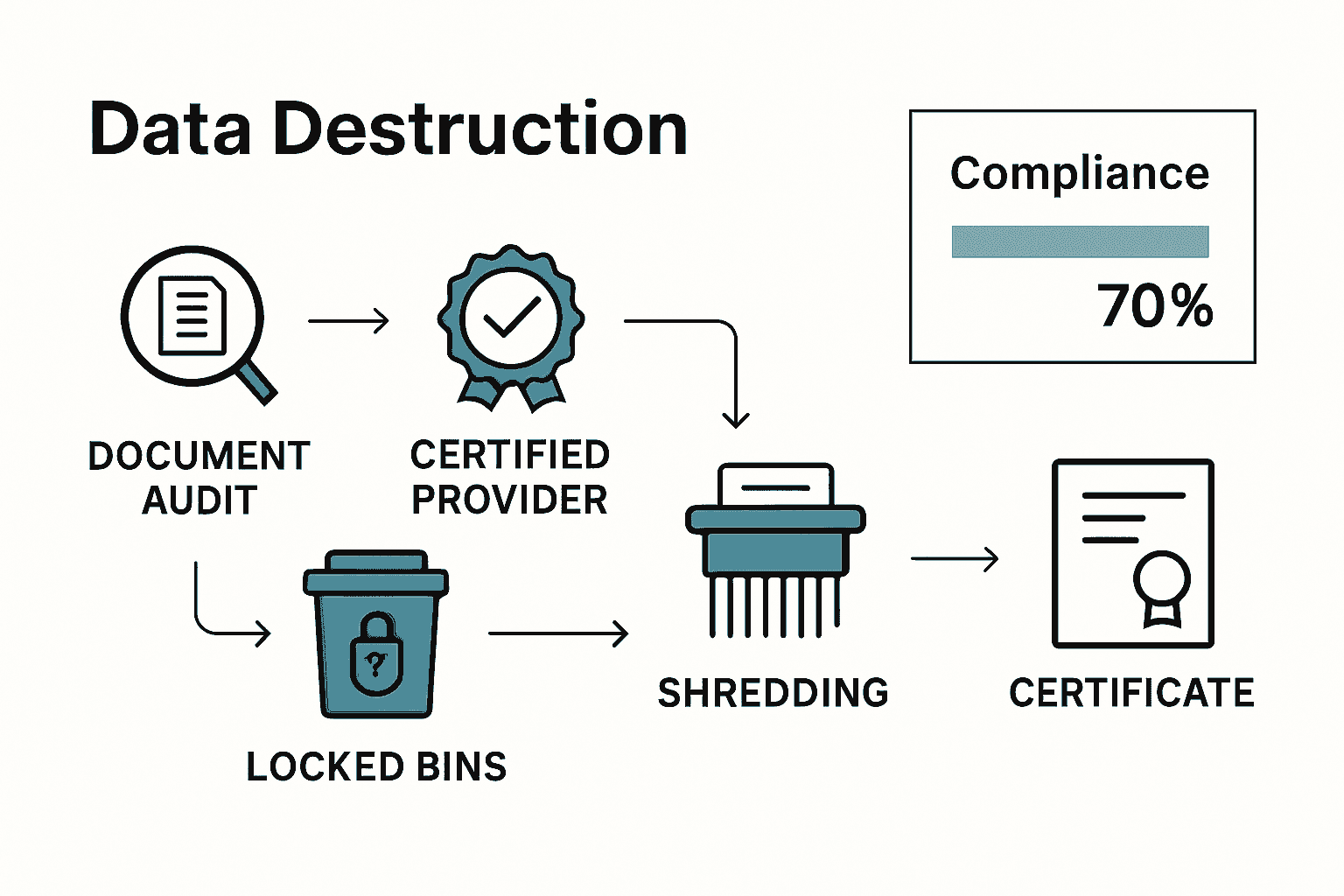
Five-step process for secure document shredding in companies

Remote worker sorting office waste at home

Remote work waste management UK facilities guide 2026

Remote work slashes office waste by 54%, yet home office waste surges by 28%. This dramatic redistribution creates new challenges for facilities managers navigating hybrid work models. Understanding these shifts is essential for maintaining compliance, controlling costs, and meeting sustainability targets across distributed workforces.

Table of Contents

Key takeaways

| Point | Details |
|——-|———||
| Waste redistribution | Remote work moves waste from offices to homes rather than reducing total volumes. |
| New tracking demands | Facilities managers must monitor dispersed waste sources and maintain compliance across multiple locations. |
| Flexible solutions | Adaptive contracts and employee engagement programmes significantly improve waste management outcomes. |
| Technology enables oversight | Digital tools provide real-time tracking and optimise collection scheduling for remote teams. |
| Legal obligations persist | UK regulations require businesses to manage waste generated during work activities regardless of location. |

Understanding the impact of remote work on commercial waste streams

Remote work fundamentally reshapes where waste appears and what types accumulate. Office waste volumes plummet as fewer employees occupy central workspaces daily. Meanwhile, packaging materials, disposable coffee cups, and printing supplies pile up in home offices.

This redistribution creates blind spots for facilities managers accustomed to centralised waste monitoring. Commercial waste patterns that once followed predictable patterns now scatter across hundreds of individual homes. The total waste footprint often remains unchanged despite empty office bins.

Common waste stream changes in remote work environments:

  • Cardboard and packaging waste increases from home deliveries of office supplies
  • Single-use food containers rise as employees order individual lunches
  • Paper and toner waste persists in home offices lacking digital infrastructure
  • Electronic waste accumulates from outdated home equipment replacements
  • Mixed recyclables contaminate general waste without proper sorting facilities
Waste type Office change Home change Net impact
General waste -54% +28% -26% overall
Cardboard -40% +45% +5% overall
Paper -60% +18% -42% overall
Food waste -65% +35% -30% overall
Electronics -20% +50% +30% overall

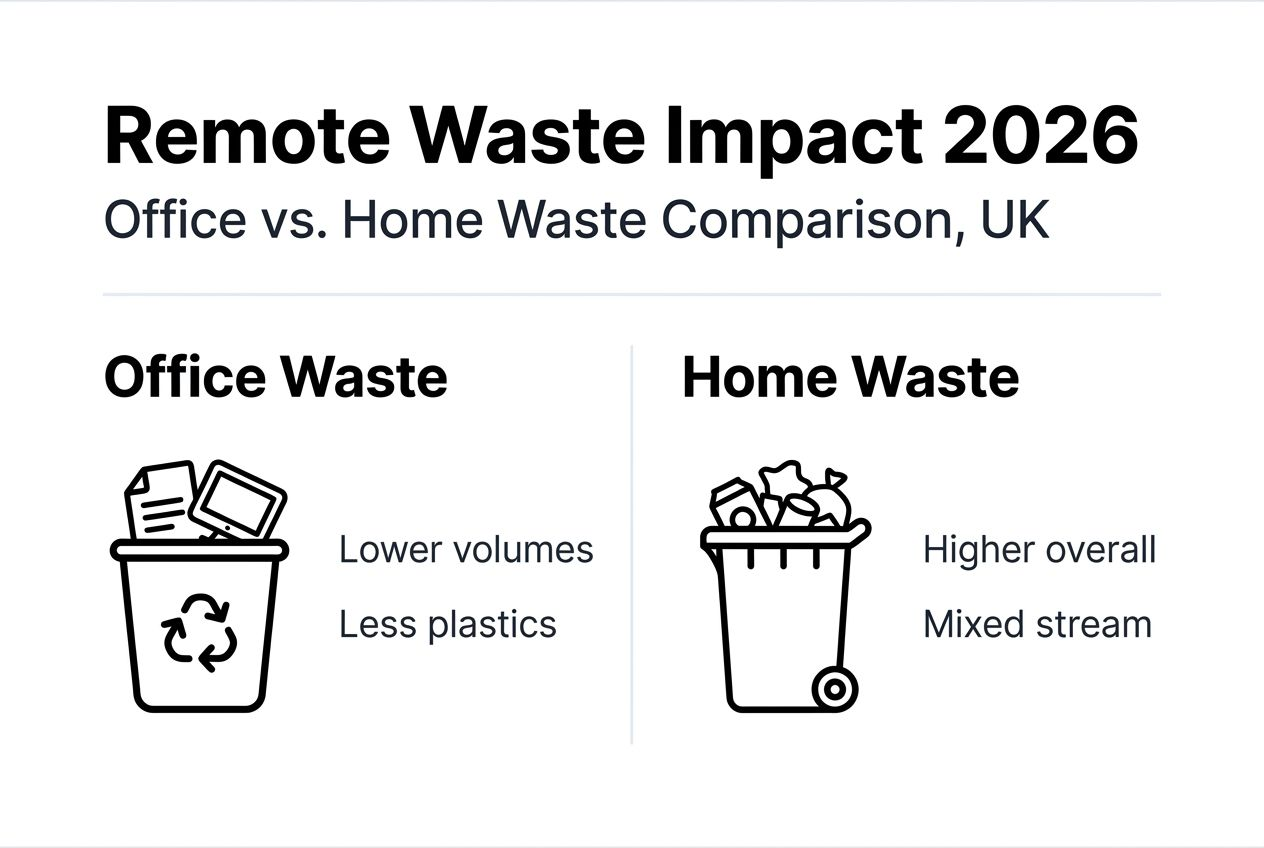
Infographic showing office and home waste comparison

Pro Tip: Map waste generation patterns quarterly by surveying remote employees about their disposal habits and volumes to identify collection service gaps.

Challenges facilities managers face in managing remote work waste

Tracking waste across dispersed locations presents immediate operational headaches. You cannot simply walk through an office to spot overflowing bins or contaminated recycling streams. Remote employees generate work-related waste without access to commercial collection services or proper segregation facilities.

Facilities manager tracks office waste records

Legal responsibility adds another layer of complexity. UK businesses remain accountable for waste produced during work activities, even when employees work from home. Waste disposal regulations require proper documentation and compliant handling regardless of generation location.

Primary obstacles in remote waste management:

  • Absence of shared bins eliminates economies of scale in collection services
  • Inconsistent local council recycling policies create confusion about proper disposal methods
  • Tracking tools designed for centralised facilities fail to capture residential waste data
  • Cost allocation becomes murky when distinguishing household from work-related waste
  • Compliance auditing requires new processes for documenting distributed waste streams

Research indicates that 68% of managers struggle to track remote employee waste effectively. This gap exposes organisations to regulatory penalties and sustainability reporting errors. Without visibility into home office waste, you cannot accurately measure environmental impact or identify reduction opportunities.

Pro Tip: Establish clear policies defining which waste types employees must segregate and provide collection guidance specific to their local council requirements.

Common misconceptions about remote work waste

Many assume remote work automatically delivers environmental benefits through reduced waste generation. This oversimplification ignores how waste relocates rather than disappears. Total volumes often remain constant or increase once home office impacts are properly measured.

Three prevalent myths about remote work waste:

  1. Myth: Closing offices eliminates most commercial waste problems. Reality: Waste simply transfers to residential settings where tracking and proper disposal become more difficult.

  2. Myth: Employees naturally manage work waste responsibly at home. Reality: Without training, clear guidelines, and accessible disposal options, contamination rates and general waste volumes increase significantly.

  3. Myth: Digital transformation in remote work eliminates paper waste. Reality: Home offices often lack dual monitors and digital workflows, leading to increased printing and paper consumption.

Data shows household waste increases by 15% whilst office waste decreases. This shift concentrates waste in residential areas lacking commercial disposal infrastructure. Packaging waste particularly surges as employees order office supplies individually rather than benefiting from bulk deliveries to central locations.

The assumption that remote workers independently handle disposal also overlooks legal realities. Businesses cannot simply transfer waste responsibility to employees. You must provide systems, education, and support ensuring compliant disposal wherever work activities occur.

Strategies and solutions for effective remote waste management

Adaptive approaches transform remote waste challenges into manageable processes. Flexible service contracts form the foundation, accommodating fluctuating volumes and dispersed collection points. Engaging employees through clear communication ensures they understand their role in proper waste handling.

Core strategies for hybrid work waste management:

  • Negotiate collection contracts with variable frequency options matching actual office occupancy
  • Establish home collection schemes for specific waste streams like confidential documents or electronics
  • Conduct remote waste audits through digital surveys and photo documentation
  • Create clear visual guides showing proper segregation for common work waste types
  • Implement quarterly reporting cycles tracking both office and estimated home office waste

Research demonstrates that flexible service contracts reduce inefficiencies by 30% compared to rigid schedules. This adaptability prevents paying for unnecessary collections whilst ensuring adequate service during peak occupancy periods.

Employee engagement proves equally crucial. Programmes combining education with convenient disposal options boost recycling compliance by 40%. Simple interventions like providing home recycling guides and clarifying which materials require special handling create significant improvements.

Approach Traditional office Hybrid model
Collection frequency Fixed weekly schedule Variable based on occupancy
Waste tracking Central bin audits Digital reporting plus surveys
Employee role Passive disposal Active segregation and logging
Service coverage Single site focus Multi-location coordination
Cost structure Predictable fixed costs Usage-based pricing

Pro Tip: Partner with providers offering best practice guidance and consolidated billing across office and home collection services for simplified office waste management.

Technological solutions for remote waste management

Digital tools bridge the visibility gap created by dispersed workforces. Mobile applications enable employees to log waste generation, request collections, and access disposal guidance specific to their location. Management dashboards aggregate this data, revealing patterns invisible through traditional monitoring.

Real-time tracking transforms reactive waste management into proactive optimisation. You can identify collection inefficiencies, spot compliance gaps, and adjust services based on actual usage rather than assumptions. Digital apps improve tracking efficiency by 25% whilst reducing administrative overhead.

Technology capabilities for remote waste oversight:

  • Mobile apps allowing employees to photograph and categorise waste for accurate logging
  • Cloud-based platforms consolidating data from multiple collection providers and locations
  • Automated scheduling systems adjusting collection frequency based on reported volumes
  • Compliance monitoring tools flagging potential regulatory issues across all sites
  • Sustainability dashboards calculating carbon footprint across distributed operations

Integration with existing facilities management systems creates seamless workflows. Data flows automatically into reporting tools, eliminating manual consolidation. This connectivity supports transparent sustainability reporting and identifies cost reduction opportunities through optimised scheduling.

Forward-thinking organisations leverage these tools alongside guidance on the future of remote work to build resilient waste management frameworks. The investment in technology pays dividends through improved compliance, reduced costs, and enhanced environmental performance. Responsible transport partners increasingly offer integrated digital solutions as standard service features.

Case studies on successful remote work waste reduction

A London-based professional services firm implemented comprehensive remote waste strategies in 2025, achieving measurable improvements across all metrics. They introduced flexible collection contracts, employee education programmes, and digital tracking tools simultaneously.

Results appeared within six months. Total waste volumes decreased by 18% despite maintaining a hybrid work model with 60% remote participation. Recycling rates jumped from 45% to 80% as employees received clear guidance and home collection support for specific streams.

Key success factors in proven implementations:

  • Regular communication keeping waste management visible despite physical distance
  • Simplified segregation systems matching what employees could realistically achieve at home
  • Financial incentives recognising departments demonstrating measurable improvements
  • Technology providing visibility without creating excessive administrative burden
  • Executive sponsorship ensuring adequate budget and organisational priority

Another example involves a Manchester technology company partnering with their waste provider to offer home collections for electronics and confidential materials. This convenience removed disposal barriers whilst ensuring compliant handling. Employee participation exceeded 85% within three months.

These organisations applied SME waste reduction strategies adapted for distributed workforces. Success hinged on recognising that remote work requires fundamentally different approaches rather than simply scaling back traditional services. Investment in employee support and flexible contracts delivered returns through lower costs and improved sustainability metrics.

Risks and consequences of poor remote waste management

Neglecting adaptive waste strategies exposes organisations to significant financial and legal penalties. UK enforcement agencies increasingly scrutinise how businesses handle waste across all operational locations, including home offices. Non-compliance fines average £1,500+ per incident, with repeat violations attracting substantially higher penalties.

Operational inefficiencies compound these direct costs. Paying for unused office collections whilst employees struggle with home waste creates double expense. Contaminated waste streams incur premium disposal fees. Lost productivity occurs when employees spend work time managing disposal challenges without proper support.

Consequences of inadequate remote waste management:

  • Regulatory penalties for failing to properly document and dispose of work-related waste
  • Increased costs from inefficient collection schedules and contaminated waste streams
  • Reputational damage when sustainability claims contradict actual waste performance
  • Employee dissatisfaction with inadequate support for managing work responsibilities
  • Lost opportunities for cost savings through optimised services and improved recycling

Corporate sustainability credentials suffer when remote work impacts remain unaddressed. Stakeholders increasingly demand transparent reporting covering all operational waste, not just that generated in traditional office settings. Gaps in measurement or poor performance damage business reputation and undermine broader environmental commitments.

“Facilities managers who fail to adapt waste strategies for hybrid work face a triple threat: regulatory penalties, operational inefficiencies, and reputational damage that undermines their organisation’s sustainability positioning.”

The risks extend beyond immediate financial impact. Establishing proper systems after enforcement action proves more expensive than proactive implementation. You also lose the competitive advantage of demonstrating genuine environmental leadership in an increasingly conscious marketplace.

Discover tailored waste solutions for remote and hybrid workplaces

Remote work demands flexible, responsive waste management that traditional services cannot provide. Venture Waste Management specialises in solutions designed for distributed teams, offering variable collection schedules, multi-location support, and expert compliance guidance.

https://venturewaste.co.uk

Our comprehensive approach combines proven collection practices with technology enabling seamless oversight across all your operational locations. From general waste services adapted for hybrid offices to specialised transport solutions coordinating multiple sites, we deliver the flexibility modern workplaces require. Contact us to discover how adaptive waste management transforms remote work challenges into sustainability opportunities whilst ensuring full regulatory compliance.

FAQ

How can facilities managers track waste generated by remote employees?

Implement waste tracking software allowing employees to log their work-related disposal through mobile apps. Regular digital surveys combined with photo documentation provide oversight without requiring physical audits. Partner with providers offering consolidated transport services that include remote tracking capabilities as standard features.

Are businesses legally responsible for remote work waste in the UK?

Yes, companies remain accountable for waste produced during work activities regardless of generation location. UK disposal regulations require proper documentation and compliant handling for all work-related waste. This responsibility cannot be transferred to employees simply because they work from home.

What are effective employee engagement strategies to reduce remote work waste?

Provide regular communication with clear visual guides showing proper segregation methods for common work waste types. Offer convenient home collection support for challenging streams like electronics and confidential materials. Recognition programmes celebrating departments achieving measurable improvements boost participation, as demonstrated by firms increasing compliance rates through workplace recycling initiatives.

How can technology improve waste management for remote teams?

Digital applications provide real-time visibility into waste generation patterns across dispersed locations through employee logging and photo documentation. Automated systems optimise collection scheduling based on actual volumes rather than fixed schedules, reducing unnecessary service calls. Cloud platforms consolidate data supporting compliance monitoring and transparent sustainability reporting, as explored in comprehensive remote work guidance.