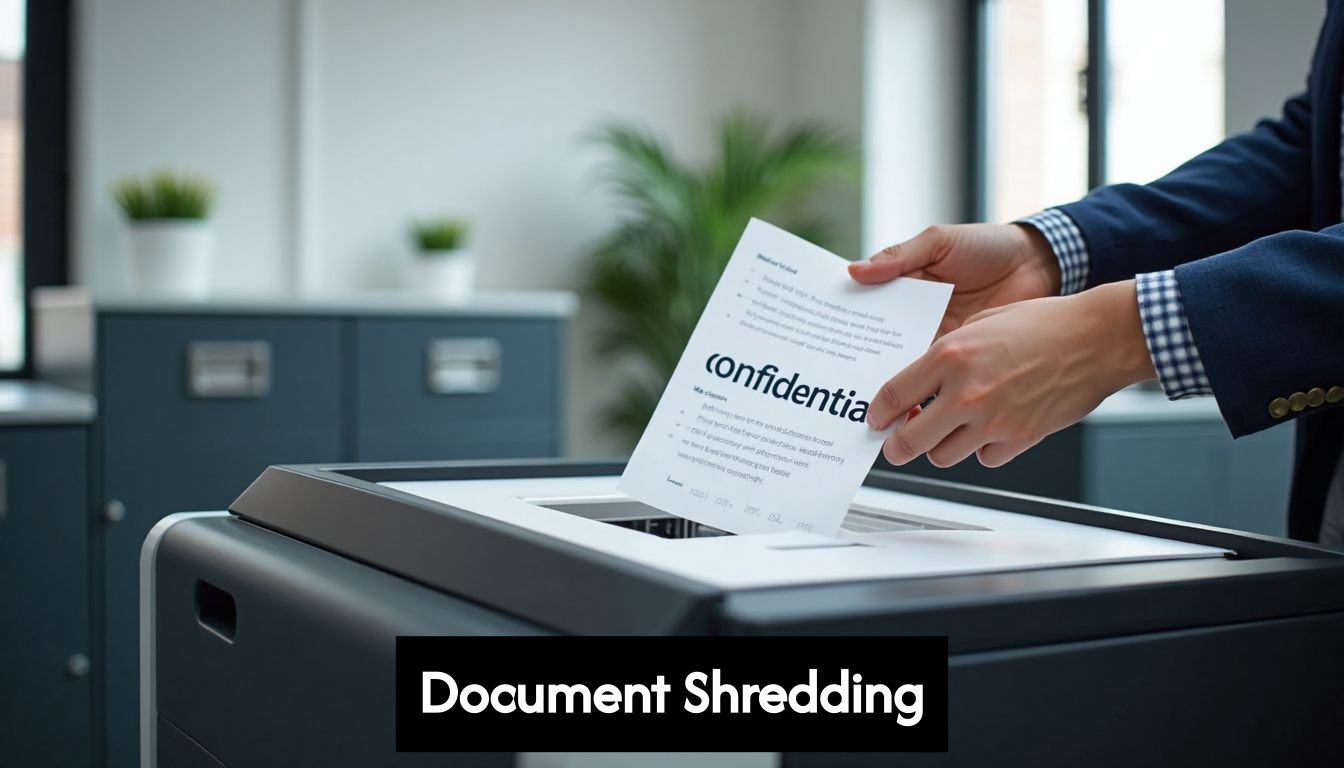
Office worker securely disposing confidential documents in locked bin

Why Dispose Confidentially: Essential Guide for UK Businesses 2025

Office worker securely disposing confidential documents in locked bin

Confidential waste might seem like just another office headache. Yet data breaches involving paper records hit around 75 percent of small businesses and 90 percent of large companies every year. Most think the worst that could happen is a privacy wobble or some scolding from the boss. In reality strong confidential disposal can be the difference between minor embarrassment and crippling fines or a ruined reputation. The next few minutes could save your business more than you think.

Table of Contents

Quick Summary

Takeaway Explanation
Confidential Waste Management Is Essential Businesses must secure disposal of sensitive documents to mitigate risks such as identity theft, corporate espionage, and regulatory non-compliance.
Legal Compliance Is Mandatory Organisations must adhere to the Environmental Protection Act 1990 and GDPR, maintaining proper documentation and contracts with third-party destruction services to avoid substantial penalties.
Investing In Secure Disposal Offers Strategic Benefits Proper confidential waste disposal not only protects financial interests but also enhances client trust and provides a competitive advantage by showcasing corporate responsibility.
Tailored Approaches Are Necessary Across Industries Different sectors require specific disposal strategies to address unique information sensitivity, emphasizing the importance of sector-specific compliance and best practices.
Ongoing Training and Professional Partnerships Are Crucial Educating employees about secure handling of confidential waste and partnering with certified waste management professionals are key components of an effective waste disposal strategy.

Understanding Confidential Waste and Risks

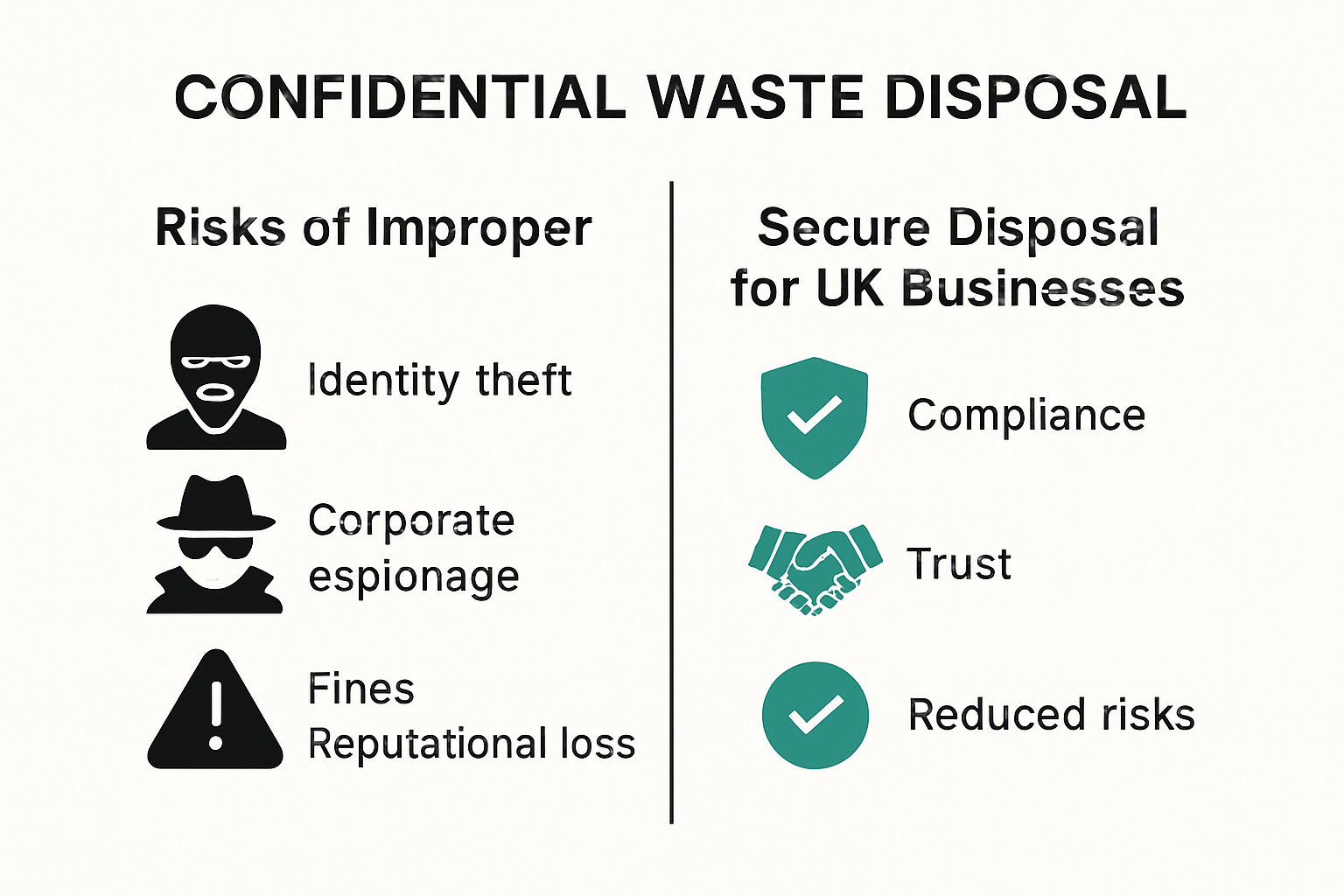
Confidential waste represents a critical challenge for businesses, encompassing sensitive documents, digital records, and materials that could compromise organisational security if improperly handled. The risks associated with negligent disposal extend far beyond simple data protection concerns, potentially exposing organisations to significant financial, legal, and reputational damages.
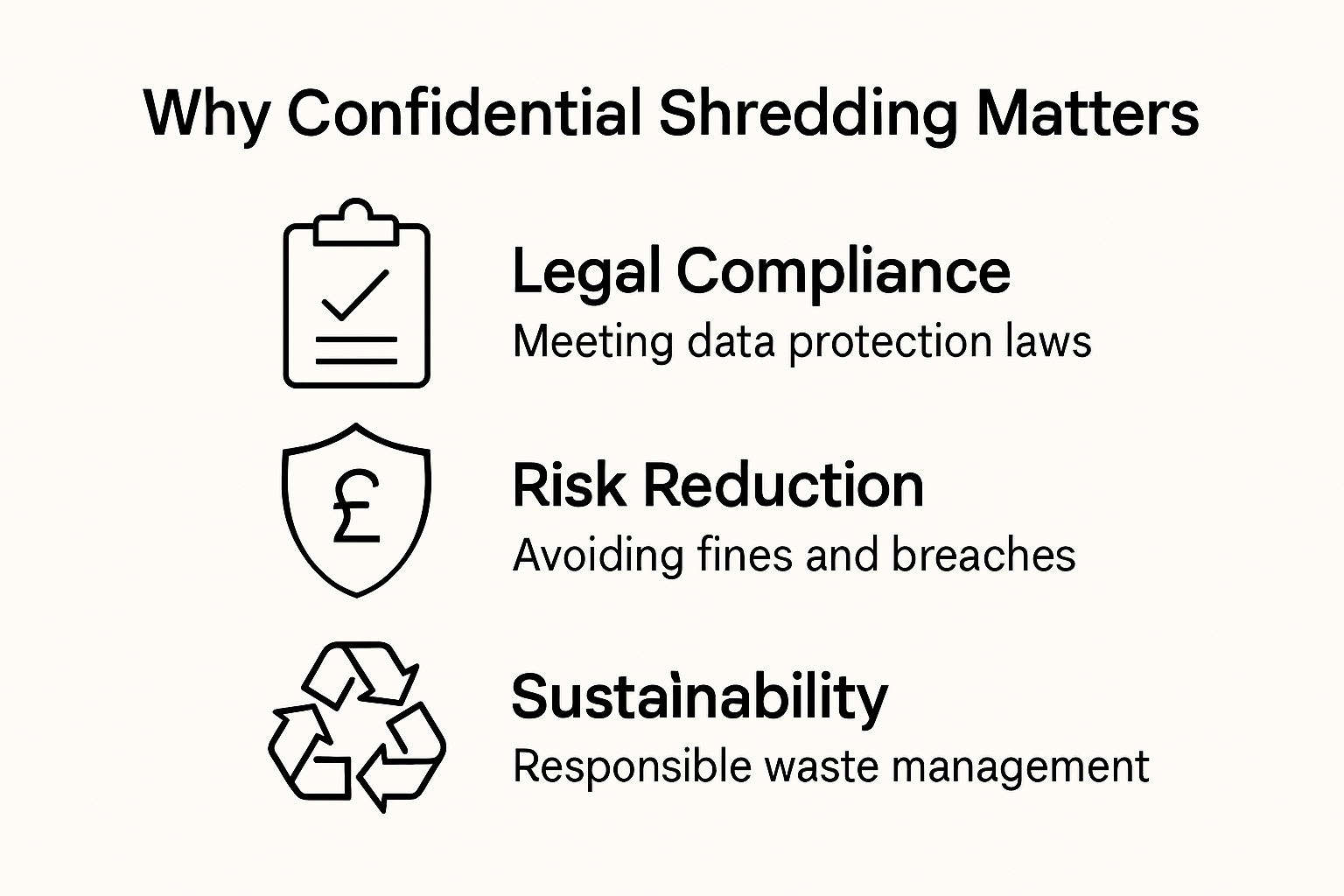
Infographic outlining why UK businesses should dispose confidentially

The Hidden Dangers of Improper Waste Management

Businesses generate substantial volumes of confidential waste daily, ranging from financial reports and employee records to client contracts and strategic planning documents. Improper disposal of these materials creates substantial vulnerabilities. According to NHS information governance guidance, sensitive materials should never be discarded through standard waste streams, as they remain accessible to potential unauthorized parties.

The consequences of inadequate confidential waste management are profound. Research from data protection experts indicates that failure to securely dispose of confidential information can result in severe legal penalties under UK data protection regulations, including substantial fines under the General Data Protection Regulation (GDPR) and the Data Protection Act 2018. These penalties can range from warnings to significant financial sanctions that could critically impact a business’s financial stability.

Comprehensive Risk Assessment

Effective confidential waste management requires a holistic approach. Businesses must consider multiple risk vectors, including physical document disposal, digital data destruction, and electronic media handling. Learn more about comprehensive confidential waste strategies to protect your organisation’s sensitive information.

Key risks include:

  • Identity Theft: Discarded documents containing personal information can be exploited by malicious actors.
  • Corporate Espionage: Sensitive business documents could provide competitors with strategic insights.
  • Regulatory Non Compliance: Improper waste disposal can breach data protection regulations.

Moreover, research from information security analysts reveals that data breaches resulting from inadequate waste management can lead to significant reputational damage. Clients and stakeholders lose trust in organisations that cannot demonstrate robust information protection protocols.

A strategic approach to confidential waste management involves implementing comprehensive destruction processes, training employees on secure disposal practices, and partnering with certified waste management professionals who understand the intricate legal and security requirements of modern business environments. By treating confidential waste as a critical security concern, organisations can mitigate risks and protect their most valuable asset: information.

Secure disposal of confidential waste is not merely a best practice in the United Kingdom but a legal obligation with complex regulatory requirements that businesses must carefully navigate. The legal landscape surrounding waste management and data protection has evolved significantly, creating a robust framework that demands meticulous compliance from organisations across all sectors.

Regulatory Framework and Compliance Obligations

The Environmental Protection Act 1990 establishes a foundational duty of care for businesses regarding waste management. According to research from waste management experts, organisations are legally required to handle, store, transport, and dispose of waste responsibly, ensuring that confidential materials do not fall into unauthorized hands.

Moreover, the General Data Protection Regulation (GDPR) and the Data Protection Act 2018 impose stringent requirements on businesses. The Information Commissioner’s Office (ICO) advises that organisations must have formal contracts with third-party data destruction services. These contracts should explicitly outline security standards and provide certificates of destruction to confirm the secure disposal of personal data.

Documentation and Audit Trail Requirements

Legal compliance extends beyond the physical act of destruction. Businesses must maintain comprehensive documentation of their confidential waste disposal processes. Explore our detailed guide on document shredding processes to understand the intricate requirements.

Key documentation requirements include:

  • Destruction Certificates: Detailed records proving the secure destruction of confidential materials.
  • Chain of Custody Documentation: Tracking the movement and handling of sensitive documents from collection to destruction.
  • Compliance Logs: Systematic records demonstrating adherence to legal and regulatory standards.

Non-compliance can result in severe consequences. Regulatory bodies can impose substantial financial penalties, with fines potentially reaching up to 4% of annual global turnover or £17.5 million under GDPR regulations. Beyond financial penalties, businesses risk reputational damage and potential legal action from affected parties.

Businesses must adopt a proactive approach to confidential waste management. This involves not only implementing secure destruction processes but also training employees, conducting regular audits, and partnering with certified waste management professionals who understand the nuanced legal landscape.

The legal requirements for secure disposal are dynamic and continually evolving. Staying informed about regulatory changes, maintaining rigorous documentation, and demonstrating a commitment to data protection are essential strategies for businesses seeking to navigate the complex world of confidential waste management in the United Kingdom.

Below is a summary table outlining the major UK legal and compliance requirements for confidential waste disposal referenced in this section.

Legal Requirement Description Potential Penalty
Environmental Protection Act 1990 Duty of care for all businesses handling, storing, and disposing of waste responsibly Fines and enforcement action
GDPR & Data Protection Act 2018 Secure disposal of personal and sensitive data; must have contracts with data destruction service providers Up to 4% of annual turnover or £17.5 million fine
Contracts & Certificates of Destruction Formal written agreements and proof of secure destruction with third-party service providers Legal sanctions and proof required for compliance
Documentation & Audit Trail Maintain detailed chain of custody and compliance logs for all confidential waste disposals Regulatory scrutiny and increased liability

Benefits of Confidential Waste Disposal for Businesses

Confidential waste disposal represents a critical strategic investment for businesses, offering far more than simple document destruction. It serves as a comprehensive risk management approach that protects organisational integrity, reputation, and operational resilience in an increasingly complex digital landscape.

Financial and Reputational Protection

Businesses face substantial financial risks from improper waste management. According to research from industry experts, identity fraud costs the UK approximately £2 billion annually, with a significant portion stemming from improperly discarded confidential documents. Professional confidential waste disposal dramatically reduces these risks.

Learn more about comprehensive waste management strategies to understand how systematic destruction protects your business’s financial interests. The potential consequences of neglecting secure disposal are profound. Data breaches involving paper records affect approximately 75% of small businesses and 90% of large enterprises each year, highlighting the critical nature of robust waste management protocols.

The following table presents key statistics related to the financial and operational impact of improper confidential waste disposal, as referenced in this section.

Statistic Figure Source/Context
Identity fraud cost to UK annually £2 billion Portion driven by improperly discarded confidential documents
Small businesses affected by paper data breaches 75% Annual rate of data breaches involving paper records
Large businesses affected by paper data breaches 90% Annual rate of data breaches involving paper records
Maximum GDPR fine for non-compliance £17.5 million or 4% turnover Under Data Protection Act 2018 and GDPR

Compliance and Competitive Advantage

Confidential waste disposal extends beyond risk mitigation. It represents a strategic approach to demonstrating corporate responsibility and professionalism. Regulatory frameworks like the General Data Protection Regulation (GDPR) impose stringent requirements, with potential fines reaching €20 million or 4% of annual global turnover for non-compliance.

Key strategic benefits include:

  • Enhanced Client Trust: Demonstrating commitment to data protection
  • Legal Risk Reduction: Minimising potential regulatory penalties
  • Competitive Differentiation: Showcasing advanced corporate governance

Businesses that implement rigorous confidential waste disposal processes signal to clients, partners, and stakeholders their commitment to data security and ethical practices. This approach transforms a mundane operational task into a powerful statement of organisational integrity.

Moreover, professional waste disposal services provide detailed destruction certificates and comprehensive audit trails. These documents serve not just as proof of compliance but as tangible evidence of an organisation’s systematic approach to information management.

Beyond immediate risk mitigation, confidential waste disposal contributes to broader sustainability goals. Many professional services now incorporate environmentally responsible recycling processes, allowing businesses to simultaneously protect sensitive information and reduce their ecological footprint.

Ultimately, confidential waste disposal is not an expense but a strategic investment. It protects an organisation’s most valuable asset—information—while demonstrating commitment to legal compliance, client trust, and responsible business practices. By treating waste management as a critical component of corporate strategy, businesses can transform a potentially vulnerable process into a source of competitive advantage.

Best Practices for Confidential Disposal Across Industries

Confidential waste disposal is not a one-size-fits-all approach. Different industries require tailored strategies that address their unique information sensitivity and regulatory requirements. Understanding and implementing industry-specific best practices is crucial for maintaining data security and legal compliance.

Sector-Specific Disposal Strategies

The UK government’s Waste Duty of Care Code of Practice mandates that businesses must handle and store waste securely, preventing its unauthorized access or escape. This foundational principle applies across sectors, but the implementation varies significantly.

For instance, explore our comprehensive guide to confidential waste management to understand the nuanced approaches required by different industries. Healthcare organisations must adhere to stricter protocols due to patient confidentiality laws, while financial institutions have complex requirements protecting sensitive financial records.

Healthcare staff use secure bin for confidential document disposal

Practical Implementation Across Key Sectors

Different industries require specific approaches to confidential waste disposal:

  • Healthcare: According to Imperial College London’s waste management guidelines, sensitive medical documents must be placed in designated confidential waste bins or sacks, then shredded on-site by licensed contractors.
  • Education: University of Liverpool recommends that educational institutions should never place confidential materials in standard waste or recycling bins. Instead, they should use cross-cut shredding or secure confidential waste consoles.
  • Financial Services: Banks and financial institutions must implement multi-stage destruction processes, including digital sanitization and physical document destruction, to protect sensitive financial information.

Below is a comparative table illustrating sector-specific confidential waste disposal strategies as referenced in this section.

Sector Distinctive Disposal Approach Rationale
Healthcare Use dedicated bins/sacks; on-site shredding by licensed contractors Patient confidentiality and NHS guidance
Education Avoid standard waste; use cross-cut shredders or secure consoles Student/employee record protection
Financial Services Multi-stage: digital sanitization and physical destruction Sensitive financial record security

Universal Best Practice Principles

Regardless of industry, several universal principles apply to confidential waste disposal:

  • Secure Storage: Use locked, access-controlled containers for confidential waste
  • Documented Processes: Maintain clear chain of custody documentation
  • Professional Destruction: Partner with certified waste management professionals
  • Regular Training: Educate employees about confidential waste handling

The complexity of confidential waste disposal extends beyond simple document destruction. It requires a comprehensive approach that considers physical security, digital protection, and ongoing employee education. Each industry faces unique challenges, from medical record confidentiality to financial information protection.

Businesses must adopt a proactive, strategic approach to confidential waste management. This involves understanding sector-specific regulations, investing in secure disposal technologies, and creating a culture of information protection. By treating confidential waste disposal as a critical business function rather than an afterthought, organisations can effectively mitigate risks and demonstrate their commitment to data security.

Frequently Asked Questions

What is confidential waste?

Confidential waste refers to sensitive documents and materials that, if improperly disposed of, could lead to data breaches or identity theft. This includes personal data, financial records, and strategic business information.

Why is secure disposal of confidential waste important for businesses in the UK?

Secure disposal is crucial to prevent data breaches, which can result in significant financial penalties, legal repercussions, and damage to an organisation’s reputation. Adhering to regulations such as GDPR is essential for compliance.

Businesses must comply with the Environmental Protection Act 1990 and the GDPR, ensuring that confidential materials are stored, handled, and disposed of securely, often requiring contracts with certified third-party destruction services.

What are some best practices for confidential waste disposal?

Best practices include using locked containers for secure storage, partnering with certified waste management professionals, maintaining chain of custody documentation, and providing regular training to employees on secure disposal methods.

Protect Your Business from Confidential Waste Pitfalls

Do worries about data breaches or regulatory fines keep you up at night? As highlighted throughout this guide, the true risks of mishandling confidential waste include severe legal penalties, reputational damage, and even the loss of client trust. Many businesses underestimate how quickly a simple oversight in document or digital record disposal could escalate into a crisis. With data compliance laws tightening and the threat of costly mistakes rising, acting now has never been more urgent. For expert solutions and detailed insights tailored to UK businesses, be sure to visit our confidential waste resource hub.

https://venturewaste.co.uk

Take control of your sensitive waste journey today. Book secure collection and destruction with Venture Waste Management and guarantee your compliance and peace of mind. Explore our confidential waste solutions or see our home page to get started. Let us handle your confidential waste so you can focus on growing your business.

UK office staff sorting waste into recycling bins

Reducing Business Waste in 2025: Practical Strategies for UK Organisations

UK office staff sorting waste into recycling bins

Business waste in the UK is about to face a massive shift. From March 2025, companies with 10 or more staff must separate their waste into different streams. That is a legal shake-up affecting tens of thousands of organisations. But the real surprise is that the construction sector alone is responsible for an astonishing 62 percent of all waste in the UK. This means even office staff making simple recycling swaps pale in comparison to industry giants. Still, the new rules and tech tools ahead offer a rare chance for every business to slash costs, meet regulations and stand out in a rapidly changing market.

Table of Contents

Quick Summary

Takeaway Explanation
Segregate Waste Streams From 31 March 2025, businesses with 10 or more employees must separate waste streams, including food waste, paper/card, and dry recyclables, to comply with new UK regulations.
Leverage Technology Implement advanced waste tracking software to monitor real-time waste generation, enabling better decision-making and waste reduction strategies.
Adopt Extended Producer Responsibility Embrace the Extended Producer Responsibility (EPR) obligations for packaging set to take effect in 2025, compelling businesses to focus on sustainable packaging solutions and recycling initiatives.
Prioritise Safe Disposal Ensure proper disposal of hazardous, confidential, and electronic waste by adhering to regulatory compliance and implementing secure destruction methods to mitigate environmental risks.
Choose the Right Waste Management Partner Evaluate waste management service providers based on their regulatory compliance, technological capabilities, and service specialisation to enhance sustainability and operational efficiency.


Understanding Business Waste Streams in the UK

Business waste management is a critical component of sustainable operations in the United Kingdom. The complexity of waste generation across different sectors requires a nuanced approach to understanding and reducing environmental impact.

Composition of Business Waste in the UK

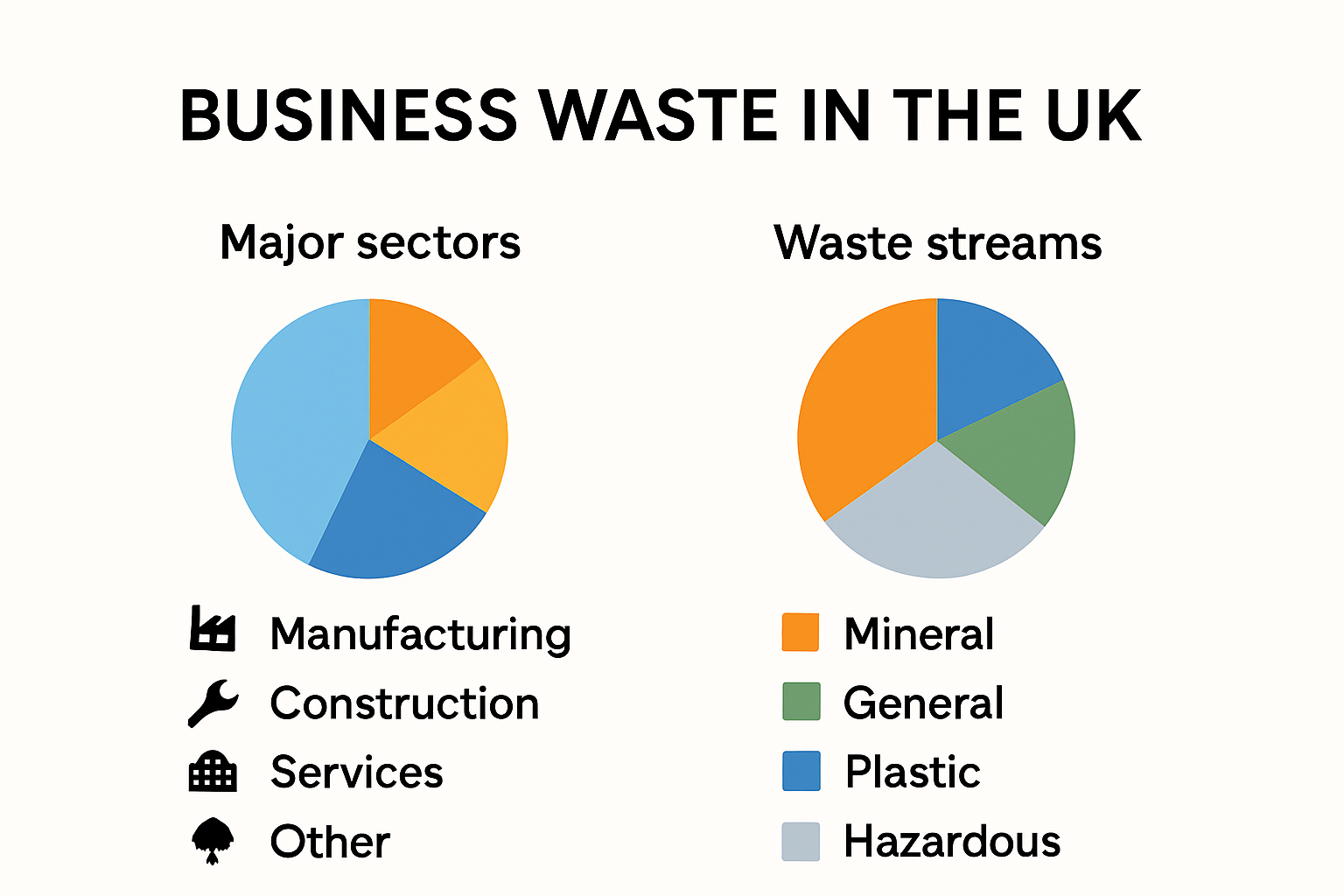
The landscape of business waste is remarkably diverse and significant. Recent research from the Environment Agency reveals that commercial and industrial waste represents a substantial portion of the UK’s total waste output. According to data, commercial and industrial sectors produce approximately 23% of the nation’s total waste, making it a crucial area for strategic waste reduction efforts.

Different industries contribute uniquely to this waste profile. The construction sector stands out as the most significant waste generator, responsible for an astounding 62% of total waste generation. This highlights the urgent need for targeted waste management strategies in high-impact sectors.

A breakdown of the main contributors to UK waste helps visualise areas for targeted waste reduction:

Sector Percentage of UK Total Waste Generated
Construction 62%
Commercial & Industrial 23%
Office & Retail (part of Commercial & Industrial)
Other Sectors (Agriculture, etc.) 15% (approximate remainder)

UK business waste breakdown by sector and stream

Waste Stream Categorisation

Understanding waste streams requires a comprehensive breakdown of materials. Typical business waste categories include:

  • Paper and Cardboard: Representing a significant volume of office and retail waste
  • Organic Waste: Primarily from food service and agricultural businesses
  • Electronic Waste (WEEE): Growing with increasing technological dependence
  • Plastic Packaging: A persistent challenge across multiple industries

Research from the Waste and Resources Action Programme (WRAP) indicates that businesses can potentially reduce waste volumes by up to 30% through strategic management and innovative recycling approaches.

Economic and Environmental Implications

Waste management is not just an environmental consideration but a critical economic strategy. Inefficient waste handling results in significant financial losses and environmental damage. Our comprehensive guide on waste management cost reduction provides insights into how organisations can transform waste from a cost centre to a potential resource.

The UK’s commitment to circular economy principles means businesses must adopt more sophisticated waste management approaches. This involves not just disposal, but comprehensive strategies that prioritise reduction, reuse, and recycling. The paper recycling rate, which now exceeds 70%, demonstrates the potential for systemic improvement across waste streams.

By developing a deep understanding of waste streams, UK businesses can create more sustainable, cost-effective operational models that align with national environmental goals and regulatory requirements. The journey towards effective waste management begins with comprehensive knowledge and strategic implementation.

Navigating these complex waste management landscapes requires expertise, commitment, and a forward-thinking approach that balances environmental responsibility with business efficiency.

Proven Methods to Reduce Office and Industrial Waste

Reducing waste in office and industrial environments requires strategic planning and implementation of comprehensive waste management techniques. As businesses increasingly prioritise sustainability, innovative approaches are transforming how organisations handle their waste streams.

Comprehensive Waste Segregation Strategies

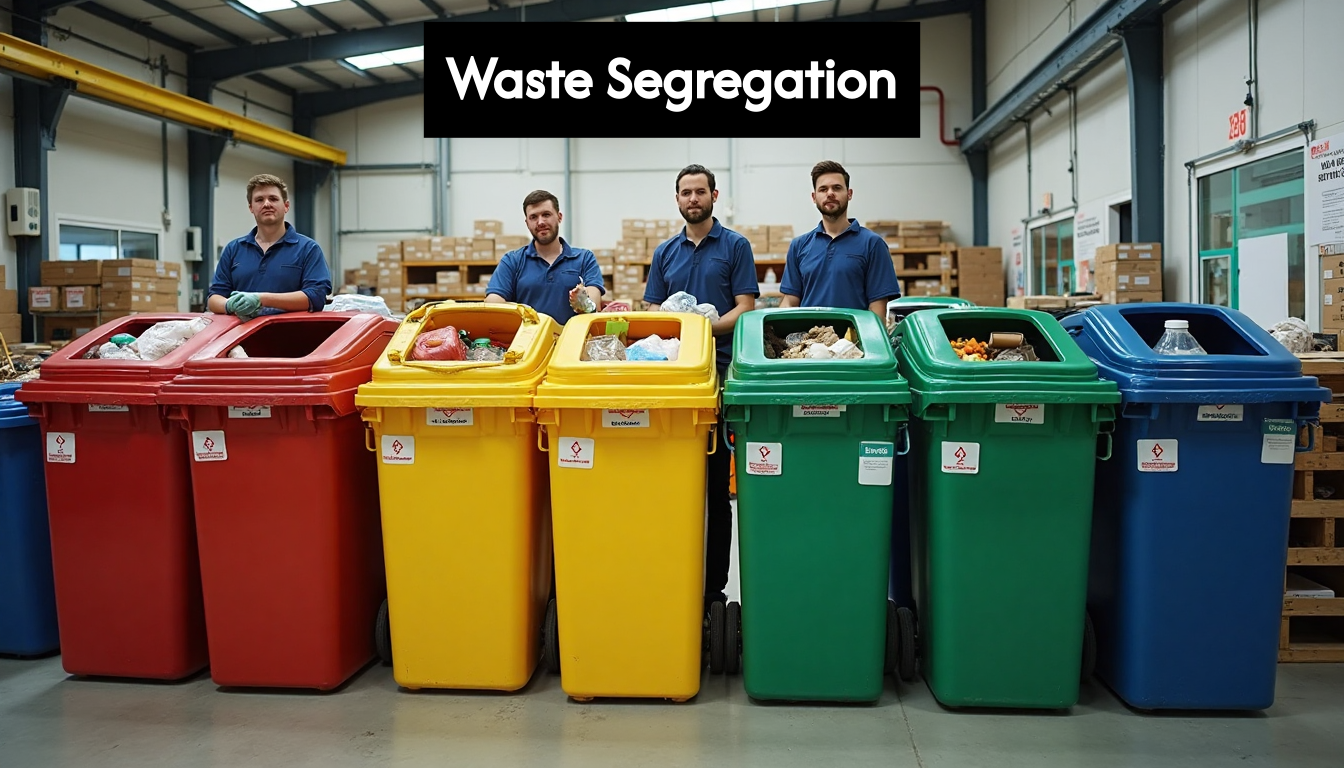
Effective waste reduction begins with precise segregation. From 31 March 2025, new UK regulations mandate that businesses with 10 or more employees must separate waste streams including food waste, paper/card, and dry recyclables. This legal requirement compels organisations to develop robust waste sorting systems.

Industrial workers separating waste into labelled recycling bins

Implementing dedicated bins for different waste categories allows businesses to:

  • Track Waste Generation: Understand precise waste volumes per category
  • Improve Recycling Rates: Ensure clean, uncontaminated recyclable materials
  • Reduce Landfill Contributions: Direct appropriate waste to correct processing streams

To help clarify the main strategies for office and industrial waste reduction, here’s a summary table of the methods, their actions, and primary benefits:

Strategy Example Actions Key Benefits
Waste Segregation Systems Use bins for food waste, paper/card, recyclables Higher recycling rates, regulatory compliance
Technology Solutions Install waste tracking, volume reporting, analytics Data-driven decisions, cost savings
Extended Producer Responsibility (EPR) Redesign packaging, source recyclable materials Reduced disposal costs, sustainability focus

Technology and Digital Solutions

Modern technological interventions are revolutionising waste management. Advanced waste tracking software enables businesses to monitor waste generation in real-time, providing actionable insights for reduction strategies.

Digital solutions offer multiple benefits:

  • Automated waste volume reporting
  • Predictive analytics for waste generation patterns
  • Cost tracking and environmental impact measurement

Extended Producer Responsibility Implementation

The introduction of Extended Producer Responsibility (EPR) for packaging in 2025 shifts full recycling and disposal costs onto manufacturers and retailers. This legislation incentivises businesses to:

  • Redesign packaging for improved recyclability
  • Reduce overall packaging materials
  • Invest in sustainable packaging solutions

Our comprehensive guide on waste management cost reduction provides deeper insights into navigating these emerging regulatory landscapes.

By adopting these proven methods, UK businesses can significantly reduce waste, comply with evolving regulations, and contribute to national sustainability goals. The key lies in embracing technological solutions, understanding regulatory requirements, and implementing systematic waste management approaches.

Safe Disposal of Hazardous, Confidential, and WEEE Waste

Safe waste disposal represents a critical responsibility for UK businesses, particularly when managing hazardous materials, confidential documents, and electronic waste. Proper disposal not only ensures legal compliance but also protects organisational and environmental interests.

Regulatory Compliance for Hazardous and Electronic Waste

The UK’s waste management regulations have become increasingly stringent. According to the Environment Agency, businesses must adhere to strict guidelines when disposing of potentially dangerous waste streams. From 31 March 2025, new regulations mandate that all businesses must separate hazardous waste, confidential materials, and electrical equipment before collection.

Specifically for electrical waste, the WEEE Regulations require businesses to use authorised treatment facilities. Our comprehensive guide to WEEE waste provides detailed insights into managing electronic waste responsibly.

Confidential Waste Management Protocols

Confidential waste disposal demands meticulous attention to data protection. The Information Commissioner’s Office (ICO) emphasises that businesses must implement secure destruction methods to prevent potential data breaches. Key considerations include:

  • Secure Shredding: Physical destruction of sensitive documents
  • Digital Data Wiping: Complete erasure of electronic storage devices
  • Certified Destruction Services: Professional handling of highly sensitive materials

Hazardous Waste Handling and Disposal

Hazardous waste requires specialized handling to mitigate environmental and health risks. Businesses must:

  • Identify and categorize hazardous waste streams
  • Use licensed waste carriers
  • Maintain comprehensive documentation of waste transfer
  • Implement strict containment and transportation protocols

Research from the Health and Safety Executive highlights the critical nature of proper hazardous waste management, emphasizing the potential risks of improper disposal.

Businesses must recognize that waste disposal is more than a regulatory requirement it is a fundamental responsibility towards environmental protection and workplace safety. By implementing robust waste management strategies, organisations can simultaneously reduce risk, ensure compliance, and demonstrate environmental stewardship.

Navigating the complex landscape of waste disposal requires expertise, commitment, and a proactive approach to understanding and implementing best practices in waste management.

Partnering With Reliable Waste Management Companies

Selecting the right waste management partner represents a critical strategic decision for UK businesses seeking to optimise their waste reduction and sustainability efforts. The landscape of waste management services continues to evolve, presenting organisations with increasingly sophisticated options for responsible waste handling.

Evaluating Waste Management Service Providers

Market research indicates that the UK currently hosts 1,661 waste management service businesses, offering organisations a diverse range of potential partners. When selecting a waste management company, businesses must conduct comprehensive evaluations focusing on several key criteria:

  • Regulatory Compliance: Verify the company’s adherence to current UK waste management regulations
  • Certification and Credentials: Check for relevant environmental and waste management certifications
  • Service Specialisation: Ensure the provider can handle your specific waste streams
  • Technological Capabilities: Assess their digital tracking and reporting systems

The following table summarises the main criteria to consider when selecting a waste management service provider and their importance as discussed in the content:

Evaluation Criteria What to Check Importance/Benefit
Regulatory Compliance Adherence to UK waste laws Ensures legal operation & compliance
Certification & Credentials Industry certifications, licences Proof of professionalism & standards
Service Specialisation Handling of specific business waste streams Fit for your sector and waste types
Technological Capabilities Digital tracking, transparent reporting Enables data-driven waste management

Strategic Partnership Considerations

The UK waste management market is projected to grow from USD 40.22 billion in 2024 to USD 66.24 billion by 2033, reflecting the increasing importance of professional waste management. Businesses should look beyond simple waste collection and seek partners who offer:

  • Comprehensive waste auditing services
  • Detailed reporting and analytics
  • Sustainability consultation
  • Cost reduction strategies

Compliance and Future-Proofing

From March 2025, new regulations require businesses with 10 or more employees to separate waste streams meticulously. Our guide on waste management cost reduction provides insights into selecting partners who can help navigate these complex regulatory landscapes.

A strategic waste management partnership goes beyond mere disposal. The ideal partner acts as a sustainability consultant, helping organisations transform waste from a cost centre into a potential resource. By selecting a provider with robust technological capabilities, comprehensive service offerings, and a commitment to environmental stewardship, businesses can achieve significant operational efficiencies.

The right waste management partnership is not an expense but an investment in organisational sustainability, regulatory compliance, and long-term environmental responsibility. Businesses must approach this selection process with the same rigour they would apply to any critical strategic partnership.

Frequently Asked Questions

What are the new waste separation regulations for UK businesses in 2025?

From 31 March 2025, UK businesses with 10 or more employees must separate their waste into specific streams, including food waste, paper and cardboard, and dry recyclables, to comply with new regulations.

How can technology help my business reduce waste?

Implementing advanced waste tracking software enables businesses to monitor real-time waste generation, providing insights that support data-driven decision-making and adopting strategies for waste reduction.

What is Extended Producer Responsibility (EPR) and how will it affect my business?

Extended Producer Responsibility (EPR) legislation set to take effect in 2025 holds businesses responsible for recycling and disposal costs associated with their packaging, requiring them to focus on sustainable and recyclable packaging solutions.

How do I choose a reliable waste management company?

When selecting a waste management partner, evaluate their regulatory compliance, industry certifications, service specialisation, and technological capabilities to ensure they can meet your business’s specific waste management needs.

Ready to Master Waste Segregation and Compliance in 2025?

Struggling to separate your business waste while keeping up with ever-changing UK regulations is daunting. From complicated waste streams and strict compliance requirements to the urgent need for secure document destruction, the challenges can quickly feel overwhelming. If you are looking for reliable guidance and practical support, our confidential waste services and WEEE Waste solutions provide peace of mind and a clear path to full compliance, as highlighted in this guide.

https://venturewaste.co.uk

Act swiftly to stay ahead of the upcoming 2025 regulations. Book an expert service at Venture Waste Management today and simplify your approach to waste handling. Take control of your compliance journey and protect your business reputation—contact us now to get started.
Professionals discuss hazardous waste at a modern office table

Types of Hazardous Waste: Business Waste Guide UK 2025

Professionals discuss hazardous waste at a modern office table

Hazardous waste is not just lurking in factories or medical bins. Nearly every UK business creates some form of hazardous waste, with strict regulations covering everything from electronics to cleaning chemicals. Strangely, most business owners are confident they are compliant yet more than a third are failing basic requirements. The shock is that simply misfiling paperwork or storing one item incorrectly can trigger heavy fines and criminal action. The real risk is not the waste itself but how a single oversight can spell disaster for your reputation or finances. Here is what every UK business needs to know before one mistake becomes headline news.

Table of Contents

Quick Summary

Takeaway Explanation
Proper Identification is Key Businesses must carefully assess their waste streams to identify hazardous materials like chemicals, electronic equipment, and medical waste, ensuring proper classification and handling.
Legal Compliance is Crucial UK businesses must adhere to strict regulations, including obtaining waste transfer licenses and maintaining comprehensive documentation to avoid legal penalties.
Implement Comprehensive Waste Management Protocols Organisations should develop detailed protocols covering waste identification, secure storage, and transportation, ensuring environmental protection and compliance with regulations.


Understanding Types of Hazardous Waste in UK Businesses

Business waste management requires a comprehensive understanding of hazardous materials that pose potential risks to human health and the environment. Learn more about hazardous waste disposal strategies for UK enterprises.

Classification and Identification of Hazardous Waste

Hazardous waste represents a critical challenge for UK businesses across various sectors. According to government regulations, hazardous waste is defined by its potential to cause harm through chemical, biological, or physical properties that create significant risks. These materials require specialized handling, transportation, and disposal processes to prevent environmental contamination and protect public health.

Businesses must carefully assess their waste streams to identify potentially hazardous materials. The UK categorizes hazardous waste based on specific characteristics, including toxicity, reactivity, corrosiveness, and infectious potential. Common examples include industrial chemicals, medical waste, electronic equipment containing toxic components, and materials with heavy metal contamination.

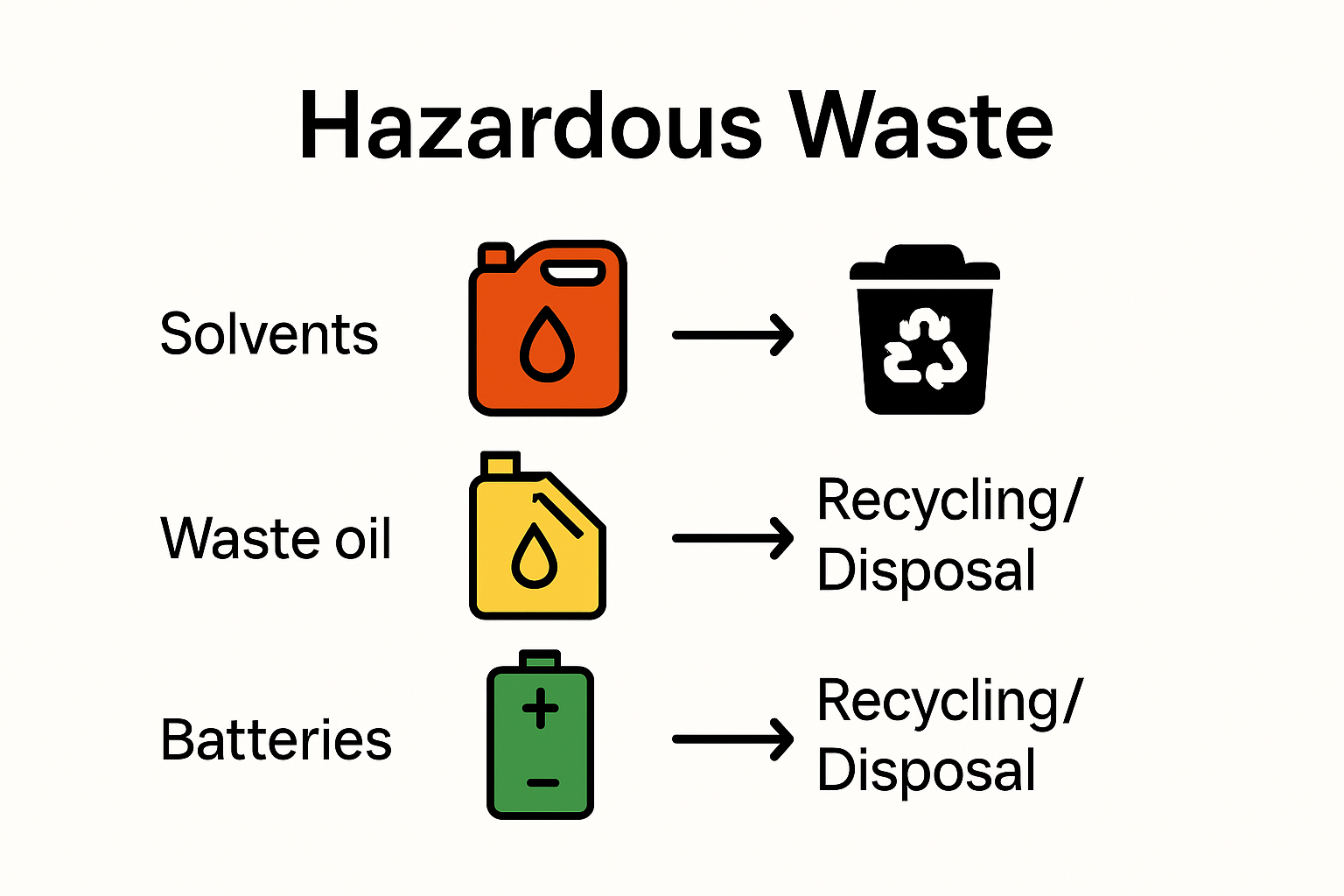
Infographic showing main types of hazardous waste in UK businesses

Key Categories of Hazardous Waste in Business Environments

The spectrum of hazardous waste generated by UK businesses is extensive and diverse. Research from waste management experts highlights several critical categories that businesses must recognize:

  • Chemical Waste: Includes solvents, industrial chemicals, print toners, brake fluids, and pesticides that require specialized disposal techniques.
  • Medical and Biological Waste: Encompasses contaminated sharps, expired medications, infectious materials, and laboratory chemicals from healthcare and research facilities.
  • Electronic Waste (WEEE): Represents equipment containing hazardous substances like mercury, lead, and other toxic materials found in computers, monitors, and electronic components.

Workers inspecting hazardous waste containers in warehouse

UK businesses face stringent legal requirements when managing hazardous waste. The Environmental Protection Act and subsequent regulations mandate precise documentation, proper classification, and environmentally responsible disposal methods. Companies must obtain appropriate waste transfer licenses, maintain detailed records, and work exclusively with certified waste management providers.

Failure to comply with these regulations can result in significant financial penalties and potential legal consequences. Businesses must implement robust waste management protocols that include comprehensive training, proper storage facilities, and systematic tracking of hazardous material movements.

Understanding the intricate landscape of hazardous waste is not just a legal requirement but a fundamental responsibility for businesses committed to environmental stewardship and public safety. By developing a comprehensive approach to waste identification, management, and disposal, UK enterprises can effectively mitigate potential risks while contributing to broader environmental protection efforts.

Key Categories: Chemical, Electronic, and Confidential Waste

UK businesses generate multiple types of hazardous waste that require specialized management and disposal strategies. Discover secure waste management solutions tailored to your business needs.

Chemical Waste Management and Risks

Chemical waste represents a significant hazard for businesses across various industries. According to UK environmental regulations, chemical waste includes substances that pose substantial risks to human health and environmental safety. These materials encompass a wide range of compounds, from industrial solvents and print toners to laboratory chemicals and pesticides.

Research from waste management experts highlights the critical importance of proper chemical waste classification. Businesses must utilize European Waste Catalogue (EWC) codes to accurately identify and categorize chemical waste based on its specific properties, including toxicity, corrosiveness, and potential for environmental contamination.

Electronic Waste and Technological Hazards

Electronic waste (WEEE) presents unique challenges for UK businesses. This category includes complex equipment containing hazardous materials such as mercury, lead, and other toxic components found in computers, monitors, servers, and telecommunications equipment. The environmental impact of improper electronic waste disposal can be devastating, with potential long-term consequences for ecosystem health.

  • Toxic Component Risks: Electronic devices contain heavy metals and chemical compounds that can leach into soil and water systems.
  • Regulatory Compliance: Businesses must adhere to strict WEEE regulations governing the collection, treatment, and recycling of electronic waste.
  • Data Security: Proper disposal involves not just environmental considerations but also complete data destruction for sensitive electronic equipment.

Confidential Waste and Information Protection

Confidential waste management goes beyond simple disposal, representing a critical aspect of business risk management. This category includes sensitive documents, data storage devices, and materials containing potentially compromising information. Businesses must implement rigorous destruction protocols to prevent data breaches and protect sensitive information.

Key considerations for confidential waste management include:

  • Secure Collection: Implementing locked collection containers for sensitive materials.
  • Verified Destruction: Utilizing certified destruction processes that completely eliminate readable information.
  • Comprehensive Documentation: Maintaining detailed records of waste disposal to ensure full regulatory compliance.

The intersection of these waste categories demands a sophisticated approach to waste management. UK businesses must develop comprehensive strategies that address the unique challenges posed by chemical, electronic, and confidential waste. This requires ongoing staff training, investment in specialized disposal technologies, and a commitment to environmental and regulatory compliance.

Navigating the complex landscape of hazardous waste management is not just a legal obligation but a fundamental responsibility. By understanding and properly managing these critical waste categories, businesses can protect their operational integrity, safeguard sensitive information, and contribute to broader environmental protection efforts.

UK businesses face complex legal obligations when managing hazardous waste, requiring meticulous attention to regulatory compliance. Learn more about comprehensive disposal guidelines to protect your business from potential legal risks.

Duty of Care and Regulatory Framework

The Environmental Protection Act 1990 establishes a fundamental legal principle known as the “duty of care” for hazardous waste management. According to government regulations, businesses must take all reasonable steps to prevent harm to human health and the environment throughout the waste lifecycle. This comprehensive responsibility extends beyond simple disposal and encompasses every stage of waste handling.

Businesses must demonstrate a systematic approach to waste management, which includes:

  • Accurate waste classification
  • Proper documentation
  • Secure storage
  • Use of authorized waste carriers
  • Comprehensive record-keeping

Waste Hierarchy and Compliance Strategies

Environmental experts emphasize the critical importance of following the waste hierarchy, a legal framework that prioritizes waste management strategies. The hierarchy mandates businesses to pursue waste prevention, reuse, and recycling before considering recovery or final disposal options.

Key compliance requirements include:

  • Implementing waste reduction strategies
  • Exploring recycling and reuse opportunities
  • Ensuring environmentally responsible disposal methods
  • Maintaining transparent documentation of waste management processes

Consequences of Non-Compliance

Failure to adhere to hazardous waste regulations can result in severe consequences for UK businesses. Potential penalties include substantial financial fines, legal prosecution, and significant reputational damage. Regulatory bodies conduct regular inspections and can impose immediate sanctions for non-compliance.

Businesses must be prepared to demonstrate:

  • Comprehensive waste management protocols
  • Staff training on hazardous waste handling
  • Detailed waste transfer and tracking documentation
  • Evidence of working with licensed waste management providers

Navigating the complex landscape of hazardous waste disposal requires a proactive and systematic approach. By understanding and implementing robust legal responsibilities, businesses can protect themselves from potential risks while contributing to environmental sustainability.

The evolving regulatory environment demands continuous adaptation and commitment to best practices. Businesses must remain informed about changes in legislation, invest in staff training, and develop flexible waste management strategies that prioritize both legal compliance and environmental protection.

Safe Handling and Disposal Solutions for Organisations

Hazardous waste management demands precision, expertise, and comprehensive strategies to protect both organisational interests and environmental integrity. Explore advanced disposal solutions tailored for modern UK businesses.

Comprehensive Waste Management Protocols

Effective hazardous waste handling requires a systematic approach that begins with thorough identification and assessment. According to updated 2025 environmental regulations, organisations must develop robust protocols that cover every stage of waste management, from initial collection to final disposal.

Key components of comprehensive waste management include:

  • Detailed waste stream mapping
  • Risk assessment for each waste category
  • Implementation of specialized containment procedures
  • Development of staff training programmes
  • Regular review and updating of waste management strategies

Secure Storage and Transportation Guidelines

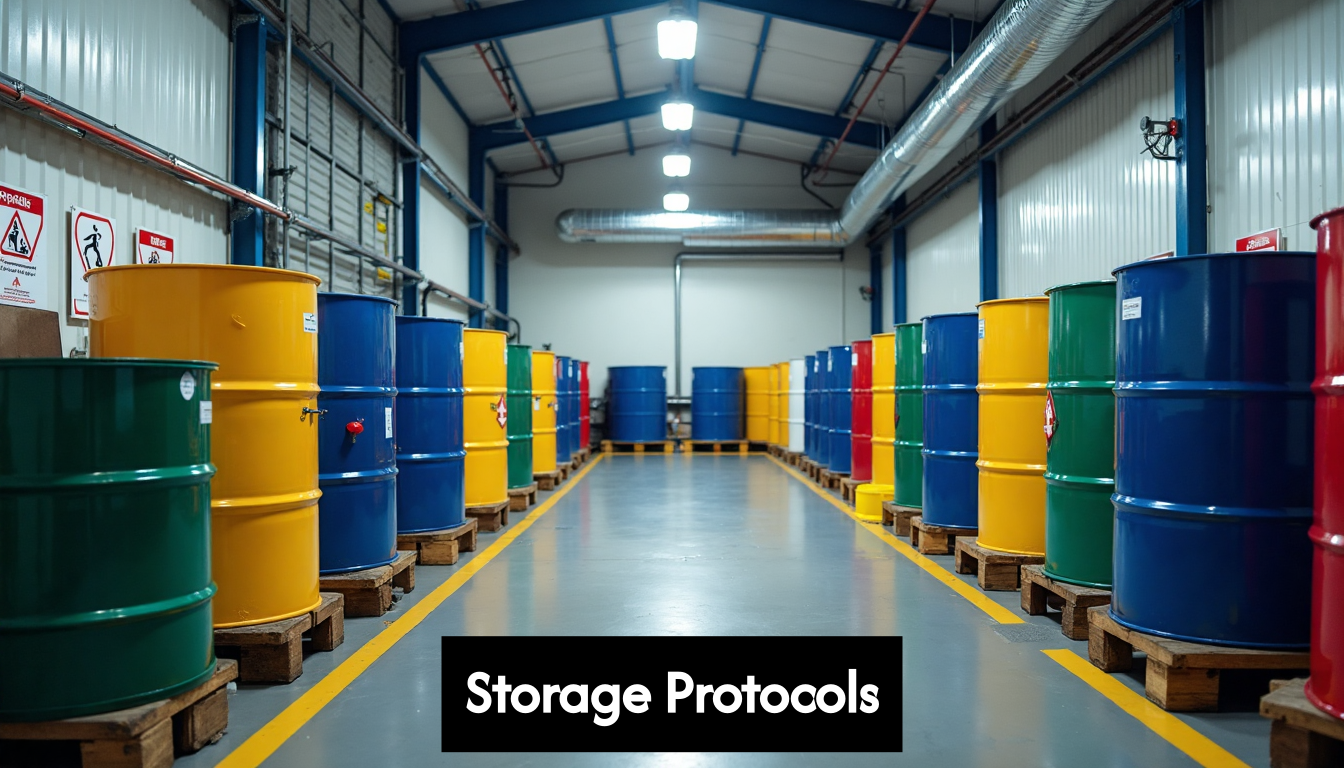
Government guidelines emphasize the critical importance of secure storage and transportation for hazardous waste. Organisations must invest in specialized containment solutions that prevent environmental contamination and protect human health. This involves using appropriate containers, implementing strict labelling protocols, and ensuring proper segregation of different waste types.

Critical considerations for safe storage and transportation include:

  • Use of chemical-resistant, leak-proof containers
  • Clear hazard labelling and warning signs
  • Dedicated storage areas with controlled access
  • Temperature and environmental condition monitoring
  • Compliance with transportation regulations for hazardous materials

Documentation and Compliance Strategies

Maintaining comprehensive documentation is a legal requirement and a crucial aspect of responsible hazardous waste management. Environmental experts highlight the importance of creating a transparent and traceable waste management system.

Essential documentation practices include:

  • Detailed waste transfer notes
  • Consignment tracking records
  • Staff training certification
  • Internal audit logs
  • Compliance reports for regulatory bodies

Organisations must recognize that hazardous waste management extends beyond mere disposal. It represents a comprehensive approach to environmental responsibility, risk mitigation, and legal compliance. By implementing rigorous handling and disposal solutions, businesses can protect themselves from potential legal and environmental risks while demonstrating a commitment to sustainable practices.

The landscape of hazardous waste management continues to evolve, with increasing emphasis on prevention, reduction, and environmentally responsible disposal. Successful organisations will remain proactive, continuously adapting their strategies to meet changing regulatory requirements and technological advancements in waste management solutions.

Frequently Asked Questions

What types of waste are considered hazardous for UK businesses?

Hazardous waste for UK businesses includes chemical waste such as solvents and pesticides, medical waste from healthcare facilities, and electronic waste like computers and monitors containing toxic components.

What regulations govern hazardous waste disposal in the UK?

The disposal of hazardous waste in the UK is governed by the Environmental Protection Act 1990 and subsequent regulations, which require businesses to obtain waste transfer licences and maintain comprehensive documentation for compliance.

How can businesses ensure compliance with hazardous waste regulations?

Businesses can ensure compliance by properly identifying and classifying hazardous materials, implementing comprehensive waste management protocols, and working with licensed waste management providers to adhere to legal standards.

What are the consequences of failing to comply with hazardous waste regulations?

Failing to comply with hazardous waste regulations can lead to substantial financial penalties, legal prosecution, and reputational damage, making it essential for businesses to maintain proper waste management practices.

Make Hazardous Waste Headaches a Thing of the Past

Struggling to keep up with the complex regulations and ever-changing list of hazardous waste in your business? The risks are huge: heavy fines, legal troubles, and lasting reputational harm from a single oversight in managing chemical or electronic waste. If you want to stop stressing over compliance and secure your operations, it is time to put your trust in professionals who understand the ins and outs of UK hazardous waste law. Explore the latest guidance and tailored WEEE waste solutions in our WEEE Waste Archives.

https://venturewaste.co.uk

Take control of your compliance today. Visit Venture Waste Management for expert advice, flexible collection options, and a simple booking process that brings peace of mind to your business. Have sensitive data or hardware? Check out our secure hard drive destruction services and eliminate confidential risks for good. Act now before a small mistake costs you your reputation.
UK business premises with labelled waste bins

7 Steps to Waste Compliance for UK Businesses in 2025

UK business premises with labelled waste bins

UK businesses are facing big changes in waste management. From 31 March 2025, it will be a legal requirement for every company with 10 or more employees to sort their waste into set categories like food, paper, plastics, metals and glass. Here is the shock: businesses that fail to comply could face significant fines and even legal action. Most think this is just another piece of red tape, but it is actually a chance for companies to prove they are committed to sustainability while cutting long-term costs. The details may surprise you.

Table of Contents

Quick Summary

Takeaway Explanation
Understand New Waste Regulations by 2025 Starting 31 March 2025, businesses with 10 or more employees must legally separate waste into defined categories, including food, paper, plastics, metals, and glass, to comply with new regulations.
Conduct Comprehensive Waste Audits Performing detailed waste audits is crucial for identifying waste generation patterns and needs for segregation, helping businesses prepare for regulatory compliance.
Choose Licensed Waste Carriers It is mandatory for organisations to collaborate with licensed waste carriers from 31 March 2025, ensuring legal waste handling and compliance with government regulations.
Establish an Ongoing Training and Compliance Framework Businesses must develop regular training and record-keeping systems to ensure staff are well-versed in waste management protocols and that compliance is continuously monitored and updated.
Implement Strategic Waste Management Practices Adopting a proactive and strategic approach to waste segregation and disposal not only ensures compliance but also enhances opportunities for sustainability and cost savings.

7 key steps to UK waste compliance visual overview

Understanding UK Waste Compliance Rules

Waste management regulations in the UK are evolving rapidly, and businesses must stay informed about the critical changes approaching in 2025. The legal landscape for waste disposal is becoming increasingly complex, requiring organisations to adopt more sophisticated and environmentally responsible approaches.

The New Regulatory Framework

Starting from 31 March 2025, significant changes will transform how businesses handle their waste. Comprehensive waste management guidelines are being implemented, mandating strict separation and recycling protocols. According to government guidance, all businesses, charities, and public sector organisations in England must legally separate their waste streams, marking a substantial shift in waste management practices.

The updated regulations specifically require businesses with 10 or more full-time employees to segregate waste into precise categories. This means paper and cardboard must be kept separate from mixed dry recycling, and organisations must provide clearly labelled bins for each distinct waste stream. These requirements represent a significant operational change for many businesses.

Compliance and Consequences

Non-compliance is not a trivial matter. Research from environmental regulatory bodies indicates that businesses failing to adhere to these new waste separation laws could face substantial financial penalties and potential enforcement actions. Both businesses and waste collectors are now legally obligated to ensure end-to-end compliance with the updated regulations.

The key waste streams that businesses must now separately collect include:

  • Food Waste: Mandatory separation for businesses producing significant food-related waste
  • Paper and Cardboard: Must be kept distinct from other recyclable materials
  • Plastics: Requires specific segregation protocols
  • Metals: Separate collection requirements
  • Glass: Another critical waste stream demanding individual handling

These requirements reflect a broader commitment to improving recycling rates and reducing environmental impact. Businesses must view these regulations not just as legal obligations, but as opportunities to demonstrate corporate social responsibility and contribute to national sustainability goals.

Preparing for these changes demands proactive planning. Organisations will need to invest in appropriate waste sorting infrastructure, train staff on new procedures, and potentially redesign their waste management workflows. The transition might seem challenging, but it represents a crucial step towards more sustainable business practices.

Understanding these rules is not optional—it is a critical business imperative. By staying informed and implementing robust waste management strategies, businesses can ensure they meet legal requirements while also positioning themselves as environmentally conscious organisations.

Step-by-Step Waste Assessment and Segregation

Effective waste management begins with a comprehensive assessment and strategic segregation process. Businesses must develop a systematic approach to understand, categorise, and manage their waste streams efficiently to meet the stringent 2025 regulatory requirements.

Conducting a Comprehensive Waste Audit

The first critical step in waste management is performing a detailed waste audit. Insights on construction waste management reveal that understanding your waste composition is fundamental to compliance. According to DEFRA guidelines, businesses must meticulously document and analyse their waste generation patterns.

A thorough waste audit involves:

  • Quantifying Waste Volumes: Measure the total amount of waste produced across different categories
  • Identifying Waste Streams: Catalogue specific types of waste generated by your organisation
  • Tracking Waste Disposal Methods: Document current waste handling and disposal practices

This process requires a systematic approach. Start by collecting waste samples over a representative period, typically one to two weeks. Carefully sort and weigh different waste categories, recording detailed information about composition, volume, and current disposal methods.

Staff sorting waste into separate bins in office

Implementing Precise Waste Segregation Protocols

From 31 March 2025, businesses must implement rigorous waste segregation protocols. Government regulations mandate specific separation requirements for workplaces. Businesses with 10 or more full-time employees must create distinct waste streams with clearly labelled bins for each category.

Key waste segregation requirements include:

  • Food Waste: Mandatory separate collection for businesses producing significant food-related waste
  • Recyclable Materials: Strict separation of paper, cardboard, plastics, metals, and glass
  • Non-Recyclable Waste: Dedicated bins for materials that cannot be recycled
  • Hazardous Waste: Special handling for potentially dangerous waste streams

Organisations must invest in appropriate infrastructure, including colour-coded bins, clear signage, and employee training programmes to ensure proper waste segregation. This might require restructuring existing waste management systems and potentially redesigning workplace layouts to accommodate new waste collection protocols.

Monitoring and Continuous Improvement

Waste management is an ongoing process that requires constant evaluation and refinement. Businesses should establish regular monitoring mechanisms to track their waste segregation effectiveness. This involves periodic waste audits, staff training updates, and continuous improvement of waste management strategies.

Implement digital tracking systems to monitor waste generation, segregation accuracy, and disposal methods. These systems can help identify inefficiencies, reduce waste production, and demonstrate compliance with regulatory requirements.

The transition to comprehensive waste segregation may seem challenging, but it represents a critical opportunity for businesses to demonstrate environmental responsibility. By approaching waste management strategically, organisations can not only meet legal obligations but also potentially reduce waste disposal costs and minimise their environmental impact.

Remember, successful waste assessment and segregation is not just about compliance—it is about creating a sustainable approach to resource management that benefits both your business and the broader environment.

Choosing the Right Waste Disposal Solutions

Selecting appropriate waste disposal solutions is a critical component of achieving comprehensive waste compliance for UK businesses in 2025. The evolving regulatory landscape demands strategic decision-making that goes beyond traditional waste management approaches.

Understanding Licensed Waste Carrier Requirements

Businesses must work exclusively with licensed waste carriers to ensure legal compliance. Waste management insights for regional businesses highlight the importance of selecting verified and registered waste disposal partners. According to government regulations, from 31 March 2025, organisations with 10 or more full-time equivalent employees must use licensed carriers for waste collections.

Key considerations when selecting a waste disposal partner include:

  • Certification Verification: Confirm the waste carrier’s current environmental agency licensing
  • Compliance Documentation: Request detailed waste transfer documentation
  • Service Flexibility: Ensure they can handle multiple waste streams
  • Reporting Capabilities: Choose providers offering comprehensive waste tracking

The right waste disposal solution goes beyond simple collection. It involves a comprehensive approach to managing different waste categories efficiently and legally.

Implementing Comprehensive Waste Stream Management

Government guidance mandates specific waste segregation protocols. Businesses must provide clearly labelled bins for distinct waste streams, including:

  • Food Waste: Separate collection and dedicated disposal
  • Paper and Cardboard: Kept distinct from mixed recyclables
  • Mixed Dry Recyclables: Combining plastics, metals, and glass
  • General Non-Recyclable Waste: Specific handling requirements

Choosing a waste disposal solution requires a nuanced understanding of these streams. Some providers specialise in specific waste types, while others offer comprehensive multi-stream management. Evaluate potential partners based on their ability to handle your specific waste profile.

Strategic Waste Disposal Partnership Selection

Beyond regulatory compliance, the right waste disposal solution can contribute to broader organisational sustainability goals. Consider partners who offer:

  • Detailed waste auditing services
  • Carbon footprint reduction strategies
  • Innovative recycling and repurposing options
  • Transparent reporting mechanisms
  • Cost-effective waste management approaches

A strategic waste disposal partnership transforms waste management from a regulatory obligation into an opportunity for environmental and economic optimization. By carefully selecting a waste carrier that understands the 2025 regulatory landscape, businesses can streamline their waste processes, reduce environmental impact, and potentially generate cost savings.

Remember, waste disposal is no longer just about removing unwanted materials. It is a complex process requiring strategic thinking, regulatory knowledge, and a commitment to sustainable practices. The right waste disposal solution will be a partner in your organisation’s environmental responsibility journey.

Creating an Ongoing Compliance and Training Plan

Establishing a comprehensive and dynamic compliance and training plan is essential for businesses navigating the complex landscape of waste management regulations in 2025. This strategic approach ensures that organisations remain adaptable, informed, and proactively aligned with evolving legal requirements.

Developing a Structured Training Framework

Accredited waste regulation training is crucial for building organisational competence. According to compliance guidance, businesses must implement systematic training programmes that cover the nuanced aspects of waste segregation, documentation, and disposal.

A robust training framework should incorporate:

  • Comprehensive Induction Modules: Introduce new employees to waste management protocols
  • Regular Refresher Courses: Update staff on changing regulations
  • Practical Demonstration Sessions: Provide hands-on training for waste segregation techniques
  • Digital Learning Resources: Develop online modules for flexible learning

The goal is to create a culture of continuous learning and environmental responsibility within the organisation. Training should not be a one-time event but an ongoing process of skill development and awareness enhancement.

Implementing Comprehensive Record-Keeping Systems

Regulatory experts emphasize the critical importance of meticulous documentation. Businesses must establish robust record-keeping systems that track waste generation, segregation, and disposal with precision.

Key documentation requirements include:

  • Waste Audit Logs: Detailed records of waste volumes and types
  • Compliance Checklists: Regular assessments of waste management practices
  • Training Attendance Records: Documentation of staff training participation
  • Waste Transfer Documentation: Comprehensive logs of waste carrier interactions

Digital tracking systems can streamline this process, providing real-time insights and generating reports that demonstrate regulatory compliance. These systems not only ensure legal adherence but also offer valuable data for continuous improvement of waste management strategies.

Continuous Monitoring and Adaptive Strategy

Compliance is an evolving journey that requires constant vigilance and adaptability. Organisations must establish mechanisms for ongoing assessment and improvement of their waste management approaches. This involves:

  • Conducting quarterly internal waste audits
  • Staying informed about regulatory updates
  • Soliciting feedback from staff about waste management processes
  • Investing in technology and training that support compliance objectives

By treating compliance as a dynamic, organisation-wide commitment, businesses can transform regulatory requirements from a challenge into an opportunity for innovation and environmental stewardship.

Successful compliance is not about ticking boxes—it is about embedding a culture of environmental responsibility that extends beyond mere legal requirements. The most effective compliance plans are those that engage employees, leverage technology, and view waste management as a strategic business function that contributes to broader sustainability goals.

Frequently Asked Questions

What are the new waste compliance regulations for UK businesses in 2025?

Starting from 31 March 2025, UK businesses with 10 or more employees must legally separate waste into specific categories: food waste, paper, plastics, metals, and glass. Non-compliance may result in significant fines and legal action.

How can businesses prepare for the new waste segregation requirements?

To prepare, businesses should conduct a comprehensive waste audit to understand their waste streams, implement rigorous waste segregation protocols with clearly labelled bins, and invest in appropriate waste management infrastructure and staff training.

What are the consequences of failing to comply with waste management regulations?

Businesses that do not adhere to the new waste separation laws may face substantial financial penalties and enforcement actions. Compliance is vital to avoid legal repercussions and demonstrate corporate social responsibility.

How should businesses choose a licensed waste carrier?

Businesses need to select licensed waste carriers that are verified and registered with the environmental agency. Key factors to consider include certification verification, compliance documentation, service flexibility, and the carrier’s ability to handle multiple waste streams.

Secure Your Waste Compliance Journey for 2025 – With Expert Help

Facing waste compliance in 2025 can feel overwhelming. You have new rules to understand, mandatory waste segregation to master, and legal penalties at stake if you get it wrong. Many businesses are worried they might not have the right waste streams in place or fear missing out on clear documentation. This is not just about ticking boxes. It is about protecting your business, staying ahead of regulators, and showing your dedication to sustainability. Our regulation support resources give you up-to-date guidance and practical tips tailored to the UK’s latest laws, helping make sense of the changes.

https://venturewaste.co.uk

Why risk non-compliance and future fines? Turn regulatory anxiety into confidence with Venture Waste. We offer licensed waste solutions, expert advice, and a simple booking process that keeps compliance stress-free. Begin your journey to hassle-free legal compliance now – visit our main site or explore latest compliance updates and let us help you stay fully prepared for 2025.

Business team shredding confidential documents

Confidential Document Shredding Process for UK Businesses 2025

Business team shredding confidential documents

Confidential document shredding is often treated as an afterthought, yet the reality in 2025 is far more urgent. Most UK businesses do not realise that fines for improper document disposal can reach £17.5 million or 4 percent of global annual turnover. You might think only banks and tech giants need to worry about these penalties. Actually, even the smallest business handling a single client’s details faces the same legal and financial risks. Let’s uncover how one overlooked security step can safeguard your entire operation.

Table of Contents

Quick Summary

Takeaway Explanation
Legal Compliance is Mandatory UK businesses must adhere to the Data Protection Act 2018 and UK GDPR regulations, ensuring secure destruction of personal and sensitive information to avoid significant penalties up to £17.5 million or 4% of global turnover.
Implement a Robust Shredding Process Establish a systematic approach to document shredding that includes document classification, secure collection, and the use of shredding methodologies that produce microscopic fragments to prevent data reconstruction.
Choose a Credible Shredding Partner Select a shredding partner with proven certifications, compliance credentials, and robust security protocols to help mitigate legal and reputational risks.
Prioritise Environmental Responsibility Ensure shredded materials are processed in an environmentally compliant manner, following the guidelines set by the Environmental Protection Act 1990.
Recognise Shredding as a Strategic Investment Treat confidential document shredding as a crucial aspect of information security rather than a mere administrative task to safeguard an organisation’s valuable data.

Why Confidential Document Shredding Matters

Confidential document shredding represents a critical security strategy for UK businesses in 2025, addressing multiple legal, financial, and operational risks associated with sensitive information management. The consequences of improper document disposal extend far beyond simple administrative oversight and can result in significant legal and reputational challenges.

UK businesses face stringent regulatory requirements surrounding data protection. The comprehensive guide on confidential waste highlights that organisations must adhere to the Data Protection Act 2018 and UK GDPR regulations. These legal frameworks mandate secure destruction of personal and sensitive information to prevent potential data breaches. According to the Information Commissioner’s Office, businesses can face substantial financial penalties up to £17.5 million or 4% of annual global turnover for non-compliance.

Financial and Reputational Risk Management

Beyond legal consequences, confidential document shredding serves as a critical risk mitigation strategy. Data breaches can result in catastrophic financial losses and irreparable damage to an organisation’s reputation. The potential fallout includes:

  • Financial Penalties: Regulatory fines for improper data handling
  • Legal Expenses: Potential litigation from affected parties
  • Business Disruption: Loss of client trust and potential contractual penalties
  • Competitive Disadvantage: Potential exposure of sensitive business information

The Environmental Protection Act 1990 further emphasizes responsible waste management, requiring businesses to dispose of confidential documents through secure and environmentally compliant methods. This legislation underscores the multifaceted nature of document destruction as both a security and environmental responsibility.

Professional document shredding processes go beyond simply destroying paper. They represent a comprehensive approach to information security, ensuring that sensitive data cannot be reconstructed or misused. Modern shredding technologies create microscopic fragments that make information reconstruction practically impossible, providing businesses with a robust defence against potential information security threats.

Ultimately, confidential document shredding is not an optional service but a fundamental business practice. It protects an organisation’s most valuable asset—its information—while demonstrating a commitment to professional, responsible, and legally compliant operations. By investing in professional shredding services, businesses protect themselves from potential financial, legal, and reputational risks that could otherwise compromise their long-term success and sustainability.

Key reasons for confidential document shredding

Step-by-Step Confidential Document Shredding Process

Navigating the confidential document shredding process requires a systematic and meticulous approach that ensures complete information security and regulatory compliance. UK businesses must implement a structured strategy that transforms sensitive document disposal from a potential liability into a robust risk management protocol.

Document Classification and Preparation

The initial phase of the confidential document shredding process involves comprehensive document assessment and preparation. Businesses must first identify which documents qualify as confidential, including financial records, employee information, client contracts, strategic plans, and personal data. Our guide on confidential waste risk management recommends creating a detailed inventory of sensitive materials before destruction.

Key categories of documents requiring secure shredding include:

  • Financial Documents: Bank statements, invoices, tax records
  • Personnel Records: Employment contracts, performance reviews
  • Client Information: Customer databases, communication logs
  • Strategic Documents: Business plans, merger proposals

Prior to shredding, organisations should implement secure collection protocols. This involves using locked, tamper-proof containers strategically placed throughout the workplace. Employees must be trained to immediately deposit sensitive documents into these secure containers, preventing potential unauthorized access.

Employee using secure office shred bin

Shredding Methodologies and Security Protocols

Two primary shredding methodologies exist for UK businesses: on-site and off-site document destruction. According to waste management experts, each method offers distinct advantages depending on an organisation’s specific security requirements.

On-site shredding provides maximum security, with professional technicians destroying documents directly at the business premises. This method eliminates transportation risks and offers immediate verification of destruction. Conversely, off-site shredding involves secure transportation to a specialized facility, where documents are processed within strict security parameters.

Regardless of the chosen method, businesses must ensure the shredding process meets UK data protection standards. The shredding equipment should produce microscopic fragments that make document reconstruction impossible. Modern industrial shredders typically create particles smaller than 5mm x 30mm, rendering information unrecoverable.

After shredding, businesses receive a formal destruction certificate. This document serves as critical evidence of compliance, documenting the date, method, and scope of document destruction. Such certificates are essential for demonstrating regulatory adherence during potential audits by the Information Commissioner’s Office.

The final stage involves responsible recycling of shredded materials. Environmentally conscious businesses partner with waste management providers who can guarantee secure recycling processes, ensuring that destroyed documents are processed in an ecologically responsible manner while maintaining complete confidentiality.

Successful confidential document shredding is more than a procedural requirement—it represents a fundamental commitment to information security, legal compliance, and organizational integrity. By implementing a rigorous, systematic approach, UK businesses can transform potential vulnerabilities into robust protective strategies.

Compliance Rules for UK Businesses

Confidential document disposal represents a complex regulatory landscape for UK businesses, requiring meticulous attention to multiple legal frameworks and compliance standards. Understanding and implementing these regulations is not merely a recommended practice but a fundamental legal obligation with potentially significant financial and reputational consequences.

The cornerstone of confidential document management in the UK is the Data Protection Act 2018 and UK GDPR, which establish stringent requirements for handling personal and sensitive information. Our comprehensive guide on GDPR compliant waste disposal emphasizes that businesses must develop comprehensive strategies for document destruction that go beyond simple physical disposal.

Key legal compliance requirements include:

  • Consent Documentation: Maintaining clear records of data subject consent
  • Purpose Limitation: Ensuring documents are destroyed when no longer necessary for their original purpose
  • Data Minimisation: Restricting document retention to only essential information
  • Storage Limitation: Implementing clear timelines for document destruction

According to the Information Commissioner’s Office, businesses must demonstrate proactive approaches to data protection, including robust document destruction protocols.

Contractual and Procedural Obligations

UK businesses engaging third-party document shredding services must establish comprehensive contractual agreements that explicitly outline security protocols. These contracts should comprehensively address:

  • Detailed security procedures during document collection
  • Chain of custody documentation
  • Specific destruction methodologies
  • Provision of formal destruction certificates
  • Compliance with environmental and data protection regulations

The Environmental Protection Act 1990 imposes additional responsibilities regarding waste management, requiring businesses to ensure environmentally responsible disposal methods. This legislation mandates that organisations maintain a demonstrable duty of care throughout the document destruction process.

Penalties for non-compliance can be severe. The Information Commissioner’s Office can impose fines up to £17.5 million or 4% of global annual turnover, representing a significant financial risk for businesses that fail to implement rigorous confidential document management strategies.

Beyond financial penalties, businesses face potential reputational damage, loss of client trust, and potential legal actions from affected individuals. Compliance is not simply about avoiding punishment but demonstrating organizational integrity and commitment to protecting sensitive information.

Successful compliance requires a holistic approach that integrates legal understanding, technological solutions, employee training, and partnerships with professional waste management services. By treating confidential document destruction as a strategic business process rather than an administrative task, UK businesses can effectively mitigate risks and protect their most valuable asset—information.

Choosing a Trusted Shredding Partner

Selecting an appropriate confidential document shredding partner represents a critical strategic decision for UK businesses, requiring careful evaluation of multiple complex factors beyond simple price considerations. The right partnership can transform document disposal from a potential vulnerability into a robust security mechanism.

Certification and Compliance Credentials

A reputable shredding partner must demonstrate comprehensive compliance with UK regulatory standards. Our on-site shredding services highlight the importance of choosing a provider with verifiable credentials. Businesses should prioritize partners who can demonstrate:

  • ISO 27001 Information Security Management Certification
  • BS 7858 Security Screening Standards
  • Environment Agency Waste Carrier Licence
  • Documented adherence to Data Protection Act 2018 and UK GDPR requirements

According to the Information Commissioner’s Office, businesses must ensure their chosen partner implements robust security protocols throughout the document destruction process.

Evaluation of Technical Capabilities

Beyond paperwork, businesses must assess the technical capabilities of potential shredding partners. Key evaluation criteria include:

  • Destruction Technologies: Ability to produce microscopic document fragments
  • Security Protocols: Comprehensive chain of custody documentation
  • Transportation Security: Secure vehicle tracking and sealed transportation methods
  • Recycling Capabilities: Environmentally responsible waste management

The Environmental Protection Act 1990 mandates that waste management processes meet strict environmental standards. A trusted partner should provide transparent documentation demonstrating responsible disposal practices.

Businesses should request comprehensive documentation from potential shredding partners, including:

  • Detailed waste transfer notes
  • Certificates of destruction
  • Comprehensive audit trails
  • Proof of secure transportation and processing

Critical questions to ask potential shredding partners include their employee screening processes, frequency of staff background checks, technological security measures, and specific destruction methodologies. A transparent provider will readily provide detailed information about their operational security protocols.

Financial considerations should not compromise security standards. While cost is important, the potential financial and reputational risks of inadequate document destruction far outweigh marginal savings. Businesses must view confidential document shredding as a strategic investment in information security.

Ultimately, the ideal shredding partner acts as an extension of the business’s information security strategy. They should demonstrate not just technical capability, but a comprehensive understanding of the legal, security, and environmental complexities surrounding confidential document disposal in the modern business landscape.

Frequently Asked Questions

What is the importance of confidential document shredding for UK businesses?

Confidential document shredding is crucial for UK businesses to comply with the Data Protection Act 2018 and UK GDPR regulations. It protects sensitive information from data breaches, reduces financial and reputational risks, and is a legal requirement to avoid hefty fines.

What penalties can a business face for not shredding confidential documents properly?

Businesses that fail to shred confidential documents properly can face penalties of up to £17.5 million or 4% of their global annual turnover, according to the Information Commissioner’s Office. This highlights the severe financial implications of non-compliance with data protection regulations.

What steps should a business follow in the document shredding process?

The document shredding process involves classification and preparation of documents, secure collection in locked containers, use of on-site or off-site shredding methods, and ensuring the shredded material is processed in an environmentally compliant manner.

How can a business choose a reliable document shredding partner?

When selecting a shredding partner, businesses should look for certifications such as ISO 27001, assess technical capabilities, evaluate security protocols, and ensure the partner adheres to environmental regulations. It’s essential to select a provider that demonstrates a commitment to legal compliance and information security.

Protect Your Business with Secure Shredding from Venture Waste

Worried about the risks of improper confidential document disposal? The reality is simple: outdated shredding procedures can leave your organisation open to hefty fines, business disruptions, and a loss of trust. As highlighted in our article, UK businesses face strict legal and environmental demands regarding sensitive documentation. Don’t let a small oversight put your company’s reputation and finances on the line. For complete peace of mind, explore how professional disposal can solve your biggest compliance headaches by visiting our confidential waste solutions.

https://venturewaste.co.uk

Take control of your information security today. Book in just three steps at Venture Waste Management for confidential shredding that is fully compliant, environmentally responsible, and tailored to your exact needs. Act now to avoid regulatory penalties and protect your business for 2025 and beyond.

Office worker using confidential waste bin securely

Confidential Waste FAQ: Secure UK Business Disposal in 2025

Office worker using confidential waste bin securely

Confidential waste is no longer just about shredding a few papers at the end of the week. Every UK business faces strict new demands, with businesses employing more than 10 staff legally required to segregate confidential waste from general recyclables by 31 March 2025. Most think legal compliance is the biggest hurdle. Not so fast. The real surprise is that poor confidential waste management could actually destroy hard-earned customer trust even faster than fines or penalties. Here’s what every business needs to know before it’s too late.

Table of Contents

Quick Summary

Takeaway Explanation
Confidential waste includes sensitive information Confidential waste covers materials like financial records, personnel files, and digital data that require secure handling to prevent unauthorized access and potential harm.
Legal compliance is critical Under the Data Protection Act 2018 and GDPR, UK businesses must implement robust systems for the secure destruction of confidential materials to avoid severe penalties and reputational damage.
Proper disposal practices protect business integrity Effective confidential waste management not only ensures legal compliance but also enhances business reputation and customer trust through demonstrated commitment to data protection.
Secure storage and destruction are essential Establishing secure collection methods, restricted access, and using certified destruction processes like shredding and incineration ensure sensitive data is disposed of safely and in compliance with regulations.
Tailored strategies for different sectors Businesses in sectors like healthcare, finance, and legal must adopt specific disposal strategies that reflect the unique regulations and challenges within their industries.

What Is Confidential Waste and Why It Matters

Confidential waste represents a critical aspect of business information management that goes far beyond simple document disposal. It encompasses any materials containing sensitive information that could potentially cause significant harm if inappropriately disclosed or accessed by unauthorized individuals.

Understanding the Scope of Confidential Waste

Confidential waste includes a wide range of documents and materials that contain sensitive information. These typically encompass financial records, personnel files, medical documents, legal paperwork, client information, and digital data storage devices. According to data protection experts, the potential risks associated with improper disposal can be substantial, ranging from identity theft to corporate espionage.

Businesses generate substantial volumes of confidential waste daily. This might include:

  • Financial Documents: Bank statements, invoices, payroll records
  • Personnel Records: Employee contracts, performance reviews, personal information
  • Client Information: Customer databases, contact details, transaction histories
  • Digital Media: Hard drives, USB drives, backup tapes containing electronic data

Types of confidential waste with risk examples infographic

The legal landscape surrounding confidential waste management is stringent and uncompromising. Under the Data Protection Act 2018 (which incorporates GDPR principles), UK businesses are legally obligated to ensure secure destruction of sensitive materials. Non-compliance can result in severe consequences, including substantial financial penalties, potential legal action, and significant reputational damage.

Regulatory requirements mandate that businesses implement robust processes for identifying, handling, and securely destroying confidential waste. This involves more than simply discarding documents – it requires a comprehensive approach that protects sensitive information throughout its entire disposal lifecycle.

Protecting Business Integrity

Beyond legal compliance, proper confidential waste management is fundamentally about protecting business integrity. A single data breach can devastate an organization’s reputation, erode customer trust, and potentially lead to substantial financial losses. Research on data security consistently demonstrates that businesses with rigorous confidential waste protocols are perceived as more professional and trustworthy.

Effective confidential waste management involves several key strategies:

  • Implementing secure collection and storage procedures
  • Using certified destruction methods
  • Maintaining comprehensive documentation of disposal processes
  • Training employees on proper information handling

By treating confidential waste as a critical business process rather than a mundane administrative task, organizations can significantly mitigate risks and demonstrate their commitment to data protection. Our comprehensive guide on secure disposal provides further insights into developing a robust confidential waste management strategy that aligns with best practices and legal requirements.

Ultimately, confidential waste management is not just about destroying documents – it is about safeguarding an organization’s most valuable asset: its information.

How to Safely Dispose of Confidential Waste

Confidential documents shredded for compliance

Safely disposing of confidential waste requires a strategic and systematic approach that protects sensitive information from potential unauthorized access or misuse. Businesses must implement comprehensive protocols that go beyond simple paper shredding to ensure complete data protection.

Secure Collection and Storage Procedures

The first critical step in confidential waste disposal is establishing secure collection and storage mechanisms. Organisations need dedicated, locked containers specifically designed for confidential materials. These containers should be strategically placed in controlled access areas, preventing unauthorized personnel from interacting with sensitive documents.

According to waste management regulations, businesses must maintain a clear chain of custody for confidential materials. This means tracking documents from collection through destruction, creating an auditable process that demonstrates compliance with data protection standards.

Key considerations for secure collection include:

  • Restricted Access: Limit container access to authorized personnel
  • Regular Monitoring: Conduct periodic checks of collection points
  • Tamper-Evident Containers: Use sealed bins that show evidence of interference

Destruction Methods and Compliance

Destroying confidential waste requires more than simply tearing up documents. New recycling regulations effective from 31 March 2025 mandate specific waste stream segregation for businesses with more than 10 employees. This means confidential documents cannot be mixed with standard recycling and must undergo certified destruction processes.

Approved destruction methods include:

  • Professional on-site shredding services
  • Industrial cross-cut shredding that renders documents unreadable
  • Certified digital media destruction for hard drives and electronic storage
  • Secure incineration of highly sensitive materials

Businesses must obtain destruction certificates as proof of compliance. Our comprehensive destruction guide provides detailed insights into selecting appropriate destruction techniques.

Confidential waste disposal is not just about data protection – it also involves environmental responsibility. The Environmental Protection Act 1990 imposes a legal duty of care on businesses to handle waste safely and responsibly. This means selecting destruction methods that minimize environmental impact while ensuring complete data security.

Key environmental strategies include:

  • Partnering with certified waste management providers
  • Prioritizing recycling where possible after secure destruction
  • Maintaining comprehensive documentation of disposal processes
  • Conducting regular staff training on waste management protocols

By adopting a holistic approach to confidential waste disposal, businesses can simultaneously protect sensitive information, comply with legal requirements, and demonstrate environmental stewardship. The goal is not just destruction, but responsible, secure, and transparent management of potentially sensitive materials.

Who Needs Confidential Waste Services in the UK

Confidential waste services are not a luxury but a critical necessity for a wide range of UK businesses and organisations. From small enterprises to large corporations, any entity that generates sensitive information requires robust confidential waste management strategies to protect data, ensure legal compliance, and maintain professional integrity.

Sectors with High Confidential Waste Generation

Multiple industries generate substantial volumes of confidential waste that demand specialized disposal services. Regulatory requirements from 31 March 2025 mandate comprehensive waste management across various sectors.

Key sectors requiring dedicated confidential waste services include:

  • Healthcare Providers: Hospitals, clinics, and medical practices handling patient records
  • Legal Firms: Law offices managing sensitive client documentation
  • Financial Institutions: Banks, insurance companies, accounting firms with financial records
  • Educational Establishments: Universities, colleges, and schools with student and staff information
  • Government and Public Sector: Local councils, administrative offices with sensitive administrative documents
  • Corporate Enterprises: Large and small businesses across multiple industries

Under the Data Protection Act 2018, every organisation handling personal data is legally obligated to ensure secure disposal. This means businesses are not just recommended but required to implement robust confidential waste management protocols.

Companies with more than 10 employees face additional scrutiny. The Environmental Protection Act 1990 imposes a strict duty of care regarding waste management, making professional confidential waste services essential for legal compliance. Non-compliance can result in significant financial penalties and potential legal repercussions.

Industry-Specific Confidential Waste Considerations

Different industries have unique confidential waste challenges that require tailored disposal strategies. For instance, healthcare providers must navigate complex privacy regulations when destroying patient records, while financial institutions need methods that prevent potential financial fraud.

Specific industry considerations include:

  • Healthcare: Strict GDPR and medical record protection protocols
  • Finance: Complete destruction of transaction records and personal financial information
  • Technology: Secure digital media destruction alongside physical document management
  • Research and Development: Protection of intellectual property and research data

Businesses across these sectors must recognize that confidential waste management is not a one-size-fits-all solution. Our comprehensive industry guide offers deeper insights into sector-specific waste disposal strategies.

Effective confidential waste services are fundamental for any organisation committed to maintaining data security, legal compliance, and professional standards. By partnering with specialized waste management providers, businesses can transform a potential risk into a strategic advantage, demonstrating their commitment to responsible information handling.

Businesses navigating confidential waste management face a complex landscape of legal requirements and compliance challenges. Understanding the nuanced regulations is crucial for avoiding potential legal pitfalls and protecting sensitive information.

The legal framework surrounding confidential waste disposal in the UK is comprehensive and multifaceted. According to the Information Commissioner’s Office, businesses must adhere to stringent data protection regulations that go beyond simple document disposal.

Key legal frameworks include:

  • Data Protection Act 2018: Mandates secure handling of personal data
  • UK GDPR: Establishes strict guidelines for information protection
  • Environmental Protection Act 1990: Governs waste management and disposal procedures
  • Privacy and Electronic Communications Regulations: Covers digital data protection

Businesses must demonstrate a proactive approach to data protection, maintaining comprehensive documentation of their waste management processes. This includes creating and maintaining detailed logs of all confidential waste disposal activities.

Compliance Requirements and Potential Risks

Non-compliance with confidential waste regulations can result in significant consequences. Regulatory guidance highlights the potential risks businesses face when failing to properly manage confidential waste.

Key compliance considerations include:

  • Destruction Certificates: Businesses must obtain official documentation proving secure disposal
  • Secure Storage: Confidential waste must be stored securely before destruction
  • Contractual Obligations: Third-party waste disposal providers must meet specific legal standards
  • Audit Trails: Maintaining comprehensive records of waste management processes

The potential penalties for non-compliance are substantial. Organisations can face:

  • Significant financial penalties
  • Reputational damage
  • Potential legal action
  • Loss of customer trust

Practical Compliance Strategies

Implementing a robust confidential waste management strategy requires a comprehensive approach. Our detailed compliance guide provides in-depth insights into developing an effective waste management protocol.

Practical strategies for ensuring legal compliance include:

  • Conducting regular staff training on data protection
  • Implementing secure collection and destruction processes
  • Partnering with certified waste management providers
  • Developing clear internal policies for handling sensitive information
  • Regularly reviewing and updating waste management procedures

Businesses must treat confidential waste management as a critical component of their overall data protection strategy. This involves going beyond mere destruction to create a comprehensive approach that addresses legal, ethical, and security concerns.

Ultimately, successful confidential waste management is about more than avoiding penalties. It is about demonstrating a commitment to protecting sensitive information, maintaining customer trust, and upholding the highest standards of professional responsibility.

Frequently Asked Questions

What is confidential waste?

Confidential waste refers to materials containing sensitive information that must be disposed of securely to prevent unauthorized access, including financial records, personnel files, and client data.

Why is it important to manage confidential waste?

Proper management of confidential waste is essential for legal compliance under the Data Protection Act 2018 and GDPR, as well as to protect business integrity and maintain customer trust by preventing data breaches.

How should businesses dispose of confidential waste by 2025?

Businesses must segregate confidential waste from general recyclables and use certified destruction methods, such as shredding or incineration, to ensure compliance with regulations effective from 31 March 2025.

Who is required to implement confidential waste disposal practices?

All UK organisations with more than 10 employees are legally obligated to manage confidential waste according to strict guidelines, ensuring sensitive materials are handled securely throughout their lifecycle.

Ready to Take Control of Your Confidential Waste?

Feeling the pressure of new 2025 legislation or worried about accidental data leaks damaging your reputation? Many UK businesses underestimate how quickly trust and compliance can be lost from a simple mistake in document handling. Whether you need help navigating segregation rules or want certified destruction for customer files, you’re not alone. For full peace of mind, explore our confidential waste solutions tailored to your needs.

https://venturewaste.co.uk

Don’t leave compliance or your credibility to chance. Join other responsible UK businesses choosing Venture Waste Management for confidential document destruction that is fast, professional, and fully accredited. Visit us now to find your simple next step and book secure confidential waste disposal before the new rules come into force.

UK business hazardous waste disposal on site

Recycling Hazardous Materials: Safe Disposal for UK Businesses 2025

UK business hazardous waste disposal on site

Recycling hazardous materials is set to become a serious test for UK businesses in 2025. New regulations demand that every business correctly classifies and documents its hazardous waste, and from March, compliance failures could result in fines that dwarf previous years. Here is where things get interesting. Over 80 percent of UK businesses still do not have comprehensive hazardous waste management protocols in place. Most believe regular bin collection and a few warning stickers are enough. In reality, what separates the companies that thrive from those that face costly penalties is not just ticking paperwork boxes. It is building smart systems and staff training that make hazardous waste a strategic advantage — not a regulatory headache.

Table of Contents

Quick Summary

Takeaway Explanation
Proper classification of hazardous waste is essential Businesses must accurately identify and classify hazardous waste to ensure its safe and compliant disposal, as per government guidelines.
Improved documentation and traceability are required Detailed documentation, including consignment notes and waste transfer records, is crucial for regulatory compliance and demonstrates commitment to responsible waste handling.
Implement robust storage and safety protocols Adequate storage solutions must protect against environmental exposure and theft, while ensuring staff are trained on emergency response and safe handling procedures.
Comply with new regulations by 2025 UK businesses must adhere to stringent waste management regulations coming into effect from 31 March 2025, focusing on sustainable disposal practices and increased recycling rates.
Invest in staff training and expert solutions Comprehensive staff education on waste management processes is vital, along with utilisation of advanced recycling technologies to meet legal requirements and enhance environmental stewardship.


Understanding Hazardous Waste in Your Business

Businesses across the United Kingdom generate various types of waste that require specialised handling and disposal. Hazardous waste represents a critical category of materials that pose potential risks to human health and the environment if not managed correctly.

Defining Hazardous Waste

Hazardous waste encompasses materials containing substances that can be harmful, dangerous, or potentially toxic. These materials require careful identification, segregation, and disposal to prevent environmental contamination and protect public safety. According to government waste management guidelines, businesses must accurately classify their waste streams to ensure proper treatment.

Typical examples of hazardous waste include:

  • Chemical waste: Solvents, pesticides, and industrial cleaning agents
  • Electronic waste: Computers, batteries, and electrical equipment containing toxic components
  • Medical waste: Contaminated sharps, pharmaceutical residues, and infectious materials
  • Automotive waste: Used oils, brake fluids, and automotive batteries

Types of hazardous waste and recycling routes

From 31 March 2025, UK businesses will face more stringent regulations surrounding hazardous waste management. New commercial waste management rules will emphasise sustainable disposal practices, requiring organisations to improve recycling rates and minimise landfill contributions.

Businesses must now adhere to several critical legal obligations:

  1. Accurate waste classification and documentation
  2. Using only authorised waste carriers
  3. Maintaining detailed waste transfer records
  4. Implementing proper storage and handling procedures

Risk Assessment and Responsible Management

Effective hazardous waste management begins with comprehensive risk assessment. Companies must systematically evaluate their waste streams, identifying potential environmental and health risks associated with different materials. This process involves detailed documentation, staff training, and implementing robust waste segregation protocols.

To support businesses in this complex landscape, our comprehensive hazardous waste disposal guide provides in-depth insights into navigating these regulatory requirements. Understanding these obligations is not just about legal compliance but represents a fundamental commitment to environmental stewardship and workplace safety.

The financial and reputational consequences of improper hazardous waste management can be substantial. Businesses failing to comply with regulations may face significant fines, potential legal action, and damage to their corporate reputation. Proactive, responsible waste management is therefore not just an regulatory requirement but a strategic business imperative.

Safe Collection and Storage Best Practices

Managing hazardous waste requires meticulous attention to collection and storage protocols. UK businesses must implement rigorous systems to protect human health, environmental safety, and maintain legal compliance.

Secure hazardous waste storage containers UK

Proper Container Selection and Segregation

Selecting appropriate containers is the first critical step in hazardous waste management. According to UK waste management regulations, businesses must use specialised containers that are:

  • Chemical resistant: Preventing potential reactions or material degradation
  • Leak proof: Stopping potential contamination
  • Clearly labelled: Indicating specific waste type and associated risks
  • Colour coded: Enabling quick identification of different waste streams

Segregation remains paramount. Different hazardous waste types must never be mixed, as this can create dangerous chemical reactions or compromise potential recycling processes. Dedicated storage areas with restricted access help minimise cross-contamination risks.

Documentation and Traceability

Comprehensive documentation forms the backbone of safe hazardous waste management. Every waste collection requires precise record-keeping. Business waste experts recommend maintaining detailed consignment notes that track:

  1. Exact waste type and quantity
  2. Collection date
  3. Waste carrier details
  4. Disposal or recycling destination

These records serve multiple purposes beyond regulatory compliance. They provide a transparent audit trail, support internal risk management, and demonstrate your organisation’s commitment to responsible waste handling.

Safe Storage Protocols

Storage represents a critical control point in hazardous waste management. Businesses must establish secure storage areas that protect against environmental exposure, potential theft, and accidental spillage. Industry guidelines recommend implementing storage solutions that:

  • Provide adequate ventilation
  • Maintain appropriate temperature controls
  • Include spill containment mechanisms
  • Restrict unauthorized personnel access

When storage duration extends beyond immediate collection, regular inspections become crucial. Staff training on emergency response procedures and potential containment strategies helps mitigate potential risks.

Our comprehensive waste management guide offers deeper insights into developing robust hazardous waste management strategies. By prioritising safe collection and storage practices, businesses not only comply with regulations but also demonstrate environmental responsibility and protect workplace safety.

Expert Solutions for Recycling Hazardous Materials

Navigating the complex landscape of hazardous waste recycling requires strategic expertise and a comprehensive approach. UK businesses must now adopt sophisticated solutions that balance regulatory compliance with environmental responsibility.

Waste Auditing and Material Identification

Successful hazardous materials recycling begins with thorough waste auditing. Environment Act 2021 guidelines emphasise the critical importance of systematic waste stream analysis. Businesses must conduct detailed assessments to:

  • Identify specific hazardous materials in their waste stream
  • Categorise recyclable components
  • Determine appropriate treatment methods
  • Evaluate potential circular economy opportunities

Professional waste auditors can help organisations develop targeted recycling strategies that minimise environmental impact and reduce disposal costs. This process involves comprehensive mapping of waste generation points and potential material recovery pathways.

Specialised Recycling Technologies

Advanced recycling technologies have transformed hazardous waste management. According to industry waste regulation experts, emerging solutions now enable more sophisticated material recovery. These technologies include:

  1. Chemical decomposition processes
  2. High-temperature material separation
  3. Molecular reconstitution techniques
  4. Advanced filtration and extraction methods

These innovative approaches allow businesses to extract valuable materials from complex waste streams while ensuring environmental safety and regulatory compliance.

Staff Training and Organisational Compliance

Implementing effective hazardous waste recycling extends beyond technological solutions. Workplace recycling regulations mandate comprehensive staff education and robust internal processes. Key training components include:

  • Understanding waste classification
  • Proper segregation techniques
  • Safe handling protocols
  • Reporting and documentation requirements

Our comprehensive waste management guide provides in-depth insights into developing effective organisational strategies. By investing in staff knowledge and implementing systematic approaches, businesses can transform hazardous waste management from a compliance obligation into a strategic environmental opportunity.

The future of hazardous waste management lies in holistic approaches that integrate technological innovation, regulatory compliance, and organisational commitment to sustainable practices. Businesses that proactively develop sophisticated recycling solutions will not only meet legal requirements but also contribute to broader environmental conservation efforts.

Navigating the complex landscape of hazardous waste regulations requires UK organisations to implement robust compliance strategies. The legal framework governing waste management continues to evolve, placing increasing responsibilities on businesses to manage their environmental impact effectively.

Duty of Care Responsibilities

UK government regulations establish a comprehensive “duty of care” for businesses handling hazardous materials. This legal obligation extends beyond mere disposal and encompasses the entire lifecycle of hazardous waste. Organisations must demonstrate proactive management by:

  • Accurately identifying and classifying hazardous waste
  • Preventing potential environmental contamination
  • Ensuring safe and legal transportation
  • Maintaining detailed documentation
  • Selecting authorised waste carriers

Failure to meet these requirements can result in significant financial penalties and potential legal prosecution. The responsibility begins from the moment waste is generated and continues until its final, environmentally responsible disposal.

Regulatory Oversight and Reporting

Strict regulatory frameworks require businesses to work closely with official bodies. Waste management experts highlight the critical role of agencies like the Environment Agency and Health and Safety Executive (HSE) in monitoring compliance. Key reporting requirements include:

  1. Completing comprehensive consignment notes
  2. Maintaining accurate waste transfer records
  3. Providing detailed waste classification documentation
  4. Regular reporting of waste streams and disposal methods

Organisations must develop systematic approaches to track and report their hazardous waste management processes, ensuring transparency and accountability.

Compliance Strategies and Risk Management

Effective legal compliance goes beyond mere documentation. Workplace waste regulations mandate a holistic approach to waste management that integrates legal, environmental, and operational considerations. Businesses should:

  • Conduct regular internal audits
  • Implement comprehensive staff training programmes
  • Develop clear waste management protocols
  • Invest in technological solutions for tracking and managing waste

Our comprehensive compliance guide offers in-depth insights into navigating these complex regulatory requirements. By adopting a proactive approach, organisations can transform legal compliance from a challenging obligation into a strategic opportunity for environmental stewardship.

The landscape of hazardous waste management continues to evolve, with increasingly stringent regulations reflecting a growing commitment to environmental protection. Businesses that anticipate and exceed these legal requirements will not only avoid potential penalties but also position themselves as responsible corporate citizens committed to sustainable practices.

Frequently Asked Questions

What are hazardous materials in the UK?

Hazardous materials in the UK refer to waste substances that can pose risks to human health and the environment, including chemicals, electronic waste, medical waste, and automotive waste. Proper classification and management are essential for safe disposal.

From 31 March 2025, UK businesses must adhere to regulations that require accurate classification of hazardous waste, appropriate documentation, the use of authorised waste carriers, and proper storage and handling procedures to ensure compliance and environmental safety.

How should hazardous waste be stored safely?

Hazardous waste should be stored in suitable, chemical-resistant containers that are leak-proof and clearly labelled. Storage areas must be ventilated, temperature-controlled, and restrict access to unauthorized personnel to prevent contamination and accidents.

Why is staff training important for hazardous waste management?

Staff training is crucial for ensuring employees understand proper waste classification, segregation techniques, and safe handling protocols. Comprehensive education fosters compliance with regulations and enhances workplace safety, thereby minimising the risk of accidents and legal penalties.

Make Hazardous Waste Compliance Easy for 2025

The countdown to new hazardous waste regulations is on, and your business cannot afford to fall behind. With stricter rules, tougher fines, and more complex documentation requirements, many UK companies are worried about avoiding legal pitfalls and keeping their staff safe. If you struggle to keep up with safe storage protocols, official paperwork, or responsible recycling, you are not alone. One missing record or improper container could put your business at serious risk. For those handling electronics and toxic equipment, see how our WEEE Waste Recycling Solutions offer hassle-free, fully compliant management for electrical and hazardous materials.

https://venturewaste.co.uk

Join the businesses that are already turning regulatory challenges into a strategic win. Whether you need professional advice, secure transport, or reliable collection, Venture Waste Management is ready to guide you through every step. Book with us today to guarantee compliance and protect your reputation before the March 2025 deadline. Take control of your hazardous waste now—your peace of mind starts here.

Employees sorting bulky waste in business facility

Bulky Waste Removal Tips for UK Businesses in 2025

Employees sorting bulky waste in business facility

Bulky waste disposal is about to get complicated for UK businesses. From 31 March 2025, all companies with ten or more full-time staff must separate bulky waste using clearly labelled bins for every category. Forget the old habit of tossing everything together. New rules will make improper waste mixing a legal offence and trigger punitive fines. Instead of just worrying about compliance, some firms will find a hidden perk. Those embracing the changes early are seeing sharper cost savings and even stronger environmental credibility than before.

Table of Contents

Quick Summary

Takeaway Explanation
Understanding Bulky Business Waste Bulky waste includes items over 25 kg or not fitting standard containers, necessitating precise categorisation and careful disposal to meet UK regulations by 2025.
Comprehensive Waste Segregation Requirements From 31 March 2025, businesses must implement accurate waste segregation protocols, using distinct bins for categories such as recyclables, food waste, and hazardous materials.
Selecting Licensed Waste Carriers Partnering with authorised and compliant waste carriers is mandatory; businesses should verify credentials such as waste carrier licenses and environmental certifications to ensure legal compliance.
Proactive Compliance for Cost Savings Embracing regulations as opportunities can lead to significant operational cost savings through internal waste reduction and investment in efficient waste management practices.
Ongoing Staff Training and Documentation Regular training for staff on new waste management protocols and meticulous documentation of waste streams are essential for adherence to regulations and environmental responsibility.

Know What Counts as Bulky Business Waste

Navigating the complex world of business waste management requires a clear understanding of what constitutes bulky waste. In 2025, UK businesses face increasingly stringent regulations that demand precise waste categorisation and disposal strategies.


Defining Bulky Business Waste

Bulky business waste represents items that exceed standard waste collection parameters, typically weighing more than 25 kg or unable to fit into standard waste containers. Learn more about waste management strategies to help your business stay compliant. These items often include large equipment, furniture, electronic devices, and industrial materials that cannot be easily discarded through regular waste streams.

According to government regulations, businesses must now carefully separate different types of bulky waste to meet environmental compliance standards. This means distinguishing between recyclable materials, electronic waste, and general waste items.

Common Categories of Bulky Business Waste

Businesses generate various types of bulky waste across different sectors. Typical examples include:

  • Office Equipment: Decommissioned desks, chairs, filing cabinets, large printers, and obsolete computer hardware
  • Manufacturing Waste: Heavy machinery parts, industrial equipment, large metal structures, and production line components
  • Electronic Waste (WEEE): Computers, servers, telecommunications equipment, and other electronic devices that require specialized disposal

The Environment Act 2021 mandates strict guidelines for businesses producing more than 5 kg of waste weekly. From 31 March 2025, companies with ten or more full-time employees must implement comprehensive waste separation strategies, ensuring that bulky items are not mixed with general waste streams.

Understanding these regulations is crucial. Businesses must develop systematic approaches to identify, categorise, and responsibly dispose of bulky waste. This involves working with certified waste management providers who can handle different waste types safely and in compliance with current environmental regulations.

Infographic defining bulky business waste categories and examples

Professional waste management is no longer optional but a legal requirement. By implementing robust waste identification and disposal protocols, businesses can reduce environmental impact, avoid potential penalties, and contribute to sustainable waste management practices in the UK.

Remember that proper bulky waste management goes beyond mere disposal. It encompasses careful assessment, strategic planning, and a commitment to responsible environmental stewardship.

Safe Handling and Disposal Strategies for All Waste Types

Effective waste management extends far beyond simple collection. UK businesses must adopt comprehensive strategies that prioritise safety, regulatory compliance, and environmental responsibility. The landscape of waste disposal is evolving rapidly, demanding proactive and sophisticated approaches.

Comprehensive Waste Segregation Protocols

From 31 March 2025, businesses face stringent new requirements for waste management. Explore our comprehensive hazardous waste disposal guide to understand the critical nuances of proper waste handling. The new UK Waste Legislation mandates precise waste segregation, requiring businesses to separate different waste streams with unprecedented accuracy.

According to Avena Group’s waste management analysis, businesses must implement clearly labelled bins for distinct waste categories. This includes:

  • Dry Recyclables: Paper, cardboard, plastics, and clean packaging materials
  • Food Waste: Organic materials requiring separate collection
  • Non-Recyclable Waste: General waste that cannot be processed through recycling streams
  • Hazardous Waste: Chemicals, electronic equipment, and potentially dangerous materials

Staff using color-coded bins for waste segregation

The Banner UK Waste Legislation Report emphasises that authorised waste carriers must handle specific waste types. Businesses generating more than 5 kg of waste weekly face mandatory separation requirements. This means investing in proper training, infrastructure, and partnerships with certified waste management providers.

Key safety considerations include:

  • Wearing appropriate personal protective equipment (PPE)
  • Using specialised containers for different waste types
  • Maintaining detailed waste tracking and disposal documentation
  • Ensuring staff undergo regular waste handling training

Businesses must recognise that safe waste disposal is not just a legal obligation but a critical environmental responsibility. Improper handling can lead to significant environmental damage, potential health risks, and substantial financial penalties.

Professional waste management requires a holistic approach. This involves understanding waste composition, implementing rigorous sorting processes, and partnering with experienced waste disposal experts who can navigate the complex regulatory landscape.

Remember, effective waste management is an ongoing process of assessment, adaptation, and continuous improvement. By staying informed and proactively implementing robust waste handling strategies, businesses can contribute to a more sustainable future while maintaining full legal compliance.

Selecting the Right Bulky Waste Removal Partner

Choosing an appropriate waste removal partner is a critical decision for UK businesses in 2025. The right partnership ensures legal compliance, environmental responsibility, and efficient waste management across all operational scales.

Evaluating Waste Carrier Credentials

Businesses must meticulously verify potential waste management partners. Learn strategies for cost-effective waste management to support informed decision-making. According to SLR Consulting’s commercial waste analysis, selecting a licensed waste carrier is now mandatory under 2025 legislation.

Key credentials to assess include:

  • Waste Carrier License: Verify current registration with environmental regulators
  • Environmental Certifications: Look for ISO 14001 and other sustainability credentials
  • Comprehensive Service Range: Ability to handle multiple waste streams
  • Compliance Documentation: Transparent waste tracking and disposal records

The Banner UK Waste Legislation Report emphasises that businesses must partner with authorised carriers who can demonstrate full compliance with 2025 waste separation laws. Comprehensive analysis from All Your Rubbish Cleared highlights that non-household premises including offices, schools, and care homes must use clearly marked containers and arrange proper waste collection.

Critical evaluation criteria should include:

  • Demonstrated understanding of 2025 waste management regulations
  • Ability to provide specialised handling for different waste categories
  • Transparent pricing structures
  • Robust waste tracking and reporting mechanisms
  • Commitment to environmentally responsible disposal practices

The selection process goes beyond mere cost considerations. A strategic waste removal partner becomes an extension of your business’s environmental commitment. They should offer more than basic collection services provide comprehensive waste management solutions that align with your organisational sustainability goals.

Businesses must conduct thorough due diligence. This involves requesting detailed service proposals, checking references, and understanding each potential partner’s approach to waste segregation, recycling, and disposal. Site visits and comprehensive discussions about their waste management protocols can provide deeper insights into their operational capabilities.

Remember that your waste removal partner represents your business’s environmental integrity. Their practices directly impact your regulatory compliance, operational efficiency, and corporate social responsibility profile. Invest time in selecting a partner who shares your commitment to sustainable, responsible waste management.

Compliance and Cost-Saving Tips for 2025

The evolving landscape of waste management in 2025 presents both challenges and opportunities for UK businesses. Navigating these new regulations requires strategic planning, innovative approaches, and a commitment to both environmental responsibility and financial efficiency.

Understanding Regulatory Landscape

Explore cost-effective waste management strategies to stay ahead of 2025 requirements. According to SLR Consulting’s analysis, businesses must prepare for significant changes in waste management regulations. From 31 March 2025, all businesses in England (except micro-firms) must implement comprehensive waste separation strategies.

Key compliance requirements include:

  • Mandatory Waste Separation: Distinct bins for food waste, paper, cardboard, and recyclables
  • Licensed Waste Carriers: Working only with authorised waste management providers
  • Detailed Waste Tracking: Maintaining comprehensive documentation of waste streams
  • Regular Staff Training: Ensuring team understanding of new waste management protocols

Innovative Cost-Saving Approaches

The Banner UK Waste Legislation Report highlights that strategic waste management can significantly reduce operational costs. All Your Rubbish Cleared’s comprehensive analysis reveals that businesses can achieve substantial savings through intelligent waste management strategies.

Cost-saving strategies include:

  • Implementing internal waste reduction programmes
  • Investing in waste segregation infrastructure
  • Negotiating flexible contracts with waste management providers
  • Exploring waste-to-energy and recycling opportunities
  • Conducting regular waste audits to identify efficiency improvements

Financial benefits extend beyond immediate cost reductions. Businesses that proactively embrace these regulations can enhance their corporate social responsibility profile, potentially attracting environmentally conscious clients and investors.

Technology plays a crucial role in compliance and cost management. Advanced waste tracking systems, digital reporting tools, and automated segregation technologies can streamline processes, reduce manual labour, and provide real-time insights into waste management performance.

Effective compliance is not about meeting minimum requirements but transforming waste management into a strategic business advantage. By viewing these regulations as an opportunity for innovation rather than a burden, businesses can develop more efficient, sustainable, and cost-effective operational models.

Remember that successful waste management in 2025 requires a holistic approach. It combines regulatory compliance, technological innovation, staff engagement, and a commitment to continuous improvement. Businesses that embrace this comprehensive perspective will not only avoid penalties but also position themselves as leaders in sustainable business practices.

Frequently Asked Questions

What is considered bulky business waste in the UK?

Bulky business waste includes items that weigh more than 25 kg or do not fit standard waste containers, such as large furniture, office equipment, and industrial materials that require special handling for disposal.

What are the new regulations for bulky waste disposal set to take effect in 2025?

From 31 March 2025, businesses with ten or more full-time employees must separate bulky waste into clearly labelled bins for recyclables, food waste, hazardous materials, and non-recyclable waste, in order to comply with UK regulations.

How can businesses ensure they are compliant with bulky waste disposal regulations?

To ensure compliance, businesses should implement comprehensive waste segregation protocols, partner with licensed waste carriers, maintain detailed waste tracking documentation, and provide regular staff training on new waste management practices.

Why is it important to choose a licensed waste carrier for bulky waste disposal?

Selecting a licensed waste carrier is crucial for legal compliance, as they are authorised to handle specific waste types and ensure safe, environmentally responsible disposal methods, minimising the risk of fines and penalties for improper waste management.

Ready to Master Bulky Waste Rules? Let Venture Waste Be Your Compliance Partner

Navigating the new 2025 bulky waste regulations can feel overwhelming. The article highlighted how legal obligations around segregation, licensed carriers and documentation are becoming urgent, and missing a single step could cost your business dearly. If you are worried about separating furniture, electronics or commercial equipment the right way, Venture Waste Management is here to take the stress out of compliance.

https://venturewaste.co.uk

Our expert team handles every aspect, from clearly labelled collection bins to end-to-end bulky waste removal and tracking. Book in three simple steps and see how easy compliant waste management can be. For a smoother, greener operation that meets all UK 2025 standards, get started now with Venture Waste or learn more about our specialist bulky waste solutions. Don’t wait until regulations catch up—secure your spot with a partner trusted by businesses nationwide.

Secured hazardous waste containers in UK facility

Hazardous Waste Disposal Guide 2025 for UK Businesses

Secured hazardous waste containers in UK facility

Hazardous waste sounds technical but it touches every business from small shops to sprawling factories. UK firms generate over 330 thousand tonnes of hazardous waste every single year. You might assume all it takes is a few hazard labels and careful storage, but that barely scratches the surface. The real challenge lies in strict legal responsibilities and the constant risk of financial penalties, which means most companies are never quite as safe or compliant as they think.

Table of Contents

Quick Summary

Takeaway Explanation
Understanding Hazardous Waste Types UK businesses must accurately identify hazardous waste, which includes chemical, electronic, and biological categories, to ensure proper handling and disposal.
Legal Compliance and Duty of Care Businesses have a legal responsibility to manage waste safely, including maintaining detailed documentation and a transparent audit trail to comply with the Duty of Care requirement.
Best Practices for Storage and Handling Effective hazardous waste management involves using compliant containers, implementing strict segregation strategies, and ensuring staff are trained in correct handling protocols.
Choosing a Specialist Disposal Partner Selecting a competent hazardous waste disposal partner is essential; firms should verify their licensing, technical expertise, and commitment to environmental sustainability to mitigate risks.

Infographic showing common hazardous waste types and examples in the UK

Understanding Hazardous Waste Types in the UK

Hazardous waste represents a complex and critical challenge for UK businesses across multiple sectors. Proper identification and management of these materials are essential to protect environmental and human health. According to University College London’s safety guidelines, hazardous waste encompasses a wide range of materials that pose potential risks to safety and require specialised handling and disposal procedures.

Chemical and Industrial Hazardous Waste

Chemical and industrial waste forms a significant portion of hazardous materials generated by businesses. These substances include solvents, paints, pesticides, acids, and other potentially harmful chemicals. The UK government mandates strict classification using European Waste Catalogue (EWC) codes, which help businesses accurately identify and manage their waste streams. Government guidance emphasises the importance of understanding persistent organic pollutants (POPs) and other hazardous properties that require specialized treatment.

Typical examples of chemical hazardous waste include:

  • Industrial solvents used in manufacturing processes
  • Chemical residues from production lines
  • Paint and coating waste containing toxic compounds
  • Pesticide containers and unused chemical treatments

Electronic and Biological Hazardous Waste

Two critical categories of hazardous waste demand particular attention from UK businesses. Electronic waste (WEEE) contains heavy metals and toxic components that can cause significant environmental damage if not properly managed. Waste Management Experts highlight that electronic devices often include substances like lead, mercury, and cadmium that require specialized disposal techniques.

Biological hazardous waste presents another complex challenge, particularly for healthcare, research, and industrial facilities. This category includes:

  • Medical sharps such as needles and surgical instruments
  • Contaminated laboratory materials
  • Biological research waste
  • Infectious medical equipment

Protected staff managing hazardous waste types

Businesses must implement rigorous protocols to ensure safe collection, transportation, and disposal of these sensitive materials. Read our comprehensive guide on hazardous waste handling for detailed insights into managing these challenging waste streams.

Understanding the nuanced landscape of hazardous waste requires continuous education and adherence to evolving regulatory standards. UK businesses must remain proactive in identifying, classifying, and responsibly disposing of these materials to mitigate environmental risks and ensure legal compliance. Regular staff training, comprehensive waste audits, and partnerships with certified waste management professionals are crucial steps in developing a robust hazardous waste management strategy.

UK businesses face stringent legal obligations when managing hazardous waste. These regulations are designed to protect human health and the environment while ensuring responsible waste management practices. According to Business Waste UK, companies must adhere to comprehensive legal frameworks that govern every aspect of hazardous waste handling.

Duty of Care and Documentation

The cornerstone of legal compliance is the Duty of Care requirement, which mandates businesses take all reasonable steps to manage waste safely. This involves several critical documentation and tracking processes. Northwest Environmental Experts highlight that each hazardous waste transfer must be accompanied by a detailed consignment note. These documents must be retained by both the waste producer and the licensed waste carrier, creating a transparent audit trail that enables regulatory oversight.

Key documentation requirements include:

  • Waste transfer notes detailing the exact nature and quantity of waste
  • Consignment notes for tracking hazardous waste movements
  • Storage and disposal records demonstrating compliance with regulations
  • Carrier licensing verification confirming waste transport credentials

Regulatory Compliance and Storage Standards

The Hazardous Waste (England and Wales) Regulations 2005 establish strict guidelines for waste management. These regulations require businesses to ensure waste is recovered or disposed of without endangering human health or causing environmental harm. The Environment Agency and Health and Safety Executive provide rigorous oversight to enforce these standards.

Storage of hazardous waste demands exceptional care. Businesses must:

  • **Segregate different types of hazardous waste
  • **Use appropriate containment methods
  • **Implement secure storage locations
  • **Prevent potential contamination or environmental exposure

Explore our comprehensive guide to hazardous waste handling for in-depth insights into meeting these complex regulatory requirements.

Non-compliance carries significant risks. Businesses may face substantial financial penalties, legal prosecution, and reputational damage for failing to meet these stringent waste management standards. Professional waste management partners can provide crucial support in navigating these complex regulatory landscapes, ensuring businesses remain fully compliant while minimizing potential environmental and legal risks.

The evolving nature of waste management regulations demands continuous education and proactive approach. UK businesses must stay informed about the latest legislative changes, invest in staff training, and maintain robust waste management systems that prioritize safety, environmental protection, and legal compliance.

Best Practices for Handling and Storing Hazardous Waste

Effective management of hazardous waste requires meticulous attention to detail and stringent safety protocols. Northwest Environmental Experts emphasize that proper handling and storage are critical to preventing environmental contamination and protecting workplace safety.

Containment and Labelling Protocols

Proper containment is the first line of defence in hazardous waste management. Businesses must use specialized containers designed to prevent leaks, spills, and chemical interactions. According to Business Waste UK, each container must be:

  • Chemically compatible with the waste it contains
  • Sealed securely to prevent accidental release
  • Clearly labelled with precise waste classification
  • Resistant to corrosion and potential chemical reactions

Labelling requirements are exceptionally strict. Each container must display comprehensive information including waste type, potential hazards, handling instructions, and emergency contact details. Colour-coded systems and internationally recognized hazard symbols provide additional layers of safety communication.

Storage and Segregation Strategies

Effective storage goes beyond simple containment. The Hazardous Waste (England and Wales) Regulations mandate strict segregation to prevent potentially dangerous chemical interactions. Different types of hazardous waste must be stored separately, with dedicated areas that:

  • Prevent cross-contamination
  • Provide secure, restricted access
  • Maintain appropriate environmental conditions
  • Include spill containment infrastructure

Environmental control is crucial. Storage areas must have appropriate temperature regulation, ventilation, and protection from external environmental factors. Businesses must implement robust monitoring systems to detect potential leaks or structural issues immediately.

Explore our comprehensive guide to hazardous waste management for advanced strategies in waste handling and storage.

Personnel training represents another critical component of best practices. Staff must receive comprehensive training in:

  • Correct handling procedures
  • Emergency response protocols
  • Personal protective equipment usage
  • Waste identification and classification

Regular risk assessments and continuous staff education ensure that hazardous waste management remains adaptive and responsive to evolving regulatory requirements. By implementing these rigorous practices, UK businesses can minimize environmental risks, protect workplace safety, and demonstrate responsible corporate stewardship in hazardous waste management.

Choosing a Specialist Hazardous Waste Disposal Partner

Selecting the right hazardous waste disposal partner is a critical decision that directly impacts a business’s legal compliance, environmental responsibility, and operational safety. Government Waste Disposal Guidelines emphasize that businesses remain legally accountable for their waste throughout its entire disposal journey, making the selection of a specialist partner paramount.

Licensing and Regulatory Compliance

The first and most crucial criterion in choosing a hazardous waste disposal partner is verifying their official licensing and regulatory credentials. According to Northwest Environmental Experts, businesses must conduct thorough due diligence to ensure their chosen partner meets stringent Environment Agency and Health and Safety Executive standards.

Key licensing verification steps include:

  • Environment Agency registration confirmation
  • Detailed waste carrier license verification
  • Comprehensive compliance documentation review
  • Verifiable track record of legal waste management

Businesses should request and independently verify:

  • Current waste carrier license numbers
  • Proof of environmental permits
  • Insurance documentation
  • Recent compliance audit reports

Technical Expertise and Disposal Capabilities

Beyond licensing, a specialist hazardous waste disposal partner must demonstrate sophisticated technical expertise specific to different waste categories. This involves sophisticated understanding of chemical interactions, treatment technologies, and safe transportation protocols.

Critical evaluation criteria should include:

  • Specialized handling equipment
  • Advanced treatment technologies
  • Sector-specific waste management experience
  • Documented safe disposal methodologies

Explore our comprehensive waste management solutions to understand the depth of expertise required in hazardous waste management.

Additionally, businesses should assess a potential partner’s commitment to environmental sustainability. This includes evaluating their recycling processes, carbon footprint reduction strategies, and investment in innovative waste treatment technologies.

Transparency represents another critical selection factor. The ideal hazardous waste disposal partner provides complete documentation, including detailed consignment notes, tracking information, and comprehensive disposal certificates. Businesses must receive clear, auditable evidence of proper waste management at every stage.

Financial stability and long-term reliability are equally important considerations. A reputable waste disposal partner should demonstrate:

  • Consistent operational history
  • Strong financial health
  • Investment in ongoing staff training
  • Commitment to technological innovation

Ultimately, choosing a hazardous waste disposal partner is about mitigating risk. By conducting thorough due diligence, businesses can protect themselves from potential legal, environmental, and financial consequences associated with improper waste management. The right partner serves not just as a service provider, but as a critical compliance and environmental protection ally.

Frequently Asked Questions

What constitutes hazardous waste in the UK?

Hazardous waste in the UK includes materials that pose potential risks to health or the environment, such as chemical, electronic, and biological wastes. Proper identification and classification are essential for safe handling and disposal.

UK businesses must comply with the Duty of Care regulations, which require detailed documentation and transparency in waste management. This includes maintaining waste transfer notes and consignment notes, ensuring all hazardous waste is disposed of safely and responsibly.

How should hazardous waste be stored?

Hazardous waste should be stored securely in appropriate containers that are chemically compatible with the waste. Businesses must implement strict segregation strategies to prevent cross-contamination and ensure that storage areas meet environmental control standards.

How do I choose a specialist hazardous waste disposal partner?

When selecting a hazardous waste disposal partner, verify their official licensing, regulatory compliance, and technical expertise. It’s crucial to assess their commitment to environmental sustainability and ensure they provide thorough documentation for waste management.

Transform Your Hazardous Waste Challenge Into Simple Compliance

Struggling to keep up with changing hazardous waste laws or anxious about unexpected fines? This article outlines just how complex hazardous waste disposal can be for UK businesses—between strict legal standards, detailed consignment notes, and constantly evolving regulations, it is easy to feel overwhelmed. If you are handling chemical, biological or electronic waste, proper classification, secure storage and transparent documentation can make or break your compliance record. See exactly how hazardous waste issues like yours are solved in our WEEE Waste management hub.

https://venturewaste.co.uk

Do not risk your business’s reputation or safety. Let Venture Waste turn legal obligations into peace of mind with our end-to-end hazardous waste services. From one quick booking on Venture Waste Management, you access professional collection, full documentation, and compliant disposal. Act now to stay ahead of the 2025 regulations and unlock the safest way to manage your hazardous waste today.

UK office confidential waste disposal bins

What Is Confidential Waste? Guide for UK Businesses 2025

UK office confidential waste disposal bins

Confidential waste is not just about shredding old paperwork. British businesses now face fines of up to €20 million or 4 percent of global turnover for mishandling sensitive information. Yet, it is not only the steep penalties making headlines. The real surprise is how easily digital files and even old hard drives can expose a company to crippling reputational harm. Most firms focus on paper, but overlooking digital and specialist materials could cost far more than anyone expects.

Table of Contents

Quick Summary

Takeaway Explanation
Understand What Constitutes Confidential Waste Confidential waste includes a range of materials such as paper documents, digital media, electronic records, and specialist materials that must be securely destroyed to maintain privacy and comply with legal obligations.
Implement a Comprehensive Waste Management Strategy Businesses should adopt a holistic approach to confidential waste management, including clear destruction protocols, staff training, and partnerships with certified waste management professionals.
Recognise the Legal and Reputational Risks Mishandling confidential materials can lead to severe legal penalties, significant reputational damage, and vulnerabilities to cybersecurity threats, necessitating diligence in waste disposal practices.
Utilise Secure Disposal Solutions Employ a variety of secure disposal methods, such as industrial shredding for physical documents and certified data wiping for electronic media, to ensure compliance with regulations and protect sensitive information.
Stay Informed on Compliance Requirements From 31 March 2025, UK businesses are required to have robust confidential waste management systems in place to meet legal standards, highlighting the importance of regulatory compliance and environmental responsibility.

Defining Confidential Waste in the Workplace

Confidential waste represents a critical component of information security for businesses across various sectors. At its core, confidential waste encompasses any materials containing sensitive or private information that must be destroyed securely to protect organisational and individual privacy.

What Constitutes Confidential Waste

Confidential waste goes far beyond simple paper documents. Modern businesses generate multiple types of sensitive materials that require secure disposal. These include:

  • Paper Documents: Financial records, personnel files, client contracts, business strategies, legal correspondence
  • Digital Media: Hard drives, USB drives, backup tapes, computer disks
  • Electronic Records: Printed emails, deleted computer files, digital photographs, electronic presentations
  • Specialist Materials: Prototype designs, medical records, research data, customer databases

According to British Standard BS EN 15173, organisations must implement comprehensive protocols for destroying materials that could potentially compromise business or personal confidentiality.

Infographic showing types of confidential waste materials

UK businesses face stringent obligations regarding confidential waste management. The General Data Protection Regulation (GDPR) mandates strict protocols for handling and destroying personal data. Failure to properly manage confidential waste can result in significant financial penalties and reputational damage.

Businesses must understand that confidential waste management is not optional but a legal requirement. From healthcare providers protecting patient information to financial institutions safeguarding client data, every sector has specific responsibilities for secure information disposal.

Comprehensive Approach to Confidential Waste

Effective confidential waste management requires a holistic strategy. This means implementing robust processes that cover physical and digital information streams. Key considerations include:

  • Identifying all potential sources of sensitive information
  • Creating clear destruction protocols
  • Training staff on proper handling procedures
  • Partnering with certified waste management professionals

For businesses seeking more comprehensive guidance, our confidential waste risk management guide provides in-depth insights into developing a comprehensive waste disposal strategy.

By understanding what constitutes confidential waste and implementing rigorous disposal mechanisms, businesses can protect themselves from potential data breaches, legal complications, and financial risks. The landscape of information security continues to evolve, making proactive and thorough confidential waste management more crucial than ever.

Types of Confidential Waste Across Sectors

Confidential waste varies significantly across different professional sectors, with each industry generating unique sensitive materials that require secure and specialised disposal methods. Understanding these sector-specific nuances is crucial for implementing robust waste management strategies.

Healthcare and Social Care Sector

Healthcare and social care organisations produce some of the most sensitive confidential waste. Patient records, medical histories, psychological assessments, and personal care plans contain deeply private information that demands rigorous protection. According to Business Waste UK, these materials include:

  • Patient medical files
  • Treatment records
  • Prescription information
  • Personal care assessments
  • Mental health documentation
  • Social worker reports

The stakes are particularly high in these sectors, where data breaches could compromise individual privacy and potentially violate strict healthcare confidentiality regulations.

Law firms, financial institutions, and corporate offices generate extensive confidential waste that could have significant commercial and personal implications if improperly handled. Research from Waste Managed highlights critical documents requiring secure disposal:

  • Client contracts
  • Financial transaction records
  • Merger and acquisition documents
  • Legal case files
  • Personal identification documents
  • Banking statements
  • Intellectual property documentation

These sectors face substantial financial and reputational risks from potential information leaks, making secure confidential waste management paramount.

Education and Research Institutions

Universities, research centres, and educational institutions generate unique confidential waste streams that require careful management. These materials often include:

  • Student academic records
  • Research grant applications
  • Sensitive research data
  • Examination papers
  • Staff personnel files
  • Funding proposals
  • Sensitive research methodologies

Shredded paperwork and hard drives ready for recycling

For comprehensive insights into managing these complex waste streams, explore our confidential waste risk management guide which provides sector-specific strategies.

Across all sectors, the fundamental principle remains consistent: confidential waste must be systematically identified, securely collected, and thoroughly destroyed to protect individual and organisational privacy. Each industry’s unique documentation requires tailored approaches that respect legal requirements, ethical standards, and data protection regulations.

Risks of Mishandling Confidential Materials

Confidential material mishandling represents a significant threat to businesses, with potential consequences far beyond simple administrative errors. The risks extend across legal, financial, and reputational domains, making comprehensive understanding and prevention critical for organisational survival.

The legal landscape surrounding confidential waste is uncompromising. According to UK Data Protection Act 2018, businesses face severe penalties for improper data disposal. Regulatory bodies can impose substantial fines up to €20 million or 4% of global annual turnover, transforming what might seem like a minor administrative oversight into a potentially catastrophic financial burden.

Key legal risks include:

  • Breach of data protection regulations
  • Potential criminal prosecution
  • Mandatory reporting of data incidents
  • Compulsory external audits
  • Potential suspension of business operations

Reputational Damage and Trust Erosion

Beyond financial penalties, mishandled confidential materials can trigger irreparable reputational damage. Brewsters Waste Disposal Research highlights that improper waste disposal effectively surrenders company materials into public domain, exposing sensitive information to potential misuse.

Reputation risks encompass:

  • Loss of client confidence
  • Negative media coverage
  • Decreased market valuation
  • Potential contract terminations
  • Reduced competitive positioning

Cybersecurity and Identity Theft Vulnerabilities

Confidential waste mismanagement creates direct pathways for cybercriminals and identity thieves. Documents discarded without proper destruction become potential goldmines of sensitive information. This risk extends beyond paper documents to digital media, including hard drives, backup tapes, and electronic records.

For businesses seeking comprehensive protection strategies, our confidential waste risk management guide provides detailed insights into mitigating these complex risks.

Potential security vulnerabilities include:

  • Personal data exposure
  • Corporate espionage opportunities
  • Targeted phishing campaigns
  • Financial fraud potential
  • Systematic identity theft risks

Ultimately, confidential material mishandling is not merely an administrative concern but a strategic business risk. Proactive, systematic approaches to secure waste management are no longer optional but essential for organisational integrity and survival in an increasingly data-sensitive business environment.

Secure Disposal Solutions for UK Businesses

Secure disposal solutions are essential for UK businesses navigating the complex landscape of confidential waste management. As regulatory requirements become increasingly stringent, organisations must adopt comprehensive strategies that protect sensitive information and ensure legal compliance.

Physical Document Destruction Methods

Physical document destruction represents a critical component of secure waste management. Data Protection Act 2018 guidelines mandate rigorous destruction protocols for paper-based confidential materials. Businesses have several professional options:

  • Industrial Shredding: Cross-cut shredders that transform documents into microscopic particles
  • Bulk Destruction Services: Professional on-site or off-site document destruction
  • Secure Consoles: Locked collection containers for confidential documents
  • Witnessed Destruction: Processes where waste destruction is directly observed and certified

Each method provides different levels of security, with cross-cut shredding offering the highest protection against potential information reconstruction.

Digital Media and Electronic Waste Disposal

Electronic confidential waste requires equally meticulous disposal strategies. According to Yorwaste Compliance Guidelines, digital media destruction must go beyond simple deletion:

  • Hard drive degaussing
  • Physical hard drive destruction
  • Secure data wiping technologies
  • Certified electronic waste recycling
  • Cryptographic data erasure

Our comprehensive risk management guide provides detailed insights into selecting appropriate electronic waste disposal techniques.

Compliance and Certification Considerations

From 31 March 2025, UK workplaces must implement robust confidential waste management systems. Businesses should prioritise solutions that offer:

  • Certified destruction processes
  • Detailed waste disposal documentation
  • Compliance with GDPR regulations
  • Environmental sustainability credentials
  • Chain of custody tracking

Choosing a professional waste management partner ensures not just regulatory compliance, but also demonstrates organisational commitment to data protection and environmental responsibility.

Ultimately, secure disposal solutions are more than a legal requirement—they represent a critical strategy for protecting business integrity, client trust, and organisational reputation in an increasingly data-driven world.

Frequently Asked Questions

What is confidential waste?

Confidential waste refers to any materials containing sensitive information that must be securely disposed of to protect privacy and comply with legal obligations. This includes paper documents, digital media, and electronic records.

Why is it important for UK businesses to manage confidential waste?

Properly managing confidential waste is crucial for UK businesses to avoid severe legal penalties, which can be up to €20 million or 4% of global turnover. Additionally, it helps prevent reputational damage and vulnerabilities to cybersecurity threats.

What are the consequences of not disposing of confidential waste securely?

Failing to dispose of confidential materials securely can lead to significant legal and financial penalties, reputational harm, loss of client trust, and increased risks of cybersecurity breaches or identity theft.

What methods are used to securely dispose of confidential waste?

Secure disposal methods include industrial shredding for physical documents, hard drive destruction, and certified data wiping for digital media. Using professional waste management services ensures compliance with legal and regulatory requirements.

Protect Your Reputation with Expert Confidential Waste Solutions

Mishandling confidential waste can expose your business to crippling fines and reputation loss, as you saw in our guide. GDPR, risk of identity theft, and sector-specific challenges mean even a single oversight can have lasting effects. Do not let outdated processes or unclear protocols threaten your compliance and trust in 2025. For proven support, explore our confidential waste solutions designed for UK businesses facing exactly these pressures.

https://venturewaste.co.uk

See how easy it is to secure your sensitive information and achieve total compliance. Visit Venture Waste Management now to start your hassle-free booking. Protect your company and impress your clients with a confidential waste partner that puts legal safety and peace of mind first. Act today to guarantee you meet the new standards before they take effect.