
How to Segregate Waste Effectively for Your Business
Most businesses think sorting waste is as simple as tossing paper in one bin and plastics in another. Yet, companies that conduct detailed waste audits often uncover hidden costs and inefficiencies, with some businesses saving up to 20 percent on disposal fees after reassessment. Many overlook that effective waste segregation is not just about compliance and neatness. It is the driving force that can actually save money, sharpen business practices, and set you apart in environmental responsibility.
Table of Contents
- Step 1: Assess Your Current Waste Management Practices
- Step 2: Identify Types of Waste to Segregate
- Step 3: Set Up Waste Segregation Stations
- Step 4: Train Your Staff on Segregation Procedures
- Step 5: Monitor and Audit Waste Segregation Processes
- Step 6: Adjust and Improve Your Waste Management Strategy
Quick Summary
| Key Point | Explanation |
|---|---|
| 1. Assess Current Waste Practices | Conduct a comprehensive audit to identify waste types and volumes across your operations. |
| 2. Categorise Waste Types | Classify your waste into specific categories to ensure proper handling and compliance with regulations. |
| 3. Create Clear Segregation Stations | Set up colour-coded waste stations with clear signage in high-traffic areas for effective sorting. |
| 4. Train Staff on Procedures | Implement engaging training to educate employees about waste segregation and its importance. |
| 5. Regularly Monitor and Audit | Establish a routine for audits to assess and improve waste management practices continuously. |
Step 1: Assess Your Current Waste Management Practices
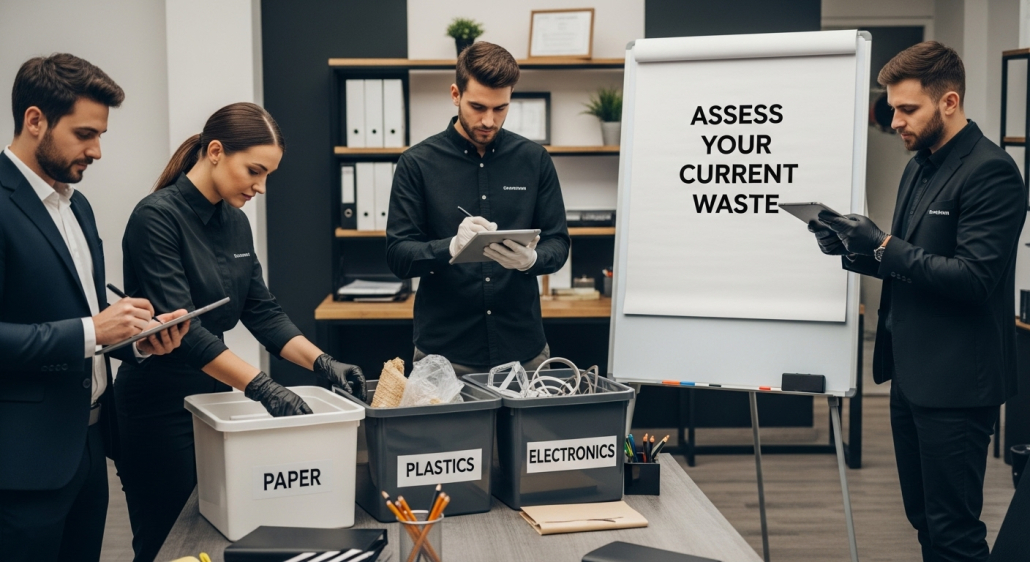
Understanding your current waste management practices is the foundational step towards creating an effective waste segregation strategy for your business. This initial assessment provides critical insights into your existing waste streams, helping you identify opportunities for improvement and more sustainable disposal methods.
Begin by conducting a comprehensive waste audit across all areas of your business operations. This involves carefully documenting the types and quantities of waste generated by different departments. Manufacturing facilities in Newcastle might track industrial waste differently from office environments in Durham, but the core principles remain consistent. Walk through each workspace systematically, noting waste categories such as:
- Paper and cardboard
- Electronic equipment
- Organic waste
- Hazardous materials
- Recyclable plastics
- General mixed waste
Utilise detailed recording methods that capture not just the volume of waste, but also its current disposal route. Take photographs, create spreadsheets, and interview department managers to gain a holistic understanding of your waste generation patterns. Pay special attention to waste volumes during peak business periods and identify any inconsistencies in current waste handling practices.
Analyse the financial and environmental implications of your current waste management approach. Calculate the total waste disposal costs and examine how much waste is currently being sent to landfill versus being recycled or repurposed. This analysis will help you understand the potential cost savings and environmental benefits of implementing a more strategic waste segregation system.
Below is a summary table outlining the main business waste types to help you clarify handling requirements and legal considerations at a glance.
| Waste Type | Common Examples | Special Handling Requirement |
|---|---|---|
| Recyclable Materials | Paper, cardboard, plastics, metals | Follow recycling collection schedules |
| Electronic Waste | Computers, printers, cables | Process under WEEE regulations |
| Organic Waste | Food scraps, coffee grounds | Contain in separate food waste bins |
| Hazardous Materials | Chemicals, batteries, cleaning agents | Use certified containment and disposal |
| General Mixed Waste | Non-recyclable packaging, dirty wrappers | Dispose as landfill or residual waste |
| Confidential Document Waste | Shredded paperwork, sensitive files | Secure disposal via confidential waste service |
To support your assessment, explore our comprehensive guide on waste management strategies that can help businesses optimise their waste disposal processes. The goal of this initial step is to create a clear, detailed snapshot of your current waste management landscape, providing the foundation for developing a more efficient and sustainable waste segregation strategy.

Step 2: Identify Types of Waste to Segregate
Identifying the specific types of waste your business generates is crucial for developing an effective waste segregation strategy. This step transforms your initial waste audit into a targeted approach for responsible waste management. Different industries and sectors produce unique waste streams that require specialised handling and disposal methods.
Start by categorising your waste into primary groups that reflect both regulatory requirements and environmental considerations. Waste types are not uniform across businesses, and understanding the nuanced differences is key to proper segregation. Manufacturing facilities in Sunderland might generate significantly different waste compared to office environments in Newcastle, but the fundamental classification principles remain consistent.
Classify your waste into these critical categories:
- Recyclable materials (paper, cardboard, plastics, metals)
- Electronic waste (WEEE regulations apply)
- Organic waste
- Hazardous materials
- General mixed waste
- Confidential document waste
Carefully document each waste type’s specific characteristics, including potential environmental impact and legal disposal requirements. Consider the physical properties, potential for contamination, and recycling potential of each waste stream. Some materials require specialised handling due to environmental or safety regulations. For instance, electronic equipment must be processed according to WEEE regulations, while chemical waste demands stringent containment and disposal protocols.
Learn more about waste classification for businesses to ensure you’re following the most up-to-date guidelines. By meticulously identifying and categorising your waste, you create a foundation for more efficient, environmentally responsible waste management. The goal is not just compliance, but developing a comprehensive approach that minimises environmental impact and potentially reduces disposal costs.
The following table provides an overview of each waste segregation step, its aim, and a key action to implement at your business.
| Step | Purpose | Key Action |
|---|---|---|
| Assess Current Waste Practices | Identify waste volumes and inefficiencies | Conduct a detailed waste audit |
| Identify Types of Waste to Segregate | Ensure correct handling and regulatory compliance | Catalogue all major waste types |
| Set Up Waste Segregation Stations | Facilitate effective on-site sorting | Install labelled, colour-coded waste bins |
| Train Staff on Segregation Procedures | Achieve accurate and consistent waste sorting | Deliver hands-on staff training |
| Monitor and Audit Waste Segregation | Maintain quality and identify ongoing improvements | Institute regular inspections and reviews |
| Adjust and Improve Your Management Strategy | Increase cost savings and sustainability | Analyse results and update practices accordingly |
Step 3: Set Up Waste Segregation Stations
Creating effective waste segregation stations is a critical step in transforming your waste management strategy from theoretical planning to practical implementation. These dedicated areas will serve as the central hub for sorting and managing different waste streams throughout your business premises.
Design your segregation stations with clarity and accessibility in mind. Colour-coded containers are essential for quick and intuitive waste sorting. Each station should feature clearly labelled bins with distinct colours representing different waste categories. For instance, blue might represent recyclable paper, green for organic waste, red for hazardous materials, and black for general waste. Position these stations strategically in high-traffic areas like break rooms, office spaces, production floors, and near waste collection points.
Ensure each segregation station includes comprehensive signage that provides clear, visual guidance on proper waste disposal. These instructions should be simple enough for employees to understand at a glance. Consider creating laminated infographics that demonstrate exactly which items belong in each bin, including common examples and potential contamination warnings. This visual approach helps reduce sorting errors and promotes consistent waste management practices.
Consider the specific needs of different workplace areas:
- Manufacturing zones require robust, industrial-grade segregation containers
- Office environments need sleek, space-efficient waste stations
- Kitchens and break areas need separate food waste and recycling bins
- Outdoor areas should have weather-resistant waste collection points
Explore our comprehensive guide to waste compliance for additional insights into setting up effective waste management systems. By creating well-designed, user-friendly segregation stations, you transform waste management from a challenging task into an intuitive, integrated part of your business operations. Regular training and clear communication will ensure your employees understand and embrace these new waste sorting practices.
Step 4: Train Your Staff on Segregation Procedures
Training your staff on waste segregation procedures is the critical bridge between establishing waste management systems and achieving successful implementation. This step transforms your carefully designed segregation stations from static infrastructure into a dynamic, functional process driven by knowledgeable employees.
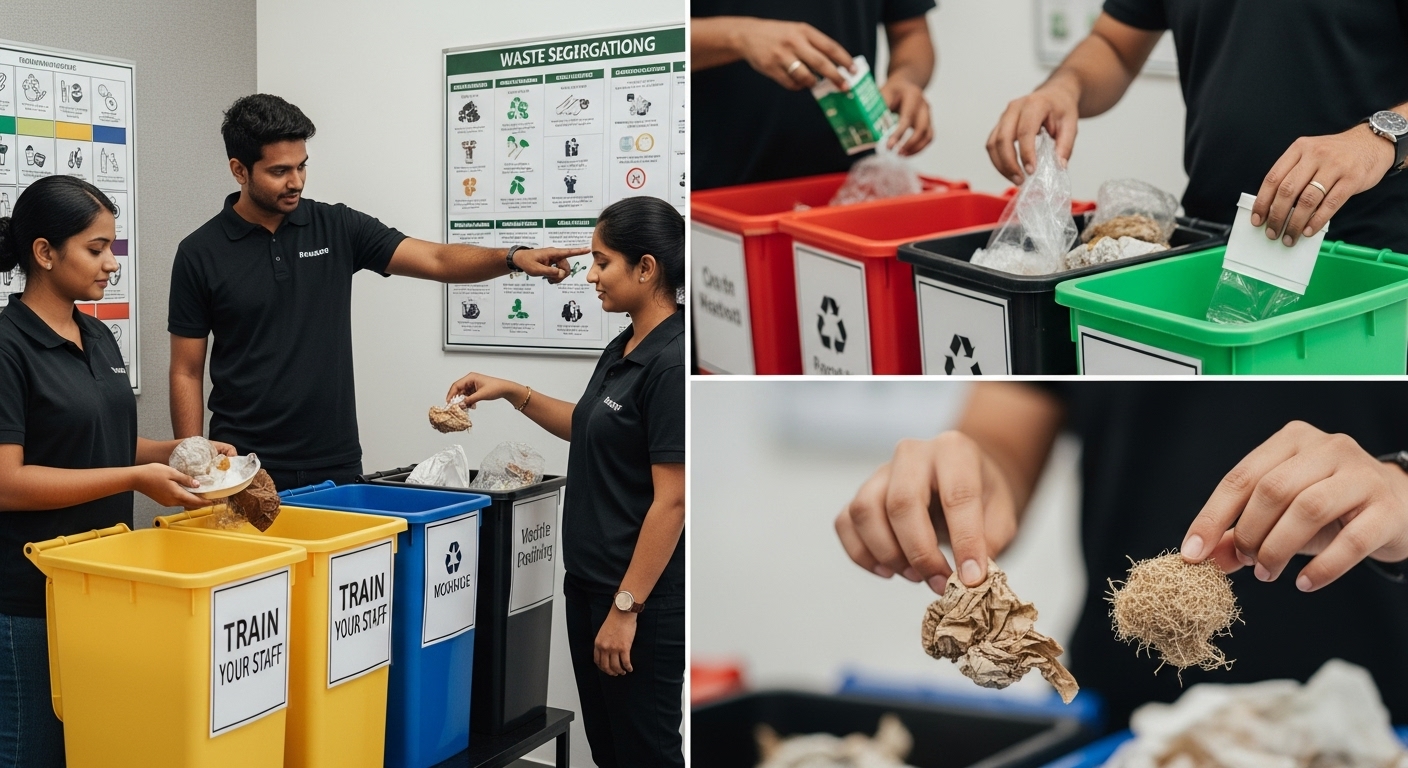
Comprehensive staff training goes beyond simple instruction – it requires a multifaceted approach that combines theoretical knowledge with practical demonstrations. Begin by developing a structured training programme that explains the ‘why’ behind waste segregation, not just the ‘how’. Employees are more likely to engage when they understand the environmental and economic implications of proper waste management. Use real-world examples from businesses in Newcastle, Durham, and across the North East to make the training relatable and contextually relevant.
Design your training to be interactive and engaging. Instead of traditional lecture-style presentations, incorporate hands-on workshops where employees can practice sorting waste in simulated scenarios. Create opportunities for staff to ask questions, share observations, and discuss potential challenges they might encounter in their specific work areas. Visual aids are particularly effective – use colour-coded charts, infographics, and short demonstration videos that clearly illustrate correct waste segregation techniques.
Your training should cover these key areas:
- Detailed explanation of waste categories
- Correct use of colour-coded segregation stations
- Potential contamination risks
- Environmental and financial impacts of proper waste management
- Specific procedures for their department or work area
Discover our comprehensive guide to workplace waste compliance for additional training resources. To verify the effectiveness of your training, implement a simple assessment process. This could include practical sorting tests, quick quizzes, or observation of waste handling practices in the weeks following the training. Regular refresher sessions will help maintain high standards of waste segregation and keep environmental awareness at the forefront of your team’s daily operations.
Step 5: Monitor and Audit Waste Segregation Processes
Monitoring and auditing your waste segregation processes transforms your initial efforts into a continuously improving system. This critical step ensures that your carefully designed waste management strategy remains effective, identifying potential improvements and maintaining high standards of environmental responsibility.
Regular and systematic audits are the cornerstone of successful waste management. Develop a comprehensive monitoring schedule that includes both planned inspections and random spot checks across different departments and waste segregation stations. These audits should assess not just the physical placement of waste, but the entire process from generation to final disposal. Implement a digital tracking system that allows you to record waste volumes, contamination rates, and segregation accuracy. This data becomes your roadmap for continuous improvement, helping you identify patterns and address potential issues before they become significant problems.
Engage employees actively in the monitoring process. Create a culture of accountability where staff are encouraged to report segregation challenges or suggest improvements. Develop a simple reporting mechanism that makes it easy for team members to provide feedback or flag potential issues. Visual performance indicators can be particularly motivating – consider creating dashboard displays that show departmental waste segregation performance, turning compliance into a collaborative challenge.
Key audit focus areas include:
- Accuracy of waste sorting at source
- Contamination rates in different waste streams
- Compliance with colour-coded segregation guidelines
- Effectiveness of staff training
- Alignment with environmental regulations
Discover our step-by-step guide to waste compliance for additional monitoring strategies. Success is measured not just by immediate compliance, but by your ability to adapt and improve your waste management processes continuously. Quarterly comprehensive reviews will help you track progress, identify trends, and demonstrate your commitment to sustainable waste management practices across your business.
Step 6: Adjust and Improve Your Waste Management Strategy
Adjusting and improving your waste management strategy is an ongoing process that transforms initial efforts into a dynamic, responsive system. This final step ensures your waste segregation approach remains flexible, efficient, and aligned with evolving environmental regulations and business needs.
Data-driven improvements are the key to successful waste management. Review the comprehensive audit results collected during your monitoring phase, looking beyond simple compliance to identify deeper opportunities for waste reduction and efficiency. Analyse patterns in waste generation, segregation accuracy, and potential contamination sources. Consider the unique challenges faced by different departments within your business. A manufacturing area in Newcastle might require different strategies compared to an office environment in Durham, highlighting the importance of tailored approach.
Implement a continuous improvement cycle that goes beyond basic waste segregation. Look for opportunities to reduce waste generation entirely, exploring options like circular economy principles, material reuse, and innovative recycling techniques. Engage with waste management experts, attend industry seminars, and stay informed about emerging technologies and regulatory changes. Technology can be a powerful ally in this process, with digital tracking systems and advanced sorting technologies offering unprecedented insights into waste management processes.
Consider these critical improvement focus areas:
- Reducing overall waste generation
- Identifying alternative recycling methods
- Exploring circular economy opportunities
- Minimising contamination in waste streams
- Enhancing staff training and engagement
Learn more about saving money through effective waste management to understand the financial benefits of a refined strategy. Success is measured not just by compliance, but by your ability to continuously adapt, innovate, and demonstrate environmental leadership. Regular strategic reviews will help you transform waste management from a regulatory requirement into a competitive advantage for your business.
Transform Your Waste Segregation Strategy Into Action for Your Business
Struggling to put the waste segregation steps into practice at your workplace? Many UK businesses face confusion over correct sorting, worry about compliance, and feel the pressure of rising waste costs. The article has guided you through effective waste segregation, but the true challenge lies in ongoing implementation and keeping your processes up to date. This is where a trusted partner makes the difference. Dive deeper into real solutions by reviewing our Waste Collection Process in the UK for Businesses 2025 for step-by-step guidance tailored to your workplace. Our expertise covers everything from general recyclables to confidential document handling, backed by seamless booking and strict legal compliance.

Ready to improve your waste segregation and stay compliant with the latest regulations? Visit Venture Waste Management today and discover personalised support for sorting, collecting, and disposing of every waste type your business manages. Start now so you can lower your disposal costs and enjoy the peace of mind that comes from working with industry leaders. Book your next collection or find out how our complete solutions fit your needs.
Frequently Asked Questions
What are the essential steps to segregate waste effectively in a business?
To segregate waste effectively, start with an assessment of your current waste management practices. Identify the types of waste generated, set up designated segregation stations with clear signage, and train your staff on proper procedures. Regularly monitor and audit the process to make continuous improvements.
How can I train my staff on waste segregation procedures?
Develop a structured training programme that explains the importance of waste segregation, complete with hands-on workshops and visual aids. Ensure training covers the different waste categories, proper use of segregation stations, and the financial and environmental impacts of correct waste disposal.
What types of waste should businesses segregate?
Businesses should segregate waste into categories such as recyclable materials (paper, cardboard, plastics, metals), electronic waste, organic waste, hazardous materials, general mixed waste, and confidential document waste. Proper classification ensures compliance with legal requirements and supports environmentally responsible practices.
How can I monitor the effectiveness of my waste segregation processes?
Implement a monitoring schedule that includes systematic audits and random checks across departments. Use digital tracking systems to record waste volumes and contamination rates. Engage employees in the monitoring process, fostering a culture of accountability to enhance overall segregation accuracy.


Leave a Reply
Want to join the discussion?Feel free to contribute!