

Understanding the Waste Hierarchy UK: A Clear Guide
Waste management is no longer just about getting rid of rubbish. In the UK, the waste hierarchy now shapes how every business and local authority handles the stuff we throw away. Surprising as it sounds, some UK companies are saving thousands of pounds each year simply by following these simple guidelines. While most see compliance as a box-ticking exercise, the real story is how the hierarchy can actually turn wasted materials into valuable resources and even give firms a competitive edge.
Table of Contents
- What Is The Waste Hierarchy And Its Key Principles?
- Why The Waste Hierarchy Matters For Businesses In The UK
- How The Waste Hierarchy Influences Waste Management Practices
- Understanding The Practical Applications Of The Waste Hierarchy
- Key Concepts And Legal Framework Surrounding The Waste Hierarchy In The UK
Quick Summary
| Takeaway | Explanation |
|---|---|
| Prioritise waste prevention | Focus on reducing waste generation as the top strategy for sustainability. |
| Implement recycling practices | Convert waste materials into new products to maximise resource recovery and reduce costs. |
| Align with regulatory requirements | Comply with the Waste (England and Wales) Regulations to avoid legal penalties. |
| Transform waste into a resource | View waste as an opportunity for innovation and resource recovery to improve operational efficiency. |
| Tailor strategies to your sector | Adapt waste management practices to meet specific industry needs for effective waste reduction and recycling. |
What is the Waste Hierarchy and Its Key Principles?
The waste hierarchy represents a fundamental framework for managing waste in the UK, offering a strategic approach to minimising environmental impact and promoting sustainable resource management. Developed under European Union guidelines and now incorporated into UK legislation, this concept ranks waste management options from most to least preferred, guiding businesses and organisations towards more responsible waste disposal practices.
Defining the Waste Hierarchy
At its core, the waste hierarchy establishes a prioritised system for handling waste materials. The primary goal is to reduce waste generation and maximise resource efficiency by encouraging actions that prevent waste creation and promote materials’ highest possible value retention. According to Environment Agency, the hierarchy provides a standardised approach to waste management across industries.
The waste hierarchy follows a clear ranking of waste management strategies
Below is a summary table outlining the five levels of the UK waste hierarchy, their descriptions, and preferred use, as discussed in the article.
| Level | Description | Preferred Use |
|---|---|---|
| Prevention | Reducing waste before it is created | Most preferred |
| Preparation for Reuse | Checking, cleaning, or repairing items to extend their usability | Highly preferred |
| Recycling | Converting waste materials into new products | Preferred |
| Other Recovery | Recovering energy through processes such as incineration | Less preferred |
| Disposal | Landfill or permanent elimination of waste materials | Least preferred |
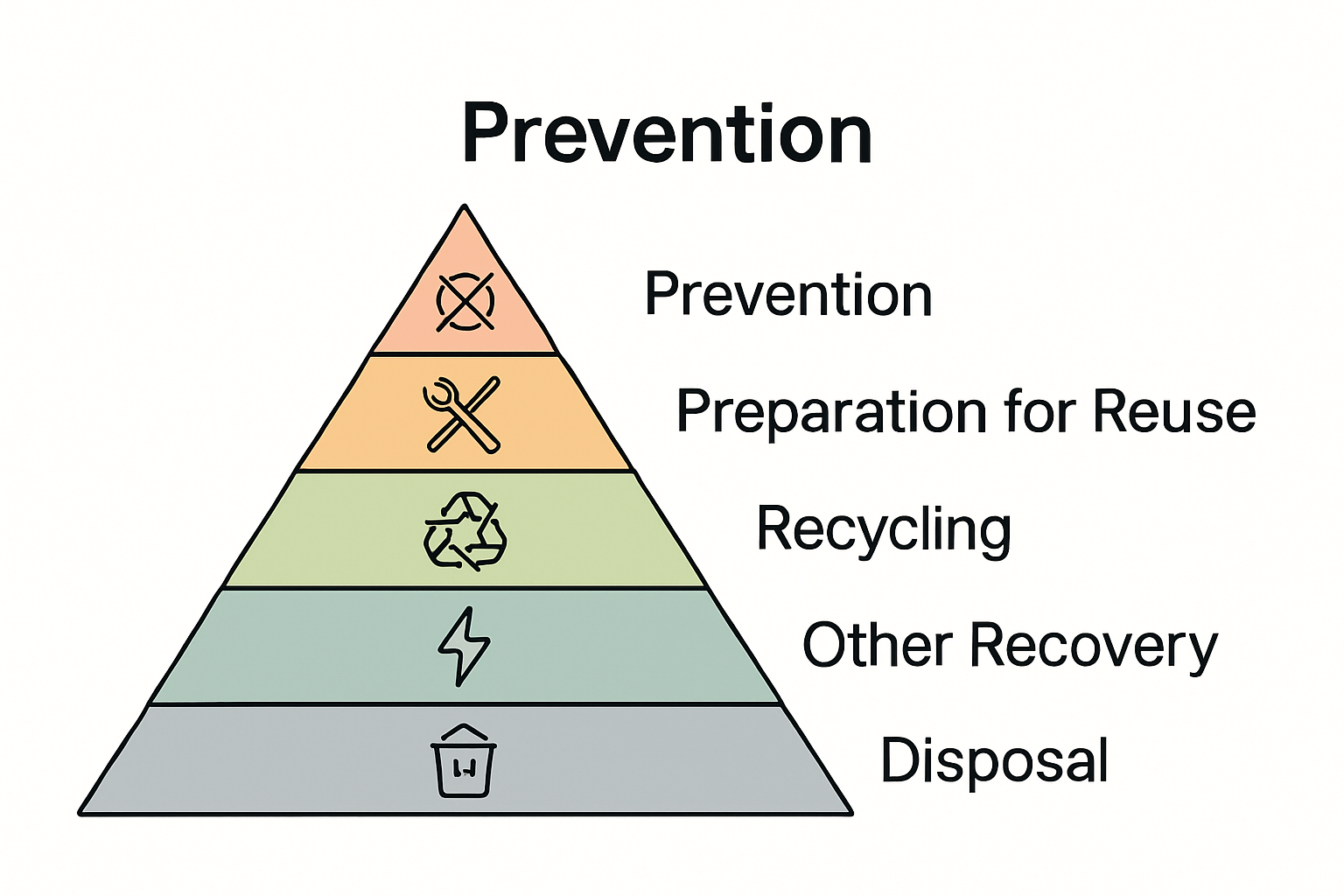 :
- Prevention: The most preferred option, focusing on reducing waste generation before it occurs
- Preparation for Reuse: Checking, cleaning, or repairing items to extend their functional lifecycle
- Recycling: Converting waste materials into new products or raw materials
- Other Recovery: Including energy recovery through processes like incineration
- Disposal: The least preferred option, involving landfill or permanent elimination of waste materials
Key Principles and Environmental Impact
The waste hierarchy is not merely a theoretical concept but a practical approach to environmental stewardship. By prioritising waste prevention and promoting circular economy principles, businesses can significantly reduce their carbon footprint and contribute to national sustainability goals. WRAP UK highlights that implementing waste hierarchy principles can lead to substantial resource conservation and economic benefits for organisations across various sectors.
Businesses in regions like Newcastle, Durham, and Sunderland can leverage these principles to develop more sustainable waste management strategies, demonstrating environmental responsibility while potentially reducing operational costs through more efficient resource utilisation. Check out our comprehensive guide on managing business waste for more detailed insights into practical implementation.
Why the Waste Hierarchy Matters for Businesses in the UK
The waste hierarchy represents more than just an environmental guideline for UK businesses. It is a strategic framework that directly impacts operational efficiency, financial performance, and corporate sustainability. By understanding and implementing these principles, organisations can transform waste management from a cost centre into a value-generating opportunity.
Economic and Regulatory Significance
For businesses across the UK, the waste hierarchy is not optional but a critical compliance requirement. The UK House of Commons Library emphasises that adherence to these principles is fundamental to national waste policy. Companies that proactively engage with waste hierarchy strategies can benefit from significant economic advantages:
- Reduced Waste Disposal Costs: Lower landfill taxes and waste management expenses
- Potential Revenue Streams: Generating income through recycling and resource recovery
- Enhanced Corporate Reputation: Demonstrating environmental responsibility
Strategic Business Benefits
Implementing the waste hierarchy goes beyond regulatory compliance. Modern businesses recognise waste as a strategic resource that can be managed for competitive advantage. By prioritising waste prevention and recycling, organisations can reduce raw material costs, minimise environmental impact, and align with circular economy principles.
Businesses in industrial regions like Newcastle, Sunderland, and Durham can particularly benefit from these strategies. Learn more about effective waste minimisation techniques that can transform waste management from an operational challenge into a strategic opportunity.
Moreover, the waste hierarchy encourages businesses to think systematically about resource utilisation. This approach not only reduces environmental footprint but also drives innovation in product design, manufacturing processes, and supply chain management. Companies that embed these principles can create more resilient, efficient, and future-focused business models.
How the Waste Hierarchy Influences Waste Management Practices
The waste hierarchy fundamentally transforms how businesses approach waste management, shifting from a reactive disposal model to a proactive resource management strategy. By establishing a clear framework for handling waste materials, organisations can systematically reduce environmental impact while optimising operational efficiency.
Operational Implementation Strategies
Implementing the waste hierarchy requires a comprehensive approach to waste management. The Waste (England and Wales) Regulations 2011 mandates that businesses prioritise waste prevention and resource efficiency. This regulatory requirement compels organisations to develop structured waste management practices that align with the hierarchy’s principles
:
- Waste Prevention Planning: Designing processes to minimise waste generation
- Resource Mapping: Identifying potential waste streams and recovery opportunities
- Continuous Improvement: Regularly reviewing and optimising waste management strategies
Transforming Waste into a Strategic Asset
Businesses are increasingly viewing waste not as a disposal challenge but as a potential resource. The waste hierarchy encourages organisations to explore innovative approaches to waste management. For instance, manufacturing companies in regions like Newcastle and Durham can redesign production processes to reduce material waste, implement recycling programmes, and explore opportunities for material recovery.
Explore our comprehensive guide on domestic waste management to understand how different waste types can be strategically managed.
The hierarchy’s influence extends beyond immediate operational practices. It drives a cultural shift towards more sustainable business models, encouraging companies to think holistically about resource utilisation, circular economy principles, and long-term environmental responsibility. By embedding these principles into their core business strategies, organisations can achieve significant economic and environmental benefits.
Understanding the Practical Applications of the Waste Hierarchy
Practical implementation of the waste hierarchy transforms theoretical environmental principles into actionable business strategies. By providing a structured framework for waste management, organisations can systematically approach resource utilisation, moving beyond traditional disposal methods towards more sustainable practices.
Sector-Specific Implementation Approaches
The UK Department for Environment, Food & Rural Affairs emphasises that waste hierarchy principles must be tailored to specific industry contexts. Different sectors require unique approaches to effectively reduce, reuse, and recycle waste:
- Manufacturing: Redesigning production processes to minimise material waste
- Hospitality: Implementing food waste reduction and composting programmes
- Construction: Prioritising material reuse and selective demolition techniques
- Retail: Developing packaging reduction and recycling strategies
Technological and Operational Innovations
Modern businesses are integrating advanced technologies to support waste hierarchy implementation. Organisations in industrial regions like Newcastle and Durham are leveraging digital tracking systems, machine learning, and data analytics to optimise waste management processes. These technological interventions enable precise waste stream analysis, helping companies identify opportunities for waste reduction and resource recovery.
Learn more about effective waste segregation techniques to enhance your organisation’s waste management strategy.
The practical application of the waste hierarchy extends beyond immediate environmental benefits. By adopting these principles, businesses can achieve significant cost savings, improve operational efficiency, and develop a reputation for corporate social responsibility.
The following table compares how key business sectors in the UK apply the waste hierarchy to their operations, highlighting the main waste management focus for each sector.
| Sector | Main Approach | Example Application |
|---|---|---|
| Manufacturing | Redesign processes to minimise waste | Material waste reduction |
| Hospitality | Food waste reduction and composting | Implementing kitchen compost schemes |
| Construction | Prioritise material reuse and selective demolition | Reusing bricks and fixtures |
| Retail | Packaging reduction and recycling strategies | Sustainable packaging initiatives |
Key Concepts and Legal Framework Surrounding the Waste Hierarchy in the UK
The waste hierarchy is more than an environmental concept in the UK. It represents a comprehensive legal and regulatory framework designed to transform how organisations approach waste management, creating a structured approach to resource utilisation and environmental protection.
Legislative Foundations
The Waste (England and Wales) Regulations 2011 establishes the critical legal foundation for waste management practices across the United Kingdom. These regulations mandate a systematic approach to waste handling, emphasising prevention and resource efficiency as primary objectives:
- Mandatory Compliance: Legal requirement for businesses to follow waste hierarchy principles
- Hierarchical Prioritisation: Clear legal ranking of waste management strategies
- Reporting Obligations: Regular documentation and assessment of waste management practices
Regulatory Implications for Businesses
The legal framework transforms waste management from an optional practice to a mandatory corporate responsibility. Businesses across industrial regions like Newcastle, Durham, and Sunderland must integrate these principles into their operational strategies. The regulations require organisations to demonstrate proactive approaches to waste reduction, highlighting the shift from traditional disposal methods to strategic resource management.
Explore our comprehensive guide on managing hazardous waste types to understand the nuanced legal requirements for different waste categories.
These legal frameworks extend beyond mere compliance. They represent a broader governmental strategy to drive environmental sustainability, reduce landfill dependency, and create economic opportunities through more efficient resource utilisation. By embedding these principles into national policy, the UK aims to position itself as a leader in sustainable waste management practices.
Turn Your Waste Hierarchy Knowledge Into Action Today
Understanding the waste hierarchy is essential, but knowing what to do with this information is what brings real change. Many businesses struggle with implementing the clear steps of the hierarchy, from prevention and reuse to legally compliant disposal. The challenge lies in converting theory into daily practice, keeping your operations cost-effective, and meeting all legal requirements. This is where our tailored waste collection process for UK businesses in 2025 makes the difference.

Let Venture Waste Management handle your waste responsibly and efficiently. Our straightforward booking system turns your commitment to the waste hierarchy into real action, whether you need help with regular waste, hazardous items, or confidential waste disposal. Visit Venture Waste Management now and experience expert support for every stage of your waste journey. Book your collection and start making an environmental impact today.
Frequently Asked Questions
What is the waste hierarchy?
The waste hierarchy is a framework that ranks waste management options from most to least preferred, guiding businesses on how to minimise waste and promote sustainable resource management.
Why is the waste hierarchy important for businesses in the UK?
The waste hierarchy is crucial as it helps businesses reduce waste disposal costs, enhance their corporate reputation, and comply with regulatory requirements, transforming waste management into a value-generating opportunity.
How can businesses implement the waste hierarchy effectively?
Businesses can implement the waste hierarchy by developing waste prevention strategies, conducting resource mapping, and regularly reviewing waste management practices to ensure continuous improvement.
What are the different levels of the waste hierarchy?
The waste hierarchy comprises five levels: Prevention, Preparation for Reuse, Recycling, Other Recovery (including energy recovery), and Disposal, which is the least preferred option.


Leave a Reply
Want to join the discussion?Feel free to contribute!