

Types of Hazardous Waste: Business Waste Guide UK 2025

Hazardous waste is not just lurking in factories or medical bins. Nearly every UK business creates some form of hazardous waste, with strict regulations covering everything from electronics to cleaning chemicals. Strangely, most business owners are confident they are compliant yet more than a third are failing basic requirements. The shock is that simply misfiling paperwork or storing one item incorrectly can trigger heavy fines and criminal action. The real risk is not the waste itself but how a single oversight can spell disaster for your reputation or finances. Here is what every UK business needs to know before one mistake becomes headline news.
Table of Contents
- Understanding Types Of Hazardous Waste In Uk Businesses
- Key Categories: Chemical, Electronic, And Confidential Waste
- Legal Responsibilities For Hazardous Waste Disposal
- Safe Handling And Disposal Solutions For Organisations
Quick Summary
| Takeaway | Explanation |
|---|---|
| Proper Identification is Key | Businesses must carefully assess their waste streams to identify hazardous materials like chemicals, electronic equipment, and medical waste, ensuring proper classification and handling. |
| Legal Compliance is Crucial | UK businesses must adhere to strict regulations, including obtaining waste transfer licenses and maintaining comprehensive documentation to avoid legal penalties. |
| Implement Comprehensive Waste Management Protocols | Organisations should develop detailed protocols covering waste identification, secure storage, and transportation, ensuring environmental protection and compliance with regulations. |
Understanding Types of Hazardous Waste in UK Businesses
Business waste management requires a comprehensive understanding of hazardous materials that pose potential risks to human health and the environment. Learn more about hazardous waste disposal strategies for UK enterprises.
Classification and Identification of Hazardous Waste
Hazardous waste represents a critical challenge for UK businesses across various sectors. According to government regulations, hazardous waste is defined by its potential to cause harm through chemical, biological, or physical properties that create significant risks. These materials require specialized handling, transportation, and disposal processes to prevent environmental contamination and protect public health.
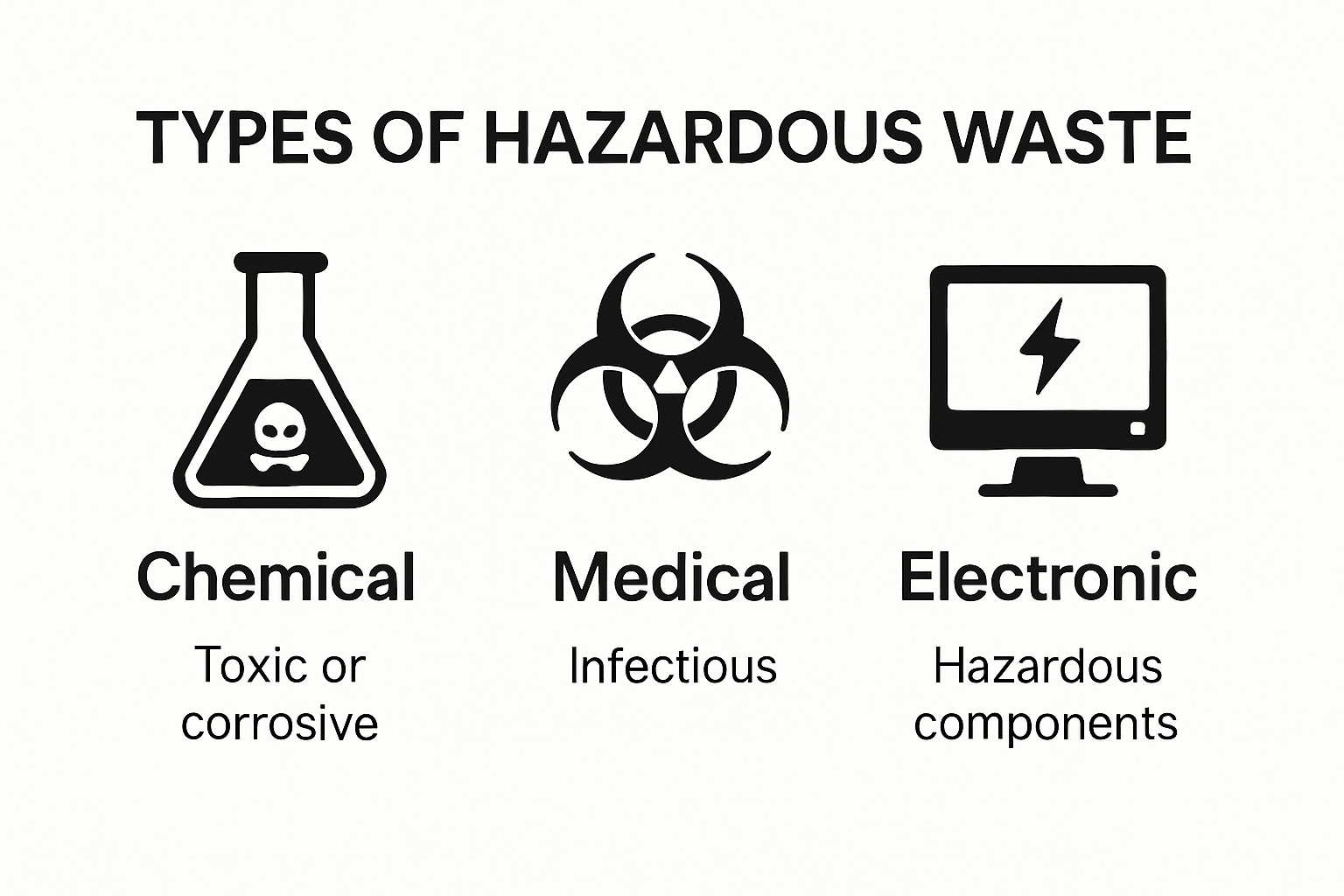
Businesses must carefully assess their waste streams to identify potentially hazardous materials. The UK categorizes hazardous waste based on specific characteristics, including toxicity, reactivity, corrosiveness, and infectious potential. Common examples include industrial chemicals, medical waste, electronic equipment containing toxic components, and materials with heavy metal contamination.
Key Categories of Hazardous Waste in Business Environments
The spectrum of hazardous waste generated by UK businesses is extensive and diverse. Research from waste management experts highlights several critical categories that businesses must recognize:
- Chemical Waste: Includes solvents, industrial chemicals, print toners, brake fluids, and pesticides that require specialized disposal techniques.
- Medical and Biological Waste: Encompasses contaminated sharps, expired medications, infectious materials, and laboratory chemicals from healthcare and research facilities.
- Electronic Waste (WEEE): Represents equipment containing hazardous substances like mercury, lead, and other toxic materials found in computers, monitors, and electronic components.

Legal Obligations and Compliance Considerations
UK businesses face stringent legal requirements when managing hazardous waste. The Environmental Protection Act and subsequent regulations mandate precise documentation, proper classification, and environmentally responsible disposal methods. Companies must obtain appropriate waste transfer licenses, maintain detailed records, and work exclusively with certified waste management providers.
Failure to comply with these regulations can result in significant financial penalties and potential legal consequences. Businesses must implement robust waste management protocols that include comprehensive training, proper storage facilities, and systematic tracking of hazardous material movements.
Understanding the intricate landscape of hazardous waste is not just a legal requirement but a fundamental responsibility for businesses committed to environmental stewardship and public safety. By developing a comprehensive approach to waste identification, management, and disposal, UK enterprises can effectively mitigate potential risks while contributing to broader environmental protection efforts.
Key Categories: Chemical, Electronic, and Confidential Waste
UK businesses generate multiple types of hazardous waste that require specialized management and disposal strategies. Discover secure waste management solutions tailored to your business needs.
Chemical Waste Management and Risks
Chemical waste represents a significant hazard for businesses across various industries. According to UK environmental regulations, chemical waste includes substances that pose substantial risks to human health and environmental safety. These materials encompass a wide range of compounds, from industrial solvents and print toners to laboratory chemicals and pesticides.
Research from waste management experts highlights the critical importance of proper chemical waste classification. Businesses must utilize European Waste Catalogue (EWC) codes to accurately identify and categorize chemical waste based on its specific properties, including toxicity, corrosiveness, and potential for environmental contamination.
Electronic Waste and Technological Hazards
Electronic waste (WEEE) presents unique challenges for UK businesses. This category includes complex equipment containing hazardous materials such as mercury, lead, and other toxic components found in computers, monitors, servers, and telecommunications equipment. The environmental impact of improper electronic waste disposal can be devastating, with potential long-term consequences for ecosystem health.
- Toxic Component Risks: Electronic devices contain heavy metals and chemical compounds that can leach into soil and water systems.
- Regulatory Compliance: Businesses must adhere to strict WEEE regulations governing the collection, treatment, and recycling of electronic waste.
- Data Security: Proper disposal involves not just environmental considerations but also complete data destruction for sensitive electronic equipment.
Confidential Waste and Information Protection
Confidential waste management goes beyond simple disposal, representing a critical aspect of business risk management. This category includes sensitive documents, data storage devices, and materials containing potentially compromising information. Businesses must implement rigorous destruction protocols to prevent data breaches and protect sensitive information.
Key considerations for confidential waste management include:
- Secure Collection: Implementing locked collection containers for sensitive materials.
- Verified Destruction: Utilizing certified destruction processes that completely eliminate readable information.
- Comprehensive Documentation: Maintaining detailed records of waste disposal to ensure full regulatory compliance.
The intersection of these waste categories demands a sophisticated approach to waste management. UK businesses must develop comprehensive strategies that address the unique challenges posed by chemical, electronic, and confidential waste. This requires ongoing staff training, investment in specialized disposal technologies, and a commitment to environmental and regulatory compliance.
Navigating the complex landscape of hazardous waste management is not just a legal obligation but a fundamental responsibility. By understanding and properly managing these critical waste categories, businesses can protect their operational integrity, safeguard sensitive information, and contribute to broader environmental protection efforts.
Legal Responsibilities for Hazardous Waste Disposal
UK businesses face complex legal obligations when managing hazardous waste, requiring meticulous attention to regulatory compliance. Learn more about comprehensive disposal guidelines to protect your business from potential legal risks.
Duty of Care and Regulatory Framework
The Environmental Protection Act 1990 establishes a fundamental legal principle known as the “duty of care” for hazardous waste management. According to government regulations, businesses must take all reasonable steps to prevent harm to human health and the environment throughout the waste lifecycle. This comprehensive responsibility extends beyond simple disposal and encompasses every stage of waste handling.
Businesses must demonstrate a systematic approach to waste management, which includes:
- Accurate waste classification
- Proper documentation
- Secure storage
- Use of authorized waste carriers
- Comprehensive record-keeping
Waste Hierarchy and Compliance Strategies
Environmental experts emphasize the critical importance of following the waste hierarchy, a legal framework that prioritizes waste management strategies. The hierarchy mandates businesses to pursue waste prevention, reuse, and recycling before considering recovery or final disposal options.
Key compliance requirements include:
- Implementing waste reduction strategies
- Exploring recycling and reuse opportunities
- Ensuring environmentally responsible disposal methods
- Maintaining transparent documentation of waste management processes
Consequences of Non-Compliance
Failure to adhere to hazardous waste regulations can result in severe consequences for UK businesses. Potential penalties include substantial financial fines, legal prosecution, and significant reputational damage. Regulatory bodies conduct regular inspections and can impose immediate sanctions for non-compliance.
Businesses must be prepared to demonstrate:
- Comprehensive waste management protocols
- Staff training on hazardous waste handling
- Detailed waste transfer and tracking documentation
- Evidence of working with licensed waste management providers
Navigating the complex landscape of hazardous waste disposal requires a proactive and systematic approach. By understanding and implementing robust legal responsibilities, businesses can protect themselves from potential risks while contributing to environmental sustainability.
The evolving regulatory environment demands continuous adaptation and commitment to best practices. Businesses must remain informed about changes in legislation, invest in staff training, and develop flexible waste management strategies that prioritize both legal compliance and environmental protection.
Safe Handling and Disposal Solutions for Organisations
Hazardous waste management demands precision, expertise, and comprehensive strategies to protect both organisational interests and environmental integrity. Explore advanced disposal solutions tailored for modern UK businesses.
Comprehensive Waste Management Protocols
Effective hazardous waste handling requires a systematic approach that begins with thorough identification and assessment. According to updated 2025 environmental regulations, organisations must develop robust protocols that cover every stage of waste management, from initial collection to final disposal.
Key components of comprehensive waste management include:
- Detailed waste stream mapping
- Risk assessment for each waste category
- Implementation of specialized containment procedures
- Development of staff training programmes
- Regular review and updating of waste management strategies
Secure Storage and Transportation Guidelines
Government guidelines emphasize the critical importance of secure storage and transportation for hazardous waste. Organisations must invest in specialized containment solutions that prevent environmental contamination and protect human health. This involves using appropriate containers, implementing strict labelling protocols, and ensuring proper segregation of different waste types.
Critical considerations for safe storage and transportation include:
- Use of chemical-resistant, leak-proof containers
- Clear hazard labelling and warning signs
- Dedicated storage areas with controlled access
- Temperature and environmental condition monitoring
- Compliance with transportation regulations for hazardous materials
Documentation and Compliance Strategies
Maintaining comprehensive documentation is a legal requirement and a crucial aspect of responsible hazardous waste management. Environmental experts highlight the importance of creating a transparent and traceable waste management system.
Essential documentation practices include:
- Detailed waste transfer notes
- Consignment tracking records
- Staff training certification
- Internal audit logs
- Compliance reports for regulatory bodies
Organisations must recognize that hazardous waste management extends beyond mere disposal. It represents a comprehensive approach to environmental responsibility, risk mitigation, and legal compliance. By implementing rigorous handling and disposal solutions, businesses can protect themselves from potential legal and environmental risks while demonstrating a commitment to sustainable practices.
The landscape of hazardous waste management continues to evolve, with increasing emphasis on prevention, reduction, and environmentally responsible disposal. Successful organisations will remain proactive, continuously adapting their strategies to meet changing regulatory requirements and technological advancements in waste management solutions.
Frequently Asked Questions
What types of waste are considered hazardous for UK businesses?
Hazardous waste for UK businesses includes chemical waste such as solvents and pesticides, medical waste from healthcare facilities, and electronic waste like computers and monitors containing toxic components.
What regulations govern hazardous waste disposal in the UK?
The disposal of hazardous waste in the UK is governed by the Environmental Protection Act 1990 and subsequent regulations, which require businesses to obtain waste transfer licences and maintain comprehensive documentation for compliance.
How can businesses ensure compliance with hazardous waste regulations?
Businesses can ensure compliance by properly identifying and classifying hazardous materials, implementing comprehensive waste management protocols, and working with licensed waste management providers to adhere to legal standards.
What are the consequences of failing to comply with hazardous waste regulations?
Failing to comply with hazardous waste regulations can lead to substantial financial penalties, legal prosecution, and reputational damage, making it essential for businesses to maintain proper waste management practices.
Make Hazardous Waste Headaches a Thing of the Past
Struggling to keep up with the complex regulations and ever-changing list of hazardous waste in your business? The risks are huge: heavy fines, legal troubles, and lasting reputational harm from a single oversight in managing chemical or electronic waste. If you want to stop stressing over compliance and secure your operations, it is time to put your trust in professionals who understand the ins and outs of UK hazardous waste law. Explore the latest guidance and tailored WEEE waste solutions in our WEEE Waste Archives.

Take control of your compliance today. Visit Venture Waste Management for expert advice, flexible collection options, and a simple booking process that brings peace of mind to your business. Have sensitive data or hardware? Check out our secure hard drive destruction services and eliminate confidential risks for good. Act now before a small mistake costs you your reputation.
Recommended Articles
- Hazardous Waste Disposal Guide 2025 for UK Businesses – Venture Waste
- hazardous waste disposal guide Archives – Venture Waste
- hazardous waste handling Archives – Venture Waste
- Blog Archives – Venture Waste
- Hazardous Waste Handling for UK Businesses: Complete 2025 Guide – Venture Waste
- how to reduce waste Archives – Venture Waste


