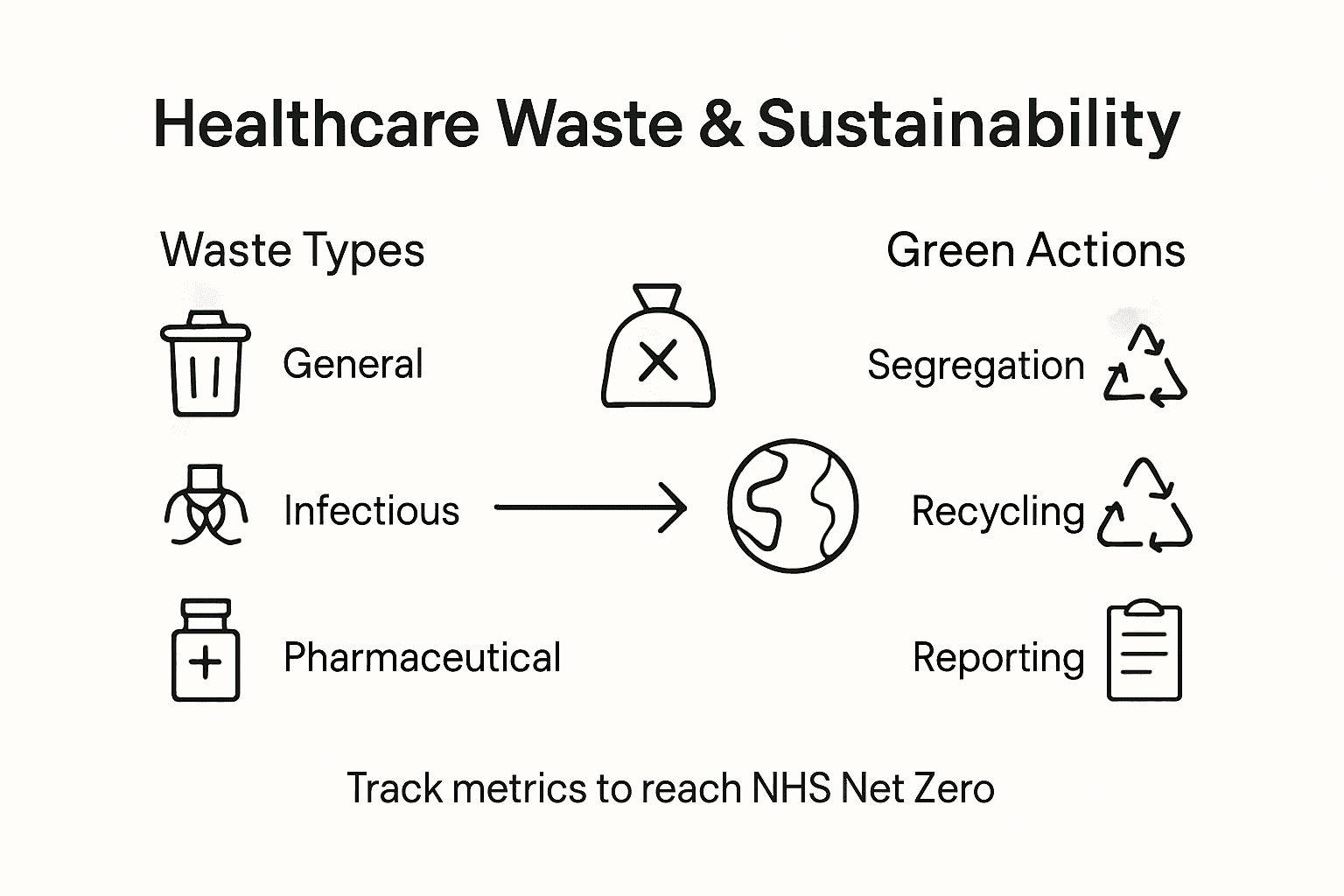
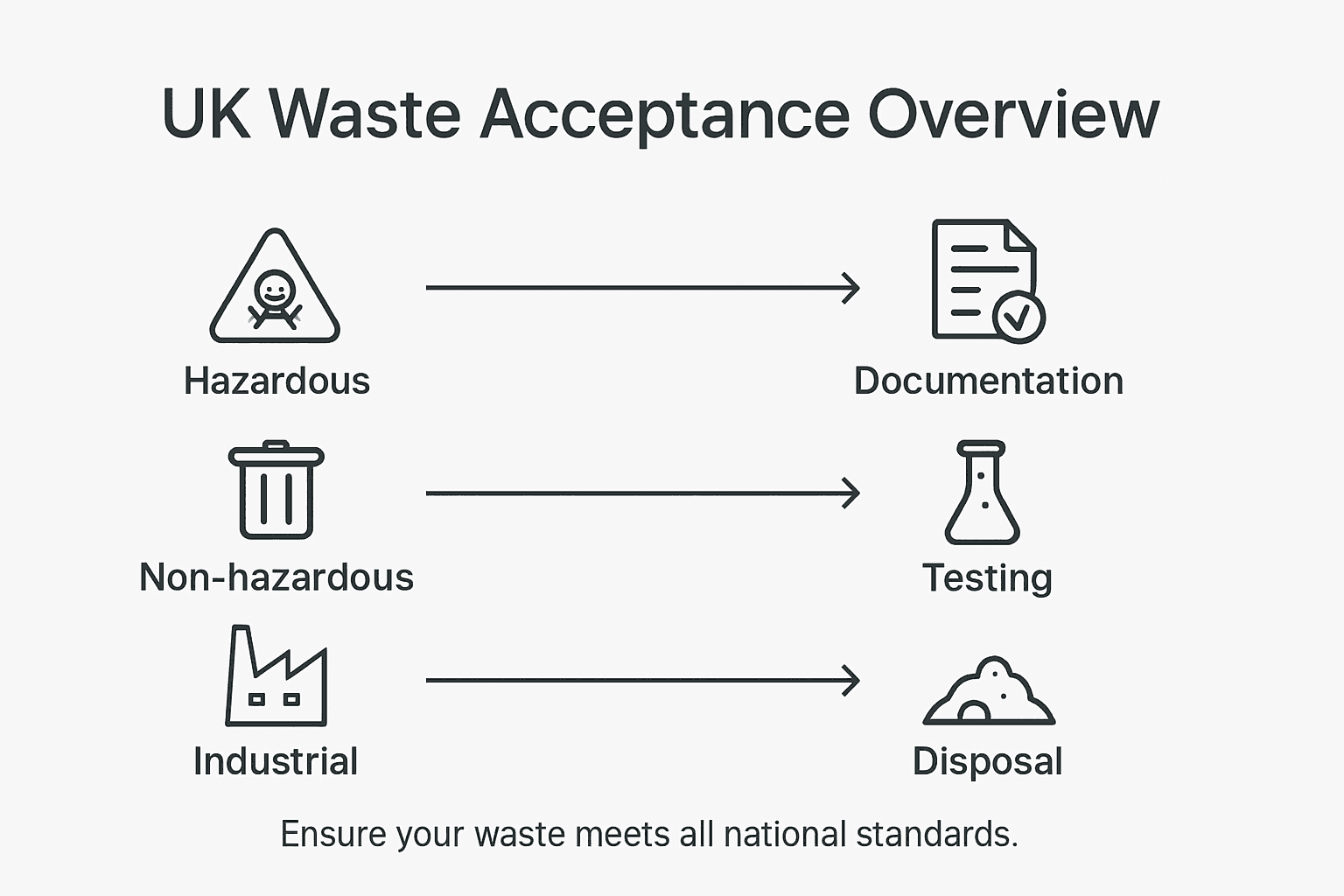
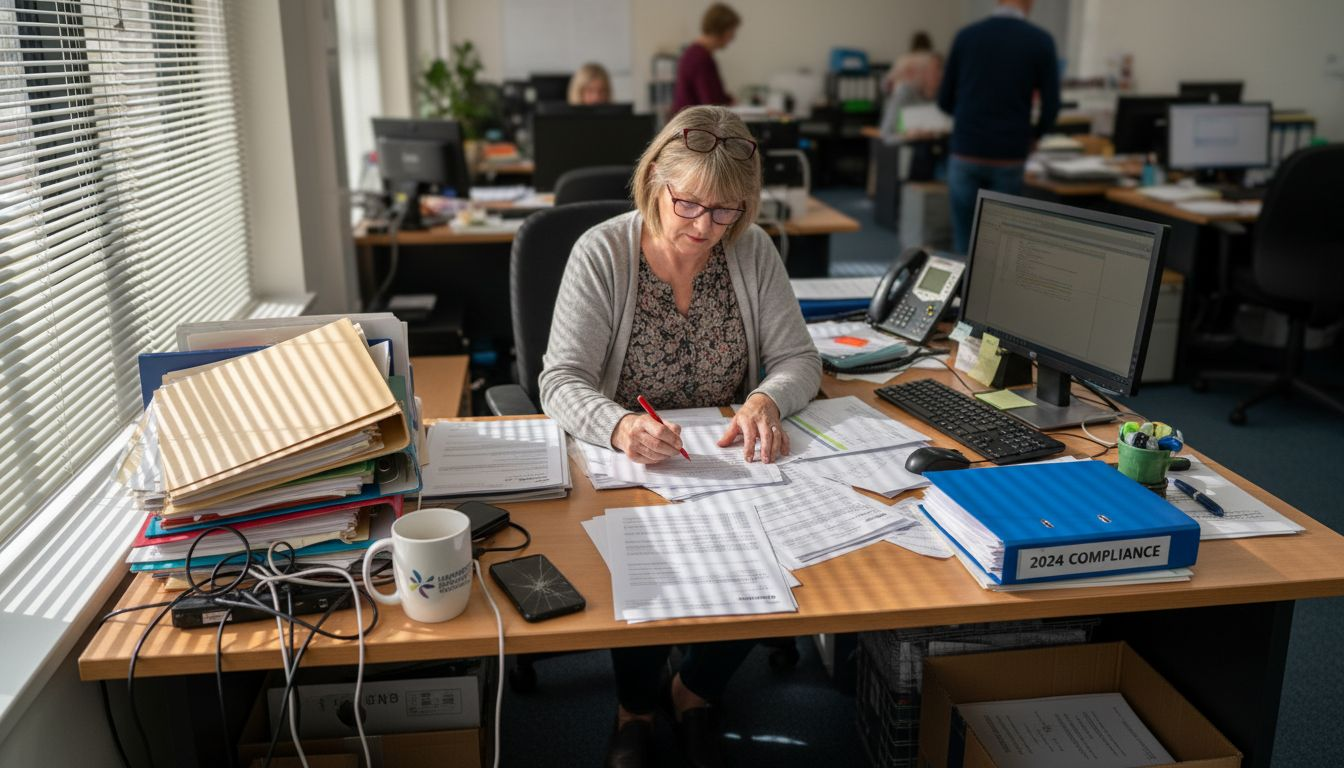
Manager positions recycling bins in office

Recycle More at Work: Boost Workplace Sustainability Easily

Over half of British office workers admit they are confused by workplace recycling rules. As corporate sustainability targets rise, facilities managers play a vital role in shaping better habits and reducing unnecessary waste across the United Kingdom. This guide breaks down proven ways to build a workplace recycling system that actually works, helping organisations tackle compliance challenges while inspiring everyone in the office to make smarter daily choices.

Table of Contents

Quick Summary

Key Point Explanation
1. Assess existing recycling bins Evaluate current recycling bins to identify gaps and opportunities for improvement in your organisation’s recycling efforts.
2. Categorise office waste streams Recognise and separate waste categories like paper, plastic, and electronic waste to comply with regulations and enhance recycling efficiency.
3. Create targeted recycling stations Design colour-coded recycling stations tailored to each department’s waste patterns, enhancing convenience and compliance in waste disposal.
4. Engage staff with training Develop structured training and persistent reminders to cultivate a culture of sustainability and motivate employees in recycling initiatives.
5. Monitor recycling rates regularly Implement a tracking system to analyse recycling performance, which aids in identifying improvements and demonstrates commitment to sustainability.

Step 1: Assess existing workplace recycling bins

Evaluating your workplace’s current recycling infrastructure is the foundational first step towards boosting sustainability efforts. By understanding what systems are already in place, you can identify gaps and opportunities for improvement in your recycling strategy.

Start by conducting a comprehensive visual audit of all existing recycling bins across your office spaces. Walk through each department, including communal areas like kitchens, meeting rooms, and workstations. Carefully observe the current bin placement, labelling, and usage patterns. Take note of whether bins are clearly marked, strategically located, and if employees are actually using them correctly. Many organisations discover that despite having recycling bins, staff often lack clear guidance on proper waste segregation.

As you inspect the bins, pay special attention to the recycling practices currently employed by UK businesses. Determine if your current bins accommodate different material types such as paper, plastics, glass, and electronic waste. Check for contamination issues where non recyclable items might be mixed in with recyclable materials, which can compromise entire waste streams.

Expert Suggestion: Create a simple colour coded system or use pictorial guides near bins to help staff instantly understand which items belong in each container.

Step 2: Identify and separate common office waste streams

Understanding and categorising your office waste streams is crucial for effective recycling and environmental compliance. This step will help you create a systematic approach to managing different types of workplace waste.

Begin by recognising the primary waste categories generated in your workplace. These typically include paper and cardboard, plastic packaging, electronic waste, food waste, and confidential documents. New European Union regulations mandate precise waste stream segregation, which means businesses must now implement more rigorous waste separation protocols. For paper waste, set up dedicated bins for clean white office paper, newspapers, magazines, and cardboard. Plastic waste should be collected separately ensure packaging is clean and dry before disposal. Electronic waste like old computers, printers, and mobile devices require special handling and should be stored in designated secure containers for professional recycling.

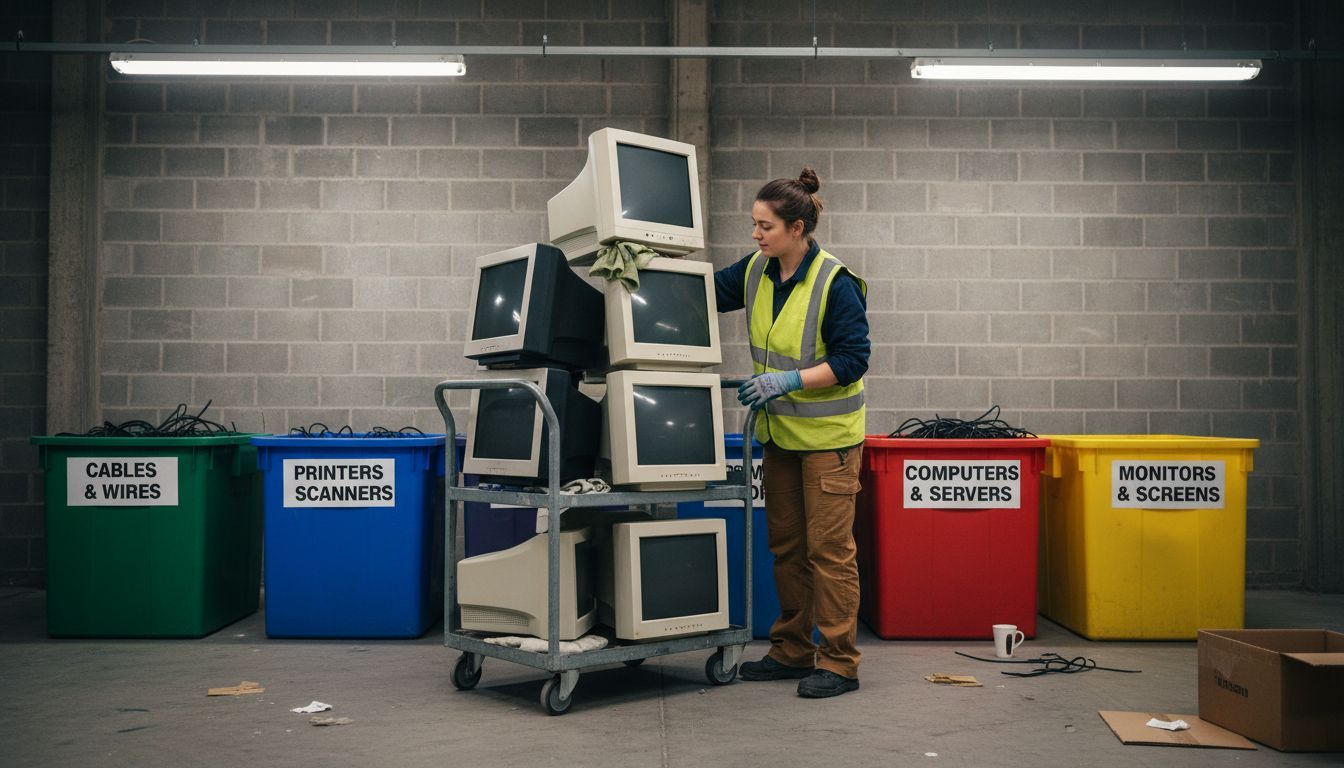
Staff sort office waste at recycling bins

The England Simpler Recycling reforms effective March 2026 require businesses to separate ‘recycling relevant waste’ onsite before collection. This means creating clear, colour coded stations for different waste types with explicit signage indicating exactly what can be deposited in each bin. Consider creating a visual guide near waste stations to help employees understand proper sorting techniques.

Here is a summary of common office waste streams and their recommended disposal approaches:

Waste Stream Recommended Disposal Method Common Risks
Paper and Cardboard Separate clean, dry materials Contamination by food
Plastics Clean and dry before recycling Mixed with general waste
Electronic Waste Designated secure containers Data security issues
Food Waste Dedicated compost or food bins Attracting pests
Confidential Documents Secure shredding and collection Privacy breaches

Expert Suggestion: Train a small group of enthusiastic employees as ‘recycling champions’ who can help monitor and improve waste segregation practices across your organisation.

Step 3: Implement targeted recycling stations across departments

Creating strategically placed recycling stations tailored to different workplace departments will significantly improve your organisation’s waste management efforts. This approach ensures that each area receives specialised recycling infrastructure matching its unique waste generation patterns.

European recycling industry priorities emphasise the importance of dedicated recycling infrastructure that serves specific departmental needs. Start by mapping out your workplace and identifying distinct waste streams for each department. The marketing team might generate more paper waste, while the IT department will have electronic waste. Design colour coded stations with clear signage that indicates precisely what can be deposited. For instance, blue bins for paper, green for general recyclables, and secure grey containers for confidential documents and electronic equipment.

Consider the physical layout of your office when positioning these stations. Place them in high traffic areas like near photocopiers, kitchen spaces, and meeting rooms to encourage maximum usage. The Derby City Council’s waste management initiatives demonstrate how targeted station placement can dramatically improve recycling rates by making disposal convenient and intuitive for employees.

Expert Suggestion: Create visual infographics demonstrating correct waste sorting techniques and display them prominently near each recycling station to reinforce proper disposal practices.

Step 4: Engage staff through training and visible reminders

Successfully transforming your workplace recycling requires more than just infrastructure strategic staff engagement is the critical element that turns good intentions into lasting environmental practice. Your goal is to create a culture of sustainability that motivates employees to participate actively in recycling efforts.


NHS case studies demonstrate how comprehensive staff engagement programs positively influence workplace recycling cultures. Begin by developing a structured training programme that explains not just how to recycle but why it matters. This should include interactive workshops explaining waste streams, environmental impact, and your organisation’s specific recycling protocols. Consider creating short digital modules that employees can complete at their own pace, ensuring the training feels accessible rather than burdensome. Visual aids like infographics, short videos, and practical demonstrations will help reinforce key messages and make the information more digestible.

The University of St Andrews provides an excellent framework for mandatory sustainability training that can inspire your approach. Complement your training with persistent visual reminders strategically placed throughout the workplace. Install clear informative posters near recycling stations, use digital screen displays in communal areas, and incorporate recycling tips into regular internal communications. Encourage departmental competitions or recognition programmes that celebrate teams achieving outstanding recycling performance to maintain ongoing motivation.

Expert Suggestion: Rotate your visual reminders and training content quarterly to prevent information fatigue and keep sustainability messaging fresh and engaging.

The following table highlights features and business impact of staff engagement strategies for workplace recycling:

Engagement Method Key Feature Likely Impact
Structured Training Explains recycling rationale Boosts participation
Visual Reminders Posters, digital displays Reinforces behaviours
Recognition Schemes Rewards high-performing teams Improves motivation
Recycling Champions Peer-led monitoring Sustains good habits

Step 5: Monitor recycling rates and optimise processes

Tracking your workplace recycling performance is essential for understanding the effectiveness of your sustainability initiatives and identifying areas for continuous improvement. By implementing systematic monitoring strategies, you can transform raw data into actionable insights that drive meaningful environmental progress.
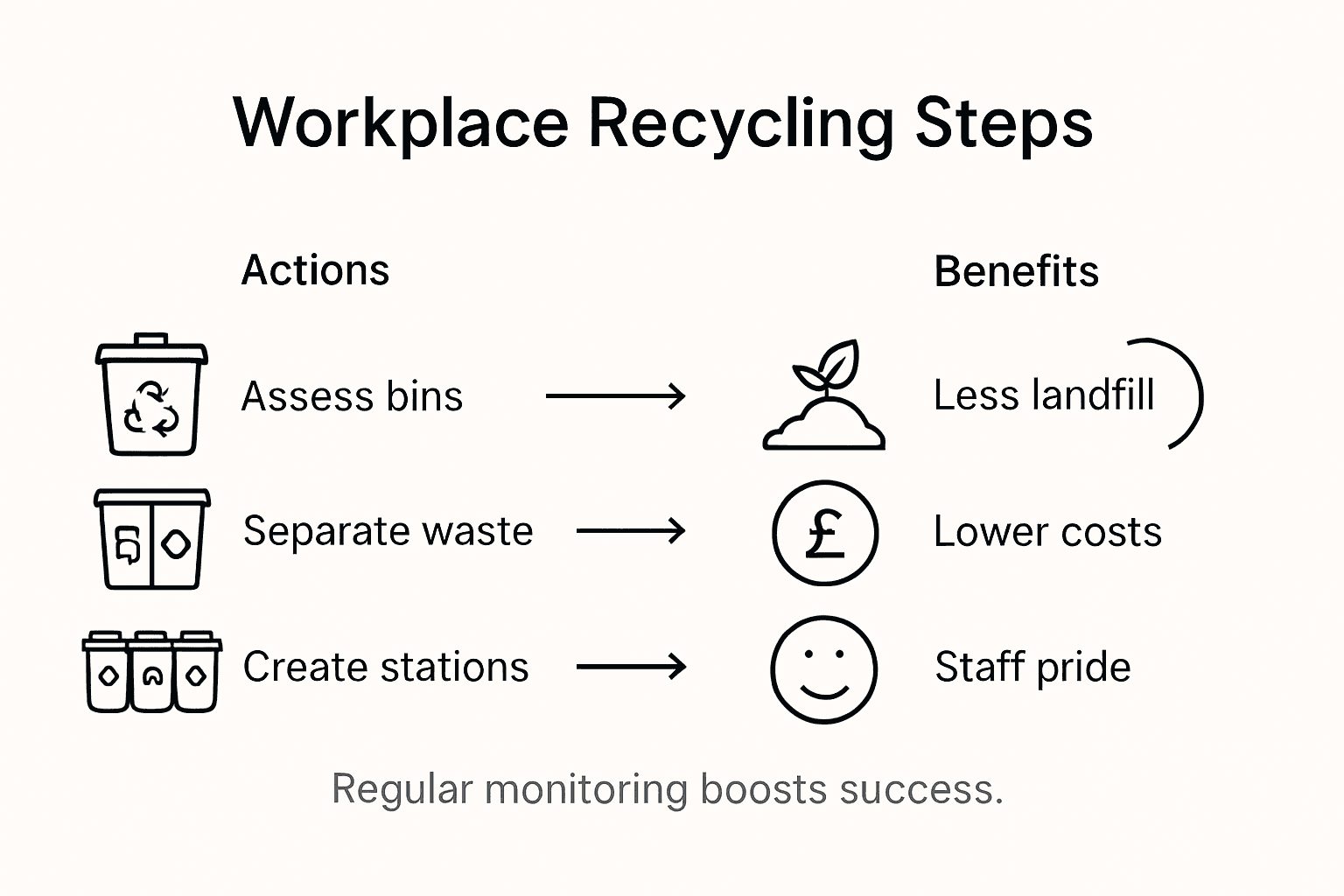
Infographic showing workplace recycling process

The UK government encourages voluntary monitoring and reporting for waste management processes, emphasising the importance of collecting accurate recycling data. Develop a comprehensive tracking system that captures key metrics such as total waste generated, recycling rates per department, contamination levels, and waste diversion from landfill. Implement digital tools or spreadsheets to record weekly or monthly data, allowing you to visualise trends and measure progress against your sustainability targets.

Methods for tracking recycling program effectiveness include developing participation rates, conducting staff surveys, and monitoring material capture rates. Schedule quarterly review meetings to analyse your recycling performance, discuss challenges, and brainstorm improvements. Consider creating visual dashboards that display recycling achievements to motivate staff and maintain transparency. By regularly reviewing and adapting your approach, you can continuously refine your workplace recycling strategy and demonstrate tangible environmental commitment.

Expert Suggestion: Implement a digital dashboard that automatically updates recycling statistics and provides real time visual feedback to keep staff engaged and informed about your sustainability progress.

Take Control of Your Workplace Recycling with Venture Waste

Improving workplace recycling can feel overwhelming when faced with the challenges of organising waste streams effectively and engaging staff sustainably. This article highlights the importance of tailored recycling stations, clear waste segregation, and ongoing monitoring to truly boost your office’s environmental impact. At Venture Waste, we understand these pain points and provide comprehensive solutions that align perfectly with your goals for legal compliance and efficient waste management.

https://venturewaste.co.uk

Choose from our trusted services including confidential waste disposal to securely handle sensitive materials, or explore how our streamlined waste collection process supports UK businesses in maintaining high recycling standards. Act now to transform your workplace sustainability efforts with our expert support and easy three-step booking system available at Venture Waste. Start reducing contamination and improving recycling rates today by partnering with a provider that puts your environmental commitment first.

Frequently Asked Questions

How can I assess my workplace’s existing recycling bins?

To assess your workplace’s current recycling bins, conduct a visual audit of their placement, labelling, and usage patterns. Walk through each department and communal areas, taking note of any gaps in guidance or contamination issues.

What are the common waste streams in an office, and how should I separate them?

Common office waste streams include paper and cardboard, plastic packaging, electronic waste, food waste, and confidential documents. Identify these categories and implement designated bins for each type, ensuring clear signage and colour coding for ease of use.

How can I create effective recycling stations for different departments?

To create effective recycling stations, map out the unique waste generation patterns of each department. Position colour-coded bins in high-traffic areas like near photocopiers or kitchens to encourage employees to recycle more efficiently.

What strategies can engage staff in recycling efforts?

Engage staff with structured training programmes that explain both how to recycle and why it matters. Complement this training with visual reminders and recognition schemes to motivate and sustain good recycling habits.

How do I monitor and optimise my workplace recycling rates?

To monitor workplace recycling rates, develop a tracking system that captures key metrics like total waste generated and recycling rates per department. Schedule quarterly reviews to analyse performance, discuss challenges, and refine strategies for continuous improvement.

UK council workers at recycling site

Waste Partnerships in the UK: Ensuring Compliance and Sustainability

Over eighty percent of british facilities managers now rank sustainable waste management as a top operational concern. With tightening UK regulations and ever-greater pressure for environmental responsibility, finding the right waste partnership can make a real difference to healthcare and educational institutions. This overview demystifies what makes effective british waste partnerships work, highlighting ways to raise compliance, support eco-friendly goals, and keep day-to-day operations running smoothly.

Table of Contents

Key Takeaways

Point Details
Importance of Collaboration Waste partnerships enhance resource management and sustainability through collaboration between public, private, and third sectors.
Types of Partnerships Various partnership models, including Public Private Partnerships and Inter-Local Authority Partnerships, offer unique advantages for effective waste management.
Operational Framework Successful partnerships require strategic planning, resource pooling, and risk sharing to navigate complex operational challenges.
Legal Compliance Needs Adherence to regulations, such as the Extended Producer Responsibility, is crucial for effective waste partnership operation and environmental sustainability.

Defining Waste Partnerships in the UK Context

Waste partnerships in the United Kingdom represent sophisticated collaborative networks between public, private, and third sector organisations designed to address complex waste management challenges. These strategic alliances go beyond traditional disposal approaches, focusing on comprehensive resource management, sustainability goals, and collective environmental responsibility.

At their core, waste partnerships involve strategic collaboration between neighbouring local authorities to develop integrated waste solutions. For instance, the Western Riverside Waste Authority demonstrates how multiple London boroughs can work together to prevent waste generation, enhance resource efficiency, and reduce greenhouse gas emissions. These partnerships are critical in adapting to evolving national legislation and local environmental targets.

The effectiveness of waste partnerships stems from their ability to pool resources, share expertise, and develop innovative approaches to waste management. By creating cross-sector networks, these partnerships enable local governments, private waste management companies, and environmental organisations to develop more comprehensive and sustainable waste management strategies. This collaborative approach allows for shared investment in infrastructure, joint research initiatives, and coordinated policy implementation across different regional contexts.

Pro tip: When exploring potential waste partnerships, prioritise organisations with aligned environmental objectives and complementary operational capabilities to maximise collaborative potential.

Types of Waste Partnerships and Key Differences

Waste partnerships in the United Kingdom represent sophisticated collaborative models designed to address complex environmental management challenges. These partnerships encompass multiple structures, each with unique characteristics and strategic objectives that contribute to more effective waste management and resource utilisation.

Public Private Partnerships (PPPs) are particularly significant in the UK waste management landscape. These collaborative arrangements between local government bodies and private companies aim to stimulate infrastructure investment and reduce landfill usage. PPPs differ from traditional procurement methods by establishing long-term contracts that secure private sector funding and expertise for waste management infrastructure projects.

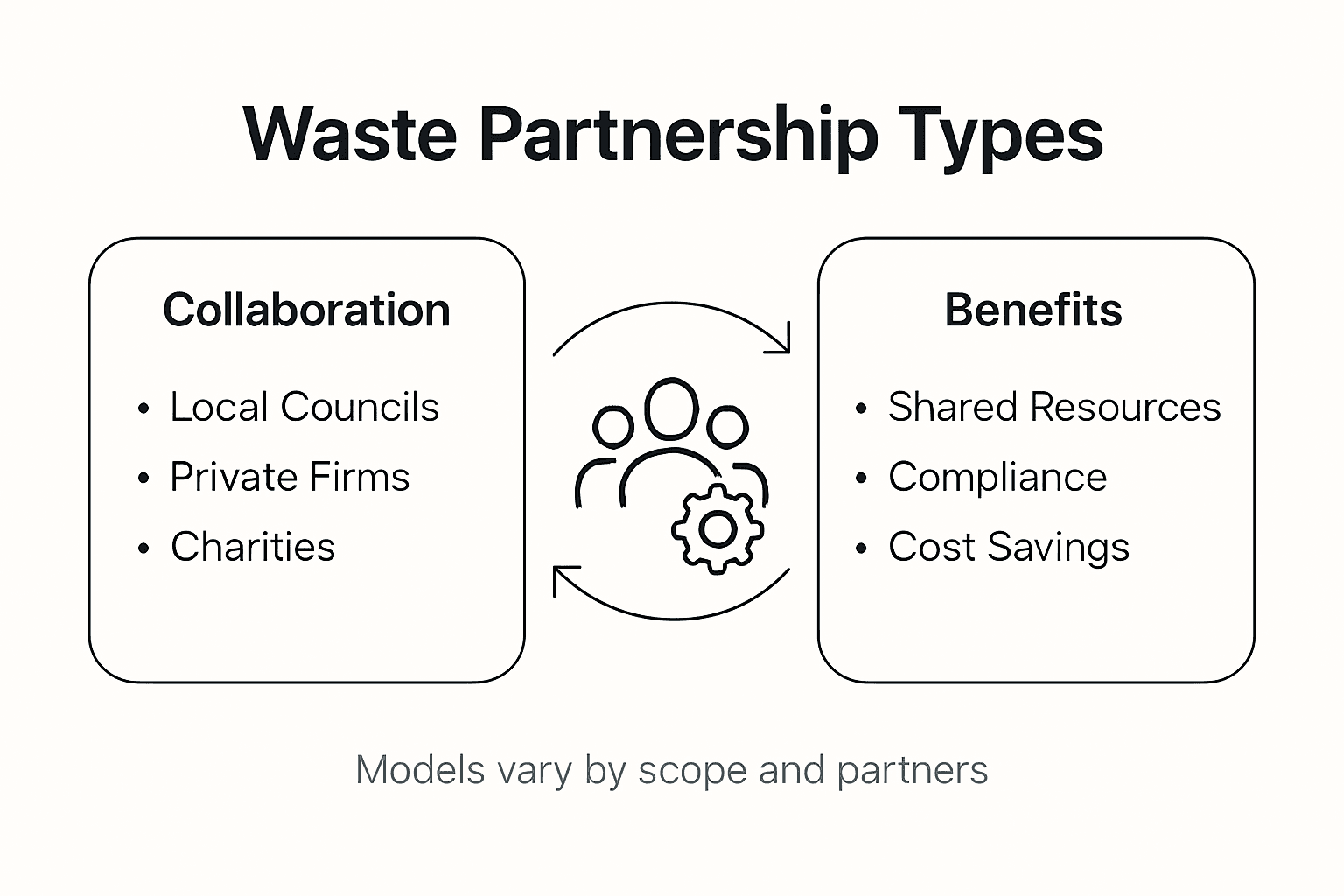
The partnership models can be categorised into several key types:- Inter-Local Authority Partnerships: Collaborations between neighbouring councils to share waste management resources and infrastructure- Cross-Sector Partnerships: Involving public agencies, private waste management companies, and environmental organisations- Municipal-Private Sector Partnerships: Direct collaborations between city councils and waste management enterprises- Research and Innovation Partnerships: Networks focused on developing sustainable waste management technologies and strategies

Each partnership type offers unique advantages, with variations in operational scope, contract structures, and strategic objectives. The most effective partnerships leverage complementary strengths, combining public sector regulatory oversight with private sector efficiency and innovation.

Infographic comparing UK waste partnership types

Here’s a comparison of common waste partnership models in the UK and their main strategic advantages:

Partnership Model Strategic Focus Key Benefit
Inter-Local Authority Partnership Shared infrastructure Reduced operational costs
Cross-Sector Partnership Multi-organisation input Broader expertise pool
Municipal-Private Sector Direct business alliance Enhanced service efficiency
Research & Innovation Partnership Technology advancement Discovery of new solutions

Pro tip: When developing waste partnerships, carefully assess potential partners’ environmental goals, operational capabilities, and long-term strategic alignment to ensure meaningful and sustainable collaboration.

How Waste Partnerships Operate in Practice

Waste partnerships in the United Kingdom represent intricate collaborative mechanisms that transform theoretical sustainability goals into practical waste management solutions. These partnerships navigate complex operational landscapes, balancing regulatory requirements, environmental objectives, and economic considerations.

At their core, these partnerships coordinate waste collection, disposal, and infrastructure management through structured implementation strategies. They must manage critical aspects such as service aggregation, contract negotiations, and regulatory compliance while maintaining operational continuity during administrative transitions.

Managers reviewing waste collection reports

The operational framework of waste partnerships typically involves several key strategic elements:- Collaborative Planning: Developing shared waste management strategies- Resource Pooling: Combining financial and technological resources- Risk Sharing: Distributing potential challenges across partnership members- Performance Monitoring: Establishing clear metrics and accountability mechanisms- Technological Integration: Implementing shared digital platforms for tracking and reporting

Successful waste partnerships require sophisticated governance models that balance local authority oversight with private sector efficiency. This approach enables more dynamic, responsive waste management systems that can quickly adapt to changing environmental regulations and community needs.

Pro tip: Develop clear, measurable key performance indicators that align with both environmental sustainability goals and operational efficiency metrics to ensure meaningful partnership outcomes.

Waste partnerships in the United Kingdom operate within a complex legal framework that demands rigorous adherence to national environmental regulations and sustainability objectives. These partnerships must navigate an intricate landscape of legal requirements designed to transform waste management practices and minimise environmental impact.

The legal landscape is defined by comprehensive mandates, including the Extended Producer Responsibility (EPR) scheme and consistent waste collection requirements. These regulations impose significant obligations on producers, local authorities, and waste management entities, compelling them to meet specific recycling targets, provide standardised collection services, and contribute to the funding of waste management infrastructure.

Key legal compliance standards encompass several critical dimensions:- Waste Hierarchy Adherence: Prioritising waste prevention, reuse, and recycling- Waste Separation Requirements: Implementing strict categorisation protocols- Reporting and Documentation: Maintaining transparent records of waste management activities- Environmental Impact Mitigation: Demonstrating measurable reduction in ecological footprint- Regulatory Consultation: Engaging with government waste prevention programmes

Successful waste partnerships must continuously evolve their operational strategies to align with the Resources and Waste Strategy, which emphasises sustainable resource management and environmental protection. This requires proactive engagement with changing legislative frameworks and a commitment to exceeding minimal compliance standards.

The following table highlights essential legal compliance areas and their impact on UK waste partnerships:

Compliance Area Purpose Impact on Partnership
Waste Hierarchy Prioritise reuse and recycling Drives sustainability
Reporting Protocols Recordkeeping and transparency Improves accountability
EPR Mandates Producer responsibility Stimulates innovation
Impact Mitigation Reduce ecological footprint Boosts public trust

Pro tip: Develop a comprehensive compliance tracking system that anticipates regulatory changes and integrates legal requirements into daily operational workflows.

Risk Management, Costs, and Common Pitfalls

Waste partnerships in the United Kingdom face increasingly complex financial and operational challenges that demand sophisticated risk management strategies. The evolving landscape of environmental regulations and infrastructure requirements creates a multifaceted environment where strategic planning becomes crucial for sustainable success.

Parliamentary analyses have revealed significant risks associated with waste partnership financing models, highlighting potential financial vulnerabilities. These include challenges such as overreliance on private sector financing, inadequate cost-benefit evaluations, and potential operational inefficiencies that can lead to substantial financial and legal complications.

Key risk management considerations include:- Financial Modelling: Developing robust, transparent financial projections- Contract Negotiation: Establishing clear, comprehensive partnership agreements- Contingency Planning: Creating flexible strategies for unexpected challenges- Performance Monitoring: Implementing rigorous evaluation mechanisms- Technology Investment: Selecting scalable, adaptable technological solutions

Successful waste partnerships must adopt a proactive approach to risk mitigation, recognising that comprehensive planning and continuous adaptation are essential for navigating the complex regulatory and economic landscape of waste management. This requires a holistic view that balances financial constraints with environmental objectives and operational efficiency.

Pro tip: Conduct regular, comprehensive risk assessments that incorporate financial, regulatory, and technological factors to create a dynamic and resilient waste management strategy.

Streamline Your UK Waste Partnership Compliance with Venture Waste

Managing waste partnerships requires navigating complex legal obligations and operational challenges while striving for sustainability and efficiency. If your organisation aims to meet stringent compliance standards, leverage innovative waste collection methods, and reduce environmental impact, Venture Waste Management offers practical solutions designed for today’s regulatory landscape. Discover how our expert services align perfectly with the demands of inter-authority waste collaborations and public-private initiatives to deliver reliable, compliant waste management.

https://venturewaste.co.uk

Explore our insights into How the Waste Collection Network in UK Serves Businesses in 2025 alongside a detailed overview of the Waste Collection Process in the UK for Businesses 2025 to understand the full scope of compliance and sustainability measures. Visit Venture Waste Management today and take the next step towards a fully compliant, environmentally responsible, and efficient waste partnership solution tailored to your needs.

Frequently Asked Questions

What are waste partnerships?

Waste partnerships in the UK are collaborative networks among public, private, and third sector organisations aimed at managing waste sustainably and effectively.

Waste partnerships adhere to legal frameworks by following regulations such as the Extended Producer Responsibility (EPR) scheme, ensuring proper waste categorisation, and maintaining transparent reporting practices.

What types of waste partnerships exist in the UK?

The main types of waste partnerships include Public Private Partnerships (PPPs), Inter-Local Authority Partnerships, Cross-Sector Partnerships, Municipal-Private Sector Partnerships, and Research and Innovation Partnerships.

What are the key benefits of forming a waste partnership?

Key benefits include shared resources, combined expertise, innovative waste management strategies, reduced costs, and improved environmental sustainability.

Facilities manager records electronics disposal in office

Waste Electricals Disposal: A Step-by-Step Compliance Guide

Managing waste electricals in british hospitals and schools comes with growing pressure to meet strict regulatory standards and support sustainability. With UK households storing over 880 million unused electrical items, facilities managers face a real challenge in keeping their sites safe, compliant, and environmentally responsible. This guide walks you through practical steps for sorting, documenting, and disposing of electrical waste to help your organisation achieve full legal compliance and reduce environmental impact at every stage.

Table of Contents

Quick Summary

Essential Insight Detailed Explanation
1. Conduct a thorough inventory Accurately document all electrical items to assess their disposal needs and identify potential hazards.
2. Segregate items for collection Organise different types of electrical equipment into distinct zones to improve recycling efficiency.
3. Choose compliant disposal services Engage only with authorised providers to ensure legal compliance and environmental responsibility.
4. Verify and retain documentation Keep detailed records of all waste transfers to maintain a transparent audit trail for future reference.
5. Monitor final processing Track the disposal lifecycle to confirm responsible recycling and handling of hazardous materials.

Step 1: Assess waste electricals and identify disposal needs

Assessing waste electrical equipment represents a critical first step in responsible disposal. Your primary goal is understanding exactly what electrical items you have and determining their appropriate recycling or disposal pathway.

Begin by conducting a comprehensive inventory of all electrical items across your facility. This means carefully documenting every plug-powered or battery-operated device from computers and printers to kitchen appliances and maintenance equipment. Research indicates that UK households alone hold 880 million unused electrical items, highlighting the significant potential for proper waste management. Pay special attention to items that might contain hazardous components like batteries or electronic circuits.

Classify each electrical item into specific categories based on size, condition, and potential recyclability. Small items like mobile phones, tablets, and personal electronics often have different disposal requirements compared to larger white goods such as refrigerators or industrial machinery. Consider factors like age, functionality, and potential for component recovery. Some electrical equipment might be suitable for refurbishment or direct reuse, while others will require specialist recycling processes.

Expert Tip: Create a digital spreadsheet to track all electrical waste, recording details like device type, serial number, condition, and proposed disposal method for streamlined management.

Here is a summary of key categories for electrical waste management:

Device Category Common Items Hazards Present Disposal Considerations
Small Electronics Phones, tablets, cameras Batteries, circuits Suitable for refurbishment
Large Appliances Refrigerators, ovens Refrigerants, metals Require specialist recycling
IT Equipment Computers, printers Data storage, batteries Data wiping, specialised handling
Maintenance Tools Power tools, chargers Batteries, metals Remove batteries, recycle parts

Step 2: Prepare and segregate electrical items for collection

Preparing and segregating electrical waste is a crucial phase in ensuring efficient and environmentally responsible disposal. Your objective is to organise electrical items systematically to facilitate safe recycling and minimise contamination.

Start by creating distinct collection zones for different types of electrical equipment. Practical guidance recommends sorting cables and electrical items carefully to improve recycling efficiency, which means separating items by categories such as small electronics, large appliances, batteries, and computer equipment. Remove batteries from devices whenever possible, as these often require specialised handling. Group items by material composition and potential recyclability sorting plastics, metals, and electronic components separately to streamline the subsequent recycling processes.

Ensure all electrical items are clean and free from additional non electrical attachments before collection. Check each item for damage or contamination that might compromise recycling potential. Documentation is key prepare an inventory listing each item with details like type, condition, and proposed disposal method. This systematic approach not only simplifies collection but also provides valuable tracking for your waste management records.

Worker segregates and cleans waste electricals

Expert Tip: Create colour coded containers or clearly labelled zones for different electrical waste categories to prevent accidental mixing and streamline your segregation process.

Step 3: Select compliant disposal services and arrange transport

Selecting the right disposal service is crucial for ensuring legal compliance and environmental responsibility when managing waste electrical equipment. Your primary objective is to identify and engage with authorised waste management providers who meet stringent regulatory requirements.

The UK’s Waste Electrical and Electronic Equipment (WEEE) Regulations mandate that businesses use only authorised collectors and contractors registered with environmental regulators. Begin by thoroughly researching potential waste disposal services specialising in electrical equipment. Look for providers with valid waste carrier licences and proven experience in handling electronic waste. Request detailed documentation including their environmental permits, waste transfer certifications, and specific expertise in processing different categories of electrical items.

Carefully evaluate potential service providers by examining their recycling processes, environmental credentials, and compliance records. Request comprehensive quotes that outline collection methods, transportation protocols, and final disposal or recycling strategies. Ensure the chosen service provides comprehensive documentation for each stage of waste management, including detailed waste transfer notes and certificates of destruction. Confirm their commitment to environmentally responsible practices and their ability to provide transparent reporting on the final disposition of your electrical waste.

Expert Tip: Always request and retain copies of waste transfer documentation for at least three years to maintain a robust audit trail and demonstrate your organisation’s commitment to legal compliance.

The table below compares authorised and unauthorised disposal service providers:

Feature Authorised Providers Unauthorised Providers
Legal Compliance Fully regulated, certified May lack permits, illegal
Documentation Provided Waste notes, destruction certificates Poor, incomplete records
Environmental Practices Transparent recycling Unknown, often negligent
Audit Trail Reliability Robust and traceable Risk of lost records

Verifying documentation represents the final critical checkpoint in your waste electrical equipment disposal process. Your primary goal is to create an ironclad audit trail that demonstrates your organisation’s commitment to legal and environmental standards.

Infographic with disposal steps and compliance keys

Designated collection facilities must maintain comprehensive records documenting the quantities, types, and transfers of waste electrical equipment, ensuring transparency throughout the disposal journey. Systematically review all documentation generated during the waste management process, including waste transfer notes, certificates of destruction, and compliance scheme registrations. Cross reference these documents against your initial inventory to confirm every electrical item has been properly accounted for and processed according to UK regulatory requirements.

Pay meticulous attention to the details within your documentation. Verify that each waste transfer note includes precise information such as the type and weight of electrical equipment, the dates of transfer, and the specific authorisation numbers of the waste carriers and treatment facilities involved. Retain these documents securely for a minimum of three years, as they serve as crucial evidence of your legal compliance. By maintaining a comprehensive and accurate documentation system, you protect your organisation from potential regulatory penalties and demonstrate your commitment to responsible waste management.

Expert Tip: Create a digital archive with multiple backup copies of all waste management documentation to ensure you can quickly retrieve records if required by environmental regulators.

Step 5: Monitor final processing and confirm safe disposal

Monitoring the final processing of waste electrical equipment ensures your organisation maintains the highest standards of environmental responsibility and regulatory compliance. Your critical objective is to track and verify the complete disposal lifecycle of electrical waste.

Authorised facilities must implement rigorous management systems to track material flows and confirm that recycling or disposal meets stringent regulatory standards. Request comprehensive processing reports from your waste management provider that detail the exact treatment methods used for each category of electrical equipment. These reports should include precise documentation of material segregation, component recovery rates, and confirmation of environmentally sound disposal techniques.

Carefully scrutinise the final processing documentation to ensure hazardous materials have been appropriately handled and that recycling targets have been met. Verify the credentials of the treatment facilities, checking their environmental permits and compliance records. Pay particular attention to how different electrical components are processed specifically looking for evidence of responsible material recovery, safe handling of toxic substances, and adherence to UK waste management regulations. By maintaining this level of oversight, you demonstrate your commitment to sustainable waste management and protect your organisation from potential environmental and legal risks.

Expert Tip: Establish a quarterly review process to audit and cross check waste processing reports against your original electrical equipment inventory to ensure complete and transparent disposal tracking.

Simplify Your Waste Electricals Disposal with Expert Support

Proper disposal of waste electricals requires careful assessment, segregation, and compliance to avoid legal risks and environmental harm. If you seek a reliable partner to guide you through responsible recycling and meet all UK regulations, Venture Waste is here to help. With specialised knowledge in handling WEEE Waste and electrical components like Batteries, we ensure your electrical equipment is managed safely and transparently from start to finish.

https://venturewaste.co.uk

Take control of your compliance journey today by choosing Venture Waste for expert disposal services tailored to your needs. Visit our website at Venture Waste to book your collection and benefit from streamlined processes, full audit trails, and peace of mind that your waste electricals are handled responsibly now.

Frequently Asked Questions

What is the first step in waste electricals disposal?

Begin by conducting a comprehensive inventory of all electrical items in your facility. This will help you understand what items you have and their appropriate disposal pathways.

How should I segregate electrical items for disposal?

Create distinct collection zones for various types of electrical equipment. Sort items by category—such as small electronics, large appliances, and batteries—to streamline the recycling process and avoid contamination.

What should I look for when selecting a waste disposal service?

Choose authorised waste disposal services that are registered with environmental regulators. Ensure they provide documentation such as waste transfer notes and certificates of destruction for compliance and transparency.

How can I verify the documentation for my electrical waste disposal?

Review all generated documents, including waste transfer notes and certificates, to ensure they match your initial inventory. Retain these records securely for a minimum of three years to demonstrate compliance with waste management regulations.

What actions should I take to monitor the final processing of my electrical waste?

Request comprehensive processing reports from your waste management provider. These reports should detail treatment methods and ensure that hazardous materials are handled safely while meeting recycling targets.

Manager sorting waste compliance documents office

Responsible Disposal: Protecting Health, Legal Compliance

Most british institutions face rising pressures to dispose of waste safely while meeting strict legal requirements. Navigating the maze of environmental regulations and public health standards has become a central challenge for facilities managers in United Kingdom healthcare and educational sectors. With costly penalties for non-compliance affecting thousands each year, this guide gives you practical solutions and dispels common myths around responsible waste disposal, helping you protect your organisation and the environment.

Table of Contents

Key Takeaways

Point Details
Responsible Disposal Responsible waste disposal emphasises systematic management, prioritising environmental protection and resource efficiency.
Waste Types Understanding the different types of waste, such as household, commercial, and hazardous, is essential for effective disposal strategies.
Legal Compliance Organisations must adhere to waste management regulations to avoid legal repercussions and promote sustainability.
Improper Handling Risks Improper waste management poses risks including environmental contamination, public health hazards, and financial penalties.

Responsible Disposal Defined and Common Myths

Responsible waste disposal represents a strategic approach to managing discarded materials that prioritises environmental protection, public health, and legal compliance. At its core, this concept goes far beyond simply throwing items away, instead focusing on systematic management that minimises potential harm and maximises resource efficiency. Academic research on consumer waste practices reveals that responsible disposal involves comprehensive strategies for reducing, reusing, and recycling unwanted goods.

Numerous myths surround waste disposal that can impede effective environmental management. One prevalent misconception is that all waste management processes are equally sustainable or that recycling requires minimal effort. In reality, responsible disposal demands careful sorting, understanding complex recycling guidelines, and recognising the potential environmental consequences of improper waste handling. Professional resources highlighting recycling misconceptions demonstrate how consumer misunderstandings can significantly compromise waste management efficacy.

Key characteristics of responsible disposal include:

  • Systematic waste categorisation
  • Understanding material composition
  • Adhering to local and national waste regulations
  • Minimising environmental contamination
  • Prioritising reduction and reuse strategies

Businesses and individuals must recognise that responsible disposal is not merely a regulatory requirement but a critical environmental and social responsibility. Proper waste management protects public health, conserves natural resources, and contributes to broader sustainability objectives.

Expert Tip: Always research your local waste management guidelines and invest time in properly sorting different waste categories to maximise recycling effectiveness.

Main Types of Waste in UK Facilities

Waste management in the United Kingdom involves handling numerous complex waste streams across different sectors. Comprehensive research on waste categorisation reveals multiple primary waste types that require distinctive disposal strategies. These categories include household, commercial, industrial, and specialised waste materials, each demanding unique handling protocols to ensure environmental protection and regulatory compliance.

The primary waste types encountered in UK facilities can be systematically divided into several key classifications:

  • Household Waste: Comprising everyday materials like paper, plastics, glass, and organic substances
  • Commercial Waste: Generated by businesses, including office materials and packaging
  • Industrial Waste: Produced during manufacturing processes, often requiring specialised disposal
  • Hazardous Waste: Materials containing potentially dangerous chemical or biological components

Detailed recycling guidelines highlight the complexity of waste sorting, particularly noting that local councils have varying regulations about acceptable recyclable materials. For instance, certain items like black plastic or broken glass might be excluded from standard recycling collections, emphasising the critical need for precise waste categorisation and disposal strategies.

Understanding these waste types is crucial for facilities managers, environmental professionals, and organisations seeking to minimise their environmental footprint. Proper waste segregation not only ensures legal compliance but also contributes significantly to resource conservation and sustainable waste management practices across the United Kingdom.

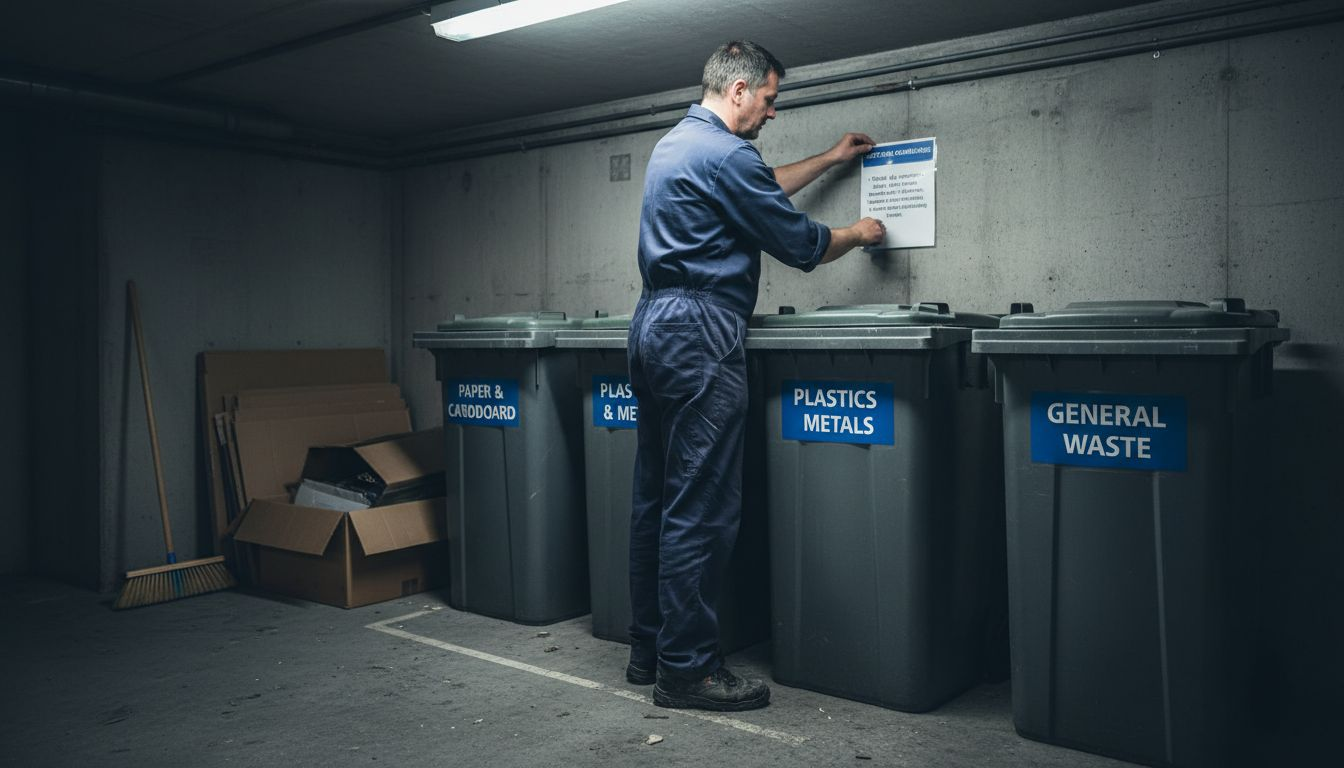
Worker updating waste bin facility signage

To clarify the differences between key UK waste types, see this summary:

Waste Type Main Sources Typical Disposal Challenge Example Materials
Household Homes/residential areas Mixed items with unclear recycling labels Food waste, plastics
Commercial Offices/retail sectors High volume of packaging Cardboard, old equipment
Industrial Factories/workshops Need for specialised treatment facilities Scrap metal, chemicals
Hazardous Hospitals/labs/industry Legal compliance and risk of contamination Solvents, batteries

Pro Tip: Develop a comprehensive waste audit system that tracks and categorises different waste streams, enabling more effective and targeted disposal strategies.

Waste management regulations in the United Kingdom represent a complex legal framework designed to protect environmental and public health interests. The comprehensive legal landscape governing waste disposal encompasses multiple critical legislative instruments, including the Environmental Protection Act 1990, the Waste Framework Directive, and the Landfill Directive. These regulations establish clear legal responsibilities for businesses, local authorities, and individual waste producers.

Key legal duties for organisations include:

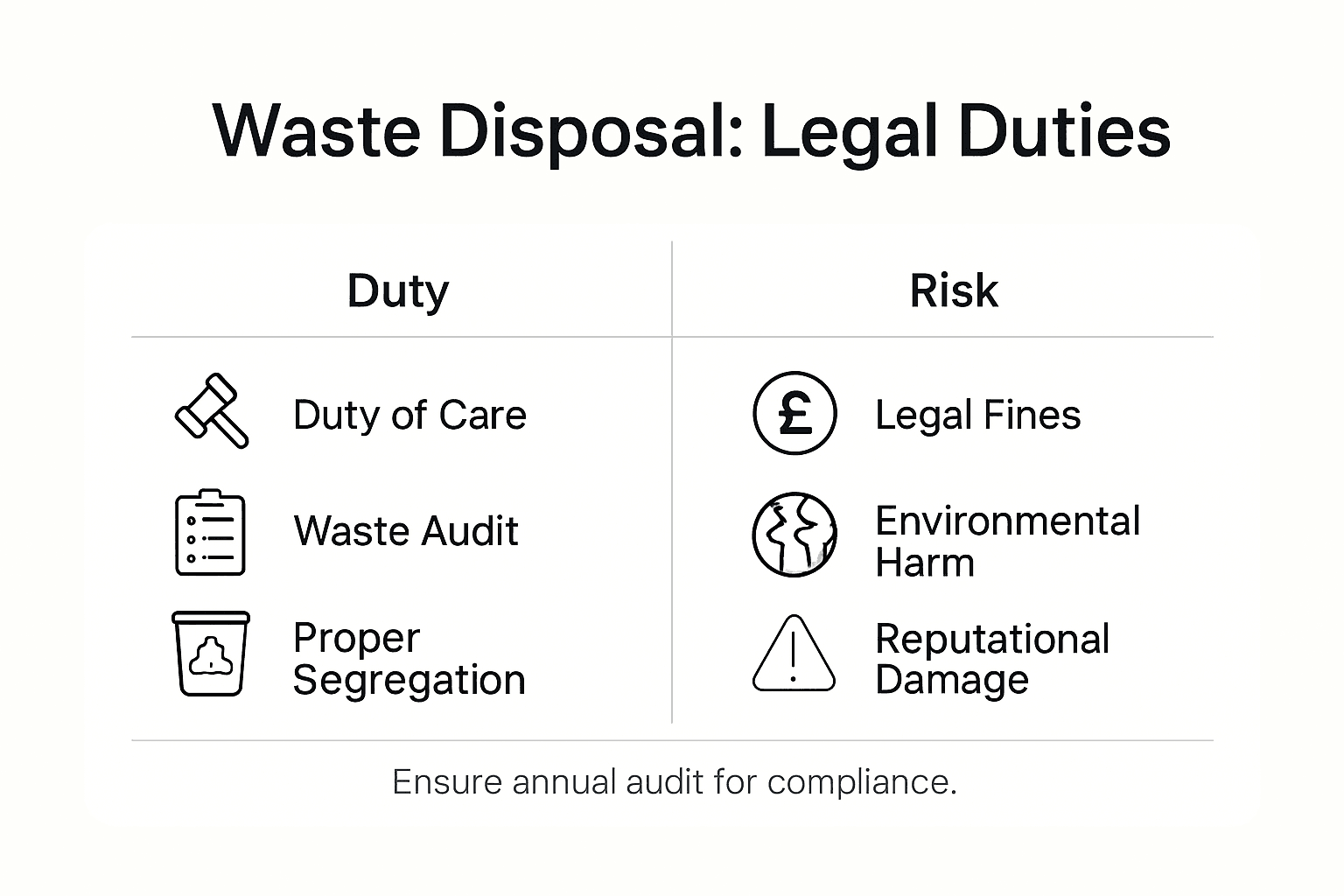
  • Duty of Care: Ensuring waste is handled, transported, and disposed of responsibly
  • Licensing Requirements: Obtaining appropriate permits for waste collection and disposal
  • Record Keeping: Maintaining detailed documentation of waste management processes
  • Compliance Monitoring: Regular assessment of waste handling practices
  • Environmental Impact Mitigation: Minimising potential ecological harm

National waste management strategies emphasise the importance of sustainable resource use and waste reduction. Organisations must navigate increasingly stringent regulations that prioritise recycling, waste prevention, and environmentally responsible disposal methods. Non-compliance can result in significant financial penalties, legal prosecution, and reputational damage.

Infographic of legal duties and risks in waste disposal

Understanding these legal obligations is crucial for facilities managers, environmental professionals, and business leaders. The regulatory landscape continues to evolve, with increasing emphasis on circular economy principles and sustainable waste management practices across all sectors of UK industry.

The following table highlights the business impact of legal waste management duties:

Legal Duty Business Outcome Risk if Ignored
Duty of Care Maintains compliance Legal prosecution
Licensing Authorised waste handling Fines or suspension of services
Record Keeping Traceable waste streams Gaps in accountability
Compliance Monitoring Early risk identification Costly regulatory breaches
Impact Mitigation Reduced environmental harm Reputational damage

Pro Tip: Conduct annual comprehensive legal audits of your waste management practices to ensure ongoing compliance and identify potential improvement areas.

Risks of Improper Waste Handling

Waste mismanagement poses significant threats to environmental and public health across the United Kingdom. The pervasive issue of illegal waste disposal highlights the serious consequences of neglecting proper waste handling protocols, particularly through practices like fly-tipping that create substantial environmental and societal challenges.

The primary risks associated with improper waste handling include:

  • Environmental Contamination: Potential pollution of soil, water systems, and ecosystems
  • Public Health Hazards: Direct exposure to harmful chemical and biological substances
  • Legal Consequences: Substantial financial penalties and potential criminal prosecution
  • Economic Impact: Increased local government expenditure and community cleanup costs
  • Reputational Damage: Negative perception for businesses and organisations

Legal frameworks emphasise the critical nature of responsible waste management, highlighting potential risks such as environmental contamination and significant legal penalties. Organisations must understand that improper waste handling extends beyond immediate environmental concerns, potentially resulting in long-term health risks and substantial financial repercussions.

Facilities managers, environmental professionals, and business leaders must recognise that waste management is not merely a regulatory requirement but a fundamental responsibility to protect public health, preserve environmental integrity, and maintain organisational reputation.

Pro Tip: Implement a comprehensive waste tracking system that documents every stage of waste handling, ensuring transparent and accountable disposal practices.

Best Practice Roles and Compliance Steps

Effective waste management requires a strategic approach that engages multiple stakeholders and establishes clear organisational responsibilities. The UK government’s comprehensive waste prevention programme outlines specific roles and compliance steps designed to promote resource efficiency and sustainable waste practices across different sectors.

Key roles and responsibilities for waste compliance include:

  • Senior Management: Establishing organisational waste management policies
  • Environmental Managers: Developing and implementing waste reduction strategies
  • Facilities Teams: Executing daily waste segregation and disposal protocols
  • Employees: Participating in waste reduction and recycling initiatives
  • External Waste Management Partners: Supporting technical compliance and specialised disposal

Compliance steps organisations must undertake involve a comprehensive, systematic approach:

  1. Conduct thorough waste audits
  2. Develop detailed waste management policies
  3. Train staff on proper waste handling procedures
  4. Implement robust tracking and documentation systems
  5. Regularly review and update waste management practices

Businesses must transition from viewing waste management as a regulatory obligation to recognising it as a critical component of corporate environmental responsibility. This shift requires continuous learning, adaptability, and a commitment to sustainable resource utilisation across all operational levels.

Pro Tip: Create a dedicated internal waste management committee that meets quarterly to review compliance, assess improvement areas, and drive organisational sustainability goals.

Take Control of Responsible Disposal with Venture Waste Management

Navigating the complex challenges of responsible waste disposal calls for expertise you can trust. If you want to ensure full legal compliance while protecting public health and the environment, Venture Waste Management offers tailored solutions designed for UK businesses and households. Our services cover everything from hazardous waste handling to confidential document destruction, supporting your efforts to meet strict regulatory duties and implement effective waste segregation strategies.

https://venturewaste.co.uk

Choose a partner who understands the critical importance of waste categorisation and reduction as highlighted in the article. Explore our confidential waste services for secure disposal needs or learn more about the latest developments in the sector through How the Waste Collection Network in UK Serves Businesses in 2025. Start streamlining your waste compliance today by visiting our homepage at Venture Waste and book your tailored collection with ease.

Frequently Asked Questions

What is responsible waste disposal?

Responsible waste disposal involves a strategic approach to managing discarded materials that prioritises environmental protection, public health, and legal compliance. It encompasses systematic waste categorisation, reducing, reusing, and recycling unwanted goods.

Why is it important to understand local waste management guidelines?

Understanding local waste management guidelines is crucial because recycling regulations vary by locality. Proper sorting and disposal according to these guidelines maximises recycling effectiveness and minimises environmental contamination.

What are the main types of waste in facilities?

The main types of waste include household waste, commercial waste, industrial waste, and hazardous waste. Each type requires unique handling protocols to ensure proper disposal and compliance with regulations.

Businesses must ensure responsible handling and disposal of waste, obtain necessary permits, maintain documentation of waste management practices, and regularly assess compliance with local and national waste regulations.

Office manager reviews waste booking process

Master the Waste Management Booking Process Step-by-Step

Compliance failures cost british healthcare organisations millions each year, yet many facilities managers still battle daily challenges separating hazardous and confidential waste. With strict UK regulations and rising scrutiny, clear processes make the difference between safe, cost-effective disposal and costly errors. This practical guide explains every step needed to organise waste management bookings and maintain full peace of mind, so your british facility stays compliant and operational.

Table of Contents

Quick Summary

Key Insight Explanation
1. Conduct a thorough waste audit Categorise waste to understand types and volumes, aiding proper disposal and compliance with local regulations.
2. Choose a licensed waste management provider Verify credentials to ensure lawful disposal and assess their capabilities in addressing your specific waste needs.
3. Submit accurate online booking requests Enter precise waste details to facilitate effective service scheduling and prevent issues during collection.
4. Confirm compliance and documentation Review booking details, ensuring all records are accurate and in line with regulatory requirements.
5. Track waste collection progress Maintain clear communication with your waste provider to ensure timely and efficient waste removal operations.

Step 1: Gather essential waste information

Gathering essential waste information serves as the critical first stage in effectively managing your waste disposal requirements. This process involves understanding the specific types of waste your organisation generates and determining the appropriate waste streams for proper segregation and disposal.

To begin, conduct a comprehensive audit of your waste production. This means categorising your waste according to the UK government’s standardised waste collection streams. These categories typically include residual waste, food waste, paper and cardboard, and dry recyclables. By meticulously documenting the volume and type of waste your business generates, you create a foundational understanding that will streamline your entire waste management booking process.

Carefully record details such as waste quantities, material types, potential hazardous components, and frequency of waste generation. This information will help waste management professionals provide tailored collection services that meet your specific requirements. Accurate documentation not only ensures compliance with local regulations but also enables more efficient and cost-effective waste disposal strategies.

Top Tip: Photograph and log different waste streams during your initial audit to create a visual reference for future waste segregation efforts.

This table summarises the main UK waste streams and their business considerations:

Waste Stream Example Materials Handling Needs Business Consideration
Residual Waste Non-recyclable packaging General disposal required Ensure minimal contamination
Food Waste Leftovers, expired goods Sealed, leak-proof containers Prevent odours, ensure regular pick-up
Paper & Cardboard Office paper, boxes Dry storage, flat-packing Maximise recycling value
Dry Recyclables Plastics, metals, glass Rinsing, separate bins Improve recycling performance

Step 2: Select appropriate waste management services

Selecting the right waste management services is a critical decision that can significantly impact your organisation’s environmental compliance and operational efficiency. This step requires careful consideration of your specific waste disposal needs and the capabilities of potential service providers.

Officer checks provider credentials at table

The first priority is to identify licensed waste carriers who meet stringent regulatory standards. This means thoroughly verifying each provider’s credentials through the Environment Agency to ensure lawful and responsible waste disposal. Look for suppliers who can demonstrate expertise in handling your specific waste types, whether they are general waste, recyclable materials, or specialised hazardous waste streams. Pay close attention to their ability to provide secure storage, transportation, and appropriate disposal methods that align with current environmental regulations.

Consider factors beyond basic disposal, such as the provider’s commitment to sustainability, their recycling rates, reporting capabilities, and flexibility in service delivery. Request detailed quotes and service agreements that clearly outline collection frequencies, waste stream management processes, and any additional support services. By conducting a comprehensive evaluation of potential waste management partners, you can select a service that not only meets your legal obligations but also supports your broader environmental and operational goals.

Top Tip: Request waste audits and compliance documentation from potential service providers to ensure they can meet your specific organisational waste management requirements.

Here is a quick reference to evaluate and select a compliant waste management provider:

Criteria Why It Matters Example Verification Method
Regulatory Compliance Avoid legal penalties Check Environment Agency register
Service Flexibility Match business needs Assess collection frequency
Sustainability Efforts Enhance environmental image Review recycling rates
Transparent Reporting Track performance Request regular documentation

Step 3: Submit your booking request online

Submitting your waste management booking request online is a straightforward process designed to simplify your waste disposal arrangements. This crucial step transforms all the preparatory work you have completed into actionable service scheduling, connecting your business with professional waste management solutions.

Begin by navigating to the waste management company’s online booking platform. Carefully input all the detailed waste information you gathered during your initial audit, ensuring accuracy in waste type, volume, and collection frequency. Most online booking systems will guide you through a structured form that requires specific details about your waste streams, including general waste, recyclables, and any specialised or hazardous materials. Take your time to complete each section thoroughly, as precise information helps waste management professionals prepare appropriately for your collection.

Review all entered information meticulously before submission. Double check contact details, waste quantities, and preferred collection dates to prevent any potential scheduling complications. Some online platforms may offer instant quotes or immediate confirmation, while others might require manual review by their customer service team. Regardless of the system, maintain copies of your booking confirmation for your internal records and future reference.

Top Tip: Create a dedicated email folder for waste management communications to keep all booking confirmations and service correspondence organised and easily accessible.

Step 4: Confirm booking details and compliance

Confirming your waste management booking details represents the final critical checkpoint in ensuring a smooth and legally compliant waste disposal process. This step transforms your initial planning into a validated, actionable service arrangement that meets both your operational needs and regulatory requirements.

Thoroughly review all aspects of the booking, paying close attention to specific compliance requirements outlined in UK waste collection regulations. Verify that the waste carrier is fully licensed, the collection dates align with your operational schedule, and all waste types have been accurately documented. Carefully examine the waste transfer notes to ensure they comprehensively capture the nature, volume, and specific handling requirements of your waste streams. These documents are not merely administrative formalities but legal records that demonstrate your organisation’s commitment to responsible waste management.

Maintain meticulous records of all booking confirmations, waste transfer documentation, and communication with the waste management provider. The UK’s Duty of Care regulations require businesses to retain these documents for at least two years, providing a clear audit trail of your waste disposal practices. This documentation serves multiple purposes protects your organisation legally, supports environmental reporting, and demonstrates your commitment to sustainable waste management practices.

Top Tip: Create a dedicated digital folder with backup copies of all waste management documentation to ensure quick access and protection against potential document loss.

Step 5: Arrange collection and track progress

Arranging waste collection and effectively tracking its progress ensures your waste management process runs smoothly and efficiently. This critical stage transforms your carefully planned booking into a real world waste disposal solution that minimises disruption to your business operations.

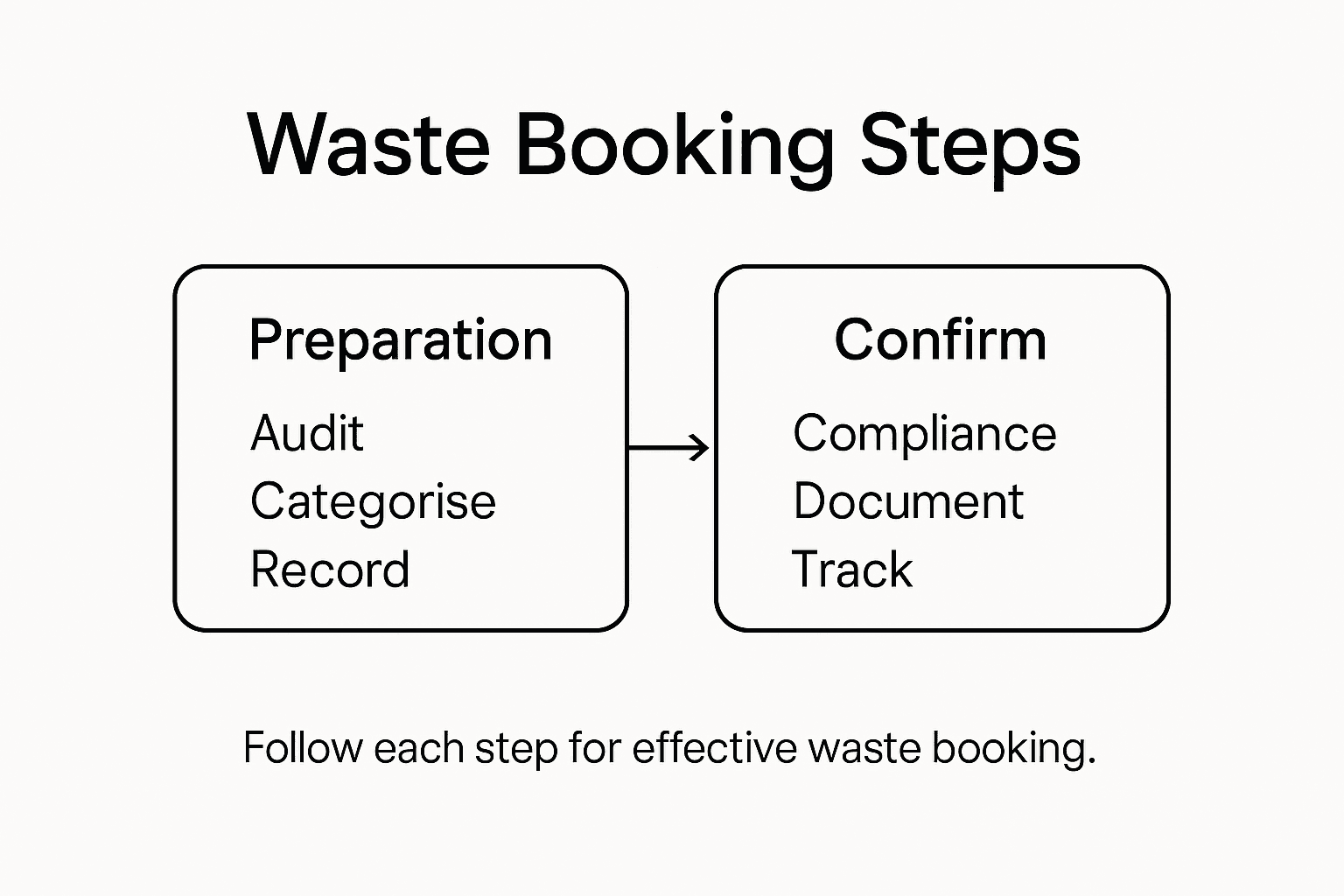
Infographic showing five-step waste booking overview

Prepare your waste collection area meticulously according to waste management logistics guidance. Ensure the designated collection point is easily accessible, clear of obstructions, and safely prepared for waste removal. Confirm the exact location with your waste management provider and verify that any specific requirements such as access restrictions, parking arrangements, or site safety protocols are clearly communicated. Most modern waste management companies offer digital tracking systems that provide real time updates on collection status, allowing you to monitor the progress of your waste disposal from scheduling through to final removal.

Maintain open communication channels with your waste management provider throughout the collection process. Save contact information for your assigned waste management representative and be prepared to provide any additional information or assistance that might be required during the collection. By staying proactive and responsive, you can help ensure a smooth, efficient waste removal process that meets both your operational needs and environmental responsibilities.

Top Tip: Create a digital reminder in your workflow management system to follow up on waste collection status and confirm successful completion of the service.

Take Control of Your Waste Management Journey Today

Managing waste bookings can be complicated when juggling regulatory compliance, waste segregation, and service coordination. This guide to mastering the waste management booking process highlights the core challenges many businesses face such as verifying licensed carriers, submitting accurate waste details, and tracking collections effectively. These pain points often lead to delays, fines, or inefficient waste disposal if not handled properly. At Venture Waste, we understand these hurdles and provide tailored solutions that simplify each step, from waste audits to confirmed collections, ensuring your business stays compliant while minimising environmental impact.

https://venturewaste.co.uk

Ready to make your waste management booking seamless and stress free Visit our Waste Collection Process in the UK for Businesses 2025 – Venture Waste page to explore how our expert services align with the UK’s strict waste regulations Discover specialised support for challenging waste types including food waste through our food waste Archives – Venture Waste or deepen your understanding of regulatory requirements via our regulation Archives – Venture Waste. Start your booking now with confidence at https://venturewaste.co.uk and transform your waste management practices today.

Frequently Asked Questions

How can I gather essential waste information for my business?

Start by conducting a comprehensive audit of your waste production to understand the types and volumes of waste generated. Categorise your waste according to the standardised waste collection streams, and log important details such as material types and potential hazardous components to streamline your waste management process.

What should I look for when selecting waste management services?

Identify licensed waste carriers with regulatory compliance and expertise in handling your specific waste types. Examine their sustainability practices, reporting capabilities, and service flexibility to ensure they align with your operational needs and environmental goals.

How do I submit a booking request for waste management services online?

Navigate to your chosen waste management provider’s online platform and fill in the detailed waste information you gathered during your audit. Ensure accuracy in waste type, volume, and collection frequency, and review your entries carefully before submission to avoid scheduling issues.

What steps should I take to confirm my booking details and compliance?

Thoroughly review your booking confirmation, ensuring that all waste types and collection dates are accurate, and verify that the waste carrier is licensed. Retain all waste transfer documents as they are vital for legal compliance and demonstrate your commitment to responsible waste management.

How can I prepare for the waste collection process effectively?

Ensure your waste collection area is accessible and free of obstructions before the scheduled pick-up. Communicate any specific requirements to your waste management provider, and utilise digital tracking systems to monitor the collection status for a smooth disposal process.

What can I do to track the progress of my waste collection?

Maintain open communication with your waste management provider and save their contact information for follow-up questions. Set reminders in your workflow management system to check on the collection status and confirm successful completion of the service.

Hospital staff managing recycling bins

Recycling Contamination – How It Affects UK Healthcare

Nearly **30 percent of recyclable waste from british healthcare facilities ends up in landfill due to contamination mistakes. For facilities managers, this ongoing challenge directly affects compliance with United Kingdom regulations and damages sustainability progress. Finding practical solutions to improve waste segregation and minimize recycling contamination not only strengthens environmental responsibility but also protects institutional reputation and finances. Get clear, actionable insights to help your team cut unnecessary waste and meet both legal and green targets.

Table of Contents

Key Takeaways

Point Details
Contamination Challenges Recycling contamination poses significant challenges in UK healthcare, necessitating precise waste segregation and management to prevent improper disposal of recyclable materials.
Financial and Environmental Impact Improper waste management leads to increased disposal costs and carbon emissions, undermining healthcare sustainability efforts.
Importance of Training Comprehensive staff training and clear waste disposal protocols are essential to reducing recycling contamination and adhering to regulatory requirements.
Effective Prevention Strategies Strategies like colour-coded bins and digital tracking systems can significantly lower contamination rates and enhance overall compliance in waste management.

Recycling contamination in healthcare explained

Recycling contamination represents a significant challenge within the United Kingdom’s healthcare systems, particularly for facilities managing complex waste streams. The healthcare sector generates substantial volumes of potentially recyclable materials that frequently become compromised through improper disposal practices. Healthcare waste management challenges emerge from intricate infection control requirements and the multifaceted nature of clinical waste streams.

In practical terms, contamination occurs when non-recyclable materials are mixed with recyclable waste, rendering entire batches unsuitable for recycling. Healthcare settings like hospitals, clinics, and medical laboratories generate multiple waste categories including plastics, paper, medical packaging, and potentially infectious materials. Each waste stream requires precise segregation to maintain environmental standards and prevent potential health risks. Contamination can result from simple mistakes like disposing of soiled medical packaging, used personal protective equipment, or bio-hazardous materials into recycling containers.

The consequences of recycling contamination extend beyond immediate waste management challenges. Contaminated recycling batches often require complete disposal in general waste streams, increasing institutional environmental footprints and generating unnecessary landfill volumes. NHS trusts and private healthcare providers must implement rigorous staff training programmes, clear waste segregation protocols, and robust monitoring systems to mitigate these risks effectively.

Pro tip: Implement colour-coded waste disposal bins with clear visual instructions to help healthcare staff distinguish between different waste categories and reduce inadvertent contamination.

Types of contaminants in clinical recycling streams

Clinical recycling streams present a complex landscape of potential contamination risks that significantly impact healthcare waste management. Environmental impact assessments of NHS devices reveal multiple categories of contaminants that compromise recycling efforts, ranging from biological hazards to chemical residues and material-specific challenges.

Biological contaminants represent the most critical concern in clinical waste streams. These include potentially infectious materials such as blood-soaked dressings, used medical equipment with bodily fluid exposure, and contaminated personal protective equipment. Pathogens like bacteria, viruses, and other microorganisms can render entire recycling batches unsuitable for processing, necessitating complete disposal in hazardous waste streams. Additionally, medical devices with complex material compositions often require specialized decontamination procedures before potential recycling.

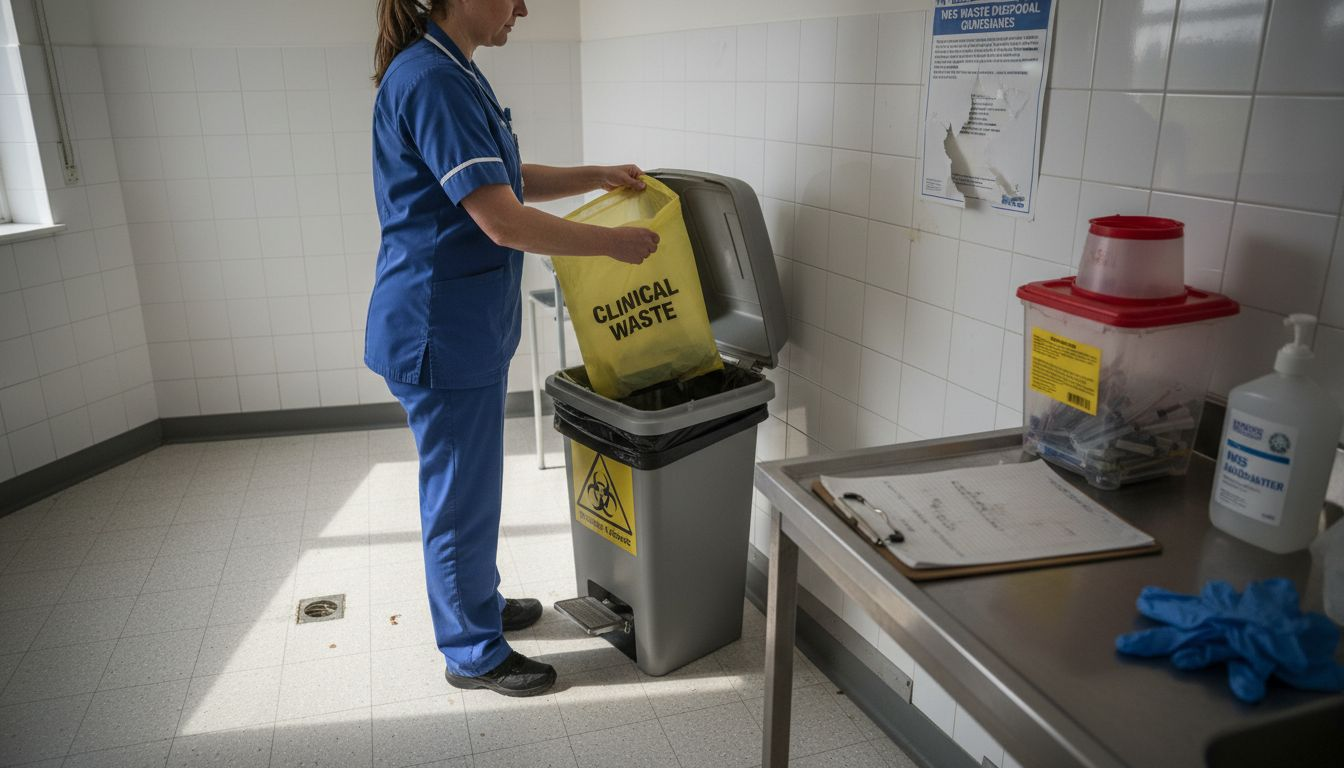
Nurse disposing clinical biological waste

Chemical contamination presents another significant challenge for healthcare recycling. Medical equipment, pharmaceutical packaging, and diagnostic tools frequently contain chemical residues from medications, disinfectants, and diagnostic reagents. These chemical traces can compromise material integrity, create environmental hazards, and prevent successful recycling processes. Single-use plastics, which dominate medical settings, are particularly problematic due to their potential chemical interactions and limited recyclability.

Pro tip: Implement rigorous pre-sorting protocols and provide comprehensive staff training on identifying different contamination types to improve overall clinical waste recycling effectiveness.

Here is a summary of common contamination types and their effects on healthcare recycling streams:

Contaminant Type Example Materials Key Risks Required Action
Biological Blood-soaked dressings, PPE Infection and biohazard Hazardous waste disposal
Chemical Pharmaceutical packaging, reagents Material degradation Chemical decontamination
Mixed Material Composite medical devices, plastics Difficult to segregate Specialized sorting
Soiled General Waste Food wrappers, non-medical plastics Batch contamination General waste bin

Impacts on recycling processes and compliance

Recycling contamination significantly undermines healthcare waste management efficiency, creating substantial challenges for institutional compliance and environmental sustainability. NHS clinical waste strategy emphasises the critical need to address contamination issues that directly impact recycling processes and regulatory compliance across healthcare settings.

Regulatory compliance represents a complex landscape for healthcare institutions managing clinical waste streams. Contaminated recycling materials often require complete disposal through high-temperature incineration, which not only increases operational costs but also generates substantially higher carbon emissions. The stringent requirements set by UK environmental regulations mandate precise waste segregation and management protocols, making contamination a significant legal and environmental risk for healthcare providers.

The economic implications of recycling contamination extend beyond immediate disposal costs. Hospitals and medical facilities face potential financial penalties for non-compliance with waste management regulations, alongside increased waste management expenses. Inefficient recycling processes driven by contamination can lead to higher waste treatment costs, reduced recycling rates, and potential breaches of environmental performance targets set by national healthcare and environmental authorities.

Pro tip: Develop comprehensive staff training programmes focusing on waste segregation techniques and implement colour-coded waste collection systems to minimise cross-contamination risks.

Healthcare facilities across the United Kingdom face increasingly complex legal requirements governing clinical waste management and environmental compliance. NHS clinical waste strategy establishes comprehensive mandates that require healthcare providers to implement rigorous waste segregation, management, and disposal protocols to mitigate contamination risks and ensure regulatory adherence.

Regulatory frameworks impose strict obligations on healthcare institutions, with specific requirements outlined in Health Technical Memorandum HTM 07-01. These regulations mandate precise waste categorisation, dedicated training for waste management personnel, and implementation of systematic approaches to clinical waste handling. Non-compliance can result in significant financial penalties, potential legal sanctions, and reputational damage for healthcare providers who fail to meet the established environmental and safety standards.

The UK government’s Design for Life roadmap further emphasises legal requirements targeting waste reduction and sustainable healthcare practices. Healthcare facilities must now demonstrate active commitment to minimising single-use medical device waste, optimising recycling processes, and implementing comprehensive waste management strategies that align with national environmental objectives. This legislative approach compels healthcare institutions to transform their waste management practices, integrating compliance as a core operational responsibility rather than a peripheral consideration.

Pro tip: Develop a comprehensive internal audit system that regularly reviews waste management protocols and ensures ongoing alignment with the latest NHS and governmental waste management regulations.

Financial and environmental consequences

NHS clinical waste strategy highlights the profound economic and environmental implications of recycling contamination in healthcare settings. Poor waste management practices not only escalate operational costs but also significantly contribute to the sector’s carbon footprint, creating a complex challenge that demands strategic intervention.

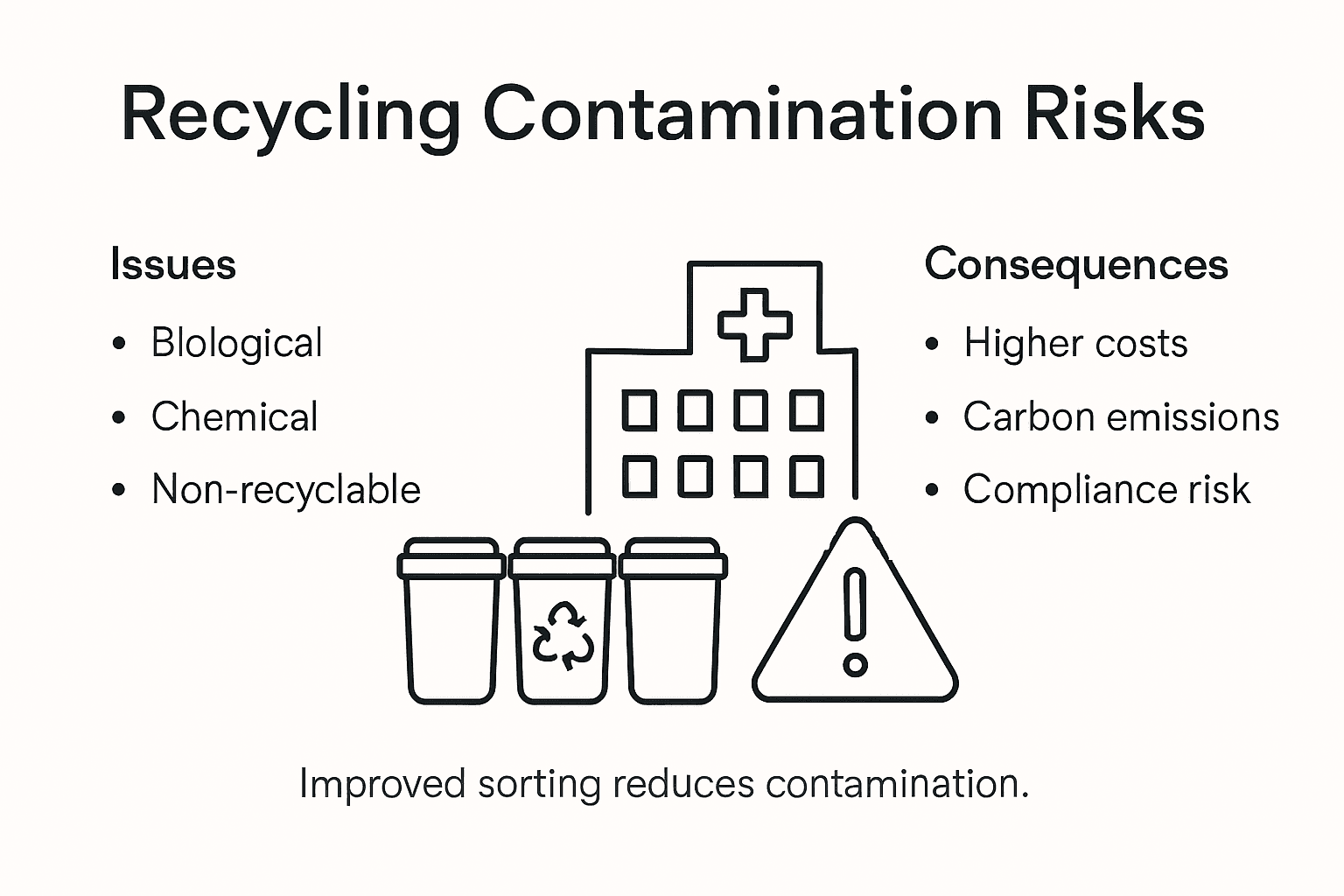
Infographic on healthcare recycling contamination risks

Financial impacts represent a critical concern for healthcare institutions. Contaminated waste streams necessitate expensive high-temperature incineration processes, which dramatically increase disposal costs. Each contaminated batch requires complete thermal treatment, potentially costing healthcare facilities thousands of pounds annually. These expenses extend beyond direct disposal fees, encompassing additional labour costs for waste sorting, potential regulatory penalties, and reduced efficiency in waste management systems.

Environmental consequences are equally significant. Excessive reliance on high-temperature incineration generates substantial carbon emissions, directly contradicting the NHS’s sustainability objectives. Healthcare facilities that fail to implement robust waste segregation and contamination prevention strategies risk undermining national environmental targets. The carbon footprint associated with improper waste management can offset years of institutional sustainability efforts, creating long-term environmental and reputational challenges for healthcare providers.

Pro tip: Invest in comprehensive staff training programmes focused on precise waste segregation techniques and implement digital tracking systems to monitor and reduce waste contamination rates.

Effective prevention and staff training strategies

NHS clinical waste strategy underscores the critical importance of comprehensive staff training as a fundamental approach to reducing recycling contamination in healthcare environments. Effective prevention strategies require a multifaceted approach that combines targeted education, practical skills development, and systemic behavioural change initiatives.

Training programmes must address the complex nuances of medical waste segregation, focusing on practical skills and theoretical understanding. Healthcare facilities should implement structured training modules that cover waste categorisation, contamination risks, and proper disposal techniques. These programmes should include interactive workshops, visual demonstrations, and hands-on practical sessions that enable staff to develop muscle memory for correct waste management protocols. Regular assessments and refresher courses ensure that knowledge remains current and staff remain engaged with evolving waste management standards.

Behavioural change represents a critical component of effective contamination prevention. Healthcare institutions must cultivate a culture of environmental responsibility, where waste management is viewed not as a peripheral task but as a core professional competency. This involves creating clear accountability structures, recognising staff who demonstrate excellent waste management practices, and integrating sustainability metrics into performance evaluations. By embedding waste management principles into organisational culture, healthcare facilities can transform individual behaviours and create systemic improvements in recycling and waste reduction.

Pro tip: Develop gamified training modules with real-time feedback and performance tracking to make waste management education more engaging and measurable for healthcare staff.

Below is a comparison of three key prevention strategies for reducing recycling contamination in healthcare:

Strategy Implementation Effort Impact on Contamination Rates Long-term Benefits
Colour-coded bins Moderate Significantly reduced Improved compliance
Comprehensive staff training High Greatly reduced Increased staff engagement
Digital tracking systems High Lower rates with monitoring Data-driven waste management

Tackle Recycling Contamination in Healthcare with Trusted Waste Management Solutions

Recycling contamination in UK healthcare presents a serious challenge that can increase costs and harm the environment. If your healthcare facility struggles with managing complex waste streams, ensuring legal compliance, or reducing contamination risks like biological and chemical hazards, you are not alone. Proper segregation and disposal are critical to protecting staff safety and meeting stringent NHS waste strategy requirements.

https://venturewaste.co.uk

At Venture Waste, we understand these challenges and offer tailored services designed to simplify clinical waste management. From clear segregation protocols to secure recycling collections, our comprehensive waste solutions can help your facility reduce contamination and improve compliance. Discover how the Waste Collection Process in the UK for Businesses 2025 supports efficient healthcare waste disposal. Learn more about the evolving Waste Collection Network in UK Businesses 2025 to stay informed of best practices. Take control of your waste management today by visiting Venture Waste and streamline your recycling efforts with expert support.

Act now to safeguard the environment and your facility’s reputation while ensuring a safer workplace. Contact Venture Waste to create a waste strategy that meets NHS standards and drives real improvement.

Frequently Asked Questions

What is recycling contamination in healthcare?

Recycling contamination occurs when non-recyclable materials are mixed with recyclable waste in healthcare settings, rendering entire batches unsuitable for recycling due to improper disposal practices.

What types of materials can contaminate clinical recycling streams?

Common contaminants include biological materials like blood-soaked dressings and used personal protective equipment, as well as chemical residues from pharmaceutical packaging and diagnostic tools.

How does recycling contamination impact healthcare facilities?

Recycling contamination can lead to increased disposal costs, higher carbon emissions from incineration, and potential financial penalties for non-compliance with waste management regulations.

What strategies can healthcare facilities use to reduce recycling contamination?

Implementing colour-coded waste disposal bins, conducting comprehensive staff training on waste segregation, and employing digital tracking systems are effective strategies for minimising recycling contamination.

Office manager creating DIY recycling projects

7 Top DIY Recycling Projects for UK Office Managers

More than 80 percent of office waste in British workplaces still ends up in landfill each year. For eco-conscious office managers, finding smart ways to repurpose everyday materials is a practical step toward improving sustainability and reducing costs. Discover creative DIY recycling projects designed for British teams that turn old paper, packaging, and supplies into useful tools while helping your office adopt eco-friendly waste management practices.

Table of Contents

Quick Summary

Takeaway Explanation
1. Create notepads from scrap paper Use single-sided printed sheets to make professional notepads, reducing waste and saving money.
2. Build desk organisers from cardboard Repurpose cardboard boxes into functional organisers, keeping your workspace tidy and personalised.
3. Use plastic bottles for watering plants Transform plastic bottles into self-watering systems for office plants, enhancing sustainability while reducing waste.
4. Create eco-friendly art from waste Turn discarded office materials into creative art pieces that demonstrate innovative thinking and sustainability.
5. Set up a battery collection system Establish a designated bin for safe battery disposal, contributing to environmental stewardship in your office.

1. Create Reusable Paper Notepads from Scrap Sheets

Turning office waste paper into functional notepads is a brilliant way to reduce environmental impact while saving money on stationery. With just a few simple materials, you can transform those single-sided printed sheets languishing in your desk drawer into professional looking notebooks.

The process is straightforward. Begin by collecting all those sheets printed on only one side papers from printer trays, draft documents, and meeting notes. These are perfect candidates for creating recycled notepads from old paper sheets. Gather sheets of similar size and stack them neatly, ensuring all edges align precisely.

To create your notepad, you will need some basic crafting supplies: cardstock for backing, vinyl glue, a sharp paper trimmer or guillotine, and optional decorative paper for binding. The comprehensive tutorial recommends cutting the sheets uniformly and using a sturdy backing to provide structural integrity.

The binding process involves carefully applying glue along one edge of your stacked sheets, pressing them together firmly, and allowing them to dry under consistent pressure. This technique transforms loose sheets into a cohesive, professional looking notepad that can be used for drafting, notes, or sketching.

Benefits of Creating Recycled Notepads:

  • Reduces office paper waste
  • Saves money on purchasing new stationery
  • Encourages creative recycling practices
  • Provides personalised workplace tools

Pro tip: Store your clean scrap paper in a dedicated container near the printer to make collecting notepad materials quick and convenient.

2. Build Desk Organisers Using Recycled Cardboard

Transforming everyday cardboard waste into functional office organisers is a smart way to reduce environmental impact while creating personalised workspace solutions. With minimal effort and creativity, you can upcycle materials that would typically end up in recycling bins into practical storage systems.

Cardboard offers an incredibly versatile medium for creating desk organisers. DIY desk organiser hacks demonstrate how household materials like cereal boxes and cardboard tubes can be repurposed into clever storage solutions that keep your workspace tidy and reduce waste.

To start your project, collect clean cardboard from packaging materials such as shipping boxes, cereal boxes, and postal containers. The key is selecting sturdy cardboard that can withstand restructuring. According to step-by-step crafting guides, you will need basic crafting supplies like sharp scissors, adhesive, decorative paper or paint, and a ruler.

Essential Materials for Cardboard Desk Organisers:

  • Clean cardboard boxes and tubes
  • Sharp cutting tool
  • Strong craft glue
  • Ruler and pencil
  • Decorative paper or paint
  • Measuring tape

Design Considerations:

  • Measure your desk space carefully
  • Create multiple compartments for different items
  • Consider height and width for optimal functionality
  • Choose a design that complements your office aesthetic

Pro tip: Use wrapping paper or leftover wallpaper to cover your cardboard organiser for a professional and personalised finish.

3. Transform Plastic Bottles into Plant Watering Devices

Converting plastic bottles into ingenious plant watering systems offers office managers an eco friendly solution for maintaining greenery while reducing waste. This clever recycling technique transforms everyday plastic containers into sustainable irrigation tools that keep office plants thriving with minimal effort.

Self watering planter systems using recycled plastic bottles demonstrate how simple modifications can create efficient watering mechanisms. The process involves strategic cutting and positioning to leverage the bottle’s natural water retention capabilities.

To create your plant watering device, select clean plastic bottles with narrow necks for controlled water release. Bottle irrigation kits offer tap adjusted flow mechanisms that can be easily implemented, allowing precise water management for different plant species.

Key Steps for Creating Bottle Watering Devices:

  • Choose bottles with 25mm neck diameter
  • Clean bottles thoroughly
  • Create small drainage holes
  • Position bottle near plant root systems
  • Adjust water flow as needed

Benefits of Bottle Watering Systems:

  • Reduces plastic waste
  • Provides consistent moisture
  • Cost effective plant care solution
  • Supports office sustainability goals

Pro tip: Experiment with different bottle sizes to match specific plant water requirements and create a custom irrigation system for your office greenery.

4. Make Eco-Friendly Office Art with Waste Materials

Transforming office waste into creative art pieces offers a powerful way to reimagine sustainability and inspire workplace creativity. By repurposing discarded materials, office managers can turn environmental responsibility into an engaging visual narrative that sparks conversation and demonstrates innovative thinking.

UK artist Julie Ackerman exemplifies how waste materials can be transformed into meaningful artistic expressions, showcasing the incredible potential hidden within seemingly mundane office refuse. Her work demonstrates that creativity can emerge from unexpected sources, turning printer paper, broken electronics, and packaging materials into compelling sculptures and installations.

To begin your eco art project, gather clean waste materials like spent printer cartridges, discarded cables, used manila folders, and packaging remnants. Look for items with interesting textures, colours, and shapes that can be reimagined into sculptural forms or wall mounted art pieces.

Potential Waste Materials for Art Projects:

  • Printer cartridges
  • Electrical cables
  • Cardboard packaging
  • Plastic office supplies
  • Broken electronic components
  • Discarded stationery

Artistic Transformation Strategies:

  • Clean materials thoroughly
  • Sort by colour and texture
  • Experiment with different assembly techniques
  • Consider structural integrity
  • Use minimal additional adhesives

Pro tip: Photograph your waste art project and share it internally to inspire colleagues and demonstrate your office’s commitment to creative sustainability.

5. Repurpose Old Electronics for Office Storage Solutions

Old electronic devices destined for disposal can be ingeniously transformed into creative storage solutions that breathe new life into obsolete technology. By reimagining these items, office managers can simultaneously reduce electronic waste and solve workplace organisational challenges.

Sustainability practices demonstrate how outdated electronics can become unique storage units, offering an innovative approach to office design and waste management. Computer towers can become document holders, old server racks can transform into stylish shelving units, and defunct monitors can be converted into intriguing wall mounted storage spaces.

Begin by thoroughly cleaning and safely disassembling electronic equipment. Remove any potentially sensitive components and assess the structural integrity of the device. Some items like desktop computer cases offer robust frames that can be easily modified into practical storage solutions with minimal technical expertise.

Electronic Storage Conversion Ideas:

  • Desktop tower document organisers
  • Server rack shelving units
  • Monitor wall storage systems
  • Keyboard drawer organisers
  • Printer component pen holders

Safety Considerations:

  • Remove electrical components carefully
  • Wear protective gloves
  • Ensure no sharp edges remain
  • Check structural stability
  • Clean thoroughly before repurposing

Pro tip: Consult your local electrical recycling centre if unsure about safely dismantling electronic equipment to ensure proper handling and maximum safety.

6. Set Up a DIY Battery Collection Bin for Recycling

Caring for the environment means taking responsibility for every small item that can potentially harm our ecosystems. Battery disposal represents a critical opportunity for offices to demonstrate environmental stewardship and reduce hazardous waste entering landfills.

Battery recycling programmes across the United Kingdom support community participation in safe disposal, with over 30,000 collection points available for responsible recycling. Creating a dedicated battery collection bin in your office enables systematic collection and ensures these potentially harmful items are processed correctly.

To create your DIY battery collection bin, select a sturdy container with a secure lid that prevents spillage or accidental contact. Specialised battery collection bins offer wall mountable options suitable for office environments, ensuring safe and convenient battery storage.

Essential Components for Battery Collection Bin:

  • Secure container with tight fitting lid
  • Clear labelling indicating battery collection
  • Placement in easily accessible area
  • Protective liner to prevent leakage
  • Regular collection schedule

Safety Considerations:

  • Keep bin away from direct sunlight
  • Ensure children cannot access the bin
  • Avoid mixing different battery types
  • Check local recycling guidelines
  • Use non metallic containers

Pro tip: Designate a specific team member as the battery collection coordinator to ensure consistent and responsible management of your office recycling efforts.

7. Turn Glass Jars into Useful Office Stationery Holders

Upcycling glass jars presents an ingenious opportunity to transform everyday kitchen waste into elegant office storage solutions. By repurposing these versatile containers, office managers can create personalised stationery holders that reduce waste and add character to workspace organisation.

Creative upcycling methods can transform ordinary glass jars into functional office storage containers, offering an affordable and sustainable alternative to purchasing new stationery organisers. The process involves careful cleaning, creative decoration, and strategic design to maximise utility.

Step by step instructions provide detailed guidance for creating unique jar based storage solutions, ensuring that even novice crafters can successfully complete this project. Begin by thoroughly washing and removing labels from glass jars, ensuring no residue remains that might interfere with decoration or painting.

Materials Needed:

  • Clean glass jars
  • Acrylic paint or spray paint
  • Decorative paper
  • Paintbrushes
  • Sandpaper
  • Ribbon or twine

Decoration Techniques:

  • Paint exterior with matte colours
  • Apply decorative paper wraps
  • Use chalkboard paint for labelling
  • Add ribbon or twine accents
  • Create themed organisers

Potential Stationery Storage Uses:

  • Pen and pencil holders
  • Paper clip containers
  • Rubber band storage
  • Sticky note organisers
  • Small tool compartments

Pro tip: Select jars of varying sizes to create a cohesive yet visually interesting desk organisation system that reflects your personal style.

Below is a comprehensive table summarising the main strategies for eco-friendly recycling and upcycling practices in the office environment as described in the article.

Activity Steps and Considerations Benefits
Create Reusable Notepads Collect single-sided printed sheets, cut and stack neatly, bind with glue and backing card Reduces paper waste and saves costs on stationery
Build Cardboard Organisers Collect sturdy cardboard, measure and design, construct compartments with glue and paint Utilises waste for practical and personalised workspace storage
Repurpose Plastic Bottles Modify bottles into watering devices, include drainage, and position near plant roots Provides sustainable plant care and repurposes plastic waste
Make Eco-Friendly Office Art Sort and clean waste like paper and electronics, creatively assemble into artistic designs Enhances workplace aesthetics and promotes sustainability
Repurpose Old Electronics Disassemble and clean devices, transform components into storage solutions Reduces electronic waste while increasing utility
Set Up DIY Battery Collection Use a sealed container, label appropriately, store in a safe and accessible location Ensures safe battery disposal and encourages environmental responsibility
Transform Glass Jars Clean jars, remove labels, decorate with paints or wraps, and repurpose for storage Creates functional and visually appealing desk organisers

Transform Your Office Recycling Projects into Effective Waste Management Solutions

Tackling office waste through creative DIY recycling projects is a fantastic way to reduce environmental impact and foster sustainability within your workplace. However managing the leftover materials from these initiatives like old batteries, obsolete electronics, and excess paper can present ongoing challenges. If you want to complement your inventive projects with professional waste disposal services tailored for UK offices Venture Waste offers reliable solutions designed to keep your workspace clutter-free and compliant with waste regulations.

https://venturewaste.co.uk

Discover our specialised handling for electronic waste through the WEEE Waste Archives – Venture Waste ensuring that outdated devices are recycled responsibly. Safeguard your office with safe battery disposal options found in our Batteries Archives – Venture Waste. All of these services are underpinned by our streamlined booking process available at Venture Waste Management. Take control now and elevate your office’s recycling efforts by combining creativity with expert waste management for immediate and lasting environmental benefits.

Frequently Asked Questions

How can I create reusable paper notepads from scrap sheets in my office?

To create reusable paper notepads from scrap sheets, collect single-sided printed papers and stack them neatly. Use cardstock as backing, apply vinyl glue along one edge, and allow it to dry under pressure for a durable notepad.

What materials do I need to build desk organisers using recycled cardboard?

You will need clean cardboard boxes, sharp scissors, strong craft glue, a ruler, and optional decorative paper or paint. Measure the available desk space, design compartments for different items, and assemble your organiser for efficient workspace management.

How can I transform plastic bottles into plant watering devices?

To transform plastic bottles into plant watering devices, select clean bottles with narrow necks and create small drainage holes. Position the bottles near plant roots to allow for controlled water release and ensure your office plants remain hydrated with minimal effort.

What are some creative upcycling ideas for office waste materials?

You can upcycle printer cartridges, electrical cables, and cardboard packaging into artistic pieces or functional office tools. Experiment with different shapes and textures from these waste materials to inspire originality and sustainability in your workspace.

How can I effectively set up a DIY battery collection bin?

Create your DIY battery collection bin by choosing a sturdy, secure container and clearly labelling it for battery disposal. Regularly check the bin and maintain a collection schedule to ensure safe recycling of batteries and minimize hazardous waste in the office.

What are the benefits of repurposing old electronics for office storage?

Repurposing old electronics can significantly reduce electronic waste while providing unique storage solutions. Consider converting desktop computer towers into document holders or using monitors as wall-mounted storage, which can enhance office organisation creatively.

Hospital staff managing labelled waste bins

Sustainable Waste Solutions – Enhancing UK Healthcare Compliance

Waste generated by British healthcare facilities accounts for a significant portion of public sector environmental impact, with some sources reporting clinical waste treatment emits up to 30% of the NHS’s carbon from waste management. As regulatory scrutiny intensifies and sustainability targets become stricter, facilities managers face tough questions about compliance and cost control. This guide explores how practical, sustainable waste solutions can help your organisation manage complex waste streams, reduce your carbon footprint, and stay ahead of legal requirements.

Table of Contents

Key Takeaways

Point Details
Sustainable Waste Solutions Healthcare organisations in the UK are increasingly adopting sustainable waste management strategies to reduce environmental impact and operational costs.
Regulatory Compliance Adhering to UK regulations for waste management is essential to protect public health and minimise risks associated with mismanagement.
Comprehensive Staff Training Regular training on waste segregation and handling is crucial for ensuring compliance and improving waste management practices.
Proactive Risk Management Implementing continuous improvement mechanisms and regular audits can help mitigate risks and enhance institutional reputation.

Sustainable Waste Solutions Defined and Debunked

Sustainable waste solutions in healthcare represent strategic approaches designed to minimise environmental impact while maintaining rigorous clinical standards. The NHS recognises these solutions as critical pathways for transforming waste management, with an ambitious goal of reducing carbon emissions from clinical waste by up to 30% through innovative processing techniques.

Healthcare organisations across the United Kingdom are increasingly adopting advanced waste management strategies that go beyond traditional disposal methods. These approaches include specialised segregation protocols, on-site treatment technologies like pyrolysis and microwave treatment, and comprehensive recycling programmes. By implementing these sustainable solutions, healthcare providers can simultaneously reduce environmental harm, decrease operational costs, and demonstrate corporate social responsibility.

Key components of sustainable waste solutions in healthcare encompass several interconnected strategies:

This table contrasts traditional and sustainable waste management approaches in healthcare settings:

Approach Key Characteristics Long-Term Benefit
Traditional Management Landfill disposal, limited segregation Higher costs, increased emissions
Sustainable Solutions Recycling, advanced treatments, circular economy Lower environmental impact, cost savings
  • Waste Segregation: Precise categorisation of medical waste streams
  • Innovative Processing: Utilising technologies that minimise environmental impact
  • Circular Economy Principles: Focusing on waste reduction and potential reuse
  • Carbon Emission Reduction: Targeting significant decreases in waste-related carbon footprints

Expert Tip: Conduct regular waste audits to identify potential reduction opportunities and track your organisation’s sustainable waste management progress.

Types of Healthcare Waste and Disposal Methods

Healthcare waste management is a complex and critical process that requires meticulous categorisation and specialised disposal techniques. Medical waste categories are diverse and demand precise handling protocols, with each type presenting unique challenges for safe and responsible elimination.

The primary classifications of healthcare waste include six fundamental categories, each requiring distinct disposal strategies:

  • Infectious Waste: Materials potentially contaminated with pathogens
  • Sharps Waste: Needles, scalpels, and other puncture-risk instruments
  • Pharmaceutical Waste: Expired or unused medications
  • Anatomical Waste: Human tissue, organs, and body parts
  • Offensive Waste: Non-infectious materials with potential biological risks
  • General Domestic Waste: Standard non-hazardous waste similar to household rubbish

Each waste type demands specialised containment and processing methods to ensure environmental safety and prevent potential health risks. Infectious and anatomical wastes typically require high-temperature incineration, while sharps demand puncture-proof containment and careful handling. Pharmaceutical waste needs careful chemical neutralisation or specialised treatment to prevent environmental contamination.

Porter moving yellow healthcare waste bin

The following table summarises how different types of healthcare waste are processed and their associated environmental considerations:

Waste Type Typical Disposal Method Environmental Consideration
Infectious Waste High-temperature incineration Produces emissions, energy-intensive
Sharps Waste Puncture-proof containers, incineration Safe handling, risk of needlestick injuries
Pharmaceutical Waste Chemical neutralisation, specialist treatment Prevents water and soil contamination
Anatomical Waste High-temperature incineration Strict controls, public health concern
Offensive Waste Landfill or clinical treatment Potential odour, careful segregation
General Domestic Waste Recycling or landfill Focus on landfill reduction, recycling rates

Expert Tip: Implement colour-coded waste segregation systems to improve staff compliance and reduce cross-contamination risks in healthcare settings.

Key UK Regulations for Waste Compliance

Healthcare waste management in the United Kingdom is governed by a comprehensive framework of stringent regulations designed to protect public health and the environment. The NHS Clinical Waste Strategy mandates rigorous compliance requirements that healthcare organisations must systematically implement across their waste management practices.

Key regulatory frameworks governing healthcare waste compliance include:

  • Environmental Protection Act 1990: Establishes fundamental waste management principles
  • Hazardous Waste Regulations 2005: Specifies handling protocols for dangerous medical materials
  • Controlled Waste Regulations 2012: Defines categorisation and disposal standards
  • Health and Safety at Work Act 1974: Ensures worker protection during waste handling
  • Carriage of Dangerous Goods Regulations: Governs transportation of hazardous medical waste

These regulations collectively mandate comprehensive waste segregation, precise documentation, staff training, and environmentally responsible disposal methods. Healthcare providers must develop robust internal systems that track waste from generation through final disposal, ensuring each waste stream receives appropriate treatment according to its specific risk profile and legal requirements.

Expert Tip: Conduct quarterly internal audits to verify waste management compliance and identify potential procedural improvements across your healthcare waste management system.

Practical Steps for Responsible Waste Handling

Effective healthcare waste management requires systematic and strategic approaches that prioritise safety, environmental protection, and regulatory compliance. Healthcare facilities must develop comprehensive waste handling protocols that address every stage of waste generation, segregation, storage, and disposal.

Key practical steps for responsible waste handling include:

  • Comprehensive Staff Training
    • Conduct regular educational sessions on waste segregation
    • Implement hands-on practical training modules
    • Ensure staff understand colour-coded waste container systems
  • Waste Segregation Protocols
    • Implement precise sorting mechanisms at point of generation
    • Use designated containers for different waste categories
    • Label containers clearly with waste type and handling instructions
  • Documentation and Tracking
    • Maintain detailed waste management records
    • Create transparent audit trails for each waste stream
    • Monitor waste volumes and disposal methods

Successful waste management demands a holistic approach that integrates technical procedures with organisational culture. Healthcare providers must foster an environment of continuous learning, where staff understand the critical importance of proper waste handling in protecting public health and environmental sustainability.

Infographic showing waste types and disposal methods

Expert Tip: Develop a monthly review process to assess and refine your waste management strategies, ensuring ongoing improvement and regulatory compliance.

Risks, Costs, and Common Compliance Pitfalls

Medical waste mismanagement represents a complex landscape of significant organisational risks that extend far beyond simple regulatory compliance. Healthcare providers face multifaceted challenges that can potentially compromise patient safety, financial stability, and institutional reputation.

The primary compliance pitfalls and associated risks include:

  • Financial Risks
    • Escalating disposal costs from improper waste segregation
    • Potential substantial regulatory fines
    • Increased treatment expenses for misclassified waste
  • Operational Risks
    • Potential disruption of clinical services
    • Legal sanctions and potential institutional investigations
    • Compromised staff and patient safety protocols
  • Reputational Risks
    • Damage to institutional credibility
    • Potential loss of professional accreditations
    • Negative public perception

Successful risk management demands a proactive approach that integrates comprehensive staff training, robust documentation systems, and continuous improvement mechanisms. Healthcare organisations must view waste management not as an administrative burden, but as a critical component of patient care and environmental stewardship.

Expert Tip: Implement a quarterly comprehensive waste management risk assessment to identify and mitigate potential compliance vulnerabilities before they escalate.

Streamline Sustainable Healthcare Waste Management with Confidence

Healthcare providers in the United Kingdom face pressing challenges managing complex waste streams while meeting strict compliance and sustainability goals. This article highlights critical pain points such as effective waste segregation, innovative processing, and reducing carbon emissions — all essential for ensuring patient safety and environmental stewardship. At Venture Waste Management, we understand these demands and offer tailored solutions designed to simplify your waste handling operations without compromising on legal or ecological responsibilities.

https://venturewaste.co.uk

Discover how our comprehensive Waste Collection Process in the UK for Businesses 2025 – Venture Waste supports healthcare facilities in achieving sustainable waste outcomes while maintaining full regulatory compliance. Learn more about the How the Waste Collection Network in UK Serves Businesses in 2025 – Venture Waste to see how our broad coverage ensures timely and reliable service. Take the first step towards responsible healthcare waste management by visiting Venture Waste Management today and booking your tailored waste service. Act now to reduce operational risks, lower costs, and contribute to a greener NHS.

Frequently Asked Questions

What are sustainable waste solutions in healthcare?

Sustainable waste solutions in healthcare refer to strategic approaches aimed at minimising environmental impact while ensuring clinical standards are upheld. These solutions include recycling programmes, innovative waste processing technologies, and waste segregation protocols.

Healthcare providers can reduce carbon emissions by implementing advanced waste management strategies, such as on-site treatment technologies, proper waste segregation, and focusing on circular economy principles that emphasise waste reduction and potential reuse.

What types of waste are generated in healthcare settings?

Healthcare waste is categorised into six types: infectious waste, sharps waste, pharmaceutical waste, anatomical waste, offensive waste, and general domestic waste. Each type requires specific handling and disposal methods to ensure safety and compliance.

What are some common compliance pitfalls in healthcare waste management?

Common compliance pitfalls include improper waste segregation leading to increased disposal costs, potential regulatory fines, disruption of clinical services, and damage to institutional reputation. Establishing robust training and documentation systems can help mitigate these risks.

UK healthcare waste professionals at hospital entrance

Why Hire Waste Professionals for UK Healthcare

British healthcare facilities face strict legal obligations around hazardous and confidential waste disposal, with fines for non-compliance sometimes reaching unlimited amounts. For facility managers in the United Kingdom, staying ahead of complex regulations and protecting staff safety means partnering with professional waste management specialists. This article explores what sets these advanced services apart, helping you navigate compliance, reduce risks, and ensure your organisation meets all national standards.

Table of Contents

Key Takeaways

Point Details
Comprehensive Waste Management Professional waste management services handle various waste types, ensuring safety, regulatory compliance, and environmental protection, especially in healthcare settings.
Hazardous Waste Categories Healthcare organisations must segregate and manage diverse waste types, including infectious, sharps, and pharmaceutical waste, to mitigate risks to public health.
Legal Compliance Importance Adhering to UK waste management legislation is critical; non-compliance can lead to substantial financial penalties and reputational damage.
Benefits of Professional Services Engaging professional waste management providers optimises costs, enhances compliance, and supports sustainability goals through advanced methods and technologies.

What Are Professional Waste Management Services

Professional waste management services represent a comprehensive approach to handling complex waste streams, particularly within sensitive sectors like healthcare. These specialised services go far beyond simple rubbish collection, involving strategic processes designed to protect public health, ensure regulatory compliance, and minimise environmental impact. In the United Kingdom, such services are governed by strict legal frameworks that mandate precise waste handling protocols.

At their core, professional waste management services encompass multiple critical functions including safe collection and transportation of hazardous materials. Healthcare facilities require sophisticated waste handling that differentiates between general, clinical, infectious, and hazardous waste types. Professional providers utilise specialised equipment, protective gear, and carefully designed transportation vehicles to manage these diverse waste categories safely and legally.

The key components of professional waste management services typically include:

  • Comprehensive waste assessment and classification
  • Secure containment and segregation of different waste types
  • Specialised collection and transportation procedures
  • Advanced treatment and disposal techniques
  • Detailed documentation and compliance reporting
  • Environmental risk mitigation strategies

These services are particularly crucial in healthcare settings where improper waste management could pose significant health risks. Professional waste management teams understand the nuanced requirements of medical waste, implementing robust safety protocols that protect healthcare workers, patients, and the broader community.

Pro tip: Always request a detailed waste management compliance certificate from your service provider to ensure they meet the latest UK healthcare waste disposal regulations.

Types of Waste in Healthcare Settings

Healthcare settings generate a complex array of waste materials, each requiring unique handling and disposal strategies. Clinical waste classifications represent a critical aspect of healthcare management, encompassing multiple categories that demand specialised treatment to protect public health and maintain environmental safety.

The primary waste types in healthcare environments can be broadly categorised into several key groups. Hazardous waste includes infectious materials, sharps, cytotoxic substances, and pharmaceutical residues. These materials pose significant risks and require meticulous handling. Non-hazardous waste encompasses general domestic waste, recyclable materials, and office consumables that can be processed through standard waste management channels.

A detailed breakdown of healthcare waste types reveals the intricate nature of medical waste management:

  • Infectious Waste: Materials contaminated with potentially infectious agents
  • Sharps: Needles, scalpels, and other penetrative medical instruments
  • Anatomical Waste: Human tissue, body parts, and biological specimens
  • Pharmaceutical Waste: Expired or unused medications
  • Chemical Waste: Laboratory chemicals and cleaning agents
  • Cytotoxic Waste: Materials contaminated with cancer treatment drugs
  • Offensive Waste: Non-infectious waste that might be unpleasant but not dangerous
  • Recyclable Materials: Clean paper, packaging, and non-contaminated items

Each waste type demands specific segregation, containment, and disposal protocols to ensure safety and regulatory compliance. Healthcare facilities must implement robust waste management systems that protect healthcare workers, patients, and the broader community from potential health risks.

Here’s a quick reference to common healthcare waste categories and their business impact:

Waste Category Typical Sources Potential Risks Business Impact
Infectious Patient treatment areas Infection transmission Legal liability, health risk
Sharps Surgical wards, clinics Physical injury, contamination Increased insurance costs
Anatomical Operating theatres Biohazard, public concern Reputational risk
Pharmaceutical Pharmacies, wards Drug misuse, toxicity Regulatory fines
Chemical Labs, cleaning departments Toxic exposure, pollution Environmental penalties
Cytotoxic Oncology clinics Cancer drug hazards Staff safety concerns
Offensive General wards, bathrooms Odour, discomfort Patient satisfaction impact
Recyclable Materials Admin and supply areas Minimal, if handled correctly Sustainability performance

Pro tip: Develop a colour-coded waste segregation system with clear signage to minimise the risk of improper waste disposal in healthcare settings.

Healthcare organisations in the United Kingdom must navigate a complex landscape of legal requirements governing waste management. Waste duty of care legislation establishes critical obligations for every entity involved in waste production, handling, and disposal, with particular stringency for medical and clinical waste streams.

Under the Environmental Protection Act 1990, healthcare providers are legally mandated to implement rigorous waste management protocols. This includes precise waste classification, secure containment, comprehensive documentation, and exclusive use of licensed waste carriers. Non-compliance can result in substantial financial penalties, with potential fines being unlimited and enforced by the Environment Agency.

Key legal compliance requirements for healthcare waste management include:

  • Accurate waste stream classification
  • Proper segregation of different waste types
  • Secure and appropriate storage methods
  • Maintaining detailed waste transfer documentation
  • Using only Environment Agency-registered waste carriers
  • Implementing risk assessment and management strategies
  • Ensuring staff training on waste handling procedures
  • Regular internal audits of waste management practices

Moreover, specific technical standards like the Health Technical Memorandum 07-01 provide comprehensive guidance for NHS organisations, establishing best practices that go beyond minimum legal requirements. These frameworks aim to minimise environmental risks, protect public health, and ensure systematic, responsible waste management across healthcare settings.

Pro tip: Conduct quarterly compliance audits and maintain a comprehensive digital record of all waste management activities to demonstrate proactive regulatory adherence.

How Specialists Ensure Safety and Security

Healthcare waste management specialists play a critical role in protecting public health through meticulous safety protocols. Infection control and health and safety legislation form the cornerstone of their comprehensive approach to managing potentially hazardous medical waste streams, ensuring every stage of waste handling minimises risks to staff, patients, and the broader environment.

NHS staff managing clinical waste safely

These professionals implement a multi-layered strategy of risk mitigation that goes far beyond simple waste disposal. They develop sophisticated segregation systems, provide specialised training for healthcare staff, and utilise advanced protective equipment and containment technologies. Each waste stream receives targeted management, with specific protocols designed to neutralise potential biological, chemical, and cross-contamination risks.

Key safety and security measures typically include:

  • Comprehensive staff training programmes
  • Advanced personal protective equipment
  • Precise waste stream segregation protocols
  • Secure transportation and storage mechanisms
  • Rigorous documentation and tracking systems
  • Regular risk assessment and management reviews
  • Innovative decontamination and treatment technologies
  • Continuous compliance monitoring and auditing

Moreover, waste management specialists work closely with healthcare institutions to develop bespoke solutions that align with the latest NHS Clinical Waste Strategy guidelines. This collaborative approach ensures that safety protocols are not just meeting minimum legal requirements, but proactively advancing healthcare waste management standards across the United Kingdom.

Pro tip: Invest in ongoing staff training and implement digital tracking systems to enhance waste management safety and demonstrate continuous improvement.

Cost, Efficiency, and Risk of DIY Disposal

Attempting to manage healthcare waste internally can lead to significant financial and operational risks that far outweigh any perceived cost savings. NHS research demonstrates the substantial economic implications of amateur waste management, highlighting potential annual losses and increased organisational vulnerabilities when professional expertise is overlooked.

The financial consequences of do-it-yourself waste disposal extend beyond immediate handling costs. Healthcare organisations risk substantial penalties for non-compliance, potential legal actions, and reputational damage. Professional waste management specialists bring economies of scale, advanced technologies, and comprehensive risk mitigation strategies that can reduce overall waste management expenditure by up to 30% while ensuring complete regulatory adherence.

Key risks associated with DIY healthcare waste disposal include:

  • Potential substantial regulatory fines
  • Increased exposure to health and safety violations
  • Higher likelihood of environmental contamination
  • Inefficient waste segregation and processing
  • Greater carbon emissions from improper disposal methods
  • Compromised patient and staff safety
  • Higher long-term operational costs
  • Potential loss of waste recycling opportunities

Moreover, professional waste management services offer sophisticated tracking, reporting, and continuous improvement mechanisms that internal teams often lack. These services not only manage immediate waste streams but also provide strategic insights into waste reduction, cost optimisation, and sustainable practices tailored specifically to healthcare environments.

The following table compares in-house versus professional healthcare waste management:

Criteria In-House Management Professional Services
Cost Predictability Often variable and hidden Fixed, contract-based pricing
Compliance High risk of errors Full adherence guaranteed
Technology Access Limited, manual methods Advanced and automated
Documentation Basic, often incomplete Comprehensive and audited
Sustainability Rarely prioritised Proactive environmental focus
Staff Protection Lower training standards Ongoing expert training

Pro tip: Conduct a comprehensive cost-benefit analysis comparing internal waste management expenses against professional service quotes to reveal true financial implications.

Sustainability Impacts and Environmental Goals

Healthcare waste management plays a pivotal role in achieving broader environmental sustainability objectives. NHS clinical waste strategies are setting ambitious targets to reduce carbon emissions and minimise environmental impact, with professional waste management services serving as a critical mechanism for delivering these crucial sustainability goals.

Infographic showing healthcare waste and sustainability

Professional waste management providers contribute to environmental sustainability through sophisticated approaches that go beyond traditional disposal methods. These include advanced recycling techniques, innovative waste segregation processes, and carbon-efficient transportation strategies. By implementing cutting-edge technologies and systematic waste reduction protocols, these specialists help healthcare organisations dramatically reduce their environmental footprint.

Key sustainability impact areas include:

  • Reducing carbon emissions from waste processing
  • Maximising recycling and resource recovery
  • Minimising landfill contributions
  • Implementing circular economy principles
  • Developing low-carbon waste treatment technologies
  • Reducing overall environmental contamination risks
  • Supporting organisational net-zero carbon commitments
  • Promoting sustainable waste management practices

Moreover, professional waste management services provide comprehensive reporting and tracking mechanisms that enable healthcare organisations to measure, monitor, and continuously improve their environmental performance. This data-driven approach ensures transparency and supports strategic decision-making towards more sustainable operational models.

Pro tip: Establish clear sustainability metrics and regularly audit waste management processes to track progress towards environmental goals.

Secure Your Healthcare Waste with Trusted UK Professionals

Ensuring safe and compliant healthcare waste disposal is more critical than ever in protecting public health and maintaining strict legal standards. The challenges of managing infectious, hazardous, and confidential waste require expert handling that only professional services can provide. At Venture Waste, we understand the nuances of healthcare waste regulations and offer tailored solutions designed to meet the demanding safety protocols and sustainability goals outlined in the latest UK legislation.

https://venturewaste.co.uk

Don’t risk costly fines or operational setbacks with DIY disposal. Benefit from our streamlined booking process at Venture Waste and take advantage of our full-service waste management solutions including secure confidential waste handling. Act now to safeguard your facility, protect your staff, and contribute to a greener future with compliance you can trust. Contact us today and experience professional waste management designed specifically for UK healthcare providers.

Frequently Asked Questions

Why should healthcare facilities hire professional waste management services?

Hiring professional waste management services ensures proper handling of complex waste streams, compliance with legal regulations, and minimisation of health and environmental risks.

What types of waste do healthcare professionals manage?

Healthcare professionals manage various waste types including infectious waste, sharps, anatomical waste, pharmaceutical waste, chemical waste, cytotoxic waste, and recyclable materials, each requiring unique handling protocols.

Healthcare organisations must adhere to strict legal requirements, including accurate waste classification, secure containment, detailed documentation, and using licensed waste carriers to avoid hefty fines and ensure compliance.

How do professional waste management services reduce operational risks for healthcare providers?

Professional services mitigate operational risks by ensuring compliance with regulations, implementing efficient waste segregation, using advanced technologies, and continuously training staff, thus safeguarding patient and staff safety while enhancing sustainability.

Compliance officer at UK waste facility entrance

Waste Acceptance Criteria – Ensuring UK Compliance

Most british facilities managers face strict oversight when it comes to hazardous waste disposal, yet over 6,000 organisations each year face regulatory action for non-compliance. For healthcare and educational sites, understanding the rules around waste acceptance criteria is vital not just for public safety but also for tight budgets. This guide gives you a clear path through complex requirements, so you can avoid costly mistakes and protect both your institution and the wider environment.

Table of Contents

Key Takeaways

Point Details
Waste Acceptance Criteria UK regulations classify waste based on composition and hazards, guiding safe handling and disposal.
Key Categories of Waste Waste is divided into categories such as Hazardous, Non-Hazardous, and Municipal, each having specific handling standards.
Legal Framework Strict laws govern hazardous waste management, requiring businesses to document and track waste thoroughly.
Compliance Risk Management Organisations must implement comprehensive strategies to ensure regulatory adherence and mitigate legal risks.

Waste acceptance criteria defined for the UK

Waste acceptance criteria in the United Kingdom represent a comprehensive regulatory framework that determines how different waste materials can be legally processed, transported, and disposed of across various industries. These criteria are designed to protect environmental standards, ensure public safety, and maintain strict guidelines for waste management professionals operating throughout England, Scotland, Wales, and Northern Ireland.

The fundamental purpose of waste acceptance criteria is to classify and categorise waste streams based on their chemical composition, potential environmental impact, and potential hazard levels. UK waste management regulations provide detailed thresholds that organisations must meet when handling different types of waste materials. These criteria help determine whether a specific waste type can be accepted at treatment facilities, landfills, or recycling centres, ensuring that potentially dangerous materials do not contaminate broader waste streams.

At the core of waste acceptance criteria are several key classification parameters, including:

  • Chemical composition and potential reactivity
  • Toxicity levels
  • Physical state (solid, liquid, gaseous)
  • Potential environmental contamination risk
  • Specific industry sector requirements

Government agencies like the Environment Agency play a critical role in monitoring and enforcing these criteria. Packaging producer responsibility monitoring plans demonstrate how obligated parties must provide accurate data and ensure complete traceability of waste streams to maintain compliance with national standards.

Pro tip: Always maintain comprehensive documentation of waste stream origins, compositions, and disposal pathways to streamline regulatory compliance and reduce potential audit complications.

Types of waste and acceptance standards

Waste management in the United Kingdom involves a complex classification system that divides waste materials into distinct categories, each with specific acceptance standards and disposal requirements. Comprehensive waste stream classifications provide essential guidance for businesses and waste management professionals in understanding how different waste types must be handled and processed.

The primary waste categories in the UK include:

  • Hazardous Waste: Materials that pose significant risks to human health or the environment, including chemical, medical, and industrial byproducts
  • Non-Hazardous Waste: General waste that does not present immediate environmental or health threats
  • Municipal Waste: Everyday rubbish generated by households and commercial establishments
  • Industrial Waste: Specific waste streams produced by manufacturing and industrial processes
  • Special Waste: Materials requiring unique handling and disposal protocols

Each waste category has specific acceptance criteria that determine its potential for recycling, treatment, or final disposal. These criteria evaluate multiple factors including chemical composition, potential environmental impact, toxicity levels, and the waste’s physical state. Organisations must carefully document and analyse their waste streams to ensure compliance with national environmental regulations and prevent potential contamination risks.

Infographic overview of UK waste acceptance steps

Here is a summary of the main UK waste categories and their typical handling focus:

Waste Category Handling Focus Key Challenge
Hazardous Waste Strict tracking and safe disposal High contamination risk
Non-Hazardous Waste Standard sanitation procedures Volume management
Municipal Waste Collection and regular recycling Citizen engagement
Industrial Waste Special processing and traceability Complex composition
Special Waste Bespoke treatment solutions Regulatory compliance

The acceptance standards are particularly stringent for hazardous waste types, which require meticulous tracking, specialised transportation, and carefully controlled disposal methods. Waste management facilities must maintain rigorous documentation and follow strict protocols to manage these materials effectively, ensuring they do not pose risks to public health or environmental systems.

Pro tip: Conduct regular waste stream audits to ensure your organisation’s waste classification and disposal methods remain fully compliant with current UK environmental regulations.

Hazardous waste disposal in the United Kingdom is governed by a rigorous legal framework designed to protect public health and the environment. Comprehensive legal requirements establish clear obligations for businesses and organisations handling potentially dangerous waste materials, ensuring systematic and responsible management from production through to final disposal.

The primary legal instruments governing hazardous waste management include:

  • Environmental Protection Act 1990: Establishes fundamental waste management principles
  • Hazardous Waste Regulations 2005: Provides specific guidelines for classification and disposal
  • Waste (England and Wales) Regulations 2011: Details waste management hierarchy and responsibilities
  • Control of Pollution Act 1974: Addresses environmental contamination risks

Key legal obligations for organisations handling hazardous waste involve multiple critical requirements. Businesses must register as hazardous waste producers, maintain detailed consignment notes for every waste transfer, and ensure that all waste is transported by licensed carriers to approved disposal facilities. Post-implementation reviews of hazardous waste regulations have consistently highlighted the importance of digital tracking and comprehensive documentation to maintain regulatory compliance.

Administrator reviewing hazardous waste documentation

The legal framework imposes significant penalties for non-compliance, including substantial financial fines and potential criminal prosecution for serious breaches. Organisations must implement robust internal systems to classify, track, and dispose of hazardous waste, ensuring they meet the stringent requirements set out by national environmental regulators.

Pro tip: Develop a comprehensive internal audit system that tracks every stage of hazardous waste management to proactively identify and address potential compliance gaps.

Processes for testing and documentation

Waste management requires meticulous testing and documentation processes to ensure regulatory compliance and environmental safety. Environment Agency monitoring protocols establish comprehensive guidelines for organisations to systematically validate and record their waste streams.

The core documentation and testing processes typically involve:

  • Waste Characterisation Testing: Comprehensive chemical and physical analysis
  • Sampling Procedures: Scientifically validated sampling methodologies
  • Digital Record Keeping: Electronic documentation of waste streams
  • Traceability Tracking: Detailed logs of waste origin, transportation, and disposal
  • Periodic Compliance Audits: Regular internal and external verification checks

Local authority waste management guidelines mandate that organisations maintain rigorous documentation demonstrating the entire lifecycle of waste materials. This includes detailed records of waste generation, classification, transportation routes, treatment processes, and final disposal methods. Digital submission systems have become increasingly important, allowing real-time tracking and immediate regulatory reporting.

The testing processes require organisations to conduct comprehensive waste analysis, including chemical composition tests, toxicity assessments, and environmental impact evaluations. These assessments must be performed by accredited laboratories using standardised methodologies, with results thoroughly documented and retained for potential regulatory inspection. Organisations must maintain these records for a minimum of three years, ensuring transparent and verifiable waste management practices.

The following table outlines core documentation and testing practices, and their benefit to compliance:

Practice Compliance Benefit Example Outcome
Waste Characterisation Ensures correct classification of materials Prevents miscategorisation
Digital Record Keeping Improves data traceability and reporting Smoother audits, fewer errors
Periodic Compliance Audits Identifies and closes regulatory gaps Avoids penalties

Pro tip: Invest in specialised waste management software that automates documentation, ensures regulatory compliance, and provides instant audit trail capabilities.

Responsibilities and compliance risk management

Compliance risk management in waste disposal requires a comprehensive understanding of statutory obligations and potential legal ramifications. Legal frameworks for waste management establish clear responsibilities for organisations handling waste materials, emphasising the critical need for proactive risk mitigation strategies.

Key responsibilities for organisations include:

  • Duty of Care: Ensuring safe and legally compliant waste disposal
  • Risk Assessment: Conducting thorough evaluations of potential environmental and legal risks
  • Documentation: Maintaining comprehensive records of waste streams
  • Staff Training: Implementing robust compliance education programmes
  • Regular Auditing: Conducting periodic internal and external compliance checks

DEFRA’s post-implementation regulatory review highlights the increasing complexity of compliance risk management. Organisations must develop sophisticated tracking mechanisms that enable real-time monitoring of waste streams, digital reporting capabilities, and comprehensive risk identification protocols. Failure to meet these requirements can result in significant financial penalties, potential legal prosecution, and reputational damage.

The most effective compliance risk management strategies involve creating a culture of environmental responsibility, where every organisational level understands and actively participates in maintaining regulatory standards. This requires ongoing education, transparent reporting mechanisms, and a proactive approach to identifying and mitigating potential compliance risks before they escalate.

Pro tip: Develop a dedicated compliance team with specialised training in waste management regulations to ensure comprehensive risk monitoring and mitigation.

Stay Ahead in UK Waste Compliance with Venture Waste Solutions

Navigating the complex waste acceptance criteria in the United Kingdom demands meticulous attention to hazardous waste classification, detailed documentation, and strict adherence to legal frameworks. If managing waste streams and maintaining compliance feels overwhelming, you are not alone. Many businesses face challenges like thorough waste tracking, secure disposal, and meeting the highest environmental standards while avoiding costly penalties.

Venture Waste understands these critical demands and offers tailored services designed to simplify your compliance journey. From expert hazardous waste handling to seamless general waste collection, our solutions are built to support your commitment to responsible waste management. Explore how our specialist hazardous waste services and detailed insights on waste collection processes for UK businesses align with regulatory requirements, providing peace of mind every step of the way.

https://venturewaste.co.uk

Ensure your business stays fully compliant and environmentally responsible with Venture Waste Management. Visit our website https://venturewaste.co.uk today to discover straightforward booking options, expert advice, and comprehensive waste solutions that help you meet UK regulations efficiently and confidently.

Frequently Asked Questions

What are waste acceptance criteria?

Waste acceptance criteria are regulations that determine how different types of waste can be legally processed, transported, and disposed of. They ensure environmental protection and public safety by classifying waste based on its chemical composition and potential hazards.

Why is waste characterisation testing important?

Waste characterisation testing is essential to determine the chemical and physical properties of waste materials. It ensures that waste is correctly classified, which helps prevent mismanagement and potential environmental contamination.

What are the main categories of waste in the UK?

The primary categories include hazardous waste, non-hazardous waste, municipal waste, industrial waste, and special waste. Each category has specific acceptance standards that dictate how the waste must be managed and disposed of.

Organisations must register as hazardous waste producers, maintain detailed records for every transfer of waste, and ensure all waste is transported by licensed carriers to approved disposal facilities. Compliance with relevant regulations is critical to avoid penalties.