Darlington office clearance

Understanding Office Clearance Services in Darlington: What Local Businesses Need to Know

Office clearance services might sound like just another item on a company’s to-do list, but they do far more than tidy up forgotten filing cabinets. Many people are surprised to learn that professional clearance teams provide structured support that helps businesses safely handle everything from confidential documents to electronic waste while ensuring full legal compliance. The real eye-opener is that expert office clearance is not just about disposal at all, it’s a strategic move that can transform workplace efficiency and show a real commitment to sustainability.

Table of Contents

Quick Summary

Takeaway Explanation
Engage professional office clearance services Professional services streamline the process of removing unwanted office items, saving time and resources for businesses.
Ensure legal compliance during clearance Adhering to regulations for waste management is critical to avoid legal issues, particularly for electronic and confidential waste.
Focus on sustainability in disposal practices Responsible disposal and recycling strategies enhance corporate reputation and demonstrate commitment to environmental stewardship.
Conduct a thorough initial assessment Evaluating workspace assets helps identify items for reuse or recycling, optimizing the office for future needs.

Defining Office Clearance Services: Overview and Purpose

Office clearance services represent a specialised professional solution designed to help businesses efficiently manage and remove unwanted equipment, furniture, and materials from their workplace. These comprehensive services go beyond simple waste removal, providing strategic support for organisations looking to reorganise, downsize, relocate, or simply refresh their working environments.

What Exactly Are Office Clearance Services?

Office clearance services encompass a structured approach to removing and disposing of office assets responsibly. According to professional waste management research, these services typically include:

  • Comprehensive inventory assessment of office items
  • Safe and systematic removal of furniture, electronics, and miscellaneous equipment
  • Environmentally responsible disposal and recycling processes
  • Secure handling of confidential documents and sensitive materials

Businesses across Darlington and the North East can benefit from these services, whether they are small startups in Middlesbrough or established corporations in Newcastle.

Why Professional Office Clearance Matters

Professional office clearance services offer significant advantages for local businesses. They eliminate the complex logistical challenges of managing workspace transitions.

By engaging experts, companies can save considerable time and resources that would otherwise be spent on manual sorting, transportation, and disposal.

Moreover, these services ensure legal compliance with waste management regulations, particularly concerning electronic waste and hazardous materials. Our guide on confidential waste policies provides additional insights into responsible disposal practices.

From redundant computer equipment in Durham to outdated office furniture in Sunderland, professional clearance teams understand the nuanced requirements of different business environments. They provide tailored solutions that prioritise efficiency, sustainability, and cost-effectiveness, transforming what could be a stressful process into a smooth, manageable transition.

The table below compares key areas of office clearance services, highlighting their purposes, benefits, and essential considerations.

Area Purpose Key Benefits Essential Considerations
Inventory Assessment Identify all items for clearance Optimises reuse, recycling, cost estimation Must capture all assets and confidential data
Removal & Disposal Remove equipment, furniture, materials Saves business time and reduces disruption Secure handling of sensitive items required
Legal Compliance Meet all waste management laws and regulations Avoids penalties, ensures peace of mind WEEE and confidential waste regulations
Sustainability Dispose and recycle responsibly Enhances reputation, supports corporate responsibility Adhering to recycling protocols
Provider Expertise Engage skilled, certified clearance professionals Ensures efficient, safe, compliant process Check certifications and track record
Documentation & Reporting Maintain records for legal/environmental compliance Evidence for audit and sustainability reporting Detailed, transparent documentation needed

DIY versus professional office clearance infographic with icons and metrics

Importance of Office Clearance for Local Businesses

Office clearance plays a critical role in supporting the operational efficiency and strategic growth of businesses across Darlington and the North East. More than a simple waste management task, it represents a strategic approach to workspace optimization and organisational transformation.

Economic and Operational Benefits

For local businesses, office clearance services offer substantial economic advantages. According to local government research, commercial waste management is not just about disposal but about creating opportunities for business reinvention.

Key economic benefits include:

  • Reducing overhead costs associated with storing unnecessary equipment
  • Freeing up valuable office space for more productive uses
  • Minimizing potential workplace safety risks from outdated or damaged furniture
  • Creating opportunities for workspace redesign and modernization

Sustainability and Corporate Responsibility

Modern businesses in Darlington increasingly recognize the importance of sustainable practices. Office clearance services contribute significantly to environmental responsibility by ensuring proper waste segregation, recycling, and responsible disposal of electronic equipment.

Our comprehensive guide on confidential waste highlights the critical nature of responsible disposal, especially for sensitive business materials. Proper office clearance demonstrates a company’s commitment to environmental stewardship and can enhance corporate reputation.

For businesses ranging from small startups in Middlesbrough to established corporations in Newcastle, professional office clearance represents more than a service – it’s a strategic investment in operational efficiency, workplace safety, and sustainable business practices.

How Office Clearance Works: Processes and Regulations

Office clearance involves a structured, methodical approach to removing and managing workplace assets, ensuring businesses in Darlington and the North East can efficiently transition between operational phases while maintaining legal and environmental compliance.

Initial Assessment and Planning

Before any physical clearance begins, professional services conduct a comprehensive evaluation of the workspace. This critical first step involves:

  • Detailed inventory of all office equipment and furniture
  • Assessment of items for potential reuse, recycling, or disposal
  • Identification of sensitive or confidential materials requiring secure handling
  • Preliminary cost estimation and timeline development

According to Darlington Borough Council guidelines, businesses must now adhere to strict waste segregation and recycling protocols, making professional assessment crucial for regulatory compliance.

Regulatory Compliance and Waste Management

Legal compliance forms the cornerstone of professional office clearance services. Businesses must navigate complex regulations surrounding electronic waste, confidential document disposal, and environmental protection. Our comprehensive waste collection guide provides additional insights into these intricate requirements.

Key regulatory considerations include:

  • Adhering to WEEE (Waste Electrical and Electronic Equipment) regulations
  • Ensuring secure destruction of confidential documents
  • Maintaining proper documentation of waste disposal processes
  • Minimizing environmental impact through responsible recycling practices

For businesses across the North East, from small startups in Stockton to large corporations in Newcastle, understanding these regulatory frameworks is essential for avoiding potential legal complications and demonstrating corporate responsibility.

This table outlines the key regulatory requirements and environmental factors businesses in Darlington must address during office clearance.

Regulatory Requirement Description Why it Matters
Waste Segregation Separating recyclable and non-recyclable materials Ensures compliance and maximises recycling effort
WEEE Compliance Adhering to rules for electronic waste disposal Prevents environmental harm; avoids legal action
Secure Document Destruction Properly disposing of confidential business materials Maintains data protection and client trust
Tracking & Documentation Keeping detailed disposal records Required for regulatory audits and transparency
Sustainable Disposal Strategies Choosing eco-friendly methods for asset removal Reduces landfill and enhances corporate image

Darlington cleared office legal

Key Considerations When Choosing a Clearance Service

Selecting the right office clearance service is a critical decision for businesses in Darlington and across the North East. The chosen provider can significantly impact operational efficiency, legal compliance, and environmental responsibility.

Expertise and Credentials

Businesses must prioritize professional credentials when selecting an office clearance service. Professional certification and industry experience are fundamental indicators of service quality. According to UK Government procurement guidance, businesses should thoroughly assess potential service providers across multiple dimensions.

Key expertise indicators include:

  • Proven track record in commercial office clearance
  • Relevant waste management certifications
  • Understanding of local and national waste disposal regulations
  • Comprehensive insurance coverage
  • Positive references from similar businesses in the North East

Environmental responsibility has become a crucial factor in selecting office clearance services. Modern businesses must ensure their waste management partners align with sustainable practices and legal requirements. Our comprehensive guide on confidential waste disposal offers deeper insights into compliance considerations.

Critical compliance factors businesses should evaluate include:

  • Adherence to WEEE regulations
  • Proper electronic waste recycling protocols
  • Secure handling of confidential business documents
  • Transparent waste tracking and disposal documentation
  • Commitment to minimizing environmental impact

For businesses ranging from small enterprises in Stockton to large corporations in Newcastle, selecting a clearance service is more than a transactional decision. It represents a strategic partnership that reflects a company’s commitment to operational excellence, legal compliance, and environmental stewardship.

Understanding Environmental Impacts and Compliance

Environmental responsibility has transformed from a peripheral concern to a central strategic imperative for businesses across Darlington and the North East. Office clearance services now play a crucial role in helping organisations minimise their ecological footprint and meet increasingly stringent regulatory requirements.

Regulatory Landscape and Waste Management

Modern businesses must navigate a complex web of environmental regulations. According to recent government guidelines, workplace waste management is undergoing significant regulatory changes, particularly around waste segregation and recycling protocols.

Key regulatory considerations include:

  • Mandatory separation of recyclable materials
  • Tracking and documenting waste disposal processes
  • Compliance with WEEE (Waste Electrical and Electronic Equipment) regulations
  • Implementing sustainable disposal strategies
  • Maintaining comprehensive waste management records

Environmental Impact Assessment

Professional office clearance services now integrate comprehensive environmental impact assessments into their core offerings. Our detailed guide on waste disposal risks provides deeper insights into understanding and mitigating potential ecological challenges.

Businesses must consider multiple dimensions of environmental impact:

  • Carbon emissions from waste transportation
  • Energy consumption during clearance processes
  • Potential contamination from improper electronic waste disposal
  • Long term ecological consequences of landfill contributions
  • Opportunities for material recycling and repurposing

For businesses from small enterprises in Middlesbrough to large corporations in Newcastle, understanding and proactively managing environmental impacts is no longer optional. It represents a critical component of corporate social responsibility and long term sustainability strategy.

Simplify Your Office Clearance Journey in Darlington with Real Expertise

Are you feeling overwhelmed by the regulatory demands, environmental responsibilities, or the secure handling of confidential materials mentioned in your recent read? Local office clearance presents unique challenges in Darlington. You need expert support to meet compliance, protect sensitive information, and ensure every step is sustainable and efficient. That is why so many businesses trust the specialists listed in our confidential waste collection category for reliable solutions tailored to office clearance pain points.

https://venturewaste.co.uk

Take the uncertainty out of your next office transition or clearance. Partner with Venture Waste Management to access a team that understands the complex processes discussed in this article. Act today to experience fast booking, strict legal compliance, and a service designed for North East businesses. Or learn how our industry-wide waste collection network can keep your workplace clear, safe, and future-ready.

Frequently Asked Questions

What are office clearance services?

Office clearance services involve the professional removal and disposal of unwanted office equipment, furniture, and materials. They help businesses reorganise, downsize, or refresh their workspaces efficiently and responsibly.

Why should businesses use professional office clearance services?

Professional office clearance services save time and resources by managing the logistics of removing and disposing of office assets. They ensure legal compliance with waste management regulations, particularly concerning electronic waste and hazardous materials.

How does the office clearance process work?

The office clearance process begins with an initial assessment, including an inventory of items and planning for reuse, recycling, or disposal. This is followed by the systematic removal and environmentally responsible disposal of assets while ensuring compliance with relevant regulations.

What are the environmental impacts of office clearance?

Office clearance services help minimise a business’s ecological footprint by ensuring proper waste segregation and recycling. They are essential for compliance with regulations regarding electronic waste and contribute to corporate social responsibility and sustainability efforts.

WEEE collections Darlington

Understanding A Complete Guide to WEEE Collections in Darlington and County Durham

Electronic waste is piling up across the North East and it is not just old laptops or broken phones. It includes everything from industrial machinery to discarded fridges. You might think your business’s impact is minimal, but the truth is shocking. UK law requires strict WEEE disposal and skipping it can result in hefty financial penalties. Most overlook that these gadgets contain gold, silver, and other precious resources ready for recovery if handled right.

Table of Contents

Quick Summary

Takeaway Explanation
Understand WEEE’s significance WEEE refers to Waste Electrical and Electronic Equipment, crucial for responsible waste management.
Follow WEEE regulations diligently Compliance with UK regulations is mandatory to avoid penalties and ensure safe disposal practices.
Implement effective recycling processes Proper separation and advanced recycling techniques can recover valuable materials and reduce environmental harm.
Partner with certified waste services Collaborating with licensed providers ensures adherence to legal requirements and effective waste management.
Contribute to the circular economy Responsible disposal of WEEE supports resource conservation and reduces the demand for raw materials.

What is WEEE and its Environmental Impact?

WEEE stands for Waste Electrical and Electronic Equipment, representing a critical category of waste that encompasses all discarded electronic and electrical devices. In the North East, from Newcastle upon Tyne to Darlington, businesses generate substantial amounts of electronic waste that require responsible management.

Understanding WEEE Composition

Electronic waste includes a wide range of items such as:

  • Computers and laptops
  • Mobile phones and tablets
  • Refrigerators and freezers
  • Television sets and monitors
  • Office equipment like printers and photocopiers
  • Industrial machinery and electronic components

These items contain complex materials including metals, plastics, and hazardous substances that can cause significant environmental damage if not properly disposed of. Learn more about WEEE waste management for comprehensive insights into responsible disposal.

Environmental Consequences of Improper WEEE Disposal

Improper electronic waste disposal poses severe environmental risks. When electronic devices are discarded in landfills, they release toxic chemicals like lead, mercury, and cadmium into soil and groundwater. According to Environmental Protection UK, these substances can contaminate ecosystems, causing long-term ecological damage and potential health risks for local communities in County Durham and beyond.

The environmental impact extends beyond chemical contamination. Electronic waste represents a significant loss of valuable resources. Many electronic devices contain precious metals like gold, silver, and platinum that can be recycled and reused, reducing the need for raw material extraction. By implementing proper WEEE collection and recycling processes, businesses can contribute to resource conservation and minimise their carbon footprint.

Below is a table summarising the main categories of WEEE (Waste Electrical and Electronic Equipment) discussed, helping to clarify the differences and requirements for each type.

Category Examples Key Disposal Considerations
Large household appliances Refrigerators, washing machines Require specialised handling and recycling due to size and refrigerants
IT and telecommunications equipment Computers, laptops, phones May contain data; recovery of metals is crucial
Consumer electronics TVs, monitors, audio devices Screen disposal and heavy metals need careful management
Medical devices Diagnostic machines Often require specific disposal protocols for safety
Industrial machinery and equipment Factory machinery, large tools Can contain complex assemblies and hazardous substances

The Importance of Proper WEEE Disposal

Proper disposal of Waste Electrical and Electronic Equipment (WEEE) goes far beyond basic waste management practices. In Darlington and County Durham, businesses play a crucial role in ensuring responsible electronic waste management that protects both environmental and human health.

Businesses must adhere to strict regulations surrounding electronic waste disposal. UK environmental legislation mandates specific protocols for WEEE management, with potential significant financial penalties for non-compliance. Explore our comprehensive WEEE waste collection services to understand the intricate requirements of responsible disposal.

Key regulatory considerations include:

The table below outlines the key legal and compliance requirements relating to WEEE disposal, providing a concise reference for businesses seeking clarity on regulatory obligations.

Legal Requirement Description
Adherence to WEEE Regulations 2013 Mandatory compliance with UK law on WEEE disposal
Proper documentation and tracking Accurate records must be kept for all electronic waste transfers
Use of licensed waste management facilities Disposal must only be through certified providers
Registration as a producer Businesses putting electronic products on the market must register
Reporting annual quantities Annual reports on electronic equipment placed on the market required
Joining a producer compliance scheme Producers must participate in approved schemes for WEEE handling
  • Adherence to the Waste Electrical and Electronic Equipment (WEEE) Regulations 2013
  • Proper documentation and tracking of electronic waste disposal
  • Ensuring disposal through licensed and approved waste management facilities

Environmental and Economic Benefits

Responsible WEEE disposal offers substantial environmental and economic advantages. According to UK Government Environmental Guidance, proper electronic waste management:

  • Prevents toxic chemicals from contaminating soil and groundwater
  • Reduces raw material extraction through effective recycling
  • Minimises carbon emissions associated with manufacturing new electronic components
  • Supports the circular economy by recovering valuable materials like precious metals

Businesses in the North East that implement robust WEEE disposal strategies not only protect the environment but also demonstrate corporate social responsibility. By partnering with professional waste management services, organisations can transform potential environmental liabilities into sustainable resource management opportunities.

Understanding the Collection and Recycling Process of WEEE

The collection and recycling of Waste Electrical and Electronic Equipment (WEEE) represents a sophisticated process designed to minimise environmental impact and maximise resource recovery. In Darlington and across County Durham, businesses and local authorities collaborate to implement comprehensive waste management strategies.

Collection and Segregation Protocols

Effective WEEE management begins with meticulous collection and segregation. Businesses must separate electronic waste into distinct categories to facilitate targeted recycling. Learn more about WEEE waste management to understand the nuanced requirements of proper waste handling.

Critical segregation categories include:

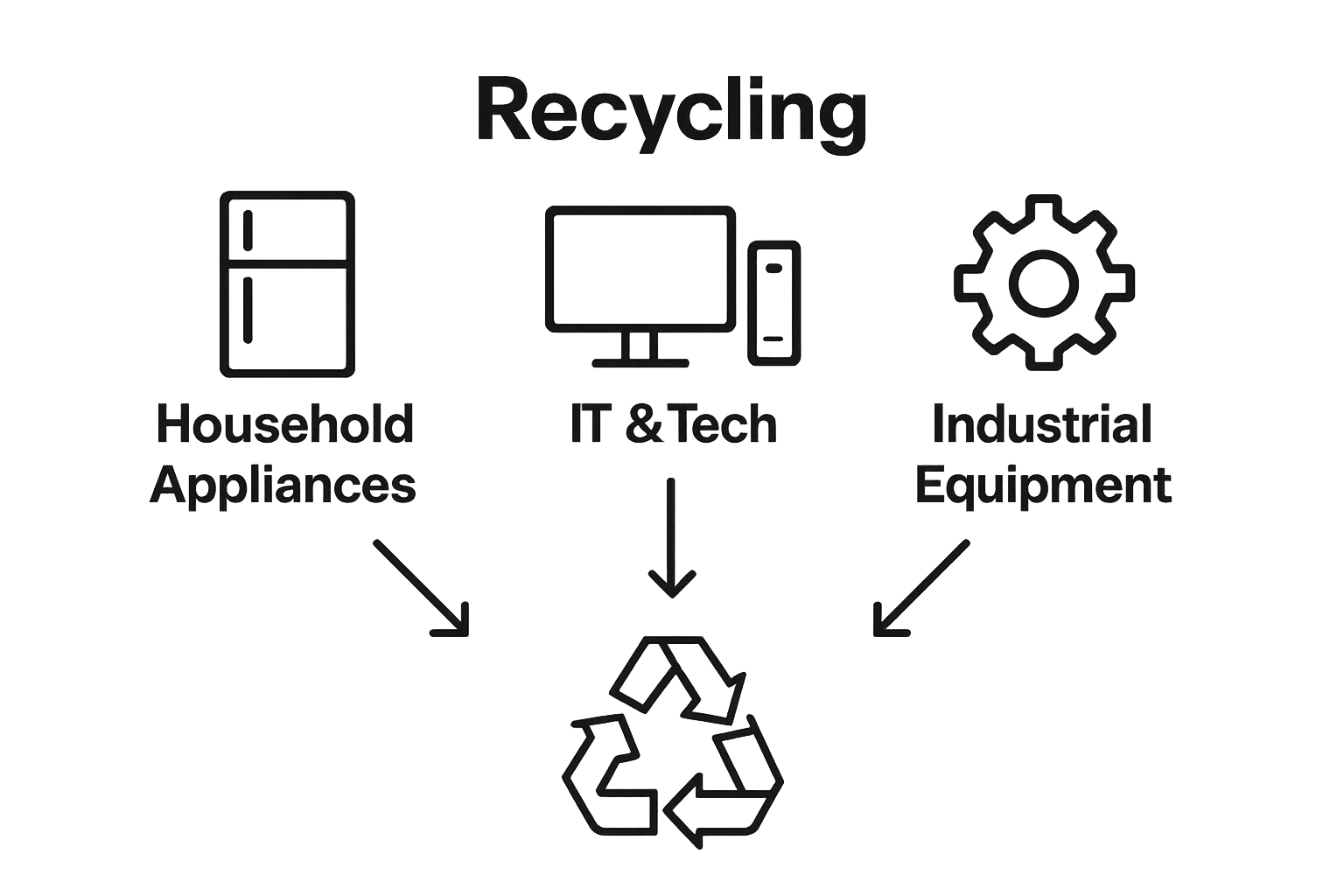
Infographic showing main WEEE categories

  • Large household appliances (refrigerators, washing machines)
  • IT and telecommunications equipment
  • Consumer electronics
  • Medical devices
  • Industrial machinery and equipment

Advanced Recycling Techniques

Modern WEEE recycling involves sophisticated technological processes designed to extract maximum value from electronic waste. According to Durham County Council’s waste management guidelines, the recycling process typically involves multiple sophisticated stages:

  • Mechanical dismantling of electronic equipment
  • Separation of different material components
  • Extraction of precious metals like gold, silver, and copper
  • Safe disposal of hazardous components

These advanced techniques ensure that valuable resources are recovered while minimising environmental contamination.

By implementing comprehensive recycling strategies, businesses in the North East can significantly reduce their ecological footprint and contribute to a more sustainable circular economy.

Key Regulations Governing WEEE Collections

Waste Electrical and Electronic Equipment (WEEE) collections are governed by a complex regulatory framework designed to ensure responsible waste management and environmental protection. For businesses in Darlington and County Durham, understanding these regulations is crucial to maintaining legal compliance and sustainable practices.

Fundamental Legislative Requirements

The Waste Electrical and Electronic Equipment Regulations 2013 represent the cornerstone of electronic waste management in the United Kingdom. Explore our detailed WEEE collection services for the North East to understand how these regulations directly impact local businesses.

Key legislative obligations include:

  • Registering as a producer of electrical and electronic equipment
  • Maintaining comprehensive documentation of waste streams
  • Ensuring compliance with collection and recycling targets
  • Reporting annual quantities of electrical equipment placed on the market

Producer Responsibility and Compliance Schemes

Businesses must navigate complex producer responsibility frameworks that mandate specific responsibilities for managing electronic waste. According to UK Environmental Regulations, producers are required to:

  • Join an approved producer compliance scheme
  • Finance the collection, treatment, and recycling of WEEE
  • Support the development of infrastructure for electronic waste management
  • Provide clear information about proper disposal to end-users

These regulations aim to shift the financial and environmental responsibility towards manufacturers and importers, encouraging more sustainable product design and waste management practices across the electronics industry.

Finding Reliable WEEE Collection Services in Darlington and County Durham

Selecting an appropriate WEEE collection service requires careful consideration of multiple factors. Businesses in Darlington and across County Durham must prioritise environmentally responsible and legally compliant waste management solutions that meet stringent regulatory requirements.

Evaluating WEEE Collection Providers

Choosing the right WEEE collection service involves assessing several critical criteria. Explore waste management solutions in the North East to understand the comprehensive range of services available to local businesses.

Key selection criteria include:

  • Certification and licensing for hazardous waste handling
  • Demonstrated environmental compliance credentials
  • Transparent reporting and documentation processes
  • Comprehensive collection and recycling capabilities
  • Proven track record of responsible electronic waste management

Local Collection Options and Strategies

Businesses in Darlington and County Durham have multiple avenues for WEEE disposal. According to Durham County Council’s waste management guidelines, local organisations can leverage several collection strategies:

  • Scheduled collection services for business electronic waste
  • Drop-off points at designated household waste recycling centres
  • Specialised collection events for electronic equipment
  • Partner with licensed waste management providers for comprehensive disposal

By implementing a strategic approach to WEEE collection, businesses can ensure legal compliance, minimise environmental impact, and contribute to sustainable resource management in the North East region.

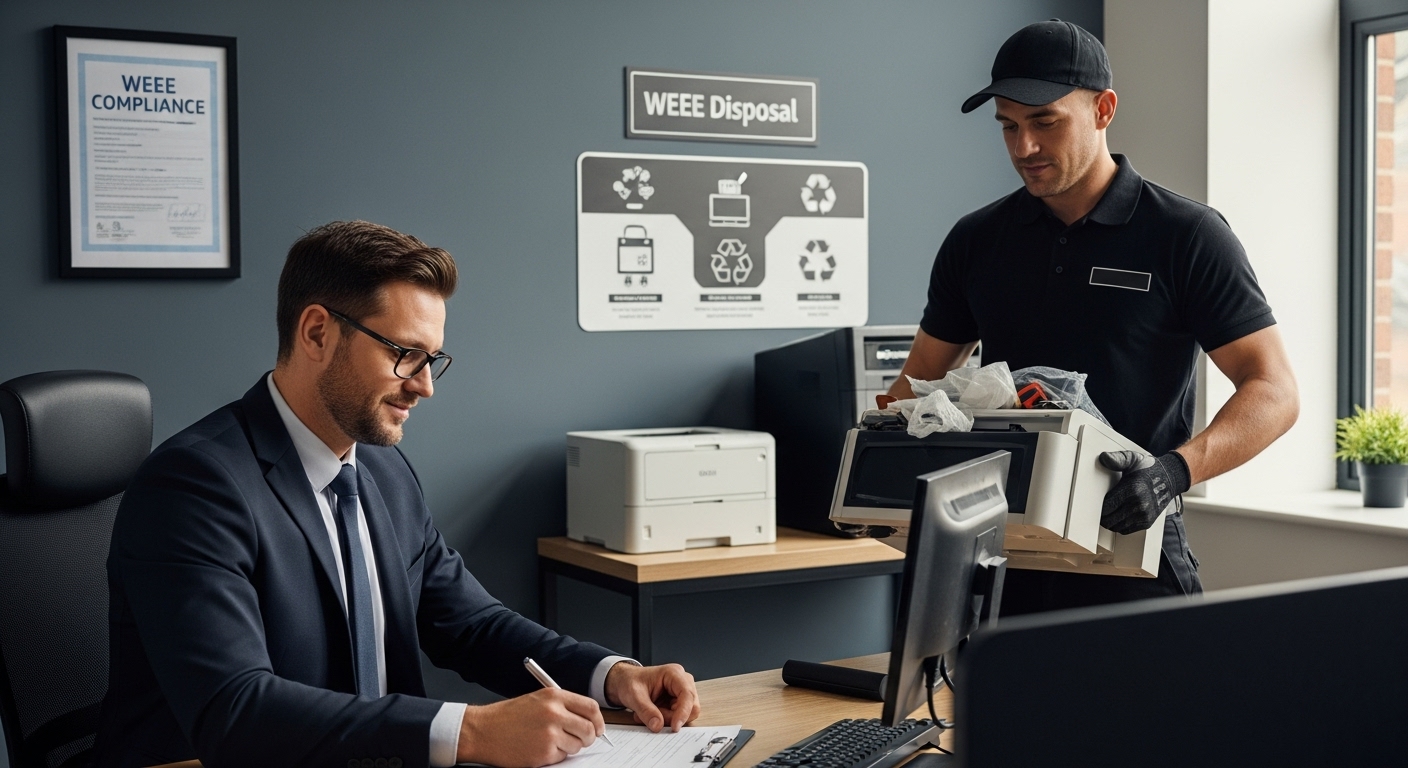
WEEE disposal office

Transform Your WEEE Challenges in Darlington and County Durham

Struggling to keep up with complicated rules and the environmental responsibilities of WEEE collections? Businesses across Darlington and County Durham face strict compliance demands, tough documentation, and the pressure to dispose of electronic waste safely. Our recent guide highlighted how improper WEEE handling can put organisations at risk of fines, reputation damage, and lost resources. Why let uncertainty hold you back when you can partner with professionals who know the process inside out? Discover how the Waste Collection Process in the UK for Businesses 2025 makes compliance and efficiency simple for your business.

https://venturewaste.co.uk

Make your next WEEE collection safe and straightforward. Visit Venture Waste Management to unlock reliable disposal services tailored for Darlington and County Durham. Act today to ensure your business meets legal standards and achieves true environmental peace of mind. Or, explore how the Waste Collection Network in UK Serves Businesses and see the benefits for yourself. The best solutions are one step away—take action now.

Frequently Asked Questions

What is WEEE?

WEEE stands for Waste Electrical and Electronic Equipment, which includes all discarded electronic and electrical devices.

What are the environmental impacts of improper WEEE disposal?

Improper disposal of WEEE can release toxic chemicals into the environment, contaminating soil and groundwater, and posing health risks to communities while also wasting valuable resources.

What regulations govern WEEE collections?

The WEEE Regulations 2013 are the key legislation governing electronic waste management in the UK, imposing responsibilities on producers for the collection, treatment, and recycling of WEEE.

How can businesses ensure proper WEEE disposal?

Businesses can ensure proper WEEE disposal by following legal regulations, maintaining documentation, partnering with licensed waste management services, and implementing effective recycling strategies.

business hazardous waste Newcastle

Understanding Hazardous Waste Disposal in Newcastle: What Businesses Must Know

Hazardous waste is a growing concern for businesses across Newcastle and the UK, as it puts both people and the environment at serious risk. Most firms know these materials can be dangerous but few realise the penalties for mismanagement can be severe. Fines can reach as high as £50,000 for serious violations and some directors even risk personal prosecution. What surprises many is just how much these rules affect everyday business operations and how closely every waste movement is tracked from start to finish.

Table of Contents

Quick Summary

Takeaway Explanation
Understand hazardous waste categories Recognise types like chemical, electronic, and medical waste for proper management.
Implement rigorous waste management practices Adopt proper identification, segregation, and disposal processes to comply with regulations.
Prioritise environmental protection Prevent contamination through accurate hazardous waste disposal to safeguard ecosystems.
Recognise legal consequences of non-compliance Understand that mishandling waste can lead to financial, legal, and reputational risks.
Establish comprehensive documentation systems Maintain precise records of hazardous waste to ensure accountability and transparency throughout disposal.

What is Hazardous Waste and Its Categories?

Hazardous waste represents a critical environmental and safety challenge for businesses across Newcastle and the broader UK. These materials pose significant risks to human health and the natural environment, requiring specialised handling and disposal procedures. Our comprehensive guide on hazardous waste identification provides deeper insights into this complex topic.

Understanding Hazardous Waste Definitions

According to UK government regulations, hazardous waste is defined as any waste that contains substances or exhibits properties that could be harmful to human health or the environment. These materials are characterised by specific dangerous properties that require careful management.

Key characteristics of hazardous waste include:

  • Toxicity that can cause significant health risks
  • Potential for chemical reactivity or instability
  • Ability to corrode or cause damage to materials
  • Potential for causing environmental contamination

Common Categories of Hazardous Waste

Businesses in Newcastle and the North East must understand the primary categories of hazardous waste to ensure proper disposal and compliance. These categories typically include:

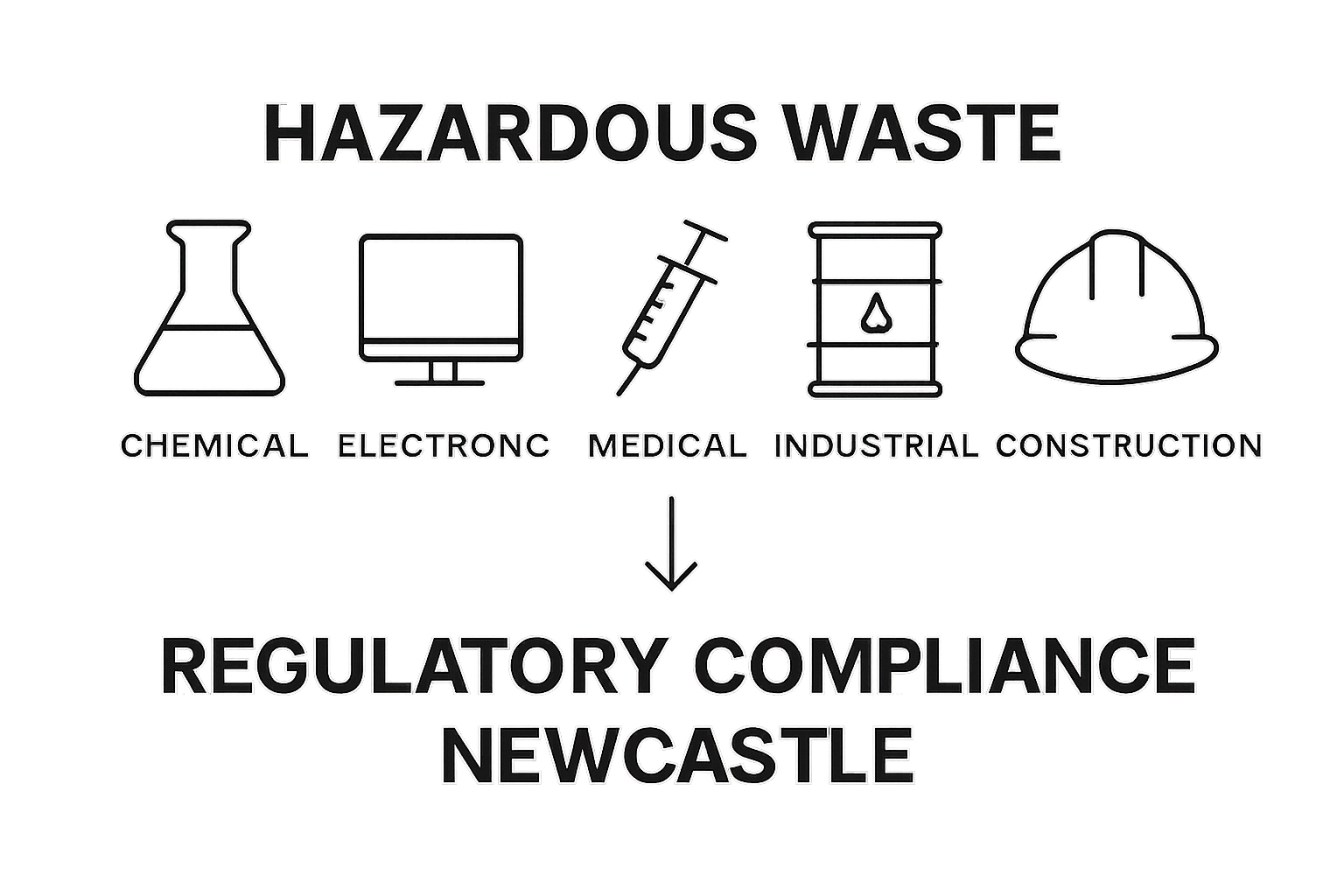
Infographic of Newcastle business hazardous waste categories

  • Chemical Waste: Solvents, industrial chemicals, pesticides, and laboratory reagents
  • Electronic Waste (WEEE): Computers, monitors, televisions, and other electronic equipment containing toxic components
  • Medical and Pharmaceutical Waste: Used syringes, contaminated medical equipment, expired pharmaceuticals
  • Industrial Waste: Oils, paint residues, asbestos, metal processing chemicals
  • Construction Waste: Materials containing lead, mercury, or other hazardous substances

Every business generating hazardous waste must adopt a responsible approach to waste management. This involves identifying, classifying, storing, and disposing of these materials in compliance with local and national environmental regulations. Proper management not only protects public health but also prevents potential legal and financial penalties associated with improper waste disposal.

The table below summarises the main categories of hazardous waste relevant to businesses in Newcastle, offering examples for each and outlining the associated risks for efficient reference.

Category Typical Examples Associated Risks
Chemical Waste Solvents, industrial chemicals, pesticides, lab reagents Toxicity, environmental contamination
Electronic Waste (WEEE) Computers, monitors, televisions, electronic equipment Release of toxic components, pollution
Medical and Pharmaceutical Waste Used syringes, contaminated equipment, expired medicines Infectious risk, chemical hazards
Industrial Waste Oils, paint residues, asbestos, metal chemicals Health hazards, pollution, workplace dangers
Construction Waste Lead, mercury-containing materials Toxicity, soil and water contamination

Why Accurate Disposal of Hazardous Waste Matters

Accurate hazardous waste disposal transcends mere regulatory compliance. It represents a fundamental responsibility that directly impacts environmental sustainability, public safety, and organisational reputation. Our comprehensive disposal guide offers detailed insights into this critical process.

Environmental Protection and Ecological Impact

Improper hazardous waste management can lead to devastating environmental consequences. According to UK government environmental guidelines, these materials can contaminate soil, water systems, and air quality, causing long-term ecological damage that extends far beyond immediate disposal sites.

Key environmental risks include:

  • Groundwater contamination affecting drinking water sources
  • Soil degradation reducing agricultural productivity
  • Potential disruption of local ecosystem biodiversity
  • Release of toxic substances into natural habitats

Businesses in Newcastle and across the UK face significant legal and financial risks when mishandling hazardous waste. Non-compliance with waste disposal regulations can result in substantial penalties, including:

  • Substantial Financial Fines: Penalties ranging from £5,000 to £50,000 for serious violations
  • Potential Criminal Prosecution: Directors may face personal legal accountability
  • Revocation of Operational Licenses: Businesses could lose permission to operate
  • Reputational Damage: Loss of customer trust and potential market exclusion

Moreover, accurate disposal demonstrates corporate social responsibility, showcasing a commitment to environmental stewardship and community well-being. By implementing rigorous waste management protocols, businesses protect not just themselves, but contribute to broader environmental conservation efforts in the North East region and beyond.

How Hazardous Waste Disposal Processes Work in Newcastle

Hazardous waste disposal in Newcastle involves a comprehensive and strictly regulated system designed to protect public health and the environment. Learn more about safe waste storage practices to understand the initial stages of this critical process.

Waste Classification and Initial Assessment

Before disposal, businesses must accurately classify their hazardous waste. According to Environment Agency guidelines, this process involves:

  • Identifying the specific type and properties of the waste
  • Determining potential environmental and health risks
  • Assigning a precise waste code for tracking and management
  • Documenting the waste’s origin and composition

Transportation and Treatment Protocols

Newcastle’s hazardous waste disposal process follows stringent transportation and treatment protocols. Specialised waste management companies must:

  • Use Certified Vehicles: Specially designed trucks with containment features
  • Implement Strict Safety Measures: Protective equipment and containment procedures
  • Follow Regulated Transportation Routes: Predetermined paths to minimise environmental exposure
  • Maintain Comprehensive Documentation: Tracking waste from collection to final disposal

The disposal process typically involves multiple treatment methods, including chemical neutralisation, thermal treatment, and secure landfill containment. Each method is carefully selected based on the specific characteristics of the hazardous waste, ensuring maximum safety and minimal environmental impact for businesses across Newcastle and the North East region.

Key Legislation and Regulations Affecting Businesses

Navigating the complex landscape of hazardous waste disposal requires a comprehensive understanding of UK legislative frameworks. Learn about waste disposal legal requirements to ensure your business remains compliant and responsible.

Primary Legislative Framework

Businesses in Newcastle must adhere to multiple legislative instruments governing hazardous waste management. According to UK government guidelines, the key regulations include:

  • Environmental Protection Act 1990: Establishes fundamental waste management principles
  • Hazardous Waste Regulations 2005: Defines specific handling and disposal requirements
  • Waste (England and Wales) Regulations 2011: Provides detailed waste classification protocols
  • Control of Pollution Act 1974: Regulates waste transportation and environmental contamination

Compliance and Reporting Obligations

Businesses generating hazardous waste face stringent reporting and documentation requirements. These obligations are designed to track waste from production through to final disposal, ensuring transparency and environmental protection.

Key compliance elements include:

  • Waste Transfer Notes: Mandatory documentation for every waste movement
  • Detailed Waste Classification: Precise categorisation of all hazardous materials
  • Annual Hazardous Waste Returns: Comprehensive reporting to environmental authorities
  • Strict Segregation Protocols: Preventing mixing of different hazardous waste types

Non-compliance can result in significant financial penalties, potential legal action, and reputational damage. Businesses must therefore maintain meticulous records and implement robust waste management systems that meet or exceed regulatory standards.

This table presents key UK legislations governing hazardous waste, providing business owners with a clear reference to ensure compliance and understand each regulation’s focus.

Legislation Main Focus Year Introduced
Environmental Protection Act Fundamental waste management principles 1990
Hazardous Waste Regulations Specific requirements for hazardous waste handling 2005
Waste (England and Wales) Regulations Detailed waste classification and management protocols 2011
Control of Pollution Act Waste transportation and environmental contamination 1974

Best Practices for Managing Hazardous Waste Disposal

Effective hazardous waste management requires a strategic and systematic approach that prioritises safety, compliance, and environmental responsibility. Explore our comprehensive hazardous waste disposal guide to develop robust waste management strategies for your business.

Waste Identification and Segregation

According to UK government guidelines, businesses must implement rigorous waste identification and segregation protocols to ensure safe and legal disposal. This process involves:

  • Comprehensive Waste Auditing: Detailed mapping of all waste streams within the organisation
  • Precise Categorisation: Identifying specific hazardous waste types and their potential risks
  • Strict Segregation Protocols: Preventing cross-contamination between different waste categories
  • Clear Labelling Systems: Ensuring all hazardous waste containers are correctly identified

Storage and Handling Procedures

Proper storage and handling are critical components of hazardous waste management. Businesses in Newcastle must adhere to stringent guidelines that protect both workplace safety and environmental integrity:

  • Secure Containment: Using appropriate containers that prevent leakage or chemical reactions
  • Temperature and Environment Control: Maintaining stable storage conditions
  • Limited Access Zones: Restricting hazardous waste storage areas to authorised personnel
  • Regular Inspection Protocols: Conducting frequent checks for potential containment issues

By implementing these best practices, businesses can mitigate risks, ensure regulatory compliance, and demonstrate a commitment to responsible waste management. The goal extends beyond mere legal adherence, focusing on creating a comprehensive approach that protects human health, workplace safety, and the broader environmental ecosystem of Newcastle and the North East region.

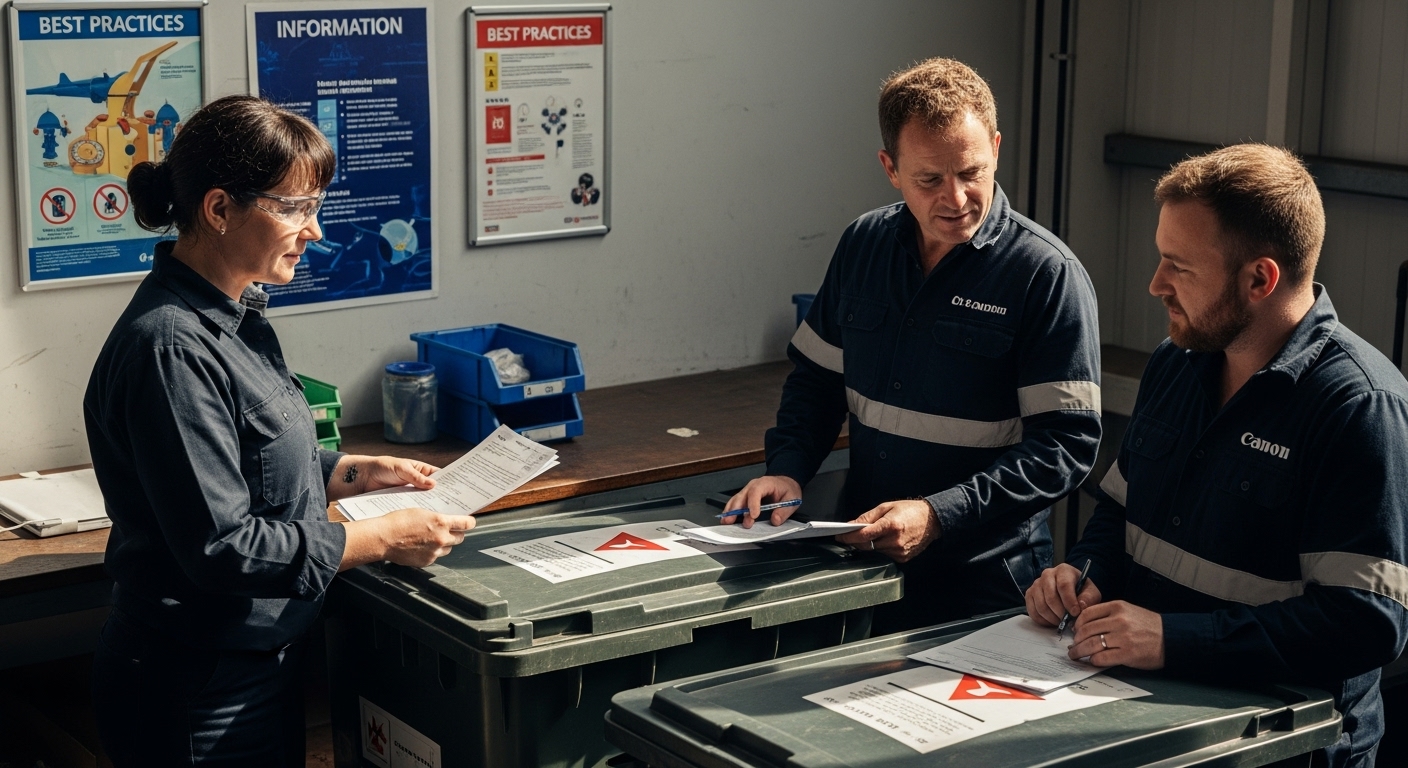
hazardous waste best practices

Take the Stress Out of Hazardous Waste Disposal in Newcastle

Are you feeling overwhelmed by the complex regulations and risk of penalties highlighted in our guide? Navigating hazardous waste laws, ensuring safe handling, and maintaining compliance can feel like a minefield. With so many responsibilities—from accurate waste identification to safe storage and avoiding legal trouble—local businesses need a reliable partner that understands the specific challenges of hazardous waste in Newcastle. Get clarity and regain peace of mind by exploring our hazardous waste solutions, where you will find practical advice and services tailored to the hazardous waste requirements discussed in the article.

https://venturewaste.co.uk

Dont let confusion or compliance gaps jeopardise your operations. Join other successful businesses that trust Venture Waste Management for responsible waste handling and expert guidance. Visit our regulation hub to make sure your procedures are up to standard and book your service in just three simple steps. Act now to protect your business, your staff, and the environment—your waste management solution is only a click away.

Frequently Asked Questions

What qualifies as hazardous waste?

Hazardous waste is any waste that contains substances or exhibits properties harmful to human health or the environment. This includes materials that are toxic, reactive, corrosive, or can cause environmental contamination.

Why is proper hazardous waste disposal important for businesses?

Proper disposal of hazardous waste is crucial to prevent environmental contamination, public health risks, and potential legal and financial penalties. It demonstrates corporate social responsibility and commitment to environmental stewardship.

What are the main categories of hazardous waste?

The main categories of hazardous waste include chemical waste (such as solvents and pesticides), electronic waste (like computers and TVs), medical waste (used syringes and contaminated equipment), industrial waste (oils and paint residues), and construction waste (materials containing hazardous substances like lead).

What regulations must businesses follow regarding hazardous waste disposal?

Businesses must adhere to regulations such as the Environmental Protection Act 1990, Hazardous Waste Regulations 2005, and Waste (England and Wales) Regulations 2011. Compliance includes proper waste classification, maintaining waste transfer documents, and submitting annual hazardous waste returns.

waste disposal innovation, smart waste technology, AI recycling

7 Innovations in Waste Disposal 2025 You Should Know

Businesses across the UK are racing to update their waste disposal methods, and the need for greener solutions has never been clearer. Imagine this. AI-powered sorting systems are now achieving 99 percent accuracy when separating materials, outpacing anything humans could hope to match. Yet that barely scratches the surface, because the real surprise is how these new technologies are not just making recycling smarter but also transforming rubbish into pure resources and real profit.

Table of Contents

Quick Summary

Takeaway Explanation
Adopt AI Sorting Systems for Efficiency Implement AI sorting technologies to achieve 99% material separation accuracy in recycling processes, enhancing operational efficiency.
Utilise Smart Waste Bins for Data Insights Smart bins provide real-time monitoring capabilities, enabling better tracking of waste disposal metrics and improving logistics.
Explore Advanced Biodegradable Materials Invest in biodegradable materials that decompose quickly, significantly reducing environmental waste impact and fostering sustainability.
Implement Waste-to-Energy Solutions Transition to waste-to-energy technologies to turn waste into renewable energy, boosting sustainability while reducing landfill dependence.
Leverage Cloud-Based Waste Management Systems Adopt cloud systems for real-time waste tracking and predictive analytics, facilitating better decision-making and compliance reporting.

1: Advanced Recycling Technologies for 2025

The landscape of waste disposal is rapidly transforming, with innovative recycling technologies emerging as game changers in sustainable resource management. In 2025, cutting-edge solutions are set to revolutionise how businesses approach waste management, particularly in regions like Newcastle and Durham where industrial innovation thrives.

According to UK Energy Research Centre, the development of advanced recycling technologies represents a critical pathway towards more sustainable waste management strategies. These technologies go beyond traditional recycling methods, introducing sophisticated approaches that can handle complex waste streams with unprecedented efficiency.

Key technological innovations in advanced recycling for 2025 include:

  • Artificial Intelligence Sorting Systems: Machine learning algorithms capable of identifying and separating materials with 99% accuracy
  • Molecular Recycling Techniques: Breaking down plastics into their original chemical components for pure remanufacturing
  • Robotics-Enabled Waste Processing: Autonomous machines that can sort, clean, and prepare materials for recycling without human intervention

Businesses in the North East, from manufacturing facilities in Sunderland to logistics companies in Teesside, are increasingly adopting these technologies to reduce environmental impact and create more circular waste management processes. Read more about our innovative cardboard recycling solutions that leverage these cutting-edge technologies.

The integration of smart sensor technologies and real-time tracking systems enables unprecedented transparency in waste streams. Companies can now monitor their waste disposal processes with granular detail, identifying opportunities for reduction, reuse, and more efficient recycling.

These advanced recycling technologies are not just technological marvels but represent a fundamental shift towards more sustainable, resource-efficient waste management practices that align with global environmental goals.

2: Smart Waste Bins: The Future of Disposal

As waste management evolves, smart waste bins are emerging as a transformative technology that promises to revolutionise how businesses and communities handle waste disposal. These intelligent systems go far beyond traditional waste receptacles, integrating cutting-edge sensors and digital technologies to create more efficient, sustainable waste management solutions.

According to Cities research, smart waste bins represent a significant leap forward in urban waste management strategies. These advanced bins are equipped with sophisticated features that fundamentally change waste disposal dynamics.

Key capabilities of smart waste bins include:

  • Real-time capacity monitoring using advanced sensor technologies
  • Automatic compaction to maximise bin storage efficiency
  • Digital tracking and reporting of waste collection and disposal metrics

In regions like Newcastle and Durham, businesses are increasingly adopting these technologies to streamline their waste management processes. Explore our comprehensive waste collection solutions that integrate these innovative technologies.

The IoT-enabled design of these smart bins allows for unprecedented data collection and analysis. Sensors can detect waste types, measure fill levels, and even monitor temperature and potential hazardous materials. This granular level of information enables businesses to make more informed decisions about waste reduction, recycling, and disposal strategies.

Moreover, smart waste bins contribute significantly to sustainability goals by reducing unnecessary waste collection trips, optimising route planning for waste management vehicles, and providing detailed insights into waste generation patterns. These technologies are not just about disposal they represent a holistic approach to resource management and environmental responsibility.

3: Biodegradable Materials: A Game Changer

The waste management landscape is experiencing a profound transformation through biodegradable materials, offering unprecedented solutions for environmental sustainability. These innovative materials represent a critical breakthrough in addressing the global challenge of waste reduction and resource management.

According to Imperial College London research, cutting-edge biodegradable technologies are redefining how businesses approach waste disposal. These materials can break down naturally without leaving harmful residues, presenting a revolutionary approach to waste management.

Key characteristics of advanced biodegradable materials include:

  • Rapid decomposition under specific environmental conditions
  • Minimal environmental impact compared to traditional plastics
  • Versatility across multiple industrial applications

Businesses in the North East, from manufacturing facilities in Newcastle to logistics companies in Durham, are increasingly adopting these innovative materials. Explore our comprehensive waste management solutions that integrate these groundbreaking technologies.

The molecular engineering behind these materials enables them to decompose completely within controlled timeframes, unlike traditional plastics that persist in the environment for centuries. Advanced biodegradable materials can be engineered to break down in specific conditions, such as industrial composting facilities or natural environments, providing unprecedented flexibility in waste management strategies.

Moreover, these materials are not just environmentally friendly they represent a significant economic opportunity. By reducing waste volume, minimising environmental cleanup costs, and creating new circular economy pathways, biodegradable materials are transforming waste from a problem into a potential resource.

4: Waste-to-Energy Solutions in 2025

The transformation of waste into energy represents a pivotal innovation in sustainable resource management, offering businesses unprecedented opportunities to convert environmental challenges into economic assets. Waste-to-energy technologies are emerging as a critical solution for reducing landfill dependency and generating renewable power simultaneously.

According to UK Government Hydrogen Innovation Programme, advanced waste-to-energy solutions are revolutionising how industries approach waste disposal and energy generation.

Key characteristics of modern waste-to-energy solutions include:

  • Advanced thermal conversion techniques that maximise energy extraction
  • Carbon capture integration to minimise environmental impact
  • Multi-stage energy generation from diverse waste streams

Businesses across the North East, from manufacturing facilities in Newcastle to industrial complexes in Sunderland, are increasingly adopting these innovative technologies. Learn how your business can optimise waste management costs through cutting-edge waste-to-energy solutions.

The technological sophistication of these systems enables precise energy generation from multiple waste types, including organic materials, industrial byproducts, and complex chemical waste streams. Pyrolysis and gasification technologies can now convert waste into electricity, heat, and even hydrogen, creating a multifaceted approach to resource recovery.

Moreover, waste-to-energy solutions contribute significantly to the UK’s ambitious net-zero carbon emissions targets. By transforming waste from a environmental liability into a renewable energy source, these technologies represent a crucial step towards a more sustainable and circular economic model.

5: Cloud-Based Waste Management Systems

The digital revolution is transforming waste management through cloud-based systems that provide unprecedented transparency, efficiency, and strategic insights for businesses across the United Kingdom. These sophisticated technological platforms are redefining how organisations track, manage, and optimise their waste disposal processes.

According to UK Government’s Digital Waste Tracking Service, cloud-based waste management systems represent a significant leap forward in environmental monitoring and compliance.

Key features of modern cloud-based waste management systems include:

  • Real-time waste tracking across multiple locations and waste streams
  • Automated compliance reporting for environmental regulations
  • Predictive analytics for waste reduction and resource optimization

Businesses in regions like Newcastle, Durham, and Sunderland are rapidly adopting these technologies to streamline their waste management strategies. Discover best practices for efficient waste handling through advanced cloud-based solutions.

The intelligent data integration of these systems enables businesses to make data-driven decisions. By aggregating information from sensors, GPS tracking, and digital waste manifests, cloud platforms provide comprehensive insights into waste generation, disposal patterns, and potential cost-saving opportunities.

Moreover, these systems support the UK’s broader environmental goals by enhancing transparency, reducing waste crime, and enabling more precise environmental reporting. As businesses move towards more sustainable practices, cloud-based waste management systems will become an essential tool in achieving both operational efficiency and environmental responsibility.

6: AI and Machine Learning in Waste Sorting

The integration of artificial intelligence and machine learning is transforming waste sorting into an incredibly precise and efficient process, revolutionising how businesses approach waste management in 2025. These cutting-edge technologies are capable of processing and categorising waste with unprecedented accuracy and speed.

According to University of Birmingham research, advanced machine learning systems are now capable of optimising waste processing with remarkable precision, supporting environmental sustainability goals.

Key capabilities of AI-driven waste sorting technologies include:

  • Instantaneous material identification using advanced image recognition
  • Automated sorting with 99% accuracy across multiple waste categories
  • Real-time performance tracking and continuous system improvement

Businesses across the North East, from recycling facilities in Newcastle to industrial complexes in Durham, are rapidly adopting these technologies. Explore our comprehensive guide to waste segregation to understand how AI is transforming waste management.

The neural network algorithms powering these systems can learn and adapt continuously, enabling them to distinguish between complex material compositions that human sorters might miss. By analysing thousands of images per minute, these AI systems can identify and segregate materials with a level of precision that was previously unimaginable.

Moreover, machine learning in waste sorting is not just about efficiency it represents a significant leap towards more sustainable waste management practices. These technologies reduce contamination, improve recycling rates, and provide detailed insights into waste stream compositions, ultimately supporting the UK’s ambitious environmental goals.

7: Sustainable Packaging Innovations to Reduce Waste

The packaging industry is undergoing a dramatic transformation, with sustainable packaging innovations emerging as a critical solution to reduce environmental waste and support circular economy principles. These groundbreaking technologies are redesigning how businesses approach product packaging, focusing on materials that minimise environmental impact.

According to UKRI’s Smart Sustainable Packaging Challenge, innovative packaging solutions could potentially save over 1.5 million tonnes of CO2 equivalent between 2025 and 2030.

Key characteristics of sustainable packaging innovations include:

  • Biodegradable materials that decompose naturally
  • Modular design enabling easier recycling and reuse
  • Reduced material consumption without compromising product protection

Businesses across the North East, from manufacturing facilities in Newcastle to logistics companies in Durham, are rapidly adopting these innovative packaging solutions. Explore strategies for waste reduction in your business to understand how sustainable packaging can transform your environmental footprint.

The molecular engineering behind these packaging innovations enables materials that can break down completely in industrial composting facilities or natural environments. Some advanced packaging solutions now incorporate agricultural waste, seaweed extracts, and recycled biomaterials, creating packaging that is not just recyclable but potentially regenerative.

Moreover, these sustainable packaging technologies represent more than an environmental strategy they are becoming a competitive advantage. Companies that embrace these innovations demonstrate corporate responsibility, attract environmentally conscious consumers, and contribute to global waste reduction efforts.

The table below provides a comprehensive summary of the key innovations, technologies, and benefits discussed in the article, giving a clear overview of modern waste disposal strategies for 2025.

Innovation / Topic Description Main Benefits
Advanced Recycling Technologies AI sorting, molecular recycling, and robotics for waste Increased recycling efficiency, handles complex waste streams
Smart Waste Bins IoT-enabled bins with sensors and digital tracking Real-time data, route optimisation, improved operational efficiency
Biodegradable Materials Rapidly decomposing, engineered eco-friendly materials Reduced landfill impact, supports circular economy
Waste-to-Energy Solutions Converts waste into power using advanced technologies Reduces landfill, generates renewable energy, lower carbon output
Cloud-Based Waste Management Systems Cloud platforms for tracking, analytics, and reporting Real-time insights, compliance support, improved decision-making
AI and Machine Learning in Waste Sorting Automated identification and sorting of waste with high accuracy Enhanced sorting precision, lower contamination, efficiency gains
Sustainable Packaging Innovations Eco-friendly packaging designs and materials Less waste generation, supports recycling, appeals to consumers

Transform Your Approach to Waste Disposal in 2025

Staying ahead in waste management means more than understanding new technologies. It requires taking real action to overcome the rising challenges in compliance, efficiency, and sustainability described in ‘7 Innovations in Waste Disposal 2025 You Should Know.’ Businesses across the UK face increasing pressure to reduce waste, adopt smarter recycling, and handle complicated disposal processes with accuracy. If you want tailored solutions that make use of innovations such as cloud-based tracking, smart sensors, and AI sorting, discover how our waste collection network empowers UK businesses in 2025.

https://venturewaste.co.uk

Do not let your waste strategy fall behind. Partner with Venture Waste Management for solutions that keep you compliant and sustainable in every aspect of waste disposal. Take the first step today by visiting https://venturewaste.co.uk or explore the waste collection process designed for UK businesses in 2025. Join the companies who are already experiencing the benefits of proven, easy-to-book, future-focused waste services.

Frequently Asked Questions

What are advanced recycling technologies for 2025?

Advanced recycling technologies for 2025 include innovations like artificial intelligence sorting systems, molecular recycling techniques, and robotics-enabled waste processing. These technologies enhance efficiency and effectiveness in managing complex waste streams.

How do smart waste bins improve waste management?

Smart waste bins utilise advanced sensors for real-time capacity monitoring, automatic compaction to maximise storage, and digital tracking for efficient metrics reporting. They help businesses optimise waste collection processes and enhance sustainability.

What are biodegradable materials and why are they important?

Biodegradable materials are designed to decompose naturally without harming the environment. They offer a significant advantage by reducing waste and landfill dependency, contributing to more sustainable resource management.

How does waste-to-energy technology work?

Waste-to-energy technology converts various types of waste into renewable energy through advanced thermal conversion techniques and carbon capture integration, making it a sustainable solution for waste disposal and energy generation.

Newcastle house clearance office

Understanding House Clearance in Newcastle: Affordable and Stress-Free Option

Businesses across Newcastle and the North East are facing mounting pressures every time they need to clear out properties, whether shifting offices or handling renovations. You might think house clearance is just about hauling away unwanted junk, but the reality is far more structured. Professional house clearance services systematically remove and lawfully dispose of all types of materials, directly supporting legal compliance and operational efficiency for every project. That process is worlds apart from a simple tidy up, and the real surprise is how much smoother, safer, and more cost-effective it becomes when experts are involved.

Table of Contents

Quick Summary

Takeaway Explanation
House clearance is essential for businesses. It helps manage unwanted items efficiently during property changes and renovations, ensuring compliance with waste management regulations.
Engaging professional services reduces legal risks. Professional house clearance ensures that waste is sorted and disposed of correctly, minimizing potential penalties from improper disposal.
Affordable services cut operational costs. By utilizing professional clearance, businesses can reduce internal labour and disposal trips, leading to significant financial savings.
Sustainable practices benefit the environment. Professional teams focus on recycling and responsible waste management, aligning businesses with environmental regulations and reducing their carbon footprints.
Strategic project management streamlines transitions. Professional services offer tailored approaches to clearance, assessing property needs and minimizing disruption while ensuring regulatory compliance.

What is House Clearance and Why is it Important for Businesses?

House clearance represents a critical service for businesses across Newcastle and the broader North East region, offering a comprehensive solution for managing unwanted items, equipment, and materials during property transitions, renovations, or operational changes. House clearance involves systematically removing and disposing of contents from residential or commercial properties, ensuring responsible waste management and efficient space utilization.

Understanding the Scope of House Clearance

For businesses in Newcastle and surrounding areas like Gateshead, Durham, and Sunderland, house clearance goes beyond simple rubbish removal. It encompasses a strategic approach to managing diverse materials and assets, including:

  • Furniture and office equipment
  • Electronic waste (WEEE)
  • Confidential documents and storage materials
  • Renovation and construction debris
  • Obsolete inventory and stock

According to the UK government’s waste management guidelines, businesses have a legal responsibility to manage waste correctly, making professional house clearance services crucial for maintaining regulatory compliance.

The Business Benefits of Professional House Clearance

Professional house clearance offers substantial advantages for businesses seeking efficient and environmentally responsible waste management.

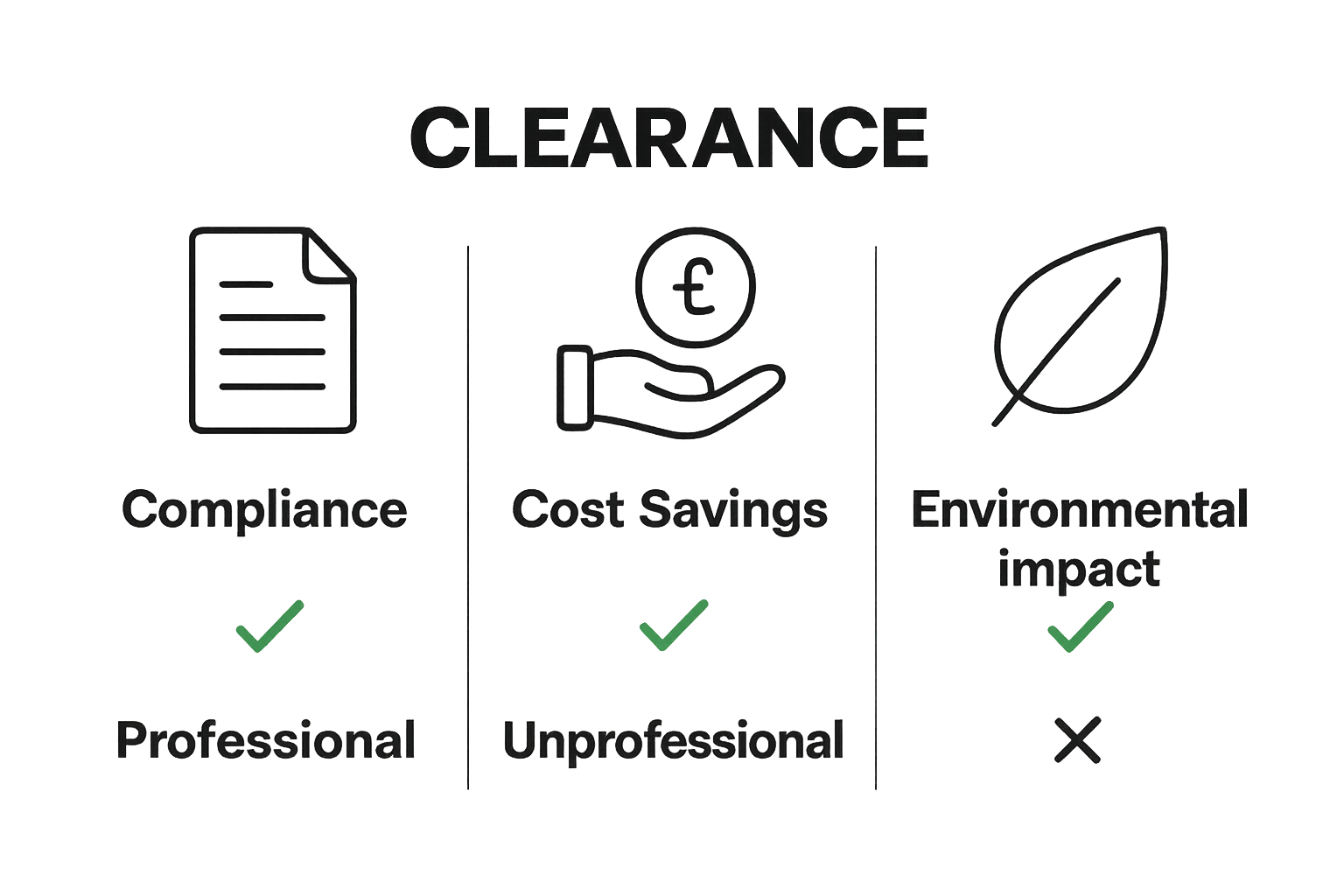
Infographic comparing compliance, cost, and environmental impact of clearance services Engaging professional services ensures systematic sorting, recycling, and disposal of materials, minimizing environmental impact and potential legal risks.

Businesses can benefit from house clearance services by reading our comprehensive guide on confidential waste disposal, which provides deeper insights into responsible waste management strategies. Key benefits include:

  • Compliance with waste disposal regulations
  • Cost-effective removal of large quantities of items
  • Environmentally responsible waste management
  • Time and resource efficiency
  • Reduced risk of improper disposal penalties

By understanding and utilizing professional house clearance services, businesses in Newcastle can streamline their operational transitions, maintain legal compliance, and contribute to sustainable waste management practices.

The following table summarises key differences between do-it-yourself clearance and professional house clearance, helping businesses assess which approach best suits their needs.

Aspect DIY Clearance Professional House Clearance
Legal Compliance May overlook regulations and documentation Ensures full compliance with waste regulations
Time & Resource Efficiency Labour-intensive, multiple disposal trips Streamlined process by experts
Cost Hidden costs: time, transport, potential fines Transparent pricing, cost-saving strategies
Environmental Responsibility Limited recycling, risk of improper disposal Systematic recycling, supports sustainability
Risk of Penalties High—due to potential improper waste handling Low—handled by professionals
Disruption to Operations Greater disruption from in-house clearance Minimal disruption, managed by specialists
Documentation & Tracking Often incomplete or missing Comprehensive waste tracking and records

The Benefits of Choosing Affordable House Clearance Services

House clearance services provide businesses in Newcastle and surrounding North East regions with a strategic solution for managing property transitions and waste disposal. By selecting professional and affordable services, companies can transform complex removal processes into smooth, efficient operations that minimize disruption and maximize value.

Cost-Effective Waste Management Strategies

Affordable house clearance services offer businesses significant financial advantages beyond simple item removal. These services create comprehensive waste management solutions that reduce overall operational expenses. Companies can benefit from economies of scale, specialized equipment, and expert sorting techniques that dramatically lower disposal costs.

Businesses seeking efficient waste management can explore our bulky waste removal strategies to understand how professional services can optimize their clearance processes. Key cost-saving aspects include:

  • Reduced labour requirements for internal teams
  • Elimination of multiple disposal trips
  • Professional sorting minimizing waste management fees
  • Potential revenue from recyclable material recovery
  • Avoiding potential regulatory non-compliance penalties

Environmental and Operational Benefits

According to research from the UK government’s waste management guidelines, professional house clearance services contribute significantly to sustainable waste management practices. Businesses choosing affordable clearance services can simultaneously achieve environmental responsibilities and operational efficiency.

The environmental benefits extend beyond simple waste removal, encompassing:

  • Responsible sorting and recycling of materials
  • Reduced carbon footprint through efficient disposal methods
  • Compliance with environmental regulations
  • Support for circular economy principles
  • Minimized landfill waste

By investing in professional and affordable house clearance services, businesses in Newcastle can transform potential logistical challenges into streamlined, cost-effective, and environmentally responsible operations.

How House Clearance Works: Key Concepts and Processes

House clearance represents a sophisticated waste management process that goes far beyond simple rubbish removal, involving strategic planning, professional assessment, and methodical execution. For businesses in Newcastle and the North East region, understanding these intricate processes ensures efficient property transitions and responsible waste management.

Initial Assessment and Planning

The house clearance process begins with a comprehensive property evaluation.

Professional clearance teams conduct detailed site inspections to determine the scope, complexity, and specific requirements of the project. This initial stage involves:

  • Identifying types of materials to be removed
  • Assessing potential hazardous waste elements
  • Evaluating logistical challenges of the clearance
  • Estimating volume and weight of items
  • Determining appropriate disposal or recycling methods

Businesses can explore our detailed waste management strategies to gain deeper insights into professional clearance methodologies.

Systematic Sorting and Disposal Processes

According to UK government waste management guidelines, professional house clearance involves meticulous sorting and responsible disposal. The process transforms potential waste into strategic resource management, categorizing items through systematic approaches:

  • Segregation of recyclable materials
  • Identification of reusable items
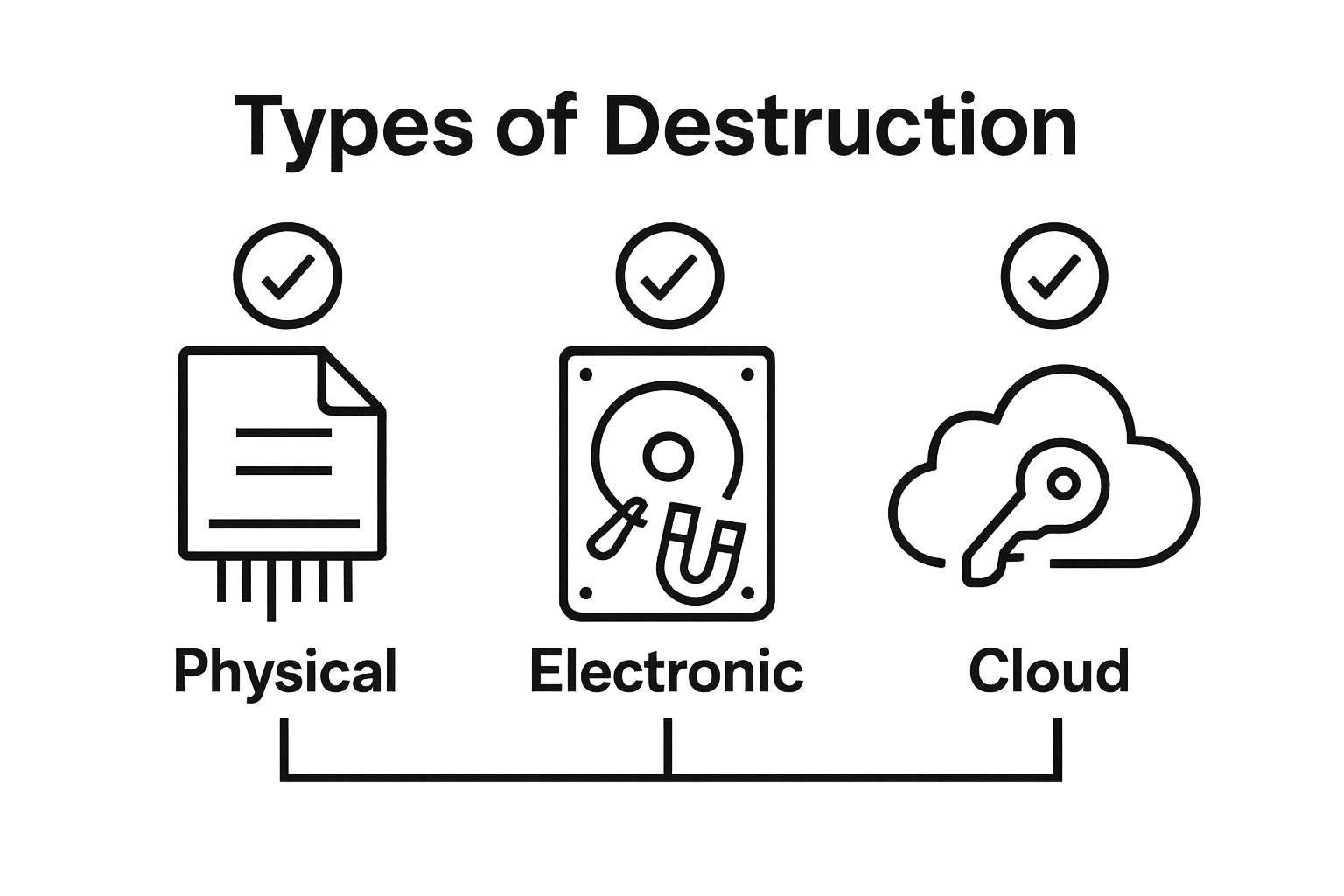
  • Secure destruction of confidential documents
  • Specialized handling of electronic waste
  • Compliance with environmental regulations

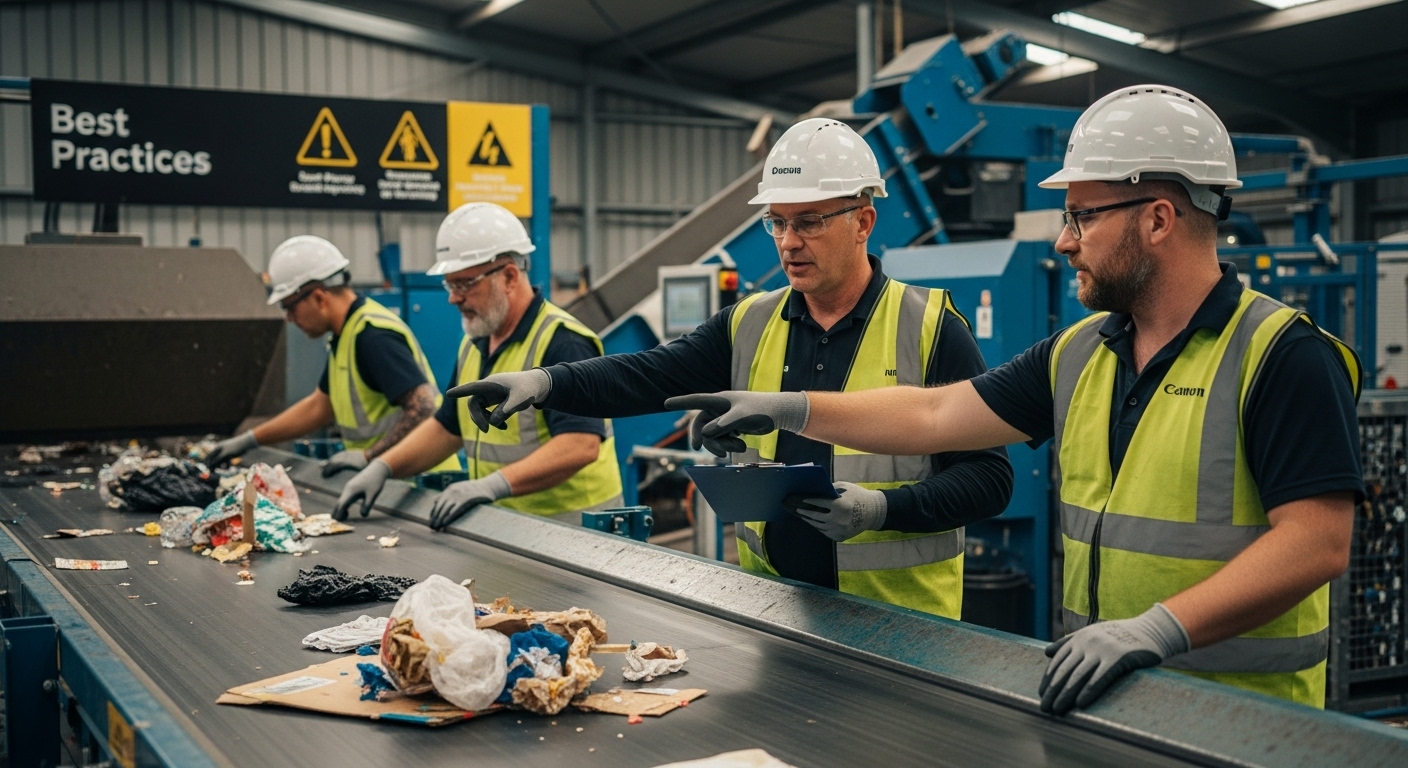
Professional teams utilize specialized equipment and follow strict protocols to ensure efficient, environmentally responsible clearance.

workplace clearance recycling Newcastle This approach minimizes waste, reduces environmental impact, and provides businesses with a comprehensive solution for property contents management.

By implementing these structured processes, house clearance services in Newcastle offer businesses a reliable, sustainable method of managing property transitions while maintaining legal and environmental standards.

Understanding Waste Types Managed During House Clearance

House clearance involves managing a complex array of waste types, each requiring specific handling and disposal strategies. For businesses in Newcastle and the North East region, understanding these diverse waste categories is crucial for ensuring efficient, legal, and environmentally responsible property clearance.

Categorizing Commercial and Residential Waste

Professional house clearance services distinguish between multiple waste classifications, recognizing that different materials demand unique treatment approaches. Businesses can explore comprehensive waste type definitions in our domestic waste guide to gain deeper insights into waste management complexities.

Waste types typically encountered during house clearance include:

  • General non-hazardous waste
  • Electronic and electrical equipment (WEEE)
  • Confidential document materials
  • Furniture and office equipment
  • Construction and renovation debris
  • Potentially contaminated materials

Specialized Waste Handling Requirements

According to UK government waste management guidelines, different waste types require specific disposal protocols. Professional clearance teams implement rigorous sorting and processing methods to ensure legal compliance and environmental protection.

Specialized waste handling involves:

  • Identifying hazardous materials
  • Implementing safe segregation techniques
  • Following strict environmental regulations
  • Utilizing specialized disposal equipment
  • Maintaining comprehensive waste tracking documentation

By understanding and managing these diverse waste types systematically, house clearance services in Newcastle provide businesses with a comprehensive, responsible approach to property content management, minimizing environmental impact and ensuring regulatory compliance.

This table provides an overview of the main categories of waste managed during house clearance and highlights their specific handling requirements in compliance with UK regulations.

Waste Type Example Materials Special Handling Requirements
General Non-Hazardous Waste Packaging, office rubbish Standard disposal, recycling where possible
Electronic & Electrical (WEEE) Computers, monitors, printers WEEE compliance, specialist recycling facilities
Confidential Document Materials Paper records, files Secure destruction and certified disposal
Furniture & Office Equipment Desks, chairs, shelving Assess for reuse or recycling before disposal
Construction & Renovation Debris Plaster, wood, bricks Segregate materials, responsible landfill/recycling
Hazardous or Contaminated Waste Paint, chemicals, asbestos Specialist handling, hazardous waste protocols

The Role of Professional Services in Stress-Free House Clearance

Professional house clearance services transform complex property transitions into seamless, efficient operations, providing businesses in Newcastle and the North East region with comprehensive solutions that mitigate logistical challenges and administrative burdens.

Strategic Project Management

Professional clearance teams bring systematic expertise to property content management, delivering far more than simple removal services. Businesses can explore advanced waste management approaches in our detailed service guide to understand the complexity of professional interventions.

Key strategic management elements include:

  • Comprehensive initial property assessment
  • Detailed inventory documentation
  • Risk management and compliance planning
  • Efficient resource allocation
  • Minimized operational disruption
  • Tailored clearance strategies

Compliance and Environmental Responsibility

According to UK government waste management guidelines, professional services ensure rigorous adherence to legal and environmental standards. Professional house clearance teams navigate complex regulatory landscapes, protecting businesses from potential legal complications.

Comprehensive compliance mechanisms involve:

  • Tracking waste disposal documentation
  • Implementing environmentally responsible practices
  • Ensuring proper waste segregation
  • Managing hazardous material protocols
  • Maintaining transparent disposal records

By leveraging professional house clearance services, businesses in Newcastle can transform potentially stressful property transitions into smooth, compliant, and environmentally responsible operations.

Make Your Newcastle House Clearance Truly Effortless with Venture Waste

Is sorting, removing, and safely disposing of business or household contents in Newcastle starting to feel overwhelming? Many face the stress of legal compliance, the challenge of separating waste types, and the ongoing hunt for cost-effective solutions. Your need for affordable, streamlined and fully compliant house clearance is exactly where our expertise begins. For those who want to dive deeper into compliant processes, our regulation hub can shed light on key guidance.

https://venturewaste.co.uk

Let Venture Waste Management take the worry out of your property transition. Our trusted waste management solutions are designed for homes and businesses in Newcastle, offering responsible clearance, recycling, and secure document destruction. With simple online booking and transparent service, we help you move quickly and confidently. Do not put your reputation or peace of mind at risk. Discover how easy the process can be—book your affordable house clearance with us today.

Frequently Asked Questions

What is house clearance?

House clearance is a service that involves systematically removing and disposing of contents from residential or commercial properties, including furniture, electronic waste, and renovation debris.

Why is professional house clearance important for businesses?

Professional house clearance ensures compliance with waste disposal regulations, provides cost-effective removal services, and promotes environmentally responsible waste management.

How does the house clearance process work?

The house clearance process typically starts with an initial assessment of the property, followed by systematic sorting of materials, secure disposal of waste, and adherence to regulatory standards.

What types of waste are managed during house clearance?

House clearance addresses various types of waste, including general non-hazardous waste, electronic waste, confidential documents, furniture, and construction debris, each requiring specific handling and disposal methods.

Confidential Waste Sunderland

Understanding Confidential Waste Disposal in Sunderland: GDPR and Business Compliance

Every business in Sunderland deals with paperwork and digital files packed with sensitive details. Ignore the warning signs and you might be shocked to learn that failing to handle confidential waste properly could trigger fines of up to £17.5 million or 4 percent of your global turnover under GDPR. Most assume a quick bin toss or basic shredder does the job but the truth is, the real danger comes from the everyday habits that leave your information exposed and your entire reputation at risk.

Table of Contents

Quick Summary

Takeaway Explanation
Confidential waste includes sensitive materials Businesses must identify personal info, financial records, and healthcare documents as confidential waste that requires protection.
Implement secure disposal protocols Employ certified methods for secure disposal and maintain a clear chain of custody to ensure compliance with regulations.
Know legal implications of mishandling Non-compliance can lead to fines up to £17.5 million, legal actions, and damage to reputation.
Training staff in data protection is essential Regular training on GDPR guidelines helps ensure all employees understand their role in managing confidential waste properly.
Conduct risk assessments regularly Systematic evaluations of disposal practices can help identify vulnerabilities and improve waste management strategies.

What is Confidential Waste and Why is it Important?

Confidential waste represents a critical category of sensitive documentation and materials that require secure handling and destruction to prevent potential data breaches or unauthorized information disclosure. In the modern business landscape of Sunderland and across the United Kingdom, understanding what constitutes confidential waste is fundamental to maintaining legal compliance and protecting organisational integrity.

Defining Confidential Waste

Confidential waste encompasses a wide range of materials containing sensitive, private, or privileged information that could compromise individual or organisational privacy if improperly discarded. This includes documents, digital media, and physical records that contain:

  • Personal identification details
  • Financial records and statements
  • Medical and healthcare documentation
  • Employee personnel files
  • Business strategy documents
  • Client contract information
  • Intellectual property records

Businesses in areas like Newcastle, Durham, and Sunderland must recognise that confidential waste extends beyond traditional paper documents to include electronic devices, hard drives, USB drives, and even printed materials with sensitive information.

The importance of proper confidential waste management cannot be overstated. According to the UK Government’s Data Protection Guidelines, organisations have a legal obligation to ensure the secure disposal of sensitive information. Learn more about confidential waste management for comprehensive insights into best practices.

Failing to implement robust confidential waste disposal protocols can result in significant consequences, including:

  • Substantial financial penalties under GDPR regulations
  • Potential legal action from affected individuals
  • Reputational damage and loss of client trust
  • Increased vulnerability to corporate espionage and data theft

For businesses in Sunderland and the broader North East region, understanding and implementing comprehensive confidential waste disposal strategies is not just a recommended practice but a critical legal requirement. Proper management ensures compliance, protects sensitive information, and demonstrates a commitment to professional data handling standards.

The Role of GDPR in Waste Management Practices

The General Data Protection Regulation (GDPR) represents a comprehensive framework that fundamentally transforms how organisations manage, protect, and dispose of sensitive information across the United Kingdom. In the context of waste management, GDPR introduces stringent requirements that extend far beyond traditional data protection approaches, compelling businesses in Sunderland and beyond to reimagine their confidential waste disposal strategies.

Understanding GDPR’s Waste Management Scope

GDPR’s principles of data protection are not confined to digital environments but encompass physical documentation and materials containing personal or sensitive information.

This means that every piece of waste potentially containing identifiable data must be managed with the same level of scrutiny and security as digital records.

Key aspects of GDPR that directly impact waste management include:

  • Comprehensive data protection across all formats
  • Mandatory secure destruction protocols
  • Explicit consent and accountability mechanisms
  • Robust documentation of waste disposal processes
  • Stringent penalties for non-compliance

For businesses operating in Sunderland and the North East region, GDPR compliance in waste management is not optional but a critical legal requirement. According to Information Commissioner’s Office Guidelines, organisations must demonstrate proactive measures in protecting personal data throughout its entire lifecycle, including disposal. Explore our comprehensive guide to GDPR compliant waste disposal to understand the intricate requirements.

Businesses must implement a systematic approach that includes:

  • Categorising waste based on sensitivity levels
  • Establishing secure chain of custody during disposal
  • Using certified destruction methods
  • Maintaining detailed audit trails
  • Training staff on GDPR waste management protocols

The financial and reputational risks of non-compliance are significant. Potential consequences include substantial fines up to £17.5 million or 4% of annual global turnover, legal actions, and permanent damage to organisational reputation.

Infographic comparing GDPR fines and compliance. By integrating GDPR principles into waste management practices, businesses can transform regulatory compliance from a challenge into a strategic advantage.

The legal landscape surrounding confidential waste disposal in the United Kingdom is complex and multifaceted, requiring businesses to navigate a sophisticated framework of regulations designed to protect sensitive information and maintain individual privacy. For organisations in Sunderland and across the North East, understanding these legal requirements is not merely a recommended practice but a fundamental obligation.

Key Legislative Components

The legal framework for confidential waste disposal is primarily underpinned by several critical pieces of legislation that work in concert to establish comprehensive protection standards. These legislative instruments include:

  • Data Protection Act 2018
  • General Data Protection Regulation (GDPR)
  • Environmental Protection Act 1990
  • Information Commissioner’s Office (ICO) Guidelines
  • Privacy and Electronic Communications Regulations (PECR)

Each of these regulations contributes unique provisions that collectively create a robust system for managing and protecting sensitive information throughout its entire lifecycle, from creation to ultimate destruction.

To clarify the complex legal obligations for confidential waste disposal, the following table summarises the major legislative components, their primary focus, and what each regulation means for businesses in Sunderland and the UK.

Legislation / Regulation Primary Focus Key Compliance Requirement
Data Protection Act 2018 Protection of personal data Secure handling and destruction of sensitive data
General Data Protection Regulation (GDPR) Data privacy and security Documentation, consent, fines for non-compliance
Environmental Protection Act 1990 Environmental impact of waste Proper waste management and disposal procedures
Information Commissioner’s Office (ICO) Regulatory guidance and enforcement Adherence to data protection protocols
Privacy and Electronic Communications (PECR) Privacy in communications and data transfer Ensuring privacy in electronic communications

Compliance Requirements and Implications

Businesses must adopt a proactive approach to confidential waste management that goes beyond mere destruction. According to the UK Government’s Data Protection Guidelines, organisations are legally obligated to implement comprehensive waste disposal strategies that demonstrate intentional and systematic protection of personal data. Learn more about confidential disposal strategies to ensure complete regulatory alignment.

Key compliance obligations include:

  • Documenting all waste disposal processes
  • Maintaining secure chain of custody for confidential materials
  • Implementing certified destruction methodologies
  • Conducting regular staff training on data protection protocols
  • Creating and maintaining detailed audit trails

The consequences of non-compliance are substantial. Organisations can face significant financial penalties up to £17.5 million or 4% of global annual turnover, potential legal actions, and irreparable reputational damage. By understanding and meticulously implementing the legal framework, businesses in Sunderland can transform regulatory compliance from a complex challenge into a strategic organisational strength.

Best Practices for Ensuring Business Compliance

Navigating the complex landscape of confidential waste disposal requires a strategic and comprehensive approach that goes beyond basic regulatory requirements. For businesses in Sunderland and across the North East, developing a robust compliance framework is essential to protecting sensitive information and maintaining organisational integrity.

Risk Assessment and Strategic Planning

Effective compliance begins with a thorough and systematic risk assessment that identifies potential vulnerabilities in an organisation’s waste management processes. This proactive approach involves:

  • Comprehensive mapping of information flows
  • Identifying all potential sources of confidential waste
  • Evaluating current disposal methodologies
  • Assessing potential data breach risks
  • Determining sensitivity levels of different document types

Businesses must develop a holistic waste management strategy that addresses every stage of information lifecycle management, from creation to secure destruction. This requires ongoing commitment and regular review of existing protocols.

Implementation of Secure Disposal Protocols

Developing and implementing robust disposal protocols is critical for maintaining regulatory compliance. According to UK Government’s Data Protection Guidelines, organisations must demonstrate intentional and systematic protection of personal data. Explore our detailed guide on confidential document shredding to understand comprehensive disposal strategies.

Key implementation practices include:

  • Utilizing certified secure destruction methods
  • Maintaining comprehensive chain of custody documentation
  • Implementing strict access controls for confidential waste
  • Regular staff training and awareness programmes
  • Conducting periodic internal and external compliance audits

By adopting these best practices, organisations can transform compliance from a regulatory burden into a strategic advantage. Effective confidential waste management not only mitigates legal risks but also demonstrates a commitment to professional data protection standards, ultimately enhancing organisational reputation and client trust.
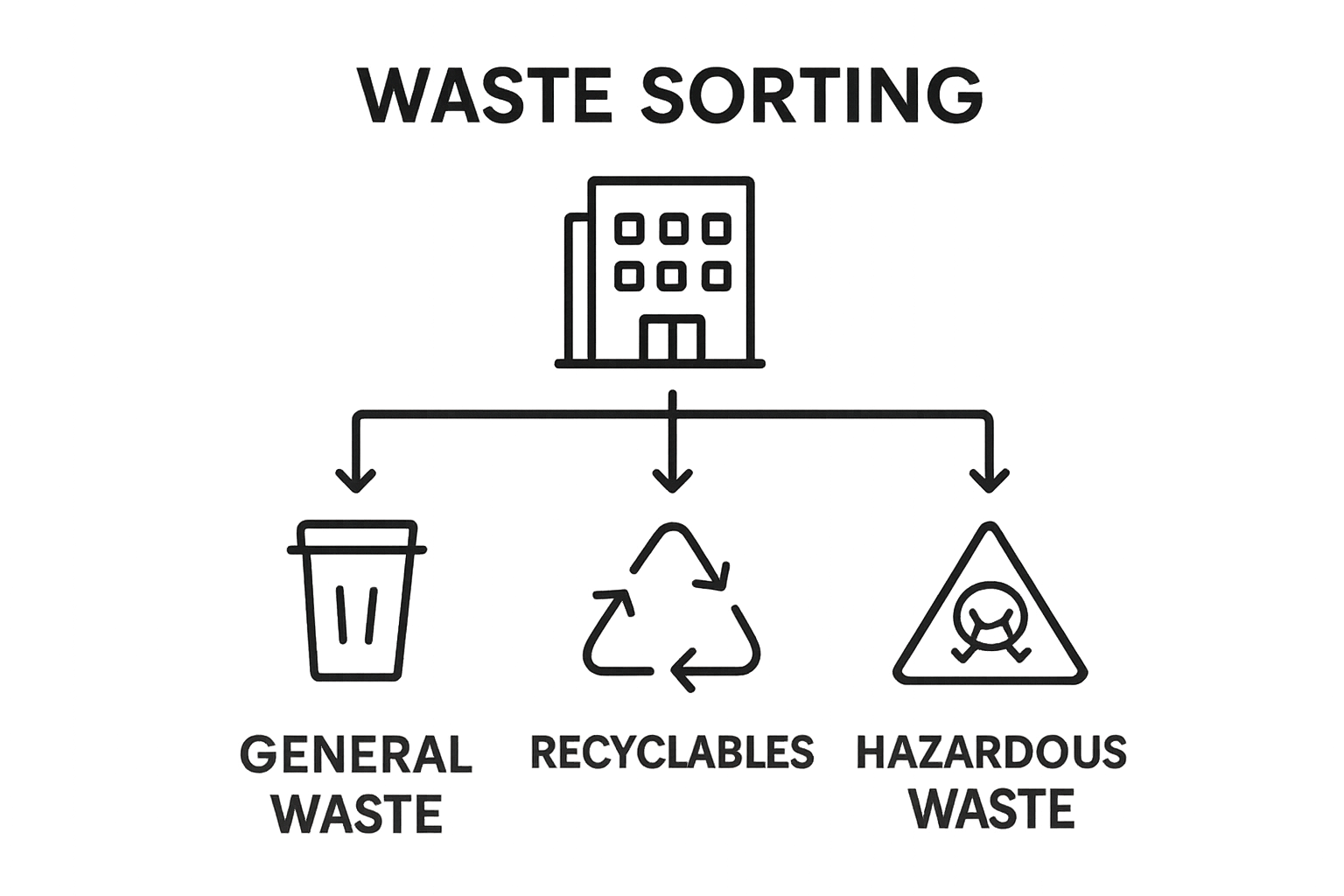
business compliance training

Real-World Implications of Mishandling Confidential Waste

Confidential waste mismanagement represents a significant risk landscape for businesses in Sunderland and across the United Kingdom, with potential consequences that extend far beyond mere regulatory penalties. The repercussions of inadequate waste disposal practices can fundamentally compromise an organisation’s operational integrity, financial stability, and public reputation.

The financial ramifications of confidential waste mishandling are substantial and multifaceted. Under current GDPR regulations, organisations can face catastrophic financial penalties that could potentially devastate business operations:

  • Fines up to £17.5 million or 4% of global annual turnover
  • Mandatory compensation payments to affected individuals
  • Significant legal prosecution costs
  • Potential long-term litigation expenses
  • Extended regulatory investigations

These financial risks transform confidential waste management from an administrative task into a critical strategic priority for businesses across the North East region.

Reputational and Operational Risks

Beyond immediate financial implications, mishandling confidential waste can inflict profound and potentially irreparable damage to an organisation’s reputation. According to Information Commissioner’s Office Guidelines, businesses that fail to protect sensitive information risk losing client trust and market credibility. Discover more about the critical aspects of confidential waste management to understand the comprehensive implications.

Key reputational risks include:

  • Permanent loss of client confidence
  • Negative media coverage
  • Potential public relations nightmares
  • Reduced competitive positioning
  • Long-term brand reputation erosion

For businesses in Sunderland and surrounding areas, understanding these implications is not merely an academic exercise but a fundamental business survival strategy. The potential for data breaches through improper waste disposal represents a critical vulnerability that can unravel years of carefully built organisational trust in moments of regulatory non-compliance.

The following table outlines the main financial and reputational consequences businesses may face if they mishandle confidential waste, highlighting the respective impacts for easy reference.

Category Consequence Potential Impact
Financial Fines up to £17.5 million or 4% of global annual turnover Severe monetary losses and business instability
Financial Legal prosecution costs and litigation expenses Increased operational costs
Financial Compensation payments to affected individuals Direct financial burdens
Financial Extended regulatory investigations Disruption and resource diversion
Reputational Permanent loss of client confidence Damage to customer relationships
Reputational Negative media coverage and PR crises Harmed public image and brand erosion
Reputational Reduced competitive positioning Loss of trust and decreased market share

Take Control of Confidential Waste and GDPR Compliance in Sunderland

Are you concerned about meeting GDPR obligations and protecting your business from costly data breaches? Many Sunderland businesses struggle to ensure secure disposal of sensitive information, risking financial penalties and loss of client trust. Your organisation cannot afford gaps in compliance with confidential waste handling—a single mistake could lead to severe legal problems and permanent reputational damage. See the latest updates, tips, and practical solutions in our confidential waste category to stay fully informed and compliant.

https://venturewaste.co.uk

Now is the time to act. Venture Waste Management offers clear, compliant, and reliable confidential waste solutions for businesses of all sizes. With straightforward booking, certified document destruction, and experienced support, we take the worry out of waste compliance. Visit Venture Waste Management today and learn how easy it is to protect your business, reputation, and legal standing. Need more regulatory guidance? Explore our regulation insights for practical help on maintaining UK business compliance.

Frequently Asked Questions

What is confidential waste?

Confidential waste refers to materials that contain sensitive information, such as personal identification details, financial records, medical documentation, and business strategies that require secure handling and destruction to prevent data breaches.

Why is proper confidential waste disposal important for businesses?

Proper confidential waste disposal is essential for compliance with legal regulations, such as the GDPR. Failing to manage confidential waste can lead to financial penalties, legal actions, and damage to an organisation’s reputation.

Businesses must comply with regulations including the Data Protection Act 2018 and GDPR, which mandate secure destruction methods, documentation of disposal processes, and maintaining a chain of custody for all sensitive information.

How can businesses ensure compliance with GDPR in waste management?

Businesses can ensure GDPR compliance by implementing secure disposal protocols, conducting regular staff training on data protection, maintaining detailed audit trails, and using certified destruction methods for confidential materials.

confidential data destruction

Understanding Confidential Data Destruction: What, Why, and How

Every business handles sensitive information, from hard drives full of client data to stacks of personal paperwork waiting in filing cabinets. You might assume simply deleting files or shredding paper does the trick. Yet, regulations can impose fines up to £17.5 million or 4 percent of global annual turnover for improper data disposal and that is only part of the risk. There is far more at stake and the real impact of confidential data destruction reaches well beyond deleting and shredding.

Table of Contents

Quick Summary

Takeaway Explanation
Confidential data destruction is essential for safeguarding sensitive information Properly destroying confidential data prevents unauthorized access and protects against data breaches and legal penalties.
Use specialized techniques for effective data destruction Techniques like overwriting and physical shredding ensure that data cannot be recovered after destruction.
Compliance with data protection regulations is mandatory Adhering to laws like GDPR and the Data Protection Act is critical to avoid significant fines and legal repercussions.
Implement tailored protocols for different industries Sector-specific destruction methods are necessary to address unique data handling needs effectively.
Training staff is crucial for effective data protection Ensuring employees understand proper procedures for data disposal can significantly reduce organizational vulnerabilities.

What is Confidential Data Destruction?

Confidential data destruction represents a comprehensive security process designed to permanently eliminate sensitive information from physical and digital storage mediums, ensuring that data cannot be recovered or accessed by unauthorized parties. This critical practice protects organizations from potential data breaches, legal complications, and reputational damage.

The Core Definition

Confidential data destruction involves systematically rendering data unreadable and irretrievable through various specialized techniques. Unlike simple deletion, which merely removes file references, true confidential data destruction physically or digitally obliterates information so that reconstruction becomes mathematically impossible. According to the UK Ministry of Justice data destruction guidelines, this process applies to multiple storage formats including:

  • Hard drives and solid-state drives
  • Paper documents
  • USB drives and external storage devices
  • Backup tapes and optical media
  • Cloud storage repositories

Strategic Importance for Organizations

For businesses across Newcastle, Durham, and the broader North East region, confidential data destruction is not merely a technical procedure but a legal and ethical imperative. Organizations handling personal, financial, medical, or proprietary information must implement robust destruction protocols to comply with data protection regulations.

The process becomes particularly crucial when considering the potential consequences of improper data handling. A single overlooked document or improperly wiped digital storage device could expose an organization to significant risks such as:

  • Financial penalties from regulatory bodies
  • Reputational damage and loss of client trust
  • Legal liability for compromised personal information
  • Potential industrial espionage risks

Businesses seeking comprehensive guidance can explore our detailed confidential waste management resources to develop robust data destruction strategies tailored to their specific operational requirements.

Why Confidential Data Destruction Matters for Businesses

Confidential data destruction transcends simple information management, representing a critical strategic safeguard for modern businesses navigating increasingly complex regulatory landscapes and cybersecurity challenges. The imperative extends far beyond technical compliance, touching core aspects of organizational integrity, reputation management, and legal accountability.

In the United Kingdom, businesses face stringent data protection regulations that mandate comprehensive approaches to information disposal. The General Data Protection Regulation (GDPR) and Data Protection Act 2018 establish clear expectations for how organizations must handle sensitive data throughout its lifecycle. Research from the UK Parliament’s Public Accounts Committee emphasizes that improper data disposal can result in significant legal and financial consequences, including:

  • Substantial monetary penalties of up to £17.5 million or 4% of global annual turnover
  • Mandatory public disclosure of data breaches
  • Potential criminal investigations and prosecutions
  • Permanent reputational damage

Protecting Organizational Vulnerabilities

Beyond regulatory requirements, confidential data destruction serves as a critical defence mechanism against multifaceted security threats. Businesses in Newcastle, Durham, and across the North East region face increasing risks from sophisticated cyber criminals and industrial espionage actors who can reconstruct seemingly deleted information. Proper data destruction prevents unauthorized access by ensuring that sensitive materials are permanently and irrecoverably eliminated.

Key vulnerabilities that confidential data destruction mitigates include:

  • Intellectual property theft
  • Corporate identity fraud
  • Competitive intelligence gathering
  • Potential blackmail or extortion scenarios

Businesses looking to develop robust information security strategies can explore our comprehensive confidential waste management guide to understand best practices in data protection and destruction.

How Confidential Data Destruction Works: Key Concepts

Confidential data destruction represents a sophisticated technological and procedural approach to permanently eliminating sensitive information across multiple storage platforms. The process involves intricate methodologies designed to ensure absolute data elimination, preventing even advanced forensic recovery techniques from reconstructing original information.

Digital Data Destruction Techniques

In the digital realm, confidential data destruction goes beyond simple file deletion. Sophisticated digital erasure methods include multiple approaches that render data mathematically unrecoverable. According to the University of Essex data management guidelines, these techniques typically encompass:

  • Overwriting: Replacing existing data with random binary patterns multiple times
  • Degaussing: Using powerful magnetic fields to scramble magnetic storage media
  • Cryptographic erasure: Destroying encryption keys that protect data repositories
  • Physical destruction: Physically shredding or pulverizing digital storage devices

Physical Media Destruction Protocols

Physical media destruction requires precise, validated processes that guarantee complete information elimination. Organizations in Newcastle and across the North East must implement rigorous protocols that address various storage formats. The destruction process involves systematically rendering physical documents and electronic media unreadable through methods such as:

Infographic showing three methods of confidential data destruction: shredding, degaussing, cryptographic erasure.

  • Cross-cut industrial shredding for paper documents
  • Professional hard drive and solid-state drive crushing
  • Comprehensive sanitization of magnetic tapes
  • Complete disintegration of optical media

Businesses seeking detailed insights can explore our comprehensive confidential document shredding resources to understand advanced destruction methodologies.

The ultimate goal of confidential data destruction transcends mere deletion: it represents a holistic security strategy designed to protect organizational integrity, prevent unauthorized information access, and maintain strict compliance with data protection regulations.

Below is a comparison of the principal digital and physical data destruction methods referenced in the article, showing their characteristics and typical usage contexts.

Method Type Key Characteristics Typical Usage Context
Overwriting Digital Replaces data with random patterns, repeated runs Hard drives, SSDs, digital archives
Degaussing Digital Uses strong magnetic fields to destroy data Magnetic tapes, hard drives
Cryptographic Erasure Digital Destroys encryption keys, rendering data inaccessible Encrypted drives, cloud storage
Physical Shredding Physical Mechanically shreds media into small fragments Paper, hard drives, tapes
Crushing Physical Uses force to irreparably damage storage devices Hard drives, SSDs
Disintegration Physical Reduces materials to fine particles Optical media, sensitive documents

Real-World Applications of Confidential Data Destruction

Confidential data destruction extends far beyond theoretical concepts, playing a critical role across numerous industries and organisational contexts. From healthcare and legal sectors to financial institutions and educational establishments, robust data destruction practices represent a fundamental component of comprehensive information security strategies.

Sector-Specific Implementation Scenarios

Confidential data destruction is not a one-size-fits-all approach, but rather a nuanced process tailored to specific industry requirements. According to the Information Commissioner’s Office guidance, different sectors demand unique destruction methodologies:

  • Healthcare: Destroying patient records with absolute precision
  • Financial Services: Eliminating transaction histories and sensitive client information
  • Legal Firms: Protecting privileged communications and case documentation
  • Educational Institutions: Managing student records and research data
  • Government Departments: Safeguarding classified and sensitive administrative documents

Practical Implementation across North East Businesses

Businesses operating in Newcastle, Durham, and surrounding regions must develop comprehensive data destruction protocols that address both digital and physical information repositories. This involves creating systematic approaches that:

  • Establish clear data retention and destruction timelines
  • Train staff on proper information handling procedures
  • Implement secure storage and destruction mechanisms
  • Document and verify the entire destruction process
  • Maintain audit trails for regulatory compliance

Businesses seeking advanced insights can explore our comprehensive confidential waste management resources to understand industry-specific implementation strategies.

data compliance destruction

Ultimately, confidential data destruction represents more than a technical requirement. It is a critical risk management strategy that protects organisational integrity, maintains client trust, and ensures compliance with evolving data protection regulations.

This table outlines the major industries highlighted in the article and the types of confidential data they commonly handle, illustrating why sector-specific destruction methods are essential.

Industry Sector Examples of Confidential Data Handled Importance of Tailored Destruction Methods
Healthcare Patient medical records, test results Prevents data breaches and protects patient confidentiality
Financial Services Transaction histories, client account information Guards against fraud and financial crime
Legal Firms Case files, privileged correspondence Ensures legal privilege and client confidentiality
Educational Institutions Student records, research data Protects sensitive personal and academic information
Government Departments Classified, administrative, and public records Maintains national and administrative data security

Confidential data destruction is not merely a technical process but a critical legal obligation embedded within complex regulatory frameworks. Businesses across the United Kingdom must navigate intricate legislative requirements that mandate precise, verifiable methods for eliminating sensitive information across digital and physical platforms.

Data protection regulations establish stringent guidelines for information management and destruction. According to the UK Government’s data protection guidance, businesses must adhere to comprehensive legal standards that encompass multiple legislative instruments:

  • UK GDPR: Establishing core data protection principles
  • Data Protection Act 2018: Defining specific UK implementation requirements
  • Environmental Protection Regulations: Addressing electronic waste disposal
  • Freedom of Information Act: Managing public sector information management
  • Industry-Specific Compliance Codes: Sector-dependent destruction protocols

Compliance and Enforcement Mechanisms

Businesses operating in Newcastle, Durham, and across the North East face significant legal and financial risks for non-compliance. The regulatory landscape demands meticulous documentation and verifiable destruction processes. Key enforcement mechanisms include:

  • Substantial financial penalties up to £17.5 million or 4% of global turnover
  • Mandatory reporting of data breaches
  • Potential criminal investigations for severe non-compliance
  • Reputational damage and loss of operational licenses
  • Mandatory external audits and compliance assessments

Businesses seeking comprehensive guidance can explore our detailed confidential document shredding resources to understand nuanced legal requirements.

Ultimately, legal compliance in confidential data destruction transcends simple regulatory adherence. It represents a fundamental commitment to protecting individual privacy, maintaining organisational integrity, and demonstrating responsible information management practices.

Secure Your Business with Professional Confidential Data Destruction

Are you struggling with the challenge of permanently erasing confidential information The risks of data breaches, regulatory fines and loss of customer trust are all too real as outlined throughout this article. Whether you need dependable destruction for digital devices or sensitive documents, your peace of mind depends on a solution that truly eliminates every trace.

Take control of your data protection journey by learning more about dedicated services on our confidential waste category page. Ensure you understand critical techniques such as secure shredding and hard drive destruction found in our hard drive destruction resource.

https://venturewaste.co.uk

Do not leave your organisation exposed to unnecessary risk. Visit Venture Waste Management today to arrange a compliant and hassle-free confidential data destruction service. Take advantage of our simple three-step booking process and safeguard your reputation, your clients and your legal compliance now.

Frequently Asked Questions

What is confidential data destruction?

Confidential data destruction is a comprehensive security process designed to permanently eliminate sensitive information from physical and digital storage mediums, ensuring that data cannot be recovered or accessed by unauthorised parties.

Why is confidential data destruction important for businesses?

Confidential data destruction is crucial for businesses to comply with data protection regulations, protect against data breaches, avoid legal liabilities, and maintain client trust. It serves as a key defence against the unauthorized access of sensitive information.

What methods are used for digital data destruction?

Digital data destruction techniques include overwriting data with random patterns, degaussing magnetic media, cryptographic erasure, and physical destruction of storage devices. Each method ensures that data is rendered irretrievable.

How does physical data destruction work?

Physical data destruction involves validated processes that guarantee complete information elimination. Techniques include cross-cut industrial shredding for paper documents, crushing hard drives, and disintegration of optical media, ensuring sensitive information is unreadable and irrecoverable.

business waste management challenges

Understanding Waste Management Challenges for Businesses

Business waste is not just about bins and rubbish removal, especially in the UK where commercial waste makes up nearly 19 percent of the total waste generated every year. You might expect waste management to be a straightforward tick-box exercise. The reality is far more complicated, with rules changing fast and costs quickly adding up, turning simple rubbish disposal into a major operational headache for firms trying to stay both legal and sustainable.

Table of Contents

Quick Summary

Takeaway Explanation
Businesses face complex waste management challenges Waste management involves compliance, environmental concerns, and economic pressures that require strategic planning.
Technology enhances waste management efficiency Advanced sorting, tracking systems, and analytics improve waste segregation and compliance for businesses.
Effective waste management boosts financial performance Implementing sustainable practices can lead to cost savings and potential revenue from recyclables.
Legal compliance is critical for operational success Understanding waste regulations is essential for avoiding penalties and ensuring responsible practices.
Real-world success stories demonstrate best practices Case studies show that innovative waste strategies lead to cost reduction and sustainable operations in various sectors.

What are Waste Management Challenges and Their Types?

Waste management challenges represent complex obstacles businesses encounter when attempting to responsibly dispose of and process their generated waste materials. These challenges extend far beyond simple rubbish collection, encompassing environmental, regulatory, economic, and operational dimensions that require strategic planning and comprehensive understanding.

Environmental and Regulatory Challenges

Businesses across the United Kingdom face increasingly stringent waste management regulations. According to the Environment Agency’s 2022 review, waste management challenges are multifaceted and require meticulous attention. Key environmental and regulatory challenges include:

  • Compliance with evolving waste segregation requirements
  • Reducing carbon footprint through sustainable waste practices
  • Meeting legal standards for waste disposal and recycling
  • Preventing potential environmental contamination

For businesses in Newcastle, Durham, and other North East industrial regions, these challenges demand proactive waste management strategies that align with national environmental guidelines.

Economic and Operational Waste Management Obstacles

Economic constraints present significant waste management challenges for businesses. The Local Government Association highlights that commercial waste constitutes approximately 19% of total waste in the UK, representing substantial economic implications. These challenges manifest through:

  • High waste disposal and recycling costs
  • Investment requirements for advanced waste management technologies
  • Training personnel in proper waste handling procedures
  • Managing waste streams across diverse business operations

Businesses must develop robust waste management systems that balance economic efficiency with environmental responsibility. Our comprehensive guide on waste management solutions can help organisations navigate these complex challenges effectively.

Ultimately, understanding and addressing these waste management challenges requires a holistic approach that integrates legal compliance, environmental stewardship, and strategic operational planning.

The following table outlines the key categories of waste management challenges that UK businesses face, summarising environmental/regulatory and economic/operational obstacles for easier comparison.

Challenge Category Description Example Impacts
Environmental & Regulatory Compliance with changing laws, reducing carbon footprint, ensuring legal disposal Increased legal scrutiny, potential contamination, penalties
Economic & Operational Managing costs, technology investment, staff training, handling diverse waste streams Rising waste collection costs, need for specialist equipment

Why Effective Waste Management is Crucial for Businesses?

Effective waste management transcends mere regulatory compliance. It represents a strategic approach that directly impacts a company’s operational efficiency, financial performance, environmental responsibility, and corporate reputation. Businesses that prioritise comprehensive waste management strategies gain significant competitive advantages in an increasingly sustainability-focused marketplace.

Financial and Operational Benefits

Implementing robust waste management practices offers substantial economic advantages for organisations. According to research from WRAP UK, businesses can potentially reduce operational costs by up to 20% through systematic waste reduction and recycling strategies. These financial benefits materialise through:

  • Minimising waste disposal expenses
  • Reducing raw material procurement costs
  • Creating potential revenue streams from recyclable materials
  • Improving overall operational efficiency

For companies in North East England, such as those in industrial zones around Newcastle and Sunderland, these economic incentives make waste management a critical business consideration.

Environmental and Reputational Impact

Beyond financial considerations, effective waste management plays a pivotal role in environmental stewardship and corporate reputation. Modern consumers and stakeholders increasingly evaluate businesses based on their environmental credentials. Sustainable waste management practices demonstrate corporate social responsibility and can significantly enhance brand perception.

Businesses that proactively manage their waste streams signal a commitment to environmental protection, which can attract environmentally conscious customers and investors. Learn more about cost-effective waste management strategies to align economic and environmental objectives.

Ultimately, effective waste management is not just an operational necessity but a strategic opportunity for businesses to differentiate themselves, reduce costs, and contribute positively to environmental sustainability.

This table highlights the principal benefits that effective waste management delivers for businesses, covering both financial/operational and environmental/reputational aspects.

Benefit Type Core Advantages
Financial & Operational Reduced disposal costs, lower raw material expenses, revenue from recyclables, improved operational flow
Environmental & Reputational Enhanced corporate image, demonstrates social responsibility, attracts eco-conscious stakeholders

Infographic illustrating business financial and environmental benefits of waste management

How Waste Management Technologies Address Challenges

Modern waste management technologies represent sophisticated solutions designed to transform traditional waste handling approaches, offering businesses innovative methods to address complex environmental and operational challenges. These technological advancements provide comprehensive strategies for more efficient, sustainable, and cost-effective waste management processes.

Advanced Sorting and Recycling Technologies

Cutting-edge waste management technologies have revolutionised how businesses process and recycle materials. According to DEFRA’s technological innovation report, emerging technologies enable more precise waste segregation and recycling capabilities. These sophisticated systems include:

  • Artificial intelligence-powered sorting mechanisms
  • Optical scanning technologies for material identification
  • Automated waste segregation equipment
  • Advanced sensor-based waste stream analysis

Particularly in industrial regions like Newcastle and Durham, these technologies enable businesses to dramatically improve their waste management efficiency and environmental compliance.

Digital Waste Tracking and Management Systems

Digital platforms have transformed waste management tracking and reporting, providing businesses with unprecedented insights into their waste generation and disposal processes. Modern waste management technologies offer real-time monitoring, comprehensive data analytics, and precise tracking mechanisms that help organisations:

  • Identify waste reduction opportunities
  • Monitor compliance with environmental regulations
  • Generate detailed sustainability reports
  • Implement strategic waste minimisation initiatives

Our comprehensive waste management solutions demonstrate how technology can streamline complex waste management processes.

Technological innovations continue to push the boundaries of waste management, offering businesses increasingly sophisticated tools to address environmental challenges while maintaining operational efficiency and economic viability.

This table provides an overview of the main technological innovations discussed in the article that address business waste management challenges, detailing their functionality and impact.

Technology Type Functionality Impact on Business
Advanced Sorting & Recycling Tech AI-powered sorting, optical scanning, sensor-based analysis Improved segregation & compliance
Digital Tracking & Management Systems Real-time waste monitoring, data analytics, sustainability reporting Enhanced transparency & efficiency

industrial waste technology

Key Concepts in Waste Legislation and Compliance

Waste legislation represents a complex framework of regulations designed to ensure responsible waste management, environmental protection, and sustainable business practices. Understanding these legal requirements is crucial for organisations seeking to maintain compliance and minimise potential environmental and financial risks.

Businesses operate within a rigorous legal landscape governing waste disposal and management. According to the UK Environment Act 2021, organisations have specific statutory obligations that extend beyond simple waste disposal. Key legal responsibilities include:

  • Proper waste segregation and classification
  • Maintaining accurate waste transfer documentation
  • Ensuring waste is handled by licensed carriers
  • Implementing robust waste tracking mechanisms

For businesses in industrial regions like Newcastle and Durham, understanding these legal nuances is essential to avoiding potential regulatory penalties and environmental infractions.

The table below summarises key legal responsibilities for waste management that UK businesses must observe to ensure compliance and avoid penalties.

Legal Responsibility Requirement
Waste Segregation & Classification Correctly sort and classify waste before disposal
Documentation Maintain accurate waste transfer records
Licensed Handling Use accredited waste carriers
Tracking Systems Implement robust mechanisms to trace waste journeys

Waste Duty of Care and Compliance Requirements

The Waste Duty of Care represents a critical legal concept that places direct responsibility on businesses for their waste management practices. This principle mandates that organisations must:

  • Prevent waste generation where possible
  • Ensure safe and responsible waste transportation

Explore our comprehensive guide to waste compliance to understand the intricate details of meeting these regulatory standards.

Companies must adopt a proactive approach to waste legislation, recognising that compliance is not merely a legal obligation but a fundamental aspect of responsible business practice and environmental stewardship.

Real-world Examples of Businesses Overcoming Waste Challenges

Successful waste management strategies demonstrate how businesses can transform environmental challenges into opportunities for innovation, cost reduction, and sustainable practice. These real-world examples illustrate the practical approaches organisations are adopting to address complex waste management issues.

Industrial Sector Waste Transformation

Industrial businesses have pioneered remarkable waste management solutions that significantly reduce environmental impact. According to the National Industrial Symbiosis Programme, innovative waste exchange programmes have enabled companies to turn waste materials into valuable resources. Key transformative strategies include:

  • Implementing cross-industry waste material exchanges
  • Developing circular economy approaches
  • Creating secondary material markets
  • Reducing virgin resource consumption

In North East industrial regions like Newcastle and Durham, manufacturing companies have successfully implemented these strategies to minimise waste and generate additional revenue streams.

Hospitality Sector Waste Management Innovations

The hospitality industry has demonstrated remarkable progress in waste management. Businesses like Claridge’s Hotel have developed comprehensive waste reduction strategies that not only minimise environmental impact but also generate significant energy savings. These approaches typically involve:

  • Implementing advanced waste segregation systems

Discover practical waste reduction strategies for SMEs to understand how businesses can effectively tackle waste management challenges.

These real-world examples highlight that effective waste management is not just an environmental necessity but a strategic opportunity for businesses to innovate, reduce costs, and demonstrate corporate responsibility.

This table presents examples of successful strategies from both the industrial and hospitality sectors, showing how innovation in waste management leads to business and environmental benefits.

Sector Innovation/Strategy Impact
Industrial Waste material exchanges, circular economy Revenue generation, reduced resource use, lower landfill
Hospitality Advanced segregation, energy-saving initiatives Minimised waste, reduced costs, improved sustainability

Take Control of Your Waste Management Challenges Today

Are rising compliance pressures, unpredictable waste costs, and the need for streamlined operations holding your business back? If navigating waste management regulations, efficient collection, and adopting the right technologies feel like constant hurdles, you are not alone. Many companies across the UK face similar obstacles, from ensuring legal compliance to improving recycling and cost-effectiveness. Discover how our Waste Collection Process in the UK for Businesses 2025 can make these challenges manageable while keeping your operations compliant and sustainable.

https://venturewaste.co.uk

Now is the best time to future-proof your business with tailored waste solutions from Venture Waste Management. Our platform offers a simple booking process, comprehensive services, and expert support to solve your specific issues. Visit Venture Waste Management today or explore how the Waste Collection Network in the UK Serves Businesses in 2025 to see the difference a professional approach can make. Do not let waste management challenges slow your growth—act now to secure peace of mind and maximum efficiency.

Frequently Asked Questions

What are the main waste management challenges businesses face?

Businesses face environmental, regulatory, economic, and operational challenges, including compliance with regulations, high disposal costs, and the need for efficient waste segregation.

How can businesses improve their waste management practices?

Businesses can enhance waste management by adopting advanced sorting technologies, implementing digital tracking systems, and developing comprehensive waste reduction strategies that align with sustainability goals.

Why is effective waste management important for a company’s reputation?

Effective waste management demonstrates corporate social responsibility, which can enhance brand perception and attract environmentally conscious consumers and investors.

What technologies are used in modern waste management?

Modern waste management employs artificial intelligence for sorting, digital platforms for tracking waste, and automated segregation systems, which improve efficiency and compliance with environmental regulations.

business waste responsibilities

Understanding Business Waste Responsibilities: A Clear Guide

Business waste is more than just rubbish to be carted off. UK businesses can save up to £3 billion each year by rethinking how they manage waste. Most people see waste as a headache or extra paperwork but smart companies in places like Newcastle and Durham treat it as a way to stay ahead and show true environmental leadership.

Table of Contents

Quick Summary

Takeaway Explanation
Understand legal waste responsibilities Businesses must comply with UK waste management laws to avoid penalties and protect public health.
Implement waste reduction strategies Reducing waste at the source is essential for cost savings and environmental preservation.
Train staff on waste handling Educating employees ensures proper waste management and minimizes environmental impact.
Categorise waste streams effectively Each type of waste requires specific management strategies to ensure regulatory compliance.
Engage certified waste management providers Professional waste services can enhance compliance and streamline disposal processes.

Defining Business Waste Responsibilities

Business waste responsibilities encompass a comprehensive set of legal and ethical obligations that organisations must fulfil when managing their waste disposal processes. At its core, these responsibilities revolve around ensuring environmentally responsible, legally compliant waste management strategies that minimise environmental impact and protect public health.

Under UK legislation, businesses are legally required to manage their waste systematically and safely. According to the UK Government’s Waste Duty of Care Code of Practice, organisations must adhere to several critical principles:

  • Prevent waste generation wherever possible
  • Ensure safe storage and segregation of different waste types
  • Use registered waste carriers for transportation
  • Maintain accurate waste transfer documentation
  • Implement responsible disposal methods

Understanding Waste Management Obligations

Business waste responsibilities extend beyond mere disposal. They involve a strategic approach to waste management that considers environmental sustainability, legal compliance, and potential financial implications. Read our detailed guide on waste management for UK businesses to understand the comprehensive requirements.

Key considerations for businesses include:

  • Identifying and classifying different waste streams
  • Developing internal waste reduction strategies
  • Training staff on proper waste handling procedures
  • Maintaining accurate records of waste generation and disposal
  • Regularly reviewing and updating waste management practices

Businesses across various sectors in Newcastle, Durham, and other North East regions must recognise that waste management is not just a regulatory requirement but a critical component of corporate social responsibility.

By proactively managing waste, organisations can reduce environmental impact, potentially lower disposal costs, and demonstrate commitment to sustainable practices.

The Importance of Managing Business Waste

Effective business waste management goes far beyond mere regulatory compliance. It represents a critical strategic approach that intersects environmental responsibility, financial prudence, and organisational reputation. In the contemporary business landscape, waste management is no longer a peripheral concern but a fundamental operational consideration.

Environmental and Ecological Impact

Businesses play a pivotal role in environmental preservation through responsible waste management. By implementing robust waste reduction and recycling strategies, organisations can significantly minimise their ecological footprint. According to Environment Agency research, effective waste management contributes directly to national sustainability goals, helping the UK progress towards ambitious waste reduction targets.

Key environmental benefits include:

  • Reducing greenhouse gas emissions
  • Conserving natural resources
  • Minimising landfill usage
  • Protecting local ecosystems
  • Supporting circular economy principles

Financial and Operational Advantages

Waste management is not just an environmental imperative but also a significant financial strategy. Learn how UK businesses can save money on waste management by implementing efficient practices. Strategic waste reduction can lead to substantial cost savings through decreased disposal expenses, improved resource utilisation, and potential revenue from recyclable materials.

Businesses across Newcastle, Durham, and the broader North East region are increasingly recognising that comprehensive waste management provides multiple economic advantages. By treating waste as a resource rather than a cost centre, organisations can transform potential environmental liabilities into opportunities for innovation and efficiency.

Moreover, proactive waste management enhances corporate reputation, demonstrating a commitment to sustainable practices that resonates with environmentally conscious customers, investors, and stakeholders. In an era where corporate social responsibility is paramount, effective waste management is not just a choice but a strategic imperative for forward-thinking businesses.

Types of Business Waste and Their Management

Businesses generate diverse waste streams, each requiring specific management strategies to ensure environmental compliance, workplace safety, and regulatory adherence. Understanding the nuanced categorisation of business waste is fundamental to developing comprehensive waste management protocols.

Categorising Business Waste Types

Business waste can be broadly classified into several critical categories, each demanding unique handling and disposal approaches. According to UK Government waste management guidelines, these categories include:

General, Hazardous, and Recyclable business waste types visualized side by side

  • General Waste: Non-hazardous materials typically from office and commercial environments
  • Hazardous Waste: Materials posing potential risks to human health or environment
  • Recyclable Waste: Materials that can be reprocessed and reused
  • Electronic Waste (WEEE): Discarded electrical and electronic equipment
  • Clinical/Medical Waste: Specialised waste from healthcare and research facilities

Management Strategies for Different Waste Streams

Explore our comprehensive guide on differentiating general waste and recycling to understand optimal waste segregation techniques. Effective waste management requires businesses to implement tailored strategies that address the specific characteristics of each waste type.

Businesses in Newcastle, Durham, and across the North East must recognise that improper waste management can result in significant environmental, legal, and financial consequences. Each waste stream demands a unique approach:

  • Hazardous waste requires specialised containment and licensed disposal
  • Recyclable materials need careful sorting and clean handling
  • Electronic waste demands secure destruction and responsible recycling
  • Clinical waste necessitates stringent safety protocols

By developing comprehensive waste management systems that recognise the distinct nature of different waste streams, businesses can minimise environmental impact, reduce disposal costs, and demonstrate corporate responsibility. The key lies in understanding, classifying, and implementing targeted waste management strategies that align with regulatory requirements and sustainable practices.

Below is a table summarising the main categories of business waste discussed in the article and the key management strategies required for each type.

Waste Category Description Key Management Strategy
General Waste Non-hazardous materials from offices and commercial premises Standard disposal or recycling where possible
Hazardous Waste Poses potential risk to health or environment Specialised containment and licensed disposal
Recyclable Waste Materials suitable for reprocessing and reuse Careful sorting and clean handling
Electronic Waste (WEEE) Discarded electrical/electronic items Secure destruction and responsible recycling
Clinical/Medical Waste Specialised waste from healthcare and research Stringent safety protocols and disposal

Business waste management is not merely an operational consideration but a legal requirement with significant implications for organisational compliance, environmental responsibility, and potential financial penalties. Understanding the intricate legal landscape surrounding waste management is crucial for businesses across all sectors.

Statutory Requirements and Regulatory Framework

According to UK Government waste management guidelines, businesses have comprehensive legal obligations that extend far beyond simple disposal. The Environmental Protection Act 1990 and Waste (England and Wales) Regulations 2011 establish a robust framework of legal responsibilities that businesses must rigorously follow.

Key statutory requirements include:

  • Minimising waste generation through prevention and reduction strategies
  • Implementing proper waste segregation and storage protocols
  • Maintaining accurate waste transfer documentation
  • Ensuring waste is transported by licensed carriers
  • Demonstrating a clear audit trail of waste disposal

Compliance and Risk Management

Learn more about confidential waste disposal practices for businesses to understand the nuanced legal landscape. Non-compliance can result in substantial financial penalties, legal repercussions, and potential reputational damage.

Businesses in Newcastle, Durham, and across the North East must recognise that waste management is a dynamic regulatory environment. Best practices demand:

  • Regular staff training on waste management protocols
  • Comprehensive internal audit processes
  • Engagement with certified waste management providers
  • Continuous monitoring of regulatory changes
  • Proactive adaptation of waste management strategies

The legal framework surrounding business waste is designed to protect environmental resources, promote sustainable practices, and hold organisations accountable for their ecological impact. By understanding and implementing these obligations, businesses can transform waste management from a potential liability into a strategic opportunity for environmental stewardship and corporate responsibility.

The following table highlights the core statutory requirements established by UK legislation for business waste management, clarifying each main obligation and its purpose.

Statutory Requirement Description Purpose
Waste minimisation Reduce waste generation through prevention strategies Lower environmental impact and disposal costs
Proper segregation and storage Separate and safely store different waste types Avoid contamination and legal breaches
Waste transfer documentation Maintain accurate records of all waste transfers Provide audit trail for compliance
Licensed waste transportation Use registered carriers for waste removal Ensure lawful and safe transport
Clear disposal audit trail Demonstrate how waste is disposed Ensure accountability and transparency

waste management best practices

Real-World Impacts of Effective Waste Management

Effective waste management transcends theoretical environmental principles, delivering tangible economic, social, and ecological benefits that fundamentally transform how businesses operate and contribute to sustainable development. The practical implications of strategic waste management extend far beyond regulatory compliance.

Economic Transformation and Resource Efficiency

According to UK Government research, businesses can achieve substantial economic advantages through intelligent waste management strategies. Implementing comprehensive waste reduction approaches can generate annual savings of up to 3 billion by redesigning product lifecycles and minimising resource consumption.

Key economic benefits include:

  • Reduced operational costs through waste minimisation
  • Enhanced resource utilisation and efficiency
  • Potential revenue generation from recyclable materials
  • Lower waste disposal and transportation expenses
  • Improved supply chain sustainability

Environmental and Social Impact

Explore strategies to save money on waste management and understand the broader implications of responsible waste practices. Businesses in Newcastle, Durham, and across the North East can significantly contribute to environmental preservation by adopting holistic waste management approaches.

Practical environmental impacts encompass:

  • Reduction of greenhouse gas emissions
  • Conservation of natural resources
  • Decreased landfill dependency
  • Protection of local ecosystems
  • Mitigation of climate change effects

The real-world impacts of effective waste management demonstrate that environmental responsibility and economic prosperity are not mutually exclusive. By viewing waste as a potential resource rather than a disposal problem, businesses can unlock innovative solutions that benefit their bottom line while contributing to a more sustainable future. This approach represents a paradigm shift from traditional linear economic models to a more circular, regenerative economic framework.

Ready to Take Control of Your Business Waste Responsibilities?

Feeling overwhelmed by the demands of legal compliance, safe waste handling, and effective record-keeping? Many UK businesses are unsure where to begin, especially when faced with complex regulations and the risk of heavy fines. But you do not have to navigate these challenges alone. Discover how our tailored services can simplify the entire process and keep your organisation on track. For step-by-step assistance, start with our helpful overview of the Waste Collection Process in the UK for Businesses 2025, designed to bring clarity to your legal obligations and best waste practices.

https://venturewaste.co.uk

Now is the moment to secure both environmental peace of mind and operational efficiency. Visit Venture Waste Management to access expert support, transparent service options, and a straightforward booking experience. If you want to see how the UK’s waste network can support your business further, our Waste Collection Network in UK Serves Businesses in 2025 page is a great resource. Make waste compliance an opportunity for your business instead of a burden. Arrange your solution today and protect your business for tomorrow.

Frequently Asked Questions

What are the key responsibilities of businesses regarding waste management?

Businesses are responsible for adhering to legal requirements which involve preventing waste generation, ensuring safe storage and segregation of waste types, using registered waste carriers for transportation, and maintaining accurate waste transfer documentation.

How can businesses minimise their environmental impact through waste management?

Businesses can minimise their environmental impact by implementing waste reduction strategies, recycling materials, and developing comprehensive waste management systems that align with sustainability goals and legal compliance.

What are the financial benefits of effective waste management for businesses?

Effective waste management can lead to substantial cost savings through reduced disposal expenses, improved resource utilisation, and potential revenue from recyclable materials, while also enhancing corporate reputation.

What types of waste do businesses need to manage?

Businesses generate several types of waste, including general waste, hazardous waste, recyclable waste, electronic waste (WEEE), and clinical/medical waste, each requiring specific management strategies to ensure compliance and safety.

waste management industry overview

Understanding the Waste Management Industry Overview

Everyone generates waste, whether at home or in business, and the pile keeps growing each year. Imagine this: the UK waste management sector enables the economy to save up to 3 billion annually simply by sorting and recycling more effectively. Most people think waste is just rubbish that gets carted away and forgotten. It turns out, though, that waste management is one of the most important drivers of business reputation, compliance, and even profitability across the country.

Table of Contents

Quick Summary

Takeaway Explanation
Waste management is essential for sustainability. It plays a key role in resource conservation, pollution reduction, and facilitating a circular economy.
Businesses must comply with strict regulations. Failure to manage waste properly can lead to significant financial penalties and legal repercussions.
Effective waste management enhances brand reputation. Sustainable practices signal corporate responsibility and can attract environmentally conscious customers and investors.
Innovative technologies transform waste into resources. Advanced processing methods, such as recycling and energy recovery, turn waste from a problem into economic opportunities.
Regular audits and training ensure compliance. Businesses should conduct audits and train staff to maintain adherence to waste management laws and improve operational efficiency.

What is the Waste Management Industry?

The waste management industry represents a complex and essential economic sector responsible for collecting, transporting, processing, and disposing of waste materials generated by businesses, households, and industrial operations across the United Kingdom. Our comprehensive guide on waste management definitions provides deeper insights into this critical infrastructure.

Core Functions and Operational Scope

At its fundamental level, the waste management industry encompasses a range of professional services and activities designed to handle different types of waste safely and sustainably. These activities include:

  • Waste collection from residential, commercial, and industrial sources
  • Sorting and segregation of different waste streams
  • Recycling and material recovery processes
  • Secure disposal of non-recyclable materials
  • Environmental compliance and regulatory management

The industry operates across multiple sectors, serving manufacturing, construction, healthcare, retail, and public services. In Newcastle, Leeds, Manchester, and other major urban centres, waste management companies play a crucial role in maintaining environmental hygiene and supporting circular economy principles.

Economic and Environmental Significance

Waste management is not merely a logistical operation but a critical environmental and economic function. According to UK Government statistical research, the sector contributes significantly to resource conservation, pollution reduction, and sustainable development.

The industry helps businesses and communities:

  • Reduce environmental pollution
  • Conserve natural resources through recycling
  • Minimise landfill waste
  • Comply with increasingly stringent environmental regulations
  • Transform waste into valuable secondary resources

Professional waste management providers ensure that different waste streams – including general waste, hazardous materials, electronic equipment, and recyclable resources – are handled according to strict legal and environmental standards. This approach not only protects the environment but also supports the UK’s transition towards a more sustainable, circular economy.

Why is Waste Management Important for Businesses?

Waste management represents a critical strategic function for businesses, extending far beyond mere regulatory compliance. Learn how UK businesses can optimise waste management costs to understand its comprehensive impact on organisational performance.

Businesses face significant legal and financial consequences for improper waste management. The UK government mandates strict regulations requiring companies to handle waste responsibly, with potential penalties including substantial fines and potential legal prosecution. According to government research, businesses can save up to 3 billion annually by implementing effective waste reduction and recycling strategies.

Key financial considerations include:

  • Reducing waste disposal costs
  • Minimising potential regulatory penalties
  • Creating potential revenue streams from recycled materials
  • Improving operational efficiency

Environmental and Reputational Benefits

Modern consumers and stakeholders increasingly evaluate businesses based on their environmental credentials. Effective waste management demonstrates corporate social responsibility, enhancing brand reputation and potentially attracting environmentally conscious customers and investors.

Businesses that prioritise sustainable waste management practices can:

  • Demonstrate environmental leadership
  • Reduce carbon footprint
  • Showcase commitment to circular economy principles
  • Differentiate themselves in competitive markets

In urban centres like Newcastle, Manchester, and Leeds, waste management has become a crucial indicator of a company’s commitment to sustainability. Professional waste management solutions help businesses transform potential environmental liabilities into strategic opportunities for innovation and responsible growth.

How Waste Management Works: Key Processes and Technologies

Learn our step-by-step waste management approach for businesses to understand the complex systems transforming waste handling across industries. Waste management is a sophisticated ecosystem of interconnected technologies and strategic processes designed to minimise environmental impact while maximising resource efficiency.

Waste Collection and Segregation

The initial phase of waste management involves comprehensive collection and meticulous segregation. Specialised vehicles and trained professionals collect different waste streams from businesses, ensuring immediate separation of recyclable, general, and hazardous materials. This critical first step determines the subsequent processing methods and potential for material recovery.

Key collection strategies include:

  • Colour coded waste containers
  • Dedicated collection schedules
  • On site sorting protocols
  • Digital tracking of waste streams
  • Compliance with environmental regulations

Processing and Transformation Technologies

According to UK Government energy recovery research, waste management encompasses advanced transformation technologies that convert waste into valuable resources. These technologies range from traditional mechanical processing to cutting edge thermal and biological treatment methods.

Advanced waste processing technologies include:

  • Mechanical recycling systems
  • Anaerobic digestion for organic waste
  • Thermal treatment and energy recovery
  • Chemical recycling processes
  • Gasification and pyrolysis technologies

In urban centres like Manchester, Newcastle, and Leeds, waste management companies are pioneering innovative approaches that transform waste from an environmental challenge into a potential economic opportunity. By implementing sophisticated sorting, processing, and recovery technologies, these organisations are creating sustainable solutions that reduce landfill dependency and support circular economy principles.

Understanding Different Types of Waste and Their Disposal

Learn about domestic waste types for UK businesses to comprehend the complex landscape of waste categorisation and disposal. Effective waste management begins with understanding the nuanced characteristics of different waste streams and their specific handling requirements.

Categorising Waste Streams

Waste is not a uniform substance but a complex mix of materials requiring specialised disposal strategies. According to UK government waste classification guidelines, waste can be categorised into several critical classifications that determine its treatment and disposal methods.

Primary waste categories include:

Visual classification of business waste streams

  • General waste
  • Recyclable materials
  • Hazardous waste
  • Clinical and medical waste
  • Construction and demolition waste
  • Electronic and electrical equipment waste
  • Organic and biodegradable waste

Disposal and Treatment Approaches

Each waste type demands a unique disposal approach designed to minimise environmental impact and maximise potential resource recovery. Businesses must implement targeted strategies that align with regulatory requirements and sustainable waste management principles.

Disposal methods vary significantly across waste types:

  • Recycling for paper, plastic, metal, and glass materials
  • Incineration with energy recovery for non recyclable waste
  • Anaerobic digestion for organic waste
  • Secure landfill for non recoverable materials
  • Specialised treatment for hazardous waste streams

In urban centres like Manchester, Newcastle, and Leeds, waste management companies are pioneering innovative approaches that transform complex waste challenges into sustainable solutions. By understanding the intricate characteristics of different waste types, businesses can develop more effective, environmentally responsible waste management strategies.

Below is a table outlining key waste categories and their typical disposal or treatment methods, helping businesses understand the appropriate strategies for different waste types.

Waste Category Description Common Disposal/Treatment Approach
General waste Non-recyclable, non-hazardous materials Landfill or energy recovery (incineration)
Recyclable materials Paper, plastics, glass, metals Mechanical recycling
Hazardous waste Chemicals, solvents, some industrial by-products Specialised secure treatment/disposal
Clinical and medical waste Healthcare waste (e.g., dressings, sharps) Sterilisation, incineration
Construction and demolition waste Rubble, timber, metals from building sites Recycling, landfill (for non-recoverables)
Electronic and electrical equipment Old computers, appliances, electronic devices Specialised recycling, dismantling
Organic and biodegradable waste Food and green waste Anaerobic digestion, composting

The Role of Legislation and Compliance in Waste Management

Discover the comprehensive steps to waste compliance for UK businesses and understand the critical legal framework governing waste management practices. Legislation serves as the fundamental backbone of responsible waste management, establishing clear guidelines and accountability mechanisms for businesses across various sectors.

According to UK government waste legislation guidelines, businesses have a statutory duty of care to manage waste responsibly. This comprehensive legal framework encompasses multiple regulations designed to protect environmental integrity and promote sustainable waste management practices.

Key legislative principles include:

  • Preventing waste generation
  • Minimising environmental pollution
  • Ensuring proper waste segregation
  • Maintaining accurate waste transfer documentation
  • Implementing responsible disposal methods

Compliance and Enforcement Mechanisms

Companies operating in the waste management sector must navigate a complex landscape of legal obligations. Non compliance can result in significant financial penalties, potential legal prosecution, and reputational damage. The regulatory environment demands businesses demonstrate proactive approaches to waste management that prioritise environmental protection and resource efficiency.

Critical compliance requirements encompass:

  • Regular waste audits
  • Comprehensive record keeping
  • Staff training on waste management protocols
  • Adherence to industry specific regulations
  • Continuous monitoring of waste streams

In urban centres like Manchester, Newcastle, and Leeds, waste management companies are developing sophisticated compliance strategies that go beyond mere legal requirements. By embedding environmental responsibility into their operational frameworks, these organisations are transforming legislative compliance from a regulatory obligation into a strategic opportunity for sustainable business practices.

This table presents a comparison of key compliance requirements for businesses managing waste, clarifying the primary responsibilities associated with legal and regulatory standards.

Compliance Requirement Purpose/Outcome
Regular waste audits Identify waste types, volumes, and process improvements
Comprehensive record keeping Ensure traceability and evidence for regulatory inspections
Staff training Promote awareness and adherence to waste protocols
Adherence to sector regulations Satisfy industry-specific waste handling rules
Continuous waste stream monitoring Maintain ongoing compliance and optimise processes

waste compliance business

Turn Your Waste Management Knowledge Into Real Results For Your Business

After exploring the complexity of the waste management industry and learning how regulatory compliance, waste segregation, and efficient disposal directly impact your business and reputation, it becomes clear that handling waste effectively is about more than just ticking boxes. Many businesses struggle with rising costs, strict regulations, and the need to prove their environmental responsibility. If you are ready to move from understanding these challenges to solving them, let us guide you. Discover how the Waste Collection Network in UK Serves Businesses by providing tailored solutions for all types of commercial waste.

https://venturewaste.co.uk

Choose to work with a partner that puts compliance, sustainability, and simplicity at the heart of your waste strategy. Join other UK businesses who trust Venture Waste Management for practical, legally compliant, and environmentally sound waste services. Take your next step now and experience a seamless waste collection process designed specifically for UK businesses.

Frequently Asked Questions

What is the waste management industry?

The waste management industry is responsible for the collection, transportation, processing, and disposal of waste materials from businesses, households, and industrial operations in the UK. It plays a crucial role in maintaining environmental hygiene and supports circular economy principles.

Why is waste management important for businesses?

Effective waste management is crucial for businesses as it helps reduce environmental pollution, minimises disposal costs, ensures compliance with regulations, and enhances corporate reputation. Implementing efficient waste strategies can also turn waste into potential revenue streams through recycling.

What are the core functions of waste management?

Core functions of waste management include waste collection and segregation, recycling and material recovery, secure disposal of non-recyclable materials, and managing compliance with environmental regulations. These processes ensure safe and sustainable handling of various waste types.

How do different types of waste affect disposal strategies?

Different types of waste require tailored disposal strategies. For example, recyclable materials are processed for reuse, organic waste is often managed through anaerobic digestion, while hazardous waste needs specialised treatment methods to ensure it is safely disposed of, protecting the environment.