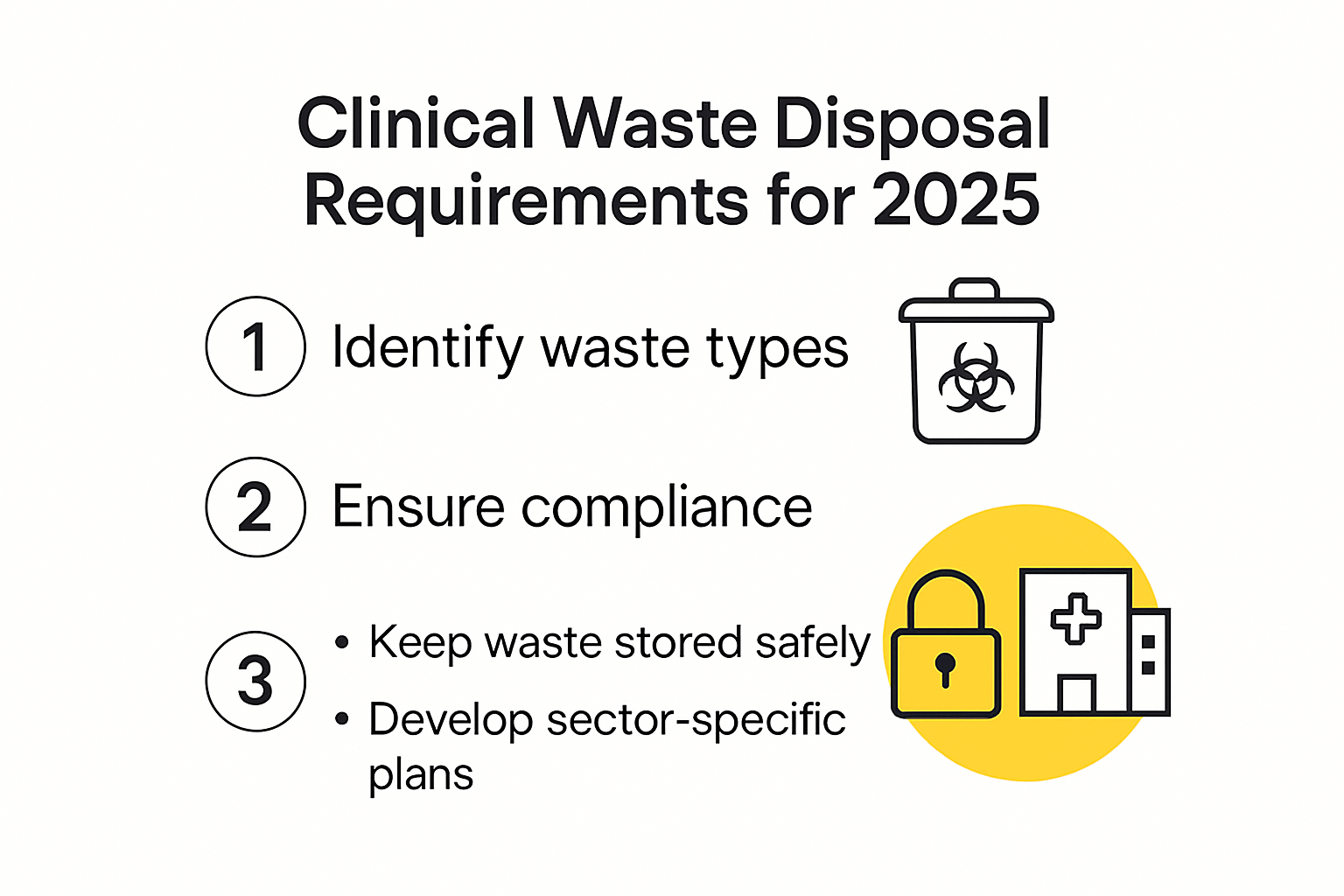
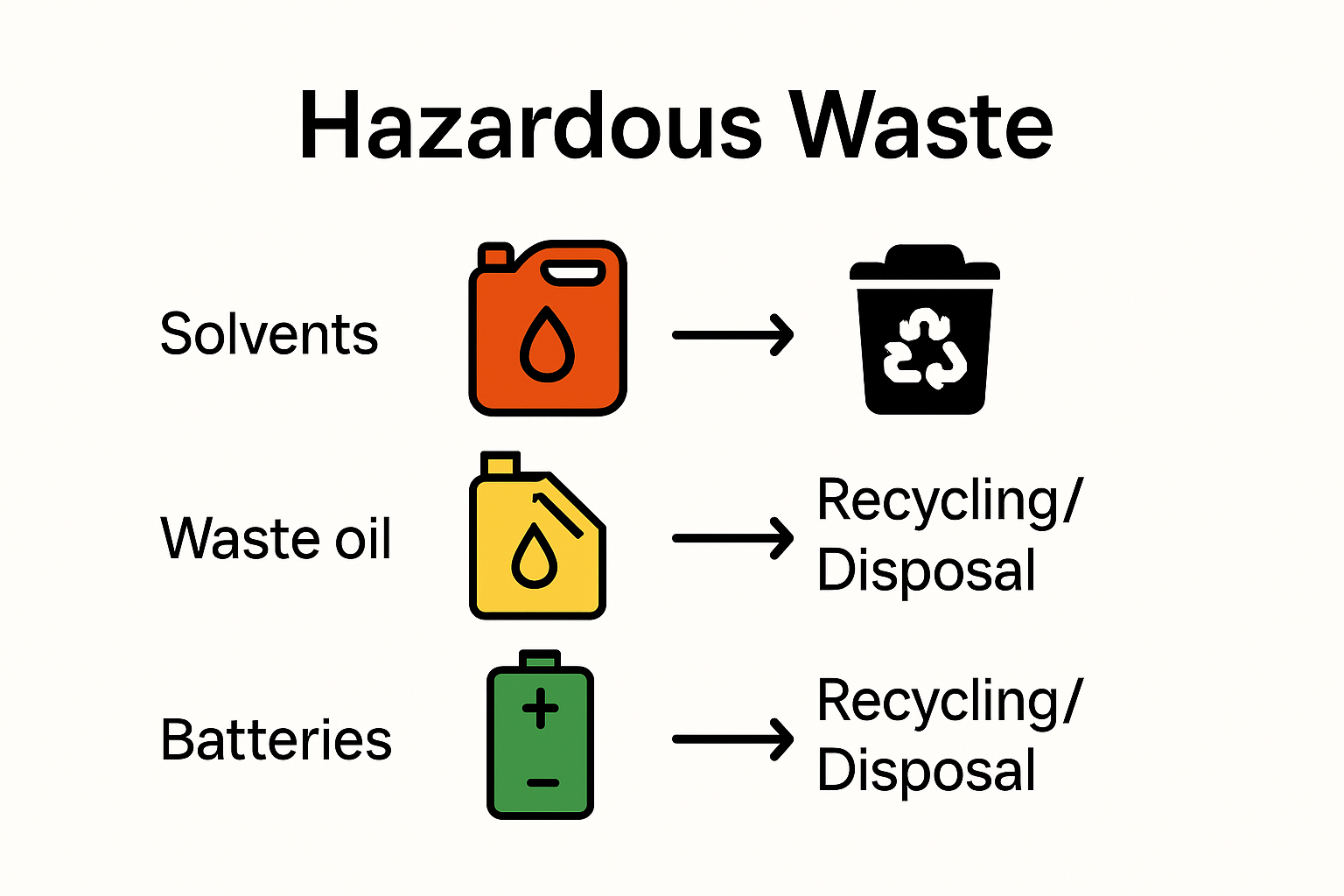
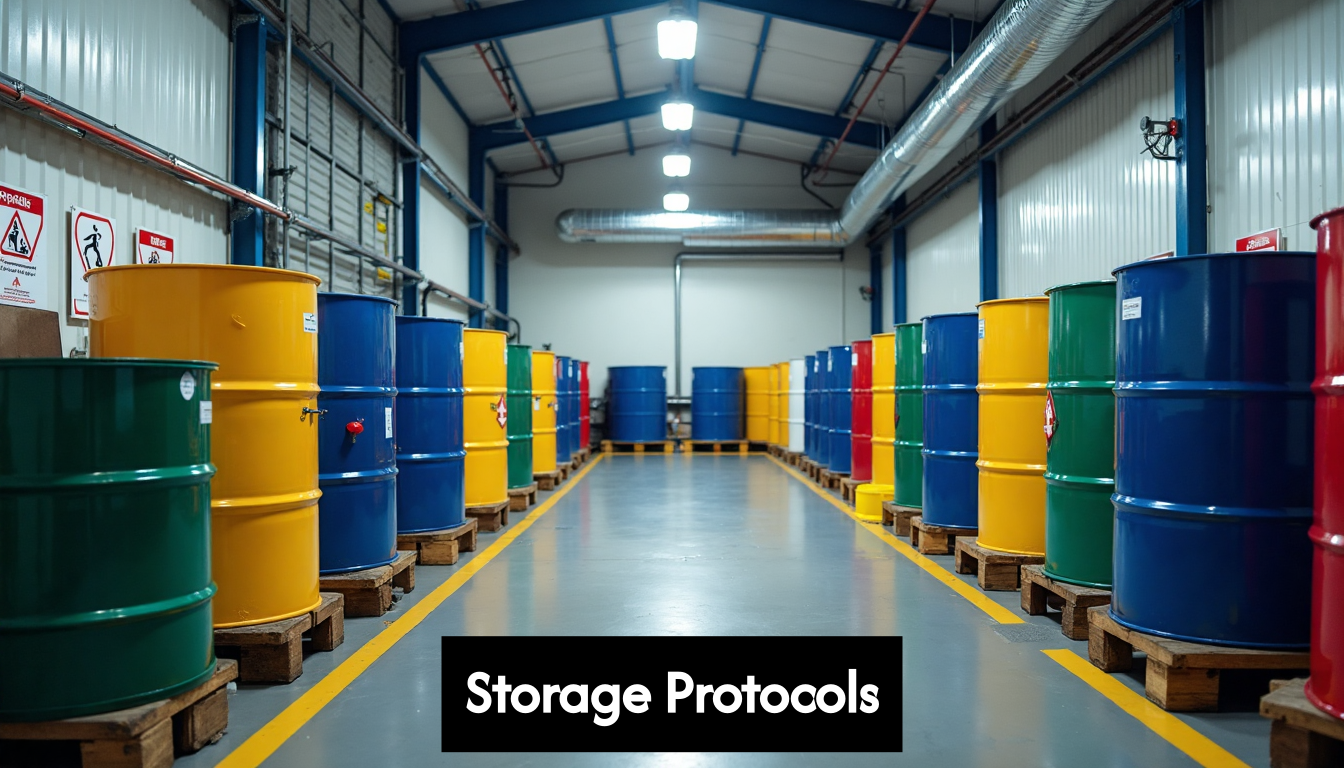
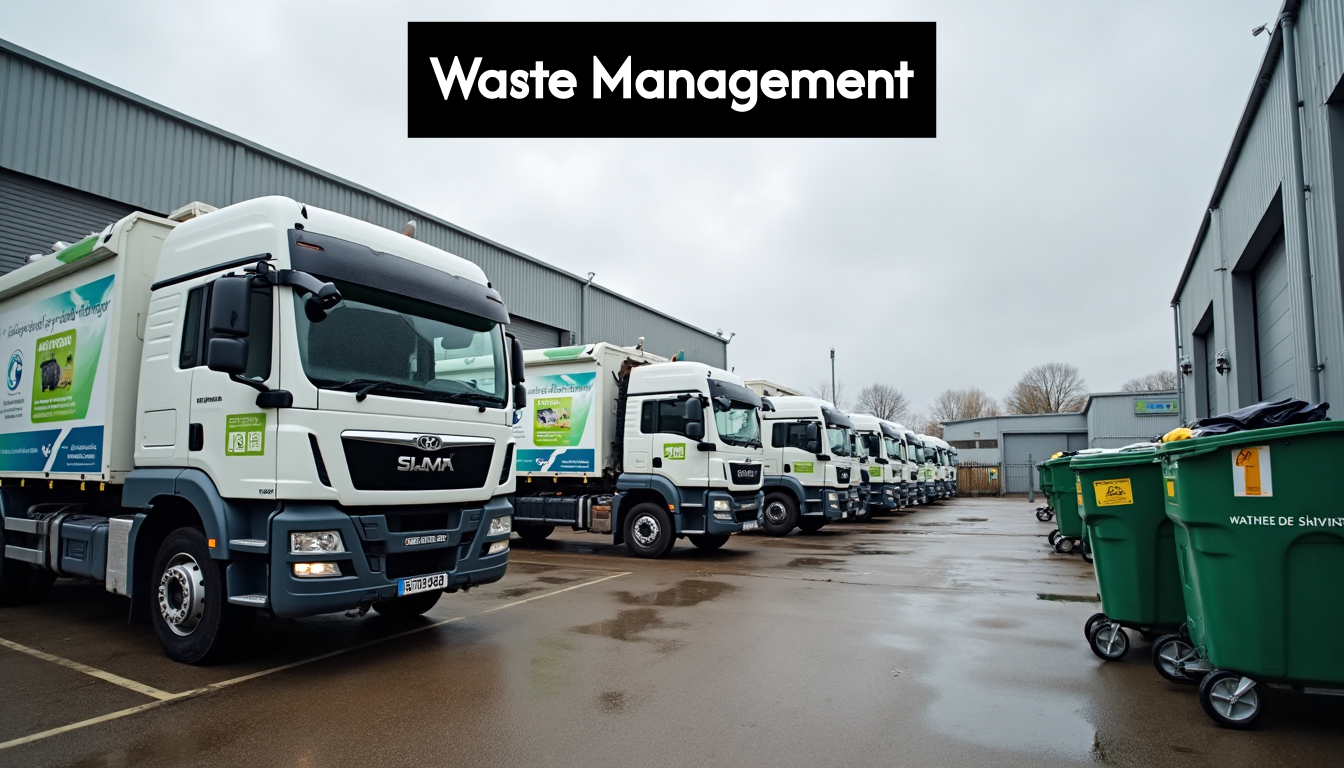
store hazardous waste

How to Store Hazardous Waste Safely in Your Business

Running a business means tackling hazardous waste the moment those warning labels appear in your workplace. You expect lab coats, locked cabinets and long chemical names to be the most challenging parts. But one slip with your containers or a poorly labelled drum can bring not just safety risks but also fines that often reach thousands of pounds for non-compliance. With so much at stake, the real key is knowing exactly how to store hazardous waste correctly before problems start.

Table of Contents

Quick Summary

Takeaway Explanation
Understand Hazardous Waste Categories Recognise the types of hazardous waste your business produces to ensure proper management.
Select Appropriate Containers Use containers that are chemically compatible and structurally sound to store hazardous materials safely.
Implement Comprehensive Labelling Clearly label all containers with contents, hazards, and handling instructions to communicate risks effectively.
Conduct Regular Safety Assessments Perform routine inspections of storage and handling practices to ensure compliance and safety at the workplace.
Develop Employee Training Programmes Provide thorough training for staff on handling hazardous materials, including emergency procedures and PPE usage.

Business owners must comprehend the complex landscape of hazardous waste management to protect their operations, employees, and the environment. Hazardous waste represents materials that pose substantial risks to human health and ecological systems due to their chemical, physical, or biological characteristics.

Defining Hazardous Waste Categories

Hazardous waste encompasses a broad range of materials that require specialised handling and disposal. These typically include chemical substances, toxic liquids, batteries, electronic equipment, medical waste, and industrial byproducts. According to the Environment Agency, businesses generating, storing, or transporting such materials must adhere to strict regulatory frameworks.

Key categories of hazardous waste include:

Here is a summary table outlining the main hazardous waste categories, their risks, and common examples. This helps clarify the distinctions discussed in the section.

Hazardous Waste Category Associated Risks Common Examples
Corrosive Materials Destroys tissue/metal via chemical action Strong acids, alkalis
Toxic Substances Severe health complications or death Pesticides, lead batteries
Flammable Waste Combustion/explosive reactions Solvents, oil-based paints
Reactive Compounds Violent reactions/toxic gas generation Certain laboratory chemicals
  • Corrosive Materials: Substances that can destroy living tissue or metal through chemical action
  • Toxic Substances: Chemicals that can cause severe health complications or death
  • Flammable Waste: Materials with potential for combustion or explosive reactions
  • Reactive Compounds: Substances that can generate toxic gases or cause violent chemical reactions

Businesses have substantial legal obligations when managing hazardous waste. The Resource Conservation and Recovery Act (RCRA) establishes a comprehensive ‘cradle-to-grave’ management system that tracks hazardous materials from generation through final disposal. This framework requires businesses to implement rigorous documentation, tracking, and reporting protocols.

Companies must also comply with multiple regulatory standards, including:

  • Proper waste classification and identification
  • Secure storage and containment procedures
  • Detailed record-keeping of waste generation and disposal
  • Regular employee training on hazardous material handling
  • Implementing emergency response protocols

Furthermore, businesses must understand their specific responsibilities based on waste volume and type. Small quantity generators have different requirements compared to large-scale industrial producers. For comprehensive guidance on managing these complex requirements, read our detailed hazardous waste disposal guide.

The Occupational Safety and Health Administration’s (OSHA) Process Safety Management standard mandates additional protective measures for businesses handling highly dangerous chemicals. These regulations aim to prevent accidental releases that could potentially harm employees and surrounding environments.

Non-compliance can result in significant financial penalties, legal consequences, and potential environmental damage. Businesses in regions like Newcastle, Durham, and other industrial centres in the North East must be particularly vigilant about maintaining stringent waste management standards to protect local ecosystems and community health.

By understanding these legal duties and implementing comprehensive hazardous waste management strategies, businesses can mitigate risks, protect their workforce, and contribute to environmental sustainability. Proactive management is not just a legal requirement but a critical component of responsible corporate citizenship.

Choosing Suitable Containers and Storage Areas

Selecting appropriate containers and storage areas is a critical aspect of hazardous waste management that directly impacts workplace safety, environmental protection, and regulatory compliance. Businesses must approach this task with meticulous attention to detail and comprehensive understanding of material compatibility and storage requirements.

Container Selection and Specifications

The choice of containers represents the first line of defence in hazardous waste management. According to OSHA regulations, containers must meet stringent criteria to ensure safe containment and prevent potential environmental contamination. Different hazardous materials require specific container characteristics based on their chemical properties and potential reactivity.

Key considerations for container selection include:

The following table organises key requirements for hazardous waste containers, making it easier to quickly reference the criteria mentioned.

Container Requirement Description
Material Compatibility Must resist the chemical properties of stored waste
Structural Integrity Free of corrosion, leaks, and physical damage
Proper Labelling Clearly mark contents, hazards, and handling instructions
Size and Design Appropriate volume and shape for specific waste type
  • Material Compatibility: Containers must be chemically resistant to the specific waste they will hold
  • Structural Integrity: Containers should be free from corrosion, damage, or leaks
  • Proper Labelling: Clear identification of contents, hazard classification, and handling instructions
  • Size and Design: Appropriate volume and shape for the specific waste type

Secure Storage Area Requirements

Storage areas for hazardous waste demand carefully planned environmental controls and safety measures. The Environment Agency emphasises the importance of creating designated spaces that minimise risk and prevent potential environmental incidents. Businesses must implement comprehensive strategies that address containment, ventilation, access control, and emergency response capabilities.

Critical storage area considerations include:

  • Robust secondary containment systems to capture potential spills
  • Temperature and humidity controlled environments
  • Restricted access with appropriate security measures
  • Proximity to emergency response equipment
  • Clear segregation of incompatible waste materials

For businesses in industrial regions like Newcastle and Durham, understanding local environmental regulations becomes crucial. Explore our comprehensive waste disposal guide to ensure full compliance with regional and national standards.

Emergency preparedness is another vital aspect of hazardous waste storage. Businesses must develop detailed contingency plans that outline specific protocols for potential spills, leaks, or accidental releases. This includes maintaining spill kits, providing staff training, and establishing clear communication channels for rapid response.

The Occupational Safety and Health Administration recommends regular inspections of storage containers and areas. These assessments should document container condition, check for potential degradation, verify proper sealing, and ensure ongoing compliance with safety standards.

Financial implications of improper hazardous waste storage can be substantial. Non-compliance can result in significant fines, legal penalties, and potential environmental remediation costs. By investing in high-quality containers and well-designed storage areas, businesses protect not only their financial interests but also their employees, local communities, and environmental ecosystems.

Ultimately, successful hazardous waste storage requires a holistic approach that combines technical knowledge, regulatory understanding, and proactive risk management. Businesses must view these requirements not as bureaucratic obstacles but as essential practices that safeguard human health and environmental sustainability.


Best Practices for Labelling, Segregation and Handling

Effective management of hazardous waste requires precise labelling, strategic segregation, and careful handling techniques that minimise potential risks to personnel and the environment. These practices form the cornerstone of responsible waste management in industrial and commercial settings.

Comprehensive Labelling Protocols

Labelling represents the primary communication mechanism for hazardous waste identification and safety. According to OSHA guidelines, every container must be clearly and accurately marked to provide immediate information about its contents and associated risks. Learn more about hazardous waste labelling standards to ensure full compliance.

Essential labelling elements include:

Infographic showing hazardous waste label requirements

  • Chemical Composition: Detailed description of waste contents
  • Hazard Classification: Clear indication of potential risks
  • Date of Generation: Tracking waste accumulation timeframes
  • Source Department: Identifying the waste’s origin within the facility
  • Handling Precautions: Specific safety instructions for personnel

Strategic Waste Segregation Techniques

Proper segregation prevents potentially catastrophic chemical interactions and reduces contamination risks. The Centers for Disease Control and Prevention emphasises the critical nature of separating incompatible waste materials to prevent unintended chemical reactions.

Segregation strategies should consider:

  • Chemical Compatibility: Preventing interactions between reactive substances
  • Physical State: Separating liquids, solids, and gases
  • Toxicity Levels: Isolating highly dangerous materials
  • Temperature Sensitivity: Managing materials with specific environmental requirements

Businesses in industrial regions like Newcastle and Durham must be particularly vigilant about maintaining strict segregation protocols. Inappropriate waste mixing can lead to dangerous chemical reactions, environmental contamination, and significant legal consequences.

Safe Handling and Personal Protective Equipment

Hazardous waste handling demands rigorous safety protocols and comprehensive personal protective equipment (PPE). Employees must receive thorough training on potential risks, emergency procedures, and proper interaction with different waste types.

Key handling considerations include:

  • Mandatory use of appropriate PPE (gloves, goggles, protective clothing)
  • Implementing controlled transfer procedures
  • Maintaining clean and organised storage areas
  • Regular equipment and containment inspections
  • Developing clear emergency response protocols

The financial and legal implications of improper hazardous waste management can be substantial. Non-compliance may result in significant fines, potential legal action, and reputational damage. By investing in comprehensive training and adhering to best practices, businesses protect their workforce, financial interests, and environmental responsibility.

Ultimately, successful hazardous waste management requires a holistic approach that combines technical knowledge, regulatory understanding, and a proactive safety culture. Businesses must view these practices not as bureaucratic requirements but as essential strategies for protecting human health and environmental sustainability.

Ensuring Ongoing Safety and Preparing for Disposal

Maintaining safety and preparing for hazardous waste disposal represent critical responsibilities for businesses committed to environmental protection and regulatory compliance. A comprehensive approach involves continuous monitoring, regular training, and strategic disposal planning.
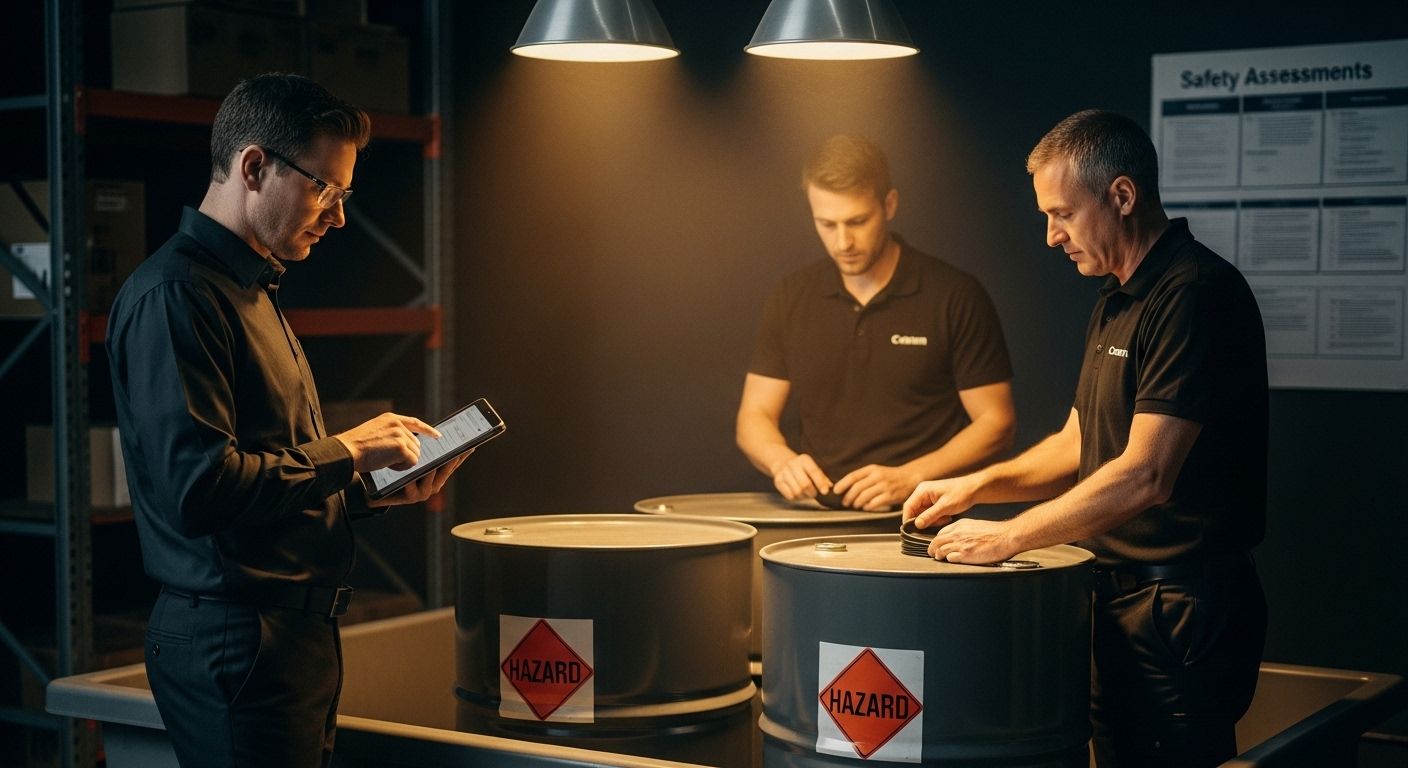
hazardous waste safety

Regular Safety Assessments and Monitoring

Ongoing safety requires systematic and rigorous assessment of hazardous waste storage conditions. According to OSHA regulations, businesses must implement comprehensive monitoring protocols that encompass container integrity, storage area conditions, and potential environmental risks. Explore our safety management guide for detailed insights into maintaining workplace safety.

Key monitoring activities include:

  • Weekly Container Inspections: Checking for corrosion, leaks, or damage
  • Environmental Condition Tracking: Monitoring temperature, humidity, and ventilation
  • Chemical Stability Assessment: Evaluating potential reactive changes
  • Documentation of Inspection Findings: Maintaining detailed records

Employee Training and Emergency Preparedness

Comprehensive employee training forms the backbone of hazardous waste safety management. Businesses must develop structured training programmes that equip personnel with the knowledge and skills necessary to handle, store, and respond to potential hazardous waste incidents.

Training should cover:

  • Proper personal protective equipment usage
  • Chemical identification and risk assessment
  • Spill response and containment procedures
  • Emergency evacuation protocols
  • Regulatory compliance requirements

Businesses in industrial regions like Newcastle and Durham must be particularly proactive in developing robust training programmes. The potential consequences of inadequate preparation can be catastrophic, involving environmental damage, health risks, and significant legal repercussions.

Disposal Planning and Certification

Strategic disposal planning is crucial for responsible hazardous waste management. Businesses must collaborate with certified waste management providers who can ensure safe, compliant, and environmentally responsible disposal of hazardous materials.

Disposal planning considerations include:

  • Identifying certified waste disposal partners
  • Understanding specific disposal requirements for different waste types
  • Maintaining comprehensive waste transfer documentation
  • Implementing tracking systems for waste from generation to final disposal
  • Ensuring compliance with local and national environmental regulations

The financial implications of improper disposal can be substantial. Non-compliance may result in significant fines, potential legal action, and reputational damage. By investing in comprehensive disposal strategies and partnering with reputable waste management services, businesses protect their financial interests and demonstrate environmental responsibility.

Ultimately, ensuring ongoing safety and preparing for disposal requires a holistic approach that combines technical expertise, regulatory knowledge, and a proactive safety culture. Businesses must view these practices not as bureaucratic requirements but as essential strategies for protecting human health, workplace safety, and environmental sustainability.

Frequently Asked Questions

What are the main categories of hazardous waste?

Hazardous waste typically includes corrosive materials, toxic substances, flammable waste, and reactive compounds. Each category poses distinct risks and requires specific handling and storage practices.

How should I select containers for hazardous waste storage?

Containers must be chemically compatible with the waste, structurally sound without corrosion or leaks, clearly labelled with contents and hazards, and appropriately sized for the specific waste type to ensure safety and compliance.

What precautions should I take when handling hazardous waste?

When handling hazardous waste, use appropriate personal protective equipment (PPE) such as gloves and goggles, implement controlled transfer procedures, maintain organised storage areas, and ensure staff are trained in emergency response protocols.

How often should I conduct safety assessments for my hazardous waste storage?

Regular safety assessments should be conducted weekly to check container integrity, environmental conditions, and documentation of any inspection findings to ensure ongoing compliance with safety standards.

Ready to Make Hazardous Waste Storage Simple and Safe for Your Business?

Storing hazardous waste safely is a real challenge for businesses that want to stay compliant and avoid costly penalties. The risks of poor labelling, container mishaps, or neglected safety assessments can lead to legal trouble and endanger both your team and the environment. If you are feeling overwhelmed by strict regulations or just want peace of mind that your business is fully protected, Venture Waste is here to help. Learn how our broad waste collection network for UK businesses supports straightforward compliance and stress-free solutions for hazardous waste.

https://venturewaste.co.uk

Take control of your hazardous waste storage today. With our knowledgeable team, fast three-step booking, and strong commitment to legal and environmental standards, you can focus on your business while we handle the complexities of waste management. Visit Venture Waste Management now and discover how easy it can be to protect your people, property, and reputation. Book your compliant collection and experience a safer approach to hazardous waste storage from start to finish.

Office compliance team reviews hazardous waste paperwork and regulations with legal signage

Hazardous Waste Regulations UK 2025: Essential Guide for Businesses

Office compliance team reviews hazardous waste paperwork and regulations with legal signage

UK businesses face a tough wake-up call with hazardous waste regulations about to change dramatically. Over 30,000 companies risk hefty fines if they fail to comply with stricter waste separation rules starting 31 March 2025. Most assume the challenge lies in dealing with toxic materials themselves. The real surprise is that missing out on paperwork alone could cost thousands, making proper record-keeping just as crucial as safe disposal.

Table of Contents

Quick Summary

Takeaway Explanation
Understand Legislative Updates It is crucial for businesses to familiarise themselves with the updated hazardous waste regulations coming into effect on 31 March 2025, which impose stricter requirements for waste classification, separation, and management.
Implement Proactive Waste Management Organisations should invest in comprehensive staff training, waste tracking systems, and risk assessment protocols to ensure compliance and mitigate environmental risks, thereby enhancing operational efficiency.
Prioritise Legal Documentation Accurate record-keeping and adherence to documentation guidelines outlined by government authorities are essential for regulatory compliance and to avoid significant legal and financial penalties.
Stay Informed on Waste Categories Businesses must correctly identify and classify hazardous waste types, such as chemical waste and electronic equipment, to align with the legal definitions and ensure proper handling and disposal.
Emphasise Best Practices in Disposal Adopting state-of-the-art waste treatment and disposal protocols, and prioritising recycling and reduction, solidifies an organisation’s commitment to environmental stewardship and legal obligations.

Understanding Hazardous Waste Regulations UK 2025

Hazardous waste regulations in the United Kingdom represent a complex framework designed to protect environmental and human health by ensuring responsible waste management. The year 2025 marks significant legislative updates that businesses must comprehend and implement strategically.

Core Principles of Hazardous Waste Management

The UK’s hazardous waste regulations fundamentally aim to control substances that pose potential risks to the environment and human wellbeing. Explore our comprehensive guide on hazardous waste handling to understand the intricate details of these requirements.

According to the Environment Act 2021, national authorities now have expanded powers to regulate hazardous waste management. These regulations empower governmental bodies to:

  • Restrict specific waste handling activities
  • Impose stringent storage requirements
  • Establish mandatory registration processes
  • Enforce comprehensive record-keeping obligations

UK hazardous waste regulations 2025 explained infographic

Classification and Separation Requirements

The Separation of Waste (England) Regulations 2025 introduce critical changes to waste management practices. Effective from 31 March 2025, businesses must implement separate collection protocols for recyclable waste streams, with particular emphasis on hazardous waste categories.

Key classification principles include:

  • Precise Identification: Businesses must accurately categorize waste types before disposal or recycling
  • Detailed Documentation: Maintaining comprehensive records of waste streams
  • Environmental Impact Assessment: Evaluating potential risks associated with specific waste materials

The UK government’s guidance released on 1 May 2025 provides businesses with comprehensive frameworks for waste identification and classification. Recoup’s analysis highlights that these new regulations aim to streamline waste management processes while enhancing environmental protection standards.

Non-compliance with hazardous waste regulations can result in significant legal and financial consequences. Businesses must invest time and resources in understanding these intricate requirements. Proactive waste management strategies should include:

  • Regular staff training on hazardous waste protocols
  • Implementing robust waste tracking systems
  • Conducting periodic internal audits
  • Maintaining updated knowledge of regulatory changes

By adopting a comprehensive approach to hazardous waste management, businesses can mitigate environmental risks, ensure legal compliance, and contribute to sustainable waste management practices in the United Kingdom.

Types of Hazardous Waste and Business Impact

Understanding the diverse range of hazardous waste and its potential business implications is crucial for organisations across various sectors. The complexity of hazardous waste management requires comprehensive knowledge and strategic approaches to ensure environmental safety and regulatory compliance.

Identifying Hazardous Waste Categories

Hazardous waste encompasses a wide array of materials that pose significant risks to human health and the environment. Explore our detailed disposal guide for comprehensive insights into managing these challenging waste streams.

According to gov.uk, hazardous waste in the United Kingdom includes several critical categories:

  • Chemical Waste: Brake fluids, print toners, industrial solvents
  • Electronic Equipment: Devices containing ozone-depleting substances
  • Battery Types: Lithium, lead-acid, and other specialized batteries
  • Pesticide Residues: Agricultural and industrial chemical remnants
  • Contaminated Oils: Industrial and mechanical oils (excluding edible varieties)
  • Asbestos Materials: Construction and demolition waste

The Health and Safety Executive emphasizes that hazardous waste is defined by its potential to cause substantial harm, requiring meticulous assessment and management throughout its lifecycle.

To help clarify the main categories of hazardous waste mentioned, the table below summarises types and examples for quick reference.

Hazardous Waste Category Examples
Chemical Waste Brake fluids, print toners, industrial solvents
Electronic Equipment Devices with ozone-depleting substances
Battery Types Lithium, lead-acid, specialised batteries
Pesticide Residues Agricultural, industrial chemical remnants
Contaminated Oils Industrial and mechanical oils (not edible)
Asbestos Materials Construction, demolition waste

Business Compliance and Risk Management

Businesses across various sectors face significant challenges in managing hazardous waste effectively. The “duty of care” regulations mandate that organisations must prevent environmental and health risks associated with waste disposal. This legal requirement encompasses several critical responsibilities:

  • Accurate waste classification
  • Proper documentation and tracking
  • Safe storage and transportation
  • Implementing risk mitigation strategies
  • Ensuring staff training on hazardous materials handling

Industries most impacted include manufacturing, healthcare, construction, automotive, and agricultural sectors. Each sector encounters unique challenges in managing specific types of hazardous waste, necessitating tailored approaches to compliance and risk management.

Financial and Operational Implications

Warehouse supervisor trains staff on hazardous waste risk management and segregation

The management of hazardous waste presents substantial financial and operational considerations for businesses. Non-compliance can result in significant penalties, including:

  • Substantial financial fines
  • Potential legal proceedings
  • Reputational damage
  • Increased insurance costs
  • Operational disruptions

Proactive businesses are investing in advanced waste management technologies, comprehensive staff training, and robust tracking systems to mitigate these risks. By developing strategic approaches to hazardous waste management, organisations can transform potential regulatory challenges into opportunities for environmental responsibility and operational efficiency.

Effective hazardous waste management is not merely a legal requirement but a critical component of responsible business practice in the modern environmental landscape.

Compliance Steps for Facilities, Offices and Sites

Navigating the complex landscape of hazardous waste regulations requires a systematic approach for facilities, offices, and industrial sites. Businesses must implement comprehensive strategies to ensure legal compliance and environmental responsibility.

To assist with planning and compliance, the following table presents a checklist summarising essential actions for hazardous waste management as described in the article.

Compliance Step Description Status (To Do/Done)
Classify Waste Identify and categorise all waste types
Separate Waste Streams Segregate dry recyclables, food waste, and non-recyclable waste
Label and Provide Containers Use clear labelling and proper containers for each waste type
Staff Training Train staff on disposal protocols and risk management
Conduct Risk Assessments Assess hazards and enact preventive measures
Maintain Documentation Complete consignment notes and keep records for three years
Use Authorised Waste Carriers Ensure only registered carriers handle hazardous waste

Waste Classification and Separation Protocols

Effective hazardous waste management begins with precise classification and separation. Learn our comprehensive approach to waste compliance to streamline your organisation’s waste management processes.

According to gov.uk, workplace waste separation requirements effective from 31 March 2025 mandate distinct waste streams:

  • Dry Recyclable Materials: Plastic, metal, glass, paper, and cardboard
  • Food Waste: Organic waste from kitchen and dining areas
  • Non-Recyclable Waste: Materials that cannot be recycled

Businesses must develop robust systems to:

  • Identify and label different waste categories
  • Provide clearly marked segregation containers
  • Train staff on proper waste disposal protocols
  • Maintain accurate waste tracking documentation

Risk Assessment and Preventive Measures

Comprehensive risk management is crucial for hazardous waste handling. The Health and Safety Executive emphasizes employers’ obligations to:

  • Conduct thorough risk assessments for hazardous substances
  • Implement preventive control measures
  • Provide comprehensive health and safety training
  • Ensure appropriate personal protective equipment (PPE)
  • Establish emergency response protocols

Strict documentation requirements are fundamental to regulatory compliance. Gov.uk guidelines specify that businesses must:

  • Accurately classify waste to determine hazardous status
  • Store hazardous waste in secure, designated areas
  • Use only authorized waste carriers for collection
  • Complete detailed consignment notes for all waste transfers
  • Retain comprehensive waste management records for three years

Failure to maintain proper documentation can result in significant legal and financial penalties. Organisations must invest in robust waste management systems that facilitate accurate record-keeping and demonstrate ongoing compliance.

By adopting a proactive and systematic approach to hazardous waste management, businesses can protect themselves from potential regulatory risks while contributing to environmental sustainability. Continuous staff training, regular audits, and staying informed about regulatory updates are key to maintaining effective compliance strategies.

Safe and legal hazardous waste disposal represents a critical responsibility for businesses across all sectors. Implementing comprehensive waste management strategies requires a nuanced understanding of regulatory requirements and environmental protection principles.

Identifying and Handling Hazardous Materials

Learn our comprehensive approach to hazardous waste disposal to ensure your organisation meets the highest standards of safety and compliance.

According to the Health and Safety Executive, businesses must prioritize the following practices when managing hazardous waste:

  • Precise Hazard Identification: Thoroughly assess and categorize potential hazardous materials
  • Risk Assessment: Develop comprehensive evaluation protocols for each waste type
  • Safe Containment: Utilize appropriate storage containers and protective measures
  • Proper Labeling: Clearly mark all hazardous waste containers with detailed information
  • Restricted Access: Limit access to hazardous waste storage areas

Regulatory Compliance and Best Available Techniques

The Environment Agency’s Sector Guidance Note S5.06 provides critical insights into defining appropriate waste management techniques. Key considerations include:

  • Implementing best available techniques (BAT) for waste recovery and disposal
  • Developing comprehensive environmental performance standards
  • Creating detailed operational protocols for different waste streams
  • Establishing monitoring and reporting mechanisms

Businesses must demonstrate a proactive approach to minimizing environmental impact and ensuring legal compliance through systematic waste management strategies.

Treatment and Disposal Protocols

The Environment Act 2021 provides a comprehensive framework for hazardous waste management, emphasizing several critical disposal principles:

  • Prioritize waste reduction and minimization
  • Implement recycling and recovery processes where possible
  • Ensure safe treatment of non-recyclable hazardous materials
  • Maintain detailed documentation of waste disposal activities
  • Regularly review and update waste management procedures

Effective waste disposal goes beyond mere compliance. It represents a fundamental commitment to environmental stewardship and organisational responsibility. Businesses must adopt a holistic approach that combines technological innovation, staff training, and continuous improvement in waste management practices.

By integrating these best practices, organisations can transform hazardous waste management from a regulatory obligation into a strategic opportunity for environmental leadership and operational excellence. Proactive waste management not only mitigates legal risks but also demonstrates a genuine commitment to sustainable business practices.

Frequently Asked Questions

What are the key changes to hazardous waste regulations in the UK for 2025?

The hazardous waste regulations in the UK will see stricter requirements for waste classification, separation, and management. These changes take effect from 31 March 2025, with businesses required to implement separate collection protocols for recyclable waste streams, particularly for hazardous waste.

How can businesses prepare for the new hazardous waste regulations?

Businesses should start by familiarising themselves with the updated regulations, investing in staff training on hazardous waste protocols, implementing waste tracking systems, and ensuring thorough documentation of waste management practices to ensure compliance.

What penalties can businesses face for non-compliance with hazardous waste regulations?

Non-compliance with hazardous waste regulations can result in severe penalties, including substantial financial fines, legal proceedings, reputational damage, and increased insurance costs, as well as operational disruptions due to non-compliance.

What types of materials are classified as hazardous waste in the UK?

Hazardous waste in the UK includes categories such as chemical waste (e.g., solvents), electronic equipment (e.g., devices containing ozone-depleting substances), certain battery types, pesticide residues, contaminated oils, and materials containing asbestos.

Stay One Step Ahead with Compliant Hazardous Waste Solutions

Feeling overwhelmed by the changing landscape of hazardous waste regulations in the UK for 2025? You are not alone. The article highlighted the risks of failing to keep up with new classification, separation, and record-keeping standards. Missed paperwork or unclear waste streams could result in legal consequences or unexpected costs for your business. Now is the time to get proactive and secure your compliance with confidence.

https://venturewaste.co.uk

Protect your business and peace of mind. Visit our regulations hub for dedicated support and actionable insights, or explore our home page for a full range of waste management solutions. Book your service quickly and efficiently while ensuring your business stays ahead of the 2025 regulations. Take the next step now to guarantee legal compliance and avoid costly penalties.

Two NHS staff handle clinical waste in designated storage room

Clinical Waste Disposal Requirements for UK Businesses 2025

Two NHS staff handle clinical waste in designated storage room

Clinical waste is piling up fast in UK businesses, with firms producing over 600,000 tonnes every year. You might think strict regulations would keep things straightforward and safe. Yet new 2025 rules are set to shake up everything you thought you knew about compliance and penalties. These changes are not just about more paperwork; even a small slip-up can now lead to hefty fines and business shutdowns.

Table of Contents

Quick Summary

Takeaway Explanation
Understand Clinical Waste Types Familiarity with categories like infectious, pharmaceutical, sharps, and anatomical waste is essential for implementing effective disposal strategies that comply with regulations.
Ensure Compliance with Legislation Adherence to regulations such as the Health and Safety at Work Act and the Separation of Waste (England) Regulations 2025 is crucial; businesses must establish robust waste segregation and detailed documentation.
Implement Safe Storage and Collection Use leak-proof, puncture-resistant containers with appropriate labelling and ensure safe collection protocols, including trained personnel and specialized transport to mitigate risks.
Tailor Strategies for Different Sectors Different sectors like healthcare, labs, and educational institutions require specific clinical waste management strategies that align with their unique operational challenges and regulatory requirements.
Conduct Regular Risk Assessments Continuous risk assessment and staff training are vital for identifying hazards and ensuring compliance with evolving regulations while protecting public health and the environment.

Infographic of UK clinical waste disposal requirements for 2025.


Understanding Clinical Waste Types and Risks

Clinical waste represents a complex and potentially hazardous category of materials that demands precise handling and disposal protocols. The UK regulatory framework defines clinical waste as a critical subset of healthcare and industrial waste that poses significant health and environmental risks.

Categories of Clinical Waste

Understanding the specific types of clinical waste is crucial for businesses to implement appropriate disposal strategies. Learn more about specialized waste management approaches that align with regulatory requirements.

According to the UK government’s official guidance, clinical waste can be categorized into several key classifications:

  • Infectious Waste: Materials contaminated with viable pathogens that could transmit disease, including used medical equipment, contaminated personal protective equipment, and biological samples.
  • Pharmaceutical Waste: Expired or unused medications, chemotherapy drugs, and other pharmaceutical compounds that require specialized disposal to prevent environmental contamination.
  • Sharps Waste: Needles, scalpels, broken glass, and other potentially infectious materials that can cause puncture wounds and transmit bloodborne pathogens.
  • Anatomical Waste: Human tissue, organs, body parts, and related biological materials that demand stringent handling protocols.

A summary table below organises the main clinical waste categories and their examples:

Waste Category Examples Key Risks
Infectious Waste Used PPE, contaminated medical equipment, biological samples Transmission of pathogens
Pharmaceutical Waste Expired drugs, unused medication, chemotherapy compounds Environmental contamination
Sharps Waste Needles, scalpels, broken glass Injury, bloodborne pathogens
Anatomical Waste Human tissue, organs, body parts Biohazard risk, strict protocols

Risk Assessment and Management

The NHS Clinical Waste Strategy highlights the critical importance of comprehensive risk management in clinical waste disposal. Businesses must conduct thorough risk assessments that evaluate potential hazards associated with their specific waste streams.

Key risk assessment considerations include:

  • Identifying potential biological, chemical, and physical hazards
  • Evaluating transmission routes for infectious agents
  • Assessing environmental contamination risks
  • Determining appropriate personal protective equipment requirements

Business leaders must recognize that improper clinical waste management can lead to severe consequences, including:

  • Potential disease transmission
  • Environmental pollution
  • Legal penalties and significant financial liabilities
  • Reputational damage

The National Standards of Healthcare Cleanliness 2025 emphasizes a proactive approach to waste management, recommending comprehensive training, robust documentation, and continuous improvement in waste handling procedures.

Effective clinical waste management requires a multifaceted strategy that combines rigorous protocols, employee training, specialized equipment, and compliance with evolving regulatory standards. Businesses must stay informed about current guidelines and invest in comprehensive waste management systems to protect public health and maintain environmental sustainability.

Complying With UK Clinical Waste Legislation

Office staff review compliance legislation on laptop at desk

Navigating the complex landscape of clinical waste legislation requires businesses to adopt a comprehensive and proactive approach to regulatory compliance. The UK has established stringent legal frameworks that mandate precise waste management protocols to protect public health and environmental sustainability.

Legislative Framework and Key Regulations

Businesses must understand the intricate web of regulations governing clinical waste disposal. The Health and Safety Executive emphasizes that compliance involves adhering to multiple key legislative instruments, including:

The Separation of Waste (England) Regulations 2025 introduce particularly critical requirements for businesses. Effective from March 31, 2025, these regulations mandate that organizations with 10 or more full-time equivalent employees must implement robust waste segregation systems.

Compliance Requirements and Documentation

Successful legislative compliance demands meticulous documentation and systematic waste management processes. According to the NHS Clinical Waste Strategy, businesses must develop comprehensive waste management plans that include:

  • Detailed waste tracking and classification systems
  • Regular risk assessments
  • Staff training protocols
  • Documented waste disposal procedures
  • Environmental impact monitoring

Key documentation requirements include:

  • Waste transfer notes
  • Consignment notes for hazardous waste
  • Comprehensive waste inventory records
  • Staff training certificates
  • Annual waste management reports

The following table summarises key legislative requirements and the main compliance actions businesses must take:

Regulation / Requirement Main Compliance Actions
Health and Safety at Work Act 1974 Ensure safe working conditions, risk assessment
COSHH Regulations Assess & control hazardous substances, staff training
Environmental Protection Act 1990 Prevent pollution, safe waste disposal
Hazardous Waste Regulations 2005 Proper classification, storage & transfer documentation
Separation of Waste (England) Regulations 2025 Implement segregation systems (10+ FTEs), documentation

Penalties and Enforcement

Non-compliance with clinical waste legislation can result in severe consequences. The regulatory bodies impose significant penalties for businesses failing to meet established standards:

  • Substantial financial fines
  • Potential legal prosecution
  • Revocation of operational licenses
  • Mandatory remediation requirements
  • Reputational damage

Businesses must recognize that compliance is not optional but a fundamental legal and ethical responsibility. The evolving regulatory landscape demands continuous adaptation and proactive management of clinical waste disposal practices.

By implementing robust waste management systems, maintaining detailed documentation, and staying informed about legislative changes, businesses can effectively navigate the complex requirements of clinical waste disposal while protecting public health and environmental integrity.

Choosing Safe Storage and Collection Solutions

Selecting appropriate storage and collection solutions for clinical waste is a critical responsibility for businesses, requiring strategic planning, specialized equipment, and adherence to strict safety protocols. The complexity of clinical waste management demands a comprehensive approach that minimizes health risks and ensures environmental protection.

Storage Container Specifications

Proper storage begins with selecting the right containers that meet rigorous safety standards. The Health and Safety Executive provides detailed guidelines for clinical waste containment, emphasizing several key requirements:

  • Containers must be leak-proof and puncture-resistant
  • Color-coded systems for different waste categories
  • Clear labeling indicating hazardous contents
  • Secure lids to prevent accidental spillage
  • Resistance to chemical degradation

The Health Technical Memorandum 07-01 recommends specific container materials and design features that enhance safety and prevent cross-contamination. Learn more about advanced waste management strategies to optimize your storage solutions.

Collection and Transportation Protocols

Safe waste collection involves a meticulously planned process that minimizes potential health risks. According to the NHS Clinical Waste Strategy, businesses must implement comprehensive transportation protocols that include:

  • Scheduled collection intervals
  • Specialized vehicles with sealed compartments
  • Temperature-controlled transportation for sensitive materials
  • Comprehensive tracking and documentation systems
  • Trained personnel with appropriate personal protective equipment

Key considerations for safe collection include:

  • Minimizing handling time
  • Preventing cross-contamination
  • Maintaining chain of custody documentation
  • Ensuring secure transfer between storage and disposal sites

Risk Mitigation and Compliance

Effective risk mitigation requires a multifaceted approach that goes beyond basic storage and collection procedures. Businesses must develop robust systems that address potential hazards comprehensively:

  • Conduct regular risk assessments
  • Implement staff training programs
  • Develop emergency response protocols
  • Maintain detailed waste tracking records
  • Invest in high-quality containment and transportation equipment

Non-compliance can result in significant consequences, including potential health risks, legal penalties, and reputational damage. The evolving regulatory landscape demands continuous adaptation and proactive management of clinical waste handling practices.

By investing in specialized storage solutions, implementing rigorous collection protocols, and maintaining a comprehensive risk management approach, businesses can effectively manage clinical waste while protecting public health, ensuring environmental safety, and meeting stringent regulatory requirements.

Best Practices for Diverse Business Sectors

Clinical waste management is not a one-size-fits-all approach. Different business sectors face unique challenges in managing their clinical waste, requiring tailored strategies that address specific regulatory requirements and operational constraints.

Healthcare and Medical Facilities

Healthcare settings generate the most complex clinical waste streams, demanding rigorous management protocols. The Health and Safety Executive emphasizes the critical importance of comprehensive waste segregation and handling for medical environments.

Key best practices for healthcare facilities include:

  • Immediate segregation of waste at the point of generation
  • Use of color-coded containment systems
  • Comprehensive staff training on waste classification
  • Implementation of zero-contamination protocols
  • Regular internal audits of waste management procedures

The Simpler Recycling Workplace Guidelines requires healthcare facilities to separate waste streams effectively, including distinguishing between recyclable medical materials and hazardous clinical waste. Learn about advanced waste management techniques to enhance your facility’s compliance.

Industrial and Research Laboratories

Research and industrial laboratories face unique challenges in clinical waste management. According to the NHS Clinical Waste Strategy, these sectors must develop specialized waste management approaches that consider:

  • Chemical compatibility of different waste streams
  • Temperature-sensitive material handling
  • Precise documentation of experimental waste
  • Secure disposal of sensitive biological materials
  • Cross-contamination prevention protocols

Critical considerations for laboratory waste management include:

  • Detailed chemical composition tracking
  • Neutralization of potentially hazardous materials
  • Specialized containment for infectious research materials
  • Comprehensive staff safety training
  • Robust emergency response planning

Educational and Training Institutions

Educational institutions, including universities and vocational training centers, must implement comprehensive clinical waste management strategies that balance safety with educational requirements. The waste management approach must account for:

  • Student training and safety protocols
  • Varied waste streams from different departments
  • Cost-effective disposal solutions
  • Compliance with educational sector regulations
  • Environmental sustainability considerations

Key best practices include:

  • Centralized waste management coordination
  • Department-specific waste handling guidelines
  • Regular safety training for students and staff
  • Investment in specialized waste segregation infrastructure
  • Continuous monitoring and improvement of waste management systems

Across all sectors, the fundamental principles remain consistent: prioritize safety, maintain strict documentation, invest in staff training, and continuously adapt to evolving regulatory requirements. By developing sector-specific strategies that align with national guidelines, businesses can effectively manage clinical waste while protecting public health and the environment.

Frequently Asked Questions

What are the main categories of clinical waste?

Clinical waste can be categorised into four main types: infectious waste, pharmaceutical waste, sharps waste, and anatomical waste. Understanding these categories is crucial for ensuring proper disposal and compliance with regulations.

What are the compliance requirements for clinical waste disposal in the UK?

UK businesses must adhere to regulations such as the Health and Safety at Work Act, Environmental Protection Act, and the Separation of Waste (England) Regulations 2025, which necessitate robust waste segregation, documentation, and risk assessments.

What penalties can businesses face for non-compliance with clinical waste regulations?

Failure to comply with clinical waste regulations can result in substantial financial fines, legal prosecution, revocation of operational licenses, and damage to a business’s reputation.

How can businesses effectively manage clinical waste storage and collection?

Businesses should implement safe storage solutions with leak-proof, puncture-resistant containers and ensure trained personnel follow strict collection protocols, including regular risk assessments and documentation.

Simplify Your Clinical Waste Compliance for 2025 with Venture Waste

Are you worried about keeping your business safe and compliant with the new 2025 clinical waste regulations? If you are feeling pressure from complex rules about waste segregation, documentation, and safe storage, you are not alone. Many UK businesses are struggling with the thought of heavy penalties and the need for precise handling of clinical waste to avoid risks to health and reputation. Our team at Venture Waste Management understands how important it is to stay ahead of these changes, especially when dealing with sensitive materials. We help you implement robust procedures so your business never faces non-compliance or last-minute panic. For organisations needing to safely manage different waste streams, visit our confidential waste solutions page for further guidance.

https://venturewaste.co.uk

Take the stress out of clinical waste disposal. Contact us today to arrange a tailored, compliant collection service, or book directly through our main waste management platform. Safeguard your workplace and organisation right now, while meeting all the new UK requirements.

UK business hazardous waste disposal on site

Recycling Hazardous Materials: Safe Disposal for UK Businesses 2025

UK business hazardous waste disposal on site

Recycling hazardous materials is set to become a serious test for UK businesses in 2025. New regulations demand that every business correctly classifies and documents its hazardous waste, and from March, compliance failures could result in fines that dwarf previous years. Here is where things get interesting. Over 80 percent of UK businesses still do not have comprehensive hazardous waste management protocols in place. Most believe regular bin collection and a few warning stickers are enough. In reality, what separates the companies that thrive from those that face costly penalties is not just ticking paperwork boxes. It is building smart systems and staff training that make hazardous waste a strategic advantage — not a regulatory headache.

Table of Contents

Quick Summary

Takeaway Explanation
Proper classification of hazardous waste is essential Businesses must accurately identify and classify hazardous waste to ensure its safe and compliant disposal, as per government guidelines.
Improved documentation and traceability are required Detailed documentation, including consignment notes and waste transfer records, is crucial for regulatory compliance and demonstrates commitment to responsible waste handling.
Implement robust storage and safety protocols Adequate storage solutions must protect against environmental exposure and theft, while ensuring staff are trained on emergency response and safe handling procedures.
Comply with new regulations by 2025 UK businesses must adhere to stringent waste management regulations coming into effect from 31 March 2025, focusing on sustainable disposal practices and increased recycling rates.
Invest in staff training and expert solutions Comprehensive staff education on waste management processes is vital, along with utilisation of advanced recycling technologies to meet legal requirements and enhance environmental stewardship.


Understanding Hazardous Waste in Your Business

Businesses across the United Kingdom generate various types of waste that require specialised handling and disposal. Hazardous waste represents a critical category of materials that pose potential risks to human health and the environment if not managed correctly.

Defining Hazardous Waste

Hazardous waste encompasses materials containing substances that can be harmful, dangerous, or potentially toxic. These materials require careful identification, segregation, and disposal to prevent environmental contamination and protect public safety. According to government waste management guidelines, businesses must accurately classify their waste streams to ensure proper treatment.

Typical examples of hazardous waste include:

  • Chemical waste: Solvents, pesticides, and industrial cleaning agents
  • Electronic waste: Computers, batteries, and electrical equipment containing toxic components
  • Medical waste: Contaminated sharps, pharmaceutical residues, and infectious materials
  • Automotive waste: Used oils, brake fluids, and automotive batteries

Types of hazardous waste and recycling routes

From 31 March 2025, UK businesses will face more stringent regulations surrounding hazardous waste management. New commercial waste management rules will emphasise sustainable disposal practices, requiring organisations to improve recycling rates and minimise landfill contributions.

Businesses must now adhere to several critical legal obligations:

  1. Accurate waste classification and documentation
  2. Using only authorised waste carriers
  3. Maintaining detailed waste transfer records
  4. Implementing proper storage and handling procedures

Risk Assessment and Responsible Management

Effective hazardous waste management begins with comprehensive risk assessment. Companies must systematically evaluate their waste streams, identifying potential environmental and health risks associated with different materials. This process involves detailed documentation, staff training, and implementing robust waste segregation protocols.

To support businesses in this complex landscape, our comprehensive hazardous waste disposal guide provides in-depth insights into navigating these regulatory requirements. Understanding these obligations is not just about legal compliance but represents a fundamental commitment to environmental stewardship and workplace safety.

The financial and reputational consequences of improper hazardous waste management can be substantial. Businesses failing to comply with regulations may face significant fines, potential legal action, and damage to their corporate reputation. Proactive, responsible waste management is therefore not just an regulatory requirement but a strategic business imperative.

Safe Collection and Storage Best Practices

Managing hazardous waste requires meticulous attention to collection and storage protocols. UK businesses must implement rigorous systems to protect human health, environmental safety, and maintain legal compliance.

Secure hazardous waste storage containers UK

Proper Container Selection and Segregation

Selecting appropriate containers is the first critical step in hazardous waste management. According to UK waste management regulations, businesses must use specialised containers that are:

  • Chemical resistant: Preventing potential reactions or material degradation
  • Leak proof: Stopping potential contamination
  • Clearly labelled: Indicating specific waste type and associated risks
  • Colour coded: Enabling quick identification of different waste streams

Segregation remains paramount. Different hazardous waste types must never be mixed, as this can create dangerous chemical reactions or compromise potential recycling processes. Dedicated storage areas with restricted access help minimise cross-contamination risks.

Documentation and Traceability

Comprehensive documentation forms the backbone of safe hazardous waste management. Every waste collection requires precise record-keeping. Business waste experts recommend maintaining detailed consignment notes that track:

  1. Exact waste type and quantity
  2. Collection date
  3. Waste carrier details
  4. Disposal or recycling destination

These records serve multiple purposes beyond regulatory compliance. They provide a transparent audit trail, support internal risk management, and demonstrate your organisation’s commitment to responsible waste handling.

Safe Storage Protocols

Storage represents a critical control point in hazardous waste management. Businesses must establish secure storage areas that protect against environmental exposure, potential theft, and accidental spillage. Industry guidelines recommend implementing storage solutions that:

  • Provide adequate ventilation
  • Maintain appropriate temperature controls
  • Include spill containment mechanisms
  • Restrict unauthorized personnel access

When storage duration extends beyond immediate collection, regular inspections become crucial. Staff training on emergency response procedures and potential containment strategies helps mitigate potential risks.

Our comprehensive waste management guide offers deeper insights into developing robust hazardous waste management strategies. By prioritising safe collection and storage practices, businesses not only comply with regulations but also demonstrate environmental responsibility and protect workplace safety.

Expert Solutions for Recycling Hazardous Materials

Navigating the complex landscape of hazardous waste recycling requires strategic expertise and a comprehensive approach. UK businesses must now adopt sophisticated solutions that balance regulatory compliance with environmental responsibility.

Waste Auditing and Material Identification

Successful hazardous materials recycling begins with thorough waste auditing. Environment Act 2021 guidelines emphasise the critical importance of systematic waste stream analysis. Businesses must conduct detailed assessments to:

  • Identify specific hazardous materials in their waste stream
  • Categorise recyclable components
  • Determine appropriate treatment methods
  • Evaluate potential circular economy opportunities

Professional waste auditors can help organisations develop targeted recycling strategies that minimise environmental impact and reduce disposal costs. This process involves comprehensive mapping of waste generation points and potential material recovery pathways.

Specialised Recycling Technologies

Advanced recycling technologies have transformed hazardous waste management. According to industry waste regulation experts, emerging solutions now enable more sophisticated material recovery. These technologies include:

  1. Chemical decomposition processes
  2. High-temperature material separation
  3. Molecular reconstitution techniques
  4. Advanced filtration and extraction methods

These innovative approaches allow businesses to extract valuable materials from complex waste streams while ensuring environmental safety and regulatory compliance.

Staff Training and Organisational Compliance

Implementing effective hazardous waste recycling extends beyond technological solutions. Workplace recycling regulations mandate comprehensive staff education and robust internal processes. Key training components include:

  • Understanding waste classification
  • Proper segregation techniques
  • Safe handling protocols
  • Reporting and documentation requirements

Our comprehensive waste management guide provides in-depth insights into developing effective organisational strategies. By investing in staff knowledge and implementing systematic approaches, businesses can transform hazardous waste management from a compliance obligation into a strategic environmental opportunity.

The future of hazardous waste management lies in holistic approaches that integrate technological innovation, regulatory compliance, and organisational commitment to sustainable practices. Businesses that proactively develop sophisticated recycling solutions will not only meet legal requirements but also contribute to broader environmental conservation efforts.

Navigating the complex landscape of hazardous waste regulations requires UK organisations to implement robust compliance strategies. The legal framework governing waste management continues to evolve, placing increasing responsibilities on businesses to manage their environmental impact effectively.

Duty of Care Responsibilities

UK government regulations establish a comprehensive “duty of care” for businesses handling hazardous materials. This legal obligation extends beyond mere disposal and encompasses the entire lifecycle of hazardous waste. Organisations must demonstrate proactive management by:

  • Accurately identifying and classifying hazardous waste
  • Preventing potential environmental contamination
  • Ensuring safe and legal transportation
  • Maintaining detailed documentation
  • Selecting authorised waste carriers

Failure to meet these requirements can result in significant financial penalties and potential legal prosecution. The responsibility begins from the moment waste is generated and continues until its final, environmentally responsible disposal.

Regulatory Oversight and Reporting

Strict regulatory frameworks require businesses to work closely with official bodies. Waste management experts highlight the critical role of agencies like the Environment Agency and Health and Safety Executive (HSE) in monitoring compliance. Key reporting requirements include:

  1. Completing comprehensive consignment notes
  2. Maintaining accurate waste transfer records
  3. Providing detailed waste classification documentation
  4. Regular reporting of waste streams and disposal methods

Organisations must develop systematic approaches to track and report their hazardous waste management processes, ensuring transparency and accountability.

Compliance Strategies and Risk Management

Effective legal compliance goes beyond mere documentation. Workplace waste regulations mandate a holistic approach to waste management that integrates legal, environmental, and operational considerations. Businesses should:

  • Conduct regular internal audits
  • Implement comprehensive staff training programmes
  • Develop clear waste management protocols
  • Invest in technological solutions for tracking and managing waste

Our comprehensive compliance guide offers in-depth insights into navigating these complex regulatory requirements. By adopting a proactive approach, organisations can transform legal compliance from a challenging obligation into a strategic opportunity for environmental stewardship.

The landscape of hazardous waste management continues to evolve, with increasingly stringent regulations reflecting a growing commitment to environmental protection. Businesses that anticipate and exceed these legal requirements will not only avoid potential penalties but also position themselves as responsible corporate citizens committed to sustainable practices.

Frequently Asked Questions

What are hazardous materials in the UK?

Hazardous materials in the UK refer to waste substances that can pose risks to human health and the environment, including chemicals, electronic waste, medical waste, and automotive waste. Proper classification and management are essential for safe disposal.

From 31 March 2025, UK businesses must adhere to regulations that require accurate classification of hazardous waste, appropriate documentation, the use of authorised waste carriers, and proper storage and handling procedures to ensure compliance and environmental safety.

How should hazardous waste be stored safely?

Hazardous waste should be stored in suitable, chemical-resistant containers that are leak-proof and clearly labelled. Storage areas must be ventilated, temperature-controlled, and restrict access to unauthorized personnel to prevent contamination and accidents.

Why is staff training important for hazardous waste management?

Staff training is crucial for ensuring employees understand proper waste classification, segregation techniques, and safe handling protocols. Comprehensive education fosters compliance with regulations and enhances workplace safety, thereby minimising the risk of accidents and legal penalties.

Make Hazardous Waste Compliance Easy for 2025

The countdown to new hazardous waste regulations is on, and your business cannot afford to fall behind. With stricter rules, tougher fines, and more complex documentation requirements, many UK companies are worried about avoiding legal pitfalls and keeping their staff safe. If you struggle to keep up with safe storage protocols, official paperwork, or responsible recycling, you are not alone. One missing record or improper container could put your business at serious risk. For those handling electronics and toxic equipment, see how our WEEE Waste Recycling Solutions offer hassle-free, fully compliant management for electrical and hazardous materials.

https://venturewaste.co.uk

Join the businesses that are already turning regulatory challenges into a strategic win. Whether you need professional advice, secure transport, or reliable collection, Venture Waste Management is ready to guide you through every step. Book with us today to guarantee compliance and protect your reputation before the March 2025 deadline. Take control of your hazardous waste now—your peace of mind starts here.

Secured hazardous waste containers in UK facility

Hazardous Waste Disposal Guide 2025 for UK Businesses

Secured hazardous waste containers in UK facility

Hazardous waste sounds technical but it touches every business from small shops to sprawling factories. UK firms generate over 330 thousand tonnes of hazardous waste every single year. You might assume all it takes is a few hazard labels and careful storage, but that barely scratches the surface. The real challenge lies in strict legal responsibilities and the constant risk of financial penalties, which means most companies are never quite as safe or compliant as they think.

Table of Contents

Quick Summary

Takeaway Explanation
Understanding Hazardous Waste Types UK businesses must accurately identify hazardous waste, which includes chemical, electronic, and biological categories, to ensure proper handling and disposal.
Legal Compliance and Duty of Care Businesses have a legal responsibility to manage waste safely, including maintaining detailed documentation and a transparent audit trail to comply with the Duty of Care requirement.
Best Practices for Storage and Handling Effective hazardous waste management involves using compliant containers, implementing strict segregation strategies, and ensuring staff are trained in correct handling protocols.
Choosing a Specialist Disposal Partner Selecting a competent hazardous waste disposal partner is essential; firms should verify their licensing, technical expertise, and commitment to environmental sustainability to mitigate risks.

Infographic showing common hazardous waste types and examples in the UK

Understanding Hazardous Waste Types in the UK

Hazardous waste represents a complex and critical challenge for UK businesses across multiple sectors. Proper identification and management of these materials are essential to protect environmental and human health. According to University College London’s safety guidelines, hazardous waste encompasses a wide range of materials that pose potential risks to safety and require specialised handling and disposal procedures.

Chemical and Industrial Hazardous Waste

Chemical and industrial waste forms a significant portion of hazardous materials generated by businesses. These substances include solvents, paints, pesticides, acids, and other potentially harmful chemicals. The UK government mandates strict classification using European Waste Catalogue (EWC) codes, which help businesses accurately identify and manage their waste streams. Government guidance emphasises the importance of understanding persistent organic pollutants (POPs) and other hazardous properties that require specialized treatment.

Typical examples of chemical hazardous waste include:

  • Industrial solvents used in manufacturing processes
  • Chemical residues from production lines
  • Paint and coating waste containing toxic compounds
  • Pesticide containers and unused chemical treatments

Electronic and Biological Hazardous Waste

Two critical categories of hazardous waste demand particular attention from UK businesses. Electronic waste (WEEE) contains heavy metals and toxic components that can cause significant environmental damage if not properly managed. Waste Management Experts highlight that electronic devices often include substances like lead, mercury, and cadmium that require specialized disposal techniques.

Biological hazardous waste presents another complex challenge, particularly for healthcare, research, and industrial facilities. This category includes:

  • Medical sharps such as needles and surgical instruments
  • Contaminated laboratory materials
  • Biological research waste
  • Infectious medical equipment

Protected staff managing hazardous waste types

Businesses must implement rigorous protocols to ensure safe collection, transportation, and disposal of these sensitive materials. Read our comprehensive guide on hazardous waste handling for detailed insights into managing these challenging waste streams.

Understanding the nuanced landscape of hazardous waste requires continuous education and adherence to evolving regulatory standards. UK businesses must remain proactive in identifying, classifying, and responsibly disposing of these materials to mitigate environmental risks and ensure legal compliance. Regular staff training, comprehensive waste audits, and partnerships with certified waste management professionals are crucial steps in developing a robust hazardous waste management strategy.

UK businesses face stringent legal obligations when managing hazardous waste. These regulations are designed to protect human health and the environment while ensuring responsible waste management practices. According to Business Waste UK, companies must adhere to comprehensive legal frameworks that govern every aspect of hazardous waste handling.

Duty of Care and Documentation

The cornerstone of legal compliance is the Duty of Care requirement, which mandates businesses take all reasonable steps to manage waste safely. This involves several critical documentation and tracking processes. Northwest Environmental Experts highlight that each hazardous waste transfer must be accompanied by a detailed consignment note. These documents must be retained by both the waste producer and the licensed waste carrier, creating a transparent audit trail that enables regulatory oversight.

Key documentation requirements include:

  • Waste transfer notes detailing the exact nature and quantity of waste
  • Consignment notes for tracking hazardous waste movements
  • Storage and disposal records demonstrating compliance with regulations
  • Carrier licensing verification confirming waste transport credentials

Regulatory Compliance and Storage Standards

The Hazardous Waste (England and Wales) Regulations 2005 establish strict guidelines for waste management. These regulations require businesses to ensure waste is recovered or disposed of without endangering human health or causing environmental harm. The Environment Agency and Health and Safety Executive provide rigorous oversight to enforce these standards.

Storage of hazardous waste demands exceptional care. Businesses must:

  • **Segregate different types of hazardous waste
  • **Use appropriate containment methods
  • **Implement secure storage locations
  • **Prevent potential contamination or environmental exposure

Explore our comprehensive guide to hazardous waste handling for in-depth insights into meeting these complex regulatory requirements.

Non-compliance carries significant risks. Businesses may face substantial financial penalties, legal prosecution, and reputational damage for failing to meet these stringent waste management standards. Professional waste management partners can provide crucial support in navigating these complex regulatory landscapes, ensuring businesses remain fully compliant while minimizing potential environmental and legal risks.

The evolving nature of waste management regulations demands continuous education and proactive approach. UK businesses must stay informed about the latest legislative changes, invest in staff training, and maintain robust waste management systems that prioritize safety, environmental protection, and legal compliance.

Best Practices for Handling and Storing Hazardous Waste

Effective management of hazardous waste requires meticulous attention to detail and stringent safety protocols. Northwest Environmental Experts emphasize that proper handling and storage are critical to preventing environmental contamination and protecting workplace safety.

Containment and Labelling Protocols

Proper containment is the first line of defence in hazardous waste management. Businesses must use specialized containers designed to prevent leaks, spills, and chemical interactions. According to Business Waste UK, each container must be:

  • Chemically compatible with the waste it contains
  • Sealed securely to prevent accidental release
  • Clearly labelled with precise waste classification
  • Resistant to corrosion and potential chemical reactions

Labelling requirements are exceptionally strict. Each container must display comprehensive information including waste type, potential hazards, handling instructions, and emergency contact details. Colour-coded systems and internationally recognized hazard symbols provide additional layers of safety communication.

Storage and Segregation Strategies

Effective storage goes beyond simple containment. The Hazardous Waste (England and Wales) Regulations mandate strict segregation to prevent potentially dangerous chemical interactions. Different types of hazardous waste must be stored separately, with dedicated areas that:

  • Prevent cross-contamination
  • Provide secure, restricted access
  • Maintain appropriate environmental conditions
  • Include spill containment infrastructure

Environmental control is crucial. Storage areas must have appropriate temperature regulation, ventilation, and protection from external environmental factors. Businesses must implement robust monitoring systems to detect potential leaks or structural issues immediately.

Explore our comprehensive guide to hazardous waste management for advanced strategies in waste handling and storage.

Personnel training represents another critical component of best practices. Staff must receive comprehensive training in:

  • Correct handling procedures
  • Emergency response protocols
  • Personal protective equipment usage
  • Waste identification and classification

Regular risk assessments and continuous staff education ensure that hazardous waste management remains adaptive and responsive to evolving regulatory requirements. By implementing these rigorous practices, UK businesses can minimize environmental risks, protect workplace safety, and demonstrate responsible corporate stewardship in hazardous waste management.

Choosing a Specialist Hazardous Waste Disposal Partner

Selecting the right hazardous waste disposal partner is a critical decision that directly impacts a business’s legal compliance, environmental responsibility, and operational safety. Government Waste Disposal Guidelines emphasize that businesses remain legally accountable for their waste throughout its entire disposal journey, making the selection of a specialist partner paramount.

Licensing and Regulatory Compliance

The first and most crucial criterion in choosing a hazardous waste disposal partner is verifying their official licensing and regulatory credentials. According to Northwest Environmental Experts, businesses must conduct thorough due diligence to ensure their chosen partner meets stringent Environment Agency and Health and Safety Executive standards.

Key licensing verification steps include:

  • Environment Agency registration confirmation
  • Detailed waste carrier license verification
  • Comprehensive compliance documentation review
  • Verifiable track record of legal waste management

Businesses should request and independently verify:

  • Current waste carrier license numbers
  • Proof of environmental permits
  • Insurance documentation
  • Recent compliance audit reports

Technical Expertise and Disposal Capabilities

Beyond licensing, a specialist hazardous waste disposal partner must demonstrate sophisticated technical expertise specific to different waste categories. This involves sophisticated understanding of chemical interactions, treatment technologies, and safe transportation protocols.

Critical evaluation criteria should include:

  • Specialized handling equipment
  • Advanced treatment technologies
  • Sector-specific waste management experience
  • Documented safe disposal methodologies

Explore our comprehensive waste management solutions to understand the depth of expertise required in hazardous waste management.

Additionally, businesses should assess a potential partner’s commitment to environmental sustainability. This includes evaluating their recycling processes, carbon footprint reduction strategies, and investment in innovative waste treatment technologies.

Transparency represents another critical selection factor. The ideal hazardous waste disposal partner provides complete documentation, including detailed consignment notes, tracking information, and comprehensive disposal certificates. Businesses must receive clear, auditable evidence of proper waste management at every stage.

Financial stability and long-term reliability are equally important considerations. A reputable waste disposal partner should demonstrate:

  • Consistent operational history
  • Strong financial health
  • Investment in ongoing staff training
  • Commitment to technological innovation

Ultimately, choosing a hazardous waste disposal partner is about mitigating risk. By conducting thorough due diligence, businesses can protect themselves from potential legal, environmental, and financial consequences associated with improper waste management. The right partner serves not just as a service provider, but as a critical compliance and environmental protection ally.

Frequently Asked Questions

What constitutes hazardous waste in the UK?

Hazardous waste in the UK includes materials that pose potential risks to health or the environment, such as chemical, electronic, and biological wastes. Proper identification and classification are essential for safe handling and disposal.

UK businesses must comply with the Duty of Care regulations, which require detailed documentation and transparency in waste management. This includes maintaining waste transfer notes and consignment notes, ensuring all hazardous waste is disposed of safely and responsibly.

How should hazardous waste be stored?

Hazardous waste should be stored securely in appropriate containers that are chemically compatible with the waste. Businesses must implement strict segregation strategies to prevent cross-contamination and ensure that storage areas meet environmental control standards.

How do I choose a specialist hazardous waste disposal partner?

When selecting a hazardous waste disposal partner, verify their official licensing, regulatory compliance, and technical expertise. It’s crucial to assess their commitment to environmental sustainability and ensure they provide thorough documentation for waste management.

Transform Your Hazardous Waste Challenge Into Simple Compliance

Struggling to keep up with changing hazardous waste laws or anxious about unexpected fines? This article outlines just how complex hazardous waste disposal can be for UK businesses—between strict legal standards, detailed consignment notes, and constantly evolving regulations, it is easy to feel overwhelmed. If you are handling chemical, biological or electronic waste, proper classification, secure storage and transparent documentation can make or break your compliance record. See exactly how hazardous waste issues like yours are solved in our WEEE Waste management hub.

https://venturewaste.co.uk

Do not risk your business’s reputation or safety. Let Venture Waste turn legal obligations into peace of mind with our end-to-end hazardous waste services. From one quick booking on Venture Waste Management, you access professional collection, full documentation, and compliant disposal. Act now to stay ahead of the 2025 regulations and unlock the safest way to manage your hazardous waste today.

Modern waste management facility with trucks and bins

Waste Management Companies in the North East of England: 2025 Guide for UK Businesses

Modern waste management facility with trucks and bins

Waste management in the North East of England has changed fast, with local authorities reporting that 50 percent increased their recycling rates in 2023/24. Surprising, then, that many businesses still see waste as little more than an unwanted by-product. The real shift is that the most forward-thinking firms are now treating waste management as a strategic advantage—a way to save money, boost compliance, and even outpace competitors. The secret lies in choosing the right local partner who can help you turn today’s rubbish into tomorrow’s resource.

Table of Contents

Quick Summary

Takeaway Explanation
Integrated Waste Management Solutions Are Essential Businesses in the North East require waste management providers that offer comprehensive services, including recycling and responsible disposal, to meet evolving environmental regulations.
Specialised Disposal for Hazardous and Confidential Waste Companies must partner with waste management experts who can handle hazardous materials, confidential documents, and electronic waste with stringent regulatory compliance and security measures.
Selecting a Waste Partner Requires Strategic Consideration Choosing the right waste management partner involves assessing their regulatory knowledge, sustainability practices, and technological capabilities to ensure alignment with operational goals.
Local Companies Provide Unique Advantages Local waste management companies offer tailored solutions that understand regional regulations, enhance sustainability practices, and support the local economy, making them valuable partners for North East businesses.
Infographic overview of waste management companies in North East England

Leading Waste Management Services for North East Businesses

Businesses in the North East of England face increasingly complex waste management challenges that demand sophisticated and environmentally responsible solutions. The region’s waste management landscape has transformed dramatically, with companies now requiring comprehensive services that go beyond traditional disposal methods.

Strategic Waste Management Approaches for Regional Businesses

The North East presents unique waste management requirements driven by its diverse industrial ecosystem. According to government statistics, 50% of local authorities in the region have increased their recycling rates in 2023/24, signaling a significant shift towards sustainable waste practices.

Businesses now expect waste management services that offer more than basic collection. They seek integrated solutions that incorporate recycling, responsible disposal, and compliance with evolving environmental regulations. This shift is reflected in the UK waste management market, which is projected to grow from USD 40.22 billion in 2024 to USD 66.24 billion by 2033, indicating substantial investment and innovation in the sector.

Comprehensive Service Offerings for Diverse Industries

Waste management companies in the North East of England now provide tailored solutions across multiple sectors. From manufacturing and construction to healthcare and retail, businesses require nuanced approaches that address specific waste streams. Our comprehensive general waste collection services are designed to meet these varied industrial needs, ensuring efficient and compliant waste handling.

Key service components typically include:

  • Waste Segregation: Advanced sorting techniques that maximize recycling potential
  • Confidential Document Destruction: Secure disposal for sensitive business materials
  • Hazardous Waste Management: Specialized handling for complex waste types
  • Sustainable Disposal Strategies: Environmentally responsible waste reduction techniques

With the regional waste management sector experiencing a 10.4% increase in service businesses in 2025, companies now have unprecedented access to sophisticated waste management solutions. The emphasis has shifted from mere disposal to creating value through responsible waste handling, circular economy principles, and minimizing environmental impact.

Workers sorting business recycling outdoors

Businesses in the North East seeking waste management services must prioritize providers offering comprehensive, flexible, and technologically advanced solutions that align with both regulatory requirements and sustainability goals. The future of waste management is not just about removing waste but transforming it into a strategic asset for business efficiency and environmental stewardship.

Specialist Disposal Solutions: Hazardous, Confidential, and WEEE

Businesses in the North East of England face complex waste disposal challenges that demand precision, expertise, and strict regulatory compliance. Specialist waste streams such as hazardous materials, confidential documents, and electrical equipment require sophisticated handling to protect both organisational interests and environmental standards.

Hazardous Waste Management: Regulatory Compliance and Safety

Hazardous waste represents a critical challenge for businesses across various sectors. Our comprehensive WEEE waste collection solutions address the intricate requirements of specialized waste disposal. According to the Environment Agency, businesses must meticulously classify, store, and dispose of hazardous materials including chemicals, batteries, and asbestos using licensed carriers and facilities.

Key considerations for hazardous waste management include:

  • Precise Classification: Accurate identification of waste types
  • Secure Storage: Containment protocols preventing environmental contamination
  • Licensed Transportation: Using approved carriers with appropriate certifications
  • Detailed Documentation: Maintaining comprehensive consignment notes

Confidential Waste Destruction: Data Protection and Security

In an era of increasing data protection regulations, businesses must implement rigorous confidential waste destruction protocols. The UK General Data Protection Regulation (GDPR) mandates secure destruction of sensitive documents and electronic data storage devices to prevent potential data breaches.

Effective confidential waste management involves:

  • Secure Collection: Locked containers for sensitive materials
  • Certified Destruction: Industrial shredding and digital data erasure
  • Comprehensive Reporting: Detailed certificates of destruction
  • Chain of Custody: Transparent tracking from collection to final disposal

WEEE Disposal: Electronic Waste Management Strategies

Waste Electrical and Electronic Equipment (WEEE) disposal requires specialized approaches to mitigate environmental risks. UK WEEE Regulations mandate that businesses ensure electronic waste is collected, treated, and recycled by approved authorised treatment facilities.

Comprehensive WEEE management strategies encompass:

  • Component Segregation: Separating recyclable electronic materials
  • Hazardous Material Extraction: Removing potentially harmful substances
  • Responsible Recycling: Maximizing resource recovery
  • Compliance Documentation: Maintaining detailed disposal records

Businesses in the North East must partner with waste management providers demonstrating expertise across these specialized disposal domains. The future of responsible waste management lies not just in disposal, but in creating sustainable, secure, and compliant waste handling ecosystems that protect both organisational interests and environmental integrity.

How to Choose the Right Waste Partner for Your Organisation

Selecting the ideal waste management partner represents a critical strategic decision for businesses in the North East of England. The right partnership can transform waste from a logistical challenge into a sustainable, cost-effective operational asset.

Regulatory Compliance and Operational Expertise

Businesses must prioritize waste management partners demonstrating comprehensive understanding of current regulations. Our comprehensive guide to confidential waste risk management highlights the importance of choosing a provider that stays ahead of evolving legislative requirements.

According to industry research, organisations should evaluate potential waste partners against key criteria:

  • Regulatory Knowledge: Understanding of 2015 Waste Regulations and 2025 Simpler Recycling mandates
  • Certification Verification: Checking appropriate waste handling licenses
  • Compliance Documentation: Ability to provide transparent waste tracking
  • Ongoing Regulatory Updates: Commitment to staying current with legislative changes

Sustainability and Tailored Service Offerings

The most effective waste management partners offer more than standard collection services. They provide holistic solutions that align with an organisation’s specific operational needs and sustainability goals. Landfill minimisation strategies have become increasingly important for businesses seeking to reduce their environmental footprint.

Key considerations when evaluating waste management partnerships include:

  • Waste Stream Analysis: Customised approaches for different waste types
  • Recycling Capabilities: Comprehensive recycling and resource recovery options
  • Environmental Reporting: Transparent documentation of waste management impact
  • Cost-Effectiveness: Competitive pricing without compromising service quality

Comprehensive Evaluation Process

Organisations should approach waste partner selection as a strategic procurement decision. Recommended steps include:

  1. Request detailed site visits from potential providers
  2. Obtain no-obligation quotations
  3. Verify track record and client testimonials
  4. Assess technological capabilities and innovation
  5. Evaluate customer support and responsiveness

The ideal waste management partner serves as more than a service provider—they become a strategic ally in achieving operational efficiency, regulatory compliance, and environmental sustainability. Businesses in the North East must look beyond basic waste collection, seeking partners who offer comprehensive, forward-thinking waste management solutions that adapt to evolving industry challenges.

Ultimately, the right partnership can transform waste management from a necessary expense into a strategic advantage, supporting organisational goals while contributing to broader environmental objectives.

Benefits of Local Waste Management Companies in the North East

Local waste management companies in the North East of England represent a critical strategic resource for businesses seeking efficient, compliant, and sustainable waste disposal solutions. These regional providers offer unique advantages that extend far beyond traditional waste collection services, creating a comprehensive ecosystem of environmental responsibility and operational efficiency.

Regional Expertise and Regulatory Compliance

Local waste management companies possess an intimate understanding of the North East’s specific industrial landscape and regulatory requirements. Our comprehensive cardboard recycling solutions demonstrate how regional providers can help businesses navigate upcoming legislative changes. According to the North East Recycling Forum, regional collaboration enables businesses to adopt more sustainable practices directly supporting the area’s net zero ambitions.

Key advantages of local waste management expertise include:

  • Precise Regulatory Knowledge: Deep understanding of North East-specific waste management regulations
  • Quick Adaptation: Rapid response to changing legislative requirements
  • Localised Compliance Support: Tailored guidance for regional businesses
  • Immediate Accessibility: Faster response times and on-site support

Sustainability and Economic Impact

Local waste management companies play a pivotal role in supporting the region’s environmental and economic objectives. From 31 March 2025, businesses with ten or more employees will be required to segregate cardboard from general waste, making local providers essential partners in achieving compliance and implementing efficient recycling solutions.

Significant benefits of partnering with local waste management companies include:

  • Reduced Carbon Footprint: Minimised transportation distances
  • Local Economic Support: Investing in regional employment and infrastructure
  • Customised Waste Solutions: Tailored approaches for specific industrial sectors
  • Circular Economy Promotion: Supporting local recycling and resource recovery networks

Technological Innovation and Community Engagement

Regional waste management companies in the North East are at the forefront of technological innovation and community-focused waste management strategies. They leverage local knowledge and connections to develop cutting-edge solutions that address both environmental challenges and business efficiency.

Strategic advantages encompass:

  • Advanced Sorting Technologies: Implementing state-of-the-art recycling equipment
  • Community Collaboration: Working closely with local businesses and authorities
  • Continuous Improvement: Ongoing investment in sustainable waste management techniques
  • Knowledge Sharing: Facilitating best practice exchanges within the regional business community

By choosing a local waste management partner, businesses in the North East can transform waste disposal from a mere operational necessity into a strategic opportunity for environmental stewardship, regulatory compliance, and economic contribution. These regional providers offer more than a service—they provide a comprehensive pathway to sustainable business practices deeply rooted in local expertise and innovation.

Frequently Asked Questions

What are the main services offered by waste management companies in the North East of England?

Waste management companies in the North East offer a variety of services, including waste segregation, hazardous waste management, confidential document destruction, and sustainable disposal strategies tailored to different industries.

How can businesses ensure compliance with waste regulations in the North East?

Businesses can ensure compliance by partnering with waste management providers that have a deep understanding of regional regulations, maintain necessary certifications, and provide detailed documentation of waste handling procedures.

Why should a business choose a local waste management provider?

Choosing a local waste management provider offers advantages such as a better understanding of regional regulations, faster response times, and tailored services that effectively address local needs and sustainability goals.

What factors should be considered when selecting a waste management partner?

When selecting a waste management partner, businesses should assess their regulatory compliance knowledge, sustainability practices, service offerings, technological capabilities, and client testimonials to ensure alignment with operational goals.

Turn Waste Challenges in the North East into Business Wins

Struggling to keep up with changing waste regulations, rising recycling demands and the pressure to cut business costs? You are not alone. This guide made it clear: businesses in the North East need partners who provide more than standard collection. They demand regulatory expertise, tailored waste streams and a proven commitment to sustainability. For those concerned about sensitive paperwork, our confidential waste solutions ensure you never risk a breach. If compliance is your top priority, explore our detailed updates and guidance within the regulation resources.

https://venturewaste.co.uk

Why wait to secure a smarter, simpler waste management strategy? Head to Venture Waste now and discover how easy it is to book business waste services that meet every new North East mandate. Embrace legal compliance with confidence and turn your waste management into a real business advantage today.

Industrial facility with liquid waste tanks in UK

Best Liquid Waste Disposal Options for UK Businesses in 2025

Industrial facility with liquid waste tanks in UK

Liquid waste disposal is reshaping the way UK businesses operate. With the UK generating around 190 million tonnes of waste every year, it is no longer just a matter of ticking the compliance box. Here is the twist. The biggest challenge is not the volume itself but finding disposal options that keep businesses legal and future-proof at the same time. The real eye-opener is how advanced treatment technologies and new recycling strategies could see companies turn problem waste into valuable assets. Curious how the smartest firms are staying ahead of the game in 2025?

Table of Contents

Quick Summary

Takeaway Explanation
Understand Liquid Waste Types UK businesses generate diverse liquid waste, including industrial, commercial, and hazardous types, necessitating tailored disposal strategies for compliance and sustainability.
Prioritise Compliance and Documentation Adhering to UK environmental regulations is crucial; businesses must maintain accurate waste classifications, treatment records, and ensure licensed transport for waste disposal.
Choose Advanced Treatment Technologies Utilising modern treatment methods like biological treatment and chemical neutralisation can help businesses transform hazardous waste into safe, reusable materials while minimising environmental impacts.
Focus on Waste Reduction Implementing strategies such as process optimisation and closed-loop systems can significantly reduce waste generation and associated costs, promoting a sustainable operational approach.
Select the Right Disposal Partner Choosing a disposal provider that offers regulatory certification, waste stream specialization, and transparent pricing ensures effective and compliant waste management solutions for businesses.

Types of Liquid Waste UK Businesses Generate

UK businesses generate a complex range of liquid waste that requires specialized disposal techniques. Understanding these waste types is crucial for environmental compliance and responsible waste management. The diversity of liquid waste reflects the varied industrial and commercial landscape of the United Kingdom.

Infographic comparing types of liquid waste generated by UK businesses

Industrial Processing Liquid Waste

Manufacturing and industrial sectors produce significant volumes of liquid waste with intricate chemical compositions. These waste streams often contain hazardous materials that demand rigorous treatment protocols. According to research on industrial waste management, the UK generates approximately 190 million tonnes of waste annually, with a substantial portion originating from industrial processes.

Typical industrial liquid waste categories include:

  • Chemical Effluents: Toxic and corrosive liquids from chemical manufacturing processes
  • Coolant Liquids: Contaminated cooling water from machinery and industrial equipment
  • Process Rinse Waters: Liquids used for cleaning and rinsing production equipment

Commercial and Service Sector Liquid Waste

Commercial establishments generate liquid waste with different characteristics compared to industrial sources. Restaurants, hotels, healthcare facilities, and retail outlets produce unique waste streams that require specialized disposal strategies. Global market analysis indicates the liquid waste management sector is projected to grow at 4.4% CAGR from 2025 to 2032, highlighting the increasing complexity of waste management needs.

Commercial liquid waste typically includes:

  • Food Processing Waste: Oils, grease, and organic liquid residues
  • Cleaning Solution Remnants: Chemical cleaning agents and sanitization liquids
  • Wastewater from Service Operations: Drainage from kitchens, bathrooms, and general facility operations

Hazardous Liquid Waste Management

Some liquid waste streams pose significant environmental and health risks, necessitating specialized hazardous waste handling protocols. These include biochemical waste from laboratories, pharmaceutical residues, and industrial chemical byproducts. Proper identification, segregation, and disposal are critical to prevent environmental contamination and potential legal repercussions.

Businesses must implement comprehensive waste assessment strategies to accurately categorize and manage their liquid waste streams. This approach ensures regulatory compliance, minimizes environmental impact, and supports sustainable waste management practices across diverse commercial and industrial sectors.

UK businesses face increasingly stringent regulations regarding liquid waste disposal, requiring comprehensive and compliant strategies that balance environmental protection with operational efficiency. The legal framework surrounding liquid waste management continues to evolve, making it critical for organizations to stay informed and proactively implement responsible disposal methods.

Regulatory Compliance and Treatment Protocols

Navigating the complex landscape of liquid waste disposal demands a thorough understanding of UK environmental regulations. Businesses must adhere to guidelines set by the Environment Agency, which mandates specific treatment and disposal protocols for different waste categories. Our comprehensive guide on hazardous waste handling provides detailed insights into meeting these regulatory requirements.

Key compliance considerations include:

  • Waste Classification: Accurately identifying and categorizing liquid waste streams
  • Treatment Documentation: Maintaining comprehensive records of waste treatment processes
  • Transportation Permits: Ensuring licensed carriers handle waste transportation

Advanced Liquid Waste Treatment Technologies

Modern liquid waste disposal relies on sophisticated treatment technologies that minimize environmental impact and maximize resource recovery. Emerging techniques focus on transforming potentially harmful waste streams into reusable or safely disposable materials. Advanced treatment methods include:

  • Biological Treatment: Using microorganisms to break down organic waste components
  • Chemical Neutralization: Rendering hazardous chemical waste inert through precise chemical processes
  • Physical Separation: Implementing filtration and separation techniques to isolate contaminants

Machinery processing liquid waste in treatment plant

Sustainable Disposal and Recycling Strategies

Progressively, UK businesses are moving beyond traditional disposal methods towards more sustainable waste management approaches. The circular economy model encourages waste reduction, recycling, and resource recovery. Innovative disposal strategies now prioritize:

  • Water Reclamation: Treating liquid waste for potential reuse in industrial processes
  • Energy Recovery: Converting certain liquid waste streams into alternative energy sources
  • Minimal Landfill Impact: Reducing the volume of liquid waste sent to landfill sites

Businesses must adopt a proactive approach to liquid waste management, recognizing it as a critical aspect of environmental responsibility and legal compliance. By investing in advanced treatment technologies, maintaining rigorous documentation, and embracing sustainable disposal strategies, organizations can effectively manage their liquid waste while minimizing environmental and legal risks.

The future of liquid waste disposal demands continuous adaptation, technological innovation, and a commitment to environmental stewardship. UK businesses that prioritize comprehensive waste management strategies will not only meet regulatory requirements but also contribute to broader sustainability goals.

Choosing the Right Disposal Provider for Your Business

Selecting an appropriate liquid waste disposal provider represents a critical decision for UK businesses in 2025. The right partner ensures environmental compliance, operational efficiency, and minimizes potential legal risks associated with improper waste management.

Comprehensive Compliance Assessment

Businesses must conduct thorough due diligence when evaluating potential waste disposal providers. From April 2025, new waste separation regulations mandate strict requirements for businesses with 10 or more full-time employees. Our guide to waste handling protocols highlights the critical factors businesses should consider during provider selection.

Key evaluation criteria include:

  • Regulatory Certification: Verify providers hold current Environment Agency licensing
  • Waste Stream Specialization: Ensure provider can handle your specific liquid waste types
  • Comprehensive Documentation: Providers must offer detailed waste tracking and disposal certificates

Technology and Treatment Capabilities

Modern liquid waste disposal demands sophisticated technological capabilities. Advanced providers utilize cutting-edge treatment methodologies that transform potentially hazardous waste streams into manageable, environmentally responsible solutions. According to DEFRA waste management guidelines, businesses should prioritize providers demonstrating:

  • Advanced Separation Technologies: Capability to effectively segregate different waste components
  • Recycling and Recovery Options: Providers offering resource recovery and circular economy approaches
  • Minimal Environmental Impact: Proven strategies for reducing waste volume and ecological footprint

Cost-Effectiveness and Long-Term Partnership

Beyond technical capabilities, businesses must evaluate the financial and strategic implications of their waste disposal partnerships. The most effective providers offer transparent pricing, flexible service models, and demonstrate a commitment to continuous improvement in waste management practices.

Considerations for long-term partnership include:

  • Predictable Pricing Structures: Clear, consistent cost models without hidden fees
  • Scalable Service Offerings: Ability to adapt to changing business waste management needs
  • Ongoing Compliance Support: Providers who proactively update clients about regulatory changes

The 2025 waste management landscape demands a strategic approach to provider selection. Businesses must view their waste disposal partner not merely as a service provider, but as a critical ally in achieving environmental sustainability and regulatory compliance.

Ultimately, the right disposal provider will offer more than just waste removal. They will provide a comprehensive solution that aligns with your business’s operational requirements, environmental responsibilities, and long-term sustainability goals. Careful evaluation, thorough research, and a forward-thinking approach will ensure businesses select a partner capable of meeting the complex challenges of liquid waste management in 2025 and beyond.

Best Practices for Managing Liquid Waste in 2025

The landscape of liquid waste management is rapidly evolving, presenting UK businesses with both challenges and opportunities for more sustainable and efficient waste handling strategies. As environmental regulations become increasingly stringent, organizations must adopt proactive and comprehensive approaches to liquid waste management.

Comprehensive Waste Auditing and Characterization

Successful liquid waste management begins with a thorough understanding of an organization’s waste streams. Businesses must implement robust auditing processes that go beyond surface-level assessments. Our comprehensive guide to hazardous waste handling provides critical insights into developing effective waste characterization strategies.

Key auditing practices include:

  • Detailed Waste Mapping: Creating comprehensive inventories of all liquid waste types
  • Chemical Composition Analysis: Conducting in-depth testing of waste stream components
  • Risk Assessment: Identifying potential environmental and health hazards associated with specific waste types

Integrated Waste Reduction and Prevention Strategies

The most effective liquid waste management approach prioritizes waste reduction at the source. Businesses must move beyond traditional disposal methods and implement proactive prevention strategies. This approach not only minimizes environmental impact but also reduces overall waste management costs.

Effective reduction strategies encompass:

  • Process Optimization: Redesigning industrial processes to minimize liquid waste generation
  • Closed-Loop Systems: Implementing recycling and reuse technologies within production cycles
  • Material Substitution: Identifying alternative materials that generate less hazardous waste

Advanced Monitoring and Compliance Technologies

Technology plays a crucial role in modern liquid waste management. Businesses must leverage cutting-edge monitoring systems and digital technologies to ensure compliance and optimize waste handling processes. Advanced tracking and management solutions provide real-time insights into waste streams, enabling more precise and efficient disposal strategies.

Critical technological approaches include:

  • Digital Tracking Systems: Implementing comprehensive waste tracking and documentation platforms
  • Automated Monitoring Technologies: Using sensors and real-time analysis tools to detect waste composition
  • Predictive Analytics: Utilizing data-driven insights to optimize waste management processes

The 2025 liquid waste management landscape demands a holistic and proactive approach. Businesses must view waste management not as a compliance requirement, but as a strategic opportunity to reduce environmental impact, minimize costs, and demonstrate corporate responsibility.

Successful organizations will integrate advanced technologies, comprehensive auditing processes, and innovative reduction strategies. By adopting a forward-thinking approach to liquid waste management, businesses can transform potential environmental challenges into opportunities for operational excellence and sustainable growth.

Ultimately, the most effective liquid waste management strategies will combine technological innovation, rigorous compliance protocols, and a commitment to continuous improvement. As regulations evolve and environmental concerns become increasingly critical, businesses that prioritize sophisticated waste management approaches will gain a significant competitive advantage in the marketplace.

Frequently Asked Questions

What types of liquid waste do UK businesses generate?

UK businesses generate various types of liquid waste, including industrial processing liquids, commercial waste such as food processing residues, and hazardous liquid waste from chemical or pharmaceutical industries.

How can businesses ensure compliance with liquid waste disposal regulations in the UK?

Businesses can ensure compliance by accurately classifying their liquid waste, maintaining treatment documentation, and using licensed carriers for transportation in accordance with Environment Agency guidelines.

What advanced treatment technologies are available for liquid waste disposal?

Advanced treatment technologies include biological treatment methods using microorganisms to decompose organic waste, chemical neutralisation processes to render hazardous waste inert, and physical separation techniques for contaminant removal.

Why is it important to choose the right disposal provider for liquid waste?

Choosing the right disposal provider is crucial for ensuring environmental compliance, operational efficiency, and minimising legal risks. A suitable partner will have the necessary regulatory certifications, expertise in specific waste types, and a commitment to sustainable practices.

Take the Next Step Towards Smarter Liquid Waste Management

Struggling to keep up with liquid waste regulations and advanced treatment requirements in 2025? If the pressure of compliance, safe disposal, and cost-effective solutions feels overwhelming, you are not alone. Many UK businesses are being challenged by stricter laws, the need for meticulous documentation, and the urgency to minimise environmental risks, as explored throughout our liquid waste disposal insights.

https://venturewaste.co.uk

Now is the time to make waste management effortless and reliable. Book your liquid waste collection with Venture Waste and experience a three-step, hassle-free process tailored for your business needs. Whether you deal with hazardous materials or require general commercial waste collection, our proven expertise ensures you stay legal, safe, and confident. Discover the difference with Venture Waste Management, or explore our specialised support for confidential waste disposal. Do not risk your compliance—secure a reliable waste partner today.

Hazardous waste storage at UK industrial site

Hazardous Waste Handling for UK Businesses: Complete 2025 Guide

Hazardous waste storage at UK industrial site

Hazardous waste is not just a technical headache for UK businesses. Each year, the country generates over four million tonnes of hazardous waste, much of which carries serious legal consequences if mishandled. Most people assume regulations simply mean a few extra bins or warning signs. In reality, the new 2025 laws demand rigorous waste segregation, meticulous records, and digital tracking that most firms are not ready for yet. Compliance is shifting from a box-ticking exercise to a business-critical responsibility with massive fines for mistakes. Here is what every business needs to know before these changes take full effect.

Table of Contents

Quick Summary

Takeaway Explanation
Understand hazardous waste categories Recognise the key categories of hazardous waste—corrosive, toxic, and reactive—and their associated risks to health and the environment to ensure compliance with waste classification guidelines.
Implement rigorous training and PPE protocols Equip employees with suitable personal protective equipment and provide extensive training on hazardous waste identification, handling, and emergency response to safeguard workplace safety.
Maintain meticulous documentation Keep detailed records of hazardous waste management processes, including transfer notes and training certificates, to fulfil legal obligations and avoid penalties for non-compliance.
Choose certified waste disposal partners Verify the credentials and compliance of hazardous waste disposal partners, ensuring they possess appropriate licenses and a strong record of regulatory adherence.
Adhere to waste segregation requirements Implement rigorous systems for the segregation and tracking of hazardous waste to meet 2025 regulatory standards, thereby minimising environmental risks and legal liabilities.

Infographic on hazardous waste handling responsibilities and steps

Understanding Hazardous Waste Categories and Risks

Hazardous waste represents a complex and critical challenge for UK businesses in 2025. These materials pose significant risks to human health, environmental safety, and legal compliance. Understanding the intricate categories and potential dangers is paramount for responsible waste management.

Chemical and Physical Classification of Hazardous Waste

The UK government provides a comprehensive framework for classifying hazardous waste based on specific characteristics. Learn more about waste management protocols to ensure your business remains compliant. Hazardous waste typically falls into several critical categories:

  • Corrosive Substances: Materials that can destroy living tissue or metal through chemical action. Examples include strong acids, alkaline solutions, and industrial cleaning agents.
  • Toxic Waste: Substances capable of causing severe health risks, including chemical compounds from manufacturing processes, pharmaceutical residues, and heavy metal contaminations.
  • Reactive Waste: Materials that can potentially explode, generate toxic gases, or undergo violent chemical reactions when exposed to water or other environmental conditions.

Businesses must recognize that improper handling of these waste categories can lead to catastrophic environmental and health consequences. According to UK government waste classification guidelines, precise identification and segregation are legal requirements.

Risk Assessment and Management Strategies

Navigating hazardous waste risks requires a comprehensive approach. The primary risks associated with improper hazardous waste management include:

  1. Environmental Contamination: Potential ground and water pollution
  2. Health Hazards: Direct and indirect risks to human health
  3. Legal Penalties: Significant financial and regulatory consequences for non-compliance

Businesses must implement robust risk management strategies that include:

  • Comprehensive waste auditing
  • Staff training on hazardous material identification
  • Proper storage and containment protocols
  • Partnering with certified waste disposal specialists

PPE-clad workers moving hazardous chemical drums

The UK’s 2025 waste management regulations mandate strict segregation of hazardous waste at the source. This means businesses must develop sophisticated systems to distinguish between different waste types, ensuring each category receives appropriate treatment.

Understanding the nuanced risks of hazardous waste is not just a legal obligation but a fundamental responsibility. By recognizing the potential dangers and implementing rigorous management protocols, businesses can protect their employees, surrounding communities, and the broader environment from potentially catastrophic waste-related incidents.

Professional waste management is no longer optional—it is a critical component of responsible business operations in the modern regulatory landscape.

Safe Hazardous Waste Handling Procedures for Workplaces

Ensuring safe hazardous waste handling is a critical responsibility for UK businesses. Workplace safety requires meticulous planning, comprehensive training, and rigorous protocols to protect employees, the environment, and maintain legal compliance.

Personal Protective Equipment and Training Protocols

Proper personal protective equipment (PPE) is the first line of defence in hazardous waste management. Workers must be equipped with specialized protective gear tailored to specific waste categories. Learn about our hazardous waste collection services to understand comprehensive safety requirements.

Essential PPE components include:

  • Chemical-resistant gloves: Preventing direct skin contact with toxic substances
  • Safety goggles or face shields: Protecting eyes from potential chemical splashes
  • Respiratory protection: Filtering harmful vapours and particulate matter
  • Protective clothing: Preventing contamination of skin and personal clothing

According to UK workplace safety regulations, businesses must provide comprehensive training that covers:

  1. Hazardous waste identification techniques
  2. Proper handling and containment procedures
  3. Emergency response protocols
  4. Correct use of personal protective equipment

Containment and Storage Best Practices

Effective hazardous waste management begins with robust containment strategies. The UK’s 2025 waste management regulations mandate strict segregation and storage protocols to minimise environmental and health risks.

Key containment requirements include:

  • Using chemical-resistant, leak-proof containers
  • Clearly labelling all hazardous waste containers
  • Storing different waste types separately to prevent cross-contamination
  • Maintaining secure storage areas with restricted access
  • Implementing temperature and humidity controls

Meticulous documentation is a legal requirement for hazardous waste handling. Businesses must maintain comprehensive records that track waste from generation to final disposal. According to business waste guidelines, companies have a fundamental “duty of care” to ensure proper waste management.

Critical documentation includes:

  • Waste transfer notes
  • Consignment tracking forms
  • Detailed inventory of hazardous materials
  • Staff training certificates
  • Disposal and treatment records

Businesses must work exclusively with licensed waste carriers and ensure all documentation accurately reflects the waste’s nature, quantity, and disposal method. Non-compliance can result in significant financial penalties and potential legal action.

Safe hazardous waste handling is not just a regulatory requirement—it is a fundamental commitment to workplace safety, environmental protection, and responsible business practices. By implementing comprehensive procedures, businesses can mitigate risks and demonstrate their dedication to protecting people and the planet.

Navigating the complex landscape of hazardous waste regulations is a critical responsibility for UK businesses. The legal framework surrounding waste management is designed to protect public health, environmental integrity, and ensure responsible corporate practices.

Duty of Care and Regulatory Compliance

Every UK business that generates, handles, or disposes of hazardous waste must adhere to strict legal obligations. Explore our comprehensive waste collection services to understand the full scope of legal requirements. The fundamental legal principle is the “duty of care” established under the Environmental Protection Act 1990, which mandates businesses to:

  • Prevent waste generation where possible
  • Minimize waste production
  • Ensure safe and responsible waste disposal
  • Maintain comprehensive documentation of waste management processes

According to UK government waste disposal guidelines, businesses must:

  1. Register as a waste carrier if transporting hazardous waste
  2. Obtain necessary permits for waste storage and disposal
  3. Use only licensed waste management companies
  4. Complete and retain waste transfer notes for at least two years

Waste Segregation and Tracking Regulations

The 2025 waste management regulations introduce stringent requirements for waste segregation and tracking. Businesses must implement robust systems to:

  • Separate hazardous waste from other waste streams
  • Label containers with precise waste classification information
  • Maintain digital records of waste movement and disposal
  • Appoint designated waste management officers

Key segregation requirements include:

  • Distinct containment for chemical wastes
  • Separate storage for electronic and electrical equipment waste
  • Specific handling protocols for batteries and pharmaceutical waste
  • Comprehensive tracking of waste from generation to final disposal

Penalties and Enforcement

Non-compliance with hazardous waste regulations can result in significant legal and financial consequences. Research from environmental enforcement agencies indicates potential penalties include:

  • Substantial financial fines (up to £50,000)
  • Criminal prosecution for serious violations
  • Potential business license revocation
  • Mandatory environmental remediation costs

By April 2026, the UK government plans to implement mandatory digital waste tracking systems, further enhancing accountability and transparency in waste management practices. Businesses must proactively adapt to these evolving regulatory requirements, investing in robust waste management infrastructure and training.

Legal compliance is more than a bureaucratic exercise—it represents a fundamental commitment to environmental stewardship, public health protection, and responsible business practices. UK businesses must view hazardous waste management as a critical aspect of their corporate social responsibility, going beyond mere regulatory compliance to demonstrate genuine environmental leadership.

Choosing the Right Hazardous Waste Disposal Partner

Selecting an appropriate hazardous waste disposal partner is a critical decision that directly impacts your business’s legal compliance, environmental responsibility, and operational safety. The right waste management partner can transform a complex regulatory challenge into a streamlined, responsible process.

Credentials and Compliance Verification

Before engaging any waste disposal partner, businesses must conduct thorough due diligence. Explore our specialised hazardous waste collection services to understand the critical credentials needed. According to UK environmental regulations, a reputable hazardous waste disposal partner must possess:

  • Environment Agency waste carrier license
  • Specific permits for hazardous waste handling
  • Documented track record of regulatory compliance
  • Professional indemnity insurance
  • Accredited environmental management certifications

Businesses should request and independently verify:

  1. Current waste carrier registration number
  2. Detailed environmental compliance certificates
  3. Comprehensive waste tracking documentation
  4. Professional references from similar industry sectors

Evaluation of Technical Capabilities

Beyond basic licensing, businesses must assess a potential waste disposal partner’s technical expertise and operational capabilities. Research from waste management experts highlights several critical evaluation criteria:

  • Specialized equipment for different hazardous waste categories
  • Advanced waste segregation and processing technologies
  • Digital waste tracking and reporting systems
  • Robust emergency response protocols
  • Environmentally sustainable disposal methods

Key technical capabilities should include:

  • Capacity to handle multiple hazardous waste streams
  • Precise waste classification and identification skills
  • Comprehensive documentation and reporting processes
  • Transparent waste disposal and recycling methodologies

Cost and Long-Term Partnership Considerations

Choosing a hazardous waste disposal partner extends beyond immediate compliance. Businesses must evaluate the long-term strategic value of their partnership. Factors to consider include:

  • Transparent and competitive pricing structures
  • Flexibility in service delivery
  • Proactive regulatory compliance support
  • Commitment to continuous improvement
  • Alignment with corporate sustainability goals

The most effective partnerships are built on mutual understanding, shared environmental values, and a commitment to responsible waste management. While cost is important, businesses should prioritize partners who demonstrate:

  • Comprehensive understanding of industry-specific challenges
  • Innovative waste reduction strategies
  • Transparent reporting and communication
  • Proven track record of regulatory adherence

Ultimately, selecting the right hazardous waste disposal partner is a strategic decision that requires careful evaluation. By prioritizing compliance, technical expertise, and long-term collaborative potential, businesses can establish a waste management relationship that protects both their operational interests and broader environmental responsibilities.

Frequently Asked Questions

What constitutes hazardous waste in the UK?

Hazardous waste in the UK includes materials that pose significant risks to human health or the environment, such as corrosive substances, toxic waste, and reactive waste. Understanding these categories is crucial for compliance with waste management regulations.

How can businesses ensure compliance with hazardous waste regulations in 2025?

To ensure compliance, businesses must implement rigorous waste segregation systems, maintain meticulous documentation, provide proper training to employees, and choose licensed waste disposal partners. Staying updated on the latest regulations is essential.

What are the penalties for non-compliance with hazardous waste regulations?

Businesses that fail to comply with hazardous waste regulations may face substantial financial penalties (up to £50,000), criminal prosecution for severe violations, and potential revocation of business licenses, along with the obligation to cover environmental remediation costs.

How do I choose a reliable hazardous waste disposal partner?

When selecting a hazardous waste disposal partner, verify their credentials, such as an Environment Agency waste carrier licence, assess their technical capabilities, and consider long-term partnership value. Look for a proven track record of regulatory compliance and environmentally sustainable practices.

Transform Hazardous Waste Challenges into Solutions with Venture Waste Management

Are you struggling to keep up with the UK’s 2025 hazardous waste regulations? Many businesses worry about staying compliant with changing waste segregation rules, digital tracking, and strict documentation. The risk of hefty fines and environmental harm is never far away. With so much at stake, partnering with a reputable expert in hazardous waste management has never been more crucial. Explore how our WEEE Waste Management solutions address the challenges discussed in this guide and give you real peace of mind.

https://venturewaste.co.uk

Take control of your compliance today. Visit Venture Waste Management to discover comprehensive hazardous waste collection and support designed for UK businesses. Our straightforward process and expert team will ensure you are ready for 2025. Don’t wait until a small oversight turns costly—secure your business and the environment by booking your service now.

How to recycle printer’s waste – the right way could cut costs for your print business

How to recycle printer’s waste – the right way could cut costs for your print business Did you know the UK is the fifth-largest print products manufacturer in the world? That also means we produce significant volumes of printer’s waste. Like any business, print companies are looking to reduce their costs. One key area they […]

Is your business disposing of hazardous waste in the UK? Here’s what you need to know…

disposing of hazardous waste

If your business is disposing of hazardous waste in the UK, you must comply with strict regulations or face a substantial fine.

So, it’s time to consider tapping into the experience of expert waste consultants who work regularly in this field.

Before you consider disposing of hazardous waste, you must understand the composition of your waste and its classification.

How to identify hazardous waste

Waste is hazardous if it is a threat to the health of humans or to the environment.

Your business has a duty of care to the public, your staff, and the environment. You must avoid allowing it to harm anyone or cause pollution.

Hazardous waste includes…

  • chemicals, including brake fluid or print toner
  • asbestos
  • solvents
  • batteries
  • non-edible oils
  • pesticides
  • equipment like fridges and freezers containing ozone depleting substances

It must be stored separately to non-hazardous waste.

How should it be classified?

Hazardous waste must be described and classified to ensure it is stored correctly, moved in the right way, and sent to the correct facility for disposal.

Each class of waste has a classification code, helping waste management and disposal businesses to stay within the law when they transport it or process it.

So, you must note the names of the substances contained in it, how it was produced, and where it originated.

What else do you need for haz waste disposal in the UK?

You’ll need a correctly filled-in consignment note so that your waste carrier will be able to move it and take it to the processing plant.

There is different paperwork for waste destined for export, and for waste which has been imported.

If you’re a building contractor, you will also need a consignment note for asbestos removed from a residential property.

Then, you’ll need to use a licensed, reputable company to transport and dispose of the waste.

There are different certifications for different types of waste, so make sure you ask to see those which are relevant to your waste.

Ensure they are using a licensed facility as your business remains responsible for disposing of the hazardous waste correctly even after it leaves your site.

If you fail to do this and waste is dumped or handled improperly, you could face a large fine and substantial clear-up costs.

Don’t attempt to handle this kind of waste yourself.

It’s not worth the risk to your health or to your business.


Do you need help disposing of hazardous waste in the UK? Contact us today and we will be able to give you a quote.