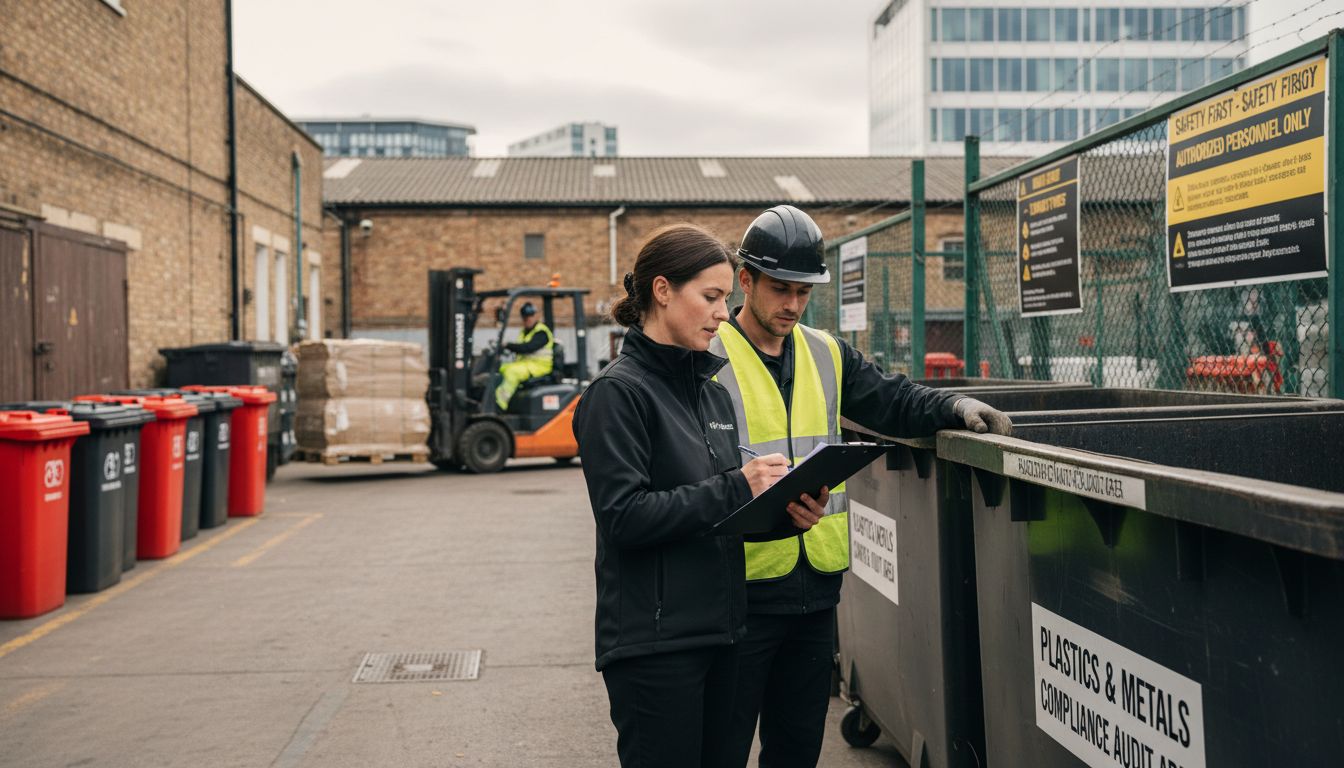
uk waste management facility

Waste Management Career Paths: Complete Guide UK

Over 330 million tonnes of waste are produced in the United Kingdom every year, making effective waste management crucial for every british community. This sector does far more than keep the streets clean; it safeguards public health and shapes the future of environmental sustainability. With opportunities across a range of professional roles, learning about waste management careers helps new and experienced jobseekers find impactful positions at the heart of british life.

Table of Contents

Key Takeaways

Point Details
Career Diversity Waste management offers various roles in public and private sectors, including waste management officers and environmental consultants.
Key Responsibilities Professionals oversee waste collection, develop recycling programmes, and ensure compliance with environmental regulations.
Skills and Qualifications Successful careers require academic degrees, professional certifications, and strong skills in communication and project management.
Legal Compliance Understanding environmental legislation and safety protocols is essential for maintaining regulatory standards in waste management.

Understanding Waste Management Careers in the UK

The waste management sector in the United Kingdom offers a dynamic and essential career landscape that supports environmental sustainability and public health. According to Southampton University, with the UK generating over 330 million tonnes of waste annually, professionals in this field play a critical role in managing complex waste collection, disposal, and recycling processes.

Waste management careers encompass diverse roles across multiple professional domains. These include waste management officers, environmental consultants, recycling coordinators, sustainability specialists, and waste transportation managers. Professionals in these positions are responsible for coordinating resources, ensuring regulatory compliance, and developing innovative waste reduction strategies. As UCAS highlights, these roles involve managing waste services while promoting critical environmental initiatives.

Key responsibilities within waste management careers typically involve:

  • Overseeing waste collection and transportation logistics
  • Developing and implementing recycling programmes
  • Ensuring compliance with environmental regulations
  • Conducting waste audits and environmental impact assessments
  • Managing waste reduction and sustainability projects

Career progression in waste management often requires a combination of technical knowledge, environmental understanding, and strong project management skills. Many professionals start in entry-level roles such as waste collection operatives or recycling centre workers and advance to senior positions like waste management supervisors, environmental compliance managers, or sustainability directors. Understanding Local Authority Waste Services in the UK provides additional insights into the broader infrastructure supporting these career pathways.

Common Job Roles and Career Progressions

Waste management careers offer a diverse range of professional opportunities across multiple sectors. Prospects highlights that these careers span both public and private sectors, with multiple entry points and progression pathways for professionals interested in environmental sustainability.

Typical job roles in the waste management sector include:

  • Waste Management Operative: Entry-level role responsible for waste collection and transportation
  • Recycling Coordinator: Manages recycling programmes and develops waste reduction strategies
  • Hazardous Waste Technician: Specialises in handling and disposing of complex, dangerous waste materials
  • Waste Audit Analyst: Conducts detailed assessments of waste management processes and environmental impact
  • Environmental Consultant: Provides strategic advice on waste management and sustainability practices

Career progression in this field is typically structured across several levels. According to Developing Experts, professionals can advance from operational roles to more strategic positions. Entry-level operatives might progress to team leaders, then move into specialist roles such as waste management officers or environmental compliance managers. With significant experience and additional qualifications, individuals can reach senior positions like waste management directors or environmental services managers.

Successful career development in waste management requires a combination of practical experience, technical knowledge, and ongoing professional development. Professionals often enhance their prospects by obtaining relevant certifications, participating in specialised training programmes, and staying current with evolving environmental regulations and technologies. Waste Management Consultation: Complete UK Guide offers further insights into the professional landscape of this dynamic sector.

Essential Skills and Qualifications Needed

Successful careers in waste management demand a comprehensive blend of academic qualifications and professional skills. UBE emphasises that professionals require a robust combination of technical knowledge and interpersonal capabilities to excel in this dynamic field.

Key academic qualifications typically include:

  • Undergraduate Degree: Environmental science, environmental management, geography, or related disciplines
  • Professional Certifications: Membership with the Chartered Institution of Wastes Management (CIWM)
  • Postgraduate Qualifications: Specialised masters in waste management or environmental sustainability
  • Vocational Training: Recognised diplomas in waste management and environmental studies

Critical professional skills essential for waste management careers encompass a wide range of competencies. According to Prospects, these skills include strong communication, advanced project management abilities, and sophisticated analytical thinking. Professionals must demonstrate:

environmental consultant site

  • Excellent verbal and written communication skills
  • Advanced problem-solving capabilities
  • Commercial awareness and strategic thinking
  • Ability to build and maintain professional relationships
  • Technical proficiency with data analysis and environmental monitoring tools

Beyond formal qualifications, employers increasingly value practical experience and continuous professional development. Candidates who demonstrate adaptability, environmental consciousness, and a commitment to staying updated with evolving waste management technologies and regulations will find themselves most competitive in this rapidly changing sector. Understanding the Waste Management Industry Overview provides additional context for aspiring waste management professionals seeking to understand the broader industry landscape.

Legal compliance is a fundamental cornerstone of professional practice in waste management. Broxtowe Council emphasises that waste management professionals are primarily responsible for formulating and implementing policies and procedures that meet stringent environmental legislation and safety regulations.

Key legal compliance responsibilities include:

  • Environmental Legislation: Understanding and applying current waste management regulations
  • Safety Protocols: Developing comprehensive safety procedures for waste handling
  • Risk Assessment: Conducting thorough evaluations of potential environmental and workplace hazards
  • Documentation: Maintaining accurate records of waste disposal and management processes
  • Regulatory Reporting: Preparing detailed reports for environmental regulatory bodies

According to UCAS, professionals must continuously stay updated with evolving legislative frameworks and maintain active communication with regulatory authorities. This involves monitoring waste disposal levels, compiling comprehensive reports, and ensuring that all waste management practices align with current legal standards. Critical areas of focus include proper waste classification, safe transportation, appropriate disposal methods, and minimising environmental impact.

Navigating the complex landscape of waste management regulations requires a proactive approach. Professionals must develop a deep understanding of key legislation such as the Environmental Protection Act, the Waste (England and Wales) Regulations, and sector-specific guidelines. Hazardous Waste Regulations 2025: A Guide for UK Businesses provides essential insights into the evolving regulatory environment that waste management professionals must master.

Opportunities for Training and Advancement

The waste management sector offers a dynamic landscape of professional development opportunities for ambitious professionals. UBE highlights that strategic training pathways are crucial for career progression, with multiple routes available to enhance professional credentials and expertise.

Training opportunities in waste management encompass several key development avenues:

  • Academic Qualifications:
    • Undergraduate degrees in environmental science
    • Postgraduate programmes in waste management
    • Specialised diplomas and professional certifications
  • Professional Accreditations:
    • Chartered Institution of Wastes Management (CIWM) membership
    • Recognised industry certifications
    • Continuous professional development (CPD) courses
  • Skill Enhancement Programmes:
    • Online training modules
    • Workshops on emerging environmental technologies
    • Safety and compliance specialisation courses

According to Prospects, career advancement in waste management is fundamentally driven by a combination of practical experience, professional qualifications, and continuous learning. Professionals can progress from operational roles to strategic management positions by demonstrating expertise, obtaining relevant certifications, and maintaining an adaptable approach to evolving industry standards. The sector offers diverse opportunities in both public and private sectors, ranging from local authority positions to consultancy roles in environmental services.

Infographic comparing waste management career paths and typical qualifications

Strategic career development requires a proactive approach to learning and networking. Engaging with professional bodies, attending industry conferences, and staying informed about technological innovations can significantly enhance career prospects. Understanding the Waste Management Industry Overview provides additional context for professionals seeking to navigate their career trajectory in this dynamic and essential field.

Unlock Your Career Potential in Waste Management with Practical Solutions

Navigating the complex world of waste management careers requires not only knowledge but also access to reliable services that exemplify legal compliance and environmental responsibility. If you are aiming to build expertise in waste handling, recycling, or sustainability projects as highlighted in the guide, understanding how a professional waste collection network operates will empower your career progression. Explore how the Waste Collection Network in UK Serves Businesses in 2025 to gain insights on industry practices that align with your career goals.

https://venturewaste.co.uk

Take the next step in your waste management journey by partnering with a trusted provider dedicated to quality and compliance. Visit Venture Waste for tailored commercial and domestic waste solutions that adhere to strict UK regulations. Learn about the Waste Collection Process in the UK for Businesses 2025 to see how professional waste management services operate efficiently in the real world. Start building your expertise today by connecting theory with practice and experience the difference working with industry leaders can make.

Frequently Asked Questions

What types of job roles are available in waste management?

Waste management offers a variety of roles, including waste management operatives, recycling coordinators, hazardous waste technicians, waste audit analysts, and environmental consultants. Each role focuses on different aspects of waste collection, recycling, and compliance with environmental regulations.

What qualifications do I need for a career in waste management?

Typically, a career in waste management requires an undergraduate degree in environmental science or a related field, along with professional certifications such as membership with the Chartered Institution of Wastes Management (CIWM). Postgraduate qualifications and vocational training can further enhance job prospects.

How can I progress in a waste management career?

Career progression in waste management often starts with entry-level roles and can lead to senior positions with experience and additional qualifications. Advancing from operatives to supervisory roles, then to environmental compliance managers or directors is common, along with obtaining certifications and specialised training.

What skills are essential for success in waste management?

Key skills for a successful career in waste management include strong communication, project management abilities, analytical thinking, and problem-solving capabilities. Demonstrating technical proficiency in data analysis and environmental monitoring tools is also important in this field.

seasonal waste management

7 Essential Seasonal Waste Management Tips for UK Businesses

Over 30 million tonnes of waste are generated by british companies each year, yet many businesses underestimate the challenges posed by seasonal fluctuations. When waste volumes spike during holidays or local festivals, companies across Newcastle, Durham, and the wider North East often find themselves struggling to adapt. Learning to predict and respond to these seasonal waste patterns empowers organisations to cut costs, meet sustainability goals, and avoid unexpected disruptions.

Table of Contents

Quick Summary

Takeaway Explanation
1. Track seasonal waste generation Regularly monitor waste volumes and identify peak periods specific to your industry. This informs better waste management planning and cost reduction.
2. Adapt collection schedules dynamically Adjust waste collection frequencies based on predicted seasonal surges to improve efficiency and lower operational costs.
3. Implement effective recycling strategies Separate seasonal materials and create clear protocols for recycling to reduce waste and potentially generate revenue from recyclables.
4. Ensure safe hazardous waste management Apply strict handling protocols for hazardous materials, including thorough staff training and proper storage, to comply with legal regulations.
5. Prepare for festive waste surges Plan ahead for increased waste production during holiday seasons by securing additional collection services and larger containers.

1. Assessing Seasonal Waste Patterns for Better Planning

Understanding seasonal waste patterns is crucial for UK businesses seeking to optimise their waste management strategies and reduce environmental impact. By carefully tracking and analysing waste generation throughout different seasons, companies can develop more targeted and efficient disposal approaches.

Seasonality significantly influences waste production across various industries. Retail businesses might experience increased packaging waste during holiday periods, while hospitality sectors see dramatic shifts in waste volumes during tourism peaks in regions like Newcastle and Durham. Key considerations for seasonal waste assessment include:

  • Tracking monthly waste generation volumes
  • Identifying peak waste periods for your specific industry
  • Understanding regional variations in waste production
  • Monitoring seasonal changes in waste composition

Businesses in the North East can benefit from granular waste tracking. For instance, manufacturing firms in industrial zones around Sunderland might notice different waste patterns during summer maintenance periods compared to winter production cycles. This detailed analysis allows for proactive planning, enabling more precise waste collection schedules and potentially reducing overall disposal costs.

Practical implementation requires systematic data collection. Companies should invest in robust waste tracking systems that document waste types, volumes, and seasonal fluctuations. Digital waste management tools can help automate this process, providing comprehensive insights that support strategic decision making.

By developing a nuanced understanding of your organisation’s unique waste generation patterns, you can transform waste management from a reactive process to a strategic business function. This approach not only supports environmental sustainability but also offers potential cost savings and operational efficiencies.

For more detailed strategies on optimising waste management, check out our guide on waste collection networks in UK that can help businesses develop more effective seasonal waste strategies.

2. Adapting Collection Schedules to Match Seasonal Peaks

Effective waste management requires businesses to be flexible and responsive to changing seasonal demands. Adapting collection schedules to match seasonal peaks is a strategic approach that can significantly improve operational efficiency and reduce unnecessary waste management costs.

Different industries experience unique seasonal waste variations. Restaurants in tourist hotspots like Newcastle might see dramatic increases in food waste during summer months, while retail businesses in Durham could generate substantial packaging waste during winter holiday periods. Effective seasonal schedule adaptation involves:

  • Conducting regular waste volume assessments
  • Collaborating with waste management providers
  • Implementing dynamic collection frequencies
  • Adjusting container sizes based on seasonal needs

Retail businesses in the North East, for instance, might require more frequent collections during peak shopping seasons such as Christmas and summer sales periods. Manufacturing facilities in industrial zones around Sunderland could benefit from flexible scheduling that accommodates production cycle variations.

Practical implementation requires close communication with waste management partners. Businesses should develop responsive contracts that allow for schedule modifications without significant financial penalties. Digital tracking tools can help predict waste generation patterns, enabling proactive adjustments to collection frequencies.

By creating a dynamic and adaptable waste collection strategy, businesses can achieve multiple benefits. These include reduced transportation costs, minimised environmental impact, and more efficient use of waste management resources. The key is to remain flexible and responsive to your specific seasonal waste generation patterns.

For more comprehensive strategies on optimising waste management, check out our guide on saving money on waste management for UK businesses that can help refine your seasonal collection approach.

3. Separating and Recycling Seasonal Materials Effectively

Effective separation and recycling of seasonal materials is a critical strategy for businesses seeking to reduce waste and support environmental sustainability. Understanding how to manage different waste streams during peak seasonal periods can significantly minimise environmental impact and potentially reduce waste management costs.

Key principles of seasonal material recycling involve recognising that different industries generate unique waste profiles throughout the year. Retail businesses might produce substantial packaging waste during Christmas, while hospitality sectors in regions like Newcastle and Durham generate significant food waste during tourism peaks.

According to UK Government environmental guidance, proper waste segregation requires businesses to store waste in fully enclosed, lockable, rigid, leak-proof, and weatherproof bulk containers. This approach ensures compliance with environmental regulations and supports effective recycling processes.

Practical strategies for seasonal material recycling include:

  • Implementing colour coded waste collection bins
  • Training staff on proper seasonal waste segregation
  • Partnering with specialised recycling providers
  • Creating dedicated storage areas for different waste types
  • Developing clear seasonal waste management protocols

Businesses in the North East can benefit from tailored approaches. For instance, manufacturing firms around Sunderland might need different recycling strategies during summer maintenance periods compared to winter production cycles.

By developing a systematic approach to seasonal waste separation, organisations can transform waste management from a cost centre to a potential revenue stream. Some recyclable materials can even generate rebates, turning waste into a valuable resource.

For more detailed insights, check out our guide on general waste versus recycling for businesses that can help refine your seasonal recycling strategies.

4. Safe Handling of Hazardous Waste in Changing Conditions

Navigating the complex landscape of hazardous waste management requires businesses to implement robust strategies that adapt to changing environmental conditions and regulatory requirements. Understanding the nuanced approach to handling potentially dangerous materials is critical for maintaining workplace safety and legal compliance.

According to NetRegs environmental guidance, hazardous wastes such as oily wastes, batteries, and solvents demand specialised handling protocols. Critical considerations for safe hazardous waste management include recognising that these materials must be stored, handled, and disposed of distinctly from non hazardous waste streams.

Key principles of hazardous waste management include:

  • Maintaining strict segregation of different hazardous waste types
  • Preventing cross contamination between waste categories
  • Ensuring proper labelling and documentation
  • Implementing seasonal storage protocols
  • Training staff on specific handling requirements

Businesses in industrial regions like Newcastle and Sunderland must be particularly vigilant. Manufacturing and chemical processing facilities face unique challenges in managing hazardous waste across different seasonal conditions, where temperature and humidity variations can impact material stability.

Legal compliance is paramount. Every movement of hazardous waste must be accompanied by a consignment note, with all parties retaining copies to demonstrate responsible management. This documentation serves as a critical safeguard against potential environmental and legal risks.

For comprehensive guidance on navigating these complex requirements, explore our hazardous waste disposal guide for UK businesses that provides in depth insights into managing potentially dangerous materials effectively.

5. Confidential Waste Disposal During Peak Business Times

Confidential waste management becomes exponentially more challenging during high volume business periods, particularly for organisations handling sensitive documentation and data. Maintaining rigorous disposal standards during peak seasons requires strategic planning and robust security protocols.

Businesses across the North East particularly legal firms, financial institutions, and healthcare providers in cities like Newcastle and Durham face unique challenges in protecting confidential information during busy operational periods. Effective confidential waste management strategies must account for increased document generation and potential security vulnerabilities.

Key considerations for confidential waste disposal include:

  • Implementing secure onsite document destruction protocols
  • Using locked confidential waste collection containers
  • Scheduling more frequent waste collection during peak periods
  • Training staff on secure disposal procedures
  • Maintaining comprehensive audit trails of document destruction

Seasonal business peaks create additional complexity. Retail businesses during Christmas periods and professional services during financial year end might generate substantially more confidential documentation requiring secure disposal. This necessitates adaptable waste management approaches that can scale with organisational demands.

Companies must recognise that data protection regulations do not pause during busy periods. Every document containing personal or sensitive information must be handled with the same level of security regardless of operational intensity.

For comprehensive guidance on navigating these critical requirements, explore our confidential waste guide for UK businesses that provides in depth insights into maintaining secure disposal standards throughout changing business cycles.

6. Managing Garden and Organic Waste in Spring and Autumn

Seasonal organic waste management represents a critical opportunity for businesses to demonstrate environmental responsibility and reduce waste disposal costs. The spring and autumn periods present unique challenges and opportunities for effective organic waste handling across various industries.

According to SUEZ Recycling and Recovery UK, businesses can process over 9 million tonnes of organic waste through strategic recycling and composting approaches. Effective organic waste management strategies must account for seasonal variations in waste generation and decomposition rates.

Key considerations for managing garden and organic waste include:

  • Implementing dedicated organic waste collection systems
  • Separating different types of biodegradable materials
  • Exploring onsite composting solutions
  • Training staff on proper organic waste segregation
  • Partnering with specialised waste recycling providers

Businesses in regions like Newcastle and Durham can benefit significantly from targeted organic waste management. Landscaping companies, agricultural businesses, and hospitality venues generate substantial quantities of garden and food waste during spring and autumn seasonal transitions.

In vessel composting techniques offer advanced solutions for converting organic waste into valuable resources. By adopting proactive waste management approaches, businesses can transform seasonal organic waste from a disposal challenge into an environmental opportunity.

For comprehensive guidance on managing your organic waste effectively, explore our green waste management guide that provides insights into sustainable waste handling practices throughout changing seasons.

7. Preparing for Festive Waste Surges with Extra Capacity

The festive period presents unique waste management challenges for businesses across the United Kingdom, with dramatic increases in packaging, food waste, and general refuse requiring strategic planning and enhanced disposal capabilities. Proactive preparation is essential to managing the substantial waste volumes generated during Christmas and New Year celebrations.

Strategic approaches to managing festive waste surges include:

  • Arranging additional waste collection frequencies
  • Implementing temporary larger capacity containers
  • Training staff on efficient waste segregation
  • Developing specialised festive waste management protocols
  • Coordinating with waste management providers in advance

Businesses in regions like Newcastle and Durham face particularly complex challenges. Retail establishments, hospitality venues, and commercial offices experience significant waste generation during December and January, necessitating robust and flexible waste management strategies.

Retail businesses might see packaging waste volumes increase by up to 30% during peak holiday shopping periods. Manufacturing and distribution centres in the North East require scalable solutions that can rapidly adapt to seasonal demand fluctuations.

Effective festive waste management is not just about capacity it is about maintaining environmental responsibility while managing operational efficiency. Companies must balance increased waste generation with sustainable disposal practices.

For comprehensive guidance on managing large waste volumes, explore our bulk waste solutions guide that provides insights into handling significant waste surges during peak periods.

Below is a comprehensive table summarising the key strategies for managing seasonal waste patterns as discussed throughout the article.

Strategy Implementation Expected Results
Seasonal Waste Assessment Track monthly volumes, identify peak periods, understand regional variations Targeted waste disposal, cost reduction
Adapting Collection Schedules Conduct waste volume assessments, collaborate with providers, adjust frequencies Reduced costs, operational efficiency
Seasonal Material Recycling Implement colour-coded bins, train staff, partner with recyclers Minimise environmental impact, potential rebates
Hazardous Waste Management Maintain segregation, ensure proper labelling, implement storage protocols Legal compliance, workplace safety
Confidential Waste Disposal Secure document destruction, use locked containers, train staff Security of sensitive documents
Organic Waste Management Implement organic collection systems, consider composting Environmental responsibility, reduced disposal costs
Festive Waste Management Arrange additional collections, implement larger containers, train staff Efficient handling of waste surges

Streamline Your Seasonal Waste Management with Venture Waste Management

Managing fluctuating waste volumes and diverse material types throughout the year can be overwhelming. This article highlights the challenges UK businesses face with seasonal waste patterns, adapting collection schedules, and effective recycling – all critical to reducing costs and remaining environmentally compliant. You need solutions that not only keep pace with your changing waste profile but also simplify the entire process.

Discover how our expert services at Venture Waste Management can support your business with reliable, flexible waste collection and disposal plans tailored for seasonal demands. We prioritise legal compliance, sustainability, and operational ease. Learn how our waste collection network in the UK ensures efficient coverage and how our clear waste collection process keeps everything straightforward from booking to completion.

https://venturewaste.co.uk

Take control of your seasonal waste challenges today. Visit Venture Waste Management to explore services designed for businesses like yours and book your tailored waste management solution easily. Don’t let seasonal waste surges disrupt your operations or inflate your costs act now for streamlined, compliant waste handling all year round.

Frequently Asked Questions

How can I track seasonal waste patterns for my business?

To track seasonal waste patterns, start by documenting monthly waste generation volumes and identifying peak periods relevant to your industry. Set up a systematic data collection process to monitor changes in waste composition throughout the year.

What adjustments should I make to collection schedules during peak seasons?

Adjust collection schedules by increasing frequencies and optimising container sizes based on anticipated waste volumes. Collaborate with your waste management provider to create dynamic schedules that reflect your business’s specific seasonal needs.

What are effective strategies for recycling seasonal materials?

Implement colour-coded waste bins and train your staff on proper waste separation practices. Partner with specialised recycling providers to ensure that you are effectively managing different waste streams during high activity periods.

How should I handle hazardous waste during seasonal changes?

Maintain strict segregation of hazardous waste types and ensure they are properly labelled and documented. Implement seasonal storage protocols to account for how temperature and humidity might affect materials, and train your staff on safe handling procedures.

How can I ensure secure confidential waste disposal during busy times?

To ensure secure confidential waste disposal during peak periods, schedule more frequent waste collections and use locked collection containers. Train your staff on secure disposal procedures and maintain comprehensive audit trails for all document destruction activities.

How can my business prepare for waste surges during festive seasons?

Prepare for waste surges by arranging additional waste collection frequencies and employing temporary larger capacity containers. Train your team on efficient waste segregation to manage the increased volumes resulting from holiday festivities.

top hazardous waste companies hero header image

Top Hazardous Waste Companies for Businesses in 2025

Finding the right waste management partner can feel overwhelming with so many promises about reliability, sustainability and value. Some providers focus on technical expertise while others highlight convenience or regulatory compliance. The real test comes down to how each provider handles everyday challenges from urgent collections to complex recycling needs. Whether you run a busy retail chain or oversee facilities at several sites the way your waste is managed makes a difference to your operations and reputation. See how the leading options measure up and what makes each one stand out.

Table of Contents

Venture Waste

Product Screenshot

At a Glance

Venture Waste delivers a dependable, full-spectrum waste management service tailored to both businesses and households across the UK. The platform emphasises legal compliance, environmental protection and straightforward customer engagement, making it a practical choice for facilities managers, retailers and estates alike. With nationwide coverage and rapid quote turnaround, Venture Waste balances local depot support with the reach required by larger organisations. Bottom line: reliable, compliant and user-focused.

Core Features

Venture Waste provides a comprehensive range of services including general waste collection, hazardous waste handling, confidential waste destruction (with certificates of destruction issued), recycling, skip hire and waste transport. The website supports both business and domestic workflows and promotes a clear three-step booking process — from initial contact and arrangement to confirmation — designed to streamline collections and reduce administrative friction. Additional site features include service pages tailored to different customer types, industry news updates, a newsletter to share best practice, testimonials and social media links that enhance transparency and trust.

Pros

  • Emphasis on customer service and reliability: Venture Waste prioritises responsiveness and dependable collections, which reduces operational risk for businesses that cannot afford missed pickups.
  • Comprehensive service offering: The range of waste solutions covers hazardous, confidential and general waste, plus recycling and skip hire, allowing customers to consolidate suppliers and simplify invoicing.
  • Fast response with quick quotes and emergency calls: The quick-quote mechanism and emergency response options mean urgent issues are handled promptly, limiting disruption to your operations.
  • Nationwide coverage with local support: A broad coverage network supported by local depots combines national reach with local knowledge, useful for multi-site organisations.
  • Commitment to environmentally responsible disposal: The site emphasises compliant, environmentally minded disposal routes, supporting organisations’ sustainability objectives.

Who It’s For

Venture Waste is aimed at businesses of all sizes, facilities managers, schools, healthcare sites and domestic customers who require a trustworthy partner for scheduled collections, one-off clearances or managed hazardous and confidential waste disposal. It suits organisations seeking legal compliance and straightforward logistics rather than bespoke, highly technical waste‑management projects.

Unique Value Proposition

Venture Waste stands out by pairing comprehensive, legally compliant waste services with an uncomplicated customer journey. The three-step booking process reduces administration time while certificates of destruction and clear service descriptions demonstrate regulatory accountability. The combination of nationwide coverage and local depot support gives customers consistency across multiple sites without sacrificing local responsiveness. Supplemental features — industry news, a newsletter and client testimonials — position Venture Waste as both a service provider and an informational resource, helping clients stay informed on compliance and best practice. In short, Venture Waste aims to be a single, reliable partner for everyday and specialised waste needs, helping you reduce supplier complexity and maintain audit-ready records.

Real World Use Case

A retail chain arranges weekly general waste pickups across ten stores, uses confidential waste destruction for sensitive documents with certificates supplied for compliance audits, and calls on Venture Waste’s skip hire and recycling services during seasonal refits. The quick-quote system and emergency response ensure minimal disruption to store operations.

Pricing

Pricing details are not specified on the website and require contacting the company for a bespoke quote, which suits customers with varied volumes and site-specific requirements.

Website: https://venturewaste.co.uk

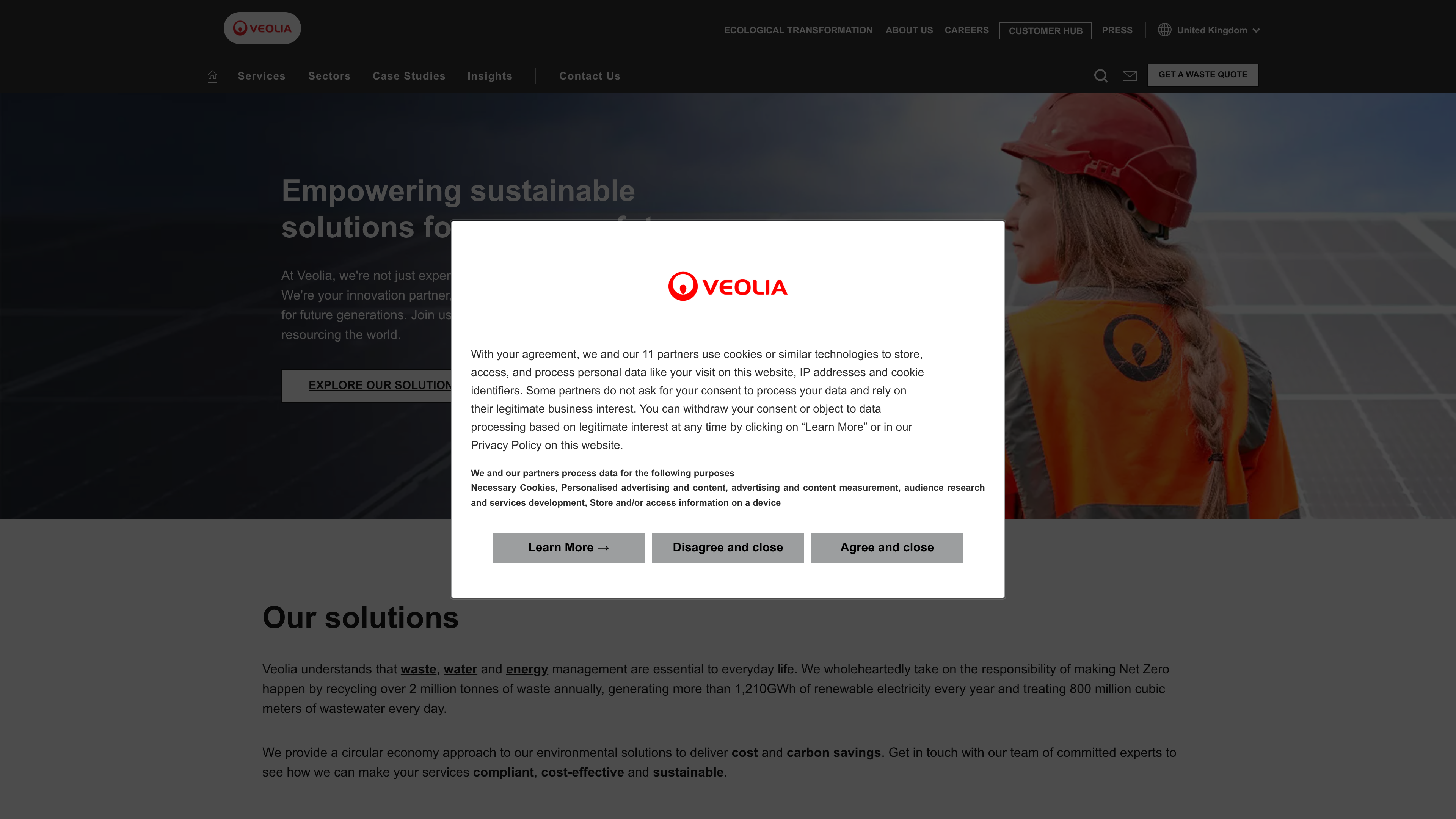
Veolia UK

Product Screenshot

At a Glance

Veolia UK presents itself as a large-scale partner for organisations seeking end-to-end environmental services. It combines waste, water and energy management with a stated ambition to decarbonise and support a circular economy. The company’s breadth of capabilities makes it suitable for complex, multi-service projects, though precise pricing and customer feedback are not prominently available on the site. Bottom line: robust capacity and sustainability focus, but you’ll need a direct conversation to assess cost and delivery details.

Core Features

Veolia’s core offerings cover waste management and recycling facilities, water and wastewater treatment, energy recovery and renewable energy generation, hazardous waste handling, and facilities management including decommissioning services. The site also publishes sustainability reports and other publications that explain strategy and outcomes. Together, these capabilities allow Veolia to manage resource flows across an organisation’s lifecycle, from waste collection and recycling through to energy recovery and water treatment.

Pros

  • Comprehensive environmental solutions: Veolia provides integrated services across waste, water and energy, which helps organisations coordinate multiple sustainability objectives in a single partnership.
  • Clear sustainability commitment: The company emphasises decarbonisation, depollution and circular-economy principles, reflecting an organisation-wide priority on environmental performance.
  • Wide facility and service range: A varied portfolio of facilities and specialist services means Veolia can serve diverse industries and project scales.
  • Global experience: International presence and experience suggest mature operational practices and the ability to manage complex regulatory environments.
  • Innovative resource recovery: Emphasis on recycling and energy recovery indicates a focus on turning waste streams into value rather than simple disposal.

Cons

  • Limited pricing transparency: The website does not publish clear pricing or standard costs, so obtaining comparative quotes requires direct engagement.
  • Complex site navigation: Extensive content and multiple service lines can make it difficult to quickly find specific service details or local contacts.
  • Sparse customer testimonials: There is a lack of direct customer reviews or case studies easily accessible on the public site, which makes independent verification of service experience harder.

Who It’s For

Veolia is best suited to larger organisations, local authorities and government agencies that require comprehensive environmental management programmes rather than a single, transactional service. If you are aiming to reduce your environmental footprint, implement circular-economy practices or deliver multi-site infrastructure projects, Veolia’s scale and service breadth will be an advantage.

Unique Value Proposition

Veolia’s strength lies in its ability to integrate waste, water and energy services around a sustainability-led strategy. That integrated approach — combined with published sustainability reporting — positions the company as a partner for long-term decarbonisation and resource recovery objectives rather than a one-off waste contractor.

Real World Use Case

A local council partners with Veolia to raise recycling rates, manage wastewater treatment sustainably and develop renewable-energy projects from waste streams in order to meet municipal environmental targets and reduce long-term operating costs.

Pricing

Pricing is not specified on the website; interested customers must contact Veolia directly to obtain tailored quotes and proposals.

Website: https://www.veolia.co.uk/

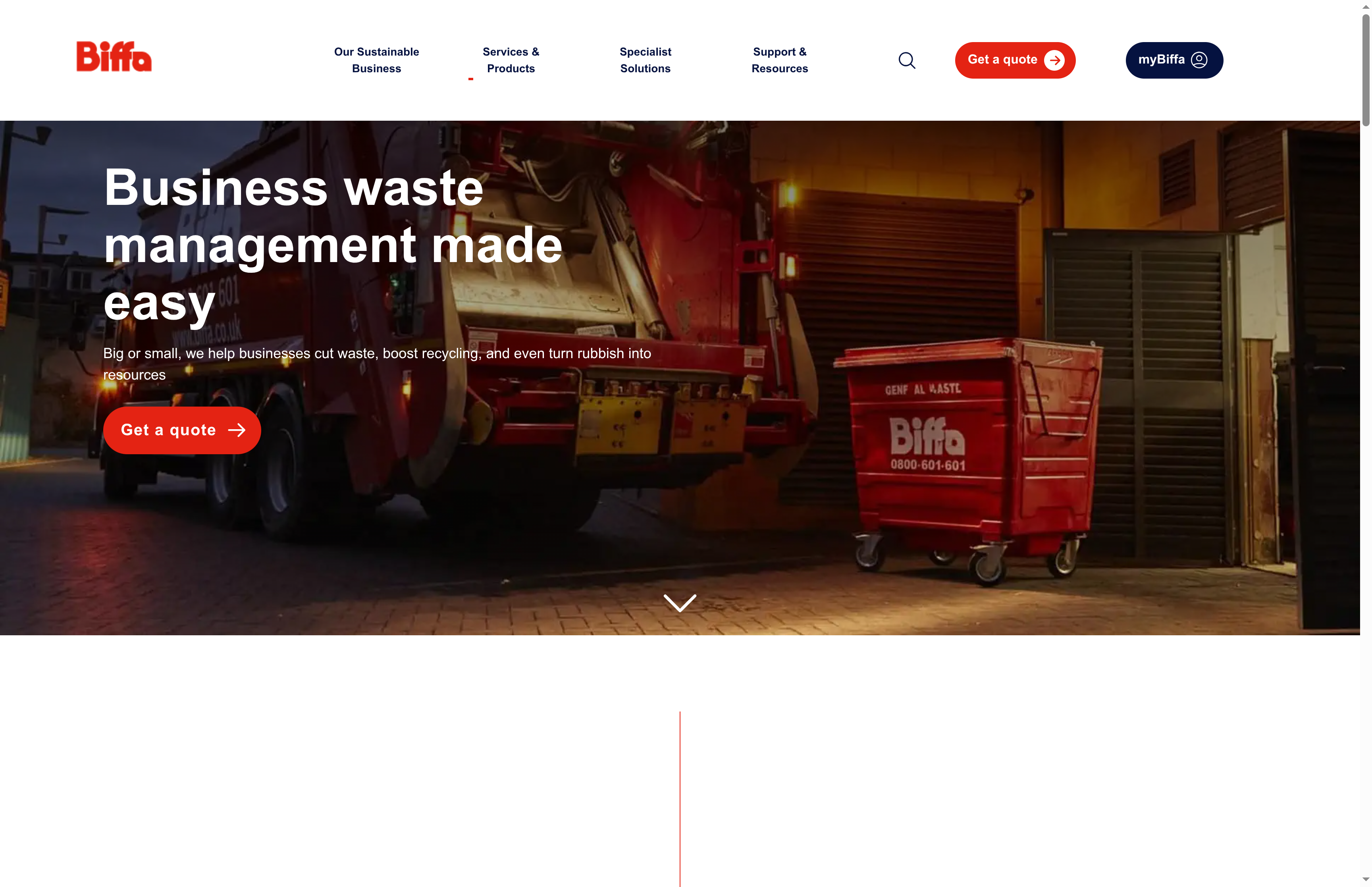
Biffa

Product Screenshot

At a Glance

Biffa is a century-old waste management company offering sustainable solutions designed to reduce waste, increase recycling and recover resources. Their services span small businesses through to large organisations and local authorities, with an emphasis on compliance and innovation. Bottom line: Biffa is a solid choice for organisations prioritising sustainability and regulatory conformity, though package detail and transparent pricing are limited.

Core Features

Biffa’s core capabilities centre on sustainable waste management, recycling and resource recovery, and supporting businesses to meet recycling legislation. They operate advanced waste processing facilities and collaborate with academic and research institutions to develop innovative approaches. These combined strengths allow Biffa to offer end-to-end waste handling with a clear focus on transforming waste into valuable resources for a circular economy.

Pros

  • Extensive experience: With over 100 years in the sector, Biffa brings institutional knowledge that helps navigate complex regulatory and operational challenges.
  • Comprehensive service range: Their offering covers small to large organisations and local authorities, making them adaptable to a broad set of operational scales and needs.
  • Sustainability-first approach: A clear emphasis on reducing waste and increasing recycling supports clients aiming to meet environmental and corporate responsibility targets.
  • Innovation in processing: Partnerships with academic and industry leaders suggest ongoing development in waste processing techniques and technology adoption.
  • Resource recovery focus: By aiming to transform waste into usable materials, Biffa helps clients move towards circular economy objectives rather than mere disposal.

Cons

  • Limited package detail: The website provides sparse information on specific service packages, which makes direct comparisons and procurement planning more difficult.
  • No transparent pricing: Pricing is not specified on the site, so prospective customers must contact Biffa for a tailored quote.
  • Strong sustainability emphasis may not suit all: Organisations seeking purely low-cost, transactional disposal without a sustainability or compliance focus might find Biffa’s positioning more than they require.

Who It’s For

Biffa is best suited to UK-based businesses and public-sector bodies that need a compliant, sustainability-minded waste partner. If you are a facilities manager, sustainability lead or procurement officer at a small, medium or large enterprise—or a local authority—Biffa can provide the operational scale and expertise to meet legislative obligations and sustainability targets.

Unique Value Proposition

Biffa’s unique strength is the combination of long-standing sector experience with a demonstrable commitment to sustainability and innovation. Their network of advanced processing facilities and partnerships with research institutions positions them to convert waste into resources rather than simply disposing of it, offering clients a pathway to measurable circular-economy outcomes.

Real World Use Case

A restaurant chain engages Biffa to design and implement a comprehensive recycling programme across multiple sites. Biffa helps reduce landfill volumes, ensures compliance with UK recycling legislation and tracks progress against the chain’s sustainability goals, delivering both environmental and reputational benefits.

Pricing

Not specified on the website; prospective clients should request a bespoke quote to understand costs and service levels.

Website: https://biffa.co.uk

WasteCare

Product Screenshot

At a Glance

WasteCare provides an end-to-end waste management proposition tailored to businesses that need licensed, traceable disposal and recycling for a wide range of waste streams. Its nationwide coverage and availability of industrial containers or hire/purchase options make it a practical choice for operations of varying scale. The company emphasises sustainability and safety, but pricing and bespoke service details are not clearly published online. Overall: reliable, compliant, and practical — with some transparency gaps you should clarify before contracting.

Core Features

WasteCare handles collections for batteries, hazardous waste, general waste, WEEE, vegetable and used cooking oil, and industrial containers. Their remit extends to bulk recovery, electronic waste recycling, high-temperature incineration, industrial packaging recycling and reconditioning, and portable battery recycling. Site services cover buying industrial packaging and sector-specific waste management plus on-site treatment and recycling. Nationwide coverage and full traceability underpin the service model, and customers can rent or purchase containers and equipment to suit operational needs.

Pros

  • Comprehensive service range: WasteCare covers multiple sectors and a wide variety of waste types, which reduces the need to engage several specialist contractors.
  • Nationwide coverage with traceability: The company offers full traceability and licenced recycling solutions, which helps you demonstrate compliance during audits.
  • Sustainability focus: The emphasis on recycling, recovery and safe hazardous handling supports corporate sustainability targets and reduces landfill dependency.
  • Flexible container options: The ability to rent or buy industrial containers and equipment provides operational flexibility for short-term projects or long-term needs.

Cons

  • No published pricing: There is no detailed pricing information available on the website, so you will need to request a bespoke quote to assess total cost.
  • Sparse social proof: The website provides limited customer testimonials or case studies, which makes it harder to verify performance across different sectors.
  • Unclear service-level detail: Specific service-level options or packaged tiers are not detailed online, so response times, collection frequencies and contractual guarantees may need to be negotiated.

Who It’s For

WasteCare is best suited to businesses and organisations across healthcare, construction, manufacturing, hospitality, retail and the public sector that require comprehensive waste handling, particularly where hazardous or specialised waste streams are involved. If you value licenced recycling, traceability and the option to scale container provision, WasteCare is a good match.

Unique Value Proposition

WasteCare’s standout value is the combination of nationwide, traceable waste services with a clear operational focus on recycling and hazardous-waste safety. The integration of equipment rental or purchase into the offering simplifies logistics for larger sites and for clients that need a single supplier for both containers and collections.

Real World Use Case

A manufacturing firm contracts WasteCare to manage its industrial waste, including hazardous residues and electronic waste; WasteCare supplies and services containers on site, recovers batteries and e-waste for recycling, and documents the chain of custody to support the company’s compliance and sustainability reporting.

Pricing

Not specified on the website; prospective clients should request a tailored quote to understand collection frequencies, container hire/purchase costs and disposal fees.

Website: https://wastecare.co.uk

Waste Management Services Comparison

This table provides a concise comparison of waste management services offered by Venture Waste, Veolia UK, Biffa, and WasteCare. Use it to evaluate their features, advantages, and suitability for your needs.

Company Key Features Pros Cons Pricing
Venture Waste Nationwide coverage, 3-step booking, various waste handling including hazardous Reliable service, comprehensive offerings, quick quotes No specified pricing Request bespoke quote
Veolia UK Waste, water, energy management, sustainability focus Integrated services, global experience, resource recovery No clear pricing, complex navigation Request tailored quote
Biffa Sustainable waste solutions, innovation, compliance Extensive experience, comprehensive service range Limited package detail Request bespoke quote
WasteCare Nationwide, traceable waste services, equipment rental/purchase Comprehensive range, sustainability focus, flexible options No published pricing, sparse testimonials Request tailored quote

Manage Hazardous Waste with Confidence and Compliance

Handling hazardous waste responsibly remains a critical challenge for businesses in 2025 as regulations tighten and environmental concerns grow. If you are seeking reliable solutions that ensure legal compliance and protect your staff and environment, Venture Waste offers a streamlined, expert approach to hazardous waste management. Your goal to simplify complex disposal processes and maintain audit-ready records can be achieved through our dedicated services and clear guidance.

Explore trusted support for hazardous waste handling, backed by customer-focused service and nationwide coverage. From rapid quote turnaround to confirmed collections, Venture Waste takes the hassle out of compliance. Learn more about our specialised approach in the hazardous waste Archives – Venture Waste and stay informed on industry best practices in the regulation Archives – Venture Waste.

https://venturewaste.co.uk

Ensure your business stays ahead by partnering with Venture Waste today. Visit https://venturewaste.co.uk to discover how our simple three-step booking process and comprehensive waste solutions can safeguard your operations and environment. Don’t let hazardous waste risks hold you back; act now for a compliant and sustainable future.

Frequently Asked Questions

What should businesses look for in a hazardous waste company for 2025?

Choosing a hazardous waste company in 2025 should involve assessing their compliance with regulations, their range of services, and their commitment to sustainable practices. Assess potential partners based on their certifications, demonstrated experience in your industry’s specific waste types, and their transparency in pricing and processes.

How can businesses ensure proper disposal of hazardous waste?

To ensure proper disposal of hazardous waste, engage with a certified hazardous waste management company that provides clear guidelines and documentation. Follow their protocols for labelling, packaging, and scheduling pickups to maintain compliance and reduce liability.

What types of hazardous waste services are typically available?

Typical hazardous waste services include collection, transportation, treatment, and disposal of various waste types, such as chemicals, batteries, and medical waste. Evaluate companies based on their capacity to handle your specific waste types and the efficiency of their processes to minimise downtime.

How can businesses calculate the costs of hazardous waste disposal?

Costs for hazardous waste disposal are usually calculated based on the volume and type of waste, as well as the required services. Request itemised quotes from potential providers to compare pricing structures and consider factors such as collection frequency and documentation requirements.

What are the key benefits of using a professional hazardous waste company?

Using a professional hazardous waste company offers benefits like regulatory compliance, environmental protection, and risk mitigation. To maximise these benefits, choose a provider that aligns with your organisational goals and sustains a strong track record in safety and service excellence.

How can businesses stay updated on hazardous waste regulations?

Businesses can stay updated on hazardous waste regulations by subscribing to industry newsletters and participating in relevant webinars or workshops. Regularly review your processes and collaborate with your hazardous waste partner to ensure adherence to any new legislation or changes in best practices.

UK waste facility

Waste Management Glossary: Complete Guide for UK

Sorting through british waste management rules can leave even experienced professionals puzzled. With more than 300 official terms in UK guidance alone, the language of waste handling shapes everything from daily operations to long term business sustainability. Grasping these definitions means better compliance, fewer costly mistakes, and a stronger reputation for environmental responsibility. This guide will help you understand the critical terms and concepts that every business needs for smarter, safer waste management choices.

Table of Contents

Essential Waste Management Insights

Key Point Details
Understanding the Waste Hierarchy Prioritising actions such as prevention, reuse, and recycling is essential for minimising environmental impact and complying with regulations.
Importance of Waste Classification Properly categorising waste types ensures compliance with legal obligations and enhances effective waste management strategies.
Legal Compliance and Duty of Care Businesses must fulfil legal obligations, including accurate waste documentation and responsible disposal practices, to avoid penalties.
Safe Disposal Practices Mastering specialised waste disposal terminology is crucial for preventing environmental contamination and ensuring responsible practices.

Essential Waste Management Terms Explained

Waste management involves complex terminology that can be challenging for businesses to navigate. Understanding these key terms is crucial for effective environmental compliance and responsible waste disposal. According to the gov.uk Food and Drink Waste Hierarchy guide, there are several fundamental concepts every organisation should comprehend.

Key waste management terms include waste hierarchy, which prioritises prevention, reuse, recycling, and recovery. This framework guides businesses in minimising environmental impact by addressing waste at its earliest possible stage. Another critical term is waste classification, which categorises different types of waste based on their potential environmental and health risks. For instance, hazardous waste requires specialised handling and disposal procedures to prevent contamination.

Additionally, businesses must understand terms like waste segregation, which involves separating different types of waste at source to facilitate more effective recycling and disposal. Welsh Government workplace recycling regulations emphasise the importance of proper material classification and separation. Other essential terms include waste recovery (extracting value from waste materials), waste minimisation (reducing overall waste generation), and circular economy (designing systems that eliminate waste and promote continual resource use).

For businesses across Newcastle, Durham, and other North East industrial regions, mastering these waste management terms is not just about regulatory compliance—it’s about demonstrating environmental responsibility and operational efficiency. Proper understanding enables organisations to develop more sustainable waste management strategies, reduce disposal costs, and contribute positively to environmental conservation efforts.

Infographic visualising hazardous, non-hazardous, and inert waste categories with icons and arrows.

Types of Waste in UK Regulations

Understanding waste classification is critical for businesses across the United Kingdom, as different waste types require specific handling and disposal protocols. Wikipedia’s Landfill Directive provides a fundamental framework that categorises waste into three primary classifications: hazardous waste, non-hazardous waste, and inert waste. Each category carries distinct legal obligations and environmental management requirements.

Hazardous waste represents the most complex category, encompassing materials that pose significant risks to human health and environmental safety. These typically include chemical waste, electronic equipment with toxic components, medical waste, and certain industrial by-products. As outlined in the Waste Electrical and Electronic Equipment (WEEE) Directive, electronic waste requires particularly meticulous handling, with specific protocols for separating hazardous from non-hazardous components.

The UK’s waste regulations further subdivide waste types based on their origin and potential environmental impact. Municipal waste includes household and commercial refuse, while industrial waste covers materials generated by manufacturing and industrial processes. Construction and demolition waste represents another significant category, involving debris from building projects, which often requires specialised disposal methods. Domestic waste types guide offers comprehensive insights into these classifications for businesses seeking detailed understanding.

For organisations operating in industrial regions like Newcastle, Manchester, and Birmingham, comprehending these waste categories is not merely a regulatory requirement but a fundamental aspect of responsible environmental stewardship. Proper waste classification enables businesses to implement targeted waste management strategies, reduce environmental impact, and potentially minimise disposal costs through more efficient recycling and recovery processes.

waste compliance meeting

Common Waste Streams and Categories

Waste management professionals rely on comprehensive waste characterisation to effectively categorise and manage different waste streams across various industries. Wikipedia’s waste characterisation resource emphasises the critical importance of analyzing waste composition to develop targeted recycling and treatment strategies. These streams encompass a wide range of materials generated by different sectors, each requiring unique handling and disposal approaches.

According to Technical Guidance WM2, waste streams are classified based on their specific properties and potential environmental impact. Key categories include municipal solid waste (household and commercial refuse), industrial waste (manufacturing by-products), construction and demolition waste, medical waste, electronic waste, and agricultural waste. Hazardous waste regulations guide provides additional insights into the nuanced classification of potentially dangerous waste materials.

Business waste streams typically break down into several primary categories. Recyclable waste includes paper, cardboard, plastics, glass, and metals that can be processed and reused. Organic waste comprises food scraps, garden waste, and biodegradable materials suitable for composting. Residual waste represents non-recyclable materials destined for energy recovery or landfill disposal. Special waste encompasses items requiring specific handling, such as batteries, chemicals, and pharmaceutical products that demand carefully controlled disposal methods.

For businesses across Newcastle, Leeds, and Manchester, understanding these waste stream categories is more than a regulatory requirement—it’s a strategic approach to environmental responsibility. By implementing precise waste stream management, organisations can reduce their environmental footprint, potentially lower disposal costs, and contribute to the circular economy by maximising resource recovery and minimising waste sent to landfill.

The waste duty of care represents a fundamental legal obligation for businesses across the United Kingdom, establishing clear responsibilities for waste management and environmental protection. Parliamentary Commons Library research highlights that the Environmental Protection Act 1990 mandates comprehensive guidelines for waste producers and handlers, ensuring they manage waste in a manner that prevents environmental harm and protects human health.

Under UK regulations, businesses must adhere to several critical legal requirements. These include proper waste classification, maintaining accurate waste transfer documentation, ensuring waste is transferred only to licensed waste carriers, and implementing responsible disposal practices. Waste disposal legal requirements guide provides detailed insights into these obligations, emphasising the need for meticulous record-keeping and responsible waste management strategies.

The waste hierarchy principle further defines legal compliance, prioritising waste prevention, reuse, recycling, recovery, and disposal in that specific order. As outlined in the UK government’s Food and Drink Waste Hierarchy guide, businesses must demonstrate proactive efforts to minimise waste generation. Failure to comply can result in significant financial penalties, including fines, prosecution, and potential reputational damage.

For organisations operating in industrial regions like Manchester, Newcastle, and Leeds, understanding these legal requirements is not just about avoiding penalties—it’s about demonstrating environmental responsibility and commitment to sustainable business practices. Effective waste management compliance involves continuous staff training, regular waste audits, and maintaining comprehensive documentation that evidences responsible waste handling at every stage of the process.

Key Terms for Safe Waste Disposal

Safe waste disposal demands comprehensive understanding of specialised terminology that guides environmental protection and regulatory compliance. Technical Guidance WM2 provides critical definitions for identifying and managing potentially hazardous materials, establishing fundamental frameworks for responsible waste management across various industrial sectors.

Key technical terms essential for safe waste disposal include containment, segregation, stabilisation, and treatment. Hazardous waste disposal guide elaborates on these concepts, highlighting their importance in preventing environmental contamination. Containment refers to securing waste materials to prevent potential leakage or spread, while segregation involves separating different waste types to minimise chemical interactions and facilitate appropriate recycling or disposal processes.

According to the Landfill Directive, critical waste disposal terms also encompass waste acceptance criteria, leachate management, and environmental monitoring. Waste acceptance criteria define specific standards for determining whether materials can be safely deposited in landfills, considering their chemical composition and potential environmental impact. Leachate management involves controlling and treating liquid that passes through waste materials, preventing groundwater contamination and potential ecological damage.

For businesses operating in industrial regions like Manchester, Newcastle, and Birmingham, mastering these technical terms is not merely an academic exercise—it represents a fundamental commitment to environmental stewardship. Effective waste disposal requires continuous learning, rigorous staff training, and a proactive approach to understanding the complex terminology that underpins safe, responsible waste management practices.

Master UK Waste Management Terminology with Easy Solutions from Venture Waste

Navigating the complex world of waste management terminology can leave many businesses feeling overwhelmed, especially when legal compliance and environmental responsibilities are at stake. This guide clarifies essential terms like waste hierarchy, hazardous waste, and waste segregation helping your organisation take control and make informed decisions. Yet understanding terminology is only the first step. You also need reliable services that ensure your waste is managed safely and efficiently.

https://venturewaste.co.uk

Ready to move from confusion to clarity with professional waste solutions tailored for UK businesses? Explore how the waste collection network in UK serves businesses in 2025 and see how our straightforward three-step booking process simplifies waste management. Whether you need hazardous waste handling, recycling, or skip hire, Venture Waste supports your commitment to legal compliance and environmental care. Start your journey today by visiting Venture Waste and learn more about the waste collection process in the UK for businesses 2025 to keep your organisation compliant and eco-friendly.

Frequently Asked Questions

What is the waste hierarchy?

The waste hierarchy is a framework that prioritises waste prevention, reuse, recycling, recovery, and disposal, guiding businesses to minimise their environmental impact by addressing waste at its earliest stage.

What are the different types of waste classifications in the UK?

The UK classifies waste into three primary categories: hazardous waste, non-hazardous waste, and inert waste, each with specific handling and disposal requirements based on their potential environmental impact.

What does waste segregation involve?

Waste segregation involves separating different types of waste at the source to enable more effective recycling and disposal, helping to minimise contamination and reduce overall waste in landfills.

Why is understanding waste duty of care important for businesses?

Understanding waste duty of care is crucial as it establishes legal responsibilities for waste management, ensuring businesses prevent environmental harm and comply with regulations while managing waste effectively.

electrical waste disposal

10 Common Mistakes Businesses Make When Disposing of Electrical Waste

Every year, UK businesses generate over two million tonnes of electrical waste, much of which is handled incorrectly. For companies in Newcastle and the North East, this is more than a logistical challenge. Failing to manage electrical waste properly carries real legal, financial, and environmental risks. Understanding the most common mistakes can help your business protect its reputation, avoid costly penalties, and support genuine sustainability.

Table of Contents

Quick Summary

Takeaway Explanation
1. Understand WEEE Regulations Compliance with Waste Electrical and Electronic Equipment regulations is mandatory for businesses to avoid fines and protect the environment.
2. Segregate Electrical Waste Never mix electrical waste with general waste; proper segregation prevents environmental contamination and complies with legal requirements.
3. Securely Destroy Data Ensure complete data destruction on electronic devices before disposal to prevent data breaches and comply with data protection laws.
4. Use Certified Disposal Providers Always choose certified disposal partners to ensure electrical waste is managed responsibly and legally, avoiding penalties.
5. Invest in Employee Training Provide staff with training on electrical waste management to enhance compliance and minimize environmental risks at your business.

Businesses across Newcastle and the wider North East frequently stumble into serious legal pitfalls when disposing of electrical waste by overlooking critical UK regulations. The Waste Electrical and Electronic Equipment (WEEE) Regulations are not merely suggestions but legally binding requirements that every organisation must follow to avoid potential financial penalties and environmental damage.

Under the UK WEEE Regulations, businesses involved in manufacturing, importing, or distributing electrical equipment have specific legal obligations. According to gov.uk, producers must register annually, report their equipment quantities, and finance the collection and recycling of waste electrical equipment. Failing to comply can result in significant legal consequences and substantial financial penalties.

Practical implementation requires businesses to establish systematic approaches for tracking and managing electrical waste. This means creating comprehensive documentation processes that record:

  • Total electrical equipment purchased
  • Equipment lifecycle tracking
  • Proper disposal and recycling routes
  • Annual reporting and registration details

Specifically for North East businesses, understanding these regulations is crucial. Local companies in regions like Durham, Sunderland, and Newcastle need robust waste management strategies that align with national legal frameworks. Proactive compliance is always more cost effective than reactive penalties.

Businesses should consult waste management professionals who specialise in WEEE regulations. A guide on waste disposal legal requirements can provide additional insights into navigating these complex regulations effectively and ensuring full legal compliance.

Remember that ignorance of the law is never an acceptable defence. Taking time to understand and implement proper electrical waste disposal procedures protects your business financially and contributes to broader environmental sustainability efforts.

2. Mixing Electrical Waste with General Waste

Businesses often make a critical error by treating electrical waste as ordinary rubbish something that can be casually tossed into general waste bins. This seemingly innocent mistake can lead to significant environmental hazards and legal complications across industrial sectors in the North East and beyond.

The Health and Safety Executive strongly advises that electrical waste must be completely segregated from general waste streams to ensure safe handling and strict environmental compliance. Mixing electrical items with standard waste creates multiple risks including environmental contamination, potential chemical leakage, and potential breaches of waste management regulations.

Electrical waste contains complex materials that require specialised disposal methods. Batteries, circuit boards, electronic components and electrical equipment cannot be handled like typical office or industrial waste. These items often contain:

  • Hazardous metals like mercury
  • Toxic chemical compounds
  • Potentially explosive battery materials
  • Rare earth elements that can be environmentally damaging

Businesses operating in cities like Newcastle, Durham and Sunderland must implement rigorous waste sorting protocols. This means creating dedicated collection points for electrical waste and training staff to understand proper segregation techniques. Proper separation is not optional it is a legal requirement.

To effectively manage electrical waste, organisations should consult a comprehensive guide on WEEE waste to understand the nuanced requirements of electrical equipment disposal. Investing time in understanding these protocols can save significant financial and environmental costs in the long term.

Remember that responsible electrical waste management is not just about compliance it is about protecting our environment and creating sustainable business practices that demonstrate corporate responsibility.

3. Overlooking Secure Data Destruction in Devices

Businesses across the North East frequently underestimate the critical importance of secure data destruction when disposing of electronic devices. What might seem like a simple task of discarding old computers or smartphones can actually represent a significant security and legal risk.

The Health and Safety Executive emphasises the paramount importance of securely destroying data on electronic devices before disposal. UK regulations mandate that businesses must protect sensitive information during the recycling process to prevent potential data breaches and comply with strict data protection laws.

Every electronic device from smartphones and laptops to servers and external hard drives can contain sensitive corporate and personal information. Simply deleting files or performing a standard factory reset is insufficient. Sophisticated data recovery techniques can potentially retrieve supposedly erased information, leaving your business vulnerable to:

  • Corporate espionage
  • Potential legal liability
  • Financial information exposure
  • Client confidentiality breaches
  • Regulatory compliance violations

Businesses operating in tech intensive regions like Newcastle and Durham must implement robust data destruction protocols. This means using professional services that guarantee complete data elimination through methods like physical destruction or military grade digital wiping.

For comprehensive guidance on managing this critical process, businesses can refer to a tutorial on hard drive destruction to understand the nuanced approaches required for different types of electronic media.

Remember that data security is not just about protecting information it is about maintaining your organisation’s reputation and legal integrity. Investing in proper secure data destruction is far less costly than managing the potential fallout from an inadvertent data leak.

4. Failing to Use Certified Disposal Providers

Many businesses across the North East make a critical error by treating electrical waste disposal as a simple logistics exercise rather than a complex regulatory process. Choosing an uncertified waste disposal provider can expose your organisation to significant legal and environmental risks.

The UK Government mandates that producers must join a producer compliance scheme (PCS) to ensure proper collection treatment and recycling of electrical waste by certified providers. This requirement is not optional it is a legal obligation that carries substantial penalties for non compliance.

Certified disposal providers offer comprehensive services that go beyond mere waste removal. They understand the intricate regulations surrounding electrical waste and can provide documented proof of responsible disposal. Businesses should look for providers that can demonstrate:

  • Proper environmental licensing
  • Certified waste tracking processes
  • Comprehensive destruction and recycling protocols
  • Detailed documentation of disposal methods
  • Compliance with WEEE regulations

In industrial centres like Newcastle Durham and Sunderland businesses must be particularly vigilant. Uncertified providers might resort to improper disposal methods that can lead to environmental contamination potential data breaches and significant financial penalties.

For businesses seeking guidance on navigating these complex requirements a guide on waste compliance can provide valuable insights into selecting the right disposal partners.

Remember that choosing a certified disposal provider is not just about legal compliance. It is about demonstrating corporate responsibility protecting the environment and safeguarding your organisations reputation.

5. Neglecting Hazardous Components in Equipment

Businesses frequently overlook the complex chemical composition of electrical equipment viewing them as simple technological devices rather than potential environmental hazards. Every piece of electronic equipment contains multiple hazardous components that require specialist handling and disposal.

The Health and Safety Executive provides critical guidance on safely removing and disposing of hazardous substances found in electrical equipment. Hazardous components are not just incidental they are integral to understanding responsible waste management.

Common hazardous components that businesses must carefully manage include:

  • Mercury in lighting systems
  • Lead in circuit boards
  • Cadmium in batteries
  • Brominated flame retardants in plastics
  • Refrigerants in cooling systems
  • Toxic chemical compounds in electronic displays

Businesses operating in industrial regions like Newcastle Durham and Sunderland must develop comprehensive strategies for identifying and safely managing these potentially dangerous materials. Simply discarding electrical equipment without understanding its chemical composition can lead to significant environmental contamination and potential legal repercussions.

Understanding the nuanced requirements of hazardous waste disposal is crucial. Organisations can benefit from consulting a guide on hazardous waste disposal to develop robust waste management protocols.

Remember that responsible electrical waste disposal is not just about legal compliance. It is about protecting our environment minimising ecological damage and demonstrating corporate environmental stewardship.

6. Not Keeping Proper Disposal Records

Documentation might seem like bureaucratic tedium but for businesses handling electrical waste it is a critical compliance requirement that can protect your organisation from potential legal and financial consequences. Many companies across the North East underestimate the importance of maintaining comprehensive waste disposal records.

The UK Government mandates that producers must meticulously document the entire lifecycle of electrical equipment tracking everything from market placement to final waste collection and treatment. These records are not optional administrative tasks they are legally binding evidence of responsible waste management.

A robust record keeping system should capture critical information such as:

  • Total electrical equipment quantities
  • Equipment serial numbers and specifications
  • Date of disposal
  • Waste disposal method
  • Certified disposal provider details
  • Environmental impact assessments
  • Chain of custody documentation

Businesses operating in industrial centres like Newcastle Durham and Sunderland must treat these records as valuable assets that demonstrate environmental responsibility and regulatory compliance. Inadequate documentation can result in significant financial penalties and potential legal challenges.

To develop a comprehensive understanding of waste management protocols businesses can refer to a waste management guide that provides detailed insights into maintaining accurate disposal records.

Remember that proper record keeping is more than a bureaucratic exercise. It is a strategic approach to demonstrating your organisations commitment to environmental stewardship accountability and responsible business practices.

7. Improper Storage Before Collection

Many businesses treat electrical waste as an afterthought leaving discarded electronic equipment scattered across storage areas without understanding the significant risks associated with improper temporary storage. What might seem like a simple logistical challenge can quickly become an environmental and safety hazard.

The Health and Safety Executive provides clear guidance that electrical waste must be stored securely and systematically to prevent environmental contamination. This means creating dedicated storage spaces that protect both the equipment and the surrounding environment.

Businesses must implement strict storage protocols that include:

  • Segregating different types of electrical equipment
  • Protecting items from moisture and physical damage
  • Preventing potential chemical leakage
  • Maintaining clear labelling and inventory systems
  • Ensuring adequate ventilation
  • Restricting access to storage areas
  • Implementing fire safety measures

In industrial regions like Newcastle Durham and Sunderland businesses face unique challenges when managing electrical waste storage. Manufacturing facilities workshops and offices must develop comprehensive strategies that go beyond simple space allocation.

For organisations seeking to refine their waste management approach a guide on waste disposal procedures can provide valuable insights into creating robust storage solutions.

Remember that proper electrical waste storage is not just about compliance. It is about protecting your workplace demonstrating environmental responsibility and minimising potential risks to staff and the surrounding environment.

8. Lack of Employee Training on WEEE Disposal

Many businesses underestimate the critical role of employee knowledge in electrical waste management treating it as a peripheral concern rather than a fundamental aspect of organisational safety and compliance. Without proper training employees can become unintentional sources of environmental and regulatory risk.

The Health and Safety Executive emphasises that businesses must provide comprehensive training on correct WEEE disposal procedures to ensure workplace safety and regulatory adherence. This training goes far beyond a simple information session it is a strategic approach to risk management.

Effective employee training should cover critical aspects such as:

  • Identifying hazardous electrical components
  • Understanding proper segregation techniques
  • Recognising potential environmental risks
  • Following correct handling protocols
  • Documenting waste disposal processes
  • Understanding legal compliance requirements
  • Implementing safety measures

In industrial regions like Newcastle Durham and Sunderland businesses must view employee training as an investment in organisational safety and environmental responsibility. Staff who understand WEEE disposal protocols become active participants in sustainable waste management.

For organisations seeking to develop robust training strategies a guide on WEEE waste disposal can provide valuable insights into creating comprehensive educational programmes.

Remember that employee training is not an expense it is a critical mechanism for protecting your business reducing potential legal risks and demonstrating a genuine commitment to environmental stewardship.

9. Missing Out on WEEE Recycling Opportunities

Businesses frequently view electrical waste as a disposal problem rather than a potential resource stream which represents a significant missed opportunity for both environmental sustainability and potential economic benefit. Electrical equipment contains numerous valuable materials that can be recovered and repurposed through strategic recycling approaches.

The UK Government actively encourages producers to participate in comprehensive recycling programs that transform waste into valuable material recovery opportunities. This approach goes beyond simple waste management it represents a sophisticated circular economy strategy.

Recyclable materials found in electrical waste include:

  • Precious metals like gold and silver
  • Copper wiring
  • Rare earth elements
  • Aluminium components
  • Specific plastics
  • Circuit board materials
  • Valuable semiconductor substances

Businesses operating in industrial regions like Newcastle Durham and Sunderland can transform their waste management approach by viewing electrical equipment as a resource rather than a cost centre. Strategic recycling can offset disposal expenses and potentially generate additional revenue streams.

To develop a more comprehensive understanding of recycling potential organisations can explore a guide on WEEE waste collection to identify innovative recycling strategies.

Remember that effective WEEE recycling is not just an environmental responsibility it is a strategic business approach that can deliver economic and sustainability benefits simultaneously.

10. Underestimating Environmental Impact of E-Waste

Businesses frequently view electrical waste as a simple disposal problem without recognising the profound environmental consequences of their waste management decisions. Every piece of discarded electronic equipment represents a complex ecological challenge with far reaching implications for our planet.

The Health and Safety Executive emphasises the critical environmental risks associated with electronic waste highlighting the urgent need for responsible disposal and strategic recycling practices. E waste is not merely a waste management issue it is an environmental crisis waiting to be addressed.

The environmental impact of improperly disposed electrical equipment includes:

  • Toxic chemical leaching into soil and groundwater
  • Release of hazardous metals like mercury and lead
  • Greenhouse gas emissions during decomposition
  • Destruction of natural habitats through raw material extraction
  • Increased carbon footprint from manufacturing replacement devices
  • Potential contamination of agricultural lands
  • Long term ecological disruption

Businesses operating in industrial regions like Newcastle Durham and Sunderland must recognise their role in environmental stewardship. Each responsible disposal decision can contribute to broader ecological preservation efforts.

To develop a more comprehensive understanding of e waste management businesses can explore a guide on WEEE waste disposal to identify sustainable strategies.

Remember that environmental responsibility is not just a corporate social obligation it is a critical investment in our collective future.

Below is a comprehensive table summarising the key issues and strategies discussed in the article concerning electrical waste management in businesses across the North East of England.

Issue Description Key Actions
Ignoring Legal Requirements Failing to follow WEEE Regulations leads to legal and financial penalties. Register, report, and recycle as required.
Mixing Electrical Waste with General Waste Increases environmental hazards and legal risks. Segregate electrical waste fully.
Overlooking Secure Data Destruction in Devices Poses security risks from potential data breaches. Use professional data destruction methods.
Failing to Use Certified Disposal Providers Risks improper waste handling and legal non-compliance. Join a Producer Compliance Scheme.
Neglecting Hazardous Components in Equipment Leads to environmental contamination if mishandled. Identify and manage hazardous substances.
Not Keeping Proper Disposal Records Causes potential legal and financial issues. Maintain comprehensive waste documentation.
Improper Storage Before Collection Results in environmental and safety hazards. Secure and systematised storage solutions.
Lack of Employee Training on WEEE Disposal Leads to incorrect disposal and regulatory risks. Provide adequate WEEE disposal training.
Missing Out on WEEE Recycling Opportunities Overlooks economic benefits of recycling valuable materials. Implement strategic materials recycling.
Underestimating Environmental Impact of E-Waste Contributes to ecological harm. Adopt responsible disposal practices.

Avoid Costly Electrical Waste Mistakes With Expert Support

Disposing of electrical waste without the right knowledge can be costly and risky for your business. Common pain points include missing legal compliance, mixing hazardous materials with general waste, and neglecting secure data destruction. These errors not only threaten your company’s reputation but also leave you exposed to financial penalties and environmental harm. Understanding terms like WEEE regulations and certified disposal providers is essential to staying compliant and responsible.

For businesses looking to overcome these challenges, Venture Waste offers tailored solutions that simplify responsible waste management. Our comprehensive WEEE Waste Archives provide vital insights while our certified services ensure your electrical waste is handled securely and legally.

https://venturewaste.co.uk

Take control today by partnering with Venture Waste to protect your business and the environment. Visit our home page at venturewaste.co.uk to explore services that guarantee compliance and peace of mind. For secure destruction of sensitive electronics, check out our confidential waste Archives. Start your journey towards responsible electrical waste disposal now and prevent costly mistakes from undermining your success.

Frequently Asked Questions

To comply with electrical waste regulations, businesses must register, report equipment quantities, and finance the recycling of waste electrical equipment. Create a systematic approach to track and manage electrical waste, ensuring all documentation meets legal standards.

How can businesses properly segregate electrical waste from general waste?

Businesses must ensure that electrical waste is completely segregated from general waste to avoid legal complications. Implement dedicated collection points for electrical equipment and train staff on proper segregation techniques to maintain compliance and safety.

What steps should I take to securely destroy data on old electronics?

Before disposing of electronic devices, securely destroy all data using methods like professional data wiping or physical destruction. Ensure that your data destruction procedures are documented and regularly reviewed to protect sensitive information and compliance.

How do I choose a certified disposal provider for electrical waste?

Select a certified disposal provider who understands electrical waste regulations and can provide documented proof of responsible disposal. Verify their environmental licensing and waste tracking processes, and ensure they can demonstrate compliance with relevant regulations.

What dangerous components should I look for in electrical equipment before disposal?

Identify hazardous components such as mercury in lighting, lead in circuit boards, and toxic substances in batteries. Develop a strategy to safely remove and dispose of these materials to prevent environmental contamination and legal repercussions.

Why is accurate record-keeping important for electrical waste disposal?

Accurate record-keeping is crucial as it provides legal evidence of responsible electrical waste management. Implement a comprehensive record-keeping system that tracks equipment quantities, disposal methods, and provider details to ensure compliance and avoid penalties.

UK waste licensing

Waste Collection Licensing: Complete UK Guide

Over 90 percent of british businesses that handle waste must follow strict licensing rules or face heavy penalties. Waste collection licensing is not just another box to tick. It sets the standards for protecting the environment and ensuring public safety across the UK. By understanding the essentials of waste carrier registration and compliance, you can keep your operations legal and avoid costly mistakes that trip up even experienced companies.

Table of Contents

Key Takeaways

Point Details
Waste Collection Licensing is Essential Businesses in the UK must register as waste carriers, brokers, or dealers to comply with environmental regulations and avoid legal penalties.
Types of Licences There are two main licence tiers: lower tier (for simpler operations) and upper tier (for complex waste management activities).
Legal Requirements Operators must demonstrate technical competence and secure environmental permits to ensure safe waste management practices.
Application Process Careful documentation and understanding of required information are crucial for successfully applying for a waste carrier licence.

Waste Collection Licensing Defined for the UK

Waste collection licensing represents a critical regulatory framework that governs how businesses handle and transport waste across the United Kingdom. According to gov.uk, businesses involved in transporting, buying, selling, or disposing of waste must register as waste carriers, brokers, or dealers to ensure compliance with environmental regulations.

The licensing process involves obtaining a waste carrier registration, which is a mandatory certification issued by the Environment Agency in England and similar regulatory bodies across other UK regions. Law Donut highlights that businesses transporting controlled waste must specifically secure an upper tier waste carrier or broker certificate. This registration serves multiple critical purposes:

  • Prevents illegal waste activities
  • Ensures environmental compliance
  • Tracks waste movement across commercial sectors
  • Provides accountability for waste management practices

For businesses operating in regions like Newcastle, Sunderland, or Durham, understanding these licensing requirements is not just a legal obligation but a fundamental aspect of responsible waste management. The registration process involves demonstrating that your organisation has the necessary processes, training, and environmental safeguards in place to handle waste safely and legally. Non-compliance can result in significant financial penalties and potential legal consequences, making proactive registration essential for any business involved in waste transportation or disposal.

Types of Waste Collection Licences Explained

In the United Kingdom, waste collection licensing is stratified into distinct categories that reflect the complexity and scope of waste management activities. Gov.uk outlines two primary types of waste carrier licences: lower tier and upper tier registrations, each serving different business waste management needs.

The lower tier licence is specifically designed for businesses with straightforward waste transportation requirements. This category typically applies to organisations that exclusively transport their own non-construction waste and offers a free registration process. Conversely, the upper tier licence represents a more comprehensive certification required for businesses with more complex waste management responsibilities:

  • Transporting waste on behalf of other businesses
  • Handling construction and demolition waste
  • Buying, selling, or dealing in waste materials
  • Operating as a waste broker or dealer

Businesses operating across regions like Newcastle, Durham, and Sunderland must carefully assess their specific waste management activities to determine the appropriate licence tier. For upper tier registrations, companies must pay a fee and renew their certification every three years, demonstrating ongoing compliance with environmental regulations.

waste licence tiers Learn more in our guide on understanding waste permits, which provides additional insights into navigating the complex landscape of waste management licensing in the UK.

Waste management in the United Kingdom is governed by a comprehensive framework of legal requirements that mandate strict compliance for businesses engaged in waste-related activities. Gov.uk emphasises that operators must demonstrate technical competence by joining approved professional schemes such as those run by the Chartered Institution of Wastes Management (CIWM) and WAMITAB.

The regulatory landscape requires businesses to navigate multiple critical legal obligations:

  • Obtaining appropriate environmental permits
  • Demonstrating technical waste management competence
  • Maintaining comprehensive waste tracking documentation
  • Ensuring safe and legal waste transportation
  • Implementing robust environmental protection measures

Moreover, Gov.uk highlights that businesses involved in waste operations must secure environmental permits from the Environment Agency, with operating without such permits constituting a serious legal violation subject to significant penalties. In regions like Newcastle, Durham, and Sunderland, local businesses must pay particular attention to these requirements, understanding that non-compliance can result in substantial financial sanctions and potential legal proceedings. Learn more about waste disposal legal requirements to ensure your organisation remains fully compliant with current UK waste management regulations.

How to Apply for a Waste Carrier Licence

Navigating the waste carrier licence application process requires careful attention to detail and understanding of regulatory requirements. Gov.uk provides comprehensive guidance for businesses seeking to register with the Environment Agency, emphasising the importance of accurately documenting business activities and paying the appropriate registration fee.

The application process involves several critical steps:

  1. Determine your specific waste carrier licence tier (lower or upper tier)
  2. Gather all necessary business documentation
  3. Prepare detailed information about waste management activities
  4. Complete the online registration form
  5. Pay the required registration fee
  6. Await confirmation and inclusion in the public waste carriers register

Businesses operating in regions like Newcastle, Durham, and Sunderland must ensure they have all required documentation prepared before initiating the application. This includes company registration details, waste management practices, and proof of technical competence. For organisations handling complex waste streams or operating across multiple sectors, the upper tier licence will be essential. Explore our guide on waste transport regulations to gain a comprehensive understanding of the additional requirements and best practices for waste carrier licensing in the UK.

Duties, Compliance, and Common Pitfalls

Waste management compliance demands meticulous attention to detail and a comprehensive understanding of regulatory requirements. Gov.uk emphasises the critical importance of accurate waste classification, highlighting that businesses must precisely categorise their waste to ensure proper disposal and legal compliance.

The most frequent compliance challenges include:

  • Failing to register as a waste carrier
  • Misclassifying waste types
  • Inadequate documentation of waste streams
  • Neglecting environmental protection protocols
  • Overlooking renewal of waste carrier licences

Law Donut warns that non-compliance can result in substantial financial penalties and potential legal proceedings. Businesses operating in regions like Newcastle, Durham, and Sunderland must remain vigilant, understanding that each waste stream requires specific handling and documentation. The consequences of overlooking these requirements can be severe, with fines potentially running into thousands of pounds. Learn more about avoiding business waste penalties to ensure your organisation remains fully compliant with current UK waste management regulations.

Simplify Your Waste Collection Licensing Compliance with Venture Waste

Navigating the complex world of waste collection licensing in the UK can feel overwhelming. From deciding between upper tier and lower tier waste carrier registrations to ensuring full legal compliance and environmental protection, the process demands precision and expertise. If your business is managing waste across Newcastle, Sunderland or Durham, tackling challenges such as technical competence requirements and accurate waste classification is essential to avoid costly penalties and legal risks.

https://venturewaste.co.uk

Discover how Venture Waste can help you overcome these hurdles with tailored, compliant waste management solutions. Learn more about How the Waste Collection Network in UK Serves Businesses in 2025 and streamline your operations by understanding the Waste Collection Process in the UK for Businesses 2025. Act now to ensure your waste handling remains fully compliant and environmentally responsible. Visit our site to start your simple three-step booking and secure peace of mind today.

Infographic showing UK waste carrier licence process steps

Frequently Asked Questions

What is waste collection licensing in the UK?

Waste collection licensing is a regulatory framework that requires businesses involved in transporting, buying, selling, or disposing of waste to register as waste carriers, brokers, or dealers to ensure compliance with environmental regulations.

What are the types of waste collection licences available?

There are two primary types of waste carrier licences: lower tier and upper tier. The lower tier licence is for businesses that transport their own non-construction waste, while the upper tier licence is required for businesses that transport waste on behalf of others or handle more complex waste types, such as construction waste.

How do I apply for a waste carrier licence?

To apply for a waste carrier licence, businesses need to determine the appropriate licence tier, gather necessary documentation, prepare details about their waste management activities, complete the online registration form, and pay the registration fee.

What are common compliance challenges in waste management?

Common compliance challenges include failing to register as a waste carrier, misclassifying waste types, inadequate documentation of waste streams, and neglecting environmental protection protocols. Each of these can result in significant financial penalties and legal consequences.

electronics recycling facility

The Journey of Old Electronics: A Complete Guide

Every year, british households contribute to the mountain of over 62 million tons of electronic waste generated globally. As gadgets are replaced faster than ever, most people are left wondering what really happens to their old devices and why it matters. Understanding electronic waste is about more than clearing clutter—it is about protecting the environment, conserving valuable resources, and making responsible choices every time you upgrade your tech.

Table of Contents

Key Takeaways

Point Details
Global E-Waste Issue In 2022, 62 million tons of e-waste were generated worldwide, with only 22% recycled properly, highlighting the urgent need for improved disposal methods.
Environmental Hazards Improper disposal releases toxic substances like lead and mercury into ecosystems, posing significant risks to both human health and the environment.
WEEE Classifications Understanding Waste Electrical and Electronic Equipment (WEEE) classifications is essential for effective recycling and environmental compliance.
Legal Responsibilities Businesses must adhere to strict regulations for electronic waste management, including producer obligations and proper documentation to ensure sustainability.

What Happens to Discarded Electronics

The global landscape of electronic waste represents a complex and increasingly challenging environmental issue. According to the UN, a staggering 62 million tons of e-waste were generated worldwide in 2022, with a mere 22% being properly recycled. This statistic reveals the immense scale of electronic disposal challenges facing our planet.

business WEEE collection

When electronic devices reach the end of their lifecycle, they enter a critical journey through several potential processing pathways. Recycling facilities play a central role in managing these discarded electronics, carefully disassembling devices to recover valuable materials like copper, gold, and rare earth metals. The process involves multiple sophisticated steps: initial sorting, manual and automated dismantling, material extraction, and responsible disposal of non-recyclable components.

However, the consequences of improper electronic waste management are severe. As highlighted by FCOMS UK, incorrect disposal can lead to significant environmental damage. Hazardous substances such as lead and mercury can leach into soil and water systems, creating long-term ecological risks. These toxic materials pose serious threats to both environmental and human health, making responsible e-waste management not just an ecological imperative but a critical public health concern.

For businesses and individuals alike, understanding the journey of discarded electronics is crucial. When electronic devices are properly processed through certified recycling channels like our WEEE Waste Collection, valuable resources are conserved, environmental risks are minimised, and potentially harmful materials are safely managed. The goal is transforming what might be considered waste into a resource that can be responsibly reintegrated into manufacturing cycles, supporting a more sustainable circular economy.

WEEE Types and Classification Explained

Understanding the complex world of Waste Electrical and Electronic Equipment (WEEE) requires a systematic approach to classification. UK Environment Agency guidelines provide critical insights into how electronic waste is methodically sorted and categorised based on specific criteria, ensuring proper environmental management.

WEEE classifications typically encompass several broad categories that help organisations and recycling facilities process electronic waste effectively:

  • Large Household Appliances: Refrigerators, washing machines, dishwashers
  • Small Household Appliances: Toasters, kettles, vacuum cleaners
  • IT and Telecommunications Equipment: Computers, laptops, mobile phones
  • Consumer Electronics: Televisions, audio equipment, cameras
  • Lighting Equipment: Fluorescent tubes, LED bulbs
  • Electrical and Electronic Tools: Drills, sewing machines, gardening equipment
  • Medical Devices: Diagnostic and monitoring equipment
  • Monitoring and Control Instruments: Smoke detectors, thermostats

The classification process involves rigorous assessment of each device’s potential environmental impact. Recycling professionals carefully evaluate devices for hazardous chemicals, persistent organic pollutants (POPs), and materials that could pose risks during disposal. This meticulous approach ensures that each piece of electronic waste is handled in the most environmentally responsible manner possible.

Navigating these classifications can be complex, which is why businesses often seek expert guidance on WEEE regulations to ensure full compliance. By understanding these categories, organisations can contribute to a more sustainable approach to electronic waste management, minimising environmental risks and maximising resource recovery.

UK Processes for Electronic Waste Recycling

Electronic waste recycling in the United Kingdom follows a comprehensive and structured approach designed to minimise environmental impact and maximise resource recovery. UK Environment Agency guidelines provide critical frameworks for identifying and managing electronic waste from the moment equipment is deemed no longer functional or useful.

The electronic waste recycling process in the UK typically involves several sophisticated stages:

  1. Collection and Segregation
  • Gathering electronic waste from businesses and households
  • Initial sorting based on device type and potential recyclability
  • Separating items into hazardous and non-hazardous categories
  1. Preprocessing
  • Manual dismantling of complex electronic devices
  • Removing potentially harmful components like batteries and capacitors
  • Preliminary assessment of material composition
  1. Material Recovery
  • Mechanical shredding of electronic components
  • Separating metals, plastics, and other valuable materials
  • Using advanced technologies like magnetic separation and eddy current systems

Internationally, the UK maintains strict protocols for electronic waste management. UK Environment Agency regulations control the shipping of electronic waste, ensuring that hazardous materials are handled responsibly and do not pose environmental risks during transportation.

Businesses seeking comprehensive electronic waste management can find expert guidance through WEEE recycling guides, which provide detailed insights into best practices. The ultimate goal of these intricate processes is not just waste disposal, but creating a circular economy where electronic components are systematically recovered, repurposed, and reintegrated into new manufacturing cycles, significantly reducing environmental impact.

Infographic showing UK electronic waste recycling process from collection to material recovery.

UK Government guidelines establish comprehensive regulations that define the complex landscape of Waste Electrical and Electronic Equipment (WEEE) management. These regulations create a structured framework that places specific legal responsibilities on producers, distributors, and treatment facilities to ensure environmentally responsible electronic waste disposal.

Key Legal Responsibilities for businesses handling electronic waste include:

  • Producer Obligations
    • Registering as a WEEE producer
    • Financing collection, treatment, and recycling of electronic equipment
    • Providing transparent reporting on waste management
  • Treatment Facility Requirements
    • Obtaining appropriate environmental permits
    • Implementing approved treatment processes
    • Maintaining detailed documentation of waste handling
  • Reporting and Documentation
    • Submitting annual WEEE collection and recycling reports
    • Tracking waste through certified tracking systems
    • Maintaining compliance with national environmental standards

The documentation process is particularly critical. UK Government protocols mandate rigorous evidence collection to demonstrate proper waste management, requiring businesses to maintain comprehensive records of their electronic waste disposal activities.

Navigating these complex legal requirements can be challenging, which is why businesses often seek expert guidance through waste disposal legal requirement resources. Understanding and implementing these regulations is not just about legal compliance, but about contributing to a sustainable approach to electronic waste management that protects both environmental and business interests.

Environmental Risks and Safe Disposal Methods

The environmental risks associated with electronic waste represent a critical challenge for sustainable waste management. Beyond highlights the Environment Agency’s updated guidance emphasizing the complex risks posed by persistent organic pollutants (POPs) in electronic equipment, which require meticulous handling and specialized disposal techniques.

Hazardous Components found in electronic waste include:

  • Heavy Metals
    • Lead
    • Mercury
    • Cadmium
    • Chromium
  • Chemical Compounds
    • Brominated flame retardants
    • Polyvinyl chloride (PVC)
    • Polychlorinated biphenyls (PCBs)
  • Toxic Substances
    • Beryllium
    • Arsenic
    • Selenium

According to FCOMS UK, improper disposal can cause significant environmental damage through the release of these hazardous substances into soil and water systems. The potential contamination threatens ecosystems, groundwater resources, and ultimately human health.

Safe disposal methods require comprehensive strategies that go beyond simple recycling. Professional waste management involves specialized treatment processes that neutralize potential environmental risks. Businesses can find expert guidance through hazardous waste disposal guides, which provide detailed protocols for responsible electronic waste management. The ultimate goal is creating a systematic approach that minimises environmental impact while recovering valuable resources from discarded electronic equipment.

Take Control of Your Electronic Waste Responsibly

Understanding the journey of discarded electronics reveals the urgent need for responsible management of WEEE to protect our environment and comply with UK legal standards. If you are concerned about hazardous materials, complex WEEE classifications, or ensuring your business meets regulatory obligations you are not alone. The challenge lies in transforming electronic waste into valuable resources while minimising environmental risks.

Venture Waste offers expert solutions designed specifically to handle your electronic waste safely and efficiently. Explore our WEEE Waste Archives for tailored services that adhere to legal compliance and environmental best practices.

https://venturewaste.co.uk

Don’t let electronic waste become an ongoing problem for your business or home. Act now to streamline waste disposal through our easy three-step booking system at venturewaste.co.uk. Discover how our comprehensive approach supports sustainable recycling, resource recovery, and peace of mind today. For battery disposal needs check out our Batteries Archives and start your responsible waste management journey.

Frequently Asked Questions

What happens to discarded electronics?

Discarded electronics typically go through a recycling process where they are disassembled to recover valuable materials such as metals and plastics. Improper disposal can lead to environmental damage due to hazardous substances like lead and mercury.

How is electronic waste classified?

Electronic waste is classified into categories like large household appliances, small household appliances, IT and telecommunications equipment, consumer electronics, and medical devices. This classification helps in proper recycling and environmental management.

What risks are associated with improper electronic waste disposal?

Improper disposal can lead to the release of hazardous materials into the environment, posing serious risks to soil, water systems, and human health. Chemicals like heavy metals and toxic substances can cause long-term ecological damage.

What are the main steps in the UK electronic waste recycling process?

The electronic waste recycling process in the UK involves collection and segregation, preprocessing (manual dismantling and hazardous component removal), and material recovery using advanced technologies to separate valuable materials responsibly.

hazardous waste collection services comparison hero header image

Best 6 Hazardous Waste Collection Services Comparison 2025

Finding the right partner to manage waste and recycling can make a real difference to how smoothly your business or household runs. With so many companies promising responsible solutions and hassle free collections, it becomes a challenge to sort through the options and spot the most practical features. Each provider claims a unique approach to customer service, compliance, and environmental protection. There are also plenty of unexpected details that set one apart from another. If you are wondering which choice might fit your needs best, a closer look at the leading contenders reveals some surprising strengths and a few potential stumbling blocks.

Table of Contents

Venture Waste Management

Product Screenshot

At a Glance

Venture Waste Management is a dependable, full‑service waste partner for both businesses and domestic clients across the UK. The site presents a clear, user‑friendly pathway to arrange collections, with an emphasis on legal compliance and environmental protection. Its national coverage and dedicated customer support make it especially suited to operations that require regular hazardous or confidential waste handling. In short: practical, compliant and service‑orientated.

Core Features

Venture Waste Management offers a broad spectrum of services including general waste, hazardous waste, confidential waste, recycling, skip hire, compactor and balers. The website supports a quick quote and booking system that lets you obtain pricing and arrange collections efficiently, and the process is designed to be a straightforward three‑step journey from request to confirmation. National coverage ensures availability across the UK, while dedicated customer support provides confirmations and certificates of destruction to meet regulatory requirements. The platform consistently emphasises responsible disposal and tailored solutions for different site types.

Pros

  • Comprehensive service range: The company covers general, hazardous, confidential and recycling streams plus skip hire and equipment, offering a single supplier for diverse waste needs.
  • Straightforward booking process: An easy three‑step quote and booking system reduces administrative friction and speeds up collection scheduling.
  • Nationwide availability: National coverage means you can standardise waste arrangements across multiple sites without juggling local contractors.
  • Regulatory support: Dedicated customer support and certificates of destruction aid compliance and provide auditable proof of disposal.
  • Environmental focus: A clear emphasis on responsible disposal and recycling helps companies fulfil sustainability commitments.

Who It’s For

Venture Waste Management is ideal for businesses and domestic clients who need a reliable, legally compliant and environmentally responsible waste partner. Typical users include offices, factories, warehouses, retail and leisure sites, healthcare facilities and construction projects, as well as homeowners requiring confidential or bulky waste removal. If you manage multiple locations or need formal disposal documentation, this service is a strong match.

Unique Value Proposition

Venture Waste Management distinguishes itself through a blend of breadth and simplicity: a comprehensive service catalogue paired with a streamlined three‑step booking and quick quote system. That combination lets businesses consolidate suppliers, reduce onboarding friction and maintain consistent compliance across sites. The provision of certificates of destruction and focused customer support turns regulatory burden into a managed process rather than an operational headache. In environments where traceability and environmental responsibility matter, Venture’s approach reduces risk while simplifying day‑to‑day logistics — a practical advantage over fragmented local solutions.

Real World Use Case

A UK manufacturing firm engages Venture Waste Management to remove hazardous by‑products on a monthly schedule. The company receives a quick quote, arranges recurring collections through the three‑step system, and obtains certificates of destruction after each pickup to satisfy regulatory audits and internal compliance records.

Pricing

Pricing is provided via a quick quote system rather than listed upfront on the website, so costs are tailored to waste type, volume and collection frequency. This approach prioritises accuracy over generic price tables.

Website: https://venturewaste.co.uk

Biffa
Product Screenshot

At a Glance

Biffa is a long-established UK waste management company that blends century-long experience with a clear emphasis on sustainability and resource recovery. It serves businesses, local authorities and organisations with a broad suite of waste and recycling services and positions itself as a partner for circular-economy outcomes. If you want an experienced provider that emphasises transforming waste into useful resources, Biffa is a strong contender — though pricing and service-package detail are not published online.

Core Features

Biffa’s core capabilities centre on comprehensive waste management for businesses and local authorities, recycling and waste‑reduction solutions, and the conversion of waste streams into usable resources. The company highlights partnerships with academic institutions and industry to innovate, and it operates advanced facilities and technology designed to support sustainability objectives. Together, these elements aim to reduce landfill dependency and improve recycling performance while supporting compliance with evolving regulations.

Pros

  • Century of experience: With over 100 years of operation, Biffa brings deep institutional knowledge that can help organisations navigate complex waste challenges.
  • Wide service breadth: The company offers a wide range of services tailored to different organisation types, ensuring businesses, councils and other entities can find relevant solutions.
  • Sustainability focus: Biffa emphasises recycling, waste reduction and transforming waste into resources, which supports clients seeking to reduce environmental impact.
  • Innovative partnerships: Collaborations with academic and industry partners indicate an ongoing commitment to research and practical innovation.
  • Client-facing tools: The presence of tools such as a 24/7 customer portal provides clients with continual access to account information and service management.

Cons

  • Pricing transparency is limited: The website does not specify detailed pricing information, which makes initial budgeting and direct comparisons difficult for procurement teams.
  • Service packaging unclear online: There is no explicit listing of specific service packages or modular customisation options on the public site, so the level of off-the-shelf configurability is uncertain.
  • Compliance complexity for some users: The nature of hazardous or regulated waste can create complex compliance requirements that may demand additional specialist advice or bespoke arrangements.

Who It’s For

Biffa is aimed at organisational decision‑makers in businesses and local authorities who prioritise sustainable, end‑to‑end waste management and seek a partner capable of handling a variety of waste streams. If your organisation needs a provider with scale, technological capability and a circular‑economy orientation, Biffa fits that brief.

Unique Value Proposition

Biffa’s principal value lies in marrying long‑standing operational experience with a sustainability‑first approach and collaborative innovation. Its emphasis on transforming waste into resources and working with research partners differentiates it from providers that focus solely on collection and disposal.

Real World Use Case

A restaurant chain partners with Biffa to refine on‑site sorting, upgrade recycling practices and reduce landfill waste; Biffa helps the chain meet environmental regulations while recovering valuable materials through its processing facilities.

Pricing

Pricing details are not explicitly provided on the website.

Website: https://biffa.co.uk

SUEZ UK
Product Screenshot

At a Glance

SUEZ UK delivers comprehensive recycling and waste management services with a clear emphasis on sustainability and the circular economy. Its offering is built around consultancy-led resource strategies, practical collection and recovery operations, and community engagement programmes that reinforce environmental objectives. For businesses seeking an integrated partner to reduce waste and close resource loops, SUEZ UK is a credible choice; however, transparency around pricing is limited. In short: well suited to organisations prioritising sustainability, but expect to request bespoke quotes.

Core Features

SUEZ UK combines business-focused recycling and waste collection with resources management consultancy, re-use and recovery projects, and community sustainability initiatives. The service proposition blends operational collection services with strategic consultancy so companies can both remove waste and design long-term resource strategies. Community engagement and re-use projects demonstrate a commitment beyond mere collection, signalling an interest in behavioural and systems change as well as practical recovery.

Pros

  • SUEZ UK provides comprehensive waste management solutions tailored for businesses, ensuring firms can access both operational collection and strategic consultancy in one partnership.
  • The company’s strong focus on sustainability and the circular economy helps organisations move from waste disposal to resource recovery, which supports long-term environmental goals.
  • Community and environmental engagement initiatives show SUEZ UK invests in outreach and local projects, which can strengthen corporate social responsibility reporting for clients.
  • Its innovative resource strategies and consultancy services mean clients receive more than a collection service; they gain guidance on reducing waste streams and improving reuse and recovery.

Cons

  • Limited direct pricing information is available on the website, so you will need to contact SUEZ UK for bespoke quotes and budget planning.
  • The service offering appears primarily targeted at businesses and organisations rather than individual consumers, which may limit options for sole traders or small domestic enquiries.

Who It’s For

SUEZ UK is ideal for medium and large organisations, manufacturing sites, retail chains, healthcare providers, educational institutions and public-sector bodies that require professional waste collection combined with strategic resource management. If your priority is to reduce landfill, improve recycling rates and develop a circular-economy approach across operations, SUEZ UK is designed with your needs in mind.

Unique Value Proposition

The distinctive strength of SUEZ UK lies in integrating hands-on collection and recovery work with consultancy-led resource strategy. Rather than offering only transactional waste collections, SUEZ UK positions itself as a partner in designing sustainable systems that turn waste into resources and support long-term environmental targets.

Real World Use Case

A manufacturing company collaborates with SUEZ UK to audit its waste streams, implement segregation and recycling practices, and set up recovery projects that divert materials from disposal. Over time the partnership not only reduces the site’s environmental impact but also feeds recycled materials back into supply chains, supporting the company’s circular-economy commitments.

Pricing

Not specified on the website; pricing is provided via bespoke quotation based on service scope and volume.

Website: https://suez.co.uk

Wastecare
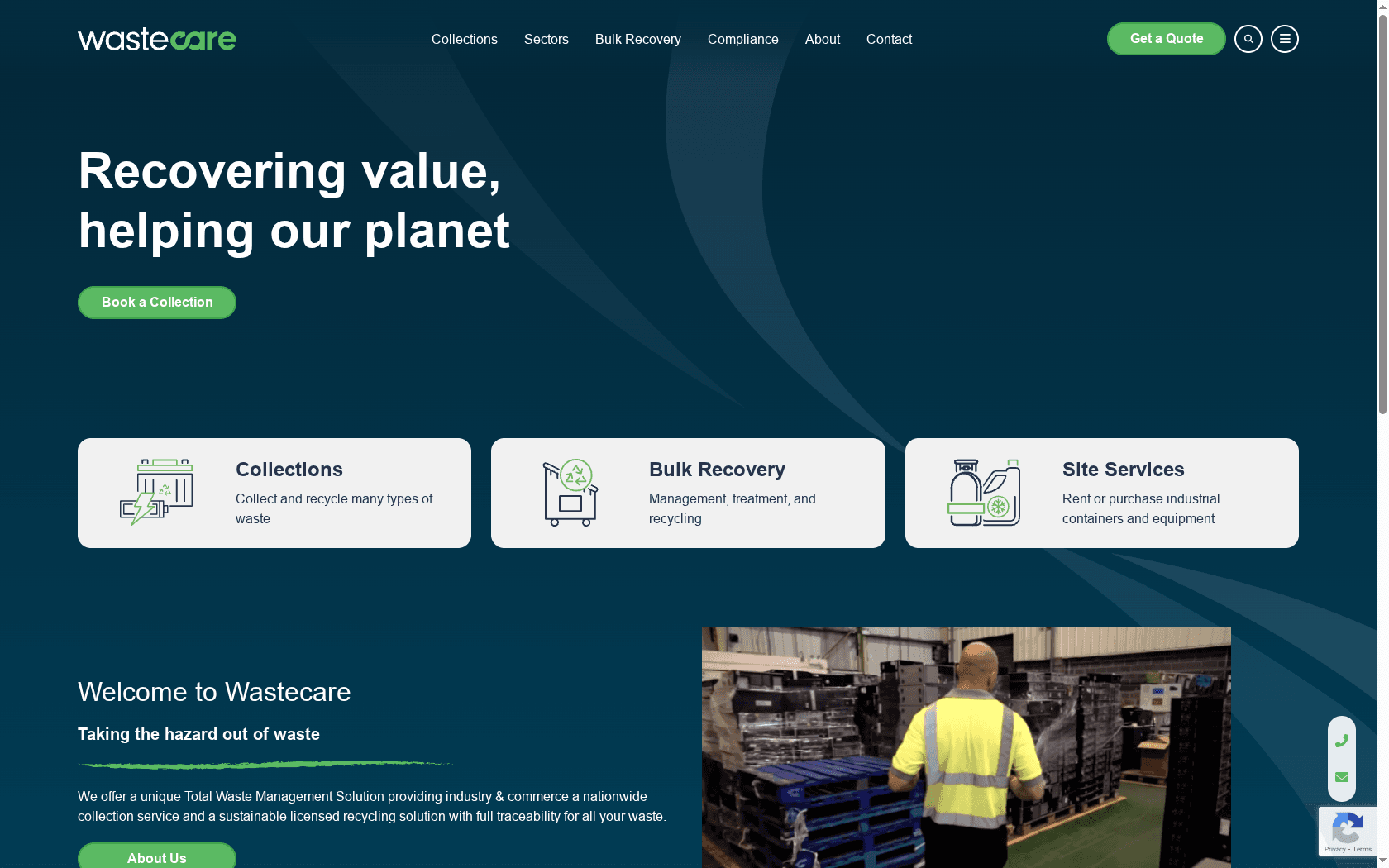
Product Screenshot

At a Glance

Wastecare provides a broad, nationwide waste collection and recycling service tailored to industry and commerce, with a clear emphasis on sustainability and full traceability. Its strengths lie in handling specialised waste streams — from batteries and WEEE to hazardous materials — and offering industrial container rental and purchase. Pricing details are not provided in the data, so prospective customers should expect to request a consultation for exact costs.

Core Features

Wastecare’s core capabilities include nationwide collection, management, treatment and recycling of diverse waste types, plus rental and purchase options for industrial containers. The service explicitly covers specialised streams such as batteries, electronic waste, hazardous waste and cooking oil, while maintaining regulatory compliance through documented traceability. In short: collection, recovery, and compliance are central to the offer.

Pros

  • Comprehensive range of waste management services: Wastecare covers collection, treatment, recycling and container solutions so businesses can consolidate multiple needs with one supplier.
  • Focus on sustainability and environmental responsibility: The service highlights value recovery from waste streams, helping firms meet sustainability objectives and reduce landfill reliance.
  • Nationwide coverage with tailored solutions: Businesses operating across multiple sites benefit from the provider’s national reach and ability to tailor solutions to specific waste profiles.
  • Expertise in handling hazardous and specialised waste streams: The company’s capabilities include hazardous, electronic and battery waste, which require specialist handling and documentation.
  • Full traceability ensures regulatory compliance: Documented traceability supports legal obligations and audit trails for regulated waste streams.

Cons

  • Limited specific details on pricing in the provided content: The absence of price examples means you must contact Wastecare for a quote, which slows initial comparison shopping.
  • No online booking or detailed service FAQs included in the snippet: There’s no indication of a self-serve booking system or comprehensive online FAQ, so setup may require direct consultation.
  • Potentially complex service options requiring consultation for specific needs: The breadth of specialised services suggests bespoke solutions are common, which can complicate procurement for businesses wanting simple, off-the-shelf packages.

Who It’s For

Wastecare is best suited to businesses and organisations that generate regulated or specialist wastes — manufacturers, healthcare facilities, large retailers, and educational institutions — and who need a compliant, end-to-end solution that prioritises sustainability. If your operation requires off-site recycling, hazardous waste handling or containerised waste management, Wastecare is a sensible candidate.

Unique Value Proposition

Wastecare’s unique value lies in combining nationwide service reach with specialist handling and full traceability. That mix appeals to organisations that must balance logistics across many sites while meeting stringent environmental and regulatory obligations.

Real World Use Case

A manufacturing firm contracts Wastecare to collect and treat its electronic waste, batteries and hazardous residues. Wastecare provides suitable containers, arranges scheduled nationwide collections and delivers documented evidence of treatment and recycling to satisfy compliance audits.

Pricing

Not specified in the provided content. You will need to contact Wastecare for tailored quotes based on waste type, volume and collection frequency.

Website: https://wastecare.co.uk

Grundon Waste Management & Recycling

Product Screenshot

At a Glance

Grundon offers a comprehensive, reliable waste management service designed for organisations that need both compliance and sustainability. With over 90 years in the sector and a fleet of 430 certified carbon-neutral collection vehicles, Grundon combines experience with clear environmental commitments. It is well suited to organisations that want a single supplier for multiple waste streams, though pricing details require direct enquiry. Bottom line: dependable and eco-conscious, but expect to ask for a tailored quote.

Core Features

Grundon provides an extensive suite of waste services covering general waste, recycling, food, glass, paper cup, confidential, construction, bulky, hazardous and clinical waste, plus specialised streams such as inhaler recycling and event waste management. Services are offered under one roof with customised solutions tailored to business needs, high legislative compliance, and ongoing expert support to meet environmental goals. The company highlights its sustainability credentials through a certified carbon-neutral vehicle fleet and advice-led customer support to help organisations reduce costs and improve waste performance.

Pros

  • Grundon offers a wide range of waste management services under one provider, which simplifies vendor management and coordination for busy facilities teams.
  • The company demonstrates a strong focus on sustainability and compliance, helping organisations meet environmental targets while adhering to legislation.
  • Being trusted by over 15,000 organisations indicates a high level of reliability and sector confidence.
  • Innovative offerings such as inhaler recycling and secure destruction provide niche solutions that many businesses will struggle to source elsewhere.
  • More than 90 years of industry experience means customers can expect institutional knowledge and proven operational processes.

Cons

  • The website does not provide specific pricing details, so you will need to contact Grundon to obtain tailored quotes for your site.
  • There is limited explicit information on technological integrations or digital management tools, which may matter if you need online dashboards or API connectivity.
  • Customers requiring highly bespoke service matrices may find they must engage directly to establish detailed service options and pricing.

Who It’s For

Grundon is ideal for businesses and organisations of all sizes that need comprehensive, compliant and environmentally responsible waste solutions. Facilities managers in hotels, healthcare, construction, education and large retail or industrial sites will find the breadth of waste streams particularly useful. If you prefer a single supplier to consolidate waste streams and deliver regulatory assurance, Grundon fits the brief.

Unique Value Proposition

Grundon’s unique proposition is the combination of long-standing industry experience, a broad single-provider service range, and demonstrable sustainability credentials via a certified carbon-neutral fleet. That mix reduces complexity for customers while helping to advance environmental objectives.

Real World Use Case

A hotel chain could partner with Grundon to manage general, recycling and clinical waste across multiple sites, using tailored collections to reduce landfill, lower costs and ensure compliance with waste legislation—delivering measurable sustainability improvements across the estate.

Pricing

Pricing is not specified on the website; customers are invited to obtain instant quotes via Grundon’s site for tailored pricing and collection schedules.

Website: https://grundon.com

Reconomy
Product Screenshot

At a Glance

Reconomy is an international circular-economy specialist that helps organisations shift from a linear to a circular model using technology, data and a global expert team. Its strength lies in a large international footprint—over 4,000 colleagues and operations in more than 175 countries—paired with data-driven waste management and re‑use platforms. If you are a sizeable organisation seeking to embed circularity across operations, Reconomy is a credible partner; if you are a small business, the fit may be less direct.

Core Features

Reconomy combines waste-management platforms with environmental compliance support and re‑use solutions for returns and refurbishment. The company offers data and analytics focused on circularity metrics and maintains a genuine global presence across 175+ countries. Those are the capabilities. No hardware or specific product SKUs are described in the provided material; the emphasis is clearly on platform services, consultancy and measurable circularity outcomes.

Pros

  • Deep sector experience: Reconomy brings over 30 years of experience, which gives weight to its advisory and operational recommendations.
  • Large, international team: A workforce of more than 4,000 colleagues supports multinational roll‑outs and cross‑border compliance.
  • Technology-enabled approach: The firm uses data and analytics to measure circularity, enabling more evidence-based decision making.
  • Broad industry coverage: Reconomy serves a wide range of sectors, which helps when dealing with complex, multi-site organisations.
  • Recognition and credibility: The business has been recognised through awards and sustainability rankings, reinforcing its market standing.

Cons

  • No public pricing details: The website content provided does not include specific pricing, making early-stage budget planning difficult.
  • Enterprise focus may exclude SMEs: The service orientation appears geared towards large organisations, so small businesses might not find a tailored offering.
  • Limited granular service descriptions: The scraped content lacks detailed breakdowns of specific service processes, which can hinder immediate procurement comparisons.

Who It’s For

Reconomy is best suited to large businesses and organisations—manufacturers, retailers, logistics operators and facilities managers—looking to transition to, or scale up, circular economy practices across multiple sites. If you need a partner who can combine compliance support, re‑use strategies and data insights at scale, Reconomy is built for that challenge.

Unique Value Proposition

Reconomy’s unique value is the combination of scale and circularity expertise: global coverage, a sizable specialist team, and technology that tracks circularity metrics. That mix positions the company to deliver coordinated, data‑driven transformations rather than one-off waste collections.

Real World Use Case

Reconomy has supported major retailers and brands; for example, Tesco improved packaging-data management, McDonald’s enhanced digital waste-management solutions, and Columbia optimised logistics to reduce costs and improve customer satisfaction. These examples show how Reconomy applies platforms and consultancy to deliver measurable operational benefits.

Pricing

Not specified on the website content provided.

Website: https://reconomy.com

Waste Management Services Comparison

This table provides a comprehensive overview of various waste management services. Compare each company based on their features, pros and cons, customer focus, and pricing methods.

Company Features Pros Cons Pricing Method
Venture Waste Management General, hazardous, confidential waste, recycling, skip hire,
compactors
Comprehensive range; easy booking;
nationwide coverage;
regulatory support; environmental focus
Pricing not specified Quick quote system
Biffa Waste management, recycling, resource conversion Century of experience; wide service breadth;
sustainability focus;
innovative partnerships;
client tools
Limited pricing transparency;
unclear service packaging;
hazardous waste compliance complexity
Not specified
SUEZ UK Recycling, waste collection, resource consultancy Comprehensive solutions; circular economy focus;
community initiatives;
innovative strategies
Limited pricing info;
focus on businesses
Bespoke quotes based on needs
Wastecare Nationwide waste collection, recycling, specialised
waste streams
Comprehensive service;
sustainability focus;
nationwide coverage;
expertise in hazardous waste;
full traceability
No specific pricing details;
no self-serve booking
Consultations required
Grundon Waste Management General, recycling, hazardous, construction waste Wide range of services;
sustainability and compliance focus;
reliable with 90 years’ experience
No online pricing info;
limited technological integration
Tailored quotes available
Reconomy Circular economy platforms, compliance support, reuse solutions Deep experience; global presence;
technology-enabled approach;
broad coverage;
recognition and credibility
No public pricing;
enterprise focus may exclude SMEs
Pricing details not provided

Note: For specific pricing, quotes should be obtained directly from the companies. This helps ensure tailored solutions that align with individual waste management needs.

Secure Your Hazardous Waste Collections with Confidence Today

Handling hazardous waste can feel overwhelming and risky without a trusted partner who understands the critical importance of compliance and environmental safety. The challenge lies in finding a waste management service that not only meets legal obligations but also streamlines the booking process and provides clear documentation to ease regulatory audits. Whether you are a business managing multiple sites or a domestic client dealing with specialised waste, ensuring safe and reliable hazardous waste disposal is essential.

At Venture Waste Management, we recognise these exact pain points and offer a tailored solution that puts your mind at ease. Our straightforward three-step booking system, highlighted in How the Waste Collection Network in UK Serves Businesses in 2025 – Venture Waste, makes arranging waste removal fast and hassle-free. We prioritise responsible disposal backed by full compliance support, detailed in our regulation Archives – Venture Waste, so you never have to worry about legal complexities. Start taking control of your hazardous waste challenges now with a partner committed to protecting your business and the environment.

https://venturewaste.co.uk

Don’t wait until your hazardous waste requirements become urgent or complicated. Visit us at Venture Waste Management today to get a quick quote and experience stress-free hazardous waste collections designed to keep you fully compliant and environmentally responsible.

Frequently Asked Questions

How do I choose the right hazardous waste collection service for my needs?

To select the appropriate hazardous waste collection service, assess your specific waste types, volumes, and disposal requirements. Consider factors such as compliance with regulations and the service’s experience with similar waste streams. Review service offerings and request tailored quotes to make an informed decision.

What are the key features to look for in hazardous waste collection services?

Essential features include comprehensive service offerings that cover various types of hazardous waste, a straightforward booking process, and compliance support documentation. Additionally, look for companies that prioritise sustainable disposal methods and provide verification of proper waste handling, such as certificates of destruction.

How can I ensure hazardous waste is collected and disposed of legally?

To guarantee legal compliance, choose a hazardous waste collection service that provides transparent documentation and adherence to local regulations. Request certificates of destruction after waste disposal to maintain an auditable trail for your records. Clearly communicate your compliance needs during the service selection process.

What are typical pricing models for hazardous waste collection services?

Pricing for hazardous waste collection services often varies based on waste type, volume, and collection frequency. Expect to receive a customised quote after detailing your waste requirements, as many providers utilise a quick quote system to ensure accurate pricing tailored to your needs.

Can hazardous waste collection be scheduled on a recurring basis?

Yes, many hazardous waste collection services offer the option to set up regular collection schedules to streamline waste management. To establish recurring collections, discuss your requirements with your chosen service provider and agree on a convenient frequency, such as monthly or quarterly collections.

What should I do if I have an emergency hazardous waste situation?

In an emergency hazardous waste situation, immediately contact your hazardous waste collection service provider to arrange an urgent pickup. Outline the nature of the waste and the specific circumstances to ensure a prompt and compliant response, which can mitigate risks associated with hazardous materials.

electrical waste workplace

How to Set Up a Safe Electrical Waste Collection Point in Your Workplace

Every british workplace generates more electrical waste than many realise, with businesses responsible for around 1.3 million tonnes each year. Proper management is not just about tidiness or ticking boxes. Handling electrical waste well means protecting staff, the environment, and your company’s reputation. This guide explains how to assess, collect, store, and dispose of electrical waste safely so you can meet legal standards and avoid common pitfalls.

Table of Contents

Quick Summary

Key Message Explanation
1. Comprehensive waste assessment is vital Conduct a thorough inventory of all electrical equipment to identify hazardous components and compliance needs.
2. Designate a secure collection area Establish a well-organised and secure space with proper access controls for storing electrical waste safely.
3. Train staff on waste handling Implement a training programme covering identification and safe management of hazardous electronic components.
4. Schedule certified waste collections Engage authorised waste management providers to ensure legal compliance and responsible disposal of electrical waste.
5. Regular compliance verification is necessary Carry out ongoing audits and checks to maintain safety standards and adhere to waste management regulations.

Step 1: Assess workplace electrical waste streams

Assessing your workplace electrical waste streams is a critical first step in establishing a safe and compliant electrical waste collection point. According to the Health and Safety Executive, understanding the specific types of electrical waste your organisation generates will help you manage potential hazards and ensure proper disposal.

Begin by conducting a comprehensive inventory of all electrical and electronic equipment in your workplace. This includes computers, printers, monitors, servers, telecommunications equipment, kitchen appliances, and any specialised machinery. Walk through each department and document every electrical item, noting its age, condition, and potential for replacement. Pay special attention to equipment that might contain hazardous components such as batteries, mercury switches, or cathode ray tubes.

The UK Environment Agency recommends categorising your electrical waste into specific streams: large household appliances, IT and telecommunications equipment, consumer electronics, lighting equipment, electrical and electronic tools, medical devices, and monitoring/control instruments. By creating a detailed register, you will not only streamline your waste collection process but also ensure compliance with WEEE regulations.

A practical tip is to assign a dedicated team member to manage and regularly update this electrical waste inventory. This proactive approach will help you track equipment lifecycles, plan for responsible disposal, and maintain an organised waste management system. Once you have completed your assessment, you will be ready to design an effective electrical waste collection point that meets both safety and environmental standards.

Step 2: Select and prepare a secure collection area

Establishing a secure collection area is crucial for safely managing electrical waste in your workplace. UK Government guidance recommends creating a designated collection facility that meets specific safety and environmental standards.

Choose a location that is dry, well ventilated, and away from high traffic areas to minimise potential damage or accidental contact with electrical waste. The area should have a solid, impermeable floor to prevent any potential leakage of hazardous materials. Ideally, select a space with controlled access, such as a locked room or a secured section of your warehouse, where only authorised personnel can enter. Install robust shelving or sturdy containment units that can safely segregate different types of electrical waste and prevent items from being damaged or causing potential environmental risks.

UK Government regulations emphasise the importance of proper labelling and separation. Implement clear signage indicating waste categories, use colour coded containers, and ensure each type of electrical equipment has a designated storage space. This approach not only enhances safety but also streamlines the eventual recycling or disposal process. Consider factors like temperature control and protection from direct sunlight, which can degrade electrical components. By creating a meticulously organised collection area, you will significantly reduce potential workplace hazards and demonstrate your commitment to responsible waste management.

secure electrical waste storage

Step 3: Implement compliant waste storage solutions

Implementing compliant waste storage solutions is critical for managing electrical waste safely and legally. According to the Health and Safety Executive, proper storage requires careful handling and preparation to prevent environmental contamination and potential workplace hazards.

Start by ensuring all electrical waste is stored in robust, leak-proof containers specifically designed for electronic equipment. These containers should be clearly labelled with waste categories and include information about potential hazardous components. UK Government guidance recommends segregating different types of electrical waste to prevent cross contamination. This means separating items like batteries, computer monitors, and large appliances into distinct storage areas with appropriate protective measures.

Before storage, remove any batteries or potentially hazardous components that could leak or cause environmental risks. Ensure the storage area maintains consistent temperature and humidity levels, protecting sensitive electronic components from degradation. Implement a tracking system that documents each piece of electrical waste entering the storage area including its origin, date of disposal, and planned disposal method. By creating a systematic approach to waste storage, you will not only comply with regulatory requirements but also demonstrate your organisation’s commitment to responsible waste management and environmental protection.

Step 4: Train staff on safe handling and segregation

Hazardous Waste Handling Guide underscores the critical importance of comprehensive staff training in electrical waste management. According to the Health and Safety Executive, effective training is essential for identifying and safely managing potentially dangerous electronic components.

Develop a structured training programme that covers key aspects of electrical waste handling. This should include comprehensive modules on identifying different types of electrical equipment, understanding potential hazardous components, and learning proper segregation techniques. Staff must be trained to recognise items containing mercury, lead, batteries, and other potentially harmful substances. UK Government guidance emphasises the need for staff competence in waste management procedures.

Consider implementing practical training sessions with hands on demonstrations. Use visual aids like colour coded charts showing different waste categories, provide personal protective equipment demonstrations, and conduct regular practical assessments to ensure staff understanding. Create a certification process where employees must demonstrate their knowledge before being permitted to handle electrical waste. By investing in comprehensive training, you will not only comply with regulatory requirements but also significantly reduce the risk of workplace accidents and environmental contamination.

Scheduling legal and certified waste collections is a critical step in maintaining compliance with WEEE regulations. Efficient Waste Collection Scheduling emphasises the importance of working with authorised waste management providers who understand regulatory requirements.

According to UK Government guidance, businesses must establish an agreement with a producer compliance scheme (PCS) to ensure proper electrical waste disposal. This involves researching and selecting a certified waste collection service that can provide documented proof of legal disposal methods. Contact multiple providers to compare their compliance credentials, collection frequencies, and specialisation in electrical waste management.

During the scheduling process, prepare detailed documentation of the electrical waste you need collected including types of equipment, estimated volumes, and any potentially hazardous components. Request a comprehensive waste transfer note from your chosen provider, which legally documents the chain of custody for your electrical waste. Be prepared to provide information about your waste streams and maintain records of each collection for a minimum of two years. By meticulously managing your waste collection scheduling, you demonstrate your organisation’s commitment to environmental responsibility and regulatory compliance.

Step 6: Verify ongoing safety and regulatory compliance

Verifying ongoing safety and regulatory compliance is essential for maintaining a responsible electrical waste collection point. Hazardous Waste Regulations 2025 Guide highlights the critical nature of continuous monitoring and assessment in waste management processes.

According to the Health and Safety Executive, businesses must implement a robust system of regular inspections and documentation to ensure ongoing compliance. This involves conducting quarterly audits of your electrical waste collection point, reviewing staff training records, checking storage conditions, and verifying that all waste transfer documentation remains current and accurate. UK Government guidance recommends maintaining a comprehensive accident management plan and ensuring all personnel remain competent in waste handling procedures.

Develop a detailed compliance checklist that covers all aspects of WEEE regulations including proper segregation, safe storage, staff training, and waste tracking. Schedule annual external compliance reviews with a certified waste management consultant who can provide an independent assessment of your processes. Keep meticulous records of all inspections, training sessions, and waste collections to demonstrate your commitment to environmental responsibility and regulatory adherence. By proactively managing your compliance verification, you protect your organisation from potential legal risks and contribute to sustainable waste management practices.

Infographic with five steps for safe electrical waste collection, each step shown with icons.

Ensure Your Workplace Electrical Waste Collection is Safe and Fully Compliant

Setting up a safe electrical waste collection point requires careful assessment, secure storage, and ongoing compliance. If you are feeling overwhelmed by managing hazardous components or staying up to date with WEEE regulations you are not alone. Many businesses face challenges such as correctly segregating waste, training staff on safe handling, and scheduling legal collections. Taking action now to handle these pain points can protect your workforce, safeguard the environment, and avoid costly penalties.

At Venture Waste Management we offer expert support tailored to your needs. From understanding the Waste Collection Process in the UK for Businesses 2025 – Venture Waste to providing specialised electrical waste disposal solutions found in our WEEE Waste Archives – Venture Waste we simplify compliance and safety for you.

https://venturewaste.co.uk

Take control of your workplace electrical waste responsibilities today. Visit venturewaste.co.uk to explore our comprehensive services and learn how the Waste Collection Network in UK Serves Businesses in 2025 – Venture Waste can give your business the support it needs now. Act promptly to ensure safety and environmental protection with trusted specialists by your side.

Frequently Asked Questions

How can I assess electrical waste streams in my workplace?

Assess your electrical waste streams by conducting a comprehensive inventory of all electrical and electronic equipment. Walk through every department, document each item, and note its condition and potential for replacement to streamline waste management.

What should I consider when selecting a collection area for electrical waste?

When selecting a collection area for electrical waste, choose a location that is dry, well-ventilated, and away from high traffic areas to minimise hazards. Ensure the area has secure access and is equipped with appropriate storage solutions for different types of waste to enhance safety.

How do I implement compliant storage solutions for electrical waste?

Implement compliant storage solutions by using robust, leak-proof containers labelled by waste category. Segregate hazardous components from general waste to prevent contamination and maintain a suitable environment for sensitive electronic components.

What type of training should staff receive for safe handling of electrical waste?

Staff should receive training that covers identifying different electrical components and understanding potential hazards. Develop a structured programme that includes practical demonstrations and assessments to ensure safe handling and compliance with waste management procedures.

How do I schedule waste collections to comply with regulations?

To schedule waste collections, partner with a certified waste management provider and ensure you understand their compliance requirements. Prepare detailed documentation of the waste to be collected and maintain records of each collection for compliance verification.

What ongoing checks should I perform to ensure safety and compliance?

Perform regular audits of your electrical waste collection point to ensure ongoing safety and compliance. Develop a compliance checklist to review storage conditions, staff training, and waste documentation at least quarterly to maintain high standards.

clinical waste disposal

What Is Clinical Waste? Complete UK Guide 2024

Most british healthcare providers handle over 600,000 tonnes of clinical waste each year, making it a growing concern for hospitals, clinics, and even small businesses across the country. The risks are far-reaching, from dangerous infections to serious legal penalties, so proper management is non-negotiable. Understanding exactly what qualifies as clinical waste and how to deal with it safely can save organisations from heavy fines and protect both people and the environment.

Table of Contents

Key Takeaways

Point Details
Definition of Clinical Waste Clinical waste is hazardous material from healthcare settings, requiring special handling and disposal due to its potential to cause harm.
Categories of Clinical Waste Key categories include infectious waste, sharps, anatomical waste, pharmaceutical waste, and chemical waste, each presenting unique management challenges.
Legal Obligations Businesses must comply with regulations such as the Environmental Protection Act and implement systematic waste management procedures to avoid legal penalties.
Risks and Compliance Challenges Improper management of clinical waste can lead to severe legal, financial, and health risks, necessitating comprehensive risk management strategies and continuous staff training.

Defining Clinical Waste in the UK Context

Clinical waste represents a critical category of hazardous materials generated primarily within healthcare settings, requiring specialised handling and disposal procedures. According to the gov.uk guidance, clinical waste is legally defined under the Controlled Waste (England and Wales) Regulations 2012 as waste that contains potentially dangerous biological components.

Specifically, clinical waste encompasses several key categories of hazardous materials. These include waste containing viable micro-organisms capable of transmitting disease, materials contaminated with biologically active pharmaceutical agents, and sharps or biological materials that pose significant health risks. The NHS Clinical Waste Strategy further elaborates that these waste types are characterised by their potential to cause substantial harm if not managed correctly.

The complexity of clinical waste management extends beyond simple categorisation. Healthcare facilities, medical research centres, dental practices, and veterinary clinics must implement rigorous protocols to identify, segregate, and dispose of these materials safely. This involves understanding the precise definitions, recognising potential contamination risks, and following strict regulatory guidelines established by UK environmental and health authorities.

Key characteristics that distinguish clinical waste include:

  • Presence of infectious micro-organisms
  • Contamination with potent pharmaceutical substances
  • Sharp objects like needles and surgical instruments
  • Potential to transmit diseases
  • Requiring specialised disposal methods

For comprehensive guidance on managing these complex waste streams, check out our clinical waste disposal requirements guide designed specifically for UK businesses navigating these critical regulatory landscapes.

Types of Clinical Waste and Examples

Clinical waste represents a complex array of hazardous materials that require meticulous handling and specialised disposal strategies. Gov.uk guidance provides a comprehensive breakdown of clinical waste categories, highlighting the critical need for precise identification and management across healthcare environments.

The primary types of clinical waste include infectious waste, which encompasses contaminated dressings, swabs, and materials potentially carrying pathogenic microorganisms. Sharps represent another crucial category, involving potentially dangerous items like needles, scalpels, and broken glass that can transmit infections. Anatomical waste includes human tissue, body parts, and biological specimens that demand stringent disposal protocols.

Furthermore, clinical waste extends to pharmaceutical waste, comprising expired medications, contaminated drug containers, and chemotherapy agents. Chemical waste from laboratory settings, including reagents and diagnostic materials, also falls under this critical classification. Each waste type presents unique risks and requires tailored disposal methods to prevent environmental contamination and potential health hazards.

Key examples of clinical waste categories include:

  • Infectious materials: Blood-soaked bandages
  • Sharps: Hypodermic needles, surgical blades
  • Anatomical waste: Surgical tissue samples
  • Pharmaceutical waste: Expired antibiotics
  • Chemical waste: Laboratory chemical residues

For comprehensive insights into managing these complex waste streams, explore our hazardous waste management guide designed to support UK businesses in navigating intricate waste disposal requirements.

dental clinical waste

Businesses generating clinical waste face complex legal obligations that demand rigorous compliance and meticulous waste management strategies. According to gov.uk guidance, companies must adhere to critical regulations including the Environmental Protection Act 1990 and the Controlled Waste (England and Wales) Regulations 2012, which establish comprehensive frameworks for waste handling and disposal.

Regulatory compliance encompasses several crucial requirements for businesses. This includes precise waste classification, systematic segregation, secure storage, and environmentally responsible disposal methods. Organisations must implement robust systems that prevent potential harm to human health and the environment, ensuring that each category of clinical waste receives appropriate treatment according to its specific characteristics and associated risks.

The legal landscape surrounding clinical waste management is intricate and carries significant potential consequences for non-compliance. Businesses must maintain detailed documentation, train staff comprehensively, and develop internal protocols that align with national waste management standards. NHS Clinical Waste Strategy emphasises the importance of creating sustainable, cost-effective waste processing systems that not only meet legal requirements but also minimise environmental impact.

Key legal obligations for businesses include:

  • Accurate waste classification and identification
  • Proper segregation of different waste types
  • Secure and compliant storage procedures
  • Documentation of waste management processes
  • Regular staff training on waste handling regulations
  • Maintaining auditable waste disposal records

To navigate these complex regulatory requirements effectively, businesses can refer to our waste disposal legal requirements guide, which provides comprehensive insights into maintaining compliance and avoiding potential legal penalties.

Safe Collection, Storage, and Disposal Methods

Safe management of clinical waste demands a systematic and meticulously planned approach that prioritises human health and environmental protection. According to gov.uk guidance, effective clinical waste handling involves comprehensive strategies for proper segregation, specialised container selection, secure storage, and responsible disposal through licensed treatment facilities.

The collection process requires strict protocols to minimise potential contamination and health risks. This begins with identifying and separating different waste categories using colour-coded containers, ensuring each type of clinical waste receives appropriate handling. Staff must be comprehensively trained in recognising waste classifications, understanding potential hazards, and implementing precise separation techniques to prevent cross-contamination and reduce environmental impact.

Storage and disposal represent critical stages in clinical waste management that demand unwavering attention to regulatory requirements. NHS Clinical Waste Strategy emphasises the importance of maintaining secure, temperature-controlled storage areas that prevent potential leakage, minimise odour, and restrict unauthorized access. Businesses must ensure all clinical waste is stored in sealed, robust containers that prevent spillage and protect against environmental and health risks.

Key best practices for safe clinical waste management include:

  • Comprehensive staff training on waste classification
  • Use of colour-coded, purpose-designed containers
  • Strict segregation of different waste types
  • Secure, restricted-access storage areas
  • Regular waste volume and risk assessments
  • Documentation of waste handling procedures

For comprehensive guidance on implementing these critical waste management strategies, explore our hazardous waste disposal guide designed to support UK businesses in maintaining the highest standards of safety and compliance.

Infographic showing the process for collecting, storing, and disposing of clinical waste in the UK.

Risks, Liabilities, and Compliance Challenges

Improper clinical waste management poses substantial risks that extend far beyond mere environmental concerns, potentially exposing businesses to significant legal, financial, and health-related consequences. According to gov.uk guidance, organisations face critical risks including potential infections, environmental contamination, and substantial legal liabilities that demand rigorous compliance and proactive management strategies.

The compliance landscape for clinical waste management is incredibly complex, requiring businesses to navigate intricate regulatory frameworks with precision and thoroughness. Potential risks include severe financial penalties, potential criminal prosecution, reputational damage, and significant health hazards to staff, patients, and the broader community. Organisations must develop comprehensive risk management protocols that not only meet legal requirements but also anticipate and mitigate potential vulnerabilities in their waste management processes.

NHS Clinical Waste Strategy emphasises the importance of developing innovative solutions to address compliance challenges, focusing on reducing waste volumes and minimising environmental impact. This approach requires continuous staff training, regular risk assessments, and implementation of cutting-edge waste management technologies that ensure both regulatory compliance and operational efficiency.

Key risks and compliance challenges include:

  • Potential infectious disease transmission
  • Environmental contamination risks
  • Substantial financial penalties
  • Possible criminal prosecution
  • Reputational damage
  • Complex regulatory requirements
  • Ongoing staff training needs

To effectively manage these complex risk landscapes, businesses can explore our hazardous waste risks guide, which provides comprehensive insights into navigating the intricate compliance challenges facing UK organisations.

Take Control of Your Clinical Waste with Expert Support

Managing clinical waste demands precise classification, secure storage and compliant disposal to protect your staff and community from serious health risks. Understanding the complex legal duties and preventing costly penalties can feel overwhelming. That is why professional help matters for businesses handling hazardous materials every day.

https://venturewaste.co.uk

Benefit from Venture Waste Management’s trusted services tailored to your clinical waste needs. With expertise in hazardous waste handling and a commitment to legal compliance and environmental care, our team simplifies your journey. Discover practical solutions through our hazardous waste Archives – Venture Waste page and start your easy three-step booking at Venture Waste. Take action today to safeguard your business, ensure legal peace of mind and contribute to a cleaner future.

Frequently Asked Questions

What is classified as clinical waste?

Clinical waste encompasses hazardous materials from healthcare settings, including infectious waste, sharps, anatomical waste, pharmaceutical waste, and chemical waste necessitating special handling and disposal methods.

Businesses must comply with the Environmental Protection Act 1990 and the Controlled Waste (England and Wales) Regulations 2012, which outline precise waste classification, segregation, secure storage, and environmentally responsible disposal methods.

How should clinical waste be collected and stored?

Clinical waste should be collected in colour-coded containers for proper segregation, stored in secure, temperature-controlled areas, and kept sealed to prevent leakage and access by unauthorised individuals.

What are the risks of improper clinical waste management?

Improper management poses severe risks including infection transmission, environmental contamination, legal penalties, and reputational damage to organisations failing to comply with regulations.