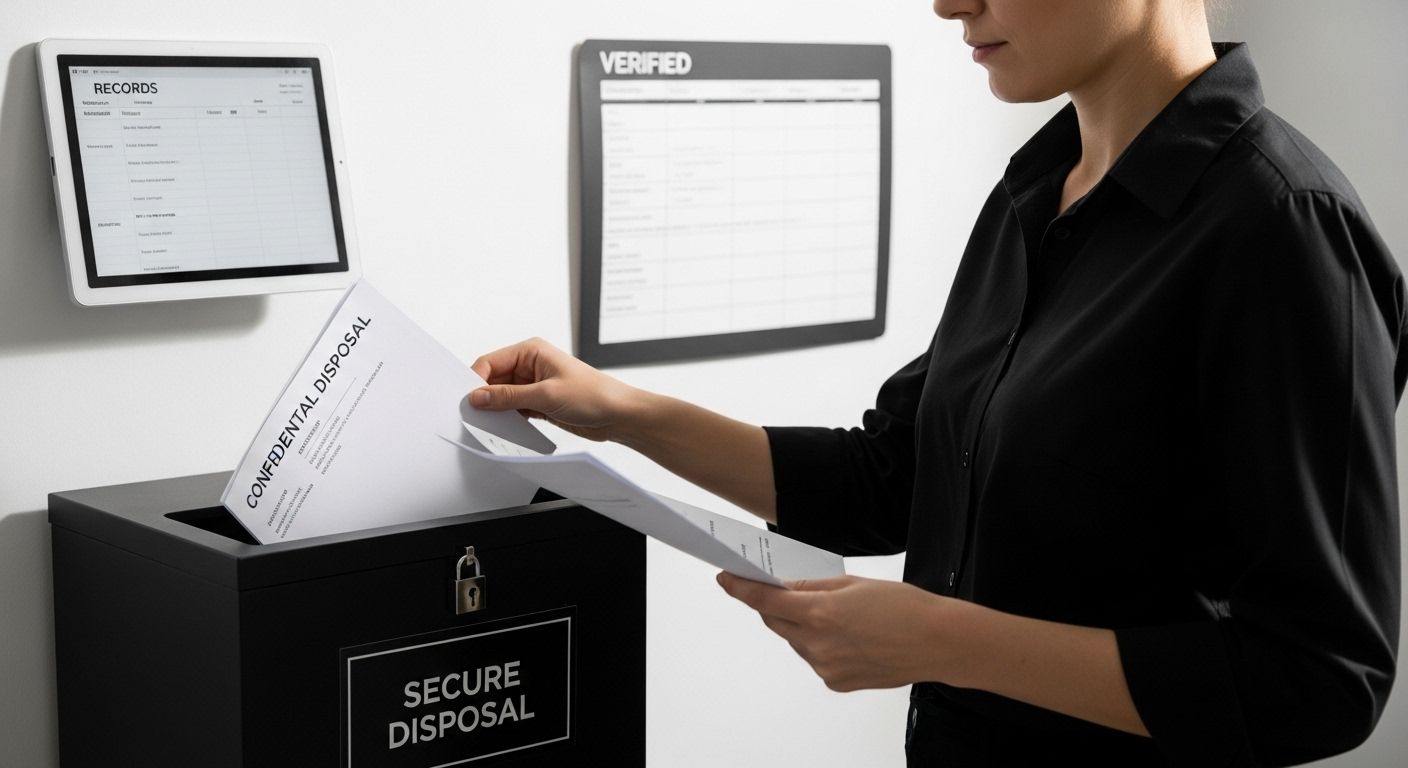
secure IT waste

Waste IT: Understanding Secure Disposal of Data Devices

Businesses across the UK generate staggering amounts of electronic waste every year and each discarded device holds more risk than most realise. More than just a pile of old laptops and forgotten phones, a single data exposure incident can destroy customer trust in moments. Most people believe a quick file deletion or trip to the recycling bin is enough to keep corporate secrets safe but modern data recovery techniques can pull sensitive information from devices long after they are supposedly wiped. This hidden danger means the real threat is not what you throw out but what is left behind on it.

Table of Contents

Quick Summary

Takeaway Explanation
Prioritise secure IT waste disposal Secure disposal protects sensitive data and helps maintain regulatory compliance.
Select certified disposal contractors Reliable contractors ensure comprehensive data destruction and compliance with data protection regulations.
Implement robust data sanitisation protocols Multiple methods of data sanitisation help prevent potential data recovery and breaches.
Understand financial risks of poor practices Inadequate electronic waste management can lead to significant fines and reputational damage.
Adopt a holistic waste management approach Think beyond disposal to integrate data security, environmental responsibility, and compliance in waste management strategies.

Understanding Waste IT and Its Impact on Businesses

Waste IT represents a critical challenge for businesses across the United Kingdom, particularly in regions like Newcastle, Durham, and Sunderland. As organisations increasingly rely on digital technologies, the secure disposal of data bearing electronic devices has become paramount to protecting sensitive information and maintaining regulatory compliance.

The Hidden Risks of Improper Electronic Waste Management

Businesses generate substantial quantities of electronic waste annually, ranging from outdated computers and servers to mobile phones and tablets. Each device potentially contains confidential corporate data that could compromise organisational security if not properly destroyed. According to research from the National Institute of Standards and Technology, improper disposal can lead to significant data breach risks.

Key risks associated with inadequate electronic waste management include:

  • Potential unauthorized access to sensitive corporate information
  • Risk of identity theft and corporate espionage
  • Non-compliance with data protection regulations
  • Financial penalties for regulatory breaches

The consequences of poor Waste IT practices extend beyond data security. Businesses face substantial financial risks, including potential legal actions and regulatory fines. The Information Commissioner’s Office can impose significant penalties for data protection violations, making secure electronic waste disposal not just a technical requirement but a critical business strategy.

To address these challenges comprehensively, organisations should consider strategic approaches to waste management that balance security, compliance, and cost-effectiveness. Implementing robust electronic waste disposal protocols protects not just data, but the organisation’s reputation and financial stability.

The following table brings together the key risks and consequences of improper disposal of data-bearing devices, as highlighted in the article. This offers a clear overview of why secure disposal practices are essential for businesses:

Risk/Consequence Explanation
Unauthorised access to information Sensitive corporate data may be retrieved by external parties
Identity theft and corporate espionage Data leaks can enable identity fraud or competitive intelligence
Regulatory non-compliance Breaches could mean failing to meet data protection obligations
Financial penalties Organisations can incur fines for data protection violations
Reputational damage Customer trust may be eroded due to mishandling of confidential data
Legal action Placing companies at risk of lawsuits following a breach

The Risks of Improper Disposal of Data-Bearing Devices

Data-bearing devices represent a significant vulnerability for businesses if not disposed of correctly. From smartphones and laptops to servers and external hard drives, each electronic device potentially contains sensitive corporate information that could be catastrophically misused if fallen into the wrong hands.

Data Recovery and Cybersecurity Vulnerabilities

Modern data recovery technologies have advanced to such a degree that seemingly “deleted” data can often be reconstructed with sophisticated forensic techniques. According to cybersecurity research from the U.S. Government Accountability Office, improperly disposed electronic media can expose organisations to substantial data breach risks.

Key technological vulnerabilities include:

  • Advanced data retrieval techniques that can reconstruct deleted files
  • Sophisticated cyber forensic tools capable of extracting information from seemingly wiped devices
  • Potential exploitation of residual data fragments on storage media
  • Vulnerabilities in standard data deletion protocols

Financial and Reputational Consequences

The financial implications of improper electronic waste disposal extend far beyond immediate data breach costs. Organisations can face substantial penalties from regulatory bodies, potential legal actions, and significant reputational damage. A single data exposure incident can erode customer trust and potentially lead to long-term business consequences.

Businesses in regions like Newcastle, Durham, and across the North East must recognise that comprehensive data protection involves more than digital security measures. Understanding confidential waste management represents a critical component of a holistic cybersecurity strategy, protecting not just data, but the organisation’s entire operational integrity.

The Importance of Choosing a Secure Disposal Contractor

Selecting an appropriate waste disposal contractor is not merely a logistical decision but a critical component of an organisation’s data protection and cybersecurity strategy. Businesses across the United Kingdom, particularly in industrial regions like Newcastle, Durham, and Sunderland, must carefully evaluate potential partners to ensure comprehensive protection of sensitive information.

Criteria for Selecting a Reliable Disposal Partner

A professional disposal contractor should demonstrate robust security protocols and comprehensive compliance with data protection regulations. According to cybersecurity research from the Cybersecurity and Infrastructure Security Agency, businesses must prioritise contractors who can guarantee complete data destruction.

Key selection criteria include:

  • Certified data destruction methodologies
  • Comprehensive chain of custody documentation
  • Transparent reporting mechanisms
  • Compliance with national data protection standards

Financial and Compliance Considerations

Beyond technical capabilities, businesses must consider the financial implications of secure disposal. Choosing an unqualified contractor can lead to significant legal and financial risks. Potential consequences include regulatory fines, potential data breach penalties, and substantial reputational damage.

Businesses seeking comprehensive waste management solutions should explore detailed insights into confidential disposal costs to make informed decisions that balance security, compliance, and financial efficiency. The right disposal partner becomes an extension of an organisation’s cybersecurity infrastructure, providing peace of mind and protecting critical corporate assets.

Key Concepts in Secure Data Destruction

Secure data destruction represents a sophisticated process far beyond simple file deletion. For businesses operating in technological hubs like Newcastle, Durham, and across the North East, understanding the nuanced methodologies of data elimination is crucial for maintaining comprehensive cybersecurity protocols.

Levels of Data Sanitisation

Data destruction encompasses multiple strategic approaches, each designed to prevent potential data reconstruction. According to research from the National Institute of Standards and Technology, effective data sanitisation involves several sophisticated techniques that progressively eliminate information with increasing levels of complexity.

The primary levels of data sanitisation include:

To clarify the distinctions between the various levels of data sanitisation discussed in this article, the following table summarises their main features and characteristics:

Level of Data Sanitisation Description Example Methods
Clear Overwriting data using standard software-based deletion File deletion, basic overwriting tools
Purge Advanced magnetic or algorithmic methods rendering data unrecoverable Degaussing, cryptographic erasure
Destroy Physical destruction of storage media through mechanical or chemical processes Shredding, incineration, crushing
  • Clear: Overwriting data using standard software-based deletion techniques
  • Purge: Advanced magnetic or algorithmic methods rendering data unrecoverable
  • Destroy: Physical destruction of storage media through mechanical or chemical processes

Technical and Operational Considerations

Comprehensive data destruction requires a multifaceted approach that goes beyond simple technological interventions. Organisations must consider not just the technical methods of data elimination, but also the procedural frameworks that ensure complete and verifiable information removal.

Exploring specialised hard drive destruction techniques reveals the intricate processes involved in rendering digital information permanently inaccessible. The most effective strategies combine multiple destruction methodologies, ensuring that sensitive corporate data cannot be reconstructed through advanced forensic techniques.
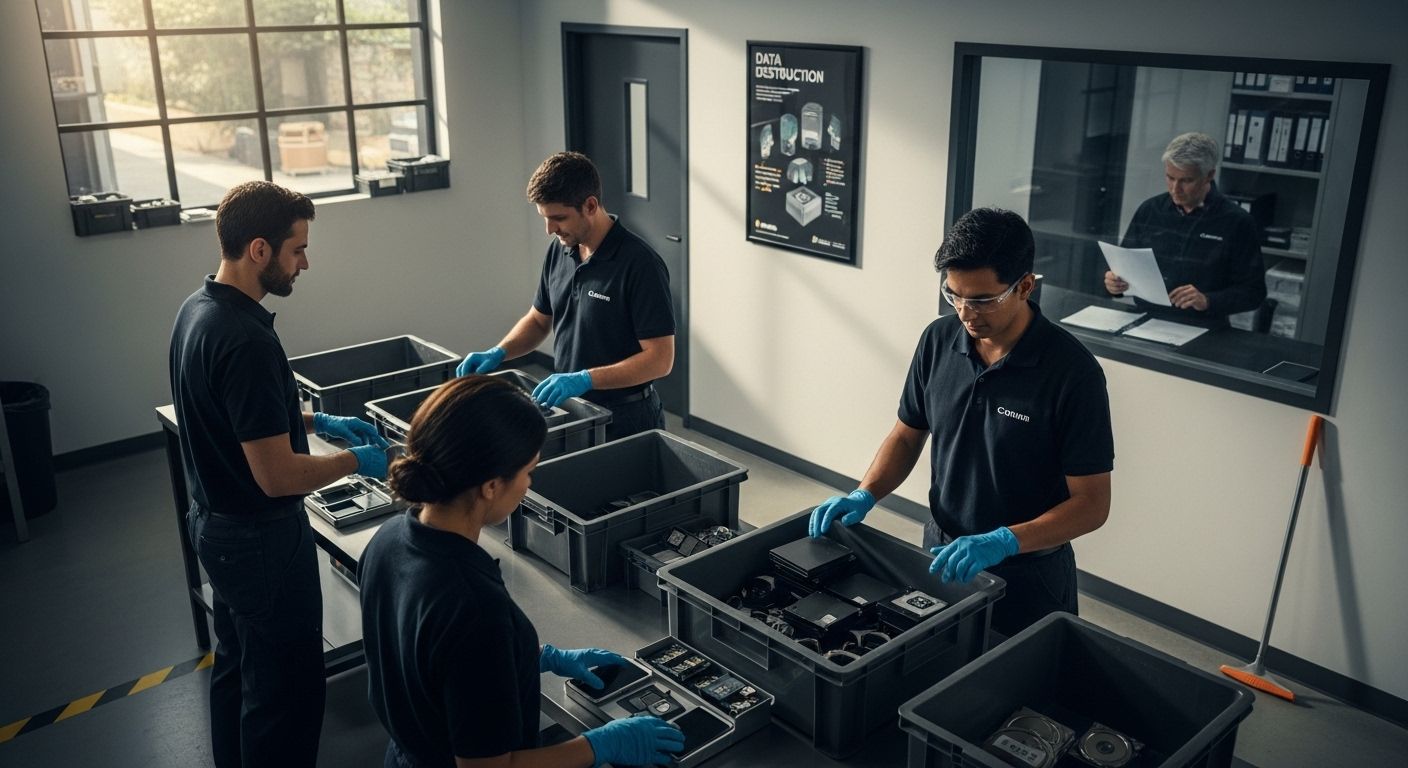
data destruction process

Best Practices for Responsible IT Waste Management

Responsible IT waste management transcends mere disposal, representing a comprehensive approach to environmental sustainability, data security, and regulatory compliance. For businesses across the United Kingdom, particularly in technological corridors like Newcastle, Durham, and Sunderland, implementing strategic waste management protocols is crucial.

Environmental and Regulatory Considerations

Proper IT waste management requires a holistic understanding of both environmental impact and legal obligations. According to research from the National Renewable Energy Laboratory, organisations must develop robust tracking and reporting mechanisms for electronic waste streams.

Key environmental and regulatory considerations include:

  • Compliance with WEEE (Waste Electrical and Electronic Equipment) regulations
  • Minimising hazardous material release into ecosystems
  • Documenting complete chain of custody for disposed electronics
  • Ensuring transparent reporting of disposal processes

Strategic Waste Management Protocols

Effective IT waste management demands a proactive, multifaceted strategy that integrates technological, legal, and environmental considerations. Businesses must develop comprehensive frameworks that address data security, environmental responsibility, and regulatory compliance simultaneously.

Explore our comprehensive guide to confidential waste risk management to understand how organisations can transform waste disposal from a potential liability into a strategic asset. The most successful approaches view IT waste management not as an endpoint, but as an integral component of organisational governance and sustainability efforts.
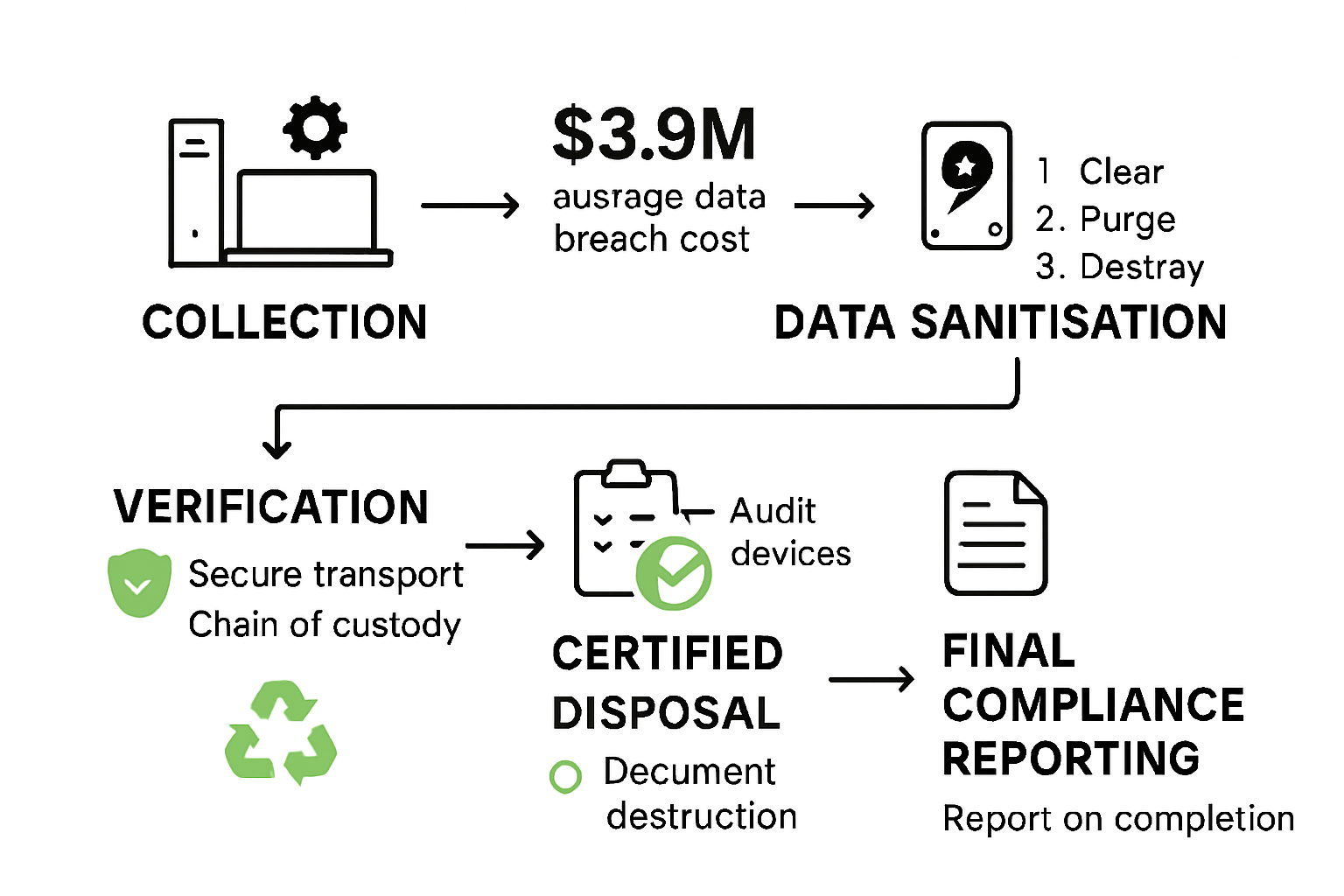
Lifecycle flowchart of secure IT waste management

Secure Your Data: Professional IT Waste Solutions that Protect Your Business

Have you realised how improper disposal of data devices can put your business at risk? Sensitive data can remain on old laptops, hard drives, or tablets even after deletion, exposing you to data breaches and steep penalties. With threats like data recovery and regulatory fines highlighted in our article, ensuring safe and compliant destruction is more critical than ever. For expert advice and the latest practices in secure disposal, explore our WEEE Waste guidance.

https://venturewaste.co.uk

Choose Venture Waste Management for a seamless solution to your digital disposal challenges. Stay compliant and prevent information leaks with our trusted service in Newcastle, Durham, Sunderland, and beyond. Visit our hard drive destruction service page or book now to guarantee protection for your company and peace of mind. Act now, before data falls into the wrong hands.

Frequently Asked Questions

What is Waste IT?

Waste IT refers to the improper disposal of electronic devices that contain data, posing risks to data security and regulatory compliance.

Why is secure disposal of data-bearing devices important for businesses?

Secure disposal is crucial to prevent unauthorized access to sensitive information, avoid identity theft, ensure compliance with data protection regulations, and mitigate financial penalties.

What methods are used for data destruction?

Data destruction can involve methods such as ‘clearing’ (overwriting data), ‘purging’ (advanced methods making data unrecoverable), and ‘destroying’ (physical destruction of storage media).

What should I look for in a secure disposal contractor?

When selecting a disposal contractor, look for certified data destruction methodologies, comprehensive chain of custody documentation, transparent reporting, and compliance with national data protection standards.

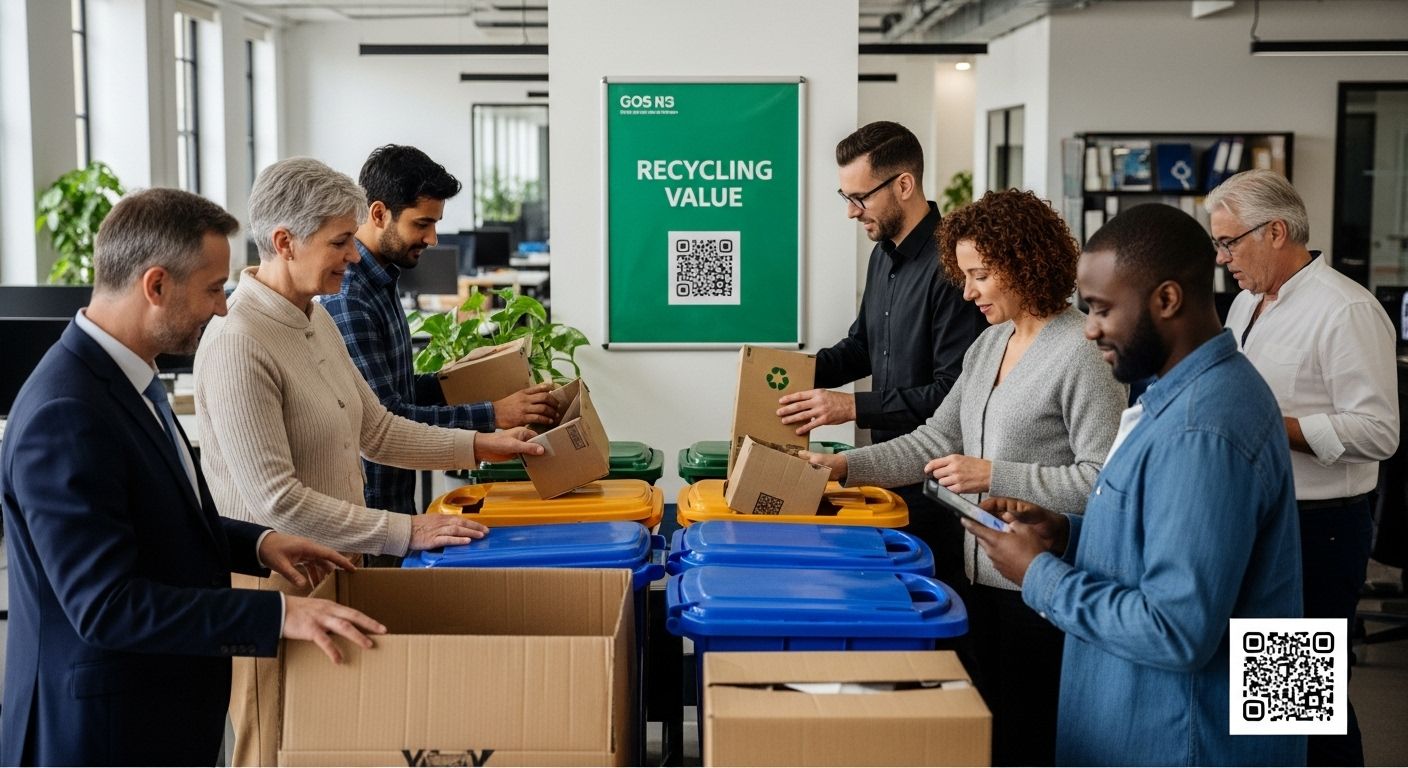
business recycling teamwork

Understanding Recycling in Businesses: Importance and Impact

Recycling is reshaping how businesses handle their waste, turning unwanted materials into new resources and reducing their impact on the planet.

Most people picture recycling as just another tick box for compliance, but the numbers tell a different story. Recycling one tonne of paper saves about 17 mature trees and can put money back in a company’s pocket through reduced disposal costs and even fresh revenue. This changes what waste looks like for businesses and opens up a world of surprising opportunities.

Table of Contents

Quick Summary

Takeaway Explanation
Implement systematic recycling practices Establish clear procedures for collecting, processing, and repurposing recyclable materials effectively.
Engage with certified recycling processors Partnering with professional recyclers enhances material recovery and ensures compliance with regulations.
Educate employees on recycling protocols Training staff on proper segregation and contamination prevention maximises recycling efficiency and effectiveness.
Track and report recycling performance Monitoring recycling efforts helps identify improvements and demonstrates corporate responsibility to stakeholders.
Recognise recycling as an economic opportunity Embracing recycling can reduce costs and create revenue from reclaimed materials, fostering sustainability.

What is Recycling in Businesses and Why is it Important?

Recycling in businesses represents a strategic approach to waste management that transforms discarded materials into valuable resources. Unlike traditional waste disposal methods, recycling enables organisations to minimise environmental impact while potentially generating economic benefits. Our comprehensive guide on waste management provides deeper insights into this crucial process.

Understanding Business Recycling Fundamentals

At its core, business recycling involves systematically collecting, processing, and repurposing waste materials that would otherwise end up in landfills. These materials can include paper, plastics, electronics, metals, and organic waste. Businesses across sectors from manufacturing in Newcastle to retail in Durham can implement recycling strategies that significantly reduce their carbon footprint.

Key characteristics of effective business recycling include:

  • Identifying and segregating recyclable materials
  • Establishing dedicated collection and sorting systems
  • Partnering with certified recycling processors
  • Tracking and reporting recycling performance

Economic and Environmental Significance

According to the Environmental Protection Agency, recycling delivers multifaceted benefits for businesses. Environmentally, it conserves natural resources, reduces greenhouse gas emissions, and minimises waste sent to landfills. Economically, companies can reduce waste disposal costs, potentially generate revenue from recycled materials, and enhance their corporate social responsibility profile.

Businesses that prioritise recycling demonstrate commitment to sustainable practices, which can attract environmentally conscious customers, investors, and talent. Moreover, many industries now have regulatory requirements around waste management, making recycling not just an ethical choice but a legal necessity.

By integrating systematic recycling processes, businesses transform waste from a cost centre into a strategic opportunity for environmental stewardship and potential economic advantage.

The Environmental and Economic Benefits of Recycling in Businesses

Recycling represents a powerful mechanism for businesses to simultaneously address environmental challenges and create economic opportunities. By transforming waste materials into valuable resources, organisations can achieve significant sustainability objectives while potentially generating financial advantages. Learn about potential rebates from waste materials and discover the hidden economic potential within your waste streams.

Environmental Impact Reduction

Businesses play a crucial role in mitigating environmental degradation through strategic recycling initiatives. By diverting waste from landfills, companies directly contribute to reducing greenhouse gas emissions, conserving natural resources, and minimising ecological disruption. Recycling one tonne of paper, for instance, can save approximately 17 mature trees and significantly reduce water and energy consumption associated with raw material extraction.

Key environmental benefits include:

  • Reducing carbon footprint
  • Conserving natural resources
  • Minimising landfill waste
  • Protecting biodiversity
  • Decreasing pollution levels

Economic Advantages of Recycling

According to McKinsey & Company, businesses that embrace circular economy principles through recycling can unlock substantial economic opportunities. By reimagining waste as a potential resource, companies can reduce operational costs, generate alternative revenue streams, and enhance their competitive positioning.

Potential economic benefits encompass:

  • Reduced waste disposal expenses
  • Potential revenue from recycled materials
  • Enhanced brand reputation
  • Compliance with environmental regulations
  • Attracting environmentally conscious investors and customers

Moreover, businesses implementing comprehensive recycling strategies demonstrate corporate social responsibility, which can significantly improve stakeholder perception and long-term organisational sustainability. The transition from a linear ”

waste-and-dispose” model to a circular ”

reduce-reuse-recycle” approach represents a transformative strategy for modern enterprises seeking both environmental stewardship and economic resilience.

How Recycling Works in Different Business Sectors

Recycling strategies vary significantly across different business sectors, reflecting the unique waste management challenges and opportunities each industry faces. Our comprehensive waste management guide offers deeper insights into sector-specific recycling approaches.

Manufacturing and Industrial Sector Recycling

Manufacturing businesses generate substantial quantities of recyclable materials, including metals, plastics, packaging, and industrial byproducts. These organisations typically implement sophisticated recycling systems that involve precise material segregation, on-site processing, and strategic partnerships with specialised recycling processors.

Key recycling strategies in manufacturing include:

  • Implementing closed-loop recycling systems
  • Identifying potential material reuse opportunities
  • Investing in advanced sorting technologies
  • Developing partnerships with specialised recycling facilities
  • Training workforce in effective waste management

Retail and Service Industry Approaches

According to Environmental Protection Agency research, retail and service industries focus on recycling packaging materials, electronic waste, and office consumables. Businesses in these sectors often develop comprehensive recycling programmes targeting cardboard, paper, plastics, and electronic equipment.

Retail and service sector recycling typically involves:

  • Segregating packaging and shipping materials
  • Implementing electronic waste collection programmes
  • Reducing single-use plastic consumption
  • Creating circular economy initiatives
  • Developing sustainable product packaging

Each business sector requires a tailored approach to recycling, recognising that one-size-fits-all solutions are ineffective. Successful recycling programmes demand continuous assessment, technological innovation, and a commitment to sustainable waste management practices that balance environmental responsibility with economic efficiency.

The following table offers a side-by-side comparison of how recycling practices differ between the manufacturing/industrial sector and the retail/service industry, as described in the article.

Aspect Manufacturing & Industrial Sector Retail & Service Industry
Main Types of Recyclable Materials Metals, plastics, packaging, industrial byproducts Packaging materials, e-waste, office consumables
Core Recycling Strategies Closed-loop systems, advanced sorting, material reuse Segregating packaging, e-waste programmes
Technology Investment Advanced sorting equipment, material processing Packaging redesign, electronic waste tools
Staff Training Focus Waste management, sorting protocols Segregation, consumer recycling education
Key Partnerships Specialised recycling facilities and processors Take-back schemes with suppliers
Typical Initiatives Material recovery systems, industrial waste transformation Waste reduction, circular economy initiatives

Key Concepts and Best Practices for Effective Recycling

Effective recycling requires a strategic and systematic approach that goes beyond simply collecting recyclable materials. Businesses must develop comprehensive frameworks that integrate environmental responsibility with operational efficiency. Learn how to optimise your cardboard recycling strategy to maximise your waste management potential.

Material Segregation and Classification

Successful recycling begins with precise material segregation. Businesses must implement robust systems that enable accurate identification and separation of different recyclable materials. This process involves training employees, installing clearly marked recycling stations, and developing internal protocols that prevent contamination and ensure maximum material recovery.

Key principles of effective material segregation include:

  • Implementing colour-coded recycling bins
  • Creating clear signage explaining recyclable materials
  • Developing comprehensive staff training programmes
  • Establishing strict contamination prevention protocols
  • Regular auditing of waste management processes

Technology and Infrastructure Development

According to Environmental Protection Agency research, advanced technological solutions are crucial for modern recycling strategies. Businesses increasingly rely on sophisticated sorting technologies, data tracking systems, and automated processes to enhance their recycling efficiency and accuracy.

Critical technological considerations for recycling include:

  • Investing in advanced sorting equipment
  • Implementing digital tracking and reporting systems
  • Developing real-time waste composition analysis tools
  • Creating integrated waste management platforms
  • Exploring artificial intelligence for waste categorisation

By embracing these comprehensive approaches, businesses can transform recycling from a compliance requirement into a strategic opportunity for environmental stewardship and operational innovation.

business recycling process and benefits infographic

Real-World Examples of Successful Recycling in Businesses

Business recycling success stories demonstrate how strategic waste management can drive environmental sustainability and economic efficiency. Explore our comprehensive waste management strategies to understand practical implementation approaches.

Manufacturing Sector Innovations

Manufacturing businesses have pioneered innovative recycling approaches that transform waste into valuable resources. According to Small Business Administration research, companies like CT Polymers have developed advanced processes that convert plastic waste into reusable thermoplastic resins, creating jobs and reducing dependence on virgin materials.

Notable manufacturing recycling strategies include:

  • Developing closed-loop material recovery systems
  • Converting industrial waste into new production inputs
  • Implementing advanced sorting and processing technologies
  • Creating partnerships with specialised recycling processors
  • Investing in research for material transformation techniques

Retail and Service Industry Approaches

Retail and service sectors have made significant strides in waste reduction and recycling. Companies like Peerless Coffee & Tea Company have demonstrated how targeted investments in packaging technologies can dramatically reduce waste and generate substantial cost savings.

Successful recycling initiatives in retail and services often involve:

  • Redesigning packaging for improved recyclability
  • Implementing comprehensive waste segregation programmes
  • Creating consumer-facing recycling education initiatives
  • Developing take-back and product recycling schemes
  • Tracking and reporting waste reduction metrics

These real-world examples illustrate that effective recycling is not just an environmental imperative but a strategic business opportunity that can drive innovation, reduce costs, and enhance corporate reputation.

manufacturing recycling impact

Transform Your Business Recycling with Venture Waste Management

Struggling to put effective recycling into practice within your business? The journey from understanding recycling’s importance to actually implementing the right systems can be challenging. Many companies face obstacles like proper waste segregation, collection logistics, and staying compliant—all while aiming to protect the environment and save costs. Our Waste Collection Process in the UK for Businesses 2025 page shows how we simplify these concerns for businesses just like yours.

https://venturewaste.co.uk

Do not let inefficiencies or uncertainty hold your business back. With Venture Waste Management you get expert guidance from recycling to confidential waste handling all delivered through a transparent and seamless service. Discover how our responsible solutions can address your commercial recycling goals and boost legal compliance. Take action now by visiting Venture Waste Management and step into a cleaner, more sustainable future for your organisation.

Frequently Asked Questions

What are the key benefits of recycling for businesses?

Recycling offers businesses environmental benefits such as reducing waste sent to landfills, conserving natural resources, and lowering greenhouse gas emissions. Economically, it can reduce disposal costs, generate income from recyclable materials, and enhance the company’s reputation.

How can businesses effectively implement a recycling programme?

To implement an effective recycling programme, businesses should identify and segregate recyclable materials, establish dedicated collection systems, partner with certified recycling processors, and regularly track and report recycling performance.

What types of materials can businesses recycle?

Businesses can recycle various materials including paper, plastics, metals, electronics, packaging materials, and organic waste. The specific types of materials may vary based on the industry and company operations.

How do recycling practices differ across various business sectors?

Recycling practices vary by sector; for example, manufacturing focuses on metals and plastics, while retail emphasises packaging and electronic waste. Each sector requires tailored strategies to address its unique waste management challenges.

waste collection scheduling team planning

Efficient Waste Collection Scheduling for Businesses

Waste management planning sounds straightforward for most UK businesses and yet many organisations still overspend by up to 30 percent simply due to outdated schedules and inefficient routines.

Most assume waste collection is just about setting a pickup date and moving on. The real transformation happens when you dig deeper, uncover hidden patterns in your bins, and tailor your system to match exactly how your business works.

Table of Contents

Quick Summary

Key Point Explanation
1. Conduct a thorough waste assessment Assemble a cross-functional team to evaluate current waste management practices and identify areas for improvement.
2. Research regulations and collection services Understand local waste management laws and evaluate potential waste collection providers for compliance and capabilities.
3. Create an adaptable waste collection schedule Develop a comprehensive waste collection template that accommodates various waste types and allows for modifications.
4. Communicate effectively with staff Ensure all employees are informed about the new waste collection schedule through meetings, visual aids, and regular updates.
5. Regularly review and adjust your schedule Establish a routine evaluation of the waste management strategy to adapt to changes in regulations and business operations.

Step 1: Assess Your Current Waste Management Needs

Effective waste collection scheduling begins with a comprehensive assessment of your current waste management practices. This critical first step helps businesses understand their existing waste generation patterns, identify inefficiencies, and develop a targeted waste reduction strategy. By conducting a thorough evaluation, organisations can streamline their waste management processes and potentially reduce operational costs.

To start your assessment, gather a cross-functional team that includes representatives from facilities management, operations, finance, and environmental sustainability. This diverse group will provide a holistic view of your waste generation across different departments. Begin by collecting detailed documentation of your current waste streams, including waste types, volumes, collection frequencies, and disposal methods. Review invoices from waste management providers, internal waste tracking records, and any existing waste management policies.

A comprehensive site walk-through is essential for gathering accurate information. During this process, observe waste generation points throughout your facility, noting how different departments handle waste disposal. Pay special attention to areas with high waste volumes, such as production floors, office spaces, and break rooms. Learn more about comprehensive waste assessment techniques to ensure you capture all relevant data.


Document your findings meticulously, creating a detailed waste profile that includes:

  • Total waste volume by type (general waste, recyclables, hazardous materials)
  • Current waste disposal methods
  • Frequency of waste collection
  • Existing waste management contracts
  • Potential areas for waste reduction

Successful completion of this assessment means you have a clear, data-driven understanding of your organisation’s waste management landscape. The insights gained will directly inform your waste collection scheduling strategy, helping you develop a more efficient and sustainable approach to waste management.

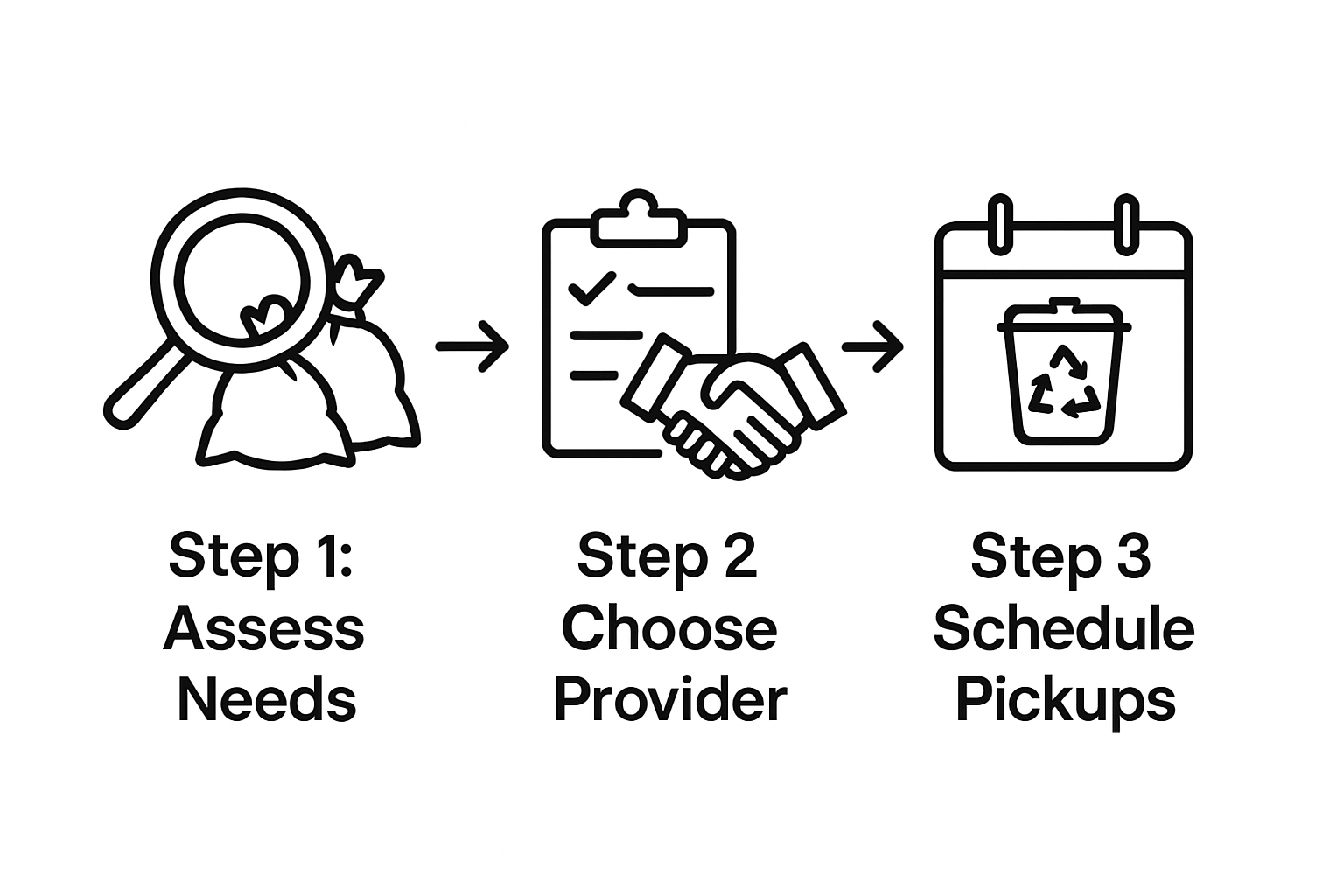
3-step waste collection scheduling workflow: assess needs, choose provider, schedule pickups

Step 2: Research Waste Collection Services and Regulations

Researching waste collection services and regulations forms the backbone of developing an efficient waste management strategy. This critical step ensures your business remains compliant with local and national waste disposal requirements while identifying the most suitable waste management partners. Understanding the regulatory landscape helps prevent potential legal complications and environmental penalties.

Begin by investigating local waste management regulations specific to your region. Each local authority in the UK has distinct guidelines regarding waste disposal, recycling requirements, and collection protocols. Contact your local council or environmental agency to obtain detailed information about waste management standards applicable to businesses in your sector. Pay special attention to regulations concerning hazardous waste, electronic waste, and industry-specific disposal requirements.

Explore our comprehensive waste collection network to understand the range of services available for businesses. When evaluating potential waste collection providers, consider several critical factors beyond just cost. Assess their compliance certifications, environmental credentials, collection frequency options, and specialisation in your industry’s specific waste streams. Request detailed service proposals from multiple providers to compare their capabilities, ensuring they can handle the unique waste generation patterns identified in your initial assessment.

Key evaluation criteria for waste collection services should include:

Below is a summary table of key considerations when evaluating waste collection service providers. Use this as a quick reference to compare what to look for when selecting a suitable partner for your business.

Evaluation Criterion Description
Waste stream management capabilities Ability to handle various waste types relevant to your industry
Pricing structures Transparent fees and billing methods
Compliance credentials Certifications meeting environmental and legal standards
Collection schedule flexibility Options for custom or adjustable pickup times and frequencies
Reporting and tracking Provision of detailed service reports and waste tracking records
  • Comprehensive waste stream management capabilities
  • Transparent pricing structures
  • Documented environmental compliance credentials
  • Flexibility in collection scheduling
  • Detailed reporting and waste tracking mechanisms

Successful completion of this research phase means you have a clear understanding of regulatory requirements and have identified potential waste collection partners who can meet your business’s specific needs. The insights gathered will directly inform your waste collection scheduling strategy, positioning your organisation for efficient and compliant waste management.

Step 3: Create a Waste Collection Schedule Template

Creating a comprehensive waste collection schedule template transforms your waste management approach from reactive to proactive. This crucial step translates the insights gathered from your initial assessment and research into a structured, actionable plan that ensures consistent and efficient waste disposal across your organisation. A well-designed template becomes your strategic roadmap for managing waste streams effectively.

Start by developing a digital spreadsheet or dedicated waste management software that captures all essential waste collection parameters. Include columns for waste type, estimated volume, collection frequency, designated disposal method, and responsible department. Consider creating separate sections for different waste streams such as general waste, recyclables, confidential documents, and hazardous materials. Explore our comprehensive waste management planning resources to refine your template design.

Ensure your template allows for dynamic tracking and modification. Build in flexibility to accommodate seasonal variations in waste generation, potential changes in regulatory requirements, and evolving business operations. Include sections for notes about special collection requirements, emergency disposal protocols, and compliance documentation. The template should serve as a living document that can be easily updated and shared across different departments.

Key template components should include:

  • Precise waste stream categorisation
  • Scheduled collection dates
  • Estimated waste volumes
  • Disposal method specifications
  • Compliance tracking mechanisms
  • Contact information for waste management providers

Successful completion of this step means you have a comprehensive, adaptable waste collection schedule template that provides clear guidance for your organisation’s waste management strategy. This template will become an invaluable tool for maintaining consistent, compliant, and efficient waste disposal practices.

The following table outlines the major steps involved in implementing a waste collection schedule, along with key outcomes expected from each phase. Refer to this for a structured overview of the process and what each step achieves.

Step Key Outcome
Assess current waste management needs Detailed understanding of existing practices
Research collection services and regulations Clear knowledge of compliance and provider fit
Create a waste collection schedule template Comprehensive, adaptable scheduling tool
Coordinate with waste collection providers Collaborative relationships and clear SLAs
Implement and communicate the schedule Staff engagement and operational roll-out
Review and adjust the schedule regularly Continual optimisation and compliance

Step 4: Coordinate with Waste Collection Providers

Coordinating effectively with waste collection providers transforms your waste management strategy from theoretical planning to practical implementation. This critical step involves building a collaborative relationship with providers who can meet your specific waste disposal requirements while ensuring compliance and operational efficiency. Successful coordination hinges on clear communication, detailed expectations, and mutual understanding of your business’s unique waste management needs.

Initiate contact with your selected waste collection providers by scheduling a comprehensive consultation. During this meeting, present your detailed waste collection schedule template and discuss its specific requirements. Learn more about optimising waste collection networks to enhance your provider discussions. Demonstrate transparency about your waste streams, expected volumes, and any specialised disposal needs. Request a detailed service proposal that outlines collection frequencies, pricing structures, compliance mechanisms, and emergency response protocols. Negotiate flexible terms that accommodate potential fluctuations in waste generation and allow for periodic schedule adjustments.

Ensure that your chosen waste collection provider can deliver comprehensive documentation for each waste collection, including waste transfer notes, recycling certificates, and compliance records. These documents are crucial for maintaining regulatory compliance and tracking your organisation’s waste management performance. Establish clear communication channels for reporting issues, requesting schedule modifications, and receiving performance updates. Develop a robust feedback mechanism that allows both parties to review and refine the waste collection process continuously.

Key coordination elements should include:

  • Detailed service level agreements
  • Comprehensive waste tracking documentation
  • Flexible collection scheduling
  • Regular performance review meetings
  • Emergency response contingency plans

Successful completion of this step means you have established a strong, collaborative relationship with a waste collection provider who understands and can effectively manage your organisation’s specific waste management requirements.

Step 5: Implement and Communicate the Schedule

Implementing and communicating your waste collection schedule represents the critical transition point where meticulous planning transforms into operational reality. This step requires a strategic approach to ensure every team member understands their role in maintaining an efficient waste management system. The success of your schedule depends not just on technical precision, but on clear, consistent communication across your entire organisation.

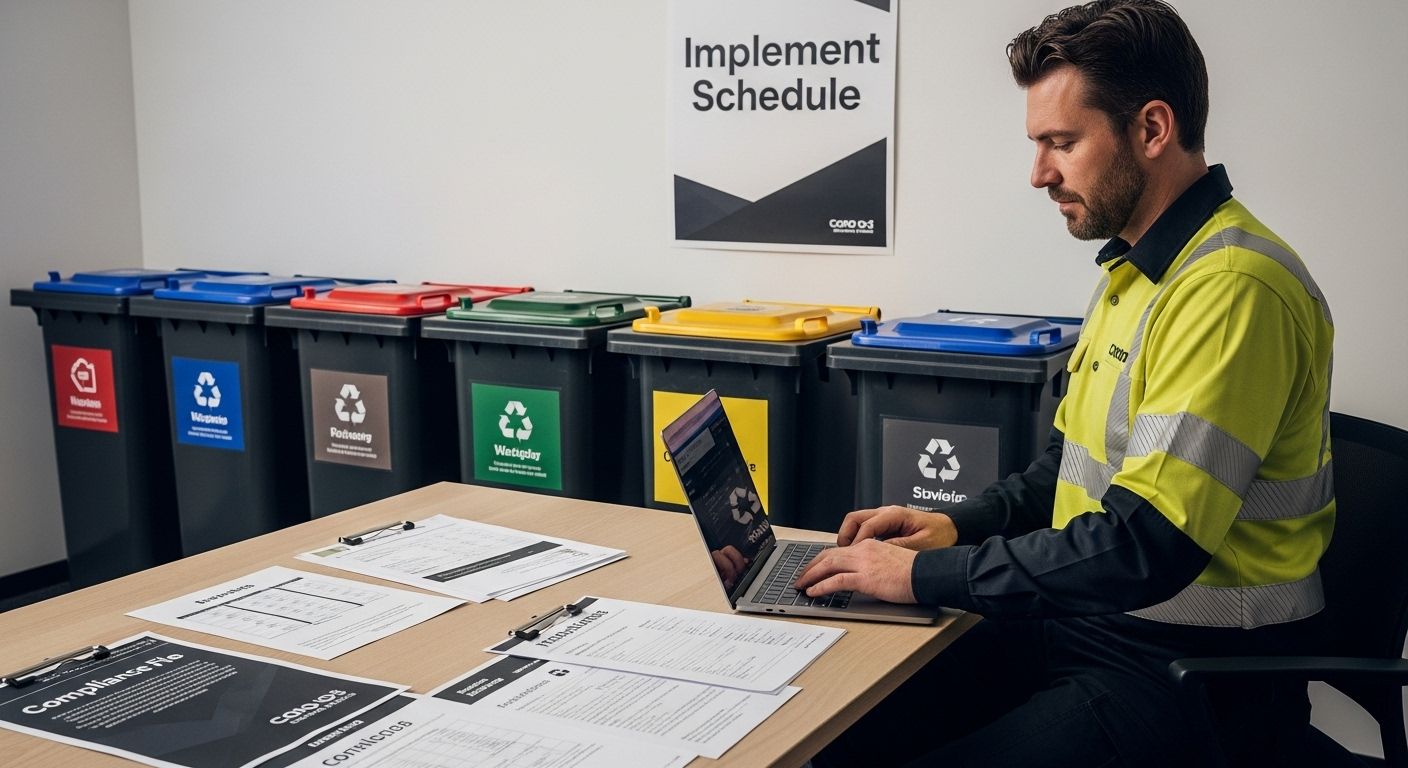
Begin by hosting a comprehensive organisation-wide briefing that introduces the new waste collection schedule. This meeting should explain the rationale behind the schedule, highlight its environmental and financial benefits, and provide detailed guidance on waste segregation and disposal procedures. Discover strategies for effective waste management communication to ensure maximum engagement. Create visual aids such as colour-coded waste stream posters, easy-to-follow infographics, and digital reminders that can be displayed in key areas throughout your facility. These visual tools will serve as constant, gentle reminders of the new waste management protocols.

Develop a multi-channel communication strategy that reaches every employee, regardless of their role or department. Implement digital tools like shared calendars, mobile app notifications, and email reminders that provide real-time updates about upcoming waste collection dates. Designate waste management champions within each department who can provide local support, answer questions, and help troubleshoot any implementation challenges. Ensure these champions receive additional training to become effective advocates for your new waste collection system.

Key implementation elements should include:

  • Comprehensive staff training sessions
  • Visual communication materials
  • Digital tracking and reminder systems
  • Department-specific waste management champions
  • Regular feedback and improvement mechanisms

Successful completion of this step means your entire organisation understands and is actively participating in the new waste collection schedule, creating a culture of environmental responsibility and operational efficiency.

implement waste collection schedule process

Step 6: Review and Adjust the Schedule Regularly

Regular review and adjustment of your waste collection schedule transforms a static plan into a dynamic, responsive waste management strategy. This ongoing process ensures your approach remains aligned with changing business needs, regulatory requirements, and environmental best practices. Treating your waste collection schedule as a living document allows for continuous improvement and optimisation of your waste management efforts.

Establish a quarterly review process that systematically evaluates the performance of your waste collection schedule. Gather comprehensive data from waste transfer notes, collection frequency logs, and departmental feedback. Explore advanced waste management review techniques to enhance your evaluation process. During these reviews, analyse key performance indicators such as waste volume fluctuations, collection efficiency, compliance adherence, and associated costs. Look for patterns that might indicate opportunities for schedule refinement, such as seasonal variations in waste generation or changes in your business operations.

Create a structured approach to schedule adjustments that involves input from multiple stakeholders. Engage your waste collection provider, departmental waste management champions, and senior leadership in a collaborative review process. Develop a formal mechanism for tracking and implementing schedule modifications, ensuring that any changes are thoroughly documented and communicated across the organisation. Consider implementing digital tracking tools that can provide real-time insights into waste collection performance, enabling more agile and data-driven decision-making.

Key review and adjustment elements should include:

  • Quarterly comprehensive performance reviews
  • Data-driven analysis of waste collection metrics
  • Collaborative modification process
  • Digital performance tracking
  • Continuous improvement documentation

Successful completion of this step means your waste collection schedule remains flexible, efficient, and perfectly tailored to your organisation’s evolving waste management needs, demonstrating a commitment to sustainable and responsible waste disposal practices.

Your Move to Hassle-Free Waste Collection Scheduling

Struggling to turn your waste collection plan into smooth action? If you have identified confusing regulations, rising costs, or inefficient collection routines as obstacles, you are not alone. Many UK businesses find waste management overwhelming, especially when balancing compliance, environmental responsibility, and operational efficiency. Our guidance on creating detailed waste schedules is only the first step.

Explore how the Waste Collection Process in the UK for Businesses transforms these challenges, giving you a proven structure for managing every waste stream on time and with confidence.

https://venturewaste.co.uk

Let Venture Waste Management streamline your operations. With our extensive collection network for UK businesses and a simple, three-step booking process at Venture Waste, we take scheduling, compliance, and clear communication off your checklist. Act today so your team can focus on what matters while your waste is managed by experts ready to support your business every step of the way.

Frequently Asked Questions

What are the first steps in assessing waste management needs for my business?

To begin assessing your waste management needs, gather a cross-functional team and review your current waste generation patterns. Collect documentation on waste types, volumes, collection frequencies, and disposal methods, and conduct a site walk-through to observe waste generation points.

How can I ensure my business complies with local waste management regulations?

Make sure to research local waste management regulations specific to your region by contacting your local council or environmental agency. Understand the legal requirements for your business, including guidelines for hazardous materials and recycling.

What should be included in a waste collection schedule template?

A comprehensive waste collection schedule template should include waste type categorisation, estimated volumes, collection frequencies, disposal methods, compliance tracking, and contact information for waste management providers.

How often should I review and adjust my waste collection schedule?

It is advisable to review your waste collection schedule quarterly. This allows you to evaluate performance metrics, identify patterns in waste generation, and make necessary adjustments to ensure the schedule remains efficient and compliant.

bulky waste skips housebuilding

Skips, Roll on Roll off and More: North East Bulky Waste Collections for Housebuilding Projects—Best Value via Our Contractor Network

Waste from housebuilding projects in the North East is piling up faster than ever and skipping proper planning can send project costs soaring. Think skips and roll-on-roll-off containers are your only options. Actually, using a contractor network can cut your waste management costs by up to 25 percent compared to sticking with a single supplier. This fresh approach does more than trim expenses—it brings new flexibility and smarter compliance to any construction job.

Table of Contents

Quick Summary

Takeaway Explanation
Conduct a waste assessment first Identify unique waste volumes and types to select the right solution for your project.
Use a contractor network for flexibility Access multiple services and competitive pricing by leveraging various suppliers instead of a single one.
Implement specialist waste management services Tailor waste strategies to specific industry needs for enhanced compliance and efficiency.
Maximise value with advanced technology Use cutting-edge tools for waste tracking and reporting to optimise waste management performance.
Stay compliant with regulatory standards Ensure adherence to local environmental regulations to avoid penalties and enhance sustainability.

Choosing the Right Waste Solution for Your Project

Constructing successful housebuilding projects in the North East requires strategic waste management that balances efficiency, cost-effectiveness, and environmental responsibility. Newcastle, Sunderland, and Durham’s construction landscapes demand tailored waste collection solutions that meet specific project requirements.

Understanding Your Project’s Waste Profile

Every construction project generates unique waste volumes and types. A residential development in Gateshead might produce different waste streams compared to a commercial complex in Middlesbrough. Before selecting a waste solution, contractors must conduct a comprehensive waste assessment. The U.S. Environmental Protection Agency recommends designing for adaptability and disassembly to minimize waste generation.

Key considerations include:

  • Estimated total waste volume
  • Types of materials (concrete, timber, metal, mixed)
  • Project duration
  • Site accessibility
  • Local disposal regulations

Matching Waste Solutions to Project Needs

North East contractors have multiple waste collection options. Skips remain popular for smaller projects, while roll-on-roll-off containers suit larger developments. Web-based tracking tools can help contractors electronically manage waste plans, identify recyclable materials, and generate comprehensive disposal reports.

Consider our guide on reducing waste management expenses to understand how strategic waste collection can drive project cost efficiencies. Different container sizes and types offer varying benefits:

To help you choose the most suitable waste container for your construction project, the following table summarises the key options, their typical applications, and the types of projects they best serve:

Waste Solution Typical Use Best Suited For
Mini Skips Small-scale waste removal Small renovations, tight urban sites
Midi Skips Medium-sized waste volumes Medium residential projects
Maxi Skips Large quantities of mixed construction waste Large-scale construction, industrial
Roll-on-Roll-off Containers Very large, bulky or ongoing construction waste Extensive commercial & infrastructure
  • Mini Skips: Ideal for small renovations or tight urban sites in places like Tynemouth
  • Midi Skips: Perfect for medium residential projects in areas like Gosforth
  • Maxi Skips: Suitable for large-scale construction in industrial zones around Teesside
  • Roll-on-Roll-off Containers: Best for extensive commercial and infrastructure developments

Proper waste management isn’t just about disposal—it’s about creating sustainable, efficient construction processes that minimize environmental impact while maintaining project timelines and budgets. By carefully selecting the right waste solution, North East contractors can optimize their projects’ waste streams, reduce costs, and contribute to more sustainable building practices.

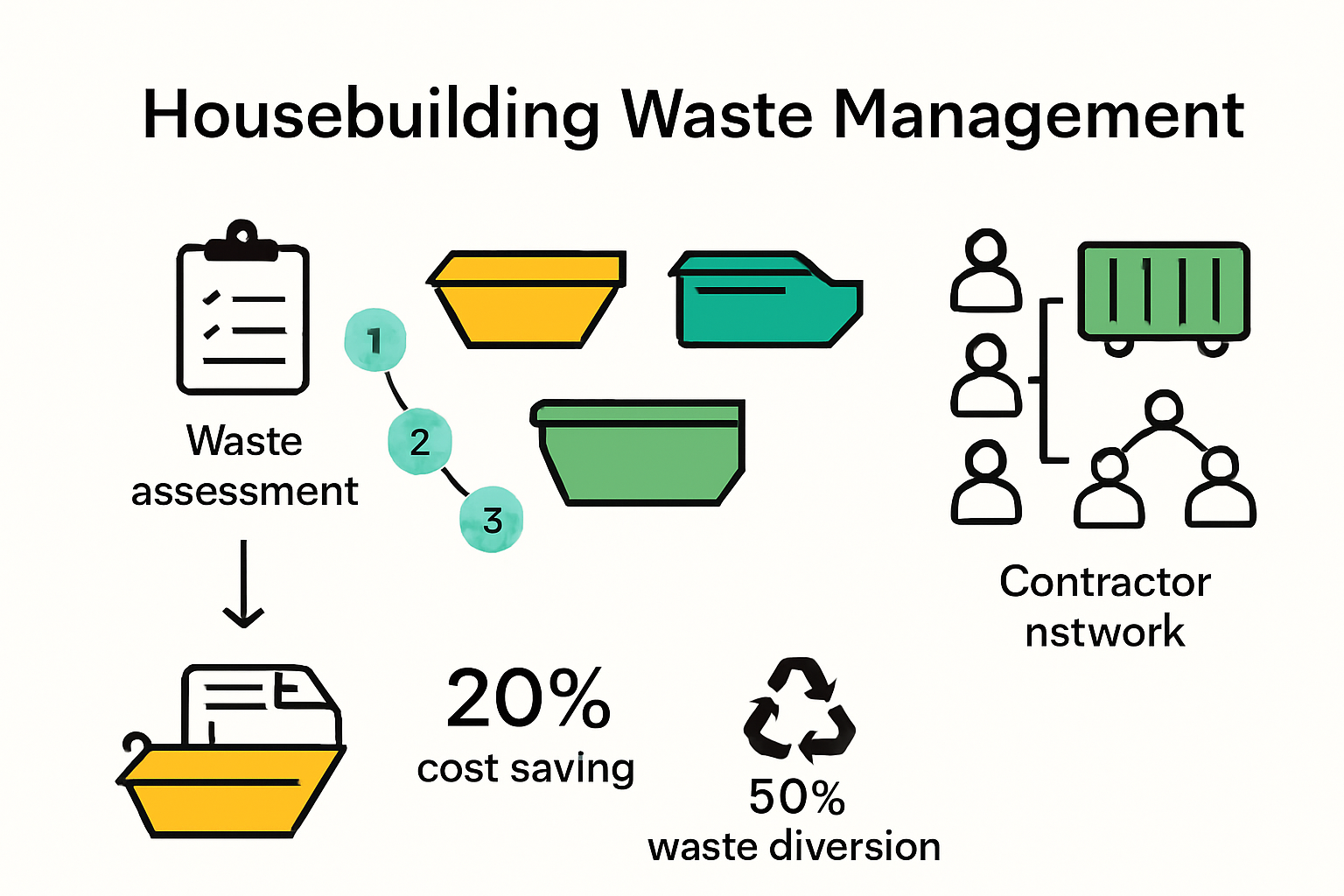
Infographic comparing skip solutions and supplier networks

Benefits of Using a Contractor Network Over a Single Supplier

Navigating waste management for housebuilding projects in the North East requires strategic decision-making that goes beyond simply selecting a single supplier. A robust contractor network offers construction professionals in Newcastle, Durham, and Sunderland unparalleled flexibility, competitive pricing, and comprehensive waste management solutions.

Competitive Pricing and Diverse Options

Relying on a single waste management supplier limits your project’s potential for cost-effectiveness and innovation. The U.S. Environmental Protection Agency emphasizes that separating service procurements can increase competition and reduce conflicts of interest. By leveraging a contractor network, housebuilding projects can access multiple pricing structures, specialised services, and competitive rates across different regions of the North East.

Key advantages of a diverse contractor network include:

  • Dynamic pricing models
  • Specialised expertise for different waste types
  • Geographical flexibility across Newcastle, Sunderland, and rural Northeast areas
  • Reduced risk of service disruption

Performance-Driven Waste Management

A contractor network introduces performance-based incentives that single suppliers often cannot match. EPA research suggests that aligning contractor compensation with waste diversion goals can significantly enhance waste management efficiency. This approach encourages contractors to develop innovative solutions, invest in training, and continuously improve their service delivery.


Additionally, our comprehensive guide on waste management expenses provides insights into how strategic contractor selection can drive cost reductions and operational improvements.

Technological and Operational Advantages

Modern housebuilding projects demand sophisticated waste management solutions. A contractor network provides access to cutting-edge technologies, diverse expertise, and adaptable service models. EPA recommendations highlight the importance of contractors who can compensate, train, and manage workers to achieve higher waste diversion rates.

By working with multiple contractors, construction projects benefit from:

  • Advanced waste tracking technologies
  • Specialised handling for different construction waste streams
  • Faster response times and flexible scheduling
  • Enhanced sustainability reporting capabilities

Ultimately, choosing a contractor network over a single supplier transforms waste management from a mere logistical necessity into a strategic advantage. Construction professionals in the North East can unlock greater operational efficiency, cost savings, and environmental responsibility by embracing a more dynamic and collaborative approach to waste collection and disposal.

Specialist Waste Services for Businesses and Organisations

Businesses and organisations across the North East require sophisticated waste management solutions that extend far beyond simple disposal. From Newcastle’s bustling industrial sectors to Durham’s expanding commercial landscapes, specialist waste services provide tailored strategies that address complex waste streams and regulatory compliance requirements.

Customised Waste Management Solutions

Every business generates unique waste profiles demanding expert handling. The U.S. Environmental Protection Agency highlights the critical importance of specialized waste management approaches that prioritize material recovery and environmental responsibility. Manufacturing facilities in Sunderland, construction companies in Gateshead, and commercial enterprises throughout the region need comprehensive waste collection services that understand their specific operational nuances.

Key considerations for specialist waste services include:

The following table gives a clear overview of specialist waste service features to help North East businesses and organisations assess their needs more quickly:

Feature Description
Industry-specific waste characterisation Handling waste profiles unique to each business sector
Compliance with environmental regulations Ensuring legal disposal & documentation
Advanced sorting and recycling Enhanced material recovery and sustainability
Confidential document/material destruction Secure disposal for sensitive or confidential items
Hazardous waste management protocols Safe and legal handling of dangerous materials
  • Industry-specific waste characterisation
  • Compliance with environmental regulations
  • Advanced sorting and recycling capabilities
  • Confidential document and sensitive material destruction
  • Hazardous waste management protocols

Technological Integration and Reporting

Modern organisations demand more than basic waste collection. They require data-driven insights, transparent reporting, and technologically advanced waste management strategies. Our comprehensive guide for North East waste management companies provides insights into how businesses can leverage cutting-edge waste management technologies.

Advanced specialist services now offer:

  • Real-time waste tracking systems
  • Detailed environmental impact reporting
  • Customised waste reduction strategies
  • Digital waste stream analytics
  • Sustainability performance measurements

waste management technology office

Sector-Specific Waste Management Approaches

Different industries demand nuanced waste management approaches. Healthcare facilities require stringent medical waste protocols, while manufacturing plants need robust industrial waste handling. Construction companies necessitate specialized debris management, and educational institutions demand secure document destruction services.

The North East’s diverse economic landscape requires flexible, intelligent waste management solutions that adapt to each sector’s unique requirements. Our general waste collection services demonstrate our commitment to providing comprehensive, tailored waste management strategies that align with businesses’ operational objectives.

By partnering with specialist waste service providers, organisations can transform waste management from a logistical challenge into a strategic advantage. Businesses gain not just disposal solutions, but comprehensive environmental stewardship that supports operational efficiency, regulatory compliance, and sustainable practices across the North East’s dynamic commercial ecosystem.

Maximising Value and Compliance for Complex Waste Streams

Navigating complex waste streams demands strategic expertise and comprehensive understanding of regulatory requirements. Construction and industrial projects across the North East require sophisticated approaches that transform waste management from a potential liability into a strategic asset.

Strategic Waste Characterisation and Management

The U.S. Green Building Council emphasizes developing comprehensive Construction Waste Management (CWM) plans that identify multiple material streams for diversion from landfills. For businesses in Newcastle, Sunderland, and Durham, this means implementing sophisticated sorting strategies that maximise material recovery and minimise environmental impact.

Key strategies for complex waste stream management include:

  • Detailed waste stream characterisation
  • Early identification of recyclable and reusable materials
  • Implementing on-site segregation protocols
  • Developing material recovery and recycling pathways
  • Tracking and documenting waste diversion metrics

Compliance and Regulatory Navigation

Complex waste streams require meticulous attention to evolving environmental regulations. The Whole Building Design Guide highlights that responsible waste management involves eliminating waste where possible, minimizing waste where feasible, and strategically reusing materials. North East businesses must stay ahead of regulatory requirements while maintaining operational efficiency.

Our comprehensive guide to waste compliance provides insights into navigating these intricate regulatory landscapes. Critical compliance considerations include:

  • Current environmental protection standards
  • Sector-specific waste disposal regulations
  • Documentation and reporting requirements
  • Hazardous material handling protocols
  • Sustainability certification prerequisites

Technology-Driven Waste Performance Optimization

The U.S. Environmental Protection Agency recommends leveraging advanced tracking tools to benchmark waste management activities. By implementing sophisticated digital solutions, businesses can transform waste management from a cost centre into a performance-driven strategic function.

Advanced waste management technologies enable:

  • Real-time waste stream monitoring
  • Predictive analytics for waste generation
  • Automated compliance reporting
  • Cost optimization through data-driven insights
  • Comprehensive sustainability performance tracking

Maximising value in complex waste streams requires a holistic approach that combines regulatory expertise, technological innovation, and strategic material management. By embracing these comprehensive strategies, North East businesses can turn waste management into a competitive advantage, reducing environmental impact while optimizing operational and financial performance.

Frequently Asked Questions

What are the different types of waste containers suitable for housebuilding projects?

There are several waste containers suitable for housebuilding projects, including mini skips for small renovations, midi skips for medium-sized waste, maxi skips for large construction volumes, and roll-on-roll-off containers for extensive commercial or infrastructure developments.

How can a contractor network reduce waste management costs?

Utilising a contractor network can cut waste management costs by up to 25 percent by providing access to competitive pricing, diverse options, and performance-driven waste management strategies compared to relying on a single supplier.

What factors should I consider when choosing a waste management solution for my project?

When selecting a waste management solution, consider the estimated total waste volume, types of materials, project duration, site accessibility, and local disposal regulations to find the most suitable option for your needs.

Why is it important to conduct a waste assessment before starting a housebuilding project?

Conducting a waste assessment is vital as it helps identify the unique waste volumes and types generated by your project. This information is crucial for selecting the right waste management solutions and implementing effective strategies to minimise waste generation.

Stop Letting Complex Construction Waste Derail Your Project Budget

Struggling with unpredictable waste costs and compliance risks on your North East housebuilding site? When bulky materials pile up and traditional skip or roll-on roll-off hire just adds more hassle, it is easy to feel overwhelmed. The article highlights the headaches of finding best-fit waste solutions for unique project needs alongside the chance to unlock up to 25 percent cost savings by using a contractor network. Venture Waste understands the real-world pressures you face to achieve efficiency, meet regulations, and keep your development on track.

https://venturewaste.co.uk

Transform the way you manage construction waste with our flexible waste collection network designed for UK businesses in 2025. Book in seconds and instantly access multiple suppliers who compete to give you the best value across Newcastle, Sunderland and beyond. Do not let waste handling become another delay or hidden cost. Visit Venture Waste now and discover how our streamlined waste collection process for businesses gets your housebuilding project moving forward today.

emerging waste streams photo

Understanding Emerging Waste Streams: A Comprehensive Guide

Emerging waste streams are reshaping how businesses and communities manage rubbish across the UK. Many still think of waste management as a simple process of collection and disposal, but the reality is changing fast. Over 90 percent of new industrial materials are now classified as ‘complex waste streams’ that require entirely different handling methods. This shift means waste is no longer just a problem to solve, it is an opportunity for companies to innovate and even profit in unexpected ways.

Table of Contents

Quick Summary

Takeaway Explanation
Recognise emerging waste streams as resources Viewing waste as a potential resource enables businesses to develop innovative recycling and repurposing strategies.
Invest in technology for effective waste management Proactively adapting to emerging waste types necessitates investment in new technologies and infrastructure for efficient management.
Implement comprehensive waste management strategies A structured approach helps businesses mitigate risks associated with emerging waste streams while complying with evolving regulations.
Transform waste into revenue opportunities Businesses can turn emerging waste challenges into profit by adopting circular economy practices and advanced material recovery technologies.
Collaborate across industries for sustainable solutions Interdisciplinary cooperation among waste managers, scientists, and regulators is crucial for effective management of complex emerging waste streams.

Defining Emerging Waste Streams: What They Are and Why They Matter

Emerging waste streams represent complex and evolving categories of discarded materials that challenge traditional waste management approaches. These novel waste types emerge from technological advancements, changing industrial processes, and shifts in consumer behaviour across the United Kingdom, particularly in regions like Newcastle, Durham, and Sunderland.

The Landscape of Modern Waste Generation

Traditional waste management strategies are becoming increasingly inadequate when confronting contemporary waste challenges. Emerging waste streams represent materials that do not fit neatly into conventional disposal or recycling categories. These include sophisticated technological waste, advanced industrial byproducts, and materials generated from innovative manufacturing processes.

Key characteristics of emerging waste streams include:

  • Technological complexity
  • Limited existing recycling infrastructure
  • High potential environmental impact
  • Rapid generation rate due to technological innovation

To clarify and highlight their unique challenges, the following table organises key characteristics of emerging waste streams as discussed in the article.

Characteristic Description
Technological complexity Composed of advanced or novel materials requiring specialised handling and treatment
Limited recycling infrastructure Existing waste management systems are often inadequate for emerging materials
High potential environmental impact Possess greater risk of pollution or toxicity if mismanaged
Rapid generation rate Created at a fast pace due to technological innovation and new manufacturing processes
Complex compositional structure Made up of diverse substances, sometimes with hazardous or unknown properties
Regulatory uncertainty Often fall outside or strain existing environmental regulatory frameworks

Understanding the Environmental and Economic Implications

According to the US Environmental Protection Agency, emerging waste streams like lithium-ion batteries pose significant challenges. These materials require specialised handling due to their potential hazards and complex compositional structure.

Businesses and waste management professionals must recognize that these emerging waste streams represent more than disposal challenges—they signify opportunities for innovation. By exploring comprehensive waste management strategies, organis


ations can transform potential environmental risks into sustainable solutions.

The economic implications are substantial. Emerging waste streams demand investment in new technologies, research, and infrastructure. Companies that proactively develop strategies for managing these materials will gain competitive advantages, reduce environmental risks, and potentially create new revenue streams through innovative recycling and repurposing techniques.

The Importance of Recognising Emerging Waste Streams in Business

Businesses across the United Kingdom are increasingly confronting the complex challenge of managing rapidly evolving waste categories that defy traditional disposal methods. Understanding and proactively addressing emerging waste streams is no longer optional but a critical strategic imperative for sustainable operational management.

Strategic Business Implications

Recognising emerging waste streams provides organisations with significant competitive advantages. Modern businesses must view waste not as a disposal problem, but as a potential resource and strategic opportunity. This perspective shift enables companies to transform waste management from a cost centre into a potential revenue stream through innovative recycling and repurposing strategies.

Key strategic benefits include:

  • Reduced environmental liability
  • Potential for material recovery and secondary markets
  • Enhanced corporate sustainability credentials
  • Compliance with evolving regulatory frameworks

Financial and Regulatory Considerations

According to the US Environmental Protection Agency, emerging waste streams like lithium-ion batteries represent significant financial and operational risks if mismanaged. Proactive identification and strategic handling can mitigate potential economic losses and environmental penalties.

Businesses that develop comprehensive waste management strategies can unlock substantial cost savings by implementing efficient disposal and recycling protocols. This approach not only reduces waste management expenses but also positions organisations as environmentally responsible corporate citizens.

Moreover, regulatory landscapes are continuously evolving, with increasing emphasis on sustainable waste management practices. Companies that anticipate and adapt to these changes will be better positioned to navigate complex environmental compliance requirements, avoiding potential financial penalties and reputational damage.

How Emerging Waste Streams Affect Environmental and Health Standards

Emerging waste streams are transforming environmental and health standards across industries, presenting complex challenges that demand sophisticated regulatory responses and advanced management strategies. These novel waste categories require comprehensive evaluation to understand their potential long-term implications for public health and ecological systems.

Complex Environmental Risk Assessment

Emerging waste streams introduce unprecedented environmental risks that traditional regulatory frameworks struggle to address comprehensively. These materials often contain novel chemical compositions, technological components, and potential contaminants that challenge existing health and environmental protection protocols.

Key environmental risk factors include:

  • Potential toxicity of uncharted chemical interactions
  • Long-term ecological contamination potential
  • Unpredictable breakdown and degradation characteristics
  • Limited understanding of cumulative environmental impacts

Regulatory and Health Implications

According to the US Environmental Protection Agency, emerging waste streams like Per and Polyfluoroalkyl Substances (PFAS) are driving significant changes in national drinking water and environmental health standards. These regulatory shifts demonstrate how emerging waste streams directly influence public health protection mechanisms.

Businesses must now consider more than immediate disposal—they need comprehensive strategies that address potential hazardous waste risks and long-term environmental consequences. This requires interdisciplinary collaboration between waste management experts, environmental scientists, health professionals, and regulatory bodies.

The intersection of emerging waste streams with environmental and health standards represents a dynamic landscape of continuous adaptation. Organisations must remain agile, investing in research, monitoring technologies, and proactive management strategies to mitigate potential risks and contribute to sustainable waste ecosystem development.

Key Concepts in Managing Emerging Waste Streams Effectively

Managing emerging waste streams requires a sophisticated, multi-dimensional approach that transcends traditional waste disposal methodologies. Organisations must develop comprehensive strategies that integrate technological innovation, regulatory compliance, and sustainable environmental practices.

Strategic Waste Stream Characterisation

Effective management begins with precise waste stream identification and comprehensive characterisation. This process involves detailed analysis of waste composition, potential environmental interactions, and inherent chemical or technological complexities. Understanding the unique properties of emerging waste streams enables businesses to design targeted management protocols.

Critical characterisation elements include:

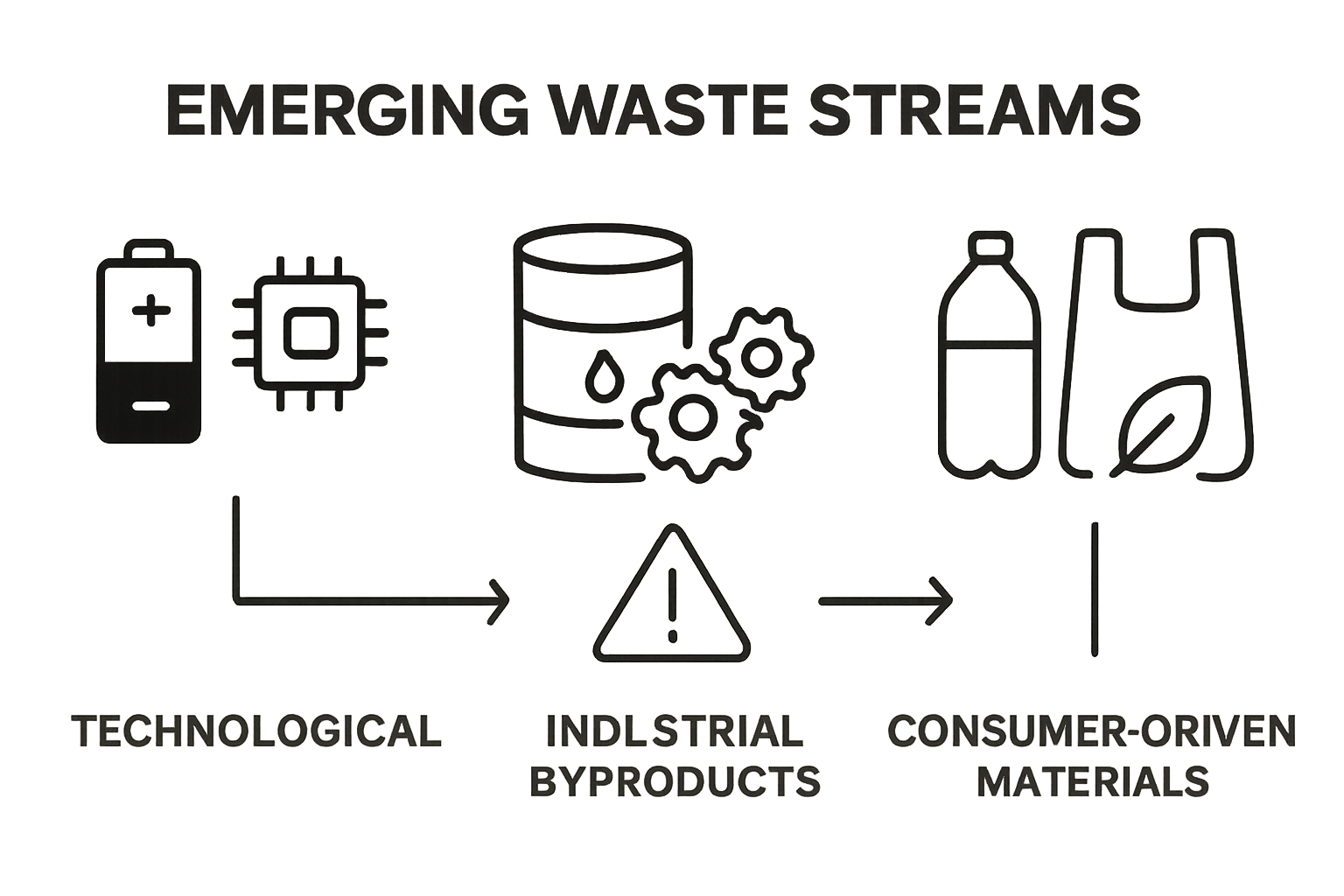
Simple breakdown of emerging waste stream categories and impacts

  • Molecular and material composition analysis
  • Potential environmental interaction pathways
  • Degradation and transformation characteristics
  • Potential toxicity and contamination risks

Technological and Regulatory Integration

According to the US Environmental Protection Agency, emerging waste management requires dynamic regulatory frameworks that can adapt to rapid technological changes. This necessitates continuous monitoring, research, and flexible policy development to address novel waste categories effectively.

Businesses can optimise waste management costs by implementing integrated technological solutions that combine advanced tracking, segregation, and processing technologies. These approaches transform waste management from a reactive cost centre into a proactive value generation strategy.

Successful management of emerging waste streams demands an ecosystem approach that balances technological innovation, regulatory compliance, environmental stewardship, and economic pragmatism. Organisations must cultivate interdisciplinary collaboration, invest in continuous research, and maintain adaptable management frameworks to navigate the complex landscape of emerging waste challenges.

Real-World Applications: Case Studies of Emerging Waste Management

Real-world case studies reveal the transformative potential of innovative waste management strategies across diverse industrial sectors. These practical examples demonstrate how organisations can convert emerging waste challenges into sustainable opportunities through strategic thinking and technological innovation.

Technological Transformation of Waste Streams

Advanced waste management represents more than disposal—it’s a pathway to resource regeneration. Organisations are increasingly viewing waste not as an endpoint, but as a potential input for new production cycles. This paradigm shift enables creative solutions that simultaneously address environmental concerns and economic efficiency.

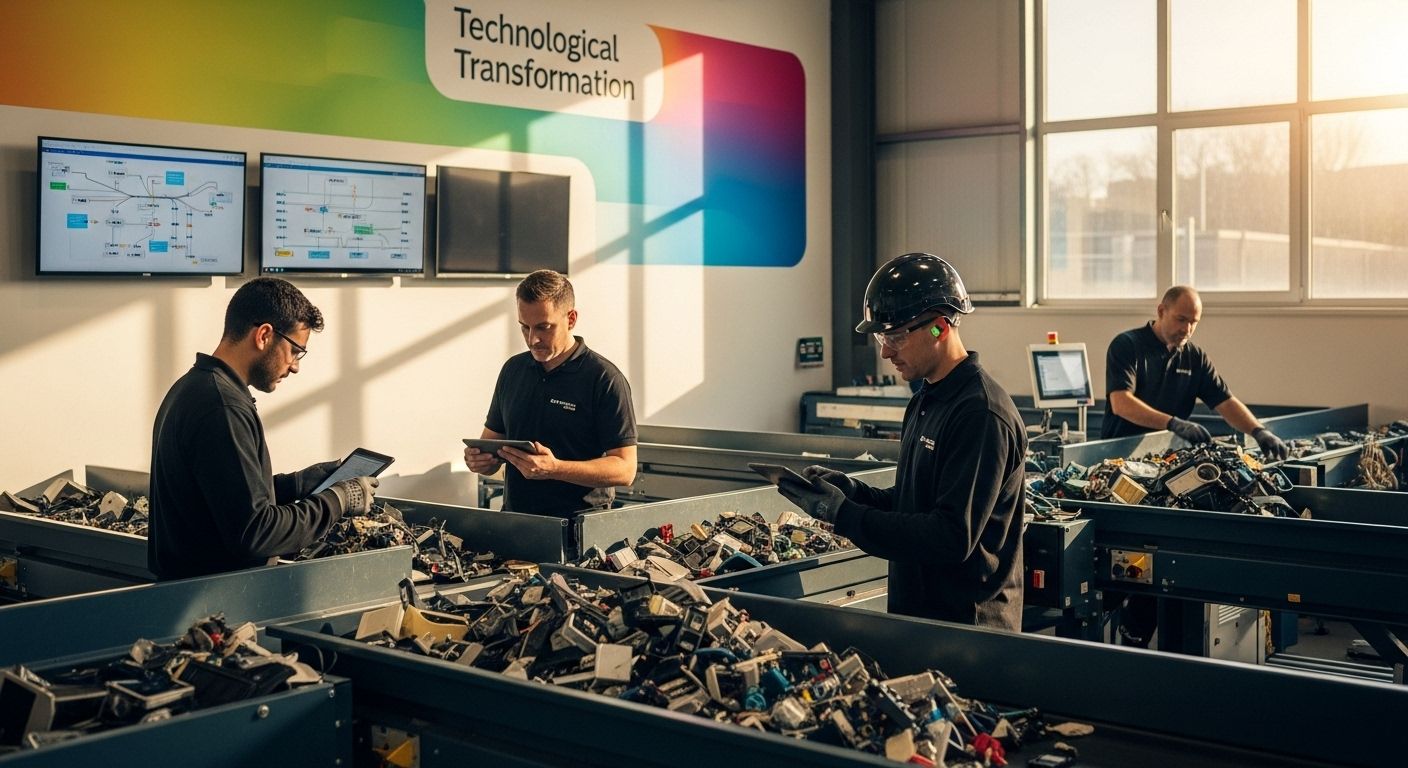
waste stream management factory workplace

Notable technological transformation strategies include:

  • Converting industrial byproducts into secondary raw materials
  • Developing closed-loop manufacturing processes
  • Implementing advanced material recovery technologies
  • Creating circular economy business models

Practical Industry Implementation

According to the US Environmental Protection Agency, innovative waste management strategies are reshaping industrial practices. For instance, municipal wastewater treatment facilities are now converting food waste into renewable energy through anaerobic digestion, generating significant environmental and economic benefits.

Businesses can develop comprehensive waste management plans that integrate cutting-edge technologies and sustainable practices. These strategies not only reduce environmental impact but also unlock potential revenue streams from previously discarded materials.

Successful emerging waste management requires a holistic approach that combines technological innovation, regulatory compliance, and strategic thinking. By studying and adapting successful case studies, organisations can transform waste management from a traditional cost centre into a dynamic platform for sustainable value creation.

Turn Complex Waste Challenges into Simple Solutions Today

Modern waste streams are evolving faster than ever before, bringing complexity and uncertainty to businesses trying to keep up with new materials and regulations. Many organisations struggle to identify, categorise, and responsibly manage these emerging waste types, leading to increased risk, mounting costs, and the ever-present concern of complying with environmental standards. If you are feeling the pressure to transform your waste handling—especially around issues like hazardous materials, difficult-to-recycle items, and advanced disposal requirements—you are not alone. Our comprehensive Waste Collection Network in the UK is designed specifically for businesses that want clarity, reliability, and full compliance, no matter how complex their waste streams become.

https://venturewaste.co.uk

Act now to secure peace of mind and protect your business reputation. Visit Venture Waste to learn more about how our expert team can help you master the Waste Collection Process for every type of material. Do not let emerging waste streams create confusion or compliance risks—reach out today and experience waste management that puts your business ahead.

Frequently Asked Questions

What are emerging waste streams?

Emerging waste streams are complex categories of discarded materials that arise from technological advancements, changes in industrial processes, and shifts in consumer behaviour, challenging traditional waste management approaches.

Why are emerging waste streams important for businesses?

Recognising and managing emerging waste streams is crucial for businesses as they can transform waste from a disposal burden into potential resources, offering competitive advantages, reducing environmental liabilities, and complying with evolving regulations.

What challenges do emerging waste streams pose to traditional waste management?

Emerging waste streams often have unique characteristics that make them difficult to categorise and manage, such as technological complexity and limited recycling infrastructure, leading to increased environmental impact if not handled properly.

How can businesses develop effective strategies for managing emerging waste streams?

Businesses can manage emerging waste streams effectively by identifying and characterising these materials, investing in new technologies, implementing comprehensive waste management strategies, and fostering collaboration across different sectors to address regulatory, environmental, and financial considerations.

unidentified liquid waste chemists

How to Categorise Unidentified Liquid Waste, Want a Clue? Book Our Chemist!

Unidentified liquid waste turns up in labs and factories across the UK, often causing real headaches for safety and compliance teams. Most people do not realise that over 60 percent of hazardous waste incidents involve materials with unclear origins or composition. You might think you can just barrel it up and ship it off, but that move could lead to massive legal and environmental trouble. The real solution comes from expert chemists who turn a mystery drum into a manageable, compliant strategy—saving far more than just paperwork.

Table of Contents

Quick Summary

Takeaway Explanation
Recognise the risks of unidentified liquid waste Unidentified liquid waste can pose environmental and health hazards that require immediate attention and expert handling.
Employ professional chemists for waste categorisation Expert chemists provide advanced analytical capabilities essential for accurately identifying and managing hazardous substances.
Follow stringent regulatory compliance Proper categorisation according to UK regulations is crucial for legal compliance and environmental protection.
Implement systematic waste identification protocols Businesses should adopt structured processes for sampling and analysis to ensure safe and compliant waste management.
Invest in thorough risk assessment strategies Comprehensive risk assessment can mitigate legal liabilities and protect worker safety associated with unknown waste.

Understanding Unidentified Liquid Waste Risks

Unidentified liquid waste represents a significant environmental and safety challenge for businesses across the UK, particularly in industrial areas like Newcastle, Sunderland, and Durham. These mysterious chemical mixtures pose complex risks that demand immediate professional attention and precise categorisation.

Chemical Composition and Potential Hazards

Every unidentified liquid waste stream carries inherent dangers that cannot be overlooked. Explore our comprehensive liquid waste disposal strategies to understand the critical nature of proper identification. The potential hazards range from environmental contamination to severe health risks for workers and surrounding communities. Chemical compositions might include toxic substances, corrosive materials, or reactive compounds that could trigger unexpected interactions when improperly managed.

According to the Environment Agency’s Hazardous Waste Regulations, unidentified liquid waste must undergo rigorous testing to determine its precise chemical profile. This process involves sophisticated analytical techniques that can detect trace elements, molecular structures, and potential reactive properties.

Risk Assessment and Management Strategies

Professional risk assessment becomes paramount when dealing with unidentified liquid waste. Industrial sites in the North East, from chemical processing plants in Teesside to manufacturing facilities in South Shields, must implement stringent protocols for waste categorisation. The risks extend beyond immediate environmental concerns and include potential legal liabilities, worker safety, and regulatory compliance challenges.

Key risk assessment strategies include:

  • Comprehensive Chemical Analysis: Utilising advanced spectrographic and chromatographic techniques to break down complex chemical compositions.
  • Safety Protocol Development: Creating specific handling and disposal procedures based on initial chemical identification.
  • Cross-Referencing Regulatory Standards: Ensuring waste management aligns with UK environmental protection guidelines.

The Health and Safety Executive emphasises that businesses cannot afford to treat unidentified liquid waste as a routine disposal challenge. Each unknown substance represents a potential threat that requires meticulous scientific evaluation and strategic management.

Working with professional chemists who specialise in waste categorisation becomes not just a recommended practice but a critical necessity. These experts employ sophisticated diagnostic tools and extensive knowledge to transform an ambiguous liquid waste stream into a precisely understood and safely manageable substance.

Businesses across industrial sectors must recognise that the cost of professional waste categorisation pales in comparison to the potential financial and environmental consequences of mishandling unidentified liquid waste. Proactive identification and management represent the most responsible approach to protecting both organisational interests and broader environmental ecosystems.

Key Steps in Waste Identification and Categorisation

Identifying and categorising unidentified liquid waste demands a systematic and scientific approach that combines technical expertise, regulatory knowledge, and strategic methodology. Businesses in industrial regions like Newcastle, Durham, and Sunderland must follow precise protocols to ensure safe and compliant waste management.

Initial Waste Sampling and Documentation

The first critical step in waste identification involves comprehensive sampling techniques. Learn more about our precise waste management protocols to understand the intricate process. According to the Environment Agency’s Technical Guidance WM3, proper sampling requires trained professionals who can collect representative liquid waste samples without compromising safety or sample integrity.

Key documentation requirements include:

  • Chain of Custody Forms: Tracking sample origin, collection method, and transportation details
  • Initial Visual Inspection Logs: Documenting colour, consistency, potential contaminants
  • Site-Specific Waste Stream Records: Capturing contextual information about waste generation

Advanced Chemical Analysis Procedures

Chemical analysis represents the most sophisticated stage of waste identification. Professional chemists employ multiple advanced techniques to deconstruct complex liquid waste compositions. Spectrographic analysis, gas chromatography, and mass spectrometry provide granular insights into molecular structures, enabling precise categorisation.

The Health and Safety Executive emphasises that comprehensive analysis must include:


  • Identifying potential hazardous chemical components
  • Determining pH levels and reactivity
  • Assessing potential environmental and human health risks
  • Evaluating compatibility with different disposal methods

Regulatory Compliance and Categorisation

Once chemical analysis is complete, waste must be categorised according to stringent UK environmental regulations. This process involves matching identified chemical compositions with specific waste classification codes, determining whether the liquid waste is classified as hazardous or non-hazardous.

Businesses must adhere to multiple regulatory frameworks, including:

  • Hazardous Waste Regulations
  • Environmental Protection Act
  • Waste (England and Wales) Regulations
  • Transport of Dangerous Goods legislation

Professional waste management experts play a crucial role in translating complex scientific data into actionable regulatory compliance strategies. They ensure that every unidentified liquid waste stream is thoroughly understood, safely managed, and disposed of in full accordance with legal requirements.

By following these systematic steps, businesses can transform potentially dangerous unknown liquid waste into precisely categorised, safely manageable substances. The investment in professional waste identification represents a critical approach to environmental protection, workplace safety, and regulatory compliance.

To clarify the process of identifying and categorising unidentified liquid waste, the following table summarises the key steps, who carries them out, and the main purpose of each stage:

Step Responsible Party Purpose
Initial Sampling & Documentation Trained Professionals Collect representative samples and document key details
Advanced Chemical Analysis Professional Chemists Identify chemical composition and potential hazards
Regulatory Compliance & Categorisation Waste Management Experts Match waste type to official codes and ensure legal compliance
Disposal Strategy Development Chemists/Compliance Officers Formulate safe disposal method based on findings

Infographic showing steps to categorise unidentified liquid waste

Why Expert Chemist Support is Essential

Navigating the complex landscape of unidentified liquid waste requires specialised expertise that goes far beyond basic waste management. Expert chemists play a pivotal role in transforming potentially hazardous unknown substances into safely managed and precisely categorised materials.

Advanced Diagnostic Capabilities

Explore our comprehensive waste identification services to understand the critical role of professional chemists. According to the National Academies Press, laboratories and industrial facilities are strictly prohibited from disposing of materials with unknown hazards. Professional chemists bring sophisticated diagnostic capabilities that allow for nuanced and comprehensive waste characterisation.

Their advanced analytical techniques include:

Below is a table outlining the advanced diagnostic capabilities that expert chemists bring to the process of unidentified liquid waste management, highlighting the analytical technique and its main purpose:

Analytical Technique Main Purpose
Spectroscopic Analysis Precisely identify molecular structures
Chromatographic Separation Isolate and analyse complex chemical mixtures
Elemental Composition Testing Determine specific chemical constituents
  • Spectroscopic Analysis: Identifying molecular structures with precision
  • Chromatographic Separation: Isolating complex chemical mixtures
  • Elemental Composition Testing: Determining precise chemical constituents

Regulatory Compliance and Risk Mitigation

Chemical waste identification is not merely a technical challenge but a critical regulatory requirement. As Purdue University’s Environmental Health and Safety department emphasises, proper identification involves comprehensive research, consultation with laboratory personnel, and thorough documentation.

Expert chemists provide essential support by:

  • Interpreting complex safety data sheets
  • Conducting systematic characterisation tests
  • Ensuring alignment with UK environmental regulations
  • Developing targeted disposal strategies

Comprehensive Hazard Assessment

The National Academies Press outlines multiple critical parameters for characterising unknown chemicals. Professional chemists systematically evaluate these parameters, including physical description, water reactivity, solubility, pH levels, ignitability, and the presence of oxidizers or peroxides.

Their comprehensive approach involves:

  • Detailed physical and chemical property assessment
  • Potential reactivity analysis
  • Environmental impact evaluation
  • Worker safety risk assessment

Businesses in industrial regions like Newcastle, Durham, and Sunderland cannot afford to treat liquid waste identification as a routine administrative task. Expert chemists transform potentially dangerous unknown substances into precisely understood and safely manageable materials.

The investment in professional chemical waste identification represents more than a regulatory compliance measure. It is a critical strategy for environmental protection, workplace safety, and responsible industrial management. By leveraging specialised expertise, businesses can convert complex waste challenges into systematic, scientifically validated solutions that protect both organisational interests and broader environmental ecosystems.

Booking a Chemist for Hassle-Free Waste Disposal

Booking a professional chemist for liquid waste disposal transforms a potentially complex and risky process into a streamlined, scientifically validated solution. Businesses across the North East, from industrial complexes in Teesside to manufacturing facilities in Newcastle, can significantly benefit from expert waste management support.

Initial Consultation and Assessment

Discover our comprehensive hazardous waste management solutions to understand the seamless process of professional waste categorisation. The initial consultation represents a critical first step where businesses can provide comprehensive details about their unidentified liquid waste. According to the Health and Safety Executive’s Guidelines, this preliminary assessment helps chemists understand the potential composition, origin, and associated risks of the waste stream.

Key elements of the initial consultation include:

  • Detailed Waste Description: Comprehensive documentation of waste characteristics
  • Site Inspection Scheduling: Arranging on-site evaluation of waste generation environment
  • Preliminary Risk Assessment: Initial identification of potential hazards

Technical Sampling and Analysis Process

Once the initial consultation is complete, professional chemists deploy sophisticated sampling and analytical techniques. The sampling process is meticulously designed to ensure representative analysis while maintaining strict safety protocols. Chemists utilise advanced equipment and methodologies to extract and analyse liquid waste samples with remarkable precision.

The technical analysis typically involves:

  • Collecting multiple representative samples
  • Employing spectrographic and chromatographic techniques
  • Conducting comprehensive chemical composition tests
  • Generating detailed scientific reports

Disposal Strategy and Compliance Reporting

Following thorough analysis, chemists develop a tailored disposal strategy that ensures full regulatory compliance. This strategy goes beyond mere waste removal, providing businesses with a comprehensive approach to environmental responsibility and legal adherence.

The disposal strategy includes:

  • Precise waste categorisation
  • Recommended disposal methodologies
  • Compliance documentation
  • Environmental impact assessment

Businesses in industrial regions like Durham, Sunderland, and Newcastle can dramatically reduce their environmental risk by engaging professional chemists. The investment in expert waste management represents a proactive approach to environmental stewardship, workplace safety, and regulatory compliance.

The booking process is designed to be straightforward and user-friendly. Companies can typically initiate the waste management journey through online platforms, telephone consultations, or direct site assessments. Trained customer service representatives guide businesses through each step, ensuring a smooth and transparent experience.

Ultimately, booking a chemist for liquid waste disposal is more than a service transaction. It is a strategic partnership that transforms potential environmental and safety challenges into systematically managed, scientifically validated solutions. By leveraging professional expertise, businesses can convert complex waste streams into precisely understood and responsibly managed materials.

industrial liquid waste disposal team

Frequently Asked Questions

What is unidentified liquid waste?

Unidentified liquid waste refers to liquids whose composition or origin is unknown, often found in labs and industrial settings. It can pose significant safety and environmental risks.

Why is it important to categorise unidentified liquid waste?

Categorising unidentified liquid waste is crucial for compliance with regulations, ensuring safe handling, and mitigating potential health and environmental hazards associated with unknown chemicals.

How can a chemist help with liquid waste categorisation?

A professional chemist utilises advanced analytical techniques to identify the chemical composition of unknown substances, ensuring accurate categorisation and regulatory compliance for safe disposal.

What steps are involved in the waste identification process?

The waste identification process typically involves initial sampling and documentation, advanced chemical analysis, and regulatory compliance checks to ensure safe and compliant waste management.

Ready to Turn Unknown Liquid Waste Into a Problem Solved?

If you feel overwhelmed by the risks and legal worries that come with unidentified liquid waste, you are not alone. Many UK businesses find the task of safe categorisation and compliant disposal daunting, especially when chemical origins are unclear. Mishandled liquid waste can lead to major fines, environmental harm, and even reputational damage. That is where Venture Waste steps in. Our professional chemists take the uncertainty out of the process, providing you with peace of mind and full compliance every step of the way. Learn more about how our Waste Collection Process for UK Businesses tackles even the toughest unknown waste challenges.

https://venturewaste.co.uk

Do not risk an expensive mistake or regulatory breach when help is just a click away. Visit Venture Waste now and experience our fast three-step booking system. Contact us today to schedule your expert chemist and secure a compliant, hassle-free solution for even the most complex liquid waste issues.

confidential waste legislation

Confidential Waste Legislation: What UK Businesses Must Know

Confidential waste laws in the UK are tighter than ever and businesses are under real pressure to get it right. Many think a quick shred or binning the paperwork does the job. Not even close. Fines now reach up to £17.5 million for serious breaches so a single slip can cost more than most firms ever imagine.

Table of Contents

Quick Summary

Takeaway Explanation
Understand legal obligations UK businesses must comply with the Data Protection Act and UK GDPR for managing confidential waste.
Implement secure disposal methods Use locked containers and certified services for the destruction of confidential materials to prevent unauthorized access.
Maintain thorough records Detailed documentation of all disposal processes is essential for compliance and accountability.
Recognise sector-specific requirements Different industries have unique confidential waste regulations that must be followed to ensure legal adherence.
Train staff effectively Regular training on handling confidential materials is crucial to mitigate operational risks and maintain compliance.

Understanding Confidential Waste Legislation in the UK

Confidential waste legislation in the United Kingdom represents a critical framework for businesses to protect sensitive information and ensure responsible waste management. The legal landscape surrounding confidential waste disposal is complex, involving multiple regulations that mandate how organisations handle potentially sensitive documents and materials.

The cornerstone of confidential waste legislation in the UK is primarily governed by the Data Protection Act 2018 and the UK General Data Protection Regulation (UK GDPR). These regulations establish strict guidelines for how businesses must handle and dispose of documents containing personal or sensitive information. Learn more about our comprehensive guide on office confidential waste policies.

Businesses operating in Newcastle, Durham, and throughout the North East must adhere to these regulations, which require organisations to implement secure destruction processes for confidential documents. The legislation mandates that any materials containing personal data, financial records, or sensitive business information must be destroyed in a manner that prevents potential reconstruction or unauthorized access.

Compliance Requirements for Businesses

According to government guidelines, businesses are legally obligated to minimize waste and ensure proper disposal of confidential materials. This includes several critical requirements:

  • Secure Collection: Implement locked confidential waste containers that prevent unauthorized access
  • Verified Destruction: Maintain detailed records of document destruction
  • Professional Disposal: Use certified waste management services specializing in confidential waste handling

The Separation of Waste (England) Regulations 2025 further emphasize the importance of proper waste management. Research from the UK government indicates that businesses must now carefully segregate different types of waste, including confidential documents, to ensure environmental compliance and information security.

Specifically for businesses in urban centres like Newcastle and Durham, this means developing robust waste management strategies that go beyond simple document shredding. Organisations must now consider the entire lifecycle of confidential waste, from initial collection to final destruction, ensuring that every step meets legal and ethical standards.

Non-compliance can result in significant penalties, including substantial financial fines and potential legal consequences. The Information Commissioner’s Office (ICO) has the authority to investigate and penalize organisations that fail to protect sensitive information adequately.

The following table summarises some of the key legal requirements for confidential waste compliance, helping businesses quickly identify their obligations under UK law.

Legal Requirement Description
Secure Collection Use locked confidential waste containers to prevent unauthorised access
Verified Destruction Maintain detailed records of document destruction
Professional Disposal Employ certified waste management services specialising in confidential waste
Waste Segregation Separate confidential materials from other waste types in line with the Separation of Waste regs
Staff Training Regularly train employees on handling and disposing of confidential material
Systematic Documentation Keep thorough records of all disposal processes for auditing and compliance
Secure Storage Restrict access to confidential materials prior to destruction


Businesses must recognize that confidential waste legislation is not just a legal requirement but a critical component of maintaining trust, protecting sensitive information, and demonstrating professional responsibility in an increasingly data-driven world.

Confidential waste management involves complex legal obligations that UK businesses must meticulously understand and implement. The regulatory landscape demands comprehensive strategies to protect sensitive information while ensuring environmental and data protection compliance.

Comprehensive Data Protection Standards

Businesses must adhere to stringent data protection standards outlined in the Data Protection Act 2018 and UK GDPR. Learn more about secure document handling practices, which require organisations to implement robust mechanisms for handling confidential waste.

According to UK government data protection guidelines, businesses are legally obligated to:

  • Secure Storage: Maintain locked and restricted access to confidential document storage areas
  • Systematic Documentation: Keep detailed records of all confidential waste disposal processes
  • Professional Destruction: Engage certified waste management services specializing in secure document destruction

Regulatory Compliance and Penalties

The Information Commissioner’s Office (ICO) enforces strict regulations regarding confidential waste management. Research from the ICO indicates that businesses failing to implement adequate confidential waste procedures can face significant financial penalties.

In regions like Newcastle, Durham, and across the North East, businesses must develop comprehensive waste management strategies that go beyond basic document shredding. This involves understanding the entire lifecycle of confidential materials, from initial collection to final secure destruction.

Specifically, the Separation of Waste (England) Regulations 2025 mandate precise waste segregation protocols. Government research emphasizes that businesses must carefully categorize different waste types, including confidential documents, to maintain legal and environmental compliance.

Non-compliance can result in severe consequences, including:

  • Substantial financial fines
  • Potential legal investigations
  • Reputational damage
  • Potential criminal prosecution for serious data protection breaches

Businesses must recognize that confidential waste legislation is not merely a regulatory checkbox but a critical component of maintaining organisational integrity, protecting sensitive information, and demonstrating professional responsibility in an increasingly data-driven business environment.

Industries and Waste Types Covered by the Law

Confidential waste legislation in the United Kingdom encompasses a broad spectrum of industries and waste types, recognizing the diverse and complex nature of sensitive information management across different sectors. Understanding the specific requirements for various industries is crucial for comprehensive compliance and effective waste disposal strategies.

Sector-Specific Waste Management Requirements

Learn more about waste management classifications for different business environments. The legal framework applies to multiple industries, each with unique confidential waste challenges:

Sector-specific confidential waste requirements visual summary

  • Healthcare Sector: Medical facilities must adhere to stringent regulations for disposing of patient records, medical charts, and sensitive healthcare documentation
  • Financial Services: Banks, insurance companies, and financial institutions require robust destruction protocols for financial statements, customer information, and transaction records
  • Legal Firms: Law practices must implement secure disposal methods for client documents, case files, and confidential legal correspondence
  • Educational Institutions: Schools and universities must protect student records, academic documents, and administrative paperwork

According to government waste classification guidance, businesses must carefully categorize and handle various waste types to ensure legal compliance and environmental responsibility.

Hazardous and Sensitive Waste Categories

The UK government provides detailed guidelines for identifying and managing different waste types. Research from official sources identifies several critical waste categories that require special attention:

  • Hazardous waste (including chemicals, batteries, and electronic equipment)
  • Confidential paper documents
  • Electronic data storage devices
  • Medical and pharmaceutical waste
  • Financial and legal documentation

Businesses in Newcastle, Durham, and across the North East must pay particular attention to the nuanced requirements for different waste types. The Waste Classification Technical Guidance (WM3) provides comprehensive instructions for assessing and classifying waste, ensuring that organizations can accurately identify and manage their confidential waste streams.

Non-compliance can result in significant legal and financial consequences. The regulations are designed to protect sensitive information, prevent data breaches, and ensure environmental responsibility across various industries.

Key considerations for businesses include:

The table below lists sectors that must comply with confidential waste legislation, alongside the specific types of waste they commonly manage and key disposal considerations.

Sector Confidential Waste Types Disposal Considerations
Healthcare Patient records, medical charts Strict protocols, secure shredding/incineration
Financial Services Bank statements, customer information Certified document destruction
Legal Firms Client files, legal correspondence Confidential shredding, documented processes
Educational Institutions Student records, academic paperwork Restricted staff access, data retention policy
All Businesses Paper docs, digital data, legal docs Secure containers, audit trails
  • Implementing industry-specific waste management protocols
  • Investing in secure destruction technologies
  • Training staff on confidential waste handling procedures
  • Maintaining detailed documentation of waste disposal processes

Ultimately, confidential waste legislation represents a critical framework for protecting sensitive information across diverse business environments. Organizations must develop comprehensive strategies that address the unique challenges of their specific industry while maintaining legal compliance and information security.

Best Practices for Compliance and Secure Disposal

Businesses across the United Kingdom must adopt comprehensive strategies to ensure secure confidential waste disposal and maintain rigorous compliance with data protection regulations. Implementing robust practices is crucial for mitigating risks associated with information breaches and potential legal consequences.

Developing a Comprehensive Confidential Waste Management Strategy

Explore our guide to confidential information security for comprehensive insights into protecting sensitive data. Organisations must develop a systematic approach to confidential waste management that encompasses multiple critical elements:

  • Risk Assessment: Conduct thorough evaluations of potential information vulnerability points
  • Staff Training: Implement mandatory training programmes on confidential waste handling
  • Document Classification: Create clear protocols for categorizing and handling different types of sensitive documents
  • Secure Storage: Establish restricted access areas for confidential materials before destruction

According to UK government data protection guidelines, businesses must implement multi-layered security approaches that address both physical and digital confidential waste management.

Technological and Physical Disposal Methods

Modern confidential waste disposal requires a sophisticated approach that combines technological solutions with physical destruction techniques. Research from cybersecurity experts highlights several critical practices:

  • Utilising cross-cut industrial shredders capable of destroying documents into microscopic fragments
  • Implementing secure digital data wiping protocols for electronic storage devices
  • Deploying certified destruction services with comprehensive chain of custody documentation
  • Using locked consoles and secure collection containers for confidential waste

Businesses in regions like Newcastle, Durham, and across the North East must invest in advanced destruction technologies that meet stringent regulatory standards. This includes professional-grade equipment capable of rendering both paper and digital media completely unrecoverable.

Key considerations for secure disposal include:

  • Maintaining detailed audit trails of destruction processes
  • Ensuring complete destruction that prevents potential data reconstruction
  • Selecting certified waste management providers with proven security credentials
  • Regularly updating disposal protocols to address emerging technological challenges

Non-compliance can result in significant financial penalties and reputational damage. The Information Commissioner’s Office emphasizes that businesses must demonstrate proactive approaches to information protection, not merely reactive measures.

Ultimately, successful confidential waste management requires a holistic approach that combines technological solutions, staff training, robust policies, and continuous evaluation. Organisations must view confidential waste disposal not as a mere administrative task but as a critical component of their overall information security strategy.

By implementing these best practices, businesses can effectively protect sensitive information, maintain legal compliance, and demonstrate their commitment to professional data management standards.

secure disposal compliance

Frequently Asked Questions

Businesses must comply with the Data Protection Act 2018 and UK GDPR, establish secure collection methods, engage certified disposal services, maintain thorough documentation of destruction processes, and implement staff training for handling confidential materials.

How can a business ensure compliance with confidential waste management regulations?

A business can ensure compliance by developing a comprehensive confidential waste management strategy that includes secure storage, systematic documentation, the use of locked containers, professional destruction services, and ongoing staff training.

What penalties can businesses face for non-compliance with confidential waste legislation?

Non-compliance can lead to substantial financial fines, legal investigations by the Information Commissioner’s Office (ICO), reputational damage, and potential criminal prosecution for serious breaches of data protection laws.

What types of waste are classified as confidential under UK law?

Confidential waste includes paper documents containing personal data, financial records, client information, medical and pharmaceutical waste, electronic data storage devices, and any other sensitive information that requires secure disposal.

Take Control of Confidential Waste Compliance Today

Struggling to keep up with complicated confidential waste legislation and worried about costly mistakes that could lead to fines or reputational risk? You are not alone. Many UK businesses are feeling overwhelmed by strict compliance standards and the pressure to handle confidential materials securely at every step. Visit our confidential waste solutions hub to explore how streamlined processes and expert support can help you stay fully compliant.

https://venturewaste.co.uk

Avoid the headache and risk by partnering with a trusted waste management provider who understands every detail of legal requirements, verified document destruction and secure collection. Choose Venture Waste for fast, professional and fully compliant confidential waste services built for businesses like yours. Get started now at https://venturewaste.co.uk and make compliance effortless.

waste contracts hidden danger

General Waste Roll Over Contracts: The Dark Side and How to Avoid Getting Locked In

General waste roll over contracts sound like a simple solution for busy businesses. Many firms across the North East sign them without a second thought. Yet behind the convenience lies a harsh truth. Some companies find themselves facing annual cost increases of up to 15 percent, all buried in the fine print. What is even stranger is that you can be legally trapped into these deals for years without ever agreeing to stay. Turns out the real risk is not what you can see. It is what you miss on page two that could cost you the most.

Table of Contents

Quick Summary

Takeaway Explanation
Avoid automatic roll over contracts These contracts can trap businesses in unwanted long-term agreements with increasing costs.
Scrutinise contract terms thoroughly Ensure to review renewal clauses, pricing adjustments, and termination conditions to prevent unfavourable commitments.
Negotiate flexible terms and exit options Aim for shorter contracts with reasonable termination fees to retain operational flexibility.
Choose partners prioritising transparency A transparent waste management partner provides clarity on costs, processes, and environmental impact, fostering trust.
Implement proactive contract management Regularly monitor agreements and assess performance to stay informed and avoid lock-ins with poor terms.

The Dangers of Roll Over Waste Contracts

General waste roll over contracts represent a significant financial and operational risk for businesses across the North East, from Newcastle to Durham. These seemingly convenient arrangements often conceal predatory terms that can trap organisations into long-term, unfavourable waste management agreements.

Hidden Financial Traps in Waste Management Contracts

Roll over waste contracts are designed to automatically renew without explicit consent, creating a legal mechanism that keeps businesses locked into agreements they might no longer find beneficial. Research from the Environmental Services Association reveals that many companies unknowingly commit to multi-year contracts with escalating costs and minimal exit options.

The financial implications can be substantial. Businesses might face annual price increases ranging from 5% to 15%, which compound over time. These incremental changes often go unnoticed until they represent a significant burden on operational budgets. The EPA’s guidance on waste management contracts specifically warns against ‘put-or-pay’ commitments that require payments regardless of actual waste generation, creating a lose-lose scenario for businesses trying to implement sustainable waste reduction strategies.

Operational Inflexibility and Strategic Limitations

Roll over contracts fundamentally restrict a company’s ability to adapt to changing waste management needs. As businesses evolve, their waste generation patterns, recycling requirements, and disposal strategies also change. However, these rigid contracts prevent organisations from easily switching providers or negotiating more favourable terms.

For businesses in industrial areas like Sunderland or Middlesbrough, this inflexibility can be particularly problematic. A manufacturing facility might invest in new waste reduction technologies or implement circular economy principles, but remain contractually obligated to maintain outdated waste management approaches.

Moreover, these contracts often include complex termination clauses that impose significant financial penalties. Breaking free might require paying substantial early termination fees, effectively trapping businesses in agreements that no longer serve their strategic interests. Learn more about smart waste management strategies to avoid these common pitfalls.

Beyond financial concerns, roll over waste contracts can create unexpected legal and compliance challenges. Many businesses fail to track contract renewal dates, inadvertently extending agreements that might not meet current environmental regulations or corporate sustainability goals.

The risks extend beyond immediate financial implications. Non-compliant waste management can result in environmental fines, reputational damage, and potential legal challenges. Businesses must remain vigilant, understanding the full scope of their contractual obligations and the potential long-term consequences of seemingly convenient roll over arrangements.

Ultimately, the key to avoiding these dangers lies in proactive contract management, thorough review of terms, and a strategic approach to waste management that prioritises flexibility, transparency, and alignment with organisational goals.

Here is a table summarising the common dangers associated with general waste roll over contracts, as well as their practical implications for businesses:

Danger Description Practical Impact
Hidden Financial Traps Automatic renewals and escalating costs of 5–15% per year, often buried in contract fine print. Increased operational costs
Operational Inflexibility Difficulty adapting waste services as business needs change due to rigid, long-term contract terms. Limits to switching providers
Complex Termination Clauses Financial penalties or obstacles for early contract exits, making it costly to leave. Trapped in outdated agreements
Legal and Compliance Risks Risk of extending contracts that no longer fulfil current regulations or sustainability commitments. Exposure to legal or regulatory issues

This table provides a quick reference to the specific risks your business may face when entering or maintaining roll over waste contracts.

Why We Do Not Offer Roll Over Contracts

At Venture Waste Management, our commitment to transparency, fairness, and client empowerment drives our decision to categorically reject roll over waste contracts. This stance stems from a deep understanding of the inherent risks and ethical concerns these contracts pose for businesses across the North East and beyond.

Prioritising Client Flexibility and Autonomy

Roll over contracts fundamentally contradict our core business philosophy of providing flexible, client-focused waste management solutions. The U.S. Environmental Protection Agency’s guidance on waste management contracting emphasises the importance of creating agreements that align with organisational goals and environmental objectives. Traditional roll over contracts do the exact opposite by trapping businesses into rigid, potentially outdated arrangements.

Our approach recognises that waste management needs are dynamic. A manufacturing facility in Newcastle might experience significant changes in production processes, waste generation, or sustainability initiatives within a short period. Locking such businesses into long-term contracts would be detrimental to their operational efficiency and environmental goals.

Transparent Pricing and Ethical Business Practices

Research from the Government Accountability Office highlights the risks of ‘rollover’ practices that can lead to financial inefficiencies and reduced performance incentives. We reject this model entirely. Our contracts are designed with complete transparency, allowing businesses to understand exactly what they’re paying for and why.

Instead of implementing automatic renewals that can hide incremental cost increases, we provide clear, competitive pricing that requires active renewal. This approach ensures that our clients are always making informed decisions about their waste management services. We believe that trust is earned through transparency, not through contractual mechanisms that limit client choice.

Aligning with Sustainable Waste Management Principles

The Minnesota Counties Intergovernmental Trust emphasises the critical importance of clear contract terms that protect both service providers and clients. Our contract philosophy goes beyond mere legal compliance. We aim to create partnerships that actively support our clients’ sustainability goals.

Roll over contracts often disincentivise waste reduction and innovative disposal strategies. By contrast, our approach to waste management encourages businesses to continuously improve their waste management practices. We want our clients to have the freedom to adapt, innovate, and optimize their waste disposal strategies without being constrained by restrictive long-term agreements.

Our commitment extends beyond mere service provision. We view ourselves as strategic partners in our clients’ environmental and operational journey. This means providing the flexibility to change, grow, and improve waste management approaches as business needs evolve.

Ultimately, our refusal to offer roll over contracts is a testament to our dedication to client empowerment, transparency, and sustainable waste management practices. We believe that businesses deserve contracts that work for them, not against them.

How to Prevent Getting Locked In to Unwanted Agreements

Navigating waste management contracts requires strategic awareness and proactive management to avoid unintended long-term commitments that can drain financial resources and limit operational flexibility. Businesses across the North East, from Newcastle to Durham, must develop robust strategies to protect themselves from predatory contract structures.

Comprehensive Contract Review Strategies

According to Cornell Law School’s analysis of contract law, understanding the nuances of contractual terms is crucial in preventing unfavourable agreements. Businesses should implement a meticulous contract review process that goes beyond superficial examination.

Key steps include:

  • Detailed Term Examination: Scrutinise every clause, paying special attention to renewal mechanisms, termination conditions, and price adjustment provisions.
  • Automatic Renewal Clauses: Look for language that suggests automatic contract extensions or roll-over provisions.
  • Pricing Transparency: Identify any hidden clauses that allow unilateral price increases.

Businesses should consider engaging legal professionals specialising in commercial contracts to provide comprehensive contract reviews. This investment can prevent potentially costly long-term commitments.


Negotiation and Flexibility Tactics

The Environmental Protection Agency’s guidelines on waste management contracts emphasise the importance of creating flexible agreements that align with organisational goals. Proactive negotiation is key to preventing restrictive contract terms.

Effective negotiation strategies include:

  • Shorter Initial Contract Periods: Opt for shorter-term agreements that allow more frequent reassessment.
  • Clear Termination Provisions: Negotiate reasonable exit clauses with minimal financial penalties.
  • Performance-Based Provisions: Include terms that allow contract renegotiation based on service quality and changing business needs.

Do not hesitate to challenge standard contract templates. Many waste management providers are willing to modify terms to secure your business, especially if you demonstrate a clear understanding of contract intricacies.

Monitoring and Proactive Management

Contract management is an ongoing process that extends beyond initial signing. Explore our comprehensive waste management guide for additional insights into effective contract strategies.

Implement a robust contract tracking system that includes:

  • Renewal Reminders: Set alerts at least 60-90 days before contract expiration.
  • Regular Performance Assessments: Conduct periodic evaluations of waste management services.
  • Market Comparison: Continuously benchmark current contract terms against alternative providers.

Businesses in industrial areas like Sunderland and Middlesbrough must remain particularly vigilant. Waste management needs can change rapidly with shifts in production processes, sustainability initiatives, and regulatory requirements.

Ultimately, preventing unwanted contract lock-ins requires a combination of thorough review, strategic negotiation, and ongoing management. By adopting a proactive approach, businesses can maintain the flexibility needed to adapt to changing waste management landscapes while protecting their financial and operational interests.

To help businesses prevent getting locked into unfavourable contracts, here is a process table outlining essential steps recommended in the article:

Step Action Description Purpose
Detailed Term Examination Scrutinise all contract clauses, focusing on renewals, termination, and pricing terms. Identify hidden risks
Search for Auto-Renewals Check for automatic renewal or roll-over clauses in the contract. Prevent unintended extensions
Assess Pricing Transparency Look for clauses that allow unilateral price changes or hidden fees. Avoid unexpected cost increases
Engage Legal Professionals Consult commercial contract legal experts for thorough review. Ensure full contract understanding
Negotiate Key Clauses Aim for shorter contracts, clear termination, and performance-based terms. Increase flexibility
Set Renewal Reminders Establish alerts before contract expiration dates. Avoid accidental roll-overs
Conduct Regular Assessments Evaluate provider performance and benchmark against alternatives. Optimise services and maintain control

This table organises the proactive measures businesses should take, as highlighted in the article, for effective contract management.

Infographic on avoiding roll over waste contract traps

Choosing a Transparent Waste Management Partner

Selecting a waste management partner is a critical decision that extends far beyond simple service provision. For businesses across the North East, from Newcastle to Sunderland, the right partner can transform waste management from a necessary expense to a strategic asset.

Evaluating Transparency and Accountability

Research from Waste Advantage Magazine emphasises the crucial role of transparency in waste management contracts. A truly transparent waste management partner should provide clear, accessible information about their processes, pricing, and environmental impact.

Key indicators of transparency include:

  • Detailed Reporting: Monthly performance reports that showcase waste volumes, recycling rates, and disposal methods.
  • Open Communication: Willingness to discuss pricing structures, contract terms, and potential improvements.
  • Environmental Commitment: Demonstrable evidence of sustainable waste management practices.

Our comprehensive guide to North East waste management companies can help businesses identify providers that meet these critical standards.

Performance-Driven Contract Structures

The Environmental Protection Agency’s guidelines highlight the importance of contracts that incentivise waste reduction and environmental responsibility. A transparent waste management partner should offer:

  • Flexible Pricing Models: Contracts that reward waste reduction and recycling efforts.
  • Performance Metrics: Clear, measurable goals for waste management efficiency.
  • Continuous Improvement Mechanisms: Regular reviews and opportunities to optimise waste management strategies.

Businesses should seek partners who view waste management as a collaborative process, not just a transactional service. This approach ensures alignment with broader sustainability and cost-efficiency objectives.

Open data standards in procurement provide critical insights into selecting an ethical waste management partner. Look for providers who demonstrate:

  • Regulatory Compliance: Proven track record of meeting local and national waste management regulations.
  • Ethical Business Practices: Transparent financial reporting and commitment to fair business standards.
  • Environmental Certifications: Recognised accreditations that validate their environmental credentials.

In industrial areas like Middlesbrough and Durham, where waste management can be complex, choosing the right partner is paramount. A truly transparent provider will be a strategic ally, helping businesses navigate environmental challenges while optimising operational efficiency.

contract negotiation discussion waste

Ultimately, the ideal waste management partner goes beyond mere waste disposal. They should offer a comprehensive approach that combines environmental responsibility, cost-effectiveness, and strategic insight. By prioritising transparency, businesses can transform waste management from a necessary expense into a valuable opportunity for innovation and sustainability.

Frequently Asked Questions

What are the risks of general waste roll over contracts?

General waste roll over contracts can trap businesses in long-term agreements with escalating costs, often hidden in fine print. These contracts may also limit operational flexibility and pose legal compliance risks due to automatic renewals without consent.

How can I avoid getting locked into a waste management contract?

To prevent getting locked into unwanted agreements, thoroughly review contract terms, negotiate for flexible options and clear exit clauses, and implement proactive contract management strategies, including setting reminders for renewal dates.

What should I look for in a waste management contract?

When evaluating a waste management contract, examine renewal and termination clauses, pricing transparency, and any hidden fees. It’s crucial to understand the implications of automatic renewals and negotiate terms that align with your business needs.

Why is transparency important in waste management contracts?

Transparency is vital as it builds trust with your waste management partner. Clear insights into pricing, performance metrics, and environmental impact enable businesses to make informed decisions and align their waste management strategies with sustainability goals.

Break Free From Hidden Roll Over Contracts and Take Back Control

Tired of feeling powerless as your waste management costs climb due to automatic contract renewals and unclear pricing? You deserve a provider who puts your needs first. At Venture Waste Management, we believe you should never feel trapped by confusing roll over clauses or hidden annual increases. Instead, we put flexibility and clarity at the centre of our waste collection network for businesses all across the UK.

https://venturewaste.co.uk

Ready to choose a transparent and ethical waste management partner? Visit Venture Waste Management today to discover solutions without contract lock-ins. Take the first step towards competitive pricing and reliable service by booking your waste collection in minutes. Do not wait for another renewal to catch you out—make the switch to committed, customer-focused waste solutions right now.

cardboard recycling UK mills

The cardboard recycling market in the UK historic prices at UK mills and trends for businesses

Cardboard recycling is a major force in the UK’s push for sustainability and economic efficiency. Businesses across the country produce millions of tonnes of cardboard waste each year, yet most never realise how much the value of that waste can swing. Prices have shot from £40 to £150 per tonne, leaving many caught out by sudden market shifts. What few expect is that the smartest companies are now turning these unpredictable ups and downs into real competitive advantages, simply by rethinking how they approach sorting, partnerships, and technology.

Table of Contents

Quick Summary

Takeaway Explanation
Invest in Advanced Sorting Technologies Implementing upgraded sorting equipment boosts material quality and efficiency, which leads to better pricing for recycled cardboard.
Understand Market Price Fluctuations Historic prices for cardboard recycling are influenced by factors like global demand and local infrastructure; staying informed helps businesses negotiate better deals.
Build Strategic Partnerships Collaborating with recycling mills enhances negotiation power, providing insights into market trends and potential cost savings in waste management.
Maximise Waste Separation Practices Effective waste separation can enhance the value of recycled materials, impacting the overall profitability of cardboard recycling initiatives.
Leverage Circular Economy Principles Embracing sustainable practices not only meets regulatory requirements but can also create new revenue streams and improve corporate reputation.

Understanding Cardboard Recycling in the UK

Cardboard recycling represents a critical component of sustainable waste management in the United Kingdom, playing a significant role in reducing environmental impact and supporting circular economy principles. The process involves collecting, sorting, and reprocessing used cardboard materials to create new paper and packaging products, thereby minimising waste and conserving natural resources.

The Lifecycle of Cardboard Recycling

In the UK, cardboard recycling follows a comprehensive process that begins with collection and ends with the production of new cardboard products. Businesses can explore detailed cardboard recycling strategies to understand their role in this ecosystem. According to UK government waste management statistics, the nation generates millions of tonnes of cardboard waste annually, with a significant portion originating from commercial and industrial sectors.

The recycling journey typically involves several key stages. First, businesses and households separate cardboard from other waste streams. Commercial establishments in regions like Newcastle, Durham, and Sunderland play a crucial role in this initial sorting process. Once collected, cardboard is transported to specialised recycling facilities where it undergoes thorough cleaning and preparation. The materials are then shredded, pulped, and transformed into new paper or packaging products.

The step-by-step process of cardboard recycling is crucial for businesses aiming to optimise their recycling efforts. The table below outlines each key stage in the lifecycle of cardboard recycling as described in the article.

Stage Description
Separation Businesses/households separate cardboard from other waste at the source
Collection Cardboard is collected by local authority or commercial recycling companies
Transportation Materials are transported to specialist recycling facilities
Cleaning & Preparation Cardboard is cleaned to remove contaminants and prepared for processing
Shredding & Pulping Cardboard is shredded and pulped to create usable material for manufacture
New Product Manufacturing Recycled pulp is turned into new cardboard or paper packaging products

Economic and Environmental Implications

Cardboard recycling offers substantial economic and environmental benefits for UK businesses. By redirecting cardboard waste from landfills, companies can significantly reduce their carbon footprint and contribute to national sustainability goals. The recycling process consumes considerably less energy compared to producing new cardboard from virgin materials. Research indicates that recycling one tonne of cardboard saves approximately 17 trees and reduces water pollution associated with paper manufacturing.

Moreover, the UK waste management sector has witnessed a growing trend towards more sophisticated recycling technologies. Advanced sorting mechanisms and innovative processing techniques have improved the efficiency and quality of recycled cardboard products. This technological advancement not only enhances recycling rates but also creates new economic opportunities within the waste management industry.

Businesses across the North East and beyond are increasingly recognising the strategic importance of effective cardboard recycling. By implementing robust waste management practices, companies can achieve multiple objectives: reducing disposal costs, demonstrating environmental responsibility, and supporting the transition towards a more sustainable economic model.

Understanding the nuances of cardboard recycling requires a holistic approach that considers technological, economic, and environmental factors. As the UK continues to strengthen its commitment to circular economy principles, cardboard recycling will undoubtedly remain a critical component of sustainable waste management strategies.

Historic Prices at UK Cardboard Mills

The cardboard recycling market in the United Kingdom has experienced significant price fluctuations over the past decade, reflecting complex global economic dynamics and environmental regulations. Understanding these historic price trends provides crucial insights for businesses engaged in waste management and recycling strategies.

Market Volatility and Price Determinants

Cardboard mill prices in the UK have been characterised by substantial volatility, influenced by multiple interconnected factors. Learn more about waste management pricing strategies to navigate these complex markets. According to UK government waste data, the national recycling infrastructure plays a significant role in price determination.

Historically, prices have ranged from £40 to £150 per tonne, with dramatic shifts occurring due to global economic conditions, export market demands, and recycling infrastructure investments. The North East region, including industrial centres like Newcastle and Sunderland, has been particularly sensitive to these market fluctuations. Key price determinants include global paper demand, international trade policies, transportation costs, and the quality of recycled cardboard materials.

To provide a quick reference to the various factors influencing cardboard recycling mill prices in the UK, the following table summarises the main determinants and their specific impacts as discussed in the article.

Price Determinant Impact on Cardboard Mill Prices
Global Paper Demand Increases or decreases prices based on international market requirements
International Trade Policies Import/export rules (e.g., China’s restrictions) cause significant price fluctuations
Domestic Recycling Infrastructure Helps stabilise prices and reduce volatility by improving processing capacity
Transportation Costs Influence final mill prices, especially in regional markets
Material Quality Higher quality, well-sorted cardboard fetches better prices
Economic Downturns (e.g., COVID) Lead to unpredictable price swings due to reduced supply and demand
Corporate Sustainability Demand Greater demand for recycled materials helps provide some price stability

Economic Factors Influencing Cardboard Mill Prices

The UK cardboard recycling market has been significantly impacted by global economic trends. Between 2015 and 2023, the market witnessed considerable price variations driven by several critical factors. The emergence of China’s stringent import policies in 2018, which dramatically reduced global cardboard waste imports, created substantial disruptions in the UK recycling market.

Domestic recycling infrastructure has played a crucial role in stabilising prices. Investments in advanced sorting and processing technologies have enabled UK mills to improve material quality and reduce processing costs. This technological advancement has helped mitigate some of the price volatility experienced in previous years.


Economic downturns, such as the COVID-19 pandemic, further complicated pricing dynamics. Reduced industrial production and changing consumption patterns led to significant fluctuations in cardboard waste volumes and subsequent recycling market prices. Businesses in the waste management sector had to adapt quickly to these unprecedented market conditions.

Infographic showing UK cardboard recycling price trends and factors

The renewable energy sector and increasing corporate sustainability commitments have also influenced cardboard mill prices. As more companies prioritise circular economy principles, demand for recycled materials has become more consistent, providing some stability to historical price trends.

Regional variations remain significant, with mills in different parts of the UK experiencing slightly different pricing mechanisms. The North East, with its strong industrial heritage, has developed particularly resilient recycling infrastructure that helps buffer against extreme price fluctuations.

Understanding these historic price trends requires a comprehensive approach that considers global economic contexts, technological innovations, and environmental regulations. For businesses involved in cardboard recycling, staying informed about these dynamics is crucial for developing effective waste management strategies and maintaining financial sustainability.

Business Impacts and Opportunities

The cardboard recycling market presents significant strategic opportunities and challenges for businesses across the United Kingdom, demanding innovative approaches to waste management and sustainable resource utilisation. Companies that proactively engage with these dynamics can transform potential environmental obligations into competitive advantages.

Strategic Value and Economic Implications

Businesses in the North East and across the UK are increasingly recognising cardboard recycling as more than a regulatory requirement. Explore sustainable waste management strategies to understand potential economic benefits. According to UK government environmental reports, organisations that implement comprehensive recycling programmes can achieve substantial cost savings and enhanced corporate reputation.

The economic landscape reveals multiple strategic opportunities. Companies can generate additional revenue streams by selling high-quality cardboard waste to recycling mills, effectively turning a disposal expense into a potential income source. Advanced sorting technologies and efficient waste management practices enable businesses to maximise the value of their cardboard waste, creating a more circular economic model.

Technological Innovation and Competitive Advantage

Technological advancements are reshaping how businesses approach cardboard recycling. Innovative waste management technologies, particularly in regions like Newcastle, Durham, and Sunderlands industrial corridors, are enabling more precise sorting, reducing contamination, and improving recycling efficiency. These technological improvements translate directly into economic benefits, reducing processing costs and increasing the market value of recycled materials.

Companies investing in advanced waste management technologies can differentiate themselves in increasingly environmentally conscious markets. By demonstrating commitment to sustainable practices, businesses can attract environmentally aware customers, investors, and potential employees. This strategic approach goes beyond mere compliance, positioning organisations as responsible corporate citizens committed to environmental stewardship.

Moreover, the evolving regulatory landscape increasingly favours businesses with robust recycling strategies. Government policies are progressively encouraging circular economy principles, with potential tax incentives and penalties that can significantly impact a companys financial performance. Businesses that proactively adapt to these changing requirements can mitigate potential future regulatory risks while capitalising on emerging opportunities.

The cardboard recycling market also presents unique collaborative opportunities. Cross-sector partnerships between waste management companies, manufacturing firms, and recycling mills can create innovative solutions that benefit all stakeholders. These collaborations can lead to more efficient recycling processes, reduced environmental impact, and shared economic benefits.

For small and medium enterprises particularly, cardboard recycling represents a pathway to enhanced operational efficiency. By implementing structured recycling programmes, businesses can reduce waste disposal costs, improve resource utilisation, and contribute to broader sustainability goals. The potential for cost savings and environmental impact reduction makes cardboard recycling a strategic imperative rather than a mere optional practice.

Ultimately, businesses that view cardboard recycling as a strategic opportunity rather than a compliance burden will be best positioned to thrive in an increasingly sustainability-focused economic environment. The ability to adapt, innovate, and integrate sustainable practices into core business strategies will distinguish progressive organisations in the evolving waste management landscape.

How to Maximise Recycling Value

Maximising cardboard recycling value requires a strategic approach that combines technological innovation, operational efficiency, and comprehensive waste management practices. Businesses across the United Kingdom, particularly in industrial regions like the North East, can significantly enhance their recycling economic potential by implementing targeted strategies.

Optimising Waste Collection and Sorting

Discover advanced cardboard recycling solutions for businesses to improve waste management efficiency. According to UK government waste statistics, effective sorting can increase recycling material value by up to 40%. Implementing rigorous waste segregation processes is crucial for maximising recycling value.

Key strategies include investing in high-quality sorting equipment, training staff in proper waste identification, and establishing clear internal recycling protocols. Businesses should focus on minimising contamination, as clean and well-sorted cardboard commands higher prices in the recycling market. This involves creating designated collection areas, using colour-coded bins, and educating employees about proper waste disposal techniques.

Technology and Quality Control

Technological advancements play a critical role in enhancing cardboard recycling value. Advanced baling equipment, optical sorting technologies, and digital tracking systems can significantly improve material quality and processing efficiency. Companies in industrial centres like Newcastle, Durham, and Sunderland can leverage these technologies to reduce processing costs and increase the market value of recycled cardboard.

Quality control is paramount in maximising recycling value. Businesses should implement strict quality assessment protocols, ensuring that cardboard waste meets the highest industry standards. This includes removing non-recyclable contaminants, managing moisture levels, and maintaining consistent material density. Research from Rabobank highlights that high-quality recycled materials can command premium prices in both domestic and international markets.

Strategic Partnerships and Market Engagement

Building strategic partnerships with recycling mills and waste management companies can unlock additional value for businesses. By establishing long-term relationships with recycling processors, companies can negotiate better rates, gain insights into market trends, and develop more efficient recycling strategies.

Understanding market dynamics is crucial. Businesses should monitor global recycling trends, international trade policies, and domestic market conditions. The UK recycling market is particularly sensitive to global economic shifts, such as changes in international waste import regulations. Staying informed about these dynamics allows businesses to adapt their recycling strategies proactively.

Financial considerations extend beyond direct recycling revenues. Many businesses can benefit from potential tax incentives, grants, and sustainability credits associated with effective waste management. The circular economy approach not only generates direct economic value but also enhances corporate reputation and attracts environmentally conscious customers and investors.

For small and medium enterprises, collaborative approaches can be particularly effective. Joining local business networks, participating in regional recycling initiatives, and sharing best practices can help smaller organisations overcome resource limitations and maximise their recycling potential.

Ultimately, maximising cardboard recycling value requires a holistic approach that combines technological innovation, operational excellence, and strategic market engagement. Businesses that view recycling as a strategic opportunity rather than a mere operational necessity will be best positioned to derive maximum economic and environmental benefits from their waste management practices.

business cardboard recycling sorting

Frequently Asked Questions

What are the main factors influencing cardboard recycling prices in the UK?

Cardboard recycling prices in the UK are influenced by global paper demand, international trade policies, transportation costs, the quality of recycled materials, and domestic recycling infrastructure. Economic downturns and corporate sustainability demands also play significant roles in price fluctuations.

How can businesses maximise the value of their cardboard recycling?

To maximise the value of cardboard recycling, businesses should focus on optimising waste collection and sorting practices, investing in advanced sorting technologies, ensuring quality control, and building strategic partnerships with recycling mills.

What economic benefits can companies gain from effective cardboard recycling?

Companies that implement comprehensive cardboard recycling programmes can reduce disposal costs, generate additional revenue through the sale of high-quality recycled materials, and enhance their corporate reputation by demonstrating environmental responsibility.

How does technological innovation impact cardboard recycling efficiency?

Technological innovations, such as advanced baling equipment and optical sorting systems, significantly improve the efficiency and quality of cardboard recycling by reducing contamination and processing costs, leading to better pricing for recycled cardboard.

Ready to Take Control of Cardboard Recycling Profitability?

If unpredictable cardboard mill prices and confusing recycling trends are making it harder for your business to get the most value from waste, you are not alone. Many companies in the UK are struggling with market volatility, unclear sorting requirements, and the challenge of turning recycling into a real advantage. The need for efficient separation, reliable collection, and the right technology is greater than ever. Find out how mastering every step of the process can help you secure better rates and meet both your sustainability and financial goals. For a clearer view on how to optimise your operations, visit our Waste Collection Process in the UK for Businesses 2025 page.

https://venturewaste.co.uk

Stop letting market swings hold your business back. Join those already benefitting from smarter waste processes and trusted local collection networks. Explore Venture Waste Management today to discover comprehensive services and a simple booking experience that quickly adapts to your unique business needs. Take control of your cardboard recycling now and see measurable improvement in both cost and compliance.

compactors balers warehouse

Compactors and Balers: Choose the Correct Machine for Your Operations. Key Tip: If It’s Valuable Bale It to Increase Its Value to Recyclers Such as Us.

UK businesses deal with mountains of waste every week, from cardboard piles to overflowing bins in Newcastle and Sunderland. You might expect most of that rubbish to end up in landfill or low-value recycling streams. Yet baling can change the story completely. When cardboard and plastics are baled, their worth can rise sharply and baled waste can be up to 90% more space efficient and fetch noticeably higher market prices. The real surprise is many businesses still send valuable recyclables away loose, missing out on extra revenue that could be sitting right on their loading bay.

Table of Contents

Quick Summary

Takeaway Explanation
Assess waste volume and types Conduct a waste audit to identify specifics about waste composition, guiding you to select between a compactor and a baler effectively.
Bale high-value materials Focus on bailing materials like cardboard and plastics to enhance market value and generate potential revenue from recycling facilities.
Consider space and power needs Evaluate your facility’s layout and electrical requirements to ensure proper fit and operational functionality of machinery.
Monitor market trends for recycling Keep an eye on current recycling prices and demand to time your baling effectively for maximum economic return.
Emphasise safety and maintenance Prioritise worker safety through training and regular inspections, while also considering ergonomic designs in machinery to reduce physical strain.

Understanding Compactors and Balers for Business Waste

Businesses across the North East, from Newcastle to Durham, face significant challenges in managing waste efficiently and sustainably. Compactors and balers emerge as critical solutions for organisations seeking to optimise their waste management strategies. Learn more about waste management solutions that can transform how businesses handle their recyclable materials.

The Fundamental Role of Waste Management Equipment

Compactors and balers represent sophisticated tools designed to reduce waste volume, enhance recycling efforts, and generate potential revenue streams for businesses. According to the US Environmental Protection Agency, these machines play a crucial role in sustainable materials management by increasing the density and market value of recyclable materials.

At their core, compactors and balers serve different yet complementary functions. Compactors primarily focus on reducing the volume of general waste by applying significant pressure to compress materials into smaller, more manageable units. This compression reduces the frequency of waste collection, ultimately lowering transportation costs and minimising environmental impact. Industrial compactors can handle mixed waste streams, making them versatile solutions for businesses with diverse waste generation patterns.

Here is a comparison table summarising the key differences between compactors and balers, helping businesses select the most suitable equipment based on their waste management needs.

Feature / Function Compactor Baler
Main Purpose Compresses general/mixed waste to reduce volume Compresses specific recyclables (e.g., cardboard, plastics)
Suitable Materials Mixed general waste Cardboard, paper, plastics, metals
Primary Benefit Minimises waste collection frequency and transportation costs Increases recyclable material value and optimises storage
Space Efficiency Reduces waste size, easier handling Bales can be up to 90% more space efficient
Revenue Opportunity Limited Potential to generate revenue from recycling centres
Typical Business Use Diverse waste streams, high waste volume High-volume recyclables, clean/source-separated materials

Baling: Transforming Recyclables into Valuable Resources

Balers specialise in processing specific recyclable materials such as cardboard, paper, plastics, and metal. By compressing these materials into dense, uniform bales, businesses can significantly increase their recyclable materials’ market value. The baling process offers multiple advantages:

  • Economic Benefits: Baled materials command higher prices from recycling facilities compared to loose, uncompressed waste.
  • Space Efficiency: Compressed bales occupy considerably less storage space, helping businesses optimise their waste management areas.
  • Environmental Impact: Baling supports more effective recycling processes, reducing the overall carbon footprint of waste disposal.

Businesses in industrial areas like Sunderland and Middlesbrough can particularly benefit from implementing balers. By transforming recyclable waste into compact, standardised bales, companies can not only reduce disposal costs but potentially generate additional revenue through selling these processed materials to recycling centres.

Choosing between compactors and balers depends on a business’s specific waste generation profile, volume, and types of materials produced. Careful assessment of waste streams, available space, and recycling goals will help organisations select the most appropriate waste management equipment. The key is to view these machines not merely as disposal tools, but as strategic assets in creating a more sustainable and economically efficient waste management approach.


Key Factors for Choosing the Right Machine

Selecting the appropriate waste management equipment requires a strategic approach that goes beyond simple waste disposal. Businesses in the North East, from industrial complexes in Teesside to commercial centres in Newcastle, must carefully evaluate multiple factors to ensure optimal waste management efficiency. Explore our comprehensive guide to waste management solutions to make an informed decision.

Assessing Waste Volume and Composition

The first critical consideration in choosing between compactors and balers is understanding your organisation’s specific waste profile. According to the Healthcare Plastics Recycling Council, businesses should conduct a comprehensive waste audit to determine the types and volumes of materials generated. This assessment helps identify whether a compactor or baler will provide the most effective solution.

Waste composition plays a pivotal role in equipment selection. Different materials require different processing approaches. For instance, mixed general waste might be best handled by a robust industrial compactor, while clean recyclables like cardboard and plastics are ideal for balers. The P2 Opportunity Handbook emphasizes that balers significantly enhance the marketability of recyclable commodities by creating uniform, compressed bales that are more attractive to recycling facilities.

Practical Considerations and Infrastructure Requirements

Beyond waste composition, businesses must evaluate several practical factors that impact machine selection:

  • Space Limitations: Compactors and balers come in various sizes. Measure available space carefully to ensure the chosen equipment fits within your facility’s layout.
  • Power Requirements: Different machines have unique electrical and operational needs. Confirm that your facility can support the selected equipment’s power specifications.
  • Maintenance Capabilities: Consider the technical expertise required to maintain and operate the machine. Some equipment demands more sophisticated maintenance protocols.

Businesses in industrial zones like Sunderland and Middlesbrough should also consider their long-term waste management strategy. A machine that seems appropriate today might not meet future operational needs. Factor in potential business growth, changes in waste generation patterns, and evolving environmental regulations when making your selection.

Below is a summary table outlining the key factors businesses should consider when choosing between a compactor and a baler, as discussed in the article.

Key Factor Description
Waste Volume Assess amount of waste generated to decide on scale and type of equipment
Waste Composition Identify types of materials (mixed, cardboard, plastics, etc.)
Space Availability Confirm enough space for selected machine and workflow
Power Requirements Check facility can support machine’s electrical and operational needs
Maintenance Needs Evaluate operational complexity and ongoing servicing requirements
Economic Considerations Analyse total ownership cost including potential recycling revenue
Growth & Regulation Consider future waste volumes and compliance with changing regulations

Additionally, financial considerations are paramount. While initial investment costs are important, businesses should calculate the total cost of ownership. This includes maintenance expenses, potential revenue from recycled materials, reduced waste collection frequency, and improved operational efficiency. A slightly more expensive machine might provide significant long-term savings through improved waste management practices.

Infographic comparing compactors and balers by waste type, space, value, safety

Ultimately, the choice between a compactor and a baler is not a one-size-fits-all decision. It requires a nuanced understanding of your specific operational context. Consulting with waste management professionals can provide tailored insights, helping you select equipment that not only manages waste effectively but also supports your organisation’s sustainability and economic objectives.

When to Bale: Maximising Value for Recyclers

Navigating the complex landscape of waste management requires strategic decision making, particularly when determining the optimal moments to bale recyclable materials. Businesses across the North East can significantly enhance their recycling efficiency and economic returns by understanding precisely when and how to transform waste into valuable baled resources. Discover our expert baling solutions to unlock your waste’s hidden potential.

Identifying High-Value Recyclable Materials

Not all waste materials are created equal when it comes to baling potential. According to the Environmental Protection Agency, strategic recycling plays a crucial role in conserving natural resources and reducing environmental impact. Businesses should prioritise baling materials that demonstrate high market value and recyclability.

Cardboard, paper, clean plastics, and metal scraps are prime candidates for baling. These materials typically fetch higher prices when compressed into uniform, clean bales. Industrial sectors in Newcastle, Sunderland, and Middlesbrough can particularly benefit from understanding material-specific recycling values. Clean, well-sorted materials that meet recycling facility specifications can command premium prices, transforming waste from a cost centre into a potential revenue stream.

baling cardboard value

Economic and Environmental Considerations

The decision to bale goes beyond simple waste management it represents a strategic environmental and economic choice. Key factors influencing when to bale include:

  • Volume Thresholds: Assess the quantity of recyclable materials generated. Consistent high-volume waste streams make baling more economically viable.
  • Material Purity: Cleaner, more segregated materials increase baling value. Implement robust sorting processes to maximise recyclable material quality.
  • Market Demand: Monitor current recycling market rates. Prices for baled materials fluctuate, so timing can significantly impact potential revenue.

Businesses should also consider storage capacity and transportation logistics. Baling reduces material volume by up to 90%, creating significant space savings and reducing transportation costs. This compression not only makes materials more attractive to recyclers but also minimises the carbon footprint associated with waste management.

Additionally, many recycling facilities offer better rates for baled materials due to reduced processing requirements. By investing time in proper material preparation and baling, businesses can transform waste management from a necessary expense into a potential profit centre. The key is developing a systematic approach that balances operational efficiency with environmental responsibility.

Ultimately, successful baling requires continuous assessment and adaptation. Regular waste audits, staying informed about recycling market trends, and maintaining high-quality sorting processes are essential. Businesses that view waste not as a burden but as a resource will find baling an invaluable strategy for both economic and environmental sustainability.

Industry Solutions for Different Business Needs

Every industry generates unique waste streams, demanding tailored waste management solutions that go beyond standard approaches. Businesses across the North East, from manufacturing facilities in Sunderland to logistics centres in Newcastle, require specialised compactors and balers that align precisely with their operational requirements. Learn about customised waste management strategies to optimise your waste handling processes.

Sector-Specific Waste Management Approaches

Different industries present distinct challenges in waste management. Manufacturing sectors typically generate substantial volumes of metal, plastic, and cardboard waste, requiring robust industrial balers capable of handling high-density materials. Retail and hospitality businesses, conversely, often need more compact solutions that can manage mixed recyclables and packaging waste efficiently.

Retail environments, such as shopping centres in Middlesbrough, might benefit from smaller vertical balers that can process cardboard packaging quickly and efficiently. Food production facilities require equipment with enhanced hygiene standards, potentially necessitating stainless steel construction and easier cleaning protocols. Healthcare settings demand specialised waste management solutions that prioritise safe material handling and strict contamination prevention.

Safety and Operational Considerations

Implementing industrial waste management equipment requires meticulous attention to safety protocols. The Centers for Disease Control emphasizes the critical importance of comprehensive worker training and machine safety mechanisms. OSHA guidelines specifically highlight the necessity of proper discharge-door locking mechanisms to prevent potential workplace injuries.

Key safety considerations include:

  • Machine Guarding: Ensuring all moving parts are adequately protected
  • Operational Training: Comprehensive instruction for all personnel who interact with the equipment
  • Regular Maintenance: Scheduled inspections and servicing to maintain optimal performance and safety standards

Businesses must also consider the ergonomic design of their chosen equipment. Modern compactors and balers increasingly incorporate features that reduce physical strain on workers, such as convenient loading heights, intuitive control systems, and automated compression mechanisms.

Technological advancements have transformed waste management equipment from simple compression tools to sophisticated systems with digital monitoring capabilities. Smart balers now offer real-time data on waste volumes, material composition, and operational efficiency. This technological integration allows businesses to make more informed decisions about their waste management strategies, potentially identifying opportunities for waste reduction and recycling optimization.

Ultimately, selecting the right compactor or baler transcends mere waste disposal. It represents a strategic investment in operational efficiency, workplace safety, and environmental responsibility. Businesses that approach waste management as a holistic process, considering sector-specific requirements, safety protocols, and technological capabilities, will achieve the most effective and sustainable outcomes.

Frequently Asked Questions

What are the main differences between compactors and balers?

Compactors primarily reduce the volume of mixed waste by compressing it, while balers compress specific recyclable materials such as cardboard and plastics into uniform bales that fetch higher prices from recyclers.

How do I determine whether my business needs a compactor or a baler?

Conduct a waste audit to assess your waste volume and composition. If your waste consists mostly of mixed materials, a compactor may be more suitable. For businesses generating high volumes of clean, recyclable materials, a baler is often the better choice.

What are the benefits of baling recyclable materials?

Baling recyclable materials can increase their market value by up to 90%, reduce the space required for storage, and improve overall recycling efficiency, thus potentially generating additional revenue for businesses.

What factors should I consider when selecting waste management equipment?

Consider waste volume, composition, space availability, power requirements, and maintenance needs. These factors will help you choose the right equipment that aligns with your operational needs and future growth.

Transform Waste Into Opportunity With the Right Baler or Compactor

Businesses across the UK struggle with uncollected revenue and wasted space when loose recyclables are sent off without proper baling. The article highlights that choosing between a compactor and a baler is not just about convenience, but about maximising the value of your waste and supporting both economic and environmental goals. If you are unsure or frustrated by inconsistent waste collection, missed recycling revenue, or overflowing storage, a tailored solution can turn these challenges into a genuine business advantage. Learn how strategic baling can directly boost your bottom line and create operational efficiency in your waste management processes. For more insights and machine-specific solutions, visit our dedicated Baler solutions page.

https://venturewaste.co.uk

Now is the perfect time to review your waste handling strategy. Let Venture Waste Management help you find the right equipment to increase recycling profits, lower costs, and keep you compliant. Do not let valuable materials simply disappear. Compare your options today and take the first step towards a smarter, more profitable waste management approach.