Hospital porter moving waste cart with colour-coded bins

Types of Commercial Waste – Key Risks for UK Healthcare

Managing complex waste streams can quickly overwhelm even experienced facilities managers. With the broad definition of healthcare waste in the United Kingdom, daily operations generate numerous hazardous, clinical, and confidential materials that demand safe and compliant disposal. Staying ahead of regulatory requirements means mastering detailed segregation protocols, secure storage, and secure destruction methods for sensitive information, all while protecting staff and patient safety. This guide clarifies the different waste types and outlines practical steps to support reliable, regulations-driven waste management.

Table of Contents

Key Takeaways

Point Details
Understanding Waste Categories Recognising the different waste types, including Clinical, Hazardous, and Offensive Waste, is essential for proper management and compliance.
Implementing a Segregation System A colour-coded waste segregation system helps streamline waste classification and reduces cross-contamination risks.
Legal Compliance Necessities Adhering to waste management regulations is critical to avoid significant penalties and ensure safe healthcare practices.
Ongoing Staff Training Regular training on waste segregation and management protocols is vital for maintaining compliance and protecting health and safety.

Defining Commercial Waste in Healthcare Settings

Healthcare waste represents a complex and critical category of commercial waste with significant regulatory implications. Healthcare waste classification encompasses multiple distinct waste streams produced during medical, veterinary, and research activities across diverse healthcare environments.

The UK Government defines healthcare waste as waste generated during human or animal healthcare procedures, including several critical categories:

  • Clinical Waste: Contains viable micro-organisms, toxins, pharmaceuticals
  • Infectious Waste: Materials potentially contaminated with pathogens
  • Sharps Waste: Needles, scalpels, broken glass with potential biological contamination
  • Pharmaceutical Waste: Expired or unused medications
  • Offensive Waste: Non-clinical waste containing body fluids or sanitary materials

Understanding these waste categories is crucial because each requires specific handling protocols to minimise infection risks and environmental contamination. Waste management guidance from the Health and Safety Executive emphasises the importance of proper classification, storage, and transportation to ensure workplace safety.

Healthcare waste management extends beyond traditional medical facilities, encompassing community healthcare, cosmetic procedures, body piercing services, and even crime scene cleaning. This broad definition ensures comprehensive regulatory coverage and standardised waste handling across diverse sectors.

Pro tip: Implement a comprehensive waste segregation system with colour-coded bins to streamline waste classification and reduce cross-contamination risks.

Major Categories: Clinical, Hazardous and Offensive Waste

Healthcare waste management involves understanding three primary categories, each with distinct characteristics and disposal requirements. Healthcare waste classification provides critical insights into these essential waste streams that healthcare facilities must carefully manage.

The three primary waste categories in healthcare settings include:

  • Clinical Waste: Contains infectious materials, biological agents, or potentially hazardous substances
    • Includes contaminated medical equipment
    • Requires specialised treatment and disposal
  • Hazardous Waste: Potentially dangerous materials that pose risks to human health or environment
    • Contains cytotoxic and cytostatic medicines
    • Includes chemical laboratory waste
    • Demands stringent handling protocols
  • Offensive Waste: Non-infectious waste that is unpleasant but not dangerous
    • Includes used personal protective equipment
    • Contains body fluid-contaminated materials
    • Requires separate disposal from clinical waste

Each waste category demands specific segregation, handling, and disposal strategies to ensure workplace safety and environmental protection. Healthcare facilities must implement robust waste management systems that accurately identify and process these different waste streams.

Proper waste classification is not just a regulatory requirement but a critical component of infection control and risk management in healthcare environments. Understanding the nuanced differences between these waste categories enables healthcare providers to develop comprehensive waste management strategies that protect staff, patients, and the broader community.

Healthcare worker sorting waste into labelled bins

Pro tip: Develop a colour-coded waste segregation system with clear staff training to ensure precise waste categorisation and minimise cross-contamination risks.

General, Recyclable, and Confidential Waste Streams

Healthcare facilities generate multiple waste streams that require sophisticated management strategies. Sustainable waste management involves careful segregation and handling of different waste types to ensure environmental protection and regulatory compliance.

The primary waste streams in healthcare settings include:

  • General Waste:

    • Non-hazardous, similar to domestic waste
    • Typically includes packaging, office materials
    • Can be disposed of in standard waste collection
  • Recyclable Waste:

    • Paper, cardboard, certain plastics
    • Requires separate collection and processing
    • Supports organisational sustainability goals
  • Confidential Waste:

    • Documents containing sensitive patient information
    • Requires secure destruction methods
    • Includes medical records, administrative paperwork

Each waste stream demands specific handling protocols to protect patient privacy, maintain workplace safety, and minimise environmental impact. Healthcare providers must implement comprehensive waste management systems that distinguish between these different categories.

Understanding and properly managing these waste streams is crucial for healthcare facilities. Incorrect disposal can lead to significant risks, including potential data breaches, environmental contamination, and regulatory non-compliance. Effective waste management requires ongoing staff training, robust infrastructure, and a commitment to best practices.

Pro tip: Implement a comprehensive staff training programme that includes visual guides and regular workshops on waste segregation to ensure consistent and accurate waste stream management.

Below is a comparison of colour-coded segregation systems commonly used in UK healthcare facilities:

Colour Waste Type Typical Facility Location
Yellow Clinical/infectious Treatment rooms, A&E departments
Orange Infectious (non-hazardous) General wards, clinics
Purple Cytotoxic/cytostatic Oncology, pharmacy
Black Domestic/general Offices, non-clinical areas
Red Anatomical waste Operating theatres, mortuaries

Healthcare waste management involves complex legal frameworks that mandate precise waste handling protocols. Waste storage and segregation represents a critical compliance requirement for healthcare facilities across the United Kingdom.

Key legal obligations for healthcare waste management include:

  • Regulatory Compliance:

    • Adherence to environmental permit requirements
    • Strict segregation of different waste types
    • Maintaining comprehensive waste management documentation
  • Storage Requirements:

    • Use of sealed, leak-proof containers
    • Establishing maximum storage capacities
    • Preventing unauthorized access to waste storage areas
  • Waste Segregation Protocols:

    • Separation of hazardous and non-hazardous waste
    • Implementation of national colour-coded waste system
    • Detailed staff training on waste classification

Healthcare providers must implement robust systems that ensure complete traceability and compliance with environmental regulations. This involves creating comprehensive waste management strategies that address every stage of waste handling, from initial segregation to final disposal.

Infographic of healthcare waste risks and errors

Failure to comply with these legal requirements can result in significant penalties, including substantial fines, potential legal action, and reputational damage. Organisations must invest in ongoing staff training, infrastructure, and systematic approaches to waste management to meet these stringent regulatory standards.

The following table summarises the primary risks associated with improper healthcare waste management and their potential business impacts:

Risk Type Description Business Impact
Compliance Failure Not meeting legal waste rules Large fines and sanctions
Environmental Harm Contaminant release into the environment Costly remediation, loss of trust
Data Breach Mishandled confidential records Loss of reputation, prosecution
Infection Outbreak Inadequate handling of infectious waste Increased staff and patient risk

Pro tip: Conduct quarterly waste management compliance audits to identify potential gaps in your current waste segregation and storage practices.

Risks, Penalties, and Common Compliance Errors

Healthcare waste management involves significant legal responsibilities that extend far beyond simple disposal procedures. Waste Duty of Care regulations impose strict requirements on healthcare providers to prevent environmental and health risks.

Common compliance errors that can lead to substantial penalties include:

  • Documentation Failures:

    • Incomplete waste transfer records
    • Missing carrier authorization documentation
    • Inadequate tracking of waste streams
  • Segregation Mistakes:

    • Improper mixing of hazardous waste types
    • Incorrect classification of waste materials
    • Failure to use designated colour-coded containers
  • Disposal Violations:

    • Unauthorized waste carrier selection
    • Inadequate waste treatment protocols
    • Inappropriate disposal methods

The consequences of non-compliance can be severe, potentially resulting in unlimited financial penalties, legal prosecution, and significant reputational damage. Healthcare facilities must develop comprehensive waste management strategies that address every aspect of waste handling, from initial generation to final disposal.

Regulatory bodies take a zero-tolerance approach to waste management violations, emphasizing the critical importance of systematic documentation, proper training, and rigorous internal audit processes. Organisations must invest in continuous staff education and robust waste management infrastructure to mitigate potential risks.

Pro tip: Implement a digital waste tracking system that provides real-time compliance monitoring and generates automatic compliance reports.

Simplify Healthcare Waste Challenges with Trusted UK Waste Solutions

Managing clinical, hazardous, and offensive waste in healthcare settings demands precision and full compliance. The risks of improper segregation and disposal can put staff safety, patient health, and your organisation’s reputation at stake. Venture Waste understands these challenges and offers expert services that ensure your waste collection process is safe, legal, and streamlined, allowing you to focus on delivering quality care.

https://venturewaste.co.uk

Take control of your healthcare waste management today by partnering with Venture Waste. From hazardous waste handling to confidential waste destruction, our comprehensive solutions meet stringent UK regulations. Learn more about our Waste Collection Process in the UK for Businesses 2025 and discover how How the Waste Collection Network in UK Serves Businesses in 2025 – Venture Waste supports your operational needs. Visit Venture Waste now to book your service with ease and secure full compliance without compromises.

Frequently Asked Questions

What are the main categories of healthcare waste?

Healthcare waste can be classified into three primary categories: clinical waste, hazardous waste, and offensive waste. Clinical waste includes infectious materials or biological agents, hazardous waste poses risks due to dangerous materials, and offensive waste, while not dangerous, is unpleasant and contains bodily fluids.

Why is proper waste segregation important in healthcare settings?

Proper waste segregation is crucial to minimise infection risks and prevent environmental contamination. Each waste category requires specific handling protocols to ensure workplace safety, protect patient privacy, and comply with regulatory requirements.

Healthcare providers are legally required to adhere to environmental permit regulations, implement robust segregation protocols, maintain thorough waste management documentation, and ensure proper storage conditions to prevent contamination and health risks.

What are the risks of improper healthcare waste disposal?

Improper disposal can lead to significant risks such as environmental harm, data breaches, compliance failures resulting in penalties, and infection outbreaks, all of which can severely impact patient safety and the organisation’s reputation.

UK waste depot worker near recycling section

Waste Landfill Alternatives: Sustainable Solutions for UK

Rethinking waste management is becoming a daily priority for many facility managers across British healthcare and educational institutions. Keeping waste out of landfill is not only a regulatory requirement but also a vital step in advancing environmental responsibility. By understanding landfill alternatives, organisations can move towards smarter solutions that emphasise prevention, reuse, and recycling over traditional disposal. This guide explains clear, actionable options that help reduce landfill reliance and support compliance with United Kingdom sustainability goals.

Table of Contents

Waste Landfill Alternatives Defined Clearly

Point Details
Sustainable Waste Management The UK emphasises a comprehensive approach prioritising prevention, reuse, and recycling to reduce landfill dependence.
Technological Innovations Advanced sorting technologies enhance recycling efficiency, maximising resource recovery while minimising landfill contributions.
Regulatory Compliance Adhering to environmental permits and waste management regulations is essential to avoid penalties and maintain sustainable practices.
Cost Considerations While initial investments in sustainable solutions may be high, they offer long-term savings and can transform waste management into a revenue-generating opportunity.

Waste Landfill Alternatives Defined Clearly

In the United Kingdom, waste management strategies are evolving beyond traditional landfill disposal. Understanding landfill alternatives is crucial for organisations seeking sustainable waste solutions. The UK government’s waste prevention programme emphasises a comprehensive approach that prioritises waste reduction and resource maximisation before considering landfill as a final option.

The waste hierarchy provides a clear framework for managing waste sustainably, with key stages that progressively minimise environmental impact:

  • Prevention: Reducing waste generation at the source
  • Reuse: Finding alternative purposes for materials
  • Recycling: Processing materials into new products
  • Recovery: Extracting energy or value from waste
  • Disposal: Landfill as the final, least preferred option

These alternatives are not just environmentally responsible but also economically strategic. Waste prevention strategies outlined by the UK government demonstrate a shift towards a circular economy model. This approach treats waste not as a problem to be eliminated, but as a resource to be managed intelligently.

Sustainable waste management requires a holistic perspective that goes beyond simply finding alternatives to landfill. It involves comprehensive planning, technological innovation, and a commitment to reducing environmental impact. By prioritising prevention, reuse, and recycling, organisations can significantly minimise their reliance on landfill disposal and contribute to a more sustainable future.

Pro tip: Conduct a waste audit to identify potential reduction and recycling opportunities within your organisation, helping to streamline your waste management approach.

Key Types of Sustainable Waste Solutions

Sustainable waste management represents a critical approach for UK organisations seeking to minimise environmental impact and optimise resource utilisation. Comprehensive waste prevention strategies demonstrate multiple innovative solutions beyond traditional disposal methods.

The primary sustainable waste solutions encompass several strategic approaches:

  • Waste Prevention: Reducing waste generation at initial production stages
  • Material Reuse: Finding alternative purposes for existing resources
  • Recycling: Processing materials into new products
  • Energy Recovery: Converting waste into usable energy forms
  • Anaerobic Digestion: Breaking down organic waste to produce biogas
  • Composting: Transforming biodegradable waste into nutrient-rich soil amendments

Advanced technological solutions are revolutionising waste management. For instance, many UK businesses now employ sophisticated sorting technologies that enable more efficient recycling processes. These systems can precisely segregate different material types, maximising recovery potential and minimising landfill contributions.

Engineer at UK waste-to-energy facility

Industrial symbiosis represents another innovative approach, where waste from one organisation becomes a valuable resource for another. This collaborative model transforms waste from a disposal challenge into an economic opportunity, creating circular economic pathways that reduce overall environmental burden and generate potential revenue streams.

The following table compares key landfill alternatives on their main benefits and typical challenges:

Alternative Method Major Benefit Common Challenge
Recycling Conserves raw materials Requires effective segregation
Composting Produces valuable soil improver Needs ongoing organic collection
Anaerobic Digestion Generates renewable biogas High initial investment
Energy Recovery Reduces landfill volume May emit pollutants
Material Reuse Prolongs product lifespan Dependent on material quality
Infographic showing UK waste alternatives methods and benefits

Pro tip: Implement a comprehensive waste audit to identify potential reduction and recycling opportunities across your organisation’s entire operational ecosystem.

How Recycling and Composting Reduce Landfill Use

Comprehensive waste prevention strategies reveal how recycling and composting are transformative approaches in minimising landfill dependence. By redirecting waste streams, UK organisations can significantly reduce environmental impact and conserve valuable resources through strategic materials management.

The primary mechanisms for reducing landfill use include:

  • Recycling: Converting waste materials into new products
  • Composting: Transforming organic waste into nutrient-rich soil amendments
  • Material Segregation: Precisely separating different waste types
  • Volume Reduction: Minimising overall waste generation
  • Resource Recovery: Extracting valuable materials from waste streams

Composting plays a particularly crucial role in landfill reduction. Organic waste typically comprises a substantial percentage of landfill content, and by diverting these materials into composting processes, organisations can dramatically decrease their waste volume. The process not only prevents methane emissions associated with anaerobic decomposition but also creates valuable agricultural resources.

Technological innovations are further enhancing recycling and composting effectiveness. Advanced sorting technologies enable more precise material identification and separation, allowing for higher-quality recycling outcomes and reduced contamination. These systems help organisations maximise resource recovery while minimising waste disposal requirements.

Pro tip: Implement a comprehensive waste audit to identify specific organic and recyclable materials within your organisation’s waste streams, enabling targeted recycling and composting strategies.

UK Regulations and Compliance Duties

Waste management environmental permits represent a critical framework for ensuring responsible waste handling across the United Kingdom. These regulatory mechanisms establish comprehensive guidelines that organisations must follow to minimise environmental risks and maintain sustainable waste management practices.

Key compliance duties for UK organisations include:

  • Environmental Permitting: Obtaining necessary legal authorisations
  • Waste Tracking: Documenting waste movement and disposal
  • Duty of Care: Ensuring responsible waste handling
  • Segregation Requirements: Separating different waste types
  • Reporting Obligations: Maintaining transparent waste management records
  • Risk Assessment: Conducting regular environmental impact evaluations

The regulatory landscape demands stringent adherence to specific protocols. Businesses must demonstrate a proactive approach to waste management, which includes maintaining detailed records of waste generation, transportation, and final disposal. Non-compliance can result in significant financial penalties and potential legal consequences.

Moreover, the regulatory framework continues to evolve, reflecting increasing environmental concerns and technological advancements. Organisations must stay informed about changing requirements, implementing adaptive strategies that align with the latest environmental protection standards. Regular staff training and systematic compliance audits are essential to navigating this complex regulatory environment.

To clarify the business impact of UK waste management regulations, see this summary:

Compliance Duty Business Impact
Environmental Permitting Authorises legal waste activities
Waste Tracking Demonstrates accountability and due process
Duty of Care Reduces risk of environmental incidents
Segregation Requirements Increases recycling, lowers landfill costs
Reporting Obligations Ensures transparency and audit readiness

Pro tip: Develop a comprehensive compliance checklist that includes regular updates on environmental permit requirements and waste management regulations.

Cost Implications and Common Challenges

Landfill tax rates demonstrate the escalating economic pressure on businesses to adopt sustainable waste management alternatives. The increasing financial burden associated with traditional landfill disposal is driving organisations to explore more cost-effective and environmentally responsible solutions.

Key cost-related challenges for UK organisations include:

  • Rising Disposal Costs: Annual increases in landfill taxation
  • Infrastructure Investment: Initial expenses for alternative waste technologies
  • Compliance Expenditure: Costs associated with regulatory requirements
  • Technological Transition: Expenses related to implementing new waste management systems
  • Staff Training: Resource allocation for skills development
  • Reporting and Monitoring: Additional administrative costs

The financial landscape of waste management is fundamentally changing. While alternative waste solutions may require initial capital investment, they offer long-term economic benefits through reduced disposal costs, potential revenue from recycled materials, and improved organisational efficiency. Businesses that proactively adapt to these changes can transform waste management from a cost centre to a strategic opportunity.

Technological innovations are progressively reducing the economic barriers to sustainable waste management. Advanced sorting technologies, circular economy approaches, and more efficient recycling methods are helping organisations minimise both environmental impact and operational expenses. Strategic planning and careful implementation can help businesses navigate these financial challenges effectively.

Pro tip: Conduct a comprehensive cost-benefit analysis of your current waste management approach, considering long-term savings and potential revenue streams from sustainable alternatives.

Comparing Landfill to Other Disposal Methods

UK waste management statistics reveal a complex landscape of disposal methods that extend far beyond traditional landfill approaches. Understanding the comparative strengths and limitations of different waste management techniques is crucial for organisations seeking sustainable solutions.

Key waste disposal methods comparison:

  • Landfill: Traditional disposal with significant environmental drawbacks
  • Recycling: Material reprocessing with high resource conservation potential
  • Incineration: Energy recovery through controlled waste burning
  • Anaerobic Digestion: Organic waste conversion to biogas
  • Composting: Natural decomposition of biodegradable materials
  • Plasma Gasification: Advanced thermal treatment technology

Each disposal method presents unique environmental and economic considerations. While landfill remains the most common approach, it generates substantial methane emissions and occupies significant land resources. Alternative methods like recycling and anaerobic digestion offer more sustainable pathways, transforming waste from a disposal challenge into a potential resource generation opportunity.

Technological innovations are progressively reshaping waste management strategies. Advanced sorting technologies, circular economy principles, and sophisticated treatment processes are enabling more nuanced, efficient waste handling. These developments are gradually reducing reliance on landfill, creating more environmentally responsible and economically viable disposal alternatives.

Pro tip: Implement a comprehensive waste stream analysis to identify the most appropriate disposal method for different waste categories within your organisation.

Discover Sustainable Waste Solutions with Venture Waste Management

Facing the challenge of reducing landfill waste is more important than ever as the UK shifts towards sustainable waste alternatives like recycling, composting, and energy recovery. Organisations need reliable partners to support comprehensive waste audits, legal compliance, and efficient waste collection methods that align with the evolving waste hierarchy showcased in the article. Venture Waste Management offers expert services designed to help businesses and domestic clients minimise landfill use while embracing environmentally responsible practices.

https://venturewaste.co.uk

Take control of your waste strategy today by exploring how the waste collection network in UK serves businesses and streamlines sustainability efforts. Our solutions cover general waste collection, hazardous waste handling, and tailored recycling programmes that reduce operational costs and environmental impact. Visit Venture Waste Management now to learn more about transforming your waste management approach. For specialised needs, such as food waste processing, check our food waste archives. Act now to secure compliant, cost-effective, and sustainable waste services that protect your business and the planet.

Frequently Asked Questions

What are the main landfill alternatives for waste management?

Landfill alternatives include waste prevention, material reuse, recycling, energy recovery, anaerobic digestion, and composting. These methods aim to minimise environmental impact and promote resource recovery.

Why is recycling considered a more sustainable option than landfill disposal?

Recycling conserves raw materials, reduces landfill volume, and prevents pollution. It transforms waste materials into new products, thereby contributing to resource sustainability and reducing the environmental footprint.

How does composting help reduce landfill waste?

Composting transforms organic waste into nutrient-rich soil amendments, significantly reducing the volume of waste sent to landfill. By diverting organic materials from landfills, composting also prevents harmful methane emissions associated with anaerobic breakdown.

What regulatory requirements must organisations comply with for waste management?

Organisations must adhere to environmental permitting, waste tracking, maintaining a duty of care, segregation requirements, reporting obligations, and regular risk assessments to ensure compliant and responsible waste management practices.

secure document shredding office

Secure Shredding for Companies: A Step-by-Step Guide

Every business handles sensitive documents, but a single data breach can cost companies an average of £3.4 million in the UK. Secure shredding is much more than just tossing old papers in a bin. Proper destruction protects your reputation and ensures compliance with strict data protection laws. This guide breaks down key steps to help you confidently manage confidential information, from identifying what needs shredding to verifying every stage of the process.

Table of Contents

Quick Summary

Key Point Explanation
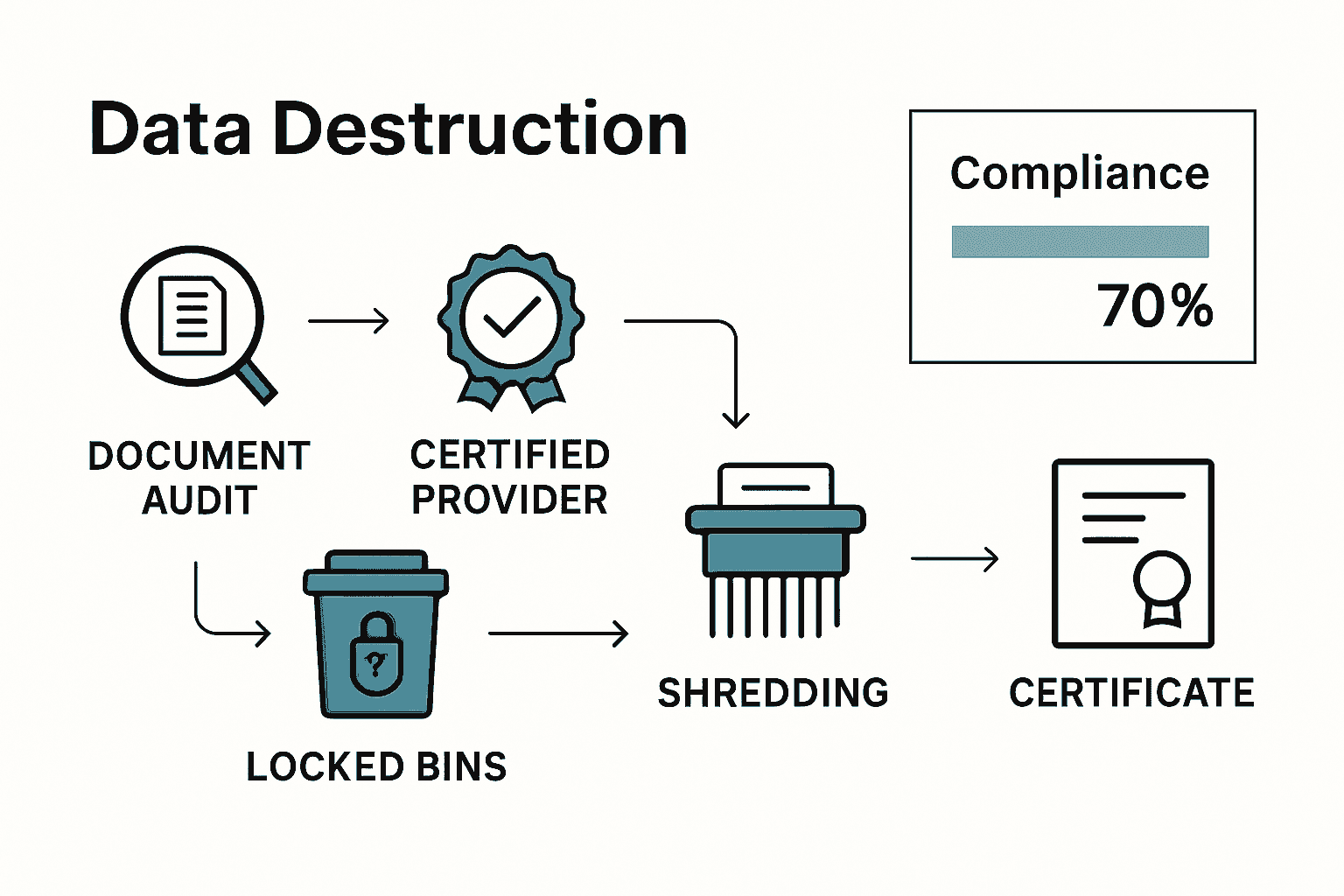
1. Assess document shredding needs first Conduct a thorough audit of your documents to identify what needs secure destruction based on sensitivity and data protection regulations.
2. Choose a certified shredding provider Select a shredding service with industry certifications ensuring compliance with data protection standards for secure document destruction.
3. Implement secure collection procedures Use locked, tamper-evident bins for confidential documents and train employees on proper handling procedures to prevent data breaches.
4. Monitor shredding execution diligently Whether onsite or offsite, maintain oversight through contracts, audit checks, and obtain documentation to confirm complete destruction.
5. Verify destruction and keep records After shredding, obtain a destruction certificate and keep it filed for a minimum of two years as proof of compliance and secure disposal.

Step 1: Assess your shredding needs

Understanding exactly what documents your business needs to securely destroy is the first critical step in developing an effective shredding strategy. As recommended by the Information Commissioner’s Office, creating a comprehensive retention schedule helps prevent unnecessary storage of sensitive personal information and determines the precise volume of documents requiring secure destruction.

To effectively assess your shredding needs, start by conducting a thorough audit of your current document management practices. Walk through each department and identify the types of documents generated such as financial records, employee files, client contracts, marketing materials, and internal correspondence. Pay special attention to documents containing personal or confidential information that could pose a data protection risk if not properly disposed of. The National Archives suggests using systematic assessment tools to evaluate your information management practices, which can help pinpoint exactly what needs secure shredding.

Pro tip: Create a document classification matrix that categorizes papers by sensitivity level, retention period, and required destruction method. This will streamline your shredding process and ensure you are meeting legal compliance standards for data protection.

assessing shredding needs documents Once you have a clear understanding of your document landscape, you will be ready to move forward with selecting the most appropriate secure shredding solution for your business.

Step 2: Choose a certified shredding provider

Selecting the right certified shredding provider is crucial for ensuring the secure destruction of your sensitive business documents. When searching for a reliable partner, look for providers with robust industry certifications that demonstrate their commitment to data protection and security standards.

Carefully evaluate potential shredding providers based on key criteria. According to the National Physical Security Association, reputable providers like Shred Station hold multiple industry certifications that validate their secure destruction practices. Key factors to consider include ISO certifications, membership in professional organizations, and a transparent destruction process. You will want to request documentation of their certification levels, ask about their secure chain of custody procedures, and understand exactly how they handle and destroy confidential materials.

Pro tip: When choosing a shredding provider, request a detailed walkthrough of their destruction process and ask for references from businesses similar to yours. Off-site shredding versus secure mobile shredding can offer different advantages, so consider which option best meets your specific security and logistical requirements. Your goal is to find a provider that not only meets legal compliance standards but also gives you complete confidence in the secure handling of your sensitive business documents.

Step 3: Set up secure collection procedures

Establishing robust secure collection procedures is essential for protecting your company’s sensitive documents throughout the disposal process. This critical step ensures that confidential information remains secure from the moment it is identified for destruction until it is completely eliminated.

According to the Information Commissioner’s Office, implementing secure collection protocols begins with using locked waste bins specifically designed for records containing personal information. Each department should have dedicated secure collection containers that are tamper evident and restrict unauthorized access. These containers should be strategically placed in controlled areas, with clear guidelines about what types of documents can be deposited. How to store confidential waste safely requires careful planning to prevent potential data breaches and ensure compliance with data protection regulations.

Pro tip: Train all employees on proper document disposal procedures. Create a comprehensive policy that outlines exactly how sensitive materials should be handled, including guidelines for immediate secure storage of documents marked for destruction. This approach not only protects your business from potential data leaks but also demonstrates your commitment to maintaining the highest standards of information security.

Your next step will involve scheduling regular secure document collection to ensure sensitive materials do not accumulate unnecessarily in your workplace.

Step 4: Monitor shredding execution onsite or offsite

Monitoring the shredding process is a critical step in ensuring the complete and secure destruction of your sensitive business documents. Whether you choose onsite or offsite shredding, maintaining vigilance throughout the destruction process protects your company from potential data breaches and compliance risks.

According to the Information Commissioner’s Office, businesses must have appropriate contracts with third party disposal providers that include rigorous audit checks and destruction certificates. When monitoring shredding execution, request comprehensive documentation that confirms the complete destruction of your materials. On-site versus off-site shredding offers different levels of direct oversight, so choose a method that provides the most transparency and comfort for your organization. For onsite shredding, you can physically witness the destruction process, while offsite shredding requires meticulous documentation and chain of custody tracking.

Pro tip: Always request and retain a certificate of destruction after each shredding session. This document serves as legal proof that your confidential materials were securely and completely destroyed, protecting your business from potential future disputes or compliance challenges. By implementing these monitoring procedures, you create a robust system of accountability that demonstrates your commitment to data protection and regulatory compliance.

Step 5: Verify destruction and obtain certification

The final stage of secure document disposal involves thoroughly verifying the destruction process and obtaining official certification. This critical step provides your business with legal documentation and peace of mind that your sensitive materials have been completely and securely eliminated.

According to the Information Commissioner’s Office, businesses must maintain a comprehensive log of all confidential waste sent for destruction. When verifying the shredding process, request a detailed destruction certificate that includes specific information such as the date of destruction, volume of documents processed, method of destruction, and a unique reference number. Confidential document shredding processes can vary, so ensure your chosen provider offers transparent documentation that meets legal compliance standards.

Pro tip: Create a dedicated file to store all destruction certificates for a minimum of two years. This documentation serves as crucial evidence of your commitment to data protection, potentially protecting your business during audits or legal inquiries. By meticulously tracking and verifying the destruction of confidential materials, you demonstrate a proactive approach to information security and regulatory compliance.

Secure Your Business Data with Expert Shredding Solutions

Protecting your company’s sensitive information is a challenge every business must face. The risks of data breaches or compliance failures can feel overwhelming when it comes to confidential document disposal. This article has laid out the essential steps businesses should take, from assessing shredding needs to verifying destruction with certification. At Venture Waste, we understand these concerns and offer comprehensive services tailored to your exact shredding requirements.

https://venturewaste.co.uk

Take control of your information security today by partnering with a certified provider that ensures secure handling, locked collections, and transparent destruction processes. Discover how our confidential waste solutions can simplify your compliance and protect your data. Visit Venture Waste now to learn more or explore our specialised hard drive destruction services for complete digital security. Don’t wait until risk turns into regret—secure your business with trusted shredding services designed for peace of mind.

Frequently Asked Questions

What steps should I take to assess my shredding needs for my company?

To assess your shredding needs, conduct a thorough audit of your document management practices. Identify types of documents across departments that require secure destruction, focusing on those with personal or confidential information.

How can I choose a certified shredding provider for my business?

Select a certified shredding provider by checking for industry certifications and asking for documentation related to their secure destruction practices. Request a detailed walkthrough of their shredding process to ensure they meet your security standards.

What secure collection procedures should I implement for sensitive documents?

Establish secure collection procedures by using locked bins for documents marked for destruction. Train employees on proper disposal habits to minimize risks associated with data breaches, ensuring these procedures are clearly outlined in a company policy.

How do I monitor the shredding execution to ensure compliance?

Monitor shredding execution by maintaining rigorous documentation and requesting destruction certificates from your provider. This verification ensures that your sensitive documents are securely destroyed and provides legal protection in case of future compliance checks.

What information should be included in the destruction certificate?

A destruction certificate should include the date of destruction, volume of documents processed, method of destruction, and a unique reference number. Retain this certificate as evidence of compliance and commitment to data protection for at least two years.

Five-step process for secure document shredding in companies

Remote worker sorting office waste at home

Remote work waste management UK facilities guide 2026

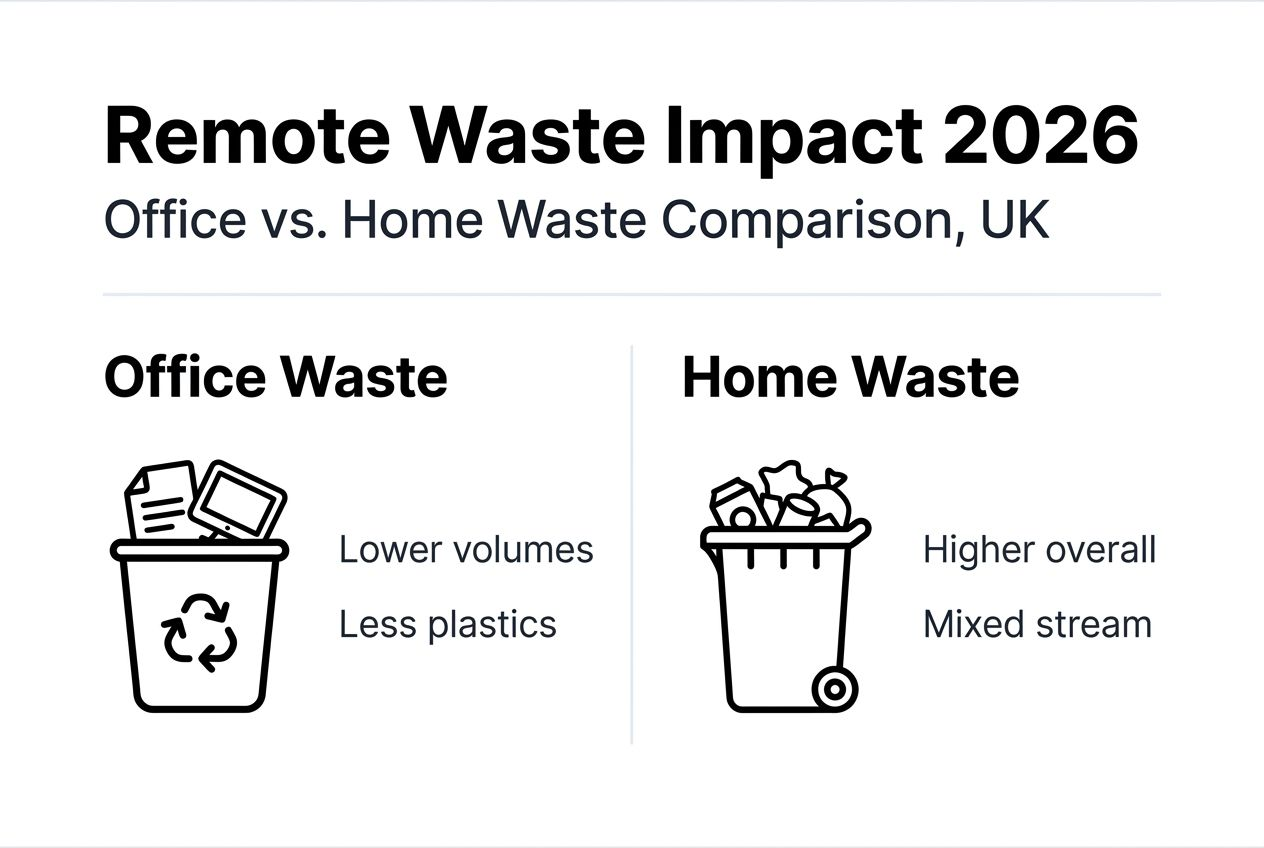
Remote work slashes office waste by 54%, yet home office waste surges by 28%. This dramatic redistribution creates new challenges for facilities managers navigating hybrid work models. Understanding these shifts is essential for maintaining compliance, controlling costs, and meeting sustainability targets across distributed workforces.

Table of Contents

Key takeaways

| Point | Details |
|——-|———||
| Waste redistribution | Remote work moves waste from offices to homes rather than reducing total volumes. |
| New tracking demands | Facilities managers must monitor dispersed waste sources and maintain compliance across multiple locations. |
| Flexible solutions | Adaptive contracts and employee engagement programmes significantly improve waste management outcomes. |
| Technology enables oversight | Digital tools provide real-time tracking and optimise collection scheduling for remote teams. |
| Legal obligations persist | UK regulations require businesses to manage waste generated during work activities regardless of location. |

Understanding the impact of remote work on commercial waste streams

Remote work fundamentally reshapes where waste appears and what types accumulate. Office waste volumes plummet as fewer employees occupy central workspaces daily. Meanwhile, packaging materials, disposable coffee cups, and printing supplies pile up in home offices.

This redistribution creates blind spots for facilities managers accustomed to centralised waste monitoring. Commercial waste patterns that once followed predictable patterns now scatter across hundreds of individual homes. The total waste footprint often remains unchanged despite empty office bins.

Common waste stream changes in remote work environments:

  • Cardboard and packaging waste increases from home deliveries of office supplies
  • Single-use food containers rise as employees order individual lunches
  • Paper and toner waste persists in home offices lacking digital infrastructure
  • Electronic waste accumulates from outdated home equipment replacements
  • Mixed recyclables contaminate general waste without proper sorting facilities
Waste type Office change Home change Net impact
General waste -54% +28% -26% overall
Cardboard -40% +45% +5% overall
Paper -60% +18% -42% overall
Food waste -65% +35% -30% overall
Electronics -20% +50% +30% overall

Infographic showing office and home waste comparison

Pro Tip: Map waste generation patterns quarterly by surveying remote employees about their disposal habits and volumes to identify collection service gaps.

Challenges facilities managers face in managing remote work waste

Tracking waste across dispersed locations presents immediate operational headaches. You cannot simply walk through an office to spot overflowing bins or contaminated recycling streams. Remote employees generate work-related waste without access to commercial collection services or proper segregation facilities.

Facilities manager tracks office waste records

Legal responsibility adds another layer of complexity. UK businesses remain accountable for waste produced during work activities, even when employees work from home. Waste disposal regulations require proper documentation and compliant handling regardless of generation location.

Primary obstacles in remote waste management:

  • Absence of shared bins eliminates economies of scale in collection services
  • Inconsistent local council recycling policies create confusion about proper disposal methods
  • Tracking tools designed for centralised facilities fail to capture residential waste data
  • Cost allocation becomes murky when distinguishing household from work-related waste
  • Compliance auditing requires new processes for documenting distributed waste streams

Research indicates that 68% of managers struggle to track remote employee waste effectively. This gap exposes organisations to regulatory penalties and sustainability reporting errors. Without visibility into home office waste, you cannot accurately measure environmental impact or identify reduction opportunities.

Pro Tip: Establish clear policies defining which waste types employees must segregate and provide collection guidance specific to their local council requirements.

Common misconceptions about remote work waste

Many assume remote work automatically delivers environmental benefits through reduced waste generation. This oversimplification ignores how waste relocates rather than disappears. Total volumes often remain constant or increase once home office impacts are properly measured.

Three prevalent myths about remote work waste:

  1. Myth: Closing offices eliminates most commercial waste problems. Reality: Waste simply transfers to residential settings where tracking and proper disposal become more difficult.

  2. Myth: Employees naturally manage work waste responsibly at home. Reality: Without training, clear guidelines, and accessible disposal options, contamination rates and general waste volumes increase significantly.

  3. Myth: Digital transformation in remote work eliminates paper waste. Reality: Home offices often lack dual monitors and digital workflows, leading to increased printing and paper consumption.

Data shows household waste increases by 15% whilst office waste decreases. This shift concentrates waste in residential areas lacking commercial disposal infrastructure. Packaging waste particularly surges as employees order office supplies individually rather than benefiting from bulk deliveries to central locations.

The assumption that remote workers independently handle disposal also overlooks legal realities. Businesses cannot simply transfer waste responsibility to employees. You must provide systems, education, and support ensuring compliant disposal wherever work activities occur.

Strategies and solutions for effective remote waste management

Adaptive approaches transform remote waste challenges into manageable processes. Flexible service contracts form the foundation, accommodating fluctuating volumes and dispersed collection points. Engaging employees through clear communication ensures they understand their role in proper waste handling.

Core strategies for hybrid work waste management:

  • Negotiate collection contracts with variable frequency options matching actual office occupancy
  • Establish home collection schemes for specific waste streams like confidential documents or electronics
  • Conduct remote waste audits through digital surveys and photo documentation
  • Create clear visual guides showing proper segregation for common work waste types
  • Implement quarterly reporting cycles tracking both office and estimated home office waste

Research demonstrates that flexible service contracts reduce inefficiencies by 30% compared to rigid schedules. This adaptability prevents paying for unnecessary collections whilst ensuring adequate service during peak occupancy periods.

Employee engagement proves equally crucial. Programmes combining education with convenient disposal options boost recycling compliance by 40%. Simple interventions like providing home recycling guides and clarifying which materials require special handling create significant improvements.

Approach Traditional office Hybrid model
Collection frequency Fixed weekly schedule Variable based on occupancy
Waste tracking Central bin audits Digital reporting plus surveys
Employee role Passive disposal Active segregation and logging
Service coverage Single site focus Multi-location coordination
Cost structure Predictable fixed costs Usage-based pricing

Pro Tip: Partner with providers offering best practice guidance and consolidated billing across office and home collection services for simplified office waste management.

Technological solutions for remote waste management

Digital tools bridge the visibility gap created by dispersed workforces. Mobile applications enable employees to log waste generation, request collections, and access disposal guidance specific to their location. Management dashboards aggregate this data, revealing patterns invisible through traditional monitoring.

Real-time tracking transforms reactive waste management into proactive optimisation. You can identify collection inefficiencies, spot compliance gaps, and adjust services based on actual usage rather than assumptions. Digital apps improve tracking efficiency by 25% whilst reducing administrative overhead.

Technology capabilities for remote waste oversight:

  • Mobile apps allowing employees to photograph and categorise waste for accurate logging
  • Cloud-based platforms consolidating data from multiple collection providers and locations
  • Automated scheduling systems adjusting collection frequency based on reported volumes
  • Compliance monitoring tools flagging potential regulatory issues across all sites
  • Sustainability dashboards calculating carbon footprint across distributed operations

Integration with existing facilities management systems creates seamless workflows. Data flows automatically into reporting tools, eliminating manual consolidation. This connectivity supports transparent sustainability reporting and identifies cost reduction opportunities through optimised scheduling.

Forward-thinking organisations leverage these tools alongside guidance on the future of remote work to build resilient waste management frameworks. The investment in technology pays dividends through improved compliance, reduced costs, and enhanced environmental performance. Responsible transport partners increasingly offer integrated digital solutions as standard service features.

Case studies on successful remote work waste reduction

A London-based professional services firm implemented comprehensive remote waste strategies in 2025, achieving measurable improvements across all metrics. They introduced flexible collection contracts, employee education programmes, and digital tracking tools simultaneously.

Results appeared within six months. Total waste volumes decreased by 18% despite maintaining a hybrid work model with 60% remote participation. Recycling rates jumped from 45% to 80% as employees received clear guidance and home collection support for specific streams.

Key success factors in proven implementations:

  • Regular communication keeping waste management visible despite physical distance
  • Simplified segregation systems matching what employees could realistically achieve at home
  • Financial incentives recognising departments demonstrating measurable improvements
  • Technology providing visibility without creating excessive administrative burden
  • Executive sponsorship ensuring adequate budget and organisational priority

Another example involves a Manchester technology company partnering with their waste provider to offer home collections for electronics and confidential materials. This convenience removed disposal barriers whilst ensuring compliant handling. Employee participation exceeded 85% within three months.

These organisations applied SME waste reduction strategies adapted for distributed workforces. Success hinged on recognising that remote work requires fundamentally different approaches rather than simply scaling back traditional services. Investment in employee support and flexible contracts delivered returns through lower costs and improved sustainability metrics.

Risks and consequences of poor remote waste management

Neglecting adaptive waste strategies exposes organisations to significant financial and legal penalties. UK enforcement agencies increasingly scrutinise how businesses handle waste across all operational locations, including home offices. Non-compliance fines average £1,500+ per incident, with repeat violations attracting substantially higher penalties.

Operational inefficiencies compound these direct costs. Paying for unused office collections whilst employees struggle with home waste creates double expense. Contaminated waste streams incur premium disposal fees. Lost productivity occurs when employees spend work time managing disposal challenges without proper support.

Consequences of inadequate remote waste management:

  • Regulatory penalties for failing to properly document and dispose of work-related waste
  • Increased costs from inefficient collection schedules and contaminated waste streams
  • Reputational damage when sustainability claims contradict actual waste performance
  • Employee dissatisfaction with inadequate support for managing work responsibilities
  • Lost opportunities for cost savings through optimised services and improved recycling

Corporate sustainability credentials suffer when remote work impacts remain unaddressed. Stakeholders increasingly demand transparent reporting covering all operational waste, not just that generated in traditional office settings. Gaps in measurement or poor performance damage business reputation and undermine broader environmental commitments.

“Facilities managers who fail to adapt waste strategies for hybrid work face a triple threat: regulatory penalties, operational inefficiencies, and reputational damage that undermines their organisation’s sustainability positioning.”

The risks extend beyond immediate financial impact. Establishing proper systems after enforcement action proves more expensive than proactive implementation. You also lose the competitive advantage of demonstrating genuine environmental leadership in an increasingly conscious marketplace.

Discover tailored waste solutions for remote and hybrid workplaces

Remote work demands flexible, responsive waste management that traditional services cannot provide. Venture Waste Management specialises in solutions designed for distributed teams, offering variable collection schedules, multi-location support, and expert compliance guidance.

https://venturewaste.co.uk

Our comprehensive approach combines proven collection practices with technology enabling seamless oversight across all your operational locations. From general waste services adapted for hybrid offices to specialised transport solutions coordinating multiple sites, we deliver the flexibility modern workplaces require. Contact us to discover how adaptive waste management transforms remote work challenges into sustainability opportunities whilst ensuring full regulatory compliance.

FAQ

How can facilities managers track waste generated by remote employees?

Implement waste tracking software allowing employees to log their work-related disposal through mobile apps. Regular digital surveys combined with photo documentation provide oversight without requiring physical audits. Partner with providers offering consolidated transport services that include remote tracking capabilities as standard features.

Are businesses legally responsible for remote work waste in the UK?

Yes, companies remain accountable for waste produced during work activities regardless of generation location. UK disposal regulations require proper documentation and compliant handling for all work-related waste. This responsibility cannot be transferred to employees simply because they work from home.

What are effective employee engagement strategies to reduce remote work waste?

Provide regular communication with clear visual guides showing proper segregation methods for common work waste types. Offer convenient home collection support for challenging streams like electronics and confidential materials. Recognition programmes celebrating departments achieving measurable improvements boost participation, as demonstrated by firms increasing compliance rates through workplace recycling initiatives.

How can technology improve waste management for remote teams?

Digital applications provide real-time visibility into waste generation patterns across dispersed locations through employee logging and photo documentation. Automated systems optimise collection scheduling based on actual volumes rather than fixed schedules, reducing unnecessary service calls. Cloud platforms consolidate data supporting compliance monitoring and transparent sustainability reporting, as explored in comprehensive remote work guidance.

Manager checks clinical waste bins in hospital

Effective waste management for healthcare in the UK 2026

Managing healthcare waste in the UK poses serious regulatory and financial challenges for facility managers. Non-compliance with HTM 07-01 and NHS Clinical Waste Strategy risks substantial fines, environmental harm, and operational disruption. This guide delivers practical, step-by-step strategies to achieve compliant, sustainable waste systems that reduce costs, meet October 2026 digital tracking mandates, and support NHS carbon reduction targets.

Table of Contents

Key takeaways

Point Details
Understanding regulations Compliance with HTM 07-01, NHS Clinical Waste Strategy, and HSE rules is mandatory for all UK healthcare facilities.
Segregation targets Implementing NHS 20:20:60 segregation goals reduces overclassification, cuts disposal costs, and improves environmental outcomes.
Training and audits Regular staff education and waste audits prevent common errors like mixing hazardous streams and improper labelling.
Sustainable technologies On-site treatment methods such as pyrolysis and microwave systems cut carbon emissions up to 80% whilst lowering costs.
Financial benefits Effective NHS waste strategy implementation saves approximately £11 million annually and reduces clinical waste carbon emissions by 30%.

Understanding healthcare waste and regulatory requirements in the UK

Healthcare facilities across the UK face stringent legal obligations governing waste management. NHS clinical waste produces approximately 156,000 tonnes annually, creating significant environmental impact and disposal costs. Compliance failures result in enforcement actions, financial penalties, and reputational damage.

Multiple regulatory frameworks govern healthcare waste. Healthcare waste management must comply with infection control, environmental, transport, and health and safety legislation per HSE guidance. HTM 07-01 provides technical standards for safe handling and disposal. The NHS Clinical Waste Strategy sets ambitious sustainability targets whilst maintaining safety standards.

Healthcare waste falls into distinct categories requiring different handling protocols:

  • Clinical waste: Infectious or potentially infectious materials posing infection risks
  • Hazardous waste: Chemicals, pharmaceuticals, and cytotoxic substances requiring specialist treatment
  • Offensive waste: Non-infectious materials unsuitable for landfill such as nappies and sanitary products
  • Recyclable waste: Clean paper, cardboard, plastics, and metals that can re-enter supply chains

Facility managers hold duty of care obligations for proper waste classification, storage, transport, and disposal. Documentation must trace waste from generation through final treatment. Upcoming digital tracking mandates from October 2026 will strengthen accountability and transparency across the entire waste chain.

Prerequisites: what you need before starting effective waste management

Successful healthcare waste management requires specific infrastructure, trained personnel, and robust systems before operational implementation begins. Missing prerequisites create compliance gaps and increase risk exposure.

Essential equipment and infrastructure includes:

  • Colour-coded segregation bins matching NHS waste stream classifications
  • UN-approved sharps containers meeting transport safety standards
  • Secure storage areas with controlled access and appropriate signage
  • Spill kits and personal protective equipment for safe handling
  • Compliant transport containers for off-site waste movement

Staffing and organisational readiness forms the foundation for compliance. Designate a qualified waste manager with authority to implement policies and oversee operations. All clinical and non-clinical staff handling waste require comprehensive training on segregation protocols, safety procedures, and legal requirements. Training programmes must include regular refreshers and competency assessments.

Staff briefing on hospital waste protocols

Digital infrastructure becomes legally mandatory soon. Mandatory digital waste tracking for hazardous waste becomes law in the UK from October 2026, requiring accurate, real-time monitoring of waste movements. Facilities must select and implement compliant tracking systems now to meet the deadline.

Prerequisite category Specific requirements Compliance deadline
Physical infrastructure Colour-coded bins, UN sharps containers, secure storage Immediate
Personnel Designated waste manager, trained staff Immediate
Documentation HTM 07-01 checklists, audit schedules, handling procedures Immediate
Digital systems Hazardous waste tracking software October 2026

Pro Tip: Conduct a gap analysis against HTM 07-01 requirements before procurement to identify exactly what infrastructure and systems your facility lacks, preventing costly duplicate purchases or non-compliant equipment.

Schedule regular audits based on waste volumes. High-volume producers generating over 500 kilograms of hazardous waste annually should audit quarterly. Lower-volume facilities can extend to biannual reviews. Document all findings and corrective actions to demonstrate continuous improvement during regulatory inspections.

Establish clear waste segregation protocols with visual aids at point of generation. Signage should use simple language and colour coding to guide staff decisions instantly.

Step-by-step waste segregation and disposal implementation

Implementing compliant healthcare waste segregation requires systematic execution across assessment, infrastructure deployment, staff education, and operational monitoring. Follow this proven sequence to build robust systems.

  1. Assess current waste streams: Conduct a comprehensive audit of all waste types generated across departments. Classify each stream according to NHS and HTM 07-01 categories. Document volumes, generation points, and current handling methods to establish your baseline.

  2. Procure compliant infrastructure: Order colour-coded bins matching waste classifications: orange for infectious clinical waste, yellow for offensive non-hazardous waste, and appropriate recycling containers. Healthcare waste must be stored securely using specifically designed containers such as UN approved sharps and red community transport containers for safe transport and handling.

  3. Deploy segregation infrastructure: Position bins at point of generation where staff make disposal decisions. Clearly label each container with acceptable waste types and visual examples. Ensure sharps containers are wall-mounted at appropriate heights in clinical areas.

  4. Train all personnel: Deliver comprehensive training covering waste definitions, segregation protocols, safety procedures, and legal obligations. Use practical demonstrations with actual waste items to reinforce learning. Assess competency before allowing independent handling.

  5. Implement NHS 20:20:60 targets: Aim for 20% clinical waste, 20% offensive waste, and 60% recyclable waste. This segregation ratio minimises hazardous waste volumes whilst maximising recycling and reducing disposal costs.

  6. Adopt digital tracking: Select and implement a digital waste tracking system before the October 2026 deadline. Mandatory digital waste tracking for hazardous waste becomes law in the UK from October 2026, requiring accurate, real-time monitoring of waste movements. Train staff on system usage and data entry requirements.

  7. Establish collection schedules: Coordinate with licensed waste carriers for regular collections matching your generation rates. Never allow waste to accumulate beyond storage capacity or time limits specified in your waste management plan.

Waste stream Container colour Storage time limit Treatment method
Infectious clinical Orange 72 hours High-temperature incineration or alternative treatment
Offensive Yellow/black stripe 7 days Energy recovery or landfill
Sharps Yellow 3 months when sealed Incineration
Recyclables Blue/clear 14 days Reprocessing facilities

Pro Tip: Place small desktop sharps containers in consultation rooms and treatment areas to capture needles immediately at point of use, dramatically reducing needlestick injury risks and improving compliance.

Monitor segregation accuracy through regular spot checks and formal audits. Address errors immediately through retraining rather than punitive measures. Celebrate improvements to reinforce positive behaviours.

Partner with environmentally responsible disposal providers who demonstrate compliance with environmental permits and use sustainable treatment technologies. Verify carrier licences and treatment facility authorisations annually.

Maintain comprehensive records including waste transfer notes, consignment notes for hazardous waste, treatment certificates, and audit reports. Digital systems simplify record keeping whilst ensuring tracking compliance. Retain documentation for minimum six years to satisfy regulatory requirements.

Regularly review and refine your segregation processes based on audit findings, staff feedback, and changing clinical practices. Continuous improvement drives better outcomes over time.

Staff training and auditing for compliance

Comprehensive staff education and systematic auditing form the backbone of sustained healthcare waste compliance. Without ongoing reinforcement, even well-designed systems deteriorate through human error and changing personnel.

Effective training programmes address multiple audiences with tailored content. Clinical staff need detailed instruction on infectious waste identification and sharps safety. Portering and facilities teams require transport and storage protocols. Administrative staff must understand documentation requirements. Deliver role-specific training supplemented by general awareness sessions for all employees.

Designate waste champions within each department to provide peer support and answer daily questions. Champions should receive enhanced training and regular updates from the central waste management team. This distributed expertise model ensures help is always nearby when staff face segregation decisions.

Annual waste audits detect common failures such as incorrect segregation, overclassification, unsatisfactory storage, and improper labelling, which are critical to correct for compliance. High-risk areas like operating theatres, emergency departments, and laboratories warrant more frequent reviews.

Common audit findings include:

  • Recyclable materials contaminating clinical waste streams
  • Offensive waste incorrectly classified as infectious clinical waste
  • Overfilled sharps containers exceeding fill lines
  • Missing or illegible labels on waste containers
  • Inadequate segregation training documentation

Pro Tip: Photograph non-compliance issues during audits and use these real examples in subsequent training sessions to demonstrate actual facility mistakes rather than generic scenarios, dramatically improving staff engagement and learning retention.

Address audit findings through corrective action plans with clear ownership, timelines, and verification steps. Track repeat issues to identify systemic problems requiring infrastructure changes or enhanced training. Share positive findings and improvements to maintain staff motivation.

Engage compliant waste service providers who can support your audit programme with expertise and benchmarking data from similar facilities. Many carriers offer audit services as part of collection contracts.

Document all training activities including attendance registers, training content, competency assessments, and refresher schedules. Regulatory inspectors routinely request training records to verify compliance. Digital learning management systems simplify administration whilst providing audit trails.

Troubleshooting common mistakes and failure points

Healthcare facilities repeatedly encounter predictable waste management failures. Understanding these patterns enables proactive prevention rather than reactive firefighting.

Incorrect segregation most commonly involves mixing hazardous waste with non-hazardous streams, leading to overclassification and increased disposal costs. Staff often classify offensive waste as clinical when unsure, driving unnecessary expense. Provide clear decision trees and accessible expert support to reduce uncertainty.

Overclassification wastes substantial funds. When offensive waste enters clinical waste streams, disposal costs increase threefold or more. Regular audits quantify overclassification rates and target improvement efforts. Facilities achieving NHS 20:20:60 targets demonstrate proper classification and realise significant savings.

Improper storage creates safety hazards and compliance violations. Common issues include:

  • Waste storage areas lacking secure access controls
  • Mixed waste types stored together without separation
  • Storage exceeding temperature or time limits
  • Inadequate spill containment in chemical waste areas
  • Poor ventilation in waste holding areas

Labelling failures undermine traceability and compliance. Every waste container requires clear identification including waste type, generation point, and date. Missing or illegible labels prevent proper handling and treatment. Use pre-printed labels or durable markers that withstand handling and moisture.

Sharps safety remains a persistent challenge. Overfilled containers, inappropriate container types, and poor placement contribute to needlestick injuries. Mount sharps containers securely at optimal heights in all areas where sharps are used. Replace containers when two-thirds full, never at the marked fill line maximum.

Documentation gaps create regulatory exposure. Incomplete waste transfer notes, missing consignment documentation, or inadequate record retention invite enforcement action. Implement checklist systems to verify documentation completeness before waste leaves the facility.

Pro Tip: Install clear visual guides showing correct segregation examples directly above waste bins using laminated photos of common items from your facility rather than generic clip art, making decisions instant and reducing classification errors by up to 40%.

Address failures through root cause analysis rather than blaming individuals. Systemic issues require process redesign, not disciplinary action. Engage frontline staff in solution development to ensure practicality and buy-in.

Partner with experienced waste management providers who can identify issues during collections and provide expert guidance. Quality carriers act as compliance partners, not just service vendors.

Sustainable technologies and alternatives to traditional waste treatment

Innovative waste treatment technologies offer healthcare facilities sustainable alternatives to conventional high-temperature incineration whilst maintaining safety and compliance standards. These solutions dramatically reduce carbon emissions and operational costs.

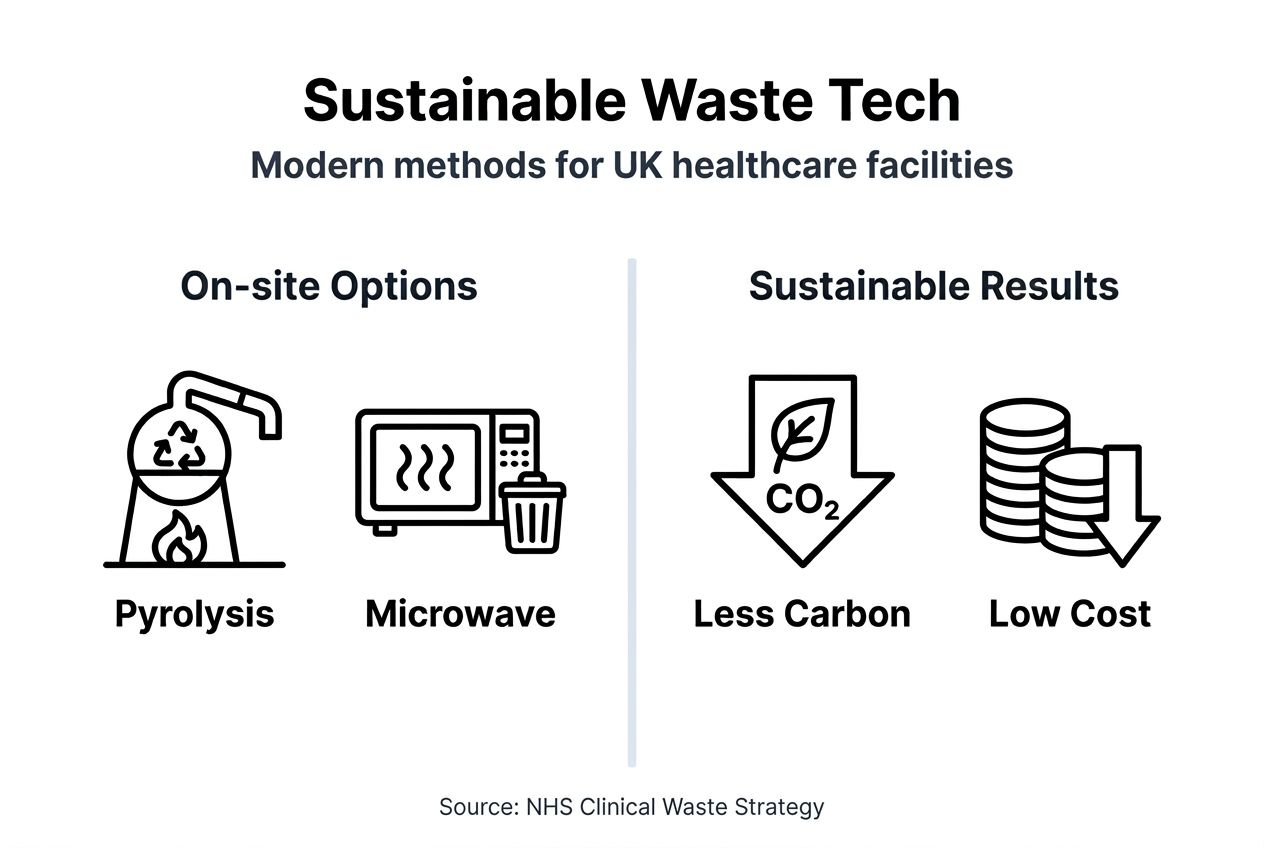
Innovative on-site treatment technologies like pyrolysis, microwave treatment, and aerobic digesters reduce reliance on high-temperature incineration and cut carbon emissions by up to 80%. These systems treat clinical waste at the point of generation, eliminating transport emissions and external processing costs.

Infographic on sustainable healthcare waste technologies

Pyrolysis systems use oxygen-free thermal decomposition to convert clinical waste into inert ash and recoverable energy. The controlled heating process destroys pathogens without combustion, producing minimal emissions compared to incineration. Capital costs are offset by reduced disposal fees and energy recovery benefits.

Microwave treatment exposes waste to high-frequency electromagnetic radiation, generating heat that sterilises materials. The process renders waste non-infectious, allowing disposal as ordinary municipal waste. Microwave systems suit medium-volume facilities seeking sustainable alternatives without major infrastructure investment.

Aerobic digestion employs biological processes to break down organic healthcare waste. Microorganisms consume waste materials under controlled conditions, producing compost and biogas. This solution works well for food waste and other biodegradable streams common in healthcare settings.

Technology Carbon reduction Capital cost Operating cost Best suited for
Pyrolysis 75-80% High Medium Large hospitals
Microwave 60-70% Medium Low Medium facilities
Aerobic digestion 50-60% Low Low Organic waste streams
Traditional incineration Baseline Low High All waste types

NHS framework agreements promote adoption of sustainable technologies through simplified procurement and proven supplier panels. The Sustainable Healthcare Recycling framework provides access to vetted providers offering compliant, environmentally responsible solutions.

Evaluate technology options against your specific waste profile, volumes, available space, and budget constraints. Larger facilities with high clinical waste volumes achieve faster return on investment from on-site treatment systems. Smaller facilities may benefit more from partnering with regional treatment centres using sustainable technologies.

Enhanced recycling programmes complement treatment technology upgrades. Many healthcare items previously discarded as clinical waste can be safely recycled after proper segregation and decontamination. Single-use device reprocessing programmes further reduce waste volumes whilst cutting procurement costs.

Emerging recycling innovations include advanced plastics sorting, chemical recycling of complex polymers, and artificial intelligence-powered waste characterisation. Early adopters gain competitive advantage whilst supporting NHS sustainability commitments.

Benefits and expected outcomes from effective waste management

Optimised healthcare waste management delivers substantial measurable benefits across financial performance, regulatory compliance, and environmental impact. These outcomes justify investment whilst supporting broader NHS sustainability goals.

Effective implementation of NHS Clinical Waste Strategy can yield a 30% reduction in carbon emissions from clinical waste and save £11 million annually in recurrent costs. These savings result from improved segregation, reduced overclassification, and adoption of sustainable treatment technologies.

Financial benefits extend beyond direct disposal cost reductions:

  • Lower waste collection frequencies through better segregation
  • Reduced regulatory compliance costs from fewer violations
  • Decreased insurance premiums reflecting improved risk management
  • Energy cost offsets from on-site treatment with energy recovery
  • Avoided fines and enforcement action expenses

Compliance improvements reduce organisational risk and reputational exposure. Systematic waste management demonstrates due diligence during inspections. Comprehensive documentation protects against liability claims. Staff confidence increases when working within clear, compliant systems.

Environmental performance gains support NHS net zero commitments. Reduced incineration volumes lower greenhouse gas emissions. Enhanced recycling diverts materials from landfill whilst conserving natural resources. Sustainable treatment technologies minimise air and water pollution. These improvements strengthen corporate social responsibility credentials and community relationships.

Operational efficiency improves through standardised processes and clear accountability. Staff spend less time managing waste issues and compliance queries. Automated tracking systems reduce administrative burden. Predictable collection schedules optimise logistics planning.

Pro Tip: Publish quarterly waste performance metrics including segregation accuracy, recycling rates, and cost savings to maintain staff engagement and demonstrate tangible results from their compliance efforts, driving sustained behavioural change.

Patient and visitor perception benefits from visible environmental responsibility. Modern, well-managed waste systems contribute to positive facility impressions. Transparent sustainability reporting builds trust and community support.

Long-term strategic advantages include regulatory preparedness for emerging requirements, competitive positioning for sustainability-focused contracts, and organisational resilience against waste management disruptions. Facilities with mature waste programmes adapt quickly to regulatory changes like the October 2026 digital tracking mandate.

Consistent waste management practices across seasonal variations and operational changes maintain performance stability. Robust systems withstand staff turnover, facility expansions, and service changes without compliance lapses.

Explore expert waste management solutions with Venture Waste

Achieving compliant, sustainable healthcare waste management requires expert partners who understand complex regulatory requirements and operational realities. Venture Waste delivers tailored solutions supporting UK healthcare facilities from initial assessment through ongoing optimisation.

Our comprehensive hazardous waste collection services ensure safe, compliant handling of clinical, pharmaceutical, and chemical waste streams. We maintain all necessary environmental permits and transport licences whilst providing transparent documentation for your compliance records.

https://venturewaste.co.uk

Expert guidance on clinical waste disposal requirements helps facilities navigate HTM 07-01, NHS Clinical Waste Strategy, and upcoming digital tracking mandates. Our team provides practical implementation support tailored to your specific operational needs and waste profile.

Access proven waste collection best practices developed through extensive healthcare sector experience. We help facilities achieve NHS 20:20:60 segregation targets, reduce disposal costs, and meet sustainability commitments whilst maintaining safety and compliance standards.

Frequently asked questions

What are the main types of healthcare waste and how should they be segregated?

Healthcare waste comprises four primary categories: clinical (infectious materials), hazardous (chemicals and pharmaceuticals), offensive (non-infectious but unsuitable for landfill), and recyclable waste. Segregate using colour-coded bins following NHS 20:20:60 targets with 20% clinical, 20% offensive, and 60% recyclable waste. Proper segregation prevents contamination, reduces disposal costs, and ensures regulatory compliance.

How does the new mandatory digital tracking affect healthcare waste management?

Digital tracking mandates require real-time electronic logging of all hazardous waste movements from generation through final treatment, effective October 2026. Facilities must implement compliant tracking systems, train staff on data entry protocols, and maintain accurate digital records accessible for regulatory inspections. Paper-based systems will no longer satisfy legal requirements after the implementation deadline.

What are the most common mistakes in healthcare waste management and how can they be avoided?

Frequent errors include mixing hazardous and non-hazardous streams, incomplete labelling, overfilled sharps containers, and inadequate storage security. Prevent these through comprehensive staff training with role-specific protocols, regular audits identifying non-compliance patterns, clear visual segregation guides at waste generation points, and partnerships with experienced compliant suppliers providing expert oversight.

How can sustainable waste treatment technologies benefit healthcare facilities?

Sustainable technologies including pyrolysis, microwave treatment, and aerobic digestion reduce carbon emissions by up to 80% compared to traditional incineration whilst lowering disposal costs. On-site systems eliminate transport emissions and external processing fees. These solutions support NHS net zero commitments, qualify for sustainability-focused contracts, and demonstrate environmental leadership. Advanced recycling practices further enhance environmental and financial performance.

Safety officer inspecting UK chemical waste area

Master chemical waste handling for UK facilities in 2026

Improper chemical waste handling leads to significant compliance failures and safety risks in UK facilities. You face complex regulations, expensive fines, and potential environmental harm when protocols fail. This guide delivers a practical framework to manage chemical waste safely and legally, protecting your operations and meeting UK regulatory standards with confidence.

Table of Contents

Key takeaways

Point Details
Legal compliance UK Hazardous Waste Regulations 2005 require strict classification, documentation, and licensed disposal to avoid fines.
Safety essentials Proper PPE, segregation, and staff training prevent chemical reactions and worker exposure incidents.
Handling process Follow risk assessment, segregation, documentation, licensed collection, and record-keeping steps systematically.
Common mistakes Poor segregation causes 25% of incidents; maintain audit systems and timely disposal schedules.
Cost expectations Disposal costs range £100 to £1,000 per cubic metre, with timelines of 5 to 15 working days.

Introduction to chemical waste handling in the UK

The UK Hazardous Waste Regulations 2005 impose stringent requirements with severe penalties for non-compliance. Facilities managers and business owners carry direct liability for improper chemical waste disposal, facing unlimited fines and potential prosecution. Environmental contamination from chemical leaks damages ecosystems and triggers costly remediation programmes.

Your responsibilities extend beyond basic waste collection. You must classify hazardous substances accurately, maintain comprehensive documentation, and ensure licensed contractors handle every disposal. Failing these duties puts your workers at risk and exposes your organisation to regulatory action.

Key regulatory obligations include:

  • Accurate classification of all chemical wastes using European Waste Catalogue codes
  • Segregated storage preventing incompatible chemical reactions
  • Complete consignment notes for every waste movement
  • Licensed carrier verification before any chemical transport
  • Six-year retention of all disposal records for audit purposes

Understanding these UK hazardous waste regulations forms your foundation. The Environment Agency enforces strict compliance monitoring, conducting regular facility inspections. Chemical waste mismanagement ranks among the most heavily penalised environmental offences in the UK. Proper chemical waste risk assessment and safety protocols protect your organisation legally and operationally.

Prerequisites for safe chemical waste handling

Understanding chemical waste classification and risk assessment requirements is essential under UK law before handling. You need specific knowledge, equipment, and verified contractors in place. Rushing into chemical waste management without proper preparation creates dangerous situations and compliance gaps.

Critical prerequisites include:

  • Chemical hazard identification using Safety Data Sheets for every substance
  • Personal protective equipment meeting British Standards specifications
  • Segregated storage containers rated for specific chemical types
  • Verified carrier licences checked through Environment Agency registers
  • Staff training certificates documenting competency in hazardous waste procedures

Your personal protective equipment standards must match the specific hazards present. Gloves, eye protection, and respirators require selection based on chemical properties and exposure risks. Generic PPE fails to provide adequate protection against concentrated acids, solvents, or reactive substances.

Worker prepares PPE for chemical waste handling

Storage containers need compatibility verification. Acids corrode certain metals, while organic solvents dissolve plastic containers. You must segregate oxidisers from flammable materials, maintaining physical separation to prevent catastrophic reactions.

Pro Tip: Create a chemical compatibility matrix displaying which waste types can share storage areas. Post this prominently in your waste storage zones to prevent dangerous mixing errors by staff.

Verifying contractor credentials protects you legally. Only licensed carriers and disposal facilities can handle chemical waste handling prerequisites legally. Check Environment Agency databases before engaging any service provider. Your liability continues until proper disposal occurs at an authorised facility.

Step-by-step chemical waste handling process

A structured process of risk assessment, segregation, documentation, licensed transport, and record-keeping ensures regulatory compliance. Follow these sequential steps to manage chemical waste safely and legally.

  1. Conduct comprehensive risk assessment identifying all chemical wastes generated at your facility. Classify each waste stream using European Waste Catalogue codes and document hazard properties.

  2. Implement segregation protocols preventing incompatible chemicals from contact. Use clearly labelled containers meeting UN packaging standards for hazardous materials.

  3. Establish documentation systems recording waste type, quantity, storage location, and handling date. Maintain consignment notes for every waste movement off-site.

  4. Arrange collection with licensed hazardous waste carriers registered with the Environment Agency. Verify disposal facility permits before authorising any transport.

  5. Retain all disposal certificates, carrier licences, and consignment documentation for six years. Implement regular audits confirming compliance with procedures.

Handling Stage Key Actions Documentation Required
Assessment Classify wastes, identify hazards Risk assessment records, SDS files
Storage Segregate, label containers Waste inventory logs
Collection Verify carrier licence, load safely Consignment notes, carrier permits
Disposal Confirm facility authorisation Certificates of disposal
Audit Review procedures quarterly Compliance audit reports

Pro Tip: Photograph your waste storage area weekly, dating each image. These visual records demonstrate consistent compliance practices during regulatory inspections.

The chemical waste disposal steps require attention to timing. Schedule collections before storage capacity limits are reached. Overflowing containers create spill risks and violate storage regulations. Build disposal scheduling into your facility maintenance calendar as a non-negotiable recurring task.

Your staff need clear written procedures accessible at waste handling points. Simple visual guides showing proper PPE use and container selection reduce errors. Regular refresher training reinforces critical safety behaviours.

Common mistakes and troubleshooting in chemical waste handling

Improper waste segregation causes up to 25% of hazardous waste incidents in UK facilities. You face serious consequences when basic protocols fail. Understanding frequent errors helps you avoid costly mistakes and regulatory penalties.

Frequent handling mistakes include:

  • Mixing incompatible chemical wastes in shared containers
  • Incomplete or missing consignment documentation
  • Staff handling hazardous materials without proper PPE
  • Delayed disposal allowing waste accumulation beyond safe limits
  • Using unlicensed carriers for cost savings

These common chemical waste handling mistakes trigger enforcement action. The Environment Agency issues improvement notices for minor violations and prosecution for serious breaches. Financial penalties escalate rapidly with repeated non-compliance.

“Facilities achieving zero segregation errors reduce incident costs by 70% and eliminate regulatory fines through consistent protocol adherence.”

Troubleshooting segregation failures requires immediate action. Stop all waste handling operations when incompatible mixing occurs. Isolate affected containers and contact specialist chemical waste contractors for emergency assessment. Never attempt to separate mixed hazardous wastes yourself.

Documentation gaps create audit failures. Implement daily checklists requiring staff signatures confirming waste logs are current. Digital systems with mandatory fields prevent incomplete record creation. Backup documentation electronically to ensure six-year retention survives facility changes.

PPE compliance issues need systematic solutions. Conduct spot checks verifying proper equipment use during waste handling activities. Replace damaged or expired protective equipment immediately. Budget adequately for PPE supplies, treating them as essential operational costs rather than discretionary expenses.

Disposal delays compound quickly. Set automatic calendar reminders for waste collection scheduling. Establish maximum storage duration policies preventing accumulation. When regular carriers face delays, maintain backup contractor relationships ensuring continuous disposal capacity.

Timeline, costs, and expected outcomes of chemical waste handling

Proper handling reduces compliance fines by 40% and incidents by 70%, with disposal usually within 5 to 15 days. Understanding realistic timelines and budgets helps you plan chemical waste management effectively. Costs vary significantly based on waste classification, volume, and disposal method required.

Typical disposal timelines:

  • Initial waste assessment and classification: 1 to 2 working days
  • Carrier scheduling and collection: 3 to 7 working days
  • Transport to disposal facility: 1 to 2 working days
  • Final disposal processing: 1 to 4 working days
  • Certificate of disposal receipt: Within 3 working days post-processing

Chemical waste disposal costs range from £100 to £1,000 per cubic metre depending on hazard classification. Highly toxic or reactive wastes command premium pricing. Volume discounts apply for regular contracted collections. Emergency or small-quantity disposals incur higher per-unit costs.

Handling Approach Average Cost Processing Time Key Benefits
On-site neutralisation £150-£300/m³ initial setup, £80-£150/m³ ongoing 2-5 days Reduced transport, faster processing
Off-site licensed disposal £100-£200/m³ 5-15 days Lower upfront costs, less training needed
Emergency disposal £300-£1,000/m³ 1-3 days Rapid response, immediate risk reduction

Measured outcomes from proper chemical waste handling costs and timelines include fewer environmental incidents and improved regulatory standing. Facilities with documented compliance programmes experience faster permit approvals for operational changes. Insurance premiums decrease when risk management demonstrates effectiveness.

Infographic showing chemical waste costs and outcomes

Expect reduced worker compensation claims as exposure incidents decline. Proper chemical waste procedures eliminate the majority of workplace chemical injuries. Environmental liability insurance costs drop when insurers review strong compliance records.

Budget for annual training costs, PPE replacement, and documentation system maintenance. These ongoing expenses represent essential investments protecting against catastrophic fines and incidents. Calculate return on investment by comparing compliance costs against potential penalty amounts and incident remediation expenses.

Alternative chemical waste handling approaches and their tradeoffs

On-site neutralisation reduces transport by 30% but increases upfront costs by 20%; off-site disposal requires less training but is slower. Selecting the right approach depends on your facility’s waste volume, available space, and staff capabilities. Each method offers distinct advantages and limitations.

Approach Initial Investment Operating Costs Regulatory Complexity Best Suited For
On-site chemical neutralisation £15,000-£50,000 equipment £80-£150/m³ plus monitoring High – requires permits and monitoring Large facilities, consistent waste streams
Off-site licensed disposal Minimal – storage only £100-£200/m³ collection fees Moderate – documentation focus Smaller facilities, variable waste types
Hybrid approach £5,000-£15,000 partial equipment £90-£180/m³ blended Moderate to high Medium facilities, mixed waste streams

On-site neutralisation benefits include faster waste processing and reduced transportation risks. You control timing and avoid carrier scheduling delays. However, you need trained chemists or technicians operating neutralisation equipment safely. Permit applications for on-site treatment take months and require detailed operating procedures.

Off-site disposal simplifies your responsibilities. Licensed contractors assume liability once they collect waste from your premises. You avoid equipment maintenance, permit complications, and specialised staff training. The tradeoff involves longer disposal timelines and dependency on external service provider availability.

Pro Tip: Start with off-site disposal while assessing your waste volumes over 12 months. Only invest in on-site equipment after confirming consistent waste generation justifies capital expenditure.

Safety considerations differ between approaches. On-site neutralisation creates additional chemical handling risks during treatment processes. Staff exposure increases during pH adjustment and reaction monitoring. Off-site disposal concentrates risks during loading and transport phases.

Regulatory requirements intensify with on-site treatment. You need environmental permits specifying treatment methods, monitoring requirements, and discharge standards. Regular sampling and reporting obligations create ongoing compliance burdens. Off-site disposal shifts these responsibilities to licensed facilities already holding necessary permits.

Alternative chemical waste handling methods suit different operational contexts. High-volume manufacturers benefit from on-site efficiency despite higher complexity. Service facilities with occasional chemical waste generation find off-site disposal more practical and cost-effective.

Explore expert chemical waste handling solutions for your UK facility

Managing chemical waste demands expertise, reliable service, and unwavering compliance standards. After mastering the essential handling steps, many facilities recognise the value of professional support ensuring continuous regulatory adherence.

https://venturewaste.co.uk

Venture Waste provides comprehensive hazardous waste collection services tailored to UK facilities of all sizes. Our licensed carriers and disposal partners maintain full Environment Agency authorisation, guaranteeing legal compliance at every stage. We handle documentation complexities, verify waste classifications, and deliver certificates of disposal confirming proper processing.

Your facility benefits from our waste collection best practices guide approach to chemical waste management. Schedule consultations identifying optimisation opportunities in your current procedures. Receive customised collection schedules matching your waste generation patterns, preventing storage capacity issues.

Venture Waste delivers peace of mind through proven compliance expertise and responsive service. Contact us today to discuss your chemical waste handling requirements and discover how professional management protects your operations.

Frequently asked questions

What is chemical waste handling, and why is it important in UK facilities?

Chemical waste handling encompasses the safe classification, storage, transport, and disposal of hazardous substances according to UK regulations. Proper management protects workers from exposure, prevents environmental contamination, and ensures legal compliance with the Hazardous Waste Regulations 2005. Facilities failing these requirements face unlimited fines, prosecution, and liability for remediation costs.

What personal protective equipment (PPE) is required when handling chemical waste?

You need chemical-resistant gloves, safety goggles or face shields, respirators appropriate for specific vapours, and protective clothing meeting British Standards specifications. PPE selection depends on chemical properties identified in Safety Data Sheets. Regular equipment inspection and immediate replacement of damaged items maintains protection effectiveness.

How can I verify that my chemical waste disposal complies with UK regulations?

Maintain detailed waste logs, obtain certificates of disposal from licensed facilities, and verify all carrier licences through Environment Agency registers. Conduct quarterly internal audits reviewing documentation completeness and procedure adherence. Retain all records for six years as required by law.

What are the penalties for non-compliance with chemical waste regulations in the UK?

Fines can reach millions of pounds for serious violations, with unlimited penalties possible in Crown Court prosecutions. Directors face personal liability and potential imprisonment for deliberate breaches. Additional consequences include environmental remediation costs, reputational damage, insurance premium increases, and operational restrictions imposed by enforcement notices.

Worker inspecting recycling materials in UK facility

Types of recyclable materials in the UK: 15% contamination risk explained

Nearly 15% of recyclable materials collected from UK businesses are rejected due to contamination, costing firms money and compliance headaches. Understanding which materials are recyclable, how to handle them properly, and what UK laws require can dramatically cut rejection rates. This guide walks you through the main recyclable material categories, debunks common myths, and provides actionable steps to keep your recycling streams clean and legally compliant.

Table of Contents

Key takeaways

Point Details
Main recyclable materials Paper, plastics (PET, HDPE), glass, metals, and organics dominate UK commercial waste streams.
Contamination impact Contamination causes nearly 15% rejection in UK recycling streams, driving up costs and compliance risks.
Legal obligations UK commercial waste laws require proper segregation, secure storage, transfer notes, and detailed record keeping.
Plastic recycling limits Not all plastics with recycling symbols are accepted; only PET and HDPE are widely recycled commercially.
Segregation benefits Proper segregation at source improves recycling rates, reduces contamination, and minimises legal exposure.

Introduction to recyclable materials in the UK

Understanding the types of recyclable materials your business generates is the first step toward compliance and cost control. Paper, plastics, metals, glass, and organics make up the majority of UK commercial recyclable waste, each with distinct handling requirements. Recognising these categories helps you design effective segregation systems and choose the right collection services.

UK businesses face a patchwork of recycling regulations that mandate proper sorting, storage, and documentation. The Waste Duty of Care under the Environmental Protection Act 1990 places legal responsibility on you to manage waste correctly from cradle to grave. Failure to classify and segregate materials properly can trigger fines, enforcement notices, and reputational damage.

Knowing your commercial recyclable waste types in the UK means you can:

  • Reduce contamination and rejection rates at recycling facilities.
  • Meet legal obligations and avoid penalties.
  • Lower disposal costs by diverting materials from landfill.
  • Improve your environmental credentials and stakeholder trust.

Each material type has unique characteristics that affect how it should be collected, stored, and processed. Mixing incompatible materials or allowing contamination ruins entire batches, turning recyclables into residual waste. The following sections break down the specifics for each category so you can implement practical, compliant recycling systems.

Detailed overview of key recyclable materials

Paper and cardboard are among the easiest materials to recycle, but contamination from food residue, grease, or mixed fibre types can render them unrecyclable. Clean, dry paper products like office paper, newspapers, and corrugated cardboard are highly valuable. Keep them separate from food packaging and ensure they remain dry during storage to maintain fibre quality.

Infographic showing UK recyclable materials with contamination risks

Plastics present a more complex challenge. While many plastic items carry recycling symbols, only certain polymers are widely accepted in UK commercial facilities. PET (polyethylene terephthalate) and HDPE (high density polyethylene) dominate recycling streams because they are easy to process and have strong end markets. Other plastics like PVC, polystyrene, and mixed polymers often lack recycling infrastructure, meaning they end up in general waste even if labelled recyclable. Always check with your waste contractor which plastic types they accept.

Glass is infinitely recyclable in theory, but colour contamination affects quality and market value. Glass recyclables in the UK commercial sector must be colour separated to facilitate reuse and high quality production, with clear glass commanding higher recycling value due to market demand. Separate clear, green, and brown glass at source to maximise recycling potential. Broken glass should still be segregated by colour and stored safely to prevent injury.

Metals, particularly aluminium and steel, boast some of the highest recycling rates in the UK. Aluminium cans can be recycled indefinitely without quality loss, and steel from food tins, construction materials, and appliances is equally valuable. Magnetic sorting makes steel easy to separate, while aluminium’s lightweight and energy savings make it economically attractive. Ensure metal containers are rinsed to avoid contamination and kept separate from other materials.

Woman recycling aluminium cans in office kitchen

Organics, including food waste and compostable packaging, offer recycling opportunities through composting or anaerobic digestion. Food waste from catering, retail, and hospitality can be converted into biogas and fertiliser, diverting it from landfill where it would generate methane. Many UK councils and private contractors now offer dedicated food waste collection for businesses. Keep organics separate from dry recyclables to prevent contamination.

Material Common forms Recycling method Key challenge
Paper/cardboard Office paper, boxes, newspapers Pulping and reprocessing Moisture and grease contamination
Plastics (PET/HDPE) Bottles, containers Mechanical recycling Polymer separation and mixed plastic rejection
Glass Bottles, jars Colour sorted crushing and melting Colour contamination reduces quality
Metals Cans, tins, scrap Magnetic/eddy current sorting Food residue and mixed metal types
Organics Food waste, compostables Composting or anaerobic digestion Mixing with non organic materials

Pro Tip: Label your bins clearly with images and text showing exactly which items belong in each stream. Visual cues reduce sorting errors and contamination, especially in busy commercial environments.

For more detailed guidance on recognising and handling these materials, explore key recycling facts for UK businesses and consult British Glass recycling specifics for technical standards.

UK law places strict duties on businesses to manage waste responsibly. The Waste Duty of Care and Environmental Protection Act 1990 compel UK businesses to segregate, store, and record waste properly. You must ensure waste is stored securely, transferred only to authorised carriers, and accompanied by accurate waste transfer notes. These legal obligations apply to all commercial waste, including recyclables.

Your legal checklist includes:

  1. Segregate recyclable materials at source to prevent contamination and maximise recovery.
  2. Store waste securely in appropriate containers to avoid leaks, spills, or unauthorised access.
  3. Use only registered waste carriers with valid Environment Agency permits.
  4. Complete waste transfer notes for every collection, detailing waste type, quantity, and destination.
  5. Retain records for at least two years to demonstrate compliance during inspections.
  6. Implement a written waste management plan outlining your procedures and responsibilities.

Non compliance carries serious consequences. Local authorities and the Environment Agency can issue fixed penalty notices, enforcement notices, or prosecute businesses that fail to meet their Duty of Care. Fines can reach thousands of pounds, and in severe cases, directors may face personal liability. Beyond financial penalties, non compliance damages your reputation and can lead to loss of contracts or certifications.

“Every business has a legal responsibility to manage its waste properly. The Waste Duty of Care is not optional; it is a legal requirement that protects the environment and public health.”

Specialised waste streams carry additional regulations. Electrical and electronic equipment falls under Waste Electrical and Electronic Equipment regulations, which require separate collection and treatment. If your business handles hazardous substances, you must also comply with COSHH regulations and waste compliance to ensure safe disposal.

Pro Tip: Conduct a waste audit to identify all material streams your business generates. This audit forms the foundation of a compliant waste management plan and helps you select the right contractors and services.

Staying on top of UK recycling obligations and regulations protects you from legal exposure while improving operational efficiency. Regular staff training and clear documentation are your best defences against compliance failures.

Common misconceptions about recyclable materials

Many businesses assume that any plastic item bearing a recycling symbol can be recycled, but this is misleading. The symbol indicates the polymer type, not whether recycling infrastructure exists for it. Only certain polymers like PET and HDPE are widely recycled in UK commercial facilities despite many plastics bearing recycling symbols. Other plastics like polystyrene, PVC, and mixed polymer films typically lack end markets and are rejected by recyclers.

Another myth is that glass can be recycled infinitely without quality loss. While glass is theoretically infinitely recyclable, colour mixing degrades quality and limits reuse applications. Coloured glass often undergoes downcycling into aggregate or insulation rather than returning as high quality containers. To maximise recycling value, always separate clear, green, and brown glass.

Contamination is widely underestimated. Contamination causes nearly 15% of recyclable materials collected to be rejected in UK commercial recycling facilities. Common contaminants include food residue on paper or plastics, mixed material types in one bin, and non recyclable items placed in recycling streams. Even small amounts of contamination can spoil entire loads, forcing facilities to send them to landfill or incineration.

Businesses also mistakenly believe that all recyclable materials can be handled the same way. In reality, different materials require tailored collection, storage, and processing. Mixing paper with wet organics ruins the paper. Combining different plastic types prevents effective reprocessing. Each material stream needs its own bin, signage, and handling protocol.

Key misconceptions to avoid:

  • Assuming all plastics with symbols are recyclable (only PET and HDPE are widely accepted).
  • Believing glass recycling is always high quality (colour mixing causes downcycling).
  • Underestimating contamination impact (15% rejection rate costs money and harms compliance).
  • Treating all recyclables the same (each material needs specific segregation and handling).

Understanding these realities helps you design effective recycling systems and avoid costly mistakes. For more insight into contamination challenges, visit recycling contamination and misconceptions.

Challenges and best practices in recycling management

Contamination remains the biggest operational challenge for UK businesses managing recyclable materials. Contamination causes nearly 15% of recyclable materials collected to be rejected in UK commercial recycling facilities. Common sources include mixing polymer types, placing food soiled items in dry recycling bins, and staff confusion about what belongs where. Each contamination incident reduces recycling rates and increases disposal costs.

Segregation at source is the most effective way to combat contamination. When materials are separated correctly from the moment they are discarded, contamination risk plummets. This requires clear bin placement, intuitive labelling, and regular staff training. Conduct refresher sessions every quarter to reinforce sorting rules and address new questions.

Best practices for effective recycling management:

  1. Install clearly labelled, colour coded bins at all waste generation points (kitchens, offices, loading bays).
  2. Use visual guides showing exactly which items belong in each bin, including photos of acceptable and unacceptable materials.
  3. Train all staff, contractors, and visitors on your recycling procedures, emphasising contamination risks.
  4. Conduct regular waste audits to identify contamination hotspots and adjust bin placement or signage accordingly.
  5. Work with your waste contractor to review rejected loads and understand root causes of contamination.
  6. Implement a continuous improvement process, refining your system based on feedback and performance data.

Handling mixed material streams requires extra diligence. Products like laminated packaging, composite materials, and items with multiple components (labels, caps, sleeves) can confuse sorters. Where possible, disassemble items into their constituent materials. If this is impractical, consult your waste contractor about specialist recycling options or treat them as residual waste.

Pro Tip: Appoint a waste champion in each department to oversee recycling compliance, answer questions, and report issues. This decentralised approach improves accountability and responsiveness.

For detailed guidance on setting up segregation systems, review waste segregation guidelines and explore waste segregation best practices. These resources provide step by step instructions tailored to UK commercial environments.

Practical recycling solutions for UK businesses

Choosing the right service provider and infrastructure is crucial for effective recycling management. Skip hire offers a flexible solution for bulky recyclables, construction waste, and large volume collections. Modern skip services cater to specific material types, ensuring clean segregation and maximising recycling rates. Look for providers offering segregated skips for paper, metal, wood, and mixed recyclables.

Certified recycling services guarantee that your materials are processed responsibly and in compliance with UK regulations. Verify that your contractor holds valid Environment Agency permits, carries appropriate insurance, and provides waste transfer notes for every collection. Ask for evidence of their recycling and recovery rates to ensure they are not simply landfilling materials.

Tracking tools and technologies can improve compliance monitoring and contamination detection. Digital waste management platforms allow you to log collections, track tonnages, and generate compliance reports automatically. Some providers offer bin sensors that alert you when contamination is detected or bins are full, enabling proactive intervention. These tools are particularly valuable for multi site operations where consistency is challenging.

Outsourcing recycling management to experienced firms offers several benefits:

  • Expertise in navigating complex UK waste regulations and compliance requirements.
  • Access to specialist equipment, collection schedules, and processing facilities.
  • Reduced administrative burden, freeing your staff to focus on core business activities.
  • Scalability to accommodate seasonal fluctuations or business growth.
  • Peace of mind that materials are handled responsibly and legally.

When evaluating service providers, consider skip hire services for UK businesses for cost effective, compliant solutions. Comprehensive commercial waste transport services ensure materials reach authorised facilities safely and on schedule. For operational guidance, review waste collection best practices UK to align your internal procedures with industry standards.

Summary and next steps for facility managers and business owners

Effective recycling management hinges on understanding material types, maintaining clean segregation, and meeting legal obligations. Paper, plastics (PET and HDPE), glass, metals, and organics each require specific handling to avoid the 15% contamination rate that plagues many UK commercial recyclers. Proper segregation at source, clear labelling, and regular staff training are non negotiable for maintaining recycling quality and legal compliance.

Your immediate action plan should include:

  • Conduct a waste audit to identify all recyclable material streams and current contamination levels.
  • Review and update bin placement, signage, and labelling to reflect best practices.
  • Schedule quarterly staff training sessions covering sorting rules, contamination risks, and legal requirements.
  • Verify that your waste contractor holds valid permits and provides detailed waste transfer notes.
  • Implement a continuous improvement process, using audit data and contractor feedback to refine your system.

Regulatory compliance protects you from fines, enforcement action, and reputational damage. Keep records for at least two years, complete waste transfer notes for every collection, and ensure all materials are handled by authorised carriers. Specialised waste streams like electrical equipment and hazardous materials require additional compliance measures, so consult relevant regulations and specialist contractors.

For ongoing support, refer to waste segregation guidelines and stay informed about regulatory changes affecting your sector. Effective recycling management is an ongoing commitment, but the financial, legal, and environmental benefits make it well worth the effort.

Optimise your business recycling with Venture Waste

Navigating UK commercial recycling regulations and reducing contamination requires expertise and reliable service partners. Venture Waste offers tailored recycling and waste management solutions designed to keep your business compliant, cost effective, and environmentally responsible. Our services support proper segregation, contamination control, and full regulatory compliance across all recyclable material types.

https://venturewaste.co.uk

We provide comprehensive waste collection best practices support, from initial waste audits to ongoing collection and reporting. Our skip hire for UK businesses delivers flexible, segregated solutions for bulky recyclables and construction materials. Our waste transport services ensure your materials reach authorised recycling facilities safely and on schedule, complete with detailed transfer notes and compliance documentation. Contact Venture Waste today to request a consultation and discover how we can simplify your recycling management while reducing costs and legal risks.

Frequently asked questions

What types of plastic can UK businesses recycle commercially?

PET and HDPE are the primary plastics accepted in most UK commercial recycling streams due to their ease of processing and strong end markets. Other plastics like polystyrene, PVC, and mixed polymer films often lack recycling infrastructure and are rejected by facilities. Always confirm accepted plastic types with your waste contractor before placing items in recycling bins. For more detail, see plastic recycling facts UK.

How can businesses reduce contamination in recycling bins?

Implement source segregation stations with clear, visual bin labelling showing exactly which items belong in each stream. Conduct regular staff training sessions emphasising contamination risks and correct sorting procedures. Avoid placing food waste, liquids, or non recyclable materials in recycling bins, and ensure bins are positioned where waste is generated to encourage correct sorting. Review reduce recycling contamination for step by step guidance.

The UK Environmental Protection Act 1990 allows for fines and prosecution in cases of improper waste management. Businesses failing to meet their Duty of Care can face fixed penalty notices, enforcement action, and in severe cases, criminal prosecution with substantial fines. Maintaining proper segregation, secure storage, accurate waste transfer notes, and detailed records is essential to avoid penalties and protect your business reputation. Learn more about UK recycling legal consequences.

How often should businesses conduct waste audits?

Conduct a comprehensive waste audit at least annually to assess material volumes, identify contamination hotspots, and evaluate contractor performance. Quarterly mini audits focusing on specific areas or material streams help you track progress and adjust procedures quickly. Regular audits provide the data you need to refine bin placement, improve training, and demonstrate compliance during regulatory inspections.

Can coloured glass be recycled to the same quality as clear glass?

Coloured glass can be recycled, but colour mixing degrades quality and limits reuse applications. Clear glass commands higher recycling value because it can be remade into any colour container, while green and brown glass often undergo downcycling into lower value products like aggregate or insulation. Always segregate glass by colour at source to maximise recycling potential and market value.

Facilities manager reviewing documents beside business skip

Skip Hire for Businesses UK 2026: Cut Costs by 15%

Many UK businesses lose thousands annually through avoidable skip hire errors, from incorrect sizing to missed permits. Poor planning leads to fines, operational delays, and inflated disposal costs. This guide walks you through preparing, selecting, booking, and managing skip hire to reduce expenses by up to 15%, stay compliant with UK regulations, and streamline your waste operations.

Table of Contents

Key Takeaways

Point Details
Proper skip sizing reduces costs by up to 15% Accurate waste volume estimation prevents overspending and compliance issues.
Book skip hire 5-7 days in advance to avoid delays Early booking reduces delivery delays by 25%.
Comply with UK Duty of Care and obtain necessary permits Understanding UK Duty of Care waste regulations protects against fines and legal risks.
Segregate waste to save up to 20% on disposal costs Segregating recyclables reduces costs by 20% and supports environmental goals.
Choose providers with environmental certifications Providers with ISO 14001 certification reduce compliance risks by over 50%.

Prerequisites: What You Need Before Starting Skip Hire

Before calling a skip provider, you need a clear picture of your waste profile and legal obligations. Rushing into skip hire without preparation costs money and creates compliance headaches.

Start by assessing your business’s waste types and volumes accurately. Walk your facility and identify waste streams: construction debris, general mixed waste, recyclables, or hazardous materials. Document weekly or monthly volumes using past invoices or visual estimates. This groundwork prevents ordering skips that are too small (requiring costly additional hires) or too large (wasting budget).

Next, understand your legal Duty of Care obligations for waste disposal in the UK. Every business producing waste must ensure proper handling, transport, and disposal through licensed carriers. You’re legally responsible for waste until final disposal, so keeping waste transfer notes is mandatory. Understanding UK Duty of Care waste regulations is critical for legal compliance in skip hire.

Check if you need permits for placing skips, especially on public property. Skips positioned on roads, pavements, or council land typically require permits from your local authority. Processing permits takes time, so factor this into your planning. Private property placement usually avoids permits but verify access and ground stability.

Prepare your site with adequate space and access for skip delivery and collection. Measure available space, check overhead clearances (power lines, tree branches), and confirm lorry access routes. Blocked or narrow access forces providers to use smaller vehicles or decline service.

Finally, budget for expected costs based on waste type and volume. General waste costs less than hazardous materials. Include permit fees, rental periods, and potential overage charges in your calculations.

Key preparation checklist:

  • Conduct detailed waste audit identifying types and volumes
  • Review Duty of Care obligations and waste transfer documentation requirements
  • Verify permit requirements with local council for skip placement
  • Measure site access, space, and clearances for delivery vehicles
  • Calculate budget including rental, disposal, permits, and contingencies

For detailed skip hire preparation tips, consult comprehensive guides covering UK business requirements and UK waste regulations and skip size guidance.

Step 1: Choosing the Right Skip Size and Type

Selecting the wrong skip size is the most common and costly mistake businesses make. Too small forces expensive additional hires. Too large wastes budget on unused capacity.

Supervisor measures skips for correct sizing

Estimate waste volume precisely using audits or past data. If you’re clearing a renovation project, calculate cubic metres based on room dimensions and debris density. For ongoing operations, review historical waste data from previous quarters. Accurate estimates are foundational.

Choosing the correct skip size based on waste volume and type reduces overall costs and avoids fines associated with overfilled skips. UK skips range from 2-yard mini skips (suitable for small office clear-outs) to 40-yard roll-on-roll-off containers (for major construction or manufacturing waste).

Select skip type appropriate for your waste class. General mixed waste skips accept non-hazardous materials like packaging, wood, and light construction debris. Recyclable waste skips separate metals, plastics, and paper. Hazardous waste requires specialized containers and certified disposal routes.

Be aware that proper sizing can cut disposal costs by up to 15%. Providers charge by skip size and disposal fees vary by waste type. Recycling routes cost less than landfill, so segregating waste into appropriate skips delivers direct savings.

Statistic: Businesses using accurate waste volume forecasts save 12-15% on annual skip hire costs compared to those estimating poorly.

Confirm provider capability to supply specialized skips if needed. Hazardous waste, asbestos, or chemical disposal requires licensed carriers with specific permits and equipment.

Pro Tip: Photograph your waste pile from multiple angles and share with your skip provider. Visual assessment helps them recommend the optimal size, reducing guesswork and costly errors.

Common skip sizes and uses:

  • 2-4 yard skips: Office clearances, small retail waste
  • 6-8 yard skips: Medium construction projects, regular business waste
  • 12-14 yard skips: Large refits, bulky commercial waste
  • 20-40 yard roll-on-roll-off: Major construction, manufacturing, high-volume operations

Explore skip size and type options tailored for UK businesses and review skip size selection UK guidelines for detailed comparisons.

Step 2: Booking Process and Timeline for Skip Hire

Timing your skip hire booking correctly prevents operational bottlenecks and compliance issues. Last-minute requests limit provider availability and inflate costs.

Booking a skip hire at least 5-7 days in advance reduces delivery delays by 25%. Providers need time to schedule logistics, process permits, and allocate equipment. Peak periods like spring renovations or post-holiday clear-outs increase demand, making early booking critical.

Follow this booking process:

  1. Contact your chosen provider 5-7 days before your required delivery date
  2. Provide detailed information: waste type, estimated volume, site address, and access conditions
  3. Discuss permit requirements if placing the skip on public property
  4. Confirm rental period, collection date, and total costs including disposal fees
  5. Request written confirmation with booking reference, delivery window, and terms
  6. Brief your team on skip placement, fill limits, and prohibited materials

Provide detailed information during booking. Specify waste type precisely (general, construction, recyclable, hazardous) because disposal routes and costs vary dramatically. Describe site conditions: ground surface, access width, overhead clearances, and any restrictions. Accurate information prevents delivery failures and wasted trips.

Confirm the booking with clear communication and documentation. Request email confirmation detailing skip size, rental period, delivery date, collection date, costs, and permit arrangements. Keep this documentation for your Duty of Care records.

Plan contingencies for scheduling changes or permit delays. Local councils can take 3-5 days to process skip permits. Weather, traffic, or equipment issues occasionally delay deliveries. Build buffer time into your project schedule.

Ensure provider handles permits if skip is on public roads. Reputable providers arrange permits as part of their service, but confirm responsibility and costs upfront. You remain legally liable if skips are placed illegally, even if the provider promised to handle permits.

Pro Tip: Schedule skip delivery for early morning to maximize working hours. Collection should align with project completion to avoid extended rental fees.

For comprehensive booking skip hire guide and legal requirements for skip booking, consult specialist resources.

Step 3: Waste Segregation and Environmental Considerations

How you fill your skip directly impacts costs, compliance, and environmental performance. Mixing prohibited materials or failing to segregate recyclables inflates expenses and risks fines.

Understand which waste types are allowed and which are restricted. General skips accept packaging, wood, metals, plastics, paper, and non-hazardous construction debris. Prohibited items typically include asbestos, chemicals, batteries, electrical equipment, tyres, and medical waste. Placing banned materials in skips can result in refused collection, additional charges, or legal penalties.

Segregate waste on site into recyclables, general waste, and hazardous fractions. Set up clearly labelled bins or designated areas for different waste streams before the skip arrives. Train staff on proper segregation to prevent contamination.

Segregating recyclables can reduce skip hire disposal costs by 20%. Recycling routes charge lower gate fees than landfill. Separating metals, cardboard, plastics, and wood allows providers to divert these materials to recycling facilities, passing savings to you.

Avoid placing mixed wastes which may incur penalties or rejected skips. Contaminated loads (recyclables mixed with general waste or hazardous materials) cannot be processed efficiently. Providers may refuse collection until you remove prohibited items or charge premium rates for manual sorting.

Follow environmental management standards like ISO 14001 for selecting providers. Certified providers demonstrate systematic approaches to waste handling, compliance, and environmental protection. They maintain proper licenses, track waste disposal routes, and provide comprehensive documentation.

Pro Tip: Place a laminated poster near your skip listing allowed and prohibited items. Visual reminders reduce contamination errors, especially on busy sites with multiple workers.

Waste segregation savings:

Waste Stream Disposal Cost vs. General Waste Recycling Rate Potential
Mixed recyclables 20-25% lower 60-75%
Segregated metals 30-40% lower 85-95%
Wood waste 15-20% lower 70-80%
General waste Baseline 20-30%

Explore waste segregation practices and review environmental compliance standards to enhance your waste management approach.

Skip hire carries legal obligations that, if ignored, result in fines, operational shutdowns, and reputational damage. Compliance protects your business and simplifies operations.

Fulfill Duty of Care by properly documenting waste transfer notes. Every time waste leaves your premises, you must receive a transfer note from the carrier describing the waste, destination, and carrier license details. Keep these notes for two years. They prove you’ve met legal obligations if regulators investigate.

Obtain necessary permits for skip placement, especially on public roads. Placing skips on highways, pavements, or council land without permits is illegal and results in fines up to £1,000. Permits typically cost £20-60 and take 3-5 days to process. Your skip provider should advise on requirements and can often arrange permits on your behalf.

Place safety signage and position skips to avoid hazards on site. Skips on or near roads require reflective markings and warning lights at night. Position skips away from building exits, fire routes, and pedestrian paths. Overfilled skips create falling waste hazards and are illegal to transport.

Avoid common legal mistakes:

  • Neglecting permit applications for skips on public property
  • Mixing hazardous waste with general waste
  • Using unlicensed waste carriers
  • Failing to keep waste transfer documentation
  • Overfilling skips beyond safe load levels

Choose providers with certifications like ISO 14001 to reduce compliance risks significantly. Providers with ISO 14001 certification reduce compliance risks by over 50%. Certified providers maintain robust systems for legal compliance, waste tracking, and environmental protection, reducing your exposure to regulatory violations.

“Selecting a skip hire provider with proper environmental certifications and waste carrier licenses is the single most effective way to mitigate compliance risks in waste management.” — UK Environment Agency guidance

Verify your provider holds a valid waste carrier license by checking the Environment Agency’s public register. Licensed carriers are legally obligated to transport and dispose of waste properly, protecting you from liability.

For specialist requirements, consult hazardous waste skip hire compliance resources and ISO 14001 waste management compliance standards.

Step 5: Common Mistakes and Troubleshooting

Even experienced facility managers make skip hire errors that inflate costs and create headaches. Recognizing these pitfalls helps you avoid them.

Underestimating waste volume occurs in 30% of skip hires causing cost overruns. Businesses frequently guess waste volumes rather than measuring accurately. The result: ordering additional skips mid-project at premium rates or facing collection refusals for overfilled containers.

Common errors include:

  • Underestimating waste volume leading to multiple skip hires
  • Neglecting hazardous waste segregation causing refused collections
  • Ignoring permit requirements resulting in fines and delays
  • Last-minute bookings limiting provider availability and inflating costs
  • Poor site preparation blocking delivery or collection access

These mistakes result in fines, delays, and additional costs. Permit violations carry fines up to £1,000. Refused collections due to contamination or overfilling incur re-collection fees of £100-300. Last-minute bookings during peak periods can cost 15-25% more than advance bookings.

Solutions to prevent common mistakes:

  • Conduct detailed waste audits using measuring tools or past data for accurate volume forecasting
  • Identify and separate hazardous materials before skip delivery using clear labelling and designated storage
  • Verify permit requirements with local councils at least one week before delivery
  • Book skips 5-7 days in advance allowing time for logistics and permit processing
  • Prepare site access by measuring clearances, removing obstacles, and briefing staff

Maintain clear records and communication with skip providers. Document all arrangements, confirm delivery and collection times in writing, and keep contact details handy for quick troubleshooting. If issues arise, contact your provider immediately rather than waiting.

Pro Tip: Take photos of your skip contents before collection. Visual records protect you if disputes arise about waste type, contamination, or fill levels.

Learn from skip hire mistake prevention guides and review common mistakes in business operations for broader operational improvements.

Step 6: Expected Results and Benefits

Following structured skip hire processes delivers measurable improvements across cost, compliance, and operational efficiency.

Typical cost savings from correct skip sizing and segregation reach 15-20%. Accurate waste assessment prevents ordering oversized skips or paying for multiple deliveries. Segregating recyclables accesses cheaper disposal routes, directly reducing per-tonne costs. Over a year, these savings compound significantly for businesses with regular waste generation.

Booking ahead and proper compliance reduce operational delays by up to 30%. Early booking secures delivery slots during your preferred timeframes. Proper permits prevent legal interruptions. Site preparation ensures smooth delivery and collection without access issues or wasted trips.

Waste segregation and certified providers ensure legal compliance and reduce risk of fines. Maintaining waste transfer notes, using licensed carriers, and proper waste classification protect against Environment Agency enforcement actions. Compliance creates peace of mind and avoids costly legal distractions.

Effective skip hire helps meet corporate sustainability and waste reduction goals. Increasing recycling rates, reducing landfill waste, and working with environmentally certified providers supports ESG objectives and enhances corporate reputation.

Improved operational efficiency frees staff time for core business activities. Streamlined waste management reduces administrative burden, eliminates crisis management of waste overflow, and allows teams to focus on productive tasks.

Expected outcomes from optimized skip hire:

Metric Improvement Range Key Driver
Cost reduction 12-20% Accurate sizing, waste segregation
Delivery reliability 25-30% fewer delays Advance booking, proper planning
Compliance risk 50%+ reduction Certified providers, proper documentation
Recycling rate 15-25% increase Waste segregation, specialist skips
Staff time saved 5-8 hours/month Streamlined processes, fewer issues

Explore benefits of proper skip hire for detailed case studies and outcome data.

Step 7: Alternative Waste Management Options

Skip hire suits many businesses, but alternatives may better fit specific operational profiles or waste characteristics.

On-site compactors reduce waste volume up to 40%, making them ideal for businesses with high consistent waste flows like retail chains, hospitality venues, or manufacturing facilities. Compactors compress waste into dense bales or blocks, reducing collection frequency and transport costs. However, they require capital investment (£3,000-15,000), dedicated space, and regular maintenance. Small businesses with inconsistent waste generation find the cost-benefit unfavourable.

Scheduled waste collections avoid onsite skip storage and provide regular service without managing skip logistics. Collection services work well for businesses with predictable waste volumes fitting standard bin sizes. However, they may not suit infrequent large-volume waste events like renovations, seasonal clear-outs, or project-based operations.

Skip hire offers flexibility for variable waste volumes and project-based needs. You control placement timing, fill rates, and collection schedules. Skips handle mixed waste types and sizes efficiently. However, they require site access, potential permits, and space for container placement during rental periods.

Consider these factors when choosing:

  • Waste volume: High consistent volumes favour compactors or collection contracts; variable volumes suit skip hire
  • Waste frequency: Regular ongoing waste works with scheduled collections; periodic large volumes need skips
  • Site space: Limited space challenges skip placement; compactors require dedicated installation areas
  • Capital budget: Skip hire has low upfront costs; compactors require significant investment
  • Waste types: Mixed or bulky waste suits skip hire; uniform waste streams fit compactors or collections

Waste management option comparison:

Option Best For Typical Cost Range Volume Efficiency Flexibility
Skip Hire Variable, project-based waste £100-800/hire Moderate High
On-site Compactor High consistent volumes £3,000-15,000 upfront Very high (40% reduction) Low
Scheduled Collections Regular predictable waste £50-300/month Standard Moderate
Waste Transfer Station Self-haul capability £20-100/tonne Variable Very high

Small businesses with periodic waste may prefer skip hire for flexibility and low commitment. Large, high-volume facilities might benefit from compactors or collection contracts with negotiated rates.

Review alternative waste management methods to compare options suited to your business profile and waste characteristics.

Explore Venture Waste Solutions for Business Skip Hire in the UK

Applying the strategies in this guide requires partnering with a reliable, compliant skip hire provider who understands UK business needs.

Venture Waste offers UK wide skip hire service designed specifically for businesses prioritizing compliance, cost control, and operational efficiency. Our team supports you in selecting the right skip size based on accurate waste assessments, arranging necessary permits with local authorities, and managing logistics to prevent delays.

https://venturewaste.co.uk

We handle diverse waste streams from general commercial refuse to specialist requirements, ensuring proper segregation and disposal routes. Our hazardous waste collection services provide compliant solutions for materials requiring specialist handling.

Explore our comprehensive waste collection best practices guide for additional insights into optimizing your entire waste management operation beyond skip hire. Get a custom quote today to optimize your skip hire and reduce costs by up to 15% while maintaining full legal compliance.

Frequently Asked Questions

What types of waste are allowed in a commercial skip in the UK?

Most commercial skips accept general business waste including packaging, cardboard, wood, metals, plastics, and non-hazardous construction debris. Prohibited items typically include asbestos, chemicals, batteries, electrical equipment, tyres, fluorescent tubes, and medical waste. These materials require specialist disposal through licensed hazardous waste services.

How far in advance should I book a skip to avoid delays?

Book your skip at least 5-7 days before your required delivery date for reliable scheduling and permit processing. Last-minute bookings increase delivery delays by approximately 25%, particularly during peak periods like spring renovations or post-holiday clear-outs. Early booking also provides better skip size availability and competitive pricing.

Businesses must comply with Duty of Care obligations by keeping waste transfer notes for two years, using only licensed waste carriers, and ensuring proper waste classification. You need permits for skips placed on public roads or council land. Selecting providers with ISO 14001 certification can reduce compliance risks by over 50% through systematic environmental management.

Can skip hire help UK businesses reduce their environmental impact?

Yes, strategic skip hire significantly improves environmental performance. Segregating waste into recyclables, general waste, and specialist streams reduces disposal costs by up to 20% while increasing recycling rates from typical 20-30% to 60-75%. Choosing skip providers with ISO 14001 certification ensures environmentally responsible disposal routes and supports corporate sustainability objectives.

Facilities manager checking recycling bin signage

Effective Recycling Signage UK 2026: Cut Contamination 30%

Recycling bins alone don’t guarantee effective waste separation. Without clear, compliant signage, UK facilities face contamination rates exceeding 60%, undermining recycling efforts and risking legal penalties. New legislation mandates precise signage requirements by March 2026, making this a critical year for facilities managers to overhaul their approach. This guide walks you through the legal framework, proven design principles, behavioural insights, and practical implementation strategies to transform your workplace recycling programme.

Table of Contents

Key Takeaways

| Point | Details |
|——-|———||
| Clear signage cuts contamination | Proper recycling signage reduces contamination by up to 30% in UK workplaces. |
| Legal mandate in force | UK law requires separation of dry recyclables, food waste, and general waste with clear signage from March 2026. |
| Simple design wins | Colour-coded icons boost understanding and compliance more than text-heavy labels. |
| Training multiplies impact | Signage effectiveness increases when paired with staff engagement and regular monitoring. |
| Sustainability gains | Compliant signage supports organisational environmental goals and operational efficiency. |

Introduction to Recycling Signage in UK Workplaces

The Simpler Recycling legislation effective from March 2026 mandates UK workplaces with 10+ employees to separate and recycle dry recyclables, food waste, and general waste, requiring clear signage to ensure compliance. This legislative shift fundamentally changes how facilities managers must approach waste separation. Signage isn’t a minor detail anymore; it’s a legal requirement and operational necessity.

Facilities managers across the UK face mounting pressure. Employee confusion about what goes where, evolving waste stream classifications, and the need to demonstrate legal compliance create daily challenges. Signage serves as the frontline communication tool, translating complex recycling rules into instant, actionable decisions at the bin. When designed correctly, it transforms recycling from guesswork into routine.

Your UK business recycling obligations extend beyond simply providing bins. The new framework requires systematic waste segregation backed by visible, understandable instructions. For organisations pursuing sustainability certifications or ESG targets, effective signage demonstrates commitment to environmental responsibility whilst protecting against regulatory penalties.

The stakes are high. Poorly labelled bins lead to contaminated waste streams, rejected recycling loads, increased disposal costs, and potential enforcement action. Conversely, well-executed signage programmes reduce contamination, improve recycling rates by 20 to 30%, and create a culture of environmental awareness that extends throughout your organisation.

The Environmental Protection Act 1990 and Waste (England and Wales) Regulations 2011 impose legal duties on businesses to separate recyclables, with signage playing a key role. These foundational laws establish your organisation’s duty of care for waste management. However, the Simpler Recycling legislation mandates separation into at least three waste streams and clear signage by 2026 deadlines, significantly raising compliance expectations.

Under current regulations, mandatory waste streams requiring signage include dry recyclables, food waste, and general waste bins. Each stream must be clearly identified to prevent cross-contamination. Dry recyclables typically include paper, cardboard, plastic bottles, metal cans, and glass. Food waste encompasses organic material from kitchens and canteens. General waste covers non-recyclable items that cannot be recovered.

Legal Requirement Details Compliance Deadline
Waste separation Minimum three streams: dry recyclables, food waste, general waste March 2026
Clear signage Visible labels identifying each waste stream at collection points March 2026
Bin colour coding Standardised colours recommended for consistency Strongly advised
Staff awareness Training to support signage effectiveness Ongoing

Non-compliance carries serious consequences. The Environment Agency can issue enforcement notices, financial penalties, and in severe cases, prosecution. Beyond legal risks, poor waste management damages your organisation’s reputation with clients, investors, and employees who increasingly value environmental responsibility.

Facilities managers should treat signage as documentation of compliance efforts. Clear, professional labels demonstrate due diligence if questions arise during inspections. Understanding how to sort waste legally protects your organisation whilst supporting broader sustainability commitments.

Design Principles for Effective Recycling Signage

Visual clarity determines signage effectiveness. Colour-coded, icon-led labels and simplified signage increase recycling rates by up to 20-30% compared to text-only alternatives. Your brain processes images 60,000 times faster than words, making icons the most efficient communication method at busy disposal points.

Employee reading recycling sign by kitchen bin

Universally recognised symbols transcend language barriers. In diverse UK workplaces, visual symbols on signage that transcend language barriers are essential in multilingual workplaces. A recycling triangle, food waste apple core, or general waste bin icon communicates instantly without requiring English proficiency. This inclusive approach ensures every team member can participate in recycling efforts regardless of background.

Following waste segregation colour codes UK standards creates consistency across your facilities. Blue typically indicates dry recyclables, brown or green signals food waste, and black or grey marks general waste. Standardised colours help employees quickly identify correct bins, especially when moving between different areas or buildings.

Signage Type User Comprehension Contamination Rate Implementation Cost
Text-heavy detailed labels Moderate Higher Low
Icon-based simplified signs High Lower Moderate
Colour-coded with icons Very high Lowest Moderate

Material selection matters for longevity. Professional, durable signage reduces contamination significantly compared to generic signs. Choose weather-resistant materials for outdoor locations and high-traffic areas. Laminated labels fade and peel; rigid plastics maintain clarity for years.

Pro Tip: Invest in polypropylene or aluminium composite signs for industrial areas and outdoor bin stores. These materials withstand moisture, temperature fluctuations, and rough handling whilst maintaining visibility.

Key design elements for maximum effectiveness:

  • Large, bold icons positioned above text
  • Minimal text: bin name and 3 to 5 example items maximum
  • High contrast colour combinations for visibility
  • Consistent sizing across all bins in your facility
  • Laminated or sealed surfaces for easy cleaning

Simplified design principles for recycling signs recognise that decision fatigue increases contamination. When employees face detailed lists or confusing instructions, they default to the easiest choice, often the general waste bin. Strip away complexity. Your signage should enable split-second correct decisions, particularly in office waste solutions where employees dispose of items whilst focused on other tasks.

Behavioural Impact of Signage on Recycling Compliance

Clear recycling signage reduces waste contamination, which commonly results in over 60% of recyclable material being missed or contaminated due to confusion. This staggering statistic reveals the true cost of poor communication. Every contaminated load sent for recycling ends up in landfill, wasting collection efforts and increasing disposal costs.

Clear recycling signage reduces waste contamination rates by addressing confusion that causes over 60% of recyclable material to be missed or contaminated.

Real-world evidence supports signage effectiveness. Hackney Council’s signage campaign significantly increased recycling compliance and reduced contamination through strategic visual communication. The project demonstrated that well-designed labels change behaviour by removing barriers to correct disposal. When people understand exactly what belongs in each bin, they recycle correctly.

However, signage alone doesn’t guarantee results. Combining signage with training and engagement is essential for consistent behaviour change. Initial awareness campaigns, ongoing reminders, and visible leadership support multiply signage impact. Think of labels as enablers rather than solutions; they work best within comprehensive recycling programmes.

Key behavioural factors influenced by effective signage:

  • Cognitive ease: Simple visuals reduce mental effort required for correct disposal
  • Social proof: Visible recycling infrastructure signals organisational norms
  • Immediate feedback: Clear categories provide instant confirmation of correct choices
  • Habit formation: Consistent signage across locations builds automatic behaviour

Pro Tip: Involve frontline staff in signage design reviews. Employees who use bins daily spot confusing elements and suggest improvements that designers might miss. This consultation builds ownership and increases compliance.

Understanding recycling benefits at work helps frame signage as part of broader organisational value. When employees see recycling as contributing to company sustainability goals rather than just another rule, engagement increases. Link signage to visible outcomes like waste reduction metrics or environmental achievements.

Infographic showing signage impact on contamination

The behavioural impact of recycling signage extends beyond immediate disposal decisions. Well-executed programmes create cultural shifts where environmental responsibility becomes embedded in workplace identity. Employees take pride in high recycling rates and hold colleagues accountable for proper waste separation.

Common Misconceptions About Recycling Signage

Many facilities managers assume installing signs completes their recycling programme. Misconception: signage alone guarantees recycling compliance; correction: it must be combined with training and clear bin placement. Signage provides necessary information, but successful programmes require supportive infrastructure, accessible bin locations, and ongoing communication reinforcing correct practices.

Another persistent myth suggests complex, detailed signage improves compliance. Reality contradicts this belief. Overly complicated labels overwhelm users, increasing cognitive load at the exact moment when quick decisions matter. Brain research shows people default to habitual behaviour under cognitive pressure. If your signage requires reading and analysing, employees will ignore it during busy periods.

Key misconceptions and corrections:

  • Myth: More information on signs improves accuracy. Reality: Simplified labels with icons outperform text-heavy alternatives.
  • Myth: Expensive custom signage is necessary. Reality: Clear, standardised designs using recognised symbols work better and cost less.
  • Myth: Signage only affects compliance metrics. Reality: It shapes workplace culture and environmental values.
  • Myth: Once installed, signage needs no maintenance. Reality: Regular reviews and updates maintain effectiveness as waste streams evolve.

Some organisations believe signage effectiveness is binary: it either works or doesn’t. Actual performance exists on a spectrum influenced by design quality, placement, visibility, material durability, and integration with training. Understanding myths about recycling signage helps facilities managers optimise their approach rather than accepting subpar results.

The misconception that signage impacts only waste management overlooks broader organisational benefits. Effective recycling infrastructure demonstrates environmental commitment to clients, investors, and prospective employees. It supports ESG reporting, reduces operational costs, and creates visible proof of sustainability values.

Operational Benefits and Implementation Strategies

Systematic implementation maximises signage effectiveness whilst ensuring legal compliance. Start with a comprehensive waste audit identifying current disposal patterns, contamination sources, and bin locations. This baseline data reveals specific challenges your signage must address.

Implementation steps for facilities managers:

  1. Conduct waste audit to identify contamination patterns and volumes
  2. Map bin locations against employee traffic flows and waste generation points
  3. Select signage designs following colour-coding standards and icon principles
  4. Source durable, professional signs from reputable suppliers
  5. Install signs at consistent height and position across all bins
  6. Launch awareness campaign explaining new signage and recycling requirements
  7. Monitor contamination rates monthly and adjust approach as needed
  8. Schedule quarterly signage condition inspections and replacements

Simplified signage improves waste collection efficiency by reducing sorting errors and speeds up waste management by up to 15%. This operational benefit extends beyond environmental impact. Faster, more accurate waste processing reduces staff time spent managing bins, lowers collection frequencies for contaminated waste, and decreases overall disposal costs.

Operational benefits of effective recycling signage:

  • Reduced contamination rates leading to lower disposal costs
  • Improved sorting accuracy minimising staff correction time
  • Faster waste collection through clear bin identification
  • Enhanced legal compliance reducing enforcement risks
  • Stronger sustainability credentials supporting ESG goals

Pro Tip: Partner with professional signage providers who understand UK recycling regulations. Quality suppliers offer compliant designs, durable materials, and replacement guarantees ensuring long-term value.

Integrate signage with waste collection best practices across your operations. Coordinate label designs with collection schedules, bin sizes, and waste contractor requirements. This holistic approach prevents mismatches between signage instructions and actual waste processing capabilities.

Sustaining improvements requires ongoing attention. Establish regular review cycles aligned with waste audits. Track contamination trends, employee feedback, and regulatory updates that might require signage modifications. Boost workplace recycling through continuous refinement rather than one-time installation.

Consider effective signage implementation as an evolving programme rather than a fixed project. Waste streams change as products and packaging evolve. New regulations introduce different requirements. Your signage must adapt accordingly to maintain effectiveness and compliance.

Summary and Next Steps for Facilities Managers

Effective recycling signage forms the foundation of workplace waste compliance in 2026. Clear, colour-coded labels reduce contamination by up to 30%, protect against legal penalties, and support organisational sustainability objectives. The Simpler Recycling legislation makes proper signage mandatory, not optional, for UK workplaces.

Successful implementation combines professional signage design with comprehensive training, strategic bin placement, and ongoing monitoring. Simplified, icon-based labels outperform text-heavy alternatives by enabling instant correct decisions at disposal points. Regular maintenance and updates sustain performance as waste streams and regulations evolve.

Facilities managers should approach signage as part of integrated waste management strategy rather than standalone solution. Partner with experienced waste management providers who understand regulatory requirements and can support your compliance journey. Venture Waste Management offers expertise in UK recycling regulations and practical implementation guidance.

Your next steps: audit current signage effectiveness, identify contamination sources, select compliant designs following colour-coding standards, and integrate labels with staff training programmes. Monitor results monthly and refine your approach based on measurable contamination and recycling rate data.

Enhance Your Facility’s Recycling Compliance with Venture Waste

Navigating 2026 recycling legislation requires expert support and proven systems. Venture Waste Management delivers tailored waste collection and recycling solutions aligned with current UK legal requirements, helping facilities managers achieve compliance whilst reducing operational costs.

https://venturewaste.co.uk

Our team provides practical guidance on implementing effective signage programmes that reduce contamination and improve recycling rates. We understand the challenges facilities managers face and offer comprehensive support from initial waste audits through ongoing compliance monitoring. Explore our detailed resources on waste collection best practices and boost workplace sustainability through proven strategies.

Partner with Venture Waste Management to transform your recycling programme from compliance burden into operational advantage. Contact our team for site-specific recommendations and discover how professional waste management support protects your organisation whilst advancing sustainability goals.

Frequently Asked Questions

What are the primary waste streams requiring signage under UK law?

Dry recyclables, food waste, and general waste are the mandatory streams requiring clear identification. Signage must distinguish each stream to comply with Simpler Recycling legislation effective March 2026. Additional streams like hazardous waste may require separate labelling depending on your operations.

How often should recycling signage be updated or maintained?

Inspect signage quarterly and replace immediately if worn, faded, or damaged. Conduct comprehensive reviews annually alongside waste audits to ensure labels reflect current waste streams and regulations. Material degradation, regulatory changes, or operational modifications may trigger earlier updates.

Can signage alone guarantee reduced contamination rates?

No, signage must integrate with employee training, strategic bin placement, and ongoing engagement campaigns. Clear labels enable correct disposal but require supportive infrastructure and reinforced messaging. Combining multiple interventions delivers sustained contamination reduction beyond what signage achieves independently.

What design features make recycling signage most effective?

Large icons, standardised colour-coding, minimal text, and high-contrast designs maximise effectiveness. Durable materials suitable for installation environments ensure longevity. Simplified labels with 3 to 5 example items outperform detailed lists by reducing cognitive load at disposal points.

UK waste management manager at processing plant

Waste Management Trends 2026 UK: 30% Efficiency Gains

UK facility managers face unprecedented pressure to navigate evolving waste regulations while controlling costs in 2026. IoT-enabled waste monitoring reduces collection frequency by 30%, transforming operational efficiency. This guide examines five critical trends reshaping waste management, from digital optimization to circular economy practices, helping you select solutions that balance compliance, sustainability, and budget requirements.

Table of Contents

Key Takeaways

Point Details
IoT sensors Cut waste collection trips by 30% through real-time monitoring
Automated sorting Increases recycling rates from 55% to 75% in commercial facilities
Circular economy Reduces annual waste generation by 15% through reuse strategies
On-site treatment Lowers disposal costs by 25% while cutting transport emissions
Service models Subscription plans offer predictable costs; segregated skips boost recycling 35%

Selection Criteria for Evaluating Waste Management Solutions in 2026

Choosing the right waste management approach demands a structured evaluation framework. Effective waste management integrates regulatory compliance, technological efficiency, cost control, and sustainability alignment, essential for UK facilities in 2026.

Compliance forms your foundation. Updated UK waste regulations in 2026 mandate stricter segregation and reporting, making regulatory adherence non-negotiable. Technology integration follows closely, with IoT sensors and analytics platforms driving measurable efficiency gains.

Cost-effectiveness determines long-term viability. Calculate total ownership costs, including capital investment, operational expenses, and potential savings from reduced pickups or improved recycling rates. Solutions must scale appropriately for your facility size and waste types, whether you manage a small office or large industrial complex.

Sustainability alignment increasingly influences selection. Circular economy principles now feature in 70% of UK facility sustainability reports, reflecting stakeholder expectations and regulatory trends. Evaluate how solutions support your environmental targets while maintaining operational practicality.

Key selection factors include:

  • Transparent compliance monitoring and documentation capabilities
  • Integration with existing facility management systems
  • Vendor track record with similar UK facilities
  • Scalability for future waste stream changes
  • Support for waste handling best practices

Pro Tip: Prioritize vendors offering transparent compliance monitoring dashboards. Real-time visibility into regulatory adherence eliminates guesswork and provides audit-ready documentation, giving you peace of mind during inspections.

1. Digital and IoT-Enabled Waste Collection Optimization

IoT technology revolutionizes waste collection through precision timing. Digital platforms integrating IoT sensors reduce waste collection frequency by 30% through real-time monitoring of fill levels, eliminating unnecessary pickups.

Operator checking smart waste bins in office park

Smart sensors installed in bins transmit fill-level data continuously, allowing collectors to optimize routes based on actual need rather than fixed schedules. This data-driven approach saves fuel costs, reduces vehicle emissions, and frees staff time previously spent on premature collections.

Medium and large UK commercial facilities gain maximum benefit. A Manchester office park with 50 bins reduced annual collections from 260 to 180 pickups after implementing IoT monitoring, cutting costs by £12,000 annually while improving sustainability metrics.

Implementation considerations matter. Upfront sensor investment typically ranges from £50 to £150 per bin, with monthly platform fees between £200 and £500 depending on scale. Battery-powered sensors last 3-5 years, minimizing maintenance.

Compliance documentation improves automatically. Digital platforms generate detailed collection records, waste volumes, and timing data required for regulatory reporting. This eliminates manual logging errors and provides auditors with comprehensive evidence trails.

Key implementation steps:

  • Conduct waste audit to identify high-volume collection points
  • Calculate ROI based on current collection frequency and costs
  • Select sensors compatible with existing bin infrastructure
  • Train staff on platform dashboards and alert systems
  • Review UK waste management news 2026 for regulatory updates affecting digital monitoring

Pro Tip: Pilot IoT-enabled bins in one high-traffic area for three months. Document savings in collection costs, staff time, and emissions to build an evidence-based business case before facility-wide rollout.

Integration with waste handling best practices creates compound benefits, combining technological efficiency with operational excellence.

2. Automated Waste Sorting Technologies

Automated sorting transforms recycling efficiency through mechanical precision. Automated sorting increases recycling rates from 55% to 75% compared to manual sorting in UK commercial facilities, a 20-percentage-point improvement that significantly impacts sustainability goals.

Optical scanners, air jets, and magnetic separators process mixed recyclables at speeds exceeding 60 items per second. These systems identify materials by composition, color, and shape, directing each item to appropriate processing streams with 95% accuracy.

Labor cost reductions prove substantial. A Birmingham distribution center reduced sorting labor by 40% after installing automated equipment, reallocating three staff members to higher-value roles while improving sorting consistency. Contamination rates dropped from 8% to 2%, increasing the value of recycled materials.

Capital investment requires careful evaluation. Entry-level sorting systems start at £80,000, with enterprise solutions exceeding £500,000 for high-volume operations. Payback periods typically range from 18 to 36 months, depending on waste volumes and avoided disposal costs.

Facilities handling diverse recyclable streams gain optimal returns. Manufacturing sites generating metal, plastic, cardboard, and glass waste benefit most, as automated systems efficiently separate multiple material types simultaneously. Single-stream recycling programs particularly benefit from contamination reduction.

Compliance with UK recycling mandates becomes straightforward. Automated systems generate detailed reports on material types, volumes, and diversion rates required for regulatory submissions.

Implementation considerations:

  • Assess waste composition and volumes to determine system capacity needs
  • Calculate avoided landfill costs and improved material values
  • Plan for staff training on equipment operation and maintenance
  • Verify compliance with UK health and safety regulations for automated equipment
  • Consider modular systems for future scalability

Space requirements vary. Compact units fit within 50 square meters, while comprehensive sorting lines may require 200-300 square meters. Evaluate existing facility layouts before committing to specific equipment configurations.

3. Circular Economy and Sustainability Practices

Circular economy principles deliver measurable waste reduction. Circular economy strategies reduce waste generation by 15% annually among UK businesses through systematic reuse, refurbishment, and material recovery approaches.

Seventy percent of UK facility managers now incorporate waste metrics in sustainability reports, reflecting stakeholder demands for environmental accountability. This shift transforms waste from an operational afterthought to a strategic performance indicator affecting brand reputation and investor relations.

Implementing circular practices requires operational culture shifts. A Leeds manufacturing facility achieved 18% waste reduction by redesigning packaging for reusability, establishing supplier take-back programs, and training staff on material recovery techniques. Initial resistance faded as cost savings became apparent.

Practical circular strategies include:

  • Product lifecycle design emphasizing durability and repairability
  • Supplier partnerships for packaging return and refill systems
  • Internal reuse programs for office furniture, electronics, and materials
  • Donation channels for functional items no longer needed
  • Material exchange platforms connecting waste generators with users

Regulatory alignment strengthens. UK waste policy increasingly favors circular approaches through extended producer responsibility schemes and landfill restrictions. Facilities demonstrating circular practices gain competitive advantages in procurement evaluations and public tenders.

Cost savings compound over time. Beyond disposal fee reductions, circular practices decrease raw material purchases, extend asset lifecycles, and create revenue from recovered materials. A Bristol office complex generated £15,000 annually by selling segregated cardboard, metals, and electronics.

Reducing business waste in 2026 requires systematic assessment. Conduct quarterly waste audits to identify reduction opportunities, track material flows, and measure progress against baseline metrics.

Staff engagement proves critical. Employees closest to processes often identify practical improvement opportunities managers overlook. Establish feedback mechanisms and recognize contributions to build momentum for cultural change.

4. On-site Waste Treatment Solutions

On-site processing capabilities deliver significant operational advantages. On-site waste treatment reduces disposal costs by 25% while lowering transport emissions through localized handling of high-volume waste streams.

Compaction equipment reduces waste volumes by 75-90%, dramatically decreasing collection frequency and costs. A Cardiff hotel chain installed compactors at five properties, reducing weekly pickups from three to one per location, saving £42,000 annually in collection fees.

Organic waste digesters suit facilities generating food waste. Aerobic digestion units process kitchen waste on-site, producing compost for landscaping while eliminating disposal costs and methane emissions from landfill decomposition. Processing capacity ranges from 50 to 500 kilograms daily.

Large industrial and commercial facilities with consistent high-volume waste generation gain maximum benefit. Distribution centers, manufacturing plants, hotels, and hospitals typically achieve fastest ROI due to substantial baseline disposal costs.

Compliance control improves. On-site treatment provides direct oversight of waste handling, ensuring proper procedures and documentation. This visibility reduces regulatory risk compared to relying entirely on third-party disposal.

Implementation requires:

  • Space allocation for equipment installation and operation
  • Staff training on operation, safety, and maintenance procedures
  • Utility connections for power and potentially water
  • Ventilation and odor control for organic processing
  • Regular maintenance schedules to ensure optimal performance

Capital costs vary widely. Compactors range from £3,000 for small vertical units to £25,000 for heavy-duty horizontal models. Organic digesters start at £15,000 for small capacity, reaching £150,000 for industrial-scale systems.

Permitting requirements differ by location and waste types. Consult local authorities regarding planning permission, environmental permits, and operational restrictions before proceeding. Some on-site treatments may require waste carrier licenses.

Waste handling best practices integrate seamlessly with on-site treatment, combining equipment efficiency with procedural excellence for comprehensive waste management.

5. Waste Service Models Comparison

Service model selection significantly impacts operational efficiency and costs. Subscription waste services are favored by 40% of UK commercial facilities for predictable monthly expenses and simplified budgeting.

Subscription models provide fixed pricing regardless of collection frequency variations. Monthly fees typically range from £150 to £600 depending on waste volumes and service levels. This predictability helps finance teams forecast expenses accurately and eliminates surprise invoices during high-generation periods.

Segregated skip hire offers superior recycling performance. Segregated skips increase recycling rates by 35% compared to mixed skips, as material contamination decreases and sorting accuracy improves. Dedicated skips for cardboard, metals, plastics, and general waste enable higher material recovery values.

Confidential waste requires specialized handling. Secure tracking is preferred by 90% of commercial clients for sensitive documents, with chain-of-custody documentation and destruction certificates providing audit trails. This service proves essential for financial, legal, healthcare, and government facilities managing personal data.

Service Model Best For Key Advantage Typical Cost
Subscription Predictable waste volumes Budget stability £150-£600/month
Segregated Skip Hire High recycling targets 35% higher diversion £180-£400/skip
Confidential Destruction Sensitive documents Secure chain of custody £120-£300/collection
On-Demand Collection Variable waste generation Pay only when needed £80-£200/pickup

Facility size and waste characteristics determine optimal model selection. Small offices with consistent low volumes benefit from subscription simplicity, while larger facilities with variable generation may prefer on-demand flexibility. Manufacturing sites generating recyclable materials maximize value through segregated collection.

Combining models creates tailored solutions. A Glasgow business park uses subscription service for general waste, segregated skips for recyclables, and quarterly confidential destruction collections. This hybrid approach optimizes costs while addressing diverse waste stream requirements.

Compliance considerations vary by model. Subscription services typically include documentation as standard, while on-demand models may charge separately for detailed reporting. Verify included services before committing to ensure regulatory requirements are met.

Skip hire options and confidential waste collections provide specialized solutions for distinct facility needs.

Summary Comparison and Situational Recommendations

Tailoring waste solutions to facility characteristics boosts compliance, recycling performance, and cost efficiency through strategic alignment of technology, service models, and operational requirements.

Solution Cost Savings Recycling Rate Compliance Ease Best Application
IoT Collection 30% reduction in pickups Moderate improvement High (automated tracking) Medium to large facilities
Automated Sorting 25% labor cost decrease 75% rate achieved High (detailed reporting) High-volume recyclables
Circular Economy 15% waste reduction Significant increase Moderate (requires documentation) All facility types
On-site Treatment 25% disposal cost cut Varies by method High (direct control) Large consistent volumes
Subscription Model Predictable budgeting Depends on segregation Moderate to High Stable waste generation

Recommendations by facility profile:

Medium to Large Commercial Facilities: Implement IoT-enabled collection optimization to reduce pickup frequency by 30%. Combine with subscription models for budget predictability. Expected annual savings range from £8,000 to £25,000 depending on baseline collection costs.

Recycling-Focused Operations: Deploy automated sorting technology to achieve 75% recycling rates. Pair with segregated skip hire to maximize material recovery values. Initial investment of £80,000-£150,000 typically pays back within 24-30 months.

High-Volume Generators: Install on-site treatment equipment to reduce disposal costs by 25% while cutting transport emissions. Compaction or organic digestion suits different waste streams. Facilities generating over 10 tonnes monthly achieve fastest ROI.

Budget-Conscious Managers: Adopt subscription services providing cost certainty. Supplement with selective circular economy initiatives requiring minimal capital investment. Focus on staff training and procedural improvements before major technology investments.

Compliance-Driven Facilities: Combine IoT monitoring with automated sorting for comprehensive documentation and reporting. Digital platforms generate audit-ready records reducing regulatory burden. Healthcare, financial, and government facilities benefit most.

Implement solutions incrementally. Pilot one approach, measure results for three to six months, then expand based on demonstrated value. This phased strategy minimizes risk while building organizational confidence in new methods.

Waste management solutions must align with your specific operational context, regulatory environment, and sustainability objectives for optimal results.

Discover Tailored UK Waste Management Solutions for 2026

Navigating waste management complexity requires expert guidance and proven solutions. Whether you need optimized collection schedules, specialized handling for hazardous materials, or secure confidential waste destruction, professional support ensures compliance and efficiency.

https://venturewaste.co.uk

Explore comprehensive waste collection best practices tailored to UK facilities seeking 2026 regulatory alignment. Access specialized hazardous waste collection services meeting stringent safety and environmental standards. Secure your sensitive documents through certified confidential waste collections providing complete chain-of-custody tracking. Implementing these solutions positions your facility for sustainable operations, reduced costs, and effortless compliance throughout 2026 and beyond.

What compliance requirements changed for UK waste management in 2026?

UK facilities now face stricter segregation mandates, enhanced duty of care documentation, and expanded producer responsibility schemes. Digital record-keeping became mandatory for commercial waste transfers, requiring detailed tracking of waste types, volumes, and disposal methods. Review waste compliance steps for comprehensive guidance.

How does real-time waste monitoring benefit facility operations?

Real-time monitoring reduces collection frequency by 30% through data-driven scheduling, eliminating unnecessary pickups. Sensors provide fill-level visibility, optimize collection routes, and generate automatic compliance documentation. This technology cuts costs, reduces emissions, and frees staff time while improving regulatory adherence.

Can circular economy principles integrate with daily facility operations?

Circular practices integrate through systematic approaches: redesigning processes for reusability, establishing supplier take-back programs, creating internal reuse channels, and training staff on material recovery. Start with waste audits identifying reduction opportunities, then implement changes incrementally. Facilities achieve 15% waste reduction annually through consistent application of circular principles.

What are cost implications of adopting automated sorting technology?

Automated sorting systems require £80,000 to £500,000 capital investment depending on capacity needs. However, they reduce labor costs by 40%, increase recycling rates from 55% to 75%, and decrease contamination from 8% to 2%. Payback periods typically range from 18 to 36 months, with facilities processing over 50 tonnes monthly achieving fastest returns.

How is data security maintained in confidential waste management?

Confidential waste services provide chain-of-custody documentation tracking materials from collection through destruction. Secure containers with tamper-evident seals protect contents during transport. Destruction occurs at certified facilities using cross-cut shredding or incineration, with certificates of destruction providing audit evidence. Ninety percent of commercial clients require this secure tracking for regulatory compliance and risk management.