

General Waste vs Recycling: Business Guide for 2025
Waste from UK businesses is piling up at an astonishing pace. New rules mean companies with 10 or more employees must sort their rubbish into at least three separate streams by March 2025 or risk fines. Sounds easy enough, right? The catch is, getting it wrong could slash profits and hurt your image long before any authorities come knocking. There is more at stake here than a few extra bins in the office.
Table of Contents
- Understanding General Waste And Recycling
- Business Benefits Of Effective Waste Separation
- Best Practices For Different Business Sectors
- Legal Requirements And Compliance In 2025
Quick Summary
| Takeaway | Explanation |
|---|---|
| Effective waste separation maximises economic benefits | By accurately segregating waste streams, businesses can reduce disposal costs by up to 30%, decrease landfill taxes, and potentially generate revenue from recyclable materials. |
| New waste separation regulations are mandatory from March 2025 | Businesses with 10 or more employees must categorise waste into dry recyclables, food waste, and non-recyclable waste to ensure compliance and avoid penalties. |
| Improving waste management enhances corporate reputation | Adopting strategic waste management practices not only meets legal requirements but also appeals to environmentally conscious consumers, potentially attracting more clients. |
| Sector-specific strategies are essential | Different business sectors, such as manufacturing and healthcare, require tailored approaches to waste management that account for their unique waste streams and regulatory requirements. |
| Non-compliance can lead to severe consequences | Failing to adhere to waste management regulations may result in financial penalties, legal repercussions, and damage to reputation, underscoring the importance of proactive management. |
Understanding General Waste and Recycling
Businesses today face critical decisions about waste management that impact both their environmental footprint and operational efficiency. General waste and recycling represent two distinct approaches to handling discarded materials, each with significant implications for organisational sustainability and regulatory compliance.
The Fundamental Differences in Waste Management
General waste typically refers to non-recyclable materials that cannot be processed through standard recycling streams. This includes contaminated packaging, mixed materials, and items that do not meet recycling facility requirements. According to The First Mile, the UK generates approximately 5 million tonnes of waste annually, with substantial variations in how these materials are ultimately processed.
Recycling, by contrast, involves collecting, processing, and transforming materials like paper, plastic, metal, and glass into new products. The goal is to reduce raw material consumption, minimise environmental impact, and create a more circular economic model. Circular Online reports that the UK generated 222.2 million tonnes of total waste in 2018, highlighting the massive scale of waste management challenges.

A comparison of general waste and recycling helps clarify their distinct roles and effects in business waste management:
| Aspect | General Waste | Recycling |
|---|---|---|
| Definition | Non-recyclable materials (contaminated, mixed, etc.) | Materials processed into new products (paper, plastics) |
| Examples | Contaminated packaging, mixed materials | Paper, plastic, metal, glass |
| Environmental Impact | Increases landfill, higher carbon emissions | Reduces landfill, conserves resources |
| Business Impact | Higher disposal and landfill costs | Potential cost savings, revenue from recyclables |
| UK Waste Data Example | 5 million tonnes (business waste, 2023 approx) | 222.2 million tonnes (total waste, UK 2018) |
Economic and Environmental Implications
The distinction between general waste and recycling extends far beyond simple categorisation. Businesses must understand that their waste management strategies directly influence operational costs, environmental compliance, and corporate reputation. Our comprehensive waste collection guide provides insights into effective waste stream management.
In 2022, the UK household recycling rate stood at 44%, with significant regional variations. The Guardian reported recycling rates ranging from 42.1% in Scotland to 56.9% in Wales, demonstrating the complexity of national waste management efforts.
The following table summarises recent recycling rate statistics across the UK regions:
| Region | Household Recycling Rate (2022) |
|---|---|
| Scotland | 42.1% |
| UK Average | 44% |
| Wales | 56.9% |
Businesses must critically evaluate their waste streams, identifying opportunities to:
- Reduce overall waste generation
- Improve recycling processes
- Minimise environmental impact
- Comply with evolving regulatory standards
Effective waste management is not merely about disposal but about creating a strategic approach that balances economic efficiency with environmental responsibility. By understanding the nuanced differences between general waste and recycling, organisations can develop more sustainable, cost-effective waste management strategies that contribute to broader environmental conservation efforts.
Business Benefits of Effective Waste Separation
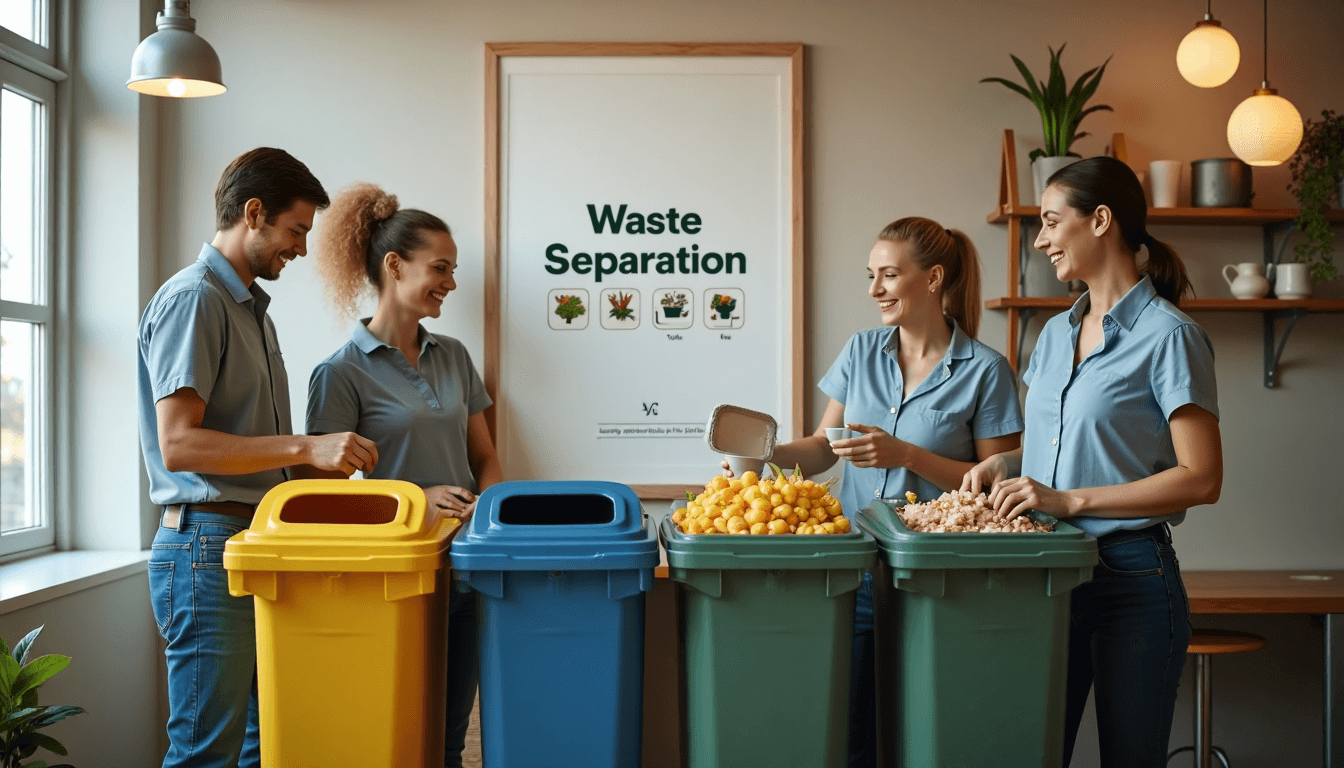
Effective waste separation represents more than a compliance requirement—it is a strategic approach that delivers substantial financial, environmental, and operational advantages for businesses across various sectors. By implementing robust waste management practices, organisations can transform their waste streams from a potential liability into a valuable resource.
Financial Advantages of Precise Waste Management
Properly segregating waste streams generates significant economic benefits. According to Northern Ireland Business Information, implementing comprehensive waste management policies can lead to direct cost savings through reduced disposal expenses and minimised waste production. Businesses that meticulously separate recyclable materials can potentially lower waste management costs by up to 30%, creating a compelling financial incentive.
The economic rationale extends beyond immediate cost reduction. Our guide on waste management savings highlights how strategic waste separation enables businesses to:
- Reduce landfill taxes
- Generate revenue from recyclable materials
- Improve operational efficiency
- Demonstrate corporate environmental responsibility
Regulatory Compliance and Risk Mitigation
Effective waste separation is crucial for maintaining legal compliance and minimising organisational risk. UK Government Guidelines mandate specific waste management standards across different industries. Businesses that fail to implement proper waste segregation protocols risk substantial financial penalties and potential legal repercussions.
Moreover, Stericycle UK emphasises that proper waste segregation enhances workplace safety by minimising health risks associated with hazardous materials. This approach protects employees, reduces potential workplace incidents, and demonstrates a commitment to maintaining high safety standards.
Environmental and Reputational Benefits
Beyond financial and legal considerations, effective waste separation contributes meaningfully to environmental conservation. By diverting recyclable materials from landfills, businesses actively participate in reducing carbon emissions and preserving natural resources. This commitment resonates with environmentally conscious consumers and stakeholders, potentially enhancing brand reputation and attracting sustainability-minded clients.
The strategic approach to waste separation is not merely an operational task but a comprehensive business strategy. It represents a holistic method of resource management that balances economic efficiency with environmental stewardship. Businesses that embrace this approach position themselves as forward-thinking, responsible organisations committed to sustainable practices and long-term environmental protection.
Best Practices for Different Business Sectors
Waste management strategies are not one-size-fits-all. Different business sectors require tailored approaches to effectively manage their unique waste streams, ensuring regulatory compliance, environmental responsibility, and operational efficiency.
Manufacturing and Industrial Sectors
Manufacturing businesses generate complex waste streams that demand sophisticated separation and management techniques. Government regulations mandate that from 31 March 2025, all workplaces must separate waste into distinct categories: dry recyclables (plastic, metal, glass, paper, and card), food waste, and non-recyclable materials.
Industrial organisations should implement comprehensive waste auditing processes. According to Business Climate Hub, conducting systematic waste audits enables businesses to:
- Identify specific waste generation points
- Optimize material recovery strategies
- Potentially generate revenue from recyclable materials
- Reduce overall waste management costs
Healthcare and Service Industries
Healthcare facilities and service-based businesses face unique waste management challenges requiring meticulous segregation. Medical waste, confidential documents, and mixed-material waste demand specialized handling protocols. Our comprehensive waste management guide provides insights into sector-specific waste management strategies.
Key considerations for these sectors include:
- Strict segregation of hazardous and non-hazardous materials
- Compliance with health and safety regulations
- Secure disposal of confidential or sensitive materials
- Minimizing cross-contamination risks
Retail and Office Environments
Retail and office spaces typically generate mixed waste streams that require strategic separation. The waste hierarchy approach—prioritizing prevention, reuse, recycling, and recovery—can significantly reduce environmental impact. Business Climate Hub emphasizes that this approach helps businesses cut emissions, reduce landfill fees, and enhance their reputation.
Practical implementation strategies include:
- Installing clearly labeled recycling stations
- Training staff on proper waste segregation
- Reducing single-use materials
- Implementing digital solutions to minimize paper waste
A sector-based summary can help businesses focus on the most relevant best practices:
| Business Sector | Key Waste Streams | Recommended Best Practices |
|---|---|---|
| Manufacturing/Industrial | Dry recyclables, food, non-recyclables | Conduct waste audits, material recovery, optimise separation |
| Healthcare/Services | Medical, confidential, mixed material | Strict segregation, secure disposal, regulatory compliance |
| Retail/Office | Mixed, packaging, paper, food | Labeled stations, staff training, minimising single-use, digitalisation |
Effective waste management transcends mere compliance. It represents a strategic approach that balances environmental responsibility with operational efficiency. Businesses that invest in sector-specific waste management strategies not only meet regulatory requirements but also demonstrate leadership in sustainable practices. By understanding and implementing tailored waste separation techniques, organisations can transform waste from a cost centre into a potential resource, driving both environmental and economic value.
Legal Requirements and Compliance in 2025
The landscape of waste management regulations is undergoing significant transformation in 2025, presenting businesses with new legal obligations and compliance challenges. Understanding these evolving requirements is crucial for organisations seeking to avoid potential penalties and demonstrate environmental responsibility.
Waste Separation Mandates
Government regulations introduce comprehensive waste separation requirements effective 31 March 2025. These mandates apply to workplaces with 10 or more employees, requiring strict categorisation of waste streams. Businesses must now segregate waste into three distinct categories:
- Dry recyclable materials (including plastic, metal, glass, paper, and card)
- Food waste
- Non-recyclable waste
Interestingly, our comprehensive compliance guide highlights that micro-firms with fewer than 10 full-time equivalent employees receive a temporary extension, with compliance deadline set for 31 March 2027.
Legislative Framework and Environmental Implications
The Environment Act 2021 provides the foundational legal framework for these waste management regulations. This legislation aims to dramatically improve recycling rates and substantially reduce waste sent to landfill or incineration. Businesses must recognize that compliance is not merely about avoiding penalties but contributing to broader national environmental objectives.
Key legal considerations include:
- Maintaining accurate waste segregation records
- Ensuring proper waste collection and disposal processes
- Providing staff training on new waste management protocols
- Implementing verifiable waste tracking mechanisms
The following table summarises the new legal mandates and extension periods by organisation size:
| Business Size | Waste Separation Requirement | Compliance Deadline |
|---|---|---|
| 10 or more employees | Segregate into dry recyclables, food, general | 31 March 2025 |
| Fewer than 10 FTE | Same as above | 31 March 2027 |
Consequences of Non-Compliance
Failure to adhere to these new waste management regulations can result in significant financial and operational consequences. Businesses may face:
- Substantial financial penalties
- Potential legal proceedings
- Reputational damage
- Increased waste management costs
Proactive businesses will view these regulations as an opportunity to innovate, reduce environmental impact, and potentially generate cost savings through more efficient waste management practices. The transition requires strategic planning, investment in appropriate waste segregation infrastructure, and comprehensive staff training.
Ultimately, legal compliance in waste management extends beyond mere regulatory adherence. It represents a fundamental shift towards more sustainable business practices, demonstrating corporate responsibility and alignment with national environmental conservation goals. Organisations that embrace these changes will not only meet legal requirements but position themselves as forward-thinking, environmentally conscious enterprises.
Frequently Asked Questions
What is the difference between general waste and recycling?
General waste refers to non-recyclable materials that cannot be processed, such as contaminated packaging and mixed materials. Recycling involves collecting and processing materials like paper, plastic, metal, and glass to be transformed into new products, helping to reduce resource consumption and environmental impact.
What are the new waste separation regulations for businesses in 2025?
Starting from 31 March 2025, businesses with 10 or more employees must separate their waste into three categories: dry recyclables, food waste, and non-recyclable waste. Compliance is essential to avoid penalties and to contribute to sustainability efforts.
How can effective waste separation benefit my business?
Effective waste separation can lead to significant financial savings—reducing disposal costs by up to 30%—and can also enhance your business’s reputation by appealing to environmentally conscious consumers. Additionally, it ensures compliance with legal regulations and minimizes risks associated with waste management.
What are the consequences of non-compliance with waste management regulations in the UK?
Failing to comply with the new waste management regulations can result in substantial financial penalties, potential legal action, and reputational damage. It is crucial for businesses to implement proper waste separation practices to avoid these negative consequences.
Transform Your Waste Management for 2025 Compliance
Rising business waste volumes and tough new 2025 regulations make proper waste separation more urgent than ever. Many companies are unsure how to sort their general waste from recycling, and the cost of mistakes includes both financial penalties and loss of reputation. If your business needs a reliable solution that covers everything from general waste collection to secure recycling, the experts at Venture Waste Management are ready to help you stay compliant and efficient.

Let us take the complexity out of waste compliance. Explore our dedicated general waste and recycling services or discover how our baler solutions improve recycling processes. Act now to ensure your systems are up-to-date before the March 2025 deadline. Contact our team for trusted guidance and streamlined booking that makes compliance simpler than ever.
Recommended
- bulky waste removal tips Archives – Venture Waste
- Bulky Waste Removal Tips for UK Businesses in 2025 – Venture Waste
- How UK Businesses Can Save Money on Waste Management in 2025 – Venture Waste
- Recycling Hazardous Materials: Safe Disposal for UK Businesses 2025 – Venture Waste
- recycling hazardous materials Archives – Venture Waste
- save money on waste management Archives – Venture Waste
- Glossaire Entretien Ménager : Les Termes Clés


Leave a Reply
Want to join the discussion?Feel free to contribute!