

Effective Waste Minimisation Strategies for UK Businesses 2025
UK businesses are sitting on huge savings opportunities with waste minimisation. The numbers do not lie. Some companies have slashed disposal costs so much they now reinvest thousands back into their core operations. Most assume waste strategy is just a green tick-box or compliance headache. It is actually a smart lever for profit and a major driver for standing out in a crowded marketplace.
Table of Contents
- Why waste minimisation strategies matter for businesses
- Practical waste reduction methods by industry
- Compliant disposal of hazardous and confidential waste
- Steps to implement a successful waste minimisation plan
Quick Summary
| Takeaway | Explanation |
|---|---|
| Implementing waste reduction saves costs | Lower waste production reduces disposal expenses, enhancing operational efficiency and freeing funds for innovation. |
| Waste minimisation bolsters brand reputation | Businesses committed to reducing waste build corporate responsibility, attracting eco-conscious customers and improving employee loyalty. |
| Continuous audits improve waste management | Regular waste audits help identify reduction opportunities, guiding strategic improvements and tracking progress towards goals. |
| Tailored strategies are essential per sector | Different industries require specific approaches to effectively minimise waste based on their unique operational challenges. |
| Compliance protects data and environment | Adhering to waste disposal regulations safeguards sensitive information and promotes corporate responsibility, mitigating legal and environmental risks. |
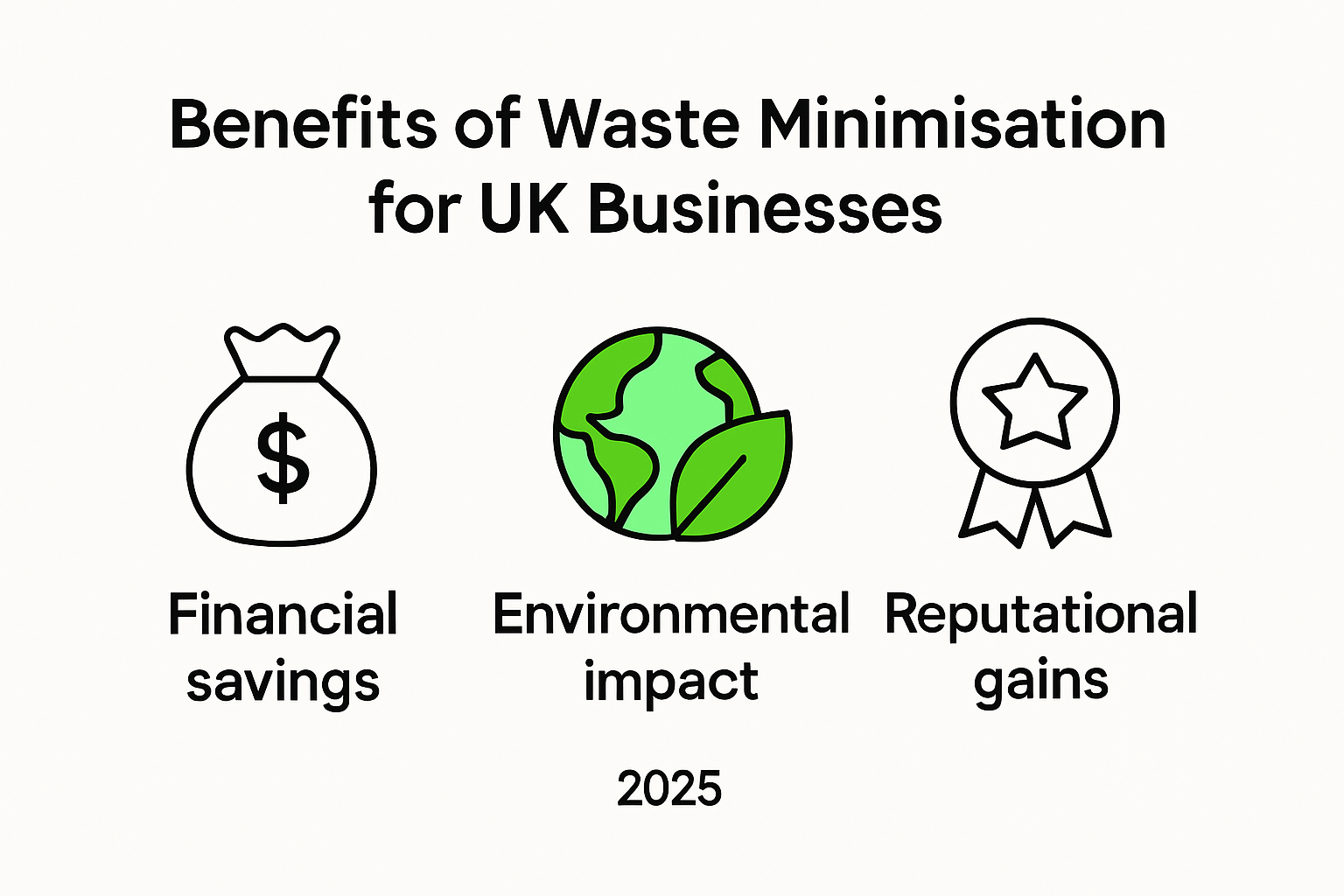
Why Waste Minimisation Strategies Matter for Businesses
Businesses across the United Kingdom are increasingly recognising the critical importance of waste minimisation strategies in today’s competitive and environmentally conscious marketplace. Understanding the multifaceted benefits of implementing robust waste reduction approaches goes far beyond simple environmental compliance.
Financial Implications of Effective Waste Management
The economic rationale for waste minimisation is compelling. According to Business Wales, implementing strategic waste reduction can lead to significant cost savings. By systematically reducing waste production, businesses can substantially lower disposal expenses, transform operational efficiency, and redirect financial resources towards core business growth initiatives.
For instance, companies that meticulously analyse their waste streams often discover unexpected opportunities for resource optimisation. Reducing waste means fewer materials purchased, less energy consumed in production processes, and decreased waste management expenditures. These savings can be reinvested into innovation, employee development, or technological upgrades.
Environmental and Reputational Benefits
Beyond financial considerations, waste minimisation strategies represent a critical commitment to environmental stewardship. The UK Government’s Waste Prevention Programme emphasises the national goal of transitioning towards a low carbon, sustainable economy. Businesses that proactively adopt waste reduction practices contribute directly to this broader environmental objective.
Moreover, modern consumers and stakeholders increasingly evaluate companies based on their environmental credentials. A robust waste minimisation strategy signals corporate responsibility, potentially enhancing brand reputation and attracting environmentally conscious customers and talent. Small Business Research indicates that demonstrating environmental commitment can lead to improved customer loyalty and increased employee engagement.
Strategic Competitive Advantage
Waste minimisation is no longer a peripheral consideration but a strategic imperative. Companies that view waste reduction as an integral part of their business model gain a competitive edge. By optimising waste management practices, businesses can streamline operations, reduce environmental impact, and position themselves as forward-thinking organisations.
The journey towards effective waste minimisation requires a holistic approach. It demands continuous assessment, innovative thinking, and a commitment to sustainable practices. Businesses that embrace this philosophy will not only contribute to environmental preservation but also unlock significant operational and financial benefits.
Understanding and implementing comprehensive waste minimisation strategies is no longer optional—it is a fundamental requirement for responsible, progressive businesses in the United Kingdom.
Practical Waste Reduction Methods by Industry
Industries across the United Kingdom face unique challenges in implementing effective waste minimisation strategies. Each sector requires tailored approaches that address specific operational complexities and environmental responsibilities.
Manufacturing and Industrial Sector Strategies
Manufacturing businesses can dramatically reduce waste through systematic process redesign and innovative resource management. Our comprehensive waste reduction guide highlights critical interventions that transform traditional waste generation patterns.
According to US Environmental Protection Agency’s sustainable materials management guidance, manufacturers should focus on several key strategies. These include implementing lean manufacturing principles, redesigning production processes to minimise material waste, establishing robust material reuse protocols, and developing comprehensive recycling programmes specific to industrial waste streams.
Practical implementations might involve digitising production documentation to reduce paper waste, investing in modular equipment that allows component replacement rather than entire machine disposal, and creating closed-loop systems where manufacturing byproducts become inputs for subsequent production cycles.

Retail and Commercial Waste Minimisation
Retail and commercial sectors present unique waste reduction opportunities. Inventory management emerges as a critical strategy for minimising unnecessary waste generation. Businesses can leverage advanced tracking technologies to precisely monitor stock levels, reducing overproduction and subsequent disposal of expired or obsolete products.
Packaging represents another significant waste reduction frontier. Companies are increasingly adopting minimalist packaging designs, utilising recyclable materials, and implementing take-back programmes that encourage customer participation in waste reduction efforts. Waste management experts recommend developing packaging strategies that prioritise material efficiency and recyclability.
Service and Office Environment Approaches
Service-based organisations and office environments can implement waste minimisation through digital transformation and cultural shifts. Transitioning from paper-based to digital documentation systems significantly reduces physical waste generation. Implementing comprehensive recycling stations, encouraging digital communication, and establishing clear waste segregation protocols can create substantial environmental impact.
Moreover, organisations can develop internal waste reduction training programmes that educate employees about sustainable practices. This approach transforms waste minimisation from an administrative mandate into a collective organisational value.
Successful waste reduction is not a one-size-fits-all solution but a nuanced approach requiring continuous assessment, innovation, and commitment. By understanding industry-specific challenges and implementing targeted strategies, UK businesses can simultaneously reduce environmental impact and enhance operational efficiency.
To help you understand the distinct approaches for each sector, the following table summarises key waste minimisation strategies by industry:
| Sector | Key Strategies |
|---|---|
| Manufacturing | Lean manufacturing, process redesign, material reuse, industrial recycling |
| Retail/Commercial | Inventory management, advanced tracking, minimalist packaging, take-back programmes |
| Service/Office | Digital transformation, recycling programmes, digital communication, staff training |
Compliant Disposal of Hazardous and Confidential Waste
Businesses operating in the United Kingdom face increasingly complex regulatory requirements surrounding the disposal of hazardous and confidential waste. Understanding and implementing compliant waste management practices is not merely a legal obligation but a critical component of responsible corporate governance.
Hazardous Waste Management Protocols
Hazardous waste demands meticulous handling and disposal procedures. Explore our comprehensive confidentiality guidelines to understand the intricate requirements for safe waste management. According to US Environmental Protection Agency guidelines, businesses must adhere to strict protocols that encompass identification, classification, packaging, transportation, and ultimate disposal of hazardous materials.
Key considerations for hazardous waste management include:
- Precise Identification: Accurately categorising waste types based on chemical composition, potential environmental impact, and inherent risks.
- Specialised Containment: Utilising purpose-designed containers that prevent leakage, contamination, and potential environmental hazards.
- Certified Transportation: Engaging licensed waste management professionals equipped with appropriate vehicles and safety equipment.
Confidential Waste Destruction Strategies
Businesses handling sensitive information must implement robust confidential waste destruction strategies. This goes beyond simple document shredding and encompasses a comprehensive approach to protecting organisational and client data. Physical documents, digital storage media, and electronic records all require carefully designed disposal methodologies.
Effective confidential waste management involves:
- Secure on-site document destruction
- Certified digital media sanitisation
- Comprehensive audit trails documenting destruction processes
- Compliance with data protection regulations
Legal and Environmental Compliance
Compliance with waste disposal regulations is a multifaceted challenge that requires ongoing commitment and professional expertise. Businesses must stay informed about evolving environmental legislation, maintain detailed records of waste generation and disposal, and continuously train personnel in appropriate waste management techniques.
Key legislative frameworks governing waste disposal include the Environmental Protection Act 1990, the Hazardous Waste Regulations 2005, and the UK GDPR. These regulations mandate strict protocols for waste handling, emphasising environmental protection, data security, and organisational accountability.
Successful hazardous and confidential waste management is not simply about meeting minimum legal requirements. It represents a comprehensive approach to corporate responsibility, environmental stewardship, and risk mitigation. By implementing rigorous waste disposal strategies, businesses protect themselves, their stakeholders, and the broader environment from potential harm.
The following table outlines key components for compliant hazardous and confidential waste management:
| Waste Type | Key Protocols |
|---|---|
| Hazardous Waste | Identification, specialised containment, certified transportation |
| Confidential Waste | On-site destruction, digital sanitisation, audit trails, compliance |
| Legal & Environmental | Ongoing training, record-keeping, regulatory updates |
Steps to Implement a Successful Waste Minimisation Plan
Developing a comprehensive waste minimisation plan requires strategic thinking, systematic assessment, and committed implementation. Businesses seeking to reduce their environmental footprint and operational costs must approach waste reduction as a structured, ongoing process.
Conducting a Comprehensive Waste Audit
The foundation of any effective waste minimisation strategy begins with a thorough waste audit. Explore our SME waste reduction strategies to understand the nuanced approach to waste assessment. According to WRAP’s waste action plan guidance, businesses should meticulously document and analyse their current waste generation patterns.
Key steps in conducting a waste audit include:
- Detailed Waste Mapping: Tracking waste generation across different departments and operational processes
- Quantitative Analysis: Measuring waste volumes, types, and disposal methods
- Cost Evaluation: Calculating current waste management expenses and potential savings
Developing Targeted Waste Reduction Strategies
The UK Business Climate Hub emphasises the importance of adopting a hierarchical approach to waste management. This involves prioritising waste prevention, followed by reuse, recycling, and final disposal. Businesses must create specific, measurable strategies tailored to their unique operational context.
Effective strategy development involves:
- Setting clear, achievable waste reduction targets
- Identifying opportunities for material reuse and recycling
- Implementing process improvements to minimise waste generation
- Training employees on waste reduction practices
Monitoring, Reporting, and Continuous Improvement
As recommended by NetRegs environmental guidance, successful waste minimisation is an ongoing process of measurement, analysis, and refinement. Businesses must establish robust monitoring mechanisms to track progress and identify continuous improvement opportunities.
Critical components of monitoring and reporting include:
- Regular waste stream assessments
- Performance tracking against established waste reduction targets
- Financial impact analysis of waste minimisation efforts
- Periodic review and updating of waste reduction strategies
Implementing a successful waste minimisation plan is not a one-time event but a dynamic, evolving approach to sustainable business practices. By systematically addressing waste generation, businesses can simultaneously reduce environmental impact, lower operational costs, and demonstrate corporate responsibility.
The most successful organisations view waste minimisation as a strategic opportunity rather than a compliance requirement. They integrate waste reduction into their core business model, creating value for stakeholders while contributing to broader environmental sustainability goals.
Frequently Asked Questions
What are the financial benefits of waste minimisation for UK businesses?
Implementing waste minimisation strategies can significantly reduce disposal costs, enhance operational efficiency, and allow companies to reinvest savings into core business operations.
How can businesses improve their brand reputation through waste minimisation?
Adopting effective waste reduction practices demonstrates corporate responsibility, attracting environmentally conscious customers and improving employee engagement, which ultimately enhances brand reputation.
What steps should businesses take to implement a successful waste minimisation plan?
Businesses should start by conducting a thorough waste audit, develop targeted waste reduction strategies tailored to their operations, and continuously monitor and refine their strategies for ongoing improvement.
What are the key waste management protocols for hazardous and confidential waste?
Key protocols include precise identification of waste types, specialised containment, certified transportation for hazardous waste, and secure destruction methods with audit trails for confidential waste.
Turn Waste Challenges into Profitable Opportunities with Venture Waste
If your business is feeling the pressure to reduce rising waste costs and protect your reputation, you are not alone. This article has shown that effective waste minimisation is about much more than compliance. UK businesses are looking for reliable strategies that really make a difference, whether that means lowering disposal expenses, meeting complex regulations, or building trust with customers and employees. Our Waste Collection Process in the UK for Businesses 2025 outlines how to make your waste handling not just simpler, but smarter.

Now is the perfect time to take action. By partnering with Venture Waste Management, you gain access to a dedicated UK-wide network that prioritises efficient collection, confidential destruction, and sustainable recycling. Secure a tailored solution that aligns with your waste minimisation goals and see real financial and environmental benefits. Visit our website or review our waste collection process to get started today.
Recommended
- Waste Reduction for SMEs: Practical UK Strategies for 2025 – Venture Waste
- Waste Management Challenges UK: Solutions for Businesses 2025 – Venture Waste
- How UK Businesses Can Save Money on Waste Management in 2025 – Venture Waste
- reducing business waste Archives – Venture Waste
- Just in Time Delivery: Essential Guide for 2025 Success – ORNER
- Energy-Efficient Shutters: Smart Solutions for UK Homes 2025 | Shutter World


Leave a Reply
Want to join the discussion?Feel free to contribute!