

Waste Management Step by Step: A Guide for UK Businesses 2025

UK businesses face new waste rules in 2025, with all companies required to separate recyclables, food waste and non-recyclables by 31 March. Sounds straightforward enough, right? Actually, poor documentation now risks fines as high as £5,000 and even unlimited penalties in court. Missing one compliance detail could cost far more than just a black mark on your records.
Table of Contents
- Understanding Waste Types And Legal Duties
- Step By Step Waste Management Process Explained
- Confidential And Hazardous Waste Disposal Solutions
- Choosing The Right Waste Management Partner In The UK
Quick Summary
| Takeaway | Explanation |
|---|---|
| Waste Categorisation is Essential | Businesses must understand and appropriately classify their waste into general, recyclable, hazardous, and organic categories to ensure compliance and effective waste management strategies. |
| Legal Compliance is Crucial | From 31 March 2025, all businesses in England are required to separate waste into distinct streams: dry recyclables, food waste, and non-recyclable materials to meet legal obligations. |
| Thorough Documentation is Required | Accurate records of waste transfer notes and the entire waste journey must be maintained to comply with regulations and support effective waste management practices. |
| Confidential and Hazardous Waste Needs Special Handling | Businesses must implement secure disposal methods for confidential materials and adhere strictly to protocols for hazardous waste to mitigate environmental and health risks. |
| Choose Your Waste Management Partner Wisely | Selecting a compliant and capable waste management partner is essential for businesses, ensuring they meet regulatory standards and adopt sustainable practices effectively. |
Understanding Waste Types and Legal Duties
Navigating the complex landscape of waste management requires businesses to understand both the technical classifications of waste and their legal responsibilities. The regulatory framework in the UK mandates specific approaches to waste handling, sorting, and disposal that every organisation must comprehend to remain compliant and environmentally responsible.
Categorising Business Waste Types
Business waste is not a monolithic category but a diverse range of materials requiring distinct management strategies. Understanding these categories is crucial for proper disposal and legal compliance. Learn more about waste categorisation for businesses in the UK.
Waste types can be broadly classified into several key categories:
- General Waste: Non-recyclable materials typically disposed of in standard bins, including packaging, food wrappers, and miscellaneous office refuse.
- Recyclable Materials: Items that can be processed and reused, such as paper, cardboard, plastic, glass, and metal. These require separate collection and processing.
- Hazardous Waste: Materials that pose potential risks to human health or the environment, including chemicals, batteries, electronic equipment, and medical waste.
- Organic Waste: Biodegradable materials like food scraps and green waste, which can be composted or processed through specialised treatment methods.
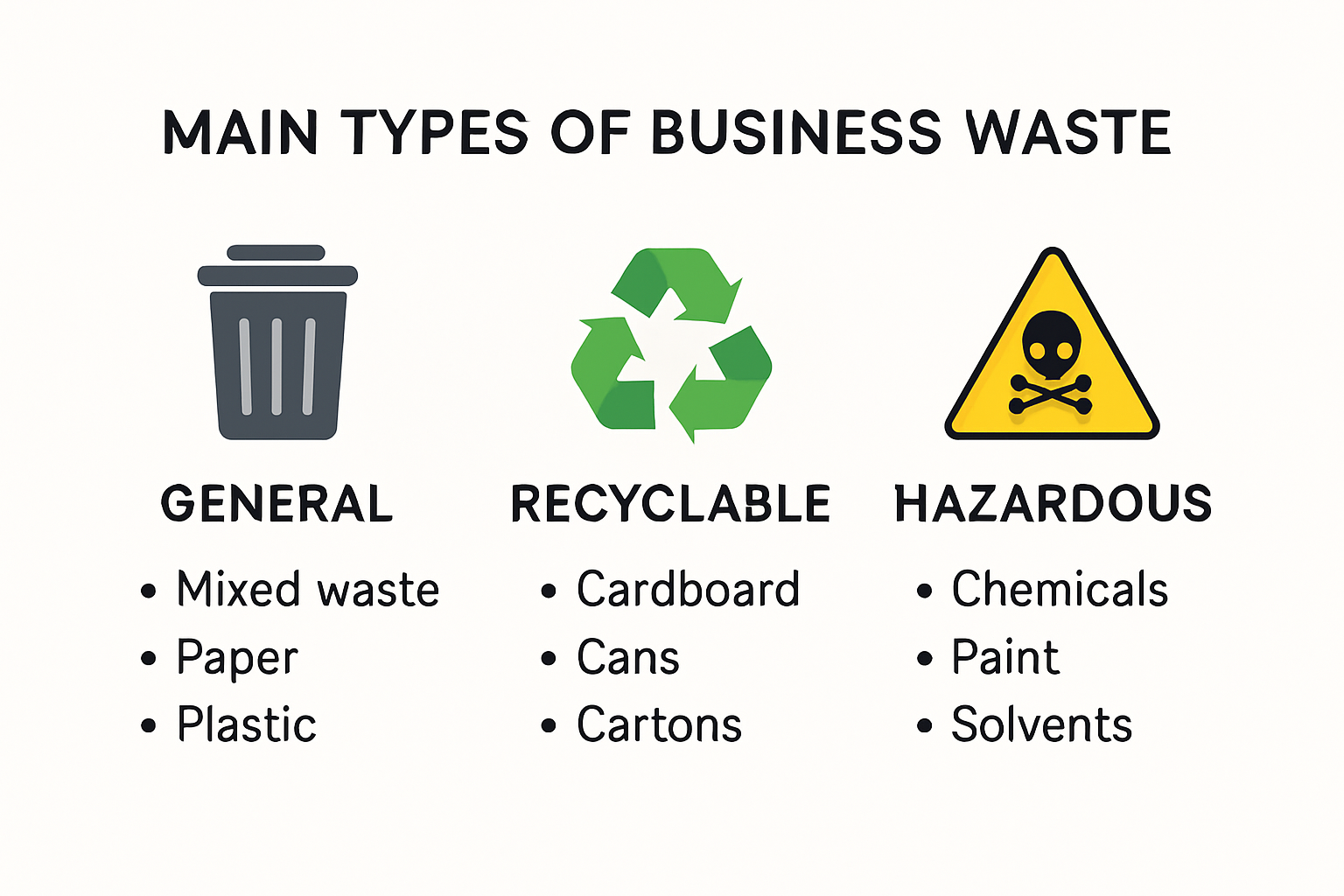
Here is a summary table to help businesses easily differentiate between waste types and the required handling method, as discussed above:
| Waste Type | Examples | Handling Requirement |
|---|---|---|
| General Waste | Packaging, food wrappers, office refuse | Standard disposal in general waste bins |
| Recyclable | Paper, cardboard, plastics, glass, metals | Separate collection for recycling |
| Hazardous Waste | Chemicals, batteries, electronic equipment | Special containment and licensed disposal |
| Organic Waste | Food scraps, green waste | Composting or specialised treatment |
Legal Obligations and Compliance Requirements
The UK’s waste management regulations impose strict legal duties on businesses. According to government guidelines, businesses must adhere to comprehensive waste management protocols.
Key legal responsibilities include:
- Waste Minimisation: Businesses must actively work to reduce waste generation through preventative measures and efficient resource management.
- Proper Segregation: From 31 March 2025, all businesses in England are legally required to separate waste into distinct streams: dry recyclables, food waste, and non-recyclable materials.
- Duty of Care Documentation: Under the Environmental Protection Act 1990, organisations must maintain accurate waste transfer notes for each waste load, documenting its origin, destination, and handling process.
- Registered Waste Carriers: Businesses must only engage with licensed waste carriers to ensure legal and environmentally responsible waste disposal.
Non-compliance can result in significant financial penalties. Research indicates that businesses might face fixed penalty notices up to £300 for documentation issues and potential fines reaching £5,000 in magistrate’s courts, with Crown Court proceedings potentially imposing unlimited fines.
By understanding waste types and maintaining rigorous legal compliance, businesses can contribute to environmental sustainability while avoiding potential legal and financial repercussions. Proactive waste management is not just a regulatory requirement but a critical component of responsible business operations.
Step by Step Waste Management Process Explained
Implementing an effective waste management strategy requires a systematic approach that goes beyond simple disposal. Businesses must develop a comprehensive process that ensures legal compliance, environmental responsibility, and operational efficiency. Learn more about waste compliance steps to streamline your organisation’s waste management approach.
Initial Waste Assessment and Planning
The first critical stage in waste management involves a thorough assessment of your business’s waste generation patterns. This initial evaluation helps organisations understand their unique waste profile and develop targeted reduction and disposal strategies. According to government guidelines, businesses must prepare for significant changes in waste management regulations.
Key steps in the initial assessment include:
- Waste Audit: Conduct a comprehensive inventory of all waste types produced by your organisation.
- Volume Measurement: Quantify the amount of waste generated across different categories.
- Current Disposal Methods: Evaluate existing waste handling practices.
Below is a summary table outlining the main steps in the waste management process as described in this section:
| Step | Description |
|---|---|
| Waste Audit | Inventory of all waste types generated by the organisation |
| Volume Measurement | Quantify waste volumes by type |
| Current Disposal Methods Assessment | Review existing handling and disposal practices |
| Waste Segregation Implementation | Separate waste by stream (recyclables, food, non-recyclables) |
| Compliance Documentation | Record and track waste journey and maintain legal documentation |
Implementation of Waste Segregation and Collection
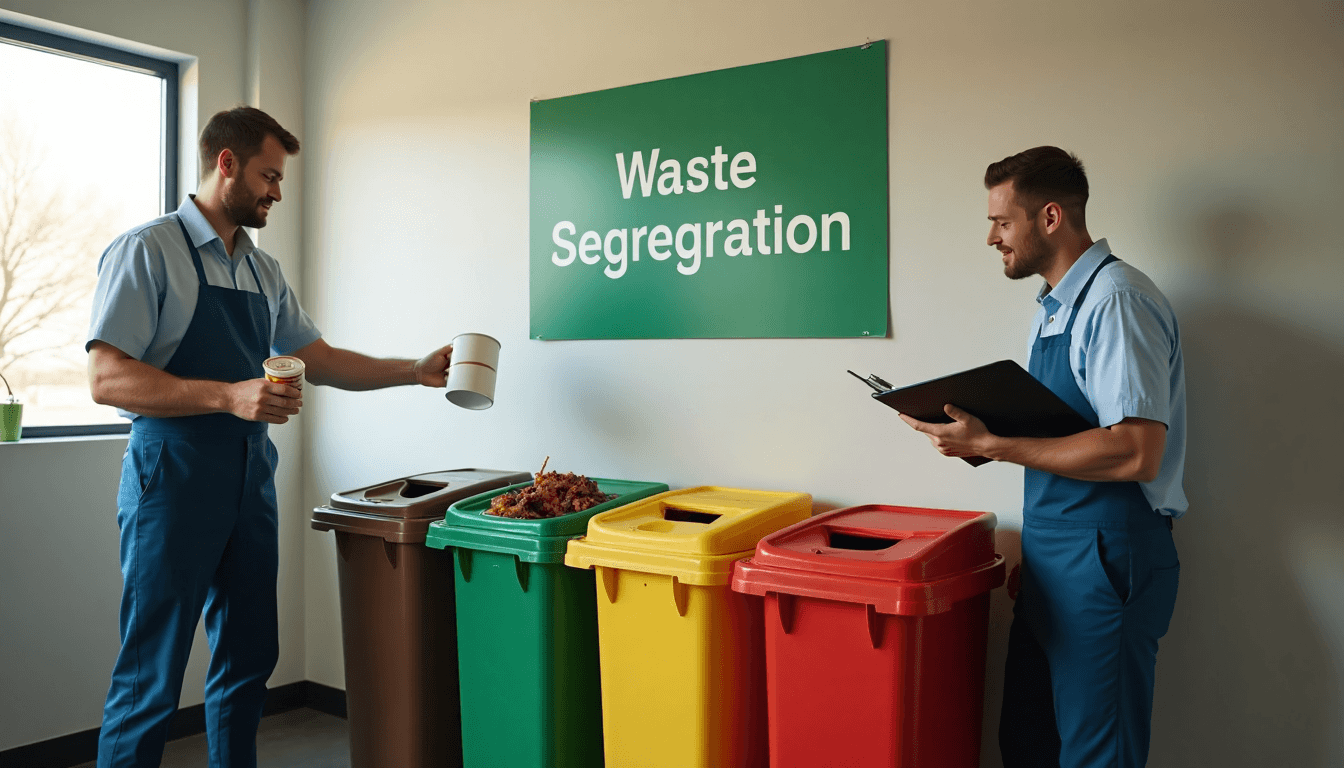
Effective waste management hinges on proper segregation and collection processes. Simpler Recycling reforms mandate specific waste separation requirements for businesses. As of 31 March 2025, all workplaces in England must separate their waste into three distinct streams:
- Dry Recyclable Materials: Including plastic, metal, glass, paper, and cardboard.
- Food Waste: Separated and collected for specialized processing.
- Non-Recyclable Waste: Materials that cannot be recycled or repurposed.
Importantly, micro-firms with fewer than 10 full-time equivalent employees have until 31 March 2027 to fully comply with these segregation requirements.
Documentation and Compliance Tracking
Maintaining accurate records is a crucial component of the waste management process. Businesses must develop a robust system for tracking waste generation, disposal, and compliance. This involves:
- Creating and maintaining detailed waste transfer notes
- Documenting the entire waste journey from generation to final disposal
- Ensuring all waste carriers are properly licensed
- Keeping comprehensive records for potential regulatory inspections
The documentation process serves multiple purposes: legal compliance, environmental accountability, and internal tracking of waste management effectiveness. Organisations that implement rigorous documentation practices can more easily identify opportunities for waste reduction and demonstrate their commitment to sustainable business practices.
By following these systematic steps, businesses can transform waste management from a mere operational necessity into a strategic approach that reduces environmental impact, minimizes costs, and ensures regulatory compliance. The process requires ongoing attention, regular reassessment, and a commitment to continuous improvement in waste handling practices.
Confidential and Hazardous Waste Disposal Solutions
Confidential and hazardous waste management represents a critical challenge for businesses across various sectors. These specialised waste streams demand meticulous handling, stringent security protocols, and compliance with complex regulatory frameworks. Explore our comprehensive hazardous waste disposal guide to understand the nuanced requirements for safe waste management.
Understanding Confidential Waste Management
Confidential waste encompasses sensitive documents, digital media, and materials containing potentially compromising information. Businesses must implement robust destruction processes that guarantee complete information elimination. The Health and Safety Executive emphasises the critical importance of secure disposal methods that prevent data breaches and protect organisational integrity.
Key strategies for confidential waste management include:
- Secure Collection: Utilising locked, tamper-proof containers for document and media collection
- Controlled Destruction: Implementing industrial shredding processes for physical documents
- Digital Media Destruction: Physically destroying hard drives, USB devices, and electronic storage media
- Comprehensive Documentation: Maintaining detailed certificates of destruction for audit purposes
Hazardous Waste Disposal Protocols
Hazardous waste requires specialised handling to mitigate environmental and health risks. According to the Environment Agency’s Sector Guidance Note S5.06, businesses must adhere to strict operational standards when managing potentially dangerous materials.
Critical considerations for hazardous waste disposal include:
- Risk Assessment: Comprehensive evaluation of potential environmental and health impacts
- Proper Classification: Precise identification and categorisation of hazardous materials
- Specialized Containment: Using approved containers designed for specific waste types
- Licensed Transportation: Engaging only certified waste carriers with appropriate permissions
Sector-Specific Waste Management Approaches
Different industries require tailored approaches to confidential and hazardous waste management. The NHS Clinical Waste Strategy provides an exemplary model, demonstrating how targeted waste management can simultaneously address environmental, financial, and safety concerns.
Sector-specific strategies might include:
- Healthcare: Implementing stringent medical waste segregation and sterilisation protocols
- Technology: Developing secure data destruction processes for electronic equipment
- Manufacturing: Creating specialised chemical waste neutralisation and disposal systems
- Financial Services: Establishing comprehensive document and digital information destruction mechanisms
Businesses must recognise that effective confidential and hazardous waste management extends beyond mere compliance. It represents a critical intersection of legal responsibility, environmental stewardship, and organisational risk management. By developing comprehensive, sector-specific waste disposal solutions, companies can protect sensitive information, minimise environmental impact, and demonstrate their commitment to responsible business practices.
Choosing the Right Waste Management Partner in the UK
Selecting an appropriate waste management partner is a critical decision that can significantly impact a business’s operational efficiency, legal compliance, and environmental responsibility. Discover strategies to optimise your waste management costs while ensuring comprehensive service delivery.
Essential Criteria for Waste Management Partner Selection
Business leaders must approach waste management partner selection with a strategic and comprehensive evaluation process. The Health and Safety Executive recommends a thorough assessment of potential service providers to guarantee regulatory compliance and operational effectiveness.
Key selection criteria include:
- Regulatory Compliance: Verify the provider’s certification and licensing status
- Service Range: Ensure comprehensive waste management capabilities across different waste streams
- Technical Capabilities: Assess technological infrastructure for waste processing
- Environmental Credentials: Evaluate the partner’s commitment to sustainable practices
- Reporting and Transparency: Confirm detailed waste tracking and documentation processes
Understanding Regulatory Requirements
With the Simpler Recycling reforms mandating specific waste separation requirements, businesses must choose partners capable of meeting these evolving standards. As of 31 March 2025, all workplaces in England must separate waste into three distinct streams: dry recyclables, food waste, and non-recyclable materials.
Special considerations for different business sizes include:
- Large Enterprises: Require comprehensive, multi-stream waste management solutions
- Small Businesses: Need flexible, cost-effective waste collection services
- Micro-Firms: Benefit from local council partnerships until full compliance deadline of March 2027
Evaluating Cost and Performance Metrics
Beyond basic waste collection, businesses should assess potential partners through a multifaceted lens. Consider factors such as:
- Waste reduction strategies
- Cost-effectiveness of services
- Frequency and reliability of collections
- Detailed reporting mechanisms
- Potential for circular economy contributions
The ideal waste management partner transforms waste disposal from a mere operational necessity into a strategic asset. They should offer more than standard collection services, providing insights into waste reduction, recycling opportunities, and potential cost savings.
Businesses must recognize that choosing a waste management partner is not just about compliance, but about creating a sustainable, efficient approach to resource management. The right partnership can help organisations reduce environmental impact, manage costs, and demonstrate corporate social responsibility.
Careful due diligence, comprehensive evaluation, and a forward-thinking approach are essential in selecting a waste management partner that will support your business’s operational and environmental goals in 2025 and beyond.
Frequently Asked Questions
What are the new waste management requirements for UK businesses in 2025?
From 31 March 2025, all UK businesses must separate their waste into distinct categories: dry recyclables, food waste, and non-recyclable materials. This is part of new regulations aimed at improving recycling and waste management practices.
What are the penalties for non-compliance with waste management regulations?
Businesses that fail to comply with waste management regulations can face fixed penalty notices up to £300, and fines as high as £5,000 in magistrate’s courts. In serious cases, penalties might reach unlimited amounts in Crown Court.
How can businesses effectively document their waste management processes?
Businesses should maintain detailed waste transfer notes, document the entire waste journey from generation to disposal, and ensure all waste carriers are properly licensed. Comprehensive records help ensure compliance and track waste management effectiveness.
What types of waste must businesses categorise?
Businesses must categorise their waste into four main types: general waste, recyclable materials, hazardous waste, and organic waste. Proper classification is crucial for compliance and effective waste management strategies.
Transform Waste Management Challenges into Peace of Mind with Venture Waste
Are you worried about keeping up with the strict documentation and waste segregation laws coming in 2025? UK businesses like yours face real risks if recycling, food, confidential, or hazardous waste are not managed to the new standards explained in our guide. Skipping a single compliance step or mismanaging confidential materials does not just threaten your reputation. It could result in serious fines or put your business at legal risk. Find expert support and practical step-by-step help in the confidential waste solutions from Venture Waste. We understand your goals of smooth compliance, thorough documentation, and secure disposal, and we deliver peace of mind through proven, efficient services.

Do not wait until the deadline to get ahead of the 2025 waste regulations. Visit Venture Waste Management to discover how straightforward our three-step booking process makes it for you to stay compliant, avoid fines, and protect your business. For companies managing electronics or sensitive data, explore our WEEE Waste solutions designed for full legal and environmental compliance. Book your waste collection today and take control of your legal responsibilities with confidence.
Recommended
- steps to waste compliance Archives – Venture Waste
- 7 Steps to Waste Compliance for UK Businesses in 2025 – Venture Waste
- How UK Businesses Can Save Money on Waste Management in 2025 – Venture Waste
- save money on waste management Archives – Venture Waste
- Bulky Waste Removal Tips for UK Businesses in 2025 – Venture Waste
- how to reduce waste Archives – Venture Waste


Leave a Reply
Want to join the discussion?Feel free to contribute!