

Waste Handling Best Practices for UK Businesses in 2025
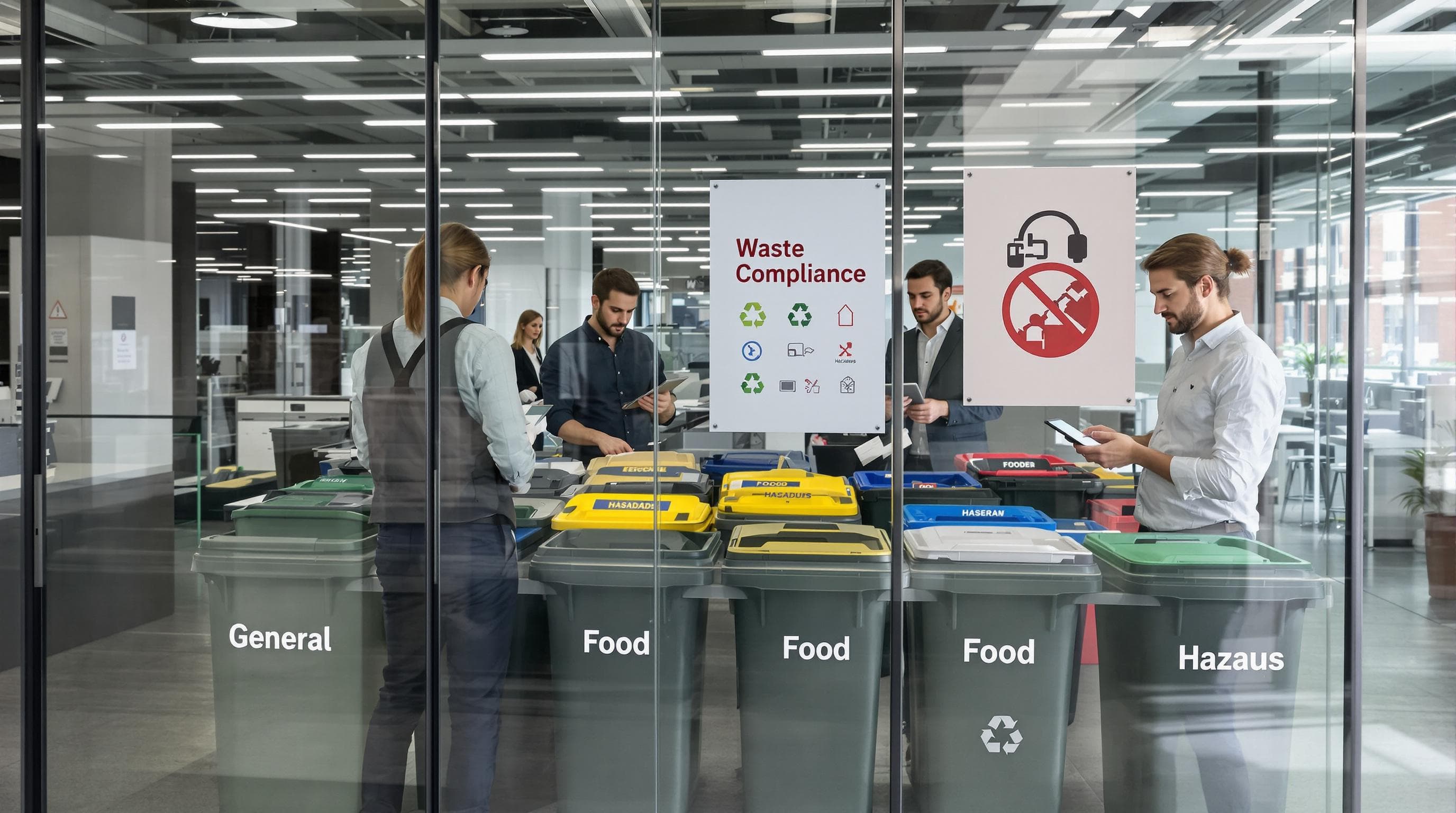
Waste management rules for UK businesses are changing faster than ever. Starting from March 2025, strict new regulations demand separate collection of all business waste streams, with stiff penalties for those who slip up. You might think sorting rubbish is just a box-ticking exercise. The real surprise is how these changes could cut your disposal costs by up to 30 percent and transform the way your staff and partners work together on sustainability.
Table of Contents
- Understanding Waste Types And Legal Requirements
- Practical Steps For Safe Waste Segregation
- Choosing Reliable Waste Management Partners
- Advanced Solutions For Hazardous And Confidential Waste
Quick Summary
| Takeaway | Explanation |
|---|---|
| Understand Waste Types and Legal Compliance | UK businesses must classify waste into categories such as general, recyclable, food, and hazardous waste, following strict regulations effective from March 2025 to avoid penalties. |
| Implement Safe Waste Segregation Systems | Utilise colour-coded containers for different waste types to enhance segregation, and ensure staff are thoroughly trained in identification and disposal protocols to minimise cross-contamination risks. |
| Choose Reliable Waste Management Partners | Conduct due diligence on potential waste management providers, ensuring they are compliant, equipped with necessary certifications, and capable of offering comprehensive waste handling services. |
| Focus on Hazardous and Confidential Waste Management | Develop advanced management strategies for hazardous and confidential waste, including secure destruction protocols and meticulous tracking to mitigate environmental and legal risks. |
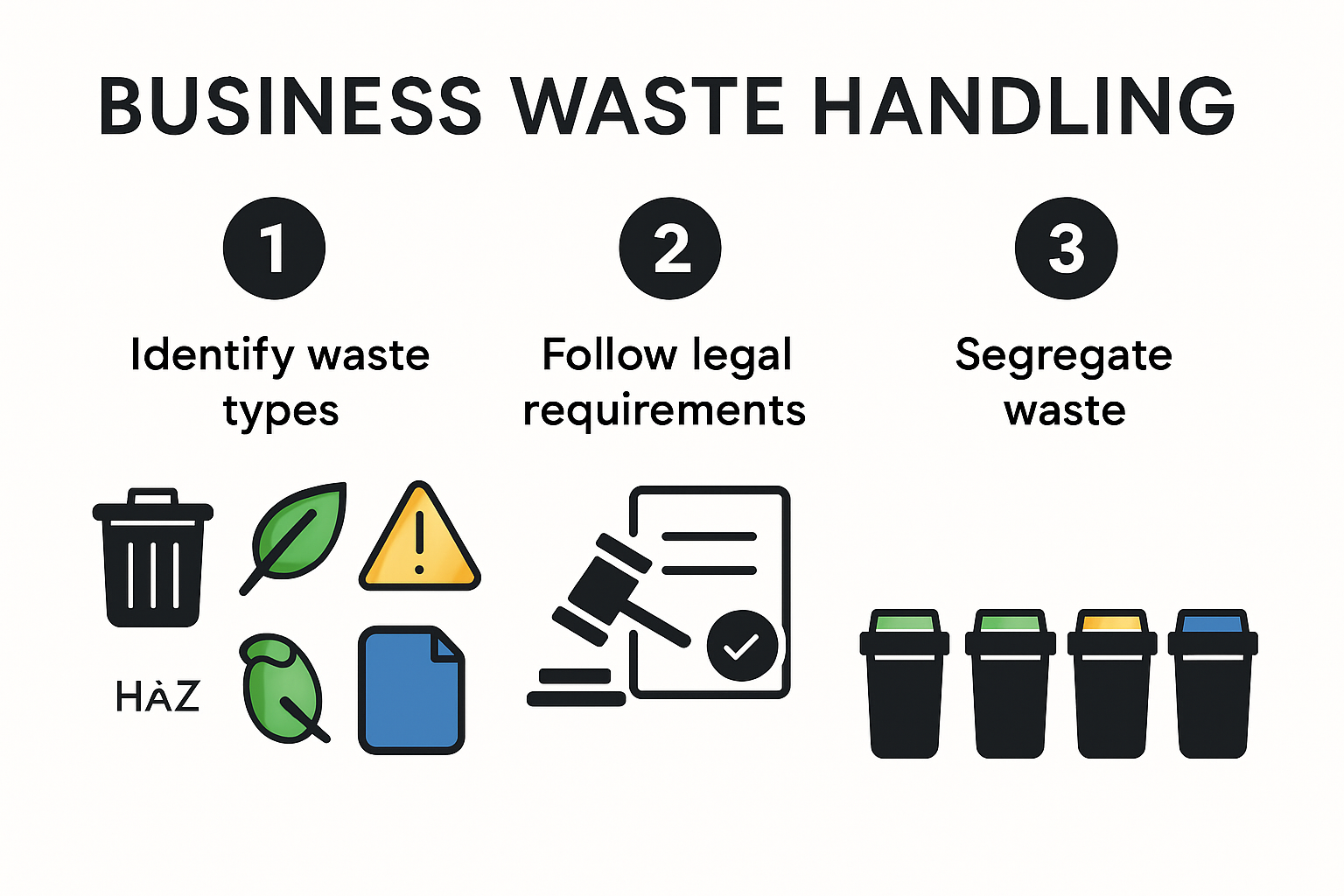
Understanding Waste Types and Legal Requirements
Navigating the complex landscape of waste management requires UK businesses to understand the intricate legal requirements and waste classification systems. The waste management guidelines for 2025 introduce significant changes that demand comprehensive attention from businesses across various sectors.
Classification of Business Waste
Waste types are not uniform and require precise categorisation to ensure proper handling and disposal. According to gov.uk environmental regulations, businesses must distinguish between several critical waste categories:
- General Waste: Non-hazardous materials that cannot be recycled
- Recyclable Waste: Materials like paper, cardboard, plastics, and metals
- Food Waste: Organic materials from commercial food preparation
- Hazardous Waste: Materials containing potentially harmful substances
The Separation of Waste (England) Regulations 2025 mandate that businesses must collect these waste streams separately. Research from the UK Environment Agency indicates that businesses failing to comply can face substantial financial penalties and potential legal consequences.
Legal Compliance Requirements
Effective from 31 March 2025, new regulations introduce stringent waste handling protocols. Legislation from gov.uk outlines critical compliance standards:
- Mandatory waste stream separation for most businesses
- Special provisions for micro-firms with fewer than 10 full-time employees
- Documented waste management processes
- Regular waste audits and reporting
Micro-firms receive a temporary exemption until 31 March 2027, providing additional time to adapt to these comprehensive waste management requirements. Environmental experts recommend businesses start preparing early to ensure smooth transition and avoid potential regulatory challenges.
Understanding these waste types and legal requirements is not just about compliance but represents a critical step towards sustainable business practices. By implementing robust waste management strategies, businesses can reduce environmental impact, minimize disposal costs, and demonstrate corporate responsibility.
For businesses seeking detailed guidance, our comprehensive waste management step-by-step guide provides in-depth insights into navigating these complex regulatory landscapes.
To clarify the main business waste categories and their definitions, see the table below:
| Waste Category | Definition |
|---|---|
| General Waste | Non-hazardous materials that cannot be recycled |
| Recyclable Waste | Materials like paper, cardboard, plastics, and metals |
| Food Waste | Organic materials from commercial food preparation |
| Hazardous Waste | Materials containing potentially harmful substances |
Practical Steps for Safe Waste Segregation
Safe waste segregation is a critical component of responsible business waste management in the UK. Waste management experts emphasize that proper segregation not only ensures legal compliance but also significantly reduces environmental impact and potential operational risks.
Color-Coded Waste Containment Systems
Implementing a robust color-coded waste segregation system is fundamental to effective waste management. According to the NHS Clinical Waste Strategy, businesses should adopt clear color-coded containers to prevent cross-contamination and simplify disposal processes:
- Yellow Containers: Infectious or high-risk waste requiring specialized treatment
- Orange Containers: Clinical or potentially hazardous materials
- Red Containers: Highly infectious or contaminated waste
- Blue Containers: Recyclable dry materials
- Green Containers: General non-hazardous waste
This systematic approach allows for precise waste tracking and ensures that different waste types are handled appropriately. Business climate research indicates that businesses adopting structured waste segregation can reduce disposal costs by up to 30%.
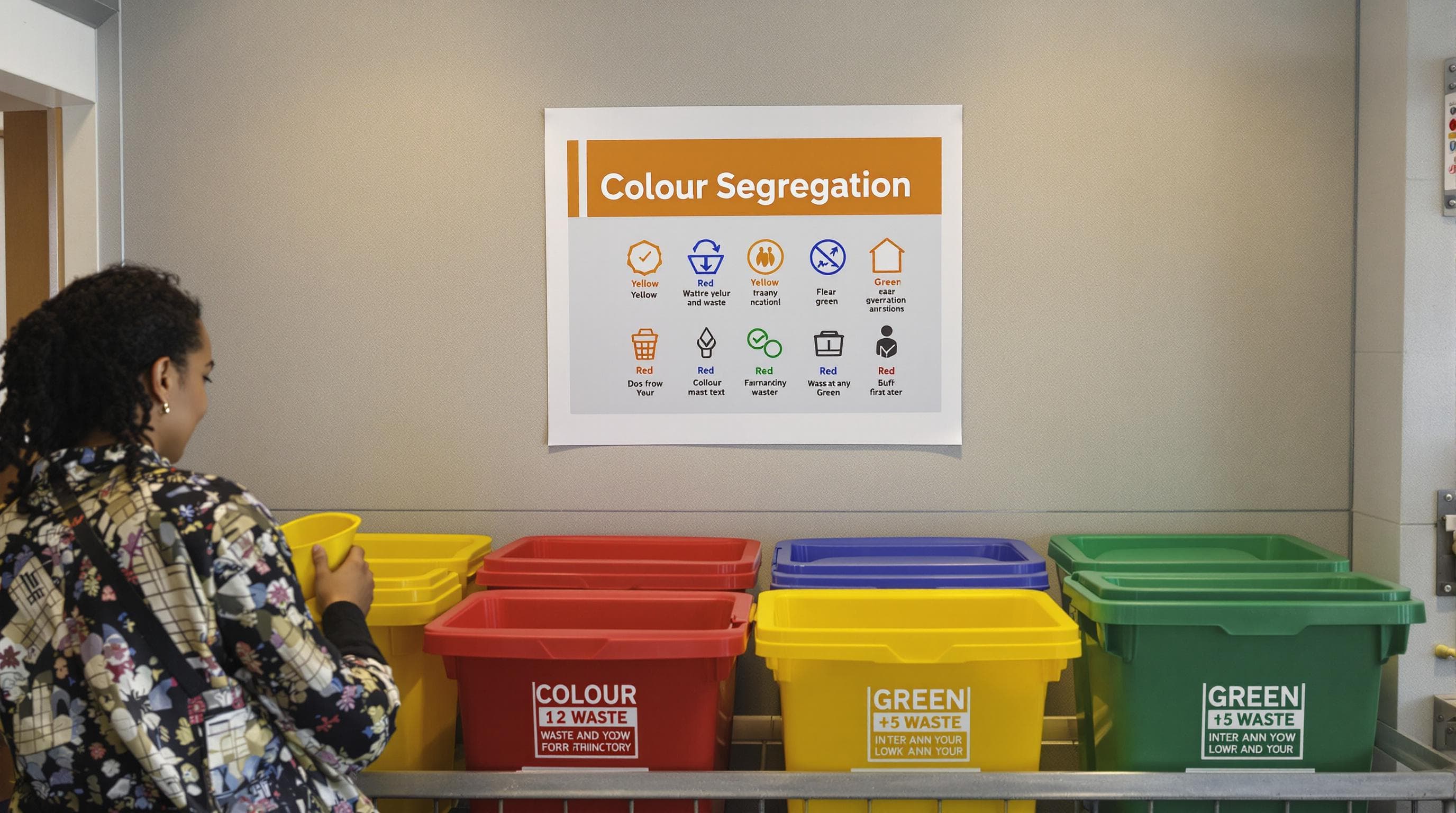
Below is a summary table of colour-coded waste containers and their designated waste types:
| Container Colour | Waste Type |
|---|---|
| Yellow | Infectious or high-risk waste requiring specialised treatment |
| Orange | Clinical or potentially hazardous materials |
| Red | Highly infectious or contaminated waste |
| Blue | Recyclable dry materials |
| Green | General non-hazardous waste |
Comprehensive Staff Training and Protocols
Successful waste segregation relies heavily on staff understanding and consistent implementation. Waste management guidelines recommend developing comprehensive training programs that cover:
- Identifying different waste categories
- Understanding proper disposal techniques
- Recognizing potential cross-contamination risks
- Documenting waste management procedures
The waste hierarchy principle prioritizes waste management strategies: prevention, reuse, recycling, recovery, and final disposal. Staff training should emphasize reducing waste generation as the primary goal, with segregation serving as a critical secondary strategy.
Businesses must create clear, visual guidelines and provide regular refresher training to ensure ongoing compliance. Interactive workshops, poster displays, and digital training modules can help reinforce these critical waste management practices.
For businesses seeking more detailed guidance on navigating these complex waste segregation requirements, our comprehensive waste management guide offers in-depth insights and practical strategies to streamline your waste handling processes.
Choosing Reliable Waste Management Partners
Selecting the right waste management partner is a critical decision for UK businesses seeking to maintain legal compliance, environmental responsibility, and operational efficiency. Waste management experts emphasize that the choice of a waste management partner can significantly impact a company’s sustainability performance and regulatory adherence.
Due Diligence and Compliance Verification
Before engaging with a waste management service, businesses must conduct comprehensive due diligence. According to the Health and Safety Executive, key evaluation criteria should include:
- Regulatory Compliance: Verify the company’s waste management licenses and environmental permits
- Certification Standards: Check for ISO 14001 environmental management certification
- Waste Tracking: Ensure transparent documentation of waste disposal processes
- Environmental Credentials: Assess the partner’s commitment to sustainable waste management practices
Local Government Association research recommends that businesses prioritize partners who demonstrate a comprehensive understanding of the waste hierarchy and can provide detailed waste reduction strategies.
Evaluating Waste Management Service Capabilities
Beyond basic compliance, businesses should assess potential waste management partners based on their comprehensive service capabilities. Waste and Resources Action Programme guidelines suggest examining:
- Range of waste stream handling capabilities
- Technology and infrastructure for waste processing
- Reporting and data management systems
- Flexibility in service delivery
- Cost-effectiveness and transparent pricing models
For businesses in specific regions seeking localized expertise, our comprehensive guide to waste management companies provides insights into regional service providers and their unique capabilities.
The right waste management partner should act as a strategic collaborator, helping businesses navigate complex regulatory landscapes while implementing sustainable waste reduction strategies. By carefully evaluating potential partners against rigorous criteria, businesses can establish long-term relationships that support their environmental and operational objectives.
Advanced Solutions for Hazardous and Confidential Waste
Navigating the complex landscape of hazardous and confidential waste management requires sophisticated strategies and meticulous attention to detail. Waste management experts emphasize that businesses must implement robust protocols to mitigate environmental and legal risks associated with these sensitive waste streams.
Hazardous Waste Classification and Management
Precise classification and handling of hazardous waste are paramount for legal compliance and environmental protection. According to the UK government’s Waste Duty of Care Code of Practice, businesses must adhere to strict guidelines:
- Chemical Waste: Requires specialized containment and disposal processes
- Electronic Waste: Demands specific recycling and material recovery techniques
- Medical Waste: Necessitates sterilization and controlled incineration protocols
- Industrial Byproducts: Requires detailed tracking and specialized treatment
NHS Clinical Waste Strategy research indicates that implementing advanced waste management techniques can reduce carbon emissions by up to 30% and generate significant cost savings.
The following table summarises types of hazardous waste and their specific handling requirements as discussed above:
| Hazardous Waste Type | Specific Handling Requirement |
|---|---|
| Chemical Waste | Specialised containment and disposal processes |
| Electronic Waste | Specific recycling and material recovery techniques |
| Medical Waste | Sterilisation and controlled incineration protocols |
| Industrial Byproducts | Detailed tracking and specialised treatment |
Confidential Waste Destruction Protocols
Confidential waste management extends beyond simple paper shredding. University of Liverpool’s data protection guidelines recommend comprehensive destruction strategies:
- Implement secure chain-of-custody documentation
- Utilize cross-cut industrial shredding technologies
- Employ locked, monitored disposal containers
- Maintain detailed destruction certificates
- Conduct regular security audits of waste handling processes
For businesses seeking comprehensive guidance on managing these complex waste streams, our detailed hazardous waste disposal guide provides in-depth strategies and actionable insights.
Successful hazardous and confidential waste management requires a holistic approach that combines technological innovation, strict regulatory compliance, and a commitment to environmental responsibility. By investing in advanced waste handling solutions, businesses can protect sensitive information, minimize environmental impact, and demonstrate corporate integrity.
Frequently Asked Questions
What are the new waste management regulations for UK businesses in 2025?
Starting from March 2025, UK businesses are required to implement separate collection of all waste streams, including general, recyclable, food, and hazardous waste, to ensure compliance with new regulations.
How can businesses reduce disposal costs by implementing waste segregation?
By adopting effective waste segregation practices, businesses can decrease contamination rates and enhance recycling efficiency, potentially reducing disposal costs by up to 30%.
What steps should businesses take to train staff on waste segregation?
Businesses should develop comprehensive training programmes that cover waste identification, proper disposal techniques, and procedures to avoid cross-contamination, ensuring staff are well-informed and compliant with regulations.
Why is it important to choose reliable waste management partners?
Choosing reliable waste management partners ensures compliance with regulations, facilitates effective waste handling, and helps businesses implement sustainable practices, ultimately supporting their environmental goals.
Transform Your Business Waste Handling for 2025 Compliance
Are you worried about the pressure of meeting the new waste regulations coming in March 2025? Many business owners are concerned about legal risks, staff training and the need for reliable separation of waste streams as required in the latest guidelines. If you want to avoid penalties and streamline waste costs while making sustainable progress, now is the time to act. Discover how a professional partner can eliminate your worries about audits, contamination and missed collections. See first-hand how the right system can help your team sort waste confidently and stay ahead of the government’s waste management changes by visiting our Waste Collection Process in the UK for Businesses 2025 page for practical details tailored to your sector.

Take your next step towards compliance and business efficiency today. Venture Waste Management offers confidential destruction, hazardous waste removal, food waste solutions and more, matched with a simple booking process. Join the growing number of responsible UK businesses who trust us to future-proof their waste handling. Book your tailored service, get best-practice advice and ensure compliance now at Venture Waste Management.


Leave a Reply
Want to join the discussion?Feel free to contribute!