

What is General Waste? Understanding Its Role in Waste Management
Every day in the UK, businesses and households send mountains of rubbish into general waste bins. General waste makes up the largest proportion of waste that ends up in landfill across the country. Now, you might expect most of this to be carefully sorted or recycled by default. The reality is much grimmer. What lands in general waste could easily have a second life yet most of it goes straight to landfill or incineration, making effective waste management more urgent than ever.
Table of Contents
- Defining General Waste: Characteristics And Categories
- The Importance Of Managing General Waste Effectively
- The Environmental Impact Of General Waste And Its Management
- How General Waste Is Collected, Transported, And Disposed Of
- Best Practices: Reducing General Waste In Various Sectors
Quick Summary
| Takeaway | Explanation |
|---|---|
| Understand what constitutes general waste | General waste includes non-recyclable materials like contaminated paper and food-soiled containers, necessitating effective waste management strategies. |
| Acknowledge environmental impacts of waste | Poor management leads to greenhouse gas emissions, higher landfill volumes, and resource depletion, making effective disposal crucial for sustainability. |
| Implement targeted waste reduction strategies | Tailored methods in different sectors, like digital document management in offices, can significantly decrease general waste generated. |
| Recognise regulatory compliance importance | Adhering to waste management regulations is not just a legal obligation; it also enhances a company’s reputation and can reduce costs. |
| Maximise resource recovery opportunities | Proper waste management opens avenues for resource recovery, contributing to a circular economy and minimizing environmental harm. |
Defining General Waste: Characteristics and Categories
General waste represents the most common category of waste produced by businesses, households, and commercial establishments across the United Kingdom. Understanding its composition, characteristics, and management requirements is crucial for effective waste disposal strategies.
What Constitutes General Waste?
General waste, often referred to as residual waste, encompasses materials that cannot be recycled or repurposed and are typically destined for landfill or incineration. Unlike segregated recyclable materials, general waste includes a diverse range of non-hazardous items that do not meet specific recycling criteria. Explore our comprehensive guide on waste management to understand the broader context of waste classification.
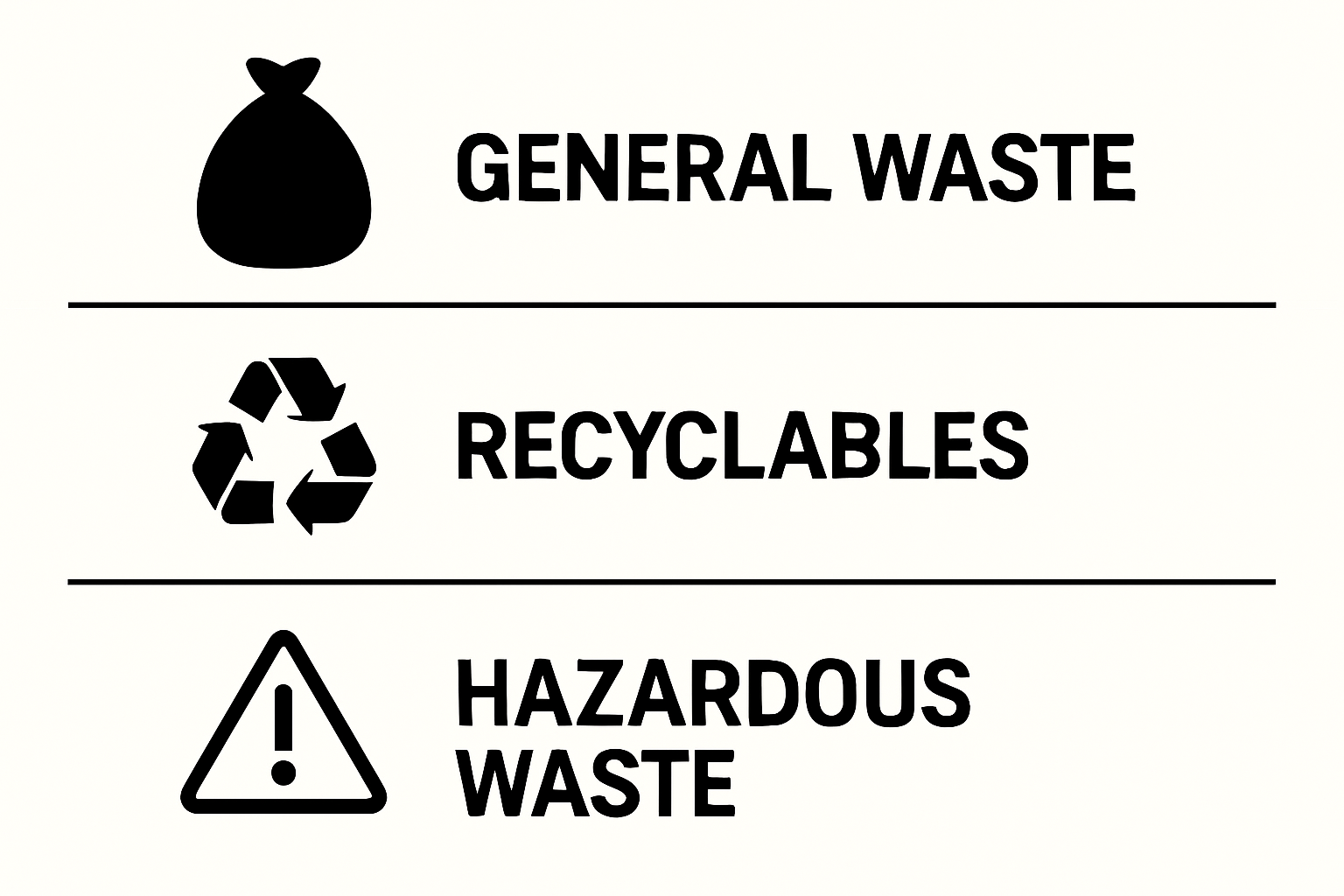
Typical components of general waste include:
- Packaging materials that are not easily recyclable
- Contaminated paper and cardboard
- Mixed plastic items
- Food-soiled containers
- Non-recyclable composite materials
Characteristics and Environmental Impact
General waste presents significant environmental challenges due to its mixed composition and limited recyclability. According to the Environment Agency’s National Packaging Waste Database, these materials often contribute substantially to landfill volumes and greenhouse gas emissions.
Key characteristics that define general waste include:
- Low sorting potential
- High contamination levels
- Minimal immediate recycling value
- Requirement for specialised disposal methods
Businesses and organisations must recognise that while general waste cannot be directly recycled, responsible management can help minimise its environmental footprint through advanced waste processing techniques such as energy recovery and controlled landfill strategies.
Below is a table summarising the typical characteristics of general waste to aid understanding of its environmental implications.
| Characteristic | Description |
|---|---|
| Low sorting potential | Difficult to separate out recyclable elements due to mixed and contaminated materials |
| High contamination levels | Often contains food or liquid residues, making recycling unviable |
| Minimal immediate recycling value | Cannot be processed by standard recycling facilities and must be specially disposed |
| Specialised disposal required | Necessitates landfill or incineration for safe and compliant management |
| Contributes to landfill volume | Largely ends up in landfill, occupying significant space |
| Compound environmental footprint | Releases methane and other greenhouse gases, further exacerbating climate concerns |
The Importance of Managing General Waste Effectively
Managing general waste effectively is a critical responsibility for businesses, local authorities, and organisations across the United Kingdom. The strategic approach to waste disposal goes far beyond mere compliance, representing a significant opportunity to reduce environmental impact and create sustainable operational practices.
Environmental and Economic Implications
Proper general waste management delivers substantial environmental and economic benefits. By implementing sophisticated waste handling strategies, organisations can significantly reduce their carbon footprint and contribute to national sustainability goals. Our comprehensive guide to general waste collection provides deeper insights into effective waste management techniques.
The environmental implications of poor waste management are profound:
- Increased greenhouse gas emissions
- Higher landfill volumes
- Greater resource depletion
- Potential contamination of soil and water systems
Regulatory Compliance and Strategic Advantages
According to the UK Government’s Resources and Waste Strategy, effective waste management is not just an environmental imperative but a legal requirement. Organisations that proactively manage their general waste can unlock significant strategic advantages, including reduced disposal costs, enhanced corporate reputation, and potential tax incentives.
Key strategic benefits include:
- Reduced waste disposal expenses
- Improved organisational sustainability credentials
- Enhanced compliance with environmental regulations
- Potential for resource recovery and circular economy participation
Businesses that view general waste management as a strategic opportunity rather than a mere administrative task are better positioned to navigate increasingly stringent environmental regulations and demonstrate corporate social responsibility.
The Environmental Impact of General Waste and its Management
General waste represents a significant environmental challenge, with far-reaching consequences for ecosystem health, resource consumption, and climate change mitigation.
Understanding the intricate relationship between waste generation and environmental degradation is crucial for developing sustainable management strategies.
Carbon Emissions and Climate Implications
The disposal of general waste contributes substantially to greenhouse gas emissions, particularly through landfill decomposition and incineration processes. Our comprehensive guide to waste management explores the complex dynamics of waste-related carbon footprints. According to the Department for Environment, Food & Rural Affairs (DEFRA), general waste management plays a critical role in national carbon reduction strategies.
Key environmental challenges associated with general waste include:
- Methane generation from landfill decomposition
- Direct carbon emissions from waste transportation
- Energy-intensive waste processing methods
- Loss of potential material recovery opportunities
Resource Depletion and Ecosystem Disruption
The improper management of general waste accelerates resource depletion and disrupts natural ecosystem balances. Materials discarded as general waste often represent lost opportunities for material recovery, circular economy participation, and sustainable resource utilisation.
Significant environmental impacts encompass:
- Increased extraction of virgin raw materials
- Habitat destruction from resource extraction
- Potential soil and water contamination
- Disruption of natural material cycles
Organisations and individuals must recognise that effective waste management transcends mere disposal, representing a critical intervention point for environmental conservation and sustainable development.
How General Waste is Collected, Transported, and Disposed Of
The process of managing general waste involves a complex network of collection, transportation, and disposal mechanisms designed to minimise environmental impact and maximise efficiency. Understanding these intricate systems is crucial for businesses and local authorities seeking responsible waste management solutions.
Collection Methodologies
General waste collection varies depending on the source and volume of waste generated. Our UK-wide general waste collection service offers comprehensive insights into different collection strategies. Local authorities and private waste management companies employ multiple approaches to gather general waste, ranging from residential kerbside collections to commercial bulk waste removal.
Key collection methods include:
- Scheduled municipal collections
- On-demand commercial waste pickup
- Centralised waste disposal centres
- Specialised skip and container services
- Mobile waste collection units
Transportation and Logistics
Once collected, general waste requires careful transportation to processing or disposal facilities. According to the House of Commons Library research, waste transportation is strictly regulated to ensure environmental safety and compliance with national waste management standards.
Critical transportation considerations encompass:
- Licensed waste carrier certification
- Route optimization for fuel efficiency
- Sealed containment to prevent spillage
- Tracking and documentation of waste movements
- Compliance with environmental protection regulations
The final stage involves disposing of general waste through methods such as landfill deposition or energy recovery, with increasing emphasis on minimising environmental consequences and maximising resource efficiency.
Best Practices: Reducing General Waste in Various Sectors
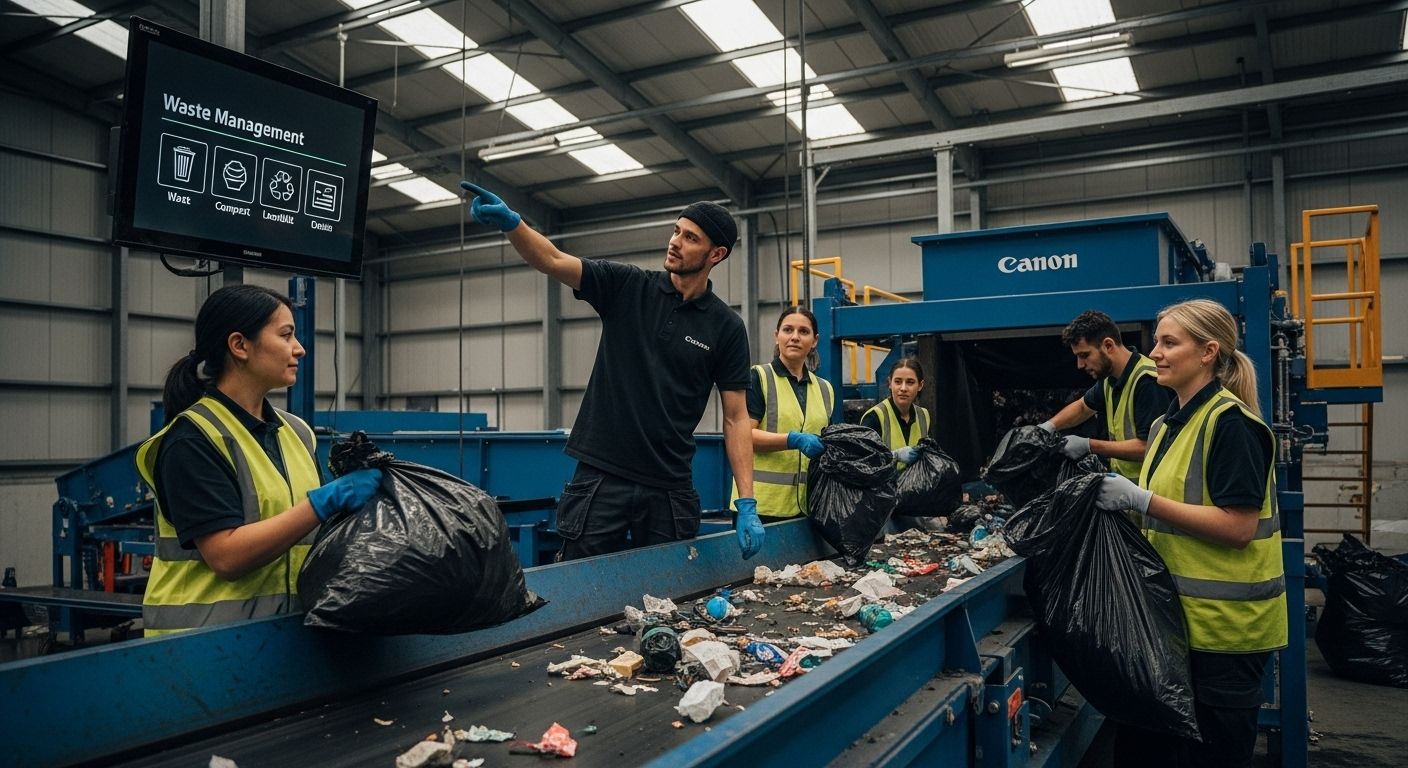
Reducing general waste requires targeted strategies tailored to specific industry contexts, recognising that waste generation and management vary significantly across different organisational environments. Implementing comprehensive waste reduction approaches demands nuanced understanding and sector-specific interventions.
Commercial and Office Sector Strategies
Office environments generate substantial general waste through paper, packaging, and disposable materials. Our comprehensive guide to waste reduction provides detailed insights into minimising organisational waste streams. Effective strategies focus on creating systematic approaches that fundamentally transform waste generation patterns.
Key waste reduction techniques include:
- Digital document management
- Implementing comprehensive recycling programmes
- Encouraging reusable office supplies
- Minimising single-use packaging
- Promoting a paperless workplace culture
Healthcare and Industrial Sector Approaches
According to UK government workplace waste guidelines, sectors with complex waste streams must develop sophisticated segregation and reduction methodologies. Healthcare and industrial environments face unique challenges in waste management, requiring specialized approaches that balance regulatory compliance with environmental responsibility.
Critical waste reduction considerations encompass:
- Implementing strict waste segregation protocols
- Investing in reusable medical/industrial equipment
- Developing circular economy principles
- Training staff in waste minimisation techniques
- Adopting advanced waste processing technologies
Successful waste reduction transcends mere disposal, representing a strategic approach to resource management that delivers environmental and economic benefits across diverse organisational contexts.
This table compares general waste reduction strategies across commercial, office, healthcare, and industrial sectors as described in the article.
| Sector | Key Waste Reduction Strategies |
|---|---|
| Commercial/Office | Digital document management, comprehensive recycling programmes, reusable office supplies, paperless workplace culture |
| Healthcare | Strict waste segregation, reusable medical equipment, staff training in minimisation, advanced processing technologies |
| Industrial | Segregation protocols, investment in reusable equipment, circular economy principles, technological waste reduction efforts |
Take Control of General Waste with a Smarter, Simpler Solution
Tired of managing unpredictable waste streams, high landfill costs, or struggling to stay compliant with the latest UK regulations? If you are facing difficulties sorting and disposing of general waste effectively, you are not alone. Poor handling of general waste can lead to unnecessary expenses, legal risks, and negative environmental impact for your business. Now is the perfect time to transform these challenges into opportunities. Discover how our Waste Collection Process for Businesses in the UK brings clarity and control to every stage, from collection to compliant disposal.

Take the next step toward dependable, hassle-free waste management. Book with Venture Waste Management and experience a streamlined, three-step booking process backed by a trusted nationwide network. For industry news, best practices, and further solutions tailored to your sector, visit our Waste Collection Network in the UK. Do not let general waste become a business burden. Act now for a cleaner, compliant future.
Frequently Asked Questions
What is general waste?
General waste, also known as residual waste, refers to materials that cannot be recycled or repurposed, typically destined for landfill or incineration. It includes a variety of non-hazardous items that do not meet specific recycling criteria.
What are the key characteristics of general waste?
General waste is characterised by its low sorting potential, high contamination levels, minimal immediate recycling value, and the need for specialised disposal methods.
How does general waste impact the environment?
The improper management of general waste contributes to significant environmental challenges, including increased greenhouse gas emissions, higher landfill volumes, and potential contamination of soil and water systems.
What are some effective strategies for managing general waste?
Effective general waste management strategies include implementing recycling programmes, encouraging the use of reusable items, and developing waste reduction techniques tailored to specific sectors, such as commercial or healthcare.


Leave a Reply
Want to join the discussion?Feel free to contribute!