
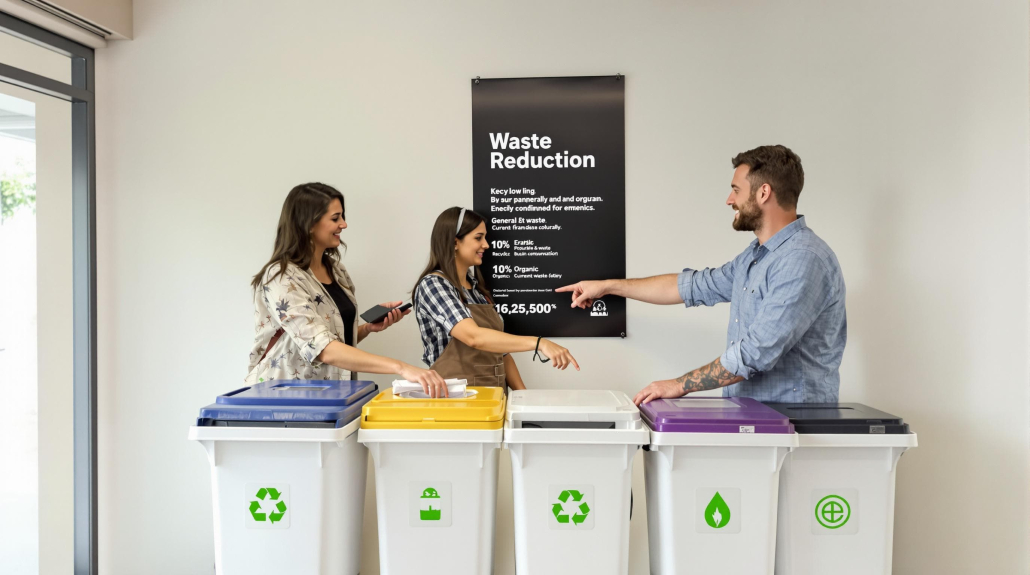
Waste Reduction for SMEs: Practical UK Strategies for 2025
Waste is costing UK businesses more than they realise. SMEs produce nearly 34 million tonnes of waste every year, much of it avoidable. Most firms assume slashing waste is expensive and complicated. Quite the opposite. The biggest savings come from simple, sector-specific tweaks that not only protect the environment but also save thousands of pounds in the process.
Table of Contents
- Understanding Waste Streams In Your Business
- Effective Solutions For Different SME Sectors
- Maximising Savings And Sustainability In 2025
- Choosing The Right UK Waste Management Partner
Quick Summary
| Takeaway | Explanation |
|---|---|
| Understand Your Waste Streams | Identify distinct waste categories such as general, recyclable, organic, and hazardous waste to implement targeted minimisation strategies. |
| Conduct Regular Waste Audits | Perform waste audits quarterly to track waste generation patterns, enabling effective strategies for reduction and cost savings of up to 20%. |
| Tailored Sector-Specific Solutions | Develop specific waste reduction approaches for sectors like retail, manufacturing, and professional services to effectively address unique challenges. |
| Leverage Technology for Innovation | Adopt advanced technologies such as AI-powered tracking and digital inventory management to optimise waste reduction efforts. |
| Choose the Right Waste Management Partner | Evaluate potential partners on compliance, technology, and sector-specific experience to ensure a strategic fit that enhances sustainability and reduces costs. |
Understanding Waste Streams in Your Business
Waste reduction for SMEs begins with a comprehensive understanding of the waste streams generated within your business operations. Every enterprise produces multiple types of waste, and identifying these streams is crucial for developing targeted waste minimisation strategies.

Identifying Your Business Waste Categories
Businesses typically generate several distinct waste categories that require different management approaches. Our comprehensive waste management guide suggests breaking down waste streams into key classifications:
- General Waste: Non-recyclable materials like contaminated packaging, mixed office waste, and general rubbish that cannot be recycled or repurposed.
- Recyclable Materials: Paper, cardboard, plastics, glass, and metals that can be processed and reused in manufacturing.
- Organic Waste: Food scraps, biodegradable materials from catering, landscaping, and agricultural operations.
- Hazardous Waste: Chemical substances, electronic equipment, batteries, and materials requiring specialised disposal methods.
Understanding these waste streams enables businesses to implement more precise and effective waste reduction techniques. According to WRAP UK, businesses generate approximately 33.9 million tonnes of waste annually, with significant potential for reduction and recycling.
Conducting a Waste Audit
A systematic waste audit provides critical insights into your organisation’s waste generation patterns. This process involves:
- Documenting all waste produced across different departments
- Measuring waste volume and weight for each category
- Identifying potential reduction opportunities
- Tracking waste disposal costs and environmental impact
Professional waste management consultants recommend conducting these audits quarterly to maintain an accurate understanding of your waste streams. By mapping out exactly what waste your business produces, you can develop targeted strategies to minimise waste generation and improve overall operational efficiency.
The financial implications of effective waste management are substantial. Research from DEFRA indicates that businesses can reduce waste management costs by up to 20% through strategic waste stream analysis and implementation of targeted reduction strategies.
Successful waste reduction is not just about environmental responsibility but also represents a significant opportunity for cost savings and operational improvement. By systematically understanding and addressing your business waste streams, you can create a more sustainable and economically efficient organisation.
To help clarify the four primary business waste categories and their typical examples, here is a summary table:
| Waste Category | Typical Examples | Management Approach |
|---|---|---|
| General Waste | Contaminated packaging, mixed office waste, rubbish | Standard disposal or landfill |
| Recyclable Materials | Paper, cardboard, plastics, glass, metals | Recycle through accredited streams |
| Organic Waste | Food scraps, landscaping debris, biodegradable waste | Composting or dedicated organics |
| Hazardous Waste | Chemicals, electronics, batteries | Specialised disposal and treatment |
Effective Solutions for Different SME Sectors

Waste reduction strategies are not one-size-fits-all. Different sectors require tailored approaches that address their unique waste generation challenges and operational constraints. Learn more about sector-specific waste management techniques to develop targeted waste minimisation strategies.
Retail and Hospitality Sector Waste Solutions
Retail and hospitality businesses face distinctive waste management challenges. According to WRAP UK, these sectors generate significant volumes of packaging, food waste, and mixed materials. Key strategies include:
- Packaging Reduction: Implementing minimal packaging designs and transitioning to recyclable or biodegradable alternatives.
- Food Waste Management: Developing precise inventory control systems and partnering with food redistribution networks.
- Circular Economy Approaches: Creating closed-loop systems where packaging and materials are continuously reused or recycled.
Restaurants can reduce food waste by 30-50% through advanced inventory management and strategic donation programmes. Some businesses have successfully implemented digital tracking systems that monitor food consumption patterns and adjust purchasing accordingly.
Manufacturing and Industrial Waste Minimisation
Manufacturing sectors require comprehensive waste reduction strategies that address complex production processes. Research from DEFRA highlights several critical approaches:
- Process Redesign: Restructuring production lines to minimise material waste
- Advanced Recycling Technologies: Implementing on-site material recovery systems
- Waste-to-Energy Conversion: Transforming non-recyclable waste into energy resources
Industrial businesses can achieve significant waste reduction by conducting thorough waste stream audits and investing in innovative recycling technologies. Some manufacturers have reported waste reduction of up to 40% through systematic process improvements and material recovery techniques.
Professional Services and Office-Based Sectors
Office environments might seem low-waste, but digital and physical waste accumulation can be substantial. Strategic approaches include:
- Digital Document Management: Reducing paper consumption through digital workflows
- Electronic Waste Recycling: Implementing certified e-waste disposal programmes
- Sustainable Office Supply Procurement: Selecting suppliers with robust sustainability credentials
Professional services can significantly reduce waste by transitioning to cloud-based document systems and implementing strict digital document management protocols. The environmental impact extends beyond immediate waste reduction, contributing to broader carbon footprint minimisation efforts.
By recognising the unique waste generation patterns within different sectors, SMEs can develop targeted, effective waste reduction strategies that not only minimise environmental impact but also drive operational efficiency and potential cost savings.
Below is a summary table comparing key waste reduction strategies across the three main SME sectors discussed:
| SME Sector | Main Waste Types | Key Reduction Strategies | Potential Waste Reduction |
|---|---|---|---|
| Retail & Hospitality | Packaging, food waste, mixed waste | Minimal packaging, inventory control, circular economy | 30-50% (food waste) |
| Manufacturing & Industrial | Processing waste, materials, non-recyclables | Process redesign, recycling tech, waste-to-energy | Up to 40% (overall) |
| Professional Services & Offices | Paper, e-waste, office supplies | Digital workflow, e-waste recycling, sustainable procurement | Substantial (paper/e-waste) |
Maximising Savings and Sustainability in 2025
As UK businesses enter 2025, waste reduction strategies are no longer optional but a critical component of financial and environmental management. Explore comprehensive waste management strategies that simultaneously reduce costs and environmental impact.
Financial Benefits of Waste Reduction
Implementing targeted waste reduction approaches delivers substantial economic advantages for SMEs. According to WRAP UK, businesses can save up to £5,000 annually by reducing waste generation and improving resource efficiency.
Key financial benefits include:
- Direct Cost Savings: Reducing waste disposal expenses and purchasing fewer raw materials
- Operational Efficiency: Streamlining production processes and minimising unnecessary resource consumption
- Tax Incentives: Potential government grants and reduced environmental taxation for sustainable practices
The Environmental Protection Agency highlights that strategic waste management can reduce operational costs by 10-20% through systematic resource optimization.
Sustainable Technology and Innovation
Technological advancements are transforming waste reduction strategies for SMEs. Emerging solutions include:
- AI-powered waste tracking systems
- Advanced recycling technologies
- Digital inventory management platforms
- Real-time waste stream analytics
These innovations enable businesses to:
- Monitor waste generation in real-time
- Identify inefficiencies quickly
- Develop data-driven waste reduction strategies
- Automate recycling and resource recovery processes
Long-Term Strategic Planning
Successful waste reduction requires comprehensive, forward-thinking approaches. SMEs should:
- Develop multi-year sustainability roadmaps
- Set measurable waste reduction targets
- Invest in employee training and engagement
- Regularly review and update waste management strategies
By adopting a holistic approach to waste reduction, SMEs can create competitive advantages. Companies demonstrating strong environmental credentials attract environmentally conscious customers and investors, potentially increasing market share and brand reputation.
The journey towards waste reduction is not just about minimising environmental impact but creating more resilient, efficient, and financially robust businesses. As regulatory pressures increase and sustainability becomes a key business differentiator, SMEs that proactively embrace waste reduction will be best positioned for success in 2025 and beyond.
Choosing the Right UK Waste Management Partner
Selecting an appropriate waste management partner represents a critical strategic decision for SMEs seeking comprehensive waste reduction solutions. Explore our comprehensive waste collection network to understand the essential criteria for choosing the right partner.
Key Selection Criteria for Waste Management Providers
Identifying a suitable waste management partner requires careful evaluation across multiple dimensions. According to DEFRA, businesses should consider the following critical factors:
- Compliance and Certification: Verify providers hold current waste management licenses and environmental certifications
- Technology and Innovation: Assess the provider’s technological capabilities for waste tracking and recycling
- Sector-Specific Experience: Select partners with demonstrable expertise in your specific industry segment
- Transparent Reporting: Ensure comprehensive waste stream documentation and regular performance reporting
Research from WRAP UK indicates that businesses working with specialised waste management partners can reduce waste disposal costs by up to 25% and improve overall environmental performance.
Evaluating Financial and Environmental Impact
Beyond basic waste collection, the right partner should offer strategic value across financial and sustainability metrics. Key evaluation points include:
- Detailed waste stream analysis capabilities
- Cost-effectiveness of waste management solutions
- Demonstrated commitment to circular economy principles
- Proven track record of emission reduction
- Customisable waste management approaches
The Environmental Services Association reports that advanced waste management partnerships can help SMEs reduce carbon emissions by up to 40% through innovative recycling and resource recovery techniques.
Due Diligence and Long-Term Partnership Considerations
Choosing a waste management partner extends far beyond immediate operational needs. Successful partnerships require:
- Comprehensive initial waste stream assessment
- Flexibility to adapt to changing business requirements
- Collaborative approach to continuous improvement
- Regular performance reviews and strategy refinement
- Alignment with broader sustainability objectives
Businesses should approach waste management partnerships as strategic relationships, not merely transactional services. The most effective partnerships involve ongoing collaboration, technology integration, and shared sustainability goals.
By meticulously evaluating potential waste management partners against these comprehensive criteria, SMEs can develop robust, cost-effective waste reduction strategies that contribute to both environmental sustainability and operational efficiency. The right partnership transforms waste management from a necessary expense to a strategic competitive advantage in the evolving business landscape of 2025.
Frequently Asked Questions
What are the main waste categories that SMEs should identify?
SMEs should identify four main waste categories: general waste, recyclable materials, organic waste, and hazardous waste to implement targeted reduction strategies.
How often should SMEs conduct a waste audit?
It is recommended that SMEs conduct a waste audit quarterly to track waste generation patterns and identify potential reduction opportunities.
What waste reduction strategies are effective for the retail and hospitality sectors?
Effective strategies for the retail and hospitality sectors include reducing packaging, managing food waste through inventory control, and implementing circular economy approaches.
How can technology aid in waste reduction for SMEs?
Technology aids in waste reduction by providing tools such as AI-powered tracking systems, digital inventory management platforms, and advanced recycling technologies, enabling real-time monitoring and efficient resource management.
Cut Business Waste and Boost Savings in 2025 with Venture Waste
Are you struggling with rising waste disposal costs and complex compliance requirements? The practical solutions in our article highlight just how much SMEs can save by adopting targeted waste reduction and sector-specific strategies. Yet, putting these plans into action can be daunting when you are managing multiple waste streams or trying to stay on top of regulations. Choosing a partner who understands the intricacies of the waste collection process for UK businesses in 2025 is the quickest route to reliable results.

Let Venture Waste Management simplify your next step towards a cleaner, more efficient operation. Our team takes you from first contact to final confirmation—making it easy for you to book compliant waste collections, handle confidential materials or streamline recycling in your business. Do not let inefficiencies or regulatory worries hold you back. Start your journey today by exploring our comprehensive collection network or visit Venture Waste Management to see how quickly you can move towards real savings and environmental progress. Act now if you want next financial quarter’s figures to look better than the last.
Recommended
- How UK Businesses Can Save Money on Waste Management in 2025 – Venture Waste
- save money on waste management Archives – Venture Waste
- reducing business waste Archives – Venture Waste
- how to reduce waste Archives – Venture Waste
- Commercial Removals Process Guide 2025 for North East Moves | Schott Removals
- How to Enhance Personal Productivity in 2025: Strategies for All Professionals – Peuneo


Leave a Reply
Want to join the discussion?Feel free to contribute!