

Why Segregate Waste: Complete Guide for UK Businesses
More than 200 million tonnes of waste are generated in the UK each year, yet a large share ends up in the wrong place due to poor segregation. For businesses, understanding how to separate waste goes beyond ticking a compliance box. It opens the door to lower costs, fewer penalties, and environmental gains that matter. This article sheds light on how smart waste segregation turns a routine task into a strategic win for both company and planet.
Table of Contents
- Understanding Waste Segregation And Its Purpose
- Key Waste Categories And Distinctions
- Legal Requirements For Waste Separation In The UK
- Environmental And Financial Benefits Of Segregation
- Common Challenges And How To Overcome Them
Key Takeaways
| Point | Details |
|---|---|
| Waste Segregation is Essential | Systematically separating waste types drives efficient recycling, lowers landfill use, and supports a circular economy. |
| Legal Compliance is Crucial | Adhering to UK waste regulations is necessary to avoid penalties and protect the environment. |
| Environmental and Financial Benefits | Proper waste management reduces costs and creates revenue opportunities from recyclables while minimizing ecological harm. |
| Addressing Challenges is Key | Investing in staff training and upgrading infrastructure can help overcome operational obstacles to effective waste segregation. |
Understanding Waste Segregation and Its Purpose
Waste segregation represents a critical strategy for businesses committed to responsible environmental management. According to the gov.uk 2021 report, proper waste management isn’t just an operational task – it’s a fundamental approach to reducing environmental harm and supporting sustainable economic growth.
At its core, waste segregation involves systematically separating different types of waste at the point of generation. This process allows for more efficient recycling, reduces contamination, and minimises the volume of waste sent to landfills. By implementing robust segregation practices, businesses can significantly decrease their environmental footprint while potentially reducing waste disposal costs.
The key objectives of waste segregation include:
- Maximising recycling potential
- Reducing landfill waste
- Preventing hazardous materials from contaminating recyclable streams
- Supporting the principles of a circular economy
As WRAP highlights, effective waste segregation is not just an environmental imperative but a strategic business decision. Companies that invest in comprehensive waste management systems demonstrate corporate responsibility, potentially improving their brand reputation and reducing long-term operational costs. This approach transforms waste from a disposal challenge into a resource optimization opportunity, particularly for businesses in industrial regions like Newcastle, Durham, and Sunderland where manufacturing and logistics play significant economic roles.
By understanding and implementing comprehensive waste segregation strategies, businesses can contribute meaningfully to national sustainability goals while simultaneously improving their own operational efficiency. Improving Waste Segregation: A Step-by-Step Guide provides additional insights for companies looking to enhance their waste management practices.
Key Waste Categories and Distinctions
Understanding the nuanced landscape of waste categories is fundamental for businesses seeking effective waste management strategies. According to the gov.uk 2021 report, waste can be categorized into several critical classifications that demand distinct handling approaches.
Waste Categories typically include:
- General Waste: Non-hazardous materials suitable for standard disposal
- Recyclable Waste: Materials that can be processed and reused
- Hazardous Waste: Materials posing potential environmental or health risks
- Organic Waste: Biodegradable materials from biological sources
As WRAP highlights, businesses must develop sophisticated waste stream management strategies. Different waste types require unique disposal methods to minimise environmental impact and maximise resource efficiency. For instance, hazardous waste like chemical residues, electronic equipment, and batteries cannot be mixed with general waste and demand specialised treatment.
Businesses operating in industrial regions such as Newcastle, Sunderland, and Durham must be particularly vigilant about waste categorisation. Incorrect waste segregation can result in significant environmental penalties and potential legal complications. Hazardous Waste Regulations UK 2025: Essential Guide for Businesses provides comprehensive insights into navigating these complex regulatory landscapes.
Effective waste management begins with precise identification and segregation.
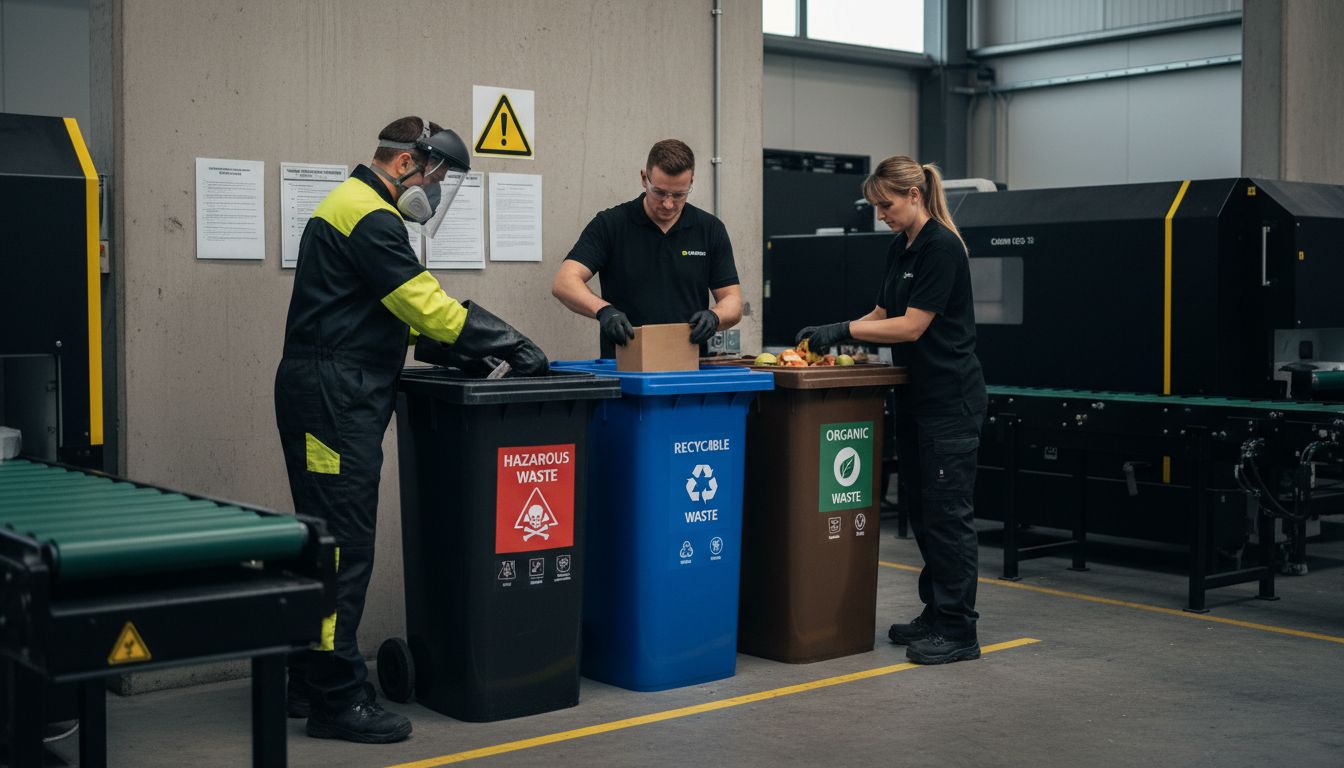 By understanding these key waste categories, businesses can transform waste from an environmental challenge into an opportunity for sustainable practice, reducing disposal costs and contributing to broader circular economy objectives.

Legal Requirements for Waste Separation in the UK
Businesses across the United Kingdom face increasingly stringent legal obligations regarding waste management and segregation. According to the gov.uk 2021 report, companies must comply with the Waste Framework Directive and Landfill Directive, which establish comprehensive guidelines for responsible waste handling.
Key legal requirements for businesses include:
- Mandatory waste separation at source
- Proper documentation of waste streams
- Compliance with specific disposal regulations
- Regular waste audits and reporting
- Prevention of cross-contamination between waste categories
The Local Government Association emphasizes that upcoming waste reforms will further tighten regulatory frameworks. Businesses in industrial regions like Newcastle, Durham, and Sunderland must be particularly proactive in understanding and implementing these legal standards. Non-compliance can result in substantial financial penalties and potential legal consequences.
Navigating these complex regulations requires a systematic approach to waste management. Companies must develop robust internal processes that ensure complete adherence to national waste separation guidelines. Waste Disposal Legal Requirements UK 2025: What Businesses Must Know provides comprehensive insights into the evolving legal landscape, helping businesses stay ahead of regulatory changes and minimize potential risks.
Ultimately, legal compliance in waste separation is not just about avoiding penalties. It represents a critical commitment to environmental sustainability, resource conservation, and responsible business practices. By understanding and implementing these legal requirements, businesses can contribute positively to the UK’s broader environmental goals while protecting themselves from potential regulatory challenges.
Environmental and Financial Benefits of Segregation
Waste segregation represents a strategic approach that delivers substantial environmental and financial advantages for businesses. According to the gov.uk 2021 report, proper waste management can simultaneously reduce environmental harm and generate significant economic opportunities.
Environmental Benefits include:
- Reduced landfill waste
- Lower greenhouse gas emissions
- Conservation of natural resources
- Minimised ecological disruption
- Enhanced biodiversity protection
WRAP highlights that businesses implementing comprehensive waste segregation strategies can achieve remarkable resource efficiency. For companies in industrial regions like Newcastle, Durham, and Sunderland, these practices translate into tangible environmental contributions while simultaneously creating potential revenue streams from recyclable materials.
Financially, waste segregation offers multiple advantages. Businesses can reduce disposal costs, generate income from recycled materials, and potentially qualify for environmental incentives. Proper sorting minimises waste management expenses and creates opportunities for resource recovery. Understanding the Importance of Waste Segregation provides deeper insights into these economic and environmental strategies.
Ultimately, waste segregation is not just an environmental responsibility but a smart business strategy. By transforming waste from a cost centre into a potential revenue source, companies can simultaneously demonstrate corporate social responsibility and improve their bottom line. The interconnected environmental and financial benefits make waste segregation a crucial practice for forward-thinking businesses committed to sustainable growth.
Common Challenges and How to Overcome Them
Businesses implementing waste segregation strategies frequently encounter complex operational challenges that require strategic solutions. The Local Government Association highlights that these obstacles often stem from infrastructural limitations and increased operational complexities.
Key Challenges in Waste Segregation include:
- Limited staff understanding of waste categorisation
- Insufficient segregation infrastructure
- Higher initial implementation costs
- Complex regulatory compliance requirements
- Logistical coordination difficulties
WRAP recommends comprehensive approaches to addressing these challenges. For businesses in industrial regions like Newcastle, Durham, and Sunderland, this means investing in targeted staff training, upgrading waste management systems, and developing clear internal protocols. Educational programs can significantly enhance employee awareness and commitment to effective waste segregation practices.
Practical strategies for overcoming these challenges involve a multi-faceted approach. Companies should consider implementing robust training programs, investing in clear signage and colour-coded waste bins, and developing systematic waste audit processes. Technology can play a crucial role, with digital tracking systems helping monitor waste streams and identify potential improvements. General Waste vs Recycling: Business Guide for 2025 offers additional insights into navigating these complex waste management landscapes.
Successful waste segregation is not about perfection but consistent improvement. By recognising challenges as opportunities for innovation, businesses can transform waste management from a compliance requirement into a strategic advantage. Continuous learning, investment in infrastructure, and a commitment to employee education are the cornerstones of effective waste segregation strategies.
Take Control of Your Waste Segregation with Venture Waste Management
Proper waste segregation is essential for legal compliance and environmental responsibility. This article highlights the challenges businesses face in sorting general waste, hazardous materials, and recyclables efficiently. At Venture Waste, we understand these pain points and offer tailored solutions that simplify waste segregation for UK businesses. From reliable general waste collection to specialised hazardous waste handling, our services align perfectly with your goals to reduce environmental impact and avoid costly penalties.

Ready to transform your waste management strategy? Discover how our Waste Collection Process in the UK for Businesses 2025 and How the Waste Collection Network in UK Serves Businesses in 2025 ensure seamless, compliant waste collection tailored to your needs. Visit Venture Waste Management today to make waste segregation easier, compliant and more cost-effective for your business. Act now to benefit your business and the environment.
Frequently Asked Questions
What is waste segregation and why is it important?
Waste segregation is the process of separating different types of waste at the point of generation. It is important because it maximizes recycling potential, reduces landfill waste, prevents contamination, and supports a circular economy.
What are the main categories of waste?
The main categories of waste include General Waste (non-hazardous), Recyclable Waste (materials that can be reused), Hazardous Waste (materials that pose health or environmental risks), and Organic Waste (biodegradable materials).
What legal requirements must businesses follow for waste segregation?
Businesses must follow the Waste Framework Directive and Landfill Directive, which include mandatory waste separation at source, proper documentation of waste streams, compliance with disposal regulations, and conducting regular waste audits.
What are the environmental and financial benefits of waste segregation?
The environmental benefits of waste segregation include reduced landfill waste, lower greenhouse gas emissions, and conservation of natural resources. Financially, it can reduce disposal costs, generate income from recycled materials, and potentially qualify businesses for environmental incentives.


Leave a Reply
Want to join the discussion?Feel free to contribute!