

Why Recycle Confidential Waste: Business Benefits in 2025

Confidential waste might sound like a minor office chore, but it holds far more weight than a trip to the shredder. Imagine this. A single data breach from careless disposal could set your business back by up to £17.5 million or 4 percent of global turnover in fines. Most think of recycling as an environmental gesture, yet the surprising reality is that recycling confidential waste is a serious business advantage. Done properly, it can safeguard reputation, generate savings and edge out competitors who do not see the threat lurking in every discarded file.
Table of Contents
- Understanding Confidential Waste In The Workplace
- Business Risks Of Improper Confidential Waste Disposal
- Key Benefits Of Recycling Confidential Waste
- Best Practices For Secure Confidential Waste Recycling
Quick Summary
| Takeaway | Explanation |
|---|---|
| Understanding Confidential Waste is Crucial | Businesses must identify and secure sensitive information, including physical documents and digital media, to implement effective waste management strategies. |
| Ignoring Proper Disposal Can Lead to Significant Risks | Improper incidents can result in legal penalties, financial consequences, and reputational damage, as businesses can face fines and data breaches. |
| Recycling Offers Strategic Business Advantages | Confidential waste recycling not only supports environmental sustainability but can also generate cost efficiencies and enhance corporate reputation through compliance with regulations. |
| Implement Best Practices for Security | Conduct comprehensive waste assessments, establish secure destruction protocols, and foster an organisational culture that prioritises information security to mitigate risks. |
Understanding Confidential Waste in the Workplace
Confidential waste represents a critical challenge for businesses across various sectors, encompassing documents, digital media, and materials containing sensitive information that could compromise organisational security if improperly discarded. Understanding what constitutes confidential waste and its potential risks is fundamental for implementing robust waste management strategies.
Defining Confidential Waste in Modern Workplaces
Confidential waste includes a wide range of materials containing sensitive data that must be securely destroyed. These materials typically involve:
- Personal Information: Employee records, customer details, medical files
- Financial Documents: Bank statements, invoices, payroll records
- Legal Papers: Contracts, legal correspondence, proprietary business agreements
- Digital Media: Hard drives, USB drives, backup tapes, computer equipment
The scope of confidential waste extends far beyond simple paper documents. Modern workplaces generate multiple forms of sensitive information across physical and digital platforms, requiring comprehensive destruction strategies that protect organisational integrity.
Risks of Improper Confidential Waste Management
Neglecting proper confidential waste disposal exposes businesses to significant legal, financial, and reputational risks. Data protection regulations like the UK General Data Protection Regulation (GDPR) mandate strict protocols for handling sensitive information. Learn more about confidential waste risk management to understand the comprehensive landscape of potential consequences.
Potential risks include:
- Legal Penalties: Substantial fines for non-compliance with data protection laws
- Data Breaches: Potential exposure of sensitive corporate or personal information
- Identity Theft: Criminals can reconstruct identities from improperly discarded documents
- Corporate Espionage: Competitive intelligence gathering through discarded materials
Businesses must recognize that confidential waste management is not merely an administrative task but a critical component of organisational risk mitigation. Implementing secure disposal processes protects not just the company’s interests but also those of its employees and clients.
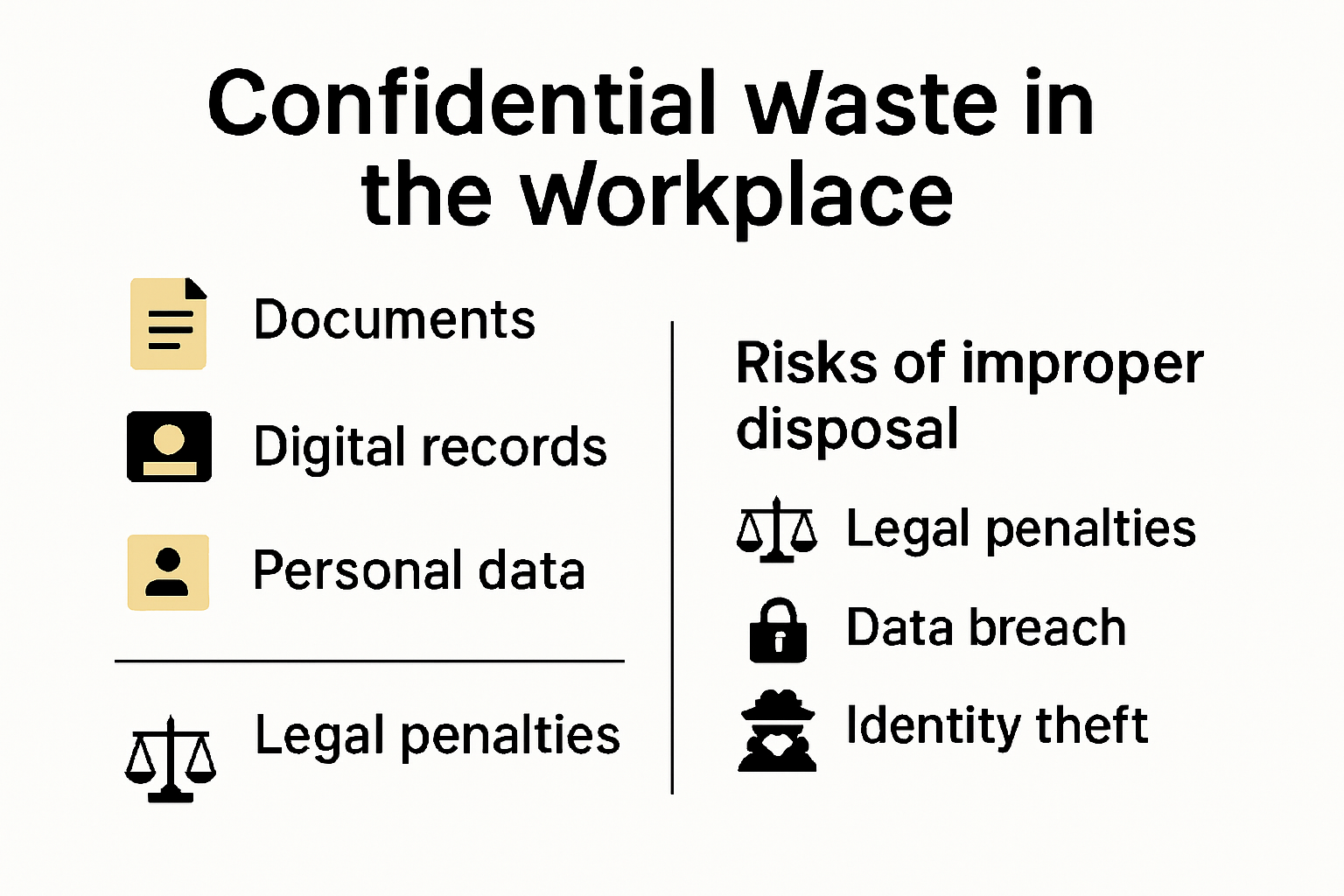
The complexity of modern confidential waste management requires a strategic approach that combines technological solutions, employee training, and partnerships with specialized waste disposal services. By developing a comprehensive understanding of what constitutes confidential waste and the potential risks associated with its mishandling, organisations can create robust protection mechanisms that safeguard their most valuable asset: information.
Effective confidential waste management is an ongoing process that demands continuous evaluation, adaptation to emerging technologies, and a proactive approach to potential security vulnerabilities. Businesses that invest in understanding and implementing rigorous waste disposal protocols will significantly reduce their exposure to potential data-related risks.
Business Risks of Improper Confidential Waste Disposal
Improper confidential waste disposal represents a minefield of potential business risks that can devastate organisational reputation, financial stability, and legal standing. While many businesses underestimate the consequences of negligent waste management, the reality is that seemingly minor oversights can trigger catastrophic cascading effects.
Financial and Legal Consequences
The financial implications of improper confidential waste disposal are profound and multifaceted. Data protection regulations like the UK General Data Protection Regulation (GDPR) impose strict penalties for non-compliance. Explore our comprehensive guide to risk management to understand the full spectrum of potential legal challenges.
Businesses can face substantial financial penalties that can range from £8,000 to £17.5 million or 4% of annual global turnover, whichever is higher. These fines are not merely punitive but serve as a stark warning about the critical importance of secure information disposal.
Legal risks extend beyond monetary penalties. Organisations may encounter:
- Regulatory Investigations: Comprehensive audits that can disrupt business operations
- Potential Litigation: Civil claims from affected individuals or entities
- Professional Reputation Damage: Long-term credibility erosion in competitive markets
Reputational and Competitive Risks
Beyond immediate financial consequences, improper confidential waste disposal can trigger catastrophic reputational damage. In an era of heightened digital transparency, a single data breach can rapidly escalate into a public relations nightmare that undermines years of carefully built corporate trust.
Competitive intelligence can be inadvertently leaked through poorly managed waste streams. Discarded documents, digital media, or hardware might contain sensitive strategic information that could be exploited by competitors or malicious actors. The potential for corporate espionage increases exponentially when waste management protocols are weak or inconsistent.
Customer and stakeholder confidence can be irreparably damaged. Research indicates that 65% of consumers would potentially cease doing business with an organisation following a data breach, highlighting the profound long-term risks of inadequate confidential waste management.
Operational and Strategic Vulnerabilities
Improper confidential waste disposal creates significant operational vulnerabilities. Sensitive information leakage can compromise ongoing business negotiations, reveal strategic plans, expose employee personal data, and potentially breach contractual confidentiality agreements.
Critical operational risks include:
- Strategic Plan Exposure: Potential compromise of future business strategies
- Intellectual Property Risks: Unintended disclosure of proprietary innovations
- Competitive Intelligence Leakage: Inadvertent sharing of sensitive business information
Businesses must recognize that confidential waste disposal is not a peripheral administrative function but a critical strategic imperative. Implementing robust, comprehensive waste management protocols is no longer optional but a fundamental requirement for organisational resilience and integrity.
The landscape of information security is continuously evolving, demanding proactive, adaptive approaches to waste management. Organisations that invest in sophisticated, secure disposal mechanisms will not only mitigate risks but also demonstrate a commitment to professional excellence and stakeholder protection.
Key Benefits of Recycling Confidential Waste

Recycling confidential waste represents a strategic approach that extends far beyond simple disposal, offering businesses comprehensive advantages that align with environmental sustainability, regulatory compliance, and corporate responsibility. By implementing a robust confidential waste recycling strategy, organisations can transform a potentially risky administrative task into a valuable business opportunity.
Environmental and Sustainability Advantages
Confidential waste recycling contributes significantly to environmental conservation efforts. Traditional disposal methods often involve landfill dumping or incineration, which generate substantial carbon emissions and environmental degradation. Discover sustainable waste management solutions that can help your business reduce its ecological footprint.
The environmental benefits of confidential waste recycling include:
- Carbon Footprint Reduction: Minimising waste sent to landfills
- Resource Conservation: Enabling material recovery and reuse
- Circular Economy Contribution: Supporting sustainable waste management practices
Businesses that prioritise recycling demonstrate a commitment to environmental stewardship, which can enhance their corporate image and appeal to environmentally conscious stakeholders and consumers.
Economic and Operational Benefits
Beyond environmental advantages, confidential waste recycling offers substantial economic benefits. By partnering with specialized recycling services, businesses can transform waste management from a cost centre into a potential revenue stream. Secure destruction and material recovery processes can generate value through material resale and reduced disposal costs.
Key economic advantages include:
- Cost Efficiency: Reducing waste disposal expenses
- Potential Revenue: Generating income from recycled materials
- Operational Streamlining: Implementing more efficient waste management processes
Compliance and Corporate Reputation
Confidential waste recycling is not merely an environmental initiative but a critical component of regulatory compliance and corporate reputation management. Modern businesses are increasingly evaluated on their commitment to responsible waste management and data protection.
Compliance and reputational benefits encompass:
- Regulatory Alignment: Meeting data protection and environmental regulations
- Enhanced Corporate Image: Demonstrating commitment to sustainability
- Stakeholder Trust: Building confidence through responsible waste management
Businesses that integrate comprehensive confidential waste recycling strategies position themselves as forward-thinking, responsible organisations. This approach mitigates risks, supports environmental goals, and creates tangible economic value.
The evolving landscape of waste management demands innovative, holistic approaches. Confidential waste recycling represents a sophisticated solution that addresses security, environmental, and economic considerations simultaneously. By viewing waste not as a problem to be eliminated, but as a resource to be managed intelligently, organisations can unlock significant strategic advantages.
Best Practices for Secure Confidential Waste Recycling
Secure confidential waste recycling demands a comprehensive, multilayered approach that integrates technological solutions, organisational protocols, and rigorous employee training. Businesses must develop sophisticated strategies that protect sensitive information throughout the entire disposal process while maintaining environmental responsibility.
Comprehensive Waste Assessment and Classification
Effective confidential waste recycling begins with meticulous waste assessment and classification. Explore our detailed risk management guide to understand the nuanced approach required for secure information disposal.
Organisations should implement a systematic classification process that categorizes waste based on:
- Sensitivity Level: Stratifying documents and media by confidentiality
- Material Composition: Identifying recyclable components
- Destruction Requirements: Determining appropriate destruction methods
- Regulatory Compliance: Ensuring alignment with data protection standards
This granular approach enables businesses to develop targeted recycling strategies that balance security concerns with environmental objectives.
Secure Destruction and Recycling Protocols
Implementing robust destruction and recycling protocols is crucial for protecting sensitive information. Best practices include:
- Certified Destruction Services: Partnering with accredited waste management providers
- Chain of Custody Documentation: Maintaining transparent tracking mechanisms
- Tamper-Proof Containers: Using secure collection receptacles
- Witnessed Destruction Processes: Implementing verification procedures
- Digital Sanitization: Ensuring complete data elimination from electronic media
Businesses must develop comprehensive procedures that cover physical documents, digital storage devices, and other potential information carriers. This approach minimizes the risk of unauthorized information access during the recycling process.
Employee Training and Organisational Culture
Successful confidential waste recycling extends beyond technical solutions. Organisations must cultivate a culture of information security that empowers employees to become active participants in secure waste management.
Key training components should include:
- Security Awareness: Understanding potential information risks
- Proper Disposal Techniques: Recognizing appropriate waste handling methods
- Compliance Requirements: Comprehending legal and regulatory obligations
- Reporting Mechanisms: Establishing clear protocols for potential security breaches
By creating a holistic approach that combines technological solutions, rigorous protocols, and employee education, businesses can transform confidential waste recycling from a potential vulnerability into a strategic asset. The most successful organisations will view this process not as a compliance requirement, but as an opportunity to demonstrate commitment to security, sustainability, and responsible business practices.
The landscape of information security continues to evolve, demanding adaptive, innovative approaches to waste management. Businesses that invest in comprehensive, forward-thinking confidential waste recycling strategies will position themselves as leaders in responsible corporate governance.
Frequently Asked Questions
What is confidential waste?
Confidential waste refers to any material that contains sensitive information that, if disclosed, could harm an individual or organisation. This includes documents, digital media, and any materials containing personal or proprietary data.
Why is recycling confidential waste important for businesses?
Recycling confidential waste not only supports environmental sustainability but also mitigates risks associated with data breaches. Proper disposal protects a business’s reputation and can lead to financial savings and compliance with legal regulations.
What are the risks of improper confidential waste disposal?
Improper disposal can lead to severe consequences, including substantial legal penalties, data breaches, reputational damage, and operational vulnerabilities. Businesses may face fines, litigation, and loss of stakeholder trust.
How can businesses implement secure confidential waste recycling practices?
Businesses should conduct a comprehensive waste assessment, establish secure destruction and recycling protocols, and invest in employee training. Collaborating with certified waste management providers ensures that sensitivity and compliance are maintained throughout the recycling process.
Protect Your Business and Reputation with Secure Confidential Waste Recycling
Are you worried about data breaches, legal fines or reputational damage from mishandling confidential waste? You are not alone. As highlighted in this article, ignoring secure recycling places your business at serious risk while effective solutions can turn waste management into a strategic advantage. Explore our confidential waste solutions to meet strict data protection standards and safeguard what matters most.

Every careless disposal is a potential threat to your operations and reputation. Do not wait until a costly mistake forces your hand. Visit Venture Waste Management and see how easy it is to book hassle-free collection, get full legal compliance and embrace sustainability today. Take the next step towards peace of mind and business success.


Leave a Reply
Want to join the discussion?Feel free to contribute!