

Why Recycle Batteries – Protecting UK Health and Environment
More than 40,000 tonnes of batteries are disposed of every year in British landfill sites, creating urgent environmental and compliance concerns for facilities managers. Staying ahead of battery waste is a growing challenge for UK healthcare and educational institutions as regulations tighten and sustainability targets rise. This guide highlights practical solutions to help your organization manage battery recycling efficiently, safeguarding public health and ensuring you meet British legal responsibilities.
Table of Contents
- Understanding Battery Waste And Its Impact
- Types Of Batteries And Their Hazards
- Uk Laws On Battery Recycling Explained
- Environmental And Health Risks From Improper Disposal
- Efficient Battery Recycling Solutions For Institutions
Key Takeaways
| Point | Details |
|---|---|
| Environmental Challenge | Battery waste poses significant risks to ecosystems and public health, necessitating effective recycling frameworks. |
| Hazardous Types | Different battery types present unique hazards, with lithium-ion batteries highlighting the need for careful handling due to fire and toxic emission risks. |
| UK Legal Framework | The UK has strict regulations for battery recycling, mandating compliance from consumers, businesses, and manufacturers to prevent environmental pollution. |
| Recycling Solutions | Institutions are encouraged to adopt advanced recycling strategies to manage battery waste efficiently and contribute to sustainability goals. |
Understanding Battery Waste and Its Impact
Battery waste represents a significant environmental challenge in the United Kingdom, with increasing volumes of discarded batteries posing substantial risks to ecological systems and public health. The systematic review from ScienceDirect highlights the urgent need for comprehensive battery recycling frameworks that can effectively manage waste throughout its lifecycle.
The complexity of battery waste extends beyond simple disposal. Different battery types contain varied chemical compositions that can release toxic materials into soil and water systems when improperly discarded. Lithium-ion batteries, increasingly common in electronic devices and electric vehicles, present particular challenges due to their complex material structure and potential environmental contamination risks. The Faraday Institution’s research underscores the importance of developing a robust battery recycling industry that can transform waste into valuable resources while minimising ecological damage.
Primary environmental concerns surrounding battery waste include heavy metal leaching, groundwater contamination, and resource depletion. Proper recycling can mitigate these risks by recovering critical materials, reducing mining demands, and preventing hazardous substances from entering natural ecosystems. Battery waste management follows a hierarchical approach prioritising prevention, reuse, recycling, and responsible disposal to minimise environmental impact.
Pro Tip: Always collect used batteries separately and take them to designated recycling points to ensure safe and environmentally responsible disposal.
Types of Batteries and Their Hazards
Batteries are not a uniform category, but a diverse range of energy storage devices with distinct chemical compositions and potential environmental and safety risks. Alkaline batteries, commonly found in household devices, contain zinc and manganese dioxide, while lithium-ion batteries power everything from smartphones to electric vehicles and present more complex hazard profiles.
The British Safety Council highlights the escalating risks associated with lithium-ion battery technologies, particularly concerning their potential for thermal runaway, fire hazards, and toxic emissions. These batteries contain volatile chemical compounds that can rapidly deteriorate under improper conditions, creating significant safety challenges across consumer, industrial, and transportation sectors.

The primary battery types encountered in the UK include alkaline, lead-acid, nickel-cadmium, nickel-metal hydride, and lithium-based batteries. Each presents unique environmental and health risks: lead-acid batteries contain toxic heavy metals, nickel-cadmium batteries include carcinogenic cadmium, and lithium-ion batteries can release harmful gases and pose fire risks when damaged or improperly handled. Proper identification, handling, and disposal are crucial to mitigating these potential dangers.
Here’s a comparison of common battery types and their distinctive risks:
| Battery Type | Main Uses | Key Hazards | Principal Environmental Impact |
|---|---|---|---|
| Alkaline | Household devices | Risk of leakage | Soil and water contamination |
| Lead-acid | Vehicles, backup | High lead content, corrosive acid | Heavy metal leaching, toxic waste |
| Nickel-cadmium | Tools, electronics | Contains carcinogenic cadmium | Persistent environmental pollutants |
| Nickel-metal hydride | Medical, electronics | Less toxic but still hazardous | Resource depletion via mining |
| Lithium-ion | Mobiles, EVs | Fire, toxic gas on damage | Long-term ecosystem contamination |
Pro Tip: Always store different battery types separately and never mix them during disposal to prevent potential chemical reactions and contamination.
UK Laws on Battery Recycling Explained
Battery recycling in the United Kingdom is governed by a comprehensive legal framework designed to protect both environmental and public health interests. The Waste Batteries and Accumulators Regulations 2009 establish clear legal requirements for battery disposal and recycling, mandating specific protocols for consumers, businesses, and waste management organisations across the nation.
Under these regulations, different battery types are classified with distinct legal obligations. Portable batteries, automotive batteries, and industrial batteries each have specific collection and recycling requirements. The law strictly prohibits disposing of batteries in general waste or landfill sites, recognising the potential environmental contamination and fire risks associated with improper disposal. Regulations for electric vehicle batteries are particularly stringent, treating them as hazardous waste with complex handling and recycling protocols.
Key legal responsibilities include mandatory collection points at retail stores, local authority recycling centres, and designated battery collection sites. Manufacturers and importers must also contribute to recycling infrastructure, ensuring a comprehensive national system for safe battery disposal. Businesses face potential legal penalties for non-compliance, including fines and potential prosecution for improper battery waste management.
This table summarises key UK legal responsibilities for compliant battery recycling:
| Role | Key Obligation | Compliance Requirement |
|---|---|---|
| Consumer | Use official collection points | Must not use general waste |
| Business | Provide collection and reporting systems | Avoids legal penalties |
| Manufacturer | Fund recycling and infrastructure | National coverage required |
| Importer | Contribute to waste management schemes | Follows strict UK protocols |
Pro Tip: Always check local council guidelines for specific battery recycling locations and keep a dedicated battery collection container at home to ensure safe, compliant disposal.
Environmental and Health Risks from Improper Disposal
Battery waste represents a significant environmental hazard with profound implications for public health and ecological systems. A comprehensive scientific review reveals the devastating consequences of lithium-ion battery pollution, documenting extensive risks ranging from soil contamination to complex biological damage.
UK Government scientific analysis emphasises the critical dangers of improper battery disposal, highlighting multiple environmental threats. The toxic materials within batteries can produce dangerous compounds like hydrogen fluoride when improperly managed, creating potential risks for water systems, air quality, and human health. Metals such as nickel, cobalt, and lead can leach into ground ecosystems, causing mutagenic and carcinogenic effects that threaten both human populations and wildlife.
The most significant risks emerge from batteries discarded in landfill or general waste streams. Lithium-ion batteries pose particular challenges, with potential for thermal runaway, spontaneous fires, and the release of hazardous chemical emissions. These risks extend beyond immediate environmental damage, impacting waste management workers, local communities, and broader ecological systems through long-term contamination pathways.
Pro Tip: Segregate different battery types during collection and always use designated recycling points to minimise environmental and health risks.
Efficient Battery Recycling Solutions for Institutions
Institutions across the United Kingdom face increasingly complex challenges in managing battery waste, requiring sophisticated and strategic approaches to recycling. The ReLiB Project, a collaborative initiative among leading UK universities, has developed cutting-edge technologies specifically designed for institutional battery recycling, focusing on advanced life-cycle management techniques that prioritise safety, efficiency, and environmental sustainability.
The Faraday Institution’s comprehensive recycling programme offers innovative strategies for organisations seeking systematic battery waste management, including sophisticated methods like cathode leaching, metal bio-recovery, and direct electrode recycling. These approaches enable institutions such as universities, hospitals, and research centres to effectively dismantle, sort, and process diverse battery types while maintaining strict compliance with environmental regulations.
Key institutional recycling strategies include implementing dedicated collection points, training staff in proper battery handling, investing in specialised sorting technologies, and partnering with certified waste management providers. By adopting systematic approaches that integrate digital diagnostics, automated sorting, and advanced material recovery techniques, organisations can transform battery waste from an environmental liability into a resource-efficient process that supports national circular economy objectives.
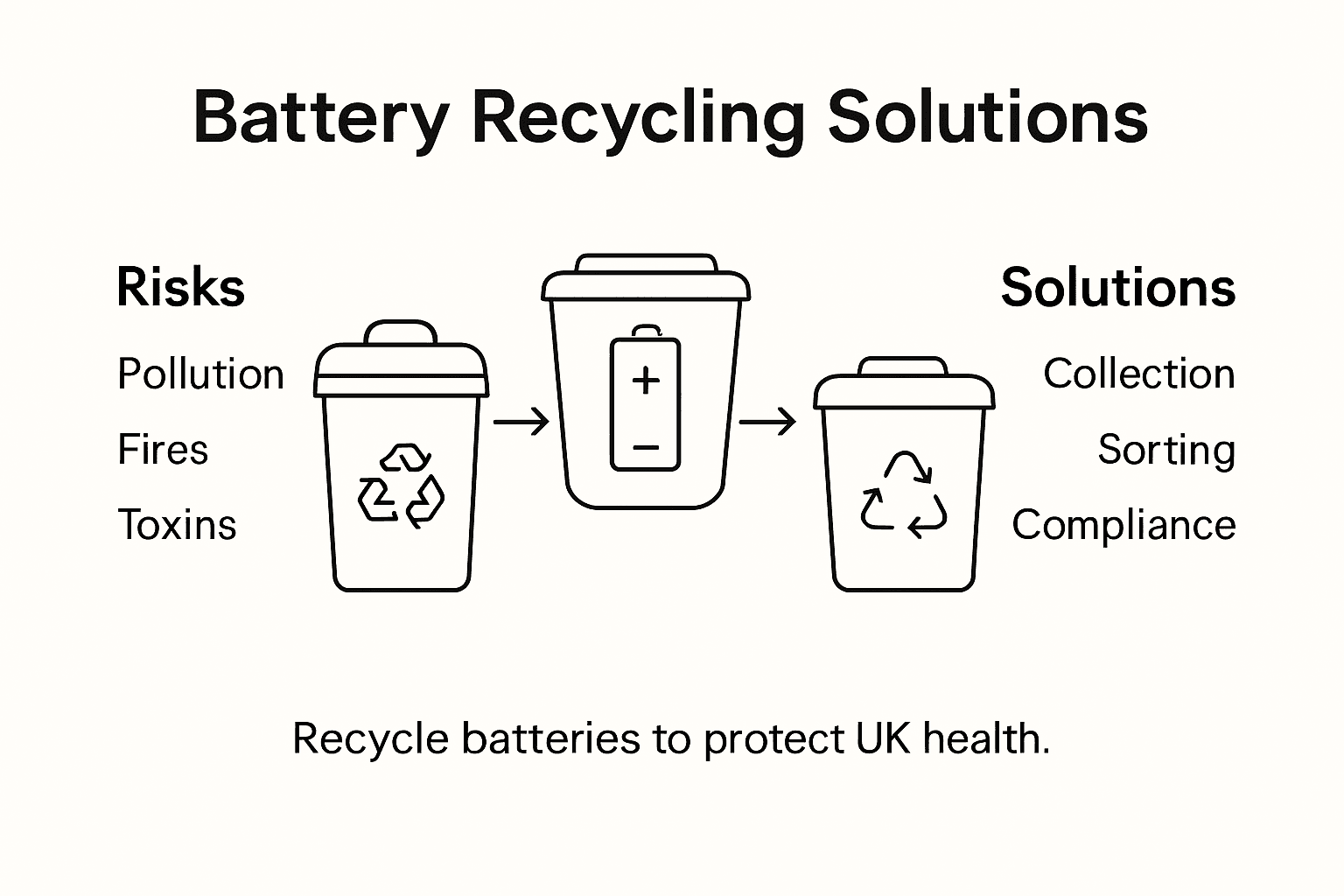
Pro Tip: Develop a comprehensive battery waste management policy that includes staff training, designated collection areas, and clear protocols for different battery types.
Take Action to Safeguard Health and Environment by Recycling Batteries Properly
The challenge of safely disposing and recycling batteries is more urgent than ever in the United Kingdom. Improper battery waste disposal risks toxic contamination, fire hazards, and irreversible damage to ecosystems and public health. If you are concerned about the environmental and safety dangers highlighted in this article, now is the time to act responsibly by choosing expert battery recycling services. With growing regulatory requirements and evolving waste types including lithium-ion cells, you need a solution that guarantees compliance, safety and environmental protection.

At Venture Waste Management, we specialise in efficient and fully compliant battery disposal tailored for both commercial enterprises and domestic customers. Explore our dedicated Batteries Archives for detailed information and guidance on battery recycling practices you can trust. Our team helps you navigate legal obligations while reducing ecological risks through secure collection and recycling processes. Start protecting your community and environment today by booking your battery waste collection easily via our streamlined platform at Venture Waste Management. Learn more about how responsible battery management fits into broader electrical waste solutions from our WEEE Waste Archives and stay informed to make safer choices.
Frequently Asked Questions
Why is it important to recycle batteries?
Recycling batteries is crucial as it helps prevent toxic materials from leaching into the environment, conserves natural resources, and reduces reliance on mining. Proper recycling also ensures heavy metals and harmful substances do not contaminate soil and water supplies.
What are the main environmental risks associated with improper battery disposal?
Improper disposal of batteries can lead to heavy metal leaching and groundwater contamination, which poses significant health risks to humans and wildlife. Lithium-ion batteries, in particular, can cause fires and emit toxic gases if mishandled, creating additional hazards.
How can I safely dispose of different types of batteries?
To safely dispose of batteries, you should collect used batteries separately and take them to designated recycling points. It’s important to never mix different battery types during disposal, as this can prevent potential chemical reactions and contamination.
What does UK law say about battery recycling and disposal?
UK law mandates specific protocols for battery recycling under the Waste Batteries and Accumulators Regulations 2009. This includes prohibiting battery disposal in general waste and requiring manufacturers, businesses, and consumers to ensure proper recycling and collection practices.


Leave a Reply
Want to join the discussion?Feel free to contribute!