

Why Hire Waste Professionals for UK Healthcare
British healthcare facilities face strict legal obligations around hazardous and confidential waste disposal, with fines for non-compliance sometimes reaching unlimited amounts. For facility managers in the United Kingdom, staying ahead of complex regulations and protecting staff safety means partnering with professional waste management specialists. This article explores what sets these advanced services apart, helping you navigate compliance, reduce risks, and ensure your organisation meets all national standards.
Table of Contents
- What Are Professional Waste Management Services
- Types of Waste in Healthcare Settings
- Legal Duties and Regulatory Compliance UK
- How Specialists Ensure Safety and Security
- Cost, Efficiency, and Risk of DIY Disposal
- Sustainability Impacts and Environmental Goals
Key Takeaways
| Point | Details |
|---|---|
| Comprehensive Waste Management | Professional waste management services handle various waste types, ensuring safety, regulatory compliance, and environmental protection, especially in healthcare settings. |
| Hazardous Waste Categories | Healthcare organisations must segregate and manage diverse waste types, including infectious, sharps, and pharmaceutical waste, to mitigate risks to public health. |
| Legal Compliance Importance | Adhering to UK waste management legislation is critical; non-compliance can lead to substantial financial penalties and reputational damage. |
| Benefits of Professional Services | Engaging professional waste management providers optimises costs, enhances compliance, and supports sustainability goals through advanced methods and technologies. |
What Are Professional Waste Management Services
Professional waste management services represent a comprehensive approach to handling complex waste streams, particularly within sensitive sectors like healthcare. These specialised services go far beyond simple rubbish collection, involving strategic processes designed to protect public health, ensure regulatory compliance, and minimise environmental impact. In the United Kingdom, such services are governed by strict legal frameworks that mandate precise waste handling protocols.
At their core, professional waste management services encompass multiple critical functions including safe collection and transportation of hazardous materials. Healthcare facilities require sophisticated waste handling that differentiates between general, clinical, infectious, and hazardous waste types. Professional providers utilise specialised equipment, protective gear, and carefully designed transportation vehicles to manage these diverse waste categories safely and legally.
The key components of professional waste management services typically include:
- Comprehensive waste assessment and classification
- Secure containment and segregation of different waste types
- Specialised collection and transportation procedures
- Advanced treatment and disposal techniques
- Detailed documentation and compliance reporting
- Environmental risk mitigation strategies
These services are particularly crucial in healthcare settings where improper waste management could pose significant health risks. Professional waste management teams understand the nuanced requirements of medical waste, implementing robust safety protocols that protect healthcare workers, patients, and the broader community.
Pro tip: Always request a detailed waste management compliance certificate from your service provider to ensure they meet the latest UK healthcare waste disposal regulations.
Types of Waste in Healthcare Settings
Healthcare settings generate a complex array of waste materials, each requiring unique handling and disposal strategies. Clinical waste classifications represent a critical aspect of healthcare management, encompassing multiple categories that demand specialised treatment to protect public health and maintain environmental safety.
The primary waste types in healthcare environments can be broadly categorised into several key groups. Hazardous waste includes infectious materials, sharps, cytotoxic substances, and pharmaceutical residues. These materials pose significant risks and require meticulous handling. Non-hazardous waste encompasses general domestic waste, recyclable materials, and office consumables that can be processed through standard waste management channels.
A detailed breakdown of healthcare waste types reveals the intricate nature of medical waste management:
- Infectious Waste: Materials contaminated with potentially infectious agents
- Sharps: Needles, scalpels, and other penetrative medical instruments
- Anatomical Waste: Human tissue, body parts, and biological specimens
- Pharmaceutical Waste: Expired or unused medications
- Chemical Waste: Laboratory chemicals and cleaning agents
- Cytotoxic Waste: Materials contaminated with cancer treatment drugs
- Offensive Waste: Non-infectious waste that might be unpleasant but not dangerous
- Recyclable Materials: Clean paper, packaging, and non-contaminated items
Each waste type demands specific segregation, containment, and disposal protocols to ensure safety and regulatory compliance. Healthcare facilities must implement robust waste management systems that protect healthcare workers, patients, and the broader community from potential health risks.
Here’s a quick reference to common healthcare waste categories and their business impact:
| Waste Category | Typical Sources | Potential Risks | Business Impact |
|---|---|---|---|
| Infectious | Patient treatment areas | Infection transmission | Legal liability, health risk |
| Sharps | Surgical wards, clinics | Physical injury, contamination | Increased insurance costs |
| Anatomical | Operating theatres | Biohazard, public concern | Reputational risk |
| Pharmaceutical | Pharmacies, wards | Drug misuse, toxicity | Regulatory fines |
| Chemical | Labs, cleaning departments | Toxic exposure, pollution | Environmental penalties |
| Cytotoxic | Oncology clinics | Cancer drug hazards | Staff safety concerns |
| Offensive | General wards, bathrooms | Odour, discomfort | Patient satisfaction impact |
| Recyclable Materials | Admin and supply areas | Minimal, if handled correctly | Sustainability performance |
Pro tip: Develop a colour-coded waste segregation system with clear signage to minimise the risk of improper waste disposal in healthcare settings.
Legal Duties and Regulatory Compliance UK
Healthcare organisations in the United Kingdom must navigate a complex landscape of legal requirements governing waste management. Waste duty of care legislation establishes critical obligations for every entity involved in waste production, handling, and disposal, with particular stringency for medical and clinical waste streams.
Under the Environmental Protection Act 1990, healthcare providers are legally mandated to implement rigorous waste management protocols. This includes precise waste classification, secure containment, comprehensive documentation, and exclusive use of licensed waste carriers. Non-compliance can result in substantial financial penalties, with potential fines being unlimited and enforced by the Environment Agency.
Key legal compliance requirements for healthcare waste management include:
- Accurate waste stream classification
- Proper segregation of different waste types
- Secure and appropriate storage methods
- Maintaining detailed waste transfer documentation
- Using only Environment Agency-registered waste carriers
- Implementing risk assessment and management strategies
- Ensuring staff training on waste handling procedures
- Regular internal audits of waste management practices
Moreover, specific technical standards like the Health Technical Memorandum 07-01 provide comprehensive guidance for NHS organisations, establishing best practices that go beyond minimum legal requirements. These frameworks aim to minimise environmental risks, protect public health, and ensure systematic, responsible waste management across healthcare settings.
Pro tip: Conduct quarterly compliance audits and maintain a comprehensive digital record of all waste management activities to demonstrate proactive regulatory adherence.
How Specialists Ensure Safety and Security
Healthcare waste management specialists play a critical role in protecting public health through meticulous safety protocols. Infection control and health and safety legislation form the cornerstone of their comprehensive approach to managing potentially hazardous medical waste streams, ensuring every stage of waste handling minimises risks to staff, patients, and the broader environment.

These professionals implement a multi-layered strategy of risk mitigation that goes far beyond simple waste disposal. They develop sophisticated segregation systems, provide specialised training for healthcare staff, and utilise advanced protective equipment and containment technologies. Each waste stream receives targeted management, with specific protocols designed to neutralise potential biological, chemical, and cross-contamination risks.
Key safety and security measures typically include:
- Comprehensive staff training programmes
- Advanced personal protective equipment
- Precise waste stream segregation protocols
- Secure transportation and storage mechanisms
- Rigorous documentation and tracking systems
- Regular risk assessment and management reviews
- Innovative decontamination and treatment technologies
- Continuous compliance monitoring and auditing
Moreover, waste management specialists work closely with healthcare institutions to develop bespoke solutions that align with the latest NHS Clinical Waste Strategy guidelines. This collaborative approach ensures that safety protocols are not just meeting minimum legal requirements, but proactively advancing healthcare waste management standards across the United Kingdom.
Pro tip: Invest in ongoing staff training and implement digital tracking systems to enhance waste management safety and demonstrate continuous improvement.
Cost, Efficiency, and Risk of DIY Disposal
Attempting to manage healthcare waste internally can lead to significant financial and operational risks that far outweigh any perceived cost savings. NHS research demonstrates the substantial economic implications of amateur waste management, highlighting potential annual losses and increased organisational vulnerabilities when professional expertise is overlooked.
The financial consequences of do-it-yourself waste disposal extend beyond immediate handling costs. Healthcare organisations risk substantial penalties for non-compliance, potential legal actions, and reputational damage. Professional waste management specialists bring economies of scale, advanced technologies, and comprehensive risk mitigation strategies that can reduce overall waste management expenditure by up to 30% while ensuring complete regulatory adherence.
Key risks associated with DIY healthcare waste disposal include:
- Potential substantial regulatory fines
- Increased exposure to health and safety violations
- Higher likelihood of environmental contamination
- Inefficient waste segregation and processing
- Greater carbon emissions from improper disposal methods
- Compromised patient and staff safety
- Higher long-term operational costs
- Potential loss of waste recycling opportunities
Moreover, professional waste management services offer sophisticated tracking, reporting, and continuous improvement mechanisms that internal teams often lack. These services not only manage immediate waste streams but also provide strategic insights into waste reduction, cost optimisation, and sustainable practices tailored specifically to healthcare environments.
The following table compares in-house versus professional healthcare waste management:
| Criteria | In-House Management | Professional Services |
|---|---|---|
| Cost Predictability | Often variable and hidden | Fixed, contract-based pricing |
| Compliance | High risk of errors | Full adherence guaranteed |
| Technology Access | Limited, manual methods | Advanced and automated |
| Documentation | Basic, often incomplete | Comprehensive and audited |
| Sustainability | Rarely prioritised | Proactive environmental focus |
| Staff Protection | Lower training standards | Ongoing expert training |
Pro tip: Conduct a comprehensive cost-benefit analysis comparing internal waste management expenses against professional service quotes to reveal true financial implications.
Sustainability Impacts and Environmental Goals
Healthcare waste management plays a pivotal role in achieving broader environmental sustainability objectives. NHS clinical waste strategies are setting ambitious targets to reduce carbon emissions and minimise environmental impact, with professional waste management services serving as a critical mechanism for delivering these crucial sustainability goals.
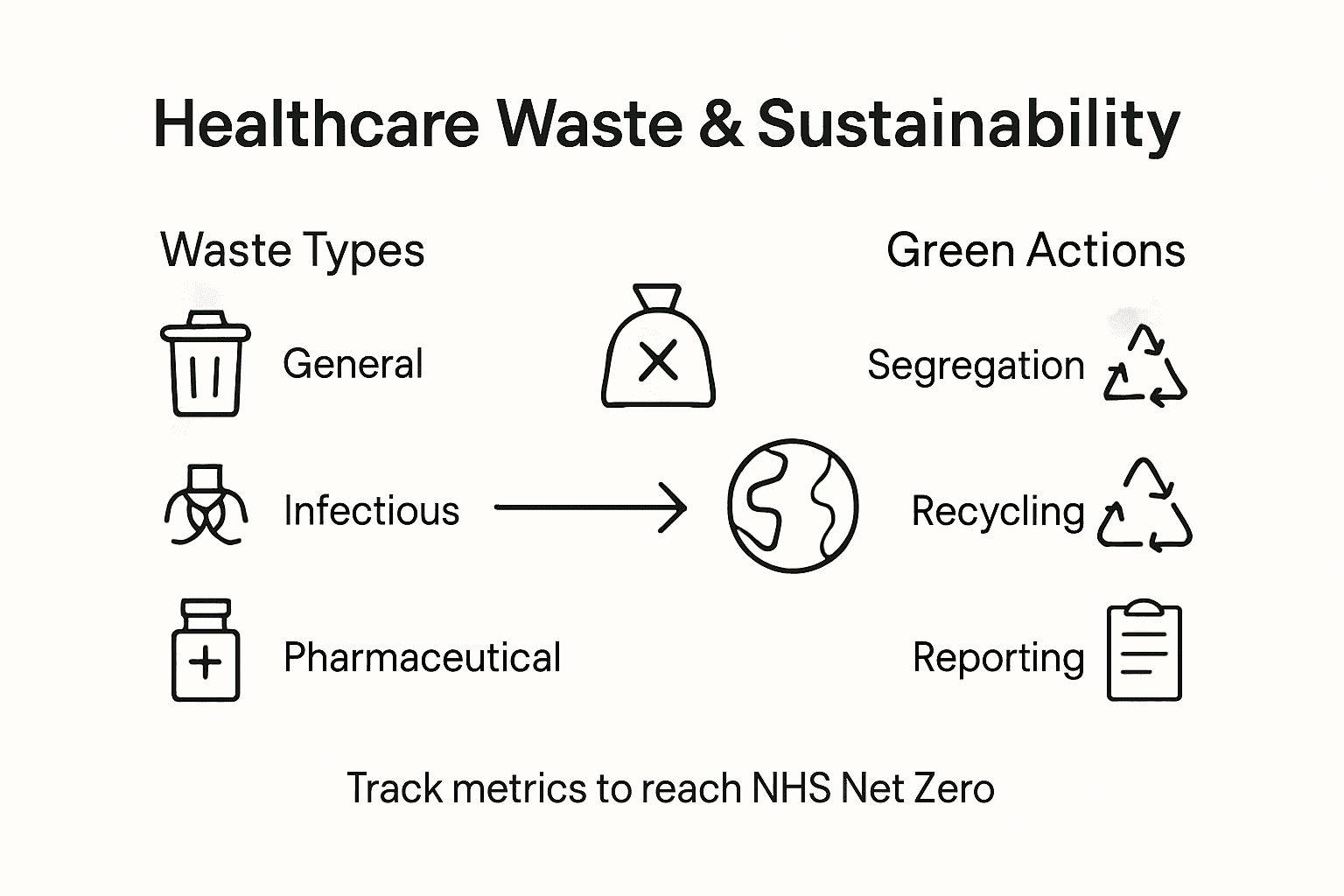
Professional waste management providers contribute to environmental sustainability through sophisticated approaches that go beyond traditional disposal methods. These include advanced recycling techniques, innovative waste segregation processes, and carbon-efficient transportation strategies. By implementing cutting-edge technologies and systematic waste reduction protocols, these specialists help healthcare organisations dramatically reduce their environmental footprint.
Key sustainability impact areas include:
- Reducing carbon emissions from waste processing
- Maximising recycling and resource recovery
- Minimising landfill contributions
- Implementing circular economy principles
- Developing low-carbon waste treatment technologies
- Reducing overall environmental contamination risks
- Supporting organisational net-zero carbon commitments
- Promoting sustainable waste management practices
Moreover, professional waste management services provide comprehensive reporting and tracking mechanisms that enable healthcare organisations to measure, monitor, and continuously improve their environmental performance. This data-driven approach ensures transparency and supports strategic decision-making towards more sustainable operational models.
Pro tip: Establish clear sustainability metrics and regularly audit waste management processes to track progress towards environmental goals.
Secure Your Healthcare Waste with Trusted UK Professionals
Ensuring safe and compliant healthcare waste disposal is more critical than ever in protecting public health and maintaining strict legal standards. The challenges of managing infectious, hazardous, and confidential waste require expert handling that only professional services can provide. At Venture Waste, we understand the nuances of healthcare waste regulations and offer tailored solutions designed to meet the demanding safety protocols and sustainability goals outlined in the latest UK legislation.

Don’t risk costly fines or operational setbacks with DIY disposal. Benefit from our streamlined booking process at Venture Waste and take advantage of our full-service waste management solutions including secure confidential waste handling. Act now to safeguard your facility, protect your staff, and contribute to a greener future with compliance you can trust. Contact us today and experience professional waste management designed specifically for UK healthcare providers.
Frequently Asked Questions
Why should healthcare facilities hire professional waste management services?
Hiring professional waste management services ensures proper handling of complex waste streams, compliance with legal regulations, and minimisation of health and environmental risks.
What types of waste do healthcare professionals manage?
Healthcare professionals manage various waste types including infectious waste, sharps, anatomical waste, pharmaceutical waste, chemical waste, cytotoxic waste, and recyclable materials, each requiring unique handling protocols.
What are the legal obligations for waste management in healthcare settings?
Healthcare organisations must adhere to strict legal requirements, including accurate waste classification, secure containment, detailed documentation, and using licensed waste carriers to avoid hefty fines and ensure compliance.
How do professional waste management services reduce operational risks for healthcare providers?
Professional services mitigate operational risks by ensuring compliance with regulations, implementing efficient waste segregation, using advanced technologies, and continuously training staff, thus safeguarding patient and staff safety while enhancing sustainability.


Leave a Reply
Want to join the discussion?Feel free to contribute!