

What Is Clinical Waste? Complete UK Guide 2024
Most british healthcare providers handle over 600,000 tonnes of clinical waste each year, making it a growing concern for hospitals, clinics, and even small businesses across the country. The risks are far-reaching, from dangerous infections to serious legal penalties, so proper management is non-negotiable. Understanding exactly what qualifies as clinical waste and how to deal with it safely can save organisations from heavy fines and protect both people and the environment.
Table of Contents
- Defining Clinical Waste In The UK Context
- Types Of Clinical Waste And Examples
- Legal Duties And Regulations For Businesses
- Safe Collection, Storage, And Disposal Methods
- Risks, Liabilities, And Compliance Challenges
Key Takeaways
| Point | Details |
|---|---|
| Definition of Clinical Waste | Clinical waste is hazardous material from healthcare settings, requiring special handling and disposal due to its potential to cause harm. |
| Categories of Clinical Waste | Key categories include infectious waste, sharps, anatomical waste, pharmaceutical waste, and chemical waste, each presenting unique management challenges. |
| Legal Obligations | Businesses must comply with regulations such as the Environmental Protection Act and implement systematic waste management procedures to avoid legal penalties. |
| Risks and Compliance Challenges | Improper management of clinical waste can lead to severe legal, financial, and health risks, necessitating comprehensive risk management strategies and continuous staff training. |
Defining Clinical Waste in the UK Context
Clinical waste represents a critical category of hazardous materials generated primarily within healthcare settings, requiring specialised handling and disposal procedures. According to the gov.uk guidance, clinical waste is legally defined under the Controlled Waste (England and Wales) Regulations 2012 as waste that contains potentially dangerous biological components.
Specifically, clinical waste encompasses several key categories of hazardous materials. These include waste containing viable micro-organisms capable of transmitting disease, materials contaminated with biologically active pharmaceutical agents, and sharps or biological materials that pose significant health risks. The NHS Clinical Waste Strategy further elaborates that these waste types are characterised by their potential to cause substantial harm if not managed correctly.
The complexity of clinical waste management extends beyond simple categorisation. Healthcare facilities, medical research centres, dental practices, and veterinary clinics must implement rigorous protocols to identify, segregate, and dispose of these materials safely. This involves understanding the precise definitions, recognising potential contamination risks, and following strict regulatory guidelines established by UK environmental and health authorities.
Key characteristics that distinguish clinical waste include:
- Presence of infectious micro-organisms
- Contamination with potent pharmaceutical substances
- Sharp objects like needles and surgical instruments
- Potential to transmit diseases
- Requiring specialised disposal methods
For comprehensive guidance on managing these complex waste streams, check out our clinical waste disposal requirements guide designed specifically for UK businesses navigating these critical regulatory landscapes.
Types of Clinical Waste and Examples
Clinical waste represents a complex array of hazardous materials that require meticulous handling and specialised disposal strategies. Gov.uk guidance provides a comprehensive breakdown of clinical waste categories, highlighting the critical need for precise identification and management across healthcare environments.
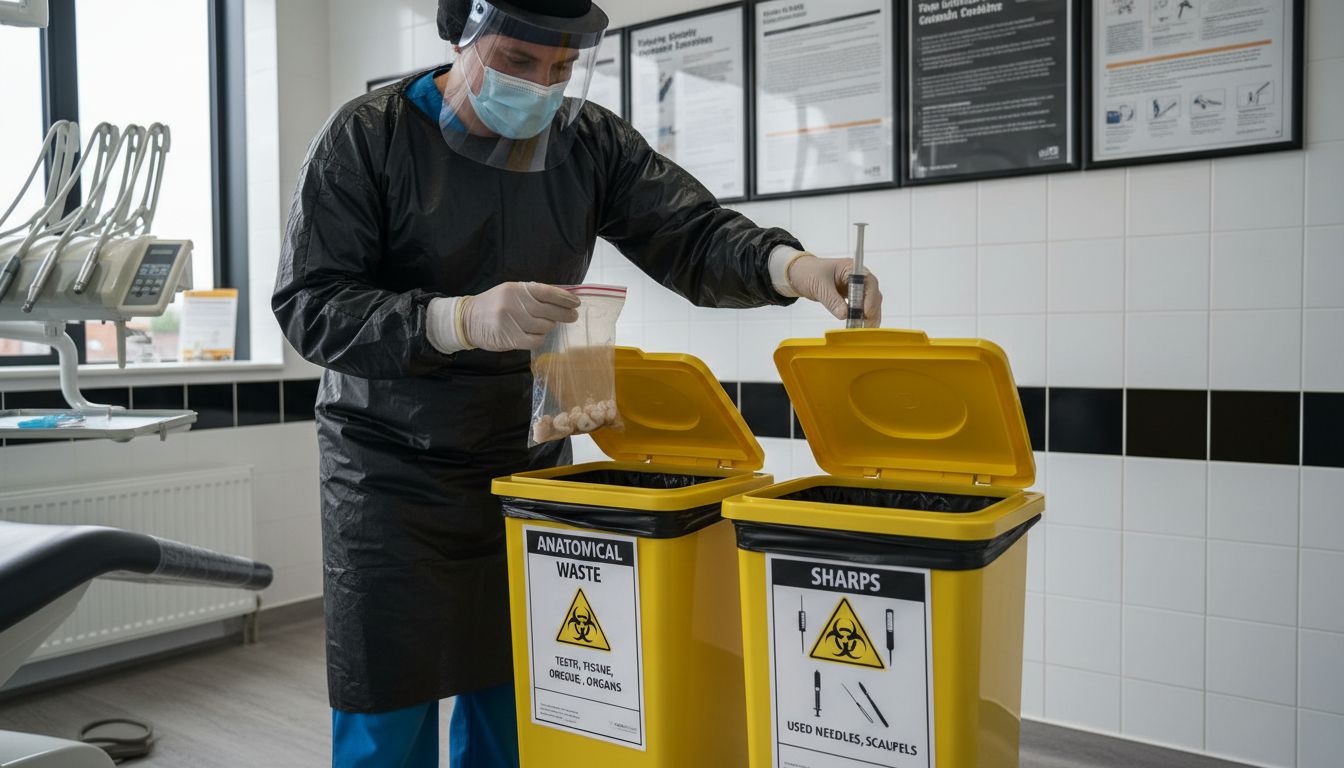
The primary types of clinical waste include infectious waste, which encompasses contaminated dressings, swabs, and materials potentially carrying pathogenic microorganisms. Sharps represent another crucial category, involving potentially dangerous items like needles, scalpels, and broken glass that can transmit infections. Anatomical waste includes human tissue, body parts, and biological specimens that demand stringent disposal protocols.
Furthermore, clinical waste extends to pharmaceutical waste, comprising expired medications, contaminated drug containers, and chemotherapy agents. Chemical waste from laboratory settings, including reagents and diagnostic materials, also falls under this critical classification. Each waste type presents unique risks and requires tailored disposal methods to prevent environmental contamination and potential health hazards.
Key examples of clinical waste categories include:
- Infectious materials: Blood-soaked bandages
- Sharps: Hypodermic needles, surgical blades
- Anatomical waste: Surgical tissue samples
- Pharmaceutical waste: Expired antibiotics
- Chemical waste: Laboratory chemical residues
For comprehensive insights into managing these complex waste streams, explore our hazardous waste management guide designed to support UK businesses in navigating intricate waste disposal requirements.
Legal Duties and Regulations for Businesses
Businesses generating clinical waste face complex legal obligations that demand rigorous compliance and meticulous waste management strategies. According to gov.uk guidance, companies must adhere to critical regulations including the Environmental Protection Act 1990 and the Controlled Waste (England and Wales) Regulations 2012, which establish comprehensive frameworks for waste handling and disposal.
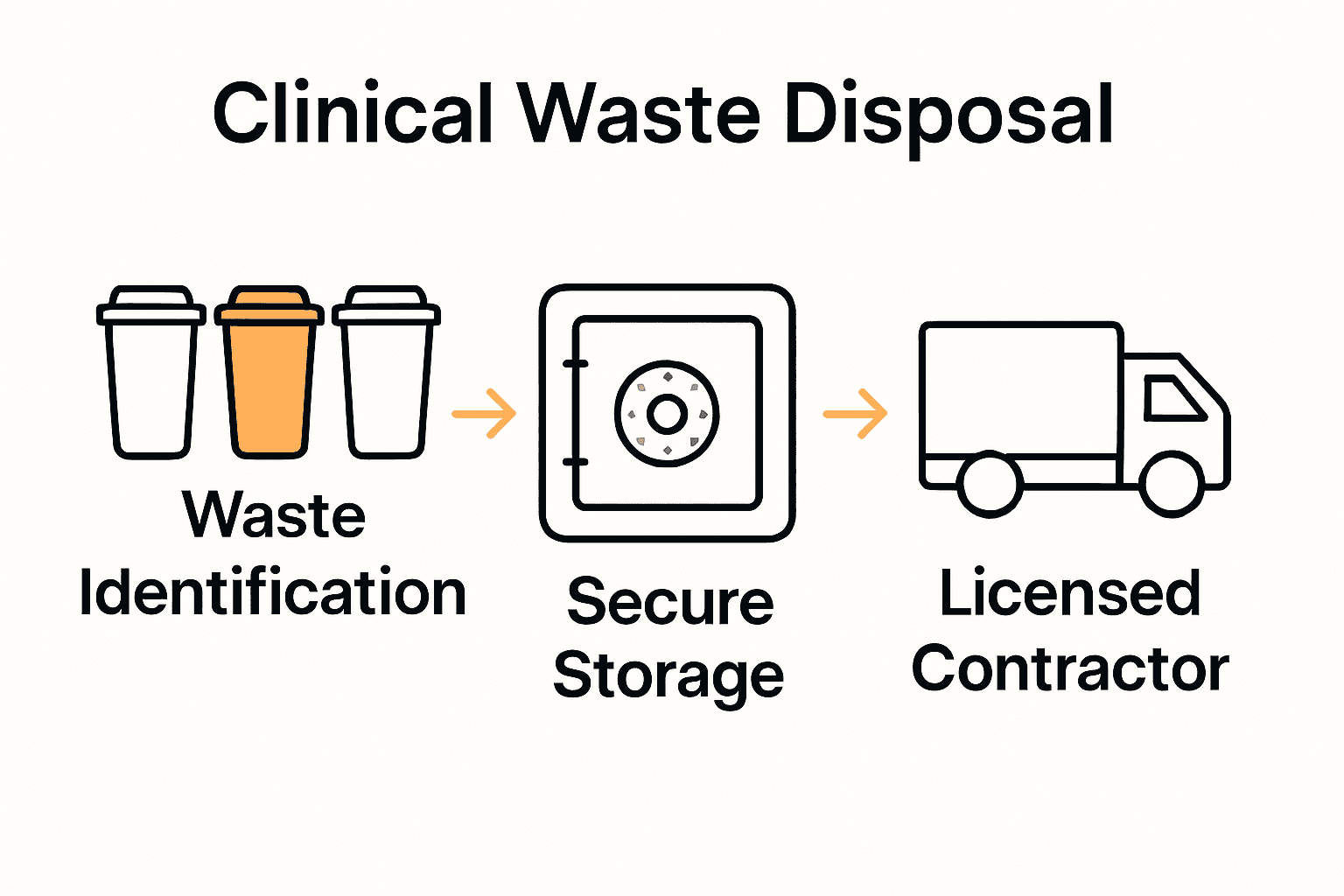
Regulatory compliance encompasses several crucial requirements for businesses. This includes precise waste classification, systematic segregation, secure storage, and environmentally responsible disposal methods. Organisations must implement robust systems that prevent potential harm to human health and the environment, ensuring that each category of clinical waste receives appropriate treatment according to its specific characteristics and associated risks.
The legal landscape surrounding clinical waste management is intricate and carries significant potential consequences for non-compliance. Businesses must maintain detailed documentation, train staff comprehensively, and develop internal protocols that align with national waste management standards. NHS Clinical Waste Strategy emphasises the importance of creating sustainable, cost-effective waste processing systems that not only meet legal requirements but also minimise environmental impact.
Key legal obligations for businesses include:
- Accurate waste classification and identification
- Proper segregation of different waste types
- Secure and compliant storage procedures
- Documentation of waste management processes
- Regular staff training on waste handling regulations
- Maintaining auditable waste disposal records
To navigate these complex regulatory requirements effectively, businesses can refer to our waste disposal legal requirements guide, which provides comprehensive insights into maintaining compliance and avoiding potential legal penalties.
Safe Collection, Storage, and Disposal Methods
Safe management of clinical waste demands a systematic and meticulously planned approach that prioritises human health and environmental protection. According to gov.uk guidance, effective clinical waste handling involves comprehensive strategies for proper segregation, specialised container selection, secure storage, and responsible disposal through licensed treatment facilities.
The collection process requires strict protocols to minimise potential contamination and health risks. This begins with identifying and separating different waste categories using colour-coded containers, ensuring each type of clinical waste receives appropriate handling. Staff must be comprehensively trained in recognising waste classifications, understanding potential hazards, and implementing precise separation techniques to prevent cross-contamination and reduce environmental impact.
Storage and disposal represent critical stages in clinical waste management that demand unwavering attention to regulatory requirements. NHS Clinical Waste Strategy emphasises the importance of maintaining secure, temperature-controlled storage areas that prevent potential leakage, minimise odour, and restrict unauthorized access. Businesses must ensure all clinical waste is stored in sealed, robust containers that prevent spillage and protect against environmental and health risks.
Key best practices for safe clinical waste management include:
- Comprehensive staff training on waste classification
- Use of colour-coded, purpose-designed containers
- Strict segregation of different waste types
- Secure, restricted-access storage areas
- Regular waste volume and risk assessments
- Documentation of waste handling procedures
For comprehensive guidance on implementing these critical waste management strategies, explore our hazardous waste disposal guide designed to support UK businesses in maintaining the highest standards of safety and compliance.
Risks, Liabilities, and Compliance Challenges
Improper clinical waste management poses substantial risks that extend far beyond mere environmental concerns, potentially exposing businesses to significant legal, financial, and health-related consequences. According to gov.uk guidance, organisations face critical risks including potential infections, environmental contamination, and substantial legal liabilities that demand rigorous compliance and proactive management strategies.
The compliance landscape for clinical waste management is incredibly complex, requiring businesses to navigate intricate regulatory frameworks with precision and thoroughness. Potential risks include severe financial penalties, potential criminal prosecution, reputational damage, and significant health hazards to staff, patients, and the broader community. Organisations must develop comprehensive risk management protocols that not only meet legal requirements but also anticipate and mitigate potential vulnerabilities in their waste management processes.
NHS Clinical Waste Strategy emphasises the importance of developing innovative solutions to address compliance challenges, focusing on reducing waste volumes and minimising environmental impact. This approach requires continuous staff training, regular risk assessments, and implementation of cutting-edge waste management technologies that ensure both regulatory compliance and operational efficiency.
Key risks and compliance challenges include:
- Potential infectious disease transmission
- Environmental contamination risks
- Substantial financial penalties
- Possible criminal prosecution
- Reputational damage
- Complex regulatory requirements
- Ongoing staff training needs
To effectively manage these complex risk landscapes, businesses can explore our hazardous waste risks guide, which provides comprehensive insights into navigating the intricate compliance challenges facing UK organisations.
Take Control of Your Clinical Waste with Expert Support
Managing clinical waste demands precise classification, secure storage and compliant disposal to protect your staff and community from serious health risks. Understanding the complex legal duties and preventing costly penalties can feel overwhelming. That is why professional help matters for businesses handling hazardous materials every day.

Benefit from Venture Waste Management’s trusted services tailored to your clinical waste needs. With expertise in hazardous waste handling and a commitment to legal compliance and environmental care, our team simplifies your journey. Discover practical solutions through our hazardous waste Archives – Venture Waste page and start your easy three-step booking at Venture Waste. Take action today to safeguard your business, ensure legal peace of mind and contribute to a cleaner future.
Frequently Asked Questions
What is classified as clinical waste?
Clinical waste encompasses hazardous materials from healthcare settings, including infectious waste, sharps, anatomical waste, pharmaceutical waste, and chemical waste necessitating special handling and disposal methods.
What are the legal requirements for businesses managing clinical waste?
Businesses must comply with the Environmental Protection Act 1990 and the Controlled Waste (England and Wales) Regulations 2012, which outline precise waste classification, segregation, secure storage, and environmentally responsible disposal methods.
How should clinical waste be collected and stored?
Clinical waste should be collected in colour-coded containers for proper segregation, stored in secure, temperature-controlled areas, and kept sealed to prevent leakage and access by unauthorised individuals.
What are the risks of improper clinical waste management?
Improper management poses severe risks including infection transmission, environmental contamination, legal penalties, and reputational damage to organisations failing to comply with regulations.


Leave a Reply
Want to join the discussion?Feel free to contribute!