

What Is a Waste Carrier and Your Legal Duty
Keeping hazardous materials and confidential documents out of the wrong hands is a daily concern for facility managers in British healthcare organisations. The risk of legal trouble grows when there are misconceptions about what makes a waste carrier truly compliant. With strict government rules making registration mandatory for almost every business that handles waste for others, choosing a provider goes beyond ticking a box. Gain the insight needed to identify a legally compliant waste carrier and protect your organisation from unexpected fines or environmental breaches.
Table of Contents
- Waste Carrier Defined And Common Misconceptions
- Types Of Waste Carriers In The Uk
- Legal Duties And Registration Process
- Compliance Responsibilities For Facility Managers
- Risks, Penalties, And How To Avoid Them
Key Takeaways
| Point | Details |
|---|---|
| Understanding Waste Carrier Registration | Most businesses are required to register as waste carriers, contrary to common misconceptions. Failing to comply can result in significant penalties and legal issues. |
| Types of Waste Carriers | There are three main categories of waste carriers in the UK: carriers, brokers, and dealers, each with unique legal responsibilities. |
| Legal Obligations and Documentation | Proper registration and maintenance of waste transfer notes are essential for compliance and accountability. |
| Risks of Non-Compliance | Non-compliance with waste management regulations can lead to severe financial penalties, legal prosecution, and reputational damage. |
Waste Carrier Defined and Common Misconceptions
In the United Kingdom, a waste carrier is a legal designation with specific regulatory requirements that many businesses misunderstand. Legally defined by government regulations, a waste carrier is any person or organisation that transports waste produced by others as part of their business operations.
Contrary to popular belief, waste carrier registration is not optional for most businesses. There are several key misconceptions that can lead organisations into potential legal trouble:
- Not all waste carriers look like traditional waste management companies
- Transporting waste, even occasionally, might require registration
- Different tiers of registration exist with varying legal obligations
- Unregistered waste carrying can result in significant financial penalties
The registration process distinguishes between upper tier and lower tier carriers, each with unique legal responsibilities. Upper tier registration applies to businesses that regularly transport waste for others, while lower tier registration suits organisations with more occasional waste transportation needs.
Registration helps prevent illegal waste movements and ensures environmental accountability.
Penalties for non-compliance can be severe. Businesses caught transporting waste without proper registration may face unlimited fines and potential legal prosecution. Public waste carrier registers allow verification of an organisation’s legal status, providing transparency and accountability.
Pro tip: Always verify your waste carrier’s registration status before engaging their services to avoid potential legal and environmental risks.
Types of Waste Carriers in the UK
In the United Kingdom, waste carriers are classified into distinct categories that reflect their specific roles within waste management. Government regulations define three primary types of waste professionals: carriers, brokers, and dealers, each with unique responsibilities and legal obligations.
The three main categories of waste carriers include:
- Waste Carriers: Businesses or individuals who physically transport waste from one location to another
- Waste Brokers: Organisations that arrange waste transportation or disposal without directly handling the waste
- Waste Dealers: Professionals who buy, sell, or manage waste materials as part of their business operations
Furthermore, waste carriers are subdivided into two critical registration tiers that determine their operational scope and legal requirements:
The following table summarises the differences between waste carrier categories and their business implications:
| Category | Core Responsibility | Legal Obligation Impact | Typical Business Examples |
|---|---|---|---|
| Carrier | Physical waste transportation | Must hold active registration | Hauliers, skip hire firms |
| Broker | Arranges waste movement or disposal | Adherence to brokering compliance | Waste consultants, facility agents |
| Dealer | Trades, buys, or sells waste material | Trade records and dealer licensing | Metal recyclers, commodity traders |
- Lower Tier Carriers: Businesses with minimal waste transportation activities
- Upper Tier Carriers: Organisations handling more extensive or hazardous waste transportation
The registration system ensures accountability and prevents illegal waste movements across the United Kingdom.
Upper tier carriers typically handle more complex waste management scenarios, such as transporting hazardous materials or operating across broader geographical regions. Waste carrier registers provide transparency, allowing businesses and regulatory bodies to verify an organisation’s legal status and operational permissions.

Pro tip: Always confirm a waste carrier’s specific registration tier and type before engaging their services to ensure full legal compliance.
Legal Duties and Registration Process
Every business involved in waste management must understand their legal obligations for waste carrier registration. Business waste disposal regulations require comprehensive compliance with specific legal requirements that protect environmental standards and prevent potential legal complications.
The registration process involves several critical steps:
- Determine your specific waste carrier category
- Gather all required business documentation
- Complete the official registration application
- Pay the appropriate registration fee
- Receive and display your waste carrier registration certificate
Key requirements for registration include:
- Providing accurate business identification details
- Submitting information about key business personnel
- Declaring the types of waste your business handles
- Demonstrating understanding of waste management regulations
Failing to register as a waste carrier can result in significant financial penalties and potential legal prosecution.
Government registration processes mandate that businesses notify authorities of any significant changes within 28 days. These changes might include alterations to business structure, leadership, or operational scope. Businesses must maintain up-to-date registration to ensure continued legal compliance and avoid potential interruptions to their waste management activities.
Additionally, businesses must keep detailed waste transfer notes as part of their legal documentation, which serve as critical evidence of proper waste handling and transportation.
Pro tip: Maintain a comprehensive digital and physical file of all waste carrier registration documents to ensure quick access during potential regulatory inspections.
Compliance Responsibilities for Facility Managers
Facility managers play a critical role in ensuring waste management processes meet stringent legal requirements. Business waste disposal regulations place specific responsibilities on facility managers to maintain environmental compliance and prevent potential legal complications.
Key compliance responsibilities include:
- Verifying waste carrier registration status
- Maintaining comprehensive waste transfer documentation
- Implementing secure waste storage protocols
- Ensuring proper waste segregation and disposal
- Conducting regular compliance audits
Documentation is a crucial aspect of facility waste management compliance. Managers must:
- Retain detailed waste transfer notes for at least two years
- Document every waste movement from their premises
- Verify the credentials of waste carriers
- Record waste types, quantities, and disposal methods
Failure to maintain proper waste documentation can result in significant financial penalties and potential legal prosecution.
Waste transfer note requirements mandate comprehensive tracking of all waste movements. This audit trail provides critical evidence of proper waste handling and demonstrates a facility’s commitment to environmental responsibility.
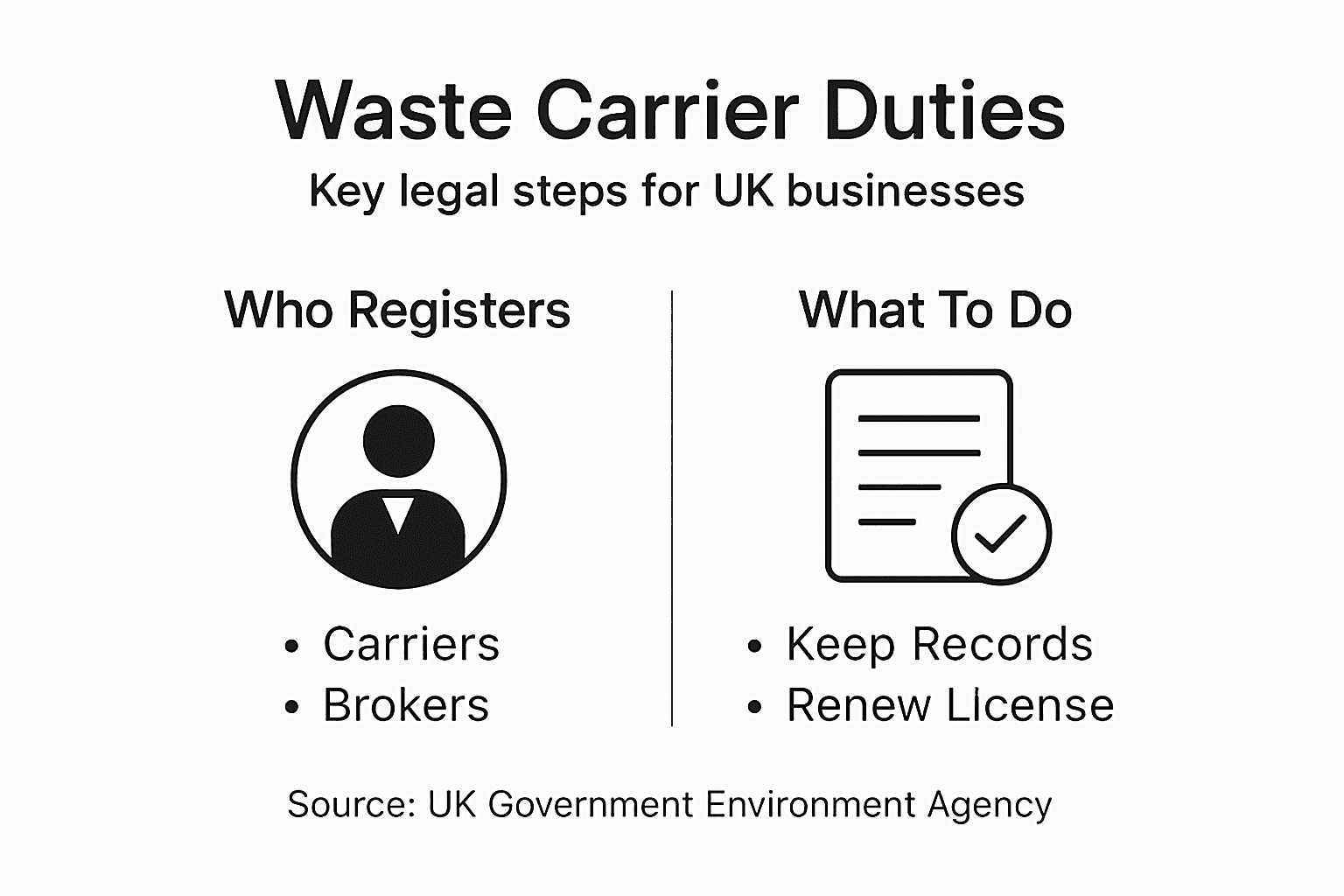
Additionally, facility managers must actively monitor waste management practices, ensuring that all disposal methods align with local and national environmental regulations. This includes implementing robust recycling protocols and maintaining secure waste storage facilities that prevent environmental contamination.
This reference table highlights frequent compliance errors and their ramifications for UK businesses:
| Common Error | Business Consequence | Preventative Measure |
|---|---|---|
| Failing to update registration | Invalid status, legal penalties | Notify authorities within 28 days |
| Incomplete waste transfer records | Lack of legal proof, fines | Maintain detailed, up-to-date documentation |
| Engaging an unregistered carrier | Shared legal liability, prosecution | Always verify registration status |
| Poor waste segregation | Environmental breaches, penalties | Train staff and audit practices regularly |
Pro tip: Develop a comprehensive digital filing system for waste management documentation to streamline compliance tracking and simplify potential regulatory inspections.
Risks, Penalties, and How to Avoid Them
Waste carriers in the United Kingdom face significant legal and financial risks for non-compliance with environmental regulations. Waste carrier registration requirements are designed to prevent environmental harm and ensure responsible waste management practices.
Potential risks for non-compliant waste carriers include:
- Unlimited financial penalties
- Criminal prosecution
- Potential criminal record
- Suspension or revocation of waste carrier license
- Reputational damage to business
The most severe consequences for waste management non-compliance are:
- Substantial financial fines
- Legal proceedings against the business
- Personal liability for company directors
- Potential imprisonment for serious offenses
Ignorance of waste management regulations is not a legal defense and can result in significant penalties.
Businesses can mitigate these risks by maintaining comprehensive waste documentation and implementing robust compliance processes. This includes:
- Keeping accurate waste transfer notes
- Regularly updating registration details
- Conducting internal compliance audits
- Training staff on regulatory requirements
- Maintaining transparent waste management records
Additionally, proactive reporting of potential waste management violations can help businesses protect themselves from legal liabilities and demonstrate a commitment to environmental responsibility.
Pro tip: Create a dedicated compliance checklist and review it quarterly to ensure ongoing adherence to waste management regulations.
Stay Compliant with Trusted Waste Carrier Solutions from Venture Waste
Understanding your legal duties as a waste carrier is crucial to avoid costly penalties and safeguard your business reputation. From intricate registration tiers to meticulous waste transfer notes, the challenges of compliance can feel overwhelming. Venture Waste is here to simplify this journey with reliable, fully compliant waste management services tailored for your needs. Whether you require hazardous waste handling, general waste transport, or expert guidance on regulatory requirements, our team ensures your operations stay within the law.

Take control today by exploring how waste collection services in the UK can support your business compliance efforts. Stay informed on the latest rules with our regulation insights and trust Venture Waste to deliver seamless, legal waste solutions. Don’t risk the penalties—visit Venture Waste now and book a compliant service with confidence.
Frequently Asked Questions
What is a waste carrier?
A waste carrier is any person or organisation that transports waste produced by others as part of their business operations, mandated by specific regulatory requirements.
Why is it necessary to register as a waste carrier?
Waste carrier registration is essential to prevent illegal waste movements and ensure environmental accountability, and failing to register can lead to significant legal penalties.
What are the different types of waste carriers?
The main types of waste carriers are carriers (who transport waste), brokers (who arrange waste disposal), and dealers (who buy or sell waste materials), each with distinct legal obligations.
What are the legal responsibilities for facility managers regarding waste carriers?
Facility managers must verify waste carrier registration statuses, maintain waste transfer documentation, ensure proper waste segregation, and conduct regular compliance audits to adhere to legal requirements.
Recommended
- Responsible Waste Carriers – Ensuring Legal Compliance UK – Venture Waste
- Secure Waste Transport UK: Legal Standards and Best Practice – Venture Waste
- Facility Manager Waste Duties – Ensuring Legal Compliance – Venture Waste
- Waste Transport Regulations: Complete UK Guide – Venture Waste
- Duty of Care for Employers: Complete Guide – Unparalleled Global Benefits
- Is it a Legal Requirement to Have Emergency Lighting? | LED Supply & Fit


Leave a Reply
Want to join the discussion?Feel free to contribute!