

What Is a Skip Hire? Complete Guide for UK Businesses 2025
Skip hire is everywhere you look in the UK and it is the silent engine behind construction sites, office clearances, and commercial refits. Skip hire firms handle millions of tonnes of business waste each year, making them a backbone of British waste management. What most people do not realise is that using the wrong skip or dodging permit rules could land your company with hefty fines and unexpected hurdles.
Table of Contents
- Understanding What Is a Skip Hire Service
- Types of Waste Suitable for Skip Hire
- Benefits of Skip Hire for UK Businesses
- Choosing the Right Skip Hire Provider
Quick Summary
| Takeaway | Explanation |
|---|---|
| Understand skip hire services for waste management | Skip hire provides businesses a practical solution for disposing of large waste volumes efficiently. |
| Know the legal requirements for placing skips | Businesses must obtain permits for skips on public roads to comply with regulations and ensure safety. |
| Choose the right skip size for your waste | Selecting the appropriate skip size based on waste type optimizes collection and disposal processes. |
| Evaluate waste management providers carefully | Consider factors like compliance, reliability, and environmental credentials when choosing a skip hire provider. |
| Recognize the benefits of skip hire for your business | Utilising skip hire can lead to cost savings, improved safety, and better environmental compliance for businesses. |
Understanding What Is a Skip Hire Service
A skip hire service represents a critical waste management solution for businesses across the United Kingdom, providing a convenient and efficient method for disposing of large volumes of waste materials. At its core, a skip hire service involves renting a large, robust metal container that can be delivered to a specific location, allowing businesses to collect and remove substantial quantities of waste quickly and systematically.
The Fundamental Mechanics of Skip Hire
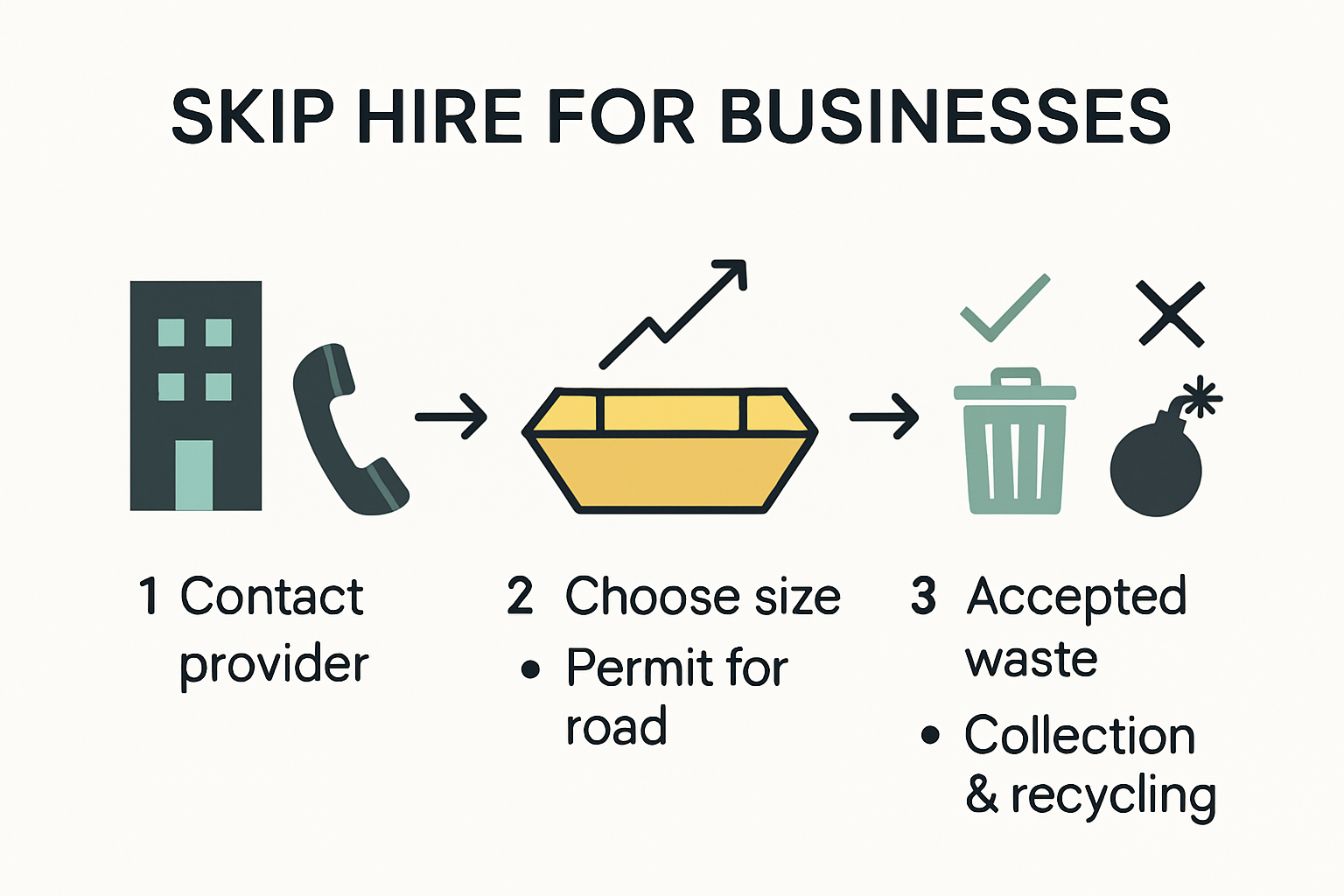
Skip hire services operate on a straightforward principle of providing businesses with a temporary waste collection container. These containers come in various sizes, typically ranging from 2 to 40 cubic yards, enabling organisations to select the most appropriate option based on their specific waste disposal requirements. Our comprehensive skip hire guide provides detailed insights into selecting the right skip size for different business needs.
The process begins with a business contacting a waste management provider to arrange skip delivery. According to the Health and Safety Executive, workplace transport accidents are prevalent in waste management, emphasising the importance of selecting a professional and safety-conscious skip hire service. Once delivered, businesses can load the skip with their waste materials, which are then collected and transported to appropriate waste processing or disposal facilities.
Legal and Safety Considerations for Skip Placement
Businesses must navigate specific legal requirements when utilising skip hire services, particularly when placing skips on public highways. The Traffic Management Act 2004 mandates that local authorities can impose charges for skip occupation of public spaces. Organisations must obtain a skip licence or permit from their local council when positioning a skip on a public road. This requirement ensures compliance with safety regulations, including proper markings, safety lights, and traffic cones to prevent potential accidents and minimise public disruption.
Skip hire services cater to a wide range of business sectors, from construction and demolition to retail, manufacturing, and healthcare. The versatility of these services allows organisations to manage various waste types efficiently, including construction debris, office clearance materials, renovation waste, and general commercial refuse. By providing a centralised waste collection solution, skip hire services help businesses streamline their waste management processes, reduce environmental impact, and maintain compliance with waste disposal regulations.
Understanding the nuances of skip hire is crucial for businesses seeking efficient and responsible waste management solutions. From selecting the appropriate skip size to navigating legal requirements and ensuring safe waste disposal, businesses must approach skip hire with careful consideration and strategic planning.
Types of Waste Suitable for Skip Hire
Skip hire services provide businesses with a versatile solution for managing diverse waste streams, accommodating a wide range of materials across multiple industry sectors. Understanding the acceptable waste types is crucial for efficient and compliant waste disposal.
Construction and Demolition Waste Management
Construction and demolition projects generate substantial volumes of waste materials that are particularly well-suited for skip hire. According to ETM Recycling, commonly accepted construction waste includes bricks, concrete, tiles, plaster, stones, wood, metals, and rubble. These materials represent the primary waste streams for renovation, building, and infrastructure projects across the United Kingdom.
Businesses in the construction sector can efficiently manage their waste by segregating materials and utilising appropriately sized skips. Our comprehensive skip hire options guide provides detailed insights into selecting the most suitable skip for different project requirements.
General Commercial and Industrial Waste
Beyond construction, skip hire services cater to a broad spectrum of commercial and industrial waste disposal needs. HIPPO waste management highlights that acceptable waste streams include general household and garden waste, pallets, and mixed commercial refuse. Manufacturing facilities, retail establishments, and office complexes can leverage skip hire services to manage their waste efficiently.
However, businesses must exercise caution and adhere to strict guidelines regarding prohibited materials. Hazardous waste items are strictly forbidden in standard skip hire services. These restricted materials typically include:
- Asbestos
- Clinical or medical waste
- Batteries
- Electronic equipment (fridges, computers, monitors)
- Compressed gas canisters
- Chemical substances
- Paint and liquid waste
- Tyres
- Fluorescent tubes
Specialised Waste Handling Considerations
Different industries require nuanced approaches to waste management. Cambridge City Council provides insights into specialised waste categories, highlighting the importance of proper waste segregation. Businesses can access specific skips designed for unique waste streams, including:
- Green waste
- Hardcore and inert materials
- Metal waste
- Upholstered seating
- Wood waste
Professional waste management providers offer guidance on appropriate waste disposal methods, ensuring businesses remain compliant with environmental regulations and minimise their ecological footprint. By understanding the types of waste suitable for skip hire and the associated restrictions, organisations can develop more sustainable and efficient waste management strategies.
Navigating the complexities of waste disposal requires careful planning, attention to detail, and a commitment to responsible environmental practices. Skip hire services offer businesses a flexible and practical solution for managing their waste disposal needs across various sectors and project scales.
To help clarify what materials can and cannot be disposed of in a skip via standard hire services, the table below summarizes accepted and prohibited waste types mentioned above:
| Waste Type | Accepted in Standard Skip Hire? | Notes |
|---|---|---|
| Bricks, Concrete, Rubble | Yes | Common in construction and demolition projects |
| Wood, Metals, Tiles, Plaster | Yes | Standard, non-hazardous forms only |
| General Household/Garden Waste | Yes | Includes furniture, garden trimmings, pallets |
| Green Waste | Yes (with correct skip) | May require separate skip |
| Hardcore/Inert Materials | Yes (with correct skip) | May require separate skip |
| Asbestos | No | Prohibited hazardous material |
| Clinical or Medical Waste | No | Strictly prohibited |
| Batteries | No | Must use specialist disposal |
| Electronic Equipment | No | Includes fridges, computers, monitors, etc |
| Gas Canisters, Chemicals, Paint | No | All forms strictly forbidden unless arranged with provider |
| Tyres, Fluorescent Tubes | No | Not allowed in standard skip hire |
Benefits of Skip Hire for UK Businesses
Skip hire services offer substantial strategic advantages for UK businesses seeking efficient and responsible waste management solutions. These services provide more than simple waste disposal, delivering comprehensive benefits that impact operational effectiveness, environmental sustainability, and financial performance.
Cost-Effective Waste Management
Businesses can significantly reduce waste management expenses through professional skip hire services. By consolidating waste collection and transportation into a single, streamlined process, organisations eliminate multiple handling costs associated with fragmented waste disposal methods. Our comprehensive skip hire guide demonstrates how businesses can optimise their waste management budgets through strategic skip utilisation.
The Economic and Social Research Council highlights that efficient waste management can reduce operational costs by up to 25% for medium-sized enterprises. Skip hire services enable businesses to centralise waste collection, minimise transportation expenses, and reduce the administrative burden of managing multiple waste disposal contractors.
Environmental and Regulatory Compliance
Skip hire services play a crucial role in supporting businesses’ environmental sustainability objectives. According to the Waste and Resources Action Programme (WRAP), professional skip hire providers ensure proper waste segregation and recycling, helping businesses meet increasingly stringent environmental regulations.
By partnering with certified waste management providers, businesses can:
- Reduce landfill contributions
- Enhance waste recycling rates
- Demonstrate corporate environmental responsibility
- Comply with UK waste management legislation
- Minimise potential regulatory penalties
Operational Efficiency and Safety
Professional skip hire services contribute significantly to workplace safety and operational efficiency. The Health and Safety Executive emphasises that structured waste management reduces workplace accidents and improves overall site organisation.
Businesses benefit from skip hire services through:
- Centralised waste collection points
- Reduced manual handling of waste materials
- Improved workplace safety protocols
- Simplified waste management tracking
- Minimised risk of injury during waste disposal
Skip hire represents more than a waste disposal solution it is a strategic approach to managing business resources. By integrating professional skip hire services, organisations can transform waste management from a logistical challenge into a value-added business practice.
The multifaceted benefits of skip hire extend beyond immediate waste disposal needs. From financial savings and environmental stewardship to enhanced operational safety, these services provide UK businesses with a comprehensive solution for managing their waste streams efficiently and responsibly.
The following table summarises the major benefits of skip hire services for UK businesses as discussed above:
| Key Benefit | How Skip Hire Delivers This Benefit |
|---|---|
| Cost Savings | Reduces handling and transport costs, streamlines processes |
| Waste Management Efficiency | Centralises collection, minimises contractor coordination |
| Environmental Sustainability | Promotes recycling, reduces landfill, supports compliance |
| Regulatory Compliance | Ensures adherence to UK laws and reduces risk of fines |
| Improved Workplace Safety | Minimises manual handling, reduces accident risks |
| Simplified Tracking & Reporting | Eases monitoring and regulatory paperwork |
| Flexibility for Multiple Sectors | Serves construction, retail, healthcare, industrial, and more |
Choosing the Right Skip Hire Provider
Selecting an appropriate skip hire provider is a critical decision for UK businesses, requiring careful evaluation of multiple factors beyond simple cost considerations. The right waste management partner can significantly impact operational efficiency, environmental compliance, and overall business sustainability.
Key Evaluation Criteria
Businesses must conduct comprehensive assessments when selecting a skip hire provider. Our detailed skip hire guide recommends examining several crucial elements during the selection process. According to the Sustainability Exchange, cost should not be the sole determining factor in choosing a waste management service.
Critical evaluation criteria include:
- Regulatory compliance certifications
- Range of skip sizes and waste management capabilities
- Environmental credentials and recycling rates
- Reliability and punctuality of service
- Transparent pricing structures
- Local operational coverage
- Customer support and responsiveness
Compliance and Environmental Responsibility
The UK government’s waste management guidelines emphasize the importance of selecting providers who demonstrate robust environmental credentials. Businesses should prioritise skip hire providers that:
- Hold current waste carrier licences
- Provide comprehensive waste transfer documentation
- Demonstrate high recycling and waste diversion rates
- Maintain transparent waste processing practices
- Comply with current environmental regulations
- Offer detailed waste stream tracking
Strategic Selection Process
Developing a strategic approach to skip hire provider selection requires collaborative input. The Sustainability Exchange recommends involving multiple organisational stakeholders, including purchasing officers, waste management specialists, and environmental compliance teams.
Key steps in the selection process include:
- Conducting comprehensive market research
- Requesting detailed service proposals
- Checking provider references and past performance
- Evaluating waste management reporting capabilities
- Assessing flexibility in service provision
- Understanding contract terms and conditions
Businesses must recognise that skip hire providers are more than transactional service vendors they are strategic partners in achieving waste management objectives. The right provider will offer not just waste removal but comprehensive solutions that support organisational sustainability goals.
By implementing a thorough, methodical selection process, businesses can identify skip hire providers that align with their operational requirements, environmental commitments, and long-term waste management strategies. The investment in careful provider selection will yield significant operational and environmental benefits for UK businesses across various industries.
Frequently Asked Questions
What is skip hire?
Skip hire refers to a service that allows businesses to rent large metal containers (skips) for the temporary collection and disposal of waste materials. It is a convenient solution for managing substantial volumes of waste generated during construction, renovation, or general commercial activities.
What types of waste can be disposed of in a skip?
Generally, skips can accommodate construction debris, general commercial waste, and garden waste. However, hazardous materials such as asbestos, batteries, and electronic equipment are prohibited in standard skip hire services.
Do I need a permit for placing a skip on the road?
Yes, if you plan to place a skip on a public highway, you will need to obtain a skip licence from your local council to ensure compliance with legal regulations and safety measures.
How do I choose the right skip size for my needs?
Choosing the appropriate skip size depends on the volume and type of waste you need to dispose of. Skips are available in various sizes ranging from 2 to 40 cubic yards, and it’s essential to select one that fits the scale of your project to optimise the collection and disposal process.
Ready to Simplify Your Business Waste Management?
Feeling overwhelmed by legal requirements, skip sizes, or disposal regulations? Many UK businesses struggle with finding a compliant and straightforward skip hire service, which can create delays, uncertainty, and the risk of costly mistakes. As highlighted in our guide, the consequences of poor skip placement or choosing the wrong provider can undermine your waste management goals and put your operations at risk.

Turn confusion into clarity with Venture Waste Management. We offer skip hire and waste solutions that are fully compliant, environmentally responsible, and tailored for UK businesses. With our three-step booking process, you can arrange safe collection, manage all types of commercial waste, and rest assured your business stays on the right side of the law. Take advantage of our network, regulatory expertise and commitment to quality service. Visit the Venture Waste Management homepage to explore our flexible skip hire and waste collection options and take the first step towards hassle-free waste compliance. Act now to protect your business and achieve sustainable waste management.


Leave a Reply
Want to join the discussion?Feel free to contribute!