

What Counts as Waste Electrical Equipment? UK Guide
Over 2 million tonnes of electrical and electronic waste are generated in the UK each year, forcing businesses to rethink how they handle outdated or broken devices. The rapid spread of technology means everything from kettles to servers can quickly become waste, yet many companies struggle to identify what really counts as WEEE. Understanding these definitions and obligations gives businesses a stronger foundation for legal compliance and safer, more sustainable waste management.
Table of Contents
- Defining Waste Electrical Equipment (WEEE) In The UK
- Main Types Of WEEE Businesses Must Recognise
- Key Examples Of WEEE Items Across Sectors
- WEEE Regulations And Legal Compliance Requirements
- Business Responsibilities For Safe WEEE Disposal
Key Takeaways
| Point | Details |
|---|---|
| Definition of WEEE | Waste Electrical and Electronic Equipment (WEEE) is defined as any discarded electrical or electronic equipment, regardless of its condition. This includes a broad range of items beyond just computers and mobile devices. |
| Categories of WEEE | Businesses must recognize the categories of WEEE, including large household appliances, IT equipment, and medical devices, each with specific disposal requirements. |
| Regulatory Compliance | Companies are required to comply with WEEE regulations, including responsibilities for financing waste management and maintaining proper waste tracking procedures. |
| Safety Responsibilities | Effective WEEE disposal demands operational safety protocols, including risk assessments and staff training to manage hazardous materials responsibly. |
Defining Waste Electrical Equipment (WEEE) in the UK
When it comes to waste management, understanding what constitutes Waste Electrical and Electronic Equipment (WEEE) is crucial for businesses across the UK. According to the UK government, WEEE encompasses any electrical or electronic equipment that has been discarded, including all components, sub-assemblies, and consumables that are part of the product at the time of disposal.
This definition covers an incredibly broad range of items found in offices, factories, healthcare facilities, and other commercial environments. Think beyond just computers and mobile phones. WEEE includes everything from large industrial machinery to small kitchen appliances, electronic tools, medical devices, monitoring equipment, and even automated systems. The key characteristic is that these items require an electrical current or electromagnetic field to function properly.
To help businesses understand the scope, WEEE typically falls into several key categories:
- Large Household Appliances: Refrigerators, washing machines, dishwashers
- Small Household Appliances: Vacuum cleaners, toasters, coffee machines
- IT and Telecommunications Equipment: Computers, printers, telephones
Businesses in regions like Newcastle, Durham, and Sunderland generating electronic waste must pay special attention to proper disposal. Learn more about WEEE waste in our comprehensive guide on WEEE waste for UK businesses, which provides detailed insights into classification and responsible management.
The critical aspect of WEEE classification is understanding that it’s not just about the item being broken or obsolete. Any electrical or electronic equipment that the owner intends to discard, sell, or recycle falls under this definition. This means businesses need robust systems to track, manage, and responsibly dispose of their electronic equipment throughout its entire lifecycle.
Main Types of WEEE Businesses Must Recognise
According to the Health and Safety Executive (HSE), businesses across the UK need to be aware of the comprehensive range of Waste Electrical and Electronic Equipment (WEEE) that requires specialized disposal. Understanding these categories is crucial for compliance and responsible waste management.
Major WEEE Categories Include:
- Large Household Appliances: Refrigerators, washing machines, ovens, dishwashers, air conditioning units
- IT and Telecommunications Equipment: Desktop computers, laptops, printers, servers, mobile phones
- Display Devices: Televisions, computer monitors, digital screens
- Cooling Appliances: Freezers, refrigeration units, air conditioning systems
- Small Household Appliances: Kettles, toasters, vacuum cleaners, hair dryers
- Electronic Tools: Power drills, electric saws, measuring equipment
- Medical Devices: Electronic monitoring equipment, diagnostic machines
- Electronic Toys and Entertainment Devices: Digital gaming systems, electronic learning toys
The UK government’s classification system further emphasizes that each of these categories has specific waste statuses and identification codes. This means businesses in Newcastle, Durham, and across the North East must not only recognize these types but also understand their unique disposal requirements.
For businesses seeking comprehensive guidance on managing these diverse WEEE types, our guide on WEEE waste collection provides secure disposal solutions tailored to different electronic equipment categories. The key is systematic identification, careful segregation, and partnering with certified waste management professionals who understand the nuanced requirements of electronic waste disposal.
Key Examples of WEEE Items Across Sectors
According to the Health and Safety Executive (HSE), Waste Electrical and Electronic Equipment (WEEE) spans multiple sectors, with each industry presenting unique electronic waste challenges. Understanding these sector-specific examples is crucial for businesses to implement effective waste management strategies.
Sector-Specific WEEE Examples
Office and Corporate Environments:
- Desktop computers and laptops
- Printers and multifunction devices
- Network servers and telecommunications equipment
- Office telephone systems
- Electronic display screens and projectors
- Backup power supplies and uninterruptible power systems (UPS)
Healthcare and Medical Facilities:
- Diagnostic medical equipment
- Electronic patient monitoring devices
- X-ray machines and imaging systems
- Laboratory testing equipment
- Electronic medical record systems
- Ultrasound and scanning devices
Manufacturing and Industrial Settings:
- Automated machinery controls
- Precision electronic measuring instruments
- Robotic manufacturing equipment
- Industrial cooling systems
- Electronic safety monitoring devices
- Programmable logic controllers (PLCs)
The UK government’s classification guidance emphasizes that each piece of electronic equipment, regardless of its complexity, requires specialized disposal procedures. Businesses in regions like Newcastle, Durham, and across the North East must carefully categorize and manage these diverse electronic waste items.
For comprehensive insights into managing these complex waste streams, our guide on WEEE waste disposal offers businesses practical solutions tailored to different sector requirements. The key is understanding that electronic waste is not just about discarding equipment, but about responsible environmental stewardship and potential resource recovery.
WEEE Regulations and Legal Compliance Requirements
According to the UK government, Waste Electrical and Electronic Equipment (WEEE) Regulations represent a critical legal framework that places significant responsibilities on producers and distributors to manage electronic waste sustainably. These regulations are designed to minimize environmental impact and promote responsible waste management across various business sectors.
Key Regulatory Requirements
Producer Responsibilities Include:
- Financing the collection, treatment, and recycling of electronic waste
- Developing environmentally friendly product designs
- Providing clear information about proper disposal methods
- Registering with approved WEEE compliance schemes
- Maintaining detailed records of electronic equipment production and waste management
Legal Compliance Obligations:
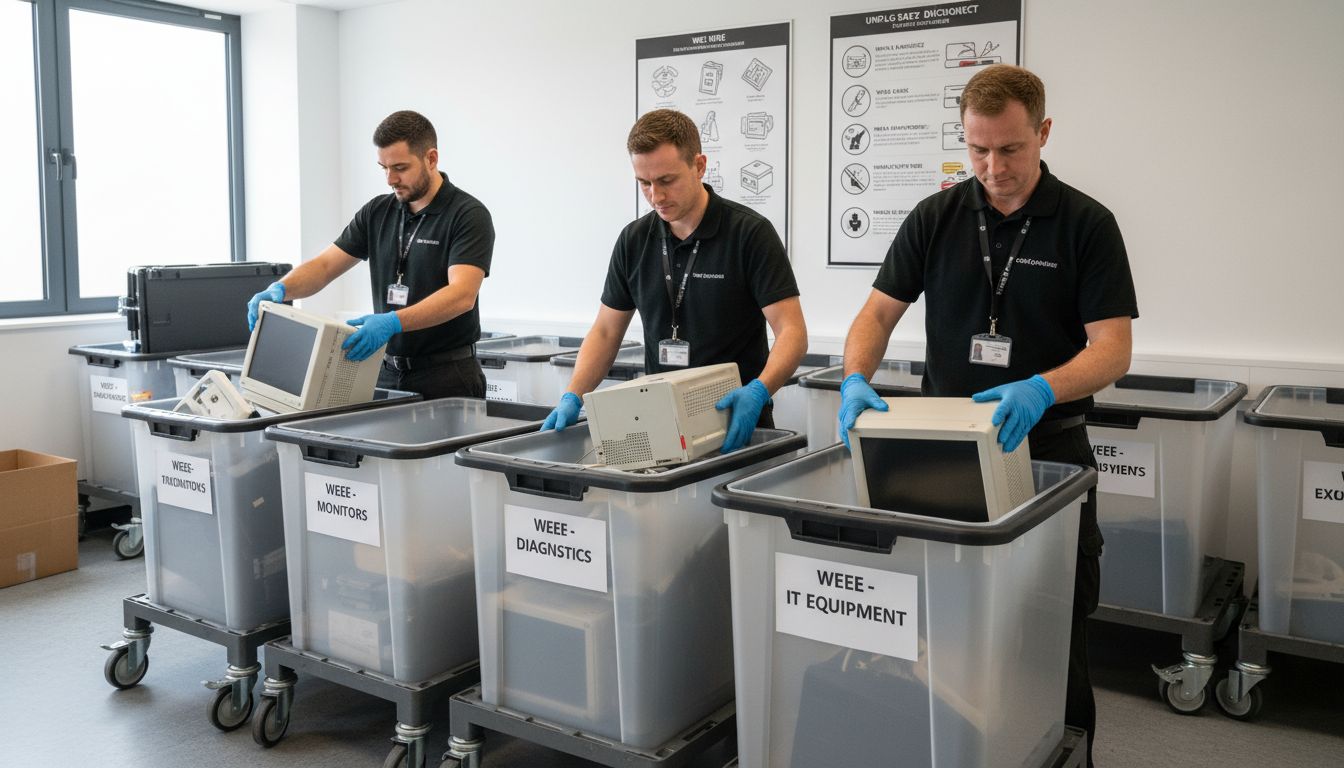
- Ensuring proper segregation of electronic waste
- Partnering with certified waste management providers
- Implementing tracking and reporting mechanisms
- Conducting regular waste audits
- Training staff on WEEE disposal protocols
The Waste Electrical and Electronic Equipment Regulations 2006 provide a comprehensive legal framework that businesses must navigate carefully. Companies in Newcastle, Durham, and across the North East must understand these regulations to avoid potential financial penalties and environmental infractions.
For businesses seeking detailed guidance on navigating these complex legal requirements, our waste disposal legal requirements guide offers comprehensive insights into maintaining full compliance. The ultimate goal is not just legal adherence, but creating a sustainable approach to electronic waste management that benefits both businesses and the environment.
Business Responsibilities for Safe WEEE Disposal
According to the UK government’s guidance, safe WEEE disposal is a critical responsibility that extends far beyond simple waste management. Businesses must implement comprehensive strategies that protect both environmental sustainability and workplace safety, ensuring responsible handling of electronic waste across all operational levels.
Key Safety and Disposal Responsibilities
Operational Safety Protocols:
- Conduct thorough risk assessments for electronic waste handling
- Provide specialized personal protective equipment (PPE)
- Establish designated storage areas for electronic waste
- Train staff on potential hazardous material exposure
- Implement strict segregation procedures for different electronic waste types
Environmental and Health Considerations:
- Prevent contamination of soil and water resources
- Minimize potential release of toxic substances
- Ensure proper dismantling and processing of electronic equipment
- Monitor and document waste disposal processes
- Work with certified waste management professionals
The Health and Safety Executive (HSE) emphasizes that businesses must control exposure to hazardous substances, highlighting the critical health risks associated with improper WEEE recycling. Companies in Newcastle, Durham, and across the North East must develop robust protocols that protect workers and the environment.
For businesses seeking comprehensive guidance on navigating these complex disposal requirements, our WEEE waste collection resources provide practical insights into creating safe, compliant waste management strategies. The ultimate goal is transforming electronic waste disposal from a potential risk into an opportunity for responsible environmental stewardship.

Take Control of Your Waste Electrical Equipment Today
Understanding what qualifies as Waste Electrical and Electronic Equipment (WEEE) and navigating the complex legal and safety requirements can overwhelm any business. You might struggle with identifying all WEEE categories, ensuring full compliance with UK regulations, or finding a trustworthy waste collection partner. The goal is clear: responsible, secure disposal that protects both your business and the environment while avoiding costly penalties.
Venture Waste Management is here to simplify your WEEE challenges. With expert knowledge and a dedicated service approach, we support you in classifying and managing your electronic waste correctly. Explore our focused solutions through the WEEE Waste Archives to see how others benefit from comprehensive guidance. Our efficient processes detailed in Waste Collection Process in the UK for Businesses 2025 ensure your operations remain smooth and compliant.

Don’t wait until electronic waste piles up or risks your compliance record. Take action now by visiting Venture Waste to book your tailored WEEE disposal service. Secure your business future with responsible, hassle-free electronic waste management today.
Frequently Asked Questions
What is classified as Waste Electrical and Electronic Equipment (WEEE)?
WEEE refers to any discarded electrical or electronic equipment, including all components, sub-assemblies, and consumables, such as large appliances, IT equipment, and medical devices.
What are the main categories of WEEE businesses need to recognize?
Businesses should recognize categories such as large household appliances, small household appliances, IT and telecommunications equipment, display devices, cooling appliances, and electronic tools among others.
Why is proper disposal of WEEE important for businesses?
Proper disposal of WEEE is crucial for environmental sustainability, compliance with regulations, and reducing potential health risks associated with hazardous materials found in electronic waste.
What are the key responsibilities of businesses regarding WEEE disposal?
Businesses must finance the recycling of their electronic waste, provide information about disposal methods, partner with certified waste management providers, implement safety protocols, and conduct regular audits to ensure compliance.


Leave a Reply
Want to join the discussion?Feel free to contribute!