

What Can Be Recycled in UK Healthcare Facilities
Balancing patient safety with environmental responsibility is a daily challenge for managers overseeing busy healthcare facilities across the United Kingdom. Effective recycling in British hospitals goes beyond basic sorting and disposal, pressing institutions to adopt comprehensive practices in line with national regulations. With the National Health Service generating 156,000 tonnes of clinical waste each year, this guide highlights actionable core principles that help you optimise recycling, support legal compliance, and protect both staff and the planet.
Table of Contents
- Recycling in UK Healthcare: Core Principles
- Types of Waste: What Can Be Recycled
- Healthcare Recycling Processes and Requirements
- Legal Obligations for Healthcare Facilities
- Common Pitfalls and Contamination Risks
Key Takeaways
| Point | Details |
|---|---|
| Importance of Waste Management | Sustainable waste management is crucial in UK healthcare, balancing patient safety and ecological responsibility. |
| Effective Waste Segregation | Segregation of healthcare waste is essential for successful recycling and safety; distinct protocols are required for different waste types. |
| Legal Compliance | Healthcare facilities must adhere to numerous legal obligations to ensure safe and environmentally responsible waste management practices. |
| Training and Awareness | Regular staff training on waste segregation and management is vital to minimise contamination risks and ensure compliance with regulations. |
Recycling in UK Healthcare: Core Principles
Healthcare facilities in the United Kingdom are increasingly recognising the critical importance of sustainable waste management practices. The healthcare sector, which contributes significantly to environmental impact, must adopt comprehensive recycling strategies that balance patient safety with ecological responsibility. Sustainability in healthcare involves a holistic approach that considers social, economic, and environmental factors.
The core principles of healthcare recycling in the UK revolve around several key objectives:
- Minimising waste generation
- Implementing precise waste segregation protocols
- Reducing environmental footprint
- Ensuring patient and staff safety
- Complying with national waste management regulations
The NHS clinical waste strategy provides a comprehensive framework for sustainable waste management. According to recent guidelines, healthcare facilities should aim for an optimal waste distribution that includes:
- 20% high-temperature incineration
- 20% infectious waste processing
- 60% offensive waste management
Healthcare professionals play a pivotal role in implementing these strategies. By understanding clinical waste strategies, they can contribute to reducing unnecessary waste and improving overall environmental sustainability.
Waste Segregation Principles
Effective waste segregation is fundamental to successful recycling in healthcare settings. Different types of waste require distinct handling procedures:
- Pharmaceutical Waste: Requires special disposal methods
- Biological Waste: Must be handled with strict safety protocols
- Recyclable Materials: Includes paper, certain plastics, and non-contaminated packaging
Healthcare waste management is not just an environmental imperative but a critical aspect of responsible patient care and institutional management.
Pro tip: Implement comprehensive staff training programmes on waste segregation to ensure consistent and effective recycling practices across all departments.
Types of Waste: What Can Be Recycled
Healthcare facilities generate substantial quantities of waste across multiple categories, with comprehensive waste segregation strategies being crucial for effective recycling and environmental management. The National Health Service (NHS) produces approximately 156,000 tonnes of clinical waste annually, requiring meticulous sorting and processing to ensure sustainability and safety.
The primary types of recyclable waste in healthcare settings include:
- Paper and Cardboard: Office documents, packaging materials
- Plastic Containers: Non-contaminated bottles, packaging
- Glass: Clean medical containers and laboratory glassware
- Metals: Clean aluminium and steel items
- Electronic Equipment: Functional medical devices and computer hardware
Waste Categorisation
Healthcare waste is typically classified into several distinct streams:
- Non-hazardous Recyclable Waste
- Infectious Clinical Waste
- Pharmaceutical Waste
- Sharps and Contaminated Materials
- Electronic and Electrical Equipment
Specific waste streams require unique handling protocols. NHS waste segregation guidance recommends using colour-coded containers to prevent cross-contamination and facilitate proper recycling:

Below is a comparison of common colour-coded NHS waste containers and the risks of improper usage:
| Container Colour | Intended Use | Risks if Misused |
|---|---|---|
| Yellow | Medicine-contaminated infectious waste | Spread of infection, legal breach |
| Purple striped | Cytotoxic/cytostatic waste | Chemical hazard, environmental harm |
| Orange | Infectious clinical waste | Cross-contamination risk |
| Tiger | Offensive waste from non-infectious patients | Odour issues, non-compliance fines |
The following table summarises the typical waste streams in UK healthcare alongside their preferred treatment and environmental considerations:
| Waste Stream | Preferred Treatment | Key Environmental Consideration |
|---|---|---|
| Non-hazardous Recyclable Waste | Recycling facilities | Minimises landfill and resource use |
| Infectious Clinical Waste | Specialised processing | Prevents spread of pathogens |
| Pharmaceutical Waste | High-security disposal | Avoids chemical contamination |
| Sharps and Contaminated Items | Incineration | Ensures safety and compliance |
| Electronic Equipment | Specialist recycling | Reduces e-waste pollution |
- Yellow bags: Medicine-contaminated infectious waste
- Purple striped bags: Cytotoxic and cytostatic waste
- Orange bags: Infectious clinical waste
- Tiger bags: Offensive waste from non-infectious patients
Effective waste segregation is not just an environmental requirement but a critical aspect of healthcare safety and sustainability.
Recycling Limitations
Not all healthcare waste can be recycled. Contaminated materials, biological waste, and hazardous substances must undergo specialised treatment processes to ensure public health and safety. Proper training and strict adherence to waste management protocols are essential for healthcare professionals.
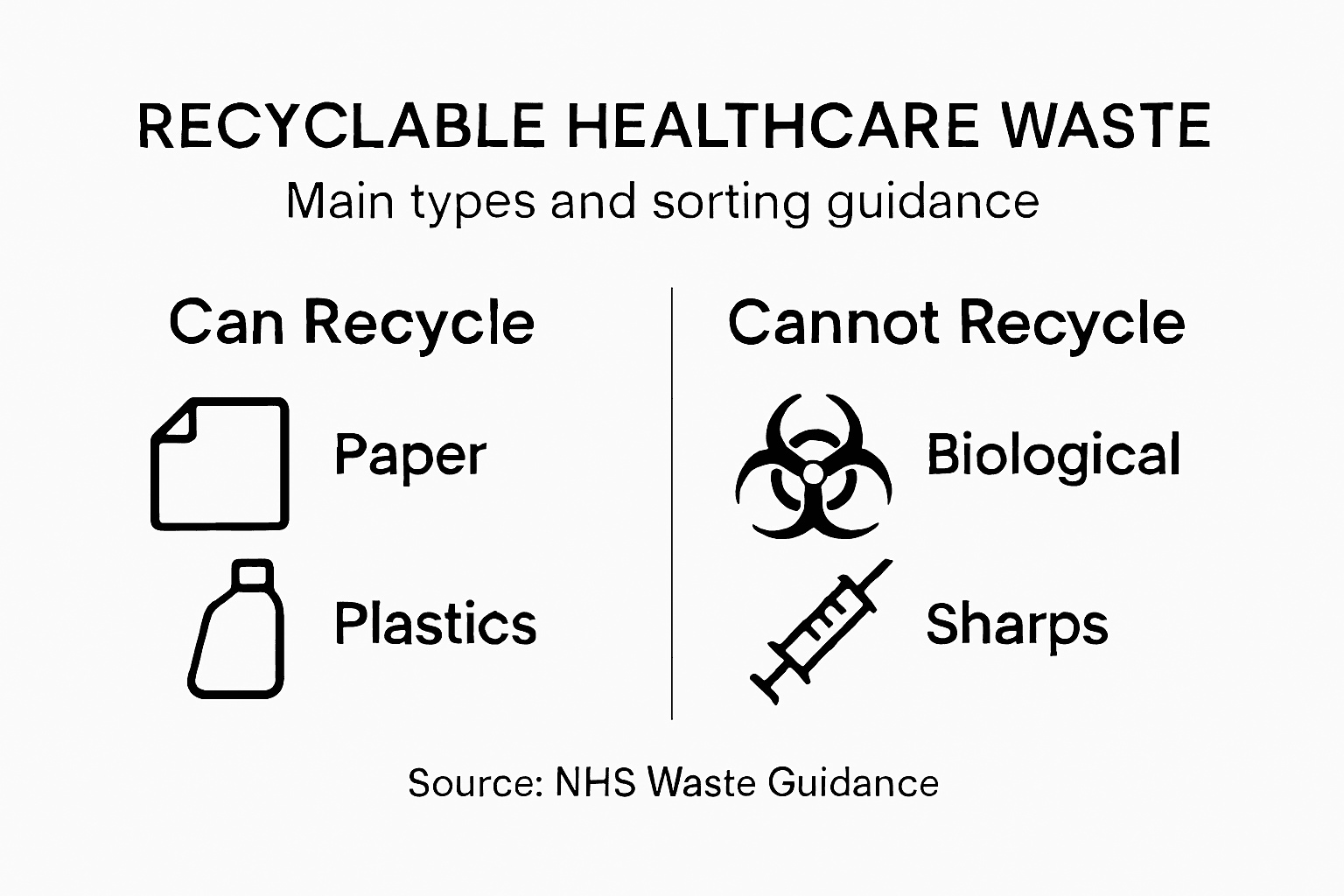
Pro tip: Conduct regular staff training sessions on waste segregation to maintain high standards of recycling and minimize contamination risks.
Healthcare Recycling Processes and Requirements
Healthcare facilities must adhere to rigorous waste management protocols, with comprehensive best practice guidance forming the cornerstone of sustainable waste disposal strategies. The Health Technical Memorandum 07-01 (HTM 07-01) provides detailed frameworks for managing healthcare waste, emphasizing environmental sustainability, cost reduction, and safety.
Key processes in healthcare recycling include:
- Waste Segregation: Immediate sorting at point of generation
- Risk Assessment: Evaluating potential contamination levels
- Appropriate Containment: Usingspecialised containers
- Staff Training: Ensuring consistent waste handling procedures
- Monitoring and Reporting: Tracking waste streams and disposal methods
Pharmaceutical Waste Management
Pharmaceutical waste requires particularly meticulous handling. Pharmaceutical waste management guidelines stress several critical requirements:
- Strict segregation of different medication types
- Use of approved pharmaceutical waste containers
- Comprehensive staff training
- Adherence to local and national disposal policies
- Comprehensive risk assessment protocols
The recycling process typically involves multiple stages:
- Initial waste identification
- Segregation by waste category
- Decontamination where possible
- Selection of appropriate disposal method
- Documentation and reporting
Effective healthcare waste management is a complex process requiring precision, knowledge, and consistent implementation.
Compliance and Environmental Considerations
Healthcare facilities must balance legal compliance with environmental responsibility. This involves reducing waste generation, maximizing recycling opportunities, and selecting disposal methods that minimise environmental impact. The NHS’s net zero ambitions are driving innovative approaches to waste management across healthcare settings.
Pro tip: Develop a comprehensive waste management training programme that is regularly updated to reflect the latest environmental and safety guidelines.
Legal Obligations for Healthcare Facilities
Healthcare facilities face complex legal requirements when managing waste, with comprehensive legal frameworks governing every aspect of waste disposal and environmental protection. The Health Technical Memorandum 07-01 (HTM 07-01) provides detailed guidance that healthcare providers must rigorously follow to ensure compliance and safety.
Key legal obligations encompass multiple regulatory domains:
- Environmental Protection Acts: Minimising ecological impact
- Hazardous Waste Regulations: Controlling dangerous materials
- Clinical Waste Controls: Managing infectious substances
- Data Protection Guidelines: Securing confidential medical information
- Workplace Safety Standards: Protecting staff and patients
Regulatory Compliance Requirements
Healthcare facilities must adhere to several critical legal mandates:
- Conduct regular waste audits
- Implement comprehensive staff training programmes
- Maintain detailed waste management documentation
- Use approved waste containment systems
- Follow strict segregation protocols
Pharmaceutical waste management involves additional specific legal considerations, including:
- Controlled drug legislation compliance
- Secure disposal of pharmaceutical materials
- Local risk assessment protocols
- Staff certification for handling controlled substances
Legal compliance in healthcare waste management is not just a regulatory requirement but a fundamental aspect of patient and environmental safety.
Risk Management and Liability
Healthcare providers must proactively manage legal risks by developing robust waste management strategies that anticipate potential regulatory changes. This includes maintaining flexible systems that can adapt to evolving environmental and safety standards while consistently protecting public health.
Pro tip: Establish a dedicated compliance team responsible for staying updated on the latest waste management regulations and implementing necessary organisational changes.
Common Pitfalls and Contamination Risks
Healthcare facilities face numerous challenges in waste management, with critical contamination risks threatening both environmental safety and operational efficiency. Improper waste segregation can lead to significant complications that compromise health, safety, and regulatory compliance.
Key contamination pitfalls include:
- Inappropriate Waste Mixing: Combining different waste streams
- Inadequate Staff Training: Lack of proper segregation knowledge
- Incorrect Labelling: Misidentifying hazardous materials
- Poor Container Management: Using inappropriate waste receptacles
- Insufficient Monitoring: Failing to track waste disposal processes
Pharmaceutical Waste Challenges
Pharmaceutical waste presents unique contamination risks that healthcare facilities must carefully manage:
- Incorrect chemical waste classification
- Improper handling of cytotoxic substances
- Inadequate disposal of controlled medications
- Cross-contamination of sensitive materials
- Potential environmental hazards
Pharmaceutical waste management highlights several critical contamination scenarios:
- Mixing cytotoxic waste with general waste streams
- Failing to follow strict handling protocols
- Overlooking chemical compatibility issues
- Inadequate staff protection measures
Contamination in healthcare waste management is not merely a procedural issue but a critical risk to public health and environmental safety.
Prevention and Management Strategies
Healthcare facilities must implement comprehensive strategies to mitigate contamination risks. This includes robust staff training, clear waste segregation protocols, regular compliance audits, and maintaining up-to-date knowledge of evolving waste management regulations.
Pro tip: Develop a comprehensive colour-coded waste management system with clear visual guides to minimise human error in waste segregation.
Streamline Your Healthcare Waste Recycling with Venture Waste Management
Managing recyclable waste in UK healthcare facilities demands strict adherence to segregation principles and legal compliance to safeguard public health and the environment. If your facility is grappling with challenges such as effective segregation of pharmaceutical, infectious, and non-hazardous waste or seeking to reduce contamination risks, Venture Waste Management can provide tailored solutions that align with national standards and sustainability goals.

Discover how our expert services simplify your waste collection needs through a clear three-step process covering general waste, hazardous materials, and secure recycling. Stay compliant and improve your environmental impact by partnering with us. Explore our comprehensive Waste Collection Process in the UK for Businesses 2025 and learn how the waste collection network in the UK serves businesses in 2025. Take the next step today by visiting Venture Waste Management and book a service designed to meet your healthcare facility’s precise recycling requirements.
Frequently Asked Questions
What types of waste can be recycled in healthcare facilities?
In healthcare facilities, recyclable waste includes paper and cardboard, non-contaminated plastic containers, clean glass, metals, and functional electronic equipment.
How is waste sorted in healthcare settings for recycling?
Waste is typically sorted at the point of generation, using colour-coded containers to prevent cross-contamination and ensure proper handling according to specific waste categories.
What are the key principles of waste segregation in UK healthcare?
Key principles include precise waste segregation protocols, minimising waste generation, ensuring patient and staff safety, and complying with national waste management regulations.
Can contaminated materials be recycled in healthcare facilities?
No, contaminated materials, biological waste, and hazardous substances cannot be recycled and must be disposed of through specialised treatment processes to ensure safety and public health.


Leave a Reply
Want to join the discussion?Feel free to contribute!