

Waste Transport Regulations: Complete UK Guide
Over one million tonnes of hazardous waste are transported every year under british regulations, yet only a small percentage of businesses fully understand the rules that keep people and the environment safe. The complex web of waste transport laws matters to every organisation handling byproducts, rubbish, or industrial materials. This guide explains the crucial details every business owner needs to know, from essential compliance steps to key risks that could lead to unlimited penalties.
Table of Contents
- What Are Waste Transport Regulations?
- Types of Waste and Transport Categories
- Legal Framework and Licensing Requirements
- Compliance Obligations for Waste Producers and Carriers
- Risks, Penalties, and Common Pitfalls
Key Takeaways
| Point | Details |
|---|---|
| Understanding Regulations | Waste transport regulations are essential for ensuring safe and environmentally responsible waste management in the UK. Compliance with these regulations protects public health and the environment. |
| Licensing and Registration | All businesses involved in waste transportation must register as carriers and obtain specific licenses to operate legally. Non-compliance can result in significant penalties. |
| Compliance Obligations | Companies must classify, document, and track waste appropriately, ensuring it is transported to authorised facilities only. This fosters accountability in waste management practices. |
| Risks of Non-Compliance | Improper waste transport can lead to environmental contamination, public health risks, and legal consequences, including unlimited fines for lack of registration. Businesses must proactively manage these risks. |
What Are Waste Transport Regulations?
Waste transport regulations are comprehensive legal frameworks designed to ensure the safe, environmentally responsible movement of waste materials across the United Kingdom. According to the Health and Safety Executive, these regulations encompass critical aspects of waste management, including precise classification, appropriate packaging, safe loading procedures, comprehensive documentation, and specialized carriage requirements.
At their core, these regulations focus on managing potentially hazardous materials to protect public health, worker safety, and environmental integrity. The guidelines cover various waste categories, from industrial byproducts to household disposal materials, establishing strict protocols for transportation. Key elements include mandatory risk assessments, specific containment standards, and detailed tracking mechanisms to prevent potential environmental contamination.
Specifically for UK businesses, waste transport regulations mandate several critical compliance requirements. As outlined by UK Government guidance, organizations must demonstrate comprehensive understanding of waste classification, maintain accurate transportation records, and ensure all waste is transported by licensed carriers. These regulations apply to multiple sectors, including manufacturing, healthcare, construction, and retail, requiring businesses to implement robust waste management strategies.
Practically speaking, waste transport regulations address several crucial dimensions:
- Precise waste categorization and hazard identification
- Specialized packaging and containment requirements
- Mandatory documentation and tracking procedures
- Environmental protection protocols
- Worker safety guidelines
- Licensing and compliance verification processes
By establishing these comprehensive frameworks, waste transport regulations aim to create a systematic approach to waste management that prioritizes environmental sustainability, public safety, and responsible business practices.
Types of Waste and Transport Categories
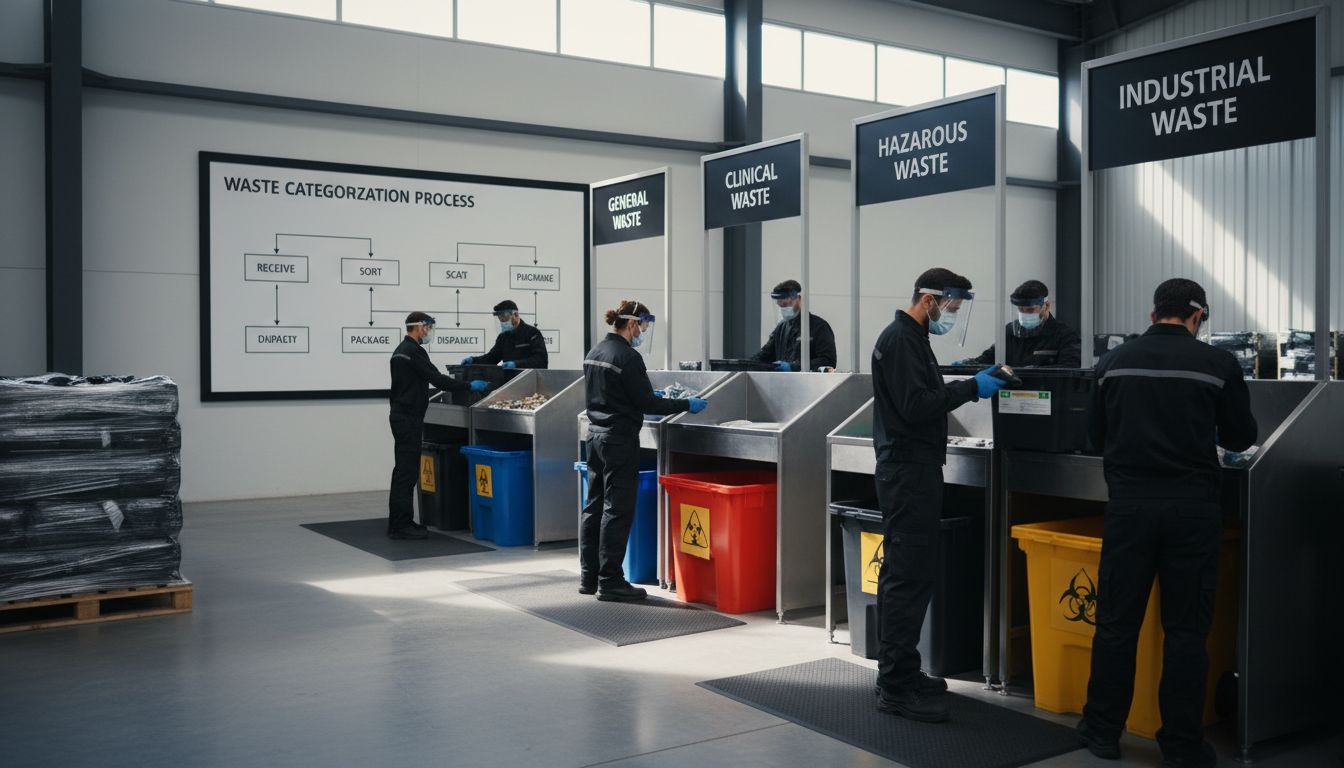
Waste transport regulations in the United Kingdom categorize waste into distinct types, each requiring specific handling and transportation protocols. Government guidance emphasizes the critical importance of proper classification and documentation to ensure environmental safety and public health protection.
Waste Categories are typically divided into several key classifications:
- General Waste: Non-hazardous materials from commercial and domestic sources
- Hazardous Waste: Materials posing potential risks to human health or environment
- Clinical/Medical Waste: Specialized waste from healthcare facilities
- Industrial Waste: Byproducts from manufacturing and industrial processes
- Special Waste: Materials requiring unique handling procedures
Particular attention must be given to hazardous waste transportation. As specified by UK Government regulations, certain waste types like international catering waste are classified as high-risk category 1 animal by-products, demanding stringent handling and disposal protocols. These regulations mandate specialized containment, tracking, and transportation methods to mitigate potential environmental and health risks.
Businesses transporting waste must comply with comprehensive requirements including:
- Obtaining appropriate waste carrier licenses
- Maintaining detailed transportation documentation
- Using approved containment and packaging methods
- Implementing robust tracking systems
- Ensuring staff are trained in waste handling procedures
- Following strict environmental protection guidelines
Understanding these waste transport categories is crucial for businesses across sectors, from manufacturing and healthcare to retail and construction, ensuring legal compliance and responsible waste management practices.
Legal Framework and Licensing Requirements
The legal framework governing waste transport in the United Kingdom is comprehensive and stringent, designed to ensure environmental protection and responsible waste management. UK Government regulations mandate that businesses involved in waste transportation, buying, selling, or disposing of waste must register as official waste carriers, brokers, or dealers. This registration process is not optional – failure to comply can result in unlimited financial penalties, underscoring the critical importance of legal adherence.
Key Licensing Requirements for waste transport businesses include:
- Mandatory registration with environmental authorities
- Obtaining specific waste carrier licenses
- Demonstrating professional competence in waste management
- Maintaining comprehensive waste transfer documentation
- Proving financial stability and environmental responsibility
- Regular renewal and updating of professional credentials
Environment Agency guidelines further specify that businesses engaged in waste activities such as recycling, treatment, storage, or disposal must secure specific environmental permits. These permits are legally binding and represent a crucial mechanism for ensuring that waste management practices meet rigorous national standards. Operating without the appropriate permit is not just a regulatory breach but can lead to significant legal enforcement actions, potentially including substantial fines and operational restrictions.
The licensing framework is designed to create multiple layers of accountability:
- Preventing unauthorized waste transportation
- Tracking waste movement and disposal
- Protecting public health and environmental integrity
- Ensuring professional standards in waste management
- Providing a mechanism for regulatory oversight
For businesses in sectors ranging from construction and manufacturing to healthcare and retail, understanding and navigating these legal requirements is not just about compliance – it’s about demonstrating a commitment to responsible environmental stewardship and sustainable waste management practices.
Compliance Obligations for Waste Producers and Carriers
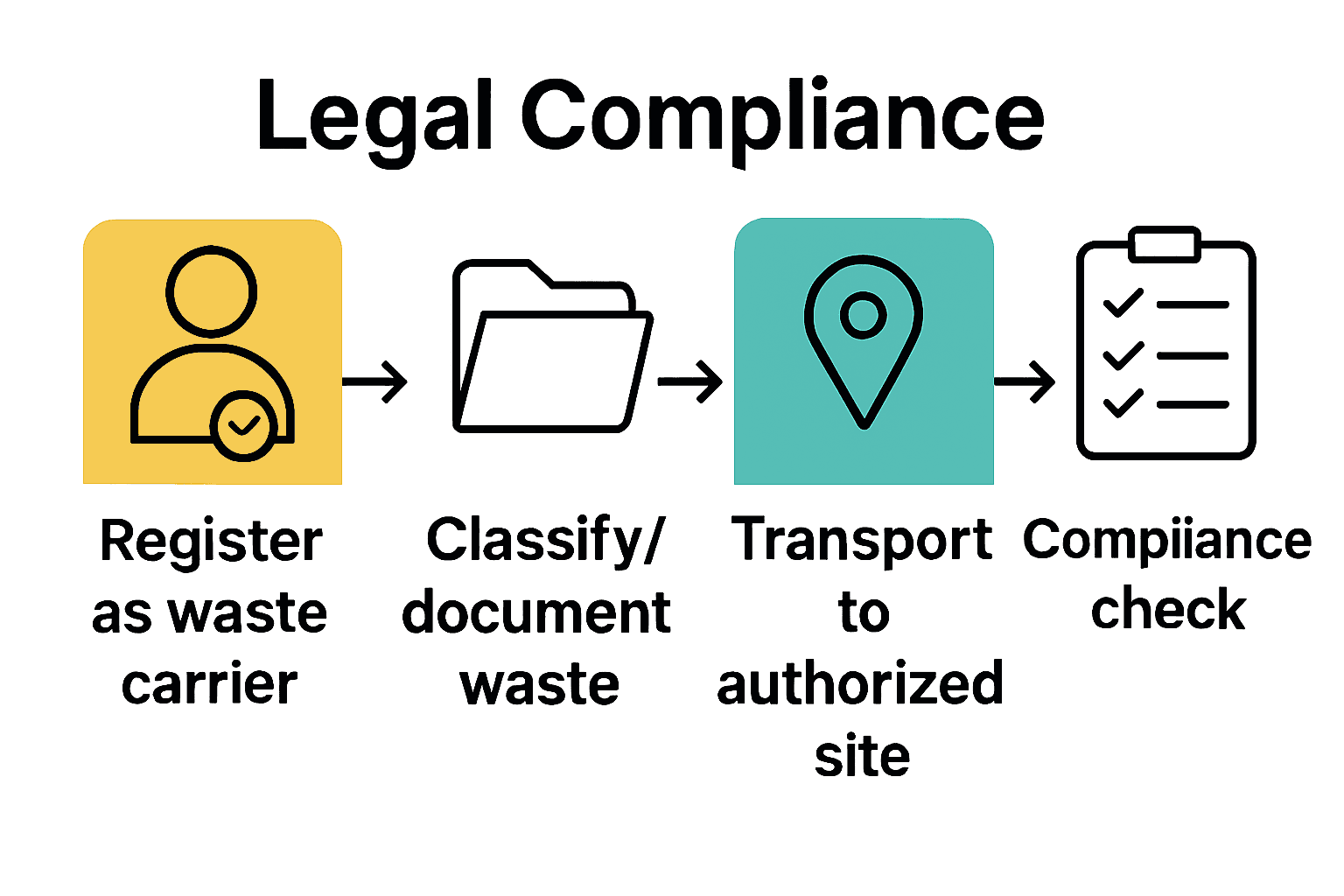
UK Government regulations establish comprehensive compliance obligations for waste producers and carriers, creating a robust framework to ensure responsible waste management. These regulations mandate that waste carriers must meticulously register, classify, and document waste, while also ensuring transportation only to authorized disposal sites. The requirements are designed to create a transparent and accountable waste management ecosystem.
Core Compliance Obligations include:
- Mandatory registration as a waste carrier
- Precise waste classification and documentation
- Maintaining detailed transportation records
- Transporting waste exclusively to authorized facilities
- Implementing strict tracking mechanisms
- Ensuring proper waste handling and containment protocols
Government guidance further emphasizes that waste operators must demonstrate technical competence by joining approved professional schemes. These schemes validate an organization’s capability to manage waste safely and in full compliance with environmental standards. Technical competence is not merely a bureaucratic requirement but a critical mechanism to ensure professional waste management practices that protect public health and environmental integrity.
The compliance framework creates multiple layers of accountability:
- Comprehensive documentation of waste movement
- Regular audits and verification processes
- Mandatory record-keeping for specified periods
- Transparent reporting mechanisms
- Professional training and certification requirements
For businesses across various sectors, understanding and implementing these compliance obligations is fundamental. It’s not just about meeting legal requirements – it’s about contributing to a sustainable waste management ecosystem that protects our environment and public health.
Risks, Penalties, and Common Pitfalls
Health and Safety Executive guidelines highlight the significant risks associated with improper waste transport, emphasizing that non-compliance can lead to severe environmental and public health consequences. Businesses that fail to adhere to strict classification, packaging, and documentation requirements expose themselves to substantial legal and financial liabilities, making comprehensive understanding of waste transport regulations absolutely critical.
Primary Risks in Waste Transportation include:
- Potential environmental contamination
- Public health hazards
- Legal prosecution
- Substantial financial penalties
- Reputational damage
- Operational disruptions
- Loss of waste carrier licenses
UK Government regulations underscore the severity of non-compliance by establishing that businesses can face unlimited fines for failing to register as waste carriers, brokers, or dealers. These penalties are not merely punitive but serve as a robust deterrent, compelling businesses to maintain rigorous waste management standards and legal accountability.
Common pitfalls that businesses must vigilantly avoid include:
- Inadequate waste classification
- Poor documentation practices
- Insufficient staff training
- Improper waste containment
- Lack of tracking mechanisms
- Failure to update carrier registrations
- Transporting waste to unauthorized facilities
Navigating the complex landscape of waste transport regulations requires a proactive approach. Businesses must invest in comprehensive training, maintain meticulous records, and continuously update their waste management practices to mitigate risks and ensure full legal compliance.
Navigate Waste Transport Regulations with Confidence and Ease
Complying with the complex waste transport regulations in the UK can feel overwhelming. From precise waste classification to maintaining rigorous documentation and securing the correct licences, the risks of non-compliance are high and the penalties severe. Businesses face challenges such as ensuring proper waste containment, training staff thoroughly, and transporting waste only to authorised facilities. At Venture Waste Management, we understand these critical needs and provide tailored solutions that help you stay fully compliant while protecting your reputation and the environment.

Discover how our expert team supports your waste management strategy through streamlined services like licensed hazardous waste handling and transparent documentation. Learn more about our efficient Waste Collection Process in the UK for Businesses 2025 – Venture Waste and explore the robustness of How the Waste Collection Network in UK Serves Businesses in 2025 – Venture Waste. Act now to secure compliant waste transport solutions that protect your business and the wider community. Visit us at Venture Waste Management to get started and experience waste services designed for your peace of mind.
Frequently Asked Questions
What are waste transport regulations?
Waste transport regulations are legal frameworks designed to ensure the safe and environmentally responsible transportation of waste materials. They cover classification, packaging, documentation, and handling of various waste types to protect public health and the environment.
What types of waste are regulated during transportation?
Waste transport regulations categorize waste into several types, including general waste, hazardous waste, clinical/medical waste, industrial waste, and special waste, each requiring specific handling and transportation protocols.
What are the licensing requirements for waste carriers?
Businesses involved in waste transportation must register as waste carriers and obtain specific licenses. This includes demonstrating professional competence, maintaining accurate transportation records, and securing environmental permits for certain waste activities.
What are the risks of non-compliance with waste transport regulations?
Non-compliance can lead to severe consequences, including environmental contamination, public health hazards, legal prosecution, substantial financial penalties, and reputational damage, highlighting the importance of strict adherence to regulations.
Recommended
- Hazardous Waste Identification: A 2025 Guide for UK Businesses – Venture Waste
- Hazardous Waste Regulations 2025: A Guide for UK Businesses – Venture Waste
- Hazardous Waste Handling for UK Businesses: Complete 2025 Guide – Venture Waste
- Hazardous Waste Regulations UK 2025: Essential Guide for Businesses – Venture Waste
- GB BPR Biocidal Product Regulations – ClearSpa™


Leave a Reply
Want to join the discussion?Feel free to contribute!