

Waste Transport Compliance in 2025: Essential UK Business Guide
UK businesses are facing sweeping changes in waste transport regulations in 2025 and ignoring them could land companies in serious trouble. This might sound like just another box to tick, but the risks involved go far beyond paperwork. With the Environment Agency now able to hand out fines of up to £50,000 for non-compliance, the real story is how businesses can turn strict rules into an advantage for responsible management. Curious how legal duties can actually improve your business and protect the planet at the same time? You are about to find out.
Table of Contents
- Understanding Uk Waste Transport Regulations
- Key Compliance Challenges For Different Sectors
- Steps To Secure And Legal Waste Disposal
- Choosing Safe And Reliable Waste Transport Partners
Quick Summary
| Takeaway | Explanation |
|---|---|
| Understand waste transport regulations | Familiarise yourself with the Environmental Protection Act and additional local regulations for compliance. |
| Obtain necessary waste carrier licenses | Ensure your business registers as a waste carrier, broker, or dealer with the Environment Agency. |
| Prioritize accurate waste documentation | Maintain detailed waste transfer notes and compliance records for every movement of waste materials. |
| Evaluate waste transport partners thoroughly | Assess potential partners for compliance, technical capabilities, and risk management before selection. |
| Implement tailored waste management strategies | Different sectors require unique approaches; customize your strategy according to your industry’s specific challenges. |
Understanding UK Waste Transport Regulations
Waste transport compliance represents a critical legal obligation for businesses across the United Kingdom, requiring meticulous attention to environmental regulations and operational standards. In 2025, companies must navigate a complex landscape of legislative requirements that govern the safe, responsible, and legal movement of waste materials.
Legislative Framework and Key Regulations
The waste transport regulatory environment in the UK is primarily governed by several pivotal pieces of legislation. The Environmental Protection Act 1990 established fundamental principles for waste management, while more recent regulations have significantly expanded compliance requirements. The Waste (England and Wales) Regulations 2011 specifically outline the legal obligations for waste transportation, emphasising the principles of waste hierarchy and responsible disposal.
Businesses operating in regions like Newcastle, Durham, and Sunderland must understand that these regulations apply universally, regardless of geographical location. The regulations mandate strict protocols for waste classification, tracking, and transportation, ensuring that every stage of waste movement is documented and environmentally responsible.
Compliance Requirements for Waste Transport
To maintain legal compliance, businesses must obtain specific waste carrier licenses from the Environment Agency. This process involves demonstrating technical competence, financial stability, and a comprehensive understanding of waste management protocols. Companies must register as waste carriers, brokers, or dealers, depending on their specific operational model.
Key compliance elements include:
- Waste Documentation: Maintaining accurate waste transfer notes for every waste movement
- Vehicle Standards: Ensuring transportation vehicles meet environmental and safety regulations
- Training Requirements: Providing comprehensive staff training on waste transport regulations
Interested businesses can explore our detailed waste collection process guide for more comprehensive insights into navigating these complex requirements.
Environmental and Legal Implications
Non-compliance with waste transport regulations can result in significant financial penalties and potential legal consequences. The Environment Agency has the authority to impose substantial fines, ranging from £300 to £50,000, depending on the severity of the violation. Companies may also face potential prosecution, which could include criminal charges for serious breaches.
Moreover, these regulations extend beyond mere legal compliance. They represent a critical mechanism for protecting environmental resources, reducing pollution, and promoting sustainable waste management practices across industrial sectors in the United Kingdom.
Businesses must recognize that waste transport compliance is not just a legal requirement but a fundamental responsibility towards environmental stewardship. By understanding and implementing these regulations rigorously, companies can contribute to a more sustainable and environmentally conscious future.
Key Compliance Challenges For Different Sectors
Different industrial sectors face unique waste transport compliance challenges that demand tailored strategies and comprehensive understanding of regulatory requirements. The complexity of waste management regulations varies significantly across industries, creating a nuanced landscape of legal and environmental responsibilities.
Below is a comparison table outlining the unique compliance challenges faced by key sectors in waste transport:
| Sector | Unique Compliance Challenges |
|---|---|
| Manufacturing & Industrial | – Managing hazardous waste streams – Precise documentation for complex waste materials – Maintaining vehicle compliance for specialized transportation |
| Healthcare & Pharmaceutical | – Strict segregation of different waste categories – Specialized containment and transportation – Comprehensive staff training |
| Commercial & Office | – Confidential document disposal needs – Adapting to new recycling legislation – Balancing legal, environmental, and security requirements |
Manufacturing and Industrial Sectors
Manufacturing industries encounter particularly intricate waste transport compliance challenges. According to a recent industry survey, industrial sites are experiencing 12–18% increases in waste management costs, primarily driven by escalating landfill fees and stringent transportation regulations. Companies must develop robust waste classification systems, implement sophisticated tracking mechanisms, and invest in specialized transportation infrastructure.
Key challenges for manufacturing sectors include:
- Managing hazardous waste streams
- Ensuring precise documentation for complex waste materials
- Maintaining vehicle compliance for specialized waste transportation
Healthcare and Pharmaceutical Waste Management
Healthcare facilities face exceptionally rigorous waste transport compliance requirements due to the sensitive nature of medical waste. Regulatory frameworks mandate strict protocols for handling potentially infectious, chemical, and pharmaceutical waste materials. Hospitals and medical research institutions must develop comprehensive waste segregation, packaging, and transportation strategies that minimize environmental and health risks.
Particular challenges in this sector include:
- Strict segregation of different waste categories
- Specialized containment and transportation requirements
- Comprehensive staff training on waste management protocols
Commercial and Office Waste Compliance
Commercial environments present unique waste transport compliance challenges, particularly concerning confidential document disposal. A July 2024 survey revealed that 64% of English businesses have not yet adapted to new recycling legislation, highlighting significant implementation gaps. Companies must develop holistic waste management approaches that balance legal compliance, environmental responsibility, and information security.

Learn more about our confidential waste management strategies to understand how businesses can effectively navigate these complex requirements.
Cross-sector waste transport compliance demands a proactive, strategic approach. Businesses must continuously educate themselves, invest in robust waste management infrastructure, and maintain meticulous documentation. The evolving regulatory landscape requires adaptable, forward-thinking strategies that prioritize environmental protection, legal compliance, and operational efficiency.
Ultimately, successful waste transport compliance is not merely about avoiding penalties but demonstrating corporate responsibility and commitment to sustainable business practices. Each sector must develop nuanced approaches that address its specific waste management challenges while contributing to broader environmental conservation efforts.
Steps to Secure and Legal Waste Disposal
Secure and legal waste disposal requires a systematic approach that combines regulatory compliance, environmental responsibility, and strategic planning. Businesses must implement a comprehensive waste management strategy that minimizes risks and maximizes operational efficiency.
Here is a step-by-step summary table outlining the key stages of secure and legal waste disposal as described in this section:
| Step | Description |
|---|---|
| Waste Characterization and Classification | Identify precise waste composition, hazardous materials, and environmental impact through audits and testing |
| Documentation and Tracking Protocols | Maintain transfer notes, carrier certificates, manifests, and disposal site records for every movement |
| Secure Disposal and Environmental Compliance | Partner with licensed providers, ensure certified facilities, and comply with environmental regulations |
Waste Characterization and Classification
The first critical step in secure waste disposal involves thorough waste characterization. Research from the Environment Agency emphasizes the importance of accurate waste classification, which determines the appropriate disposal method and transportation requirements. Businesses must conduct detailed waste audits, identifying:
- Precise waste composition
- Potential hazardous materials
- Environmental impact of waste streams
Technical analysis and laboratory testing become essential for complex waste materials, particularly in manufacturing and industrial sectors. This process ensures compliance with UK waste management regulations and prevents potential environmental contamination.
Documentation and Tracking Protocols
Comprehensive documentation represents the backbone of legal waste disposal. Businesses must maintain meticulous waste transfer notes, tracking every stage of waste movement from generation to final disposal. Key documentation requirements include:
- Detailed waste transfer notes
- Carrier registration certificates
- Transportation manifests
- Disposal site confirmation records
Our step-by-step waste management guide provides businesses with comprehensive insights into developing robust documentation systems.
Secure Disposal and Environmental Compliance
The final stage of waste disposal demands rigorous environmental and security protocols. Businesses must partner with licensed waste management providers who can demonstrate:
- Certified disposal facilities
- Environmentally responsible recycling processes
- Comprehensive waste tracking systems
- Compliance with current environmental regulations
Regional considerations remain crucial. Businesses operating in areas like Newcastle, Durham, and Sunderland must understand local environmental regulations and disposal requirements. Each geographical region may have specific nuanced requirements that impact waste disposal strategies.
Successful waste disposal is not merely a legal obligation but a fundamental aspect of corporate environmental responsibility. By implementing systematic approaches that prioritize documentation, classification, and secure disposal, businesses can transform waste management from a regulatory challenge into a strategic opportunity for environmental stewardship.
Companies must recognize that waste disposal is an ongoing process requiring continuous education, investment in technology, and a commitment to sustainable practices. The most effective waste management strategies integrate technological solutions, staff training, and a proactive approach to environmental compliance.
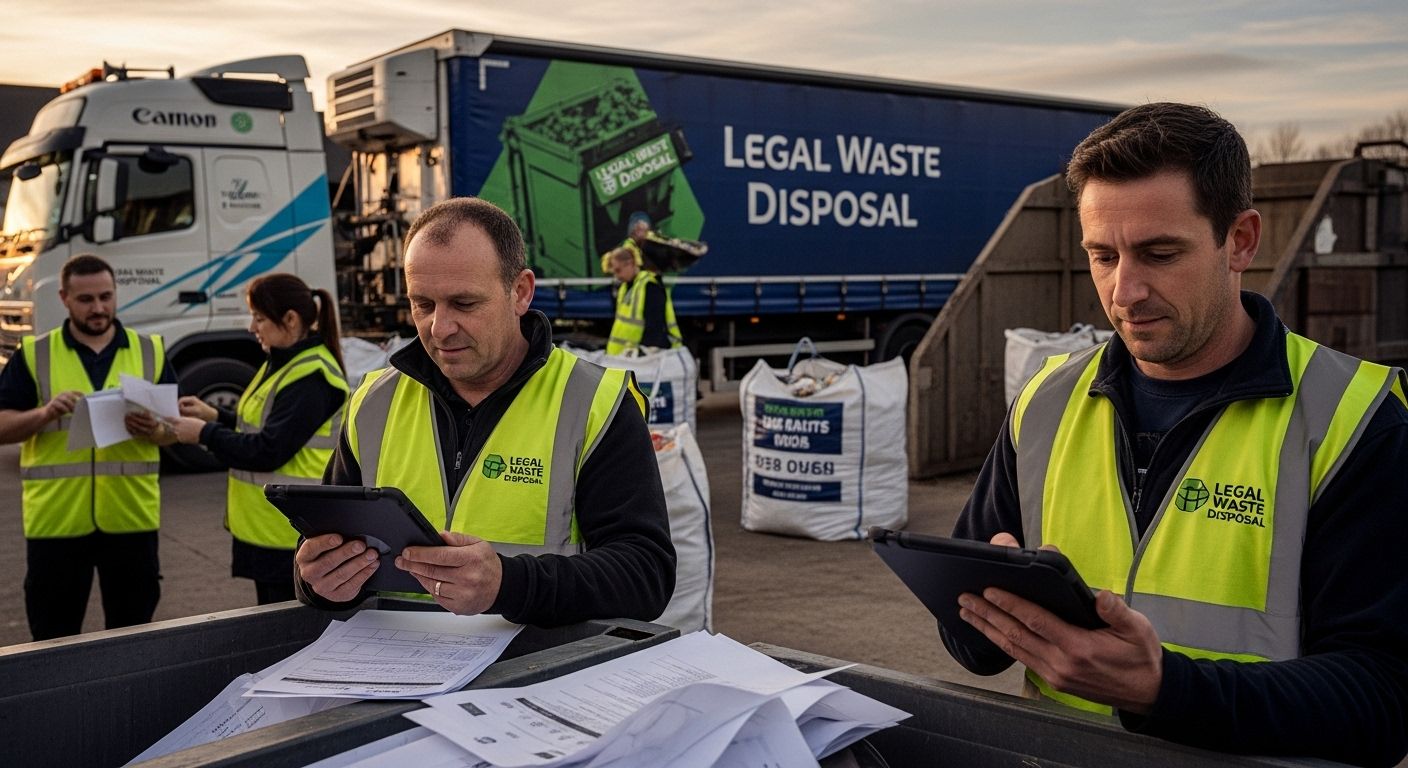
Choosing Safe and Reliable Waste Transport Partners
Selecting the right waste transport partner is a critical decision that directly impacts a business’s legal compliance, environmental responsibility, and operational efficiency. In 2025, companies must adopt a strategic approach to evaluating and partnering with waste management providers.
Regulatory Compliance and Certification Assessment
The UK government’s Waste Duty of Care Code of Practice emphasizes the importance of thoroughly vetting waste transport partners. Businesses must conduct comprehensive assessments of potential providers, focusing on several key compliance indicators:
- Valid waste carrier licenses
- Environmental Agency registration
- Demonstrated track record of regulatory compliance
- Comprehensive insurance coverage
- Transparent waste tracking systems
Companies should request and verify documentation, including waste transfer licenses, environmental permits, and proof of ongoing compliance with current regulations. This diligence helps mitigate potential legal and environmental risks associated with improper waste management.
Technical Capabilities and Environmental Standards
Guidance from the Health and Safety Executive highlights the critical importance of assessing a waste transport partner’s technical capabilities. Businesses must evaluate potential providers based on:
- Fleet maintenance and vehicle standards
- Specialized equipment for different waste types
- Advanced tracking and documentation systems
- Environmental management certifications
- Sustainable disposal and recycling practices
Learn more about waste management solutions in the North East to understand regional-specific considerations for waste transport partnerships.
Risk Management and Due Diligence
Comprehensive risk management is crucial when selecting waste transport partners. UK government guidelines on waste export and import underscore the complexity of waste transportation compliance. Businesses should implement a rigorous due diligence process that includes:
- Comprehensive background checks
- Site visits and operational audits
- Review of historical compliance records
- Assessment of financial stability
- Verification of environmental credentials
Particularly for businesses operating in regions like Newcastle, Durham, and Sunderland, understanding local regulatory nuances becomes essential. Each geographical area may have specific requirements that impact waste transport partnerships.
Choosing a waste transport partner is more than a transactional decision. It represents a strategic partnership that reflects a company’s commitment to environmental responsibility, legal compliance, and sustainable business practices. Businesses must approach this selection process with thoroughness, considering not just immediate operational needs but long-term environmental and regulatory implications.
Ultimately, the right waste transport partner becomes an extension of a company’s environmental strategy. By conducting comprehensive assessments, maintaining transparent communication, and prioritizing compliance and sustainability, businesses can develop robust waste management partnerships that protect both their operational interests and environmental responsibilities.
Frequently Asked Questions
What are the key compliance requirements for waste transport in the UK in 2025?
Businesses must obtain specific waste carrier licenses, maintain accurate waste documentation, ensure vehicle compliance with environmental regulations, and provide thorough staff training on waste transport regulations.
How can businesses ensure their waste disposal methods are environmentally compliant?
To ensure environmental compliance, businesses should partner with licensed waste management providers, verify their compliance with current regulations, and utilise facilities that adhere to sustainable disposal and recycling practices.
What are the potential penalties for non-compliance with waste transport regulations?
The Environment Agency can impose fines ranging from £300 up to £50,000 depending on the severity of the violation. Furthermore, companies may face legal prosecution for serious breaches of waste transport regulations.
Why is waste documentation important for legal waste disposal?
Accurate waste documentation is crucial as it ensures traceability of waste movements, provides evidence of compliance with regulations, and helps mitigate potential legal and environmental risks associated with improper waste management.
Struggling to Keep Up with Waste Transport Compliance? Let Venture Waste Make It Easy
Businesses across the UK are being challenged by new waste transport compliance rules, from complex documentation to the threat of costly penalties. If you feel overwhelmed by waste carrier licensing, record keeping, or safely managing hazardous materials, you are not alone. In 2025, accurate processes and up-to-date compliance are essential, and even a small mistake can put your business at risk.
Discover how the Waste Collection Network is supporting UK businesses

Do not let compliance uncertainty slow your business down. At Venture Waste, our expert team handles everything, from arranging licensed waste transport and collecting confidential documents to ensuring your documentation always meets regulations. Book in three simple steps and keep your business on the right side of the law. If you are ready to streamline your waste process and take the stress out of 2025’s changing regulations, explore our full waste collection process for businesses here.


Leave a Reply
Want to join the discussion?Feel free to contribute!