

Waste Segregation Tips for UK Businesses: 2025 Guide
UK businesses are about to face a wave of new rules on waste segregation that will directly impact day-to-day operations. You might think sorting rubbish is just about ticking a compliance box, but the numbers tell a different story. From 31 March 2025 every company must separate waste into set categories or risk fines that can reach thousands of pounds. This is forcing organisations to look far beyond simple recycling bins and rethink their approach entirely.
Table of Contents
- Understanding Waste Types in UK Workplaces
- Practical Waste Segregation Tips for Businesses
- Compliance and Legal Rules for Waste Disposal
- Innovative Solutions for Hazardous and Special Waste
Quick Summary
| Takeaway | Explanation |
|---|---|
| Understand waste categories early | Identifying dry recyclables, food waste, hazardous, and non-recyclable waste is crucial for compliance. |
| Implement clear segregation systems | Use labelled bins to separate waste types and conduct comprehensive waste audits to improve practices. |
| Train staff on waste management | Ensuring employees are educated on proper waste segregation is essential for effective compliance and sustainability. |
| Stay updated on legal requirements | Businesses must monitor evolving regulations concerning waste disposal and ensure adherence to avoid penalties. |
| Explore innovative waste solutions | Advanced technologies in waste treatment can significantly enhance efficiency and environmental responsibility in managing hazardous waste. |
Understanding Waste Types in UK Workplaces
Effective waste management begins with comprehensive understanding of waste classifications. Businesses across the United Kingdom face increasingly stringent regulations that demand precise waste segregation strategies. As of 31 March 2025, organisations will be required to implement robust waste categorisation systems that go beyond traditional disposal methods.
Categories of Workplace Waste
Workplace waste is not a uniform entity but a complex landscape of different materials requiring specific handling protocols. Our comprehensive guide to waste management practices outlines several critical waste categories that businesses must recognise and manage responsibly.
According to UK government environmental guidelines, workplace waste can be broadly categorised into several key types:
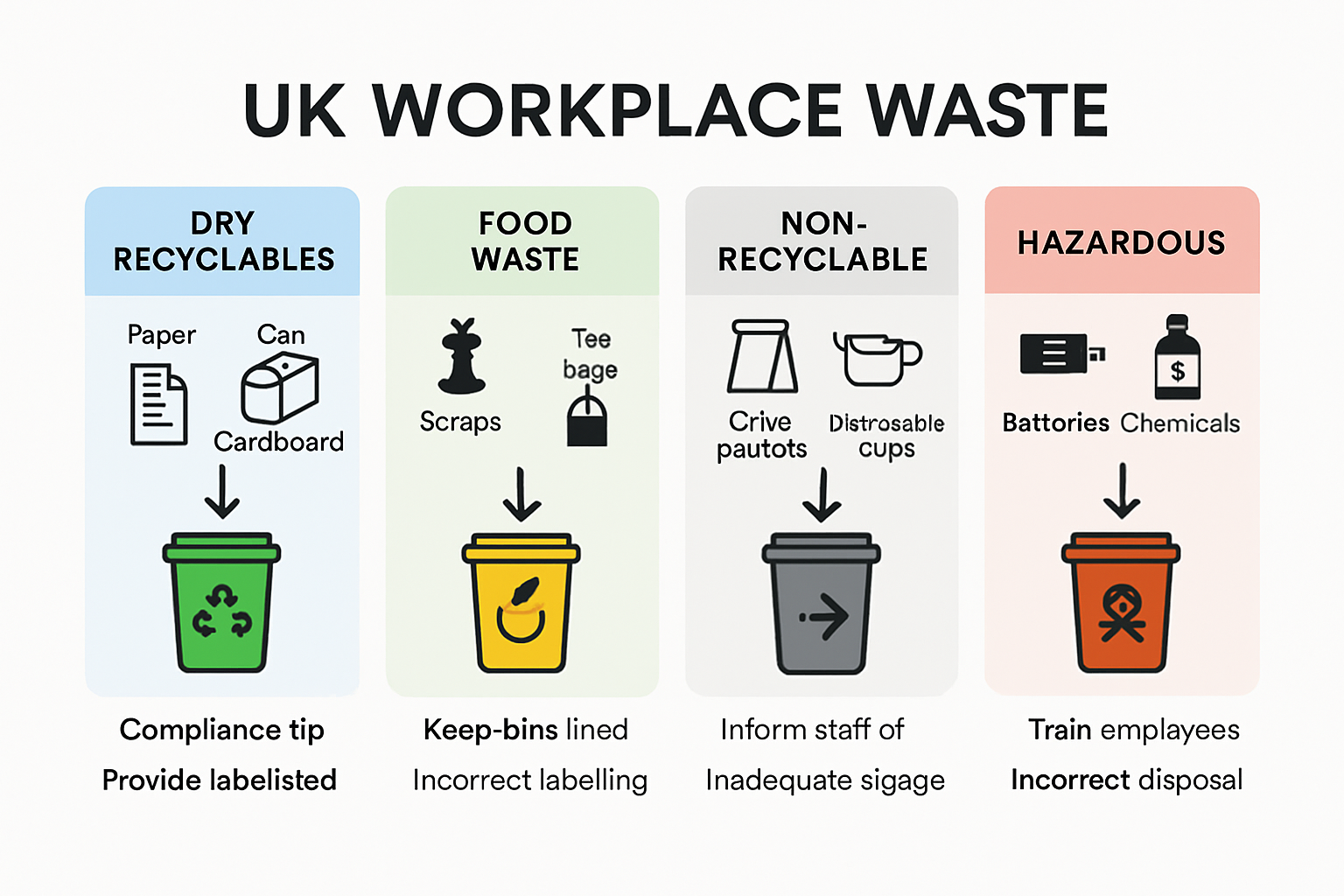
- Dry Recyclable Materials: Includes paper, cardboard, plastic, metal, and glass that can be processed and reused
- Food Waste: Organic materials from kitchens, cafeterias, and food preparation areas
- Non-Recyclable Waste: Materials that cannot be recycled and must be disposed of responsibly
- Hazardous Waste: Potentially dangerous materials requiring specialised disposal techniques
Here is a summary of the main workplace waste categories and their descriptions for easy reference:
| Waste Category | Examples/Features | Handling Requirement |
|---|---|---|
| Dry Recyclable Materials | Paper, cardboard, plastic, metal, glass | Must be sorted and sent for recycling |
| Food Waste | Kitchen and cafeteria organic waste | Collected separately for composting/anaerobic digestion |
| Non-Recyclable Waste | Items that cannot be recycled (e.g. certain plastics, contaminated materials) | Requires landfill or energy recovery, not recycling |
| Hazardous Waste | Chemicals, clinical waste, solvents, batteries, electronics | Specialist disposal and strict controls |
Regulatory Compliance and Waste Segregation
The NHS’s Health Technical Memorandum provides crucial insights into waste management standards. Businesses must understand that waste segregation is not merely an environmental courtesy but a legal requirement. Improper waste handling can result in significant financial penalties and environmental damage.
For instance, healthcare facilities must pay particular attention to clinical waste streams. Construction sites must differentiate between inert materials, contaminated waste, and recyclable components. Offices need robust systems to manage electronic waste, paper documents, and general office refuse.
Companies operating in regions like Newcastle, Durham, and Sunderland must develop tailored waste management strategies that reflect both local regulations and industry-specific requirements. Each sector presents unique challenges in waste segregation and disposal.
Key considerations for effective waste management include:
- Conducting comprehensive waste audits
- Training staff in proper waste identification
- Investing in appropriate segregation infrastructure
- Maintaining detailed documentation of waste streams
- Partnering with certified waste management providers
By 2025, businesses will be expected to demonstrate not just compliance, but a proactive approach to waste reduction and responsible environmental stewardship. Understanding waste types is the foundational step towards creating a sustainable, compliant workplace waste management system.
Practical Waste Segregation Tips for Businesses
Implementing effective waste segregation strategies requires a systematic and comprehensive approach. Businesses across the United Kingdom must develop robust protocols that not only comply with environmental regulations but also contribute to sustainable waste management practices.
Establishing Effective Waste Segregation Systems
Our comprehensive guide to waste reduction strategies emphasises the importance of creating a structured waste management plan. According to UK environmental guidelines, businesses must implement clear segregation protocols that separate waste into distinct categories.
Key steps for creating an effective waste segregation system include:
- Conduct a Comprehensive Waste Audit: Analyse current waste generation patterns and identify opportunities for improved segregation
- Invest in Appropriate Containment: Use clearly labeled, color-coded bins for different waste types
- Develop Clear Staff Training Programmes: Ensure all employees understand proper waste segregation techniques
The Business of Recycling organisation recommends strategic placement of waste containers to maximise effective segregation. This includes positioning recycling stations in high-traffic areas and near waste generation points.
Technical Considerations for Waste Management
Businesses must pay close attention to specific technical aspects of waste segregation. Environmental regulations mandate secure storage and proper containment of different waste streams.
Special considerations apply to various industry sectors:
- Manufacturing facilities must separate industrial waste from recyclable materials
- Healthcare providers need specialized containment for clinical and hazardous waste
- Office environments require distinct systems for electronic waste, paper documents, and general refuse
In regions like Newcastle, Durham, and Sunderland, businesses must develop localised waste management strategies that reflect both regional guidelines and industry-specific requirements.
Practical implementation involves several critical steps:
- Install clear signage explaining waste segregation requirements
- Provide dedicated training sessions for staff
- Implement regular waste management audits
- Partner with certified waste management providers
- Maintain detailed documentation of waste streams
The following table summarises the critical steps required to implement an effective waste segregation system in the workplace:
| Step | Description |
|---|---|
| Conduct Waste Audit | Assess waste types, sources, and volumes |
| Invest in Containment | Implement labelled, colour-coded bins for each waste stream |
| Staff Training | Educate staff on segregation procedures and why they’re important |
| Install Signage | Use clear instructions at waste stations |
| Partner with Providers | Work with certified waste management specialists |
| Regular Audits and Documentation | Schedule ongoing checks and maintain records of waste streams |
By 2025, businesses will be expected to demonstrate not just compliance, but a proactive approach to waste reduction. Effective waste segregation is more than a regulatory requirement it is a critical component of environmental responsibility and sustainable business practices.
Compliance and Legal Rules for Waste Disposal
Waste disposal compliance represents a critical legal responsibility for businesses across the United Kingdom. The regulatory landscape continues to evolve, with increasingly stringent requirements designed to minimise environmental impact and promote sustainable waste management practices.
Understanding Regulatory Frameworks
Our comprehensive guide to waste management compliance highlights the complex legal obligations businesses must navigate. According to GOV.UK waste management guidelines, businesses have a fundamental duty of care to ensure proper waste handling and disposal.
Key legal requirements include:
- Maintaining accurate waste transfer documentation
- Ensuring waste is transferred only to licensed waste carriers
- Implementing appropriate waste tracking and recording systems
- Demonstrating responsible waste management practices
The Health and Safety Executive (HSE) emphasises that businesses must comply with multiple legislative frameworks, including the Health and Safety at Work Act 1974 and the Waste Regulations 2011.
Sector-Specific Compliance Obligations
Different industry sectors face unique waste disposal compliance challenges. Manufacturing facilities in Newcastle, construction companies in Durham, and healthcare providers in Sunderland must develop tailored approaches that meet specific regulatory requirements.
Critical compliance considerations include:
- Hazardous waste management protocols
- Specific disposal requirements for electronic and industrial waste
- Documentation and reporting standards for waste streams
- Environmental impact assessment procedures
Businesses must remain vigilant about evolving regulations. The Environmental Protection Agency guidelines recommend a hierarchical approach to waste management that prioritises prevention, reuse, and recycling before disposal.
Practical steps for maintaining legal compliance include:
- Conducting regular internal waste management audits
- Providing comprehensive staff training on waste regulations
- Establishing robust record-keeping systems
- Partnering with certified waste management professionals
- Staying informed about legislative updates
Non-compliance can result in significant financial penalties, potential legal action, and reputational damage. By 2025, businesses will be expected to demonstrate not just minimal compliance, but a proactive and strategic approach to waste management that aligns with environmental sustainability goals.
Effective waste disposal compliance is more than a legal obligation it represents a fundamental commitment to environmental responsibility and sustainable business practices.
Innovative Solutions for Hazardous and Special Waste
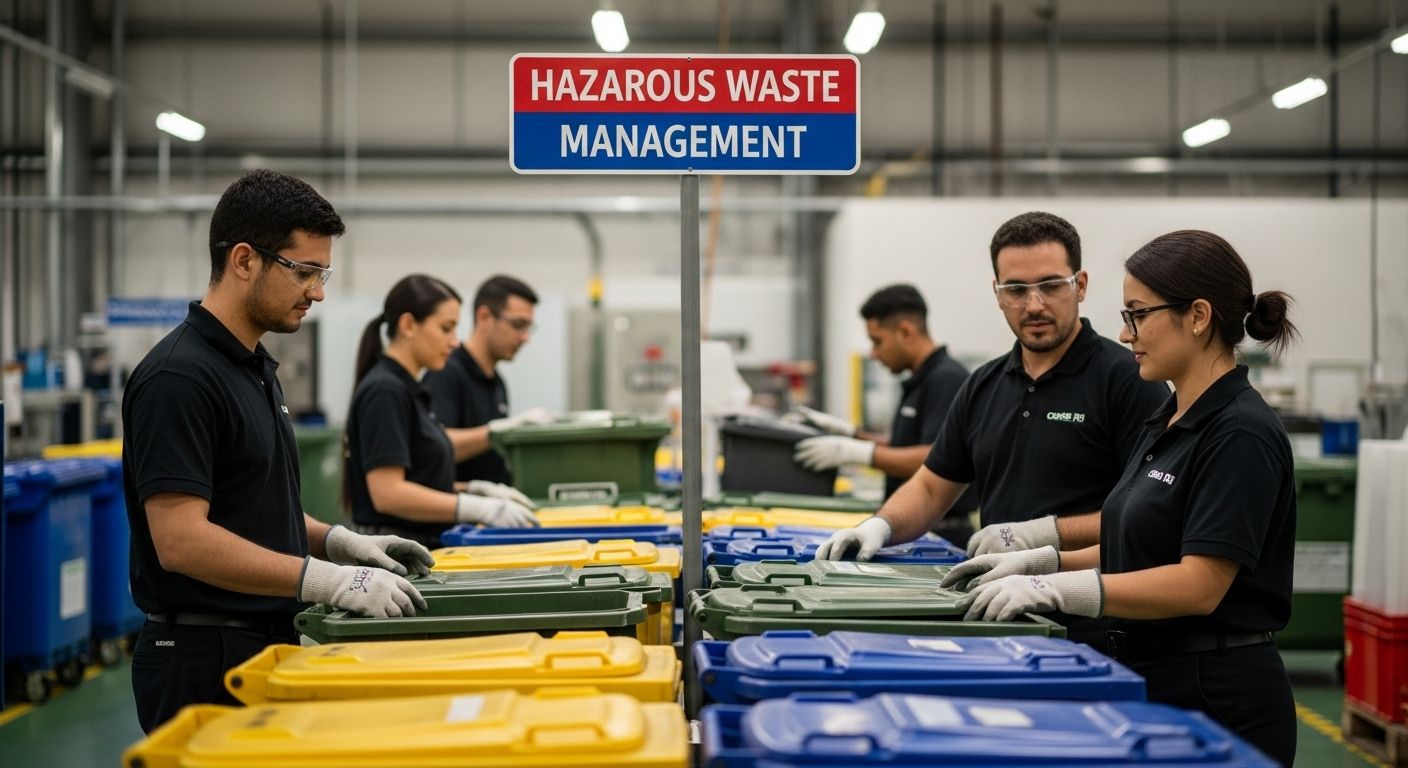
Businesses in the United Kingdom face increasingly complex challenges when managing hazardous and special waste. As environmental regulations become more stringent, innovative solutions are crucial for responsible waste management that protects both human health and ecological systems.
Advanced Waste Treatment Technologies
Our comprehensive guide to hazardous material disposal highlights emerging technologies transforming waste management strategies. According to the U.S. Department of Energy, cutting-edge technologies are revolutionising hazardous waste treatment.
Emergent technologies for hazardous waste management include:
- Supercritical Water Oxidation: Destroys hazardous chemicals using high-temperature, high-pressure water environments
- Microwave-Assisted Destruction: Efficiently breaks down chlorinated hydrocarbons
- Paramagnetic Metal Separation: Enables precise extraction of hazardous metal contaminants
The Environmental Protection Agency emphasises the importance of recycling and reclaiming hazardous materials wherever possible, reducing environmental impact and resource consumption.
Sector-Specific Hazardous Waste Management
Different industries in regions like Newcastle, Durham, and Sunderland require tailored approaches to hazardous waste management. Manufacturing, healthcare, and chemical sectors face unique challenges that demand specialised solutions.
Key strategies for managing hazardous waste include:
- Implementing advanced filtration and neutralisation technologies
- Developing closed-loop recycling systems
- Investing in employee training for safe handling
- Utilising real-time monitoring and tracking systems
- Partnering with specialised waste management providers
The American Society of Civil Engineers recommends a proactive approach focusing on waste reduction, resource recovery, and sustainable manufacturing processes.
Businesses must prioritise:
- Comprehensive risk assessments
- Regular technology upgrades
- Continuous staff education
- Transparent reporting mechanisms
- Investment in research and development
By 2025, innovative waste management will be more than a regulatory requirement it will be a fundamental aspect of corporate environmental responsibility. Companies that embrace advanced technologies and sustainable practices will not only comply with regulations but also demonstrate leadership in environmental stewardship.
The future of hazardous waste management lies in prevention, technological innovation, and a holistic approach to resource conservation and environmental protection.
Frequently Asked Questions
What are the main categories of workplace waste in the UK?
Workplace waste can be broadly categorised into four types: dry recyclable materials (e.g., paper, plastic, metal), food waste, non-recyclable waste, and hazardous waste. Understanding these categories is essential for compliance with upcoming regulations.
How can businesses implement effective waste segregation systems?
Businesses can implement effective waste segregation systems by conducting waste audits, using clearly labelled and colour-coded bins, and training staff on proper waste handling procedures to ensure compliance with regulations.
What are the penalties for non-compliance with waste segregation regulations in the UK?
From 31 March 2025, UK businesses failing to comply with waste segregation regulations risk facing substantial fines, which can amount to thousands of pounds, in addition to potential legal liabilities.
Why is staff training important for waste management in businesses?
Staff training is crucial for effective waste management as it educates employees on proper segregation techniques, ensuring that waste is disposed of correctly and in accordance with legal requirements, thereby reducing the risk of non-compliance.
Ready to Master Waste Segregation Before 2025?
Is your business prepared for the strict waste segregation rules coming into force in March 2025? Many companies are struggling with confusion over the right waste categories, staff training, and the constant pressure to prove compliance. If you are concerned about avoiding fines or simply want a reliable way to stay ahead of evolving regulations, practical support is within your reach. Discover what makes a truly compliant waste system by exploring our Waste Collection Process in the UK for Businesses 2025 and see how a structured approach transforms compliance headaches into routine efficiency.

Take the next step towards worry-free waste management. Visit Venture Waste Management to experience tailored solutions for general waste, hazardous materials, and confidential destruction. Secure your business against costly mistakes by booking a collection or browsing our easy three-step process today. With new rules fast approaching, now is the best time to future-proof your waste strategy.


Leave a Reply
Want to join the discussion?Feel free to contribute!