

Waste Segregation Guidelines for UK Businesses and Facilities
Every UK business, from cosy cafes to sprawling factories, is now under growing pressure to handle waste properly. Soon, new rules will demand that every workplace separates waste into strict categories and from 31 March 2025, legal penalties will hit those who fail to comply. Most people think waste segregation is just about tossing recycling into the right bin. The real challenge is much bigger. It is the legal scrutiny, detailed documentation, and specialised handling that catch even the most organised teams by surprise.
Table of Contents
- Key Waste Types And Legal Requirements
- Practical Steps For Effective Segregation
- Special Handling: Hazardous, Confidential, And Electronic Waste
- Choosing A Compliant Waste Management Partner
Quick Summary
| Takeaway | Explanation |
|---|---|
| Understand waste categorisation requirements | Businesses must identify and segregate waste types to comply with legal obligations and ensure proper disposal. |
| Implement robust waste management systems | Establish systems that include appropriate containers, signage, and staff training for effective waste segregation processes. |
| Train staff on waste disposal protocols | Comprehensive training is crucial for ensuring employees correctly understand waste categories and handling procedures, enhancing compliance and efficiency. |
| Regularly document waste transfer | Accurate record-keeping of waste streams and disposal methods is essential for compliance and helps identify areas for operational improvement. |
| Select a compliant waste management partner | Thoroughly evaluate potential partners for compliance and capabilities to ensure responsible and effective waste handling, reducing legal risks. |
Key Waste Types and Legal Requirements
Understanding waste types and their corresponding legal requirements is crucial for businesses across the United Kingdom to ensure proper disposal, environmental compliance, and legal adherence. Businesses must navigate a complex landscape of waste management regulations that mandate specific handling and segregation protocols for different waste categories.
Classification of Waste Categories
Businesses in the UK must recognise and segregate multiple waste types, each with distinct legal obligations. According to UK Government Environmental Guidelines, waste categories include:
To help businesses quickly distinguish between key waste categories and their associated requirements, the following table summarises the main types of waste and outlines important legal considerations for each.
| Waste Category | Examples | Key Legal Requirements |
|---|---|---|
| General Waste | Non-recyclable materials | Must be separated from recyclable and hazardous wastes; landfill disposal |
| Recyclable Waste | Paper, cardboard, plastics, metals, glass | Segregation mandatory; must not be mixed with general or hazardous waste |
| Food Waste | Organic material from kitchens or production | Must be separated; requires own containers in most businesses |
| Hazardous Waste | Chemicals, batteries, asbestos, solvents, oils | Strict segregation; specialist containers; detailed documentation required |
| Confidential/Electronic | Documents, computers, hard drives, WEEE | Secure destruction/data wiping; certified recycling; document the process |
- General Waste: Non-recyclable materials that typically end up in landfills
- Recyclable Waste: Paper, cardboard, plastics, metals, and glass that can be processed and reused
- Food Waste: Organic materials from commercial kitchens, restaurants, and food production facilities
- Hazardous Waste: Materials that pose potential risks to human health or the environment
Particular attention must be given to hazardous waste, which requires meticulous handling. Environment Agency regulations strictly prohibit mixing different hazardous waste types or combining hazardous waste with non-hazardous materials. This segregation prevents potential chemical reactions, contamination, and ensures safe disposal processes.
Legal Compliance and Mandatory Segregation
From 31 March 2025, businesses in England face comprehensive waste segregation requirements. All workplaces must separate waste into distinct categories: dry recyclable materials (including plastic, metal, glass, paper, and card), food waste, and non-recyclable waste. These regulations encompass a wide range of organisations, from small offices to large industrial facilities in cities like Newcastle, Durham, and Sunderland.
Businesses must implement robust waste management systems that comply with these legal mandates. This involves:
The process of establishing a compliant waste management system involves several critical steps. Use the table below to track the main activities your organisation should undertake to ensure effective and legal waste segregation.
| Step | Description |
|---|---|
| Identify and Categorise Waste Streams | Assess and document all waste types produced by the business |
| Provide Segregation Containers | Implement colour-coded, labelled bins for each waste stream |
| Position Collection Points | Place bins strategically throughout the premises |
| Train Staff | Deliver ongoing training on waste classifications and disposal protocols |
| Maintain Waste Transfer Documentation | Keep accurate records of waste types, volumes, and disposal methods |
| Audit and Review | Conduct regular checks and seek improvement opportunities |
- Identifying and categorising waste streams
- Providing appropriate segregation containers
- Training staff on correct waste disposal procedures
- Maintaining accurate waste transfer documentation
Further guidance on implementing these practices can be found in our step by step waste management guide.
Consequences of Non-Compliance
Failure to adhere to waste segregation guidelines can result in significant legal and financial repercussions. Businesses may face:
- Substantial financial penalties
- Potential legal prosecution
- Revocation of operational licenses
- Reputational damage
By understanding and implementing comprehensive waste segregation strategies, businesses not only meet legal requirements but also contribute to environmental sustainability and responsible resource management. Proactive waste management is no longer optional but a critical aspect of modern business operations.
Practical Steps for Effective Segregation
Implementing effective waste segregation requires a strategic approach that goes beyond simple waste sorting. Businesses must develop comprehensive systems that ensure compliance, environmental responsibility, and operational efficiency.
Establishing a Robust Waste Management Infrastructure
Creating an effective waste segregation system begins with careful planning and infrastructure development. According to UK Government Commercial Waste Guidelines, businesses must invest in appropriate waste storage and separation mechanisms. This involves:
- Selecting colour-coded containers for different waste categories
- Positioning waste collection points strategically across facilities
- Ensuring clear labeling and signage for each waste stream
- Providing sufficient space for segregation activities
In cities like Newcastle, Durham, and Sunderland, businesses are increasingly adopting modular waste segregation stations that allow for flexible and efficient waste management. These systems enable quick identification and separation of different waste types, minimising contamination and maximising recycling potential.
Staff Training and Engagement Strategies
Successful waste segregation relies heavily on staff understanding and commitment. Environment Agency recommendations emphasise the critical role of comprehensive employee training. Effective training programmes should include:
- Detailed guidance on waste categorisation
- Practical demonstrations of correct segregation techniques
- Understanding legal requirements and potential consequences of non-compliance
- Regular refresher courses to maintain knowledge standards
Businesses can enhance engagement by creating visual guides, implementing digital tracking systems, and potentially introducing incentive programmes that reward accurate waste segregation practices.
Documentation and Continuous Improvement
Maintaining accurate waste transfer documentation is a legal requirement for UK businesses. This involves:
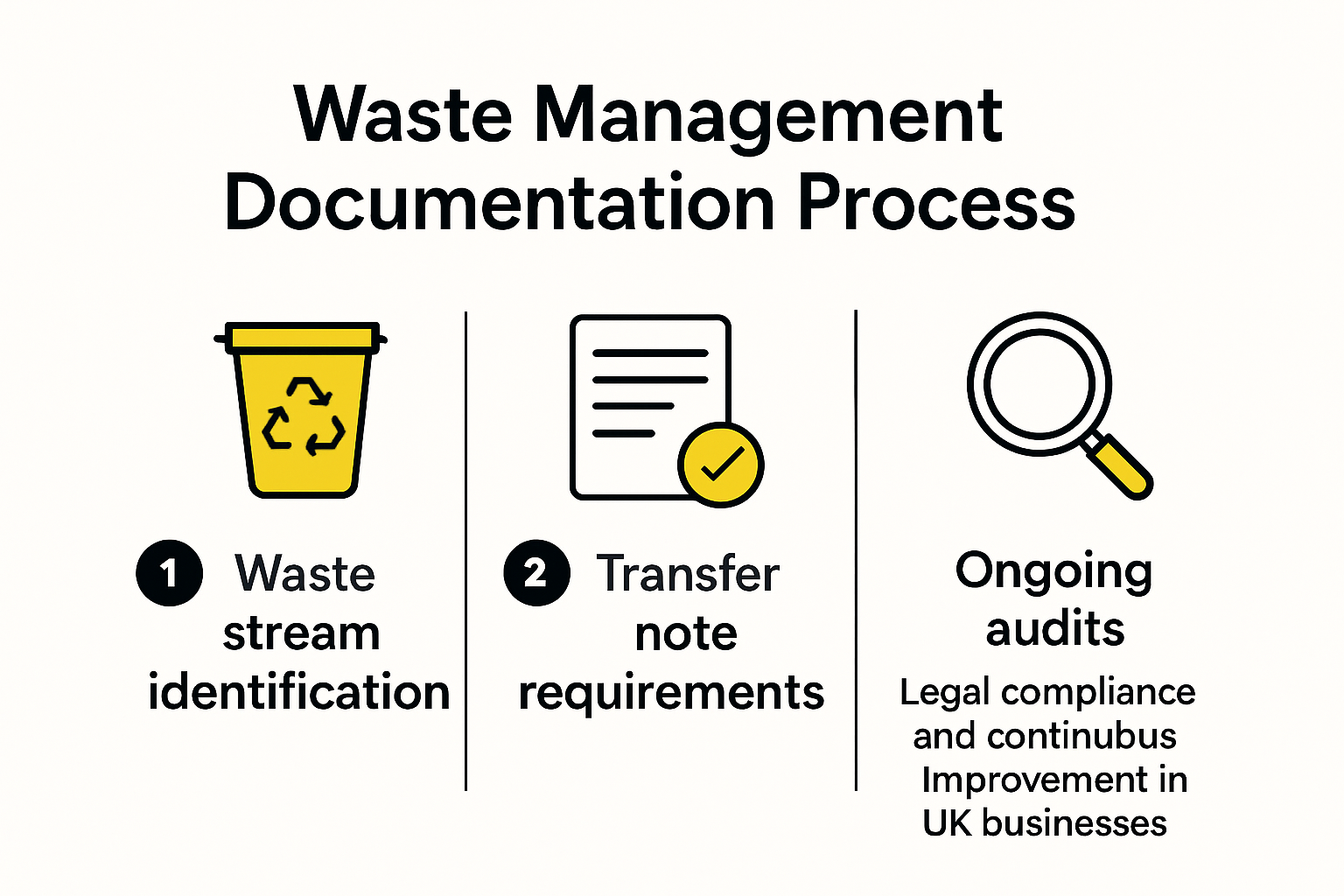
- Detailed record-keeping of waste streams
- Tracking waste volumes and disposal methods
- Regular audits of waste management processes
- Identifying opportunities for waste reduction
For businesses seeking to refine their approach, our comprehensive waste management guide provides additional insights into developing robust waste segregation strategies.
By adopting a systematic, well-planned approach to waste segregation, businesses can simultaneously meet legal obligations, reduce environmental impact, and potentially reduce waste management costs. The key lies in creating a culture of responsibility, investing in proper infrastructure, and maintaining ongoing staff education and engagement.

Special Handling: Hazardous, Confidential, and Electronic Waste
Certain waste types require specialised handling and disposal protocols that go beyond standard waste management practices. Businesses must implement rigorous procedures to manage hazardous, confidential, and electronic waste safely and legally.
Hazardous Waste Management
Hazardous waste presents significant environmental and health risks, demanding meticulous segregation and disposal. According to UK Government Environmental Guidelines, hazardous waste includes materials such as chemicals, batteries, asbestos, solvents, oils, and equipment containing ozone-depleting substances.
Key considerations for hazardous waste management include:
- Strict separation from non-hazardous waste streams
- Use of specialized containment and labeling
- Compliance with transportation and disposal regulations
- Maintaining detailed waste transfer documentation
Environmental Protection Agency guidelines emphasise the critical importance of preventing cross-contamination and ensuring worker safety during handling. Businesses in industrial areas like Newcastle, Durham, and Sunderland must be particularly vigilant about hazardous waste protocols.
Confidential and Electronic Waste Disposal
Confidential and electronic waste (WEEE) requires equally specialised handling. Businesses must protect sensitive information while ensuring environmentally responsible disposal. This includes:
Certain business wastes require special handling measures. The table below compares hazardous, confidential, and electronic waste management considerations to clarify distinct handling and compliance needs.
| Waste Type | Key Handling Requirements | Documentation Needed |
|---|---|---|
| Hazardous | Separate from other waste; special containers & labelling | Detailed waste transfer records |
| Confidential Waste | Secure destruction of documents; data protection | Destruction and audit certificates |
| Electronic (WEEE) | Data wiping; certified recycling; environmental compliance | End-of-life tracking log |
- Secure destruction of confidential documents
- Proper data wiping from electronic devices
- Certified recycling of electronic equipment
- Tracking and documenting the entire disposal process
For organisations seeking comprehensive guidance, our in-depth hazardous waste disposal guide provides additional insights into managing complex waste streams.
Compliance and Risk Mitigation
Non-compliance with special waste handling regulations can result in severe consequences, including:
- Substantial financial penalties
- Legal prosecution
- Environmental contamination risks
- Potential damage to business reputation
Businesses must invest in:
- Comprehensive staff training
- Advanced waste tracking systems
- Partnerships with certified waste disposal specialists
- Regular internal audits of waste management practices
By implementing robust systems for managing hazardous, confidential, and electronic waste, businesses can protect themselves from legal and environmental risks while demonstrating corporate responsibility. The key lies in understanding unique waste characteristics, investing in specialized disposal methods, and maintaining meticulous documentation throughout the waste management process.
Choosing a Compliant Waste Management Partner
Selecting an appropriate waste management partner is a critical decision for businesses seeking to maintain legal compliance, environmental responsibility, and operational efficiency. The right waste management provider can significantly impact a company’s sustainability goals and regulatory adherence.
Legal Verification and Compliance Checks
Before engaging a waste management partner, businesses must conduct thorough due diligence. According to the UK Government’s Waste Duty of Care Code of Practice, companies are legally responsible for ensuring their waste is handled safely and transferred only to authorized waste carriers.
Key verification steps include:
- Checking the waste carrier’s registration status
- Verifying specific licenses for different waste streams
- Confirming compliance with current environmental regulations
- Reviewing waste transfer documentation procedures
Simpler Recycling Guidelines emphasise that businesses must ensure their waste collectors are authorized to handle specific separated waste streams, particularly with the new regulations effective from 31 March 2025.
Evaluating Waste Management Capabilities
Businesses should assess potential waste management partners across multiple dimensions. For organisations in regions like Newcastle, Durham, and Sunderland, local expertise can be particularly valuable. Comprehensive evaluation criteria should include:
- Range of waste stream management capabilities
- Environmental certifications and sustainability credentials
- Technology and tracking systems for waste disposal
- Transparency in reporting and documentation
- Demonstrated commitment to regulatory compliance
For businesses seeking detailed guidance on selecting the right partner, our comprehensive waste management companies guide provides in-depth insights into making an informed decision.
Risk Mitigation and Ongoing Partnership
Choosing a waste management partner is not a one-time transaction but an ongoing relationship that requires continuous monitoring and assessment. Businesses must establish clear expectations and maintain open communication channels.
Risk mitigation strategies include:
- Regular performance audits
- Periodic review of waste management practices
- Maintaining detailed waste transfer documentation
- Ensuring alignment with evolving environmental regulations
By carefully selecting a waste management partner who demonstrates legal compliance, technical expertise, and a commitment to environmental responsibility, businesses can effectively manage their waste streams while minimizing potential legal and environmental risks. The investment in a reliable, compliant waste management partner pays dividends through reduced operational complexity, enhanced sustainability, and protection against potential regulatory penalties.
Frequently Asked Questions
What is waste segregation, and why is it important for UK businesses?
Waste segregation is the process of separating different types of waste for appropriate disposal and recycling. It is important for UK businesses to comply with legal requirements, reduce contamination of recyclable materials, and contribute to environmental sustainability efforts.
What are the main waste categories that businesses must segregate?
Businesses must segregate waste into several categories, including general waste, recyclable waste, food waste, hazardous waste, and confidential/electronic waste. Each type has specific legal requirements for disposal and handling.
What are the consequences of failing to comply with waste segregation regulations?
Failure to comply with waste segregation regulations can lead to substantial financial penalties, legal prosecution, revocation of operational licenses, and damage to a business’s reputation.
How can businesses ensure effective waste segregation and compliance?
Businesses can ensure effective waste segregation by establishing a robust waste management infrastructure, providing appropriate training to staff, maintaining accurate documentation of waste handling processes, and regularly reviewing their waste management practices.
Take Control of Waste Segregation Compliance with Venture Waste Management
The new UK waste segregation rules are fast approaching, and many businesses are feeling the strain of changing legislation, stricter documentation, and the risk of penalties if compliance falls short. If your facility is struggling with sorting the right waste streams, setting up compliant bins, or keeping up with new record-keeping protocols, you are not alone. The need to separate hazardous, general, food and confidential waste accurately is now a business necessity, not just a recommendation. Find out how the Waste Collection Process in the UK for Businesses 2025 can help you protect your business from unnecessary risk.

Venture Waste offers a straightforward way to meet every new legal requirement. Our three-step booking system makes arranging compliant and traceable waste collection easy for any UK business. From secure handling of confidential documents to safe hazardous material removal, we take the complexity out of legal compliance.
Do not wait for new regulations to catch you off guard. Discover how our tailored support protects your business and simplifies waste segregation. Visit Venture Waste today to get expert help, book efficient waste services, and keep ahead of changing compliance demands.


Leave a Reply
Want to join the discussion?Feel free to contribute!