

Master Waste Segregation for Businesses in the UK Easily
Over 80 percent of british businesses face increased pressure to meet stricter recycling standards before new United Kingdom rules take effect in March 2025. These requirements matter because failing to properly handle waste can result in costly penalties and lost customer trust. This guide breaks down the critical steps for british organisations to assess current waste streams, implement practical changes, and stay fully compliant with evolving government expectations.
Table of Contents
- Step 1: Assess Current Waste Streams And Requirements
- Step 2: Develop A Clear Segregation Plan And Bin System
- Step 3: Train Staff On Correct Waste Separation Procedures
- Step 4: Implement Regular Monitoring And Adjustments
- Step 5: Verify Compliance With Uk Waste Regulations
Quick Summary
| Key Point | Explanation |
|---|---|
| 1. Conduct a thorough waste audit | Assess all waste streams produced by your business to understand current practices and identify improvement areas. |
| 2. Develop a clear waste segregation plan | Implement a colour coded bin system and designate waste management champions to enhance and monitor waste disposal practices. |
| 3. Train staff on waste segregation procedures | Provide comprehensive training materials and ongoing support to ensure all employees understand and engage in correct waste sorting. |
| 4. Monitor and adjust waste management strategies | Regularly track waste generation data and review systems to identify potential improvements and optimise waste reduction efforts. |
| 5. Ensure compliance with UK regulations | Conduct compliance audits to align practices with legal requirements and maintain thorough documentation for inspections. |
Step 1: Assess current waste streams and requirements
Assessing your business’s waste streams is the critical first step in mastering waste segregation across the United Kingdom. This process will help you understand your current waste production patterns and align with the UK government’s new recycling guidelines.
Begin by conducting a comprehensive waste audit that systematically documents every type of waste your organisation produces. Walk through your facility and categorise materials into distinct groups such as dry recyclables (paper, cardboard, plastics, metals, glass), food waste, electronic equipment, and general non recyclable waste. Pay special attention to high volume areas like kitchens, office spaces, production floors, and storage zones. Create a detailed inventory that tracks waste quantities, frequency of disposal, and current disposal methods.
Specifically, businesses must prepare for the upcoming regulations effective 31 March 2025, which mandate separating waste streams before collection. This means developing a robust system that allows for precise sorting of plastic, metal, glass, paper, card, food waste, and general non recyclable waste. Consider investing in colour coded bins, clear signage, and staff training to ensure smooth implementation of these new waste management protocols. Remember that proactive preparation will not only ensure regulatory compliance but also potentially reduce overall waste management costs for your organisation.
Pro tip: Engage your entire team in this assessment process. Staff members often have valuable insights into daily waste generation patterns that might be overlooked by management. Their involvement can transform waste segregation from a compliance requirement into a collaborative environmental initiative.
Step 2: Develop a clear segregation plan and bin system
Developing a robust waste segregation system is essential for businesses looking to streamline their waste management processes and meet regulatory requirements. With strategic planning, you can create an efficient system that not only ensures compliance but also promotes environmental responsibility.

Start by mapping out your workspace and identifying specific zones where waste generation occurs. Improving waste segregation practices requires a tailored approach that considers your unique business layout. Select colour coded bins for different waste categories such as recyclables (blue), food waste (green), general waste (black), and electronic equipment (grey). Place these bins strategically near their primary generation points like kitchen areas, workstations, production floors, and storage spaces. Ensure each bin is clearly labelled with both text and visual icons to help staff quickly understand proper waste disposal guidelines.
Implement a comprehensive staff training programme that educates employees about the new segregation system. Create visual guides, conduct short workshops, and develop simple reference materials that explain the importance of correct waste sorting. Assign waste management champions within different departments who can help monitor compliance and answer colleague questions. By making waste segregation a collaborative effort, you transform it from a compliance requirement into an organisational cultural practice that supports environmental sustainability.
Pro tip: Regularly review and audit your waste segregation system. Conduct quarterly assessments to identify potential improvements, track waste reduction progress, and ensure your bins remain well positioned and clearly marked.
Step 3: Train staff on correct waste separation procedures
Training your staff effectively is crucial for implementing a successful waste segregation strategy across your organisation. Comprehensive employee education transforms waste management from a procedural requirement into a meaningful environmental commitment.
Begin by developing an engaging training programme that clearly explains the importance of waste segregation and the specific procedures unique to your business. Waste handling training strategies should incorporate interactive learning methods such as practical demonstrations, visual guides, and hands on workshops. Create comprehensive training materials that include detailed instructions about different waste categories colour coded bin systems and proper sorting techniques. Ensure these materials are accessible to all staff members including those with different learning styles or language backgrounds.
Implement a structured approach to training that includes initial onboarding sessions comprehensive documentation and periodic refresher courses. Designate waste management champions within each department who can provide ongoing support and answer staff questions. These internal advocates can help reinforce best practices and maintain high standards of waste segregation across your organisation. Consider using real world scenarios and practical examples that demonstrate the direct environmental and economic benefits of proper waste management.
Pro tip: Make waste segregation training an ongoing process. Regular updates about new regulations workplace changes and environmental impacts will help maintain staff engagement and ensure your waste management strategies remain current and effective.
Step 4: Implement regular monitoring and adjustments
Regular monitoring and continuous improvement are essential components of an effective waste management strategy. By systematically tracking and analysing your waste generation patterns, you can identify opportunities for reduction, optimisation, and enhanced environmental performance.
Establish a robust monitoring system that captures comprehensive data about your waste streams. Sustainability reporting guidelines recommend implementing detailed tracking mechanisms that document waste types, quantities, disposal methods, and associated costs. Use digital tools and spreadsheets to record monthly waste generation volumes, categorise waste streams, and calculate key performance indicators such as total waste produced, recycling rates, and waste reduction percentages. Schedule quarterly review meetings with your waste management team to analyse these metrics and discuss potential improvements.
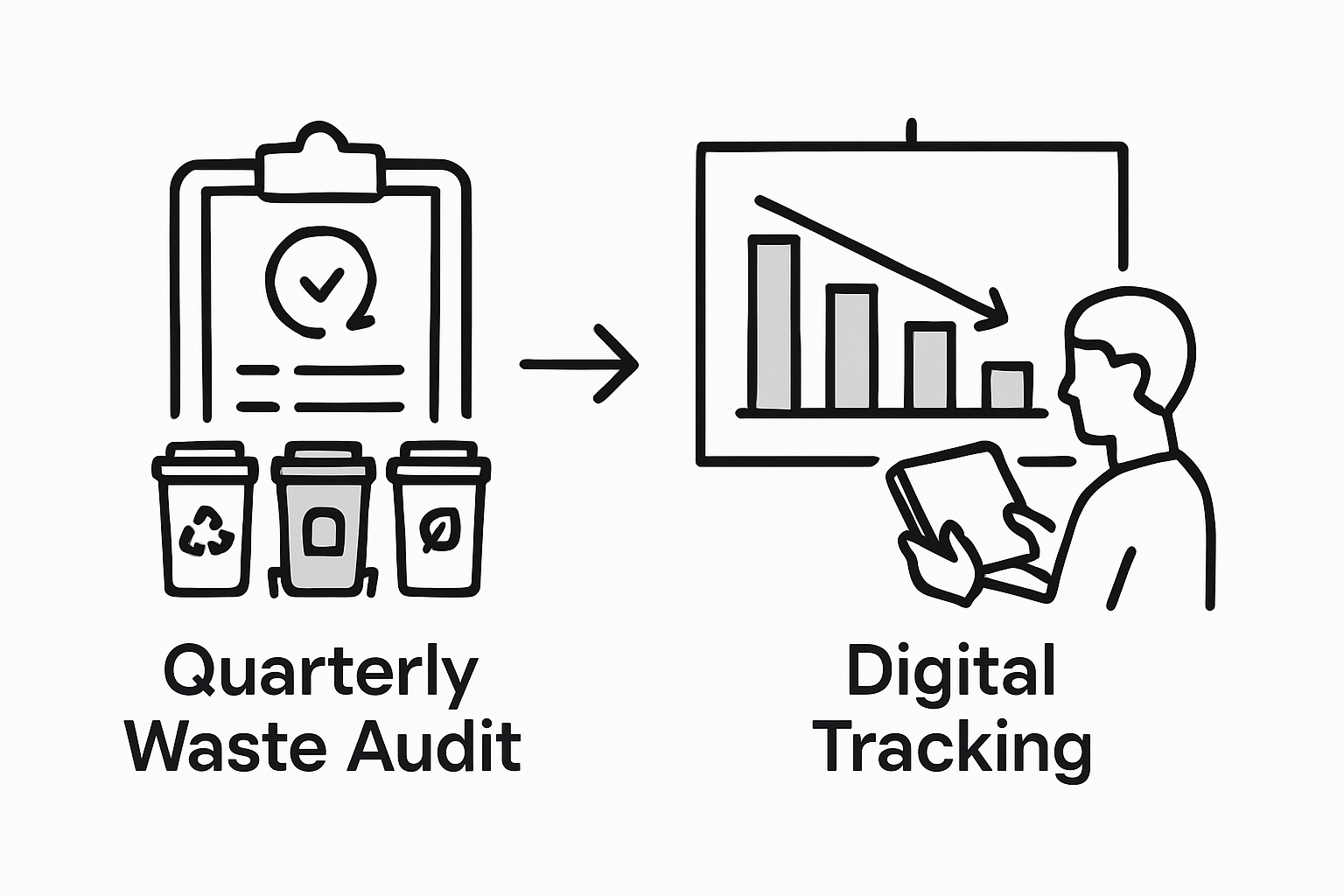
Develop a responsive adjustment strategy that allows for quick implementation of waste reduction initiatives. Create a feedback loop where staff can contribute insights about potential efficiency improvements, and establish clear protocols for testing and integrating these suggestions. Consider setting progressive waste reduction targets that challenge your organisation to continually improve its environmental performance. Track your progress against these targets and celebrate milestones to maintain team motivation and engagement.
Pro tip: Invest in technology that simplifies waste tracking. Digital waste management platforms can provide real time insights, automate reporting, and help you make data driven decisions about your waste segregation and reduction strategies.
Step 5: Verify compliance with UK waste regulations
Ensuring your business fully complies with UK waste regulations is a critical responsibility that requires thorough understanding and proactive management. This step involves carefully reviewing your current waste management practices against the latest legal requirements to avoid potential penalties and demonstrate environmental stewardship.
Workplace recycling guidance from the UK government outlines specific requirements for businesses, particularly those with ten or more employees. Conduct a comprehensive compliance audit that systematically examines your waste segregation processes, documentation, and disposal methods. Review key aspects such as waste stream separation, record keeping, and adherence to the new regulations effective from 31 March 2025. This audit should include a detailed examination of your current waste management systems, comparing them against the mandatory requirements for separating recyclables, food waste, and general waste.
Engage with professional waste management experts or consultants who specialise in UK environmental regulations to perform an independent compliance review. They can provide an objective assessment of your current practices and highlight any potential areas of non compliance. Develop a corrective action plan that addresses any gaps identified during the audit, ensuring you have robust systems in place to meet all legal requirements. This may involve updating your waste segregation infrastructure, retraining staff, or modifying your waste disposal contracts to align with the latest regulatory standards.
Pro tip: Keep detailed documentation of your compliance efforts. Maintain comprehensive records of waste audits, staff training, waste stream tracking, and disposal methods. These documents will be crucial evidence of your commitment to regulatory compliance if you face any official inspections or reviews.
Take Control of Your Business Waste Segregation Today
Mastering waste segregation is essential for every UK business aiming to meet upcoming regulations while reducing environmental impact. The article highlights challenges like understanding waste streams, staff training, and the need for clear bin systems. It also stresses the importance of compliance with the new 2025 waste legislation. If you want a hassle-free way to implement effective waste segregation and ensure full compliance, Venture Waste Management offers tailored solutions designed for your business needs. Benefit from services that cover everything from general waste collection to specialised recycling and food waste management

Discover how our Waste Collection Process in the UK for Businesses 2025 – Venture Waste complements your waste segregation efforts. Learn about How the Waste Collection Network in UK Serves Businesses in 2025 – Venture Waste to streamline your operations and explore specialised solutions for food waste with our food waste Archives – Venture Waste. Act now to stay ahead of regulations, reduce costs, and demonstrate your company’s commitment to sustainability. Visit Venture Waste and take the next step to transform your waste segregation strategy into an operational success.
Frequently Asked Questions
How do I start assessing my business’s waste streams for segregation?
Begin by conducting a comprehensive waste audit to document every type of waste produced in your organisation. Walk through your facility, categorising materials into distinct groups such as recyclables, food waste, and general non-recyclable waste.
What should my waste segregation plan include?
Your waste segregation plan should involve mapping out your workspace, identifying waste generation zones, and selecting colour-coded bins for different categories. Ensure each bin is clearly labelled and placed conveniently to promote proper disposal practices among staff.
How can I effectively train staff on waste separation procedures?
Implement an engaging training programme that includes practical demonstrations and visual guides explaining the waste segregation process. Assign waste management champions within departments to provide ongoing support and ensure adherence to the procedures.
What is the best way to monitor and adjust my waste management practices?
Establish a monitoring system to track waste generation data, noting types and quantities over time. Schedule quarterly reviews to analyse this data and involve staff in identifying potential improvements to enhance waste reduction.
How do I verify compliance with UK waste regulations?
Conduct a comprehensive compliance audit to examine your waste segregation processes against the latest regulatory requirements. Document your findings, engage experts if necessary, and develop a corrective action plan to address any gaps identified during the audit.


Leave a Reply
Want to join the discussion?Feel free to contribute!