

Waste Segregation in Factories: Legal and Sustainable Impact
Waste segregation is no longer just a box-ticking exercise for factories in England. Every Operations Manager knows that staying ahead of strict legal requirements is now a daily challenge, with government rules demanding separate collection of paper, glass, metals, plastics, and food waste at source. Adopting efficient, compliant strategies can reduce risk of penalties and strengthen your factory’s commitment to sustainability. Discover how effective waste segregation solutions help protect business interests and enhance your environmental credentials.
Table of Contents
- Understanding Waste Segregation in Factories
- Types of Factory Waste and Key Categories
- Legal Obligations and Latest UK Regulations
- Designing Practical Segregation Processes
- Common Compliance Risks and Cost Implications
Key Takeaways
| Point | Details |
|---|---|
| Importance of Waste Segregation | Proper waste segregation is essential for legal compliance and environmental sustainability in factories. Implementing effective strategies can enhance recycling efficiency and minimise contamination. |
| Categories of Waste | Factories must categorise waste into recyclable materials, hazardous waste, general waste, and specialised byproducts to ensure effective management and compliance. |
| Compliance Risks | Non-compliance with waste segregation regulations can lead to substantial fines and reputational damage. Factories should adopt proactive mitigation strategies to avoid these risks. |
| Technological Integration | Utilising technology for waste tracking and staff training enhances segregation processes and ensures ongoing compliance with environmental regulations. |
Understanding Waste Segregation in Factories
Waste segregation represents a critical environmental and regulatory requirement for modern manufacturing facilities across the United Kingdom. Workplace recycling regulations now mandate that factories systematically separate different waste streams to improve recycling efficiency and reduce environmental impact.
Factories must implement comprehensive waste segregation strategies that distinguish between recyclable materials like paper, plastics, metals, and glass, and non-recyclable industrial waste. This process involves creating dedicated collection zones, using colour-coded bins, training staff on proper waste disposal techniques, and maintaining detailed documentation of waste management practices. The goal is to minimise contamination and maximise the potential for material recovery and sustainable processing.
Legal compliance requires factories to develop robust waste segregation protocols that align with UK environmental regulations. Separation regulations for businesses specify that organisations must categorise waste at its source, ensuring different material types are collected and processed separately. This approach not only supports environmental sustainability but also helps businesses avoid potential penalties and demonstrate corporate environmental responsibility.
Pro tip: Invest in clear visual signage and staff training to ensure consistent and accurate waste segregation across all factory departments.
Types of Factory Waste and Key Categories
Industrial waste management requires a comprehensive understanding of different waste categories that emerge from manufacturing processes. Separate waste collection regulations mandate precise categorisation of waste streams to ensure effective recycling and environmental compliance. These categories typically include recyclable materials, hazardous waste, general waste, and specialised industrial byproducts.
The primary waste categories in factory settings can be broadly classified into several key groups. Recyclable Materials include paper, cardboard, plastics, metals, and glass, which must be carefully sorted to maintain their recyclability. Hazardous Waste encompasses chemical residues, contaminated materials, electronic waste, and substances that pose potential environmental or health risks. General Industrial Waste includes non-recyclable materials like mixed packaging, composite materials, and general rubbish that cannot be easily processed for recycling.

Specialised industrial sectors generate unique waste streams that require specific handling protocols. Manufacturing facilities in sectors such as automotive, electronics, and chemical production often produce complex waste types including metal shavings, chemical sludges, contaminated personal protective equipment, and specialised industrial packaging. Proper segregation of these waste types is crucial not only for environmental compliance but also for potential resource recovery and minimising environmental impact.
Pro tip: Develop a comprehensive waste mapping system that colour-codes and clearly labels different waste categories to improve staff understanding and waste segregation accuracy.
Here is a summary of typical factory waste categories and their management challenges:
| Waste Category | Main Sources | Key Challenge | Management Priority |
|---|---|---|---|
| Recyclable Materials | Paper, plastics, metals | Maintaining purity | Maximise recycling rates |
| Hazardous Waste | Chemicals, electronics | Safe disposal, regulation | Prevent contamination |
| General Industrial Waste | Mixed packaging, composites | Sorting difficulty | Reduce landfill volume |
| Specialised Byproducts | Sludges, PPE, shavings | Sector-specific handling | Enable resource recovery |
Legal Obligations and Latest UK Regulations
The landscape of waste management regulations in the United Kingdom continues to evolve, with recent legislative changes imposing stringent requirements on industrial waste management. Separation of Waste Regulations now mandate comprehensive waste segregation protocols for factories and industrial facilities, introducing more rigorous compliance standards that directly impact manufacturing operations.
Under the latest regulations, factories must implement detailed waste management systems that go beyond traditional disposal practices. The legislation specifically outlines six designated recyclable waste streams that must be collected separately, including paper, metals, plastics, glass, and organic materials. Mandatory Reporting has become a critical component, requiring businesses to maintain precise documentation of their waste segregation processes, including detailed records of waste generation, separation, and disposal methods.
Non-compliance with these regulations carries significant financial and legal consequences. Factories failing to meet the new waste segregation requirements can face substantial penalties, including hefty fines and potential legal action. The regulations aim to dramatically improve recycling rates and reduce environmental contamination by forcing businesses to take a more systematic approach to waste management. Industrial sectors must now develop comprehensive waste management strategies that align with the UK’s increasingly stringent environmental protection goals.
Pro tip: Conduct a comprehensive waste audit annually to ensure ongoing compliance with the latest regulatory requirements and identify potential areas for waste reduction and improved segregation.
Designing Practical Segregation Processes
Effective waste segregation requires a systematic approach that goes beyond simple bin placement. Industrial waste management strategies emphasise creating comprehensive systems that integrate technological solutions, staff training, and strategic infrastructure to maximise waste reduction and recycling potential.
A robust segregation process begins with strategic Waste Stream Mapping. Factories must conduct detailed waste audits to identify specific waste types generated across different production zones. This involves creating colour-coded segregation stations, implementing clear signage, and designating specific areas for different waste categories. Critical components include separate containers for recyclable materials like paper, plastics, metals, and electronic waste, as well as designated zones for hazardous and non-recyclable waste streams.
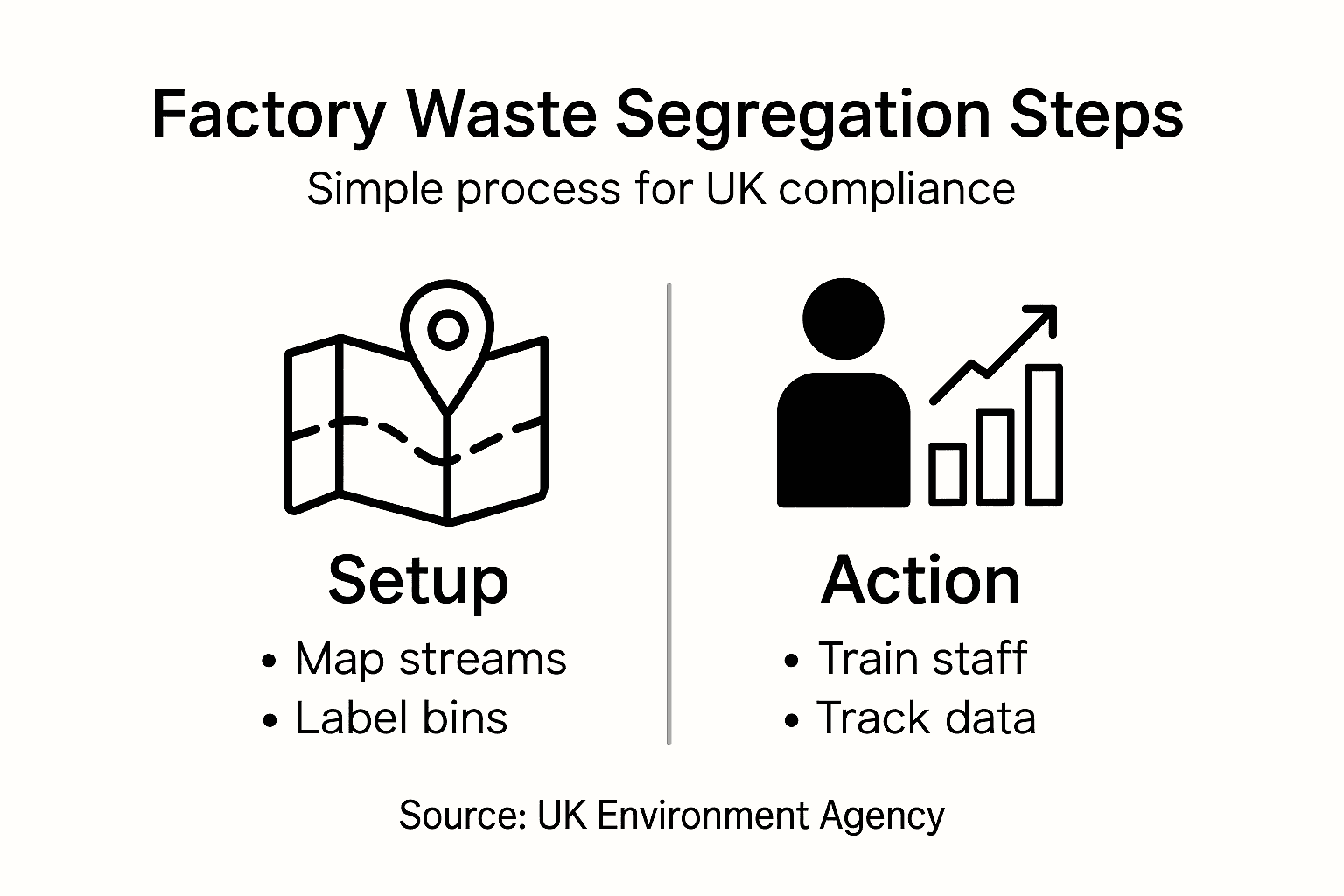
Technological integration plays a crucial role in modern waste segregation processes. Advanced tracking systems can help factories monitor waste generation, identify reduction opportunities, and ensure compliance with environmental regulations. This might include digital waste tracking software, weight-based monitoring systems, and real-time reporting mechanisms that provide insights into waste generation patterns and potential improvement areas. Staff training programmes are equally important, ensuring that employees understand the critical importance of precise waste segregation and can implement protocols consistently across all operational areas.
Pro tip: Develop a comprehensive visual waste segregation guide with colour-coded instructions and practical examples, and display these prominently in all waste collection and production areas.
Common Compliance Risks and Cost Implications
Factories face significant financial and operational challenges when navigating waste segregation regulations, with non-compliance potentially resulting in substantial economic consequences. Business waste penalties can escalate quickly, transforming what might seem like minor infractions into major financial burdens for industrial organisations.
The primary compliance risks stem from improper waste categorisation, inadequate documentation, and failure to implement systematic segregation protocols. Potential Financial Penalties can range from modest fines to significant legal expenses, potentially reaching tens of thousands of pounds for repeated or severe violations. These risks are particularly acute for factories generating complex waste streams, including hazardous materials, electronic waste, and mixed industrial byproducts. Regulatory bodies increasingly employ stringent monitoring mechanisms, conducting surprise inspections and implementing sophisticated tracking systems to ensure comprehensive waste management compliance.
Beyond direct financial penalties, non-compliance carries broader operational risks. Companies may experience reputational damage, potential loss of environmental certifications, and reduced competitive advantage in markets increasingly prioritising sustainable practices. The indirect costs of poor waste management can include increased waste disposal expenses, higher processing costs, and potential limitations on future business opportunities. Proactive compliance strategies, therefore, represent not just a regulatory requirement but a strategic business investment in long-term operational efficiency and environmental responsibility.
Reviewing compliance risks by area helps to focus factory improvement efforts:
| Compliance Risk | Typical Cause | Financial Consequence | Mitigation Strategy |
|---|---|---|---|
| Improper segregation | Insufficient staff training | Fines and lost materials | Conduct regular internal audits |
| Poor documentation | Lack of process oversight | Legal penalties | Use digital tracking systems |
| Hazardous waste mishandling | Inadequate labelling or protocols | Severe fines and liability | Specialist staff training |
| Mixed waste collection | No waste mapping system | Increased disposal costs | Colour-coded collection stations |
Pro tip: Develop a comprehensive internal waste compliance audit system that continuously monitors and updates waste management practices to stay ahead of evolving regulatory requirements.
Achieve Legal Compliance and Sustainability in Factory Waste Segregation Today
Effective waste segregation in factories is essential to meet strict UK regulations and boost environmental responsibility. If you are facing challenges like maintaining purity in recyclable materials or managing hazardous waste safely, our expert services are designed to support your goals. Implementing compliant and efficient waste collection strategies can reduce risks, avoid costly penalties and demonstrate your commitment to sustainability.

Discover how Venture Waste Management simplifies your waste segregation process with tailored solutions that cover general waste, hazardous materials and more. Learn about the Waste Collection Process in the UK for Businesses 2025 and explore How the Waste Collection Network in UK Serves Businesses in 2025. Begin your journey to compliance and environmental excellence by visiting our website at Venture Waste and take the first step in streamlining your waste management today.
Frequently Asked Questions
What is waste segregation in factories?
Waste segregation in factories refers to the systematic separation of different types of waste materials generated during the manufacturing process. This includes categorising recyclable materials, hazardous waste, and general industrial waste to improve recycling efficiency and reduce environmental impact.
Why is waste segregation important for factories?
Waste segregation is crucial for factories because it helps meet legal compliance, improves recycling rates, reduces environmental contamination, and demonstrates corporate environmental responsibility. Proper segregation minimises contamination of recyclable materials, enhancing their recovery potential.
What types of waste should be segregated in factories?
Factories should segregate waste into several key categories, including recyclable materials (paper, plastics, metals, glass), hazardous waste (chemicals, electronic waste), general industrial waste (non-recyclables), and specialised industrial byproducts. Correct separation is essential for compliance and effective waste management.
How can factories ensure compliance with waste segregation regulations?
Factories can ensure compliance by implementing detailed waste management systems that include regular staff training, colour-coded collection stations, documenting waste processes accurately, and conducting annual waste audits. These strategies help align factory operations with the latest legal requirements for waste segregation.
Recommended
- General Waste vs Recycling: Business Guide for 2025 – Venture Waste
- Waste Management News UK 2025: What Businesses Need to Know – Venture Waste
- Waste Collection Process in the UK for Businesses 2025 – Venture Waste
- Waste Management Challenges UK: Solutions for Businesses 2025 – Venture Waste
- Repair Over Replacement: Insights for Asset Lifecycle Management – FullyOps


Leave a Reply
Want to join the discussion?Feel free to contribute!