

Efficient Waste Removal for Offices: Step-by-Step Guide
Every british office generates more than 200 kilograms of waste each year, yet only a fraction gets properly sorted or recycled. Waste management might seem like a routine back-office chore, but getting it right influences your bottom line and speaks to your brand’s commitment to responsibility. This guide brings clarity to the practical steps you can take, transforming your waste processes into real savings and a smaller footprint.
Table of Contents
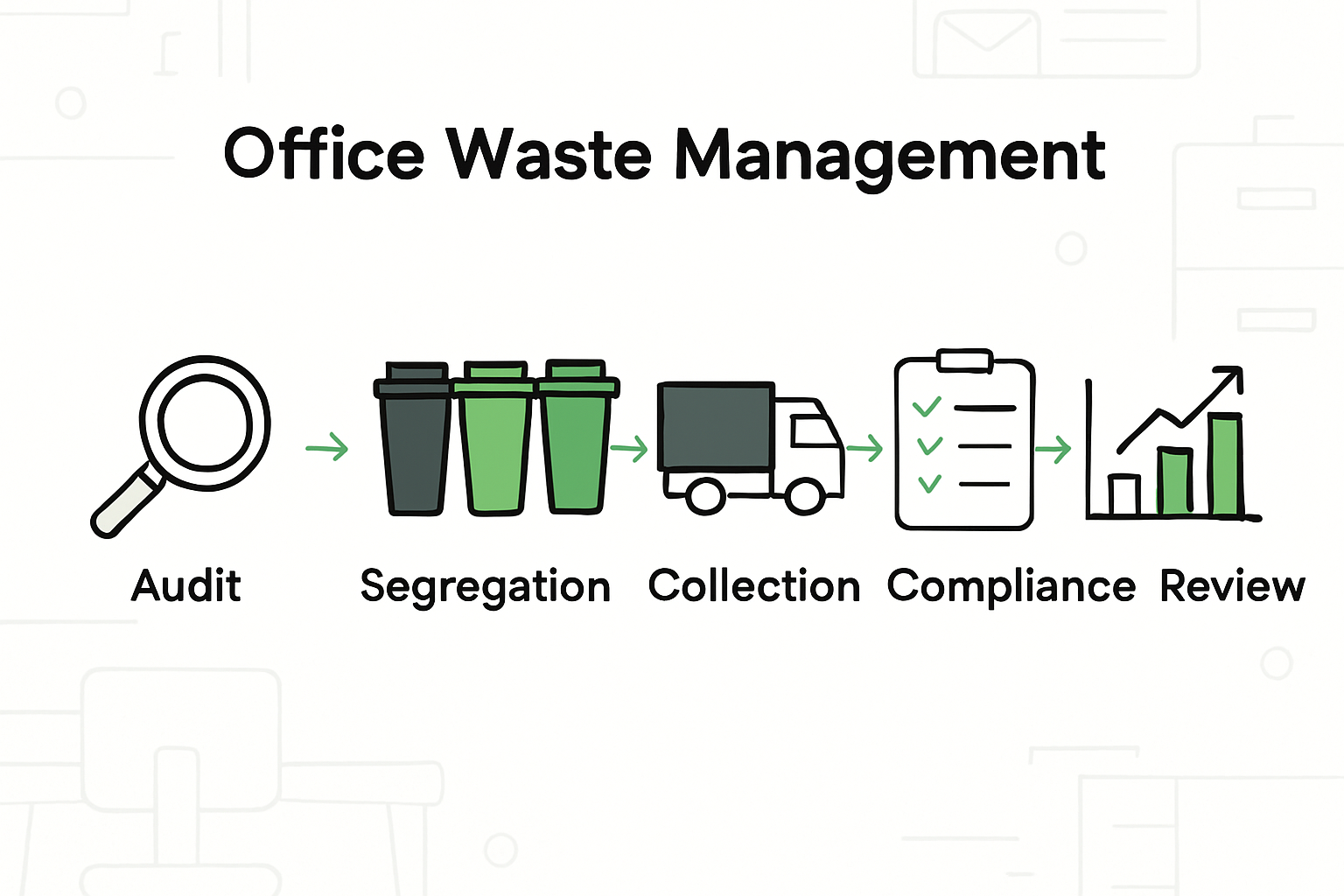
- Étape 1: Assess Office Waste Types And Volumes
- Étape 2: Implement Effective Waste Segregation Systems
- Étape 3: Arrange Professional Waste Collection Services
- Étape 4: Verify Legal Compliance And Documentation
- Étape 5: Review And Optimise Ongoing Waste Practices
Quick Summary
| Key Point | Explanation |
|---|---|
| 1. Conduct a thorough waste audit | Identify and quantify all waste types in your office to develop targeted waste reduction strategies. |
| 2. Establish clear waste segregation protocols | Implement colour-coded bins and clear labels to facilitate effective waste sorting and minimise contamination. |
| 3. Engage professional waste collection services | Choose reliable providers who can manage diverse waste streams and ensure compliance with legal regulations. |
| 4. Maintain rigorous documentation for compliance | Keep comprehensive records of waste handling processes to meet regulatory standards and avoid legal penalties. |
| 5. Continuously review and optimise waste practices | Regularly assess and enhance your waste management strategy to improve efficiency and reduce disposal costs. |
Étape 1: Assess office waste types and volumes
To develop an efficient waste management strategy, your first critical step involves systematically identifying and quantifying the waste generated within your office environment. This process requires a strategic approach that transforms waste assessment from a mundane task into an opportunity for significant environmental and financial improvements.
Begin by conducting a comprehensive waste audit that examines all waste streams generated across your workplace. Analyse waste types comprehensively using a structured methodology that categorises waste into distinct groups such as paper, electronic equipment, organic materials, packaging, and miscellaneous items. For precise tracking, create a detailed spreadsheet documenting daily or weekly waste volumes for each category. Universities like Worcester have demonstrated that meticulous waste data collection enables organisations to develop targeted reduction strategies.
When performing your audit, consider implementing weighing protocols and visual documentation to capture accurate measurements. Take photographs of waste streams and record weights using calibrated scales to ensure reliability. Engage staff members in this process by creating waste tracking sheets and encouraging departmental participation. This collaborative approach not only improves data accuracy but also raises organisational awareness about waste generation patterns.
Warning: Incomplete or superficial waste assessments can lead to ineffective management strategies. Invest time in thorough documentation and analysis to unlock meaningful insights into your office’s waste ecosystem.
Étape 2: Implement effective waste segregation systems
Creating an efficient waste segregation system is fundamental to responsible office waste management, transforming your organisation’s environmental approach from passive disposal to strategic resource handling. Your goal is to establish a systematic framework that enables precise waste categorisation and minimises contamination across different waste streams.
Begin by developing clear waste segregation protocols that align with recognised standards. Drawing inspiration from strategies like the NHS Clinical Waste Strategy, implement a targeted segregation approach that categorises waste into specific streams with distinct colour coded bins or clearly labelled containers. The recommended benchmark is a 20:20:60 distribution model for different waste categories, which helps organisations track and manage their waste more effectively. Place separate receptacles for recyclables, general waste, organic materials, and specialised waste types such as electronic equipment or confidential documents in easily accessible locations throughout your office.
Training becomes crucial in maintaining your segregation system. Develop comprehensive staff education programmes that explain the rationale behind waste segregation, demonstrate proper sorting techniques, and highlight the environmental and financial benefits. Create visual guides near waste stations showing exactly what can be disposed of in each bin, and consider conducting periodic workshops to reinforce best practices. Regular monitoring and feedback will help refine your approach and ensure ongoing compliance.
Warning: Inconsistent waste segregation can lead to entire waste batches being rejected for recycling, potentially increasing your organisation’s environmental footprint and disposal costs.
Étape 3: Arrange professional waste collection services
Arranging professional waste collection services represents a critical step in establishing a comprehensive waste management strategy for your office. Your objective is to secure a reliable partner who can efficiently handle your diverse waste streams while ensuring legal compliance and environmental responsibility.
Begin by researching waste collection providers that specialise in business waste management services. Recent recycling legislation highlights the importance of selecting a service capable of handling separate waste streams, particularly for core recyclable materials and food waste. Upcoming regulations require businesses to implement phased waste separation strategies, with implementation starting from March 2025. Request detailed quotes from multiple providers, comparing their capabilities in handling different waste categories including general waste, recyclables, confidential documents, and potential hazardous materials.
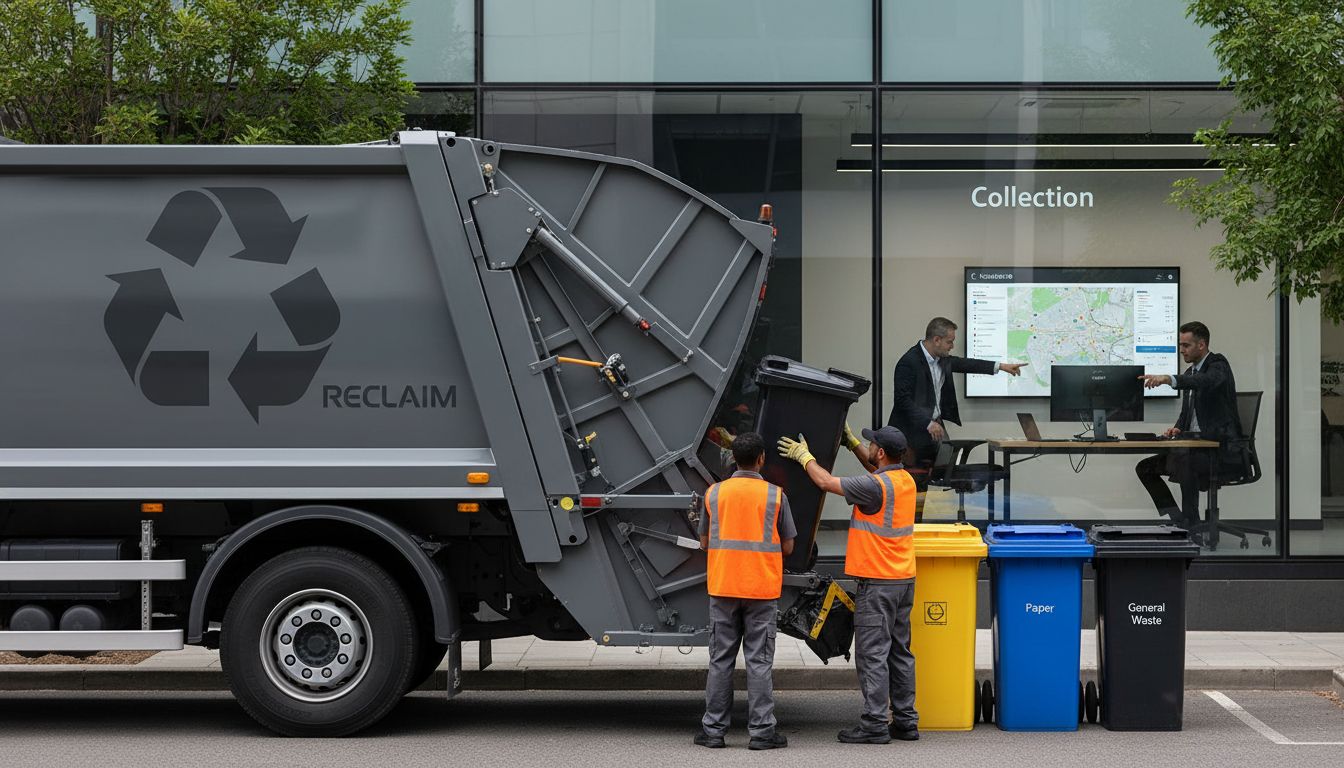
When evaluating potential waste collection partners, consider implementing a comprehensive tracking system inspired by approaches like the NHS Clinical Waste Strategy. This involves establishing a live tracking mechanism that monitors waste consignments from generation through to final disposal. Verify the provider’s credentials including waste carrier licences, environmental certifications, and their commitment to sustainable disposal practices. Request transparent reporting mechanisms that provide you with detailed documentation of waste volumes, recycling rates, and disposal methods.
Warning: Choosing an inappropriate waste collection service can result in potential legal non compliance, environmental penalties, and inefficient waste management practices that could significantly increase your organisational disposal costs.
Étape 4: Verify legal compliance and documentation
Verifying legal compliance and documentation represents the critical final stage of establishing a robust waste management system for your office. Your primary objective is to ensure that all waste handling processes meet current regulatory standards and maintain comprehensive records that demonstrate your organisational commitment to responsible waste management.
Begin by thoroughly understanding the waste disposal legal requirements specific to your industry and location. The Separation of Waste (England) Regulations 2025 introduce phased implementation timelines that mandate businesses to arrange separate collection for core recyclable waste streams. This requires meticulous documentation tracking, with an emphasis on maintaining waste consignment and transfer records with at least 95% accuracy. Establish a systematic approach to documenting every stage of waste generation, collection, transportation, and disposal, ensuring you can provide detailed evidence of your compliance if requested by regulatory authorities.
Implement a comprehensive record keeping system that captures critical information for each waste stream. This should include waste type, volume, collection dates, transportation details, and final disposal method. Create digital and physical backup systems that preserve these documents for the legally required retention period. Cross reference your documentation with your waste collection provider’s records to ensure consistency and identify any potential compliance gaps. Regularly audit these documents to maintain their accuracy and completeness.
Warning: Inadequate documentation can result in significant legal penalties, potential fines, and potential revocation of your waste management permits. Treat your compliance documentation with the same level of importance as your financial and operational records.
Étape 5: Review and optimise ongoing waste practices
Continuous improvement of your waste management strategy requires systematic review and proactive optimisation of existing practices. The ultimate goal is to transform waste management from a static compliance exercise into a dynamic process of ongoing refinement and resource efficiency.
Begin by implementing robust waste minimisation strategies that go beyond basic regulatory requirements. Drawing inspiration from institutions like the University of Worcester, focus on promoting resource reuse and implementing targeted measures to prevent waste generation. Establish key performance indicators similar to those used in the NHS Clinical Waste Strategy that track metrics such as total waste generated per employee, recycling rates, and waste stream composition. These quantitative measurements will provide objective insights into your organisation’s waste management effectiveness.
Develop a quarterly review mechanism that critically evaluates your waste management performance. Create a comprehensive dashboard that tracks waste volumes, segregation accuracy, recycling percentages, and associated disposal costs. Engage your team in this process by holding regular feedback sessions where employees can share observations and suggest potential improvements. Consider implementing incentive programmes that reward departments or teams demonstrating exceptional waste reduction and recycling efforts.
Warning: Failing to regularly review and adapt your waste management practices can result in escalating disposal costs, missed efficiency opportunities, and potential non compliance with evolving environmental regulations.
Streamline Your Office Waste Management with Venture Waste
Managing diverse office waste streams while ensuring strict legal compliance and efficient segregation can feel overwhelming. This step-by-step guide highlights challenges such as accurate waste assessment, effective segregation, and selecting reliable collection services. If you seek to transform your office waste processes from a complex burden into a streamlined and environmentally responsible system we can help.
Discover how Venture Waste’s expert solutions simplify your waste management. From comprehensive waste collection processes for UK businesses to seamless integration with the waste collection network in the UK we ensure your office waste is handled professionally and in full compliance with evolving regulations. Benefit from a straightforward three-step booking system tailored for busy businesses like yours.

Don’t let inefficient waste practices increase costs or cause compliance headaches. Take control today by visiting Venture Waste and book a professional waste removal service designed specifically for office environments. Act now to secure legal compliance, reduce your environmental impact and optimise waste handling with trusted UK-wide experts.
Frequently Asked Questions
How do I start assessing waste types and volumes in my office?
To begin assessing waste types and volumes, conduct a comprehensive waste audit to identify and quantify all waste generated. Create a detailed spreadsheet documenting waste volumes for each category and engage staff to improve data accuracy.
What steps should I take to implement effective waste segregation systems in my office?
To implement effective waste segregation systems, develop clear protocols for categorising waste and provide clearly labelled bins throughout your office. Train staff on proper sorting techniques and regularly monitor the system to ensure compliance and maximise recycling rates.
How can I find reliable waste collection services for my office’s needs?
Research waste collection providers that specialize in business waste management services. Request detailed quotes from multiple providers, ensuring they can handle your diverse waste streams and comply with waste disposal regulations.
What should I include in my waste management documentation to ensure legal compliance?
Your waste management documentation should include waste type, volume, collection dates, transportation details, and final disposal methods. Maintain detailed records for at least the legally required retention period and cross-reference them with your waste collection provider’s records.
How often should I review and optimise my office’s waste management practices?
It is advisable to conduct quarterly reviews of your waste management practices to assess performance and identify areas for improvement. Implement key performance indicators to track metrics and engage employees in sharing feedback to enhance your waste management strategy.
Recommended
- Bulky Waste Removal Tips for UK Businesses in 2025 – Venture Waste
- Waste Management Step by Step: A Guide for UK Businesses 2025 – Venture Waste
- Emergency Waste Removal: Step-by-Step Business Guide – Venture Waste
- How to Create an Office Electrical Recycling Policy That Staff Actually Follow – Venture Waste
- 7 Essential Commercial Building Maintenance Tips for Success – HVAC Service and Repair | Louisville, KY | Project Heating & Cooling


Leave a Reply
Want to join the discussion?Feel free to contribute!