

Waste Partnerships in the UK: Ensuring Compliance and Sustainability
Over eighty percent of british facilities managers now rank sustainable waste management as a top operational concern. With tightening UK regulations and ever-greater pressure for environmental responsibility, finding the right waste partnership can make a real difference to healthcare and educational institutions. This overview demystifies what makes effective british waste partnerships work, highlighting ways to raise compliance, support eco-friendly goals, and keep day-to-day operations running smoothly.
Table of Contents
- Defining Waste Partnerships In The UK Context
- Types Of Waste Partnerships And Key Differences
- How Waste Partnerships Operate In Practice
- Legal Obligations And Compliance Standards
- Risk Management, Costs, And Common Pitfalls
Key Takeaways
| Point | Details |
|---|---|
| Importance of Collaboration | Waste partnerships enhance resource management and sustainability through collaboration between public, private, and third sectors. |
| Types of Partnerships | Various partnership models, including Public Private Partnerships and Inter-Local Authority Partnerships, offer unique advantages for effective waste management. |
| Operational Framework | Successful partnerships require strategic planning, resource pooling, and risk sharing to navigate complex operational challenges. |
| Legal Compliance Needs | Adherence to regulations, such as the Extended Producer Responsibility, is crucial for effective waste partnership operation and environmental sustainability. |
Defining Waste Partnerships in the UK Context
Waste partnerships in the United Kingdom represent sophisticated collaborative networks between public, private, and third sector organisations designed to address complex waste management challenges. These strategic alliances go beyond traditional disposal approaches, focusing on comprehensive resource management, sustainability goals, and collective environmental responsibility.
At their core, waste partnerships involve strategic collaboration between neighbouring local authorities to develop integrated waste solutions. For instance, the Western Riverside Waste Authority demonstrates how multiple London boroughs can work together to prevent waste generation, enhance resource efficiency, and reduce greenhouse gas emissions. These partnerships are critical in adapting to evolving national legislation and local environmental targets.
The effectiveness of waste partnerships stems from their ability to pool resources, share expertise, and develop innovative approaches to waste management. By creating cross-sector networks, these partnerships enable local governments, private waste management companies, and environmental organisations to develop more comprehensive and sustainable waste management strategies. This collaborative approach allows for shared investment in infrastructure, joint research initiatives, and coordinated policy implementation across different regional contexts.
Pro tip: When exploring potential waste partnerships, prioritise organisations with aligned environmental objectives and complementary operational capabilities to maximise collaborative potential.
Types of Waste Partnerships and Key Differences
Waste partnerships in the United Kingdom represent sophisticated collaborative models designed to address complex environmental management challenges. These partnerships encompass multiple structures, each with unique characteristics and strategic objectives that contribute to more effective waste management and resource utilisation.
Public Private Partnerships (PPPs) are particularly significant in the UK waste management landscape. These collaborative arrangements between local government bodies and private companies aim to stimulate infrastructure investment and reduce landfill usage. PPPs differ from traditional procurement methods by establishing long-term contracts that secure private sector funding and expertise for waste management infrastructure projects.
The partnership models can be categorised into several key types:- Inter-Local Authority Partnerships: Collaborations between neighbouring councils to share waste management resources and infrastructure- Cross-Sector Partnerships: Involving public agencies, private waste management companies, and environmental organisations- Municipal-Private Sector Partnerships: Direct collaborations between city councils and waste management enterprises- Research and Innovation Partnerships: Networks focused on developing sustainable waste management technologies and strategies
Each partnership type offers unique advantages, with variations in operational scope, contract structures, and strategic objectives. The most effective partnerships leverage complementary strengths, combining public sector regulatory oversight with private sector efficiency and innovation.
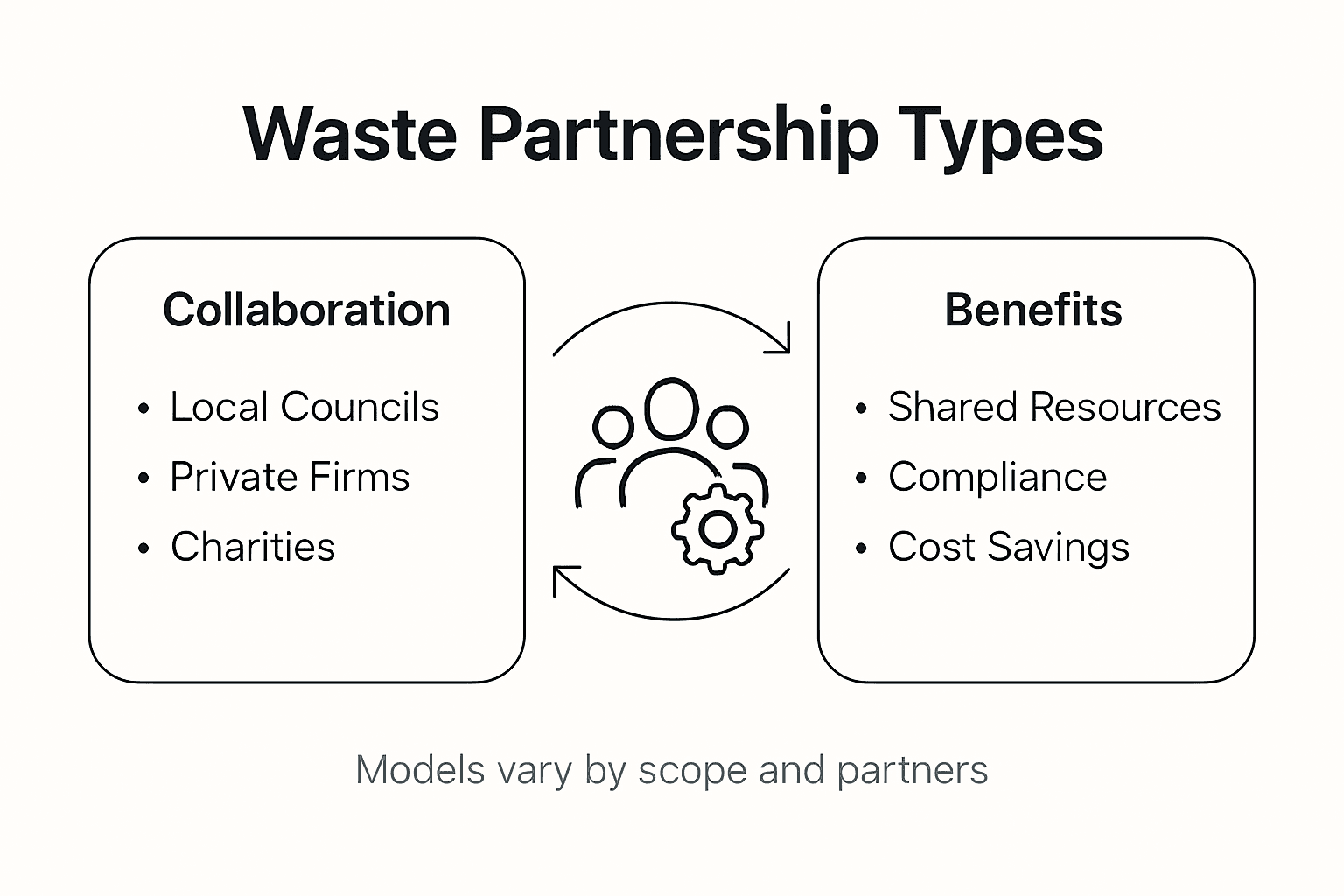
Here’s a comparison of common waste partnership models in the UK and their main strategic advantages:
| Partnership Model | Strategic Focus | Key Benefit |
|---|---|---|
| Inter-Local Authority Partnership | Shared infrastructure | Reduced operational costs |
| Cross-Sector Partnership | Multi-organisation input | Broader expertise pool |
| Municipal-Private Sector | Direct business alliance | Enhanced service efficiency |
| Research & Innovation Partnership | Technology advancement | Discovery of new solutions |
Pro tip: When developing waste partnerships, carefully assess potential partners’ environmental goals, operational capabilities, and long-term strategic alignment to ensure meaningful and sustainable collaboration.
How Waste Partnerships Operate in Practice
Waste partnerships in the United Kingdom represent intricate collaborative mechanisms that transform theoretical sustainability goals into practical waste management solutions. These partnerships navigate complex operational landscapes, balancing regulatory requirements, environmental objectives, and economic considerations.
At their core, these partnerships coordinate waste collection, disposal, and infrastructure management through structured implementation strategies. They must manage critical aspects such as service aggregation, contract negotiations, and regulatory compliance while maintaining operational continuity during administrative transitions.

The operational framework of waste partnerships typically involves several key strategic elements:- Collaborative Planning: Developing shared waste management strategies- Resource Pooling: Combining financial and technological resources- Risk Sharing: Distributing potential challenges across partnership members- Performance Monitoring: Establishing clear metrics and accountability mechanisms- Technological Integration: Implementing shared digital platforms for tracking and reporting
Successful waste partnerships require sophisticated governance models that balance local authority oversight with private sector efficiency. This approach enables more dynamic, responsive waste management systems that can quickly adapt to changing environmental regulations and community needs.
Pro tip: Develop clear, measurable key performance indicators that align with both environmental sustainability goals and operational efficiency metrics to ensure meaningful partnership outcomes.
Legal Obligations and Compliance Standards
Waste partnerships in the United Kingdom operate within a complex legal framework that demands rigorous adherence to national environmental regulations and sustainability objectives. These partnerships must navigate an intricate landscape of legal requirements designed to transform waste management practices and minimise environmental impact.
The legal landscape is defined by comprehensive mandates, including the Extended Producer Responsibility (EPR) scheme and consistent waste collection requirements. These regulations impose significant obligations on producers, local authorities, and waste management entities, compelling them to meet specific recycling targets, provide standardised collection services, and contribute to the funding of waste management infrastructure.
Key legal compliance standards encompass several critical dimensions:- Waste Hierarchy Adherence: Prioritising waste prevention, reuse, and recycling- Waste Separation Requirements: Implementing strict categorisation protocols- Reporting and Documentation: Maintaining transparent records of waste management activities- Environmental Impact Mitigation: Demonstrating measurable reduction in ecological footprint- Regulatory Consultation: Engaging with government waste prevention programmes
Successful waste partnerships must continuously evolve their operational strategies to align with the Resources and Waste Strategy, which emphasises sustainable resource management and environmental protection. This requires proactive engagement with changing legislative frameworks and a commitment to exceeding minimal compliance standards.
The following table highlights essential legal compliance areas and their impact on UK waste partnerships:
| Compliance Area | Purpose | Impact on Partnership |
|---|---|---|
| Waste Hierarchy | Prioritise reuse and recycling | Drives sustainability |
| Reporting Protocols | Recordkeeping and transparency | Improves accountability |
| EPR Mandates | Producer responsibility | Stimulates innovation |
| Impact Mitigation | Reduce ecological footprint | Boosts public trust |
Pro tip: Develop a comprehensive compliance tracking system that anticipates regulatory changes and integrates legal requirements into daily operational workflows.
Risk Management, Costs, and Common Pitfalls
Waste partnerships in the United Kingdom face increasingly complex financial and operational challenges that demand sophisticated risk management strategies. The evolving landscape of environmental regulations and infrastructure requirements creates a multifaceted environment where strategic planning becomes crucial for sustainable success.
Parliamentary analyses have revealed significant risks associated with waste partnership financing models, highlighting potential financial vulnerabilities. These include challenges such as overreliance on private sector financing, inadequate cost-benefit evaluations, and potential operational inefficiencies that can lead to substantial financial and legal complications.
Key risk management considerations include:- Financial Modelling: Developing robust, transparent financial projections- Contract Negotiation: Establishing clear, comprehensive partnership agreements- Contingency Planning: Creating flexible strategies for unexpected challenges- Performance Monitoring: Implementing rigorous evaluation mechanisms- Technology Investment: Selecting scalable, adaptable technological solutions
Successful waste partnerships must adopt a proactive approach to risk mitigation, recognising that comprehensive planning and continuous adaptation are essential for navigating the complex regulatory and economic landscape of waste management. This requires a holistic view that balances financial constraints with environmental objectives and operational efficiency.
Pro tip: Conduct regular, comprehensive risk assessments that incorporate financial, regulatory, and technological factors to create a dynamic and resilient waste management strategy.
Streamline Your UK Waste Partnership Compliance with Venture Waste
Managing waste partnerships requires navigating complex legal obligations and operational challenges while striving for sustainability and efficiency. If your organisation aims to meet stringent compliance standards, leverage innovative waste collection methods, and reduce environmental impact, Venture Waste Management offers practical solutions designed for today’s regulatory landscape. Discover how our expert services align perfectly with the demands of inter-authority waste collaborations and public-private initiatives to deliver reliable, compliant waste management.

Explore our insights into How the Waste Collection Network in UK Serves Businesses in 2025 alongside a detailed overview of the Waste Collection Process in the UK for Businesses 2025 to understand the full scope of compliance and sustainability measures. Visit Venture Waste Management today and take the next step towards a fully compliant, environmentally responsible, and efficient waste partnership solution tailored to your needs.
Frequently Asked Questions
What are waste partnerships?
Waste partnerships in the UK are collaborative networks among public, private, and third sector organisations aimed at managing waste sustainably and effectively.
How do waste partnerships ensure compliance with legal standards?
Waste partnerships adhere to legal frameworks by following regulations such as the Extended Producer Responsibility (EPR) scheme, ensuring proper waste categorisation, and maintaining transparent reporting practices.
What types of waste partnerships exist in the UK?
The main types of waste partnerships include Public Private Partnerships (PPPs), Inter-Local Authority Partnerships, Cross-Sector Partnerships, Municipal-Private Sector Partnerships, and Research and Innovation Partnerships.
What are the key benefits of forming a waste partnership?
Key benefits include shared resources, combined expertise, innovative waste management strategies, reduced costs, and improved environmental sustainability.
Recommended
- How the Waste Collection Network in UK Serves Businesses in 2025 – Venture Waste
- 7 Steps to Waste Compliance for UK Businesses in 2025 – Venture Waste
- How UK Businesses Can Save Money on Waste Management in 2025 – Venture Waste
- Waste Management Companies in the North East of England: 2025 Guide for UK Businesses – Venture Waste


Leave a Reply
Want to join the discussion?Feel free to contribute!