

Waste Management Resource Pack: Complete Guide UK
Every british business faces strict rules when it comes to handling waste, yet many struggle to keep pace with changing requirements. The United Kingdom enforces some of the toughest waste regulations, with non-compliance leading to fines that can reach thousands of pounds. Understanding these laws is vital for staying out of trouble and supporting greener operations. A well-designed waste management resource pack can make these complex rules manageable, guiding british organisations through their legal and environmental responsibilities with confidence.
Table of Contents
- Waste Management Resource Pack Explained
- Core Components And Useful Resources
- Types Of Waste Addressed And Solutions
- UK Legal Requirements And Compliance
- How Resource Packs Benefit Organisations
Key Takeaways
| Point | Details |
|---|---|
| Waste Management Resource Pack Importance | A waste management resource pack is essential for organisations to comprehend legal obligations and ensure effective waste handling in compliance with UK regulations. |
| Core Components of Resource Packs | Effective resource packs include waste classification guidelines, compliance checklists, and documentation protocols to enhance operational efficiency and environmental stewardship. |
| Legal Requirements Overview | Compliance with the Waste Duty of Care is crucial as it mandates responsible waste management, including proper storage and disposal practices. |
| Benefits for Organisations | Implementing resource packs simplifies regulatory compliance, reduces legal risks, and promotes sustainable operational practices across varied sectors. |
Waste Management Resource Pack Explained
Waste management in the United Kingdom represents a complex, highly regulated system that requires businesses and organisations to understand their legal obligations and environmental responsibilities. A comprehensive waste management resource pack serves as a crucial tool for navigating these intricate requirements, offering detailed guidance on proper waste handling, disposal, and regulatory compliance.
At its core, a waste management resource pack provides organisations with essential documentation and strategic frameworks for managing waste streams effectively. These resources typically include comprehensive guidance on waste management practices that align with current UK environmental regulations. Businesses can expect these packs to cover critical aspects such as waste classification, segregation protocols, transportation requirements, and documentation standards that ensure legal and environmental compliance.
The UK government has established rigorous standards for waste management, with key legislative frameworks like the Waste Duty of Care Code of Practice providing clear guidelines for organisations. These resources mandate that all waste producers must take reasonable steps to ensure their waste is managed responsibly, including proper storage, transportation, and disposal. For businesses across sectors ranging from manufacturing to healthcare, understanding these requirements is not just about legal compliance but also about contributing to broader environmental sustainability goals.
Key components of an effective waste management resource pack typically include:
- Detailed waste classification guidelines
- Legal compliance checklists
- Environmental impact assessment templates
- Waste tracking and reporting documentation
- Risk management strategies
- Best practice recommendations for waste reduction and recycling
By leveraging a comprehensive waste management resource pack, organisations can transform waste management from a complex regulatory challenge into a strategic opportunity for environmental stewardship and operational efficiency.
Core Components and Useful Resources
A robust waste management resource pack requires comprehensive documentation that addresses the intricate legal and environmental requirements facing UK organisations. Waste management regulations establish clear guidelines for businesses to effectively manage their waste streams, emphasising responsible handling, documentation, and environmental stewardship.

The core components of an effective waste management resource typically encompass several critical elements. Environmental compliance documentation forms the cornerstone of these resources, providing organisations with detailed frameworks for waste classification, tracking, and reporting. Environmental permit guidance highlights the importance of understanding different permit types, including standard rules and bespoke permits, which are essential for businesses handling various waste categories.
Businesses across sectors such as manufacturing, healthcare, and construction must develop comprehensive waste management strategies that include:
- Detailed waste categorisation systems
- Comprehensive tracking and documentation protocols
- Risk assessment and mitigation strategies
- Environmental impact evaluation templates
- Waste reduction and recycling implementation plans
- Compliance checklists for regulatory requirements
Professional waste management resource packs go beyond mere documentation, offering strategic insights into transforming waste management from a regulatory obligation into an opportunity for operational efficiency and environmental responsibility. By integrating thorough documentation, legal compliance frameworks, and proactive management strategies, organisations can effectively navigate the complex landscape of waste management in the United Kingdom.
Types of Waste Addressed and Solutions
Understanding the complex landscape of waste management requires comprehensive knowledge of the diverse waste types encountered by UK businesses. Waste management regulations categorise waste into critical classifications that demand specific handling and disposal protocols, ensuring environmental safety and legal compliance across various industrial sectors.
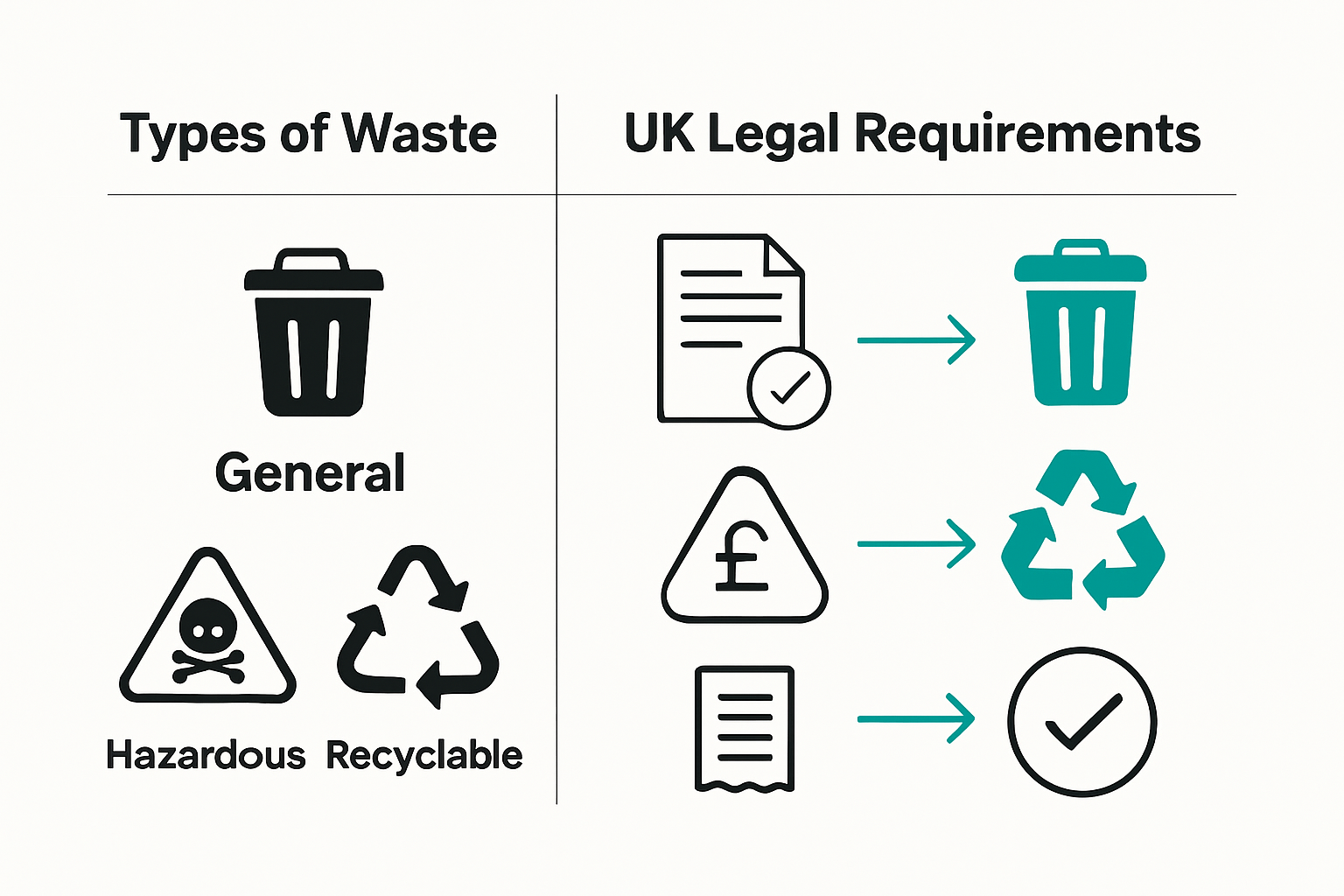
Businesses must navigate two primary waste categories: hazardous and non-hazardous waste. Hazardous waste includes materials that pose potential risks to human health or the environment, such as chemical residues, medical waste, electronic equipment, and certain industrial by-products. Environmental permit guidance emphasises the importance of specialised treatment and disposal methods for these sensitive waste streams, requiring organisations to obtain specific permits and follow rigorous management protocols.
The primary types of waste addressed in comprehensive resource packs typically include:
- General commercial and industrial waste
- Construction and demolition debris
- Hazardous chemical waste
- Electronic and electrical equipment waste (WEEE)
- Medical and pharmaceutical waste
- Packaging and recyclable materials
- Agricultural and organic waste
- Liquid and chemical waste streams
Professional waste management solutions go beyond mere classification, offering strategic approaches to waste reduction, recycling, and responsible disposal. By developing comprehensive waste handling strategies, organisations can transform waste management from a regulatory obligation into an opportunity for environmental stewardship and operational efficiency, ultimately contributing to a more sustainable business ecosystem in the United Kingdom.
UK Legal Requirements and Compliance
Navigating the intricate landscape of waste management requires a comprehensive understanding of the legal frameworks governing waste disposal in the United Kingdom. Waste management regulations establish a robust system of responsibilities and obligations for businesses across all sectors, ensuring environmental protection and sustainable waste management practices.
The Waste Duty of Care represents a fundamental legal requirement that compels organisations to take responsibility for their waste from creation to final disposal. This legal principle mandates that businesses must prevent unauthorized disposal, track waste movements, and ensure that waste is transferred only to licensed and authorized waste management providers. Environmental permit guidance further clarifies the specific legal requirements for obtaining necessary permits, which vary depending on the type and volume of waste generated.
Key legal compliance requirements for UK businesses include:
- Accurate waste classification and documentation
- Maintaining detailed waste transfer records
- Obtaining appropriate environmental permits
- Implementing proper waste storage and handling protocols
- Ensuring waste is transferred to licensed carriers
- Conducting regular waste management audits
- Preventing environmental contamination
- Maintaining staff training on waste management regulations
Waste disposal legal frameworks impose significant penalties for non-compliance, including substantial financial fines and potential legal action. Businesses must proactively understand and implement these requirements, transforming legal obligations into opportunities for environmental responsibility and sustainable operational practices across the United Kingdom.
How Resource Packs Benefit Organisations
Waste management resource packs represent a strategic tool for organisations seeking to navigate the complex regulatory landscape of waste disposal in the United Kingdom. Waste management regulations provide comprehensive frameworks that enable businesses to transform legal compliance from a potential burden into a proactive opportunity for environmental responsibility and operational efficiency.
The primary benefits of comprehensive waste management resource packs extend far beyond simple regulatory adherence. Environmental permit guidance highlights how these resources equip organisations with detailed insights into waste classification, handling protocols, and strategic management approaches. By providing structured documentation, risk assessment templates, and clear procedural guidelines, resource packs enable businesses to streamline their waste management processes, reduce potential legal risks, and demonstrate a commitment to sustainable practices.
Key organisational advantages of implementing robust waste management resource packs include:
- Simplified regulatory compliance
- Reduced risk of financial penalties
- Enhanced environmental accountability
- Improved waste tracking and documentation
- Standardised internal waste management procedures
- More efficient resource allocation
- Increased staff awareness and training
- Potential cost savings through optimised waste streams
Waste handling best practices demonstrate that organisations investing in comprehensive resource packs can transform waste management from a regulatory requirement into a strategic business advantage. By proactively understanding and implementing structured waste management approaches, businesses can not only meet legal obligations but also contribute to broader environmental sustainability goals across the United Kingdom.
Streamline Your Waste Management with Expert Support from Venture Waste
Managing waste effectively while meeting strict UK regulations can be overwhelming. The Waste Management Resource Pack highlights the need for precise waste classification, legal compliance, and thorough documentation. These challenges often lead businesses to seek reliable solutions that simplify compliance and enhance operational efficiency.
At Venture Waste, we understand these pain points and offer comprehensive services tailor-made to meet your regulatory obligations. From hazardous waste handling to general waste collection, our network ensures responsible waste disposal in line with industry best practices. Learn more about how our service framework works in How the Waste Collection Network in UK Serves Businesses in 2025 – Venture Waste.

Ready to turn complex waste management requirements into a seamless process? Visit Venture Waste to explore our straightforward three-step booking system and discover effective waste solutions that safeguard your business and the environment. Also, check the details on our efficient Waste Collection Process in the UK for Businesses 2025 – Venture Waste and take control of your waste management today.
Frequently Asked Questions
What is included in a waste management resource pack?
A waste management resource pack typically includes detailed waste classification guidelines, legal compliance checklists, environmental impact assessment templates, waste tracking and reporting documentation, risk management strategies, and best practice recommendations for waste reduction and recycling.
Why is compliance with waste management regulations important for businesses?
Compliance with waste management regulations is essential for businesses as it helps prevent legal penalties, ensures responsible waste handling, and contributes to environmental protection. It also enhances a company’s reputation and demonstrates commitment to sustainability.
How can organisations effectively manage hazardous waste?
Organisations can effectively manage hazardous waste by understanding its classification, obtaining necessary environmental permits, following stringent treatment and disposal protocols, and ensuring it is handled by licensed waste management providers.
What are the benefits of using a waste management resource pack?
Using a waste management resource pack provides organisations with simplified regulatory compliance, reduced risk of financial penalties, improved waste tracking and documentation, standardised procedures, increased staff awareness, and potential cost savings through optimised waste management practices.
Recommended
- Waste Management Consultation: Complete UK Guide – Venture Waste
- The Essential Guide to Sustainable Waste Management – Venture Waste
- Complete Guide to Responsible Waste Disposal UK – Venture Waste
- Waste Collection Best Practices: Step-by-Step UK Guide – Venture Waste
- Understanding Sustainable Event Planning: The How and Why|CS
- Master Zero Waste Grocery Shopping: A Practical Guide – naturessoulshop


Leave a Reply
Want to join the discussion?Feel free to contribute!