

Understanding the Waste Management Industry Overview
Everyone generates waste, whether at home or in business, and the pile keeps growing each year. Imagine this: the UK waste management sector enables the economy to save up to 3 billion annually simply by sorting and recycling more effectively. Most people think waste is just rubbish that gets carted away and forgotten. It turns out, though, that waste management is one of the most important drivers of business reputation, compliance, and even profitability across the country.
Table of Contents
- What Is The Waste Management Industry?
- Why Is Waste Management Important For Businesses?
- How Waste Management Works: Key Processes And Technologies
- Understanding Different Types Of Waste And Their Disposal
- The Role Of Legislation And Compliance In Waste Management
Quick Summary
| Takeaway | Explanation |
|---|---|
| Waste management is essential for sustainability. | It plays a key role in resource conservation, pollution reduction, and facilitating a circular economy. |
| Businesses must comply with strict regulations. | Failure to manage waste properly can lead to significant financial penalties and legal repercussions. |
| Effective waste management enhances brand reputation. | Sustainable practices signal corporate responsibility and can attract environmentally conscious customers and investors. |
| Innovative technologies transform waste into resources. | Advanced processing methods, such as recycling and energy recovery, turn waste from a problem into economic opportunities. |
| Regular audits and training ensure compliance. | Businesses should conduct audits and train staff to maintain adherence to waste management laws and improve operational efficiency. |
What is the Waste Management Industry?
The waste management industry represents a complex and essential economic sector responsible for collecting, transporting, processing, and disposing of waste materials generated by businesses, households, and industrial operations across the United Kingdom. Our comprehensive guide on waste management definitions provides deeper insights into this critical infrastructure.
Core Functions and Operational Scope
At its fundamental level, the waste management industry encompasses a range of professional services and activities designed to handle different types of waste safely and sustainably. These activities include:
- Waste collection from residential, commercial, and industrial sources
- Sorting and segregation of different waste streams
- Recycling and material recovery processes
- Secure disposal of non-recyclable materials
- Environmental compliance and regulatory management
The industry operates across multiple sectors, serving manufacturing, construction, healthcare, retail, and public services. In Newcastle, Leeds, Manchester, and other major urban centres, waste management companies play a crucial role in maintaining environmental hygiene and supporting circular economy principles.
Economic and Environmental Significance
Waste management is not merely a logistical operation but a critical environmental and economic function. According to UK Government statistical research, the sector contributes significantly to resource conservation, pollution reduction, and sustainable development.
The industry helps businesses and communities:
- Reduce environmental pollution
- Conserve natural resources through recycling
- Minimise landfill waste
- Comply with increasingly stringent environmental regulations
- Transform waste into valuable secondary resources
Professional waste management providers ensure that different waste streams – including general waste, hazardous materials, electronic equipment, and recyclable resources – are handled according to strict legal and environmental standards. This approach not only protects the environment but also supports the UK’s transition towards a more sustainable, circular economy.
Why is Waste Management Important for Businesses?
Waste management represents a critical strategic function for businesses, extending far beyond mere regulatory compliance. Learn how UK businesses can optimise waste management costs to understand its comprehensive impact on organisational performance.
Legal and Financial Implications
Businesses face significant legal and financial consequences for improper waste management. The UK government mandates strict regulations requiring companies to handle waste responsibly, with potential penalties including substantial fines and potential legal prosecution. According to government research, businesses can save up to 3 billion annually by implementing effective waste reduction and recycling strategies.
Key financial considerations include:
- Reducing waste disposal costs
- Minimising potential regulatory penalties
- Creating potential revenue streams from recycled materials
- Improving operational efficiency
Environmental and Reputational Benefits
Modern consumers and stakeholders increasingly evaluate businesses based on their environmental credentials. Effective waste management demonstrates corporate social responsibility, enhancing brand reputation and potentially attracting environmentally conscious customers and investors.
Businesses that prioritise sustainable waste management practices can:
- Demonstrate environmental leadership
- Reduce carbon footprint
- Showcase commitment to circular economy principles
- Differentiate themselves in competitive markets
In urban centres like Newcastle, Manchester, and Leeds, waste management has become a crucial indicator of a company’s commitment to sustainability. Professional waste management solutions help businesses transform potential environmental liabilities into strategic opportunities for innovation and responsible growth.
How Waste Management Works: Key Processes and Technologies
Learn our step-by-step waste management approach for businesses to understand the complex systems transforming waste handling across industries. Waste management is a sophisticated ecosystem of interconnected technologies and strategic processes designed to minimise environmental impact while maximising resource efficiency.
Waste Collection and Segregation
The initial phase of waste management involves comprehensive collection and meticulous segregation. Specialised vehicles and trained professionals collect different waste streams from businesses, ensuring immediate separation of recyclable, general, and hazardous materials. This critical first step determines the subsequent processing methods and potential for material recovery.
Key collection strategies include:
- Colour coded waste containers
- Dedicated collection schedules
- On site sorting protocols
- Digital tracking of waste streams
- Compliance with environmental regulations
Processing and Transformation Technologies
According to UK Government energy recovery research, waste management encompasses advanced transformation technologies that convert waste into valuable resources. These technologies range from traditional mechanical processing to cutting edge thermal and biological treatment methods.
Advanced waste processing technologies include:
- Mechanical recycling systems
- Anaerobic digestion for organic waste
- Thermal treatment and energy recovery
- Chemical recycling processes
- Gasification and pyrolysis technologies
In urban centres like Manchester, Newcastle, and Leeds, waste management companies are pioneering innovative approaches that transform waste from an environmental challenge into a potential economic opportunity. By implementing sophisticated sorting, processing, and recovery technologies, these organisations are creating sustainable solutions that reduce landfill dependency and support circular economy principles.
Understanding Different Types of Waste and Their Disposal
Learn about domestic waste types for UK businesses to comprehend the complex landscape of waste categorisation and disposal. Effective waste management begins with understanding the nuanced characteristics of different waste streams and their specific handling requirements.
Categorising Waste Streams
Waste is not a uniform substance but a complex mix of materials requiring specialised disposal strategies. According to UK government waste classification guidelines, waste can be categorised into several critical classifications that determine its treatment and disposal methods.
Primary waste categories include:
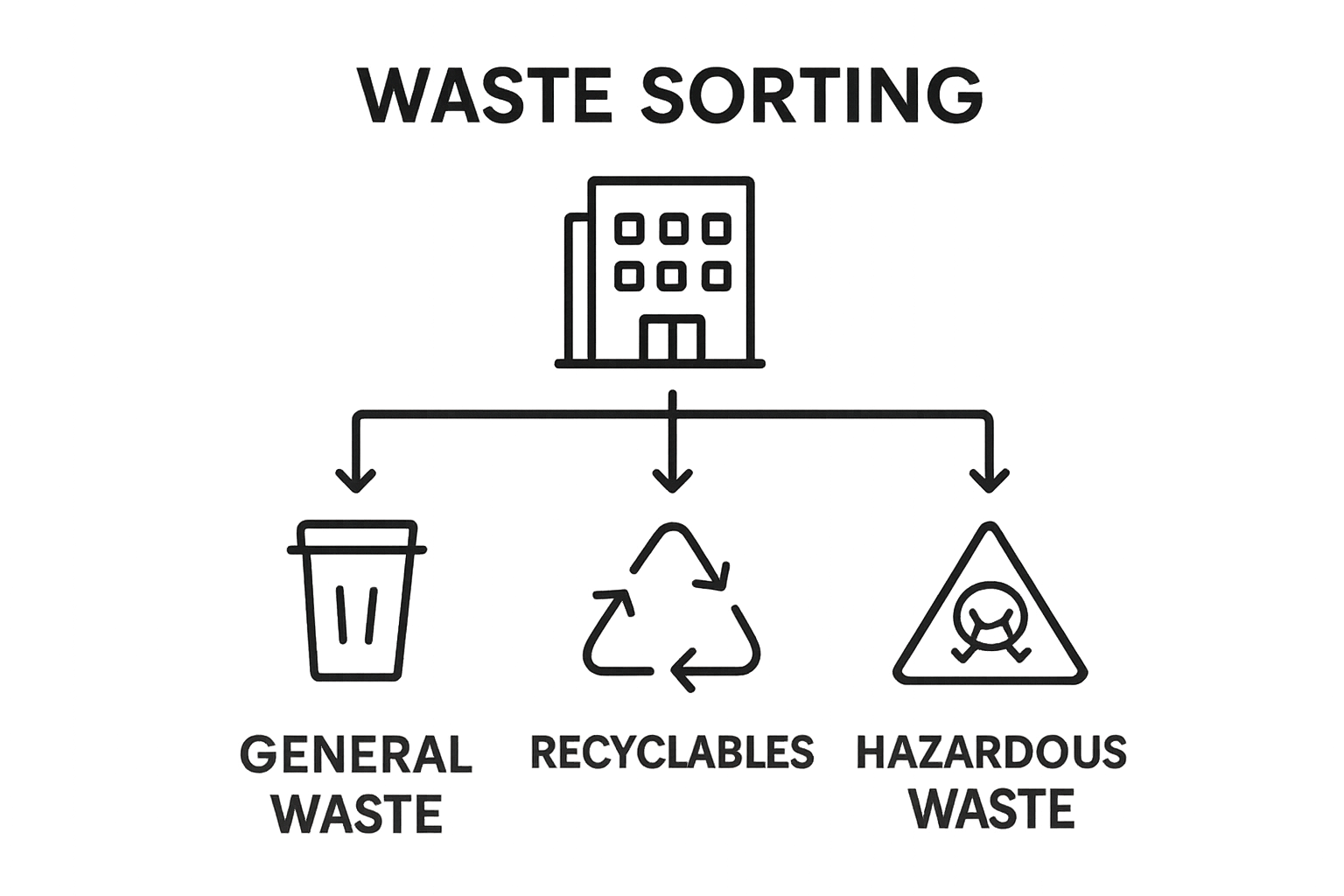
- General waste
- Recyclable materials
- Hazardous waste
- Clinical and medical waste
- Construction and demolition waste
- Electronic and electrical equipment waste
- Organic and biodegradable waste
Disposal and Treatment Approaches
Each waste type demands a unique disposal approach designed to minimise environmental impact and maximise potential resource recovery. Businesses must implement targeted strategies that align with regulatory requirements and sustainable waste management principles.
Disposal methods vary significantly across waste types:
- Recycling for paper, plastic, metal, and glass materials
- Incineration with energy recovery for non recyclable waste
- Anaerobic digestion for organic waste
- Secure landfill for non recoverable materials
- Specialised treatment for hazardous waste streams
In urban centres like Manchester, Newcastle, and Leeds, waste management companies are pioneering innovative approaches that transform complex waste challenges into sustainable solutions. By understanding the intricate characteristics of different waste types, businesses can develop more effective, environmentally responsible waste management strategies.
Below is a table outlining key waste categories and their typical disposal or treatment methods, helping businesses understand the appropriate strategies for different waste types.
| Waste Category | Description | Common Disposal/Treatment Approach |
|---|---|---|
| General waste | Non-recyclable, non-hazardous materials | Landfill or energy recovery (incineration) |
| Recyclable materials | Paper, plastics, glass, metals | Mechanical recycling |
| Hazardous waste | Chemicals, solvents, some industrial by-products | Specialised secure treatment/disposal |
| Clinical and medical waste | Healthcare waste (e.g., dressings, sharps) | Sterilisation, incineration |
| Construction and demolition waste | Rubble, timber, metals from building sites | Recycling, landfill (for non-recoverables) |
| Electronic and electrical equipment | Old computers, appliances, electronic devices | Specialised recycling, dismantling |
| Organic and biodegradable waste | Food and green waste | Anaerobic digestion, composting |
The Role of Legislation and Compliance in Waste Management
Discover the comprehensive steps to waste compliance for UK businesses and understand the critical legal framework governing waste management practices. Legislation serves as the fundamental backbone of responsible waste management, establishing clear guidelines and accountability mechanisms for businesses across various sectors.
Legal Framework and Regulatory Requirements
According to UK government waste legislation guidelines, businesses have a statutory duty of care to manage waste responsibly. This comprehensive legal framework encompasses multiple regulations designed to protect environmental integrity and promote sustainable waste management practices.
Key legislative principles include:
- Preventing waste generation
- Minimising environmental pollution
- Ensuring proper waste segregation
- Maintaining accurate waste transfer documentation
- Implementing responsible disposal methods
Compliance and Enforcement Mechanisms
Companies operating in the waste management sector must navigate a complex landscape of legal obligations. Non compliance can result in significant financial penalties, potential legal prosecution, and reputational damage. The regulatory environment demands businesses demonstrate proactive approaches to waste management that prioritise environmental protection and resource efficiency.
Critical compliance requirements encompass:
- Regular waste audits
- Comprehensive record keeping
- Staff training on waste management protocols
- Adherence to industry specific regulations
- Continuous monitoring of waste streams
In urban centres like Manchester, Newcastle, and Leeds, waste management companies are developing sophisticated compliance strategies that go beyond mere legal requirements. By embedding environmental responsibility into their operational frameworks, these organisations are transforming legislative compliance from a regulatory obligation into a strategic opportunity for sustainable business practices.
This table presents a comparison of key compliance requirements for businesses managing waste, clarifying the primary responsibilities associated with legal and regulatory standards.
| Compliance Requirement | Purpose/Outcome |
|---|---|
| Regular waste audits | Identify waste types, volumes, and process improvements |
| Comprehensive record keeping | Ensure traceability and evidence for regulatory inspections |
| Staff training | Promote awareness and adherence to waste protocols |
| Adherence to sector regulations | Satisfy industry-specific waste handling rules |
| Continuous waste stream monitoring | Maintain ongoing compliance and optimise processes |

Turn Your Waste Management Knowledge Into Real Results For Your Business
After exploring the complexity of the waste management industry and learning how regulatory compliance, waste segregation, and efficient disposal directly impact your business and reputation, it becomes clear that handling waste effectively is about more than just ticking boxes. Many businesses struggle with rising costs, strict regulations, and the need to prove their environmental responsibility. If you are ready to move from understanding these challenges to solving them, let us guide you. Discover how the Waste Collection Network in UK Serves Businesses by providing tailored solutions for all types of commercial waste.

Choose to work with a partner that puts compliance, sustainability, and simplicity at the heart of your waste strategy. Join other UK businesses who trust Venture Waste Management for practical, legally compliant, and environmentally sound waste services. Take your next step now and experience a seamless waste collection process designed specifically for UK businesses.
Frequently Asked Questions
What is the waste management industry?
The waste management industry is responsible for the collection, transportation, processing, and disposal of waste materials from businesses, households, and industrial operations in the UK. It plays a crucial role in maintaining environmental hygiene and supports circular economy principles.
Why is waste management important for businesses?
Effective waste management is crucial for businesses as it helps reduce environmental pollution, minimises disposal costs, ensures compliance with regulations, and enhances corporate reputation. Implementing efficient waste strategies can also turn waste into potential revenue streams through recycling.
What are the core functions of waste management?
Core functions of waste management include waste collection and segregation, recycling and material recovery, secure disposal of non-recyclable materials, and managing compliance with environmental regulations. These processes ensure safe and sustainable handling of various waste types.
How do different types of waste affect disposal strategies?
Different types of waste require tailored disposal strategies. For example, recyclable materials are processed for reuse, organic waste is often managed through anaerobic digestion, while hazardous waste needs specialised treatment methods to ensure it is safely disposed of, protecting the environment.


Leave a Reply
Want to join the discussion?Feel free to contribute!