

Waste Management Glossary: Complete Guide for UK
Sorting through british waste management rules can leave even experienced professionals puzzled. With more than 300 official terms in UK guidance alone, the language of waste handling shapes everything from daily operations to long term business sustainability. Grasping these definitions means better compliance, fewer costly mistakes, and a stronger reputation for environmental responsibility. This guide will help you understand the critical terms and concepts that every business needs for smarter, safer waste management choices.
Table of Contents
- Essential Waste Management Terms Explained
- Types of Waste in UK Regulations
- Common Waste Streams and Categories
- Legal Compliance and Waste Duty of Care
- Key Terms for Safe Waste Disposal
Essential Waste Management Insights
| Key Point | Details |
|---|---|
| Understanding the Waste Hierarchy | Prioritising actions such as prevention, reuse, and recycling is essential for minimising environmental impact and complying with regulations. |
| Importance of Waste Classification | Properly categorising waste types ensures compliance with legal obligations and enhances effective waste management strategies. |
| Legal Compliance and Duty of Care | Businesses must fulfil legal obligations, including accurate waste documentation and responsible disposal practices, to avoid penalties. |
| Safe Disposal Practices | Mastering specialised waste disposal terminology is crucial for preventing environmental contamination and ensuring responsible practices. |
Essential Waste Management Terms Explained
Waste management involves complex terminology that can be challenging for businesses to navigate. Understanding these key terms is crucial for effective environmental compliance and responsible waste disposal. According to the gov.uk Food and Drink Waste Hierarchy guide, there are several fundamental concepts every organisation should comprehend.
Key waste management terms include waste hierarchy, which prioritises prevention, reuse, recycling, and recovery. This framework guides businesses in minimising environmental impact by addressing waste at its earliest possible stage. Another critical term is waste classification, which categorises different types of waste based on their potential environmental and health risks. For instance, hazardous waste requires specialised handling and disposal procedures to prevent contamination.
Additionally, businesses must understand terms like waste segregation, which involves separating different types of waste at source to facilitate more effective recycling and disposal. Welsh Government workplace recycling regulations emphasise the importance of proper material classification and separation. Other essential terms include waste recovery (extracting value from waste materials), waste minimisation (reducing overall waste generation), and circular economy (designing systems that eliminate waste and promote continual resource use).
For businesses across Newcastle, Durham, and other North East industrial regions, mastering these waste management terms is not just about regulatory compliance—it’s about demonstrating environmental responsibility and operational efficiency. Proper understanding enables organisations to develop more sustainable waste management strategies, reduce disposal costs, and contribute positively to environmental conservation efforts.
Types of Waste in UK Regulations
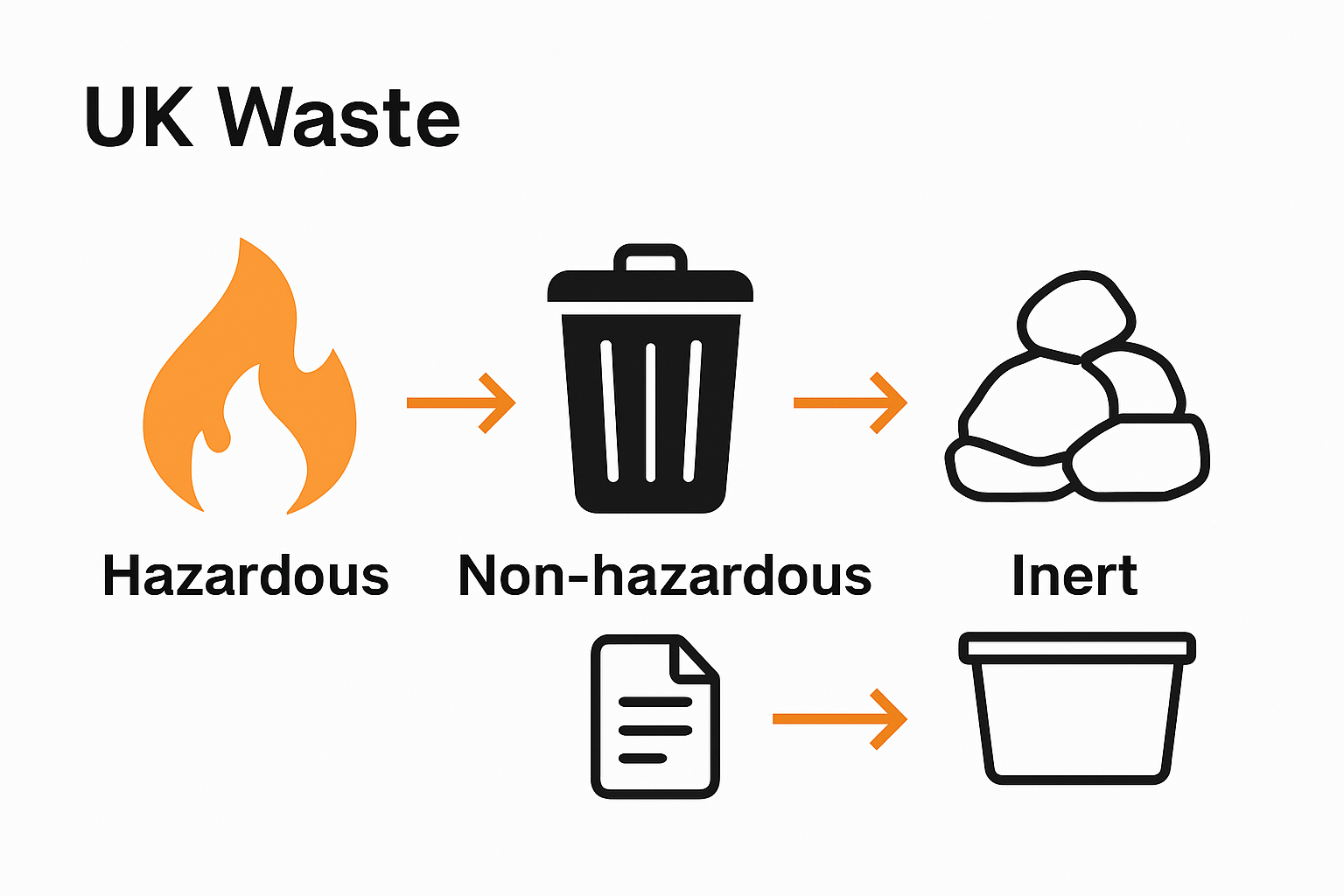
Understanding waste classification is critical for businesses across the United Kingdom, as different waste types require specific handling and disposal protocols. Wikipedia’s Landfill Directive provides a fundamental framework that categorises waste into three primary classifications: hazardous waste, non-hazardous waste, and inert waste. Each category carries distinct legal obligations and environmental management requirements.
Hazardous waste represents the most complex category, encompassing materials that pose significant risks to human health and environmental safety. These typically include chemical waste, electronic equipment with toxic components, medical waste, and certain industrial by-products. As outlined in the Waste Electrical and Electronic Equipment (WEEE) Directive, electronic waste requires particularly meticulous handling, with specific protocols for separating hazardous from non-hazardous components.
The UK’s waste regulations further subdivide waste types based on their origin and potential environmental impact. Municipal waste includes household and commercial refuse, while industrial waste covers materials generated by manufacturing and industrial processes. Construction and demolition waste represents another significant category, involving debris from building projects, which often requires specialised disposal methods. Domestic waste types guide offers comprehensive insights into these classifications for businesses seeking detailed understanding.
For organisations operating in industrial regions like Newcastle, Manchester, and Birmingham, comprehending these waste categories is not merely a regulatory requirement but a fundamental aspect of responsible environmental stewardship. Proper waste classification enables businesses to implement targeted waste management strategies, reduce environmental impact, and potentially minimise disposal costs through more efficient recycling and recovery processes.

Common Waste Streams and Categories
Waste management professionals rely on comprehensive waste characterisation to effectively categorise and manage different waste streams across various industries. Wikipedia’s waste characterisation resource emphasises the critical importance of analyzing waste composition to develop targeted recycling and treatment strategies. These streams encompass a wide range of materials generated by different sectors, each requiring unique handling and disposal approaches.
According to Technical Guidance WM2, waste streams are classified based on their specific properties and potential environmental impact. Key categories include municipal solid waste (household and commercial refuse), industrial waste (manufacturing by-products), construction and demolition waste, medical waste, electronic waste, and agricultural waste. Hazardous waste regulations guide provides additional insights into the nuanced classification of potentially dangerous waste materials.
Business waste streams typically break down into several primary categories. Recyclable waste includes paper, cardboard, plastics, glass, and metals that can be processed and reused. Organic waste comprises food scraps, garden waste, and biodegradable materials suitable for composting. Residual waste represents non-recyclable materials destined for energy recovery or landfill disposal. Special waste encompasses items requiring specific handling, such as batteries, chemicals, and pharmaceutical products that demand carefully controlled disposal methods.
For businesses across Newcastle, Leeds, and Manchester, understanding these waste stream categories is more than a regulatory requirement—it’s a strategic approach to environmental responsibility. By implementing precise waste stream management, organisations can reduce their environmental footprint, potentially lower disposal costs, and contribute to the circular economy by maximising resource recovery and minimising waste sent to landfill.
Legal Compliance and Waste Duty of Care
The waste duty of care represents a fundamental legal obligation for businesses across the United Kingdom, establishing clear responsibilities for waste management and environmental protection. Parliamentary Commons Library research highlights that the Environmental Protection Act 1990 mandates comprehensive guidelines for waste producers and handlers, ensuring they manage waste in a manner that prevents environmental harm and protects human health.
Under UK regulations, businesses must adhere to several critical legal requirements. These include proper waste classification, maintaining accurate waste transfer documentation, ensuring waste is transferred only to licensed waste carriers, and implementing responsible disposal practices. Waste disposal legal requirements guide provides detailed insights into these obligations, emphasising the need for meticulous record-keeping and responsible waste management strategies.
The waste hierarchy principle further defines legal compliance, prioritising waste prevention, reuse, recycling, recovery, and disposal in that specific order. As outlined in the UK government’s Food and Drink Waste Hierarchy guide, businesses must demonstrate proactive efforts to minimise waste generation. Failure to comply can result in significant financial penalties, including fines, prosecution, and potential reputational damage.
For organisations operating in industrial regions like Manchester, Newcastle, and Leeds, understanding these legal requirements is not just about avoiding penalties—it’s about demonstrating environmental responsibility and commitment to sustainable business practices. Effective waste management compliance involves continuous staff training, regular waste audits, and maintaining comprehensive documentation that evidences responsible waste handling at every stage of the process.
Key Terms for Safe Waste Disposal
Safe waste disposal demands comprehensive understanding of specialised terminology that guides environmental protection and regulatory compliance. Technical Guidance WM2 provides critical definitions for identifying and managing potentially hazardous materials, establishing fundamental frameworks for responsible waste management across various industrial sectors.
Key technical terms essential for safe waste disposal include containment, segregation, stabilisation, and treatment. Hazardous waste disposal guide elaborates on these concepts, highlighting their importance in preventing environmental contamination. Containment refers to securing waste materials to prevent potential leakage or spread, while segregation involves separating different waste types to minimise chemical interactions and facilitate appropriate recycling or disposal processes.
According to the Landfill Directive, critical waste disposal terms also encompass waste acceptance criteria, leachate management, and environmental monitoring. Waste acceptance criteria define specific standards for determining whether materials can be safely deposited in landfills, considering their chemical composition and potential environmental impact. Leachate management involves controlling and treating liquid that passes through waste materials, preventing groundwater contamination and potential ecological damage.
For businesses operating in industrial regions like Manchester, Newcastle, and Birmingham, mastering these technical terms is not merely an academic exercise—it represents a fundamental commitment to environmental stewardship. Effective waste disposal requires continuous learning, rigorous staff training, and a proactive approach to understanding the complex terminology that underpins safe, responsible waste management practices.
Master UK Waste Management Terminology with Easy Solutions from Venture Waste
Navigating the complex world of waste management terminology can leave many businesses feeling overwhelmed, especially when legal compliance and environmental responsibilities are at stake. This guide clarifies essential terms like waste hierarchy, hazardous waste, and waste segregation helping your organisation take control and make informed decisions. Yet understanding terminology is only the first step. You also need reliable services that ensure your waste is managed safely and efficiently.

Ready to move from confusion to clarity with professional waste solutions tailored for UK businesses? Explore how the waste collection network in UK serves businesses in 2025 and see how our straightforward three-step booking process simplifies waste management. Whether you need hazardous waste handling, recycling, or skip hire, Venture Waste supports your commitment to legal compliance and environmental care. Start your journey today by visiting Venture Waste and learn more about the waste collection process in the UK for businesses 2025 to keep your organisation compliant and eco-friendly.
Frequently Asked Questions
What is the waste hierarchy?
The waste hierarchy is a framework that prioritises waste prevention, reuse, recycling, recovery, and disposal, guiding businesses to minimise their environmental impact by addressing waste at its earliest stage.
What are the different types of waste classifications in the UK?
The UK classifies waste into three primary categories: hazardous waste, non-hazardous waste, and inert waste, each with specific handling and disposal requirements based on their potential environmental impact.
What does waste segregation involve?
Waste segregation involves separating different types of waste at the source to enable more effective recycling and disposal, helping to minimise contamination and reduce overall waste in landfills.
Why is understanding waste duty of care important for businesses?
Understanding waste duty of care is crucial as it establishes legal responsibilities for waste management, ensuring businesses prevent environmental harm and comply with regulations while managing waste effectively.
Recommended
- Waste Management Definition for UK Businesses 2025 – Venture Waste
- Waste Management Consultation: Complete UK Guide – Venture Waste
- Waste Management Step by Step: A Guide for UK Businesses 2025 – Venture Waste
- Domestic Waste Types in the UK: 2025 Guide for Businesses – Venture Waste
- Hot Tub Cleaning Cycles: Complete Guide for UK Owners – ClearSpa™


Leave a Reply
Want to join the discussion?Feel free to contribute!