

Waste Management FAQs – Answers for UK Businesses
British businesses handle about 200 million tonnes of waste each year, putting the United Kingdom among the top waste-producing countries in Europe. Managing that volume responsibly is more than a legal requirement, it shapes how companies protect the environment and control costs. Understanding the multi-stage process of British waste management helps business owners make smarter decisions, avoid fines, and support a cleaner future for everyone.
Table of Contents
- What Waste Management Involves In The UK
- Categories Of Business And Domestic Waste
- Legal Requirements And Duty Of Care
- Recycling, Hazardous, And Confidential Waste Processes
- Costs, Common Pitfalls, And Booking Services
Key Takeaways
| Point | Details |
|---|---|
| Waste Management Importance | Effective waste management is crucial for businesses in the UK, involving comprehensive strategies to minimise environmental impact and optimise resource use. |
| Legal Obligations | Businesses must adhere to strict legal requirements, including waste classification and documentation to avoid penalties and ensure responsible practices. |
| Recycling and Waste Segregation | Proper segregation of recyclable materials from general waste is essential for compliance with upcoming regulations and to support sustainability efforts. |
| Financial Implications | Proactive planning and investment in efficient waste management systems can help businesses mitigate costs and comply with regulatory demands. |
What Waste Management Involves in the UK
Waste management represents a complex and critical process for businesses across the United Kingdom, encompassing systematic approaches to handling, reducing, treating, and disposing of waste materials responsibly. The UK waste management industry generates an impressive annual turnover of £9 billion, demonstrating its significant economic and environmental importance.
At its core, waste management involves multiple strategic stages designed to minimise environmental impact and maximise resource efficiency. These stages typically include waste generation assessment, collection, transportation, treatment, and final disposal. For businesses, this means implementing comprehensive waste reduction strategies, segregating different waste types, ensuring proper handling of hazardous materials, and exploring recycling and reuse opportunities. UK businesses generate approximately 200 million tonnes of waste annually, making systematic waste management not just an environmental responsibility but a critical operational requirement.
The primary waste management methods in the UK include:
- Recycling: Transforming waste materials into new products
- Landfill: Controlled disposal of non-recyclable waste
- Incineration: Waste-to-energy processes
- Composting: Organic waste breakdown for agricultural use
- Anaerobic Digestion: Breaking down biodegradable materials
Business owners must recognise that effective waste management extends beyond mere disposal. It involves developing sustainable practices that reduce overall waste generation, minimise environmental impact, comply with regulatory requirements, and potentially generate cost savings through more efficient resource utilisation. The UK government has set ambitious targets, including recycling 55% of municipal waste by 2025 and halving per capita residual waste by 2042, which means businesses will play a crucial role in achieving these national environmental objectives.
Categories of Business and Domestic Waste
Business waste and domestic waste represent two distinct categories of waste generation with unique characteristics and disposal requirements. Business waste encompasses any materials produced through commercial activities, including outputs from construction, manufacturing, retail, and agricultural sectors. Understanding these categories is crucial for businesses to implement appropriate waste management strategies and ensure legal compliance.
The primary distinction between business and domestic waste lies in their origin and composition. Domestic waste typically includes household-generated materials such as food packaging, garden waste, and everyday household rubbish. Hazardous or special waste includes materials that pose potential risks to human health or the environment, such as:
- Chemical Waste: Discarded solvents, industrial chemicals
- Electronic Waste: Obsolete electrical equipment
- Biological Waste: Medical and clinical materials
- Contaminated Materials: Substances with dangerous residues
- Construction Debris: Building and demolition remnants
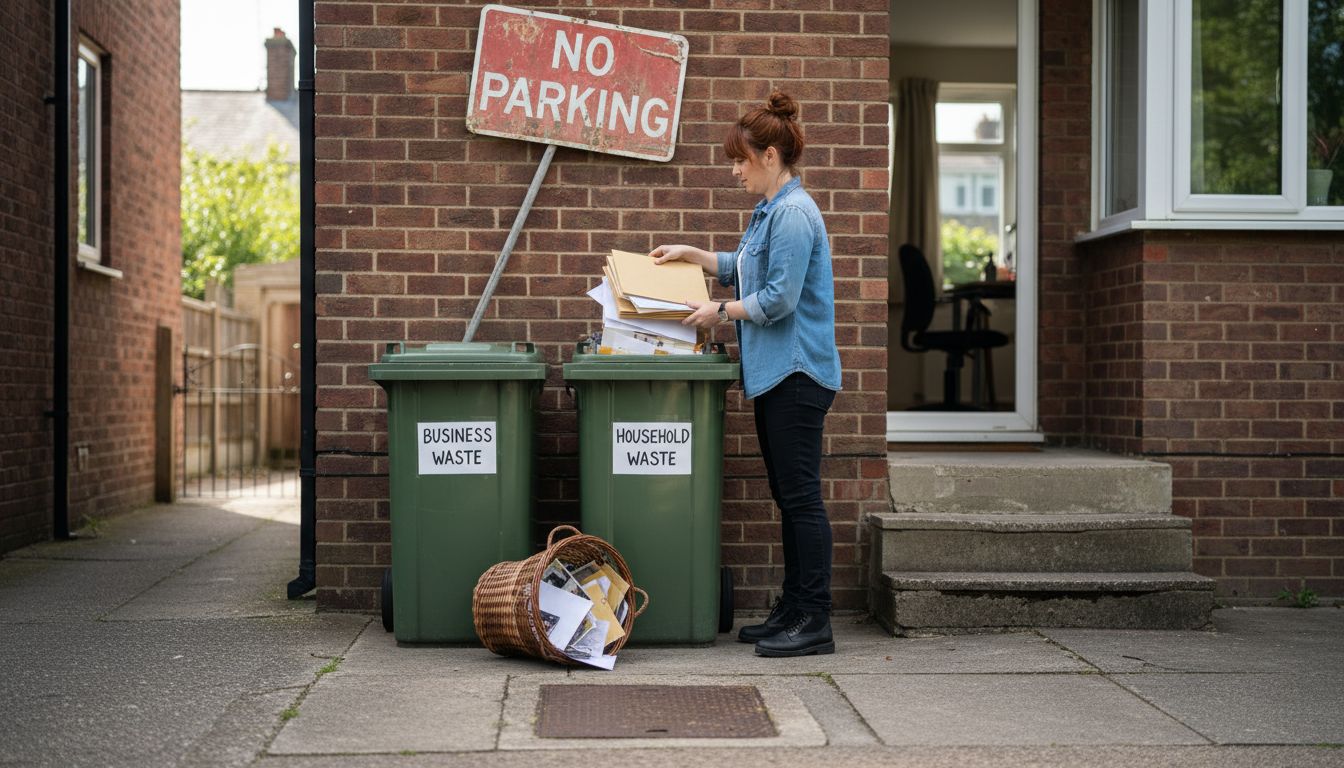
Businesses must carefully categorise their waste to ensure proper disposal. If a business operates partially from a home environment, waste generated from the business-specific area is considered commercial waste, not domestic waste. This nuanced classification impacts waste collection, treatment, and legal responsibilities. Proper waste segregation not only supports environmental sustainability but also helps businesses reduce disposal costs, minimise environmental impact, and comply with stringent UK waste management regulations.
Legal Requirements and Duty of Care
Waste management involves critical legal obligations that every UK business must understand and implement. Businesses have a comprehensive legal duty of care to manage waste responsibly, which extends far beyond simple disposal and encompasses a range of regulatory requirements designed to protect environmental and public health standards.
Key legal responsibilities for businesses include:
- Registering as a waste carrier if disposing of waste regularly
- Obtaining necessary waste management permits
- Preventing environmental contamination
- Ensuring proper waste classification
- Maintaining accurate waste transfer documentation
Businesses must comply with duty of care regulations by ensuring waste is stored, transported, and disposed of without causing environmental harm. This means meticulously tracking waste from its point of generation to final disposal, maintaining comprehensive records, and using only authorized waste carriers. The regulations specifically require businesses to keep detailed waste transfer notes for a minimum of two years, providing a clear audit trail that demonstrates responsible waste management practices.
Non-compliance with these legal requirements can result in significant penalties, including substantial financial fines and potential legal prosecution. Moreover, businesses are strictly prohibited from moving waste between countries for disposal, with exceptions only granted for specific recovery purposes such as energy production. By understanding and implementing these legal obligations, businesses not only protect themselves from potential legal challenges but also contribute to broader environmental sustainability efforts.
Recycling, Hazardous, and Confidential Waste Processes
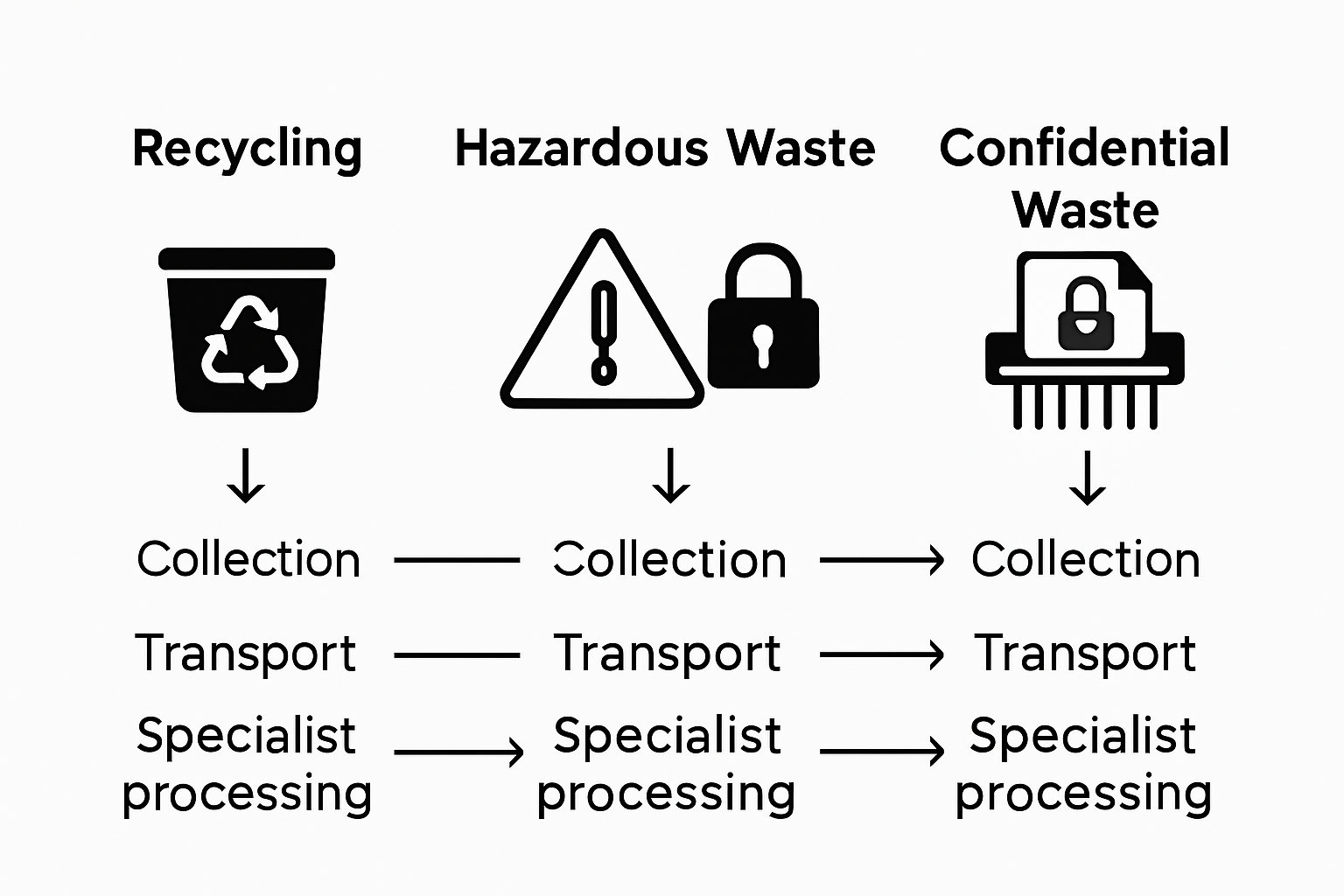
Businesses must navigate complex waste management strategies involving distinct processes for different waste categories. Businesses are required to separate recyclable materials from general waste and arrange collection by registered waste carriers, ensuring environmentally responsible disposal and compliance with regulatory standards.
Key waste management processes include:
- Recycling: Segregating and processing reusable materials
- Hazardous Waste Management: Specialised handling of dangerous materials
- Confidential Waste Destruction: Secure elimination of sensitive documents
- Electronic Waste Processing: Responsible disposal of digital equipment
- Chemical Waste Neutralisation: Safe treatment of industrial chemicals
Hazardous waste encompasses a wide range of materials requiring specialist disposal, including lead-acid batteries, fluorescent tubes, waste oils, solvents, and asbestos. Each waste category demands precise identification, segregation, and treatment protocols to mitigate environmental and health risks. Confidential waste processes, particularly critical for legal and financial organisations, involve secure shredding and digital destruction techniques that guarantee complete information elimination, preventing potential data breaches and maintaining strict compliance with data protection regulations.
Costs, Common Pitfalls, and Booking Services
Waste management represents a significant operational consideration for businesses, involving multiple financial and regulatory factors. Businesses are responsible for arranging their own waste and recycling collections, which can involve costs for services provided by registered waste carriers, making proactive planning essential for cost-effective waste disposal strategies.
Common Pitfalls in Waste Management:
- Failing to separate recyclable materials
- Not obtaining necessary waste disposal permits
- Improper waste segregation techniques
- Lack of comprehensive waste auditing
- Ignoring regulatory update requirements
- Insufficient staff training on waste protocols
From March 2025, new regulations will require businesses to separate recyclable materials from general waste and arrange collection by registered waste carriers, highlighting the increasing complexity of waste management compliance. Businesses must invest in robust waste management systems, comprehensive staff training, and regular waste audits to mitigate financial risks associated with non-compliance. Effective booking services should offer transparent pricing, flexible collection schedules, and detailed documentation to support businesses in navigating these increasingly stringent regulatory landscapes.
Simplify Your UK Business Waste Management Today
Managing waste can be overwhelming with complex legal requirements, the need for precise waste segregation, and evolving regulations on recycling and disposal. This article’s focus on duty of care, hazardous waste handling, and recycling highlights key challenges UK businesses face to stay compliant and environmentally responsible. Many businesses struggle with ensuring proper documentation, choosing registered waste carriers, and separating recyclables effectively.
Take control of your waste management with Venture Waste Management’s expert solutions designed to meet these exact challenges. Our streamlined service covers everything from general waste and hazardous waste collection to confidential waste destruction, all compliant with UK laws. Learn how our tailored approach fits into How the Waste Collection Network in UK Serves Businesses in 2025 – Venture Waste and discover your smooth path through the Waste Collection Process in the UK for Businesses 2025 – Venture Waste.

Stop worrying about costly fines or inefficient waste handling. Act now to reduce environmental impact and secure your compliance by visiting Venture Waste Management. Book your service through our simple three-step process and gain peace of mind backed by a reliable UK-wide waste solution. Your business and the environment deserve nothing less.
Frequently Asked Questions
What are the key stages of waste management for businesses?
The key stages of waste management for businesses include waste generation assessment, collection, transportation, treatment, and final disposal.
What types of waste should businesses separate for recycling?
Businesses should separate materials such as paper, plastics, metals, glass, and any other recyclables from general waste to enhance recycling processes and comply with regulations.
What are the legal responsibilities businesses have in managing waste?
Businesses must register as waste carriers if necessary, obtain required permits, prevent environmental contamination, ensure proper waste classification, and maintain accurate waste transfer documentation.
What should businesses do with hazardous waste?
Businesses should identify hazardous waste and arrange for its specialised handling and disposal by licensed carriers to mitigate risks to health and the environment.
Recommended
- Waste Management Step by Step: A Guide for UK Businesses 2025 – Venture Waste
- Complete Guide to UK Waste Management Laws 2025 – Venture Waste
- 7 Common Waste Management Myths Debunked for UK Businesses – Venture Waste
- Waste Management Definition for UK Businesses 2025 – Venture Waste
- WHMIS vs TDG: Complete Guide for Canadian Workplaces – Probe IT


Leave a Reply
Want to join the discussion?Feel free to contribute!