

Waste Management Challenges UK: Solutions for Businesses 2025
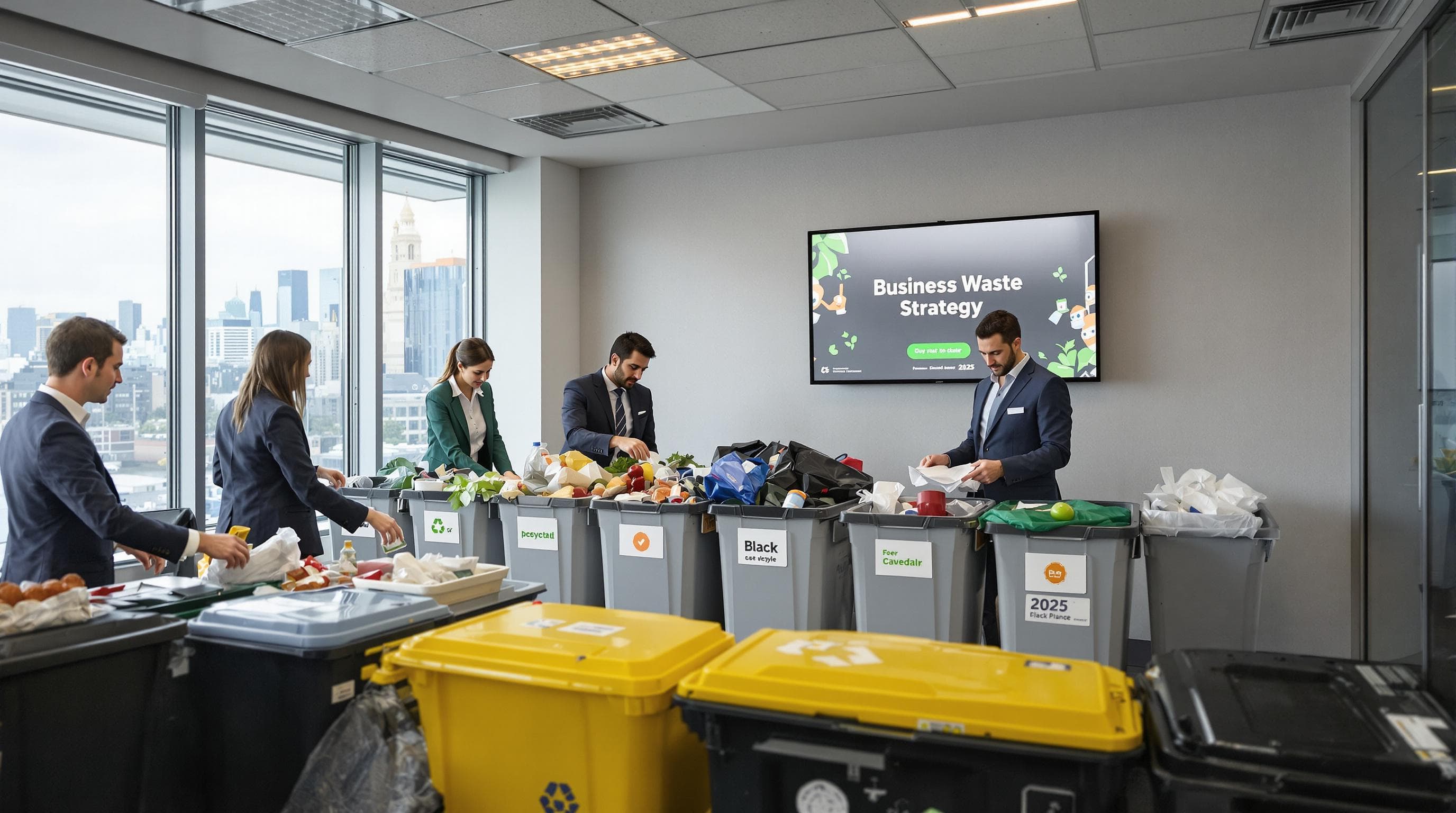
Business waste in the UK is reaching a critical tipping point and companies now face far tougher compliance and financial hurdles than ever before. In 2025, organisations will need to comply with new rules like the Separation of Waste Regulations, which require the meticulous sorting of materials such as plastic, glass, metal, card, and food waste. This means that by 31 March 2025, every business must have systems ready for detailed waste separation or risk hefty penalties and disruption. You might expect high-tech recycling plants or clever gadgets to be the fix, but the real challenge is reshaping how every part of a business operates just to keep up. UK firms are discovering that waste is no longer just about bins and collections. It is now a test of strategy, culture, and constant adaptation.
Table of Contents
- Current Waste Management Challenges In The UK
- Legal Compliance And Industry-Specific Regulations
- Best Practices For Handling Hazardous And Confidential Waste
- Innovative Solutions For Business Waste Reduction
Quick Summary
| Takeaway | Explanation |
|---|---|
| Adhere to Regulatory Compliance | UK businesses must navigate increasingly complex waste management regulations, requiring investment in infrastructure and staff training to ensure detailed tracking and management of waste streams. |
| Implement Comprehensive Waste Separation | The Separation of Waste Regulations 2025 mandates meticulous segregation of recyclable materials, necessitating businesses to restructure waste handling processes and invest in necessary systems. |
| Leverage Digital and Technological Innovations | Advanced technologies such as IoT and AI enable real-time monitoring of waste generation, helping businesses optimise resource allocation and implement targeted waste reduction strategies. |
| Embrace Circular Economy Principles | Adopting circular economy strategies, including modular product design and alternative material selection, can reduce waste generation at the design stage and enhance sustainability. |
| Explore Economic Incentives for Waste Reduction | Businesses are encouraged to engage in collaborative approaches and take advantage of financial incentives that reward exceptional waste management practices, transforming waste into a potential revenue stream. |
Current Waste Management Challenges in the UK
Business waste management in the United Kingdom faces unprecedented complexity and mounting pressures as environmental regulations tighten and sustainability becomes a critical priority. The landscape of waste management is rapidly evolving, presenting significant challenges that demand innovative solutions and strategic approaches.

Regulatory Complexity and Compliance Pressures
UK businesses are confronting an intricate web of waste management regulations that continue to become more stringent. Research from the UK Parliament reveals a stark reality: companies must navigate increasingly complex compliance requirements while simultaneously reducing their environmental footprint. The regulatory environment demands not just waste disposal, but comprehensive waste reduction, recycling, and circular economy strategies.
The Environmental Act 2021 has introduced more rigorous reporting requirements and extended producer responsibility, meaning businesses must track and manage their waste streams with unprecedented detail. This regulatory landscape requires significant investment in waste management infrastructure, tracking systems, and staff training.
Economic and Infrastructure Limitations
Economic constraints pose another substantial challenge for UK businesses in waste management. The cost of implementing sophisticated waste sorting, recycling, and disposal systems can be prohibitively expensive, particularly for small and medium enterprises. Waste management research indicates that many businesses struggle to balance compliance costs with operational efficiency.
Infrastructural limitations compound these economic challenges. The UK currently lacks sufficient recycling and processing facilities to handle the volume of commercial waste generated. This infrastructure gap forces many businesses to rely on export solutions or landfill disposal, both of which are becoming increasingly restricted and costly.
Technological and Cultural Transformation
Transitioning to an effective waste management approach requires more than regulatory compliance. It demands a fundamental cultural and technological transformation within organizations. Businesses must invest in advanced waste tracking technologies, train employees in sustainable practices, and develop comprehensive waste reduction strategies.
The challenge extends beyond technical solutions. It requires a holistic approach that integrates waste management into core business strategy. Companies must reimagine their production processes, supply chains, and product lifecycles to minimize waste generation.
For businesses seeking deeper insights into effective waste management strategies, our comprehensive guide on waste management definitions provides essential context and practical recommendations for navigating these complex challenges.
As UK businesses move towards 2025, successfully addressing these waste management challenges will require collaboration, innovation, and a commitment to sustainable practices. The companies that can effectively transform these challenges into opportunities will not only ensure regulatory compliance but also gain significant competitive advantages in an increasingly environmentally conscious market.
Here is a table summarising the main waste management challenges faced by UK businesses and their impacts, to aid quick comparison:
| Challenge | Description | Key Impact |
|---|---|---|
| Regulatory Complexity | Intricate and evolving regulations demanding detailed compliance, reporting, and waste reduction strategies. | Increased admin and compliance cost |
| Economic Limitations | High costs for waste sorting/recycling infrastructure, difficult for SMEs to absorb. | Strain on resources; cost pressure |
| Infrastructure Gaps | Insufficient recycling and processing facilities to handle business waste volumes. | Reliance on landfill/export |
| Technological Transformation | Need to adopt advanced tracking systems, data analysis, and employee training for effective waste management. | Requires investment and upskilling |
| Cultural Change | Shifting business culture to prioritise sustainability and integrate waste management into strategy and operations. | Resistance to change; retraining |
Legal Compliance and Industry-Specific Regulations
Navigating the complex landscape of waste management regulations requires businesses to understand and implement comprehensive legal strategies tailored to their specific industry and operational context. The United Kingdom has developed a sophisticated regulatory framework that demands rigorous compliance and proactive environmental responsibility.
Comprehensive Waste Separation Requirements
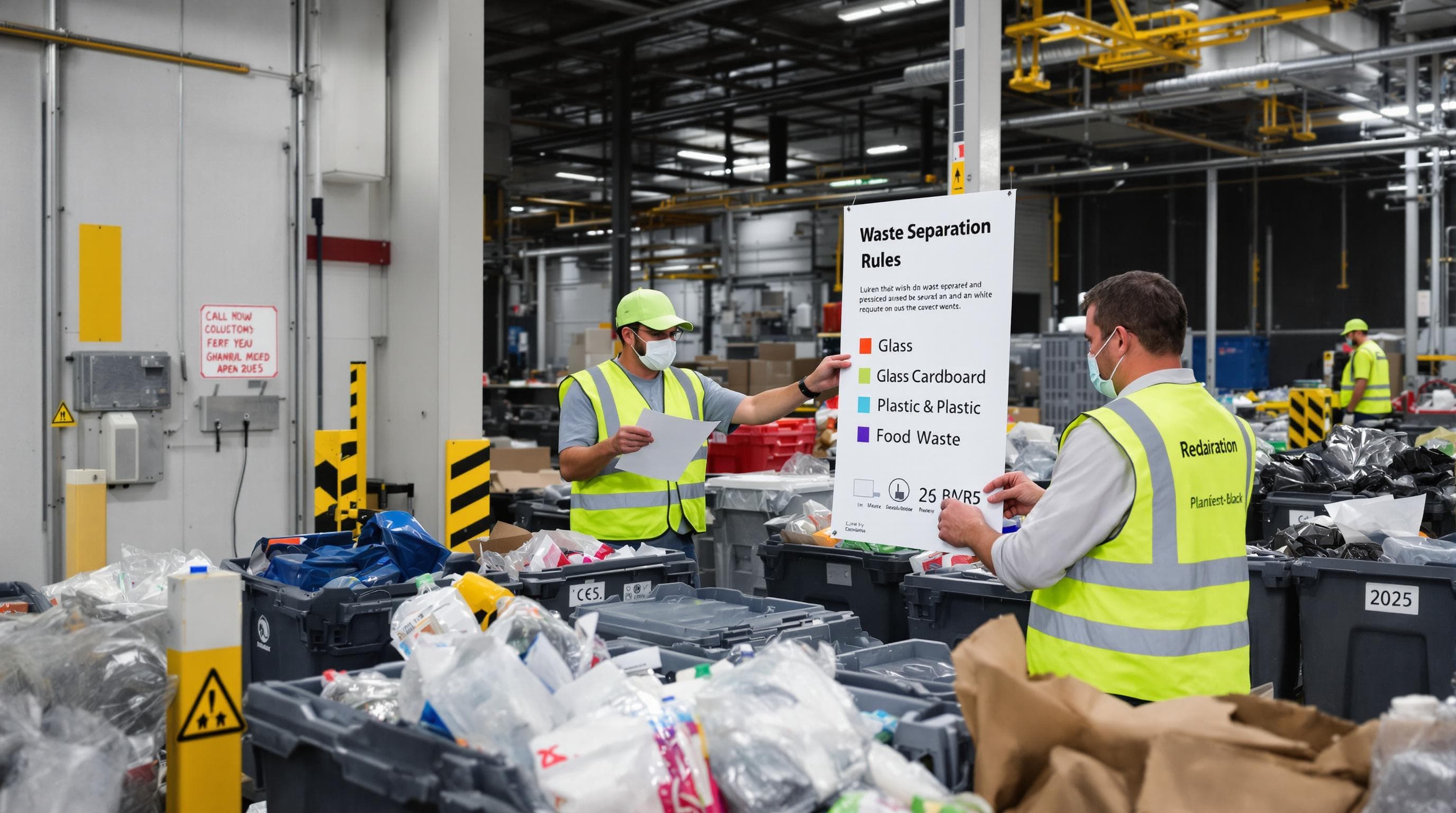
The Separation of Waste (England) Regulations 2025 represent a pivotal moment for business waste management. Effective from 31 March 2025, these regulations mandate businesses to meticulously separate recyclable waste streams. Companies must now systematically segregate materials including plastic, glass, metal, paper, card, and food waste. This requirement goes beyond simple recycling expectations, compelling businesses to fundamentally restructure their waste handling processes.
These regulations are not merely administrative checkboxes. They represent a strategic shift towards more sustainable business practices. Organizations must invest in infrastructure, training, and systems that support precise waste segregation. Small and medium enterprises will particularly feel the impact, requiring significant operational adaptations to ensure compliance.
Extended Producer Responsibility and Financial Implications
The Extended Producer Responsibility (EPR) scheme, set to launch in October 2025, introduces a transformative financial model for waste management. This legislation shifts the economic burden of packaging waste disposal from local councils directly to the producing companies. The objective is clear: incentivize businesses to design more environmentally friendly packaging and take greater responsibility for their product lifecycles.
Financial implications are substantial. Companies will now face direct financial consequences for their packaging choices, creating a powerful economic motivation for sustainable design. Businesses must conduct comprehensive audits of their packaging materials, exploring alternatives that minimize waste and reduce potential financial penalties.
Industry-Specific Collection and Recycling Standards
The UK government has outlined specific implementation dates for recycling requirements that vary across different sectors. Government research indicates that by 31 March 2025, businesses must establish standardized collection processes for dry recyclable materials and food waste. This means each industry sector will need to develop tailored strategies matching their unique waste generation profiles.
Manufacturing, hospitality, healthcare, and retail sectors will face distinct challenges in meeting these standards. Each will require specialized waste management protocols that align with their specific operational characteristics. For instance, a manufacturing facility will have different recycling needs compared to a restaurant or a medical clinic.
Our comprehensive guide to waste disposal legal requirements offers businesses detailed insights into navigating these complex regulatory landscapes. Understanding these regulations is not just about compliance—it represents an opportunity to demonstrate corporate environmental responsibility and potentially reduce long-term waste management costs.
As regulations continue to evolve, businesses must adopt a proactive and adaptive approach. Those who view these legal requirements as strategic opportunities rather than bureaucratic obstacles will be best positioned to thrive in an increasingly sustainability-focused business environment.
To help businesses understand the main regulatory changes and their requirements, the following table outlines key 2025 regulations and what businesses must do to comply:
| Regulation | Effective Date | Main Requirement | Who is Affected |
|---|---|---|---|
| Separation of Waste Regulations | 31 March 2025 | Segregate recyclable materials: plastic, glass, metal, etc. | All businesses in England |
| Extended Producer Responsibility (EPR) Scheme | October 2025 | Producers cover cost of packaging waste disposal | Producers & packaging companies |
| Industry-specific Recycling Standards | 31 March 2025 | Implement sector-tailored collection/processes | Manufacturing, Hospitality, Retail |
Best Practices for Handling Hazardous and Confidential Waste
Handling hazardous and confidential waste represents a critical responsibility for UK businesses, requiring meticulous planning, stringent protocols, and comprehensive risk management strategies. The complexity of managing these sensitive waste streams demands a multifaceted approach that prioritizes environmental safety, legal compliance, and organizational security.
Risk Assessment and Classification Protocols
Government guidance on hazardous waste disposal emphasizes the fundamental importance of precise waste classification. Businesses must systematically identify and categorize their waste streams, understanding that hazardous materials include substances such as chemicals, batteries, solvents, pesticides, asbestos, and specialized industrial oils.
The classification process involves detailed evaluation of waste composition, potential environmental impact, and associated health risks. Companies must develop robust internal assessment frameworks that go beyond basic regulatory compliance. This involves comprehensive documentation, chemical analysis, and ongoing monitoring of waste generation processes.
Specialized training becomes crucial in this context. Employees must be equipped with the knowledge to recognize, handle, and appropriately document different categories of hazardous waste. This requires investment in continuous professional development and specialized safety training programs.
Secure Storage and Containment Strategies
Pollution prevention guidelines provide critical insights into effective hazardous waste management. The recommendations include implementing robust secondary containment measures such as impermeable drip trays and bunded storage areas. These strategies are designed to prevent potential environmental contamination in case of accidental leaks or spills.
Key storage considerations include maintaining strict segregation between different waste types, ensuring appropriate labeling, and establishing clear spatial guidelines. For instance, hazardous waste storage locations must be positioned at least 10 meters from watercourses and 50 meters from wells or boreholes to minimize potential environmental risks.
Confidential waste management requires equally rigorous approaches. Businesses must implement secure destruction protocols for sensitive documents, electronic media, and proprietary materials. This involves using specialized destruction services that provide comprehensive chain-of-custody documentation and certified disposal processes.
Transportation and Disposal Compliance
The ‘duty of care’ principle is paramount when transporting and disposing of hazardous and confidential waste. University research on waste management underscores the legal obligations businesses have in ensuring waste causes no harm to human health or the environment.
This requires partnering with licensed waste management providers who can demonstrate compliance with stringent transportation and disposal regulations. Companies must maintain meticulous records, including waste transfer notes, transportation manifests, and final disposal certificates.
Our comprehensive hazardous waste disposal guide offers businesses detailed strategies for navigating these complex requirements. The guide provides practical insights into developing robust waste management frameworks that balance legal compliance with operational efficiency.
Ultimately, effective hazardous and confidential waste management is not just about meeting regulatory requirements. It represents a critical aspect of corporate responsibility, demonstrating a commitment to environmental stewardship, workplace safety, and organizational integrity. Businesses that approach these challenges proactively will not only mitigate potential risks but also establish themselves as leaders in responsible waste management practices.
Innovative Solutions for Business Waste Reduction
The escalating environmental challenges and increasingly stringent regulations demand that UK businesses adopt transformative approaches to waste reduction. Innovative solutions are no longer optional but essential strategies for organizational sustainability, cost management, and environmental responsibility.
Circular Economy and Design Strategies
OECD research on waste management highlights the critical importance of implementing circular economy principles. This approach fundamentally reimagines product lifecycles, focusing on design that minimizes waste generation from the outset. Businesses are increasingly adopting strategies such as modular product design, which allows for easier repair, component replacement, and extended product lifespans.
Manufacturing sectors are pioneering innovative material selection processes. Companies are exploring alternative materials that are inherently recyclable, biodegradable, or have minimal environmental impact. This involves comprehensive supply chain redesign, where waste reduction becomes a core consideration in product development rather than an afterthought.
Technology plays a pivotal role in this transformation. Advanced computer-aided design (CAD) tools now incorporate waste reduction algorithms, enabling engineers to model products with minimal material waste and maximum resource efficiency. This represents a fundamental shift from traditional linear manufacturing approaches.
Digital Tracking and Waste Management Technologies
Digital technologies are revolutionizing waste management tracking and reduction strategies. Advanced software platforms now provide real-time monitoring of waste generation, enabling businesses to identify inefficiencies and implement targeted reduction strategies. These systems utilize artificial intelligence and machine learning to predict waste streams, optimize resource allocation, and recommend precise intervention points.
IoT (Internet of Things) sensors are being deployed across industrial environments to track material usage, monitor waste generation, and provide granular insights into consumption patterns. These technologies enable businesses to move from reactive to predictive waste management approaches, reducing unnecessary waste before it is generated.
Economic Incentives and Collaborative Approaches
Beyond technological solutions, innovative economic models are emerging to incentivize waste reduction. Many businesses are exploring collaborative waste management approaches, where industrial symbiosis allows waste from one organization to become a resource for another. This approach transforms waste from a cost center to a potential revenue stream.
Government and industry bodies are developing sophisticated financial mechanisms to encourage waste reduction. Tax incentives, grants, and preferential procurement policies are being designed to reward businesses that demonstrate exceptional waste management practices. These economic tools provide tangible financial motivations for sustainable innovation.
Our comprehensive guide on saving money through waste management offers businesses practical insights into implementing these innovative strategies. By viewing waste reduction not as a compliance requirement but as a strategic opportunity, companies can unlock significant economic and environmental benefits.
The future of business waste management lies in holistic, technology-enabled, and collaborative approaches. Organizations that embrace these innovative solutions will not only meet regulatory requirements but also gain competitive advantages in an increasingly sustainability-focused marketplace. The journey towards zero waste is complex, but with the right strategies, technologies, and mindset, it is an achievable and rewarding objective.
Frequently Asked Questions
What are the new waste management regulations for UK businesses in 2025?
The Separation of Waste Regulations require businesses to meticulously sort waste streams into categories like plastic, glass, metal, and food waste by 31 March 2025.
How can businesses prepare for the Separation of Waste Regulations?
To prepare, businesses should invest in waste management systems and staff training that ensure proper waste segregation and compliance with the new regulations.
What is Extended Producer Responsibility (EPR) and how does it affect businesses?
EPR shifts the responsibility for packaging waste disposal from local councils to businesses, incentivising them to design more sustainable packaging to avoid financial penalties.
What are some best practices for managing hazardous waste in businesses?
Best practices include conducting risk assessments, maintaining secure storage, following regulations for transportation and disposal, and providing specialised training to staff.
Turn Regulatory Challenges Into Business Opportunities with Venture Waste
You have just read about the mounting pressures facing UK businesses in waste management. New regulations demand meticulous separation, robust compliance, and smarter infrastructure—failing to adapt can mean costly penalties and operational setbacks. If the prospect of transforming your waste strategy for 2025 feels overwhelming, you are certainly not alone. There is a better way to respond to these new laws, one that prioritises compliance, efficiency and peace of mind.

Let Venture Waste handle the complexity for you. Explore how our Waste Collection Network in the UK is uniquely designed to help businesses meet compliance with confidence. Benefit from a straightforward three-step process, expert handling of all waste streams and end-to-end support tailored for your sector. Do not wait until the March 2025 deadline is upon you. Visit Venture Waste to book a compliant collection or discover more about our waste collection process for businesses today. Make regulatory change work in your favour—act now to protect your business and the environment.


Leave a Reply
Want to join the discussion?Feel free to contribute!