

Master the Waste Management Booking Process Step-by-Step
Compliance failures cost british healthcare organisations millions each year, yet many facilities managers still battle daily challenges separating hazardous and confidential waste. With strict UK regulations and rising scrutiny, clear processes make the difference between safe, cost-effective disposal and costly errors. This practical guide explains every step needed to organise waste management bookings and maintain full peace of mind, so your british facility stays compliant and operational.
Table of Contents
- Step 1: Gather Essential Waste Information
- Step 2: Select Appropriate Waste Management Services
- Step 3: Submit Your Booking Request Online
- Step 4: Confirm Booking Details And Compliance
- Step 5: Arrange Collection And Track Progress
Quick Summary
| Key Insight | Explanation |
|---|---|
| 1. Conduct a thorough waste audit | Categorise waste to understand types and volumes, aiding proper disposal and compliance with local regulations. |
| 2. Choose a licensed waste management provider | Verify credentials to ensure lawful disposal and assess their capabilities in addressing your specific waste needs. |
| 3. Submit accurate online booking requests | Enter precise waste details to facilitate effective service scheduling and prevent issues during collection. |
| 4. Confirm compliance and documentation | Review booking details, ensuring all records are accurate and in line with regulatory requirements. |
| 5. Track waste collection progress | Maintain clear communication with your waste provider to ensure timely and efficient waste removal operations. |
Step 1: Gather essential waste information
Gathering essential waste information serves as the critical first stage in effectively managing your waste disposal requirements. This process involves understanding the specific types of waste your organisation generates and determining the appropriate waste streams for proper segregation and disposal.
To begin, conduct a comprehensive audit of your waste production. This means categorising your waste according to the UK government’s standardised waste collection streams. These categories typically include residual waste, food waste, paper and cardboard, and dry recyclables. By meticulously documenting the volume and type of waste your business generates, you create a foundational understanding that will streamline your entire waste management booking process.
Carefully record details such as waste quantities, material types, potential hazardous components, and frequency of waste generation. This information will help waste management professionals provide tailored collection services that meet your specific requirements. Accurate documentation not only ensures compliance with local regulations but also enables more efficient and cost-effective waste disposal strategies.
Top Tip: Photograph and log different waste streams during your initial audit to create a visual reference for future waste segregation efforts.
This table summarises the main UK waste streams and their business considerations:
| Waste Stream | Example Materials | Handling Needs | Business Consideration |
|---|---|---|---|
| Residual Waste | Non-recyclable packaging | General disposal required | Ensure minimal contamination |
| Food Waste | Leftovers, expired goods | Sealed, leak-proof containers | Prevent odours, ensure regular pick-up |
| Paper & Cardboard | Office paper, boxes | Dry storage, flat-packing | Maximise recycling value |
| Dry Recyclables | Plastics, metals, glass | Rinsing, separate bins | Improve recycling performance |
Step 2: Select appropriate waste management services
Selecting the right waste management services is a critical decision that can significantly impact your organisation’s environmental compliance and operational efficiency. This step requires careful consideration of your specific waste disposal needs and the capabilities of potential service providers.
The first priority is to identify licensed waste carriers who meet stringent regulatory standards. This means thoroughly verifying each provider’s credentials through the Environment Agency to ensure lawful and responsible waste disposal. Look for suppliers who can demonstrate expertise in handling your specific waste types, whether they are general waste, recyclable materials, or specialised hazardous waste streams. Pay close attention to their ability to provide secure storage, transportation, and appropriate disposal methods that align with current environmental regulations.
Consider factors beyond basic disposal, such as the provider’s commitment to sustainability, their recycling rates, reporting capabilities, and flexibility in service delivery. Request detailed quotes and service agreements that clearly outline collection frequencies, waste stream management processes, and any additional support services. By conducting a comprehensive evaluation of potential waste management partners, you can select a service that not only meets your legal obligations but also supports your broader environmental and operational goals.
Top Tip: Request waste audits and compliance documentation from potential service providers to ensure they can meet your specific organisational waste management requirements.
Here is a quick reference to evaluate and select a compliant waste management provider:
| Criteria | Why It Matters | Example Verification Method |
|---|---|---|
| Regulatory Compliance | Avoid legal penalties | Check Environment Agency register |
| Service Flexibility | Match business needs | Assess collection frequency |
| Sustainability Efforts | Enhance environmental image | Review recycling rates |
| Transparent Reporting | Track performance | Request regular documentation |
Step 3: Submit your booking request online
Submitting your waste management booking request online is a straightforward process designed to simplify your waste disposal arrangements. This crucial step transforms all the preparatory work you have completed into actionable service scheduling, connecting your business with professional waste management solutions.
Begin by navigating to the waste management company’s online booking platform. Carefully input all the detailed waste information you gathered during your initial audit, ensuring accuracy in waste type, volume, and collection frequency. Most online booking systems will guide you through a structured form that requires specific details about your waste streams, including general waste, recyclables, and any specialised or hazardous materials. Take your time to complete each section thoroughly, as precise information helps waste management professionals prepare appropriately for your collection.
Review all entered information meticulously before submission. Double check contact details, waste quantities, and preferred collection dates to prevent any potential scheduling complications. Some online platforms may offer instant quotes or immediate confirmation, while others might require manual review by their customer service team. Regardless of the system, maintain copies of your booking confirmation for your internal records and future reference.
Top Tip: Create a dedicated email folder for waste management communications to keep all booking confirmations and service correspondence organised and easily accessible.
Step 4: Confirm booking details and compliance
Confirming your waste management booking details represents the final critical checkpoint in ensuring a smooth and legally compliant waste disposal process. This step transforms your initial planning into a validated, actionable service arrangement that meets both your operational needs and regulatory requirements.
Thoroughly review all aspects of the booking, paying close attention to specific compliance requirements outlined in UK waste collection regulations. Verify that the waste carrier is fully licensed, the collection dates align with your operational schedule, and all waste types have been accurately documented. Carefully examine the waste transfer notes to ensure they comprehensively capture the nature, volume, and specific handling requirements of your waste streams. These documents are not merely administrative formalities but legal records that demonstrate your organisation’s commitment to responsible waste management.
Maintain meticulous records of all booking confirmations, waste transfer documentation, and communication with the waste management provider. The UK’s Duty of Care regulations require businesses to retain these documents for at least two years, providing a clear audit trail of your waste disposal practices. This documentation serves multiple purposes protects your organisation legally, supports environmental reporting, and demonstrates your commitment to sustainable waste management practices.
Top Tip: Create a dedicated digital folder with backup copies of all waste management documentation to ensure quick access and protection against potential document loss.
Step 5: Arrange collection and track progress
Arranging waste collection and effectively tracking its progress ensures your waste management process runs smoothly and efficiently. This critical stage transforms your carefully planned booking into a real world waste disposal solution that minimises disruption to your business operations.
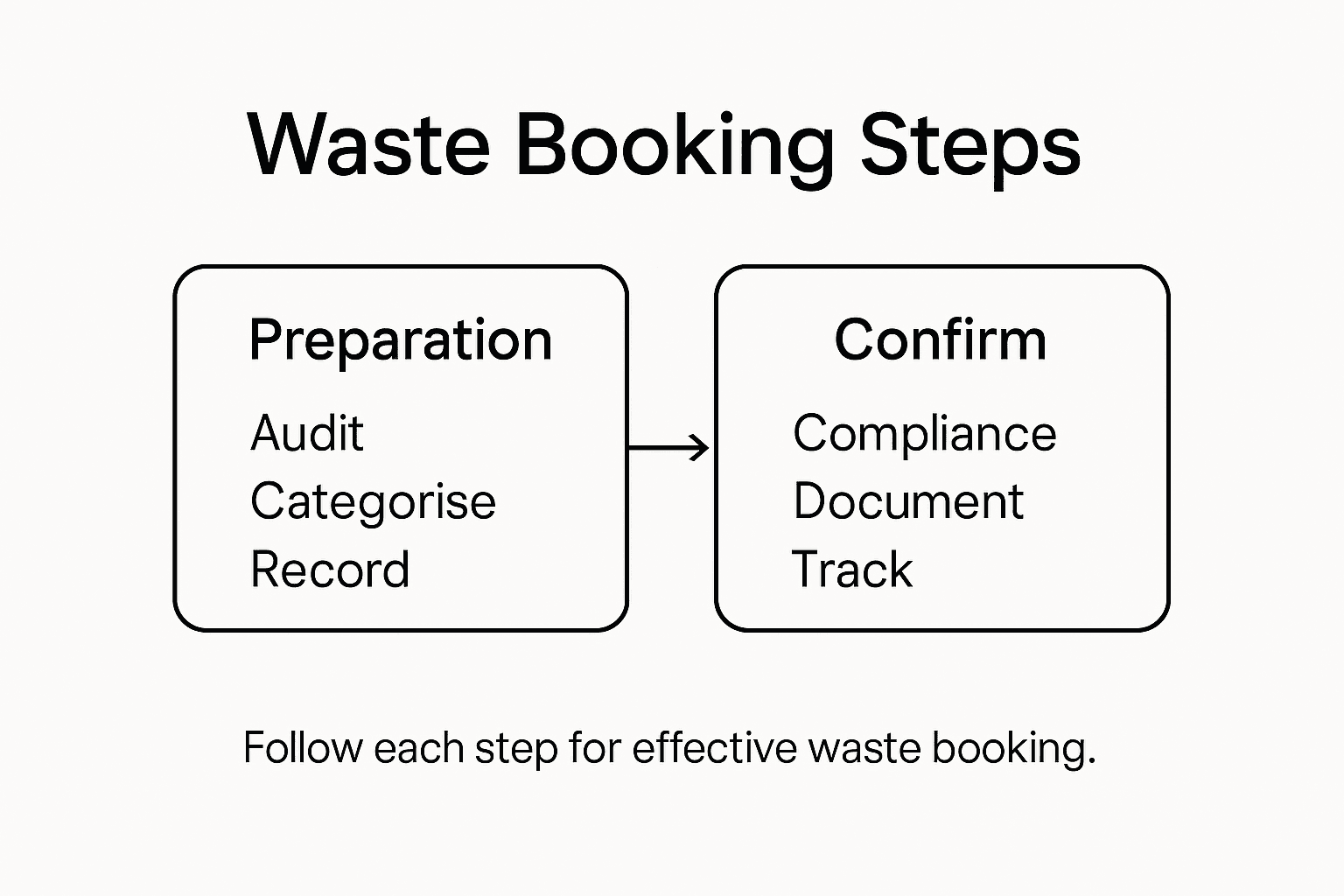
Prepare your waste collection area meticulously according to waste management logistics guidance. Ensure the designated collection point is easily accessible, clear of obstructions, and safely prepared for waste removal. Confirm the exact location with your waste management provider and verify that any specific requirements such as access restrictions, parking arrangements, or site safety protocols are clearly communicated. Most modern waste management companies offer digital tracking systems that provide real time updates on collection status, allowing you to monitor the progress of your waste disposal from scheduling through to final removal.
Maintain open communication channels with your waste management provider throughout the collection process. Save contact information for your assigned waste management representative and be prepared to provide any additional information or assistance that might be required during the collection. By staying proactive and responsive, you can help ensure a smooth, efficient waste removal process that meets both your operational needs and environmental responsibilities.
Top Tip: Create a digital reminder in your workflow management system to follow up on waste collection status and confirm successful completion of the service.
Take Control of Your Waste Management Journey Today
Managing waste bookings can be complicated when juggling regulatory compliance, waste segregation, and service coordination. This guide to mastering the waste management booking process highlights the core challenges many businesses face such as verifying licensed carriers, submitting accurate waste details, and tracking collections effectively. These pain points often lead to delays, fines, or inefficient waste disposal if not handled properly. At Venture Waste, we understand these hurdles and provide tailored solutions that simplify each step, from waste audits to confirmed collections, ensuring your business stays compliant while minimising environmental impact.

Ready to make your waste management booking seamless and stress free Visit our Waste Collection Process in the UK for Businesses 2025 – Venture Waste page to explore how our expert services align with the UK’s strict waste regulations Discover specialised support for challenging waste types including food waste through our food waste Archives – Venture Waste or deepen your understanding of regulatory requirements via our regulation Archives – Venture Waste. Start your booking now with confidence at https://venturewaste.co.uk and transform your waste management practices today.
Frequently Asked Questions
How can I gather essential waste information for my business?
Start by conducting a comprehensive audit of your waste production to understand the types and volumes of waste generated. Categorise your waste according to the standardised waste collection streams, and log important details such as material types and potential hazardous components to streamline your waste management process.
What should I look for when selecting waste management services?
Identify licensed waste carriers with regulatory compliance and expertise in handling your specific waste types. Examine their sustainability practices, reporting capabilities, and service flexibility to ensure they align with your operational needs and environmental goals.
How do I submit a booking request for waste management services online?
Navigate to your chosen waste management provider’s online platform and fill in the detailed waste information you gathered during your audit. Ensure accuracy in waste type, volume, and collection frequency, and review your entries carefully before submission to avoid scheduling issues.
What steps should I take to confirm my booking details and compliance?
Thoroughly review your booking confirmation, ensuring that all waste types and collection dates are accurate, and verify that the waste carrier is licensed. Retain all waste transfer documents as they are vital for legal compliance and demonstrate your commitment to responsible waste management.
How can I prepare for the waste collection process effectively?
Ensure your waste collection area is accessible and free of obstructions before the scheduled pick-up. Communicate any specific requirements to your waste management provider, and utilise digital tracking systems to monitor the collection status for a smooth disposal process.
What can I do to track the progress of my waste collection?
Maintain open communication with your waste management provider and save their contact information for follow-up questions. Set reminders in your workflow management system to check on the collection status and confirm successful completion of the service.
Recommended
- Waste Management Step by Step: A Guide for UK Businesses 2025 – Venture Waste
- Efficient Waste Removal for Offices: Step-by-Step Guide – Venture Waste
- How UK Businesses Can Save Money on Waste Management in 2025 – Venture Waste
- Waste Handling Training: Ensure Compliance and Safety – Venture Waste
- Airbnb Cleaning Best Practices for McKinney Homes 2025


Leave a Reply
Want to join the discussion?Feel free to contribute!