

Waste IT: Understanding Secure Disposal of Data Devices
Businesses across the UK generate staggering amounts of electronic waste every year and each discarded device holds more risk than most realise. More than just a pile of old laptops and forgotten phones, a single data exposure incident can destroy customer trust in moments. Most people believe a quick file deletion or trip to the recycling bin is enough to keep corporate secrets safe but modern data recovery techniques can pull sensitive information from devices long after they are supposedly wiped. This hidden danger means the real threat is not what you throw out but what is left behind on it.
Table of Contents
- Understanding Waste IT And Its Impact On Businesses
- The Risks Of Improper Disposal Of Data-Bearing Devices
- The Importance Of Choosing A Secure Disposal Contractor
- Key Concepts In Secure Data Destruction
- Best Practices For Responsible IT Waste Management
Quick Summary
| Takeaway | Explanation |
|---|---|
| Prioritise secure IT waste disposal | Secure disposal protects sensitive data and helps maintain regulatory compliance. |
| Select certified disposal contractors | Reliable contractors ensure comprehensive data destruction and compliance with data protection regulations. |
| Implement robust data sanitisation protocols | Multiple methods of data sanitisation help prevent potential data recovery and breaches. |
| Understand financial risks of poor practices | Inadequate electronic waste management can lead to significant fines and reputational damage. |
| Adopt a holistic waste management approach | Think beyond disposal to integrate data security, environmental responsibility, and compliance in waste management strategies. |
Understanding Waste IT and Its Impact on Businesses
Waste IT represents a critical challenge for businesses across the United Kingdom, particularly in regions like Newcastle, Durham, and Sunderland. As organisations increasingly rely on digital technologies, the secure disposal of data bearing electronic devices has become paramount to protecting sensitive information and maintaining regulatory compliance.
The Hidden Risks of Improper Electronic Waste Management
Businesses generate substantial quantities of electronic waste annually, ranging from outdated computers and servers to mobile phones and tablets. Each device potentially contains confidential corporate data that could compromise organisational security if not properly destroyed. According to research from the National Institute of Standards and Technology, improper disposal can lead to significant data breach risks.
Key risks associated with inadequate electronic waste management include:
- Potential unauthorized access to sensitive corporate information
- Risk of identity theft and corporate espionage
- Non-compliance with data protection regulations
- Financial penalties for regulatory breaches
Financial and Legal Implications
The consequences of poor Waste IT practices extend beyond data security. Businesses face substantial financial risks, including potential legal actions and regulatory fines. The Information Commissioner’s Office can impose significant penalties for data protection violations, making secure electronic waste disposal not just a technical requirement but a critical business strategy.
To address these challenges comprehensively, organisations should consider strategic approaches to waste management that balance security, compliance, and cost-effectiveness. Implementing robust electronic waste disposal protocols protects not just data, but the organisation’s reputation and financial stability.
The following table brings together the key risks and consequences of improper disposal of data-bearing devices, as highlighted in the article. This offers a clear overview of why secure disposal practices are essential for businesses:
| Risk/Consequence | Explanation |
|---|---|
| Unauthorised access to information | Sensitive corporate data may be retrieved by external parties |
| Identity theft and corporate espionage | Data leaks can enable identity fraud or competitive intelligence |
| Regulatory non-compliance | Breaches could mean failing to meet data protection obligations |
| Financial penalties | Organisations can incur fines for data protection violations |
| Reputational damage | Customer trust may be eroded due to mishandling of confidential data |
| Legal action | Placing companies at risk of lawsuits following a breach |
The Risks of Improper Disposal of Data-Bearing Devices
Data-bearing devices represent a significant vulnerability for businesses if not disposed of correctly. From smartphones and laptops to servers and external hard drives, each electronic device potentially contains sensitive corporate information that could be catastrophically misused if fallen into the wrong hands.
Data Recovery and Cybersecurity Vulnerabilities
Modern data recovery technologies have advanced to such a degree that seemingly “deleted” data can often be reconstructed with sophisticated forensic techniques. According to cybersecurity research from the U.S. Government Accountability Office, improperly disposed electronic media can expose organisations to substantial data breach risks.
Key technological vulnerabilities include:
- Advanced data retrieval techniques that can reconstruct deleted files
- Sophisticated cyber forensic tools capable of extracting information from seemingly wiped devices
- Potential exploitation of residual data fragments on storage media
- Vulnerabilities in standard data deletion protocols
Financial and Reputational Consequences
The financial implications of improper electronic waste disposal extend far beyond immediate data breach costs. Organisations can face substantial penalties from regulatory bodies, potential legal actions, and significant reputational damage. A single data exposure incident can erode customer trust and potentially lead to long-term business consequences.
Businesses in regions like Newcastle, Durham, and across the North East must recognise that comprehensive data protection involves more than digital security measures. Understanding confidential waste management represents a critical component of a holistic cybersecurity strategy, protecting not just data, but the organisation’s entire operational integrity.
The Importance of Choosing a Secure Disposal Contractor
Selecting an appropriate waste disposal contractor is not merely a logistical decision but a critical component of an organisation’s data protection and cybersecurity strategy. Businesses across the United Kingdom, particularly in industrial regions like Newcastle, Durham, and Sunderland, must carefully evaluate potential partners to ensure comprehensive protection of sensitive information.
Criteria for Selecting a Reliable Disposal Partner
A professional disposal contractor should demonstrate robust security protocols and comprehensive compliance with data protection regulations. According to cybersecurity research from the Cybersecurity and Infrastructure Security Agency, businesses must prioritise contractors who can guarantee complete data destruction.
Key selection criteria include:
- Certified data destruction methodologies
- Comprehensive chain of custody documentation
- Transparent reporting mechanisms
- Compliance with national data protection standards
Financial and Compliance Considerations
Beyond technical capabilities, businesses must consider the financial implications of secure disposal. Choosing an unqualified contractor can lead to significant legal and financial risks. Potential consequences include regulatory fines, potential data breach penalties, and substantial reputational damage.
Businesses seeking comprehensive waste management solutions should explore detailed insights into confidential disposal costs to make informed decisions that balance security, compliance, and financial efficiency. The right disposal partner becomes an extension of an organisation’s cybersecurity infrastructure, providing peace of mind and protecting critical corporate assets.
Key Concepts in Secure Data Destruction
Secure data destruction represents a sophisticated process far beyond simple file deletion. For businesses operating in technological hubs like Newcastle, Durham, and across the North East, understanding the nuanced methodologies of data elimination is crucial for maintaining comprehensive cybersecurity protocols.
Levels of Data Sanitisation
Data destruction encompasses multiple strategic approaches, each designed to prevent potential data reconstruction. According to research from the National Institute of Standards and Technology, effective data sanitisation involves several sophisticated techniques that progressively eliminate information with increasing levels of complexity.
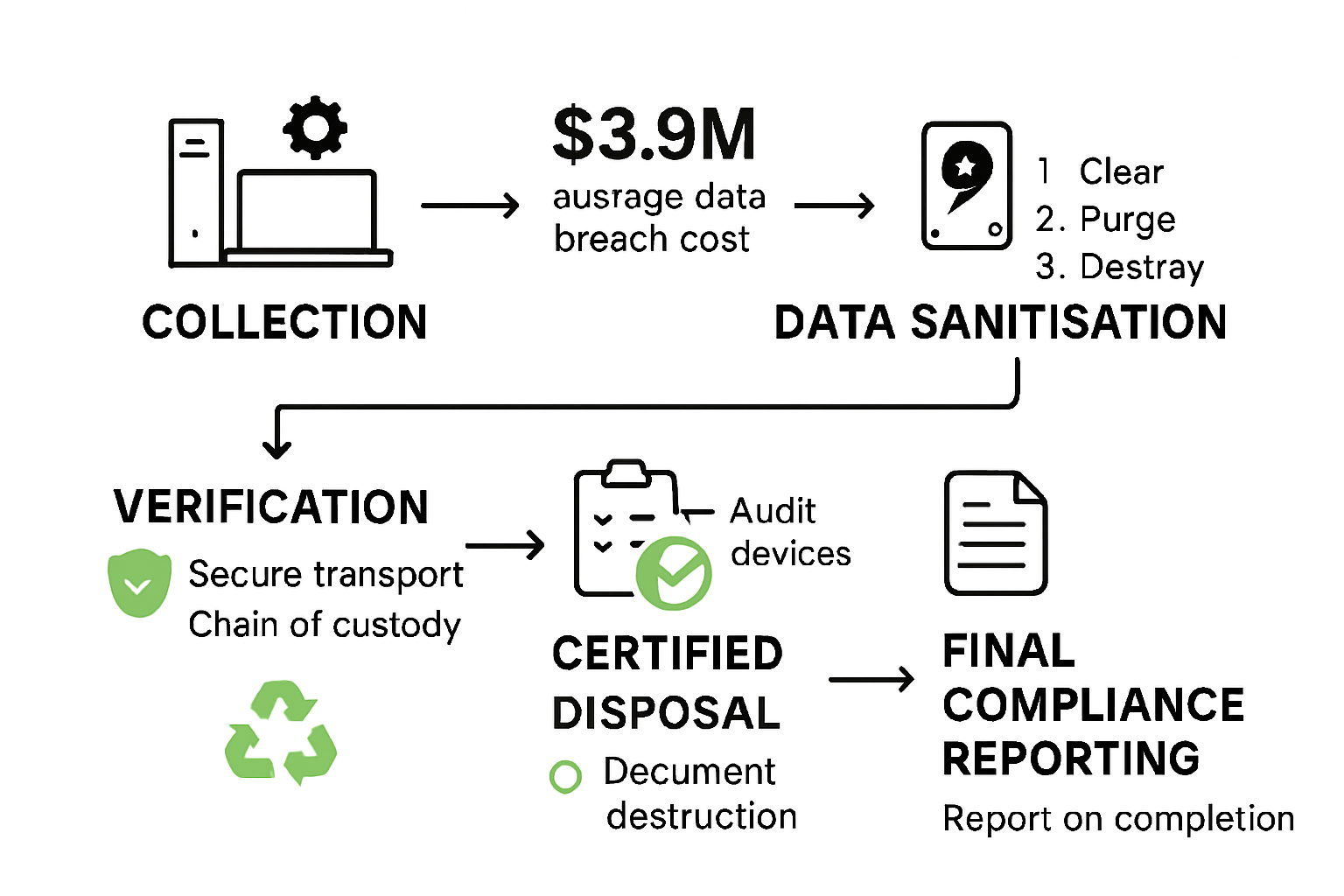
The primary levels of data sanitisation include:
To clarify the distinctions between the various levels of data sanitisation discussed in this article, the following table summarises their main features and characteristics:
| Level of Data Sanitisation | Description | Example Methods |
|---|---|---|
| Clear | Overwriting data using standard software-based deletion | File deletion, basic overwriting tools |
| Purge | Advanced magnetic or algorithmic methods rendering data unrecoverable | Degaussing, cryptographic erasure |
| Destroy | Physical destruction of storage media through mechanical or chemical processes | Shredding, incineration, crushing |
- Clear: Overwriting data using standard software-based deletion techniques
- Purge: Advanced magnetic or algorithmic methods rendering data unrecoverable
- Destroy: Physical destruction of storage media through mechanical or chemical processes
Technical and Operational Considerations
Comprehensive data destruction requires a multifaceted approach that goes beyond simple technological interventions. Organisations must consider not just the technical methods of data elimination, but also the procedural frameworks that ensure complete and verifiable information removal.
Exploring specialised hard drive destruction techniques reveals the intricate processes involved in rendering digital information permanently inaccessible. The most effective strategies combine multiple destruction methodologies, ensuring that sensitive corporate data cannot be reconstructed through advanced forensic techniques.

Best Practices for Responsible IT Waste Management
Responsible IT waste management transcends mere disposal, representing a comprehensive approach to environmental sustainability, data security, and regulatory compliance. For businesses across the United Kingdom, particularly in technological corridors like Newcastle, Durham, and Sunderland, implementing strategic waste management protocols is crucial.
Environmental and Regulatory Considerations
Proper IT waste management requires a holistic understanding of both environmental impact and legal obligations. According to research from the National Renewable Energy Laboratory, organisations must develop robust tracking and reporting mechanisms for electronic waste streams.
Key environmental and regulatory considerations include:
- Compliance with WEEE (Waste Electrical and Electronic Equipment) regulations
- Minimising hazardous material release into ecosystems
- Documenting complete chain of custody for disposed electronics
- Ensuring transparent reporting of disposal processes
Strategic Waste Management Protocols
Effective IT waste management demands a proactive, multifaceted strategy that integrates technological, legal, and environmental considerations. Businesses must develop comprehensive frameworks that address data security, environmental responsibility, and regulatory compliance simultaneously.
Explore our comprehensive guide to confidential waste risk management to understand how organisations can transform waste disposal from a potential liability into a strategic asset. The most successful approaches view IT waste management not as an endpoint, but as an integral component of organisational governance and sustainability efforts.
Secure Your Data: Professional IT Waste Solutions that Protect Your Business
Have you realised how improper disposal of data devices can put your business at risk? Sensitive data can remain on old laptops, hard drives, or tablets even after deletion, exposing you to data breaches and steep penalties. With threats like data recovery and regulatory fines highlighted in our article, ensuring safe and compliant destruction is more critical than ever. For expert advice and the latest practices in secure disposal, explore our WEEE Waste guidance.

Choose Venture Waste Management for a seamless solution to your digital disposal challenges. Stay compliant and prevent information leaks with our trusted service in Newcastle, Durham, Sunderland, and beyond. Visit our hard drive destruction service page or book now to guarantee protection for your company and peace of mind. Act now, before data falls into the wrong hands.
Frequently Asked Questions
What is Waste IT?
Waste IT refers to the improper disposal of electronic devices that contain data, posing risks to data security and regulatory compliance.
Why is secure disposal of data-bearing devices important for businesses?
Secure disposal is crucial to prevent unauthorized access to sensitive information, avoid identity theft, ensure compliance with data protection regulations, and mitigate financial penalties.
What methods are used for data destruction?
Data destruction can involve methods such as ‘clearing’ (overwriting data), ‘purging’ (advanced methods making data unrecoverable), and ‘destroying’ (physical destruction of storage media).
What should I look for in a secure disposal contractor?
When selecting a disposal contractor, look for certified data destruction methodologies, comprehensive chain of custody documentation, transparent reporting, and compliance with national data protection standards.
Recommended
- WEEE Waste Archives – Venture Waste
- hard drive destruction Archives – Venture Waste
- How To Destroy Hard Drives? Here is The Correct Way. – Venture Waste
- How to Store Confidential Waste Safely in 2025 – Venture Waste
- Effective Waste Management on Construction Sites: Best Practices – Sterling Access
- Secure IT Asset Disposal: Protecting Data Privacy | TECHTRON


Leave a Reply
Want to join the discussion?Feel free to contribute!