

Waste Handling Training: Ensure Compliance and Safety
UK businesses generate over 40 million tonnes of waste each year, yet many still struggle to manage it safely and legally. Improper waste handling can expose your organisation to hefty fines and increased operational risks. Mastering every step of waste management, from assessment to compliance, is vital for protecting people, the environment, and your company’s reputation. Reliable processes and ongoing training ensure you meet regulations and improve efficiency across every department.
Table of Contents
- Step 1: Assess Current Waste Handling Practices
- Step 2: Develop Tailored Waste Handling Procedures
- Step 3: Conduct Hands-On Staff Training Sessions
- Step 4: Implement Routine Waste Handling Checks
- Step 5: Verify Compliance With Legal Regulations
Quick Summary
| Key Point | Explanation |
|---|---|
| 1. Conduct a thorough waste audit | Identify waste streams and improve management. Document and categorize all waste generated in your organization for better strategies. |
| 2. Develop customized waste handling procedures | Tailor procedures to your unique waste types. Create clear guidelines for waste segregation, storage, and disposal based on your assessment findings. |
| 3. Implement comprehensive staff training | Train staff on waste management protocols. Engage employees through practical training sessions to ensure they can apply waste handling procedures effectively. |
| 4. Establish routine waste handling checks | Regularly inspect waste management practices. Create standardized checklists to ensure compliance and identify safety issues early. |
| 5. Verify compliance with legal regulations | Conduct thorough reviews of legal requirements. Stay updated with regulations to avoid penalties and ensure safe waste management practices. |
Step 1: Assess current waste handling practices
To effectively improve your organisation’s waste management strategy, you must first conduct a comprehensive assessment of your current waste handling practices. This critical first step will help you identify potential risks, inefficiencies, and opportunities for improvement in your waste management processes.
Begin by conducting a thorough waste audit across all operational areas. According to the UK Government Waste Classification Technical Guidance, you need to systematically document and categorise every type of waste generated by your business. This means walking through each department and identifying waste streams including general waste, recyclables, hazardous materials, electronic equipment, and any specialised industrial waste.
Key areas to examine during your assessment include waste generation points, current disposal methods, storage facilities, and transportation protocols. Document the volume, frequency, and type of waste produced. Pay special attention to potentially hazardous materials that require specific handling procedures. Waste Handling Best Practices for UK Businesses in 2025 recommends creating a detailed waste inventory that includes:
- Precise waste classifications
- Current disposal methods
- Frequency of waste generation
- Existing waste management contracts
- Current compliance documentation
Once you have completed your initial assessment, you will be well positioned to develop a more strategic and compliant waste management approach. The next step involves analysing the data collected and identifying specific areas for improvement in your waste handling processes.
Pro Tip: Involve staff from different departments in your waste assessment to ensure comprehensive data collection and gain insights from those directly handling waste on a daily basis.
Step 2: Develop tailored waste handling procedures
After completing your comprehensive waste assessment, the next critical step is developing customised waste handling procedures specific to your organisation’s unique waste streams and operational requirements. These procedures will serve as a comprehensive framework for managing waste safely and efficiently across all departments.
According to the UK Government Disposal or Recovery of Waste Produced on Site guidance, your tailored procedures should include detailed protocols for waste segregation, storage, transportation, and disposal. Start by creating specific guidelines for each waste category you identified during your initial assessment. This means developing distinct handling instructions for general waste, recyclables, electronic equipment, and hazardous materials.
Your waste handling procedures should comprehensively address key elements such as:
- Precise waste categorisation methods
- Safe containment and storage requirements
- Personal protective equipment specifications
- Transportation and transfer protocols
- Documentation and tracking processes
The 7 Steps to Waste Compliance for UK Businesses in 2025 recommends involving staff from different departments when drafting these procedures to ensure practical implementation and comprehensive coverage.
Pro Tip: Review and update your waste handling procedures annually to ensure ongoing compliance with changing environmental regulations and your business’s evolving waste management needs.
With these tailored procedures in place, you will have established a robust framework for responsible and efficient waste management across your organisation.
Step 3: Conduct hands-on staff training sessions
With your tailored waste handling procedures developed, the next crucial step is implementing comprehensive staff training to ensure everyone understands and can effectively execute these protocols. Training is not just about sharing information but creating a culture of safety and compliance across your organisation.
The International Maritime Organization Waste Assessment Guidance Training Set emphasises the importance of interactive and practical training methods. Design your training sessions to be dynamic and engaging, combining theoretical knowledge with hands on practical demonstrations. This means moving beyond traditional classroom lectures to include scenario based learning, practical equipment handling, and interactive workshops that simulate real world waste management challenges.
Your training programme should comprehensively cover essential topics including:
- Waste classification and identification
- Proper use of personal protective equipment
- Safe handling techniques for different waste streams
- Emergency response and incident reporting procedures
- Documentation and tracking requirements
Additionally, Healthcare Waste Appropriate Measures Guidance recommends developing role specific training modules that address the unique waste management challenges faced by different departments within your organisation.
Pro Tip: Implement a continuous learning approach by scheduling regular refresher training sessions and creating opportunities for staff to provide feedback on waste handling procedures.
By investing in thorough and engaging staff training, you will build a knowledgeable workforce capable of maintaining high standards of waste management safety and compliance.

Step 4: Implement routine waste handling checks
After developing comprehensive waste handling procedures and training your staff, the next critical step is establishing a systematic approach to routine waste handling checks. These regular inspections will help you maintain compliance, identify potential issues early, and continuously improve your waste management processes.
According to the Healthcare Waste: Appropriate Measures Guidance, routine checks are essential for ensuring ongoing safety and regulatory compliance. Develop a structured inspection schedule that covers all key areas of waste management, including waste storage, segregation, labelling, and disposal protocols.
Your routine waste handling checks should comprehensively address several critical elements:
- Verification of waste segregation practices
- Inspection of storage container conditions
- Review of personal protective equipment usage
- Examination of waste tracking and documentation
- Assessment of emergency response readiness
The Waste Management Step by Step Guide for UK Businesses 2025 recommends creating a standardised checklist that staff can use consistently during these routine inspections, ensuring a comprehensive and uniform approach across all departments.
Pro Tip: Implement a digital reporting system for waste handling checks to track trends, quickly identify potential issues, and maintain a comprehensive record of your waste management practices.
By establishing rigorous routine waste handling checks, you will create a proactive approach to waste management that minimises risks and ensures ongoing compliance with environmental regulations.
Step 5: Verify compliance with legal regulations
After implementing routine waste handling checks, the final crucial step is thoroughly verifying your organisation’s compliance with current legal regulations. This comprehensive review will help you identify potential legal risks, ensure your waste management practices meet all regulatory requirements, and protect your business from potential penalties.
The UK Government Waste Classification Technical Guidance provides a comprehensive framework for understanding and verifying waste management legal requirements. Your compliance verification process should involve a systematic review of several key regulatory areas, ensuring that every aspect of your waste handling meets the necessary legal standards.
Your compliance verification should comprehensively address critical legal requirements such as:
- Accurate waste classification and documentation
- Proper handling of hazardous and non hazardous waste streams
- Adherence to environmental protection regulations
- Maintaining appropriate waste transportation and disposal records
- Compliance with workplace health and safety standards
The Waste Disposal Legal Requirements UK 2025 guide recommends conducting an annual comprehensive legal compliance audit to ensure your waste management practices remain up to date with the latest regulatory changes.
Pro Tip: Consider engaging an independent environmental compliance expert to conduct a thorough review of your waste management practices and provide an objective assessment of your regulatory adherence.
By systematically verifying your compliance with legal regulations, you will demonstrate your commitment to responsible waste management and protect your organisation from potential legal and financial risks.
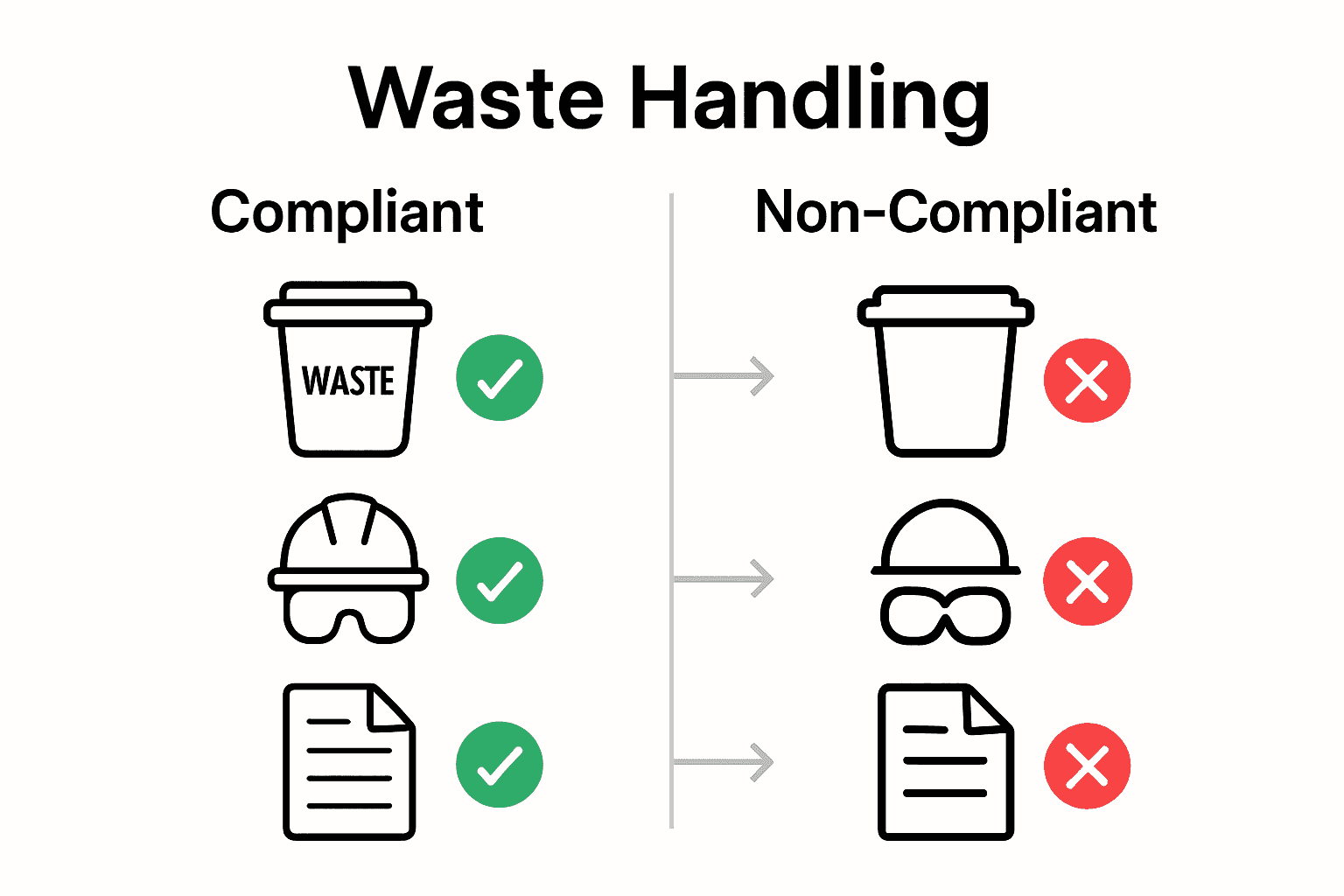
Strengthen Your Compliance with Expert Waste Handling Training
Ensuring your team masters waste handling procedures is vital for safety and regulatory compliance. This article highlights common challenges such as the need for tailored training, routine checks, and thorough legal verification. These pain points often lead to costly mistakes and environmental risks. At Venture Waste Management, we understand that proper training paired with reliable waste collection can transform your organisation’s approach. With services ranging from hazardous waste handling to general recycling, we support you in maintaining best practices and meeting legal requirements.

Ready to elevate your waste management strategy today Choose our trusted Waste Collection Process in the UK for Businesses 2025 to ensure seamless and compliant waste disposal. Explore how How the Waste Collection Network in UK Serves Businesses in 2025 optimises reliable transport and effective handling. Visit Venture Waste Management now for a straightforward three-step booking process and expert solutions tailored to your needs. Take the first step towards safer and fully compliant waste handling today.
Frequently Asked Questions
What are the key components of an effective waste handling training program?
An effective waste handling training program includes waste classification, safe handling techniques, proper use of personal protective equipment, and emergency response protocols. Develop training modules that address these areas to ensure all staff are knowledgeable about safety practices and compliance standards.
How often should we conduct waste handling training for our staff?
Conduct waste handling training at least annually to ensure staff stays updated on procedures and compliance regulations. Additionally, consider implementing refresher sessions every six months to reinforce knowledge and address any changes in waste management practices.
What should be included in the hands-on training sessions for waste handling?
Hands-on training sessions should include practical demonstrations on waste segregation, personal protective equipment usage, and emergency response drills. Engage staff with scenario-based learning to simulate real-life situations they may encounter in waste management.
How can we assess the effectiveness of our waste handling training?
Assess the effectiveness of your waste handling training by conducting follow-up quizzes, observing staff practices, and soliciting feedback on the training experience. Consider evaluating performance within a month after training to gauge knowledge retention and areas for improvement.
What materials should we provide for waste handling training?
Provide training materials that include manuals, safety guidelines, and visual aids outlining proper waste handling procedures. Distribute supplemental resources, such as checklists or procedure cards, to reinforce training concepts and facilitate on-the-job application.
How do we ensure ongoing compliance with waste handling regulations?
Ensure ongoing compliance by regularly reviewing and updating your waste handling training program to align with current regulations. Schedule annual audits of your waste management practices to identify and rectify any compliance gaps proactively.
Recommended
- Hazardous Waste Handling for UK Businesses: Complete 2025 Guide – Venture Waste
- Recycling Hazardous Materials: Safe Disposal for UK Businesses 2025 – Venture Waste
- How to Reduce Packaging Waste: A Practical Guide for 2025 – Spaceman
- How to Ensure Student Safety: A Step-by-Step Guide – Scheer Genius Assembly Shows


Leave a Reply
Want to join the discussion?Feel free to contribute!