

Waste Electricals Disposal: A Step-by-Step Compliance Guide
Managing waste electricals in british hospitals and schools comes with growing pressure to meet strict regulatory standards and support sustainability. With UK households storing over 880 million unused electrical items, facilities managers face a real challenge in keeping their sites safe, compliant, and environmentally responsible. This guide walks you through practical steps for sorting, documenting, and disposing of electrical waste to help your organisation achieve full legal compliance and reduce environmental impact at every stage.
Table of Contents
- Step 1: Assess Waste Electricals And Identify Disposal Needs
- Step 2: Prepare And Segregate Electrical Items For Collection
- Step 3: Select Compliant Disposal Services And Arrange Transport
- Step 4: Verify Documentation And Ensure Legal Compliance
- Step 5: Monitor Final Processing And Confirm Safe Disposal
Quick Summary
| Essential Insight | Detailed Explanation |
|---|---|
| 1. Conduct a thorough inventory | Accurately document all electrical items to assess their disposal needs and identify potential hazards. |
| 2. Segregate items for collection | Organise different types of electrical equipment into distinct zones to improve recycling efficiency. |
| 3. Choose compliant disposal services | Engage only with authorised providers to ensure legal compliance and environmental responsibility. |
| 4. Verify and retain documentation | Keep detailed records of all waste transfers to maintain a transparent audit trail for future reference. |
| 5. Monitor final processing | Track the disposal lifecycle to confirm responsible recycling and handling of hazardous materials. |
Step 1: Assess waste electricals and identify disposal needs
Assessing waste electrical equipment represents a critical first step in responsible disposal. Your primary goal is understanding exactly what electrical items you have and determining their appropriate recycling or disposal pathway.
Begin by conducting a comprehensive inventory of all electrical items across your facility. This means carefully documenting every plug-powered or battery-operated device from computers and printers to kitchen appliances and maintenance equipment. Research indicates that UK households alone hold 880 million unused electrical items, highlighting the significant potential for proper waste management. Pay special attention to items that might contain hazardous components like batteries or electronic circuits.
Classify each electrical item into specific categories based on size, condition, and potential recyclability. Small items like mobile phones, tablets, and personal electronics often have different disposal requirements compared to larger white goods such as refrigerators or industrial machinery. Consider factors like age, functionality, and potential for component recovery. Some electrical equipment might be suitable for refurbishment or direct reuse, while others will require specialist recycling processes.
Expert Tip: Create a digital spreadsheet to track all electrical waste, recording details like device type, serial number, condition, and proposed disposal method for streamlined management.
Here is a summary of key categories for electrical waste management:
| Device Category | Common Items | Hazards Present | Disposal Considerations |
|---|---|---|---|
| Small Electronics | Phones, tablets, cameras | Batteries, circuits | Suitable for refurbishment |
| Large Appliances | Refrigerators, ovens | Refrigerants, metals | Require specialist recycling |
| IT Equipment | Computers, printers | Data storage, batteries | Data wiping, specialised handling |
| Maintenance Tools | Power tools, chargers | Batteries, metals | Remove batteries, recycle parts |
Step 2: Prepare and segregate electrical items for collection
Preparing and segregating electrical waste is a crucial phase in ensuring efficient and environmentally responsible disposal. Your objective is to organise electrical items systematically to facilitate safe recycling and minimise contamination.
Start by creating distinct collection zones for different types of electrical equipment. Practical guidance recommends sorting cables and electrical items carefully to improve recycling efficiency, which means separating items by categories such as small electronics, large appliances, batteries, and computer equipment. Remove batteries from devices whenever possible, as these often require specialised handling. Group items by material composition and potential recyclability sorting plastics, metals, and electronic components separately to streamline the subsequent recycling processes.
Ensure all electrical items are clean and free from additional non electrical attachments before collection. Check each item for damage or contamination that might compromise recycling potential. Documentation is key prepare an inventory listing each item with details like type, condition, and proposed disposal method. This systematic approach not only simplifies collection but also provides valuable tracking for your waste management records.
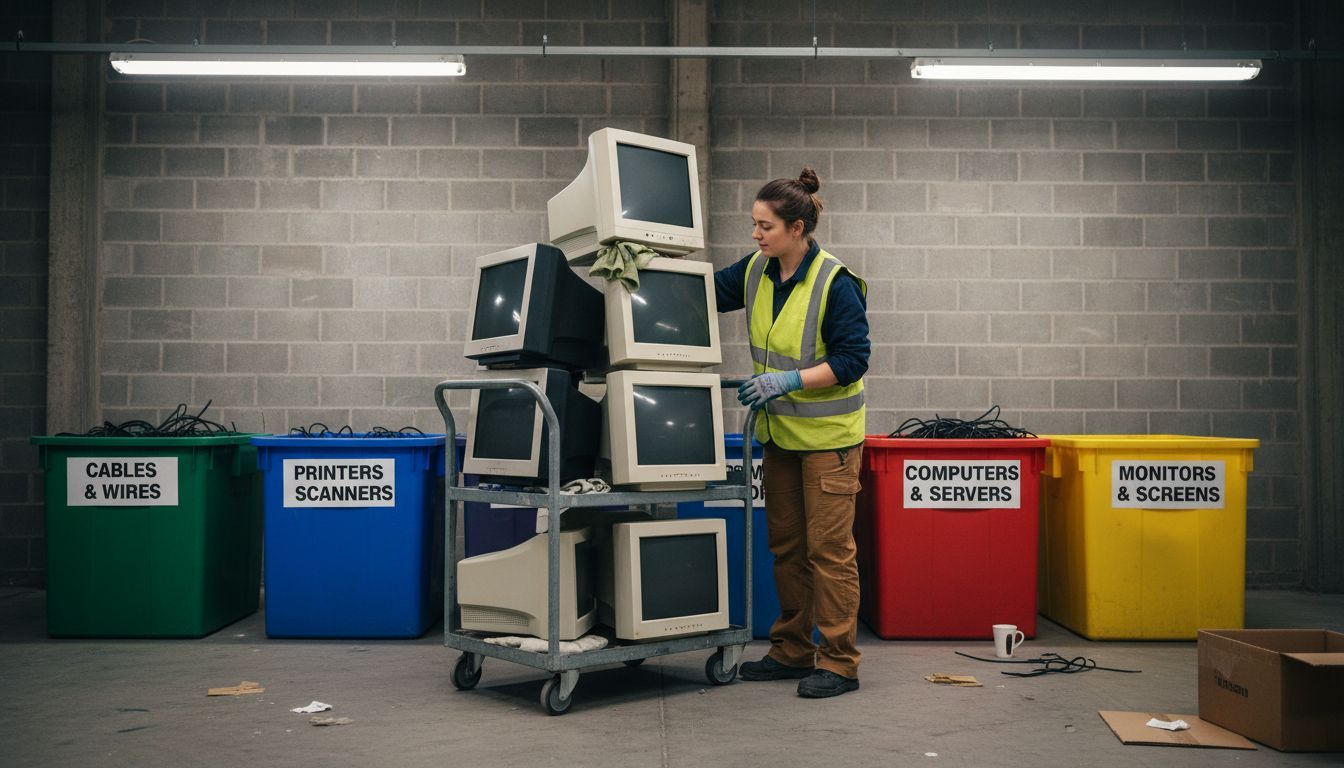
Expert Tip: Create colour coded containers or clearly labelled zones for different electrical waste categories to prevent accidental mixing and streamline your segregation process.
Step 3: Select compliant disposal services and arrange transport
Selecting the right disposal service is crucial for ensuring legal compliance and environmental responsibility when managing waste electrical equipment. Your primary objective is to identify and engage with authorised waste management providers who meet stringent regulatory requirements.
The UK’s Waste Electrical and Electronic Equipment (WEEE) Regulations mandate that businesses use only authorised collectors and contractors registered with environmental regulators. Begin by thoroughly researching potential waste disposal services specialising in electrical equipment. Look for providers with valid waste carrier licences and proven experience in handling electronic waste. Request detailed documentation including their environmental permits, waste transfer certifications, and specific expertise in processing different categories of electrical items.
Carefully evaluate potential service providers by examining their recycling processes, environmental credentials, and compliance records. Request comprehensive quotes that outline collection methods, transportation protocols, and final disposal or recycling strategies. Ensure the chosen service provides comprehensive documentation for each stage of waste management, including detailed waste transfer notes and certificates of destruction. Confirm their commitment to environmentally responsible practices and their ability to provide transparent reporting on the final disposition of your electrical waste.
Expert Tip: Always request and retain copies of waste transfer documentation for at least three years to maintain a robust audit trail and demonstrate your organisation’s commitment to legal compliance.
The table below compares authorised and unauthorised disposal service providers:
| Feature | Authorised Providers | Unauthorised Providers |
|---|---|---|
| Legal Compliance | Fully regulated, certified | May lack permits, illegal |
| Documentation Provided | Waste notes, destruction certificates | Poor, incomplete records |
| Environmental Practices | Transparent recycling | Unknown, often negligent |
| Audit Trail Reliability | Robust and traceable | Risk of lost records |
Step 4: Verify documentation and ensure legal compliance
Verifying documentation represents the final critical checkpoint in your waste electrical equipment disposal process. Your primary goal is to create an ironclad audit trail that demonstrates your organisation’s commitment to legal and environmental standards.

Designated collection facilities must maintain comprehensive records documenting the quantities, types, and transfers of waste electrical equipment, ensuring transparency throughout the disposal journey. Systematically review all documentation generated during the waste management process, including waste transfer notes, certificates of destruction, and compliance scheme registrations. Cross reference these documents against your initial inventory to confirm every electrical item has been properly accounted for and processed according to UK regulatory requirements.
Pay meticulous attention to the details within your documentation. Verify that each waste transfer note includes precise information such as the type and weight of electrical equipment, the dates of transfer, and the specific authorisation numbers of the waste carriers and treatment facilities involved. Retain these documents securely for a minimum of three years, as they serve as crucial evidence of your legal compliance. By maintaining a comprehensive and accurate documentation system, you protect your organisation from potential regulatory penalties and demonstrate your commitment to responsible waste management.
Expert Tip: Create a digital archive with multiple backup copies of all waste management documentation to ensure you can quickly retrieve records if required by environmental regulators.
Step 5: Monitor final processing and confirm safe disposal
Monitoring the final processing of waste electrical equipment ensures your organisation maintains the highest standards of environmental responsibility and regulatory compliance. Your critical objective is to track and verify the complete disposal lifecycle of electrical waste.
Authorised facilities must implement rigorous management systems to track material flows and confirm that recycling or disposal meets stringent regulatory standards. Request comprehensive processing reports from your waste management provider that detail the exact treatment methods used for each category of electrical equipment. These reports should include precise documentation of material segregation, component recovery rates, and confirmation of environmentally sound disposal techniques.
Carefully scrutinise the final processing documentation to ensure hazardous materials have been appropriately handled and that recycling targets have been met. Verify the credentials of the treatment facilities, checking their environmental permits and compliance records. Pay particular attention to how different electrical components are processed specifically looking for evidence of responsible material recovery, safe handling of toxic substances, and adherence to UK waste management regulations. By maintaining this level of oversight, you demonstrate your commitment to sustainable waste management and protect your organisation from potential environmental and legal risks.
Expert Tip: Establish a quarterly review process to audit and cross check waste processing reports against your original electrical equipment inventory to ensure complete and transparent disposal tracking.
Simplify Your Waste Electricals Disposal with Expert Support
Proper disposal of waste electricals requires careful assessment, segregation, and compliance to avoid legal risks and environmental harm. If you seek a reliable partner to guide you through responsible recycling and meet all UK regulations, Venture Waste is here to help. With specialised knowledge in handling WEEE Waste and electrical components like Batteries, we ensure your electrical equipment is managed safely and transparently from start to finish.

Take control of your compliance journey today by choosing Venture Waste for expert disposal services tailored to your needs. Visit our website at Venture Waste to book your collection and benefit from streamlined processes, full audit trails, and peace of mind that your waste electricals are handled responsibly now.
Frequently Asked Questions
What is the first step in waste electricals disposal?
Begin by conducting a comprehensive inventory of all electrical items in your facility. This will help you understand what items you have and their appropriate disposal pathways.
How should I segregate electrical items for disposal?
Create distinct collection zones for various types of electrical equipment. Sort items by category—such as small electronics, large appliances, and batteries—to streamline the recycling process and avoid contamination.
What should I look for when selecting a waste disposal service?
Choose authorised waste disposal services that are registered with environmental regulators. Ensure they provide documentation such as waste transfer notes and certificates of destruction for compliance and transparency.
How can I verify the documentation for my electrical waste disposal?
Review all generated documents, including waste transfer notes and certificates, to ensure they match your initial inventory. Retain these records securely for a minimum of three years to demonstrate compliance with waste management regulations.
What actions should I take to monitor the final processing of my electrical waste?
Request comprehensive processing reports from your waste management provider. These reports should detail treatment methods and ensure that hazardous materials are handled safely while meeting recycling targets.
Recommended
- What is WEEE Waste? Guide for UK Businesses 2025 – Venture Waste
- How to Choose WEEE Waste Disposal Company: 2025 Guide for UK Businesses – Venture Waste
- WEEE Waste Collection: Secure Business Disposal Solutions 2025 – Venture Waste
- Electrical Home Inspection Photos | Chicago Home Inspect LLC
- Ting Fire Prevention Sensor Review: How It Prevented Electrical Hazards


Leave a Reply
Want to join the discussion?Feel free to contribute!