

Waste Disposal Legal Requirements UK 2025: What Businesses Must Know

Waste disposal rules for UK businesses are about to change in a big way. From March 2025, organisations with 10 or more staff must split their rubbish into three categories or risk heavy legal penalties. Yet, here is the part few are prepared for. Fines for non-compliance can reach tens of thousands of pounds and new digital waste tracking will become mandatory by April 2026. Most businesses think it is just about sorting bins, but the real challenge is the flood of new reporting rules and how unprepared companies could face sudden legal trouble.
Table of Contents
- Key UK Waste Disposal Laws For Businesses
- Managing Hazardous And Special Waste Types
- Secure Disposal Of Confidential And WEEE Waste
- Best Practices For Compliance And Audits
Quick Summary
| Takeaway | Explanation |
|---|---|
| Upcoming Mandatory Waste Separation | From 31 March 2025, businesses with 10 or more employees must separate their waste into three categories: dry recyclables, food waste, and non-recyclable waste. Micro firms have until 31 March 2027 for compliance. |
| Legal Consequences for Non-Compliance | Non-compliance with waste regulations can lead to significant financial penalties and legal repercussions. Businesses must maintain proper waste documentation and ensure staff are trained in waste handling procedures. |
| Stringent Regulations for Hazardous Waste | Businesses generating hazardous waste must strictly adhere to regulations, including obtaining waste transfer licenses and ensuring licensed disposal facilities are used to manage hazardous materials effectively. |
| Secure Disposal of Confidential and Electronic Waste | The Data Protection Act 2018 requires businesses to implement secure protocols for disposing of confidential waste, including obtaining destruction certificates and proper data handling practices. |
| Need for Continuous Monitoring and Reporting | The introduction of a mandatory digital waste tracking system in April 2026 necessitates that businesses develop comprehensive monitoring processes and maintain accurate records to comply with evolving waste disposal regulations. |
To help clarify the upcoming waste separation requirements and compliance deadlines for different business sizes, the table below summarises the obligations for businesses and micro firms:
| Business Size | Deadline for Compliance | Required Waste Separation |
|---|---|---|
| 10+ employees | 31 March 2025 | Dry recyclables, Food waste, Non-recyclable |
| Fewer than 10 (micro) | 31 March 2027 | Dry recyclables, Food waste, Non-recyclable |
Key UK Waste Disposal Laws for Businesses
Business waste management in the United Kingdom is governed by a complex framework of legal requirements designed to protect the environment and promote responsible waste disposal. Understanding these regulations is crucial for organisations across all sectors to ensure compliance and avoid potential penalties.
Understanding Mandatory Waste Separation Regulations
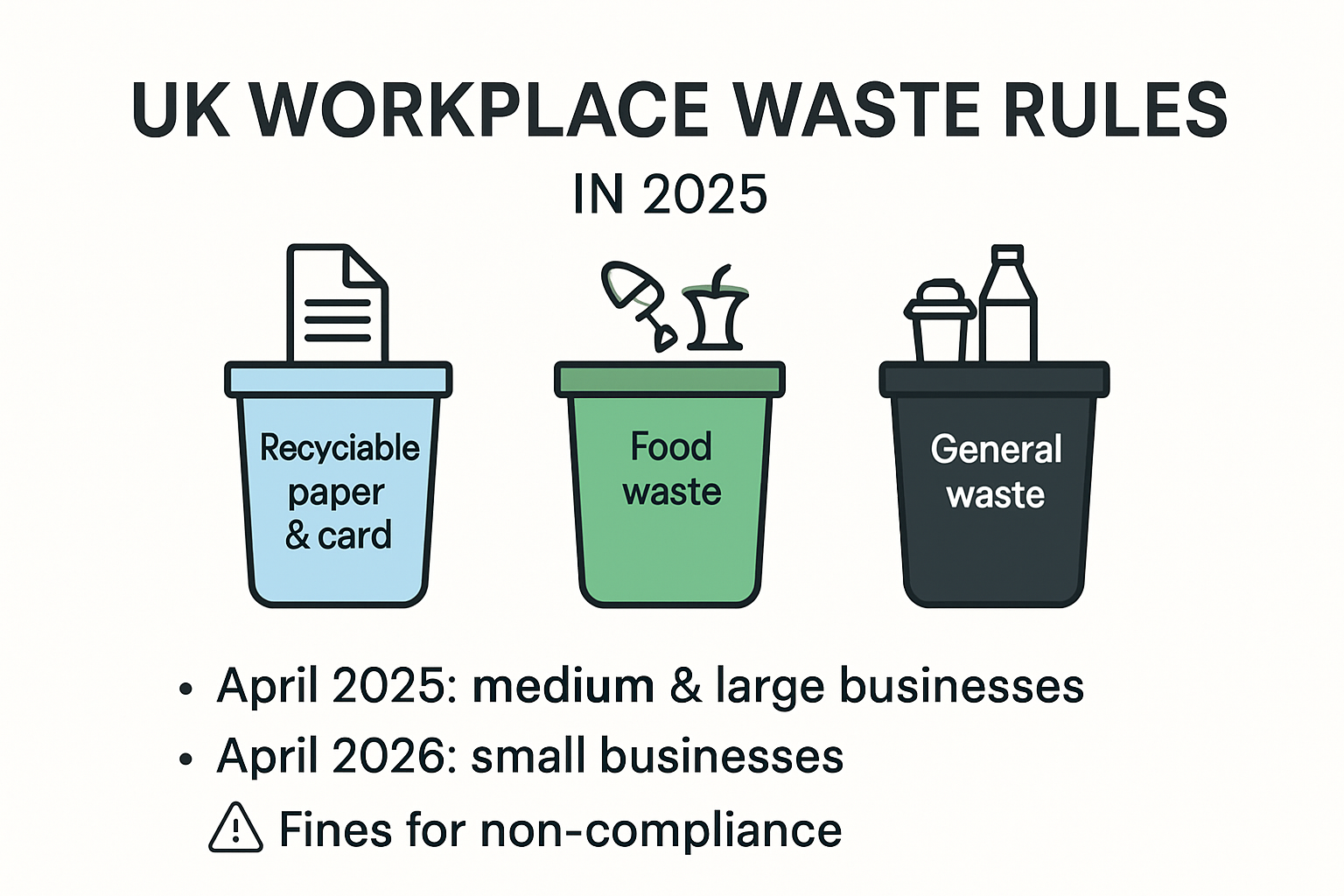
Starting 31 March 2025, businesses face significant changes in waste management obligations. Explore our guide on navigating waste disposal requirements to stay ahead of new legal mandates. According to gov.uk official guidance, all workplaces with 10 or more employees must now separate their waste into three distinct categories:
- Dry Recyclable Materials: Includes plastic, metal, glass, paper, and cardboard
- Food Waste: Requires specific collection and processing protocols
- Non Recyclable Waste: Materials that cannot be reprocessed or recycled
The regulations introduce nuanced requirements for different business sizes. Micro firms with fewer than 10 full-time equivalent employees receive a temporary extension, having until 31 March 2027 to fully implement these waste separation protocols.
Compliance and Legal Implications
Non compliance with these regulations can result in significant financial penalties and potential legal consequences. The Separation of Waste (England) Regulations 2025 provide specific guidelines that businesses must follow. Key considerations include:
- Ensuring proper waste stream segregation
- Maintaining accurate documentation of waste disposal practices
- Implementing robust internal waste management systems
- Training staff on correct waste handling procedures
Interestingly, the regulations offer some flexibility. Certain recyclable waste streams—specifically metal, glass, and plastic—can be collected together. However, paper and card must typically be collected separately, with limited exemptions available.
Businesses must also consider additional legal frameworks beyond basic waste separation. The Environmental Protection Act 1990 and subsequent amendments continue to underpin waste management regulations, emphasising the duty of care for all organisations producing, carrying, or disposing of waste.
For comprehensive understanding, businesses should consult current environmental legislation and potentially seek professional guidance to ensure full compliance with these evolving waste disposal legal requirements. Proactive management and continuous staff education will be critical in successfully navigating these new regulatory landscapes.
Managing Hazardous and Special Waste Types

Businesses generating hazardous and special waste types must navigate a complex regulatory landscape that demands meticulous management and strict adherence to environmental protection protocols. Learn more about our comprehensive hazardous waste disposal guidelines to ensure your organisation remains compliant with current UK regulations.
Classification and Identification of Hazardous Waste
Hazardous waste represents a critical category of materials that pose potential risks to human health and the environment. According to the Environmental Protection Act 1990, these materials require specialised handling and disposal procedures. Businesses must carefully identify and classify their waste streams, considering factors such as chemical composition, toxicity, and potential environmental impact.
Key categories of hazardous waste include:
- Chemical Waste: Solvents, industrial chemicals, and laboratory reagents
- Electronic Waste (WEEE): Computers, electronic equipment containing toxic components
- Medical and Pharmaceutical Waste: Contaminated materials from healthcare settings
- Radioactive Materials: Specific waste from medical or scientific applications
- Batteries and Electronic Components: Containing harmful metals and chemicals
Below is a table summarising the main types of hazardous waste and their examples for quick reference:
| Hazardous Waste Category | Typical Examples |
|---|---|
| Chemical Waste | Solvents, Industrial chemicals, Lab reagents |
| Electronic Waste (WEEE) | Computers, Monitors, Electronic devices |
| Medical and Pharmaceutical Waste | Contaminated gloves, Syringes, Medicines |
| Radioactive Materials | Medical/scientific isotopes, Lab samples |
| Batteries and Electronic Components | Lead-acid batteries, Lithium batteries, Circuit boards |
Legal Compliance and Disposal Requirements
The UK government has established rigorous regulations governing hazardous waste management. The Environment Act 2021 provides a comprehensive framework for waste disposal, emphasising the principle of responsible management. Businesses must adhere to several critical requirements:
- Obtain appropriate waste transfer licenses
- Maintain detailed documentation of waste generation and disposal
- Use only licensed waste carriers and disposal facilities
- Implement robust tracking systems for hazardous waste movements
- Provide comprehensive staff training on hazardous waste handling
Non-compliance can result in significant financial penalties, with fines potentially reaching tens of thousands of pounds. The Health and Safety Executive provides additional guidance on managing these complex waste streams, emphasising the importance of proper risk assessment and controlled disposal methods.
Businesses must also consider the environmental impact of their waste management practices. The regulations require organisations to demonstrate a commitment to minimising hazardous waste generation, promoting recycling where possible, and ensuring the most environmentally responsible disposal methods are employed. This approach not only ensures legal compliance but also demonstrates corporate responsibility towards environmental protection.
Secure Disposal of Confidential and WEEE Waste
Businesses handling sensitive information and electronic waste face increasingly stringent legal requirements in 2025, demanding sophisticated approaches to secure disposal and environmental protection. Learn about our comprehensive electronic waste disposal solutions to ensure your organisation remains compliant with the latest regulations.
Confidential Waste Management Protocols
Confidential waste disposal represents a critical area of legal compliance for businesses across all sectors. The Data Protection Act 2018 mandates rigorous protocols for destroying sensitive documents and electronic data. Organisations must implement systematic approaches that prevent potential data breaches and protect both corporate and client information.
Key requirements for confidential waste management include:
- Secure Collection: Using locked confidential waste containers
- Verified Destruction: Obtaining certificates of destruction
- Comprehensive Documentation: Maintaining detailed disposal logs
- Staff Training: Educating employees about information security protocols
The following checklist table helps businesses quickly review whether they’ve implemented key confidential waste management protocols:
| Requirement | Implemented (Yes/No) | Notes |
|---|---|---|
| Secure Collection | Locked containers in use | |
| Verified Destruction | Certificates obtained | |
| Comprehensive Documentation | Disposal logs maintained | |
| Staff Training | Information security covered |
Electronic Waste (WEEE) Disposal Regulations
The Waste Electrical and Electronic Equipment (WEEE) Regulations impose strict guidelines for disposing of electronic equipment. According to the Environment Agency, businesses must follow comprehensive procedures when managing electronic waste:
- Separately collect all electronic waste
- Use only licensed WEEE recycling facilities
- Ensure data destruction on all electronic devices
- Provide accurate documentation for each item disposed
Interestingly, the UK government is preparing to introduce mandatory digital waste tracking from April 2026, which will revolutionise how businesses monitor and report their waste disposal activities. This system aims to create unprecedented transparency in waste management processes, requiring organisations to maintain meticulous records of their electronic and confidential waste streams.
Businesses must recognise that improper disposal of confidential and electronic waste can result in significant legal and financial consequences. Penalties can include substantial fines, potential legal action, and reputational damage. By implementing robust disposal strategies that comply with current regulations, organisations can protect themselves from these risks while demonstrating corporate responsibility towards data protection and environmental sustainability.
Best Practices for Compliance and Audits
Navigating the complex landscape of waste disposal regulations requires a strategic approach to compliance and systematic internal auditing. Explore our comprehensive compliance management strategies to ensure your organisation remains ahead of regulatory requirements.
Developing a Robust Waste Management Audit Framework
Effective waste management compliance begins with creating a comprehensive audit framework that systematically evaluates an organisation’s waste disposal practices. According to the Environment Agency, businesses must implement rigorous internal review processes that cover multiple dimensions of waste management.
Key components of an effective audit framework include:
- Documentation Review: Comprehensive examination of waste transfer records
- Process Mapping: Detailed tracking of waste generation and disposal pathways
- Compliance Checklist: Systematic verification against current regulatory standards
- Risk Assessment: Identifying potential areas of non-compliance
- Staff Interview Protocols: Evaluating employee understanding of waste management procedures
Implementing Continuous Monitoring and Reporting Systems
The UK government’s upcoming mandatory digital waste tracking system, set to launch in April 2026, will revolutionise how businesses monitor and report waste disposal activities. This initiative demands that organisations develop sophisticated tracking mechanisms that provide real-time insights into their waste management processes.
Businesses must prepare for this transition by:
- Investing in digital waste tracking technologies
- Creating standardised reporting templates
- Establishing clear accountability mechanisms
- Training staff on new digital reporting requirements
- Maintaining transparent and accurate waste disposal records
The Simpler Recycling reforms effective from 31 March 2025 emphasise the importance of precise waste separation and documentation. Non-domestic properties must now implement stringent protocols for food waste collection and recycling, requiring meticulous record-keeping and regular internal audits.
Organisations that proactively develop comprehensive compliance strategies will not only avoid potential legal penalties but also demonstrate corporate responsibility. By treating waste management as a strategic priority rather than a mere regulatory requirement, businesses can transform their approach to environmental sustainability, potentially reducing costs and enhancing their corporate reputation in an increasingly environmentally conscious marketplace.
Frequently Asked Questions
What are the new waste disposal requirements for businesses in the UK from March 2025?
Starting from 31 March 2025, businesses in the UK with 10 or more employees must separate their waste into three categories: dry recyclables, food waste, and non-recyclable waste.
What are the potential penalties for non-compliance with waste disposal regulations?
Non-compliance with waste separation regulations can result in significant financial penalties, with fines potentially reaching tens of thousands of pounds, as well as legal repercussions for businesses failing to adhere to the guidelines.
How can businesses ensure compliance with hazardous waste regulations?
To ensure compliance, businesses generating hazardous waste must obtain the appropriate waste transfer licenses, maintain accurate documentation, use licensed waste disposal facilities, and provide comprehensive training to staff on hazardous waste management practices.
What measures need to be taken for the secure disposal of confidential waste and electronic equipment?
Businesses must implement secure collection protocols, such as using locked containers for confidential waste, ensure verified destruction through certificates, maintain accurate disposal logs, and educate staff on data protection laws and information security protocols.
Stay Compliant and Confident with Venture Waste Management
Worried about the new UK waste disposal laws for 2025 and how they could impact your business? The latest regulations are raising the stakes, with fines and stricter reporting making it riskier than ever to get waste separation or documentation wrong. If you are concerned about compliance, unsure what counts as dry recyclables or confidential waste, or feel unprepared for digital waste tracking, you are not alone. Visit our regulation hub for practical guidance and reassurance tailored for businesses just like yours.

Do not wait until legal deadlines are on your doorstep. Let Venture Waste Management take the guesswork out of compliance. Our easy three-step booking process, robust legal expertise, and all-in-one commercial waste services help you avoid risk, stay up-to-date and protect your business reputation. Start planning for 2025 by visiting Venture Waste Management today and discover how simple staying compliant can be.
Recommended
- 7 Steps to Waste Compliance for UK Businesses in 2025 – Venture Waste
- steps to waste compliance Archives – Venture Waste
- Hazardous Waste Handling for UK Businesses: Complete 2025 Guide – Venture Waste
- Blog Archives – Venture Waste
- hazardous waste handling Archives – Venture Waste
- Best Liquid Waste Disposal Options for UK Businesses in 2025 – Venture Waste


Leave a Reply
Want to join the discussion?Feel free to contribute!