

Waste Disposal Fines UK 2025: What Every Business Must Know

Business owners are facing tighter rules on waste disposal in 2025, and many do not realise just how costly a simple mistake can become. Here is the shocker. Ten companies were hit with a combined £6,550 in fines in a single month for common offences like fly-tipping and paperwork errors. It is not just big corporations getting caught out, and the penalties can easily wipe out your profit for the quarter.
Table of Contents
- Understanding Waste Disposal Fines In The UK
- Common Waste Disposal Mistakes By Businesses
- Legal Requirements For Different Waste Types
- How To Avoid Waste Disposal Fines In 2025
Quick Summary
| Takeaway | Explanation |
|---|---|
| Understand Waste Disposal Fines | Businesses face escalating fines for non-compliance with waste management regulations, with penalties ranging from fixed notices to substantial monetary sanctions. |
| Correct Waste Segregation is Crucial | As of March 31, 2025, businesses with 10 or more employees must correctly segregate waste into distinct streams to avoid financial penalties, including dry recyclables and food waste. |
| Document Everything | Maintaining accurate waste transfer documents is essential; errors can lead to fines up to £20,000, emphasising the need for meticulous record-keeping and compliance. |
| Partner with Licensed Providers | Ensure waste is transported and disposed of by licensed waste carriers to avoid significant penalties associated with unauthorized transportation and disposal. |
| Conduct Regular Waste Audits | Performing comprehensive waste audits is critical for identifying compliance gaps and developing robust waste management strategies to minimise risks and costs. |
Understanding Waste Disposal Fines in the UK
Waste disposal regulations in the United Kingdom represent a complex legal landscape that businesses must navigate carefully. Non-compliance can result in significant financial penalties and potential legal consequences. These fines are designed not merely as punitive measures but as critical mechanisms to encourage responsible waste management and environmental protection.
The Legal Framework of Waste Disposal Penalties
The UK government has established a robust system of waste disposal fines that target various infractions across different sectors. According to gov.uk Environmental Protection Guidelines, businesses can face penalties ranging from fixed penalty notices to substantial monetary sanctions depending on the severity and frequency of their waste management violations.
Research from DEFRA indicates that waste disposal fines in 2025 will become increasingly stringent. For instance, businesses producing over 5 kilograms of food waste weekly must now arrange separate collection by a licensed waste carrier, with non-compliance potentially resulting in immediate financial penalties.
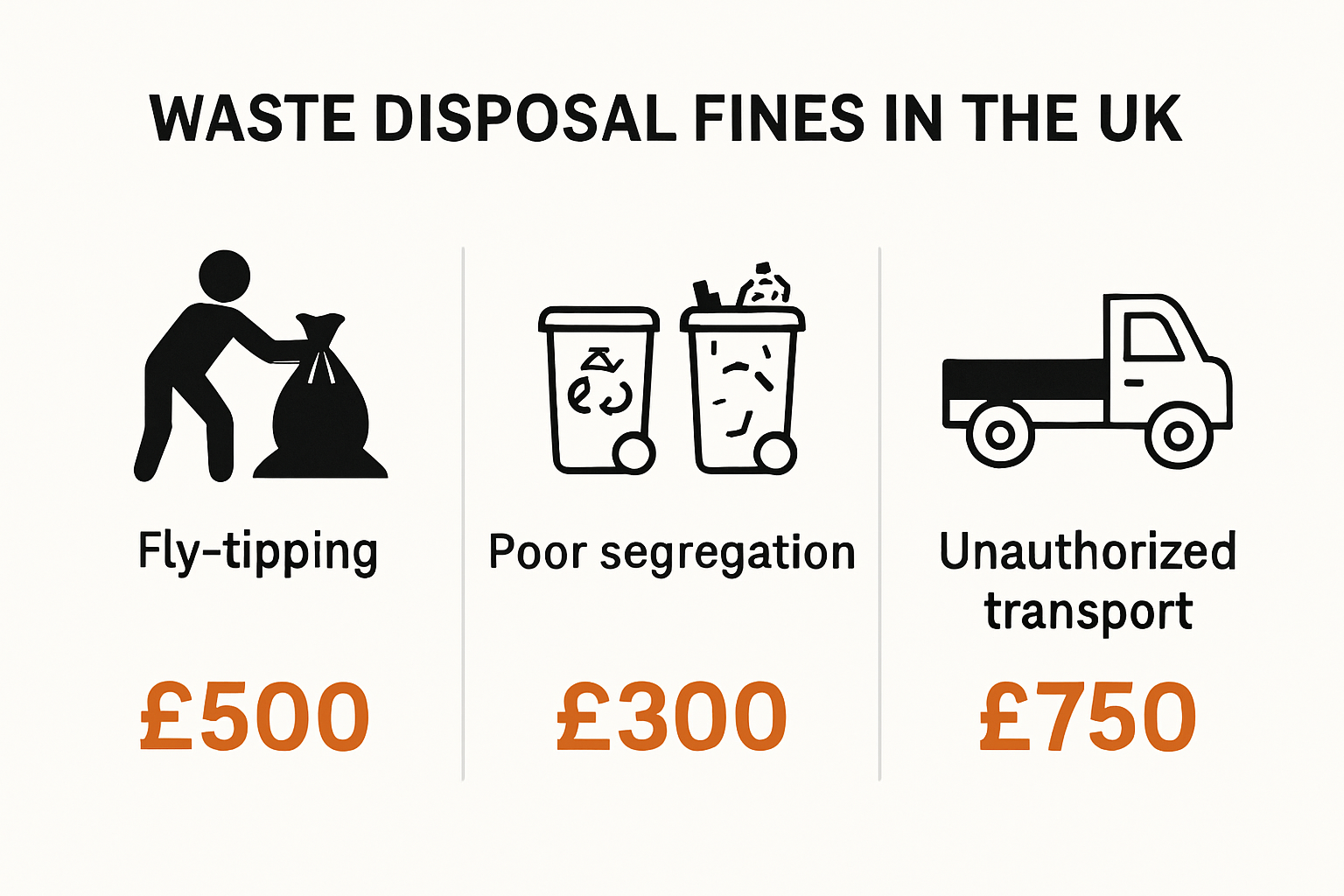
The penalty structure is multifaceted. Minor infractions might attract fixed penalty notices, while repeated or severe violations could lead to prosecution. South Oxon District Council reports that fixed penalty notices for fly-tipping have increased from £400 to £1,000, demonstrating the government’s commitment to stricter enforcement.
Categories of Waste Disposal Violations
Businesses must understand the specific categories of waste disposal violations that can trigger financial penalties. These typically include:
- Improper Waste Segregation: Failing to separate different types of waste correctly
- Unauthorized Waste Transportation: Moving waste without proper licensing
- Fly-tipping: Illegally dumping waste in unauthorized locations
- Documentation Errors: Incomplete or inaccurate waste transfer documentation
Haringey Council’s enforcement records provide a compelling example. In May 2025, ten businesses were collectively fined £6,550 for various waste offences, including fly-tipping and operating unlicensed skips. This illustrates the real-world financial risks of non-compliance.
To help businesses navigate these complex regulations, we recommend exploring our comprehensive guide on waste compliance steps. Understanding these regulations is not just about avoiding fines but about contributing to a more sustainable waste management ecosystem.
Proactive waste management isn’t just a legal requirement—it’s a strategic business decision. By investing in proper waste disposal practices, businesses can avoid penalties, reduce environmental impact, and potentially even generate cost savings through more efficient waste handling strategies.
Below is a table summarising the main categories of violations and their potential penalties, to clarify the financial risks associated with each type:
| Category of Violation | Example Offence | Typical Penalty Range |
|---|---|---|
| Improper Waste Segregation | Mixing recyclable and food waste | Fixed penalty notice or prosecution |
| Unauthorized Waste Transportation | Using unlicensed waste carriers | Up to £5,000 or prosecution |
| Fly-tipping | Illegal dumping of waste | £400–£1,000 fixed penalty; higher for repeat offences |
| Documentation Errors | Incomplete/inaccurate transfer notes | Up to £20,000 or unlimited in serious cases |
Common Waste Disposal Mistakes by Businesses
Business waste management is a critical responsibility that extends far beyond simple disposal. Understanding and avoiding common waste disposal mistakes can save companies significant financial resources and prevent potential legal complications.
Incorrect Waste Segregation Practices
One of the most prevalent errors businesses commit is improper waste segregation. Facilitate Magazine highlights that mixing different waste streams can render recyclable materials completely unsuitable for processing. As of March 31, 2025, businesses with 10 or more employees are legally mandated to separate dry recyclables (plastic, metal, glass, paper, and card), food waste, and non-recyclable waste before collection.
Businesses frequently make critical mistakes such as:
- Mixing food waste with recyclable materials
- Contaminating paper recyclables with food residue
- Failing to clean containers before recycling
- Disposing of electronic waste in general waste streams
These seemingly minor errors can result in entire waste batches being rejected, leading to additional disposal costs and potential fines.
Documentation and Compliance Failures
Another significant area of risk involves waste documentation and regulatory compliance. Government regulations emphasize the importance of maintaining accurate waste transfer records. Businesses that fail to properly document their waste disposal can face substantial penalties.
Key documentation mistakes include:
- Incomplete waste transfer notes
- Incorrect classification of waste types
- Failure to retain disposal records
- Not tracking waste from generation to final disposal
The financial implications are severe. Non-compliance can result in fines up to £20,000 in Magistrates’ Court, with potential unlimited fines in Crown Court proceedings. To help businesses manage these complexities, we recommend exploring our guide on waste reduction strategies.
Unauthorized Waste Transportation and Disposal

Businesses often underestimate the legal requirements surrounding waste transportation. Using unlicensed waste carriers or disposing of waste at unauthorized locations can trigger significant penalties. Research indicates that businesses must work exclusively with licensed waste management providers.
Common unauthorized disposal mistakes include:
- Hiring unregistered waste removal services
- Disposing of commercial waste in residential bins
- Transporting waste without appropriate documentation
- Dumping waste in non-designated areas
Proactive waste management requires continuous education and systematic approach. By understanding these common mistakes, businesses can develop robust waste disposal strategies that minimize financial risks and support environmental sustainability. Regular staff training, implementing clear waste management protocols, and partnering with certified waste management providers are crucial steps towards full compliance.
Here is a checklist table highlighting common business waste disposal mistakes and their potential consequences:
| Mistake | Potential Consequence | Fine/Penalty |
|---|---|---|
| Mixing food waste with recyclables | Batch rejection, added cost | Financial penalty |
| Failing to clean recyclable containers | Contaminated recyclables | Possible fine |
| Using unlicensed waste carriers | Legal breach | Up to £5,000+ |
| Incomplete waste transfer documentation | Audit failure, prosecution | Up to £20,000/unlimited |
| Disposing e-waste with general waste | Breach of WEEE rules | Financial penalty |
Legal Requirements for Different Waste Types
The landscape of waste management in the UK has become increasingly complex, with stringent regulations governing different waste types. Businesses must navigate these legal requirements carefully to ensure compliance and avoid potential financial penalties.
Recyclable Waste Separation Regulations
The Separation of Waste (England) Regulations 2025 introduce comprehensive guidelines for waste separation. As of 31 March 2025, all workplaces in England are legally mandated to separate their waste into distinct streams:
- Dry recyclable materials (plastic, metal, glass, paper, and card)
- Food waste
- Non-recyclable waste
Interestingly, the regulations provide some flexibility in collection methods. Metal, glass, and plastic can be co-collected, as can food and garden waste. However, paper and card must be collected separately to prevent contamination and ensure effective recycling.
It’s worth noting that micro-firms with fewer than 10 full-time equivalent employees receive a temporary exemption, with compliance required by 31 March 2027. Learn more about navigating these compliance steps.
Hazardous Waste Management
Hazardous waste requires an entirely different approach to disposal. Businesses generating hazardous waste must adhere to strict protocols that go beyond standard waste management practices. According to the Environment Agency, hazardous waste includes materials that pose potential risks to human health or the environment.
Key categories of hazardous waste include:
- Chemical waste
- Electrical and electronic equipment
- Batteries
- Medical and pharmaceutical waste
- Oils and contaminated materials
Businesses must:
- Obtain special permits for hazardous waste disposal
- Use licensed hazardous waste carriers
- Maintain detailed documentation of waste transfer
- Ensure proper packaging and labeling
- Follow specific transportation and disposal guidelines
Special Waste Streams and Compliance
Certain waste types demand unique handling and disposal methods. Electronic waste (WEEE), for instance, requires specialized recycling processes. Government guidelines mandate that businesses must:
- Separate WEEE from other waste streams
- Work with authorized WEEE recycling partners
- Provide evidence of proper disposal
- Maintain comprehensive records of electronic waste disposal
The consequences of non-compliance can be severe. Businesses may face significant fines, potential legal action, and reputational damage. Proactive waste management is not just about avoiding penalties but also about contributing to environmental sustainability.
Understanding these legal requirements is crucial. Businesses should invest in staff training, develop robust waste management protocols, and stay updated on evolving regulations. Regular audits and partnerships with certified waste management providers can help ensure full compliance and minimize potential risks.
How to Avoid Waste Disposal Fines in 2025
Navigating the complex landscape of waste disposal regulations requires strategic planning and proactive management. Businesses must implement comprehensive approaches to ensure full compliance and avoid potentially costly financial penalties in 2025.
Comprehensive Waste Auditing and Management
Research from Seton recommends conducting a thorough waste audit as the foundational step in avoiding disposal fines. This process involves systematically examining current waste management practices to identify potential areas of non-compliance.
Key elements of an effective waste audit include:
- Documenting all waste streams generated
- Measuring waste volume and composition
- Identifying opportunities for waste reduction
- Assessing current segregation practices
- Reviewing waste disposal contracts and carriers
Businesses should create detailed waste management plans that outline specific strategies for waste reduction, segregation, and responsible disposal. Explore our comprehensive guide to waste compliance steps to develop a robust waste management strategy.
Waste Segregation and Licensing Compliance
Government regulations mandate strict waste segregation requirements for businesses with 10 or more employees. Starting 31 March 2025, businesses must separate waste into specific streams:
- Dry recyclables (glass, metal, plastic, paper, card)
- Food waste
- Non-recyclable waste
To avoid fines, businesses must:
- Provide clearly marked, colour-coded waste bins
- Train staff on proper waste segregation techniques
- Ensure all waste is collected by licensed waste carriers
- Maintain accurate documentation of waste disposal activities
- Regularly review and update waste management protocols
Record-Keeping and Continuous Improvement
Meticulous record-keeping is crucial in demonstrating compliance and avoiding potential penalties. Environment Agency guidelines emphasize the importance of maintaining comprehensive waste transfer documentation.
Essential documentation includes:
- Waste transfer notes
- Carrier licensing verification
- Waste volume and type tracking
- Staff training records
- Disposal and recycling certificates
Businesses should implement digital tracking systems to streamline record-keeping and facilitate easy access during potential compliance audits. Regular internal reviews and staff training can help identify and address potential compliance gaps before they result in financial penalties.
Proactive waste management is more than a legal requirement—it’s a strategic approach to reducing environmental impact and operational costs. By investing time and resources in understanding and implementing these guidelines, businesses can transform waste management from a potential liability into an opportunity for sustainability and efficiency.
Frequently Asked Questions
What are the potential fines for waste disposal violations in the UK?
Businesses in the UK can face fines ranging from fixed penalty notices for minor infractions to substantial monetary sanctions for severe violations. For example, fines for fly-tipping can increase from £400 to £1,000, while documentation errors can lead to penalties of up to £20,000 or even unlimited fines in serious cases.
What are the new regulations for waste segregation coming into effect in 2025?
As of 31 March 2025, businesses with ten or more employees must correctly segregate waste into specific streams: dry recyclables, food waste, and non-recyclable waste. Companies failing to comply may face significant financial penalties.
How can businesses avoid receiving waste disposal fines?
To avoid fines, businesses should conduct regular waste audits, ensure correct waste segregation practices, maintain accurate documentation, and use licensed waste carriers for transportation and disposal. Training staff on compliance is also crucial.
What documentation is required for waste disposal compliance?
Businesses must maintain comprehensive waste transfer documents that include details on waste types, carrier licensing verification, waste volumes, and disposal certificates. Incomplete or inaccurate documentation can lead to serious financial penalties.
Take Control of Waste Compliance and Protect Your Bottom Line
Are you feeling anxious about stricter waste disposal fines in 2025? Many UK businesses are struggling with the sudden changes in waste segregation, documentation, and the threat of costly penalties. Whether it is the challenge of correct waste separation, keeping your records in order, or simply staying on the right side of the law, one simple oversight can jeopardise your entire compliance strategy. If you want expert guidance on the latest regulations, our regulation hub covers all the key updates and gives practical tips tailored for your business situation.

Stop letting uncertainty put your business at risk. Venture Waste Management makes it quick and simple not only to comply with new waste laws but also to streamline your waste process with reliable, licensed collection and documentation. Visit Venture Waste Management today to skip the stress and book your compliant waste services. Ensure your team is ready before the new rules come into force—secure your free compliance consultation now.
Recommended
- 7 Steps to Waste Compliance for UK Businesses in 2025 – Venture Waste
- steps to waste compliance Archives – Venture Waste
- how to reduce waste Archives – Venture Waste
- How to Reduce Waste in UK Businesses: Essential Steps for 2025 – Venture Waste
- Hazardous Waste Handling for UK Businesses: Complete 2025 Guide – Venture Waste
- Bulky Waste Removal Tips for UK Businesses in 2025 – Venture Waste


Leave a Reply
Want to join the discussion?Feel free to contribute!