

Waste Contracts Explained: Compliance for UK Healthcare
Managing waste in a busy United Kingdom healthcare setting means facing daily challenges with hazardous, electronic, and confidential materials. As regulatory demands continue to evolve, facilities managers must balance safety, cost, and strict legal compliance at every step. This guide sheds light on the structure and expectations of healthcare waste contracts, helping you make sense of complex waste types and legal duties so you can protect your team, your organisation, and the environment.
Table of Contents
- What Are Waste Contracts in Healthcare?
- Types of Waste Contracts and Services
- Key Legal Frameworks and Compliance Duties
- Contractual Obligations and Cost Factors
- Common Pitfalls and How to Avoid Them
Key Takeaways
| Point | Details |
|---|---|
| Importance of Waste Contracts | Healthcare waste contracts are essential for the safe and compliant management of waste, ensuring adherence to UK regulations. |
| Role of Accountability | Clearly defined responsibilities for waste producers, transporters, and disposal facilities are crucial for legal compliance and environmental protection. |
| Types of Contracts | Various types of waste contracts cater to specific waste categories, including clinical, pharmaceutical, and electronic waste, each with regulatory requirements. |
| Compliance and Monitoring | Ongoing audits and staff training are necessary to maintain compliance with evolving waste management legislation and operational standards. |
What Are Waste Contracts in Healthcare?
Healthcare waste contracts represent comprehensive legal agreements that govern the safe, compliant management of diverse waste streams generated within medical environments. These specialised contracts outline precise protocols for handling, transporting, and disposing of potentially hazardous materials while ensuring strict adherence to national regulatory standards.
At their core, these contracts cover multiple critical waste management dimensions, including the systematic handling of clinical waste streams across healthcare settings. The agreements typically encompass detailed provisions for managing different waste categories such as:
- Sharps and contaminated materials
- Pharmaceutical and chemical waste
- Cytotoxic and infectious substances
- Electronic medical equipment waste
- Anatomical and pathological materials
The primary objective of these waste contracts extends beyond mere disposal. They represent a strategic framework designed to mitigate environmental risks, protect public health, and ensure organisations remain compliant with complex UK waste management legislation. Healthcare providers must navigate intricate regulatory landscapes, which include standards set by bodies like the Health Technical Memorandum and Environmental Protection regulations.
Contractual agreements also establish clear accountability mechanisms, defining responsibilities for waste producers, transporters, and disposal facilities. These frameworks mandate precise segregation protocols, specify required documentation, and outline emergency response procedures for potential contamination scenarios.
To provide a clear overview of responsibilities, here is a summary of key accountability roles within healthcare waste contracts:
| Role | Main Responsibility | Impact on Compliance |
|---|---|---|
| Waste Producer | Proper segregation & labelling | Ensures regulatory adherence |
| Transporter | Safe and compliant transport | Minimises environmental risk |
| Disposal Facility | Final processing & reporting | Guarantees legal disposal |
| Contract Manager | Oversees audits & documentation | Monitors ongoing compliance |
This table helps to distinguish between contract types, regulatory drivers, and strategic contract features in UK healthcare waste management:
| Contract Type | Primary Regulatory Driver | Strategic Feature |
|---|---|---|
| Clinical Waste Contract | Health Technical Memorandum | Risk mitigation protocols |
| Pharmaceutical Waste Contract | COSHH Regulations | Controlled substance tracking |
| Electronic Equipment Contract | WEEE Directives | Secure data destruction |
| General Waste Contract | Environmental Protection Act | Mandatory waste stream separation |
Pro tip: Always conduct thorough due diligence when selecting waste management partners, ensuring they possess current environmental licensing and demonstrate proven expertise in healthcare waste handling.
Types of Waste Contracts and Services
Healthcare waste contracts in the United Kingdom are meticulously categorised to address the complex and diverse waste management needs of medical facilities. Waste classification systems play a critical role in defining the specific services and protocols required for different waste streams.
These contracts typically encompass a comprehensive range of specialised services designed to manage various waste categories:
-
Clinical Waste Services
- Infectious material collection
- Contaminated equipment disposal
- Biohazardous waste management
-
Pharmaceutical Waste Contracts
- Controlled drug disposal
- Chemical waste segregation
- Safe medication destruction protocols
-
Electronic Medical Equipment Waste
- WEEE compliance management
- Secure data destruction
- Responsible electronic recycling
Each contract type is underpinned by stringent regulatory requirements, ensuring that healthcare providers meet the complex legal obligations surrounding waste management. The European Waste Catalogue (EWC) provides a standardised framework for classifying different waste types, which directly influences the scope and specificity of waste management contracts.
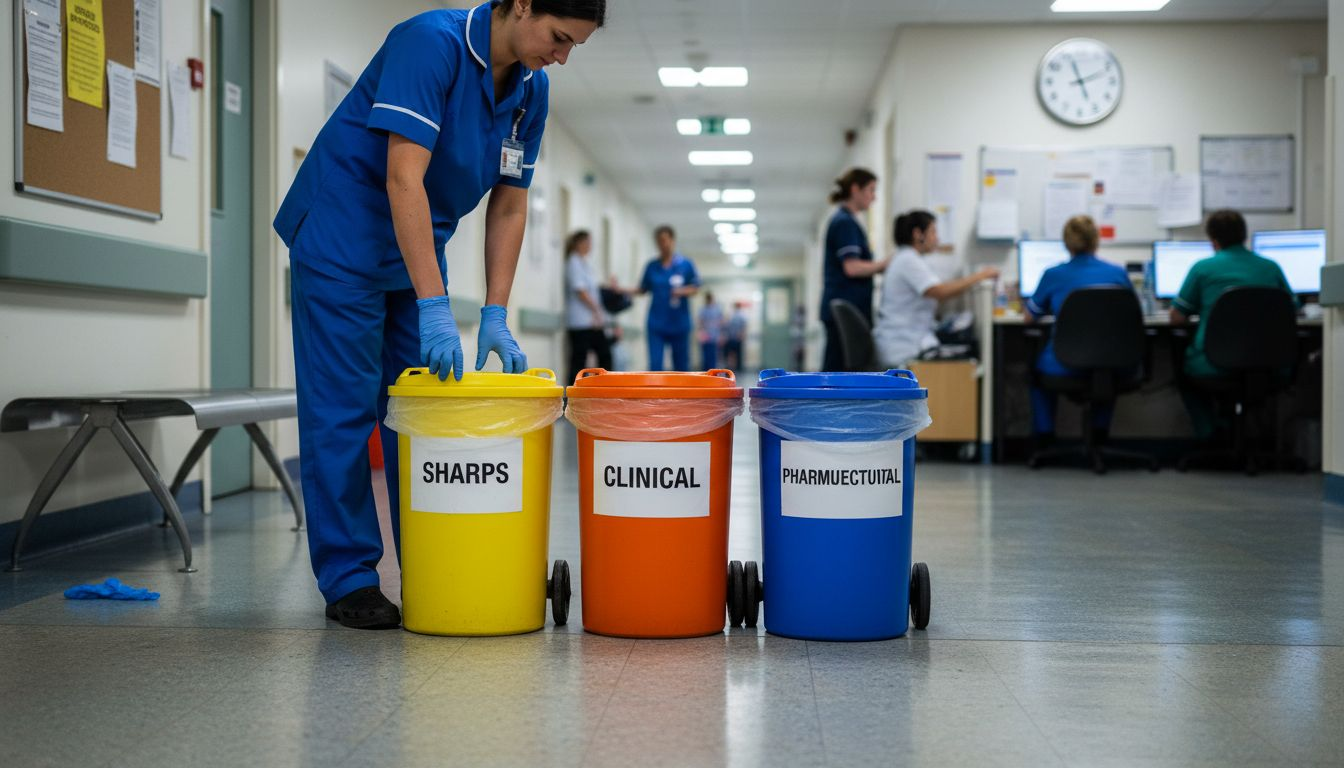
Moreover, these contracts extend beyond mere disposal, incorporating critical elements such as waste tracking, documentation, transportation compliance, and environmental risk mitigation. Healthcare providers must work closely with licensed waste management partners who can demonstrate comprehensive understanding of sector-specific waste handling requirements.
Pro tip: Regularly audit your waste management contracts to ensure they remain current with evolving environmental regulations and technological advancements in waste processing.
Key Legal Frameworks and Compliance Duties
Healthcare waste management in the United Kingdom is governed by a complex network of legal frameworks designed to protect public health and environmental safety. Duty of Care regulations form the cornerstone of these compliance requirements, mandating that healthcare providers take comprehensive responsibility for their waste from generation to final disposal.
The key legal frameworks encompass multiple critical regulatory domains:
-
Waste Management Legislation
- Environmental Protection Act 1990
- Hazardous Waste Regulations 2005
- Waste (England and Wales) Regulations 2011
-
Healthcare-Specific Compliance
- Health and Social Care Act 2008
- Care Quality Commission (CQC) Regulations
- Control of Substances Hazardous to Health (COSHH) Regulations
-
Waste Segregation Requirements
- Mandatory waste stream separation
- Specific handling protocols for clinical waste
- Comprehensive documentation of waste movements
From March 2025, healthcare providers will face more stringent waste management obligations, including mandatory separation of dry recyclables, food waste, and non-recyclable materials. These evolving regulations demand proactive compliance strategies that go beyond traditional waste disposal approaches.
The regulatory landscape requires healthcare organisations to implement robust governance frameworks that address not just waste disposal, but also staff training, risk assessment, and continuous monitoring of waste management practices. Compliance is not merely a legal obligation but a critical component of patient and staff safety.
Pro tip: Develop a comprehensive internal audit system that tracks waste management compliance across all departmental activities, ensuring ongoing alignment with the latest regulatory requirements.
Contractual Obligations and Cost Factors
Healthcare waste management contracts represent complex financial and legal instruments that extend far beyond simple disposal services. Cost-effectiveness assessments are fundamental in determining the most appropriate waste management strategies for healthcare providers.
The key contractual obligations typically encompass several critical dimensions:
-
Service Delivery Requirements
- Precise waste collection frequency
- Guaranteed compliance with safety standards
- Comprehensive documentation and reporting
- Provision of official disposal certificates
-
Financial Considerations
- Contract management fees
- Operational cost management
- Environmental impact pricing
- Scalable service pricing models
-
Regulatory Compliance Elements
- Adherence to waste management regulations
- Regular compliance audits
- Staff training provisions
- Risk management protocols
Cost factors in healthcare waste contracts are multifaceted, involving intricate balancing between financial constraints and regulatory compliance. Healthcare organisations must evaluate not just the immediate disposal costs, but also long-term environmental and safety implications of their waste management strategies.
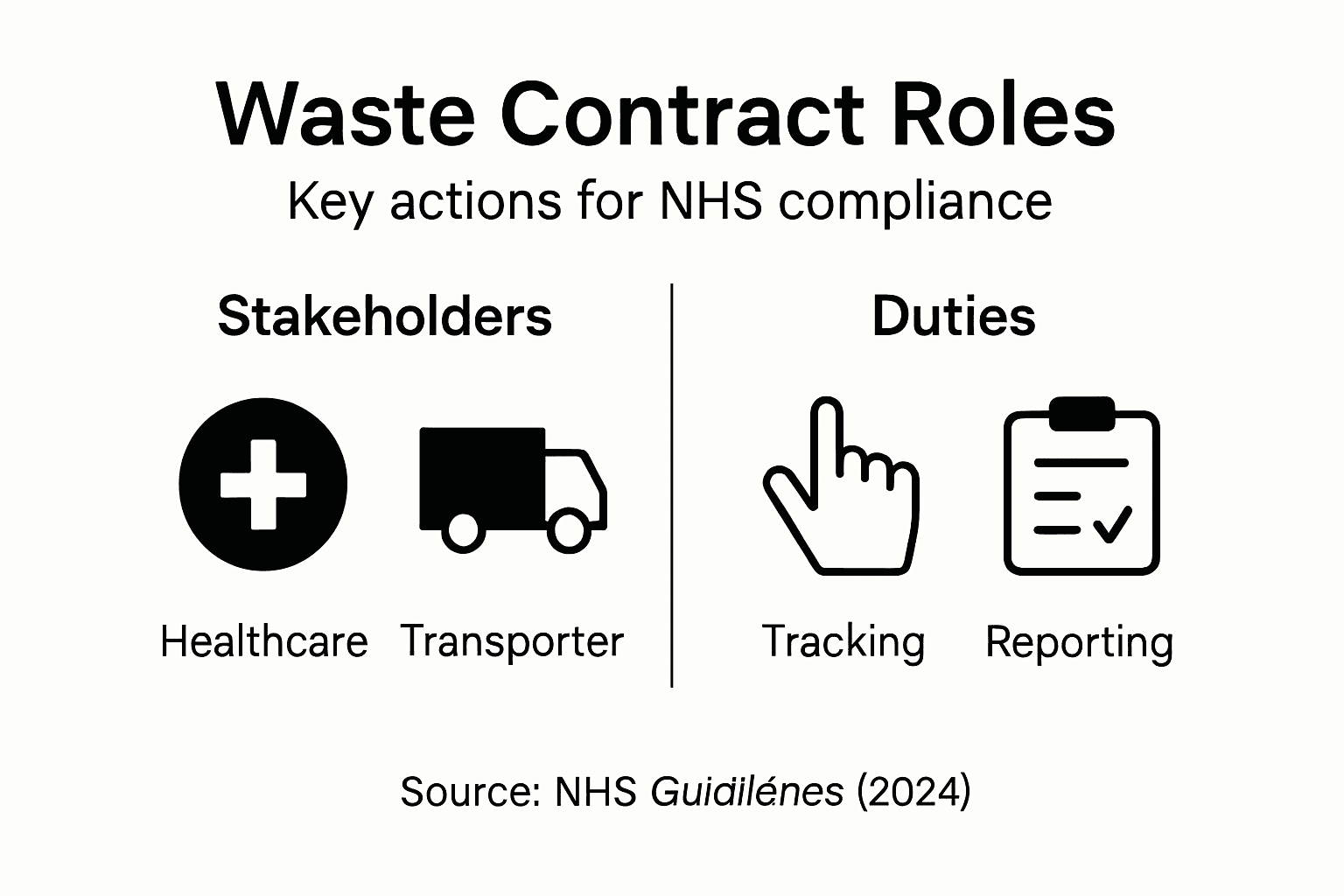
Professional waste management contracts often include sophisticated monitoring mechanisms that track waste streams, ensure proper segregation, and provide transparent reporting. These comprehensive approaches help healthcare providers manage both financial expenditures and potential regulatory risks effectively.
Pro tip: Negotiate waste management contracts with built-in flexibility for technological advancements and changing regulatory landscapes, ensuring long-term cost-effectiveness and compliance.
Common Pitfalls and How to Avoid Them
Healthcare waste management is fraught with potential compliance risks that can lead to significant legal and financial consequences. Workplace recycling regulations introduce complex requirements that demand meticulous attention to detail and systematic implementation.
The most prevalent pitfalls in healthcare waste management include:
-
Waste Segregation Failures
- Incorrect waste stream classification
- Mixing hazardous and non-hazardous materials
- Inadequate labelling of waste containers
- Inconsistent disposal protocols
-
Documentation and Compliance Errors
- Incomplete waste transfer notes
- Outdated licensing documentation
- Insufficient record-keeping
- Lack of traceability in waste movements
-
Operational Compliance Risks
- Using unlicensed waste carriers
- Inadequate staff training
- Non-compliance with separation requirements
- Ineffective risk management strategies
Healthcare organisations must develop comprehensive strategies to mitigate these risks. This involves creating robust internal processes, investing in continuous staff training, and establishing rigorous monitoring systems that can adapt to evolving regulatory landscapes.
Successful waste management compliance requires a proactive approach that goes beyond mere regulatory adherence. Healthcare providers must cultivate a culture of environmental responsibility, ensuring that every staff member understands their role in maintaining proper waste handling and disposal protocols.
Pro tip: Conduct quarterly internal audits of your waste management practices, creating detailed action plans that address even minor compliance discrepancies before they escalate into significant regulatory issues.
Ensure Full Compliance with Expert Healthcare Waste Management Solutions
Navigating complex UK healthcare waste contracts and stringent regulatory frameworks can be overwhelming. The challenge of managing clinical, pharmaceutical, and hazardous waste streams while staying fully compliant requires expertise and reliable service partners. At Venture Waste Management, we understand the critical importance of risk mitigation, precise waste segregation, and thorough documentation to protect your facility and the environment.

Discover how our compliant waste solutions align with your legal duties and operational goals. From tailored clinical waste services to comprehensive regulatory insights available on our regulation Archives, we offer seamless support to simplify your waste management processes. Stay ahead with our detailed guidance on the evolving waste collection network in UK businesses and access trusted services designed for healthcare providers nationwide. Act now to safeguard your organisation’s compliance and environmental responsibility. Visit https://venturewaste.co.uk to book your customised waste management solution today.
Frequently Asked Questions
What are healthcare waste contracts?
Healthcare waste contracts are legal agreements that manage the safe handling, transportation, and disposal of various waste streams in medical environments. They ensure compliance with regulatory standards to protect public health and the environment.
What types of waste are covered by healthcare waste contracts?
Healthcare waste contracts cover multiple waste types, including clinical waste, pharmaceutical waste, electronic medical equipment waste, sharps, and anatomical materials, each requiring specific management protocols.
What are the main legal frameworks governing healthcare waste management?
Key legal frameworks include the Environmental Protection Act, Hazardous Waste Regulations, the Health and Social Care Act, and Control of Substances Hazardous to Health (COSHH) Regulations. These regulations mandate comprehensive waste management practices and compliance.
How can healthcare organisations avoid common pitfalls in waste management?
To avoid common pitfalls, healthcare organisations should ensure proper waste segregation, maintain accurate documentation, conduct regular staff training, and implement robust internal processes for monitoring and compliance.
Recommended
- Sustainable Waste Solutions – Enhancing UK Healthcare Compliance – Venture Waste
- Clinical Waste Disposal Requirements for UK Businesses 2025 – Venture Waste
- Recycling Process in UK – 2026 Laws for Healthcare – Venture Waste
- Safeguarding Sensitive Waste in UK Healthcare – Venture Waste
- RSJ Facilities Management Services London For Complete Peace Of Mind


Leave a Reply
Want to join the discussion?Feel free to contribute!