

Waste Collection Licensing: Complete UK Guide
Over 90 percent of british businesses that handle waste must follow strict licensing rules or face heavy penalties. Waste collection licensing is not just another box to tick. It sets the standards for protecting the environment and ensuring public safety across the UK. By understanding the essentials of waste carrier registration and compliance, you can keep your operations legal and avoid costly mistakes that trip up even experienced companies.
Table of Contents
- Waste Collection Licensing Defined For The UK
- Types Of Waste Collection Licences Explained
- Key Legal Requirements And Regulations
- How To Apply For A Waste Carrier Licence
- Duties, Compliance, And Common Pitfalls
Key Takeaways
| Point | Details |
|---|---|
| Waste Collection Licensing is Essential | Businesses in the UK must register as waste carriers, brokers, or dealers to comply with environmental regulations and avoid legal penalties. |
| Types of Licences | There are two main licence tiers: lower tier (for simpler operations) and upper tier (for complex waste management activities). |
| Legal Requirements | Operators must demonstrate technical competence and secure environmental permits to ensure safe waste management practices. |
| Application Process | Careful documentation and understanding of required information are crucial for successfully applying for a waste carrier licence. |
Waste Collection Licensing Defined for the UK
Waste collection licensing represents a critical regulatory framework that governs how businesses handle and transport waste across the United Kingdom. According to gov.uk, businesses involved in transporting, buying, selling, or disposing of waste must register as waste carriers, brokers, or dealers to ensure compliance with environmental regulations.
The licensing process involves obtaining a waste carrier registration, which is a mandatory certification issued by the Environment Agency in England and similar regulatory bodies across other UK regions. Law Donut highlights that businesses transporting controlled waste must specifically secure an upper tier waste carrier or broker certificate. This registration serves multiple critical purposes:
- Prevents illegal waste activities
- Ensures environmental compliance
- Tracks waste movement across commercial sectors
- Provides accountability for waste management practices
For businesses operating in regions like Newcastle, Sunderland, or Durham, understanding these licensing requirements is not just a legal obligation but a fundamental aspect of responsible waste management. The registration process involves demonstrating that your organisation has the necessary processes, training, and environmental safeguards in place to handle waste safely and legally. Non-compliance can result in significant financial penalties and potential legal consequences, making proactive registration essential for any business involved in waste transportation or disposal.
Types of Waste Collection Licences Explained
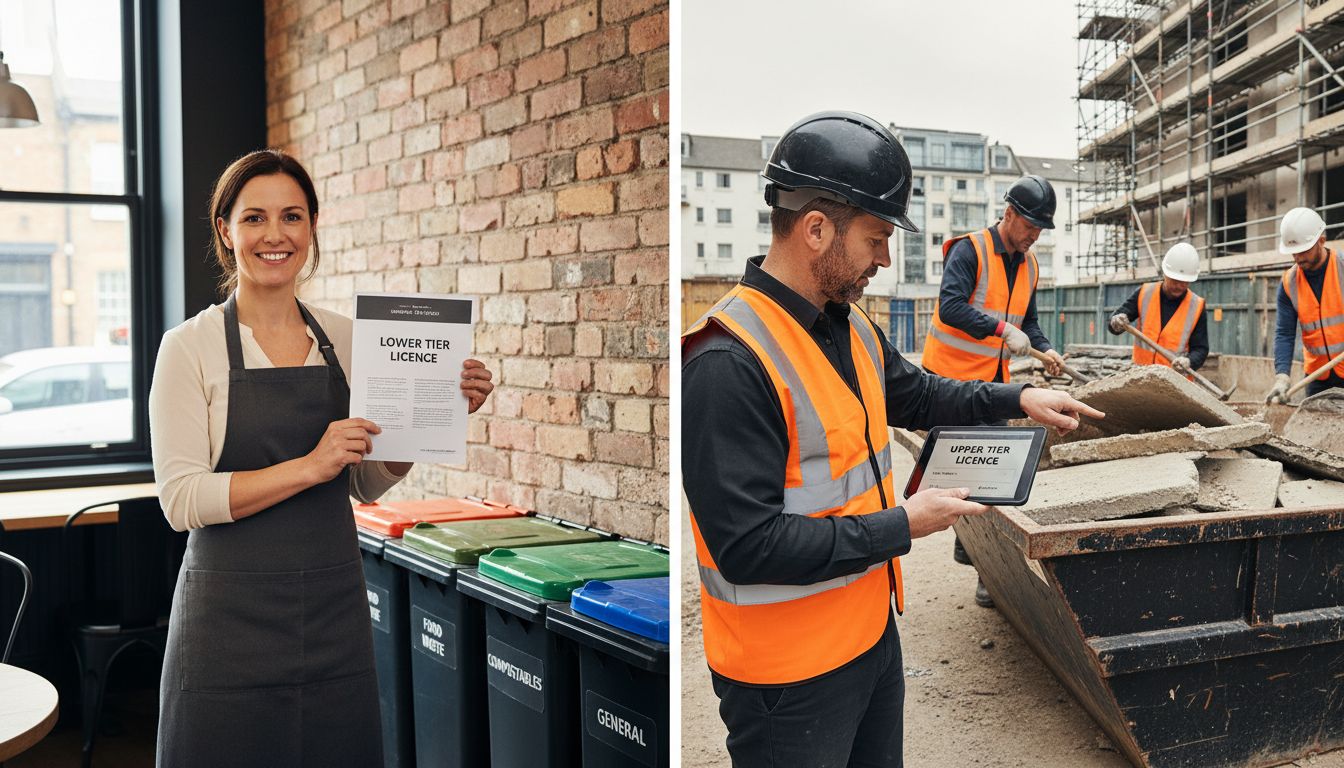
In the United Kingdom, waste collection licensing is stratified into distinct categories that reflect the complexity and scope of waste management activities. Gov.uk outlines two primary types of waste carrier licences: lower tier and upper tier registrations, each serving different business waste management needs.
The lower tier licence is specifically designed for businesses with straightforward waste transportation requirements. This category typically applies to organisations that exclusively transport their own non-construction waste and offers a free registration process. Conversely, the upper tier licence represents a more comprehensive certification required for businesses with more complex waste management responsibilities:
- Transporting waste on behalf of other businesses
- Handling construction and demolition waste
- Buying, selling, or dealing in waste materials
- Operating as a waste broker or dealer
Businesses operating across regions like Newcastle, Durham, and Sunderland must carefully assess their specific waste management activities to determine the appropriate licence tier. For upper tier registrations, companies must pay a fee and renew their certification every three years, demonstrating ongoing compliance with environmental regulations.
 Learn more in our guide on understanding waste permits, which provides additional insights into navigating the complex landscape of waste management licensing in the UK.
Key Legal Requirements and Regulations
Waste management in the United Kingdom is governed by a comprehensive framework of legal requirements that mandate strict compliance for businesses engaged in waste-related activities. Gov.uk emphasises that operators must demonstrate technical competence by joining approved professional schemes such as those run by the Chartered Institution of Wastes Management (CIWM) and WAMITAB.
The regulatory landscape requires businesses to navigate multiple critical legal obligations:
- Obtaining appropriate environmental permits
- Demonstrating technical waste management competence
- Maintaining comprehensive waste tracking documentation
- Ensuring safe and legal waste transportation
- Implementing robust environmental protection measures
Moreover, Gov.uk highlights that businesses involved in waste operations must secure environmental permits from the Environment Agency, with operating without such permits constituting a serious legal violation subject to significant penalties. In regions like Newcastle, Durham, and Sunderland, local businesses must pay particular attention to these requirements, understanding that non-compliance can result in substantial financial sanctions and potential legal proceedings. Learn more about waste disposal legal requirements to ensure your organisation remains fully compliant with current UK waste management regulations.
How to Apply for a Waste Carrier Licence
Navigating the waste carrier licence application process requires careful attention to detail and understanding of regulatory requirements. Gov.uk provides comprehensive guidance for businesses seeking to register with the Environment Agency, emphasising the importance of accurately documenting business activities and paying the appropriate registration fee.
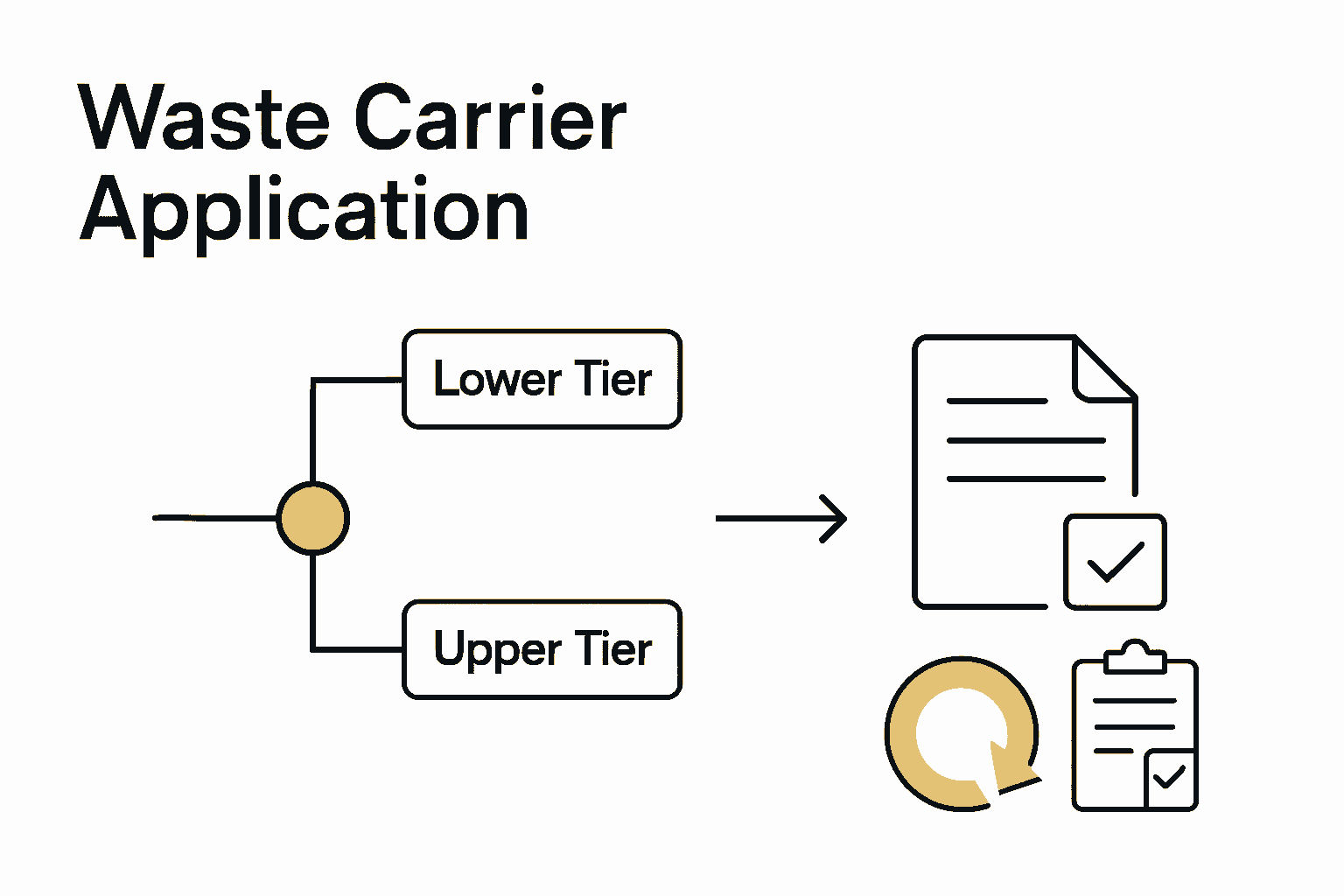
The application process involves several critical steps:
- Determine your specific waste carrier licence tier (lower or upper tier)
- Gather all necessary business documentation
- Prepare detailed information about waste management activities
- Complete the online registration form
- Pay the required registration fee
- Await confirmation and inclusion in the public waste carriers register
Businesses operating in regions like Newcastle, Durham, and Sunderland must ensure they have all required documentation prepared before initiating the application. This includes company registration details, waste management practices, and proof of technical competence. For organisations handling complex waste streams or operating across multiple sectors, the upper tier licence will be essential. Explore our guide on waste transport regulations to gain a comprehensive understanding of the additional requirements and best practices for waste carrier licensing in the UK.
Duties, Compliance, and Common Pitfalls
Waste management compliance demands meticulous attention to detail and a comprehensive understanding of regulatory requirements. Gov.uk emphasises the critical importance of accurate waste classification, highlighting that businesses must precisely categorise their waste to ensure proper disposal and legal compliance.
The most frequent compliance challenges include:
- Failing to register as a waste carrier
- Misclassifying waste types
- Inadequate documentation of waste streams
- Neglecting environmental protection protocols
- Overlooking renewal of waste carrier licences
Law Donut warns that non-compliance can result in substantial financial penalties and potential legal proceedings. Businesses operating in regions like Newcastle, Durham, and Sunderland must remain vigilant, understanding that each waste stream requires specific handling and documentation. The consequences of overlooking these requirements can be severe, with fines potentially running into thousands of pounds. Learn more about avoiding business waste penalties to ensure your organisation remains fully compliant with current UK waste management regulations.
Simplify Your Waste Collection Licensing Compliance with Venture Waste
Navigating the complex world of waste collection licensing in the UK can feel overwhelming. From deciding between upper tier and lower tier waste carrier registrations to ensuring full legal compliance and environmental protection, the process demands precision and expertise. If your business is managing waste across Newcastle, Sunderland or Durham, tackling challenges such as technical competence requirements and accurate waste classification is essential to avoid costly penalties and legal risks.

Discover how Venture Waste can help you overcome these hurdles with tailored, compliant waste management solutions. Learn more about How the Waste Collection Network in UK Serves Businesses in 2025 and streamline your operations by understanding the Waste Collection Process in the UK for Businesses 2025. Act now to ensure your waste handling remains fully compliant and environmentally responsible. Visit our site to start your simple three-step booking and secure peace of mind today.
Frequently Asked Questions
What is waste collection licensing in the UK?
Waste collection licensing is a regulatory framework that requires businesses involved in transporting, buying, selling, or disposing of waste to register as waste carriers, brokers, or dealers to ensure compliance with environmental regulations.
What are the types of waste collection licences available?
There are two primary types of waste carrier licences: lower tier and upper tier. The lower tier licence is for businesses that transport their own non-construction waste, while the upper tier licence is required for businesses that transport waste on behalf of others or handle more complex waste types, such as construction waste.
How do I apply for a waste carrier licence?
To apply for a waste carrier licence, businesses need to determine the appropriate licence tier, gather necessary documentation, prepare details about their waste management activities, complete the online registration form, and pay the registration fee.
What are common compliance challenges in waste management?
Common compliance challenges include failing to register as a waste carrier, misclassifying waste types, inadequate documentation of waste streams, and neglecting environmental protection protocols. Each of these can result in significant financial penalties and legal consequences.


Leave a Reply
Want to join the discussion?Feel free to contribute!